TEACHERS DAY

Introduction

In India, every year Teacher’s day is celebrated on 5 September. On this day all the students decorate the schools and organise special programs in honour of the teachers all over the country. Along with students, teachers also participate in these programs with full enthusiasm. On this day we are discharged from our school activities so that we can participate in other programs.

Why is Teacher’s Day celebrated on 5 September ?


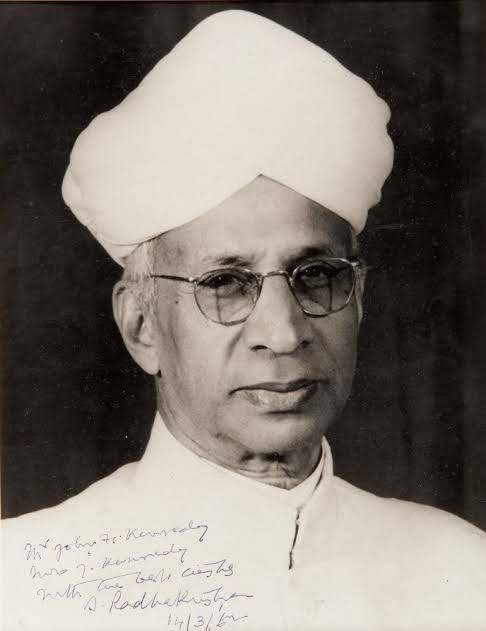
Dr. Sarvepalli Radhakrishnan was born on 5th September. He was the first Vice-President of independent India. He served the country as Vice-President from 1952 to 1962. He served as Second President of the country from 1962 to 1967. Worked as well.

Dr. Radhakrishnan greatly respected the teachers. Before joining politics, he taught in many institutes like Calcutta University, University of Mysore and Oxford University. He was highly appreciated for his work and was also loved by all his students. He believed in the fact that the teacher is the person who prepares the youth as the future of the country. This was the reason that he fulfilled this responsibility of the professor so diligently and always tried to give good values to his students.

When he became the President of our country, his students expressed their wish to celebrate his birthday every year. In response to this, Dr. Radhakrishnan said that he would be more happy if his students celebrated his birthday as Teachers ‘Day. From that day 5th September, his birthday is celebrated as Teachers’ Day.

Importance of teachers day

Teacher’s day is a very important day for both the students as well as the teacher’s life. On this day we celebrate the honour of all the teachers as a tribute to their efforts and works of theirs. Teaching is one of the most difficult tasks in the world because they have the responsibility of educating the youth. There are children in the whole class and because each student is different from the other and has his own ability, this task becomes even more difficult, some students are good in sports and some in mathematics. Some are interested in English. A good teacher always keeps the interest of his students in mind and recognizes their abilities. The teacher teaches them to hone their subject or work skills and also takes care so that their other activities or subjects are not affected.

That is why this day has been dedicated to show respect and gratitude to the teachers.

Teachers’ Day celebration in schools

Teacher’s day programs are celebrated with great enthusiasm in schools across India. On this day, the students wear the costumes of their favorite teachers and go to lower classes than themselves. On this day, senior students go to different junior classes and teach them. It is a very fun day for all of the students. During this, senior students take care that the discipline of the school is maintained and for this junior students support them.

In many schools, junior students also play their role as teachers. On this days students organise various programs for the teachers. They organise programs like singing show, dancing show, quiz competition, dance-drama, ramp walk etc. These programs are normally organized after break time i.e., in the second half of the day. In the first half the senior students take the classes till the lunch break . The teachers relax in the classes and enjoy all these activities.

On this special day, students bring greeting cards, flowers and all sorts of gifts for their teachers. Teachers also feel very happy after receiving all such gifts from their students and they also give treats to their students.

Conclusion

In India, Teachers’ Day is celebrated in honor of teachers, as they work hard throughout the year and want their students to do well in school and other activities. On this day different types of programs are organized in schools across the country. These types of programs strengthen the attitudes of students and teachers. In fact, it is a special day for both students and teachers.

https://en.m.wikipedia.org/wiki/Sarvepalli_Radhakrishnan

https://www.britannica.com/biography/Sarvepalli-Radhakrishnan

@track2traininginstitute @track2trainingseminar @edunewsnetwork @track2trainingservice

ONAM- THE HARVEST FESTIVAL

ONAM – the festival of colour in Kerala

Onam is one of the famous festivals of the colourful India. It is actually a major event  of kerala. The people inside and outside of Kerala enjoy it too much. It is a harvest festival . 

According to history, Onam has a long religious context and history of Kerala. According to an earlier reference , Onam is found in Maturaikkaci – a Sangam ers Tamil poem. It says that when games and duels were held in Madurai temple , immolation was sent to the temple , then  the people wore new clothes and celebrated it. On the other hand , in the 9th-century according to Pathikas and Ballads by Periyazharwar , Onam is celebrated as offerings to Vishnu God with feasts and community events. 

According to Kurup  , Onam is a historical hindu-temple based cultural festival which is celebrated for many days. This is a harvest festival and its significance is of 2 Hindu-legends, Mahabali legend and Parashurama legend.

According to the Malayalam calendar Chingam is the 1st month  and the Onam is celebrated in this month. It is marked as the Malayalam New Year. It is celebrated over 10 days and concludes with Thiruvonam. The ten days are sequentially known as Atham, Chithira, Chodhi, Vishakam, Anizham, Thriketta, Moolam, Pooradam, Uthradam and Thiruvonam. The first and the last day are particularly important in Kerala and to Malayalee communities elsewhere.

The 1st day of this festival is Atham ws marked at Vamanamoorthy Thrikkakara temple in Kochi. This temple is the focal center of this festival and the abode of Mahabali legend with raising their festive flag. There are celebrated the parades and those are colourful ,whimming  and floating.

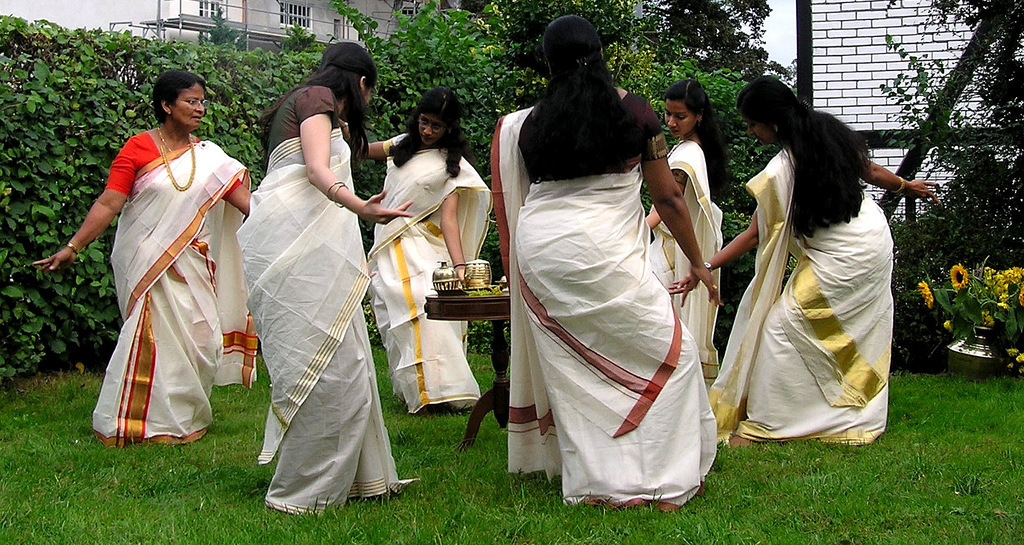
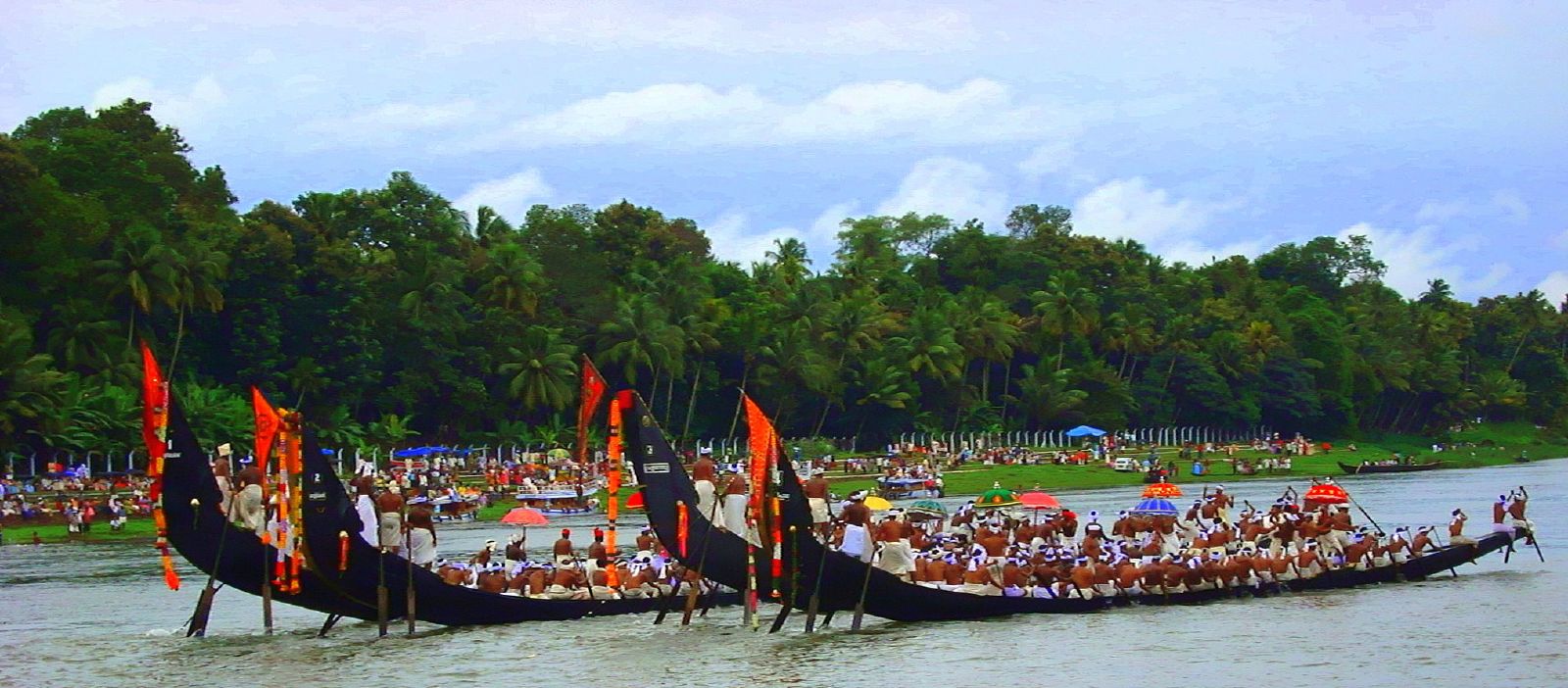
On other days there are celebrated different types of events like boat races which are most popular and stunning , different types of cultural programmes , martial arts, dance, rangoli etc.  People celebrate their times in those days by shopping, donating time or food for the charities and spending quality times with family. The men and women wear their traditional dress . Basically women wore Kasavu saree on this day. 

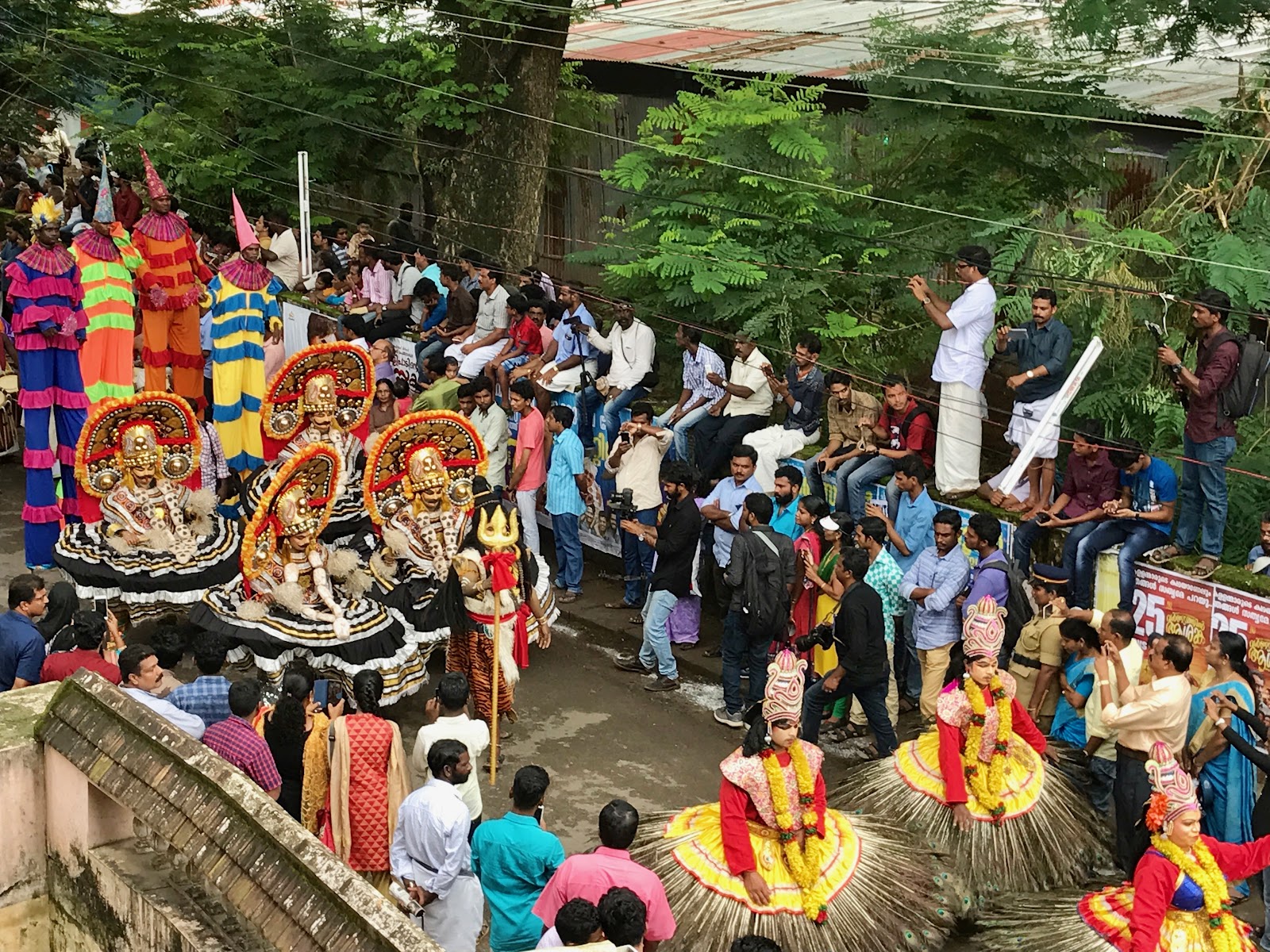
At Tripunithura near Kochi the Onam is celebrated with a grand procession which is called ‘Athachamayam’ , it is also addressed by ‘Thripunithura Athachamayam’. There are elephant marching, drum beats and other music , floats, folk art forms and colourful dressed people and with their masks which is wonderful. According to Kerala history the Kochi king conducted a grand military procession which has now become a state-supported event

There are epic scenes from Mahavarat and Ramayana in this traditional float procession . There are also themes from the Bible .From Tripunithura to the Vamanamoorthy Temple in Thrikkakara, Ernakulam district , is the traditional path. It is  the temple of Vishnu in his Vamana (dwarf) avatar. After arrival at the temple, the marchers offer a prayer.

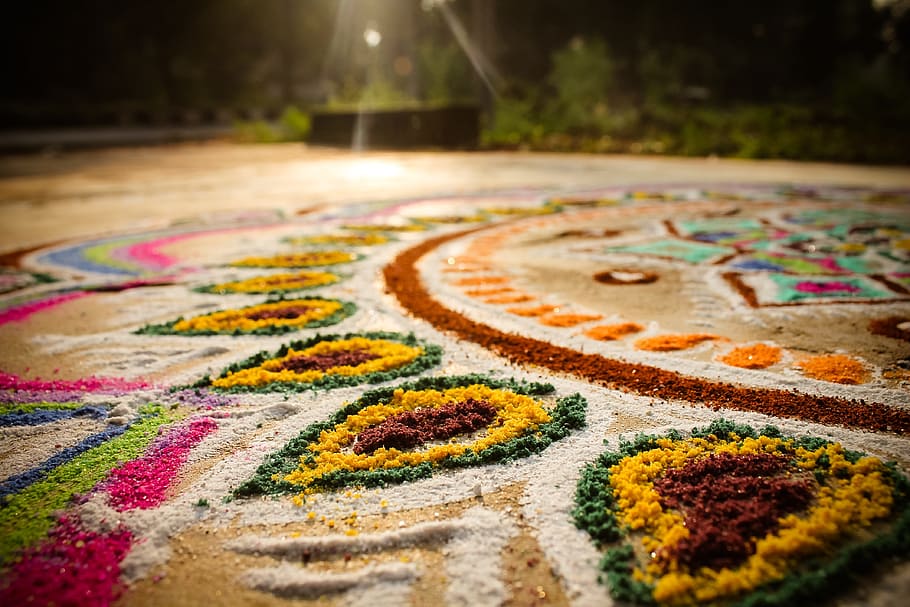
In this festival ‘Pookalam’ , which is called floral rangoli in general, is an attraction. It is known as Onapookalam or Pookalam. There are so many types of flower, basically marigold is the main blossom. It is decorated particularly at the entry point and temple premises like a flower mat. On Atham the Pookalam is called Athspoo and for this day it is comparatively small in size. It grows in size gradually with each day of this festival. In this Pookalam the Dasapushpam (10 types of flower) is used. In Kerala Pookalam competitions are common everywhere on Onam day.

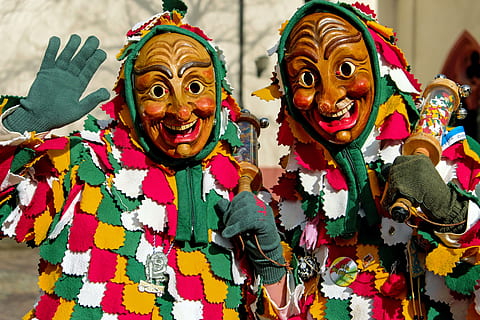
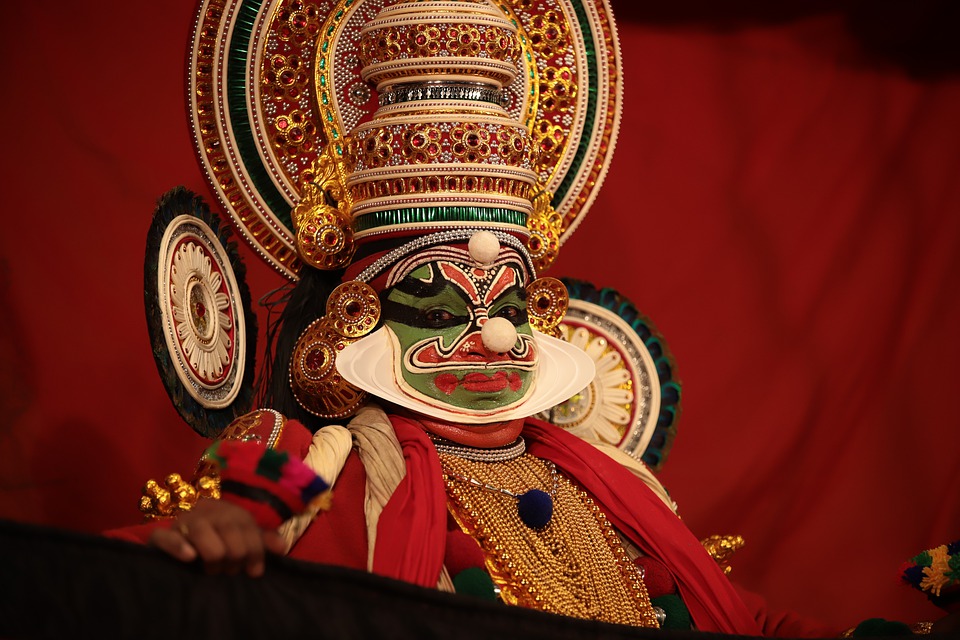
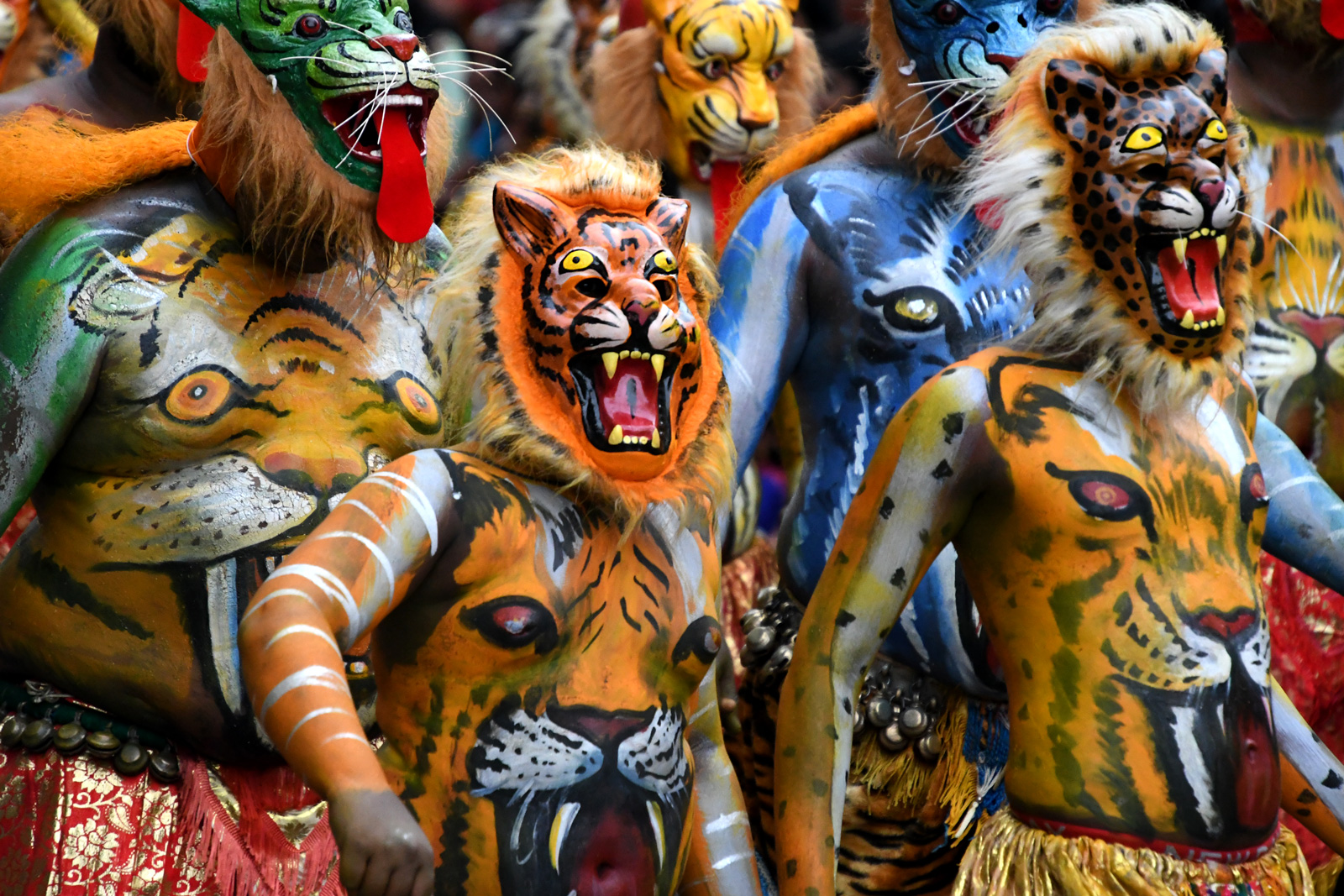
In this festival there are so many types of traditional dance performed like Kathakali , Pulikali, Kummattikali, Thumbi Thullal, Onam Kali etc. Thiruvathira Kali is a women’s dance, where they circle around a lamp. Kummattikali , which is a colorful-mask dance. In Thrissur, festivities include a procession consisting of caparisoned elephants surrounded by Kummatikali dancers. Onam Kali is a form of dance where players circle around a pole or tree or lamp,dance and sing songs from the Ramayana and other epics.  Kathakali is the most famous dance type. 

Pulikali is a different type of dance which is known as Kaduvakali during this festival where the performer is painted like tigers in bright yellow, red and black, and dances to the beats of instruments like Chenda and Thakil. It is a type of folk dance.

Another amazing part of this festival is Vallamkali which is a snake boat race. In this boat race numerous oarsmen row huge snake-shaped boats and men and women come from far and near to watch and cheer the snake boat race through the water. Particularly it happened on the Pampa River.

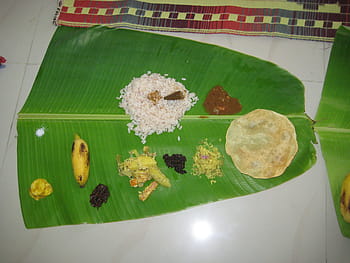
The Onam sadya, which is the feast, is  another amazing part of Thiruvonam and it is observed in every Keralite attempt . Chips , Sharkaraveratti ,Pappadam, various vegetable and soups such as Injipuli, Thoran, Mezhukkupuratti, Kaalan, Olan, Avial, Sambhar, Dal served along with a small quantity of ghee, Erisheri, Moloshyam, Rasam, Puliseri, Kichadi and Pachadi, Moru , Pickles both sweet and sour, and coconut chutney are the menu.

So it is the very interesting festival of our colourful India which is more colourful and delightful to us.

HOLI : FESTIVAL OF COLOURS

INTRODUCTION

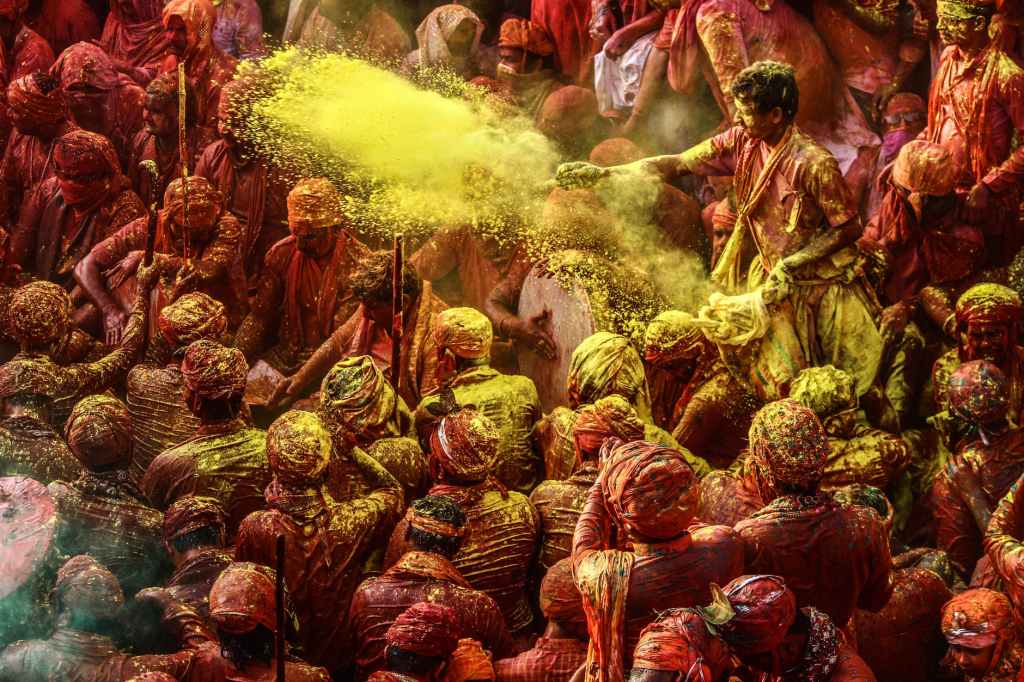
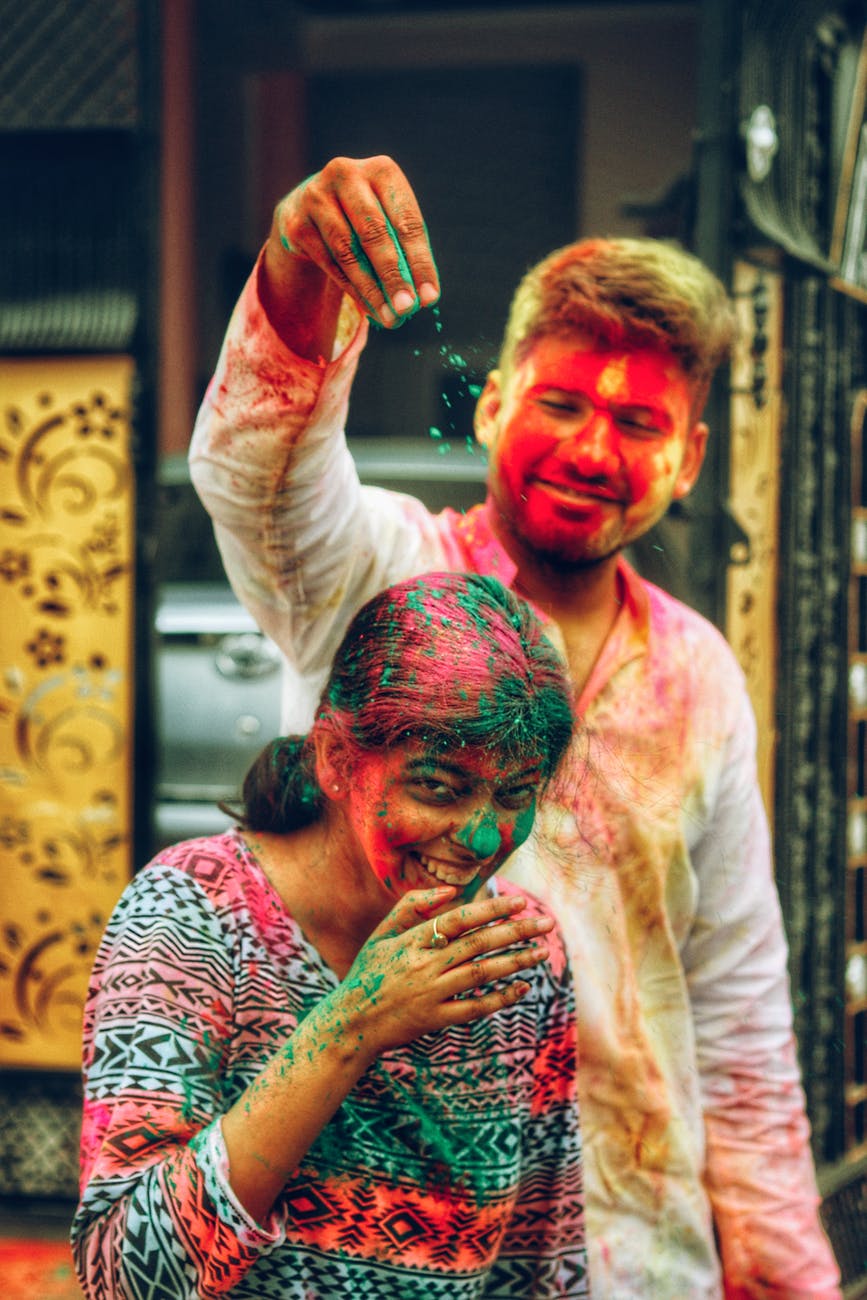
Holi is also known as the “festival of colors” in which people celebrate the day. They throw and splash the colors over friends and family. It is celebrated in the spring season of the year. It is celebrated every year by all people across the country, no matter what their faith or race is. The quality of colors are some things that bring a heap of positivity in our lives. Holi is the festival of colors. Holi is a known Hindu festival celebrated in each part of Bharat with utmost joy and enthusiasm.

HISTORY OF THE FESTIVAL

The ritual starts by lighting up the bonfire in the future before the day of Holi. This process symbolizes the triumph of excellence over the bad. On this day people play with colors with their friends and families. In the evening, they show love and regard to their close ones and celebrate it by distributing sweets. According to Indian mythology, Holi is celebrated on the occasion of the demolition of the demoness Holika by Lord Vishnu. Holika was the sister of Hiranyakashipu. Hiranya kashipu thought himself to be god and ordered others to worship him as god. He thought that no one could beat him. He also thought that he was immortal. He would kill anyone whoever didn’t follow him because of God. Hiranya kashipu had a son named Prahlad who didn’t follow his father as a god.

Due to this reason Hiranyakashipu tried to kill Prahlad. On the other hand, Prahlad idolized Lord Vishnu. Holika had an extraordinary power that she didn’t get burned from the fireplace — once wearing a unique garment. Thus, Hiranya kashipu created an idea to kill Prahlad. He planned to keep Prahlad within the lap of Holika and make her sit in a burning fire, as a result Prahlad will be burnt to death in fire. It’s believed that it had been the firm religion of Prahlad. In Vishnu, that caused the garment to hide Prahlad.

Later, Lord Vishnu appeared within the sort of Narsingh and killed Hiranya kashipu together with his claws by putting him in his lap so that the people were free from the demoness Holika and demon Hiranya kashipu. And from that day they celebrated the occasion by smearing the ash of Holika over one another. In this way the festival Holi originated. People play with colors on the day of Holi; they eat sweets and celebrate. These bright colors represent our feelings. Kids have the foremost fun at this festival by playing with colors. Balloons stuffed with colored water, pichkaris, and buckets full of colored water.

HOW IT IS CELEBRATED

On the day before Holi, we celebrate Holika Dahan. People collect wood and put fire in it. Then we celebrate it by singing songs round the hearth from that woodpile. It is dedicated to honour the myth of burning Holika and the protection of Prahlad from that fire. There is no Holi without colours. In this festival we throw colours upon one another. This is the primary means of celebrating Holi. Since Holi is known throughout the start of the spring season, the colors symbolize the recent harvest and fresh fruits and vegetables that are about to be harvested that season. The vibrant colors used to celebrate Holi’s essay in English welcome the spring season. And nothing will boost our energy state because of the bright colors.

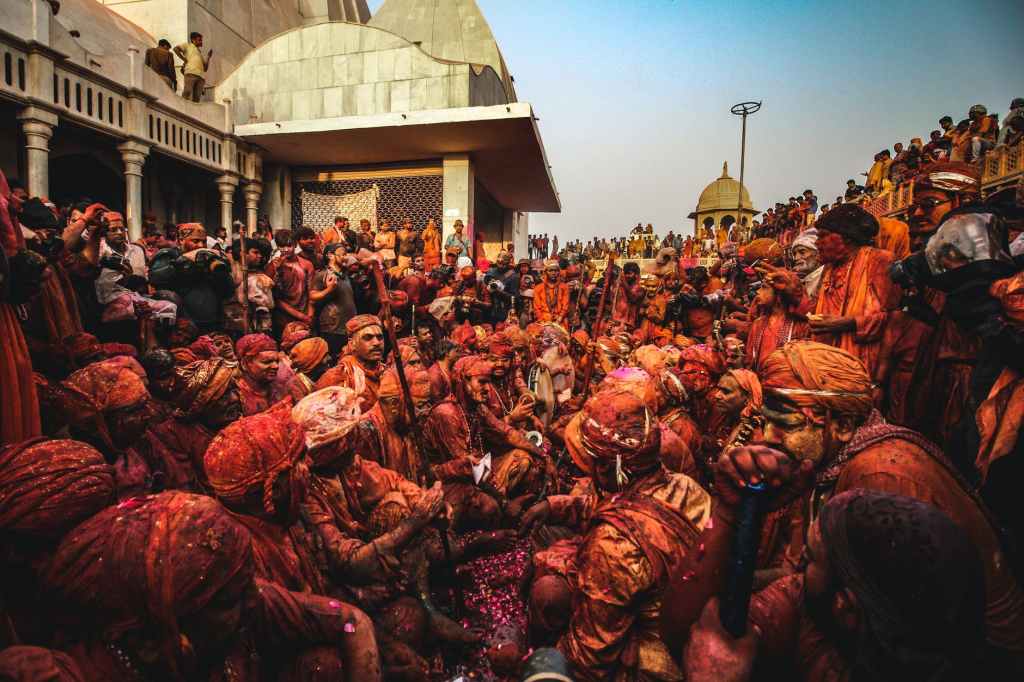
 At night people light the fire. People supply crude coconut and corn to the fireplace. The second day is the celebration of shading or “Dhuleti,” celebrated by sprinkling hued water and applying hues to at least one another. Dwarka, a dry land town of Gujarat, observes Holi at the Dwarka dheesh sanctuary and with broad satire and music festivities. Barsana, a neighboring city Mathura within the Braj scene of state. They celebrate lathmar Holi within the rambling compound of the Radha rani sanctuary.

Thousands of people accumulate to look at the lath Mar Holi once women beat up men with sticks. As those on the side-lines finally, end up insane. Everyone sings Holi melodies and yells “Shri Radhey” or “Sri Krishna.” Several foreigners visit India throughout the time of Holi to experience our culture.

Since children are thus excited about throwing colors on others, they’ll find themselves hurting others. Each festival includes a purpose. We must always celebrate it in an exceedingly good method and maintain the spirit of the festival. Holi festival is an image of our nation, and since everybody widely knows. Holi, despite caste and creed, it shows to the globe nations; yet, united we are. Holi festival brings people even a lot of firmly and makes them happier.

A society that can breach the stereotype in India .

I never feel confined by gender, by labels, by expectations, by stereotypes. I’m free to be myself.

Princess Nokia

Introduction

During the last two decades it is said that to be a women is the most precious gift a human can have . To be able to give birth to another human being that lives inside precisely 9 months at most .

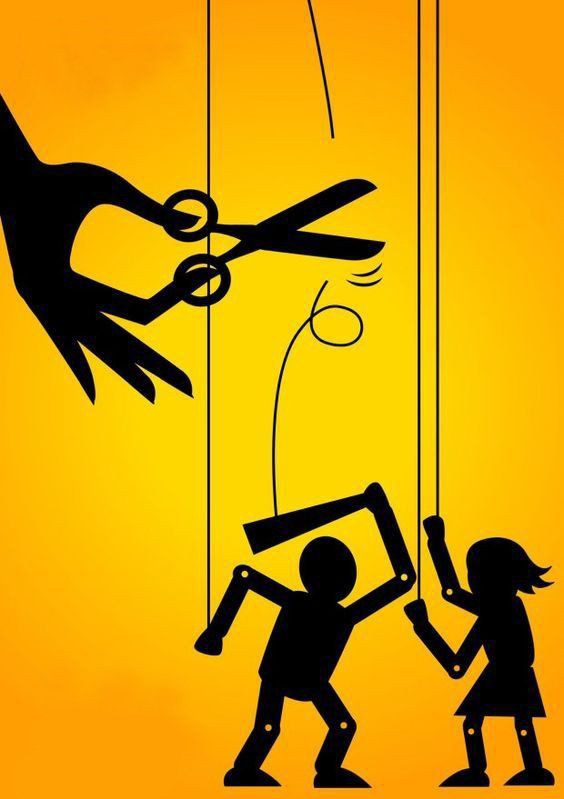
But their is another dispute that a women can only be a insider . That can fulfill the needs of the dominant society.

Isn’t these two statements are contradictory. In first one a women is a precious gift and in another she can only fullfill one’s needs but only in four walls .

Aren’t they human or a thing that can only live under the roof of men for living ?

Women have always played an important role in the society . Even in the ancient times , they were considered as an equal with the men . So what change , the air , the water , the life style or the mindset . We can also say that the stereotype mindset in society .

Years and years before people grew their ego and think about their individual benefits. Women lead life with virtue , wisdom and respect .

When it start

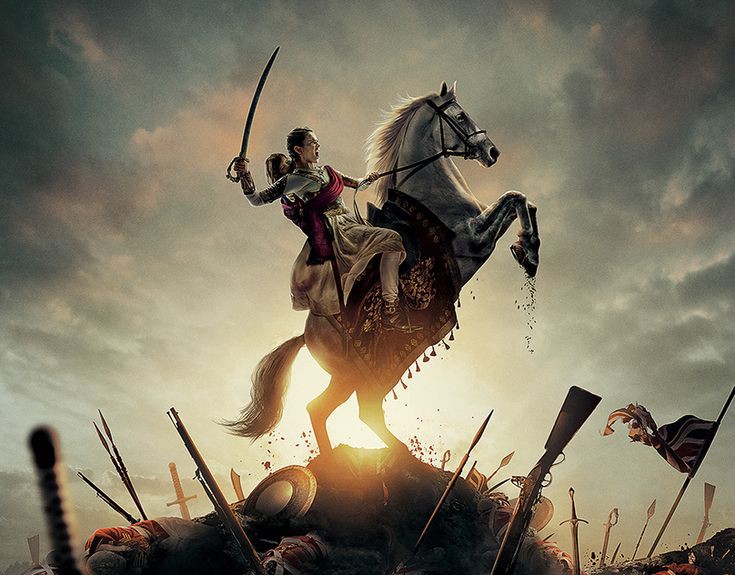
It was all not same as it was now , their were times when women rule the nation . But due to the foreign invasion , women suffer immensely . At the mediaeval times , women came to be confined within the four walls of the house .

Mediaeval period also known as ‘DARK AGE ‘ as very few women’s were found to be a ruler at that period . It was the period when women brought to the deeds where they made to be inferior to men .

They were raped and brutally killed by the demons who think they can dominate them .

Rani Padmavati, Jodha Bai, Gulbadan Begum, Nurjahan, Jahan Ara , Mumtaj Mahal, Razia Sultan , Jija Bai are some of the women who fought for their right , safety , people , family and love also saved many .

“And one day she discovered that she was fierce, and strong, and full of fire, and that not even she could hold herself back because her passion burned brighter than her fears.”

– Mark Anthony

Modern era

It’s a century of love , reliability , equality and most important individuality .

Then why women are always compared to the men . Why they questioned when they are innocent . ( Well not all are innocent and victim , just for those who are ) .

I do believe that men and women are different . Their differences doesn’t make them weak . It’s just a perspective and view of people that make them vulnerable .

But do women care , it’s their own life not to say that anyone means ANYONE can come and stamp their ‘so called ’ rules on them . Not against the male gender but to those who think they can dominate and lock them in four walls .

Not to say, if women lock men in four wall room . So what will happen to them . Umm. Let’s think , they run like a horse at the time when the room unlocked .

If OJO -MOJO can’t stay in their rooms can’t OLLE do the same . Yes she can , also kick their humpy dumpy bum.

Let’s end the topic and eat some more . It’s a 21st century donot let someone walk on you , you can stand for yourself .

“Don’t let anyone speak for you, and don’t rely on others to fight for you.”

– Michelle Obama

This editorial is written under one’s perspective . Neither against any gender nor in favour .

THE ART MACHINE- JAMINI ROY

The great artist and his great creation

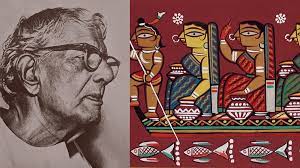
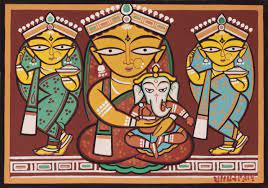
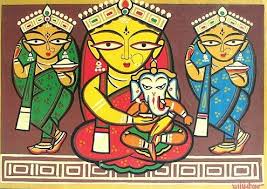
On 11th April of 1887 at Beliatore in Bankura,West Bengal the great Jamini Roy was born. His family was a simple middle class land-owner bengali family. He grew up with a lot of love for painting. His father , Ramanath Roy resigned Jamini Roy from the Government services  and was admitted to the Government College of Art in 1903 when he was 16 years only.

When he took admission in Art College then Abanindranath Tagore , the founder of Bengal School , was vice-principal of this college.Mr. Roy was taught under Abanindranath Tagore’s teaching. He was taught to print in the prevailing academic tradition by Abanindranath Tagore. He taught classical nudes and oil painting. In 1908 he finished his course and got a Diploma in Fine Art. 

Jamini Roy started his painting with the western cultural art but his heart wanted to create something folk style traditional painting. He had a huge interest in traditional cultural  painting. Actually he got inspiration from ‘Kalighat Pat’ which is a kind of ‘Patachitra’ and it is drawn by bold sweeping brush-strokes. 

In the 1st stage of his career he painted portraits for commission but in depth he felt he was not satisfied with this. After that in 1925, he saw the ‘Kalighat Pat’ and was inspired by its style of painting.

Mr. Roy painted 20,000 paintings in his life for which he is famous by calling ‘Art Machine’. He focused always on the middle class culture or lifestyle for his painting. He believed that middle class ordinary people are more important than the higher class’ or Government because middle class people are the voice of his art. He did respect them too much. 
He had three motives: to capture the simplicity of middle class people in their daily life, to make them accessible to all over the people in India and lastly to give a own identity to the Indian Art. 

In 1938, it was his 1st art exhibition in Kolkata. In 1940, his painting came to a new light and became famous . He mixed up the Bengali middle class and the European community and it was the center of his art. After that in 1946 and in 1953 his art exhibited in London and New York City. His art was exhibited on international platforms and he was awarded by ‘Padma Bhusan’ in 1954. For most of his life he worked in Kolkata. We can see his art in many private and public collections like the London, Victoria and Albert museum .

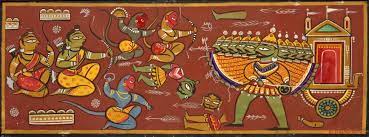
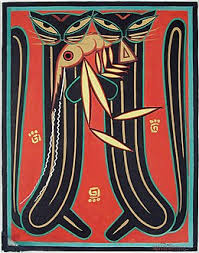
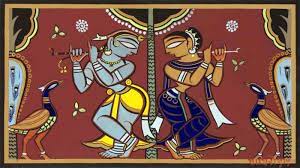
He liked to introduce himself as a ‘Patua’. His art collection is wonderful . In 1946, ‘Ramayana’ spread across 17 canvases. This painting is now displayed in the National Art Gallery .Jamini Roy created the ‘Dual Cats With One Crayfish’ series in 1968. In 1952 the ‘Bird and Two Companions’ standed out for its majestic indigo of Bengal. Besides these, ‘Crucifixion With Attendant Angels’ , ‘Krishna And Balaram’, ‘ Santal Boy With Drum’, ‘Krishna And Radha Series’ ‘Makara’, ‘St. Ann And The Blessed Virgin’, ‘Seated Woman In Sari’, ‘ Nol O Damayanti’ etc are famous creations .He was awarded by Viceroy’s gold medal in 1934 and Fellow of the Lalit Akademi in 1935. Unfortunately this wonderful personality passed away on 24rth April, 1972. 
THE GREAT ART OF JAMINI ROY

Garhwali Culture

Garhwal is a beautiful place marked by the tall mountains, cold weather and green valleys. People from all over the country visit the place to meditate and attain peace in a life full of so much chaos. The very ancient wood carving can be seen even today on some of the doors as well temples of Garhwal. All the places such as Ransi temple, Srinagar temple, Chandpur fort, Padukeshwar and Devalgarh temple comprise of architectural remains even today.

Garhwali is the main language spoken here. Garhwali language has a number of dialects too including Jaunsari, Marchi, Jadhi and Sailani. The Garhwali language is believed to have originated from a combination of- Sauraseni Prakrit, Sanskrit and Western or Central Pahari language. Garhwal is inhabited by people belonging to a number of ethnic groups and castes. These include Rajputs who are believed to belong to Aryan origin, Brahmins who migrated after the Rajputs or later, tribals of Garhwal who stay in the Northern tracts and comprise of Jaunsaris, Jadhs, Marchas and Van Gujars.

It’s Very Difficult To Describe Garhwal Or Gadhwal In Few Words. This Place Has Worldwide Reorganization As Devbhoomi As Here You Can Find A Majority Of Temples, Holy Shrines, Spirituality, Tourism And Pilgrimage. Garhwal Region Is Surrounded By Splendid Beauty Of Snow-Capped Himalayan Peaks, Heavenly Rivers And Awesome Valley That Are The Major Attraction Of Garhwal. Along With That The Intense Woods, Prosperous Heritage And Friendly People Are Additionally Defines The Natural Beauty Of Garhwal. It Is Bordered On The North By Tibet, On The South By Uttar Pradesh, On The East By Kumaon Region And On The West By Himachal Pradesh. Pauri Or Pauri Garhwal Is The Administrative Division Of Uttaranchal.

People

The culture of Garhwal presents an interesting blend of the indigenous population and traditions of other immigrants that settled here periodically. The local people of the region are associated with many tribes and work hard to earn their living. Folk dance and music forms an integral part of the people and culture of Garhwal.

Beauty of the place

Garhwal is a delightful spot set apart by the tall mountains, green valleys and chilly climate. Individuals from everywhere throughout the nation visit the spot to think and achieve harmony in an actual existence brimming with so much tumult. The extremely old wood cutting can be seen even today on a portion of the entryways also sanctuaries of Garhwal. This place has worldwide sort-out as devbhoomi and here everyone will majority of temples, holy shrines, spirituality, tourism and pilgrimage.

Language Spoken

Garhwali is the primary language spoken in this region. Garhwali language has various lingos also including Jaunsari, Marchi, Jadhi and Sailani. Garhwal is occupied by individuals having a place with various cultural gatherings and ranks. The principle languages spoken here are Hindi, Kumaoni, Garhwali, Bhotiya and Jaunsari.

Songs and dances

Folk songs of this area mirror an essential effortlessness and simple feelings generally got from the earth of harmony, peacefulness and the open nature all around. The subjects of tunes are justifiably connected with different farming exercises, their pillar and the incredible love for the land.

Folk dances of the area are a part for amusement and entertainment and applauding the nearby Gods. Normally most of the dances performed in groups. These society moves are primarily affected by the reverential connection of the individuals with Natraja, the God Shiva, and the relationship of Pandava of Mahabharata to the Garhwal Himalaya.

Dresses

Dresses for Men

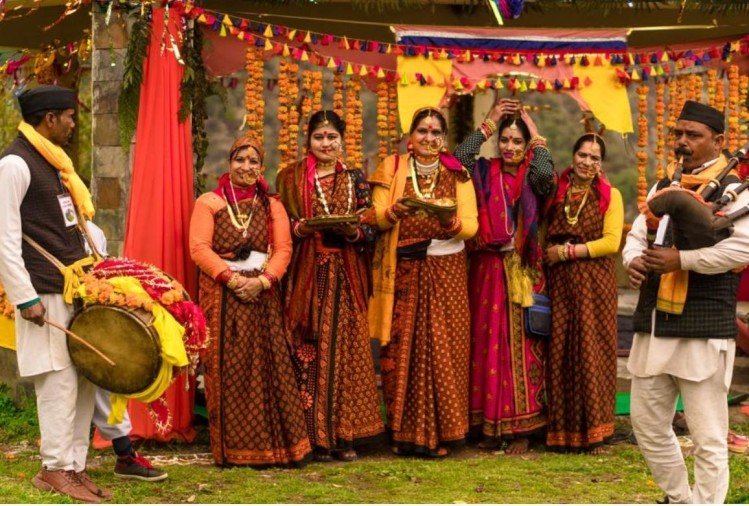
The traditional clothing of men wears kurta and Pyjama or Churidar along with a Topi or a cap. The age of the men matters for wearing of topi or cap. During the occasion of the wedding the males wear yellow colour cotton Kurta with dhoti.

Dresses for Women

Married womenfolk are dressed in silvery jewellery known as Hansuli which decorates the spouse’s neck along with guluband. Even though they wear their old-style clothes to respect their heritage.

WARLI- THE TRIBAL ART

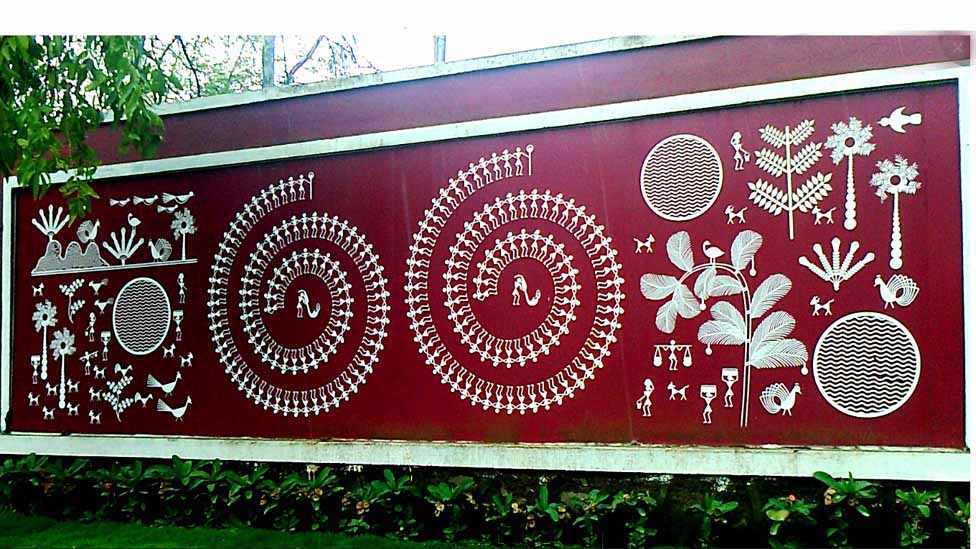
Tribal art is the visual arts and material culture of indigenous people. Warli is one of the Tribal art forms. India is a place of culture and Warli is a cultural folk style art. It is created by the tribal people from North Sahyadri Range in Maharastra, India. 

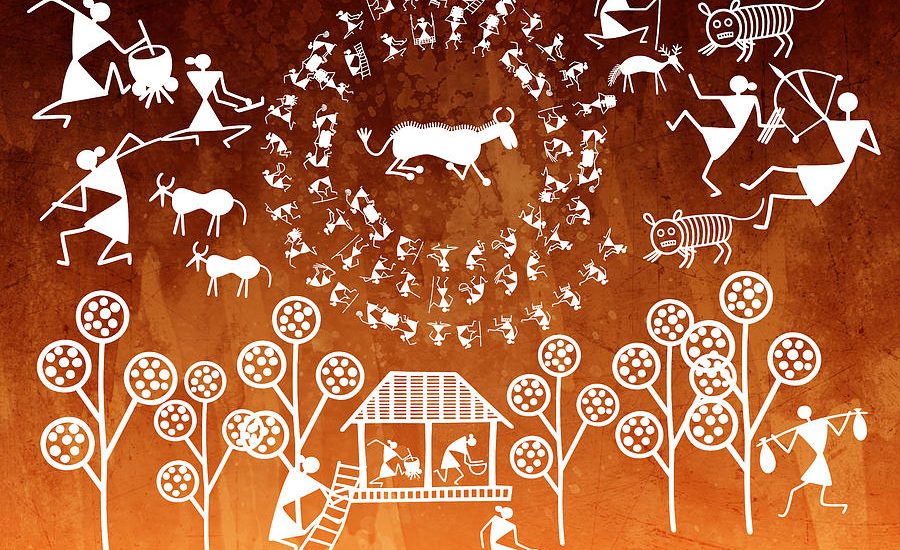
Warli painting traditions in Maharashtra are among the finest examples of folk culture. The Warli painting is created with the concept of Mother Nature and elements of nature. This type of painting was not discovered until the 1970s.Warli art is believed to have originated 2000years ago. 

The Warli painter’s main way of their life is farming and a large source of food for the tribe. So they greatly respect nature and they create the Warli art by centering this. The Wrli artists use their clay huts as the canvas.Basically this art is too simple to draw. It is characterized as geometrical shapes. The walls are only decorated to mark special occasions like weddings,festivals or harvests.

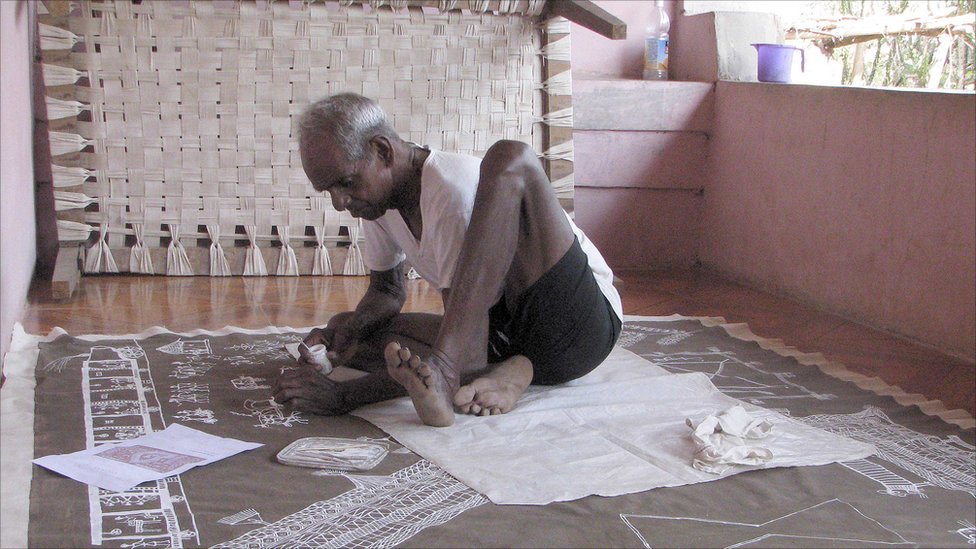
For this painting the preparation should be great. According to the Warli artists, to draw Warli on the clay huts there is some pre – preparation . Firstly , the walls should be covered by cow-dung, next earth and lastly with the reddish-brown terracotta paste. Then a paste of powdered rice and gum has to be prepared and as pens the artists use a thin stick of Baharu tree. And the upcoming result is the Warli paint. One interesting thing is there is no straight line in the Warli paint. The art is usually crooked lines, dots , circle , square , triangles and others geometric design. 

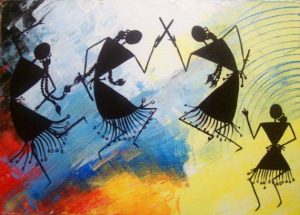
We must say that whoever discovers this art style he should be too intelligent because this art style has a symbol in every touch. This painting is a visual poetry where its evry symbols stand for a significance. Like, the circle represents the sun and moon. The  square represents the sacred land and the triangle represents trees and mountains. Square is the central motif in most of this type of painting. There is one more thing by which you will be more interested that is the central motif of this paint is such as pottery sense of hunting , fishing or farming , dancing or festive mode etc. Actually this type of painting indicates the daily life of villagers , which is apart from other modern art styles. You can notice in this art the ‘Tarpa dance’- actually tarpa is like any instrument , different men play it turn by turn. When music plays the villagers including men and women join their hands and move in a circle around the tarpa players.   

 But here I have a point to tell you that Jivya Soma Mashe , is the artist in Thane district who has played a great role in making Warli paint famous.

But all art is disappearing in this digital life . it is a matter of concern but all are not the same in this world. A few kind hearted people are still the same as they were in the past , and keep this wonderful traditional culturing art. Thus we can mention a saviour of this culture , Govardhan Eco Village in Thane district that keeps this painting alive by providing Warli artists a platform to display their art. In 2016 a group of Japanese artists made an effort to keep this art alive. They adopted the Ganjad village in Palghar district. To promote this art , this Japanese group has also been decorating huts according to the formula of Warli paint. By the way, Dahanu is one more village to keep this painting alive .  

The New Silk Road

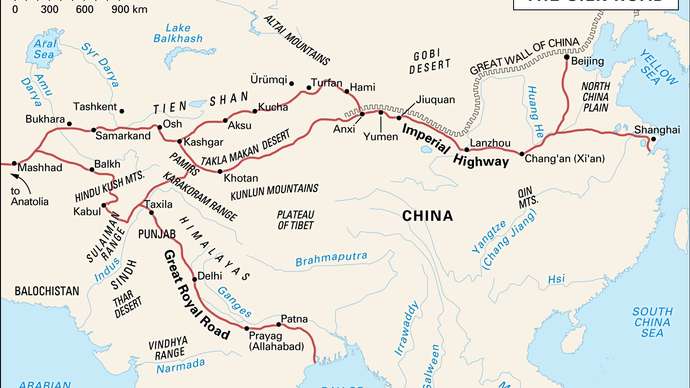
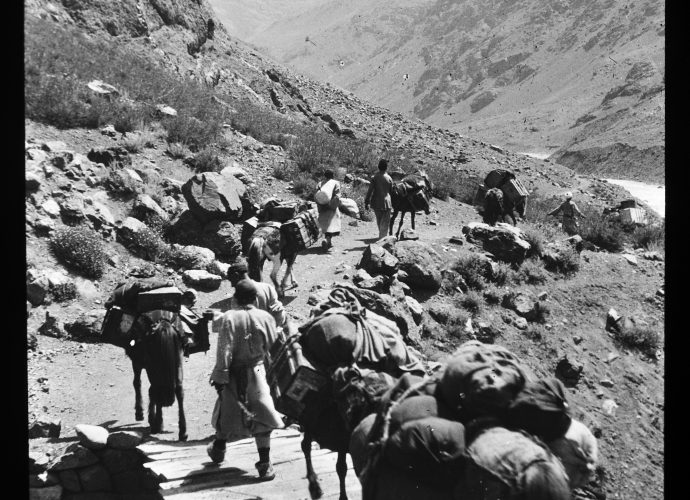
The Silk Road also called Silk Route was an ancient trade route, linking China  with the West, that carried goods and ideas between the two great civilizations of Rome and China. Silk went westward, and wool, gold, and silver went east. China also received Nestorian(Eastern) Christianity and Buddhism(from India) via the Silk Road.

The Silk Road began in north-central China in Xi’an (in modern day Shaanxi province). A caravan track stretched west along the Great Wall of China, across the Pamirs, touching the Indian province of Ladakh, then through Afghanistan, and into the Levant and Anatolia(Turkey). Its length was about 4,000 miles (more than 6,400 km). Goods were then shipped to Europe via the Mediterranean Sea.

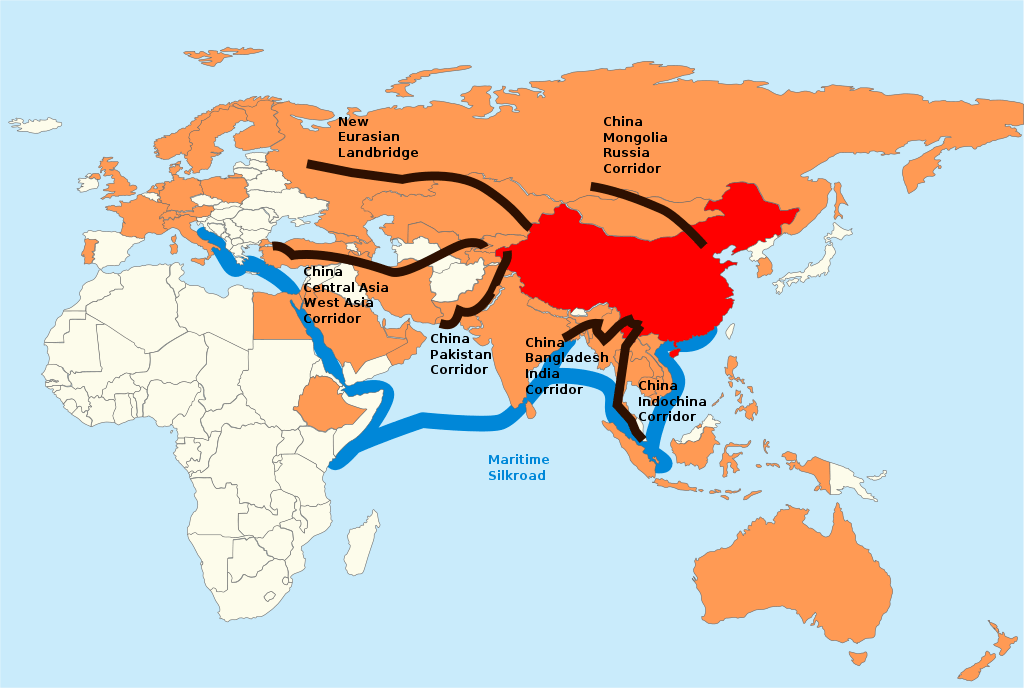
China, now a global superpower seeks to revive this ancient trade route to open new channels of trade with the West in light of various geopolitical and border disputes with her neighbouring countries.

Parts of the Silk Road survives in the form of a paved highway connecting Pakistan and China’s Uyghur Autonomous Region of Xinjiang. In the 21st century the United Nations planned to sponsor a trans-Asian motor highway and railroad. The Silk Road also inspired China’s Belt and Road Initiative, a global infrastructure development strategy authored by President and General Secretary Xi Jinping. The Asian Infrastructure Investment Bank and the Silk Road fund will be the financing this gigantic project.

It’s flagship projects include the China-Pakistan economic corridor(CPEC), where China will fund the construction and development of a big port in Gwadar, Pakistan for trade and maritime shipment to Africa & West Asia.

China is investing heavily in BRI which includes many railway, energy sector, roadway and agriculture projects. Which is not surprising as the country being the world’s biggest oil importer, it’s energy security is a very important concern while current sea routes used to import Middle Eastern Oil continue to be frequently patrolled by the US Navy.

It remains to be seen whether the modern revival of the famous trade route is a successful endeavor.

Ladakh – The link between India and Central Asia

Ladakh, situated in northernmost India bordered by the Tibet autonomous region to it’s east, the Indian state of Himachal Pradesh to it’s south, both Indian Jammu & Kashmir and Gilgit-Baltistan(PoK) to it’s west and the southwest corner of the Chinese Xinjiang autonomous region across the majestic karakoram pass in the far north, has always been a land of intrigue. The name ‘Ladakh’ means the land of high passes is full of great mountain passes like the Karakoram, Khardungla etc.

The largest town and capital of Ladakh is Leh, followed by Kargil. The Leh district contains the Indus, Shyok and Nubra river valleys while the Kargil district has the Suri, Dras and Zanskar river valleys. Being administrated as a union territory recently, it is the largest and second least populous union territory of India.

Since past, Ladakh has been important due it’s strategic location at the crossroads of important trade routes. Most notably the renowned Silk Road, which was and still is a network of trade routes connecting the East and West, and was key to the economic, cultural, political and religious interactions between these regions from the 2nd century BC to the 18th century. It primarily refers to the land but also sea routes connecting East Asia & Southeast Asia with South Asia, Persia(Iran), the Arabian Peninsula, East Adrian and Southern Europe.

Due to its contiguity with Xinjiang and Tibet and its close proximity to Central Asia, and enjoying a central position in the network of overland caravan routes that were linked to the Silk Route, Ladakh acted as an important gateway in the Indo-Central Asian exchange of men, materials and ideas through the ages. The great mountain barriers of the Hindu Kush, Karakoram, Kun Lun mountains and western Himalayas where not successful in stopping the trade from thriving.

The Central Asian Museum in Leh celebrates this rich cultural & trade history with Central Asia having many artifacts, photographs and art installations depicting trade through Ladakh. Notable exports to Central Asia were the famous Pashmina Shawls, Tea, Indigo, Coral, Salt etc. Imports from Central Asia were Bukharan and Kokandi gold coins(from the area which is now the country of Uzbekistan), Silk Cloth, Russian currency etc.

The trade and the caravan traders even helped in the urbanisation of Ladakh and giving it’s unique identity.

Ecommerce in India!

So let’s have a look that what does ecommerce mean~ E-commerce is the activity of electronically buying or selling of products on online services or over the Internet.

And if we talk about “Ecommerce in India” then, India has an Internet user base of about 696.77million as of May 2020, about 40% of the population. In 2017, the largest e-commerce companies in India were Flipkart, Snapdeal and Amazon. In 2018, Amazon beat Flipkart and was recorded the biggest ecommerce in India in terms of revenue. And it’s rapidly growing up day by day.

In India, cash on delivery is the most preferred payment method, accumulating 75% of the e-retail activities. Demand for international consumer products (including long-tail items) is growing faster than in-country supply from authorised distributors and e-commerce offerings. Long tail business strategy allows companies to realize significant profits by selling low volumes of hard-to-find items to many customers, instead of only selling large volumes of a reduced number of popular items. The term was first coined in 2004 by Chris Anderson.

In 2017, the largest e-commerce companies in India were Flipkart, Snapdeal and Amazon. In 2018, Amazon beat Flipkart and was recorded the biggest ecommerce in India in terms of revenue.

And some of the ecommerce sites are:

1. Amazon.in

2. Flipkart

3. Snapdeal

4. ebay India

5. IndiaMART

6. Shopclue

And so on…

But one should properly check the product and should take a clear look in the mind that this product is the only one which I want to purchase and they’ve can go on but inspection of the product must be the first priority of the customer.

The Art of Rogan Painting

India is a diverse country, rich in age-old traditions and culture. Throughout its history, India has witnessed the emergence of many exotic art forms and craftsmanship. However, with the rise of cutting-edge technology of industrial textiles, many traditional craft forms have taken a massive hit. Rogan painting is a classic example of an enthralling yet sadly dying art. 

What is Rogan Painting?

Rogan painting is a 400-year old inherited traditional textile craft of Gujarat. It is considered to be the oldest and most challenging printing art in the history of textile. The word Rogan means oil in PersiaWith origins in Persia, it was brought to India around 300 years ago, even though there is not enough historical evidence to support the statement. 

Preparation of the Ingredients

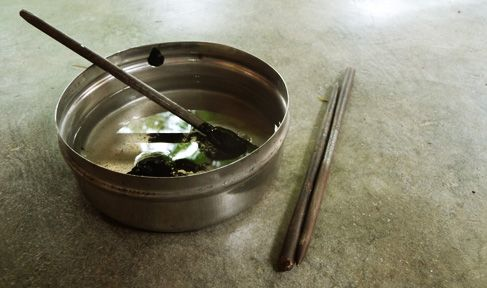
The chief ingredients required for Rogan painting are castor oil, wood, kerosene oil and dyes. The first step in the painting is the preparation of Rogan paste. 

After preparing a furnace and selecting a suitable aluminium container, the local craftsmen boil a litre of castor oil for a minimum of four hours. The time required for boiling may vary depending upon the quantity of the oil taken. Then, they continuously stir the oil until it is time to remove the container from the furnace to let it cool down. While boiling, the castor oil may catch fire, after which it is immediately taken out and covered with a lid. During this, the impurities present in the oil gets thrown out in the form of fumes. This process is repeated several times until the oil forms a thick, gelatin-like consistency and turns yellowish. 

Traditionally, the dyes used in Rogan painting were derived from organic, natural sources such as stones and plants. But today, synthetic dyes are used too. Red, yellow, blue, white, green, and brown are the primary colours used in the painting. 

A manual stone grinder was used to mix naphthol dyes and white chalk powder and prepare the colour paste. With the gradual addition of water, the required consistency of the paste is reached. The Rogan paste is added to the colour paste and ground until it forms the desired soft, smooth, gelatinous dye paste. 

Process of Rogan Painting

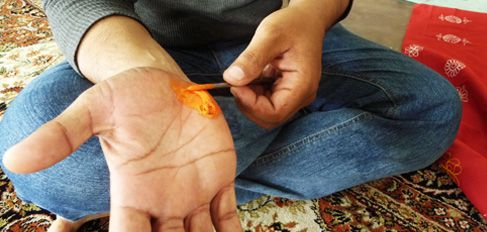
The process of painting is a very tedious and cumbersome task. Initially, the craftsmen lay the fabric to be painted on the floor. Next, they take a lump of the dye paste and put it on the palm of one hand. They hold a suya rod or a metal stylus in the other hand and mix the thick paste till it stretches into a thread-like structure. 

They carefully twist the rod to create beautiful motifs and patterns across the fabric without the rod touching the cloth. After that, they fold the fabric and press it evenly to obtain an identical impression on the other half of the fabric. Lastly, the fabric is left out in the sunlight for about six to seven hours to let it dry.

The intricate motifs that embellish the fabric, such as geometric flowers, peacocks, the tree of life, etc., are inspired by the history and folk culture of the Kutch region of Gujarat.

Originally, the Rogan Art was used to adorn the trousseau of a bride. But due to the limited resources, meeting the market demand has become a challenge. From almost becoming a dying art to gaining worldwide recognition, Rogan Art sure has come a long way.

ARE WE LOSING OUR CULTURE AS A NATION

India is, the cradle of the human race, the birthplace of human speech, the mother of history, the grandmother of legend, and the great grandmother of tradition. our most valuable and most instructive materials in the history of man are treasured up in India only. India is country whose foundation are culture and tradition. Indian culture is several centuries old and consist of ethical values and traditional practices. Today in 21st century, we have evolved, it’s a century where we have access to different societies and part of the globe. We are getting to know about the world and in this process, we are losing our culture which is our identity, we are influenced towards the western world and western culture. Culture is one of the strongest pillars of our country and I feel that we are losing it day by day. Although globalization has played an immense role towards the economic growth of our country, but when its dark side is witnessed, we get to know that a great amount of cultural identity and traditional values have been lost, which cannot be regained through any amount of economic prosperity.

 It’s not a doubt that we have made English a superior language. If a person speaks his mother tongue, we may judge him on the other hand when someone speaks fluent English, we are impressed by it. Sanskrit is India’s one of the oldest languages which seems like it doesn’t exist much. Few years ago, touching feet of elders as a greeting was a mandatory practice but today its not followed in many parts of our nation. If we talk about Food, we want to eat pizza and burger over dal roti and when it comes to clothing, we find our comfort in western clothes. Today, for most of us western dresses are our daily wear clothes and not the traditional ones. If we talk about sports, our traditional games like kho-kho, kabaddi and our national sport Hockey is not much famous in our country. If given a choice we rather watch and play cricket, football or the digital gaming world like PlayStation games which is now the favorite of our youth.  People get annoyed hearing Indian music which have Ragas, Talas which give us pleasure. But on the other hand the they like pop, rock and hip-hop. India offers a number of classical dance each of which can be traced to different parts of the country and because of the western outlook most of them tend to follow it. Some festivals are associated with renowned historical or cultural places like the Khajrao festival, Taj Mahoutsav, etc. We must give equal importance to the Indian culture as we are Indians and shouldn’t let any culture to come in our way. 

Culture is the name for what people are interested in, their thoughts, their models, the books they read and the speeches they hear. Respect and preserve our culture because it gives us an identity and defines us- what we are, who we are and where we have come from, it makes us unique. Don’t forget your roots and be proud of our culture.

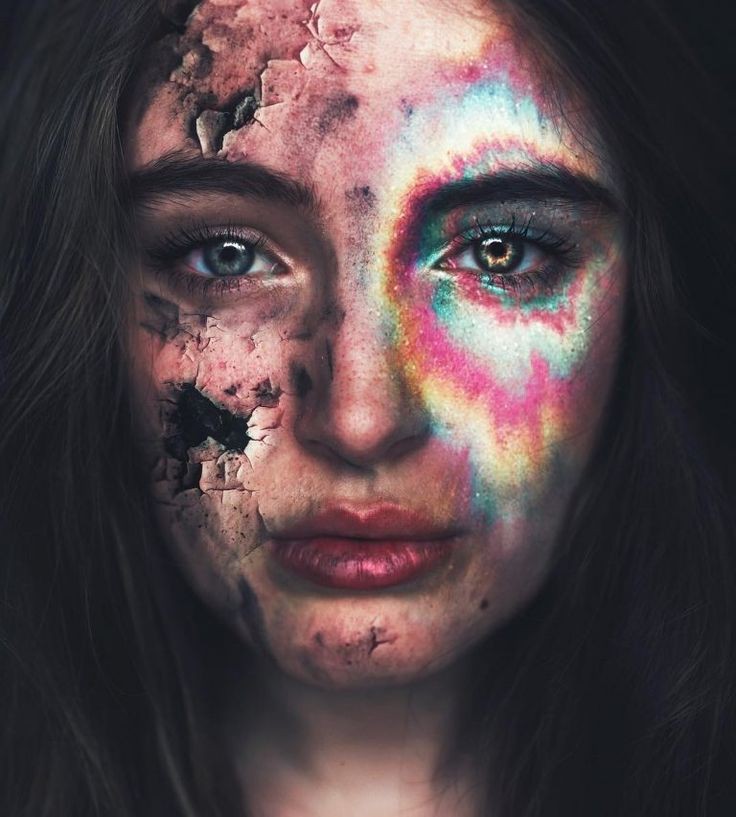
Skin problems!

So before I write this article I want to say that doesn’t matter how you look how we look the most precious and beauteous thing in this world is the inner beauty!

Skin disorders vary greatly in symptoms and severity. They can be temporary or permanent, and may be painless or painful. Some have situational causes, while others may be genetic. Some skin conditions are minor, and others can be life-threatening.

While most skin disorders are minor, others can indicate a more serious issue. Contact your doctor if you think you might have one of these common skin problems

There are many different types of skin disorders. Here is a list of 25 with pictures

1.eczema.
2.psoriasis.
3.acne.
4.rosacea.
5.ichthyosis.
6.vitiligo.
7.hives.
8.seborrheic dermatitis.

And so on but all of these skin diseases can be cured. Don’t take a lot of time just sitting at the home and thinking about these diseases go to a dermatologist and make sure you have a Open conversation with him/her. You’ll definitely get the better results after that treatment.

And guys if you’re bullying someone due to these diseases then please this article is not for you! You need to be honest with yourselves that am I giving my best to everyone.

Cultural Relativism

Human is a social animal. He cannot survive without a society. Society gives birth to culture. The ideas, customs, practices, beliefs of a society forms it’s culture. This culture incorporates with the lives of the people belonging to a society. Cultural transmission starts from right when we are born and continues till we live. Our culture is given to us as our legacy which must be practiced and preserved. Therefore it is a given that different societies have different culture and cultural practices, some more different than others.

Generally, it has been seen that there is this notion among people that our culture is superior or that a particular culture is inferior to our culture. An “Us vs them” mentality is created which leads to perception bias in our favour. This leads to cultural misinterpretations and generalisations about other cultures. Sometimes these beliefs are so strong that they take forms of prejudices, disparity, bullying, intolerance, wars, genocide etc.
A well-known instance of this is the Nazi Germany and the holocaust of Jews.

It’s not our differences that divide us, but our own inability to accept those differences.

This is where ‘Cultural Relativism’ comes into light. Cultural relativism refers to the ability of a person to understand a culture on it’s own terms and not being judgemental towards it. It simply means that we should try to understand cultural practices of other groups in their own cultural context. This term was first used philosopher Alain Locke. It lays emphasis on the fact that people from different cultures can have relationships with respect and acknowledgement of each other’s diverse lives.

The basic goal of cultural relativism is to promote a sense of unity and to demolish the views pertaining to superiority of a particular culture over others. It also argues that there is no particular standard of judging what is good or evil and every decision is individually decided in each society. The bottom-line is that there no right or wrong in an ethical system and it is our own perception which tints our sense of morality.

Cultural relativism has two broad categories, absolute and critical.
The former argues that whatever happens within a culture has nothing to do with outsiders and therefore should not be questioned. The later forms questions about the practices in terms of who is accepting them and why.

We need to understand that there exists absolutely no culture that can be called Perfect. Cultural relativism has it’s flaws of course. Sometimes in the name of culture, we violate Human Rights but inspite of that, it is very important because it gives us objective insight, cross cultural empathy and makes us realise similarity among human cultures. It enables us to leave behind our biased mind sets and to see things in new light. It can also help to put a check on discriminatory practices and prejudiced behaviour which originates as a by-product of cultural misinterpretation. Cultural relativism important in studying and understanding other and different cultures because first and foremost we have to realise that our perception can be prejudiced while we are studying another culture. In a nutshell, cultural relativism is what we need to create a world which is equally hospitable and welcoming for everyone irrespective to their culture.

How Indian culture proves that Old is gold?

“If any individual is judged by his character and morality, society is judged by its culture and tradition” said Dr S. Radhakrishnan.   Culture means the way of life followed by a community that consists of custom, tradition, religious practices and the human values. Every culture has its distinct positive features.  The culture of a community never remains same.  It is evolved over a period and is always in the process of reforming itself.   

Even from very ancient time, the Indian civilization was highly developed.  Many factors have contributed to the cultural formation.  Our scriptures like Vedas and Upanishads are considered as immense treasure of knowledge.  There are various other scriptures like Ithihas, Purana etc.  Bhagawad Gita, Ramayana and Mahabharata have taught us how we should conduct ourselves.   We have developed very good art like Music, dance, paintings, sculpture etc.  While the temples like Ramanathapuram on the southern corner of India are noted for their workmanship, novelty and sculpture, temples like Rishikesh and Badrinath in north are considered as the very abodes of God.  Hinduism is one of the oldest religions of the world and great saints like Adi Sankara, Ramanuja, Sri Ramakrishna Paramahamsa and Swami Vivekananda have enriched our religion by their interpretations.  From the day Swamy Vivekananda addressed the Parliament of Religions at Chicago; many people have turned towards India for spiritual knowledge.  Though Adi Sankara and other saints have set Self-realisation as the ultimate goal, it was Sri Ramana Maharshi who highlighted its importance and showed the way for achieving that goal.    All these developments have contributed to India a rich cultural heritage and tradition.  India has thus inherited a great tradition and a way of life which formed the basis of its culture. 

Though Mughals came and then the British came and ruled over the land, they could not destroy the culture.  The Indian culture has now become universal and it has become a land where different religions and culture survive, co-exist peacefully and flourish.  Now there are different communities and nationals in India pursuing their own beliefs and faiths.  Though India presented a picture of diversity, India has grown as a national that welcomes all ideas, philosophies and doctrines.  It is a land where people of different faith live in peace and harmony, like a family bound in mutual love and affection. 

Indians have adopted and assimilated the foreign culture and yet they have retained what is good for their own culture.   They may be communicating in English, traveling in Mercedes, dressing in western style but they never deviate from their basic tradition and culture. The car symbolizes the modern trend but its name, Maruti, symbolizes the legendary past.  Those who migrate to foreign countries adopt the culture of the country to which they migrated without deviating from their own culture. Like , I f you ever met any family who use to live in USA and still touches feet of elders. Wherever Indians go, whether USA or Dubai, along with their spouses, children and belongings, they make it a point to carry the Indian culture also with them.   This is evident from the various cultural programmes being regularly organized in foreign countries like USA, Dubai or Singapore.  Music Festival is a regular annual feature in Cleveland, USA and leading Indian artists take active part in them.  Indian temples are seen in most of the States in America, the Venkatachalapathi temple at Petersburg being the biggest among them.

Cinemas, the computer, air linkage, information technology have all brought the inhabitants of the world closer.   The world which remained unreachable and wide apart before has become a global village now.  As the geographical boundaries became mere symbols, people to people contact became more frequent.  As people mingled with each other, we find a cultural synthesis taking place in India now. 

Some adverse changes have also come in the Indian family tradition.  Previously, the wife used to be the home maker, attending to house hold duties, managing the children, attending to religious practices etc. Now, according to the modern trend more and more house-wives are going beyond their home-making avocation and take up responsibilities in business undertakings. “Now, for women, there is life even after marriage” commented a friend in a lighter vein.  Women are well educated and became partners with men in bringing about progress and prosperity.  Thanks to the winds of change blowing over and thanks to the free and liberal outlook created by modern era, India now finds itself free from its outmoded customs and practices. Though woman has proved her enormous power as a contributor for nation building, it cannot be denied that she has left a vacuum at the home front.   We need to bring up a system where our culture and tradition should be passed on to our children also.  Woman has a higher responsibility in this sphere.        

It would be pertinent to conclude this essay with the quotation of Swami Ranganathananda, the late President of Ramakrishna Mission, Kolkata:  “Change is the order of the day.  Everyday, we witness changes occurring all around us and even within us.  Society may change in infinite ways in response to historical necessities but that is no reason why cultural values underlying all human endeavors should change.”  Let us all be proud of our culture and cherish it for ever.  

So, we not only say that we are proud of being and Indian but we really are. It is always indian culture which gave us a different definition or identity infront of whole world. Like, only by seeing a Foreigner you can’t say from where he/she belongs from, but, any Foreigner can easily say that he/she belongs from india. Jai hind.

See yaa…