Which countries are open for Indian tourists.

Destinations such as Maldives, Croatia, South Africa, Switzerland, Russia, Lebanon, Germany, Ukraine, UAE, Turkey and Iceland have started allowing non-essential travel, subject to vaccination or other conditions.

India’s biggest online travel portal, MakeMyTrip, has seen a 35% jump in searches for international leisure packages in July compared to that in the previous month, with the Maldives and Russia ranking high on the list of preferred destinations.

“As positivity rates drop, we hope it encourages more countries to open their borders to Indian travellers,” said Vinay Malhotra, regional group chief operating officer, South Asia, Middle East and North Africa and Americas at visa processing firm VFS Global.

Aloke Bajpai, group CEO at Ixigo, said search enquiries on the company’s platform for travel to overseas destinations have seen 80-85% increase in July as compared to last month. “With several countries easing travel restrictions, interest in leisure international travel to countries such as the Maldives, Switzerland, Germany, Qatar and Turkey is rising,” he said.

Some countries such as Qatar and Switzerland require a full vaccination certificate (Covishield) from Indian travellers. Iceland has given an option to travellers to either submit a full vaccination certificate or a Covid-19 recovery certificate. Unvaccinated travellers can travel to countries such as the Maldives, Russia, Germany, Turkey, Nepal and Ukraine by providing a negative RT-PCR report issued within 72 hours of departure.

To cash in on the increasing interest, SOTC Travel has introduced a range of offers such as ‘Buy One Get One Free – Get your Companion’s Holiday Free’ for overseas destinations. Daniel D’souza, country head for leisure at the company, said the most popular destinations in terms of enquiries include Dubai, the Maldives, Russia and Switzerland. The company has seen a 35-40% increase week-on-week in enquiries, he said.

Kanika TTekriwal, CEO, JetSetGo Aviation, said travellers are still conscious about the high likelihood of contracting the virus via regular flights. As a result, her private jet and helicopter services company has been seeing 10-12 booking queries each day since air travel suspension was lifted for the Maldives and some European countries.

PANDORA EFFECT: Why curiosity usually beats the common sense.

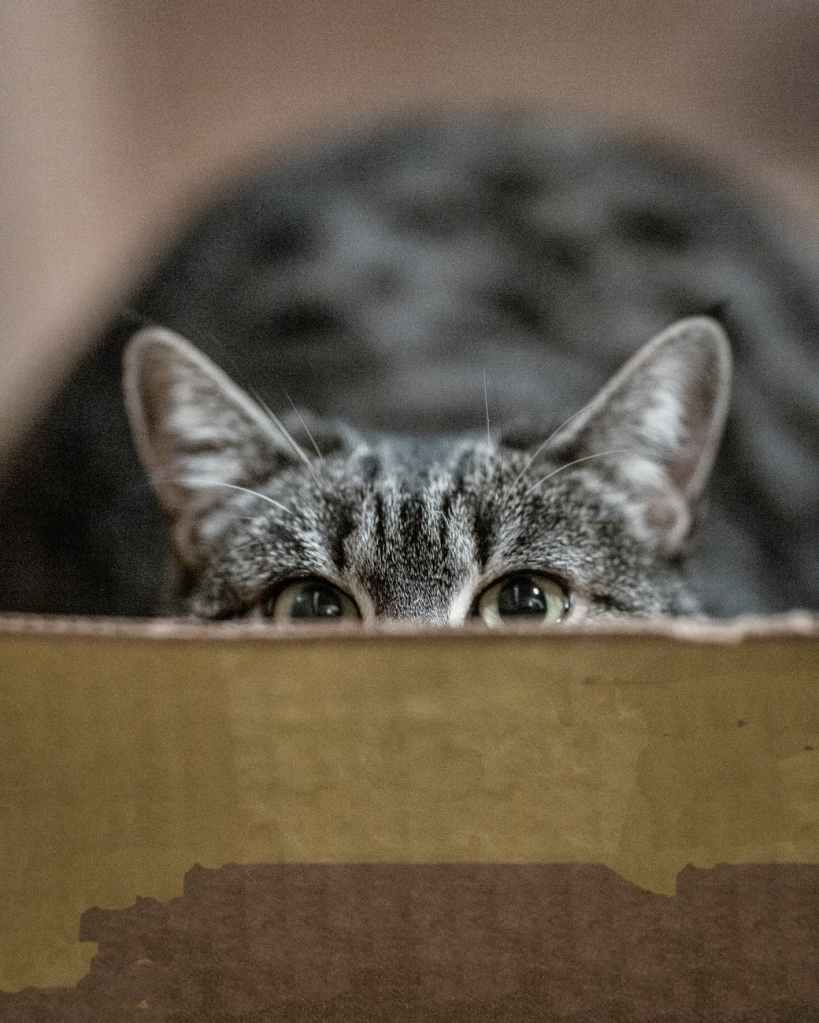
Curiosity killed the cat, but for a while I was a suspect.

What is pandora effect?

The relentless human desire to know – to satisfy curiosity at all costs –People are more likely to open the box if the outcome is uncertain and expectedly negative than if the outcome is certain and neutral or certain and negative can be more of a curse than a blessing,. We refer to this effect as the Pandora effect.

Whether it’s surreptitiously checking your partner’s phone for signs of infidelity, avidly reading celebrity gossip mags, or hunting people down on social media, too much curiosity can be like opening Pandora’s Box: the urge to do it can outweigh any benefits you might get from knowing, and it can seriously affect your happiness and wellbeing.

Opening the box

Curiosity is a spark behind the ……..

The researchers provided volunteers with a box containing prank pens that gave anyone clicking the button at the top a painful but harmless electric shock. The participants were randomly allocated a box containing either pens with a certain outcome or pens with an uncertain outcome. One group were given five pens with red stickers telling them the pens would give an electric shock and five pens with green stickers indicating the pens wouldn’t give an electric shock. The participants in the uncertain outcome group were given 10 pens all marked with yellow stickers indicating that they might or might not give a shock.

It turned out that the volunteers were far more likely to click the uncertain pens than either of the other sets of pens, and even more than both of the certain groups combined.

Curiosity leading to unpleasant experience

The cure for boredom is curiosity but there is no cure for curiosity.

Results like this show we have an innate desire to resolve uncertainty even if we know that doing so will have no positive effect and may even be unpleasant. The researchers suggest that we might make better decisions in life if we first stop and consider whether our choices will have positive or negative outcomes.

Perhaps, for example, if we consider the harmful effects of rubbernecking before we see a motorway accident we can help protect ourselves from being overcome by curiosity and end up in an accident ourselves. But if the researchers’ hunch is correct, even if we know about the unpleasant consequence of curiosity, we are still likely to open that box.

Curiosity brings excitement in our life and makes it more interesting doesn’t mean that we should make choices that can hurt us just for fulfilling our desire of curiosity .

Sometimes it’s better to leave the things the way they are .

Curiosity (science)

• Why do we wake up from sleep?

Sleep is essential to give the brain and nerves some rest. While we sleep, our bodies too, get a chance to recover from the fatigue caused by daily activities. When we are well rested, both physically and mentally, we wake up. Sometimes, we wake up because we feel cold or hungry or because a bad dream has made us afraid.

To sum up, we all have an internal body clock that tells our brain to wake our bodies up after a certain amount of time. However, some things or situations such as noise, temperature in the room or sunshine interrupt our sleep and wake us up too.

• Why doesn’t glue stick to the insides of the bottle?

The regular white glue that we use is made up of a variety of chemicals that are either sticky or stretchy. White glue also contains water. Water acts as a solvent that keeps the glue liquid until you want it to stick. When you put glue on a piece of paper, the water in it is exposed to air. The water eventually evaporates and as it does so, the glue dries and hardens and holds the things that need to be glued, stuck together.

When the glue is inside the bottle, there’s not enough air inside the bottle to cause the water to evaporate to make the glue sticky. The bottle protects the glue from the air and keeps the glue runny. This is also why if you’ve ever left the top off a glue bottle for a while, the next time you try to use the glue, it would have dried up.

• Why do the lights of a distant town appear to twinkle?

When you are traveling at night, the lights of towns in the distance appear to twinkle. This is because of the constant movement of air above towns. The air above towns is warm, as a result of the heat given off from buildings. Warm air keeps moving up to be replaced by cold air which then gets heated and rises. This constant movement of air is known as turbulence.

When we are near a town or in it, we don’t notice the turbulence because it is quite small and the lights are nearly. However, when we are some distance away, the lights are far away too. They appear as only pinpricks. The warm and cold air that make up the turbulence above the town have different densities and light passing through the layers is bent at different angles because of this difference. As a result it appears as though the lights of the distant town are twinkling.

• Why do clouds have different shapes?

Clouds are made up of tiny droplets of water vapour or ice particles or both. The shape of the cloud depends on its height and temperature. Cumuliform clouds are shaped liked mushrooms and are formed when rising warm air cools as it goes up. Stratiform clouds come in flat, dull layers and are formed when air sinks in a high pressure area, creating a layer of cold air near the ground that doesn’t rise or rises only very slowly. Cirriform clouds are clouds that have risen on a front or tropical cyclone and frozen into ice crystals at very high altitude. They look like thin hair. The shape of cloud also depends on the time of the day.

Towards evening, clouds tend to be thinner and flatter than during daytime. Changes in wind patterns also change the shapes of cloud.

Thank you for reading. Have a nice day!🌼

Curiosity (animals)

• Why don’t woodpeckers get a headache?

Have you ever seen woodpeckers striking trees with its long beaks? Woodpeckers hit the trees 20 times per second. Yet they don’t get a headache or any other head injury. The reason for thus is that woodpeckers are born with a helmet for the brain, which is formed of strong, thick muscles and sponge like bones in their skull. A woodpecker’s body too is specially designed to absorb the impact of the hit.

A millisecond before a woodpecker’s bill strikes on a tree dense muscles in the neck contract. Some of the force radiates down the neck muscles and protect the skull from a huge impact. A compressible bone in the skull offers a cushion effect too.

• Why aren’t spiders caught in their own webs?

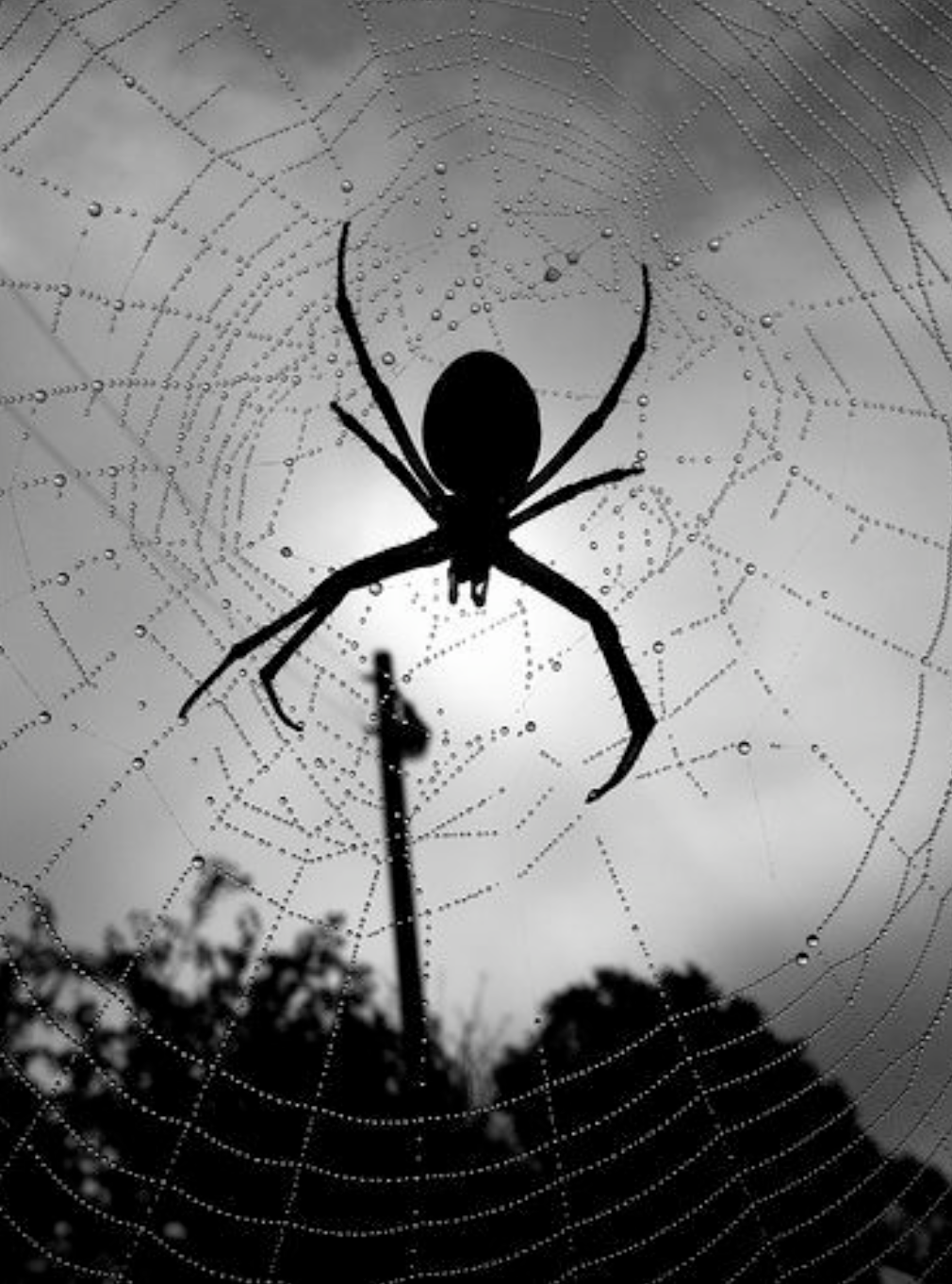
Spiders spin their webs in a circular pattern that is spotted with sticky glue. When an insect brushes against these drops – each thread can carry several dozen per millimetre – it gets stuck and the spider rushes over to inject it with venom or cocoon it in silk. The question of course is how does the spider escape its own glue tracks? The answer lies in the fact is that the web is the spider’s home and it knows its way around the glue traps. There are some threads in the web that have no glue on them and the spider is careful to move only on these threads. It is also believed that spiders use an oily coating on their legs to protect themselves from getting stuck in their own webs!

Colourless rainbow

There are some rainbows that are colourless. They are called fogbows and are formed when the sun shines through a fog. The drops of water in the fog are too small to split up light into it’s different colours, so the fogbow is white in colour.

• What do we know about left handed animals?

Most people are right handed, though about one in ten among us is left handed. Animals like chimps, hump back whales and even toads favour one hand, paw, claw or fin over the other. Chimpanzees use both hands with ease, but have a preference for the right hand. Toads also prefer their right side to perform differ functions. Polar bears on the other hand, are left handed.

Some species of parrot such as the sulphur- crested cockatoo are entirely left handed, while others, including the king parrot are mainly right handed. The majority of parrots – including the budgie, galah and rainbow lorikeet use both claws comfortably. Female cats are more inclined to be right handed while male cats favour their left paws. The same is true for dogs. Interestingly, dogs wag their tails to the right when relaxed and to the left when agitated!

Thank you for reading. Have a nice day!🌼

Curiosity

“When you’re curious, you discover many interesting things to try to to .”
– Walt Disney

Why does one need curiosity, and what does one gain out of it?

Curiosity is that the key to knowledge and to improvement. A curious person wants to understand the explanations behind things, and if he’s not satisfied with the answers, his curiosity will lead him to hunt it in other ways and in other places.

Curiosity has many benefits and brings interest, enthusiasm and therefore the desire to understand into one’s life. It makes life more interesting and expands one’s horizons.

Curiosity has also a negative side, when it turns into prying into other people’s life, seeking some dark or unsavory facts about them and using it during a way that hurts people.

I am not talking about this kind of curiosity, nor about reading the gossip columns, or seeking unimportant information. In this post, I am talking about the positive and useful benefits of curiosity.

Amazing Facts about Curiosity You Need to Know

  1. A curious person never feels bored

Do you sometimes feels bored, and zip seems to be interesting?

A curious person seldom gets bored. There is always something new to know, to learn, to explore or to fix. Life for a curious person is always interesting

A curious person can find interest and enthusiasm at any place or time, in the most boring place, and in the most exciting place.

  1. Curiosity at Work

As a curious person, you’ll show more interest in your work. Being curious, you’ll ask questions, learn, read and expand your knowledge concerning your job. This will lead you to be more efficient and expert in your work, and would bring you success and promotion.

  1. A curious person is an interesting and an open-minded person

Curiosity opens your mind to new facts and knowledge , understanding people, and learning about cultures, other ideas, and other ways of doing things. It makes you inquisitive and desirous to explore new ideas and new ways of making things.

A person with an inquisitive mind has more knowledge and information, looks for answers and solutions, and brings interest, enthusiasm and liveliness into a conversation.

  1. Curiosity brings creativeness into one’s life

When you are curious, you become creative, because you’ll see things during a different or broader way. This is most useful for a writer, a painter and for any kind of artist. It is also useful in business and in any kind of job, since you’ll be seeking creative and new ways of doing things.

In order to create new things or do things in a different way, you need to look around you, see what other people do, ask questions, and then do it differently and better.

  1. Popularity and gaining friends

When you are curious, you show interest in people, ask questions, and let them talk about themselves, rather than making the conversation revolve about you. This causes you to a more pleasant, popular and friendly person.

It might seem strange, but when you ask questions, show interest in the others and encourage them to speak about themselves, people regard you as a most friendly person, even if you hardly talk.

  1. Curious people have a singular way of watching things

A curious mind is more inquisitive, and needs to understand and understand what people think and why.

Curious people got to know the “why”, “how”, “where” and “when” of each subject they explore. This gives them a wider perspective on life, events and straightforward facts. This curiosity opens new vistas and ways of looking at life, helps them see things from other points of view, and broaden their mind and knowledge.

These aren’t the sole reasons why you would like to develop curiosity, but they’re a couple of of the important ones.

How Can You Cultivate Your Curiosity?
Usually, we are all interested by things that we truly love and care about, but hardly show real interest in other things. This attitude prevents us from acquiring important information and experience that can help us in many ways.

Would you like to cultivate your curiosity? It is simple and within your reach.

  1. Become more interested in people and in the world around you

Ask questions, ask other people’s opinion on various topics and listen to what they say. Show real interest in people and the world around you.

Listening is the key to improving curiosity.

Don’t be afraid or shy to ask questions and seek answers. Show interest and desire to acquire knowledge and understanding. This will make your life more interesting, exciting and fulfilling.

  1. Make a conscious decision to explore things you don’t care about

It might not be easy to explore things that you don’t care about, but it could be a very rewarding experience.

For example, if you don’t care about football, basketball or soccer, start getting interested in one of these sports. Ask questions, read about them, and go see one of them.

If you dislike classical music, start listening to that music. Explore the music of the classical composers. Listen to their music and find one that you like more, and start listening to his music, and even read about his life and his music.

Try to examine science, astronomy or geography and the other topic. Even if these topics don’t interest you now, you would possibly discover new doors to something interesting and exciting. You need to make the first step and show interest.

  1. Read books about diverse topics

Read books about topics that interest you, and even on topics that do not interest you. Read nonfiction books about various topics, not only stories and novels. This will broaden your visions, increase your knowledge, and help you in many areas of your life.

I am sure that opening your mind to new interests and new knowledge will broaden your horizon, help you cultivate your curiosity, and make you a more interesting and knowledgeable person.