History Of India And National Movement

Revolt of 1857
Before 1857 in 100years of a journey of Mughal emperor is ruled 1757 to set up own dynasty which was long time India and in 1857 British came that was partly they have owned and fight to rule in India and establish east India company which was named by the British. That was the “Revolt” after 1857 started and the modern history began the Mughal emperor became a pensioner of EIC.


In the background, 1757 war Plassey between Mughals and Nawab of Bengal for policies because of British was intervened for east India company by sending the governor leadership of Robert Clive control to seize indirect and French allies which broken by Captain John Munro after that they confirmed that British will go ruled in India.


1765- Treaty of Allahabad
When the British have proved that they are going to rule in India they changed the policies of East India Company and the Rights to collect the Revenue of Bengal, Bihar and Orissa which was called Deewani by the states for a collection that they won in fights and the Nizamat in Bangal which given states that maintain their Law and orders and then it became Dual system of Government this reason made the biggest Revolt of 1857. And the Mughal emperor was shah Alam became a pensioner if east India company that fixed amount given by the British which was 260000 the impact of symbolic importance he has power but the time changed that he got a yearly pensioners system of Diwani is taken charge by East India company they made different policies in revenue changes.

  • New land revenue settlements.
  • Growth of intermediary.
  • Eviction of peasants from their lands.
  • Intervention in Tribal regions.
  • Destruction of domestic handcraft and promotion of British goods.

That became the experiment that some has to succeed some are not successful but ultimately the situation has come in front of East India company has to appoint new post for their money collection(Tax) because they are not sufficient to handle the work and other became middle class came in the area to give money called money lenders. Imposed different taxes that are become reason farmers faced many problems inland.
The new market also establishes by the British command east India company India became the manufacturer for raw material in the market because they have given rights to take charge and command EIC whatever the market in India like cotton manufacture mills handicraft that tribal made by them all are produced in Britain. This is the only marketing and manufacture India and the production is over the business of profit is now British in hand only one thing comes in mind of drainage of wealth they pay tax to the British government.

These are all the reasons that British pay money for tax and money for their government to east India company this become main benefits of permission given but they also send money to Britain so especially pay tax.
Military Revolt on 29 march 1857 behind reason become revolt because of British they invented the Enfield rifle and they use kind of grease they made of pig or cow that military refuse to use that greased cartridges. 10th may all regiment was also denied and they killed British army officers because they are large in number so they were more powerful on them and run away to Delhi on 11 May came from Meerut they induce in these all problem and movement were started they went to bahadur shah Zafar lead them. That they have their army and army chief bakht khan who was more than 84 years old he told bahadur shah that this is the biggest opportunity for us to make a change they are ready to lead them and they become symbolic. There were many revolts began by different states Lucknow on 4th June begum Hazrat mahal (w/o Nawab Wajid Ali Shah) Brijis Qadir.

SUPPRESSION OF “REVOLT”
On 21th September Delhi Hudson B.S Zafar was arrested and sent to Rangoon and his son were killed in 1852. In Lucknow send Halov Outram to control them but they cannot control but after that Collin Campbell send to kill them and then Begum Hazrat Mahal went to Nepal and Lucknow get occupied by the British and the Kanpur revolt is over won by Campbell tatyatope hanged by them and nana sahib went to Nepal in 1857 revolt has over by east India company. The reason behind the revolt

  • Politocal- Doctrine of laps.
  • socio-Religious – Christianzation of India, Religious disabilities Act 1856.
  • Economic- Drain of wealth

And India in 18th century 1757 – 1764 British kingdom established by the struggle for succession. In 1803 Aurangzeb son MD muazzam shah Alam(65yr old) fight the British won get emperor and he adopted tolerance policies with Hindu kings but those who found them struggle they try to induce the end the make friendly relationship. There are many Mughal emperors and Hindu samaras who ruled between this time. But the British kingdom was the last that occupied India.
The democracy of India is the big challenge that faced the third freedom of the nation. The Indian national movement was an organised mass movement and affected both internal and external. It led to the formation of the Indian national congress in 1885. Struggles of the country have broken the people of India by socio-Cultural, and Economic factors that led to the rise of Nationalism.
Tilak was the first leader who leads this movement. The British colonial authorities called it “The father of the Indian unrest”. He was also given a title name “Lokmanaya” as a leader and an independence activist Mahatma Gandhi called him “The Maker of Modern India”.
Indian National Congress
Tilak encouraged the swadeshi movement and the Boycott movement. The movement consisted of any Indian produce goods. there was a gap which had to be filled by the production of those goods in India itself.
Dadabhai Naroji formed the East India Association in 1867 and Surendranath Banerjee founded Indian National Association in 1876. Seventy- two Indian delegates met in Bombay in 1885 and founded the Indian National Congress.
The demands of education, awareness about the rights, freedom of speech reform and expansion of the legislative council’s development of modern capitalist industries in India.
The national movement in (1858- 1905)
Procrastination by Qween Victoria announced that now east India company will not intertwine in India British has only the power by parliament it changed the whole democracy. growth of nationalism in this index administration. It was British rule and its direct and indirect consequences that provided the material, moral and intellectual conditions for developing a national movement in India. British is the only reason for policies for their backwardness.
The first session will be held in Pune, but it’s changed for a reason and held in Bombay in Gokul das Sanskrit school and the second session Kolkatta by Dadabhai Naroji has been three-time 1886, 1893 and 1906. Total 434 delegates are standing Community and the third session in madras (1887) formed by Badruddin Tyabin. He is the third president of the Indian national congress. He declared that he had denounced all communal Muslims and bring them into the party and introduced resolution no XII at the Allahabad congress.

The Covid-19 Survivor

                                                               (Photo: Shutterstock)

They have been to the edge and back. Some survived, some died, and some struggled with isolation. This Covid-19 has messed up with everyone’s mind. The best thing that you can do is don’t let it take over your mind because if your mind gives up, then your body will give up too.

This story is of a guy named Danish Akhtar, 24 years old, from a district named Koderma in Jharkhand, who tested covid positive a month back. He never ever dreamt of getting covid positive. It was like a nightmare for him. He used to cough so much that his throat and chest would literally burn. He got the virus from his friend who in turn tested positive. His friend got infected from his father who condition was very critical. With so much things happening around, Danish was too shocked. His mental state has also deteriorated. A cool and fun- loving guy like him would be in such a state, this itself was shocking for his family and friends. Having reported chronic cough and fever, he was taken to the local -government hospital and was there for 14 days. He was only let out once he tested negative for the virus. His friends and family supported him a lot. Initially, he was blank but his inner will help him a lot to recover. “And yet I would turn away”, says Danish.

After he got back from hospital, the destiny had something else in store for him. The very next day his father started having symptoms of the virus (fever, body ache, loss of smell, etc.). Danish started blaming himself for his father’s condition. The guilt was clearly visible in his eyes. But he didn’t give up. He used to stay awake and took great care of his father. Days passed, taking care and praying to Allah for his father’s recovery. At last, after 14 days, he took his father to the hospital for the covid test and to everyone’s happiness, he tested negative. Danish was exhausted, delirious, ecstatic, sleepless but also grateful to Allah.

Now all Danish wants to do is put the whole ordeal behind him as just one bad dream. His advice to those currently infected is, “Be prepared for a tough battle. Don’t let covid mess up with your mind. No matter what, don’t give up.”

MSME


In India, MSMEs contribute nearly 8% of the country’s GDP, around 45% of the manufacturing output, and approximately 40% of the country’s exports. It won’t be wrong to refer to them as the ‘Backbone of the country.’ The Government of India has introduced MSME or Micro, Small, and Medium Enterprises in agreement with the Micro, Small, and Medium Enterprises Development (MSMED) Act of 2006. These enterprises primarily engaged in the production, manufacturing, processing, or preservation of goods and commodities.MSMEs are an important sector of the Indian economy and have contributed immensely to the country’s socio-economic development. It not only generates employment opportunities but also works hand-in-hand towards the development of the nation’s backward and rural areas. According to the annual report by the Government (2018-19), there are around 6,08,41,245 MSMEs in India.

Key Takeaways of New MSME Definition introduced in Aatm Nirbhar Bharat Abhiyan‘ or Self-reliant India Scheme 2020 by Government of India.

  1. Collateral Free Loans to MSMEs
  2. MSME Loans worth Rs. 3 lakh crore
  3. The moratorium period offered is 12 months
  4. Manufacturing and Service MSMEs shall be considered as the same entities
  5. Repayment Tenure of 48 months
  6. 100% Credit Guarantee
  7. To benefit approx. 45 lakh units

Features of Ministry of MSME (MoMSME)

  1. Works for the welfare of artisans and workers
  2. Provides credit limit or funding support from banks
  3. Promotes entrepreneurship development and skill up-gradation via specialized training centers
  4. Supports technology up-gradation, infrastructural development, and modernization
  5. Offers assistance for improved access to domestic and export markets
  6. Provides modern testing facilities and quality certification
  7. Supports packaging, product development, and design intervention


MSME was launched in 2006 to become an integral part of the supply chain for products and services; moreover, a creator of large-scale employment opportunities in rural India. MSMEs contribute to approximately 8% of India’s GDP, employs over 60 million people, has an enormous share of 40% in the exports market and 45% in the manufacturing sector.

LGBT RIGHTS IN INDIA


                                                                   (Photo: iPleaders Blog)

Every cloud has a silver lining.” This proverb goes well with the historic judgement passed by the Supreme court on 6th September 2018 in the favor of LGBT community rights. This has been much debated topic since a long time. Nothing could be more blessing than the enactment of Article 377 for the relief of LGBT community. The hearing of the petitions began with a bench consisting of Chief justice Dipak Misra and justices DY Chandrachud, AM Khanwilkar, Indu Malhotra, and Rohinton Fali Nariman. It was truly a landmark decision which struck down a 19th century law criminalizing homosexuality in India.


What role does the Indian Constitution play towards the emancipation of the society’s most marginalized and excluded? What vision does the Constitution espouse with respect to basic fundamental rights and freedoms? And what conception of inclusion and pluralism does the Constitution pursue in a society that remains deeply divided and disjointed? All these searching questions came to form a distinct part of the decision of the Indian Supreme Court (Court) when it was called upon to rule on the constitutional validly of Section 377 of the Indian Penal Code, 1860. It was not the first time however, that the Court was examining Section 377 on the touchstone of the Constitution, as the case previously travelled through several levels of judicial adjudication involving different jurisdictional procedures.


Embodying the ethos of Victorian morality, Section 377, a colonial-era law, criminalized ‘…carnal intercourse against the order of nature with any man, woman or animal…’. Anything that was not penal-vaginal sexual encounter was ‘against the order of nature’ and as a consequence ‘unnatural’. Through this provision, homosexual acts even between consenting adults was considered and proscribed as a criminal offense punishable with imprisonment. Thus, a significant section of the population comprising the LGBT+ community remained perpetually ostracized by the Indian society, persecuted by State authorities and marginalized in the discourse of constitutional rights. Therefore, when the Court decided in Navtej Johar v Union of India that Section 377 in so far as it criminalizes same sex acts between consenting adults, violates the constitutional mandate enshrined under the Fundamental Rights chapter, especially, Art. 21 (life and personal liberty), Art. 14 (equality and equal protection of laws), Art. 15 (non-discrimination) and Art. 19 (Freedom of expression), truly, it was a historic undoing of injustice towards the LGBT+ people. In other words, as a result of this decision, LGBT+ people who were historically and by default considered ‘criminals’ under the law, came a bit closer to acquiring an ‘equal moral membership’ of the society and the State. It was a tough as well as a long road but at the end everything seemed to be mightier.

Let us look back into the history of India from where the seeds of this discrimination were actually sown. India has a long tradition of tolerance for all kinds of beliefs, faiths, philosophies, and ways of living. This takes us back to the 1800s. Lord Macauley first created this law in 1860 when he was the President of the Indian Law Commission. The reason for this law was because the British WANTED TO “impose Victorian values” on the colony of India. Not only were such values trying to be inflicted on the Indian society but also the Constitution of India wanted to “…narrow constructions of patriarchal gender relations and heteronormativity” (Ramasubhan 91).

 What’s important and a reflection of the movement itself is that the support has come not just from the queer people, but across a range of actors, movements and institutions.  Progressive groups, state bodies like the National Human Rights Commission, teacher’s associations, professional associations including the medical and mental health establishments, women’s groups, student groups, trade unionists and private companies came out publicly against the judgement. Thousands across the country stood together, repeating the chant that brought together our resistance: ‘No Going Back’.


In declaring Section 377 to be unconstitutional, however, the Court was deeply reflective about the fact that for Constitutional rights to acquire a meaningful purpose for the marginalized communities, disciplining State action alone will not be sufficient. In this regard, the Court did not mince words when it stated that it is both, criminality of the law and the ‘silence and stigmatization’ of the society towards the LGBT+ community that orchestrates the marginalization and the exclusion of the former. Implicit in that claim was the understanding that inequality, hierarchy and prejudice transpires as much from State action as it does from societal sanctions, community conventions and private relationships. In the context of such social realities, what is the stated role of the Constitution and the laws? Is the mandate of the Constitution simply confined towards ordering the relationship between the State and the individual (vertical) or does the Constitution have an equal role to play in shaping normative values among individuals within the society?


The Court unequivocally embraced the latter narrative and found that the Indian Constitution envisions an expansive role for both the State and the individual to actively promote social change within the contours of the Constitution. It seeks transformative change ‘in the order of relations not just between the State and the individual, but also between individuals’. The transformative potential in Indian Constitution is a conscious ‘attempt to reverse the socializing of prejudice, discrimination, and power hegemony in a disjointed society’. Therefore, the Constitution, the Court surmises, obliges not only the State not to violate fundamental rights, but also individuals to ‘act in a manner that advances and promotes the Constitutional order of values’.


“Sexual orientation” is an essential attribute of privacy. Discrimination against an individual on the basis of sexual orientation is deeply offensive to the dignity and self-worth of the individual. This judgement can be considered as a revolutionary one in a society like India. But every judgement has two parts, one is written and other is its execution. The written part is progressive and reformist and its execution includes sensitizing the society and institutions in accepting what is written in this judgement. That may take time. Till then I would like to put forth some suggestions. The first step is sex education in schools and at homes. The second step is that the law enforcement agencies such as the police needs to be more sensitized towards the LGBT people. Similarly, our media and film fraternity can play a very important role in imparting knowledge and disseminating true information about LGBT people.


To conclude, we all are equal.  Nobody should be discriminated on whatsoever ground.  In the last few years LGBT are gaining acceptance in many parts of India. Many Bollywood films have dealt with homosexuality. They have also fair well at the box office. There’s a transformative constitutionalism which is happening and the real import of transformative constitutionalism lies in positive measures that the State ought to take in bringing the Constitution closer to the most deprived. Indian society needs to shrug off its old thinking and come out of the widely prevailing homophobia.


FINANCE COMMISSION


Finance Commission is constituted to define financial relations between the center and the states. Under the provision of Article 280 of the Constitution, the President appoints a Finance Commission for the specific purpose of devolution of non-plan revenue resources. It was formed in 1951. Shri Ajay Narayan Jha recently joined the Fifteenth Finance Commission as its member. The 15th Finance Commission has released a report titled ‘Finance Commission in COVID Times’ on 1st February 2021.

Article 280 of the Indian Constitution

  • After two years of the commencement of the Indian Constitution and thereafter every 5 years, President has to constitute a Finance Commission of India.
  • It shall be the duty of the Commission to make recommendations to the President concerning the:
    • The distribution between the Union and the States of the net proceeds of taxes which are to be, or maybe, divided between them and the allocation between the States of the respective shares of such proceeds;
    • The principles which should govern the grants in aid of the revenues of the States out of the Consolidated Fund of India;
    • Any other matter referred to the Commission by the President in the interests of sound finance
    • The Commission shall determine their procedure and shall have such powers in the performance of their functions as Parliament may by law confer on them

Article 281 of the Indian Constitution

  • It is related to the recommendations of the Finance Commission:
    • The President has to lay the recommendation made by the Finance Commission and its explanatory memorandum before each house of Parliament


Functions of Finance Commission

The Finance Commission makes recommendations to the president of India on the following issues:

  • The net tax proceeds distribution will be divided between the Centre and the states, and the allocation between states.
  • The principles governing the grants-in-aid to the states by the Centre out of the consolidated fund of India.
  • The steps required to extend the consolidated fund of a state to boost the resources of the panchayats and the municipalities of the state are based on the recommendations made by the state Finance Commission.
  • Any other matter referred to it by the president in the interests of sound finance.
  • The Commission decides the basis for sharing the divisible taxes by the center and the states and the principles that govern the grants-in-aid to the states every five years.
  • Any matter in the interest of sound finance may be referred to the Commission by the President.
  • The Commission’s recommendations along with an explanatory memorandum concerning the actions done by the government on them are laid before the Houses of the Parliament.
  • The FC evaluates the rise in the Consolidated Fund of a state to affix the state Panchayats and Municipalities resources.
  • The FC has sufficient powers to exercise its functions within its activity domain.
  • As per the Code of Civil Procedure 1908, the FC has all the powers of a Civil Court. It can call witnesses, ask for the production of a public document or record from any office or court.


Finance Commission Chairman and Members

  • Chairman: Heads the Commission and presides over the activities. He should have had public affairs experience.
  • Four Members.
  • The Parliament determines legally the qualifications of the members of the Commission and their selection methods.

Qualifications of Finance Commission Chairman and Members

  • The 4 members should be or have been qualified as High Court judges, or be knowledgeable in finance or experienced in financial matters and are in administration, or possess knowledge in economics.
  • All the appointments are made by the President of the country.
  • Grounds of disqualification of members:
  • found to be of unsound mind, involved in a vile act, if there is a conflict of interest
  • The tenure of the office of the Member of the Finance Commission is specified by the President of India and in some cases, the members are also re-appointed.
  • The members shall give part-time or service to the Commission as scheduled by the President.
  • The salary of the members is as per the provisions laid down by the Constitution.

Mirabai Chanu:India's Sensation


Chanu Saikhom Mirabai is a name that is on every Indian’s lips these days. The weightlifting star has made India proud at the Tokyo Olympics 2020

Let’s have glimpse of her life and achievement 

Born on 8 August 1994 in Nongpok Kakching, near Imphal, Manipur from early life she was interested in weightlifting as she can handle heavy weight very easily as her brother struggled with the same weight, Her family supported her and her passion

CAREER AS HEAVYWEIGHT LIFTER

Chanu Mirabai’s career began with the Glasgow Commonwealth games where she won the silver medal in the 48 kg category. She also qualified for the Rio Olympics but could not finish with any successful lifts. 

In 2017 she won the Gold Medal in the women’s category weightlifting in World Weightlifting Championships at Anaheim, CA, USA. She created a record by lifting the 194 kg weight in total and 109 kg clean and jerk. 

She also won the first gold medal for India in the 2018 Commonwealth Games. 

In the 2019 World Weightlifting Championships, Mirabai lifted a total of 201kgs but finished 4th. 

In 2021, she won the bronze medal at the 2020 Asian Weightlifting Championships in Tashkent 

At 2020 Summer Olympics in Tokyo Chanu won a silver medal with a total lift of 202 kg in the 49 kg section. 


AWARDS-

National[edit]

Other[edit]

  • ₹20 lakh (US$28,000) from the Government of Manipur for the gold medal in the 2017 World Weightlifting Championships.[27]
  • ₹10 lakh (US$14,000) from the Government of Manipur for qualifying for the 2020 Tokyo Summer Olympics.[28]
  • ₹25 lakh (US$35,000) from the Government of Manipur for participating in the 2020 Tokyo Summer Olympics.[29]

For winning the silver medal at the 2020 Tokyo Summer Olympics


Role of IBC in the credit sector


                                                                (Photo: SignalX)
As per the Reserve Bank of India (RBI), India’s banking sector is sufficiently capitalized and well – regulated. Credit, market and liquidity risk studies suggest that Indian banks are generally resilient and have withstood the global downturn well. The Indian economy is a mixed economy. It is known to be the world’s sixth largest in terms of nominal GDP. The legal environment plays a vital role in the economic development of a country.

After GST, IBC is the second most crucial reform in the legal setting of India. It was implemented through an act of Parliament. The law was necessitated due to huge pile up of non-performing loans of banks and delay in debt resolution. Insolvency resolution in India took 4.3 years on an average against other countries such as U.K (1 year) and U.S.A (1.5 years), which is sought to be reduced besides facilitating the resolution of big-ticket loan accounts. Two years on the IBC has succeeded in a large measure in preventing corporates from defaulting on their loans. The IBC process has changed the debtor-creditor relationship. A number of major cases have been resolved in two years, while some others are in advanced stages of resolution. 

With a strict 180+90 days ‘resolve-or-liquidate’ diktat, the Code has received commendation, not only from the Indian Industry, but from the global fraternity, including The World Bank and IMF, and has materially contributed to India’s 30 place jump in 2018’s Ease of Doing Business ranking. IBC truly enforces the concept of ‘creditor in control’ instead of ‘debtor in possession’, and maximize value recovery potential corporate debtors.  “Capitalism without Bankruptcy is like Catholicism without Hell,” said Frank Borman, renowned astronaut and erstwhile chairman of a failed US airline. As such, the institutions established by the state should promote freedom to start a business (entry), to run the business (level playing field) and to exit/discontinue the business. The reforms of the 1990s focused on freedom of entry (dismantling the license-quota raj) and then, from the beginning of this century, the focus shifted to freedom of continuing business. The third leg, which is freedom to exit, has now been provided in the shape of the IBC, to provide a mechanism to stressed businesses to resolve insolvency in an orderly manner.

The IBC seeks to consolidate scattered and unstructured jurisprudence on insolvency prevalent in various Acts, like the Presidency Towns Insolvency Act, 1909, Sick Industrial Companies Act, 1985, Limited Liability Partnership Act, 2008, Companies Act, 2013, etc. On the positive side, we have witnessed that debtors were reconciling with the ‘creditor in control’ scenario, with the committee of creditors (CoC) becoming all- powerful in the resolution process.

It was the first time that the government and Reserve Bank of India were on the same page for effective resolution of the problem of bad debt and improving overall financial discipline in the way business is conducted in India. As Nelson Mandela said, “I never lose; I either win or I learn.” The jury is still out on the IBC even though the World Bank has acknowledged the efforts.

WHAT IS INSOLVENCY AND BANKRUPTCY CODE, 2016?

“In One line we can say that in case of a default by the equity owners to meet their debt obligations, control is transferred to the creditors and equity owners take a back seat.”

The insolvency and Bankruptcy code, 2016 (IBC) is the bankruptcy law in India and whose aim is to consolidate the existing framework by creating a single law for insolvency and bankruptcy and amend the laws relating to the entities in India with the time being enforce. The consolidation of laws in India is not a new concept like GST was framed by consolidating 17 laws into one. This code was introduced in Lok Sabha in December 2015. It was passes by Lok Sabha on 5 May 2016. 

The purpose of this act can be divided into the following two goals:

 1. Making sure that the insolvency proceedings can be completed within a minimum amount of time.

 2. Making sure that the financial risks to the foreign investors is decreased.
Its primary goal was to consolidate insolvency resolution process for LLPs. Companies, individuals and partnerships.
 That being said, the purposes of these codes, being a part of The Companies (Amendment) Act 2017, are the following:

 1.  Establishing and amending the laws associated with reorganizing and resolving the insolvency of entities like partnership firms, individuals and corporate persons.

 2.  Providing resolution in a time bound manner.

3.  Promoting entrepreneurship in India.

4.  Maximizing the availability of credit in the Indian market.

5.  Establishing Insolvency and Bankruptcy Board in India.

The four pillars of supporting institutional infrastructure, to make the Insolvency and Bankruptcy Process work efficiently are:

  1. The regulator – The Insolvency and Bankruptcy Board of India (IBBI)
  2. Adjudicating Authority (AA):
    1. National Company Law Tribunal (NCLT) – For Corporate, i.e., Companies and Limited Liability Partnerships
    2. National Company Law Appellate Tribunal (NCLAT) will act as Appellate Authority.
    3. Debt Recovery Tribunal (DRT) – For Individuals and Unlimited Partnership Firms
  3. A private industry of Insolvency Professionals (IPs) with oversight by private Insolvency Professional Agencies (IPAs)
  4. A private industry of Information Utilities (Ius)

THE ROUTE TO THE IBC

The main objective of the act is to consolidate and amend the laws relating to reorganization and insolvency resolution of corporate persons, partnership firms and individuals in a time bound manner for maximization of value of assets of such persons, to promote entrepreneurship, availability of credit and balance the interests of all the stakeholders including alteration in the order of priority of payment of Government dues and to establish an Insolvency and Bankruptcy Board of India, and for matters connected therewith or incidental thereto.

IBC provides for a time-bound process to resolve insolvency. When a default in repayment occurs, creditors gain control over debtor’s assets and must make decisions to resolve insolvency. When a default in repayment occurs, creditors gain control over debtor’s assets and must make decisions to resolve insolvency. Under IBC, debtor and creditor both can start ‘recovery’proceedings against each other.


It is a comprehensive Code enacted as the Preamble states, to

“consolidate and amend the laws relating to reorganization and insolvency resolution of corporate persons, partnership firms and individuals in a time bound manner for maximization of value of assets of such persons, to promote entrepreneurship, availability of credit and balance the interests of all the stakeholders including alteration in the order of priority of payment of Government dues and to establish an Insolvency and Bankruptcy Board of India, and for matters connected therewith or incidental thereto”.

The Preamble clearly states that the legislative intent to incorporate this code is

Firstly, to remove the ambiguity that had been prevailing in the previous legislations;

Secondly, to prevent unnecessary delays and to ensure fast dismissal of matters, i.e., within 180 days;

Thirdly, to prevent loss to corporate creditors due to depreciation of assets of the insolvent company;

Fourthly, to establish a balance among the interests of the various stakeholders, and

Lastly, to create a common forum to deal with such matters.

IMPACT OF IBC

The Covid-19 pandemic has been driving corporate failures around the world, including in India. The global financial news reveals an increase in bankruptcies due to the Covid-19 induced global lockdowns. While the bankruptcies are unfortunate, a recognition of the bankruptcies facing companies in the face of the collapse and an efficient resolution of such bankruptcies (which will allow both the companies and creditors involved to move along) is vital to rejuvenating the economy.

 In the light of the Covid-19 pandemic and business failures globally, it is important that financially distressed companies can still access the credit market thanks to a strong bankruptcy system and survive under stressed scenarios. Using a panel of 33,845 non-financial firms for the period of 2008-19 and by exploiting a difference-in-differences analysis, a study has been undertaken revealing the impact of the IBC policy on the availability of long- and short-term financing for, and the cost of, credit of distressed firms as compared to their non-distressed counterparts. As in most emerging markets, India’s debt market is dominated by state-owned banks and the domestic credit to private sector by banks (percentage of GDP) is 50 per cent in 2019 compared to a world average of 90.5 per cent (Source: World Development Indicators). Recent statistics from World Bank’s Doing Business Data show the creditor rights index in India improving from 6 in 2014 to 9 in 2019 compared to the world average of 5.67 in 2019.

Bose et al. (2021) study shows that after the introduction of the IBC reform, the access to long-term debt increased by 6.3 per cent, short-term debt increased by 1.4 per cent, while the cost of borrowing declined for distressed firms. This is the first study that provides evidence on the impact of the IBC policy on the “credit channels” of distressed firms. The enactment of the code has helped to enforce discipline in the country’s credit culture. IBC has created a credit culture that discourages defaults. There has been a change in the business culture as well: there is now an understanding that when things go wrong, companies will not get an automatic rescue package from the taxpayer funds. The objective of IBC was to create conditions so that credit could be generated from the domestic market and investments drawn from the international market. In order to achieve those objectives, it was necessary to create a culture of deterrence against default. The practice of dragging lenders to court to delay the repayments of outstanding loans is slowly coming to an end. India’s Insolvency and Bankruptcy Code is ensuring that lenders get repaid on time and this is making India a more attractive investment destination.

IBC has played a great role in macroeconomic objectives providing India a strong stand in the global platform. After the enactment of the code, the FDI has substantially increased. In 2012-13, the FDI of India was 34298 US$ Million and just after enactment of the code it rose to 61463 US$ Million in 2017-18 which is growing by approximately 80%. There has been an increase in Mergers and Acquisitions activity in the country. It also led to the establishment of Information Utilities (IUs) which further accelerated the development of the credit market of India.

In previous, no law prevented the operational creditors but under the code, there is a provision that the operational creditors (domestic as well as international) have right to file suit against the default. Thus, the code provides right to the foreign creditors which will enhance the economic transactions of India and others.

 MEASURES TAKEN DUE TO COVID

The global COVID-19 pandemic and its consequential lockdown are having an economic ripple effect on the business of Indian citizens. To mitigate its impact, in the last tranche of economic reforms, the Central Government made numerous changes upon the Insolvency and Bankruptcy Code, 2016 (“IBC”), and its adjudicatory processes, which will have wide-ranging ramifications. In exercise of its powers under Section 4 of the IBC, the Central Government has raised the threshold for invoking insolvency to Rs 1 crore from the existing Rs 1 lakh. This provision will relegate MSMEs to civil remedies for debt recovery and may have an effect of excluding it under the IBC. At this cost, the amendment may have successfully addressed the issue of frivolous recovery claims initiated under the grab of insolvency processes due to the seemingly low original threshold of rupees one lakh.

The government has come up with IBC 2020 to streamline the CIRP, protect last-mile funding, and boost investment in financially distressed sectors. The changes put a threshold condition for initiating CIRP by the financial creditors, who are allottees under a real estate project. It also imports safeguards for successful bidders, the corporate debtors, and its assets from the offenses of the former promoters or management.

India took decades to implement such an effective insolvency regime and improve its global ranking of doing business. It promotes entrepreneurship and tries to balance the interest of the various stakeholders.

CONCLUSION

Resolving insolvency in a strict time bound manner is an important challenge for any country to maintain a healthy and robust economic system. This study has made an attempt to understand and analyze the impact of the IBC on the credit sector of the economy. The study emphasizes the fact that IBC is a big step in the direction of resolving the issues of Non-Performing Assets and hence will act to the rescue of banks which have been facing a lot of difficulties due to corporate defaults. The number of companies that have benefitted from this law is large, there has been improvement in the speed as well as the success rate of the resolution process.

There is still a long way to go ahead and as the saying goes,

“We have to acknowledge the progress we made, but understand that we still have a long way to go. That things are better, but still not good enough.”

The Traffic in Bengaluru

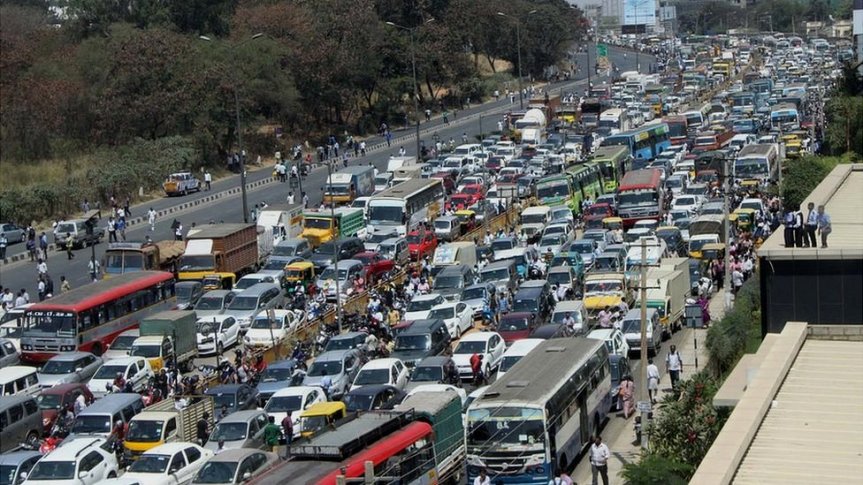
We know that India in general suffers from traffic jams in many different parts of the country. This is essentially due to the population density and thereby, the vehicle density that is prevalent in the country. With so many people using automobiles, there is bound to be traffic and packed roads especially in high populated metropolitan cities. When speaking of traffic in India, people often talk about Mumbai as being the city with the worst traffic. This is understandable as Mumbai is the most highly populated city in India. It is also India’s financial hub and gets a lot of tourism. However, there is one other city that gives strong competition to Mumbai, and which many claim is definitely the city with the worst traffic in India. It is so bad that it can even content to be the city with the worst traffic in the world. That city is Bengaluru. Bengaluru sees constant bad traffic on a day-to-day basis, and every single person that comes from the city can testify on how bad the condition really is. But why is this so?

Why is it so bad?

On average, it is estimated that a Bangalore citizen spends about 10 days in traffic. This is an unimaginable amount for a lot of us from outside Bangalore, who might experience traffic here and there but nothing compared to Bangalore. Furthermore, the average speed travelled on Bangalore roads is only 11 km/h, and it is estimated that it could decrease to 8 km/h if no measures are taken to curb traffic. The unusual thing here is that the speed is low not only with traffic but also without it. This is because the roads in Bangalore, and in generally in India, are multi-purpose public goods serving a wide variety of uses other than motorized transport that slow down travel (hawkers, stalls, parked vehicles, etc.).

The generally agreed reason behind the traffic is that it is because of the rapid and unplanned growth of the city. Bangalore’s traffic advisor M.N. Sreehari himself has said that Bangalore suddenly went from a sleepy village, to a town, to a city. These unforeseen and unplanned changes in the city left it unprepared to deal with the traffic.

Bangalore is often described as the Silicon Valley of India as it is home to the IT industry. Since the early 1990s, with the advent of globalization and privatization, global technology firms began opening offices in Bangalore and a large number of support industries have grown around it, bringing with them a huge influx of people from all over India. Many Indians and NRIs started moving to Bangalore to try building their start-ups, which Bangalore is known for today.

Hence, Bangalore’s population grew from 5.6 million in 2001 to 8.7 million in 2011. Today, it is estimated to have reached 11.5 million. So, the population has grown exponentially, but the infrastructure and roads have not been able to keep up the pace.

Apart from this, even the general road layout is to be blamed for the traffic. Rather than having a grid pattern which promotes the flow of traffic, Bangalore has a star pattern which causes a lot of interceptions and jams. Bangalore used to have grid like roads, but it gradually became more star shaped because of unplanned change and development. Also, the roads themselves are mostly in bad conditions and full of potholes. Potholes are one of the reasons for traffic congestion and road accidents. There is also illegal construction on these roads which narrow them down, causing more jamming.

Furthermore, the public transport like buses carry only about 45% of the city’s traffic and the metro system is still underdeveloped. This means that most people are dependent on their private transport. The city has 6.6 million private vehicles, including one million cars. Every day, another million vehicles enter from outside the city, clogging its already choked streets. Adding to this problem is the fact that one-third of the city roads are taken away by parking and encroachments.

Conclusion

Bengaluru’s traffic is undeniably bad, and measures need to be taken to curb traffic jams and congestion in the city. The traffic has had wide ranging effects on pollution and on the health of people, not to mention it is an immense waste of a person’s time. Even companies in Bengaluru have started pulling out of the city to move to tier 2 and tier 3 cities because the traffic is simply bad for business. It is the statutory and constitutional duty of civic bodies to maintain roads and footpaths. If the administration takes steps to solve the traffic issue in the city, Bengaluru will become a much more popular city and gain a better reputation.

Ban On Inter State Bus Transportation

Without leaving even a scintilla of doubt, the Madhya Pradesh High Court Bench at Indore has in a latest, landmark, laudable and learned judgment titled MP Bus Operator Association vs State of MP & others in Writ Petition No. 8597 of 2021 that was delivered on June 29, 2021 has maintained without mincing any words that in the extraordinary situation of a pandemic or disaster involving loss of life and human suffering, the Central Government as well as the State Government are empowered to put any restriction in the larger public interest under the Disaster Management Act, including restriction of movement of public by inter-state bus transportation. It must be apprised here that a Single Judge Bench of Indore Bench of Madhya Pradesh High Court comprising of Justice Vivek Rusia who authored this notable judgment was dealing with a petition filed by MP Bus Operator Association challenging various Government orders restricting inter State bus transportation between State of Madhya Pradesh and Maharashtra owing to the rising number of Covid 19 cases. It was the case of the petitioner association that despite having valid permit to ply inter state buses, the government had restricted them in wake of the second Covid wave. 

To start with, the Single Judge Bench of Justice Vivek Rusia first and foremost puts forth in para 1 that, “Petitioner / M.P Bus Operator Association has filed the present petition being aggrieved by the orders dated 21.03.2021, 31.3.2021 and 22.06.2021 issued by respondent No.3 whereby the inter-State bus transportation between State of Madhya Pradesh and Maharashtra has been restricted from 21.03.2021 to 31.03.2021 and thereafter up to 15.04.2021 and again extended up to 30.06.2021 due to Covid -19 pandemic.” 
While elaborating on the facts of the case, the Bench then lays bare in para 2 that, “The petitioner is an association registered under the Madhya Pradesh Society Registrikaran Adhiniyam, 1973 having its registered office at C-14, Vikas Tower, Navlakha, Indore. The society has authorized its President Mr. Arun Gupta to file the present petition by way of resolution dated 05.04.2021. The members of the petitioner/association are having permit to ply inter-State transport passengers buses. In the second phase of Covid-19 the government has restricted various commercial activities in order to control the spread of Covid virus. Since large number of Covid cases were reported in the State of Maharashtra, therefore, the State Transport Department of M.P. has decided to stop operating buses from the territory of Madhya Pradesh to the territory of Maharashtra and vice versa. According to the petitioner, the Central Government, Ministry of Home Affairs vide order dated 23.03.2021 has issued guidelines to the States and UTs for issuing necessary norms for regulating travel in other modes of public transport like buses etc. and to ensure that same are strictly complied with. All the activities are permitted outside the containment zones and SOPs have been prescribed for various activities including movement of passengers, rail, air travel, metro train, schools etc. It is further submitted that there is no restriction on the movement of passengers by way of air service and trains between these two States, therefore, the Government of M.P. cannot discriminate with the petitioner by way banning the inter-State bus service facility between these two States which is in gross violation of Article 19(1)(g) of the Constitution of India. The members of the association are having fundamental right to practice any profession or to carry on any occupation, trade or business which cannot be restricted by the State Govt. It is further submitted that the State has a right under Article 19(6) of the Constitution to put a reasonable restriction on the fundamental right but that should not be arbitrary or excessive in nature. The movement of public between Madhya Pradesh and Maharashtra is permissible through air, train, cab, taxi and through private vehicles but movement only through buses are restricted without any valid justification. The members of the petitioner are ready to follow any conditions to be put by the State Govt. for operating the buses in order to prevent spread of corona virus. They will not permit any passenger to travel in the buses without negative RT-PCR report, therefore, with certain restrictions the petitioner be permitted to ply buses between these two States.”
In addition, the Bench then also points out in para 3 that, “In support of the above contentions Mr. Manu Maheshwari, learned counsel for the petitioner has placed reliance over the judgments passed by the Apex Court in the case of Chintaman Rao vs. State of M.P- AIR 1951 SC 118; Saghir Ahmad vs. State of U.P & others- AIR 1954 SC 728; Subramanian Swamy vs. Director, Central Bureau of Investigation and another- (2014) 8 SCC 682 & Narinder S.Chadha and others vs. Municipal Corporation of Greater Mumbai and others – (2014) 15 SCC 689.”
As a corollary, the Bench then brings out in para 4 that, “The respondents have filed the reply by submitting that in the second wave of the Covid-19 most of the cases came in the State of Maharashtra and being a neighboring State of M.P, in order to protect the inhabitants of M.P, the State Govt. has restricted the transportation of public by way of buses. The State Govt. has passed the order looking to the public health in exercise of the powers conferred u/s 24 of the Disaster Management Act, 2005 (for short ‘the Act of 2005’). The transportation of the buses cannot be compared with the transportation by trains and airways because trains and airways are under the jurisdiction and control of the Central Govt. and the State Transport is within the jurisdiction of M.P State.”
Furthermore, the Bench then also brings out in para 5 that, “Shri Garg, learned GA appearing for the State has submitted that impugned restriction is temporary in nature and after the things are normalized the government is bound to lift the ban, but as on today there is a forecast of third wave of Covid delta plus coming up in the State of Maharashtra, therefore, the government may extend the period of ban which is going to expire tomorrow i.e. on 30.06.2021. It is further submitted that any tough decision taken in the public interest the interest of individuals are bound to be overlooked . The members of the petitioner society are not only restricted to do their business but other trade and business are being totally shut down like theaters, gym, restaurant, tourism etc. In order to provide essential items, the government is relaxing the restrictions . The petitioner’s members are restricted to operate the buses only to Maharashtra State where the large number of cases of Covid are reported but they are free to operate the buses in other States, hence there is no complete restriction on the right of trade and business, hence the petition kindly be dismissed.”
What’s more, the Bench then observes in para 6 that, “In rejoinder Shri Manu Maheshwari, learned counsel submits that the impugned order has not been issued u/s 24 of the Act of 2005, and only after filing of this petition the respondents came up with the plea that the impugned order has been issued under section 24 of the Act of 2005. The petitioner has filed the list of the trains and flights operating between Madhya Pradesh and Maharashtra in which there is no such restriction by the Central Govt. and submit that the petitioner be also permitted to ply the buses between Maharashtra and Madhya Pradesh and vice versa. It is further submitted that Government of Maharashtra has not imposed such restriction on transportation of passenger buses. Even the railways and airways are not demanding Covid report from the passengers and only on the basis of self-declaration they are permitting public to travel to any part of the country. The petitioner’s members are also ready to abide by all the conditions which are being followed by the rail and airways operators. I have heard the learned counsel for the parties and perused the record.”
Of course, the Bench then states in para 7 that, “It is not in dispute that the second wave of Covid -19 started from the State of Maharashtra and being a neighboring State there is a frequent movement of public between M.P and Maharashtra by all means of transport. Accordingly to the petitioner there is no restriction on transportation by railways and airways. The railways and airways are under the domain of the Central Government and on which the State Government cannot put any restriction. The transportation by stage carriages is under the control of the State Government, therefore, the State Govt. is competent to put restriction or conditions in which there is no discrimination by the State Government.”
Quite significantly, the Bench then holds in para 8 that, “Even otherwise, in transportation through airways and railways the entry and exit points of passengers are fixed and known from where the passengers can be checked about their health conditions but it is not possible in the transportation by buses. The buses can be stopped anywhere and collect the passengers which is not possible in the railways and airways, therefore, both are different classes of transportation. The State Government has put restriction only for the limited period subject to the reduction of cases of Covid. There is no permanent restriction for transportation through buses from Madhya Pradesh to Maharashtra and vice versa. The Government is reviewing the situation after the interval of 10-15 days and extending the restriction for limited period. Except Maharashtra the petitioners are permitted to ply the buses in other part of the country, therefore, there is no 100% restriction on the right of trade and business. In the larger public interest, the individual interest is bound to suffer.”
Most remarkably, the Bench then minces no words to hold in para 9 that, “So far as the applicability of section 24 of the Act of 2005 is concerned, the government has decided to enact a law on disaster management to provide for requisite institutional mechanisms for drawing up and monitoring the implementation of the disaster management plans, ensuring measures by various wings of Government for prevention and mitigating effects of disasters and for undertaking a holistic, coordinated and prompt response to any disaster situation. Section 2(d) defines the word ‘disaster’ and 2(e) defines ‘disaster management’ which means a continuous and integrated process of planning, organizing, coordinating and implementing measures which are necessary or expedient for prevention of danger or threat of any disaster or mitigation or reduction of risk of any disaster. Section 14 authorizes the State Govt. to establish State Disaster Management Authority for the State by way of notification. Section 24(l) gives power to the Central Govt. or the State Govt. to take such steps as are required or warranted by the form of any threatening disaster situation or disaster, therefore, in exercise of the aforesaid powers the State Govt. has decided to restrict or minimize the movement from Maharashtra to Madhya Pradesh. In normal situation the action of the State Government can be examined in respect of putting restriction on any trade and business but in the case of disaster or pandemic where the loss of life or human suffering or damages are in large scale then the Central Government or the State Government is empowered to put any restriction in the larger public interest in exercise of power under section 24 of the Act of 2005. Section 72 gives overriding effect to the provisions of the Act of 2005 over the other Act. The High Court in exercise of powers under Article 226 of the Constitution of India should not interfere in the policy decisions taken by the State Government looking to the interest of public at large.”
Quite rationally, the Bench then holds in para 10 that, “It is expected from the State Government that further extension or restriction of movement of public by inter-State transportation by buses shall not be in mechanical manner but after assessing the facts and figures of Covid -19 cases in the State of Maharashtra.” 
Finally, the last para 11 concludes this brief, brilliant and balanced judgment by holding that, “In view of the foregoing discussion, the petition is disposed of.”
To sum up, this cogent, commendable and convincing judgment by a Single Judge Bench of Justice Vivek Rusia of Indore Bench of Madhya Pradesh High Court sets the record straight by holding that in the extraordinary situation of a pandemic or disaster involving loss of life and human suffering, the Central Government as well as the State Government are empowered to put any restriction in the larger public interest under the Disaster Management Act, including restriction of movement of public by inter-state bus transportation. So such restrictions are valid and cannot be objected to by citizens at the drop of a hat. All citizens are bound to comply accordingly as has been clearly pointed out in this notable case also!
Sanjeev Sirohi

PRIME MINISTER WISHES THE DALAI LAMA ON HIS BIRTHDAY

Prime Minister Narendra Modi tweeted on Tuesday that he called spiritual leader Dalai Lama on his 86th birthday. 

This comes only the second time in PM Modi’s tenure that he greeted the Dalai Lama. The previous and current ruling governments have generally cornered themselves to make any remark on the Tibetan Leader who has been living in exile in India since 1959. 

The sudden change in India’s stance comes during the ongoing border tension between India and China. Furthermore, Chinese communist party is celebrating 100 years of its formation.

To appease China, Indian leaders and bureaucrats stumbled in the past to interact with the Dalai Lama and whenever they did China made a strong protest.

In 2017, when the Dalai Lama paid a visit to  Arunachal Pradesh, China showed its aggression through the 73 days long Doklam standoff. 

Other cabinet ministers, Nitin Gadkari, Hardeep Singh Puri and several chief ministers including Arunachal Pradesh CM wished the Dalai Lama

The persevering struggle for 62 years in exile speaks volumes about the spiritual leader His Holiness the Dalai Lama and Tibetans living around the world

The New Silk Road

The Silk Road also called Silk Route was an ancient trade route, linking China  with the West, that carried goods and ideas between the two great civilizations of Rome and China. Silk went westward, and wool, gold, and silver went east. China also received Nestorian(Eastern) Christianity and Buddhism(from India) via the Silk Road.

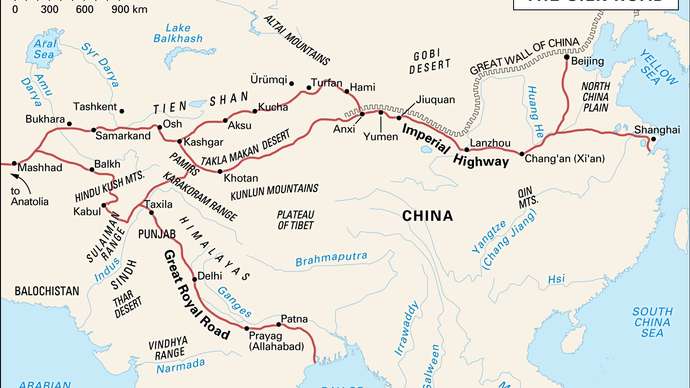
The Silk Road began in north-central China in Xi’an (in modern day Shaanxi province). A caravan track stretched west along the Great Wall of China, across the Pamirs, touching the Indian province of Ladakh, then through Afghanistan, and into the Levant and Anatolia(Turkey). Its length was about 4,000 miles (more than 6,400 km). Goods were then shipped to Europe via the Mediterranean Sea.

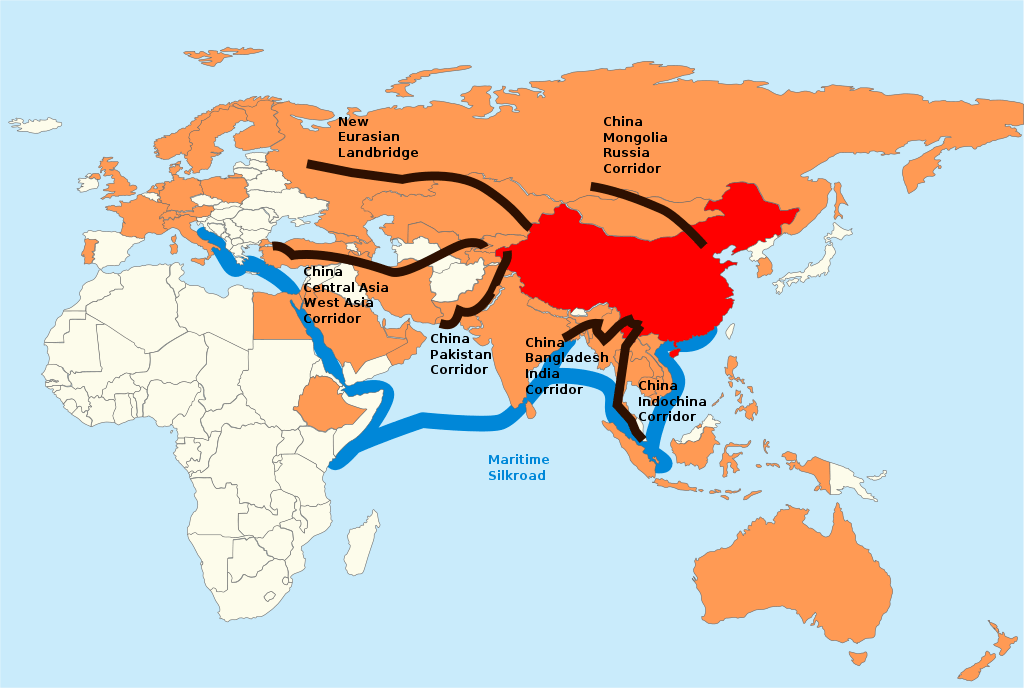
China, now a global superpower seeks to revive this ancient trade route to open new channels of trade with the West in light of various geopolitical and border disputes with her neighbouring countries.

Parts of the Silk Road survives in the form of a paved highway connecting Pakistan and China’s Uyghur Autonomous Region of Xinjiang. In the 21st century the United Nations planned to sponsor a trans-Asian motor highway and railroad. The Silk Road also inspired China’s Belt and Road Initiative, a global infrastructure development strategy authored by President and General Secretary Xi Jinping. The Asian Infrastructure Investment Bank and the Silk Road fund will be the financing this gigantic project.

It’s flagship projects include the China-Pakistan economic corridor(CPEC), where China will fund the construction and development of a big port in Gwadar, Pakistan for trade and maritime shipment to Africa & West Asia.

China is investing heavily in BRI which includes many railway, energy sector, roadway and agriculture projects. Which is not surprising as the country being the world’s biggest oil importer, it’s energy security is a very important concern while current sea routes used to import Middle Eastern Oil continue to be frequently patrolled by the US Navy.

It remains to be seen whether the modern revival of the famous trade route is a successful endeavor.

Ladakh – The link between India and Central Asia

Ladakh, situated in northernmost India bordered by the Tibet autonomous region to it’s east, the Indian state of Himachal Pradesh to it’s south, both Indian Jammu & Kashmir and Gilgit-Baltistan(PoK) to it’s west and the southwest corner of the Chinese Xinjiang autonomous region across the majestic karakoram pass in the far north, has always been a land of intrigue. The name ‘Ladakh’ means the land of high passes is full of great mountain passes like the Karakoram, Khardungla etc.

The largest town and capital of Ladakh is Leh, followed by Kargil. The Leh district contains the Indus, Shyok and Nubra river valleys while the Kargil district has the Suri, Dras and Zanskar river valleys. Being administrated as a union territory recently, it is the largest and second least populous union territory of India.

Since past, Ladakh has been important due it’s strategic location at the crossroads of important trade routes. Most notably the renowned Silk Road, which was and still is a network of trade routes connecting the East and West, and was key to the economic, cultural, political and religious interactions between these regions from the 2nd century BC to the 18th century. It primarily refers to the land but also sea routes connecting East Asia & Southeast Asia with South Asia, Persia(Iran), the Arabian Peninsula, East Adrian and Southern Europe.

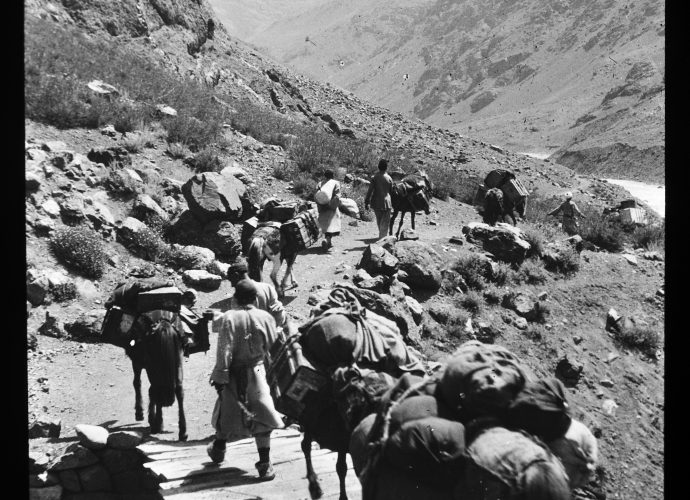
Due to its contiguity with Xinjiang and Tibet and its close proximity to Central Asia, and enjoying a central position in the network of overland caravan routes that were linked to the Silk Route, Ladakh acted as an important gateway in the Indo-Central Asian exchange of men, materials and ideas through the ages. The great mountain barriers of the Hindu Kush, Karakoram, Kun Lun mountains and western Himalayas where not successful in stopping the trade from thriving.

The Central Asian Museum in Leh celebrates this rich cultural & trade history with Central Asia having many artifacts, photographs and art installations depicting trade through Ladakh. Notable exports to Central Asia were the famous Pashmina Shawls, Tea, Indigo, Coral, Salt etc. Imports from Central Asia were Bukharan and Kokandi gold coins(from the area which is now the country of Uzbekistan), Silk Cloth, Russian currency etc.

The trade and the caravan traders even helped in the urbanisation of Ladakh and giving it’s unique identity.

Film industry in covid-19 crisis.

The COVID-19 Pandemic has had an impact on nearly all aspects of our lives, and the film industry is no exception.Movie theaters are by nature a high-risk environment, as they often pack hundreds of people into a small space together for extended periods of time. Additionally, it can be difficult and time-consuming to clean them, making them less than ideal for a highly contagious virus like COVID-19.So how have businesses like movie theater chains and film production companies adjusted to these unprecedented times?

Movie theaters have arguably been hit the hardest, and several major chains such as Cinemex have been forced to close down permanently. Even AMC, the largest chain in America, may be forced to file for bankruptcy. Some smaller chains and independent theaters have allowed small groups of people to book private screenings, in an attempt to earn some money. Several states have announced support for a socially-distanced reopening of theaters, but with distribution companies not releasing new films and most film-goers wary, it remains to be seen if many will reopen at all.

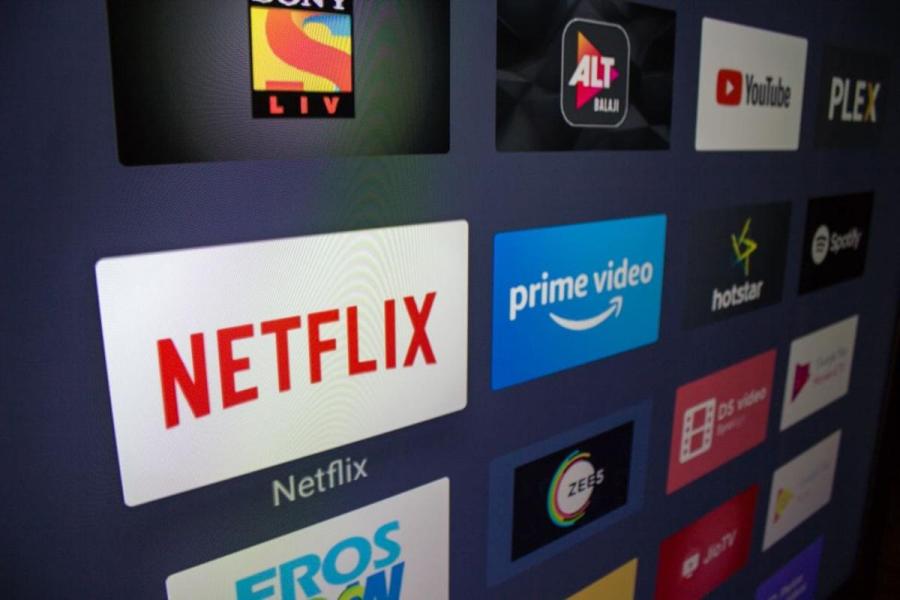
Because of the Covid-19 lockout, the demand for OTT content has skyrocketed. The largest participant in this market, ‘Netflix,’ had a huge income that surpassed $25 billion US dollars in 2020. Similarly, the income of other OTT platforms has skyrocketed! Have you ever wondered how these OTT media generate money?

Over the top media is a video streaming technology that allows you to enjoy content while connected to the Internet. There is also a large selection of content available in both free and paid versions, such as movies, TV series, and documentaries.OTT media creates movies by assembling a crew and funding them out of their own pockets. The second option is to buy the rights from filmmakers in order to expand their content inventory.

With the use of machine learning known as Algorithm, over the top media know their audience’s preferences. This medium is dubbed “The Future of Entertainment,” as our generation is completely reliant on these channels for entertainment. The profitability of OTT media is determined by the number of viewers and subscribers. The more people that use these platforms, the more money may be made through the aforementioned revenue models.

Once a movie becomes a hit and garners huge box office collections, its subsequent satellite and OTT rights will also be priced at exorbitant rates, said Umrotkar. “…that way, OTT releases are not going to compensate for the potential the movie could have had,”both cinemas and OTT platforms will coexist beautifully.

Final Year Exams 2020: Maharashtra University exams not to be held in September- Uday Samant

Maharashtra Final Year Exams 2020

Photo credit: Google

Uday Samant has recently tweeted that the Maharashtra University Final Year exams 2020 would not be held till September 30, 2020. He said, “the universities are trying to ensure that the final year exams can be conducted to the students from home. The exams will not be held until September 30. ‍ The Vice-Chancellor suggested that the government should request the UGC to extend the term till October 2020”.

Maharashtra government is all set to announce the decision on the conduct of Final Year Exams 2020 in the state. The announcement would be made for both graduation and post-graduation courses.

The team or committee formed by the state government comprises of six-members headed by Dr. Suhas Pednekar, Vice-Chancellors from Mumbai, Pune, Aurangabad, Nagpur, Nanded, and SNDT universities along with two former Mumbai University Vice-Chancellors and directors of Higher and Technical education. The committee will decide on the conduct of final year exams in the state and would also give recommendations on how to conduct the exams in the state.

The state government will also disclose uniform guidelines for the conduct of exams and also that the committee will ask the universities to check the feasibility of the online exam from college

The committee was formed by the state after Uday Samant, state higher and technical education minister raised concerns over the conduct of exams followed by the Supreme Court’s verdict to conduct the final year exams. In his tweet he has asked the center to clarify as to how the exams will be held by September 30, if schools and colleges are closed and what exactly should the state governments and students do.

Meanwhile, the students’ body of Maharashtra has written to the state government, suggesting ways to conduct final year exams. This comes after the Supreme Court ruled in favour of the University Grants Commission (UGC) to conduct exams for final year students in India. Reportedly, 16 bodies of student organization