Cyber Crimes and Privacy.

Words and expressions that barely existed 10 years prior are presently essential for our regular language, as hoodlums utilize new advancements to submit cyberattacks against governments, organizations and people. These violations know no boundaries, either physical or virtual, cause genuine mischief and posture genuine dangers to casualties around the world.

Cybercrime is advancing at an amazingly high speed, with recent fads continually arising. Cybercriminals are turning out to be more spry, abusing new advances with lightning speed, fitting their assaults utilizing new strategies, and helping out one another in manners we have not seen previously. Complex criminal organizations work across the world, planning multifaceted assaults surprisingly fast. Police should in this manner stay up with new advancements, to comprehend the conceivable outcomes they make for hoodlums and how they can be utilized as apparatuses for battling cybercrime.

There are numerous protection concerns encompassing Cybercrime when classified data is caught or revealed, legally or something else. Globally, both legislative and non-state entertainers take part in cybercrimes, including secret activities, monetary burglary, and other cross-line wrongdoings. Cybercrimes crossing worldwide boundaries and including the activities of no less than one country state are now and then alluded to as cyberwarfare. Warren Buffet portrays Cybercrime as the “number one issue with mankind.Computer extortion is any untrustworthy distortion of reality expected to let another to do or shun accomplishing something which causes misfortune. In this specific circumstance, the misrepresentation will bring about acquiring an advantage by:

Changing in an unapproved way. This requires minimal specialized ability and is a typical type of robbery by workers modifying the information before section or entering bogus information, or by entering unapproved directions or utilizing unapproved measures; Changing, obliterating, stifling, or taking yield, as a rule to hide unapproved exchanges. This is hard to distinguish , Changing or erasing put away information Government authorities and data innovation security experts have archived a huge expansion in Internet issues and worker examines since mid 2001. There is a developing worry among government offices like the Federal Bureau of Investigations (FBI) and the Central Intelligence Agency (CIA) that such interruptions are important for a coordinated exertion by cyberterrorist unfamiliar insight administrations, or different gatherings to plan potential security openings in basic frameworks. A cyberterrorist is somebody who threatens or forces an administration or an association to propel their political or social destinations by dispatching a PC based assault against computers, organizations, or the data put away on them.

Cyberterrorism, as a rule, can be characterized as a demonstration of psychological warfare submitted using the internet or PC assets (Parker 1983). Thusly, a basic publicity piece on the Internet that there will be bomb assaults during special times of year can be viewed as cyberterrorism. There are additionally hacking exercises coordinated towards people, families, coordinated by bunches inside networks, having a tendency to cause dread among individuals, exhibit power, gathering data important for demolishing people groups’ lives, burglaries, extorting, and so on.

Cyber bullying

Technology is evolving rapidly. The enhancement in technologies has made it possible for various establishments over the world. It connects the whole world and has made our communication better and feasible through several digital platforms and social medias. It has developed and promoted many new and innovative approaches. We are into an era where the technologies has got over our lives. The social medias though help us for a better connectivity it also carries along with it some of the undeniable pitfalls which at times ruins an individuals’ life. One of the snags that it holds is the cyber bullying.

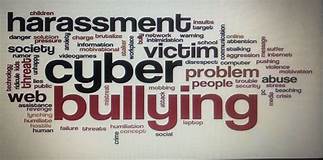
Cyber bullying also known as cyber harassment is a way of bullying / harassment through digital spaces or media. It creates a situation, which includes threats, humiliations, blackmail, or sexual bullying and the victim is ridiculed. It is less physical than the other traditional categories of bullying but it has very impactful and influential effects on individuals. Cyber bullying has become very common these days and has been increasing, especially among the teenagers who are exposed more to the social platforms because the young people are mostly influenced by internet usage more than ever due to the increased screen time. It comes in various forms. It doesn’t necessarily mean hacking anyone’s profile or posing to be someone else. It includes the pessimistic comments by the usage of abusive or derogatory words passed on someone for defamation or other reasons. It tarnishes the reputation/image of an individual that they have built over the years.

The false rumors could even destroys the people’s lives. Nowadays everybody owns an account in the various social lines and this makes it very easy for anyone to misuse this access. Cyber bullying portrays the unpleasant side of the internet. These hostile actions are seriously damaging and can affect anyone easily and gravely. A cyberbullying may not necessarily be a stranger, it may also be someone we know. It is dangerous as it affects the mental peace of a person and takes a toll on the person’s mental health. It shakes the self esteem of a person and makes them feel inferior and at times the stress or depressions developed may also lead to some physical health issues. The internet provides incognito and the chance to create a profile with a hidden identity. Most of the times cyberbully work in groups because in that way they feel strongly united. Cyber bullying can result in detrimental effects on both the bully and bullied. More than 1 in 3 young people have experienced cyber threats online. Over 25% of adolescents and teens have been bullied repeatedly through their cell phones or the internet. Well half of the young people do not even tell their parents when cyber bullying occurs.

Prevention

Section 507 IPC – The section states that if anyone receives criminal intimidation by way of an anonymous communication then the person giving threats shall be punished with imprisonment for up to two years. Cyber bullying prevention is the need of the hour. It has to be monitored sincerely. We can implement them at authoritative levels as well and arrive to effective solutions. From a personal standard one can refrain oneself from posting explicit photos in the social medias and avoid sharing personal information online or to unknow persons. When children expose themselves on the social media, their juvenile nature can make them as a prey to cyber bullies and fall at the wrong hands. So parents should have continuous monitorization over their children. Cyber bullying must be reported immediately when countered without any delay. There are helpline numbers, mail id’s and websites where we can report such crimes. This can prevent further incidents from taking place. We should create awareness about the forms of cyber bullying and its consequences.

The REvil Ransomware Attack

On July 2nd 2021, the Russian ransomware-as-a-service group known as REvil launched an attack on the American software company Kaseya. The hackers targeted the Virtual Server Administrator (VSA) to distribute ransomware as the VSA is used to send out software updates to every computer on that server. 50 of Kaseya’s clients were affected and since they also sold IT services, more customers were prone to attack. This is known as a supply chain attack. It is reported that about 1500 businesses were hit. REvil is demanding $50 million to unlock their files.

The US government has been trying to put an end to cyber crimes like this for quite some time. It does not look like it has been disruptive but it still is being called the largest ransomware attack in history. The ransomware is so sophisticated that it avoids the systems that has the languages that came from the former USSR regions (Russian, Armenian, Romanian, Ukrainian etc.). It is known that criminal cyber groups are allowed to operate freely in Russia as long as they target The United States and other Western countries.

Joe Biden and his administration is actively trying to rally enough global support and pressure the Russian government to find and arrest cyber criminals like REvil. A month ago, at the Geneva summit with Vladimir Putin, Biden had talked to Putin about ransomware becoming a serious threat and that he will take action if Russia doesn’t stop allowing cyber criminals to operate without any consequences. White House officials are expected to deliberate over this problem and come up with a course of action. Biden will most likely tell Russia to live up to its obligations and prevent Russian land to be used for criminal acts like these. The least that they can do is hand over these criminals so they can stand trial for their actions. Russia has even signed an international agreement where it states that they will not allow criminal activity in their territory. The individuals behind this attack must be arrested and the files must be returned to all the businesses immediately.

Biden even said that if Russia continues to not bat an eye, the US would be forced to respond with an attack of their own. He added that the last thing Putin would want on his hands now is a new Cold War. This is not the first time an attack like this has occured. A Russian cyber group had previously attacked hospitals and food-processing plants. This is why the US has had enough and want swift justice.

Privacy in Internet era

The use of digital technology is growing, and people are becoming more aware of it, as well as the numerous benefits that technology provides. They are always connected, can contact almost anyone from anywhere, and carry the world’s most powerful information source in their pockets. People, on the other hand, appear to overlook one fact: how much data technology generates. And that’s where the issue of privacy comes into the picture and it is no secret that the modern use of the Internet and social media has a significant impact on people’s privacy. And our need for privacy is one of the characteristics that define us as human beings. Nobody like having their privacy invaded, whether it’s by someone looking over our shoulder or by a data breach. Every day, we come across headlines concerning privacy breaches that make us worry. The Internet is commonly regarded as a tool that has enabled people to write their own stories and share their experiences with a global network of people. As we continue to digitize every aspect of our lives, from gyms to vacation destinations, security and privacy protection will become increasingly more important in the coming years. As a result, it is growing easier to unintentionally give out sensitive information via email, social media, and other means these days. From internet service providers collecting user browsing history to software vendors gathering broad data about our personal life, there is a lot of data being collected about us. As a result, simple laws and regulations ensuring consumers’ ability to opt out of personal data collecting are urgently needed. In the digital era, this would go a long way toward safeguarding privacy.

Until 2021, the total sum of our personal information on the internet will be around 1.2 Million TBs, and it will undoubtedly rise in the future. Have we ever thought about how to keep it safe? If we continue to take this lightly, the day will come when digital privacy issues will attract an increase in cyber attacks, resulting in a loss of reputation, theft of sensitive documents, and a lack of confidence among users.

To emphasize the importance of data privacy in our lives, we should all take a look at the approaches or methods that can help us add value to data privacy.

  • Using technologies to effectively manage compliance and vulnerability in security.
  • Auditing security setups on a regular basis.
  • Staffs should be well-trained and educated on the ongoing threat of ransom ware.
  • Make the Privacy Procedures sound more effective by updating them.
  • Creating and restoring backup files with caution.
  • For reaching the unreachable updates, technology should be used.
  • Obtaining illegible H/W Channels from the attackers.
  • Also education has the duty of transferring awareness, attitudes, skills, and conduct from actual life domains such as home, school, and friends to young people.

From beginning till the end, it can be concluded that data privacy should not be overlooked. And what we should be doing right now is actively participating in the fight to make our lives more secure in this era of digitization.

IDENTITY THEFT IN CYBERSPACE

Cybercrime is one of the most pressing issues the world is facing right now. And it will be one of the greatest risks over the next decade, outpacing the likes of terrorism, political conflict and degradation of environment. Cybercrime includes unauthorized access of information and breach of security like privacy, password, and other personal information of any person with the use of internet. Identity theft is a part of cybercrime that involves committing theft via computers or internet. Identity theft is important in today’s world because of the increasing importance of identity-related knowledge in e-government, the economy, and socialization. Any internet user’s identity can be stolen in seconds, and the user may be unaware of it. There are various tools available in the internet which allows anyone to steal data of any particular user, if he/she is connected to internet. It is not necessary for the hacker to have extensive knowledge of internet technology or how networking functions. For most people who use the internet, identity theft is a big concern.

Cybercrime is defined as “offences committed against individuals or groups of individuals with a criminal motive to deliberately damage the victim’s reputation or cause physical or mental harm, or loss, to the victim directly or indirectly, using modern telecommunication networks such as the Internet (chat rooms, emails, notice boards, and groups) and mobile phones (SMS/MMS).” It is a modern-day crime involving criminal activities in cyberspace, in which any electronic communication device, database, or the internet is used as a weapon, target, or both. Cyberspace is a virtual environment where people interact through a computer network. As a result, it is a space that has no geographical boundaries and is open to everyone, anywhere in the world that has internet access.

Cybercrime is on the rise in modern times, as people become more dependent on computers, the internet, and related technologies, as well as the digitalization of different services, and it is rapidly becoming a threat that must be tackled. The internet has certainly many advantages, but it has also made the committing of such cyber crimes simpler. Identity theft in cyberspace is one such crime. Identity theft is a type of cybercrime in which a person’s identity is stolen in order to obtain illegal monetary benefit or deceive others, and in some instances, it may put the victim’s personal safety at risk. Identity theft that happens over the internet is referred to as online identity theft or identity theft in cyberspace. The name of the crime is a little misleading because when something is stolen, the victim is dispossessed, whereas when a person’s identity is stolen, the victim is not dispossessed. The identity of a person, whether alive or dead, refers to and includes their private info, such as their name, date of birth, e-mail address, bank details, IT returns, medical insurance details, and other accounts. Identity theft is a term used to describe a variety of crimes in which someone illegally obtains and uses another person’s personal information in any way that includes deception or fraud, usually for financial gain. Hacking accounts, phishing, spear phishing, denial of service, distributed denial of service, data theft, spyware installation, cookies, e-mail/SMS spoofing are just a few of the ways this crime is committed, and new ways are emerging every day. In the years 2014, 2015, 2016, and 2017, India reported 9622, 1192, 12317, and 21796 cybercrimes respectively, according to the National Crime Record Bureau. And there were 27248 cybercrimes reported in 2018, with 55.2 percent (15,051 out of 27248) being for the purpose of fraud. And in year 2019 there were 650,523 complaints of identity theft and the numbers increased it was more than 1 million in the year 2020. (Data as per Federal Trade Commission, Consumer Sentinel Network)

This trend shows that a change is imminent and preventive measure must be taken to curb this millennial crime and facilitate India’s growth into a trillion-dollar economy. One way to accomplish this is to educate the general public about the risks involved with using the internet and the importance of using standard protective measures such as using a safe WIFI network, firewall, and not sharing passwords, which are all commonly ignored.

Identity theft has become a major crime all over the world, posing a threat to both individuals and businesses. Thieves, fraudsters, and criminals use identity theft in a way to extract private information from people and make huge amount of money from them. As a result, it is vital to increase people’s awareness of how to protect themselves in online networks through education. In terms of public education costs, it is important to note that governments and other large businesses should view these costs as investments rather than expenses in order to create a safe society.

Banks, financial institutions, and retail stores, for example, are more vulnerable than most small companies or firms because they collect people’s personal information in their databases. As a result, these organisations must have sufficient strategies, policies, and actions in place to defend themselves from mass identity theft. Security awareness, education, technical control, and an effective information management strategy should all be part of a successful defensive system. Identity theft by insiders is a major concern for organisations, according to various reports. Thus, organisations should consider implementing a strict and reliable internal control to prevent identity theft. Organizations should inform workers about the most common type of attack, social engineering, and its consequences. Managers should also be conscious that poor performance and negligence for the effects of future attacks not only results in substantial financial losses, but also harms the company’s reputation. Individuals and organisations must agree that they are vulnerable to identity theft; as a result, implementing the most efficient security system should be linked to developing the understanding of potential threats, since “Awareness is the best defence.”

Three young individual charged in Twitter Hack last month

Twitter Inc.’s worstever hack began months earlier with a teenager on a telephone, according to an indictment filed Friday by federal authorities.

The US Department of Justice has charged three young individuals with hacking Twitter last month that compromised the accounts of 130 high profile users including Barack Obama, Bill Gates, Jeff Bezos and Elon Musk.

The three were charged in connection with the July 15 hack, including a 17-year-old juvenile whom authorities have accused of masterminding the scam.

Two teenagers and a 22-year-old were charged with hacking the Twitter Inc accounts of famous people including former President Barack Obama, billionaire Bill Gates and Tesla Chief Executive Elon Musk, the Department of Justice said on Friday.

Mason Sheppard, a 19-year-old British man who went by the alias Chaewon, was charged with carrying out the hack, as well as related wire fraud and money laundering crimes, according to a Justice Department statement.

Orlando, Florida based Nima Fazeli, 22, nicknamed Rolex, was charged with aiding and abetting those crimes. The Justice Department did not name the third defendant, but the Hillsborough County State Attorney Office in Tampa, Florida said it had arrested 17-year-old Graham Clark.

The tweets offered to send $2,000 for every $1,000 sent to an anonymous Bitcoin address.

Internet Theft: Can the government be considered as a white collar criminal?

With the constant rise in digitalization, the computer stores information in binary data form and deeply on the data form which is a way that the device tracks a lot of information in an effective way. Subsequently, with the invention of personal computers and microprocessors the idea of using computers for exclusive use of an individual rose. The process was not only affordable but also made management and storage of information easier. But this evolution has also led to increased interactions and sharing of private data using computer, ultimately leading to illegal activities known as cybercrimes. Identity theft is one such crime. Identity theft refers to a crime when a person fraudulently obtains information of another person and later uses it for economic or personal gain.  The theft happens in a two-step process. Firstly, the personal information gets stolen. Later, the information gets used to impersonate the victim and commit the fraud.  Identity theft has already made its place among the fastest growing sector in not only the developed countries but also the developing countries. The primary reason for US being affected stands firm to the fact that all the personal information is linked to a single social security number. The number allows an individual to avail all government schemes and records related to the individual whose social security number it is. This allows very little safeguarding to the individuals whose number gets leaked. Landing on Indian records, there has been an 11% increase in identity theft and ransom ware, followed by phishing attacks increase to 9%.  India also been ranked amongst top 5 countries to be affected by cybercrimes in 2013.  Problematically, there is a very low conviction rate despite the high levels of cybercrime.

There are provisions in Indian Penal Code, 1860 which governed the crimes of forgery and fraud but it was later amended by the Information technology Act, 2008 as it also included the electronic record, ultimately widening the ambit of such computer data related crimes. Provisions such as section 464 criminalizing forgery, Section 465 criminalizing making of false documents, section 468 criminalizing forgery for purpose of cheating, Section 469 criminalizing forgery for purpose of harming reputation, Section 469 criminalizing the use of a genuine document as forged and section 474 of having possession of a document with intention of using the genuine document as forged were coupled with IT Act. Section 420 could be used in circumstances when the Act requires including unique identification information of any individual. 

In the present scenario, the IT Act, 2000 is the main legislation governing cybercrimes in India. The objective of the Act, however, was to mainly recognize e-commerce and that’s why it did not define cybercrime. Before the 2008 amendment, the Act could impose civil liability for unauthorized access to computer or network which would have facilitated an illegal act under section 43 by way of compensation under the pecuniary limit of one crore. Also, Section 66 criminalized hacking which would result to destruction, deletion or alteration of any resource in the computer. 

The Amendment of 2008 introduced the term ‘Identity Theft’.  Section 66C of the Act governs the crime and provides punishment for the same.

The ‘sensitive personal data’ however required stronger laws to be formulated which could ensure the protection of private data. The ambit of the term has been defined by IT rules, 2011. It involves the data related to one’s password, financial information, sexual orientation, biometric information, medical records. Such a clause would be exceptional to the State or central government for monitoring, surveillance or interception. The same was provided under Section 69 of the Act. 


Data Protection Bill 2019 and Cyber-Crime are often used together these days. Not scholarly but indeed since the bill does come with serious implications for all technological and digital service provider companies and has already generated controversies. Despite India’s attempts to create a complex legal framework with the objective of protecting data but it comes with shortcomings which are inevitable. On a bare reading, there are three serious flaws with the current draft.

Firstly, the section of data localization requires data fiduciaries to store atleast one copy of personal data on a data centre or server which is located in India. However, the centre holds the upper hand to exempt categories falling under the personal data. Also the centre can declare certain datas as critical and require them to be stored in India. In the present, this would allow all the social sites also known as foreign internet services to physically able a user data in the country. This would allow law enforcement easy access to this data, which brings to the second issue.

The law enforcement access to data section would allow processing of data considered personal by an individual in the hands of centre and in the interest of security and public welfare, the state can utilize the information which would not be illegal as it would be according to procedure established by law. Now, this access stands as a threat to the right to privacy that exists in India. If combined with the section of data localization, the government shall have access to information about users in social media.

However, this legal framework for surveillance by the government is governed by the judgment in PUCL v Union of India in which the Apex Court stated rules to concentrate the power to order and review surveillance in the executive body which doesnot require court orders or supposedly, any third party review. The measure intended to act as a stopgap measure by the SC and if any subject falls short of international human rights then there will be very little to safeguard the citizens.

The last section is about the regulatory structure created. The Centre has control significantly over the controls. The bill further gives powers to data protection authority to appoint its members by merely the recommendation of an outside committee. For a person to be an effective regulator of an institution, one must have sufficient time to learn and the bill providing only five years of term seems ineffective.


The term white collar crime has grown to define the fraudulent crimes of business and government professionals over time. The characterization of such a crime is violation of trust, concealment of information, deceit through information and categorically not dependent on any kind of force or violence imposed. White collar crimes end up having huge impacts on the society. There have been various scams in the country like the Havala scam, 2g scam, fodder scam, banking scam and many more. This does not necessarily indicate towards the entire involvement to be criminal but it merely requires one financial fraud in greed of money or power to commit such an act. Cybercrime stands as one of the biggest causes to these types of crime in the country. It is the information that single handedly threatens a person’s security and financial status.

Since the actions of Government have direct impact on the society, it is easily identifiable that when a white-collar group is discussed, the Government is a part of it.

Now, bringing the recent proposed bill and the white-collar crime concept together, the question stands whether the bill in the name of data protection is actually for protection or is merely a tool of mass surveillance by the Government.

The SC in its judgment of right to privacy in K.S Puttuswamy case declared the right as a part of Article 21 guaranteed under the Constitution. The judgment clearly stated that the right is a natural right and is a measure to protect an individual from the scrutiny of the State. Thus, any action by the State would undoubtedly result in violation of such a right and would be subject to judicial review. But the right clarified to have reasonable restrictions which empower the State to impose restrictions in accordance with a law in the interest of State’s need and also the means should be in proportion to the objectives of law.

Even if not called the worst but if the bill is passed, it would bring in major implications especially in areas of national security, foreign investment as well as international trade.



Cyber Crime: How to tackle it?

INTRODUCTION

The past two decades have witnessed an invasion of technology in almost all the spheres of human life. This has led to an increased dependency on technology. Thanks to information technology,the world has made paradigm shifts from the offline to online domain. Everything,from banking,stock exchange,healthcare, education can be controlled and monitored using technology. But as there are two sides of a coin, technology has also two sides of it i.e. pros and cons. One of the major cons of technology is cyber Crime.

What is cyber Crime?

Cyber Crime is a crime in which the computer is the object of the crime such as hacking, phishing and spamming or is used as a tool to commit an offence such as child pornography,hate crime etc. Cyber criminals may use technology to access personal information, business trade secrets or use the internet for malicious activities such as online monitoring of another person’s activities, unauthorized users who can access their personal and sensitive information.

A person who gains unauthorized access to the system is known as a hacker. Theft involves the download of copyrighted material by violating the copyrights. In the case of electronic funds transfer crime , a person illegally gains access to another person’s bank details and this may lead to financial losses. E- mail bombing involves sending a large number of mails over the network in order to crash th server. A very common cyber Crime act is sending the virus as an attachment via mails. This virus can be used to extract the data from the system and jeopardize it in some cases.

Victims of cyber Crime

National and international financial institutions , banks and security agencies fall victim to the cyber criminals. In many cases,they have to pay a lot of money to the criminals in order to prevent the misuse of their data .The social media is driving the world crazy. But,at the same time,it has become a breeding ground and platform for cyber Crime. Thanks to the sharing culture of social media ,people tend to share a lot over the social media platforms. This information is used by cyber criminals personal and sensitive information of other which can be late later misused on. The impostors create fake social media platforms and post misleading information about the concerned person. This commonly happens with public figures and is an intention to malign and harm the image of the person.

Necessary steps to secure one’s own account

  • People need to be very careful about their acquaintances and the degree to which they divulge in their personal information on social media. It is best to stay away and not accept invites,as well as requests from unknown people.
  • One should avoid sharing personal information such as passwords with anyone. The password needs to be strong enough so that the hacker cannot crack them. In order to increase the strength of password, one can make use of alpha- numeric values and special symbols. In fact,one needs to make sure that there is never a common password for all accounts.
  • It is best to refrain from clicking on the pop ups and unknown website links. One needs to make sure that all the transaction that happen online needs to take place through a secured gateway. One must abstain from saving the bank account details on the websites. The mails which make claims about winning a prize money are malicious and must be ignored. A good – quality antivirus software must be installed on the device.
  • E- mail service provides as well as many other online platforms ,have started multi- step verification process in order to secure the user’s account.

Law against this crime is not strong enough

The biggest concern with regards to cyber Crime is that it gets tough to uncover the identitybof the criminal. A skill law enforcing agency is required to deal with this crime. The Information Technology Act,2000 passed by Indian government deals with the domain of cyber crime. But this act has certain loopholes that need to be plugged in order to strengthen the cyber security. Besides,it is important for the government to create awareness among the people about the exponentially rising cyber crime and ways to deal with it.

How to find whether a website is fake or genuine

There are over 1.74 billion website on net today .Unfortunately,the internet is full of fake websites also .The evolution in the internet have make convenient to shop ,bank and interact with people all around the globe .But it has also open the ways for Cyber crime. Criminals through a practice called phishing, fraudsters copy a legitimate site and bait customers to provide them personal information.For instance -Debit or credit card numbers,Passport Number.Once customer provide them data they can make use of it to buy and to transfer money which eventually lead to loss of all the money in your bank account.

It can be difficult to detect whether a site is fake or scam sites .Fraudsters are very clever and create a very convincing sites and these phishing sites tend to look original .Criminals can easily target the customers who doesn’t pay attention to small details and trick them easily into provide them sensitive information .

Here are some signs through which one can determine whether a website is fake or genuine .

Ask yourself how you reach here ?

First and foremost ask yourself a question how you get to the site .Through link on email or social media sites.Reason being emails or social media sites are the most effective way criminals used to track customers .Never click on the link given instead simply google it.

Review the result

While visiting the site make sure firstly to read someone reviews about the site on quora or similar forums.Do not trust on the reviews so easily .Go through several forums and even explore their last activities on social media handles . One can also read customers feedback and check the website connection type .A https is a more secured sites rather than site having http designation.Hence ,more trustworthy .This is because most of the fake sites do not go through the process of having https connection type.But we should not rely on this only we should verify it further.

Inspect domain name

A lot of illegitimate websites use domain name as the reference to brand name .But it’s not brands officially site .It’s red signal that something is fishy.AdiDas etc.

Usually most of the shopping site don’t use .org or .biz domain extensions .Be cautious it might be a fake site.

Low prices

Sites offer sometime good discount , if you find that a site is having very low prices with heavy discount more than 50-70%.

Illegitimate sites use heavy discount as a bait for hungry shoppers. Be alert.

Spelling or Grammar mistake

Search for spelling or grammar mistake .Every browser have in built spelling checker and thus there can’t be any justification for spelling mistake.It the website has lot of grammatical mistake .This can be only happen when someone has in hurry built a site to trap the people in intention of making quick profit.

Opt only for secure payments option

Pay only through safe refundable payment option such as credit card or paytm.It’s a red signal if shopping website accept pay via bank transfer.Never opt for non -refundable payment option .

Google safe browsing

Google Safe Browsing is a service offered by Google’s security team built to identify illegitimate websites across the web and tell users of potential harm. They reveal details about the threats they detect and the warnings they show to users.

As the cyber crime reportedly is increasing .Be alert and go through the details of site carefully .

Please comment tour thoughts in the comment below and have a wonderful day.

Digitalization and Cybercrime

By- Rhythm

In this digital world when crime gets digitalized nothing worse can happen. A famouse case of “Nth room” was exposed in South korea recently. Nth room case is a digital sexual crime case that occurred on the application ‘Telegrame’ from 2018-2020.

cyber security

The ‘Nth Room’ refers to the name of the Telegram chat rooms where the videos of these women were circulated. Reports reveal that as many as 200,000 people were participants in these chat rooms with more than 70 women being the victim including minors.

Reportedly, one of the suspects, Cho Jo Bin also known as “Doctor or Baksa (baksa- doctor in Korean) would lure young women with offers of part-time jobs or modeling offers and then blackmail them with their personal information to create sexually explicit videos of themselves.

Many male idols, actors, politicians, businessman are said to be member of these chat rooms. The ‘Baksa’ aka Cho Jo Bin has been arrested by the Seoul Metropolitan Police Agency on 20th march 2020.

The Seoul police have been probing the Nth Room case since September 2019. So far, the cops have got 15,000 names of people who used the Nth Room chatrooms. But police said that many people shared one chatroom, so the number of users could be higher.

More 2 million people signed the petition to reveal the identity of ‘Baksa’ ( his identity has been revealed now) and now more than a million people are signing the petition to reveal all the members of these chatrooms.