Reddit is one of the richest places on the internet to understand problems people actually have, in their own words. If you treat it as a massive, always-on focus group, you can systematically validate startup concepts long before you write a single line of code.
Why Reddit Is a Powerful Validation Channel
Most founders talk to people who are too close to them: friends, colleagues, early fans. Reddit gives you something different: candid, often brutally honest conversations from people who don’t care about your feelings. That makes it especially valuable for validation.
Some reasons Reddit stands out:
Real problems, unprompted: People complain and ask for help without being led by a survey or interviewer.
Sharp language: The words people use (“this is insanely frustrating,” “I hate how…”) highlight pain intensity.
Niche communities: Subreddits gather concentrated groups of similar users (e.g., freelance designers, indie hackers, SaaS founders).
Searchable history: Years of conversations let you see whether a problem is recurring or just a passing trend.
Step 1: Map Your Startup Hypothesis to Subreddits
Before you dive into data, be explicit about what you’re validating. A clear hypothesis beats a vague “let’s see what’s out there.” Start with:
Target user: Who is this for? (e.g., freelance developers, Shopify merchants, new parents)
Main problem: What core pain are you trying to solve?
Outcome: What result do they want? (save time, make more money, avoid embarrassment, etc.)
Then translate this into candidate subreddits where these people gather. For example:
Tools for indie SaaS founders: r/Entrepreneur, r/startups, r/SaaS, r/IndieHackers
Automation for Shopify merchants: r/shopify, r/Entrepreneur, r/smallbusiness
Look for subreddits where people both complain and ask for help. Advice-seeking threads are especially valuable for validation.
Step 2: Turn Open-Ended Browsing into a Repeatable Process
Most people casually browse Reddit. For validation, you want a structured way to extract signal from noise. Here is a simple workflow you can repeat across ideas:
Search with problem-centric keywords.Use Reddit search operators inside each subreddit. Try combinations such as:
“[your problem] is killing me”
“how do you handle [your problem]”
“any tools for [your problem]”
“frustrated with [your existing solution]”
Sort by relevance and by top.Sorting by “Top” for the past year or past month surfaces the most upvoted pain points and frequently discussed issues. Sorting by “New” exposes emerging patterns and unmet needs.
Skim for recurring themes.Open promising threads in new tabs. Ignore one-off rants; focus on posts that attract many comments, especially those that turn into discussions of alternatives and workarounds.
This gives you a first pass view of whether your assumed problem actually shows up in the wild and how often.
Step 3: Capture the Data Instead of Relying on Memory
If you rely on intuition alone, you’ll remember the loudest comments, not the real pattern. I treat Reddit like a qualitative dataset and capture threads systematically.
You can do this manually for a small number of ideas, but as soon as you scale across subreddits, time ranges, and multiple keywords, it helps to automate collection using a Reddit data scraping workflow. Tools like RedScraper let you gather posts and comments at scale without spending hours clicking around.
When I scrape and export data, I structure it with at least these fields:
Subreddit
Post title and body
Upvotes / score
Number of comments
Timestamp
Top-level comments (and sometimes replies)
Whether you use a dedicated scraper like RedScraper or another Reddit market research tool, the goal is the same: convert messy discussions into a structured dataset you can scan, tag, and compare.
Step 4: Tag Posts by Pain, Intensity, and Existing Solutions
Raw text is hard to reason about. I annotate posts and comments with a few simple tags so patterns emerge quickly:
Pain category: What is the problem really about? Time waste, complexity, cost, anxiety, risk, communication, etc.
Pain intensity: Mild annoyance vs. “this is ruining my week.” Language like “hate,” “exhausting,” “tired of,” or “I wish there was a better way” signals stronger pain.
Frequency: How often this specific problem appears across threads and subreddits.
Workarounds: Spreadsheets, manual hacks, scripts, or multiple tools chained together suggest a gap.
Existing tools mentioned: These reveal competitors and highlight what users like or hate about them.
Even a simple spreadsheet with manual tags helps you answer:
Are users repeatedly describing the same underlying pain?
Do they seem ready to pay or switch tools, or are they resigned to their current workaround?
Where are existing products failing—complexity, missing features, pricing, onboarding?
Step 5: Extract Actual User Language for Your Positioning
Beyond problem validation, Reddit is a goldmine for copywriting. I intentionally collect phrases and sentences that users repeat:
“I’m wasting hours every week on…”
“The hardest part is…”
“I wish there was a simple way to…”
These phrases become raw material for landing page headlines, feature descriptions, and onboarding emails. Instead of guessing what will resonate, you borrow the language your target users already use to describe their struggles.
Step 6: Look for Evidence of Willingness to Pay
It’s not enough to see a problem; you want signs that people care enough to pay for a solution. On Reddit, I look for:
Tool recommendations with positive follow-up: Users say “this was absolutely worth it,” or “I happily pay for X because…”
Complaints about current pricing: Not just “too expensive,” but “I’d pay if it did X, Y, Z” or “I’d pay $10/month for something that just handles this one thing.”
DIY effort cost: People sharing complex scripts, templates, or workflows just to avoid the problem.
If people invest significant time, hack together multi-step workflows, or argue about whether a tool is “worth it,” it often indicates a monetizable pain.
Step 7: Identify Gaps in Existing Solutions
Reddit threads almost always surface alternatives—products, frameworks, or habits people already use. For each recurring competitor name, I collect:
What users like (“simple,” “reliable,” “cheap,” “great support”).
What users dislike (“bloated,” “overkill for my use case,” “terrible UX,” “pricing jumped,” “bad for small teams”).
This helps you uncover:
Unserved segments: “All the tools are built for enterprises, nothing for solo founders.”
Overbuilt incumbents: “I don’t need a full platform, I just want one thing done well.”
Workflow friction: “It doesn’t integrate with what we actually use,” or “I have to keep exporting/importing data.”
Your concept becomes stronger when it is explicitly “for this segment, in this use case, without all the bloat people are complaining about.” Reddit gives you the source material to define that clearly.
Step 8: Prioritize Ideas with a Simple Scoring Model
When I evaluate multiple startup ideas using Reddit data, I assign each idea a quick score based on:
Pain frequency: How often do I see this problem mentioned?
Pain intensity: Are people mildly annoyed or clearly suffering?
Solution gaps: How unsatisfied are users with existing tools?
Market clarity: Can I clearly define who it’s for and what outcome it delivers?
Each dimension gets a simple 1–5 rating derived from the Reddit threads I’ve collected and tagged. The total score is not a perfect predictor of success, but it forces me to base prioritization on observable discussions rather than on my enthusiasm for a particular idea.
Step 9: Move from Passive Observation to Active Testing
Reddit-based validation should not end at reading threads. Once you see promising patterns, you can begin to interact carefully:
Ask clarifying questions in existing threads: “Out of curiosity, what have you tried so far?” or “What would your ideal solution do?”
Start neutral, non-promotional discussions: “How are people handling X these days?” and observe the tools and processes people mention.
Run small experiments: Share a value-focused landing page (where allowed by subreddit rules) and measure click-through, sign-ups, or feedback.
Always respect each subreddit’s rules and culture; the goal is to learn, not to spam. Done well, these conversations give you more detailed validation and, sometimes, your earliest users.
Practical Example: Validating a Workflow Automation Tool
Imagine you’re considering a startup that automates repetitive reporting for small SaaS founders. A lean validation process using Reddit might look like this:
Search for “manual reporting,” “weekly metrics,” “KPI dashboard,” “spreadsheet hell.”
Scrape a few hundred relevant threads using a tool like RedScraper, then export them.
Tag posts by whether they mention manual spreadsheets, missed reporting, dashboard tools, or analytics confusion.
Highlight posts where founders say things like “this eats my Sunday evenings” or “I always fall behind on tracking” as high-intensity signals.
Note existing tools mentioned and what users criticize: confusing setup, expensive, overkill for small teams.
Draft a landing page proposing a lightweight weekly-report automation tool using the exact phrases you collected.
Soft-test the idea where appropriate by asking about preferred workflows and solutions, then adjust your concept based on the responses.
By the time you write any serious code, you have evidence of the problem, context around current solutions, and a language set that resonates with your target audience.
Ethical and Practical Considerations
Using Reddit data comes with responsibilities:
Respect platform rules: Follow Reddit’s terms of service and each subreddit’s guidelines when collecting data or posting.
Protect user privacy: Avoid sharing identifiable handles or sensitive personal stories in your materials.
Offer value back: When you post, contribute genuinely useful insights, resources, or tools.
Avoid overfitting to one community: Validate across multiple subreddits to avoid building something too specific to a narrow niche unless that’s your deliberate choice.
From Noisy Threads to Confident Startup Bets
Reddit won’t tell you exactly what to build, but it dramatically reduces guesswork. By treating subreddit discussions as a structured dataset—collected via scraping tools, tagged systematically, and analyzed for patterns—you can move from vague intuition to grounded conviction.
The key is consistency: use the same process for each idea, leverage tools like RedScraper or other Reddit market research solutions to scale your analysis, and keep looping between what people say and what you plan to build. Over time, you’ll get better at spotting opportunities where real, repeated pain meets clear gaps in existing solutions—long before you commit months of development effort.
Hiếu, P. T. (2026). Negative emotions in modern psychology and Buddhist thought: A conceptual and comparative analysis. International Journal of Research, 13(3), 212–221. https://doi.org/10.26643/ijr/14
APA
Phí Thị Hiếu
Associate Professor, Thai Nguyen University of Education, Thai Nguyen, Vietnam
Abstract
Negative emotions constitute a central concern in both modern psychology and Buddhist thought, yet they are conceptualized within distinct theoretical and philosophical frameworks. This article presents a conceptual and comparative analysis of negative emotions as understood in contemporary psychological theories and Buddhist psychology. Drawing on authoritative secondary sources, the study examines key dimensions of comparison, including the definition and function of negative emotions, their underlying causes, the role of the self, and approaches to emotional change.
The analysis indicates that modern psychology primarily interprets negative emotions as adaptive affective responses that become problematic when dysregulated, emphasizing strategies of awareness and regulation to support psychological functioning. In contrast, Buddhist psychology conceptualizes negative emotions as afflictive mental states rooted in ignorance and attachment, framing emotional suffering as inseparable from self-clinging and existential dissatisfaction. While both traditions highlight the importance of awareness and non-reactivity, they diverge in their ultimate aims, with modern psychology focusing on adaptive well-being and Buddhist thought emphasizing transformative insight.
By clarifying these conceptual differences and points of convergence, the article contributes to a more precise understanding of how negative emotions are theorized across traditions. The findings underscore the value of comparative analysis for enriching theoretical discussions of emotion while acknowledging the distinct goals and assumptions underlying each framework.
Keywords
Negative emotions; modern psychology; buddhist psychology; suffering; emotional suffering
Introduction
Negative emotions have long occupied a central position in psychological inquiry due to their profound influence on human well-being, behavior, and mental health. Contemporary psychological research has extensively examined negative emotions such as anger, fear, sadness, and anxiety, primarily focusing on their adaptive functions, regulatory mechanisms, and implications for psychological adjustment (Gross, 2015; Lazarus, 1991). Within this framework, negative emotions are generally understood as functional affective responses that become problematic when they are excessive, poorly regulated, or contextually inappropriate (Ekman, 1992; Gross & Thompson, 2007).
Parallel to developments in modern psychology, Buddhist thought has for centuries offered a systematic analysis of emotional suffering, conceptualizing negative emotions as core mental afflictions (klesas) that sustain dissatisfaction and suffering (dukkha) (Gethin, 1998; Harvey, 2013). Buddhist psychology places particular emphasis on the cognitive and existential roots of negative emotions, especially ignorance (avidyā), attachment (taṇhā), and the reification of the self (attā) (Rahula, 1974; Wallace & Shapiro, 2006). From this perspective, emotional suffering is not merely a matter of dysregulation but reflects deeper patterns of misperception regarding the nature of reality and selfhood.
In recent decades, scholarly interest in dialogue between psychology and Buddhism has grown substantially, particularly through the incorporation of Buddhist-derived practices such as mindfulness into psychological interventions (Kabat-Zinn, 2003; Baer, 2003). While this interdisciplinary engagement has generated valuable insights, existing literature has largely focused on practical integration or therapeutic effectiveness (Khoury et al., 2015). Comparatively less attention has been given to the underlying conceptual assumptions that shape how negative emotions are defined, explained, and addressed within each tradition. As a result, important theoretical differences—particularly concerning the ontological status of emotions, the role of the self, and the ultimate aims of emotional change—remain insufficiently clarified (Wallace, 2007; Shonin, Van Gordon, & Griffiths, 2015).
Moreover, comparative discussions often risk presenting both modern psychology and Buddhist psychology as internally homogeneous traditions, overlooking conceptual diversity and methodological limitations (Lomas, 2016). Without careful conceptual analysis, such comparisons may conflate distinct explanatory levels or selectively appropriate Buddhist concepts while detaching them from their ethical and philosophical foundations (Purser & Loy, 2013). Addressing these challenges requires a systematic and critically informed comparative approach that respects the integrity of each framework while identifying meaningful points of convergence and divergence.
Against this background, the present study aims to conduct a conceptual and comparative analysis of negative emotions as theorized in modern psychology and Buddhist thought. Rather than proposing an integrative model or empirical synthesis, the article seeks to clarify key theoretical assumptions and analytical dimensions underlying each tradition. The analysis is guided by the following research questions:
(1) How are negative emotions defined and explained within modern psychological theories and Buddhist psychology?
(2) What role does the concept of the self play in shaping emotional experience and suffering in each framework?
(3) How do approaches to emotional change differ with respect to regulation, transformation, and ultimate aims?
By addressing these questions, this study contributes to ongoing interdisciplinary discussions by offering a more precise conceptual comparison of negative emotions across traditions. Clarifying these theoretical foundations may enhance mutual understanding between psychological science and Buddhist philosophy, while also informing future research on emotional suffering and well-being.
Methods
This study adopts a qualitative conceptual comparative approach to examine how negative emotions are theorized in modern psychology and Buddhist psychology. The purpose of the analysis is not to synthesize empirical findings or evaluate intervention outcomes, but to clarify and compare the underlying conceptual assumptions, explanatory frameworks, and approaches to emotional change within each tradition.
The analysis is based on a purposive selection of authoritative secondary sources. For modern psychology, the corpus includes foundational and influential works on emotion theory and emotion regulation, such as appraisal-based models, constructivist perspectives, and contemporary regulation frameworks. For Buddhist psychology, the sources consist of well-established scholarly interpretations of early Buddhist teachings and Buddhist psychological concepts, including discussions of klesas, dukkha, ignorance, attachment, and non-self. To ensure conceptual coherence, the study primarily draws on interpretations grounded in early Buddhist and broadly Theravāda-informed psychological frameworks, while acknowledging the diversity of Buddhist traditions.
Sources were selected according to three criteria: (1) academic credibility, indicated by peer-reviewed publication or established scholarly status; (2) direct relevance to the conceptualization, causes, or transformation of negative emotions; and (3) frequent citation and recognition within their respective fields. Empirical studies were included selectively to illustrate dominant theoretical assumptions rather than to provide systematic evidence of effectiveness.
The analytical procedure involved close reading and thematic comparison of key concepts across the two traditions. Core analytical dimensions—such as the definition of negative emotions, their underlying causes, the role of the self, and approaches to emotional change—were identified inductively from the literature and then used to structure the comparative analysis. Throughout the process, care was taken to avoid reducing one framework to the terms of the other or implying theoretical equivalence where fundamental philosophical differences exist.
As this study is based exclusively on published academic literature and does not involve human participants or original data collection, formal ethical approval was not required. While the conceptual scope of the analysis limits empirical generalization, this methodological approach is appropriate for the study’s aim of clarifying theoretical assumptions and advancing interdisciplinary understanding of negative emotions.
Results
The comparative analysis reveals both convergence and fundamental divergence in how negative emotions are conceptualized, explained, and addressed within modern psychology and Buddhist psychology. Although both traditions focus on similar emotional phenomena, such as anger, fear, and sadness, they differ markedly in their underlying assumptions and explanatory priorities.
In modern psychology, negative emotions are predominantly understood as affective responses that serve adaptive and communicative functions. Across major theoretical traditions, negative emotions are viewed as integral to survival, goal regulation, and social interaction, becoming maladaptive primarily when their intensity, duration, or expression is poorly regulated (Lazarus, 1991; Ekman, 1992; Gross, 2015). While explanatory models differ—ranging from appraisal-based accounts emphasizing cognitive evaluation (Lazarus, 1991) to constructivist perspectives highlighting social learning and categorization (Barrett, 2017)—a shared assumption is that negative emotions are not inherently pathological but context-sensitive responses shaped by biological and environmental factors.
By contrast, Buddhist psychology conceptualizes negative emotions as klesas, or afflictive mental states, that are intrinsically linked to suffering (dukkha). Rather than emphasizing functional adaptation, Buddhist explanations locate the origin of negative emotions in fundamental cognitive distortions, particularly ignorance (avidyā) and craving (taṇhā) (Rahula, 1974; Gethin, 1998; Harvey, 2013). From this perspective, negative emotions are not merely situational responses but manifestations of deeper patterns of misperception concerning impermanence and selfhood.
A central point of divergence emerging from the analysis concerns the role of the self in emotional experience. Modern psychological approaches generally presuppose a relatively stable self that experiences emotions and is capable of regulating them through deliberate strategies. Emotion regulation models conceptualize this self as an active agent that monitors emotional processes and modifies them to achieve adaptive outcomes (Gross & Thompson, 2007; Koole, 2009). Even acceptance-based and mindfulness-informed approaches often retain an implicit observer-self that relates to emotional experiences in a non-reactive manner (Baer, 2003).
In contrast, Buddhist psychology challenges the ontological status of the self itself. Emotional suffering is understood as arising from attachment to the notion of a permanent, autonomous self (attā), which gives rise to craving, aversion, and emotional reactivity (Rahula, 1974; Wallace & Shapiro, 2006). Negative emotions, in this framework, are sustained not only by situational triggers but by self-referential cognitive patterns that reinforce emotional clinging and aversion. Emotions are thus interpreted as conditioned and impermanent processes rather than attributes of a stable personal identity (Gethin, 1998).
Differences between the two traditions are also evident in their approaches to emotional change. In modern psychology, interventions targeting negative emotions primarily emphasize regulation strategies aimed at modifying emotional intensity, duration, or expression. Techniques such as cognitive reappraisal, attentional deployment, and acceptance are designed to enhance psychological flexibility and functional well-being, rather than to eradicate negative emotions altogether (Gross, 2015; Hayes et al., 2012). Emotional change is therefore framed as an ongoing process of management and adaptation.
Buddhist psychology, by contrast, conceptualizes emotional change as a gradual transformation rooted in insight, ethical cultivation, and the weakening of ignorance and attachment. Practices such as mindfulness (sati) and insight meditation (vipassanā) are directed not only toward observing emotions but toward undermining the cognitive conditions that give rise to them (Wallace, 2007). From this perspective, emotional change involves a reorientation of understanding that reduces the very basis of emotional affliction.
The analysis further indicates that contemporary psychological adaptations of Buddhist practices, particularly mindfulness-based interventions, selectively emphasize attentional awareness and emotional regulation while often bracketing broader ethical and philosophical dimensions central to Buddhist psychology (Purser & Loy, 2013; Shonin et al., 2015). This selective appropriation highlights an important conceptual distinction between managing negative emotions within existing psychological frameworks and pursuing deeper transformation of emotional suffering as articulated in Buddhist thought.
Discussion
The present study set out to clarify how negative emotions are conceptualized and addressed within modern psychology and Buddhist psychology through a conceptual comparative analysis. The findings indicate that, although both traditions engage with similar emotional phenomena, they are grounded in distinct theoretical assumptions that lead to different understandings of emotional suffering and change. This section discusses the implications of these differences, focusing on conceptual scope, the role of the self, and the aims of emotional intervention.
A central implication of the findings concerns the functional versus afflictive framing of negative emotions. In modern psychology, negative emotions are predominantly interpreted through a functional lens, emphasizing their adaptive value and the importance of effective regulation. This framing has proven productive for developing empirically grounded interventions that enhance emotional flexibility and psychological functioning. However, as the results suggest, such approaches tend to bracket deeper ontological or existential questions regarding why negative emotions arise and persist beyond situational triggers. Buddhist psychology, by contrast, situates negative emotions within a broader account of suffering, interpreting them as manifestations of ignorance and attachment. This perspective extends the explanatory scope of emotional suffering beyond regulation failure to include self-related cognitive distortions.
The comparative analysis also highlights the concept of the self as a critical point of divergence. Modern psychological models typically presuppose a self that regulates emotions, whether through cognitive control, acceptance, or metacognitive awareness. While this assumption is rarely made explicit, it structures both theoretical explanations and intervention strategies. Buddhist psychology challenges this presupposition by questioning the ontological status of the self itself, suggesting that emotional suffering is sustained by self-reification rather than by emotions alone. This distinction offers an important conceptual contribution by identifying limits to self-based regulation strategies, particularly in addressing persistent or existential forms of emotional distress.
Another significant implication emerges in relation to approaches to emotional change. Modern psychology emphasizes regulation-oriented strategies aimed at managing emotional responses within existing psychological structures. Buddhist psychology, in contrast, frames emotional change as a process of gradual transformation grounded in insight and ethical cultivation. Rather than opposing these approaches, the findings suggest that they operate at different explanatory levels. Regulation-oriented strategies may be effective for enhancing short-term functioning, while transformation-oriented practices address deeper cognitive and existential conditions underlying emotional suffering. Clarifying this distinction helps avoid conflating fundamentally different therapeutic aims.
The analysis further sheds light on ongoing debates surrounding the integration of Buddhist practices into contemporary psychological interventions. While mindfulness-based approaches have demonstrated effectiveness in emotion regulation, the selective adaptation of Buddhist techniques often involves detaching them from their broader philosophical and ethical contexts. As a result, mindfulness may function primarily as a regulatory tool rather than as a means of transforming the roots of emotional suffering. This observation does not undermine the value of mindfulness-based interventions but underscores the importance of conceptual clarity when translating practices across traditions.
Several limitations of the present study should be acknowledged. As a conceptual analysis based on secondary literature, the findings do not provide empirical evidence regarding the comparative effectiveness of psychological or Buddhist approaches to negative emotions. In addition, the focus on broadly influential psychological models and early Buddhist–informed interpretations necessarily involves a degree of generalization. Future research could address these limitations by empirically examining how self-related assumptions influence emotional outcomes or by exploring conceptual differences across specific psychological schools and Buddhist traditions.
Overall, the study contributes to interdisciplinary scholarship by clarifying key conceptual distinctions that are often blurred in discussions of negative emotions. Rather than proposing an integrative model, the analysis emphasizes the importance of maintaining theoretical integrity while recognizing the complementary insights offered by modern psychology and Buddhist thought. Such conceptual clarity may support more informed dialogue between traditions and guide future research on emotional suffering and well-being.
Conclusion
This study has undertaken a conceptual and comparative analysis of negative emotions as theorized in modern psychology and Buddhist psychology, with the aim of clarifying their underlying assumptions, explanatory frameworks, and approaches to emotional change. The analysis demonstrates that, although both traditions address similar emotional phenomena, they operate at different theoretical levels and pursue distinct goals.
Modern psychology primarily conceptualizes negative emotions as functionally adaptive responses that require effective regulation to support psychological well-being. Buddhist psychology, by contrast, frames negative emotions as afflictive mental states rooted in ignorance and attachment, emphasizing their role in sustaining suffering through self-related cognitive distortions. The comparison highlights the role of the self as a key conceptual axis distinguishing the two frameworks, as well as the contrast between regulation-oriented and transformation-oriented approaches to emotional change.
Rather than proposing an integrative model, this study contributes by clarifying these conceptual distinctions and by identifying points of convergence and divergence that are often obscured in interdisciplinary discussions. By maintaining the theoretical integrity of each tradition, the analysis underscores the value of comparative inquiry for deepening understanding of emotional suffering without reducing complex frameworks to simplified common denominators.
Policy implications
The findings of this conceptual analysis suggest several implications for policy and practice in mental health, education, and professional training, while acknowledging the limits inherent in theory-based research.
First, mental health policy may benefit from recognizing that emotional distress cannot be fully addressed through regulation-based interventions alone. While strategies aimed at managing negative emotions are essential, the analysis suggests that persistent emotional suffering may also be shaped by deeper self-related assumptions. Policymakers may therefore consider supporting complementary approaches that incorporate reflective and insight-oriented practices, provided they are adapted responsibly and evaluated within appropriate ethical and cultural frameworks.
Second, in the domain of education and emotional development, the results indicate the value of moving beyond instrumental emotion management toward cultivating emotional understanding and self-awareness. Educational policies that promote social and emotional learning could be strengthened by including reflective practices that encourage non-reactive engagement with emotions, without imposing specific religious or philosophical doctrines.
Third, regarding professional training in psychology and counseling, the comparative findings highlight the importance of conceptual literacy when drawing on non-Western psychological traditions. Policy frameworks governing professional education may encourage exposure to diverse theoretical perspectives, including Buddhist psychology, in order to enhance critical reflection, cultural sensitivity, and theoretical flexibility among practitioners.
Finally, at a broader societal level, the study supports policies that frame negative emotions not solely as individual deficits or pathologies, but as experiences shaped by cognitive, relational, and existential factors. Such an orientation may help reduce stigma associated with negative emotional states and promote more holistic approaches to mental health and well-being.
References
1. Dalai Lama, & Cutler, H. C. (1998). The art of happiness: A handbook for living. Riverhead Books.
2. Davidson, R. J., & Begley, S. (2012). The emotional life of your brain. Hudson Street Press.
3. Ekman, P., Davidson, R. J., Ricard, M., & Wallace, B. A. (2005). Buddhist and psychological perspectives on emotions and well-being. Current Directions in Psychological Science, 14(2), 59–63. https://doi.org/10.1111/j.0963-7214.2005.00335.x
4. Goleman, D. (2003). Destructive emotions: How can we overcome them? Bantam Books.
Gross, J. J. (1998). The emerging field of emotion regulation: An integrative review. Review of General Psychology, 2(3), 271–299. https://doi.org/10.1037/1089-2680.2.3.271
6. Guenther, H. V. (1974). Philosophy and psychology in the Abhidharma. Shambhala.
7. Kabat-Zinn, J. (1994). Wherever you go, there you are: Mindfulness meditation in everyday life. Hyperion.
8. Kabat-Zinn, J. (2003). Mindfulness-based interventions in context: Past, present, and future. Clinical Psychology: Science and Practice, 10(2), 144–156.
11. Wager, T. D., et al. (2017). Let it be: Mindful acceptance down-regulates pain and negative emotion. Social Cognitive and Affective Neuroscience, 12(7), 1147–1158. https://doi.org/10.1093/scan/nsx039
12. Wallace, B. A., & Shapiro, S. L. (2006). Mental balance and well-being: Building bridges between Buddhism and Western psychology. American Psychologist, 61(7), 690–701. https://doi.org/10.1037/0003-066X.61.7.690
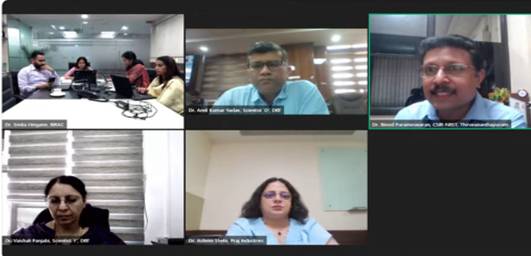
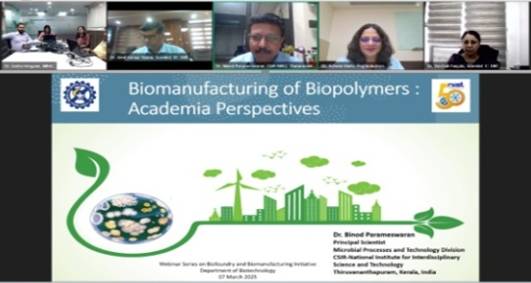
The Department of Biotechnology, Government of India hosted the ninth Webinar in its Biofoundry and Bio manufacturing Initiative series on March 7, 2025. The session centered on “Bio manufacturing of Biopolymers,” a crucial area under the BioE3 Policy, which was approved by the Union Cabinet in August 2024. The BioE3 Policy is designed to establish India as a global leader in bio-based innovations, emphasizing sustainable biomanufacturing across various thematic areas, including biopolymers. This Webinar served as a platform for academia, industry leaders, startups, and researchers to engage in discussions about advancements and opportunities in biopolymer biomanufacturing.
Dr. Vaishali Panjabi, Scientist ‘F’, DBT, highlighted the BioE3 Policy’s vision to foster high-performance biomanufacturing. She informed that the ninth Webinar in this series focuses on ‘Biomanufacturing of Biopolymers’. India, given its academic and industrial strength, is poised to create a vibrant ecosystem for cost-effective biopolymer production. She mentioned the potential gaps, challenges in this sectors followed by strengths and opportunities to address the same.
Dr. Binod Parameswaran, CSIR-NIIST, Thiruvananthapuram mentioned the major differences between biopolymers, process involved along with challenges and limitations in biomanufacturing. Finally he also shared the key trends shaping the future of biopolymer R&D in India.
Dr. Ashvini Shete, Praj Industries Ltd. mentioned in detail the process involved in the production of Biopolymers and the challenges associated with its production. She emphasized on the importance of strain and feed stock selection, process optimization and downstream processing for biopolymer production. She mentioned that a Vibrant Ecosystem for Cost-Effective Biopolymer Production can be created in India based on the rich availability of feedstock and technology with in the country.
The session concluded with a vibrant Q&A segment moderated by DBT and BIRAC officials. Participants actively engaged with the experts, discussing challenges and opportunities in bio manufacturing of biopolymers.
Discussions around shaping the contours of India’s industrial policy in light of the evolving geopolitical landscape, the role of Production Linked Incentive (PLI) schemes in driving manufacturing competitiveness, India’s green transition and inclusive sustainability in shaping India’s industrial policy and creating resilient global supply chains was at the central of the international conference organised by the Centre for Trade and Investment Law (CTIL).
The international conference was based on the theme “Navigating the Future: Industrial Policy and Global Competitiveness” organised by the Centre for Trade and Investment Law (CTIL), established by the Ministry of Commerce and Industry, Government of India, in collaboration with the Centre for International Trade and Business Laws, NALSAR University of Law and the World Trade Institute, University of Bern, together with the WTO India Chairs Programme. The international conference was held during 17th to 19th January 2025 at the NALSAR University of Law, Hyderabad.
Importantly, the conference discussed the role of WTO disciplines in ensuring that industrial policy measures do not negate the core principle of the ruled-based international trading system. The conference featured key insights into the current geopolitical landscape and energy transition.
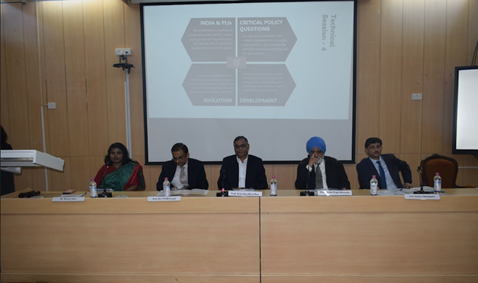
The central theme of the conference ‘Navigating the Future: Industrial Policy and Global Competitiveness’ was explored through a series of panel discussions and technical sessions. The inaugural sessions featured discussions on the resurgence and evolution of industrial policy, metrics to measure its impact, and their compatibility with WTO rules in a changing global context. Prof. James J. Nedumpara, Head, CTIL, in his welcome speech, highlighted the relevance of the conference theme and the importance of green industrial policy in fostering innovation and technology in the current global context. This was followed by the presidential address delivered by Prof. Srikrishna Deva Rao, Vice Chancellor of NALSAR University of Law. Shri. Ujal Singh Bhatia and Professor Peter Vanden Bosche, former members of the WTO Appellate Body, also emphasised the need for an in-depth examination of the linkages between trade policy and industrial policy.
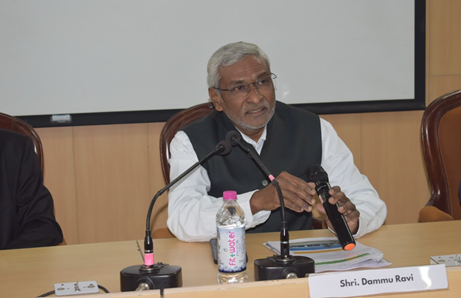
Shri Dammu Ravi, Secretary (Economic Relations), Ministry of External Affairs, during his address highlighted that emerging economies can play a catalyzing role in energy transition and pioneer an economic transformation. The Secretary emphasised the role that India can play in the global critical raw material supply chains and underscored that any strategy for value chain integration must be focused on creating value within India, including creating employment opportunities.
In the plenary session, Shri Montek Singh Ahluwalia, Former Deputy Chairman of the Planning Commission highlighted the global shift from free trade to protectionism in response to challenges from China’s rise and evolving U.S. policies. Shri. Ahluwalia emphasized the need for clear, cost-effective interventions in critical sectors, transparency in initiatives like PLIs, and adherence to WTO rules, as part of a balanced approach to security and economic priorities.
Several renowned scholars and policy experts of in the field of international trade and policy including Dr. Werner Zdouc, former Director of the Appellate Body, Mr. Sumanta Chaudhuri, Head Trade Policy, CII, Dr. Pritam Banerjee, Head, Centre for WTO Studies, Prof. Henry Gao, Professor, Singapore Management University, Professor Abhijit Das, former Head, Centre for WTO Studies, Dr. Alicia Gracia, Senior Fellow at Brugel, Dr. Isabelle Van Damme, Director, World Trade Institute, Dr. Rosmy Joan, Associate Professor, NALSAR University, among others spoke in the programme.
In the inaugural session, CTIL launched its monthly investment law newsletter, ‘Investment Law Compass: Navigating through the Global Investment Framework’ which aims to highlight the developments in the investment law landscape and transform it into an accessible and insightful journey for enthusiasts and professionals alike. The newsletter will be available online at www.ctil.org.in.
At the valedictory address, Professor James J Nedumpara reflected on the rich discussions on industrial policy and its various dimensions over the three days and highlighted that the conference was enriched by global participation. He extended his felicitations to the co-collaborators NALSAR and WTI and congratulated them on the successful conclusion of the Conference.
***
Daily writing prompt
What is your middle name? Does it carry any special meaning/significance?
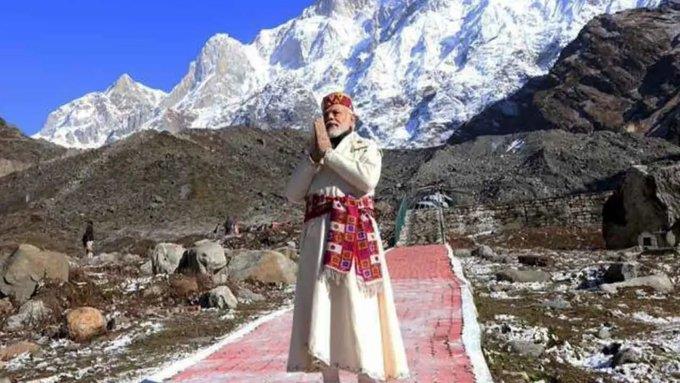
The Prime Minister Shri Narendra Modi participated in the Winter Tourism Program after flagging off a trek and bike rally at Harsil, Uttarakhand. He also performed pooja and darshan at the winter seat of Maa Ganga in Mukhwa. Addressing the gathering, he expressed his deep sorrow over the tragic incident in Mana village and extended his condolences to the families of those who lost their lives in the accident. He said the people of the nation stand in solidarity during this time of crisis, which has provided immense strength to the affected families.
“The land of Uttarakhand, known as Devbhoomi, is imbued with spiritual energy and blessed by the Char Dham and countless other sacred sites”, said the Prime Minister, highlighting that this region serves as the winter abode of the life-giving Maa Ganga. He expressed his gratitude for the opportunity to visit again and meet the people and their families, calling it a blessing. He emphasized that it is by Maa Ganga’s grace that he had the privilege of serving Uttarakhand for decades. “Maa Ganga’s blessings guided me to Kashi, where I now serve as a Member of Parliament”, said Shri Modi, recalling his statement in Kashi that Maa Ganga had called him and shared his recent realization that Maa Ganga has now embraced him as her own. The Prime Minister described this as Maa Ganga’s affection and love for her child, which brought him to her maternal home in Mukhwa village and had the honor of performing darshan and puja at Mukhimath-Mukhwa. Remarking on his visit to the land of Harsil, expressing his fond memories of the affection shown by the local women, whom he referred to as “Didi-Bhuliyas”, Shri Modi highlighted their thoughtful gestures of sending him Harsil’s rajma and other local products. He expressed his gratitude for their warmth, connection, and gifts.
The Prime Minister recalled his visit to Baba Kedarnath, where he had declared that, “this decade would be the decade of Uttarakhand”. He remarked that the strength behind those words came from Baba Kedarnath himself and highlighted that, with Baba Kedarnath’s blessings, this vision is gradually becoming a reality. Emphasizing that new avenues for Uttarakhand’s progress are opening up, fulfilling the aspirations that led to the state’s formation, Shri Modi noted that the commitments made for Uttarakhand’s development are being realized through continuous achievements and new milestones. He added, “winter tourism is a significant step in this direction, aiding in harnessing Uttarakhand’s economic potential” and congratulated the Uttarakhand government for this innovative effort and extended his best wishes for the state’s progress.
“Diversifying and making the tourism sector a year-round activity is important and necessary for Uttarakhand”, said the Prime Minister, remarking that there should be no “off-season” in Uttarakhand, and tourism should thrive in every season. He mentioned that currently, tourism in the hills is seasonal, with a significant influx of tourists during March, April, May, and June. However, he added that the number of tourists drops drastically afterward, leaving most hotels, resorts, and homestays vacant during winters. He pointed out that this imbalance leads to economic stagnation for a large part of the year in Uttarakhand and also poses challenges to the environment.
“Visiting Uttarakhand during winters offers a true glimpse of the divine aura of Devbhoomi”, said Shri Modi, highlighting the thrill of activities like trekking and skiing that winter tourism in the region provides. He stressed that winters hold special significance for religious journeys in Uttarakhand, with many sacred sites hosting unique rituals during this time. He pointed out the religious ceremonies in Mukhwa village as an integral part of the region’s ancient and remarkable traditions. The Prime Minister noted that the Uttarakhand government’s vision for year-round tourism will provide people with opportunities to connect with divine experiences. He underlined that this initiative will create year-round employment opportunities, significantly benefiting the local population and the youth of Uttarakhand.
“Our governments at Center and state are working together to make Uttarakhand a developed state”, said the Prime Minister, remarking on the significant progress achieved in the past decade, including the Char Dham All-Weather Road, modern expressways, and the expansion of railways, air, and helicopter services in the state. He also mentioned that the Union Cabinet had recently approved the Kedarnath Ropeway Project and the Hemkund Ropeway Project. He noted that the Kedarnath Ropeway will reduce the travel time from 8-9 hours to approximately 30 minutes, making the journey more accessible, especially for the elderly and children. Shri Modi emphasized that thousands of crores of rupees will be invested in these ropeway projects. He extended his congratulations to Uttarakhand and the entire nation for these transformative initiatives.
Underlining the focus on developing eco-log huts, convention centers, and helipad infrastructure in the hills, Shri Modi said, “tourism infrastructure is being newly developed in locations such as Timmer-Sain Mahadev, Mana village, and Jadung village”. He added that the Government has worked to ensure the erstwhile emptied villages of Mana and Jadung in 1962, have been restored. He noted that as a result, the number of tourists visiting Uttarakhand has increased significantly over the past decade. He shared that before 2014, an average of 18 lakh pilgrims visited the Char Dham Yatra annually, which has now risen to approximately 50 lakh pilgrims each year. The Prime Minister announced that this year’s budget includes provisions to develop 50 tourist destinations, granting hotels at these locations the status of infrastructure. He emphasized that this initiative will enhance facilities for tourists and promote local employment opportunities.
Emphasising the Government’s efforts to ensure that border areas of Uttarakhand also benefit from tourism, the Prime Minister said, “villages once referred to as the “last villages” are now being called the “first villages” of the country”. He highlighted the launch of the Vibrant Village Program for their development, under which 10 villages from this region have been included. He noted that efforts have begun to resettle Nelong and Jadung villages and mentioned the flagging off of a bike rally to Jadung from the event earlier. He also declared that those building homestays will be provided benefits under the Mudra Yojana. Shri Modi appreciated the Uttarakhand government’s focus on promoting homestays in the state. He highlighted that villages deprived of infrastructure for decades are now witnessing the opening of new homestays, which is boosting tourism and increasing the income of local residents.
Making a special appeal to people from all corners of the country, particularly the youth, Shri Modi highlighted that while much of the country experiences fog during winters, the hills offer the joy of basking in sunlight, which can be turned into a unique event. He suggested the concept of “Gham Tapo Tourism” in Garhwali, encouraging people from across the country to visit Uttarakhand during winters. He specifically urged the corporate world to participate in winter tourism by organizing meetings, conferences, and exhibitions in the region, emphasizing the vast potential of the MICE sector in Devbhoomi Uttarakhand. The Prime Minister remarked that Uttarakhand provides opportunities for visitors to recharge and re-energize through yoga and Ayurveda. He also appealed to universities, private schools, and colleges to consider Uttarakhand for students’ winter trips.
Pointing out the significant contribution of the wedding economy, worth thousands of crores, the Prime Minister reiterated his appeal to the people of the country to “Wed in India” and encouraged prioritizing Uttarakhand as a destination for winter weddings. He also expressed his expectations from the Indian film industry, noting that Uttarakhand has been awarded the title of the “Most Film-Friendly State.” He emphasized the rapid development of modern facilities in the region, making Uttarakhand an ideal destination for film shootings during winters.
Shri Modi underscored the popularity of winter tourism in several countries and emphasized that Uttarakhand can learn from their experiences to promote its own winter tourism. He urged all stakeholders in Uttarakhand’s tourism sector, including hotels and resorts, to study these countries’ models. He called on the Uttarakhand government to actively implement actionable points derived from such studies. He stressed the need to promote local traditions, music, dance, and cuisine. The Prime Minister remarked that Uttarakhand’s hot springs can be developed into wellness spas, and serene, snow-covered areas can host winter yoga retreats, urging the Yoga gurus to arrange a yoga camp in Uttarakhand annually. He also suggested organizing special wildlife safaris during the winter season to establish a unique identity for Uttarakhand. He emphasized adopting a 360-degree approach and working at every level to achieve these goals.
The Prime Minister emphasized that alongside developing facilities, spreading awareness is equally important and appealed to the country’s young content creators to play a vital role in promoting Uttarakhand’s winter tourism initiative. Mentioning the significant contribution of content creators in boosting the tourism sector, Shri Modi urged them to explore new destinations in Uttarakhand and share their experiences with the public. He suggested the State Government to organize a competition of making short films by content creators to promote tourism in Uttarakhand. He concluded by expressing confidence that the sector will witness rapid growth in the coming years and congratulated Uttarakhand for its year-round tourism campaign.
The Chief Minister of Uttarakhand, Shri Pushkar Singh Dhami, Union Minister of State for Road Transport and Highways, Shri Ajay Tamta were present among other dignitaries at the event.
Background
The Uttarakhand government has initiated a Winter Tourism programme this year. Thousands of devotees have already visited the winter seats of Gangotri, Yamunotri, Kedarnath, and Badrinath. The programme is aimed to promote religious tourism and boost the local economy, homestays, tourism businesses, among others.
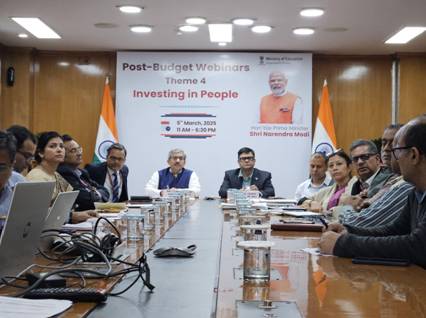
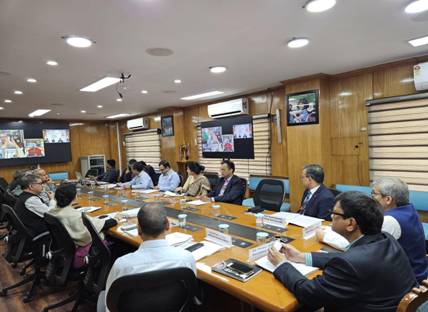
Ministry of Education organised Post Budget Webinar on the theme ‘Investing in People’, today. The Prime Minister Shri Narendra Modi delivered a special address at the inaugural session. Union Education Minister Shri Dharmendra Pradhan along with Secretary, Department of School Education & Literacy (DoSEL), Shri Sanjay Kumar; UGC Chairman Professor M. Jagadesh Kumar ; Secretary, Dept. of Higher Education, Shri Vineet Joshi; Secretary, Ministry of Health and Family Welfare Smt. Punya Salila Srivastava; Secretary Labour & Employment Ms. Sumita Dawra participated in the session.
The webinar brought together experts from the government, industry, and academia to discuss key reforms in job creation, academic flexibility, credit mobility, and future-ready skills—paving the way for a highly skilled and globally competitive workforce in line with Viksit Bharat 2047.
Speaking about the webinar, Shri Pradhan said that investment is one of the engines outlined in the Union Budget 2025-2026 which will turbocharge our journey to Viksit Bharat by 2047. He further said that the insightful special address by the Prime Minister Shri Narendra Modi has put forth new ideas for realising aspirations, future-proofing our population, accelerating inclusive development and ensuring benefits of Union Budget reaches every citizen of the country.
He expressed his gratitude to the Prime Minister for drawing attention to the vast potential of ‘Education Tourism’ and its key role in facilitating employment-linked growth and development. The Minister assured that the academic community will engage in comprehensive deliberations to chart out a strong roadmap for moving ahead in this direction. He further said that, together, with the spirit of jan-bhagidari and right investment in right direction, academia and industry will work together for bridging skills gap, harnessing demographic dividend, leveraging AI in education, catalysing research landscape and strengthening deep-tech start-up ecosystem for a future-ready workforce, stronger economy and Viksit Bharat.
Prof M. Jagadesh Kumar opened the session by emphasizing the transformative role of higher education. He highlighted that the implementation of NEP 2020 provided a unique opportunity to reshape India’s higher education landscape. During the webinar, Prof M. Jagadesh Kumar, Chairman, UGC stated that the policy was not merely reformative but transformative, designed to empower youth with the skills, knowledge, and adaptability required to thrive in the 21st century. He stressed that investing in people through quality education, research, and innovation was central to building a self-reliant, inclusive, and globally competitive economy.
Shri Sanjay Kumar stated that education is fundamentally about investing in people. He acknowledged the broad perspective provided by the UGC Chairman on higher education and noted that the 2025-26 Budget included key announcements regarding the establishment of 50,000 Atal Tinkering Labs in government schools over the next five years and the provision of broadband internet connectivity to government schools in rural areas. He further highlighted a significant trend observed over the last decade, noting that the proportion of female teachers has increased. He mentioned that in 2014-15, male teachers comprised 52 percent of the total, while female teachers accounted for 48 percent. By 2025, these figures have reversed, with female teachers now making up 52 percent and male teachers 48 percent, reflecting a move towards greater gender parity in the education sector.
The discussions reinforced the need for strategic investments in human capital to ensure sustainable economic growth, social equity, and global leadership. The government remained committed to fostering a skilled workforce, ensuring India’s continued rise as an innovation and technology hub.
Prime Minister’s address the Post-Budget Webinar on boosting job creation- Investing in People, Economy, and Innovation








 Eduindex
You must be logged in to post a comment.