WordPress.com is a powerful, user-friendly platform designed for creating websites, blogs, and eCommerce stores. Launched in 2005 by Automattic, WordPress.com offers a hosted solution for those who want to build a website without the technical complexities of self-hosted WordPress.org.
Key Features of WordPress.com
WordPress.com is known for its simplicity, versatility, and scalability. It offers a wide range of features that cater to both beginners and experienced web developers.
1. Ease of Use
WordPress.com provides a straightforward dashboard interface that simplifies content creation and website management.
Users can easily add posts, pages, media files, and customize themes without coding knowledge.
2. Hosting and Maintenance
WordPress.com offers managed hosting, eliminating the need for users to set up servers or manage software updates.
Automatic security patches, backups, and updates are included in the platform.
3. Free and Premium Plans
Free Plan: Offers basic features with WordPress-branded domain (e.g., yourwebsite.wordpress.com).
Paid Plans: Unlock advanced customization, premium themes, SEO tools, and monetization options.
4. Themes and Design
WordPress.com provides a vast collection of themes for various industries such as business, portfolio, blog, and eCommerce.
Users can customize colors, fonts, layouts, and widgets using the intuitive Customizer tool.
5. Plugins and Extensions (For Premium Users)
Higher-tier plans on WordPress.com support custom plugins for added functionality like SEO optimization, contact forms, analytics, and eCommerce tools.
6. SEO and Marketing Tools
WordPress.com integrates SEO tools to enhance website visibility in search engines.
Users can leverage email marketing, social sharing tools, and content scheduling for improved audience engagement.
7. Blogging Capabilities
WordPress.com’s robust blogging platform allows for easy content creation, multimedia integration, and comment management.
Features like tags, categories, and RSS feeds make it ideal for content-driven websites.
8. eCommerce Support
With the WordPress.com Business Plan or higher, users can build an online store using WooCommerce for product listings, payment gateways, and order management.
9. Security and Backups
WordPress.com provides SSL certificates, DDoS protection, and automated backups to ensure data security and reliability.
10. Multilingual Support
WordPress.com offers translation plugins and multilingual features, making it ideal for global websites.
Benefits of WordPress.com
✅ Beginner-Friendly Interface: No coding knowledge is required. ✅ Scalability: Ideal for personal blogs, business websites, and eCommerce stores. ✅ Reliable Hosting: Ensures uptime, speed, and performance. ✅ SEO Optimized: Integrated tools help improve website visibility. ✅ Wide Community Support: Users can access extensive guides, forums, and documentation.
WordPress.com vs WordPress.org
While both are part of the WordPress ecosystem, there are key differences:
Feature
WordPress.com
WordPress.org
Hosting
Managed Hosting (included)
Requires separate hosting
Customization
Limited unless on a paid plan
Full access to themes and plugins
Monetization
Restricted on the free plan
Full control over monetization
Maintenance
Automated updates and backups
Manual updates and backups required
Domain Name
Free WordPress.com domain or custom domain (with paid plans)
Custom domain setup required
Who Should Use WordPress.com?
Beginners looking for a simple platform with minimal technical setup.
Bloggers who need an easy-to-use content publishing tool.
Small Businesses wanting a cost-effective and professional online presence.
Creative Professionals such as writers, photographers, and designers seeking a portfolio site.
WordPress.com is a versatile platform that offers a blend of simplicity and powerful features. Whether you’re starting a blog, launching a business website, or building an online store, WordPress.com provides the tools you need to succeed. With its flexible plans and user-friendly interface, it’s an ideal choice for anyone looking to create a professional web presence without deep technical expertise.
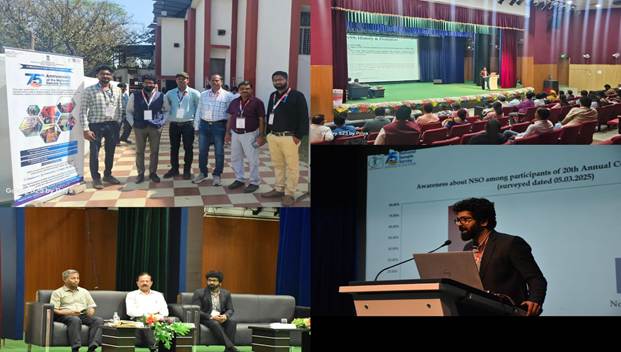
As part of celebration of 75th Anniversary of NSS, commemorating its transformative role in shaping India’s evidence-based policy making, an awareness campaign was organized by National Statistics Office (Field Operations Division), Govt. of India, Regional Office, Sambalpur at the 20th Annual Conference of Indian Association for Social Science and Health (IASSH) organized by Sambalpur University at Biju Patnaik Auditorium.The campaign was organized on 05.03.2025 and 06.03.2025. Publicity materials were displayed and distributed among the 250 nos. of participants of the conference.
A plenary sessionwas conducted by NSO(FOD) RO, Sambalpur on the theme “Data for Development” on 06.03.2025. The session was chaired by Prof R. Nagarajan, IIPS Mumbai & Prof. Pradeep Kumar Panda from AIPH University, Bhubaneswar was the co-chair. Sh. Rahul Kumar Patel, Deputy Director & Regional Head, NSO(FOD) RO Sambalpur was the speaker. Importance of NSS data for policy formulation and decision making for the development and nation building were highlighted. A documentary about evolution of NSS during the last 75 years was also displayed. Information onrecently completed as well as ongoing surveys such as Periodic Labour Force Survey (PLFS), Household consumption Expenditure Survey (HCES), Annual Survey of Unorganized Sector Enterprise (ASUSE), Annual Survey of Industries (ASI), Socio-economic survey 80thround (Health & Telecom), Pilot study on Annual Survey of Service Sector Enterprises (ASSSE), Price Collection, Forward Looking Survey on Private Corporate Sector Capex Investment Intentions etc.,wasshared with the participants.As the participants were mostly the post-graduate students, researchers, academicians etc., hence process to access the unit level data of various surveys under NSO was also explained for the benefit of the participants.
Prof. R. Nagarajan and Prof. Pradeep Kumar Panda congratulated NSS for completing 75 years of successful data collection, dissemination and also stressed the importance of NSS data and how it has helped Govt, researchers, policy makers in decision making, economic growth and resource allocation.
Eduindex News invites enthusiastic and talented college students to become Campus Educational News Reporters and share valuable updates on jobs, seminars, conferences, workshops, and other academic events happening in their institutions. This platform provides students with an opportunity to broadcast their educational news to a global audience.
Top-performing campus reporters will be recognized with a Certificate of Excellence and an Internship Certificate from the Eduindex News Team, acknowledging their contribution to educational journalism.
If you’re passionate about reporting and wish to enhance your skills while gaining recognition, drop an email to news@eduindex.org and join us in spreading knowledge to the world!
International Women’s Day is celebrated around the world on 8th March. It is a day when women are recognized for their achievements across national, ethnic, linguistic, cultural, economic or political boundaries. The theme of International Women’s Day 2025 is “For ALL Women and Girls: Rights. Equality. Empowerment.” This year’s theme calls for action to unlock equal rights, power and opportunities for all and an inclusive future where no one is left behind. Central to this vision is empowering the next generation—youth, particularly young women and adolescent girls—as catalysts for lasting change.
Further, the year 2025 is a pivotal moment as it marks the 30th anniversary of the Beijing Declaration and Platform for Action. This document is the most progressive and widely endorsed blueprint for women’s and girls’ rights worldwide, transforming the women’s rights agenda in terms of legal protection, access to services, youth engagement, and change in social norms, stereotypes, and ideas stuck in the past.
In India, the government has been actively working towards women’s empowerment and gender equality through various policies, schemes, and legislative measures. The country is witnessing a transition from women’s development to women-led development, ensuring equal participation in national progress. Women are playing a crucial role in shaping India’s socio-economic landscape, breaking barriers in education, health, digital inclusion, and leadership roles.
On March 3, 2025, Prime Minister Narendra Modi encouraged women across India to share their inspiring life journeys on the NaMo App Open Forum ahead of International Women’s Day. He praised the remarkable stories already submitted, highlighting the resilience and achievements of women from different walks of life. As a special initiative, he announced that selected women would take over his social media accounts on March 8 to amplify their voices and experiences. This initiative aims to celebrate women’s contributions and inspire others by showcasing their journey of empowerment, perseverance, and success.
Constitutional and Legal Framework
The Indian Constitution guarantees gender equality through provisions in its Preamble, Fundamental Rights, and Directive Principles of State Policy. Article 14 ensures equality before the law, while Article 15 prohibits discrimination based on sex. Article 51(a)(e) encourages citizens to renounce practices derogatory to women’s dignity. The Directive Principles, particularly Articles 39 and 42, emphasize equal livelihood opportunities, equal pay, and maternity relief.
India is a signatory to international treaties such as:
Universal Declaration of Human Rights (1948)
International Covenant on Civil and Political Rights (ICCPR, 1966)
Convention on the Elimination of All Forms of Discrimination Against Women (CEDAW, 1979)
Beijing Declaration and Platform for Action (1995)
United Nations Convention Against Corruption (2003)
Agenda 2030 for Sustainable Development
Government Schemes for Women’s Upliftment
1. Education
Education is the key to women’s empowerment and economic independence. India has undertaken several initiatives to ensure that girls have equal access to quality education from primary schooling to higher education. Gender parity in education has improved significantly, with female enrolment surpassing male enrolment in recent years.
Right to Free and Compulsory Education Act, 2009 ensures schools are within reach for all children.
Beti Bachao Beti Padhao (BBBP): Focuses on improving the child sex ratio and promoting girls’ education.
Samagra Shiksha Abhiyan: Supports school infrastructure and girl-friendly facilities.
National Education Policy (NEP) 2020 prioritizes gender equity and inclusion in education.
Eklavya Model Residential Schools: Promote quality education for tribal girls
Female Gross Enrollment Ratio (GER) has overtaken Male GER since 2017-18.
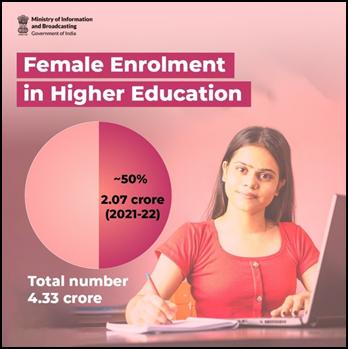
Female enrolment in higher education: 2.07 crore (2021-22), which is nearly 50% of the total number 4.33 crore.
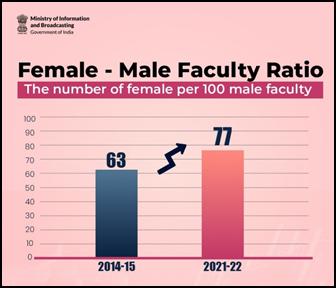
The female to 100 male faculty ratio has also improved to 77 in 2021-22 from 63 in 2014-15.
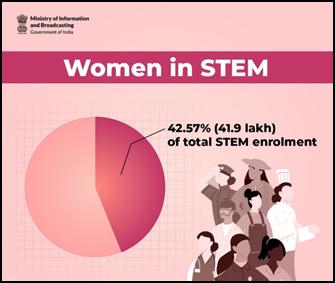
Women in STEM: 42.57% (41.9 lakh) of total STEM enrolment.
STEM Initiatives:
Vigyan Jyoti (2020) promotes STEM education for girls in underrepresented areas.
Overseas Fellowship Scheme supports women scientists in global research opportunities.
National Digital Library, SWAYAM, and SWAYAM PRABHA ensure access to online learning.
Over 10 lakh girl students benefitted under various scholarships for STEM fields.
Skill Development Initiatives:
Skill India Mission, Pradhan Mantri Kaushal Vikas Yojana (PMKVY), Women Industrial Training Institutes provide vocational and technical training to women.
Women Technology Parks (WTPs) serve as hubs for training and capacity building.
2. Health and Nutrition
Access to healthcare services is crucial for improving the well-being of women and reducing gender-based health disparities. The government has introduced several policies to ensure maternal and child health, nutrition, and medical support for women across all sections of society.
Pradhan Mantri Matru Vandana Yojana (PMMVY): Provides cash incentives to pregnant and lactating mothers, with ₹17,362 crore disbursed to 3.81 crore women, as of January 2025.
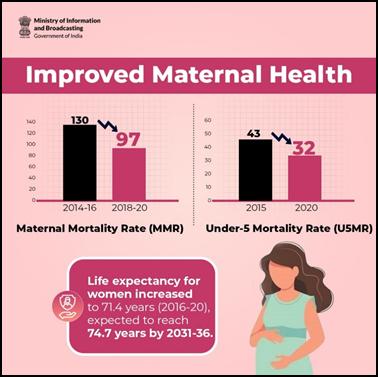
Improved Maternal Health:
Maternal Mortality Rate (MMR) reduced from 130 (2014-16) to 97 (2018-20) per lakh live births.
Under-5 Mortality Rate (U5MR) decreased from 43 (2015) to 32 (2020).
Life expectancy for women increased to 71.4 years (2016-20), expected to reach 74.7 years by 2031-36.
Nutrition and Sanitation:
Jal Jeevan Mission provided potable tap water to 15.4 crore households, reducing health risks.
Swachh Bharat Mission led to the construction of 11.8 crore toilets, improving sanitation and hygiene.
Poshan Abhiyaan: Strengthens maternal and child nutrition programs
Over 10.3 crore clean cooking gas connections distributed under the Ujjwala Yojana.
3. Economic Empowerment and Financial Inclusion
Women’s participation in the workforce is a key driver of economic growth. The government has launched multiple initiatives to promote financial independence, entrepreneurship, and employment opportunities for women.
Women’s participation in major household decisions: Increased from 84% (2015) to 88.7% (2020).
Financial Inclusion:
PM Jan Dhan Yojana: Over 30.46 crore accounts (55% belonging to women) opened.
Stand-Up India Scheme: 84% of loans under ₹10 lakh to ₹1 crore sanctioned to women entrepreneurs.
MUDRA Scheme: 69% of microloans given to women-led enterprises.
Self-Help Groups under NRLM: 10 crore (100 million) women connected to 9 million SHGs.
Bank Sakhis Model: 6,094 women banking correspondents processed transactions worth $40 million in 2020.
Employment and Leadership:
Women in Armed Forces: Entry into NDA, combat roles, and Sainik Schools.
Civil Aviation: India has over 15% women pilots, higher than the global average of 5%.
Working Women’s Hostels (Sakhi Niwas): 523 hostels benefiting 26,306 women.
Women Entrepreneurs in Startups: 10% of funds in the Small Industries Development Bank of India reserved for women-led startups
4. Digital and Technological Empowerment
In the digital era, access to technology and digital literacy are crucial for women’s socio-economic progress. The government has been proactive in ensuring women are part of the digital revolution through various initiatives.
Digital India Initiatives:
PMGDISHA (Prime Minister’s Digital Saksharta Abhiyan): 60 million rural citizens trained in digital literacy.
Common Service Centres (CSCs): 67,000 women entrepreneurs running digital service centers.
Ayushman Bharat Digital Mission (ABDM): Bridging healthcare accessibility through digital solutions.
SANKALP Hubs for Women Empowerment: Functioning in 742 districts across 35 States/UTs
Financial Technology and Inclusion:
Digital banking and Aadhaar-linked services ensure financial security for women.
Government e-marketplaces encourage female entrepreneurship and online businesses.
5. Safety and Protection
Ensuring women’s safety is a top priority for the Indian government. Several legislative measures, dedicated funds, and fast-track courts have been established to curb crimes against women and provide legal and institutional support.
Key Legal Frameworks:
Criminal Law (Amendment) Act, 2018: Enhanced penalties for crimes against women.
Protection of Women from Domestic Violence Act, 2005.
Sexual Harassment of Women at Workplace Act, 2013.
POCSO Act, 2012: Strengthened laws against child abuse.
Ban on Triple Talaq (2019): Criminalizing instant divorce practices.
Prohibition of Child Marriage Act, 2006: Protects minors from forced marriages.
Nirbhaya Fund Projects (₹11,298 crore allocated):
One Stop Centres (OSCs): 802 centers functional, assisting over 1 million women.
Emergency Response Support System (ERSS – 112): 38.34 crore calls handled.
Fast Track Special Courts (FTSCs): 750 operational courts, 408 exclusively for POCSO cases.
Cyber Crime Helpline (1930) and cyber forensic labs for digital safety.
Safe City Projects: Implemented in 8 cities to enhance women’s safety.
14,658 Women Help Desks in Police Stations, 13,743 headed by women.
Institutional and Legislative Reforms
Bharatiya Nyaya Sanhita (BNS), 2023: Strengthens provisions for gender justice.
Marital rape (for wives under 18) criminalized.
Enhanced punishment for sexual offenses and trafficking.
Witness protection and digital evidence admissibility improved.
Women’s representation in CAPFs: 33% reservation in select forces.
Nari Adalat: Piloted in 50 Gram Panchayats each in Assam and J&K, now expanding.
Conclusion
India has made remarkable progress in women’s empowerment through comprehensive policies, targeted schemes, and legal frameworks. From economic participation to safety, digital inclusion to education, the government’s initiatives have led to significant improvements in women’s lives. On this International Women’s Day, it is crucial to reaffirm the commitment to building an inclusive, gender-equal society where women play a central role in shaping the nation’s future. Sustained efforts in policy-making, community engagement, and digital inclusion will ensure that women continue to drive India’s growth story in the years to come.
Sahitya Akademi, India’s premier literary institution working under the Ministry of Culture, Government of India, will be organizing its annual Festival of Letters at Rabindra Bhavan in New Delhi from 7th March 2025 to 12th March 2025. Union Minister for Culture and Tourism Shri Gajendra Singh Shekhawat, Government of India, will inaugurate the festival. Sri Mahesh Dattani, eminent English Playwright will be the chief guest of the award ceremony in which the prestigious Sahitya Akademi Awards in 23 languages will be presented and Sri Upamanyu Chatterjee, eminent Writer and Scholar will deliver this year’s Samvatsar Lecture.
This is Asia’s Largest Literature Festival with about 700 writers from different parts of the country representing more than 50 languages participating in the festival that spans over 100 sessions. The theme of the festival will be Indian Literary Traditions and a National Seminar on the topic featuring eminent thinkers and writers will be organized during the last three days of the festival.
The festival will feature Young Writers, Women Writers, Dalit Writers, Writers from North East, Tribal writers and poets, LGBTQ writers and poets along with many eminent writers, translators, publishers, poets and distinguished personalities from different walks of life and Festival of Letters continue its status as India’s Most Inclusive Literature Festival since 1985.
A daylong programme for children, Spin A Tale, will be organized on the final day of the festival. Throughout the festival, there will be presentations, readings and discussions by eminent authors, poets, translators, publishers and critics on a wide range of subjects.
On three evenings, cultural performances by eminent artists like Rakesh Chaurasia (flute recital), Nalini Joshi (Hindustani Vocal) and Fouzia Dastango and Ritesh Yadav (Dastan-e-Mahabharata) will be organized. The Festival of Letters is open and free for all the literary lovers and those who wish to taste the flavour of Indian’s longest running Literature Festival.
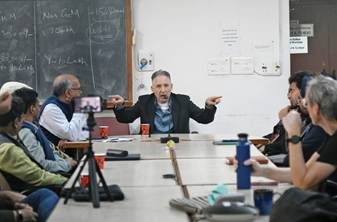
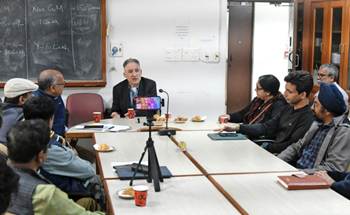
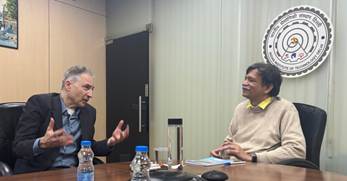
Prof. Brian Greene, renowned Theoretical Physicist, Author, and Professor of Mathematics & Physics, Columbia University, visited Indian Institute of Technology (IIT) Delhi today and interacted with the students. Director of IIT Delhi, Dr. Rangan Banerjee, faculty and students were present at the event. Prof. Greene also visited the Research & Innovation Park of the Institute and appreciated the facilities.
While interacting with the students, Prof. Greene expressed his gratitude for the wonderful visit and the engaging discussions with both the faculty and students. He appreciated their energy, creativity, and zeal for innovation. He also emphasized that their keen interest in scientific and technological development is highly significant, as it will pave the way for a better future.
Acknowledging India’s rapid advancements in scientific innovation, Prof. Greene expressed his hope that this progress would position the country as a global leader in science and technology. He praised IIT as a world-class institute, highlighting the remarkable faculty dedicated to nurturing some of India’s greatest minds.
During the session, students posed intriguing questions, including where, in his opinion, subjects such as physics and mathematics diverge and converge, as well as inquiries about string theory. In response, he elaborated on his work related to the mathematics of string theory.
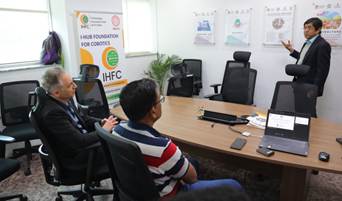
Prof. Greene visited the Research & Innovation Park of IIT Delhi. The establishment was inaugurated by President of India Smt. Droupadi Murmu during the Diamond Jubilee Celebrations of the Institute. It focuses on innovation and product development where IIT Delhi, industry, entrepreneurs and government agencies interact and enable creation of advanced technological solutions. The Park works towards accelerating research translation, providing avenues for IIT Delhi students and faculty to interact more closely with industry and bring to market technological breakthroughs through incubation, amplifying technological and societal impact of R&D, and galvanizing entrepreneurial aspirations. It has facilities including labs for start-ups, board rooms, conference hall, meeting and training rooms, etc.
In the vast landscape of literature, the act of publishing a book holds an undeniable allure. It’s not merely about seeing your name in print or holding a tangible manifestation of your ideas; it’s about the profound impact that your words can have on the world. Whether you’re a seasoned author or an aspiring writer, the journey from manuscript to publication carries immense significance, both personally and culturally.
At its core, publishing a book is an act of sharing. It’s about taking the stories, insights, and knowledge that reside within the depths of your mind and offering them to the world. In doing so, you open the door to connection, conversation, and understanding. Your words have the power to resonate with readers, to evoke emotion, to provoke thought, and perhaps even to inspire action.
One of the key reasons why getting your book published is important lies in its potential to reach and impact others. In a world where ideas are exchanged at lightning speed through digital mediums, the written word still holds a unique and enduring power. Books have the ability to transcend barriers of time, space, and culture, allowing readers to explore new worlds, gain fresh perspectives, and delve into the depths of the human experience.
Moreover, the act of publishing a book can be a deeply fulfilling and transformative experience on a personal level. It’s a testament to your dedication, creativity, and perseverance as a writer. The process of bringing a manuscript to publication involves countless hours of writing, revising, and refining—a journey that demands both skill and tenacity. Seeing your book on shelves or in the hands of readers is not just a moment of validation; it’s a reminder of your capacity to turn dreams into reality.
Furthermore, publishing a book can provide numerous opportunities for growth and learning. It requires you to engage with editors, agents, publishers, and readers, each offering valuable insights and feedback that can help you hone your craft. Whether it’s learning to navigate the intricacies of the publishing industry or developing a deeper understanding of your own voice and style as a writer, the journey to publication is rich with lessons and experiences.
Beyond the personal and professional benefits, the importance of getting your book published extends to its broader cultural impact. Literature has the power to shape societies, challenge norms, and spark movements. Throughout history, books have served as catalysts for change, fostering empathy, tolerance, and social justice. By adding your voice to the collective tapestry of human expression, you contribute to the ongoing dialogue that shapes our understanding of the world.
In essence, the act of publishing a book is not just about putting words on paper; it’s about sharing your voice, your stories, and your ideas with the world. It’s about embracing the power of the written word to connect, inspire, and transform. So, if you’re sitting on a manuscript, wondering whether to take the leap into the world of publishing, remember this: your words matter, and the world is waiting to hear them.








 Eduindex
You must be logged in to post a comment.