A Holistic Approach for Cleanliness of River Ganga

Daily writing prompt
Which animal would you compare yourself to and why?

Namami Gange Programme’, is an Integrated Conservation Mission, approved as ‘Flagship Programme’ by the Union Government in June 2014 with budget outlay of Rs.20,000 Crore to accomplish the twin objectives of effective abatement of pollution, conservation and rejuvenation of National River Ganga.
The Government of India (GoI) launched the Namami Gange Programme (NGP) in 2014-15 for the rejuvenation of river Ganga and its tributaries with a budgetary outlay of ₹ 20,000 crore, for five years, up to March 2021 and has been further extended to March 2026 with a budgetary outlay of ₹ 22,500 crore.

The National Ganga Plan (CS) has been allocated a financial outlay of ₹3,400 crore[1] for the year 2025-26. This investment aims to enhance sewage treatment capacity, improve water quality, and regulate industrial waste discharge to rejuvenate the Ganga River and achieve prescribed bathing standards by 2025.

Ganga: Lifeline of India

The Ganga River, one of the most sacred rivers in the world, faces significant threats from excessive water abstraction and pollution. As a vital part of India’s cultural heritage and a key resource for sustenance, the river’s health is of paramount importance. To address these challenges, the Namami Ganga program was launched with the twin objectives of effectively reducing pollution and conserving and rejuvenating River Ganga.
The Ganga River Basin

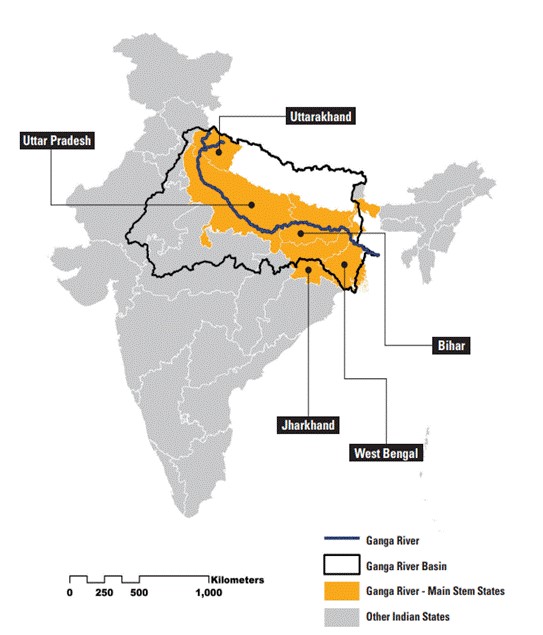
The Ganga River basin is the largest in India, encompassing 27% of the country’s land mass and supporting about 47% of its population. Spanning over 11 states, the basin covers nearly 27% of India’s total geographical area. The majority of the basin, around 65.57%, is used for agriculture, while water bodies cover 3.47% of the area. Despite receiving 35.5% of the total water input in terms of precipitation, the Ganga River Basin is the second most water-stressed basin in India, following the Sabarmati Basin, with only 39% of the average per capita annual rainwater input among major Indian river basins. [2]

Vision

The vision for Ganga rejuvenation revolves around restoring the river’s wholesomeness, defined by ensuring “Aviral Dhara” (Continuous Flow), “Nirmal Dhara” (Unpolluted Flow), and maintaining its geological and ecological integrity. A comprehensive Ganga River Basin Management Plan (GRBMP) was developed by a consortium of seven IITs, emphasizing an Integrated River Basin Management (IRBM) approach with multi-sectoral and multi-agency interventions.

Key Interventions

  • Pollution Abatement (Nirmal Ganga): Addressing and reducing the sources of pollution in the river.
  • Improving Ecology and Flow (Aviral Ganga): Enhancing the ecological health and continuous flow of the river.
  • Strengthening People-River Connect (Jan Ganga): Fostering a deeper connection between the people and the river through community engagement and awareness.
  • Facilitating Research and Policy (Gyan Ganga): Promoting diversified research, scientific mapping, studies, and evidence-based policy formulation

Over the years, concerted efforts made by NMCG are beginning to find success in restoring the pristine glory of the river.

Progress Overview( As of 31 January 2025) [3]

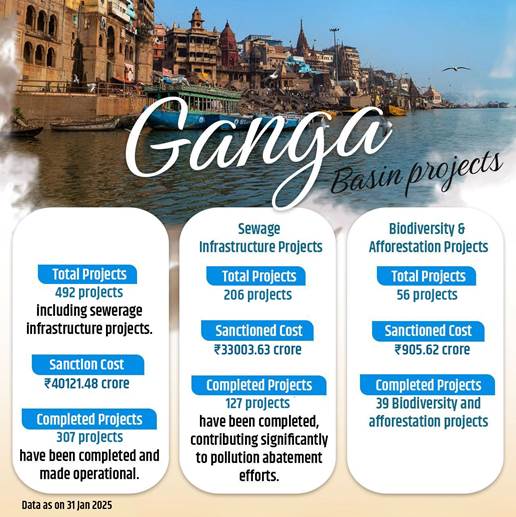
  • A comprehensive total of 492 projects, valued at 40121.48 Crore, have been launched.
  • Among these, 307 projects have reached completion and are now operational.
  • An impressive 206 projects addressing Sewage Infrastructure have been set in motion.
  • A substantial fund of 33003.63Crore has been sanctioned for these sewage infrastructure projects.
  • Of these, 127 sewerage projects have been successfully completed, playing a pivotal role in mitigating pollution.
  • Additionally, 56 projects dedicated to Biodiversity & Afforestation have been undertaken.
  • These projects have received a funding commitment of over ₹ 905.62 Crore.
  • Notably, 39 projects focused on biodiversity and afforestation have been successfully concluded, augmenting the ecological equilibrium of the Ganga basin.

Government’s Recent Initiatives for a Pollution Free Ganga[4]

  1. In a major step towards tackling pollution, the 60th Executive Committee Meeting of the National Mission for Clean Ganga (NMCG) approved the interception and diversion of the Durga Drain and the construction of a 60 MLD capacity sewage treatment plant (STP) in Varanasi, Uttar Pradesh, at a cost of ₹274.31 crore. This project, based on the hybrid annuity model, includes a 75 MLD capacity main pumping station and other essential structures, ensuring long-term wastewater management and pollution control.
  1. Additionally, a significant project was approved to prevent the flow of untreated sewage into Varuna, a major tributary of the Ganga, in Bhadohi. With an investment of ₹127.26 crore, this initiative will establish three STPs with capacities of 17 MLD, 5 MLD, and 3 MLD, along with an extensive sewer network to tap four major drains and prevent pollution. This project follows the Design-Build-Operate-Transfer (DBOT) model, ensuring sustainable operation and maintenance over the next 15 years.
  1. A National Framework for Safe Reuse of Treated Water has been developed by NMCG to guide States in formulating their reuse policies and to establish economic models for the reuse of treated wastewater. NMCG has also issued a guidance handbook for urban policymakers and city officials on safely reusing treated water, which aims to conserve freshwater resources and promote sustainable water management practices. [5]
  1. Seven Biodiversity Parks in seven districts (Mirzapur, Bulandshahar, Hapur, Budaun, Ayodhya, Bijnore and Pratapgarh) of Uttar Pradesh and 5 priority wetlands in Uttar Pradesh (3), Bihar (1) and Jharkhand (1) have been sanctioned.
  1. NMCG, through the State Forest Department, has implemented a forestry intervention project along the main stem of river Ganga. 33,024 hectares area have been afforested with an expenditure of about ₹ 398 crore.
  1. A total of 143.8 lakhs of Indian Major Carp (IMC) fingerlings have been ranched in the Ganga since 2017 to conserve fish biodiversity and prey base for river Dolphins, and ensure the livelihood of fishers in the Ganga basin under the special project implemented by Central Inland Fisheries Research Institute (CIFRI).
  1. A total of 203 number of sewerage infrastructure projects costing ₹ 32,613 crore have been taken up for remediation of polluted river areas with treatment capacity of 6,255 Million Litres per Day (MLD). 127 STP projects with a capacity of 3,446 MLD have been completed and made operational.
  1. For industrial pollution abatement, 3 nos. of Common Effluent Treatment Plants (CETPs) have been sanctioned, i.e., Jajmau CETP (20 MLD), Banther CETP (4.5 MLD), and Mathura CETP (6.25 MLD). Two projects, Mathura CETP (6.25 MLD) and Jajmau CETP (20 MLD) have been completed.

Conclusion

The National Mission for Clean Ganga (NMCG) strives to deploy the best available knowledge and resources globally for Ganga rejuvenation. With significant progress achieved in various interventions, the programme continues to strive towards its goal of ensuring a clean and thriving Ganga for future generations.
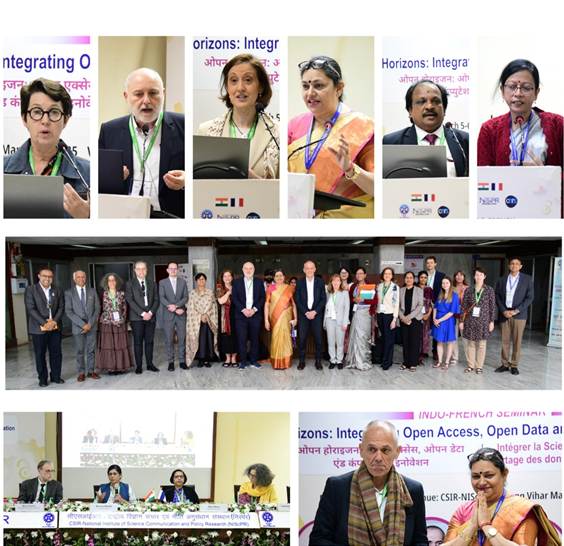
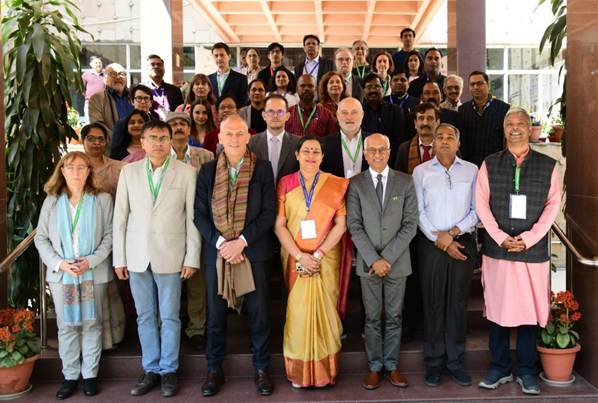
CSIR-NIScPR, India and CNRS, France Organised Indo-French Seminar on Open Science

Daily writing prompt
Which animal would you compare yourself to and why?

The CSIR-National Institute of Science Communication and Policy Research, New Delhi (CSIR-NIScPR), in collaboration with the CNRS- Department for Open Research Data, Open Science, Publications, Research Data and High Performance Computing, Paris (CNRS-DDOR), organized a two-day Indo-French Seminar on “Open Horizons: Integrating Open Access, Open Data, and Computational Innovation” on March 5-6, 2025 at CSIR-NIScPR, Satsang Vihar Campus, New Delhi-110067.

Glimpses of Indo-French Seminar

This significant seminar was organized to deliberate on how India and France are taking a stride towards open access, open data and open science; how digital technologies and Open Source platform offer great promise in implementing an information-driven approach to advance science, promote collaborations, increase transparency and utilize tools for partnerships between science and society. The seminar was attended by researchers, scientists, and policymakers from India and France; provided a unique opportunity for open access information sharing and networking opportunities.

The inaugural session was attended by esteemed dignitaries from India and France with Dr. Antoine Petit, Chairman and CEO, CNRS, France; Prof. Ranjana Aggarwal, Director, CSIR-NIScPR; Prof. Nitin Seth, Director, CEFIPRA; Dr. Srinivasa Reddy, Director, CSIR-IICTon the dais.

“We are delighted to organize this event with CNRS, France, to promote open science and research data sharing,” said Prof. Ranjana Aggarwal, Director, CSIR-NIScPR setting the tone for the conference. Describing the relevance of the event she said, “This seminar marks an important step towards fostering international collaboration and advancing sharing of scientific research for all sections of the society.” She also mentioned “One Nation One Subscription” initiative of Indian Government and its role in providing open access to larger number of stakeholders.

Prof. Nitin Seth, Director, Indo-French Centre for the Promotion of Advanced Research (CEFIPRA) recollected how they started with 1-2 calls annually to now with so many several dedicated partnerships in S&T between the two countries. He also shared his views about the expectations from this seminar. “Open access made scientific knowledge accessible, it brings a lot of opportunities”, Dr. Srinivasa Reddy, Director CSIR-IICT shared his thoughts in theinaugural session. He also mentioned the collaborations CEFIPRA has had with CSIR-IICT from last several years.

From the National Centre for Scientific Research (CNRS), Dr. Antoine Petit, Chairman and CEO; Dr. Sylvie Rousset, Senior Scientist & Head, Open Research Data Department (DDOR) gave a brief of CNRS and DDOR, its objectives functions and roles they are playing in making open access of articles and data, a norm in scientific research. Dr. Kasturi Mandal, CSIR-NIScPR and Dr. Sylvie Rousset, CNRS-DDOR provided the overview of the program of two days seminar like topics of discussions, and takeaways from the sessions.

The first session of the seminar was designed on theme “Policies for Open Access, Open science in France and in India” was, chaired by Prof. Vivek Kumar Singh, Senior Adviser, NITI Aayog, Govt. of India. Dr. Marin Dacos from the French Ministry of Higher Education and Research discussed the benefits of open science like increase in academic efficiency, reproducibility, prevention of duplication, and increasing citation. He also shared highlights of French open science policies in the country. Dr. Remya Haridasan from the PSA Office, Govt. of India, discussed flagship ‘One Nation One Subscription’ (ONOS) initiative in detail like why it was needed, the impact it has on science dissemination and the hurdles faced by the stakeholders during the implementation. The other speakers who shared their thoughts on open science and data includes Dr. Sylvie Rousset and Mr. Mukesh Pund Chief Scientist, CSIR-NIScPR.

The second session was based on topic “Open Access: A Diversity of Routes”. The session was chaired by Prof. Anirban Chakraborti, School of Computational and Integrative Sciences (SCIS), JNU, New Delhi. Dr. Bénédicte Kuntziger, CCSD, CNRS, during his talk said, “At CCSD, we promote open access through HAL, the French national open access repository, ensuring long-term, barrier-free access to publications. Notably, 167,751 full-text documents were deposited in 2024 alone, bringing the total to over 1.4 million full-text documents available through HAL as on January 2025”, he added. Dr. Françoise Rousseau, Couperin Consortium shared the model through which they negotiate with major science publishers to advance open science. Other speakers including Dr. Subbiah Arunachalam from DST-CPR, IISc Bangalore, presented an overview of open access in India, highlighting the country’s progress in promoting open access to research and Dr. Geetha Vani Rayasam, Head, CSIR-HRDG presented a perspective on open source and drug discovery, highlighting the potential of open source approaches in accelerating drug discovery and development.

The third session of day 1 was extension of session 2 under the theme “Open Access: A Diversity of Routes (Part II)”. Session was chaired by Dr. Laurence El Khouri from CNRS-DDO. The speakers including Dr. Lidia Borrell-Damian, Science Europe discussed the benefits of Diamond Action Plan which proposes to align and develop common resources for the entire Diamond OA ecosystem. Prof. Rajeswari Raina from Shiv Nadar University asked researchers and policy makers to think step ahead while saying it’s not about one scheme, one nation or one sector, we have to see the global aspects and thus need to set the horizons and limits of open access at global level. Dr. Raphael Tournoy from Episciences discussed the importance of Overlay Journals.

All the sessions of day 1 concluded with Q&A, where experts answered questions from the audience and shared their insights on the future of open science. This was followed by Felicitation of the guests and speakers of the event.

The second day of the India-France seminar on Open Science and Research Data concluded successfully, featuring insightful discussions and presentations on computational innovation, research evaluation, and open data sharing.The day’s proceedings began with a session on “R&D in Computational Innovation and Open Source Software,” chaired by Dr. Avinash Kshitij, Principal Scientist, CSIR-NIScPR. The speakers included- Prof. Roberto Di Cosmo, INRIA, who discussed the “Software Heritage initiative. Prof. P. K. Suri, Delhi Technological University, delivered a talk on “Data Standardization in Agricultural.Dr. Sridhar Gautam, ICAR-Indian Institute of Horticultural Research, spoke on “Advancing R&D with Open Source Software, Open Access, and Open Data”.Sh. G Mayli Muthu Kumaran Deputy Director General, National Informatics Center (NIC) discuss on the computational innovation and open source and elaborated on the initiative towards the R&D in computational innovation at NIC. This was followed by a session on “Reforming the Evaluation of Research,” which featured presentations from:Dr. Lidia Borrell-Damian, Science Europe, discussed “Reforming Research Assessment and CoARA Initiative”. Dr. Vinayak, Principal Scientist, CSIR-NIScPR spoke on “Some New Methods for Measuring Phases of Science.” Dr. Moumita Koley from IISc, Bengaluru, discussed on the topic “Rethinking Research Assessment: Building an Efficient and Innovative Research Ecosystem in India” and Dr. Nishy. P, CSIR-NIIST, spoke on “Open Source for Research Evaluation and Future Trends”.

The seminar also featured a session on “Open Data Sharing,” with presentations from Ms. AlkaMisra, Deputy Director General, NIC, who discussed the “Open Data sharing initiative of Govt. of India”. Dr. Marin Dacos, French Ministry of Higher Education and Research, presented “An ecosystem for sharing and opening research data” and Dr. Naresh Kumar, Chief Scientist, CSIR-NIScPR, presented his talk on “Sharing data in Science.

The seventh session of the seminarhaving a panel discussion on “Future for Open Science, Open Data, and Open Source,” featuring experts from various fields, including Dr. Sujit Bhattacharya; Dr. Laurence El Khouri, CNRS-DDOR; Dr. Roberto Di Cosmo, INRIA Software Heritage; Dr. Deepali Kuberkar, Tata Memorial Hospital; Dr. Kasturi Mandal, CSIR-NIScPR, New Delhi; Dr. Yogesh Dhoble, CSIR-IPU, New Delhi and Dr. Sandhiya Lakshmanan, CSIR-NIScPR.

The Indo-French Joint Seminar concluded with the valedictory session during which Dr. Naresh Kumar, Scientists, CSIR-NIScPR delivered the welcome address and highlights of the two-days intense deliberation on the Open Science, Open Source and Open Data in the R&D in Computational Innovation. Prof. Anirban Chakraborti from JNU address the need of balanced approach in moving towards the conduct of Open Science, Dr. Laurence and Dr Avinash Kshitij summarise the two-days deliberation amongst the 6 different topics, Mr.Mukesh Pund, CSIR-NIScPR shows his gratitude towards the Indian and French speakers, scholars, delegates and the all individuals involved in different roles during his address for Vote of Thanks.

About CSIR-NIScPR

The CSIR-National Institute of Science Communication and Policy Research (NIScPR) is a premier institute in India, engaged in science communication, STI based policy studies and research.

About CNRS

The French National Centre for Scientific Research (CNRS) is a government-funded research organization, dedicated to advancing scientific knowledge and innovation in France and globally.

****

National level conference on theme “Nari Shakti Se Viksit Bharat” being organised by Ministry of Women & Child Development on March 8, 2025

Eduindex News Network

The Government of India will be celebrating the International Women’s Day on 8th March, 2025.  The Ministry of Women & Child Development (MWCD) is holding a national level conference at Vigyan Bhawan, New Delhi on the theme “Nari Shakti Se Viksit Bharat”.  The President of India Smt. Droupadi Murmu will inaugurate the National Conference. The event will also be graced by Minister for Women and Child Development, Smt. Annpurna Devi, and Minister of State, Smt. Savitri Thakur, along with senior officials and distinguished guests. On this occasion, mega campaign through #SheBuildsBharat is also being organised.

The event will witness the participation of women officers from the armed forces and para military forces and  Delhi police along with My Bharat volunteers, Anganwadi Workers, ASHA workers, Self Help Group members etc. Additionally, lady officers from various Ministries/ Departments have been invited to participate in the event. The event will also mark the presence of representatives from international organizations such as the World Bank, UNICEF, UN Women, UNDP, UNFPA etc.

After the inaugural session, the day will continue with a valuable high Level Panel Discussion.

On the sidelines of the above event, three technical sessions will be organized to bring together renowned women leaders from STEM, business, sports, media, and governance.

  1. Trailblazers and Luminaries – Looking Back and Forging Ahead on the 50th Anniversary of International Women’s Day

This session will bring together renowned women leaders from STEM, business, sports, media, and governance to share their experiences and inspire future generations.

  1. Capitalizing on Women Power – Breakthroughs in Financial Inclusion

This session will focus on financial inclusion, entrepreneurship, and empowering women in the economy.

  1. Women in Leadership – Panchayat to Parliament

A dedicated discussion on policies and frameworks to accelerate gender equality through political leadership.

A unique Digital Media and Interactive Zone will engage participants through real-time discussions, multimedia exhibits, and storytelling initiatives, showcasing the contributions of women in shaping a progressive India.

The proceedings will be livestreamed on Doordarshan, Webcast link, the Ministry of Women, and Child Development’s social media platforms and World Bank Live for  widespread reach and engagement.

The Government of India, under the visionary leadership of Prime Minister Shri Narendra Modi, remains steadfast in its mission to empower women through transformative policies and initiatives. As India moves forward on the path of development, Nari Shakti will continue to be the cornerstone of a self-reliant and prosperous Bharat.

*****

Daily writing prompt
Which animal would you compare yourself to and why?

Rashtriya Karmayogi Jan Seva Programme

Eduindex News Network

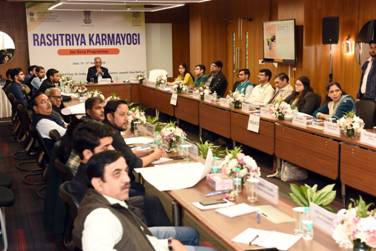
The Department of Social Justice and Empowerment (DoSJE), Union Ministry of Social Justice and Empowerment, successfully inaugurated the first batch of the Rashtriya Karmayogi Jan Seva Programme. The initiative, launched by Capacity Building Commission, aims at fostering a stronger sense of Seva Bhav (spirit of service) among government officials who are  solution oriented, compassionate, and citizen-focused.

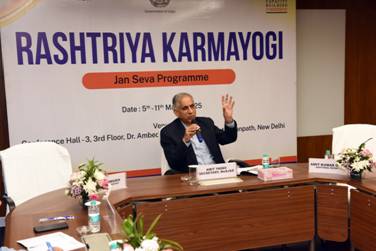
The programme features four short training sessions (approximately 1.5 hours each), designed to encourage open discussions, teamwork, and practical problem-solving through service-oriented narratives. The Rashtriya Karmayogi Jan Seva Programme at the Department of Social Justice and Empowerment will go on from 5th to 11th March 2025 at Dr. Ambedkar International Centre, New Delhi.

The programme was inaugurated by Shri Amit Yadav, Secretary, DoSJE, who, in his address, emphasized the fundamental purpose of government service. He stated, “Many of us enter public service with a passion to make a difference. However, over time, daily routines and limited citizen interaction can make us lose sight of that purpose. This programme serves as a reminder of why we serve – to bring meaningful change in people’s lives. Every action taken by public servants contributes to the nation’s progress”.

Further, Shri Yadav highlighted the importance of personal development and self-fulfilment in public service. He emphasized that citizen interaction is at the heart of governance, and how officials engage with the public, address concerns, and resolve issues plays a pivotal role in effective administration. Speaking on the philosophy of the programme’s name, he added, “‘Karmayogi’ signifies our duty—towards our nation, our department, our citizens and ourselves. This initiative is an opportunity for every officer to develop leadership skills, adopt a solution-oriented approach, and embrace Seva Bhav in their roles.”

The training sessions are led by Master Trainers – Ms. Kajal Singh (Director) and Shri Puspendra Singh (Deputy Secretary), DoSJE, with support from Ms. Shipra Singh (Program Coordinator), Capacity Building Commission. The session witnessed active participation from attendees, who gained a deeper understanding of their roles and responsibilities within the Department of Social Justice and Empowerment and its critical contribution to nation-building. The Vision and Mission of the department were discussed.

Insights from the successful implementation of the nationwide welfare initiatives and campaigns were referenced while discussing the training modules, providing participants with practical, real-world context. Additionally, key aspects of the department’s role in policy formulation, grievance redressal, legal frameworks, and enhancing ease of access to social justice schemes were deliberated in alignment with the programme’s objectives. This approach enabled participants to connect the learnings of the programme with their day-to-day responsibilities.

*****

Daily writing prompt
Which animal would you compare yourself to and why?

Seminar on Health Challenges and Healthy Lifestyle at ESIC Medical College & Hospital, Faridabad

Eduindex News Network

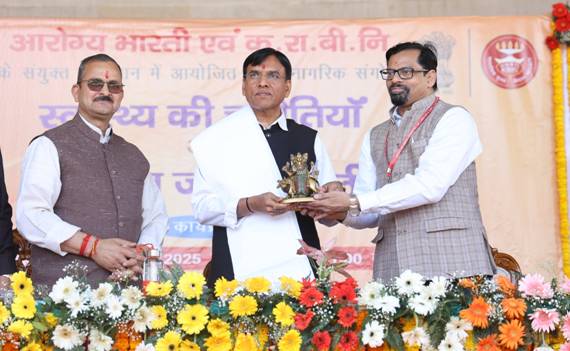
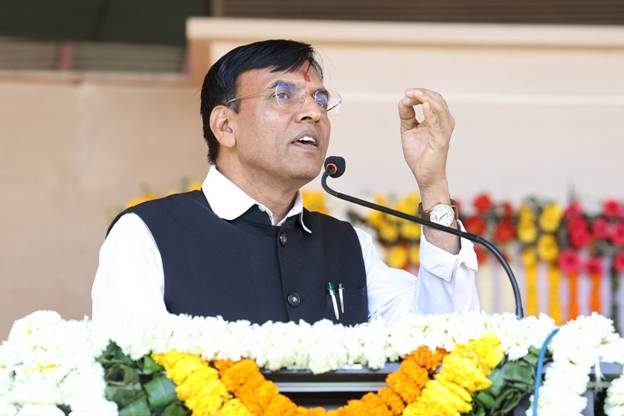
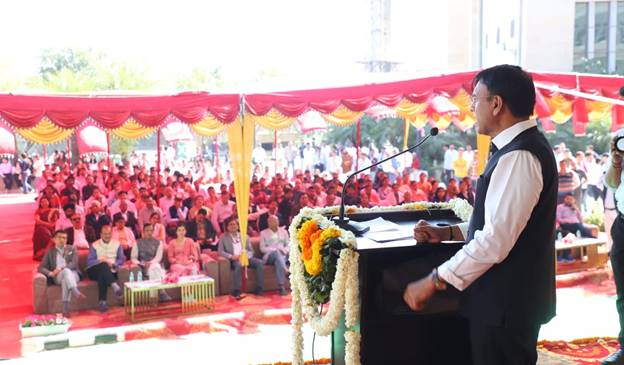
Union Minister for Labour & Employment and Youth Affairs & Sports, Dr. Mansukh Mandaviya today participated in a seminar on “Health Challenges and Healthy Lifestyle” organized by Arogya Bharti in collaboration with ESIC Medical College & Hospital, Faridabad in Faridabad, Haryana.

Addressing the gathering, Dr. Mandaviya emphasized the importance of preventive and promotive healthcare in building a healthy and fit India. Citing the wisdom of ancient Indian medical pioneers like Charak, Sushruta, and Lord Dhanwantari, he highlighted India’s rich healthcare legacy. He stressed the significance of meditation, yoga, and fasting as key components of preventive healthcare and commended Arogya Bharti’s efforts in organizing wellness camps across the country to promote holistic well-being.

Inauguration of Cutting-Edge Medical Facilities

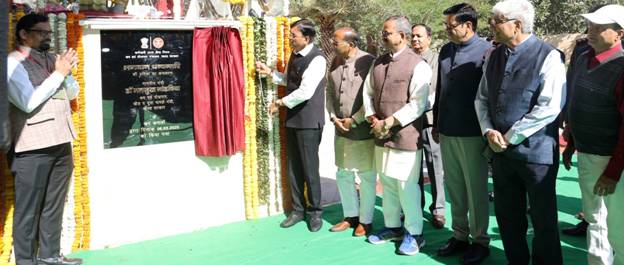
During his visit, Dr. Mandaviya inaugurated three state-of-the-art medical facilities at ESIC Medical College & Hospital, Faridabad:

  • Digital Mammography Services – A high-resolution, digital detector-based mammography machine designed for advanced imaging, particularly beneficial for early detection and evaluation of breast cancer.
  • 1000 mA Digital Radiography Fluoroscopy (DRF) System – A modern diagnostic system for high-quality X-ray radiography and fluoroscopic-guided interventions, enhancing diagnostic capabilities for insured workers and their families.
  • Next-Generation Sequencing (NGS) Application – A cutting-edge technology that will aid in oncology research, RNA sequencing, and pathogen identification, paving the way for precision medicine.

The addition of these facilities will significantly improve diagnostic and treatment services for insured workers and their dependents, ensuring access to world-class healthcare within the ESIC network.

Unveiling of Lord Dhanwantari’s Statue

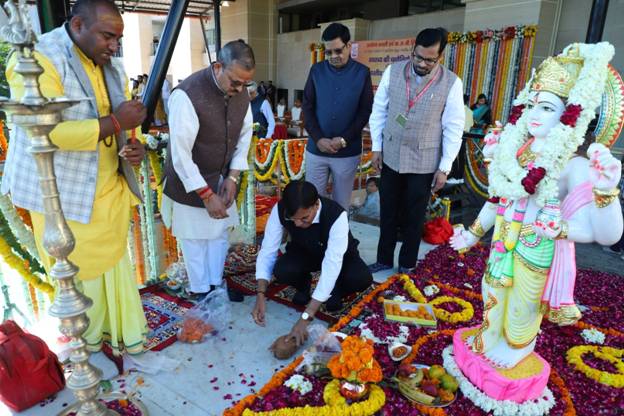
As a tribute to India’s ancient healing traditions, Dr. Mandaviya also unveiled a statue of Lord Dhanwantari, the god of Ayurveda, at ESIC Medical College & Hospital.

Engaging Participation from Healthcare & Industry Leaders

The seminar witnessed active participation from doctors, paramedics, medical students, industrial workers, and office bearers of industrial associations and Arogya Bharti, reflecting a shared commitment to preventive healthcare and holistic well-being.

*****

Daily writing prompt
Which animal would you compare yourself to and why?

NASA veteran Mr. Mike Massimino interacts with PM SHRI Kendriya Vidyalaya students

Daily writing prompt
Which animal would you compare yourself to and why?

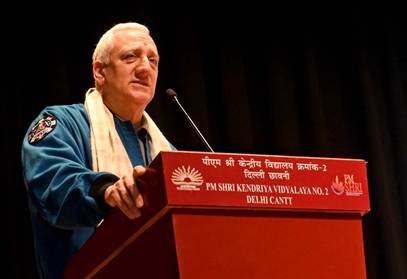
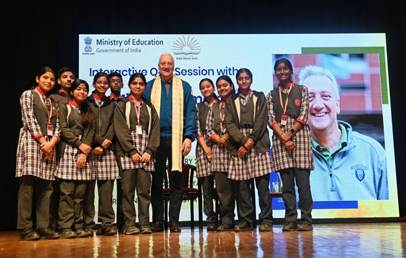
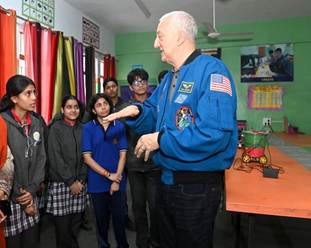
Former NASA astronaut Mr. Mike Massimino interacted with PM SHRI Kendriya Vidyalaya students today in New Delhi. Mr. Massimino also explored the school’s facilities, including the AR-VR Lab, Atal Tinkering Lab, language lab, etc.

While interacting with the students, Mr. Massimino praised India’s Chandrayaan-3 mission, emphasizing its significance not just for India but for the global space community. He highlighted the challenges of landing on the Moon’s South Pole and how this achievement could provide key insights into water sources essential for habitation. Additionally, he underscored the importance of international collaboration in future space programs.

Mr. Massimino shared how a movie based on 7 astronauts inspired him to become an astronaut. Engaging with the students, he answered their questions about space exploration, the kind of food they had during their space trips, etc. Recounting his personal experiences, he described how he adapted to zero gravity in space and elaborated on their sleeping arrangements, consoles to work, etc. Students were also curious about AI’s role in space exploration. In response, he explained that AI would streamline the processes, making them more efficient, cost-effective, and safe. Concluding his interaction, he advised students on the subjects and skills they should pursue if they aspire to a career in space exploration.

During the event, students asked several questions about the challenges of pursuing a career as an astronaut and the key subjects essential for their preparation. Mr. Massimino emphasized the importance of exploring various fields, including soil sciences and marine biology. His practical and insightful answers left the students excited and deeply inspired. They also asked him about the most challenging project he worked on at NASA and whether human habitation on Mars would be possible in the near future. He explained that while living on the Moon could become a reality soon, settling on Mars would take longer due to the technological challenges that still need to be overcome.

Mr. Mike Massimino, a former NASA astronaut, is a professor of mechanical engineering at Columbia University and the senior advisor for space programs at the Intrepid Sea, Air & Space Museum. He received a BS from Columbia University, and MS degrees in mechanical engineering and in technology and policy, as well as a PhD in mechanical engineering, from the Massachusetts Institute of Technology.

After working as an engineer at IBM, NASA, and McDonnell Douglas Aerospace, along with academic appointments at Rice University and at the Georgia Institute of Technology, he was selected as an astronaut by NASA in 1996, and is the veteran of two space flights, the fourth and fifth Hubble Space Telescope servicing missions in 2002 and 2009. Mike has a team record for the number of hours spacewalking in a single space shuttle mission, and he was also the first person to tweet from space. During his NASA career he received two NASA Space Flight Medals, the NASA Distinguished Service Medal, the American Astronautical Society’s Flight Achievement Award, and the Star of Italian Solidarity.

He is the Senior Adviser for Space Programs at the Intrepid Sea, Air & Space Museum in New York City. He is also a professor in Columbia University’s engineering school, The Fu Foundation School of Engineering and Applied Science.

Also present at the programme were Shri Somit Shrivastava, Joint Commissioner (Pers); Shri B.K. Behra, Deputy Commissioner (Academics) KVS HQ; Shri S.S. Chauhan, Deputy Commissioner, KVS Delhi Region; Shri G.S. Pandey and Shri K.C. Meena, Assistant Commissioner, Delhi Region; Shri V.K. Mathpal, Principal KV No.2, Delhi Cantonment; and others.

*****