Prime Minister’s Young Authors Mentorship Scheme (YUVA) Scheme

Daily writing prompt
What job would you do for free?

Introduction

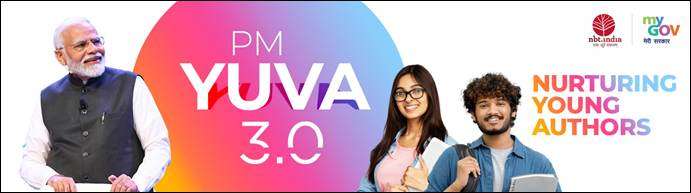
The Ministry of Education (MoE) and the National Book Trust (NBT) of India launched the third edition of the Prime Minister’s Young Authors Mentorship Scheme, known as YUVA 3.0, on March 11, 2025. The initiative aims to nurture young writers under 30 years of age, providing them with mentorship and exposure to hone their creative writing skills. YUVA 3.0 builds upon the success of its predecessors, YUVA 1.0 and YUVA 2.0, continuing the government’s commitment to fostering literary talent and promoting reading, writing, and book culture in India. The scheme aligns with the vision of Ek Bharat, Shreshtha Bharat, encouraging the documentation and dissemination of India’s rich cultural heritage and knowledge.

YUVA 3.0: Features and Objectives

Theme and Focus

The Themes of PM-YUVA 3.0 are: Contribution of Indian Diaspora in Nation BuildingIndian Knowledge System; and Makers of Modern India (1950-2025). The scheme will help to develop a stream of writers who can write on various facets of India encompassing the past, present and future. Besides, the scheme will also provide a window to the aspiring youth to articulate themselves and present a comprehensive outlook of contribution of Indians across fields in ancient and present times.
Selection Process

  • The scheme invites applications from aspiring writers through MyGov India’s online portal.
  • A competitive process shortlists 50 young authors based on a well-defined evaluation criterion.
  • The National Book Trust (NBT) will constitute the selection committee.
  • Applicants are required to submit a book proposal of 10,000 words, which is then reviewed by a panel.
  • The shortlisted candidates undergo a multi-stage selection process before the final selection.

Mentorship and Support

  • Selected authors receive a mentorship program spanning six months.
  • The authors undergo workshopsinteractions with mentors, and exposure to India’s literary ecosystem.
  • They receive financial assistance of ₹50,000 per month for six months.
  • Their works are published and promoted by the NBT in multiple languages.
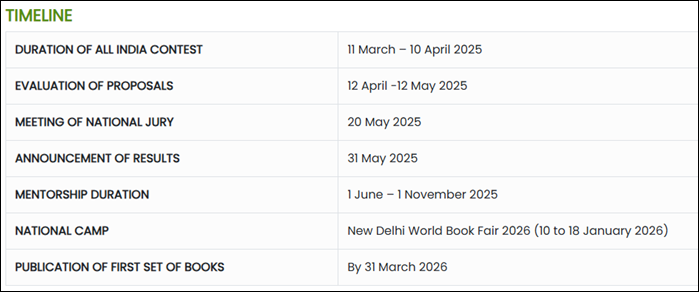
  • Under the mentorship, a National Camp will be held for the PM-YUVA 3.0 Authors during the New Delhi World Book Fair 2026.
  • Selected authors get the opportunity to present their work at literary festivals and international forums.

Background of the YUVA Scheme

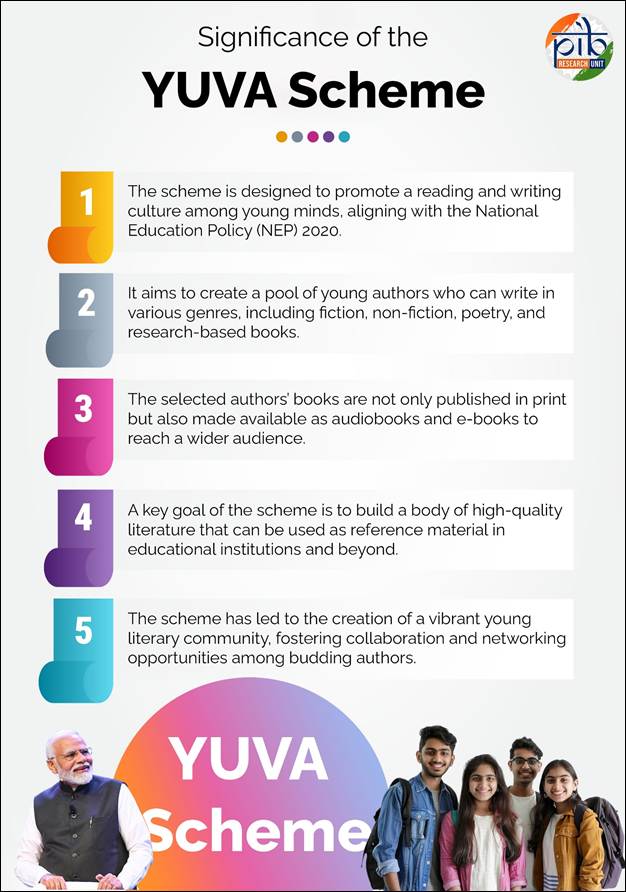
National Education Policy 2020 has emphasized on the empowerment of the young minds and creating a learning eco-system that can make the young readers/learners ready for leadership roles in the future world. India is considered to be a ‘young country’ because 66% of its total population are young and can be tapped for capacity and nation building. In this context, a national scheme for mentoring generations of young authors has proven to be a significant stepping stone for laying the foundation of the future leaders of the creative world. This scheme has been conceptualised on the premise that the 21st century India needs to groom a generation of young authors to create ambassadors of Indian literature and world view. In view of the fact that our country is ranked third in the arena of book publishing and we have a treasure trove of indigenous literature, India must project it at the global stage. The first mentorship scheme was launched on 31st May 2021, then subsequently in October 2022 and now in March 2025.
YUVA 2.0: Expansion and Achievements

Launched in October 2022YUVA 2.0 built upon the foundation of YUVA 1.0 with a renewed focus on ‘Democracy’ as the core theme. The scheme aimed to foster young writers’ engagement with India’s democratic values, traditions, and governance structures.

Theme and Vision

The Theme of PM-YUVA 2.0 was Democracy (Institutions, Events, People, and Constitutional Values). The scheme helped in developing a stream of writers who can write on various facets of Democracy in India encompassing the past, present and future. Besides, the scheme also provided a window to the aspiring youth to articulate themselves and present a comprehensive outlook of Indian democratic values at domestic as well as international platforms.

Selection and Implementation

  • The competition received an overwhelming response, with a diverse pool of participants from across the country.
  • 75 authors were selected through a competitive process. They were also required to submit a book proposal of 10,000 words.
  • The mentorship program included interaction with constitutional experts, historians, and renowned authors.
  • Special training sessions were held to enhance research skills, language proficiency, and storytelling techniques.

Outcomes and Impact

  • The Union Minister for Education launched 41 new books under the PM YUVA 2.0 scheme at the New Delhi World Book Fair 2025 in February.
  • Several books were published in multiple Indian languages, making them accessible to a broad readership.
  • Young authors gained national and international recognition, participating in events like the World Book Fair and literary forums.
  • Many participants had their books included in academic and government libraries for research and reference.
  • Some authors had the opportunity to meet and interact with policymakers and scholars, further enriching their perspectives.

YUVA 1.0: Inception and Legacy

The inaugural editionYUVA 1.0, was launched in May 2021 as part of the Azadi Ka Amrit Mahotsav celebrations to commemorate 75 years of India’s independence. The scheme aimed to empower young authors and provide them a platform to express their perspectives on India’s history and contemporary narratives.

Theme and Inspiration

The theme was National Movement of India with focus on Unsung Heroes; Little known facts about the Freedom Struggle; Role of various places in National Movement; Entries bringing out new perspectives related to political, cultural, economic, or science related aspects of national movement etc. as part of Azadi ka Amrit Mahotsav. This scheme helped to develop a stream of writers who can write on a spectrum of subjects to promote Indian heritage, culture and knowledge system.

Selection and Implementation

  • The contestants were asked to submit a manuscript of 5000 words.
  • 75 young authors were selected, representing diverse linguistic and regional backgrounds.
  • The selection was made by a committee constituted by National Book Trust (NBT).
  • Mentorship included training in writing, editing, and publishing processes.
  • Special sessions were conducted by eminent historians, journalists, and literary figures.
  • A consolidated scholarship of Rs.50,000 per month for a period of six months per author will be paid under the Mentorship Scheme.

Outcomes and Impact

  • The results were announced on 25.12.2021.
  • The books produced under YUVA 1.0 were translated into multiple Indian languages, enhancing their reach.
  • The initiative contributed to India’s literary heritage, encouraging young voices to document historical narratives.
  • Several young authors gained recognition, contributing to mainstream literature and academic discussions.
  • The scheme established a strong foundation for young writers, many of whom went on to publish additional books independently.
  • 10% royalty is being paid by NBT on publication and sale of the books.

Conclusion

The YUVA scheme, in its three editions, has played a crucial role in nurturing young literary talent in India. As the program continues to evolve, it reinforces India’s commitment to promoting creative expression, multilingual literary heritage, and a culture of reading and writing among the youth. The impact of the scheme is evident in the success stories of young authors whose voices have been amplified at both national and international levels. With continued support and innovation, the YUVA scheme will remain a cornerstone of India’s literary and cultural renaissance.

References
Click here to see PDF.

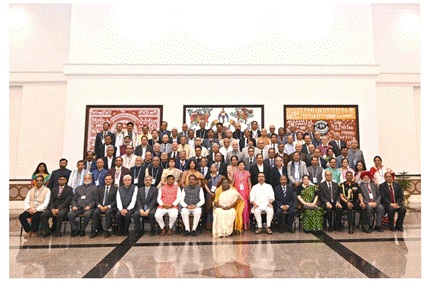
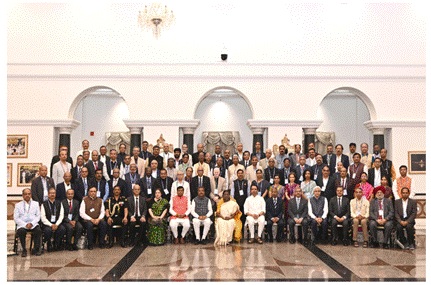
Two-day Visitor’s Conference 2024-25 at Rashtrapati Bhavan 

Daily writing prompt
What job would you do for free?

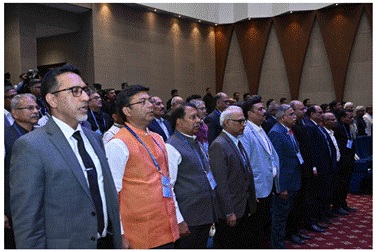
In her inaugural address, the President said that the level of development of any country is reflected in the quality of its education system. She told the heads of the institutions of higher learning that they have a crucial role in achieving the goal of establishing India as an important centre of the knowledge economy. She highlighted the need to pay a lot of attention to research along with education. She said that the Government of India has established the National Research Fund with a very good objective. She expressed confidence that institutions of higher learning would make good use of this important initiative and encourage research.

The President said that the ambition of our higher education community should be that researchers from our institutions get recognition at the world level, patents of our institutions can bring change in the world, and students from developed countries choose India as a preferred destination for higher education.

The President said that students from India enrich the world’s leading educational institutions and developed economies with their talent. She emphasised the need of making efforts to utilize their talent in our country. She stated that our national goal of establishing India as a Global Knowledge Super Power would be achieved only when the world community is eager to adopt the work being done in our laboratories.

The President said that many higher education institutions of our country have global brand value. The students of these institutions get big responsibilities in the best institutions and companies of the world. However, all our institutions should move ahead very fast. The leadership of heads of institutions of higher learning would be recognised by developing and utilising the immense talent of our large youth population.

The President said that along with excellence, social inclusion and sensitivity should also be an essential aspect of our education system. No economic, social, or psychological limitation of any kind should be a hindrance in getting higher education. She said that heads and teachers of institutions of higher learning should take care of young students, remove any insecurity from their minds and provide them moral and spiritual strength. She urged them to make every possible effort to provide counselling and inspiration to students and spread positive energy in the campuses.

The President said that our country has a rich tradition of scientific achievements. The branches and sub-branches of Indian knowledge and science have flourished in every region of the country. It would be very useful to rediscover the invaluable but extinct streams of knowledge and science by doing intense research. She stated that it is the responsibility of the higher education ecosystem to find ways to use such organically grown knowledge systems in today’s context.

The President said that educational institutions shape the future of the nation. Young students learn from the conduct of our policy makers, teachers, heads of institutions, and senior students. She expressed confidence that with their global thinking, the heads of higher learning institutions would prepare a generation of builders of a developed India.

During the inaugural session, the President presented the eighth Visitor’s Awards in the categories of Innovation, Research, and Technology Development.

The Visitor’s Award for Innovation was given to Prof Saripella Srikrishna, Banaras Hindu University, for developing Novel Indigenous Innovation in Quantum Technology to boost the National Green Hydrogen Mission.

The Visitor’s Award for Research in the field of Physical Sciences was conferred upon Prof Ashwini Kumar Nangia, University of Hyderabad, for his seminal research in the discovery and development of high bioavailability drugs and pharmaceuticals with enhanced efficacy at affordable cost.

The Visitor’s Award for Research in Biological Sciences was jointly presented to Prof Rina Chakrabarti, University of Delhi and Prof Raj Kumar, Central University of Punjab. Prof Chakrabarti has been conferred the Award for her research contributions to Sustainable Freshwater Aquaculture while Prof Raj Kumar has been presented the Award for his research contributions to exploring various cancer hallmarks and the development of synthetic anticancer lead molecules.

The Visitor’s Award for Technology Development was presented to Dr Venkateswarlu Chintala, Gati Shakti Vishwavidyalaya, for his research contributions to the petrol and diesel production at commercial scale from landfill municipal mixed plastic waste.

Tomorrow, the Conference will deliberate on issues such as – Flexibility in academic courses, Credit Sharing and Credit Transfer with multiple entry and exit options; Internationalisation efforts and collaboration; Translation Research and Innovation related to converting research or innovation into useful products and services; Effective student selection processes and respecting student choices in context of NEP; and Effective assessments and evaluation. The outcome of these deliberations will be presented before the President in the closing session of the Conference.

Shri Dharmendra Pradhan, while presenting the opening remarks, expressed his gratitude to the President, Smt. Droupadi Murmu, for guiding the academic fraternity with constant guidance, steady support, and visionary leadership. He also congratulated all the distinguished recipients of the 8th Visitor’s Awards.

Shri Pradhan mentioned that Smt. Droupadi Murmu’s leadership has always shown the way forward in breaking new ground in education, achieving national educational priorities, navigating the ever-evolving learning landscape, as well as taking significant strides toward making India the epicentre of knowledge, research, and innovation.

He urged the participants of the Conference to share their concerns, discuss best practices, and envision the future of higher education. He also highlighted that NEP 2020 stands at the heart of today’s discussions, a transformative blueprint reshaping the country’s education system.

The Minister urged everyone to create an ecosystem that empowers the youth, strengthens the workforce, and accelerates India’s journey toward Viksit Bharat 2047.

Expressing his gratitude to Prime Minister Shri Narendra Modi for his clarion call of Viksit Bharat by 2047, the Minister said the nation ought to be self-reliant, innovative, and knowledge-driven. Education must go beyond degrees; it must create thinkers, innovators, solution-givers, and job creators, for which the implementation of NEP 2020 in letter and spirit is essential, he noted. He emphasized the importance of rising above institutional silos to ensure that NEP 2020 translates into real and long-lasting impact.

He stressed the importance of working collaboratively and sharing best practices to optimize academic strength, strengthen policies, and execute them well with a real impact on the ground.

Showing his optimism, he said that academic institutions will emerge as the lighthouse of Viksit Bharat, anchoring the developmental journey in the Amrit Kaal and beyond. He also expressed confidence that the Visitor’s Conference will provide a clear roadmap for holistically transforming the education system, empowering the youth, strengthening the workforce, and establishing India’s higher education ecosystem as a global benchmark.

Please click here to see the President’s Speech: https://static.pib.gov.in/WriteReadData/specificdocs/documents/2025/mar/doc202533511401.pdf

*****