Royal Facade’s insulated panels offer a modern, energy-efficient, and visually appealing solution for exterior walls. As more homeowners, architects, and builders look for durable façade systems that combine insulation with long-lasting aesthetics, Royal Facade Insulated Facade Panels stand out as one of the most reliable options on the market. These premium insulated panels combine clinker tiles with high-performance thermal insulation—delivering long-term comfort, reduced heating costs, and an attractive exterior finish.
What Are Royal Facade Insulated Facade Panels?
Royal Facade panels are an innovative façade system that integrates:
A clinker tile outer layer
High-density polyurethane insulation
A moisture-resistant mounting system
A durable, weather-resistant exterior coating
This combination creates an all-in-one solution that replaces traditional multi-layer construction. Instead of installing insulation, metal profiles, adhesive, and final cladding separately, Royal Facade provides a ready-to-mount insulated panel that significantly reduces labour time and installation errors.
How the Clinker Thermal Insulation Technology Works
Royal Facade’s clinker thermal insulation panels are designed to minimise heat loss and protect buildings from extreme weather conditions. The structure ensures:
1. High Thermal Resistance
The integrated insulation layer helps maintain stable indoor temperatures, allowing homeowners to reduce heating and cooling expenses throughout the year.
2. Anti-Moisture Protection
The panels include a hydrophobic layer that prevents:
Water penetration
Mould growth
Material degradation
This ensures façades remain durable even in areas with heavy rain or snow.
3. Ventilation and Breathability
The system allows controlled moisture evaporation, preventing condensation between the façade and the wall.
4. Noise Reduction
The insulation also acts as a sound barrier, improving living comfort in busy urban environments.
Key Advantages of Insulating a Façade with Royal Facade Clinker Panels
Superior Energy Savings
Homes and commercial buildings using Royal Facade insulated panels benefit from reduced energy consumption due to high insulation performance.
Fast and Simple Installation
The panels can be mounted quickly using a standard mounting profile. This makes them ideal for:
Renovations
New construction
Large-scale commercial projects
Aesthetic Versatility
Royal Facade offers a variety of textures and colours inspired by natural brick and stone. This allows building owners to achieve a premium look without the weight and cost of traditional materials.
Longevity and Durability
The clinker layer is highly resistant to:
UV rays
Mechanical damage
Fading
Temperature fluctuations
Eco-Friendly Choice
The panels support sustainable construction due to their long lifespan and energy-saving properties.
Where Can You Use Royal Facade Insulated Panels?
Royal Facade panels are suitable for a wide range of building types:
Single-family homes
Multi-storey residential buildings
Commercial facilities
Office complexes
Renovation of old façades
Public buildings such as schools or clinics
Whether you are upgrading thermal insulation or enhancing a building’s exterior, these insulated panels provide a smart, future-proof solution.
Get Expert Advice and Project Support
Royal Facade provides free telephone consultation for anyone interested in choosing the right panel design or calculating insulation needs.
📞 Consult an expert directly: +48 666 273 099
You can also explore detailed product specifications, panel types, installation methods, and photos of completed projects on the official website:
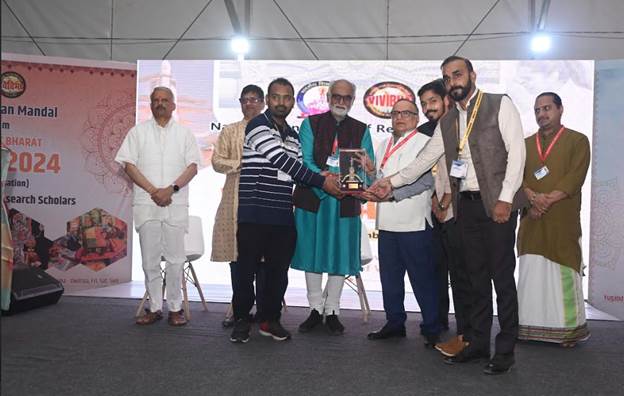
IIT Ropar proudly participated in VIVIBHA 2024, a distinguished three-day national conference organized by Bharatiya Shikshan Mandal (BSM) at SGT University, Gurugram. Themed “Vision for Viksit Bharat,” the event celebrated India’s rich cultural legacy while highlighting pioneering research and innovations that are shaping a self-sustaining nation.
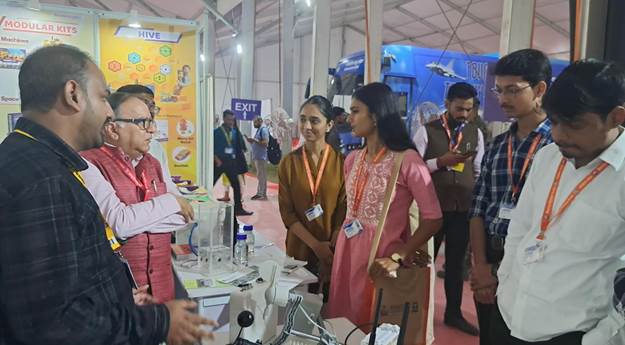
The IIT Ropar TIF – AWaDH stall garnered considerable attention, particularly from Shri Dharmendra Pradhan, Union Minister of Education, who interacted with the team to explore the showcased innovations. Prof. Rajeev Ahuja, Director of IIT Ropar, also extended his support. In a significant achievement, AWaDH was awarded the Best Stall in the Academia category, recognizing the excellence and societal impact of its presented research.
As part of the “Research to Realisation” exhibition, the IIT Ropar Technology and Innovation Foundation – AWaDH Agriculture and Water Technology Development Hub showcased its transformative technologies that promote sustainable solutions in agriculture, water management, and environmental conservation. Key innovations on display included Moohsense: An AI-driven livestock management system; Digital Entomologist: A biodiversity monitoring tool; Nanobubble Technology for Water Purification; Air Sense: Advanced air quality sensors, and Soil Health Monitoring System: Precision farming tools for improved productivity.
VIVIBHA 2024’s focus on integrating Bharat-centric research with India’s vibrant cultural heritage closely aligns with AWaDH’s mission. The event reaffirmed the commitment to bridging tradition with cutting-edge technologies for a sustainable and prosperous future.
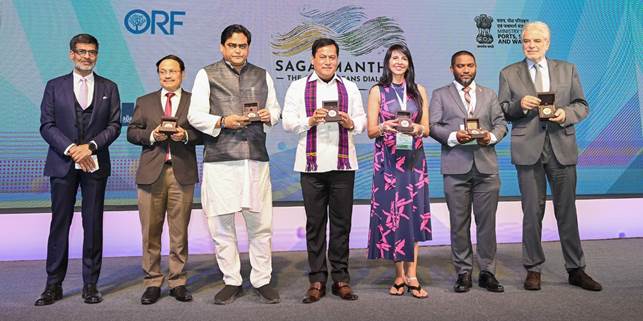
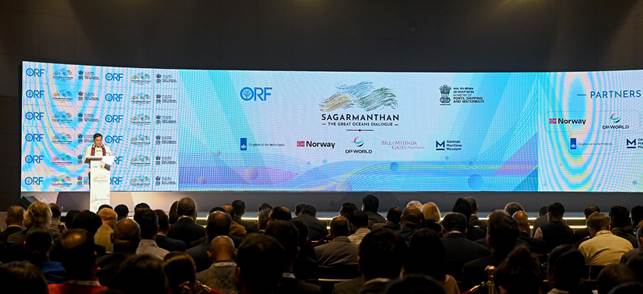
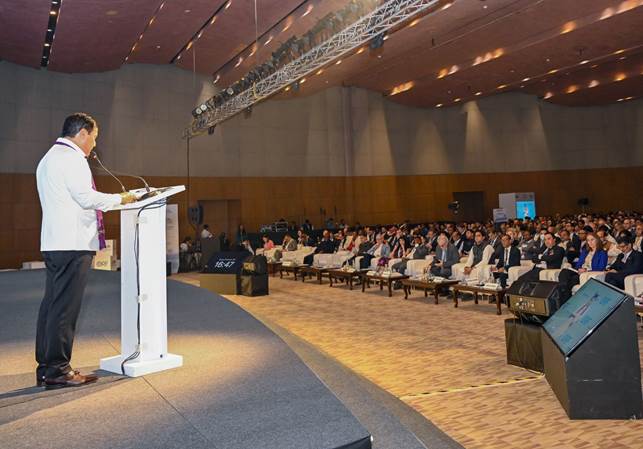
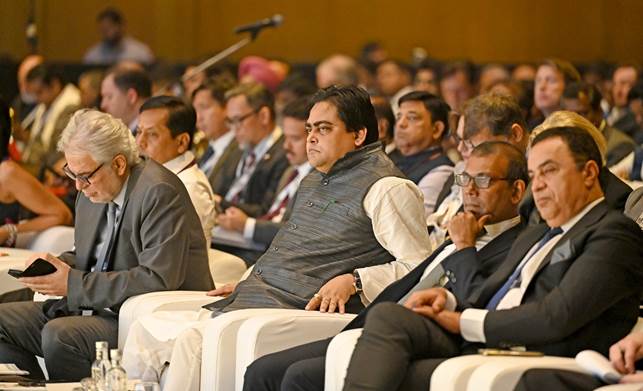
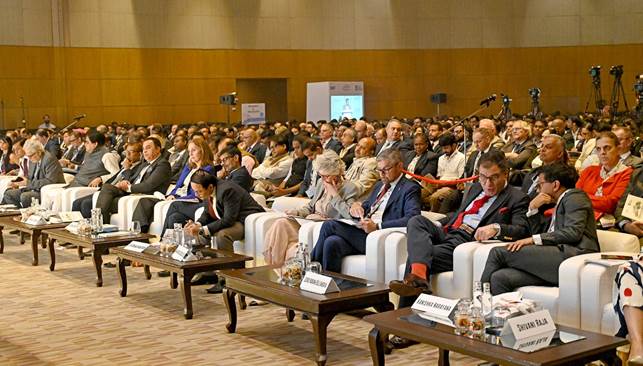
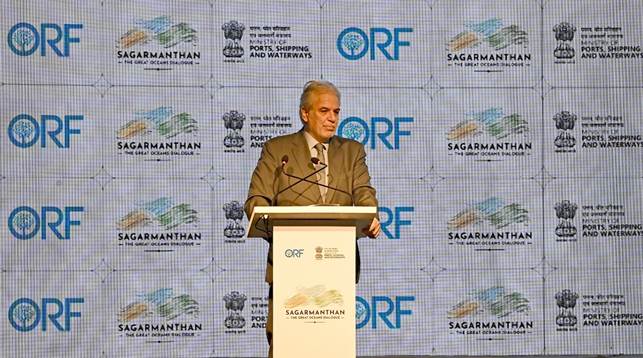
Sagarmanthan – The Great Oceans Dialogue, the South Asia’s largest Maritime Thought Leadership summit, began here today. The inaugural session was addressed by the Union Minister of Ports, Shipping & Waterways (MoPSW), Sarbananda Sonowal; the Minister of Maritime Affairs and Insular Policy, Greece, Christos Stylianides; the Minister of State for Fisheries and Ocean Resources, Maldives, Dr Amzath Ahmed; the National Representative for the Province of Rio Negro, Argentina, Ms Maria Lorena Villaverde; the Secretary of MoPSW, TK Ramachandran along with the President, Observer Research Foundation (ORF), Samir Saran in the presence of representatives from 61 countries along with hundreds of delegates from maritime sector.
The Ministry of Ports, Shipping, and Waterways (MoPSW) of the Government of India, in collaboration with the Observer Research Foundation, is organising the two-day event, Sagar Manthan: The Great Oceans Dialogue. The initiative brings together global policymakers, maritime experts, industry leaders, and scholars to deliberate on advancing sustainable and innovative maritime practices.
Speaking at the inaugural session, the Union Minister, Sarbananda Sonowal said, “India’s Maritime Vision 2047 is a roadmap to transform the maritime sector by fostering sustainability, enhancing connectivity, and leveraging technology. Under the visionary leadership of Prime Minister Narendra Modi ji, our ministry through initiatives like Sagarmala and the Maritime Amrit Kaal Vision is aiming at making India a leader in global maritime trade, achieving our goal of Viksit Bharat by 2047. Our vision aims to revolutionise India’s maritime sector with an investment of ₹80 lakh crores to enhance port capacity, shipping, ship building inland waterways. Key projects include the Vizhinjam International Seaport in Kerala, new mega ports at Vadhavan in Maharashtra, and Galathea Bay in Nicobar. By 2047, India targets a port handling capacity of 10,000 million metric tons per annum, leveraging strategic trade routes through initiatives like the India-Middle East-Europe Economic Corridor (IMEEC) and the International North-South Transport Corridor. Reviving its shipbuilding legacy, India is constructing the National Maritime Heritage Complex at Lothal while advancing clean-fuel shipbuilding to meet future sustainability goals.”
The dialogue underscores India’s strategic role in global trade, with a 7,500 kilometers coastline and strategic islands that bolster its maritime potential. The event also highlights the nation’s commitment to the decarbonisation of the maritime sector through green initiatives such as the Harit Sagar Guidelines and the National Green Hydrogen Mission.
Setting the context for the mega deliberations and discussion, Sarbananda Sonowal further added, “Recognising India’s maritime potential and its significance for economic growth, our government has implemented crucial policy measures for the ‘Blue and Ocean-based Economy’ over the last decade. Our participation in initiatives like the India-Middle East-Europe Economic Corridor (IMEEC) and the International North-South Transport Corridor underscores our commitment to strengthening global trade partnerships. We are also preparing to build future ships that run on clean fuels like ammonia, hydrogen, and electric, capable of traversing brown, green, and blue waters. Our Amrit Kaal Maritime Vision 2047 has placed great emphasis on climate action and environmental sustainability.”
The Minister of Maritime Affairs and Insular Policy, Greece, Christos Stylianides, said, “For us policy makers, it is crucial to ensure a stable regulatory framework and a global level playing field for the industry. It is now time to set the foundations for forward-looking and realistic policies which will the current maritime challenges into opportunities. International transport systems with shipping at its core as an integral part, should serve the three pillars of sustainability: the environmental, the social and the economic one. This will be done by optimising efficiency in connectivity, minimising pollution and ensuring resilience across the entire maritime chain. What we need now is collaboration and the ‘Sagarmanthan: The Great Oceans Dialogue’ is a great example in this direction. It is in our hands, in a spirit of partnership, to make this happen.”
The Minister of State, MoPSW, Shantanu Thakur highlighted the socio-economic potential of coastal communities and the need for global partnerships. The Minister stated, “India’s economic growth is guided by the principle of Vasudhaiva Kutumbakam—‘The World is One Family.’ Our ports and shipping corridors are not just about commerce but about connectivity, collaboration, and care for coastal communities and the environment. The oceans must be a global priority, not just for economic development but for ecological preservation and energy innovation.”
Speaking about this maiden initiative – Sagarmanthan, the Member, Prime Minister’s Economic Advisory Council (PM-EAC), Sanjeev Sanyal said, “This should serve as a guiding principle for all of us to strengthen and grow our maritime cluster. Our goal is to position ourselves at the forefront of the maritime sector, and to achieve this, we must draw on the expertise of industry leaders who set benchmarks across various verticals. The seas and oceans, gifts of nature, are abundant with resources, energy, and potential. It is our responsibility to harness them wisely, combining knowledge and skill to achieve sustainable growth. Our commitment must ensure that both the economy and ecology thrive in harmony, fostering progress without compromise. We have the technology, the young workers, the trade volume, the steel and the coastline – all the ingredients. So we should aspire in 10 years to build 10-12 per cent of the world’s ships and own/flag 8 per cent.”
On the sidelines of Sagarmanthan, the Union Minister of Ports, Shipping & Waterways, Shri Sarbananda Sonowal participated in a bilateral meeting with the Minister of Maritime Affairs and Insular Policy go Greece, Christos Stylianides here today. The two leaders discussed an array of topics and agreed to deepen the maritime relationship between the two countries. Both the leaders agreed to expand trade from the existing US$ 1.94 billion to doubling it by focussing on broadening, increasing, and balancing by 2030.
Speaking after the meeting, the Union Minister, Shri Sarbananda Sonowal said, “It was a good meeting that we had here on the sidelines of Sagarmanthan here today. We discussed on collaboration and cooperation in multiple areas of maritime sector between the two countries. Under the dynamic leadership of Prime Minister Shri Narendra Modi ji, India further deepened its bilateral relationship into strategic relationship with Greece. With this platform, India is working with Greece to expand economic cooperation with the European Union market. Given the economic potential in the Indian market, I am also reaching out shipping industries of Greece to consider setting their operations here through His Excellency the Minister of Maritime Affairs and Insular Policy of Greece.”
The two maritime ministers also discussed underscored the importance of the Joint Working Group (JWG) on maritime and shipping issues as important bilateral institutional mechanisms for consolidating sector specific cooperation. Both the leaders agreed to optimally use strategic maritime assets towards sustainable development. Given the rich heritage of both the nations, the ministers agreed to collaborate at the ongoing development of National Maritime Heritage Complex at Lothal, Gujarat by the Ministry of Ports, Shipping & Waterways, and Government of India. The talks also touched important subjects like renewable energy, cultural and educational cooperation in maritime studies and explore multiple areas of maritime infrastructure development and its potential.
The two day forum’s agenda includes sessions on maritime connectivity, sustainable development, technological innovation, and global maritime governance. The Ministry also showcased India’s advancements in port digitisation, renewable energy integration, and decarbonised shipping, reflecting the nation’s vision of becoming a global maritime hub. The Dialogue featured participants from 60 countries across the globe with more than 1700 participants including ministers, former heads of state and government, journalists, and experts.
ESCI stands for the Emerging Sources Citation Index, a research database managed by Clarivate, which is a global leader in research analytics. The ESCI was launched in 2015 as part of Web of Science, a platform that includes several well-known citation indices, such as the Science Citation Index (SCI), Social Sciences Citation Index (SSCI), and Arts & Humanities Citation Index (AHCI).
ESCI journals represent a category of scholarly journals that are in the process of being evaluated for inclusion in the more prestigious citation indices, such as SCI or SSCI. These journals are typically emerging or have demonstrated an increasing impact in their respective fields but have not yet achieved the citation levels or broad recognition necessary for inclusion in the more established indices.
In this article, we will dive into the following aspects of ESCI journals within Clarivate’s Web of Science:
What is ESCI?
Criteria for ESCI Journal Inclusion
Differences Between ESCI and Other Citation Indices
Importance of ESCI Journals
How ESCI Affects Researchers and Authors
How Journals Get Indexed in ESCI
List of ESCI Journals and their Scope
ESCI Journals and Academic Career Progression
1. What is ESCI?
The Emerging Sources Citation Index (ESCI) is an index introduced by Clarivate Analytics (formerly Thomson Reuters) to serve as a middle ground between unindexed journals and those included in well-established citation indices like the Science Citation Index (SCI) or the Social Sciences Citation Index (SSCI).
ESCI includes journals that may not yet meet the rigorous standards for the established indices but are still recognized as valuable sources of scholarly content. These journals often focus on emerging fields, new interdisciplinary research, or regional content that may not yet have global visibility but is still highly relevant to specific academic or scientific communities.
Inclusion in ESCI signals that a journal is considered to have academic merit and is on track to potentially gain recognition in broader academic circles. However, it does not yet have the citation impact that journals in SCI or SSCI indices typically do.
2. Criteria for ESCI Journal Inclusion
Clarivate has a set of standards for selecting journals for inclusion in the ESCI. While the specific criteria are not fully disclosed, the following factors are generally considered:
Academic Quality: Journals must demonstrate scholarly rigor in their editorial process, peer-review practices, and the quality of articles they publish. This includes having professional editorial boards, following international standards for peer review, and ensuring transparency in publishing practices.
Relevance: ESCI journals should have a subject focus that is emerging or growing, offering high relevance to a specific academic community or niche research area. These could include rapidly developing disciplines, innovative interdisciplinary research, or underrepresented geographical or linguistic regions.
Citation Potential: Journals are evaluated for their citation potential. Although ESCI journals may not have extensive citation data initially, they are expected to grow in influence and impact. This is a key distinction between ESCI journals and those indexed in more established indices, which typically have higher citation numbers and long-term academic impact.
Publication Frequency and Editorial Content: ESCI journals are expected to maintain a regular publication schedule, typically with a certain minimum number of issues published per year. The editorial content must align with scholarly communication practices, including original research articles, reviews, and other accepted types of scholarly work.
International Coverage: Clarivate typically prefers journals that have an international scope or appeal, but regional journals that demonstrate a strong impact within a particular academic or geographic community may also be included.
3. Differences Between ESCI and Other Citation Indices
Clarivate’s citation indices, like SCI, SSCI, and AHCI, are highly selective and include journals that have achieved a certain level of citation impact, which is typically a sign of broad recognition and influence within their respective disciplines. ESCI, on the other hand, includes journals that may not yet have reached these citation thresholds but show promise and potential for future growth. Here’s a comparison:
Aspect
ESCI
SCI/SSCI/AHCI
Citation Impact
Emerging, but lower citation impact compared to SCI/SSCI
Established journals with high citation counts
Journal Selection
Based on quality and potential for growth
Based on long-term citation performance and prestige
Scope
New or emerging fields, interdisciplinary, or regional journals
Established fields with broad global reach and historical significance
Indexing Requirements
Journals must show academic merit but have limited citation history
Journals must demonstrate sustained academic impact and citation frequency
Audience
Niche, emerging scholarly communities
Global, well-established academic communities
4. Importance of ESCI Journals
While ESCI journals may not have the same level of global recognition as those indexed in SCI or SSCI, they play a vital role in the academic publishing ecosystem. Here are several reasons why ESCI journals are important:
Supporting Emerging Research: ESCI serves as a platform for emerging or niche research areas that may not yet have significant visibility but are rapidly growing or developing. These journals can contribute to advancing knowledge in areas such as new technologies, interdisciplinary fields, or research that is regionally important.
Increasing Journal Diversity: By including journals from different regions and less mainstream disciplines, ESCI helps diversify the global academic publishing landscape. It provides a voice for scholars working in underrepresented fields or regions.
Providing Access to Scholarly Work: ESCI journals offer access to high-quality research in emerging fields. This is particularly useful for researchers looking for cutting-edge topics or early-stage developments that haven’t yet been widely covered by established journals.
Facilitating Journal Growth: For journals indexed in ESCI, the index serves as a stepping stone to recognition in SCI or SSCI. ESCI inclusion increases a journal’s visibility, helping it attract higher-quality submissions and more citations over time.
5. How ESCI Affects Researchers and Authors
For researchers and authors, publishing in ESCI journals offers both opportunities and challenges:
Opportunities:
Early Career Exposure: Researchers, especially those working in emerging or niche fields, can gain early exposure by publishing in ESCI journals. These journals may provide a platform to showcase new and innovative ideas that may not yet fit into larger, more established journals.
Increased Visibility: Inclusion in ESCI provides visibility in Web of Science, a globally recognized academic database. Articles published in ESCI journals are discoverable and citable, providing researchers with the opportunity to gain recognition for their work.
Potential for Future Recognition: ESCI journals are often viewed as stepping stones to inclusion in more prestigious citation indices like SCI or SSCI. Authors can contribute to the growth and development of these journals, helping them eventually achieve broader recognition.
Challenges:
Limited Citation Impact: Due to the emerging nature of ESCI journals, articles published in these journals may not initially receive the same level of citation as those in more established journals. This could affect researchers looking to build their citation profiles early in their careers.
Recognition and Prestige: While ESCI inclusion is a positive step, some academic institutions or funding bodies may prioritize journals indexed in more prestigious indices. For authors aiming for high recognition, publishing in ESCI journals may not have the same weight as publishing in SCI or SSCI journals.
6. How Journals Get Indexed in ESCI
Journals that wish to be indexed in ESCI must undergo a thorough evaluation process conducted by Clarivate’s editorial team. This process includes:
Submission of Application: Journals must submit a formal application to Clarivate for inclusion in the ESCI, providing detailed information about their editorial policies, peer-review process, citation practices, and impact potential.
Evaluation: Clarivate evaluates the journal’s editorial content, citation metrics, publishing frequency, and overall quality. This involves an assessment of factors like editorial board composition, adherence to best publishing practices, and the journal’s relevance within its academic field.
Decision and Inclusion: If the journal meets the necessary criteria, it is included in ESCI. Inclusion is based on the overall potential for the journal to grow in citation impact and academic influence.
Ongoing Monitoring: Once a journal is included in ESCI, it is continuously monitored for performance. Clarivate reviews journals on an ongoing basis to ensure they continue to meet the necessary standards for inclusion.
7. List of ESCI Journals and Their Scope
The ESCI includes thousands of journals from various disciplines, including:
Sciences: Emerging areas in fields such as biotechnology, environmental science, materials science, and engineering.
Social Sciences: New research areas in sociology, anthropology, psychology, education, and business.
Arts and Humanities: Journals that focus on niche topics in literature, cultural studies, philosophy, and history.
A detailed list of ESCI journals can be found on the Web of Science platform, where journals are categorized by subject and scope.
8. ESCI Journals and Academic Career Progression
For academic researchers, publishing in ESCI journals can be an important step in their career progression, especially for early-career scholars. ESCI inclusion demonstrates that a journal has academic merit and is being taken seriously within the scholarly community.







 Eduindex
You must be logged in to post a comment.