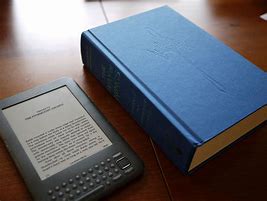
PHYSICAL BOOKS VS KINDLE

There has always been this intricate debate among readers about what is a better option – A Physical book or a Kindle. The retail shopping company, Amazon, introduced the first e-reader device into the market on November 19, 2007. This device had an escalating demand within five hours of it’s launch. It remained out of stock for a very long while due to tremendous amount of sales. This blog will attempt to illustrate whether this craze for purchase of Kindles was justified or whether physical books rule the hearts of readers till date.

PHYSICAL BOOKS
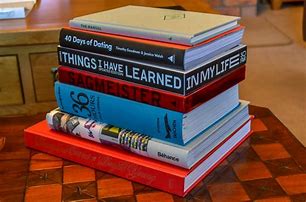
  • Charging – Physical books do not require any charging. They can be read as long as a reader wishes to read it. They do not have an internal battery which may drain out. Innumerable people can use it until it gets worn off.
  • No Network Requirement – Physical books can be read without a network connection. There is absolutely no requirement of a wifi connection or mobile data for the same. Content can be read during power cut-offs as well. During prolonged electricity cutoffs people turn to newspapers and books for recreation. Simply opening a book and reading it is what an individual needs to do.
  • Reuse – There are numerous shops in the market which offer second-hand copies. These copies can be bought by individuals at a very cheap rate. Thus, a large amount of paperback books can be read by a person, without having to pay a huge price, by purchasing used copies readily available in shops.
  • Feel and Smell – This might sound very vague to people who are not fond of reading books. Bibliophiles definitely know how heavenly is the texture and smell of a fresh book. Avid readers are really fond of holding a physical copy and reading it in a metro, at the park or while lazing on the couch. It is a different experience all together.
  • Less Safety Concern – Since, a book is less expensive than an electronic device, the chances of it being stolen are few. One need not feel anxious about forgetting a book somewhere. They will find it in the same place where they had left it as thieves generally avoid casting their eye on such commodities.

KINDLE
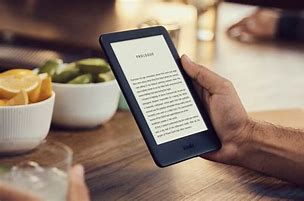
  • Portability – The Kindle is extremely portable in nature. This one device helps one to carry over a thousand e-books in his/her bag which is otherwise not possible. It is light weight, hence very easy to carry around.
  • Interpret Meanings – The Kindle has a very user friendly feature in it through which we can browse Wikipedia, Translator and Dictionaries. By simple long pressing on a word, the meaning and usage in a sentence for the word appears on the screen. There is also a Vocabulary Builder feature available, through which one can store the list of words that he has browsed for, while reading a particular content. Hence, while reading any story or novel on the Kindle one need not keep a separate dictionary alongside.
  • Light Modification – This reading device has a paper display technology. This means, it gives an experience that is very similar to reading printed ink on a paper. Through the light adjustment feature, it is feasible for anyone to read content in the dark as well. Another bonus element of this device is that, it does not put any strain on the eyes as it is glare free unlike other screen gadgets.
  • Environment Friendly – It is said that, 24 trees need to be chopped down to produce 1 tonne of paper. By using such electronic reading devices, one can contribute in lessening the amount of trees that need to be deforested to make books.
  • Easy to Decipher – In the Kindle, one can easily increase or decrease the Font size according to their convenience. Also, by adjusting the level of brightness, a reader can find it easier to read content.
  • Easy Downloads – It is quite simple to download a book from the Kindle. One need not physically visit a library or bookstore and hunt for the book or wait for it to arrive at home after placing an order. Many cost free books are available in the device if one does not wish to pay an amount to read. While, paid books are at a rate lower than that of physical books.

The debate regarding which one is a better option is a never ending one. Just as every coin has two sides, both the options i.e Books and Kindle have their own merits and demerits. This blog aimed at illustrating the pros of both the options available. A reader can choose a better option for himself/herself by weighing the pros and cons for it according to his/her practicality and convenience.


EUTHANASIA:

Euthanasia refers to deliberate action taken with the intention of ending a life, in order to relieve persistent suffering. It is performed by doctors when requested by people to put and end to illness and a lo of pain.

In most countries, euthanasia is against the law and it may carry a jail sentence. For a long time now, euthanasia ha been controversial and emotive topic.

TYPES OF EUTHANASIA:

There are different types of euthanasia

  • Voluntary euthanasia:

It is conducted with the consent of the patient. 

  • Non-Voluntary euthanasia:

It is conducted when the consent of the patient is not available.

  • Involuntary euthanasia:

It is conducted against the will of the patient.

  • Passive and active euthanasia:

Passive euthanasia entails the treatment necessary for the continuance of life. Active euthanasia entails the use of lethal substances and is more controversial.

CONTROVERSY SURROUNDING IT:

There are many arguments both for and against euthanasia.

Some believe euthanasia is murder and find it unacceptable for moral reasons. Some argue that it is legal if someone is mentally capable of making their choice.

“Death with dignity” is a movement that encourages legislatures to allow people to decide how they want to die. Some people prefer not to go through a lot of pain while dying and often it concerns on not putting burden on their loved ones which is what exactly this movement defines.

It is also concerned about the ethical complications that doctors could face. Long back doctors have taken the Hippocratic oath which implies to care for and never harm those under their care. As a result most doctors never encourage euthanasia. But even in that Hippocratic oath some argue that it ends suffering and brings no more harm and hence euthanasia is totally acceptable.

IS EUTHANASIA LEGAL?

Well there are lot of debate going about the legality of euthanasia. But according to laws, euthanasia is legal in

  • Belgium,
  • Canada,
  • Luxembourg,
  • Netherlands,
  • New Zealand,
  • Spain and
  • several states of Australia.

Whereas in INDIA passive euthanasia is legal under strict guidelines. Patients must consent through a living will, and must be either terminally ill or in a vegetative state.

There is no particular conclusion in this case as the debate is still ongoing and one cannot come to a conclusion whether euthanasia is necessary or not. It it always in the individual and it is also a matter of choice.

Period Leaves: Necessity For A Faction

Zomato, a restaurant aggregator and food delivery company, has been dominating the headlines of the tabloids since August. The reason? A landmark decision of introducing ‘period leaves’ for their women and transgender employees. On an annual basis, 10 leaves can be availed under this category. Regardless to say, this has stirred a full blown debate on and off the screens.

Though most of the people on Twitter have expressed support and elation over this progressive move, a faction of people have opposed the whole idea. The most common arguments that one will hear from the ‘against’ camp are about how women managed these with their sick/casual leaves. Or how the employers would be less inclined to include more female staff in the workforce, or consider them for an important position. Or, how there is a scope for the female employees to abuse these leaves and get an easy way out of commitments. 

Managing periods with casual leaves is a very ungrounded argument, for the labour policies vary drastically across different Indian states.  Under the Shops and Establishment Act, an employee working in Maharashtra has no sick leaves per say, and can avail a paid leave of upto 5 days for every 60 working days. On the other hand, an individual working in Assam can avail 12 sick leaves annually and has 16 earned leaves after 12 months of continuous service. This shows the glaring irregularity in the leave policies, which makes it very difficult for female employees of various regions to take menstrual leaves. Corporate sector needs to consider this, and seriously! Meanwhile, the government needs to find a ubiquitous solution too. As, this affects a significant working population of the public and private sector. The Menstruation Benefit Bill, introduced by Ninong Ering, a MP of Arunachal Pradesh in 2017, though didn’t see the light of the day, opened up the large avenue for consideration for the government. Bihar government has set an example here, by availing leaves of two days per month categorized ‘for biological reason’ since 1992.

We, as a society, have a flawed understanding about menstruation. As a result, most of the men, and sometimes women, consciously or otherwise, fail to acknowledge that menstrual conditions are far from universal. Each female experiences different kinds of pain and/or discomfort during their menstruation phase. Individuals with medical conditions endometriosis,dysmenorrhea, PCOS etc. suffer the worst brunt. Sometimes, even the travel to work elevates the pain and makes it unbearable. And trying to justify the gender bias on the basis of biological processes is a matter of regressive judgement. Now, a question might be possessed, is it constitutional? Especially when our Constitution stresses on equality. The answer is an undebated yes. Article 42 of the Constitution mandates “provision for just and humane conditions of work and maternity relief.” As a mid way solution, some companies have the provision of work from home, for those who have the desk jobs. This allows the female employees to work comfortably at their own convenience. Also, with the technological support available, attending meetings are also a possibility and in many companies, a reality. A bit of co-operation can go a long way for inclusivity of all the employees without any compromise on their health and well being. 

The naysayers made a special point regarding the field jobs, for it is more demanding and requires being in action all the time. Regarding this, journalist Barkha Dutt has argued how female employees have to work double hard in certain fields to prove their merit than their male counterparts. And the introduction of ‘period leave’ might leave them with an obvious disadvantage. While this is a valid concern and hence needs further discussion and deliberation, the moot point boils down to how this leave is an OPTION for those who are in dire need of it, and hence does not account for the blatant generalization that is being made.

At present, open conversation and sensitization about menstruation is a requirement. Because, the stigma attached with the leave prevents many women from availing it. With the taboo about menstruation in India, many women actually choose pain over the shame and embarrassment! The de-stigmatisation also creates an understanding and sense of empathy in the male counterparts. At the very least, individuals availing the leave deserve a ‘benefit of doubt’. Also, not everyone has the same pain threshold, so it is upon the females alone to decide if the pain is overbearing enough to avail the leaves. 

It is high time that menstruation is viewed just as a biological process, shedding all the social taboos attached to it. Then only, proper and inclusive discussions can be held regarding the validity of these leaves, where women from all spheres of economic development have their contribution.

Website referred:

https://paycheck.in/labour-law-india/leave-and-holidays/state-wise-leave-provision