Disrupt, Divide, and Develop – The Effects of Covid-19 on Education

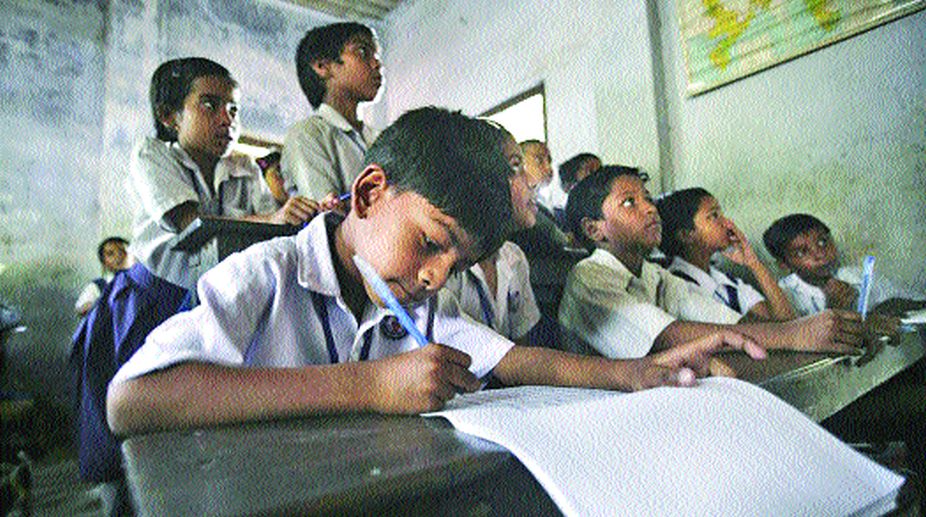
The pervasive nature of the Covid-19 pandemic has created one of the largest disruptions of education in human history, countervailing all efforts to provide education for all children. It caused unprecedented changes and continues to change numerous aspects of education that we took for granted. In March 2020, schools around India began closing to avoid the spread of Covid-19. These sudden closures led to confusion and uncertainty amongst students, especially those who were appearing for their board exams. For other students, these abrupt closures brought about a perplexing break from school. These ostensibly temporary closures were made permanent once the nationwide lockdown was effectuated and students were separated from their schools.

According to data by UNICEF and UNESCO, more than 1 billion children were at risk of falling behind due to school closures during the pandemic. Schools for more than 168 million children globally have been completely closed for almost an entire year. Around 214 million children globally, which is equivalent to 1 in 7 children, have missed more than three-quarters of their in-person learning. Furthermore, more than 888 million children worldwide continue to face disruptions to their education due to full and partial school closures. 

In India, the closure of 1.5 million schools in 2020 impacted 247 million children enrolled in elementary and secondary schools. In early March 2021, only eight States and Union Territories had reopened classes 1 to 12; 11 had reopened classes 6-12 and 15 had reopened classes 9-12. However, the ongoing second wave has caused the complete closure of schools yet again, as well as either the cancellation or postponement of board exams, competitive exams, and entrance exams. 

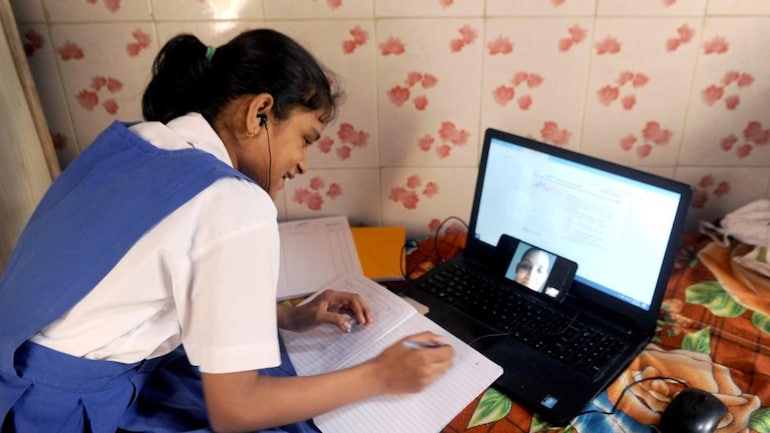
We began a new academic year like never before – from our homes. To continue the process of education, schools were compelled to adapt, adopt, and evolve. The biggest change has been the abandonment of traditional notions of schooling and the shift to online learning and teaching. Teachers have had to adapt to teaching online, a complete shift for those who’ve had many years of traditional classroom teaching experience. The fun and exciting trip to school has been diminished to clicking a link to join our classes. Interactive classes have become eerily similar to videos on our laptop or phone screen with a tincture of interaction arising when teachers ask us whether we’re present. The extreme sport of completing notes just before the teacher calls out our names has become the tedious process of scanning our notes and sending them as a pdf. Eating with our friends in the school canteen has been replaced with us eating alone during classes. Our classmates have become little rectangles on our screens. Outdoor sports have disappeared from the list of extracurriculars that we did in school. The end of school or college life is marked by video calls instead of grand graduation ceremonies. A lot has changed. 

These changes have led to some pernicious problems. The blurring of lines between school and home has led to students feeling overworked. This holds true for teachers too as they answer questions, clear doubts, and create lesson plans at all hours of the day. Students often have to study and sleep in the same rooms now. According to scientific studies, this often leads to a decrease in productivity and concentration. Students, especially younger ones, are easily distracted during online classes, despite attempts to marshal concentration and focus, as a classroom atmosphere is non-existent. Teachers are unable to pick up cues such as body language and facial expressions, making it challenging to connect with and understand their students. Problems such as eye strain and headaches are more common now due to the drastic and unavoidable increase in screen time for students. Online classes are often disrupted by copious internet problems, power cuts, background noise, and vexing software problems. All forms of practical education have been eliminated. A lack of clarity on important events such as board exam and entrance exam dates has led to the upheaval of students’ plans that were formulated before the pandemic began, fueling a rise in students’ anxiety and uncertainty.  

Covid-19 has also been a catalyst to the widening of socio-economic gaps in society on numerous fronts. While the virus cossets no one, the fact that it has disproportionately affected students belonging to less affluent households, especially those in rural India, is indubitable. Undoubtedly, access to the internet and an appropriate device are the lifelines of online education. 

A UNICEF report from August 2020 highlighted that only 24% of Indian households have access to the internet. While television and radio were purported as an alternative, there is no substitute for an actual teacher. A more recent survey conducted by Learning Spiral in February 2021 revealed that more than 50% of Indian students in rural and urban areas don’t have access to the internet. Moreover, only 47% of the households that have access to the internet own a device that can access the internet. It also revealed that, while 27% of all Indian households have access to the internet, only 28% of those are in rural India, even though rural India comprises of nearly 71% of India’s households.

Families in rural India are plagued with other impediments to online education –  insufficient or no smartphones, having to borrow smartphones (and therefore may not get them at the time needed), not having enough money to buy an appropriate internet package, and patchy connectivity even if they have internet access. The severity of these problems is incalculable and more prevalent than in urban households.   

Assuming that the problems stop here would be specious. The closure of schools has obstructed the “Mid Day Meal Scheme”. India has about 120 million children enrolled in the scheme in over 1.26 million schools across the country. However, due to the disruptions caused by Covid-19, many States and Union Territories have been forced to stop this initiative, depriving children of their basic nutritional needs. This scheme also serves as a huge incentive for children to attend school. Therefore, its removal may negatively impact both their health and their education. Furthermore, incidents of domestic abuse and child labour have drastically increased as students can no longer be protected by going to school. 

The Covid-19 pandemic has been atrocious but there has been a silver lining. The pandemic has led to an “academic revolution” that, unfortunately worsened certain differences in our society, but has also alleviated certain differences. 

Even before Covid-19, there was high growth in and adoption of education technology. Projections have shown that the overall market for online education may be valued at $350 Billion by 2025. There has been a significant surge in the usage of language apps, virtual tutoring, video conferencing tools, online learning software, etc. This is not only providing alternative paths for education but it is also future-proofing education. Through programs such as Coursera and edX, students can attend classes that they normally wouldn’t have had access to. India is considered the largest marketplace for Massive Open Online Courses (MOOCs) after the USA.

In certain aspects, online learning has made school more inclusive and obviated numerous hindrances to education. The use of videos in class greatly benefits visual learners. The use of tools such as online polling and chats have improved the class participation of those who otherwise may have hesitated to speak up. Notes, videos, and other study material that are sent to students can be reviewed anytime so the pressure on students to complete their work “before the bell” has been reduced. Furthermore, differently-abled students who found it difficult to attend school in-person can now attend classes with their friends from their homes. 

As students are attending classes from their homes, commuting to school no longer blocks their schedules. This gives them more time for extracurriculars such as internships, online courses, and online competitions. It also allows them more time to do the things they enjoy such as singing, cooking, writing, and painting. Students are also honing their online collaborative skills and improving their digital literacy, this will immensely benefit them in the future as the entire world shifts online.    

Hopefully, the move to online learning creates a new, permanent, and more effective method of educating students. While this “new normal” has had certain benefits, we must remember the value of education for all and prudentially strive to shrink the divide caused by this unavoidable transition to online learning.     
How Archives transformed in the Digital era

The Word archive is derived from the Greek word ‘Arkheion’. The word was further referred from ‘Archon’, which meant a magistrate who oversaw the town hall where all the official public documents were stored. The Word Archive came to use for the first time in the 17th century.

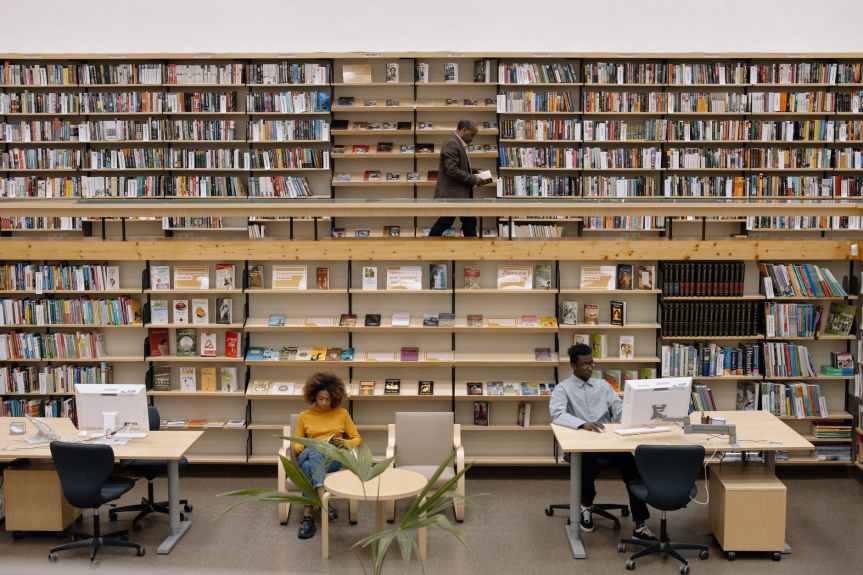
Archives are also known as ‘memory institutions’ because they record and preserve memories and form a significant part of culture, community, official and unofficial history of any place or region or state, or any institution. Their function is to collect, store and preserve artefacts and documents of historical, cultural, and legal importance from the yesteryears and the present so that they remain accessible, informative, and useful to future generations. In general, any organization, government institution or individual can build archives. The National Archives, UK has described archives as “collections of records or documents, selected for lasting preservation due to their historical value, significance as evidence, or as a source for research studies”. International Council on Archives (ICA) has defined archives as “documentary result of various human activities conserved for its long-term value”. They further described archives as contemporary accounts created to can provide a true and verified version of past events.

The significance of the archives lies in the orderly collection of crucial source documents accumulated over an individual’s or organizations’ lifespan and preserved, which can serve as evidence or reference for future work. As archives are the repositories housing various historical documents and records of value, archival research is facilitative for scholars and researchers looking for data to assess and facts to study from the original documents. However, owing to the vastness and diversity of ample archival documents and records, archival analysis is a hectic and tedious job. Access to the artefacts and documents stored in an archive is not an easy task and requires permission from the respected authority. In addition, most of the information stored in traditional achieves is paper-based and thus, is susceptible to decay with time. The aforementioned limitation of traditional archives can be overcome by archiving documents and artefacts in various digital formats, which can ensure that the information is preserved for a substantially longer period.

With the advent of newer digital technologies, it became easier and more convenient to store and preserve the information in the digital space. With the assistance of new digital tools and methods, the process of transcending information from the physical world to the digital world became much efficient and easier. 

Digital archiving is an area where the relationship between digital tools/methods and information preservation can be witnessed. It is a blend of the former and current storage of information. Their function is similar to traditional archives, as repositories of elaborated collection of information in various digital formats at a virtual location. This also makes digital archives more accessible and democratic as the physical constraints are eliminated.

Advantages of Digital Archives:

  • The the digital archive allows “anywhere-anytime” accessibility to users ensuring a reduction of time, cost, and money.
  • The redundancy of information stored in digital archives can be reduced, which can promote ease of access.
  • No geographical site is required to build a digital archive, which is cost-effective.
  • The simultaneous requests of access from multiple users can be addressed by creating multiple copies of information stored, which can overcome the issue of bottlenecks encountered in traditional archives.
  • Managing and navigating objects or records stored digitally are easier in digital archives, which allow developing capacity to preserves terabytes of information.
  • Digital archives are less subjected to bureaucracy like traditional archives, which can ensure data accessibility to the general public.

Digital archives are not perfect. Many times due to the digital divide and other constraints, researchers are not able to access the information. Sometimes the information challenges the authority and due to this, the information can be unavailable in the digital archives because of censorship. But there is no denying that digital archives have transformed the way information is stored and processed.  

References:

Impact of Covid-19 on Digital Education In India

“Education is the strongest weapon that can be used to change the world.”

– Nelson Mandela

As rightly said by Mr. Mandela ,education gives us knowledge which in turn gives us wisdom which teaches us to differentiate between good and bad. Education is not only needed to have a good economic strata but also to have a righteous sense of living . It gives us the power to stand for ourselves when we are being wronged.

The global pandemic which we are facing today has imposed many restrictions on us and in order to keep ourselves safe we are supposed to maintain social distancing as a result of which all the places which wholeheartedly invited the crowd before, are closed down now, the educational institutes being one among them. Read this blog further to know how covid-19 has affected education in the country like ours where during pre pandemic times also many loopholes were present.

The Indian Education system

Around 60% of the total Indian population is considered to be in poverty that is they barely manage a hand to mouth existence . In this case education is definitely a luxury to them . The Constitution of India has declared an individual’s Right to Education as a fundamental right under which children between 6 to 14 years of age are eligible to get free education in government schools across the country. Also, according to section 12(1)(c) of the Right to Education Act of 2009, all the private schools in the country are supposed to reserve 25% seats for the children belonging to the EWS Category(Economically Weaker Section).

Now, Private schools in India also falls in two categories: one is the category belonging to the government recognized schools which charges fair amount of fees and claims to provide quality education. They are affordable by the middle class families and the families falling about them in the economic strata. Second category belongs to the schools which are not recognized by government, charge decent fees and are affordable by the lower middle class families who has a option of government schools but don’t want their child going there due to the below mentioned reasons.

Now coming upon the schools funded by the government, these schools are generally in the limelight for their poor infrastructure, absentee teachers, low student ratio(**this was the case before the commencement of the pandemic). In the pandemic times, the government schools which are well equipped like the ones in Delhi, witnessed only 25 to 30% attendance. The condition of rest of the government funded schools which were just for the namesake can be imagined.

With people adapting to “new normal” in these pandemic times, the world has turned digital and so has the education system. Gone are the times where children would wake up early in the morning, go through their own struggles of going to school to study in the TRADITIONAL WAY OF LEARNING where teachers would come and address a section of class. This “new normal” is the time for ONLINE CLASSES where what matters the most in just learning as to not face a complete loss and at least take out the best in these times . The education in the “new normal” has lost its essence, punctuality , discipline and integrity.

Covid-19 and Indian Education

With the commencement of the pandemic around 1.5 million schools have been closed affecting almost 286 million children in one way or the other from primary to the secondary levels. According to a report released by UNICEF, “The pandemic has affected over 90% of the total student population of the world”. In India itself, the main problem is that not every area has been digitalized yet and in the digitalized areas also not everyone has access to required number of devices and good internet connectivity. Only 24% of the total houses in India have access to internet whereas in rural areas these numbers have dropped upto 4%. Further a survey conducted by the Niti Aayog in 2018 reported that around 55000 villages have no mobile network coverage let alone the internet connectivity and around 35 % schools operate without electricity. In these circumstances, many students have been forced to dropout of the schools which is a destruction of India’s bright future and talent.

Steps taken to solve the digitalization issue

  • The introduction of the BHARATNET project which ensure the broadband connectivity to over 2,50,000 gram panchayats through optic fiber technology which will enhance the network quality .
  • Many Government schools have started training teachers on how to teach through net which is important for the successful accomplishment of the project which involves ensuring that no child looses his/her right to education even in these pandemic times.
  • Many crowd funding platforms have been launched by the government and individuals which aims on providing devices and enhancing infrastructure to enable online classes. The Government of Maharashtra through one such platform has managed to generate rupees 216 crores which will be further used towards the cause. Also, in Kerala 4 tenth standard students have managed to generate rupees four lakhs through one such platform which they will use to buy devices for the students who are not able to afford.

WE CAN JUST HOPE THAT THE COMING TIME WILL NOT BE A DOOM AND WE WILL GET SOME IMPROVEMENTS .

Digitalization: Where will we head?

Digitalization is the process of converting information in the form of text, audio, video, or any combination of all three or more into digital format. The omnipresence of computers in our daily lives had its roots in the introduction of computers in Indian workspaces in the 1990s. Since then the proliferation has increased manifold and digitalization has become an integral part of lives. Indian IT exports have been one of the major contributing factors to our GDP and this will not slow any time soon.

Digitalization has certainly made out lives much more comfortable and easier than it was a couple of decades ago. Since 2015 Indian government focused on increasing digital proliferation to even more areas. With the initiatives like digital India, numerous services have been transferred into digital platforms. This is evident with some major examples like the Driving license and Learners license services which have been fully transferred to an online platform and all the paperwork can be completed without visiting the RTO. The candidates have to select their slot and attempt the test of the stipulated date. This is reduced middlemen corruption and made the process of obtaining a driver’s license much more seamless. After the advent of the Covid pandemic, there has been an unprecedented growth in digital platforms. People who were wary or unsure of digital platforms were forced to learn and adapt due to the unavailability of non-digitalized services due to restrictions. Schools have adapted to the age of online classes. The consumption of online coaching platforms has increased. Businesses are developing infrastructure to support their digital services. Small business owners are jumping on online platforms to reach a wider range of potential clients.

But there are still many discrepancies with digital proliferation. This growth and reach of digital are not equally distributed. India still faces many problems due to its weak infrastructure and limited internet connectivity. This phenomenon which is also called ‘Digital Divide’ has to be addressed quickly. Because many rural areas don’t have the facility of good internet connectivity and many rural communities have not been able to avail many benefits of this digital revolution. Government schools in rural areas have been affected the most during the pandemic as the schools there don’t have adequate funding to facilitate online classes. Many teachers are untrained to use digital tools and many students don’t have laptops or smartphones to really take advantage of online classes. But this problem is not just limited to rural and undeveloped areas and many people whom we call urban poor also face similar problems.

Government initiatives are commendable but there needs to be more focus on the equal distribution of these digital services. There has to be a greater emphasis on how the services can be availed by the weaker economic section of the society otherwise it will only exacerbate the issue of the digital divide that we are facing right now. Despite having the second biggest internet user base second to China, only half of our population has an active internet connection.  A new policy needs to be implemented at a national level so that digital services can be availed equitably by every citizen of India.