
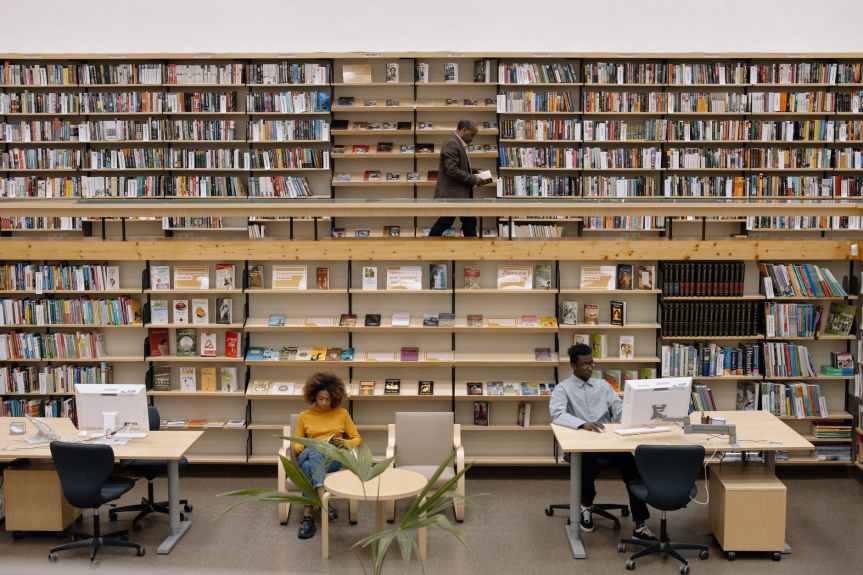
How Archives transformed in the Digital era

The Word archive is derived from the Greek word ‘Arkheion’. The word was further referred from ‘Archon’, which meant a magistrate who oversaw the town hall where all the official public documents were stored. The Word Archive came to use for the first time in the 17th century.

Archives are also known as ‘memory institutions’ because they record and preserve memories and form a significant part of culture, community, official and unofficial history of any place or region or state, or any institution. Their function is to collect, store and preserve artefacts and documents of historical, cultural, and legal importance from the yesteryears and the present so that they remain accessible, informative, and useful to future generations. In general, any organization, government institution or individual can build archives. The National Archives, UK has described archives as “collections of records or documents, selected for lasting preservation due to their historical value, significance as evidence, or as a source for research studies”. International Council on Archives (ICA) has defined archives as “documentary result of various human activities conserved for its long-term value”. They further described archives as contemporary accounts created to can provide a true and verified version of past events.

The significance of the archives lies in the orderly collection of crucial source documents accumulated over an individual’s or organizations’ lifespan and preserved, which can serve as evidence or reference for future work. As archives are the repositories housing various historical documents and records of value, archival research is facilitative for scholars and researchers looking for data to assess and facts to study from the original documents. However, owing to the vastness and diversity of ample archival documents and records, archival analysis is a hectic and tedious job. Access to the artefacts and documents stored in an archive is not an easy task and requires permission from the respected authority. In addition, most of the information stored in traditional achieves is paper-based and thus, is susceptible to decay with time. The aforementioned limitation of traditional archives can be overcome by archiving documents and artefacts in various digital formats, which can ensure that the information is preserved for a substantially longer period.

With the advent of newer digital technologies, it became easier and more convenient to store and preserve the information in the digital space. With the assistance of new digital tools and methods, the process of transcending information from the physical world to the digital world became much efficient and easier. 

Digital archiving is an area where the relationship between digital tools/methods and information preservation can be witnessed. It is a blend of the former and current storage of information. Their function is similar to traditional archives, as repositories of elaborated collection of information in various digital formats at a virtual location. This also makes digital archives more accessible and democratic as the physical constraints are eliminated.

Advantages of Digital Archives:

  • The the digital archive allows “anywhere-anytime” accessibility to users ensuring a reduction of time, cost, and money.
  • The redundancy of information stored in digital archives can be reduced, which can promote ease of access.
  • No geographical site is required to build a digital archive, which is cost-effective.
  • The simultaneous requests of access from multiple users can be addressed by creating multiple copies of information stored, which can overcome the issue of bottlenecks encountered in traditional archives.
  • Managing and navigating objects or records stored digitally are easier in digital archives, which allow developing capacity to preserves terabytes of information.
  • Digital archives are less subjected to bureaucracy like traditional archives, which can ensure data accessibility to the general public.

Digital archives are not perfect. Many times due to the digital divide and other constraints, researchers are not able to access the information. Sometimes the information challenges the authority and due to this, the information can be unavailable in the digital archives because of censorship. But there is no denying that digital archives have transformed the way information is stored and processed.  

References:

Digitalization: Where will we head?

Digitalization is the process of converting information in the form of text, audio, video, or any combination of all three or more into digital format. The omnipresence of computers in our daily lives had its roots in the introduction of computers in Indian workspaces in the 1990s. Since then the proliferation has increased manifold and digitalization has become an integral part of lives. Indian IT exports have been one of the major contributing factors to our GDP and this will not slow any time soon.

Digitalization has certainly made out lives much more comfortable and easier than it was a couple of decades ago. Since 2015 Indian government focused on increasing digital proliferation to even more areas. With the initiatives like digital India, numerous services have been transferred into digital platforms. This is evident with some major examples like the Driving license and Learners license services which have been fully transferred to an online platform and all the paperwork can be completed without visiting the RTO. The candidates have to select their slot and attempt the test of the stipulated date. This is reduced middlemen corruption and made the process of obtaining a driver’s license much more seamless. After the advent of the Covid pandemic, there has been an unprecedented growth in digital platforms. People who were wary or unsure of digital platforms were forced to learn and adapt due to the unavailability of non-digitalized services due to restrictions. Schools have adapted to the age of online classes. The consumption of online coaching platforms has increased. Businesses are developing infrastructure to support their digital services. Small business owners are jumping on online platforms to reach a wider range of potential clients.

But there are still many discrepancies with digital proliferation. This growth and reach of digital are not equally distributed. India still faces many problems due to its weak infrastructure and limited internet connectivity. This phenomenon which is also called ‘Digital Divide’ has to be addressed quickly. Because many rural areas don’t have the facility of good internet connectivity and many rural communities have not been able to avail many benefits of this digital revolution. Government schools in rural areas have been affected the most during the pandemic as the schools there don’t have adequate funding to facilitate online classes. Many teachers are untrained to use digital tools and many students don’t have laptops or smartphones to really take advantage of online classes. But this problem is not just limited to rural and undeveloped areas and many people whom we call urban poor also face similar problems.

Government initiatives are commendable but there needs to be more focus on the equal distribution of these digital services. There has to be a greater emphasis on how the services can be availed by the weaker economic section of the society otherwise it will only exacerbate the issue of the digital divide that we are facing right now. Despite having the second biggest internet user base second to China, only half of our population has an active internet connection.  A new policy needs to be implemented at a national level so that digital services can be availed equitably by every citizen of India. 

Digitalization and Cybercrime

By- Rhythm

In this digital world when crime gets digitalized nothing worse can happen. A famouse case of “Nth room” was exposed in South korea recently. Nth room case is a digital sexual crime case that occurred on the application ‘Telegrame’ from 2018-2020.

cyber security

The ‘Nth Room’ refers to the name of the Telegram chat rooms where the videos of these women were circulated. Reports reveal that as many as 200,000 people were participants in these chat rooms with more than 70 women being the victim including minors.

Reportedly, one of the suspects, Cho Jo Bin also known as “Doctor or Baksa (baksa- doctor in Korean) would lure young women with offers of part-time jobs or modeling offers and then blackmail them with their personal information to create sexually explicit videos of themselves.

Many male idols, actors, politicians, businessman are said to be member of these chat rooms. The ‘Baksa’ aka Cho Jo Bin has been arrested by the Seoul Metropolitan Police Agency on 20th march 2020.

The Seoul police have been probing the Nth Room case since September 2019. So far, the cops have got 15,000 names of people who used the Nth Room chatrooms. But police said that many people shared one chatroom, so the number of users could be higher.

More 2 million people signed the petition to reveal the identity of ‘Baksa’ ( his identity has been revealed now) and now more than a million people are signing the petition to reveal all the members of these chatrooms.