

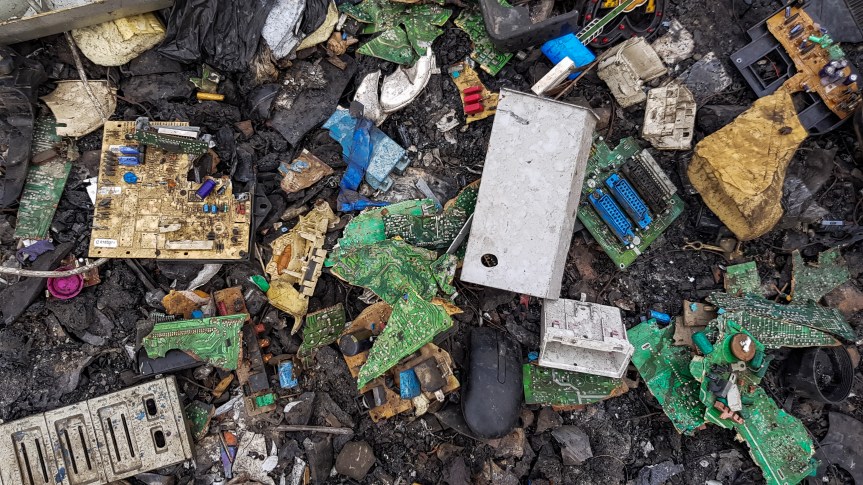
E-waste is an informal name used for electronic waste implying all those electronic products which have reached the end of their useful life, for example, mobile phones, dryer, fax machine and other electronic equipments.
A techno hungry world is emerging facilitated by digital empowerment policies by various governments and is all ready to get upgraded to a generation of 5G and thus due to the emergence of newer electronic products in the market and the improved standard of living, the usage of these electronic products have shot up and so the amount of electronic waste produced every day is growing enormously. According to UN report on environment,2019, the amount of e-waste generated at the world level is about 50 million tonnes but only 20 percent of it is properly recycled.
A joint report has been in 2019 published by World Economic Forum and the World Business Council for Sustainable Development which attracts attention for the need of crucial vision in this field. As per the data released in the new Global E-Waste Report, the market value of our spent devices amounts to $62.5 billion, three times more than the annual output of the world’s silver mines. It also informed that more than 120 countries have an annual GDP lower than the value of our growing pile of global e-waste.
India has become one of the largest dumping sites of e-waste by many countries and the domestic production itself accounts for about 2 million tonnes per annum but merely 5 percent of the wastes is recycled.
According to a report published in Times of India, 2019, over 95 percent of e-waste generated is managed by unorganized sector and the scrap dealers in the market, dismantle the disposed products instead of recycling it. The current rate of e-waste generated in India is 4.56 times greater than the annual e-waste processing capacity offered by the nation, which leads to illegal and improper dumping of hazardous waste.
The proper collection, disposal and recycling(management) of e-waste is necessary, for it possess a serious threat to our health. A long exposure to the chemicals, pollutants emitted after dumping the e-waste without following the proper procedures leads to damage of nervous system, skin diseases, heart and liver damage and many other health problems. It also contaminates our natural surroundings, damages the soil quality and also pollutes the water quality.
If plastic pollution in the life below water and life above water is one of the major environmental challenges, the ebb and flow of public opinion should also turn towards to the huge generation of electronic waste in the present era. The numbers are fearsome: 50 million tonnes of e-waste are produced each year, and left unchecked this could more than double to 120 million tonnes by 2050.
In our country, the amount of E-waste generated is increasingly rapidly and with increasing fascination as well as dependence on new technology, the amount of e-waste is expected to grow in the coming years. The main area where our country lacks is in the proper management of electronic wastes. There is no large-scale organised E-waste recycling sector in our country and the largest recycling hotspot are in the unorganised sector and some are illegal too as the largest recycling hotspot of the capital city is in Seemapuri. It is not a hidden truth anymore that working conditions in the unorganised sector is not bed of roses. The poor conditions of the worker as well as the hazardous nature of the wastes that they deal with will always pose a fatal threat to their life. Moreover, the large scale dumping of electronic wastes from developed countries to India owing to availability of abundance of cheap labour and flexible environmental laws further enhances the problem.
The lack of public awareness about the proper disposal of e-waste and lack of proper implementation of laws adds to the problem. There are very few IT companies that actually seriously implement the provision of Extended Producer Responsibility. In most cases electronic wastes remain unattended in the households. As already seen above that due to lack of awareness, people throw waste electronics and electrical equipment with their household wastes. There is a tendency among the people not to care about the things that they have discarded, ignoring the fact that its implication in the long run is going to affect them too.
The laws should be properly implemented; government should try to reach the nook and corner of the country and spread awareness through the provision of Digital world and many more: Let’s bring into use 5Rs: Refuse, Reduce, Reuse, Repurpose, Recycle. People in their locality as a community need to take steps for keeping their locality clean. As a community they should establish a committee that would oversee the management of all the wastes. There should be educational programme in different localities with the government aid about waste segregation, their harmful impact and how it can be mitigated. But all this would be possible when we as an individual come forward and work together. We need to start the reform from our home, then our locality, then our region, then our country and the world as a whole. The role of youth in this regard is very important. Being one of the most enthusiastic section of society, they carry within themselves a huge reservoir of untapped energy. With proper direction, they can be play major role in spreading awareness as well as in taking initiatives for proper management of electronic or any kind of wastes.
We need to understand that our earth as a whole is on the verge of collapsing, so we can’t let different kinds of waste piling up. Our attention should turn towards such grave issues instead of fighting over petty issues and work together towards adopting a sustainable lifestyle so as to save a future for ourselves and others too. Let’s not make the word ‘sustainable’ a cliché term and should try and have a sustainable approach towards everything.
REFERENCES:
- Bishnoi, V. N., & Shah, T. (2014), E-Waste: A New Environmental Challenge. International Journal of Advanced Research in Computer Science and Software Engineering, 4(2), pp. 442-447.
- Down to Earth (2019), Recycling of e-waste in India and its potential.
- Jadhav, S. (2013), Electronic Waste: A Growing Concern in Today’s Environment Sustainability. International Journal of Social Science & Interdisciplinary Research, 2(2), pp. 139-147.
- Sikdar, M., Dr., & Vaniya, S. (2014), The New Millennium and Emerging Concerns. International Journal of Scientific and research Publications, 4(2), pp. 1-12.
- Sivaramanam, S. (2013), E-Waste Management, Disposal and its impacts on the environment. Universal Journal of Environmental Research and Technology, 3(5), pp. 531-537.
- Uddin, M. J. (2012), Journal and Conference Paper On (Environment) E-Waste Management. IOSR Journal of Mechanical and Civil Engineering, 2(1), pp. 25-45.
- UNEP (2010), A Report – recycling- from E-waste to resources. February 22, 2010.
- World Economic Forum (2019), The world’s e-waste is a huge problem. It’s also a golden opportunity.
Image Credit: Google

 Eduindex
You must be logged in to post a comment.