Earthquake Simplified

What is an Earthquake?

Earthquake occurs when two blocks of Earth suddenly slip over each other. The surface where slips occurs is called fault or fault plane. The location at which earthquake starts below the earth surface is called as Focus, and the location exactly above it of earth’s surface is called as Epicenter.


source: worldatlas.com

Why and where it occurs?

The earth is divided into three major layers they are as follows:

  • Crust :- Thickness of this layer ranges from 5 to 70 km. It is 1% of the whole earth.

  • Mantle :- The thickness of Mantle is 2900 km. It is 84% volume of earth.

  • Core :- It is 15% volume of earth. It is further divided into two parts as follows:

    a) Outer Core

    b) Inner Core

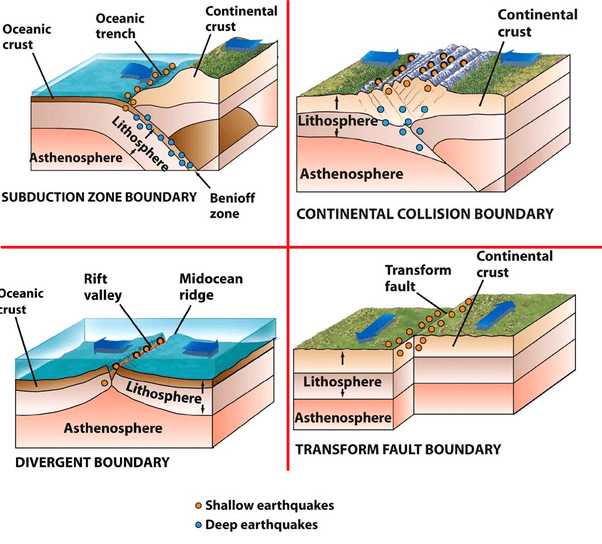
The crust and upper layer of mantle is divided into tectonics plate, and the edge of plate is called as plate boundaries. The plate boundaries consists of faults and most of the time earthquake occurs on these faults. The edges of plates are rough so they stick to each other. Even edges are stuck, the remaining part of plate keeps moving. When the plate has reached far enough at that time edges cannot hold each other and they unstick and move. Due to this Earthquake occurs.

Types of Earthquake Waves

Earthquake wave are of majorly three types. They are as follows:

  1. P wave or Longitudinal waves :- It is similar to sound wave. It can travel through solid, liquid and gases state.

  2. S wave or Transverse wave :- It can travel only through solid.

  3. L wave or Surface wave :- When body wave i.e. P and S wave, when interacts with surface of earth it is called Surface wave.

Effects of Earthquake

Earthquake has many effects and it can also lead to another diaster which can be caused due to earthquake as root cause

  • On ground :- Fissures settlements, Landslides, Liquefication, earth pressure and many more.

  • On manmade structures :- Cracking, Collapse of building, Buckling and many more.

  • On water :- Tsunami, Waves Hydro-Dynamic Pressure, etc.

Measurement of Earthquake

Siesmograph is used to measure earthquake.

Richter scale :- It is used to measure magnitude of earthquake and it ranges from 0-10.

Mercalli scale :- It is used to measure intensity of earthquake and it ranges from 1-12.

Why earthquake is a matter of concern to world?

Earthquakes occur suddenly at a place and it spreads to nearby places so very less time is provided to people to respond to it. The damage depends on severity of earthquake. It causes much damage to environment. Many lives of human, animals, birds and other living beings of an area are lost where earthquake occured with severity and less damage occurs where it occured with less severity. There are much loss causedfinancially to a country such as building collapse, cracks or hole in roads. The place where earthquake occurs resident people have to deal with so much of physical and mental pain and pressure. So earthquake is one of the dangerous natural disaster.

p { margin-bottom: 0.25cm; line-height: 115% }
Earthquake

An earthquake is a natural disaster whose arrival cannot be announced in advance. Earthquakes are more frequent in mountainous areas. Earthquake has many causes such as volcanic eruption due to excess heat. Sliding rocks under the earth. Collide or move existing plates under the earth. Earth quakes when an earthquake strikes, due to which houses, trees, plants etc. fall and millions of humans and animal birds die under them. Whenever an earthquake comes, there is a lot of destruction.

Earthquake also comes due to the burden on the earth and when it comes, the biggest danger is the collapse of high buildings. In the event of an earthquake, all people should go out of the house to the open ground. An earthquake cannot be predicted, but many preparations can be made to avoid it. For this people are advised to stay in wooden houses. They must keep a mobile phone and flashlight with them. It is not possible for humans to stop earthquakes but tree plants protect us from earthquakes. So to prevent disaster like earthquake, we should plant more and more trees.

Simply speaking, Earthquake means the shaking of the Earth’s surface. It is a sudden trembling of the surface of the Earth. Earthquakes certainly are a terrible natural disaster. Furthermore, Earthquakes can cause huge damage to life and property. Some Earthquakes are weak in nature and probably go unnoticed. In contrast, some Earthquakes are major and violent. The major Earthquakes are almost always devastating in nature. Most noteworthy, the occurrence of an Earthquake is quite unpredictable. This is what makes them so dangerous.

Types of Earthquake

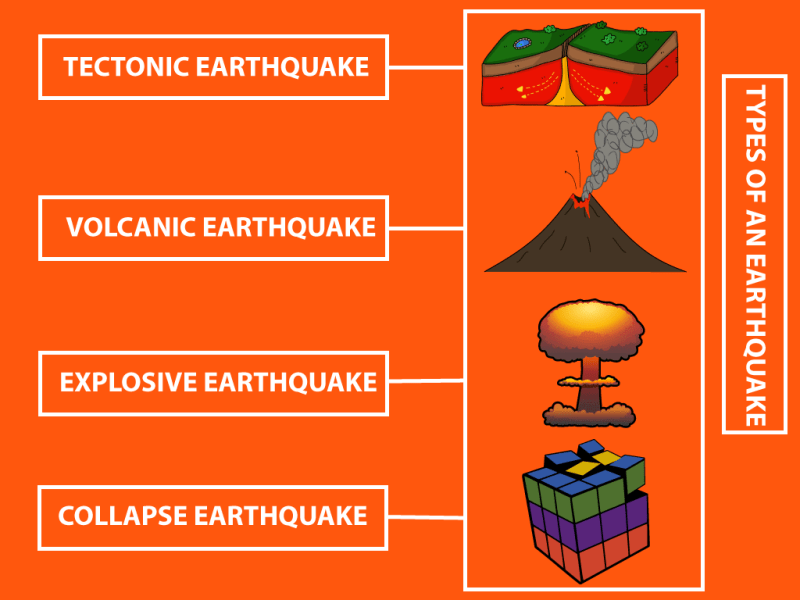
Tectonic Earthquake: The Earth’s crust comprises of the slab of rocks of uneven shapes. These slab of rocks are tectonic plates. Furthermore, there is energy stored here. This energy causes tectonic plates to push away from each other or towards each other. As time passes, the energy and movement build up pressure between two plates.

Therefore, this enormous pressure causes the fault line to form. Also, the center point of this disturbance is the focus of the Earthquake. Consequently, waves of energy travel from focus to the surface. This results in shaking of the surface.

Volcanic Earthquake: This Earthquake is related to volcanic activity. Above all, the magnitude of such Earthquakes is weak. These Earthquakes are of two types. The first type is Volcano-tectonic earthquake. Here tremors occur due to injection or withdrawal of Magma. In contrast, the second type is Long-period earthquake. Here Earthquake occurs due to the pressure changes among the Earth’s layers.

Collapse Earthquake: These Earthquakes occur in the caverns and mines. Furthermore, these Earthquakes are of weak magnitude. Undergrounds blasts are probably the cause of collapsing of mines. Above all, this collapsing of mines causes seismic waves. Consequently, these seismic waves cause an Earthquake.

Explosive Earthquake: These Earthquakes almost always occur due to the testing of nuclear weapons. When a nuclear weapon detonates, a big blast occurs. This results in the release of a huge amount of energy. This probably results in Earthquakes.

Effects of Earthquakes

First of all, the shaking of the ground is the most notable effect of the Earthquake. Furthermore, ground rupture also occurs along with shaking. This results in severe damage to infrastructure facilities. The severity of the Earthquake depends upon the magnitude and distance from the epicenter. Also, the local geographical conditions play a role in determining the severity. Ground rupture refers to the visible breaking of the Earth’s surface.

Another significant effect of Earthquake is landslides. Landslides occur due to slope instability. This slope instability happens because of Earthquake.

Earthquakes can cause soil liquefaction. This happens when water-saturated granular material loses its strength. Therefore, it transforms from solid to a liquid. Consequently, rigid structures sink into the liquefied deposits.

Earthquakes can result in fires. This happens because Earthquake damages the electric power and gas lines. Above all, it becomes extremely difficult to stop a fire once it begins.

Earthquakes can also create the infamous Tsunamis. Tsunamis are long-wavelength sea waves. These sea waves are caused by the sudden or abrupt movement of large volumes of water. This is because of an Earthquake in the ocean. Above all, Tsunamis can travel at a speed of 600-800 kilometers per hour. These tsunamis can cause massive destruction when they hit the sea coast.

In conclusion, an Earthquake is a great and terrifying phenomenon of Earth. It shows the frailty of humans against nature. It is a tremendous occurrence that certainly shocks everyone. Above all, Earthquake lasts only for a few seconds but can cause unimaginable damage.

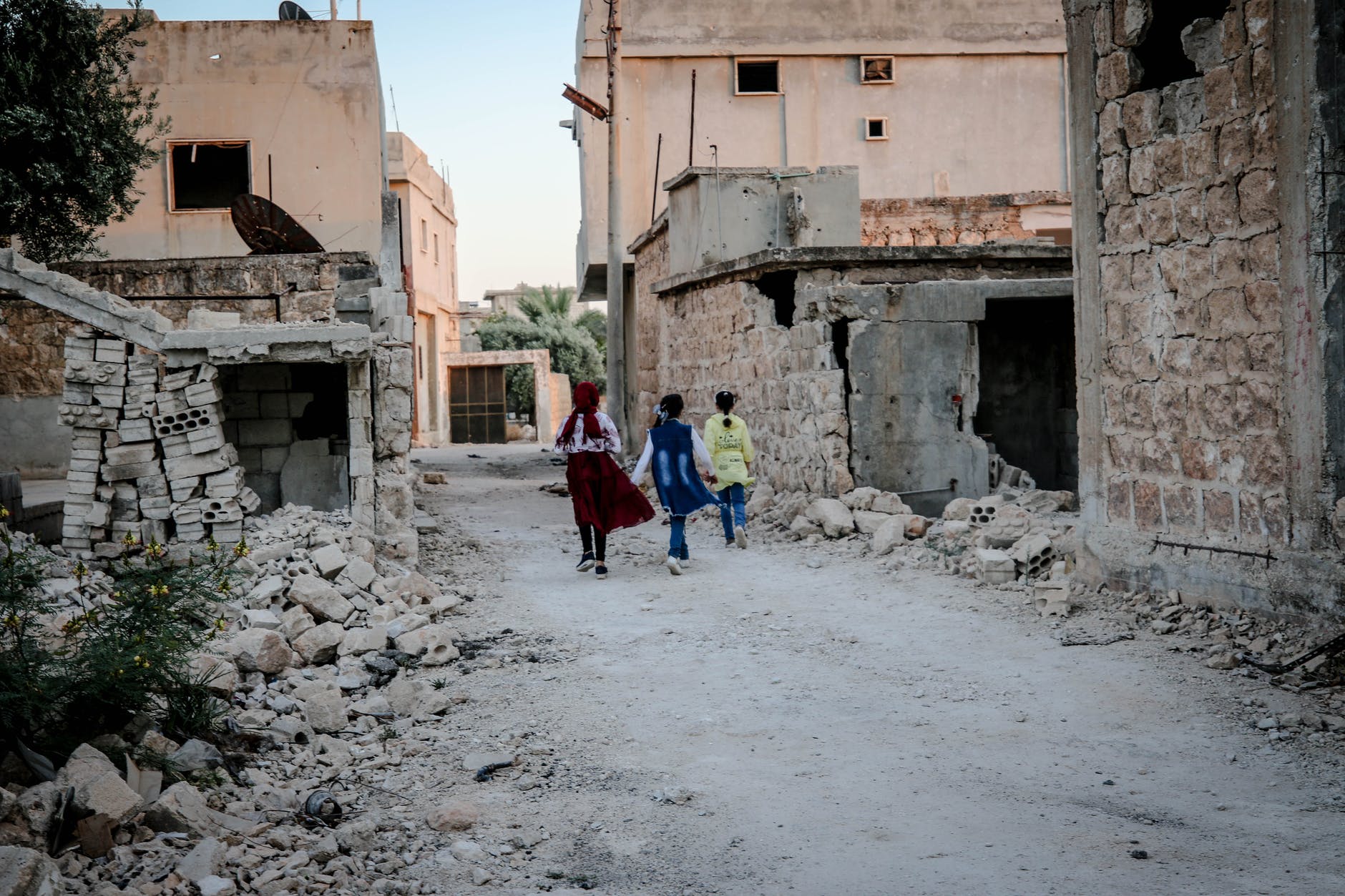
Photo by Ahmed akacha on Pexels.com

Earthquakes

Earthquake, any sudden shaking of the ground caused by the passage of seismic waves through Earths’s rocks. Seismic waves are produce when some form of energy stored in Earth’s crust is suddenly released, usually when masses of rock straining against one another suddenly fracture and “slip.” Earthquakes occur most often along geologic faults, narrow zones where rock masses move in relation to one another

  • tectonic earthquake is one that occurs when the earth’s crust breaks due to geological forces on rocks and adjoining plates that cause physical and chemical changes.
  • volcanic earthquake is any earthquake that results from tectonic forces which occur in conjunction with volcanic activity.
  • collapse earthquake are small earthquakes in underground caverns and mines that are caused by seismic waves produced from the explosion of rock on the surface.
  • An explosion earthquake is an earthquake that is the result of the detonation of a nuclear and/or chemical device.

Seismic waves is of three types-primary waves,secondary waves and surface wave.

Of the body waves, the primary waves has the higher speed of propagation and so reaches a seismic recording station faster than the secondary, or S, wave. P waves, also called compressional or longitudinal waves, give the transmitting medium whether liquid, solid, or gas a back-and-forth motion in the direction of the path of propagation, thus stretching or compressing the medium as the wave passes any one point in a manner similar to that of sound waves in air.

P waves can travel in all three medius.S waves can only travel in solid medium.

Two common surface waves are Love waves (L wave) and Rayleigh waves (R wave). The L-waves are the slowest among the earthquake waves and are recorded last on the seismograph.
Of the four seismic waves, most of the shaking and damage from an earthquake is due to the Rayleigh
wave (R-wave).

Earthquakes can occur due to human activity or natural reason like volcano,tsunami etc.

Natural calamities in india

Natural Calamities are events that take place due to either natural activity or human-made activity. It leaves long-lasting effects on human lives and properties. It is increasing day by day all over the world. It is because of the misuse of environmental resources by humans. India suffers due to its vulnerable geographical location. Despite knowing it, the country still doesn’t have a proper disaster management unit.

There are different kinds of Natural Disasters in India that happen frequently and leave painful effects on the Indians’ Iives.

 Earthquake is one of the frequently occurring natural disasters in India. It happens because of high internal pressure between huge rocks within the Earth’s crust. It causes them to break apart. It shakes the land. If the intensity is high, houses, apartments, etc. collapse or get damaged. India faces mild earthquakes frequently. However, the country has faced multiple severe earthquakes as well.

Drought is another major natural calamity that is caused by the absence of rain. There are three types of droughts – meteorology, hydrology, and agriculture-related. More than 10% area in India is prone to drought. The north-western part of India is particularly prone to dryness.

Cyclones occur in India mainly because of the Bay of Bengal and the Arabian Sea. Some states like West Bengal, Orissa, Tamil Nadu, Maharashtra, Gujarat, etc. are prone to it. Every year, India faces five to six cyclones. It happens because of the variation of temperature and pressure in oceans.

Wildfire or forest fire is also frequent in India as India has dry and warm forests prone to it. It is dangerous for wild animals, nearby local people, and the environment as well.

Apart from these, other natural calamities occur in India like floods, landslides, avalanches, etc.

Several human activities are aiding natural disasters. Growing population and consumerist tendencies are the main factors behind it. With the increasing population, the demand and use of natural resources are increasing. As a result, unwanted environmental change is occurring. Water scarcity, global warming, climate change are some effects of it. Apart from these, the neverending desire and want of humans is crucial for natural disasters. Water is going down the average level. Industrial solvents are polluting the rivers and the sea. Dirty, unclean gases from industries and vehicles are polluting the air. Many men made creations are destroying wildlife. Furthermore, excessive cutting of trees has contributed to global warming we are facing now. The more people will exploit nature; the more natural calamities will occur.

Solution

There are various ways in which the effect of natural calamities can be minimized. The government should have a secure financial backup for managing disasters. It is because floods destroy properties and effects human lives. Money is an essential thing for recovery. There should be a proper disaster management unit in every state that all well connected to every corner of the state. Here, strong leadership is of utmost importance. The government should invest more in researches on natural disasters. Suggestions from other countries should be taken. People should be thoroughly aware of any upcoming natural disasters so that they can take proper precautions. The government should focus on new inventions that help control natural disasters. Above all, we should leave our consumerist nature and start believing in sustainability. We should stop doing things that are not friendly to our environments. If these things can be maintained appropriately, not only India but any part of the world can efficiently handle the outcomes of a natural disaster.

Earthquake

The earthquake is one of the most dreadful natural calamities mankind has ever seen, while other being cyclones, tsunami & floods. The most recurring of all-natural calamities over the world. It is far more destructive than flood & storm. In the past, people believed that the earthquake happened when Vasuki shifted the earth from one good to another.

A better-fabricated story states that a huge giant, carried the earth on his shoulder shifted the earth to another shoulder out of exhaustion & it resulted in an earthquake. But Science doesn’t believe in such ideas. The scientific version of the cause of the earthquake is a sudden contraction, as the result of cooling of hot matters inside the earth. As a result of this sudden contraction, the upper part of the soil of the affected part gets loose & is torn apart. It results in deep cracks and landslides. The bases of houses, whether they are concrete buildings or any other type of houses are badly affected. Sometimes these houses collapse. There are some earthquake-prone areas on earth. Japan, China, the Himalayan range of India, Kutch, Assam, Iran & Turkey are some of them. Japan is highly earthquake-prone country. So most of the houses here are made of light wood.

The intensity of an earthquake is measured with an instrument named with am instrument named Seismograph. Its units of measurement are indicated by the Richter Scale. A quake measuring above life and properties. The source of the tremor is known as the epicenter of the earthquake. There are three types of tremors called minor, major & very major.

In different countries, researches are being carried on in order to predict and prevent the occasion of an earthquake. In India, the National Geographical Research Institute is carrying on such work. In some cases, scientists have succeeded in earthquakes. So it can prevent a huge loss of lives and properties. Like most other natural calamities, an earthquake can not be prevented. It can be predicted. This suitable measures should be taken individually during the calamity hit. Like avoid staying indoors, rather rush to the open grounds for preventing mishaps. Also it is the need of the hour that students in schools need to be taught about disaster management for inculcating skills & knowledge during such disasters in these budding minds.

Earthquake Escapade: Changing Across The Geography of India

2020 has been marked in almost all the usual natural disasters that mankind knows about. Forest fires, floods, earthquakes, you name it. Speaking of earthquakes, India is a hotspot for the earthquake occurrence due to the dynamic interaction between the Indian and the Asian plate. So, how prone is India to earthquakes? Or should I state, which areas in India are more prone to earthquakes? Let’s see…

What’s What

Earthquakes can be described as the movement of the land surfaces due to release of seismic waves from within the Earth’s lithosphere. Earthquakes all by itself can be pretty destructive. Higher magnitude earthquakes can cause violent shaking of the ground, thus destroying structures, and sometimes disturbing the local topographic scene too. The triggered effects in Nature due to earthquake include tsunami (in case of offshore source of origin), landslide, and in some rare cases, volcanic activity.

The term earthquake, in the general scientific respect, is associated with seismic activity. The source of the seismic activity though, can be either natural, or manmade. Some of the common causes of occurence are: faulting, mine blasts, landslide, nuclear testing or volcanic activity. The original point of disturbance within the lithosphere is known as the hypocentre, and the extrapolation of the point on the ground level is known as the epicentre.

The magnitude, or the strength of an earthquake, can be measured in various scales. But the most commonly known is the Richter magnitude scale. Nowadays, moment magnitude scales have a preference within the seismological authorities, but it is still reported as the Richter scale. The Richter scale is based on the logarithm values detected from the amplitude of seismic waves. It gives the measure of the energy given out by the earthquake. The Richter scale starts off from 1.0 and theoretically has no upper limit. But on the basis of historic records, the limit has been set for 8.9 as of now. Another scale, the Mercalli Damage Risk scale, measures the earthquake on the basis of its effect on the surface. Measured from the minimum of ‘not felt’, the scale goes up to the higher end category ‘extreme’. In terms of sumericals, the scale goes from 1-12. An important point to note is that the energy and effect of the earthquake are always not in relation, as for they depend on various factors.

Trends Within India

With India being a very large country in terms of territorial area, the areas are divided into various zones in accordance to the past seismological activity and the natural factors of the area. At present, the map produced by Bureau of Indian Standards dividends the whole country into four zones (Zones 2, 3, 4, 5). Zone 5 experiences highest Damage Risk of seismic activity and Zone 2 the lowest.

  • Zone 5 (Very Severe Damage Risk Zone) are the areas most susceptible to the risk of earthquakes of Damage Risk 9 or more. This zone includes the entire North Eastern region, Andaman Nicobar island groups, some parts of Jammu & Kashmir and Uttarakhand, Ladakh, Himachal Pradesh, northern regions of West Bengal, Rann of Kutch, North and Central Bihar and Uttarakhand.
  • Zone 4 (Severe Damage Risk Zone) are areas which are prone to experience the earthquakes of Damage Risk 8. Regions like North Punjab, Chandigarh, Western Uttar Pradesh, Sunderbans, Terai, the NCR, Sikkim, and the remaining parts of Jammu & Kashmir and Uttarakhand. The Patan area in Maharashtra also comes under this zone.
  • Zone 3 (Moderate Damage Risk Zone) usually has the probability to have earthquakes of Damage Risk 7. Goa, Lakshadweep Islands, Rajasthan, Jharkhand, Madhya Pradesh, Chattisgarh, Kerala, Tamil Nadu, Andhra Pradesh, Karnataka, Maharashtra, and the remaining parts of Bihar, West Bengal and Uttar Pradesh,
  • Zone 2 (Low Damage Risk Zone) accounts for regions that tend to experience earthquakes of intensity 6 and less. All the remaining areas of India fall under this category.

The Bureau of Indian Standards has provided some guidelines for construction of buildings, with certain parameters being assigned on the basis of the seismic zones. With a large part of the country, and by virtue of that, a large part of the population being susceptible to strong earthquakes, construction of legal and anti earthquake structures are a necessity of the present time. 

Website Reference:

https://en.wikipedia.org/wiki/Earthquake_zones_of_India

https://en.wikipedia.org/wiki/Earthquake

https://en.wikipedia.org/wiki/Richter_magnitude_scale

https://en.wikipedia.org/wiki/Modified_Mercalli_intensity_scale

https://www.jagranjosh.com/general-knowledge/list-of-earthquake-seismic-zones-in-india-1591274253-1

Natural Disasters!

Natural disasters are complicated events of nature within which people are subjected to a multitude of risks and dangers. Floods, earthquakes, hurricanes, volcanic eruptions, and tsunamis are among most frequent phenomenons and can affect the political and economical state of a country.

A natural calamity is defined as an event of nature, which overwhelms local resources and threatens the function and safety of the community. Some of the most common natural disasters that occur around the globe include:

1.Drought – Drought is a serious disaster which impacts the whole of mankind, wildlife, and vegetation greatly. It is particularly a curse for the farmers as it destroys their crops. Continuous drought-like situation also leads to the soil becoming less fertile. In a region that has been severely affected by a drought, mortality may increase sharply due to malnutrition and certain vitamin deficiencies, such as a lack of Vitamin A, can lead to specific consequences such as child blindness. Also long standing malnutrition can easily lead to increased rates of disease and mortality, and limit the general population’s functionality. It is a severe condition which interferes with the quality and functioning of life.

2.Floods – In comparison to other natural disasters, floods cause more damage to life and property. According to a recent study, around twenty percent of deaths caused by floods in the world, occur in India. The causes of flood include heavy rainfall, sediment deposition (river beds become shallow due to sedimentation thereby reducing the water carrying capacity of rivers. Hence, the heavy rain water over flows the river banks.) , deforestation (the land becomes obstruction free and water flows with greater speed into the rivers and causes flood.), cyclones , interference in drainage system etc. Humans and animals both are both affected by flood as several people are rendered homeless, houses are destroyed , industries are crippled, crops are submerged in flood water and domestic as well as wild animals die. Also outbreak of epidemics like malaria and diarrhea etc. are common after floods.

3.Earthquakes – Earthquakes are tremors or sudden shaking or trembling of the earth surface. Earthquakes can cause huge damage to life and property. When an earthquake occurs, all buildings , underground pipelines and railway lines are severely damaged or totally destroyed. Also the impact of the earthquake can be devastating to human life as thousands of people may die during the tremors (a short period). Also tsunamis are caused by earthquake which wreaks havoc on settlement of coastal areas and sinks large ships. Landslides and avalanches are triggered. Also earthquakes can result in fires as the earthquake severely damages the electric power and gas lines.

4.Landslide – Landslides are slipping of masses of rocks or debris downwards on the mountain slopes or banks of the rivers . The main causes of landslide include heavy rain , deforestation , earthquakes and volcanic explosions , building of roads and construction of houses and other buildings. Landslides impact and degrade the environment along with damage to several properties and lives lost.

There are several organizations and groups set up with the primary goal of being prepared for natural disasters who work on a global and local scale rescue work such that when a country or an area is badly affected by a natural disaster, aid is quick to come. Aside from those who have chosen to make disaster relief their life-work, when disasters hit, it’s the individuals who step in who help to make a difference.