Topics for Writing Content for Internship

Daily writing prompt
If you could un-invent something, what would it be?

General Categories

AGeneral Economics and Teaching
BHistory of Economic Thought, Methodology, and Heterodox Approaches
CMathematical and Quantitative Methods
DMicroeconomics
EMacroeconomics and Monetary Economics
FInternational Economics
GFinancial Economics
HPublic Economics
IHealth, Education, and Welfare
JLabor and Demographic Economics
KLaw and Economics
LIndustrial Organization
MBusiness Administration and Business Economics • Marketing • Accounting • Personnel Economics
NEconomic History
OEconomic Development, Innovation, Technological Change, and Growth
PPolitical Economy and Comparative Economic Systems
QAgricultural and Natural Resource Economics • Environmental and Ecological Economics
RUrban, Rural, Regional, Real Estate, and Transportation Economics
YMiscellaneous Categories
ZOther Special Topics

A. General Economics and Teaching

 
A1General Economics
A10General
A11Role of Economics • Role of Economists • Market for Economists
A12Relation of Economics to Other Disciplines
A13Relation of Economics to Social Values
A14Sociology of Economics
A19Other
 
A2Economic Education and Teaching of Economics
A20General
A21Pre-college
A22Undergraduate
A23Graduate
A29Other
 
A3Collective Works
A30General
A31Collected Writings of Individuals
A32Collective Volumes
A33Handbooks
A39Other

B. History of Economic Thought, Methodology, and Heterodox Approaches

 
B00General
 
B1History of Economic Thought through 1925
B10General
B11Preclassical (Ancient, Medieval, Mercantilist, Physiocratic)
B12Classical (includes Adam Smith)
B13Neoclassical through 1925 (Austrian, Marshallian, Walrasian, Wicksellian)
B14Socialist • Marxist
B15Historical • Institutional • Evolutionary
B16Quantitative and Mathematical
B17International Trade and Finance
B19Other
 
B2History of Economic Thought since 1925
B20General
B21Microeconomics
B22Macroeconomics
B23Econometrics • Quantitative and Mathematical Studies
B24Socialist • Marxist • Sraffian
B25Historical • Institutional • Evolutionary • Austrian • Stockholm School
B26Financial Economics
B27International Trade and Finance
B29Other
 
B3History of Economic Thought: Individuals
B30General
B31Individuals
B32Obituaries
 
B4Economic Methodology
B40General
B41Economic Methodology
B49Other
 
B5Current Heterodox Approaches
B50General
B51Socialist • Marxian • Sraffian
B52Historical • Institutional • Evolutionary • Modern Monetary Theory
B53Austrian
B54Feminist Economics
B55Social Economics
B59Other

C. Mathematical and Quantitative Methods

 
C00General
C01Econometrics
C02Mathematical Methods
 
C1Econometric and Statistical Methods and Methodology: General
C10General
C11Bayesian Analysis: General
C12Hypothesis Testing: General
C13Estimation: General
C14Semiparametric and Nonparametric Methods: General
C15Statistical Simulation Methods: General
C18Methodological Issues: General
C19Other
 
C2Single Equation Models • Single Variables
C20General
C21Cross-Sectional Models • Spatial Models • Treatment Effect Models • Quantile Regressions
C22Time-Series Models • Dynamic Quantile Regressions • Dynamic Treatment Effect Models • Diffusion Processes
C23Panel Data Models • Spatio-temporal Models
C24Truncated and Censored Models • Switching Regression Models • Threshold Regression Models
C25Discrete Regression and Qualitative Choice Models • Discrete Regressors • Proportions • Probabilities
C26Instrumental Variables (IV) Estimation
C29Other
 
C3Multiple or Simultaneous Equation Models • Multiple Variables
C30General
C31Cross-Sectional Models • Spatial Models • Treatment Effect Models • Quantile Regressions • Social Interaction Models
C32Time-Series Models • Dynamic Quantile Regressions • Dynamic Treatment Effect Models • Diffusion Processes • State Space Models
C33Panel Data Models • Spatio-temporal Models
C34Truncated and Censored Models • Switching Regression Models
C35Discrete Regression and Qualitative Choice Models • Discrete Regressors • Proportions
C36Instrumental Variables (IV) Estimation
C38Classification Methods • Cluster Analysis • Principal Components • Factor Models
C39Other
 
C4Econometric and Statistical Methods: Special Topics
C40General
C41Duration Analysis • Optimal Timing Strategies
C43Index Numbers and Aggregation
C44Operations Research • Statistical Decision Theory
C45Neural Networks and Related Topics
C46Specific Distributions • Specific Statistics
C49Other
 
C5Econometric Modeling
C50General
C51Model Construction and Estimation
C52Model Evaluation, Validation, and Selection
C53Forecasting and Prediction Methods • Simulation Methods
C54Quantitative Policy Modeling
C55Large Data Sets: Modeling and Analysis
C57Econometrics of Games and Auctions
C58Financial Econometrics
C59Other
 
C6Mathematical Methods • Programming Models • Mathematical and Simulation Modeling
C60General
C61Optimization Techniques • Programming Models • Dynamic Analysis
C62Existence and Stability Conditions of Equilibrium
C63Computational Techniques • Simulation Modeling
C65Miscellaneous Mathematical Tools
C67Input–Output Models
C68Computable General Equilibrium Models
C69Other
 
C7Game Theory and Bargaining Theory
C70General
C71Cooperative Games
C72Noncooperative Games
C73Stochastic and Dynamic Games • Evolutionary Games • Repeated Games
C78Bargaining Theory • Matching Theory
C79Other
 
C8Data Collection and Data Estimation Methodology • Computer Programs
C80General
C81Methodology for Collecting, Estimating, and Organizing Microeconomic Data • Data Access
C82Methodology for Collecting, Estimating, and Organizing Macroeconomic Data • Data Access
C83Survey Methods • Sampling Methods
C87Econometric Software
C88Other Computer Software
C89Other
 
C9Design of Experiments
C90General
C91Laboratory, Individual Behavior
C92Laboratory, Group Behavior
C93Field Experiments
C99Other

D. Microeconomics

 
D00General
D01Microeconomic Behavior: Underlying Principles
D02Institutions: Design, Formation, Operations, and Impact
D04Microeconomic Policy: Formulation, Implementation, and Evaluation
 
D1Household Behavior and Family Economics
D10General
D11Consumer Economics: Theory
D12Consumer Economics: Empirical Analysis
D13Household Production and Intrahousehold Allocation
D14Household Saving • Personal Finance
D15Intertemporal Household Choice • Life Cycle Models and Saving
D16Collaborative Consumption
D18Consumer Protection
D19Other
 
D2Production and Organizations
D20General
D21Firm Behavior: Theory
D22Firm Behavior: Empirical Analysis
D23Organizational Behavior • Transaction Costs • Property Rights
D24Production • Cost • Capital • Capital, Total Factor, and Multifactor Productivity • Capacity
D25Intertemporal Firm Choice: Investment, Capacity, and Financing
D26Crowd-Based Firms
D29Other
 
D3Distribution
D30General
D31Personal Income, Wealth, and Their Distributions
D33Factor Income Distribution
D39Other
 
D4Market Structure, Pricing, and Design
D40General
D41Perfect Competition
D42Monopoly
D43Oligopoly and Other Forms of Market Imperfection
D44Auctions
D45Rationing • Licensing
D46Value Theory
D47Market Design
D49Other
 
D5General Equilibrium and Disequilibrium
D50General
D51Exchange and Production Economies
D52Incomplete Markets
D53Financial Markets
D57Input–Output Tables and Analysis
D58Computable and Other Applied General Equilibrium Models
D59Other
 
D6Welfare Economics
D60General
D61Allocative Efficiency • Cost–Benefit Analysis
D62Externalities
D63Equity, Justice, Inequality, and Other Normative Criteria and Measurement
D64Altruism • Philanthropy • Intergenerational Transfers
D69Other
 
D7Analysis of Collective Decision-Making
D70General
D71Social Choice • Clubs • Committees • Associations
D72Political Processes: Rent-Seeking, Lobbying, Elections, Legislatures, and Voting Behavior
D73Bureaucracy • Administrative Processes in Public Organizations • Corruption
D74Conflict • Conflict Resolution • Alliances • Revolutions
D78Positive Analysis of Policy Formulation and Implementation
D79Other
 
D8Information, Knowledge, and Uncertainty
D80General
D81Criteria for Decision-Making under Risk and Uncertainty
D82Asymmetric and Private Information • Mechanism Design
D83Search • Learning • Information and Knowledge • Communication • Belief • Unawareness
D84Expectations • Speculations
D85Network Formation and Analysis: Theory
D86Economics of Contract: Theory
D87Neuroeconomics
D89Other
 
D9Micro-Based Behavioral Economics
D90General
D91Role and Effects of Psychological, Emotional, Social, and Cognitive Factors on Decision Making

E. Macroeconomics and Monetary Economics

 
E00General
E01Measurement and Data on National Income and Product Accounts and Wealth • Environmental Accounts
E02Institutions and the Macroeconomy
 
E1General Aggregative Models
E10General
E11Marxian • Sraffian • Kaleckian
E12Keynes • Keynesian • Post-Keynesian • Modern Monetary Theory
E13Neoclassical
E14Austrian • Evolutionary • Institutional
E16Social Accounting Matrix
E17Forecasting and Simulation: Models and Applications
E19Other
 
E2Consumption, Saving, Production, Investment, Labor Markets, and Informal Economy
E20General
E21Consumption • Saving • Wealth
E22Investment • Capital • Intangible Capital • Capacity
E23Production
E24Employment • Unemployment • Wages • Intergenerational Income Distribution • Aggregate Human Capital • Aggregate Labor Productivity
E25Aggregate Factor Income Distribution
E26Informal Economy • Underground Economy
E27Forecasting and Simulation: Models and Applications
E29Other
 
E3Prices, Business Fluctuations, and Cycles
E30General
E31Price Level • Inflation • Deflation
E32Business Fluctuations • Cycles
E37Forecasting and Simulation: Models and Applications
E39Other
 
E4Money and Interest Rates
E40General
E41Demand for Money
E42Monetary Systems • Standards • Regimes • Government and the Monetary System • Payment Systems
E43Interest Rates: Determination, Term Structure, and Effects
E44Financial Markets and the Macroeconomy
E47Forecasting and Simulation: Models and Applications
E49Other
 
E5Monetary Policy, Central Banking, and the Supply of Money and Credit
E50General
E51Money Supply • Credit • Money Multipliers
E52Monetary Policy
E58Central Banks and Their Policies
E59Other
 
E6Macroeconomic Policy, Macroeconomic Aspects of Public Finance, and General Outlook
E60General
E61Policy Objectives • Policy Designs and Consistency • Policy Coordination
E62Fiscal Policy • Modern Monetary Theory
E63Comparative or Joint Analysis of Fiscal and Monetary Policy • Stabilization • Treasury Policy
E64Incomes Policy • Price Policy
E65Studies of Particular Policy Episodes
E66General Outlook and Conditions
E69Other
 
E7Macro-Based Behavioral Economics
E70General
E71Role and Effects of Psychological, Emotional, Social, and Cognitive Factors on the Macro Economy

F. International Economics

 
F00General
F01Global Outlook
F02International Economic Order and Integration
 
F1Trade
F10General
F11Neoclassical Models of Trade
F12Models of Trade with Imperfect Competition and Scale Economies • Fragmentation
F13Trade Policy • International Trade Organizations
F14Empirical Studies of Trade
F15Economic Integration
F16Trade and Labor Market Interactions
F17Trade Forecasting and Simulation
F18Trade and Environment
F19Other
 
F2International Factor Movements and International Business
F20General
F21International Investment • Long-Term Capital Movements
F22International Migration
F23Multinational Firms • International Business
F24Remittances
F29Other
 
F3International Finance
F30General
F31Foreign Exchange
F32Current Account Adjustment • Short-Term Capital Movements
F33International Monetary Arrangements and Institutions
F34International Lending and Debt Problems
F35Foreign Aid
F36Financial Aspects of Economic Integration
F37International Finance Forecasting and Simulation: Models and Applications
F38International Financial Policy: Financial Transactions Tax; Capital Controls
F39Other
 
F4Macroeconomic Aspects of International Trade and Finance
F40General
F41Open Economy Macroeconomics
F42International Policy Coordination and Transmission
F43Economic Growth of Open Economies
F44International Business Cycles
F45Macroeconomic Issues of Monetary Unions
F47Forecasting and Simulation: Models and Applications
F49Other
 
F5International Relations, National Security, and International Political Economy
F50General
F51International Conflicts • Negotiations • Sanctions
F52National Security • Economic Nationalism
F53International Agreements and Observance • International Organizations
F54Colonialism • Imperialism • Postcolonialism
F55International Institutional Arrangements
F59Other
 
F6Economic Impacts of Globalization
F60General
F61Microeconomic Impacts
F62Macroeconomic Impacts
F63Economic Development
F64Environment
F65Finance
F66Labor
F68Policy
F69Other

G. Financial Economics

 
G00General
G01Financial Crises
 
G1General Financial Markets
G10General
G11Portfolio Choice • Investment Decisions
G12Asset Pricing • Trading Volume • Bond Interest Rates
G13Contingent Pricing • Futures Pricing
G14Information and Market Efficiency • Event Studies • Insider Trading
G15International Financial Markets
G17Financial Forecasting and Simulation
G18Government Policy and Regulation
G19Other
 
G2Financial Institutions and Services
G20General
G21Banks • Depository Institutions • Micro Finance Institutions • Mortgages
G22Insurance • Insurance Companies • Actuarial Studies
G23Non-bank Financial Institutions • Financial Instruments • Institutional Investors
G24Investment Banking • Venture Capital • Brokerage • Ratings and Ratings Agencies
G28Government Policy and Regulation
G29Other
 
G3Corporate Finance and Governance
G30General
G31Capital Budgeting • Fixed Investment and Inventory Studies • Capacity
G32Financing Policy • Financial Risk and Risk Management • Capital and Ownership Structure • Value of Firms • Goodwill
G33Bankruptcy • Liquidation
G34Mergers • Acquisitions • Restructuring • Corporate Governance
G35Payout Policy
G38Government Policy and Regulation
G39Other
 
G4Behavioral Finance
G40General
G41Role and Effects of Psychological, Emotional, Social, and Cognitive Factors on Decision Making in Financial Markets
 
G5Household Finance
G50General
G51Household Saving, Borrowing, Debt, and Wealth
G52Insurance
G53Financial Literacy
G59Other

H. Public Economics

 
H00General
 
H1Structure and Scope of Government
H10General
H11Structure, Scope, and Performance of Government
H12Crisis Management
H13Economics of Eminent Domain • Expropriation • Nationalization
H19Other
 
H2Taxation, Subsidies, and Revenue
H20General
H21Efficiency • Optimal Taxation
H22Incidence
H23Externalities • Redistributive Effects • Environmental Taxes and Subsidies
H24Personal Income and Other Nonbusiness Taxes and Subsidies
H25Business Taxes and Subsidies
H26Tax Evasion and Avoidance
H27Other Sources of Revenue
H29Other
 
H3Fiscal Policies and Behavior of Economic Agents
H30General
H31Household
H32Firm
H39Other
 
H4Publicly Provided Goods
H40General
H41Public Goods
H42Publicly Provided Private Goods
H43Project Evaluation • Social Discount Rate
H44Publicly Provided Goods: Mixed Markets
H49Other
 
H5National Government Expenditures and Related Policies
H50General
H51Government Expenditures and Health
H52Government Expenditures and Education
H53Government Expenditures and Welfare Programs
H54Infrastructures • Other Public Investment and Capital Stock
H55Social Security and Public Pensions
H56National Security and War
H57Procurement
H59Other
 
H6National Budget, Deficit, and Debt
H60General
H61Budget • Budget Systems
H62Deficit • Surplus
H63Debt • Debt Management • Sovereign Debt
H68Forecasts of Budgets, Deficits, and Debt
H69Other
 
H7State and Local Government • Intergovernmental Relations
H70General
H71State and Local Taxation, Subsidies, and Revenue
H72State and Local Budget and Expenditures
H73Interjurisdictional Differentials and Their Effects
H74State and Local Borrowing
H75State and Local Government: Health • Education • Welfare • Public Pensions
H76State and Local Government: Other Expenditure Categories
H77Intergovernmental Relations • Federalism • Secession
H79Other
 
H8Miscellaneous Issues
H80General
H81Governmental Loans • Loan Guarantees • Credits • Grants • Bailouts
H82Governmental Property
H83Public Administration • Public Sector Accounting and Audits
H84Disaster Aid
H87International Fiscal Issues • International Public Goods
H89Other

I. Health, Education, and Welfare

 
I00General
 
I1Health
I10General
I11Analysis of Health Care Markets
I12Health Behavior
I13Health Insurance, Public and Private
I14Health and Inequality
I15Health and Economic Development
I18Government Policy • Regulation • Public Health
I19Other
 
I2Education and Research Institutions
I20General
I21Analysis of Education
I22Educational Finance • Financial Aid
I23Higher Education • Research Institutions
I24Education and Inequality
I25Education and Economic Development
I26Returns to Education
I28Government Policy
I29Other
 
I3Welfare, Well-Being, and Poverty
I30General
I31General Welfare, Well-Being
I32Measurement and Analysis of Poverty
I38Government Policy • Provision and Effects of Welfare Programs
I39Other

J. Labor and Demographic Economics

 
J00General
J01Labor Economics: General
J08Labor Economics Policies
 
J1Demographic Economics
J10General
J11Demographic Trends, Macroeconomic Effects, and Forecasts
J12Marriage • Marital Dissolution • Family Structure • Domestic Abuse
J13Fertility • Family Planning • Child Care • Children • Youth
J14Economics of the Elderly • Economics of Disability • Non-Labor Market Discrimination
J15Economics of Minorities, Races, Indigenous Peoples, and Immigrants • Non-labor Discrimination
J16Economics of Gender • Non-labor Discrimination
J17Value of Life • Forgone Income
J18Public Policy
J19Other
 
J2Demand and Supply of Labor
J20General
J21Labor Force and Employment, Size, and Structure
J22Time Allocation and Labor Supply
J23Labor Demand
J24Human Capital • Skills • Occupational Choice • Labor Productivity
J26Retirement • Retirement Policies
J28Safety • Job Satisfaction • Related Public Policy
J29Other
 
J3Wages, Compensation, and Labor Costs
J30General
J31Wage Level and Structure • Wage Differentials
J32Nonwage Labor Costs and Benefits • Retirement Plans • Private Pensions
J33Compensation Packages • Payment Methods
J38Public Policy
J39Other
 
J4Particular Labor Markets
J40General
J41Labor Contracts
J42Monopsony • Segmented Labor Markets
J43Agricultural Labor Markets
J44Professional Labor Markets • Occupational Licensing
J45Public Sector Labor Markets
J46Informal Labor Markets
J47Coercive Labor Markets
J48Public Policy
J49Other
 
J5Labor–Management Relations, Trade Unions, and Collective Bargaining
J50General
J51Trade Unions: Objectives, Structure, and Effects
J52Dispute Resolution: Strikes, Arbitration, and Mediation • Collective Bargaining
J53Labor–Management Relations • Industrial Jurisprudence
J54Producer Cooperatives • Labor Managed Firms • Employee Ownership
J58Public Policy
J59Other
 
J6Mobility, Unemployment, Vacancies, and Immigrant Workers
J60General
J61Geographic Labor Mobility • Immigrant Workers
J62Job, Occupational, and Intergenerational Mobility
J63Turnover • Vacancies • Layoffs
J64Unemployment: Models, Duration, Incidence, and Job Search
J65Unemployment Insurance • Severance Pay • Plant Closings
J68Public Policy
J69Other
 
J7Labor Discrimination
J70General
J71Discrimination
J78Public Policy
J79Other
 
J8Labor Standards: National and International
J80General
J81Working Conditions
J82Labor Force Composition
J83Workers’ Rights
J88Public Policy
J89Other

K. Law and Economics

 
K00General
 
K1Basic Areas of Law
K10General
K11Property Law
K12Contract Law
K13Tort Law and Product Liability • Forensic Economics
K14Criminal Law
K15Civil Law • Common Law
K16Election Law
K19Other
 
K2Regulation and Business Law
K20General
K21Antitrust Law
K22Business and Securities Law
K23Regulated Industries and Administrative Law
K24Cyber Law
K25Real Estate Law
K29Other
 
K3Other Substantive Areas of Law
K30General
K31Labor Law
K32Energy, Environmental, Health, and Safety Law
K33International Law
K34Tax Law
K35Personal Bankruptcy Law
K36Family and Personal Law
K37Immigration Law
K38Human Rights Law • Gender Law • Animal Rights Law
K39Other
 
K4Legal Procedure, the Legal System, and Illegal Behavior
K40General
K41Litigation Process
K42Illegal Behavior and the Enforcement of Law
K49Other

L. Industrial Organization

 
L00General
 
L1Market Structure, Firm Strategy, and Market Performance
L10General
L11Production, Pricing, and Market Structure • Size Distribution of Firms
L12Monopoly • Monopolization Strategies
L13Oligopoly and Other Imperfect Markets
L14Transactional Relationships • Contracts and Reputation • Networks
L15Information and Product Quality • Standardization and Compatibility
L16Industrial Organization and Macroeconomics: Industrial Structure and Structural Change • Industrial Price Indices
L17Open Source Products and Markets
L19Other
 
L2Firm Objectives, Organization, and Behavior
L20General
L21Business Objectives of the Firm
L22Firm Organization and Market Structure
L23Organization of Production
L24Contracting Out • Joint Ventures • Technology Licensing
L25Firm Performance: Size, Diversification, and Scope
L26Entrepreneurship
L29Other
 
L3Nonprofit Organizations and Public Enterprise
L30General
L31Nonprofit Institutions • NGOs • Social Entrepreneurship
L32Public Enterprises • Public-Private Enterprises
L33Comparison of Public and Private Enterprises and Nonprofit Institutions • Privatization • Contracting Out
L38Public Policy
L39Other
 
L4Antitrust Issues and Policies
L40General
L41Monopolization • Horizontal Anticompetitive Practices
L42Vertical Restraints • Resale Price Maintenance • Quantity Discounts
L43Legal Monopolies and Regulation or Deregulation
L44Antitrust Policy and Public Enterprises, Nonprofit Institutions, and Professional Organizations
L49Other
 
L5Regulation and Industrial Policy
L50General
L51Economics of Regulation
L52Industrial Policy • Sectoral Planning Methods
L53Enterprise Policy
L59Other
 
L6Industry Studies: Manufacturing
L60General
L61Metals and Metal Products • Cement • Glass • Ceramics
L62Automobiles • Other Transportation Equipment • Related Parts and Equipment
L63Microelectronics • Computers • Communications Equipment
L64Other Machinery • Business Equipment • Armaments
L65Chemicals • Rubber • Drugs • Biotechnology • Plastics
L66Food • Beverages • Cosmetics • Tobacco • Wine and Spirits
L67Other Consumer Nondurables: Clothing, Textiles, Shoes, and Leather Goods; Household Goods; Sports Equipment
L68Appliances • Furniture • Other Consumer Durables
L69Other
 
L7Industry Studies: Primary Products and Construction
L70General
L71Mining, Extraction, and Refining: Hydrocarbon Fuels
L72Mining, Extraction, and Refining: Other Nonrenewable Resources
L73Forest Products
L74Construction
L78Government Policy
L79Other
 
L8Industry Studies: Services
L80General
L81Retail and Wholesale Trade • e-Commerce
L82Entertainment • Media
L83Sports • Gambling • Restaurants • Recreation • Tourism
L84Personal, Professional, and Business Services
L85Real Estate Services
L86Information and Internet Services • Computer Software
L87Postal and Delivery Services
L88Government Policy
L89Other
 
L9Industry Studies: Transportation and Utilities
L90General
L91Transportation: General
L92Railroads and Other Surface Transportation
L93Air Transportation
L94Electric Utilities
L95Gas Utilities • Pipelines • Water Utilities
L96Telecommunications
L97Utilities: General
L98Government Policy
L99Other

M. Business Administration and Business Economics • Marketing • Accounting • Personnel Economics

 
M00General
 
M1Business Administration
M10General
M11Production Management
M12Personnel Management • Executives; Executive Compensation
M13New Firms • Startups
M14Corporate Culture • Diversity • Social Responsibility
M15IT Management
M16International Business Administration
M19Other
 
M2Business Economics
M20General
M21Business Economics
M29Other
 
M3Marketing and Advertising
M30General
M31Marketing
M37Advertising
M38Government Policy and Regulation
M39Other
 
M4Accounting and Auditing
M40General
M41Accounting
M42Auditing
M48Government Policy and Regulation
M49Other
 
M5Personnel Economics
M50General
M51Firm Employment Decisions • Promotions
M52Compensation and Compensation Methods and Their Effects
M53Training
M54Labor Management
M55Labor Contracting Devices
M59Other

N. Economic History

 
N00General
N01Development of the Discipline: Historiographical; Sources and Methods
 
N1Macroeconomics and Monetary Economics • Industrial Structure • Growth • Fluctuations
N10General, International, or Comparative
N11U.S. • Canada: Pre-1913
N12U.S. • Canada: 1913–
N13Europe: Pre-1913
N14Europe: 1913–
N15Asia including Middle East
N16Latin America • Caribbean
N17Africa • Oceania
 
N2Financial Markets and Institutions
N20General, International, or Comparative
N21U.S. • Canada: Pre-1913
N22U.S. • Canada: 1913–
N23Europe: Pre-1913
N24Europe: 1913–
N25Asia including Middle East
N26Latin America • Caribbean
N27Africa • Oceania
 
N3Labor and Consumers, Demography, Education, Health, Welfare, Income, Wealth, Religion, and Philanthropy
N30General, International, or Comparative
N31U.S. • Canada: Pre-1913
N32U.S. • Canada: 1913-
N33Europe: Pre-1913
N34Europe: 1913-
N35Asia including Middle East
N36Latin America • Caribbean
N37Africa • Oceania
 
N4Government, War, Law, International Relations, and Regulation
N40General, International, or Comparative
N41U.S. • Canada: Pre-1913
N42U.S. • Canada: 1913–
N43Europe: Pre-1913
N44Europe: 1913–
N45Asia including Middle East
N46Latin America • Caribbean
N47Africa • Oceania
 
N5Agriculture, Natural Resources, Environment, and Extractive Industries
N50General, International, or Comparative
N51U.S. • Canada: Pre-1913
N52U.S. • Canada: 1913–
N53Europe: Pre-1913
N54Europe: 1913–
N55Asia including Middle East
N56Latin America • Caribbean
N57Africa • Oceania
 
N6Manufacturing and Construction
N60General, International, or Comparative
N61U.S. • Canada: Pre-1913
N62U.S. • Canada: 1913–
N63Europe: Pre-1913
N64Europe: 1913–
N65Asia including Middle East
N66Latin America • Caribbean
N67Africa • Oceania
 
N7Transport, Trade, Energy, Technology, and Other Services
N70General, International, or Comparative
N71U.S. • Canada: Pre-1913
N72U.S. • Canada: 1913–
N73Europe: Pre-1913
N74Europe: 1913–
N75Asia including Middle East
N76Latin America • Caribbean
N77Africa • Oceania
 
N8Micro-Business History
N80General, International, or Comparative
N81U.S. • Canada: Pre-1913
N82U.S. • Canada: 1913–
N83Europe: Pre-1913
N84Europe: 1913–
N85Asia including Middle East
N86Latin America • Caribbean
N87Africa • Oceania
 
N9Regional and Urban History
N90General, International, or Comparative
N91U.S. • Canada: Pre-1913
N92U.S. • Canada: 1913–
N93Europe: Pre-1913
N94Europe: 1913–
N95Asia including Middle East
N96Latin America • Caribbean
N97Africa • Oceania

O. Economic Development, Innovation, Technological Change, and Growth

 
O1Economic Development
O10General
O11Macroeconomic Analyses of Economic Development
O12Microeconomic Analyses of Economic Development
O13Agriculture • Natural Resources • Energy • Environment • Other Primary Products
O14Industrialization • Manufacturing and Service Industries • Choice of Technology
O15Human Resources • Human Development • Income Distribution • Migration
O16Financial Markets • Saving and Capital Investment • Corporate Finance and Governance
O17Formal and Informal Sectors • Shadow Economy • Institutional Arrangements
O18Urban, Rural, Regional, and Transportation Analysis • Housing • Infrastructure
O19International Linkages to Development • Role of International Organizations
 
O2Development Planning and Policy
O20General
O21Planning Models • Planning Policy
O22Project Analysis
O23Fiscal and Monetary Policy in Development
O24Trade Policy • Factor Movement Policy • Foreign Exchange Policy
O25Industrial Policy
O29Other
 
O3Innovation • Research and Development • Technological Change • Intellectual Property Rights
O30General
O31Innovation and Invention: Processes and Incentives
O32Management of Technological Innovation and R&D
O33Technological Change: Choices and Consequences • Diffusion Processes
O34Intellectual Property and Intellectual Capital
O35Social Innovation
O36Open Innovation
O38Government Policy
O39Other
 
O4Economic Growth and Aggregate Productivity
O40General
O41One, Two, and Multisector Growth Models
O42Monetary Growth Models
O43Institutions and Growth
O44Environment and Growth
O47Empirical Studies of Economic Growth • Aggregate Productivity • Cross-Country Output Convergence
O49Other
 
O5Economywide Country Studies
O50General
O51U.S. • Canada
O52Europe
O53Asia including Middle East
O54Latin America • Caribbean
O55Africa
O56Oceania
O57Comparative Studies of Countries

P. Political Economy and Comparative Economic Systems

 
P00General
 
P1Capitalist Economies
P10General
P11Planning, Coordination, and Reform
P12Capitalist Enterprises
P13Cooperative Enterprises
P14Property Rights
P16Capitalist Institutions • Welfare State
P17Performance and Prospects
P18Energy • Environment
P19Other
 
P2Socialist and Transition Economies
P20General
P21Planning, Coordination, and Reform
P22Prices
P23Factor and Product Markets • Industry Studies • Population
P24National Income, Product, and Expenditure • Money • Inflation
P25Urban, Rural, and Regional Economics
P26Property Rights
P27Performance and Prospects
P28Natural Resources • Energy • Environment
P29Other
 
P3Socialist Institutions and Their Transitions
P30General
P31Socialist Enterprises and Their Transitions
P32Collectives • Communes • Agriculture
P33International Trade, Finance, Investment, Relations, and Aid
P34Financial Economics
P35Public Economics
P36Consumer Economics • Health • Education and Training • Welfare, Income, Wealth, and Poverty
P37Legal Institutions • Illegal Behavior
P39Other
 
P4Other Economic Systems
P40General
P41Planning, Coordination, and Reform
P42Productive Enterprises • Factor and Product Markets • Prices • Population
P43Public Economics • Financial Economics
P44National Income, Product, and Expenditure • Money • Inflation
P45International Trade, Finance, Investment, and Aid
P46Consumer Economics • Health • Education and Training • Welfare, Income, Wealth, and Poverty
P47Performance and Prospects
P48Legal Institutions • Property Rights • Natural Resources • Energy • Environment • Regional Studies
P49Other
 
P5Comparative Economic Systems
P50General
P51Comparative Analysis of Economic Systems
P52Comparative Studies of Particular Economies
P59Other

Q. Agricultural and Natural Resource Economics • Environmental and Ecological Economics

 
Q00General
Q01Sustainable Development
Q02Commodity Markets
 
Q1Agriculture
Q10General
Q11Aggregate Supply and Demand Analysis • Prices
Q12Micro Analysis of Farm Firms, Farm Households, and Farm Input Markets
Q13Agricultural Markets and Marketing • Cooperatives • Agribusiness
Q14Agricultural Finance
Q15Land Ownership and Tenure • Land Reform • Land Use • Irrigation • Agriculture and Environment
Q16R&D • Agricultural Technology • Biofuels • Agricultural Extension Services
Q17Agriculture in International Trade
Q18Agricultural Policy • Food Policy • Animal Welfare Policy
Q19Other
 
Q2Renewable Resources and Conservation
Q20General
Q21Demand and Supply • Prices
Q22Fishery • Aquaculture
Q23Forestry
Q24Land
Q25Water
Q26Recreational Aspects of Natural Resources
Q27Issues in International Trade
Q28Government Policy
Q29Other
 
Q3Nonrenewable Resources and Conservation
Q30General
Q31Demand and Supply • Prices
Q32Exhaustible Resources and Economic Development
Q33Resource Booms
Q34Natural Resources and Domestic and International Conflicts
Q35Hydrocarbon Resources
Q37Issues in International Trade
Q38Government Policy
Q39Other
 
Q4Energy
Q40General
Q41Demand and Supply • Prices
Q42Alternative Energy Sources
Q43Energy and the Macroeconomy
Q47Energy Forecasting
Q48Government Policy
Q49Other
 
Q5Environmental Economics
Q50General
Q51Valuation of Environmental Effects
Q52Pollution Control Adoption and Costs • Distributional Effects • Employment Effects
Q53Air Pollution • Water Pollution • Noise • Hazardous Waste • Solid Waste • Recycling
Q54Climate • Natural Disasters and Their Management • Global Warming
Q55Technological Innovation
Q56Environment and Development • Environment and Trade • Sustainability • Environmental Accounts and Accounting • Environmental Equity • Population Growth
Q57Ecological Economics: Ecosystem Services • Biodiversity Conservation • Bioeconomics • Industrial Ecology
Q58Government Policy
Q59Other

R. Urban, Rural, Regional, Real Estate, and Transportation Economics

 
R00General
 
R1General Regional Economics
R10General
R11Regional Economic Activity: Growth, Development, Environmental Issues, and Changes
R12Size and Spatial Distributions of Regional Economic Activity
R13General Equilibrium and Welfare Economic Analysis of Regional Economies
R14Land Use Patterns
R15Econometric and Input–Output Models • Other Models
R19Other
 
R2Household Analysis
R20General
R21Housing Demand
R22Other Demand
R23Regional Migration • Regional Labor Markets • Population • Neighborhood Characteristics
R28Government Policy
R29Other
 
R3Real Estate Markets, Spatial Production Analysis, and Firm Location
R30General
R31Housing Supply and Markets
R32Other Spatial Production and Pricing Analysis
R33Nonagricultural and Nonresidential Real Estate Markets
R38Government Policy
R39Other
 
R4Transportation Economics
R40General
R41Transportation: Demand, Supply, and Congestion • Travel Time • Safety and Accidents • Transportation Noise
R42Government and Private Investment Analysis • Road Maintenance • Transportation Planning
R48Government Pricing and Policy
R49Other
 
R5Regional Government Analysis
R50General
R51Finance in Urban and Rural Economies
R52Land Use and Other Regulations
R53Public Facility Location Analysis • Public Investment and Capital Stock
R58Regional Development Planning and Policy
R59Other

Y. Miscellaneous Categories

 
Y1Data: Tables and Charts
Y10Data: Tables and Charts
 
Y2Introductory Material
Y20Introductory Material
 
Y3Book Reviews (unclassified)
Y30Book Reviews (unclassified)
 
Y4Dissertations (unclassified)
Y40Dissertations (unclassified)
 
Y5Further Reading (unclassified)
Y50Further Reading (unclassified)
 
Y6Excerpts
Y60Excerpts
 
Y7No Author General Discussions
Y70No Author General Discussions
 
Y8Related Disciplines
Y80Related Disciplines
 
Y9Other
Y90Other
Y91Pictures and Maps
Y92Novels, Self-Help Books, etc.

Z. Other Special Topics

 
Z00General
 
Z1Cultural Economics • Economic Sociology • Economic Anthropology
Z10General
Z11Economics of the Arts and Literature
Z12Religion
Z13Economic Sociology • Economic Anthropology • Language • Social and Economic Stratification
Z18Public Policy
Z19Other
 
Z2Sports Economics
Z20General
Z21Industry Studies
Z22Labor Issues
Z23Finance
Z28Policy
Z29Other
 
Z3Tourism Economics
Z30General
Z31Industry Studies
Z32Tourism and Development
Z33Marketing and Finance
Z38Policy
Z39Other

The Rise of Crony Capitalism in India

Daily writing prompt
What are your thoughts on the concept of living a very long life?

By Shashikant Nishant Sharma

If democracy and economy is to flourish then there is a need to have a good mechanism to detect and prevent the rise of crony capitalism in India. This can be done only if multi pronged strategies are adopted for this. Our legal system should work in close collaboration with the academia to ensure that good practices are evolved and new policies are adopted to make our democracy and economy work independently yet in a holistic manner to enhance the quality of life of the millions of India who have faith in our constitution. 

Crony capitalism refers to a situation where businesses and individuals with close relationships to the government are given preferential treatment and advantages, often resulting in unfair competition and the misallocation of resources. India has faced several cases of crony capitalism over the years. The 2G spectrum scam, which came to light in 2010, involved the irregular allocation of 2G mobile spectrum licenses by the government. The scam resulted in a loss of billions of dollars to the exchequer. It was alleged that the licenses were sold at significantly undervalued prices to select companies with close ties to politicians and government officials. The coal scam, also known as “Coalgate,” involved the improper allocation of coal blocks by the government between 2004 and 2009. It was alleged that the coal blocks were allocated to private companies without following proper procedures, resulting in significant financial losses to the government. Many companies linked to politicians and influential individuals were accused of benefiting from the scam. The Commonwealth Games held in Delhi in 2010 were marred by allegations of corruption and mismanagement. It was alleged that contracts for various infrastructure projects related to the Games were awarded to companies close to influential politicians and government officials at inflated prices. The irregularities and misappropriation of funds led to public outrage and investigations. The Adarsh Housing Society scam, which surfaced in 2010, involved the illegal construction of a high-rise residential building in Mumbai. The building was initially intended to be a housing project for war veterans and widows, but it was alleged that influential individuals, including politicians and bureaucrats, obtained flats in the building through fraudulent means. The scam highlighted the nexus between politicians, bureaucrats, and real estate developers. Vijay Mallya, the former chairman of Kingfisher Airlines, faced allegations of crony capitalism and financial irregularities. It was alleged that he received preferential treatment from banks and politicians, including access to loans and financial assistance, despite the deteriorating financial health of his airline. Mallya left India in 2016 and is currently facing extradition from the United Kingdom.

These are just a few instances of alleged crony capitalism in India. It’s important to note that allegations are not proof of guilt, and legal proceedings and investigations are often ongoing in such cases. Curbing the rise of crony capitalism requires a comprehensive approach involving various stakeholders, including the government, regulatory bodies, and civil society. We need to enhance transparency in decision-making processes and public procurement. Government should implement measures such as e-auctions, online portals, and open bidding systems to ensure a level playing field for all businesses. There is a need to establish effective mechanisms to hold public officials and politicians accountable for any corrupt practices or undue favors. Time has come when a system of robust regulatory framework can be implemented and enforced strictly in conjunction with regulations and laws to prevent the abuse of power and manipulation of the system. While planning we must ensure that regulatory bodies have adequate resources and independence to perform their duties effectively. Regularly review and update regulations to address emerging challenges and loopholes. The competition commission of India should act in a progressive manner to foster a competitive market environment by breaking up monopolies and promoting fair competition. Encourage the entry of new players, both domestic and foreign, in various sectors. Empower competition commissions to monitor and take action against anti-competitive practices.  The dress of Anna Hazare can be realized only by implementing and enforcing strong anti-corruption laws. All government departments should try to establish specialized anti-corruption agencies with adequate resources and independence to investigate and prosecute corruption cases. Encourage whistleblowing and protect whistleblowers from retaliation. Promote a culture of integrity and ethics in both public and private sectors. As envisioned by the makers of the constitution of India, we should ensure judicial independence and expedite the resolution of commercial disputes. Establish specialized courts to handle cases related to corruption and economic offenses. Streamline legal procedures and reduce the backlog of cases to ensure timely justice. On the pattern of Atal Bihari Vajpayee Institute of Good Governance and Policy Analysis (AIGGPA) as set up by the government of Madhya Pradesh to strengthen institutions and promote good governance practices at all levels. Encourage transparency in political funding and electoral processes. Implement effective measures to prevent the misuse of public funds and resources. After the setting up of the AIGGPA, in Madhya Pradesh there has been enhancement in the efficiency and accountability of government institutions and bodies in the state of Madhya Pradesh.

We should encourage the active participation of civil society organizations, non-governmental organizations, and the media in monitoring and exposing instances of crony capitalism. All institutions must support investigative journalism and protect the freedom of the press. Foster a culture of public scrutiny and accountability in the youths so that they can be the next leaders and businessmen. Government must implement robust financial and corporate governance practices. Enhance disclosure requirements for companies, particularly those related to beneficial ownership and related-party transactions. We must encourage adoption of auditing and accounting standards to ensure accurate and reliable financial reporting. To ensure transparency and fair competition in PPP projects we must encourage close collaboration of the public and private sectors in delivery of services. We must develop clear guidelines and criteria for project selection and bidding processes. Implement effective monitoring and evaluation mechanisms to prevent favoritism and ensure accountability in PPP projects. Government should undertake structural economic reforms to reduce excessive government intervention and promote market competition. Simplify and streamline regulatory processes to facilitate ease of doing business. Government must encourage entrepreneurship, innovation, and investment in sectors that promote inclusive growth. It’s important to note that curbing crony capitalism is a complex and ongoing process that requires consistent efforts and the involvement of all stakeholders. It necessitates a commitment to integrity, transparency, and ethical governance from both the government and the private sector.

References

Khatri, N. (2016). Definitions of cronyism, corruption, and crony capitalism. Crony capitalism in India: Establishing robust counteractive institutional frameworks, 3-7.

Gandhi, A., & Walton, M. (2012). Where do India’s billionaires get their wealth?. Economic and Political Weekly, 10-14.

Gowda, M. R., & Sharalaya, N. (2016). Crony capitalism and India’s political system. Crony Capitalism in India: Establishing robust counteractive institutional frameworks, 131-158.

Gupta, V. (2016). Indian administrative service and crony capitalism. Crony Capitalism in India: Establishing Robust Counteractive Institutional Frameworks, 177-205.

Kapil S. K. (2023). The Anatomy of Crony Capitalism in India. Economic and Political Weekly, vol LVIII no 20, 23-27

Shah, M. (2021). Reading KN Raj in the Age of Free Market Fundamentalism. Economic & Political Weekly, 56(14), 33.

Varma, A., Hu, B., & Bloomquist, L. (2016). Family oligarchies and crony capitalism in india. Crony Capitalism in India: Establishing Robust Counteractive Institutional Frameworks, 159-176.

Periodic Labour Force Survey (PLFS) – Quarterly Bulletin [July – September 2024]

Daily writing prompt
Name your top three pet peeves.

Key findings

  • Labour Force Participation Rate (LFPR) in urban areas among persons of age 15 years and above has increased from 49.3% during July – September, 2023 to 50.4% in July – September, 2024.
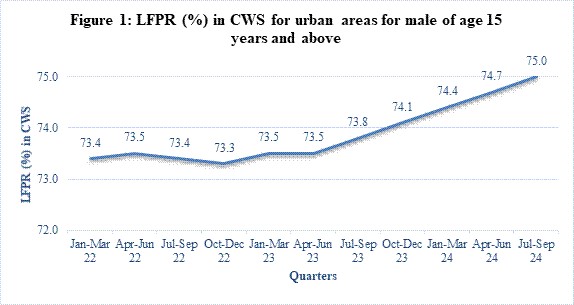
  • LFPR for male of age 15 years and above in urban areas increased from 73.8% during July – September, 2023 to 75.0% during July – September, 2024 reflecting overall increasing trend in male LFPR.
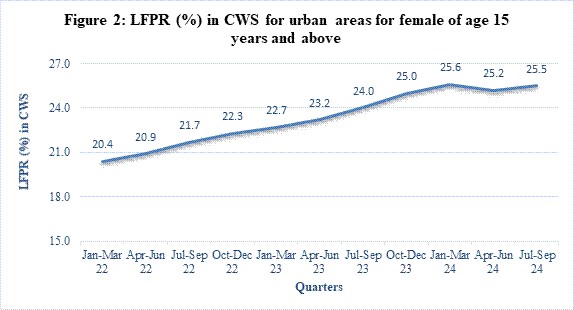
  • LFPR among female of age 15 years and above for urban areas increased from 24.0% during July – September, 2023 to 25.5% during July – September, 2024.
  • Worker Population Ratio (WPR) in urban areas among persons of age 15 years and above has increased from 46.0% during July – September, 2023 to 47.2% in July – September, 2024.
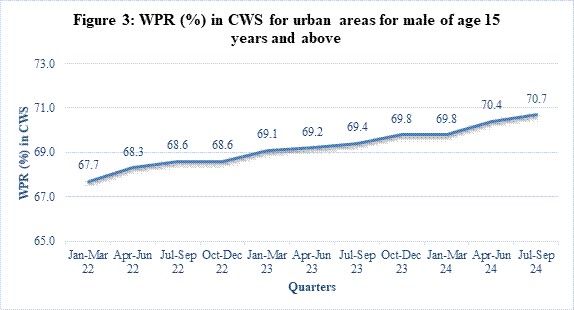
  • WPR for male of age 15 years and above for urban areas increased from 69.4% in July – September, 2023 to 70.7% during July – September, 2024 reflecting overall increasing trend in male WPR.
  • Unemployment Rate (UR) in urban areas among persons of age 15 years and above decreased from 6.6% during July – September, 2023 to 6.4% during July – September, 2024.
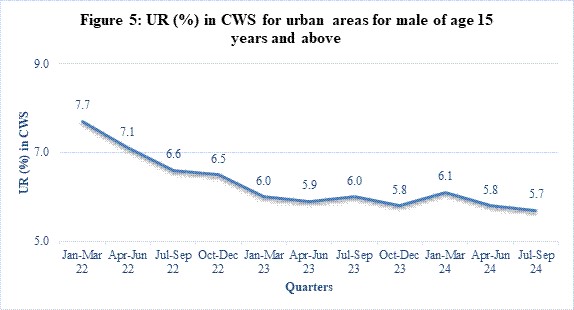
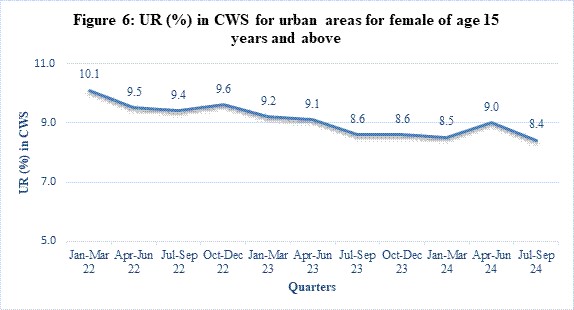
  • UR among males of age 15 years and above decreased from 6.0% during July – September, 2023 to 5.7% in July – September, 2024. UR among female of age 15 years and above decreased from 8.6% in July – September, 2023 to 8.4% in July – September, 2024.

A.         Introduction

Considering the importance of availability of labour force data at more frequent time intervals, National Statistics Office (NSO) launched Periodic Labour Force Survey (PLFS) in April 2017.

The objective of PLFS is primarily twofold:

  • to estimate the key employment and unemployment indicators (viz. Worker Population Ratio, Labour Force Participation Rate, Unemployment Rate) in the short time interval of three months for the urban areas only in the ‘Current Weekly Status’ (CWS).
  • to estimate employment and unemployment indicators in both ‘Usual Status’ (ps+ss) and CWS in both rural and urban areas annually.

Twenty-three Quarterly Bulletins of PLFS corresponding to the quarter ending December 2018 to quarter ending June 2024 have already been released. In these quarterly bulletins estimates of labour force indicators, viz., Labour Force Participation Rate (LFPR), Worker Population Ratio (WPR), Unemployment Rate (UR), distribution of workers by broad status in employment and industry of work in the Current Weekly Status (CWS) for urban areas have been presented.

The present Quarterly Bulletin is the twenty-fourth in the series for the quarter July – September, 2024.

PLFS fieldwork during the quarter July – September 2024

The fieldwork for collection of information in respect of all the samples allotted for the period July-September, 2024, were completed timely for the first visit as well as revisit samples, except for 15 first visit FSU[1]s (4 in Maharashtra, 3 each in Manipur and Madhya Pradesh, 2 in Kerala, 1 each in Odisha, Assam and Andaman and Nicobar Islands) and 5 revisit FSUs (2 in Maharashtra and 1 each in Gujarat, Meghalaya and Uttar Pradesh) which were treated as casualty.

These aspects may be kept in mind while using the estimates of PLFS for the concerned quarter.

B.         Sample Design of PLFS

A rotational panel sampling design has been used in urban areas. In this rotational panel scheme, each selected household in urban areas is visited four times, in the beginning with ‘First Visit Schedule’ and thrice periodically later with a ‘Revisit Schedule’. The scheme of rotation ensures that 75% of the first-stage sampling units (FSUs) are matched between two consecutive visits.

C.         Sample Size

At the all-India level, in the urban areas, a total number of 5,739 FSUs (urban sampling unit curved out from Urban Frame Survey) have been surveyed during the quarter July – September 2024. The number of urban households surveyed was 45,005 and number of persons surveyed was 1,70,598 in urban areas.

  1. Conceptual Framework of Key Employment and Unemployment Indicators for the Quarterly Bulletin: The Periodic Labour Force Survey (PLFS) gives estimates of key employment and unemployment Indicators like the Labour Force Participation Rate (LFPR), Worker Population Ratio (WPR), Unemployment Rate (UR), etc. These indicators, and ‘Current Weekly Status’ are defined as follows:
  1. Labour Force Participation Rate (LFPR): LFPR is defined as the percentage of persons in labour force (i.e. working or seeking or available for work) in the population.
  1. Worker Population Ratio (WPR): WPR is defined as the percentage of employed persons in the population.
  1. Unemployment Rate (UR): UR is defined as the percentage of persons unemployed among the persons in the labour force.
  1. Current Weekly Status (CWS): The activity status determined on the basis of a reference period of last 7 days preceding the date of survey is known as the current weekly status (CWS) of the person.
  1. The Quarterly Bulletin for the quarter July – September 2024 is available at the website of the Ministry (https://mospi.gov.in). The key results are given in the statements annexed.

Annexure

Key Findings of PLFS, Quarterly Bulletin (July – September 2024)

  1. Labour Force Participation Rate (LFPR) for persons of age 15 years and above

LFPR in urban areas was 50.4% in July – September 2024 for persons of age 15 years in above. While for male LFPR was 75.0% in July – September 2024, for female, LFPR was 25.5% during this period.

Statement 1:  LFPR (in per cent) in CWS in urban areas for persons of age 15 years and aboveall‑India
survey periodMaleFemalePerson
(1)(2)(3)(4)
July – September 202373.824.049.3
October – December 202374.125.049.9
January – March 202474.425.650.2
April – June 202474.725.250.1
July – September 202475.025.550.4
  1. Worker Population Ratio (WPR) for persons of age 15 years and above

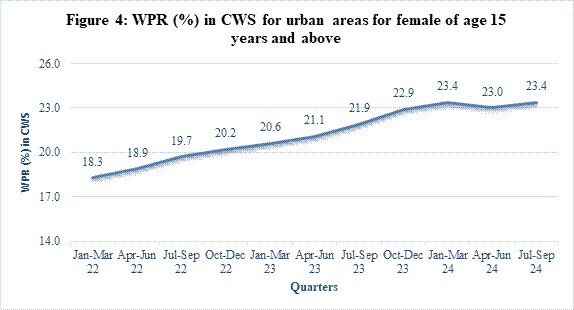
WPR in urban areas was 47.2% in July – September 2024 for persons of age 15 years in above. For male, it was 70.7% in July – September 2024, for female, it was 23.4% during this period.

Statement 2:  WPR (in per cent) in CWS in urban areas for persons of age 15 years and aboveall‑India
survey periodMaleFemalePerson
(1)(2)(3)(4)
July – September 202369.421.946.0
October – December 202369.822.946.6
January – March 202469.823.446.9
April – June 202470.423.046.8
July – September 202470.723.447.2
  1. Unemployment Rate (UR) for persons of age 15 years and above

Unemployment Rate in urban areas was 6.4% in July – September 2024 for persons of age 15 years in above. For male, Unemployment Rate was 5.7% in July – September 2024 and for female, UR was 8.4% during the same period.

Statement 3:  UR (in per cent) in CWS in urban areas for persons of age 15 years and aboveall‑India
survey periodMaleFemalePerson
(1)(2)(3)(4)
July – September 20236.08.66.6
October – December 20235.88.66.5
January – March 20246.18.56.7
April – June 20245.89.06.6
July – September 20245.78.46.4

E. Highlights of the Quarterly estimates of key Labour Market indicators

  1. Trend in Labour Force Participation Rate (LFPR) for persons of age 15 years and above since 2022

The trend in LFPR in urban areas since the quarter January – March, 2022 for male and female are presented in figure 1 and 2.

  1. Trend in Worker Population Ratio (WPR) for persons of age 15 years and above since 2022

The trend in WPR in urban areas since the quarter January – March, 2022 for male and female are presented in figure 3 and 4.

  1. Trend in Unemployment Rate (UR) for persons of age 15 years and above since 2022

The trend in UR in urban areas since the quarter January – March, 2022 for male and female are presented in figure 5 and 6.

*****

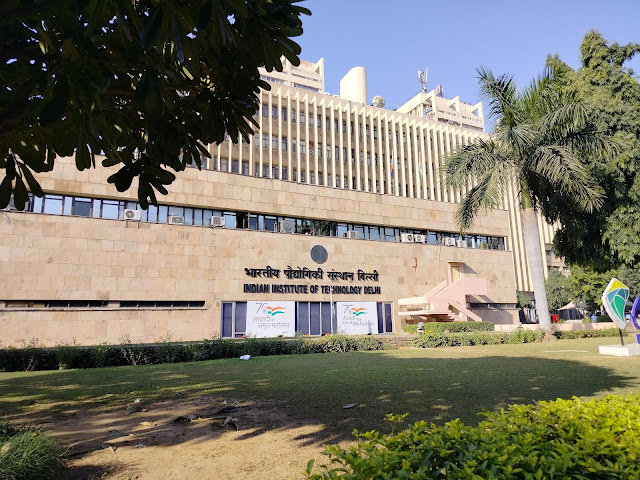
IIT Delhi Department of Management Studies

  IIT Delhi Department of Management Studies was established in 1993 and launched its first MBA program in 1997. It is regarded as one of the best institutes for management studies in India and is placed at the eighth position according to the NIRF rankings.


Learn More about  IIT Delhi Department of Management Studies

The curriculum is designed in order to meet the changing needs of the business environment and the industry. The Institute currently offers a 2 year full time MBA program, a 3 year part time program and a 3 year Executive MBA program. The students are selected after a rigorous screening process which includes performance of the candidate in CAT, followed by a group discussion and personal interview.

Students at DMS, IIT Delhi are trained by eminent faculty who are experienced professionals from India as well as abroad. The placement record of the Department is quite impressive with the 83 offers made for the 2018-2020 batch, which achieved a 100% placement record. The highest salary package offered to the students was INR 33 LPA and the average salary package offered was INR 22.69 LPA. Top recruiters visiting the DMS, IIT Delhi campus were well- known companies like Reliance Industries Ltd., Wipro, Amway, OLA and others.

DMS, IIT Delhi Key Points

  • The Institute provides world class IT infrastructure with facilities like hostels, library, wi-fi campus, hi-tech classrooms and others.
  • The Department of Management Studies is spread across an area of 320 Acres.
  • The Institute has successfully managed to maintain a 100% placement record.
  • Admissions are done on the basis of Selection Index which is computed by taking into account 7 parameters- CATA Score, Bachelor’s degree, 12th marks, 10th marks, Work Experience, Gender diversity and graduation from IIT/NIT.

DMS, IIT Delhi Rankings

  • The Department of Management Studies is ranked 8th in the NIRF rankings 2020.
  • The India Today group and Financial Express ranked DMS, IIT Delhi 9th in 2020.
  • The institute has been ranked 15th by Business Today in 2020.
  • DMS, IIT Delhi falls in the 101-150 rank band according to the QS World University Rankings 2020 in the Business and Management Studies category.

DMS, IIT Delhi Courses & Fees

The institute specializes in management courses and offers 3 related programs in the said field. Admissions to all these courses are entrance based, with students selected on the basis of CAT performance and several other parameters.

The courses offered by DMS, IIT Delhi and their respective details are given below.

COURSES COURSE DETAILS
MBA
  • Specializations – General, Telecommunication Systems Management
  • Fees- INR 4.8 Lakhs per year
  • Eligibility criteria-Passed graduation in any discipline or equivalent examination with minimum 60% aggregate marks (55% for SC/ST) + valid score in CAT + Personal Interview
Executive MBA
  • Specializations- Technology Management
  • Fees- INR 3.6 Lakhs per year
  • Eligibility criteria- Passed graduation in any branch of Engineering/ Technology/ Physical Sciences/ Statistics/ BCA/ Operation Research/ Economics/ Commerce with minimum 60% aggregate marks (55% for SC/ST)+ Minimum 2 years work experience + Personal Interview
Ph.D
  • Specializations- Management
  • Fees- INR 63,900 per year
  • Eligibility criteria- Passed M.Tech/ M.E./ M.D./M.Sc/ MBA/ M.A./MBBS with minimum 60% aggregate marks (55% for SC/ST) / Passed B.E./ B.Tech with minimum 70% aggregate marks + valid score in GATE/ CSIR/ UGC NET/ ICAR/ ICMR + Personal Interview

DMS, IIT Delhi Cut Off

DMS, IIT Delhi shortlisted eligible candidates for the Personal Interview round only if they secure more than the minimum CAT cut off set by the Institute.

Tabulated below are the cut off marks across 3 years and the cut off for different categories in different sections.

Categories CAT 2018 CAT 2019 CAT 2020
Overall Cut Off 90 90 90
Sectional Cut Off 80 80 80

DMS, IIT Delhi Placement

Category VARC DILR QUANT Overall CAT Percentile
General 80 80 80 90
NC-OBC 72 72 72 81
SC 53.3 53.3 53.3 60
ST 53.3 53.3 53.3 60
PWD 53.3 53.3 53.3 60

DMS, IIT Delhi Placement Highlights 

The Institute has a dedicated placement cell called the Campus Relations Team and has successfully managed to maintain a 100% placement record. The placement cell at DMS, IIT Delhi is constantly in touch with the reputed companies and organisations and is responsible for organising pre placement talks and visits on the campus. The resumes of the interested candidates are shared with the organisations and before the campus recruitment process begins. It ensures that the potential employers are constantly involved throughout the year through summer internships, guest lectures, Workshops and other activities.

  • 83 offers were made for the batch of 2020, which comprised 68 students.
  • The highest Salary Package Offered was INR 33 LPA
  • The average Salary Package Offered was INR 22.69 LPA
  • The median Salary Package Offered was INR 20.01 LPA
  • Students from the IT, General Management, Operations & Supply Chain, Finance, Sales & Marketing departments bagged the maximum placement offers.

Top Recruiters

  • Coca Cola
  • OLA
  • Vodafone
  • Deloitte
  • Infosys
  • Airtel
  • TCS
  • Idea
  • Wipro

DMS, IIT Delhi Scholarships

DMS, IIT Delhi does not award any scholarships. However, a scheme for the award of Teaching/Research Assistantship for providing financial assistance to those students who are admitted on full-time basis are considered.

Students under this scheme are required to render 8 hours of teaching/research assistance to the Department outside their normal academic work.The maximum duration for which this can be awarded to any Ph.D. student is 4 years. Continuation of the Assistantship depends on the academic performance, a minimum of 7.50 CGPA in course work each semester and minimum prescribed attendance requirement which needs to be fulfilled.


Fiscal Policy Meaning – Its Main Objectives In India – Conclusion

Meaning of Fiscal Policy ↓
The fiscal policy is concerned with the raising of government revenue and incurring of government expenditure. To generate revenue and to incur expenditure, the government frames a policy called budgetary policy or fiscal policy. So, the fiscal policy is concerned with government expenditure and government revenue.
Fiscal policy has to decide on the size and pattern of flow of expenditure from the government to the economy and from the economy back to the government. So, in broad term fiscal policy refers to “that segment of national economic policy which is primarily concerned with the receipts and expenditure of central government.” In other words, fiscal policy refers to the policy of the government with regard to taxation, public expenditure and public borrowings.
The importance of fiscal policy is high in underdeveloped countries. The state has to play active and important role. In a democratic society direct methods are not approved. So, the government has to depend on indirect methods of regulations. In this way, fiscal policy is a powerful weapon in the hands of government by means of which it can achieve the objectives of development.
Main Objectives of Fiscal Policy In India ↓

The fiscal policy is designed to achive certain objectives as follows :-
1. Development by effective Mobilisation of Resources
The principal objective of fiscal policy is to ensure rapid economic growth and development. This objective of economic growth and development can be achieved by Mobilisation of Financial Resources.
The central and the state governments in India have used fiscal policy to mobilise resources.
The financial resources can be mobilised by :-Taxation : Through effective fiscal policies, the government aims to mobilise resources by way of direct taxes as well as indirect taxes because most important source of resource mobilisation in India is taxation.
Public Savings : The resources can be mobilised through public savings by reducing government expenditure and increasing surpluses of public sector enterprises.
Private Savings : Through effective fiscal measures such as tax benefits, the government can raise resources from private sector and households. Resources can be mobilised through government borrowings by ways of treasury bills, issue of government bonds, etc., loans from domestic and foreign parties and by deficit financing.
2. Efficient allocation of Financial Resources
The central and state governments have tried to make efficient allocation of financial resources. These resources are allocated for Development Activities which includes expenditure on railways, infrastructure, etc. While Non-development Activities includes expenditure on defence, interest payments, subsidies, etc.
But generally the fiscal policy should ensure that the resources are allocated for generation of goods and services which are socially desirable. Therefore, India’s fiscal policy is designed in such a manner so as to encourage production of desirable goods and discourage those goods which are socially undesirable.
3. Reduction in inequalities of Income and Wealth
Fiscal policy aims at achieving equity or social justice by reducing income inequalities among different sections of the society. The direct taxes such as income tax are charged more on the rich people as compared to lower income groups. Indirect taxes are also more in the case of semi-luxury and luxury items, which are mostly consumed by the upper middle class and the upper class. The government invests a significant proportion of its tax revenue in the implementation of Poverty Alleviation Programmes to improve the conditions of poor people in society.
4. Price Stability and Control of Inflation
One of the main objective of fiscal policy is to control inflation and stabilize price. Therefore, the government always aims to control the inflation by Reducing fiscal deficits, introducing tax savings schemes, Productive use of financial resources, etc.
5. Employment Generation
The government is making every possible effort to increase employment in the country through effective fiscal measure. Investment in infrastructure has resulted in direct and indirect employment. Lower taxes and duties on small-scale industrial (SSI) units encourage more investment and consequently generates more employment. Various rural employment programmes have been undertaken by the Government of India to solve problems in rural areas. Similarly, self employment scheme is taken to provide employment to technically qualified persons in the urban areas.
6. Balanced Regional Development
Another main objective of the fiscal policy is to bring about a balanced regional development. There are various incentives from the government for setting up projects in backward areas such as Cash subsidy, Concession in taxes and duties in the form of tax holidays, Finance at concessional interest rates, etc.
7. Reducing the Deficit in the Balance of Payment
Fiscal policy attempts to encourage more exports by way of fiscal measures like Exemption of income tax on export earnings, Exemption of central excise duties and customs, Exemption of sales tax and octroi, etc.
The foreign exchange is also conserved by Providing fiscal benefits to import substitute industries, Imposing customs duties on imports, etc.
The foreign exchange earned by way of exports and saved by way of import substitutes helps to solve balance of payments problem. In this way adverse balance of payment can be corrected either by imposing duties on imports or by giving subsidies to export.
8. Capital Formation
The objective of fiscal policy in India is also to increase the rate of capital formation so as to accelerate the rate of economic growth. An underdeveloped country is trapped in vicious (danger) circle of poverty mainly on account of capital deficiency. In order to increase the rate of capital formation, the fiscal policy must be efficiently designed to encourage savings and discourage and reduce spending.
9. Increasing National Income
The fiscal policy aims to increase the national income of a country. This is because fiscal policy facilitates the capital formation. This results in economic growth, which in turn increases the GDP, per capita income and national income of the country.
10. Development of Infrastructure
Government has placed emphasis on the infrastructure development for the purpose of achieving economic growth. The fiscal policy measure such as taxation generates revenue to the government. A part of the government’s revenue is invested in the infrastructure development. Due to this, all sectors of the economy get a boost.
11. Foreign Exchange Earnings
Fiscal policy attempts to encourage more exports by way of Fiscal Measures like, exemption of income tax on export earnings, exemption of sales tax and octroi, etc. Foreign exchange provides fiscal benefits to import substitute industries. The foreign exchange earned by way of exports and saved by way of import substitutes helps to solve balance of payments problem.
Conclusion On Fiscal Policy ↓
The objectives of fiscal policy such as economic development, price stability, social justice, etc. can be achieved only if the tools of policy like Public Expenditure, Taxation, Borrowing and deficit financing are effectively used.
Though there are gaps in India’s fiscal policy, there is also an urgent need for making India’s fiscal policy a rationalised and growth oriented one.
The success of fiscal policy depends upon taking timely measures and their effective administration during implementation.

Hydroponics

Hydroponics is the method of growing plants without soil. It generally uses less water as compared to traditional soil system. It allows faster growth and higher yield.

William Frederick Gericke is known as father of hydroponics. He grew tomato vines in his backyard in nutrient solution.

The nutrients used in hydroponics include fish and poultry excreta , duck manure, chemical fertilizers, artificial nutrient solution etc.

Plants are commonly grown hydroponically in a greenhouse, on inert media, include tomatoes, peppers, cucumbers, strawberries, lettuces, and cannabis, usually for commercial use, and Arabidopsis thaliana, which serves as a model organism in plant science and genetics.

Advantages:

  • Does not require soil for cultivation.
  • Promotes faster and efficient plant growth.
  • It uses less water as compared to conventionally grown plants. Hence, helps to save water.
  • It does not depend on climate for favourable growing conditions.
  • Saves labour due to automatic watering and fertilizing capability.
  • Have fewer pest can can be grown closely.
Photo by Pragyan Bezbaruah on Pexels.com
  • The plant has less root and nutrient competition than grown in soil.

There are six main types of hydroponic system for garden: wicking, deep water culture (DWC), nutrient film technique (NFT), ebb and flow, aeroponics, and drip systems.

Disadvantages:

  • Involves high installation cost.
  • Need to test the solution frequently to avoid infection and damage.
  • System are prone to equipment failure and power outage.
  • Prone to water borne infection.
  • Requires constant monitoring and assistance.

Some systems, known as aquaponics involves use of nutrient-rich wastewater from aquaculture to fertilize hydroponic plants. Freshwater fish, such as tilapia, and crayfish are common aquatic animals utilized for these hybrid systems.

Nowadays, hydroponics is being implemented in large scale as a start up to meet the demand of fresh leafy vegetables as is a part of urban farming.

The rising burden of E- waste

E- waste or electronic waste refers to the waste created by discarding the electronic devices which is rather caused due to its end of useful life, high repair cost , outdated technologies etc. which makes it underrated for further use. These waste includes TV, mobile phones, computer/ desktop, electronic items, wires, machineries etc. This is one of the fastest waste generated.

Everyday lakhs and lakhs of e-waste is generated. The country’s e-waste output is growing at over 30 per cent year on year, and stood at over 10 lakh tonnes in 2019-20, according to government data, comparable to about one lakh six-wheeled truckloads of waste.

It is the third largest in volume globally and growing at a rate ten times faster than its plastic waste output.

Mountains of e-waste pile up, which are as much a threat to the environment as they are to the health of their handlers .It proves vulnerable as people are sifting and processing the waste of the privileged without knowing that it could cause them cancer, reproductive disorders, endocrine disruption and other health complications.

Problems:

The most alarming aspect of e-waste is that less than a quarter of it is being processed.It possess hazardous metals and can contaminate soil, air, water, posing significant risk to human health by entering the food chain.

Unsafe disposal of e waste: About 95% of e waste is recycled by informal sectors and scrap developers without knowing the hazardous effect and use of safe handling practice.

Concern : Majority of e waste are imported to developing countries like India, China, Ghana etc from developed countries for recycling purpose.

With advancement in technologies, standard of living people are more inclined towards use of more gadgets, phones and tend to change them more frequently.

Way forward

E waste clinics for proper segregation, processing and disposal of e waste. Effective ways to implement proper and safe handling of waste.

Initiative taken by government includes: Prime Minister Narendra Modi launched the LiFE or Lifestyle for Environment movement in June—a concept that he said is borrowed from the past and focuses on the future.

The right to repair is introduced to reduce the e waste and it’s proper management as it is environmental friendly too. But this also concerns the major industries involved in sector as it could lead to their loss and some technologies can’t be added to existing devices .

Millets: Future Superfood

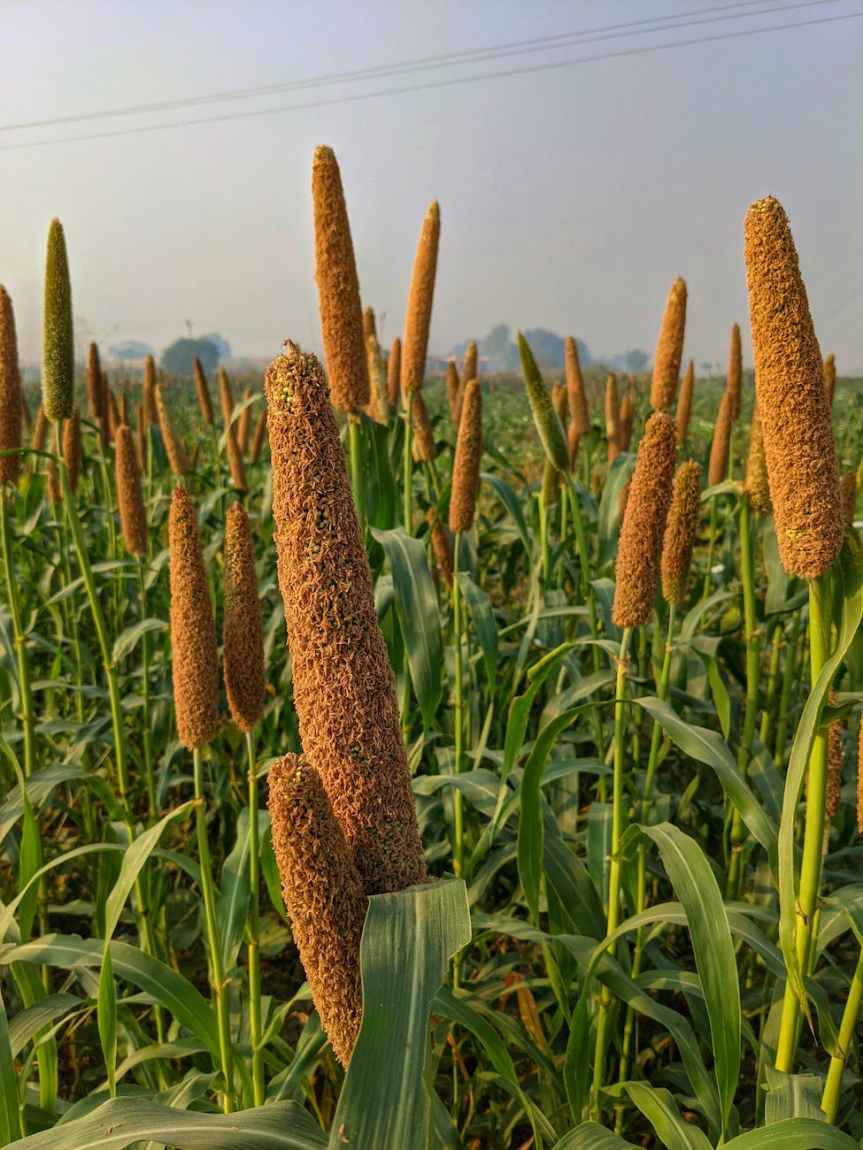
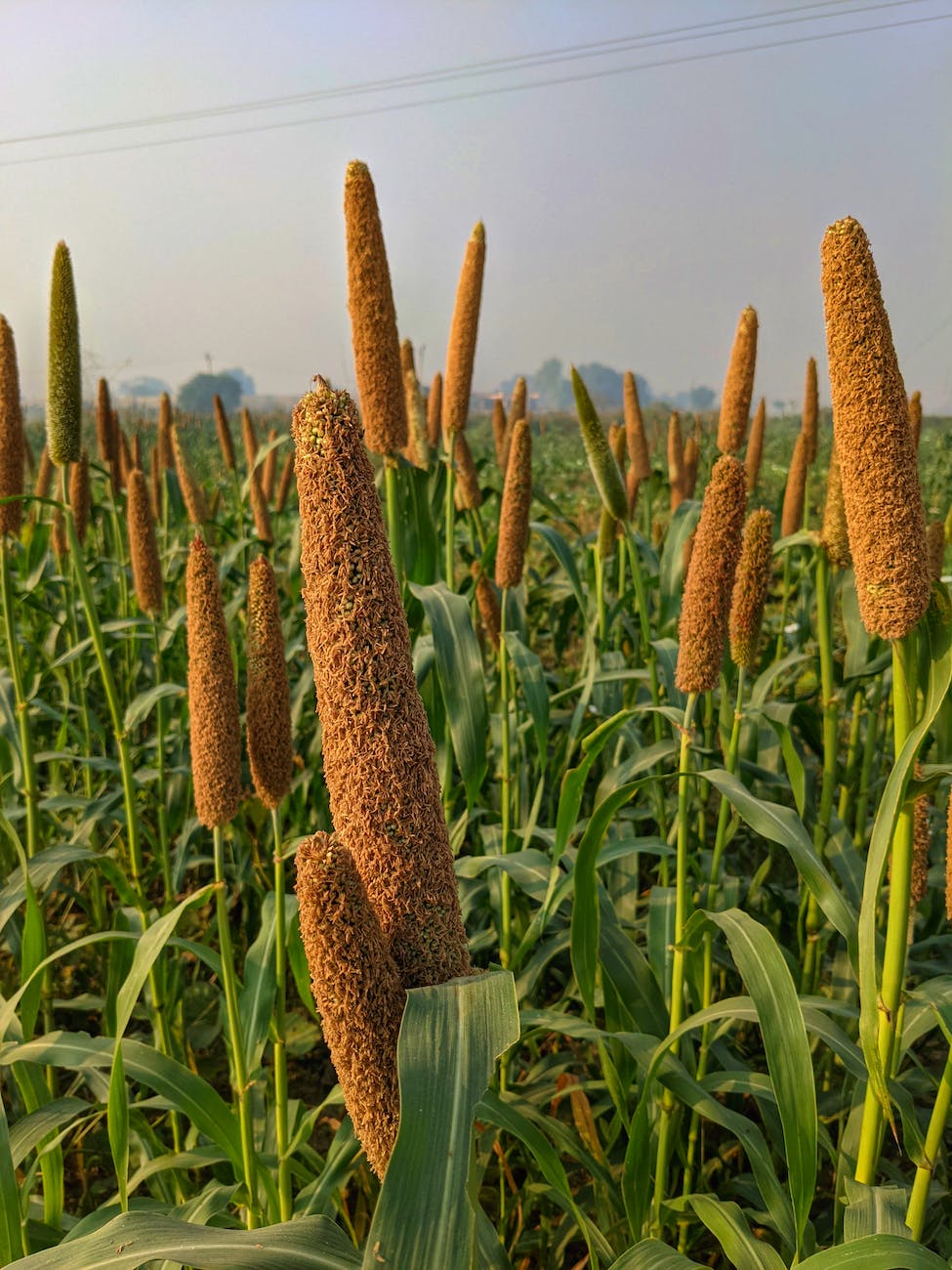
Millets are one of the oldest food known to mankind.These are group of highly variable small-seeded grasses, widely grown around the world as cereal crops or grains for fodder and human food.

Types of millet: Sorghum (jowar), Pearl millet (bajra), Foxtail millet (kangni), Finger millet (ragi), Barnyard millet, Kodo millet, Little Millet, Proso Millet are amongst the healthiest millet grains available.

Nutritional value: They are good sources of proteins, carbohydrates, dietary fibre and essential amino acids.

Millets have 65% carbohydrates, 9% proteins, 3% fat, and 2-7% crude fibre.

They are rich in various vitamins such as vitamin A, C and B-complex vitamins and minerals such as magnesium, manganese, phosphorus and also iron.

Major producers include Rajasthan, Andhra Pradesh, Telangana, Karnataka, Tamil Nadu, Maharashtra, Gujarat and Haryana.

Significance: Release of 13 High Yielding varieties including 4 bio-fortified varieties of millets. declaring 2023 as International Year of Millets (IYOM).

This proposal of India was supported by 72 countries and United Nation’s General Assembly (UNGA) declared 2023 as International Year of Millets on 5th March,2021.

Photo by Deep Malik on Pexels.com

Millets are climate resilient crop as they can be grown in rainfed area and are resistant to climatic stress, pest and disease as well. So it plays major role in sustainable agriculture.

People possess a perception of millet being poor man food but owing to it’s nutritional value it is rich in dietary fibres, amino acid, calcium, zinc, folate and various nutrients. It can even be easily consumed by diabetic people as it possess low glycemic index. Nowadays, being consumed by many more people it helps to provide food security.

They even provide economic security to farmers growing millet in dry, low fertile, rainfed area as it requires less investment and involves less cost of cultivation.

Initiatives are taken by government to promote millet production by farmers as they promote sustainable agriculture as well as generate employment opportunities by promoting value addition of millets.

Concept of Agricultural Marketing

The term market is derived from the Latin term’ marcatus ‘ which means trade or place where business is conducted.

In real terms ; market is defined as place where the sellers of particular good or service can meet with buyer of that good and services where there is potential for transaction to occur.

Agricultural marketing is study of all activities, agencies and policies that are involved in procurement of farm inputs by farmers and movement of agricultural products from farm to ultimate consumers. So it can be said to serve as link between farm 🚜🐄🌾 and non farm sector.

Thus it is a collaborative effort including marketing functions from post – harvest handling to pre- sowing; assembling, handling, storage, transport, processing, retailing, wholesaling, export of agricultural commodities and purchasing inputs for next agricultural season. It also includes marketing services as market information, weighing, standardization, financing, price risk mechanism and institutional development.

Dimension of agricultural marketing system includes market structure, it’s conduct and performance. The purpose of marketing is to find the right place, right time, right product and right time to make it selling superfluous.

Importance of agricultural marketing :

Agricultural market plays a important role in various ways to increase farm income, provide employment opportunities, optimum utilisation of resources, creation of utility and growth of agro-based industries.

The agricultural product differ from industrial product in many ways:

1.Nature of product: Most agricultural products are perishable in nature and hence cannot be stored for longer duration while industrial products can be stored for longer duration .

2.Weather and Season dependent: Most agricultural products are season bound and produced in particular season whereas industrial products are available throughout the year.

3.Bulkiness in nature : Agricultural products are bulky in nature and are difficult to handle, transport, storage etc. which adds to transportation cost.

4. Supply lag: As agricultural commodities are season bound so there is difference in supply and demand of goods.

5. Requirements of land area: For production of agricultural goods we needs more land as compared to industrial products like cultivation practices etc.

So from this role of agricultural markets can be determined as they hold separate importance in the economy .

Why insurance is important for living?

Who else won’t crave for a safe fence around their life in this uncertain world? Insurance is one of the safest fences a human being ever has. Various kinds of insurances are rooting into our society. People are confused over the selection of insurance .Some of them are still doubted in types of insurance and how this insurance act as a benefactor .Let us discuss about 5 important insurance that you must know and its allies below.

TYPES OF INSURANCES LIFE INSURANCE

LIFE INSURANCE

Life insurance offers a protection over the family members of the policy holder’s .This will help mostly the one who is going for an adventurous trip or something risky or rather some of them who are facing a life threatening disease .Usually in this insurance there will be a nominee. Nominee is the person who experience the money which policy is pointing

HEALTH INSURANCE

There is always a doubt prevails among the common people is health insurance and life insurance is same. It is a kind of medical insurance which covers the entire medical expenses of the party (policy holder) and risk of the treatment.

DISABILITY INSURANCE

Disability insurance shortly called as DI. This insurance helps a differently abled person who cannot work properly to meet their daily requirements behalf of this disability. There are two kinds of disability benefits .One is short term disability benefit and other is long term benefits

AUTO INSURANCE

This Insurance policy shields from the financial loss held during an accident or theft. Auto insurance provide for property (including damages caused by theft), liability (having legal responsibility to other for injuring body parts or damaging property), medical (the amount of treating wounds extending to funeral expenses)

TRAVEL INSURANCE
Travel insurance takes off liability of a risky travelling. Medical expenses, lost luggage, flight cancellations, and other losses a traveler might face is factored into this policy. The right time to set off the insurance is from the date which travel begins to till it ends

Need for switch from physical to human capital

Human capital refers to stock of ‘skill and expertise’ embodied in humans. Human capital is as important as physical capital for economic development. Human capital formation is the process of adding to stock of human capital over time. Human capital can be developed through creation of skilled, trained and efficient labour force by providing better education, health care facilities, etc. Highly skilled people can create new ideas and methods of production. Thus, expenditure on education, on health and on on-job-training are key instruments of human capital formation. Expenditure on education is one of the most important way of enhancing and enlarging a productive workforce in the country. Expenditure on health can create more efficient and more productive human capital. Further, on-the-job-training helps workers to update skills. Training enhances the productivity and is expected to accelerate the process of human capital formation.

Human Capital and Economic Growth

When we talk about economic growth, human capital is the main reason for the accelerated growth and expansion for many countries that provide investment in human capital. This gives the best advantages to these countries for providing the best situations for work and lifestyles.A significant advantage in generating a stable environment for growth is that the nation has the expanded high-quality human capital in fields like health, science, management, education, and other fields. Here, the main components of human capital are definitely human beings, but presently, the principal component is a creative, educated, and enterprising person with a high level of professionalism.

Human capital in the economy manages the central portion of the national wealth. Hence, all researchers consider that human capital is the most important resource of the community, which is more powerful than nature or wealth. In most countries, human capital determines the rate of development, economic, technological, and scientific progress.

(i) Inventions, innovations, and technological improvement

 (ii) Higher productivity of physical capital

 (iii) Raises production

 (iv) High rate of participation and equality

 (v) Improves the quality of life

The difference between human capital and physical capital

Both forms of capital formation are outcomes of conscious investment decisions. Decision regarding investment in physical capital is taken on the basis of one’s knowledge in this regard. The entrepreneur possesses knowledge to calculate the expected rate of return to a range of investments and internationally decide which one of the investments should be made. Physical capital is the outcome of the conscious decision of the owner the physical capital formation is mainly and economic and technical process. A substantial part of human capital formation takes place in one life when she or he is unable to decide whether it will maximize her or his earnings. Children are given different types of school education health care facilities by parents and society. The peers, educators and society influence the decisions regarding human capital investment even at the tertiary level, at the college level. Human capital formation at this stage is dependent upon the already from human capital at the school level. Human capital formation is partly a social process and partly a conscious decision of the possessor of the human capital. The owner of a physical capital, does need not be present in the place where it is used; a bus driver who possesses the knowledge and ability to drive the bus should be present when the bus is used for transportation of people and other materials physical capital is tangible and can be easily sold in the market like any other commodity. Human Capital is intangible it is endogenously built in the body and mind of its owner. Human Capital is not sold in the market; service of human capital is sold and hence there arises the necessity of owner of the human capital to be present in the place of production. Physical capital is variable from its owner where does the human capital is in separable from its owner. The two forms of capital differ in terms of mobility across space. Capital is completely mobile between countries except for some artificial trade restrictions. Human capital is not a perfectly movable between countries as movement is restricted by nationality and culture. Physical Capital formation can be built it even do import, human capital formation is to be done through conscious policy formulations in consensus with nature of society and economy expenditure by the state and the individual.

Both forms of capital depreciate with the time but the nature of depreciation differs between the two continuous use of machine lead to depreciation and change of Technology makes a machine of solute. Human capital, eating but can reduce, for large through continuous investment in education and health on the job training. This investment also facilitates the human capital to cope with change in technology which is not the case with physical capital. Natures of benefits flowing from human capital are different from that of physical capital. Human Capital benefits not only the owner but also the society in general. This is called external benefit. Educated person can effectively take part in a democratic process and contribute to the socio economic progress of a nation. Healthy person, by maintaining personal hygiene and sanitation, stops the spread of contagious diseases and epidemics. Human Capital creates both private and social benefits where as physical capital creates only private benefits. That is, benefits from a capital good flow to those who pay the price for the product and services provided by it.

Importance of Human Capital Formation:

Although the accumulation of physical capital is quite important in the process of economic growth of a country but with the passage of time, it is being increasingly realised that the growth of tangible capital stock depends extensively on the human capital formation must get its due importance.In the absence of adequate investment in human capital, utilisation of physical capital will be at low pace, leading to retardation of development.Prof. Galbraith observed, “We now get the larger part of our industrial growth not from more capital investment but from investment in men and improvements brought about by improved men.” Unless these developed economies spread education, knowledge, know-how and raise the level of skills and physical efficiency of their people, the productivity of physical capital would have been reduced at this moment.

Most of the underdeveloped countries are suffering from low rate of economic growth which is again partially resulted from lack of investment in human capital. These underdeveloped countries are facing mainly two basic problems. They lack critical skills very much needed for the industrial sector and again have a surplus labour force.Thus human capital formation wants to solve these problems by creating necessary skills in man as a productive resource and also providing him gainful employment.In order to remove economic backwardness of the underdeveloped countries as well as to instill the capacities and motivations to progress, it is quite necessary to increase the level of knowledge and skills of the people.Thus in the absence of proper development of the quality of the human factor, the underdeveloped countries will not be able to attain the desired rate of progress.

Takeaway

Economic and social benefits of human capital formation and Human Development are well-known. The spread of education and Health Services across different sectors of the society should be ensured so as to simultaneously attain economic growth and equity. The need of the hour is to better it qualitatively and provide such conditions so that they are utilised in our own country.

Need for switch from physical to human capital

Human capital refers to stock of ‘skill and expertise’ embodied in humans. Human capital is as important as physical capital for economic development. Human capital formation is the process of adding to stock of human capital over time. Human capital can be developed through creation of skilled, trained and efficient labour force by providing better education, health care facilities, etc. Highly skilled people can create new ideas and methods of production. Thus, expenditure on education, on health and on on-job-training are key instruments of human capital formation. Expenditure on education is one of the most important way of enhancing and enlarging a productive workforce in the country. Expenditure on health can create more efficient and more productive human capital. Further, on-the-job-training helps workers to update skills. Training enhances the productivity and is expected to accelerate the process of human capital formation.

Human Capital and Economic Growth

When we talk about economic growth, human capital is the main reason for the accelerated growth and expansion for many countries that provide investment in human capital. This gives the best advantages to these countries for providing the best situations for work and lifestyles.A significant advantage in generating a stable environment for growth is that the nation has the expanded high-quality human capital in fields like health, science, management, education, and other fields. Here, the main components of human capital are definitely human beings, but presently, the principal component is a creative, educated, and enterprising person with a high level of professionalism.

Human capital in the economy manages the central portion of the national wealth. Hence, all researchers consider that human capital is the most important resource of the community, which is more powerful than nature or wealth. In most countries, human capital determines the rate of development, economic, technological, and scientific progress.

(i) Inventions, innovations, and technological improvement

 (ii) Higher productivity of physical capital

 (iii) Raises production

 (iv) High rate of participation and equality

 (v) Improves the quality of life

The difference between human capital and physical capital

Both forms of capital formation are outcomes of conscious investment decisions. Decision regarding investment in physical capital is taken on the basis of one’s knowledge in this regard. The entrepreneur possesses knowledge to calculate the expected rate of return to a range of investments and internationally decide which one of the investments should be made. Physical capital is the outcome of the conscious decision of the owner the physical capital formation is mainly and economic and technical process. A substantial part of human capital formation takes place in one life when she or he is unable to decide whether it will maximize her or his earnings. Children are given different types of school education health care facilities by parents and society. The peers, educators and society influence the decisions regarding human capital investment even at the tertiary level, at the college level. Human capital formation at this stage is dependent upon the already from human capital at the school level. Human capital formation is partly a social process and partly a conscious decision of the possessor of the human capital. The owner of a physical capital, does need not be present in the place where it is used; a bus driver who possesses the knowledge and ability to drive the bus should be present when the bus is used for transportation of people and other materials physical capital is tangible and can be easily sold in the market like any other commodity. Human Capital is intangible it is endogenously built in the body and mind of its owner. Human Capital is not sold in the market; service of human capital is sold and hence there arises the necessity of owner of the human capital to be present in the place of production. Physical capital is variable from its owner where does the human capital is in separable from its owner. The two forms of capital differ in terms of mobility across space. Capital is completely mobile between countries except for some artificial trade restrictions. Human capital is not a perfectly movable between countries as movement is restricted by nationality and culture. Physical Capital formation can be built it even do import, human capital formation is to be done through conscious policy formulations in consensus with nature of society and economy expenditure by the state and the individual.

Both forms of capital depreciate with the time but the nature of depreciation differs between the two continuous use of machine lead to depreciation and change of Technology makes a machine of solute. Human capital, eating but can reduce, for large through continuous investment in education and health on the job training. This investment also facilitates the human capital to cope with change in technology which is not the case with physical capital. Natures of benefits flowing from human capital are different from that of physical capital. Human Capital benefits not only the owner but also the society in general. This is called external benefit. Educated person can effectively take part in a democratic process and contribute to the socio economic progress of a nation. Healthy person, by maintaining personal hygiene and sanitation, stops the spread of contagious diseases and epidemics. Human Capital creates both private and social benefits where as physical capital creates only private benefits. That is, benefits from a capital good flow to those who pay the price for the product and services provided by it.

Importance of Human Capital Formation:

Although the accumulation of physical capital is quite important in the process of economic growth of a country but with the passage of time, it is being increasingly realised that the growth of tangible capital stock depends extensively on the human capital formation must get its due importance.In the absence of adequate investment in human capital, utilisation of physical capital will be at low pace, leading to retardation of development.Prof. Galbraith observed, “We now get the larger part of our industrial growth not from more capital investment but from investment in men and improvements brought about by improved men.” Unless these developed economies spread education, knowledge, know-how and raise the level of skills and physical efficiency of their people, the productivity of physical capital would have been reduced at this moment.

Most of the underdeveloped countries are suffering from low rate of economic growth which is again partially resulted from lack of investment in human capital. These underdeveloped countries are facing mainly two basic problems. They lack critical skills very much needed for the industrial sector and again have a surplus labour force.Thus human capital formation wants to solve these problems by creating necessary skills in man as a productive resource and also providing him gainful employment.In order to remove economic backwardness of the underdeveloped countries as well as to instill the capacities and motivations to progress, it is quite necessary to increase the level of knowledge and skills of the people.Thus in the absence of proper development of the quality of the human factor, the underdeveloped countries will not be able to attain the desired rate of progress.

Takeaway

Economic and social benefits of human capital formation and Human Development are well-known. The spread of education and Health Services across different sectors of the society should be ensured so as to simultaneously attain economic growth and equity. The need of the hour is to better it qualitatively and provide such conditions so that they are utilised in our own country.

Service Sector in India

The service sector is the quickest and the largest developing sector in India, it also has the highest productivity of labour and is predicted to keep developing at a faster rate. By providing employment, intensifying investment and advancing infrastructure, the service sector can contribute greatly to economic growth. It is significant for a growing country such as India with a huge population to provide standard employment and cope up with the development. Private funding is needed for services of configuration which includes telecommunications, energy and transport.

In India, there are various service sectors that signify and execute robust prospects for the upcoming development in economic field.

Fintech/ IT-BPM: The biggest component of ITs is export. The growth potential is around 10-15% per annum and the gross value addition provided by sections of Fintech and IT/ITs is above $ 155 billion. Till now, low-priced investment of labour was beneficial in countries, where mainly English is spoken. In order to expand the growth, the sections of IT/ITs are required to make subsequent changes by upgrading from a ‘service provider of low-value addition’ to a ‘service partner of high value addition’. IT companies can provide Fintech measures to intercontinental pecuniary clients by upgrading their skills to the maximum extent. The high value addition services provided by India to international clients are all sorts of services related to pecuniary risk, indemnity, refunding and management of circumstances beyond human control.

Tourism and Healthcare: Healthcare industry’s contribution is expected to reach $ 372 billion by 2022. The accessibility of elite proficient doctors, healthcare facilities, medicinal etc has greatly added up in the development of the service sector. By 2022, the Indian government is intended to increase Medicare by contributing 3% to the gross domestic product (GDP). In this Covid pandemic, two vaccines, namely Covaxin and Covidshield have preserved the population of India, including a number of countries as well.

The tourism industry in India is expected to reach $ 488 billion with a contribution of about 9.2% to the Indian economy in total and about 39 million jobs were offered from this sector in FY20. After the pandemic is over, topographical tourism is expected to come in light for the tourists of Asian countries in the south. Free loans by the government are provided to MSMEs in order to deal with the post crisis of the pandemic and resuscitate the tourism industry.

Transportation and Logistics: In India, the extensive meshwork of rivers and coastlines gives rise to extensive back and forth competition to services related to logistic and transportation. These services include warehousing, e-logistics, the port service, abroad trading etc. By 2032, the logistic industry is expected to reach $ 360 billion.

By 2022, the government has targeted the construction of 65,000 km of national highways at a price of about $ 741.51.

Space: Globally, India made a record of launching the highest number of space satellites. This could only be possibly done by the powers sustained from other spaces. Skilled experts in various technological sections of the launch plan have made possible such advancement in the industry of space transportation over its worldwide associates. The launch competence is nearly 100% in the record. Great developments can be seen in this field, but more improvement can be made by further building measurements in non-military and military implementations.

Top sector companies in India:

  • Tata Consultancy Services Ltd (TCS): It is a transnational information technology (IT) services in India. In the world, TCS is the largest IT services in terms of market value of worth $ 200 billion. It has its headquarters located in Mumbai and has large estate in Chennai.It is the most worthy brand of IT service around the globe and second largest company in India by market value. It is a corporation that provides explanation and counseling in context to business via its erratic Global Network Delivery Model (GNDM) which is regarded as the standard of brilliance in the advancement of software.  ICS has proposed a consolidated collection of infrastructure, IT, engineering and guarantee services. It also justifies a degree of reliability which is unattainable by other organizations. TCS is a part of the Tata group and has around 453,540 pre-eminent skilled consultants in about 46 countries.
  • HDFC Bank: HDFC Bank Limited is a company that holds the security interests and shares of other companies. It has about 5,608 branches and 14,897 ATMs, in around 2,902 cities. The different sections of the bank includes consumer or personal banking, exchequer, large scale banking of wholesale and various other services related to banking. On the side of retail banking, it includes transferable banking and on the wholesale banking side, it includes financial and business banking. The section of exchequer comprises of net profit income from the consolidated collection of Bank’s funding, funding profits or losses, lending or borrowing of money in the market and cognate contracts and commercing in overseas exchange. In the consumer banking section, different delivery mediums and branch matrix serves the customers. Earning from para banking services such as mutual fund services, investment services, portfolio management business etc. are also included in different sections of the bank. The conventional and business clients of the bank are provided a gamut of transferable and trading products. In 2021, the integrated earning of the bank is about $ 19.91 billion.
  • Bharti Airtel: Globally, Bharti Airtel Limited is considered as a chief company of telecommunication, connecting over 1000 corporates leading in India. In India, the product of the company proposes 2G, 3G, 4G and now even 5G wireless networking services, high speed wifi at home, wired networks, DTH, and other venturing services such international calling network services. Total income drawn from both wired and wireless network is about $ 3.65 billion with a huge number of mobile service customers.

International Business in Digital Age of Technology

In this Digital age, the market has became more global than ever it has been, the use of internet has been at peak, than it has never before, the small business that were in the street has started to open a wide market through the use of Internet, the local shop has reached to other parts of the world through the use of internet, websites, social media etc., many big multinational company has been facilitating the tools and facilities for the small business owner to come on the much bigger platform than ever before through the internet. Global integration through this medium that remove the barrier of trade, investment, communication, factor flows, bringing the economics together for the development.

There is a global change in the world, in this pandemic, changes in economies, business, technology, communication, politics and many more. This changes make the require the business to adapt to this changes as quick as possible or else they will get outdated, obsolete and might even wind up the business. There are many uncertainties in the business, so the entrepreneur must adapt to this changes, think about the future of the business. There are many other factors that are forcing the business to make changes, like limited resources, limited market, huge competition, highly skilled labor to change from traditional way to alternative way for getting the business more successful and to get in global market.
Advantages of going international:
It can able to take advantage of market opportunities in abroad countries through internet, trade.
It also defends and grips the position of the business from the competitive position in varying technology, and also from domestic rivalry or government policies.
It also enhances their return from the higher revenue and also lowers their cost of production.
It also reduces it imports and try to increase their exports
It breaks the barriers of places, geographical locations through internet.
It also amplifies their relations with the International Diplomats.
It also takes benefits from the international technology, labor and many opportunities.
To get more access to the global markets and get the resources at low price without compromising its quality.
The Domestic business is a business that buys or sells the goods and services within the national boundaries. It gets its resource within the country boundaries doesn’t have any option to search for the better option and even for the markets, it has limited its boundaries in terms of place, markets, resources unlike International business where goods and services are traded across the boundaries of the country, it can be either the countries or between the multinational companies from the different countries. The Domestic business has some limitation that it operates only within the boundaries, limited to narrow markets, no new customer, no customer visibility and reach, scare resources with high price, not good quality, but whereas International business all this limitations are eradicated with the help of technologies which remove the barrier of place, market, time, and new customer with high quality product with reasonable price, and the owner get the raw material with good quality and with reasonable price. In domestic business, the business get a constant threat of competition, rival companies as they don’t have new markets and large reach for their products, it becomes difficult for the domestic business to survive in the market. Many domestic businesses are going in the way of globalization, market integration with the use of technologies and becoming the international business and removing all the hindrance of the small business problems, competition.

Impact Of Increasing Oil Prices On Indian Economy

The latter will come true as more than half of India’s remittances will go through the Gulf countries, which are likely to see better economic conditions with higher oil prices. In terms of numbers, a $10-a-barrel rise in crude oil prices would increase spending on commodity imports by about $20 billion, offset in part by a $6-billion increase in oil exports and dollars in workers’ remittances. The cost of imports will be halved if the price of crude oil continues to hover around $30 a barrel. In addition, every $10 increase in crude oil prices has a direct impact on a country’s current account (CAD) deficit.

Thus, when crude oil reaches $85 per barrel, the oil deficit will rise to $106.4 billion, or 3.61% of India’s GDP. According to a report by the Reserve Bank of India (RBI), every $10/barrel rise in crude oil prices would lead to an additional deficit of $12.5 billion, equivalent to 43 basis points of India’s GDP. According to an analysis by the Reserve Bank of India, every $10-a-barrel rise in crude oil prices would result in an additional $12.5 billion deficit. Higher prices affect the current account deficit, which means that the value of imported goods and services exceeds the value of exports.

Changes in commodity prices can affect the economic ecosystem at all levels, from family budgets to corporate income and national GDP. Rising oil prices have a negative impact on several factors such as the stock market, currency, inflation, transportation and manufacturing sectors, and government spending. Rising oil prices will drive up the cost of energy, which, combined with the oncoming winter and increased commercial activity as the pandemic eases, will have a major impact on the economies of most countries of the world. India, which relies on imports for more than 80% of its fuel consumption and already has fuel prices above Rs 100 for both petrol and diesel in most cities, will be no exception.

Rising crude oil prices have helped lift the price of gasoline and diesel in India to record highs. High crude oil prices are the result of less drilling by shale gas producers in the United States, disruptions to crude oil supplies due to hurricanes in the Gulf of Mexico, and runaway fuel demand as the global economy stabilizes. -19 pandemic, which significantly reduced economic activity. With the global economic recovery following COVID-19, global demand for crude oil increased in 2021, driving prices up sharply. Crude oil prices have risen steadily since early 2021, when Brent crude traded at around $52 a barrel, fueled both by hopes of improved demand thanks to regional economic recovery and reduced supply from major oil producing countries.

Crude oil prices hit a two-year high, with Brent oil rising above $71 a barrel on Wednesday, reaching its highest level since May 2019, when major oil-producing countries announced they were joining plans to gradually increase crude oil production. World crude oil prices rose to their highest level in 13 months, driven by strong demand prospects amid a global economic recovery and supply disruptions in the Middle East. In February and March 2020, crude oil prices accelerated their decline in response to the coronavirus pandemic and the expected sharp decline in oil demand. The fall in prices is associated with an increase in supply due to hydraulic fracturing.

This was followed by price increases again since 2004, and this upward trend in the cost of oil continues to this day. In addition, since 1996 there have been high fluctuations in oil prices. If we look at the evolution of crude oil prices since the 1950s (see attached chart), price spikes have mostly been accompanied by geopolitical tensions or other factors. leading to a supply shortage.

Due to the pandemic, these oil-producing countries continue to slowly increase production, which leads to higher oil and gas prices. According to the IEA, oil production in non-OPEC Plus countries will increase by 710,000 bpd in 2021. 5.4 million bpd in 2021 and another 3.1 million bpd in 2022.

Since none of the largest oil-producing countries in the world is likely to increase oil supplies, experts predict that by 2019 the price could even reach $100 per barrel. Despite a 430% jump in Brent oil prices since March 2020, oil seems cheap. long term vision. Goldman Sachs expects Brent oil prices to exceed $80 on average in the third quarter of this calendar year, with peaks above that price; JP Morgan expects crude oil to top $80 in the last quarter of 2021, and Bank of America expects Brent oil prices to hit $100 by next summer.

Any rise in global crude oil prices directly affects India as the country imports over 80% of its oil. India paid over $110 billion for oil imports in 2017. Thus, if oil prices double within a year, a country’s import spending will also double over the same period.

Since India imports most of its fuel, it needs more dollars to buy crude oil, which results in liquidity being squeezed. This is bad news for India, which depends on imports for 85% of its crude oil needs and is the third largest importer of fossil fuels in the world.

Given India’s dependence on oil imports and the current pressure on the country, New Delhi is pushing OPEC to increase oil production to contain prices. Analysts say a rise in production by major oil producers is probably India’s biggest hope for a short-term solution, as some economists warn of the risk that crude oil prices could approach $100 a barrel by the end of this year. At the same time, oil-producing countries will be careful enough to maintain a balance in production so that prices do not collapse.

There will also be a significant impact on the Consumer Price Index (CPI) and the CPI inflation rate could be 5% in FY23 due to higher oil prices. The report predicts that rising oil prices could also lead to WPI-based inflation rates of 12% and 6% in FY22 and FY23 respectively. % of crude oil will lead to an increase in India’s Wholesale Price Index (WPI). by almost 0.9%.

An increase in oil prices by 15-25% within one year will affect the Indian economy in different ways. As a general rule, a $10 per barrel increase in crude oil prices would have a negative impact on the current account deficit of $10-11 billion (or 0.4% of GDP). Therefore, rising crude oil prices could increase India’s spending, thereby negatively impacting India’s budget deficit, the difference between total government revenue and total spending.