The University Grants Commission (UGC) announced on January 05th 2023 the draft regulations for ‘Setting up and Operation of Campuses of Foreign Higher Educational Institutions in India’. This is in pursuance of the New Educational Policy 2020, which stipulates that, “A legislative framework facilitating such entry will be put in place, and such universities will be given special dispensation regarding regulatory, governance, and content norms on par with other autonomous institutions of India”
Establishing universities and campuses is a challenging proposition, not to mention developing courses, creating research facilities, hiring faculty workers and relocating international workers, among other considerations. On the other hand, despite the glamour of foreign universities, the cost factor will pose a challenge to them. It is also doubtful that the campuses set up by them in India will match the original campus back home in their home country.
Students looking to earn an honours degree in undergraduate courses will have to pursue four-year programmes under new regulations likely to be announced by the University Grants Commission this week, PTI reported.
“Students will be able to get a UG [undergraduate] degree in three years on completion of 120 credits (measured through the number of academic hours) and a UG honours degree in four years on completion of 160 credits,” the news agency quoted from the draft Curriculum and Credit Framework of the University Grants Commission.
At present, students get an honours degree after completing three years of undergraduate programmes. Under the National Education Policy (NEP) 2020, universities and colleges will offer four-year undergraduate degrees with multiple exit and entry options. Several universities, including DU, and Jawaharlal Nehru University (JNU), have already adopted the programme.
A senior UGC official, requesting anonymity, said, “There will be only one honours degree, that is four-year UG with honours or honours with research. The regulations will be applicable for students who will be enrolled under the new norms from this year onwards.”
An academic degree is a college or university diploma, often associated with a title and sometimes associated with an academic position, which is usually awarded in recognition of the recipient having either satisfactorily completed a prescribed course of study or having conducted a scholarly endeavour deemed worthy of his or her admission to the degree. It is a qualification awarded to students upon successful completion of a course of study in higher education, usually at a college or university. These institutions commonly offer degrees at various levels, usually including bachelor’s, master’s and doctorates, often alongside other academic certificates and professional degrees. The most common degrees awarded today are associate, bachelor’s, master’s, and doctoral degrees.
Some of the popular academic degrees pursued in India are:
Bachelor of Arts (BA)
A BA represents the completion of an undergraduate program that focuses on a discipline in the arts or humanities. What distinguishes a BA from other types of bachelor’s degrees is that it tends to emphasize each student’s exploration of a given subject.
Bachelor of Commerce(B.Com)
B.Com stands for Bachelor of Commerce which is a three year undergraduate program. B Com subjects impart Analytical skills, Financial Literacy, Business Acumen, Business Laws, Taxation knowledge etc, with aim to make the student job ready in the field of Banking, Accounting, Insurance and Finance.
Bachelor of Technology (B.Tech)
B.Tech or Bachelor of Technology is one of the prestigious and most popular courses opted by science students. It is a 4-year full-time undergraduate course and is offered in various disciplines such as Computer Science, Civil, Mechanical, Electronics, and Information Technology.
Master of Business Administration (MBA)
The Master of Business Administration (MBA) is an internationally-recognized graduate-level degree that develops the skills required for careers in business and management. The value of the MBA, however, is not limited strictly to the business world. An MBA can also be useful for those pursuing a managerial career in the public sector, as well as government and the nonprofit sectors.
Bachelor of Science(BSc)
BSc or Bachelor of Science is an undergraduate degree of three years duration which is universally offered across institutes and universities across India. BSc is one of the most popular courses opted by students who have a flair for scientific aptitude and zeal for research-oriented and calculative approaches based on a proven systematic method. Science is all about experimentation, research and discovery. A BSc degree is a culmination of both theoretical and practical ways of learning.
Education plays an important role in the development of an individual and making him a knowledgeable citizen. It is the education that makes an individual self-reliant, helps to suppress the social evils and contribute towards the development of the society and nation as a whole. Education helps in unravelling the mystery of nature. It enables us to understand and improve the working of our society. It creates conditions for a better life. Education brings out the capabilities to fight injustice happening in society. Every individual has the right to education.
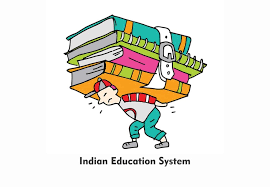
Indian Education is one of the largest and complex education systems in the world along with China. India is committed to providing basic education to its citizens, the framework of which is defined in the National Policy of Education. Elementary education is now compulsory in India. At the time of Independence, only 14% of India’s population was literate. Now after so many decades since Independence, the number of literates has increased by fivefold.
History of Education System
The history of Indian education system comes from the times of Ramayana and Mahabharata. The historic Indian education system is also called the Gurukula system. There were gurus then who are now known as teachers and shishyas who are called students now. The gurus and the shishyas lived together under one roof in Gurukula until the completion of their education. The shishyas were expected to help the guru in all the daily chores as part of their learning. The children belonging to higher strata of the society were taught all the subjects from Sanskrit to Holy Scriptures and mathematics to metaphysics by the gurus. The Gurukulas during those times focused on the practical aspects of life. The students were taught in the open classroom in the surrounding area of nature. This early system of education in India continued for many years until the modern education system came into the picture in the nineteenth century.
In the early 19th century, during the British period, the modern education system was brought into our country by Lord Thomas Babington Macaulay. The basic strength of this modernized education system was the examinations and a well-defined curriculum, which gave importance to subjects like science and mathematics and subjects like philosophy, metaphysics were given a back seat. The brick and mortar classrooms replaced the open classrooms in the Gurukulas. The essence of the guru shishya bond was taken over by a more formal relationship between the teacher and the student. To understand the progress of any student, examinations were conducted at frequent intervals. The focus of the education system shifted from learning to memorizing of the concepts to score good marks in the examinations.
Problems of Indian Education System
Over a period of time, it has been observed that there are many loopholes in the system of education in India. Instead of understanding the concepts, students started cramming and memorizing the lessons. Knowledge is given a backseat and scoring in high rankings takes importance. The modern parents have tuned their mindsets accordingly and their goal is to ensure that their children score good marks instead of acquiring knowledge right from the primary level.
Private schools and colleges have been rapidly increasing in the country but the results produced by them are far beyond satisfactory. It has also been observed that the quality of teachers deteriorated with the passing of time. Our examination system is responsible for the wide skill gap. India is producing lakhs of engineers and professionals every year but only a fraction of this number is actually getting employed. This is because the Indian examination system focuses more on scoring good percentages rather than the actual continuous comprehensive evaluation.
Research and development, which should be the cornerstone of our system, are given the least importance. The private schools and colleges focus on the admission of more students and are least interested in the quality of their education. This is the major reason why the faculties and the teachers lack skills and specialization. This is quite evident from the fact that a single professor is assigned to teach multiple subjects.
How Can We Improve the Indian Education System?
First and most importantly we should improve the grading system. Rote learning should be discouraged completely. Teachers and faculties should focus more on the analytical skills of the students and grade them accordingly. There should be more focus on comprehensive evaluation instead of scoring only good marks. Workshops must be organized for teachers on a regular basis to keep them updated about the latest developments in the sector of education. At the same time, the curriculum should be reframed according to the present needs of education in India.
The payroll structure of the teachers and the faculties especially in the government institutions should be improved. This step will help in motivating the teachers to develop their skills and they will take a keen interest in grooming or shaping up a student’s life and career. The government and other entities who are associated with the education sector, need to understand the importance of quality of education. Education should be a holistic process that must focus on the overall development of the physical, emotional, social and cognitive skills of a child. It needs to be a slow and cyclic process and must take place gradually to help the child develop into an autonomous, independent and knowledgeable individual.
Conclusion
An educated individual is an individual who should be able to contribute towards the betterment of the economic and social development of the society as well as the country. The true goal of education must exceed awarding the degrees and certificates to the students. Education is not a tool to earn livelihood but it is a way to liberate the mind and soul of an individual.
Co-education refers to the education of both boys and girls at the same time. This system has been used by some of our colleges in recent years. This system is favoured by some. This approach, they claim, is quite beneficial. As a result, co-education should be implemented, and existing universities and schools should be made accessible to girls.
Co-education supporters also claim that this system will allow young men and women to become closer and more understanding of one another. This would be extremely beneficial to them in the future. It would also be beneficial to the country’s development. Another argument is that co-education would enhance educational standards by encouraging rivalry between boys and girls.
However, no evidence backs up any of these statements. The educational system as a whole is overworked. Also congested are the girl’s schools and colleges. It is necessary to build hundreds of new educational institutions. The government would not incur any additional costs if some of these were set aside for girls.
Co-education encourages boys and girls to be tolerant of and appreciative of each other’s competitions. It prepares kids to face life’s realities. Education, in its true sense, is more than just learning from books; it is a continuous process of learning more from our surroundings, society, and changing circumstances. It has been recognised that men and women contribute equally in every sphere of society as new vistas of study and professional options have opened up. As a result, there should be no hesitancy in confronting one another; instead, it is preferable to settle any situation with equal effort. This educational approach generates a beautiful mutual understanding in this way.
Advantages of Co-education:
Co-education has numerous advantages. The first is that they provide a wide range of educational opportunities. This is beneficial to kids who want to attend that school. Furthermore, pupils who are exposed to diversity at an early age find it simpler to adjust to a variety of different surroundings.
It also teaches children equality because the teachers treat all students equally. Students compete in all competitions in an equitable and nondiscriminatory manner. It also encourages socialisation by encouraging coexistence.
Because co-educational schools provide a healthy environment for both sexes, students can prepare for the real world in advance. As students connect with everyone, it also develops their communication abilities.
In these schools, students also learn to respect one another and develop self-esteem. Most importantly, these institutes assist pupils in overcoming their apprehensions about the other gender. As they learn in a nice environment together, it helps them overcome their fear of talking to people of the opposite sex.
Disadvantages of co-education:
Lack of attention is one of the most significant downsides of co-education. Because opposite-sex attracts opposite-sex, pupils tend to lose their rage and focus on their schoolwork. Another issue that is frequently observed in co-educational institutions is sexual harassment perpetrated by students.
Conclusion:
To summarize, Co-education is an excellent system that helps students in almost every part of their lives. It is beneficial to children’s overall development since it eliminates the anxiety of interacting with people of the opposite gender. As a result, it prepares them for a world where they will be able to function in a diverse setting with ease. Co-education helps youngsters prepare for life in the real world. In different places and nations, the proportion of mixed gender and single gender schools varies. People, on the other hand, perceive co-education as a sign of a progressive culture. However, both a co-educational and a single-gender school system have advantages. It’s beneficial to provide an option so that individuals can select one based on their unique tastes.
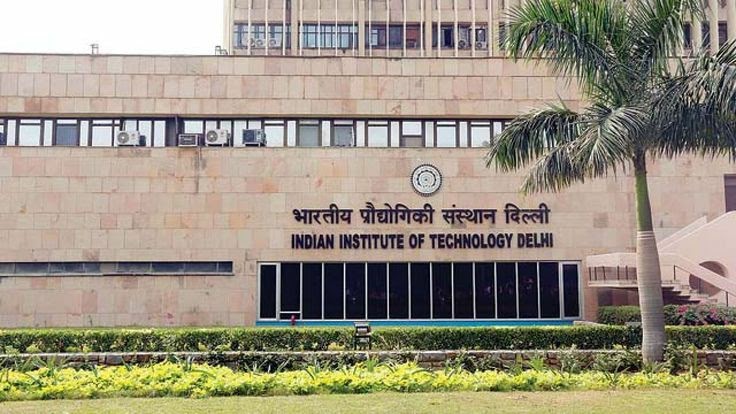
Indian institute of technology (iits) are the most prestigious institution in india. The IITs are autonomous public technical universities located across India students are mostly attached towards iits because of the High package offered in these institutions. It’s quite obvious that the enterance in theses institute need a lot of Hard work and perseverance. The Institutes of Technology Act, 1961 lists twenty-three institutes. Each IIT is autonomous, linked to the others through a common council, which oversees their administration. So here is the list of IITians who excelled in different field like arts, science & technology.
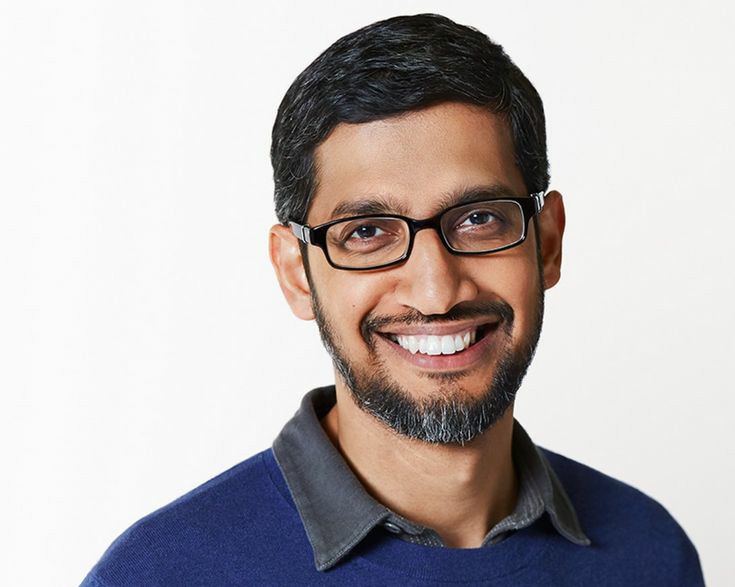
1.Sundar Pichai
Born in Madras, India, Pichai earned his degree from IIT Kharagpur in metallurgical engineering. Moving to the United States, he attained an M.S. from Stanford University in materials science and engineering and further attained an MBA from the Wharton School of the University of Pennsylvania, where he was named a Siebel Scholar and a Palmer Scholar, respectively. Pichai was selected to become the next CEO of Google on August 10, 2015, after previously being appointed Product Chief by CEO, Larry Page. On October 24, 2015, he stepped into the new position at the completion of the formation of Alphabet Inc., the new holding company for the Google company family. He was appointed to the Alphabet Board of Directors in 2017.
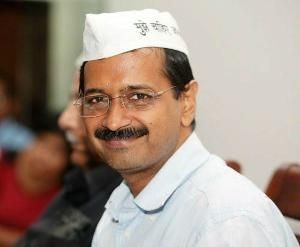
2.Arvind Kejriwal
Arvind Kejriwal is the founder of Aam Admi Party (AAP), and Convenor of the same. He is a politician and a former bureaucrat who is the current and 7th Chief Minister of Delhi since February 2015.In 2006, Kejriwal was awarded the Ramon Magsaysay Award for Emergent Leadership in recognition of his involvement in the grassroots level movement Parivartan using right to information legislation in a campaign against government corruption. The same year, after resigning from Government service, he donated his Magsaysay award money as a corpus fund to found the Public Cause Research Foundation, a non-governmental organization (NGO). He was educated at Campus School in Hisar and at Holy Child School at Sonipat.In 1985, he took the IIT-JEE exam and scored All India Rank of 563.He graduated from Indian Institute of Technology Kharagpur, majoring in mechanical engineering.
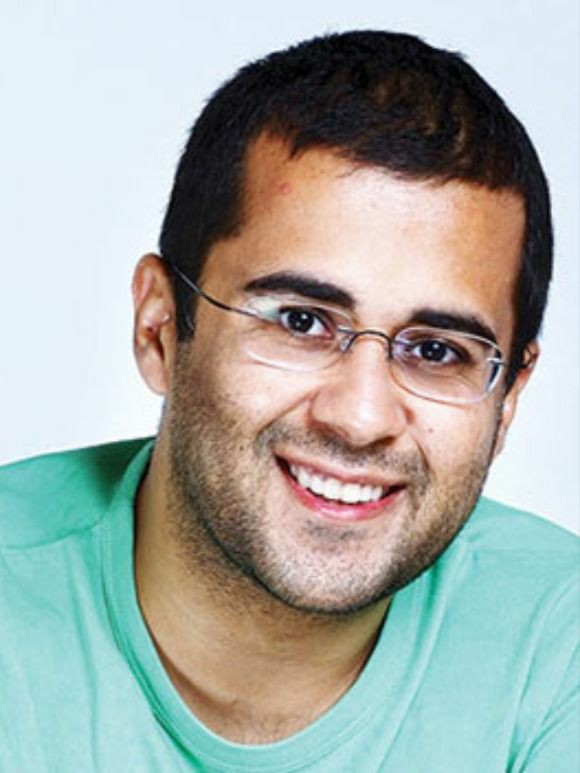
3.chetan Bhagat
Chetan Bhagat is an Indian author and columnist. He was included in Time magazine’s list of World’s 100 Most Influential People in 2010. grew up in Naraina Vihar, West Delhi in a traditional middle-class Punjabi Hindu family. Bhagat graduated with a BTech degree in Mechanical Engineering from the Indian Institute of Technology, Delhi in 1995. Bhagat then went on to do an master’s of business administration degree in marketing from the Indian Institute of Management, Ahmedabad (IIMA) and graduated in 1997.
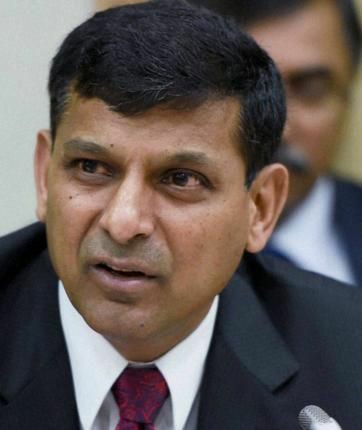
4.raghuram Rajan
Raghuram Govinda Rajan is a indian economist & former governor of the Reserve Bank of India.Between 2003 and 2006 he was Chief Economist and Director of Research at the International Monetary Fund. From September 2013 through September 2016 he was the 23rd Governor of the Reserve Bank of India; in 2015, during his tenure at the RBI, he became the Vice-Chairman of the Bank for International Settlements. In 1981 he enrolled at Indian Institute of Technology Delhi for a bachelor’s degree in electrical engineering. In the final year of his four-year degree, he headed the Student Affairs Council. He graduated in 1985 and was awarded the Director’s Gold Medal as the best all-round student. In 1987, he earned a Master of Business Administration from the Indian Institute of Management Ahmedabad, graduating with a gold medal for academic performance.
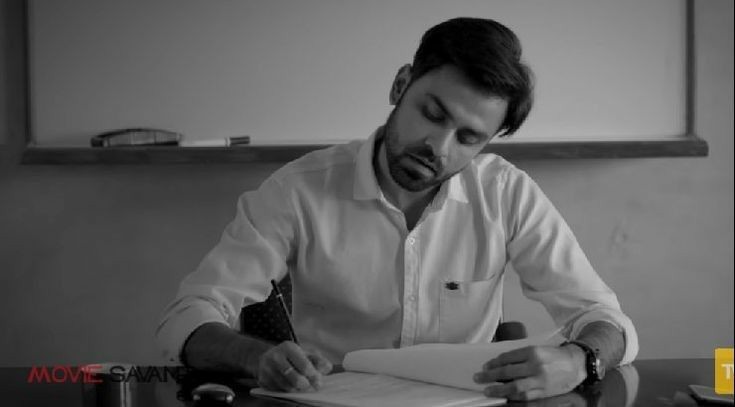
5.Jitendra Kumar
Jitendra is one actor who makes it a point to play relatable characters that we just can’t forget. From Jeetu to Gittu, he has starred in series/movies like Kota Factory, Panchayat, Shubh Mangal Zyada Saavdhan. He has won a Filmfare OTT award in the category of “Best Actor Comedy Series (Male) for portraying Abhishek Tripathi in Amazon Prime’s Panchayat. He did his bachelor’s in civil engineering from IIT Kharagpur .While studying civil engineering at IIT Kharagpur Jitendra kumar started liking acting. Kumar has done many stage plays as the Governor of the Hindi Technology Dramatics Society at IIT KGP where he met Biswapati Sarkar who eventually invited him to join TVF in 2012.
When it comes to education there many boards such CBSE, ICSE, CISCE, NIOS, and etc. But the best two boards are CBSE and ICSE, these are widely accepted in all over the country. In this blog we are going to compare the two boards with their difficultly level, syllabus, preferred language, acceptance, competitive edge, grading system and at last the conclusion.
Introduction
CBSE stands for Central Board of Secondary education, CBSE is a national level board of education controlled by union government of India. It was founded on 3rd November, 1962. There are 21,271CBSE affiliated schools in India and 220 schools in foreign countries. ICSE stands for Indian Certificate of Secondary Education, It was founded on 3rd November, 1958. ICSE is a exam conducted by Council for the Indian School Certificate Examination(CISCE), a private board of secondary education. There are 2,341 ICSE affiliated schools in India.
Syllabus
CBSE syllabus focuses on more theoretical knowledge, whereas ICSE focuses more on practical knowledge. CBSE majorly focuses on Mathematics and Science. ICSE gives equal importance to all subjects including Arts, Humanities, mathematics, science, languages, and etc. CBSE offers only fewer subjects to study, whereas ICSE offers a wide range of subjects like Hindi, Telugu, Tamil, Malayalam, etc. ICSE syllabus is comparatively more than CBSE syllabus.
Difficulty level
ICSE syllabus is more difficult than CBSE, this is because the length of ICSE syllabus is more than CBSE, they have more concepts, more internal assignments, and more practicals.
Mode of language
ICSE gives more important to English, and the mode of language in ICSE is English, it gives there students the leverage to appear standard exams like TOEFL(Test of English as a Foreign Language) and IELTS(International English Language Testing System). Whereas CBSE does not prefer any particular language.
Acceptance
CBSE board is widely accepted than ICSE in India. Whereas in Foreign countries ICSE is more accepted. Students with ICSE board get advantage in Foreign countries.
Grading system
CBSE uses alphabetical grading system like A1, A2, B1, etc. ICSE uses scores for grading system like 8.5, 9.2 etc.
Competitive Edge
CBSE syllabus is helpful for students who are aspiring to crack national examinations like JEE Main, JEE Advanced, Neet etc. Whereas ICSE syllabus help to crack standard examinations like GRE, SAT, TOEFL and IELTS.
Conclusion
Both boards are comparatively good. Both have its own advantages and disadvantages. If you want your child to study in Foreign in future than ICSE might be the best option for you. ICSE help the student in the development of personality traits, communication skills, hone there skills etc. Where as CBSE, help students achieve there dreams like cracking UPSC, NEET, JEE. Also CBSE is widely recognized in all over India. Parents who work in a profession in which there lot of traveling, then CBSE is the best option for them because CBSE schools are widely available as compared to ICSE schools. You can get admission of your child in any CBSE school without any hesitation.
That’s all from my side. I hope you like. I am not discrimination any board, all these are my opinions. Thank you.
Stress is part of being human, and it can help motivate you to get things done. Even high stress from serious illness, job loss, a death in the family, or a painful life event can be a natural part of life. You may feel down or anxious, and that’s normal too for a while. Talk to your doctor if you feel down or anxious for more than several weeks or if it starts to interfere with your home or work life. Therapy, medication, and other stategies help. In the meantime, there are things you can learn to manage stress before it gets to be too much. Consider these suggestions:
Exercise
To start with, physical activity can help improve your sleep. And better sleep means better stress management. Doctors don’t yet know exactly why, but people who exercise more tend to get better deep “slow wave” sleep that helps renew the brain and body. Just take care not to exercise too close to bedtime, which disrupts sleep for some people. Exercise also seems to help mood. Part of the reason may be that it stimulates your body to release a number of hormones like endorphins and endocannabinoids that help block pain, improve sleep, and sedate you. Some of them (endocannabinoids) may be responsible for the euphoric feeling, or “runner’s high,” that some people report after long runs.
People who exercise also tend to feel less anxious and more positive about themselves. When your body feels good, your mind often follows. Get a dose of stress relief with these exercises:
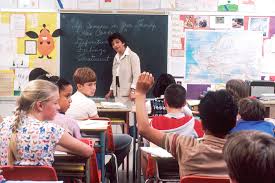
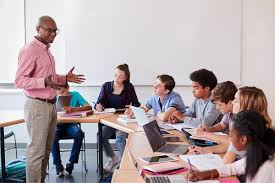
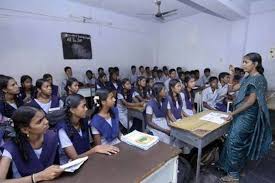
The picture presents before us the familiar sight of a teacher teaching in the classroom. The first bench is paying attention to her. The second bench is busy having fun and so is the third bench. This is my classroom, and that is my class teacher, Mrs Aarti Mishra. She teaches us History and indeed, we are all ears when we listen to her, but some of my classmates do not respect her presence the way they should. Madam tries her best to get them involved in the classroom activities but they usually ignore her. Madam is tremendously talented and goes out of her way to make the class interesting, but more often than not, some students miss out on the solid content that they can learn from her. Ours is a small school where the facilities are limited. For example, we do not have internet in our school, and very few computers. Under these circumstances, the work involved in getting printouts and interesting literature from the Net from a cyber café speaks volumes about our teacher’s dedication.
History can be a very interesting subject when the teacher transforms the classroom into a storehouse of unknown and intriguing facts from the past. This is what Mishra Madam does. The most charming thing about Madam is that she never loses her temper, be it when the backbenchers in the class misbehave or when the Principal simply walks into the classroom ,and starts pulling up students for their indiscipline interrupting an interesting class being given by our teacher. We wish he had the courtesy of respecting the teacher’s presence in the class. But everything changed on that fateful day.
I remember the day clearly. Mishra Madam lost her temper a spoiled brat in our class continuously disturbed the class by whispering, laughing etc. She went and gave the menace a slap on his face and asked him to leave the class. The next day the boy’s influential father came and created a huge scene in front of the classroom. The Principal supported the father instead of our teacher. What was amazing was that the man was abusing the dignity of our school and teacher in public, and he was being allowed to get away with it! Madam left the school premises that very day, never to come back again. Our Principal was nothing more than a servile flatterer. As a peace offering he invited the man to be Chief Guest at our annual function that year. We lost a fantastic teacher, but the school gained a generous ‘friend’ who donated lavishly towards the ‘infrastructural’ development of our school.
At the end of the session, we met Madam Mishra at a neighbourhood library. She smiled cheerfully and welcomed us when we rushed towards her to explain how much we missed her and her wonderful classes. I told her that I wanted to be a teacher like her. She smiled and replied that India is no longer the land where a teacher is treated like God and teaching a religion. She added that my desire to be a teacher would make me swim against the tide. She walked with a pat of encouragement, but to this day I remember her away as a lady who stood apart as a teacher and a human being.
My school is big and has a lot of classrooms. Each classroom is different and special in its own way. For example, we have special classrooms for art, music, history and geography, chemistry, physics and biology, and history and geography. In addition to all this, we have a cabinet of Informational material and gyms.
The largest of all the classrooms for art. It is spacious and transparent and has large windows to make it anything more natural light and walls are white. Benches are placed on the circle so that all of us are sitting next to each other. In the middle of hundreds of teachers of art, as well as her easel, when it from time to time some paint or a draft to show us. On the walls of our work with classes. On Saturdays in the classroom and held an art section in which talented students are leaving and those who love to draw.
Right next to the classrooms for art’s classrooms for music. There is no dock, but only chairs with pads for writing. On the board are drawn lines and it reminds of our sheet music. In the classroom, we also have a grand piano, for which the teacher sits and plays while we sing. There are two speakers, as well as a tape recorder, through which our teacher let various compositions. On the walls are portraits of great artists, such as Mozart, Beethoven, and Vivaldi. Before or after hours, members of the choir of our school here hold their rehearsals with the teacher
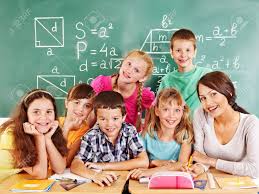
In addition to this special classroom, each class has its own, but they are all quite similar. In each of the walls, bright blue curtains are white, almost translucent. Large neon lights, huge green blackboard with chalk and sponges, chair of the teacher and the bench where we sit two by two. In our classroom, we have always Serbian, math and English, and sometimes other items, especially when they are on the wrong control tasks if they have special classrooms occupied. And finally, a favorite place of all the students, room for a physical in which we play volleyball, basketball or football, gymnastics train, and sometimes table tennis.
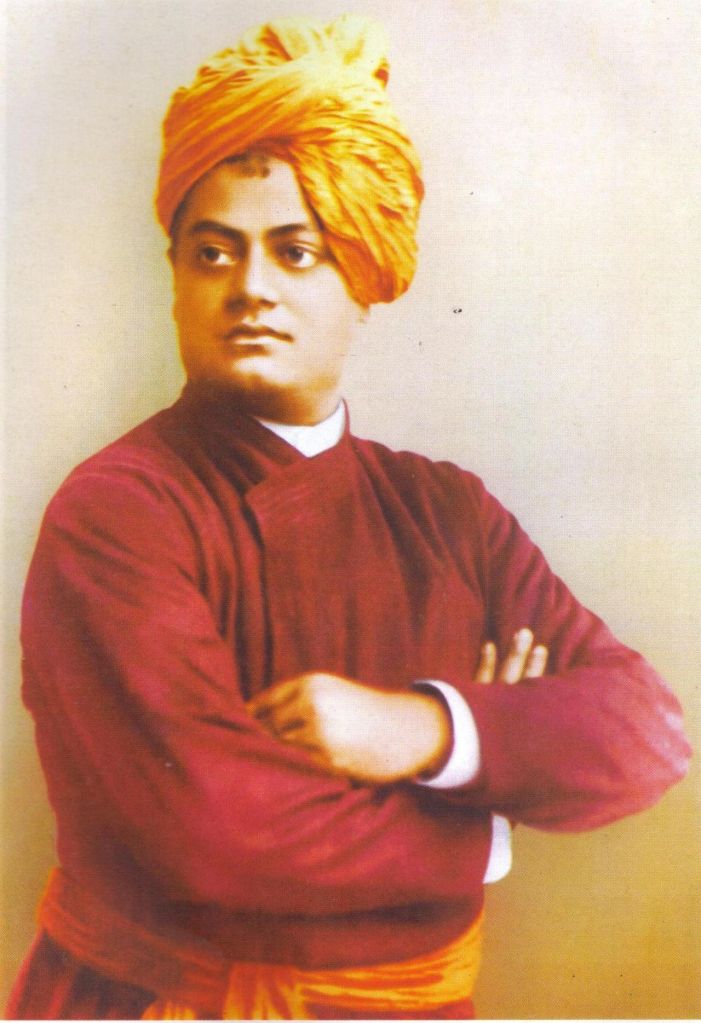
Founder of: Ramakrishna Mission (1897), Ramakrishna Math, Vedanta Society of New York
Philosophy: Advaita Vedanta
Literary works: Raja Yoga (1896), Karma Yoga (1896), Bhakti Yoga (1896), Jnana Yoga, My Master (1901), Lectures from Colombo to Almora (1897) Death: 4 July, 1902
Place of Death: Belur Math, Belur, Bengal
Memorial: Belur math, west bengal
About Swami Vivekanand:-
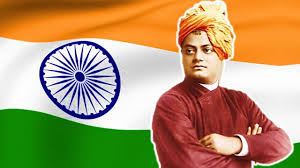
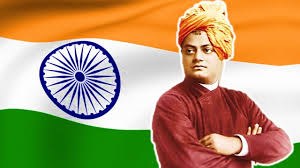
There are some rare men who leave their footprints on the sands of time, becoming a source of motivation for thousands of lost wanderers in the battlefield of life. Swami Vivekananda is one such example. “Come up, o lions and shake off the delusion that you are sheep; you are souls immortal, spirits free, blest and eternal….’ These words of stunning optimism proclaimed the arrival of a prophet- philosopher no less than Swami Vivekananda on the stage of the world. Such were his words that shook the world in the Chicago address on 19 September 1893. A young, educated man, Narendranath Dutta once walked the path of scepticism and even cynicism when it came to religion.
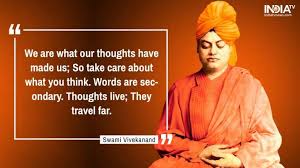
“All the powers in the universe are already our. It is we who have put our hands before our eyes and cry that it is dark.”- –Swami Vivekananda“
A visit to Ramakrishna Paramahansa changed his life. He challenged Ramakrishna’s claims of having seen God. Ramakrishna put his fingers on Naren’s heart, and in a moment of overwhelmingly powerful spiritual vision, Naren discovered God everywhere- from the rich man in his mansion to the poor rickshaw puller on the streets of Kolkata. God was no more a wishful thinking confined to the Kali temple at Ramakrishna’s Dakshineshwar. He was a living entity beyond all limitations of caste, creed, religion, language, time and space. Thus Narendranath Dutta metamorphosed into Swami Vivekananda, a disciple of Ramakrishna. This, however, was merely the beginning. The master, Ramakrishna, had told him before his passing away that he, Naren, would have to do ‘Mother’s work’, to teach mankind and be like a banyan tree, giving shelter to the tired and weary. In January 1891, he left the company of his brother monks and traversed the country from the North to the South alone with God. He wept to see the suffering and ignorance of the poor, and was disturbed at the material complacency of the affluent classes. The picture of ancient India appeared vividly before his eyes in all its grandeur and glory, and the contrast was unbearable. Swamiji set upon himself the task of rebuilding a new and rejuvenated India.
“
“Learn everything that is good from others but bring it in, and in your own way absorb it; do not become others.” –Swami Vivekanand‘.
Be it his journey to America or the lecture at Chicago or the setting up of the Ramakrishna Mission in 1897, his main aim was service to mankind and the rebuilding of a young, vibrant and educated India. · Ramakrishna Mission today is a giant organisation which dedicates itself to the execution of extensive educational and philanthropic work in India and abroad, and expounds the profound Vedantic philosophy preached by Swamiji. The impact Swamiji had on India and across the world can be best understood by the comment made by The New York Herald about his speech at Chicago; ‘He (Swamiji) is undoubtedly the greatest figure in the Parliament of Religions. After hearing him, we see how foolish it is to send missionaries to this learned nation.
“Take up one idea. Make that one idea your life; dream of it; think of it; live on that idea. Let the brain, the body, muscles, nerves, every part of your body be full of that idea, and just leave every other idea alone. This is the way to success, and this is the way great spiritual giants are produced.”
― Swami Vivekananda
Narendranath Dutta was born on 12 January 1863, and Swam Vivekananda passed away on July 4, 1902. But the lionheart with his piercing eyes, mobile lips, swift movements, clad in yellow and orange, shining like the sun of India in the heavy atmosphere of Chicago, lives on in the memory of millions. He inspires every ma in the world to ‘arise, awake, and stop not till the goal is reached.
You have to grow from the inside out. None can teach you, none can make you spiritual. There is no other teacher but your own soul.” ― Swami Vivekananda
If anyone wants to study the origin of the Vedanta movement in America then study Swami Vivekananda travels across the US. He was a great thinker, great orator, and passionate patriot. It is not wrong to say that he was more than just a spiritual mind.
“Be the servant while leading. Be unselfish. Have infinite patience, and success is yours.” ― Swami Vivekananda
Teacher‘s are a blessing for us. They help us in a myriad of ways throughout our life, & help us in achieving different milestone of success. In their honour, we have the teachers day on 5th September, every year. Teacher’s Day is celebrated in many countries around the world. including India. It falls on different days in different countries. In China it is celebrated on 28 September, which is the birthday of the great thinker, Confucius; in India it is celebrated on 5th September, the birthday of Dr Sarvapalli Radhakrishnan, a highly respected teacher who became the President of India.
The story behind it’s origin in India:
The story goes that when Dr Radhakrishnan became the country’s President in 1962, some of his students and friends went to him and requested him to allow them to celebrate his birthday. Dr Radhakrishnan replied, Instead of celebrating my birthday separately, it would be my proud privilege if 5th September is celebrated as Teachers’ Day.’ In our school, we start preparing for Teachers’ Day about a week before 5th September. Since we put up a variety entertainment for our teachers on that day, we first get together to decide what exactly we will do.
This day is celebrated with great Rejoicment throughout the world. We put up a variety entertainment for our teachers on that day. Every year there were songs, dances, skits, mimicry, and recitation. year It is the duty of the School Captain to prepare a speech in praise of our teachers. This year’s Captain used a quote that has stuck in my memory: ‘to teach is to touch lives forever.’ Then there is the important matter of choosing Teachers’ Day greeting cards. I check the words in my cards very carefully, to make sure they are suited to the teachers for whom they are meant. There is no point in giving a very funny card to a very serious teacher, is there? We pool our money to buy our class teacher a very special present. For our ‘subject teachers’ we buy smaller presents.
On Teachers’ Day, we go to school early to decorate our classrooms, and the best artist in the class writes Happy Teachers’ Day’ on the blackboard in big, bold letters. When the class teacher arrives, the monitor puts a ceremonial scarf around the teacher’s neck, while another pupil presents the gift or gifts. The teacher thanks us and takes his place in the last row among the students. Some bright student, who is dressed up as a teacher for the occasion, conducts a mini-class on a subject that he has chosen. Then the bell rings, and the whole school goes into the hall for the entertainment programme. This lasts for two hours, and by the time it ends, it feels wonderful for a teacher to be a teacher, and a student to be a student!
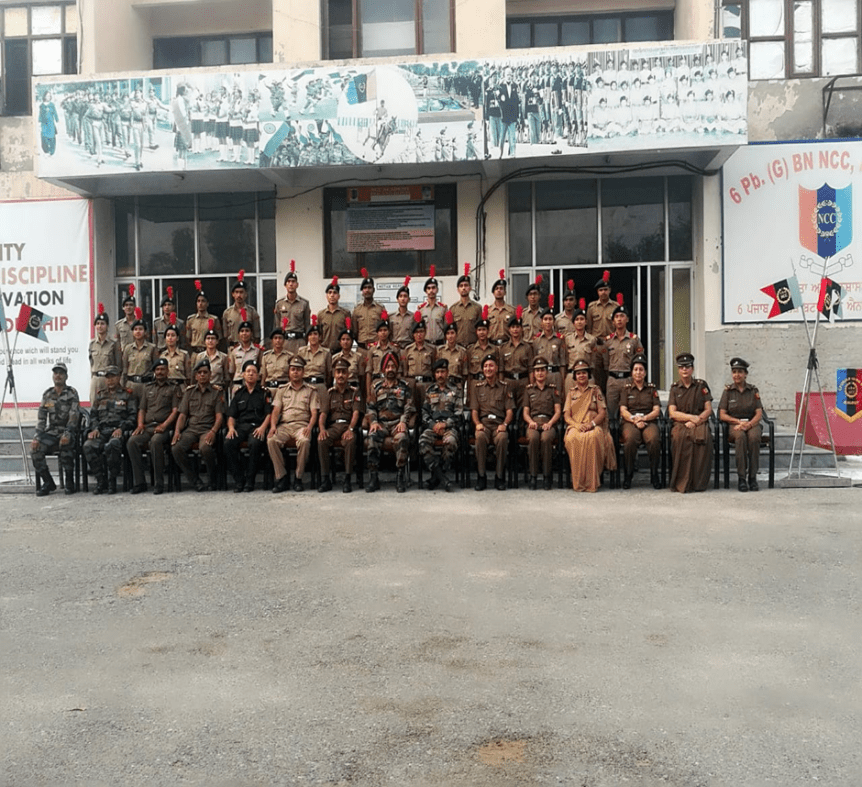
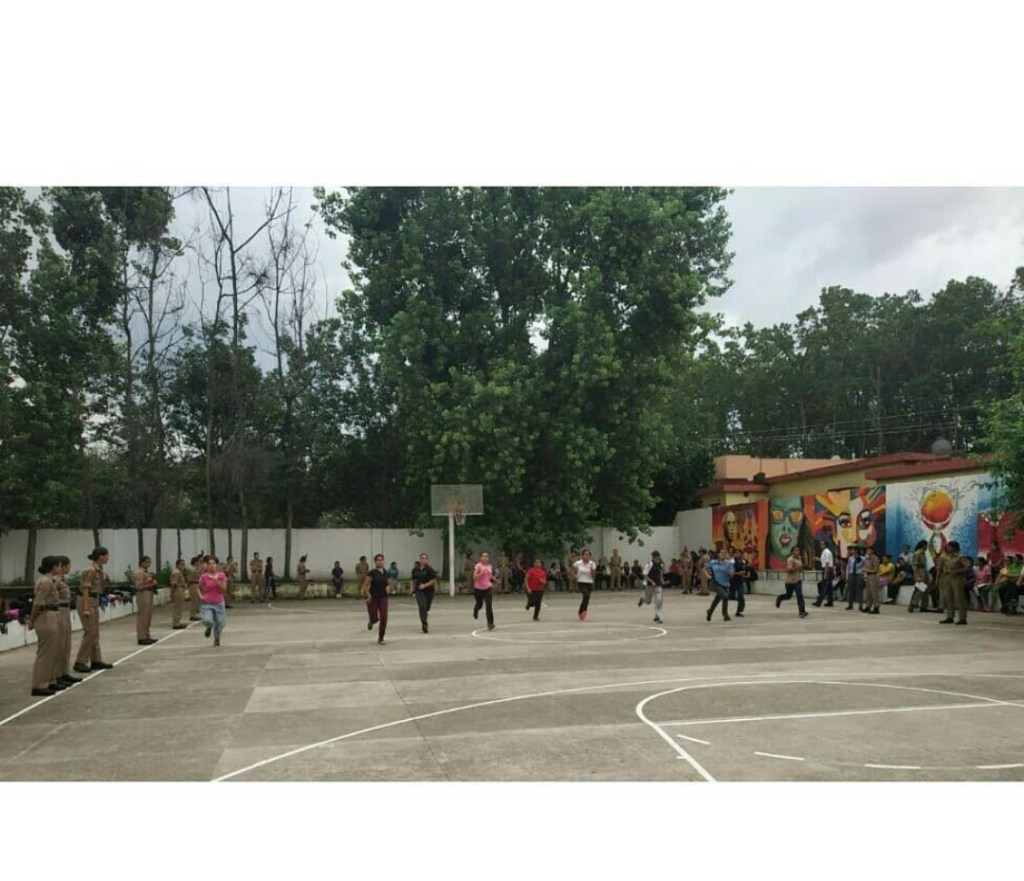
NCC- National Cadet Corps had been my acquaintance for 3 years and I have gained so much from that organisation which I don’t think could have been achieved from any other institution. My journey started when I took admission in Graphic Era Hill University. I have always been inclined towards sports and extra curriculum from my school so when I joined college, I opted NCC for taking my first step towards joining the defence forces.
NCC has given so much which has prepared me for my life. During my first year I felt totally different as I got introduced to different things like Drill, Ragda (Punishment), a uniform which only a few were able to dawn. I had never come across to these things before in my life. When I wore that uniform, I used to get a feeling of pride and fulfilment. The most important values that I learned in NCC are Discipline, Punctuality and Unity. In my first year I attended CATC camp where several competitions were held like Public speaking, Dance competition, Group song, Drill selection test and many more, this camp made me realize that NCC is not just about being physically active rather it’s about the overall development of a person. Those 10 days of CATC can never be forgotten.
After completing my 1st year, I was promoted to the rank of corporal in my 2nd year which was my 1st step towards knowing what leadership is all about. Various rallies and walkathon were organized by us to make mass aware of various concerned issues like cancer, blood donation, Drugs, cleanliness and “Beti bachao beti padhao” initiative. Cadets used to walk long distances to spread the awareness. The 2nd year was a two-sided opportunity where I got trained as well as trained my juniors.
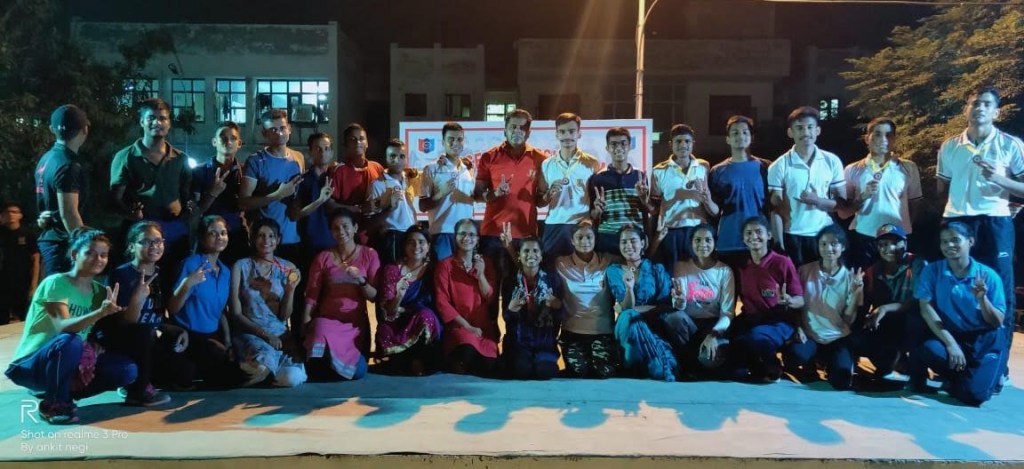
When I got into my 3rd year I was promoted to the rank of sergeant. My mates and I did selection of new cadets and it gave us a sense of responsibility. In the CATC camp I was the Master of Ceremony. After that I attended Advance Leadership Camp which was held at Malout, Punjab by 6 (Pb.) girls battalion for 12 days, 5 cadets from Dehradun were selected and I got the opportunity to be in that group of 5. Cadets from different states of India participated in the camp and we all made a great bond with one another. There were training sessions on leadership as well as SSB. Activities like lecturette and Group Discussions were organized in groups. Cultural competition was also held in which Uttarakhand directorate won 1st and 2nd prize in dance and singing competition respectively. In Tug of war Uttarakhand Directorate stood 2nd. It was overall a worldliness camp where I represented my State, my unit and my college and it was so overwhelming for me to leave that camp with so much of experience, it gave me a sense of pride.
This was all about my journey in NCC. I passed out with Alpha grading in my ‘C’ certificate examination and most importantly I became a self-confident, an outspoken and a learned person who aspires to touch the sky with glory.
Developers spend countless hours solving business problems with code. Then comes a never ending part where ops team’s turn to spend countless hours figuring out how to get the code that developers write up and running on whatever computers are available and making sure those computers operate smoothly. Serverless computing represents an enhancement of cloud programe models, abstraction, and platforms, and is a command to the attainment and wide acceptance of cloud technologies.
What is serverless computing?
Serverless computing is a cloud computing implementation model in which the cloud provider deals with machine resources on demand, taking care of the servers on behalf of their customers. It does not hold resources in volatile memory; computing is rather done in short bursts with the results persisted to storage. When an app is not in use, there are no computing resources allocated to the app. It is an execution model for the cloud in which Some of the Common languages supported by serverless runtimes are Java, Python and PHP. Amazon’s AWS Lambda was the first serverless platform and it defined several key dimensions including cost, programming model, deployment, resource limits,security, and monitoring. Supported languages include Node.js, Java, Python, and C programming. Initial versions had limited composability but this has been addressed recently.
Current trend
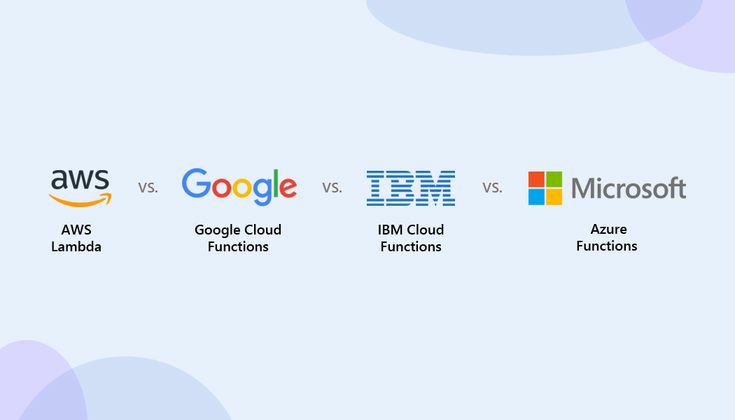
1.Google Cloud Functions : It provides basic FaaS functionality to run serverless functions written in Node. The functionality is currently limited but expected to grow in future versions.
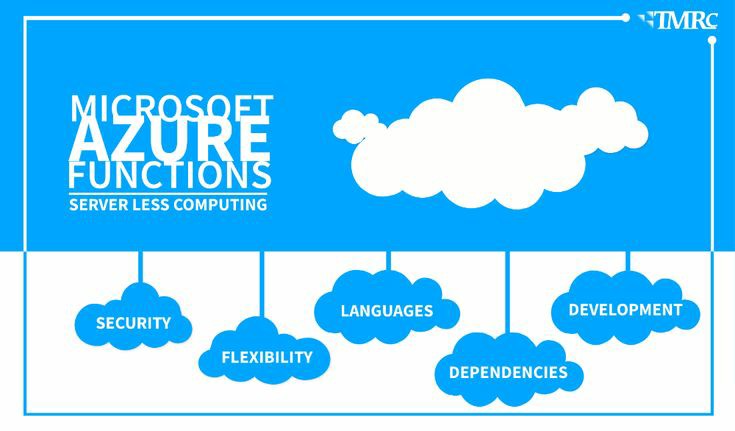
2.Microsoft Azure Functions: It provides HTTP webhooks and integration with Azure services to run user provided functions. The platform supports C , Node.js, Python, PHP, bash, or any executable. The runtime code is open-source and available on GitHub under an MIT License. To ease debugging, the Azure Func-tions CLI provides a local development experience for creating, developing, testing,running, and debugging Azure Functions.
3.IBM OpenWhisk provides event-based serverless programming with the ability to chain serverless functions to create composite functions. It supportsNode.js, Java, Swift, Python, as well as arbitrary binaries embedded in a Docker Container. OpenWhisk is available on GitHub under an Apache open source license.Besides There are several serverless projects ranging from open source projects to vendors that find serverless a natural fit for their business. OpenLambda is an open source serverless computing platform. The source code is available in GitHub Lunder an Apache License. It’s paper outlines a number of challenges around performance such as supporting faster function startup time for heterogeneous language runtimes and across a load balanced pool of servers, deployment of large amounts of code, supporting stateful interactions (such as HTTP sessions), etc
4.AWS Lambda: It is a serverless compute service that lets you run code without provisioning or managing servers, creating workload-aware cluster scaling logic, maintaining event integrations, or managing runtimes. With Lambda, you can run code for virtually any type of application or backend service – all with zero administration. Just upload your code as a ZIP file or container image, and Lambda automatically and precisely allocates compute execution power and runs your code based on the incoming request or event, for any scale of traffic. You can set up your code to automatically trigger from over 200 AWS services and SaaS applications or call it directly from any web or mobile app. You can write Lambda functions in your favorite language (Node.js, Python, Go, Java, and more) and use both serverless and container tools, such as AWS SAM or Docker CLI, to build, test, and deploy your functions.
Advantages
1.No infrastructure to maintain :Serverless computer services, which are small snippets of code meant to execute a single function are executed on pre-existing servers that run functions for countless other customers as well. Since you’re literally using someone else’s computer to execute your serverless functions, there’s no infrastructure to maintain it.
2.No costs : when functions aren’t running As Hacker Noon points out, the costs associated with serverless computing are minimal compared to other cloud services. Access authorization, presence detection, security, image processing, and other costs associated with operating a server, whether physical or virtual, are eliminated under a serverless model. In short, serverless functions can be dirt cheap, and if they aren’t being spun up for use, you aren’t paying anything.
3.Infinitely scalable : Automatic scaling capability of any serverless platform worth investing in is designed to scale based on need. That’s another advantage to serverless computing as there’s never a need to partition a new cloud server or purchase additional computing power for an existing instance. All of that is handled by the serverless computing platform, leaving you with no complication outside of a slightly larger bill for additional computing time.
4.Reduced latency : Cloud flare points out that using serverless functions can greatly reduce the latency experienced by end users. Serverless functions don’t operate from an origin server, so there’s no single location that an end user’s traffic has to be directed to.
5.Reduced software complexity : Serverless computing functions don’t need to take any of that into account–the code just has to be supported by the cloud platform being used. On top of being easier to build, serverless functions require a lot less coding knowledge to build, which opens up development to those at lower skill levels. As cloud native systems inherently scale down as well as up, these systems are known as elastic rather than scalable. Small teams of developers are able to run code themselves without the dependence upon teams of infrastructure and support engineers; more developers are becoming DevOps skilled and distinctions between being a software developer or hardware engineers are blurring.
Disadvantages
1.Security issues : server that runs serverless functions runs them for myriad customers, which opens up a lot of security concerns.
2.Vendor lock-in : Building serverless functions on one platform can mean that migrating to another is difficult. Code might need to be re-written, APIs that exist on one platform may not exist. you’re going to invest in a serverless platform, be sure the vendor you’re considering has everything you need because becoming unhappy with your serverless computing provider a few months or years into your service can be a major problem.
3.Debugging is more difficult : Every time a serverless instance spins up it creates a new version of itself, and that means it’s difficult to collect data necessary to debug and fix a serverless function. Debugging serverless functions is possible, but it’s not a simple task, and it can eat up lots of time and resources.
Conclusion
Evolution of the trend towards higher levels of abstractions in cloud programming models, and currently exemplified by the Function as a Service (FaaS) model where developers write small stateless code snippets and allow the platform to man-age the complexities of scalably executing the function in a fault tolerant manner.This seemingly restrictive model nevertheless lends itself well to a number of common distributed application patterns, including compute intensive event processing pipelines. Most of the large cloud computing vendors have released their own serverless platforms.
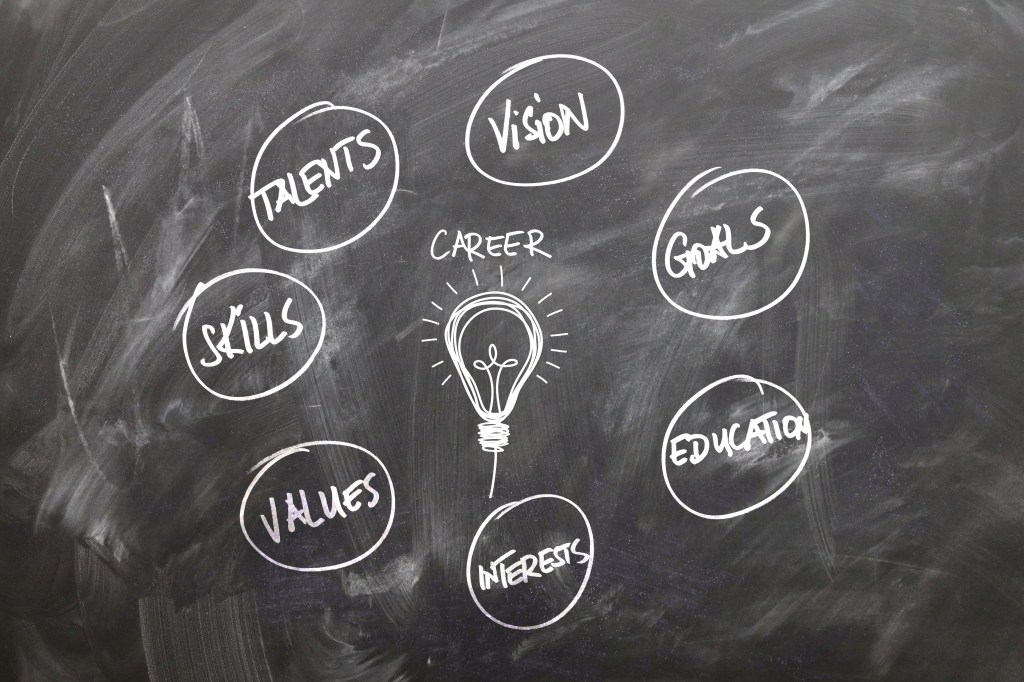
One time will come we have choose our career. The decision is very important because whole life we will in that career only. So, we have to think carefully and take decision. In this blog, I am going to tell you the career option available after 12th class.
CAREER OPTIONS AFTER 12TH CLASS
Bachelor of Commerce(B.com)
If a student is interested in commerce, then he should take b.com. Commerce is a popular course in India, many students take commerce in their high school only. There are many opportunities in commerce. The duration of this course is 3 years. The b.com degree is divided into 6 semesters including economics, corporate tax, company law, auditing, business management, etc. The average salary of a b.com graduate is 4 lakhs per annum.
Eligibility criteria
Student should have passed class 12 with any stream.
Student must secure at least 50 percent of the marks in 12 class.
Top colleges for b.com
Chandigarh University
Loyola college
Shri Ram college of commerce
Bachelor of Technology( B.tech )
If a student is interested in engineering, then he should go with b.tech. B.tech is also a popular course in India. The duration of this course is 4 years. The average salary of a b.tech graduate depends on your branch. There are many streams in b.tech like
Computer science engineering.
Electrical and Electronics engineering.
Aeronautical engineering.
Mechanical engineering.
Civil engineering
Electrical and communication engineering and many more.
Eligibility criteria
Students must have passedclass 12 with physics, chemistry and mathematics(PCM) only.
Student must have secured at least 60 percent of the marks in 12 class.
Top colleges for b.tech
Indian Institute of Technology, Bombay.
Indian Institute of Technology, Delhi.
National Institute of technology, Trichy.
Indian Institute of Technology Madras
Birla Institute of Technology, Pilani.
National Defense Academy(NDA)
Students who are interested in Defense and army side, should go with NDA. NDA imparts training to young cadets, who choose the Armed Forces as their career. The training equips the cadets with mental, moral and physical attributes required to cope with the challenges of the future battlefield. To join NDA student must write NDA entrance exam.
Eligibility criteria for NDA entrance exam
For Army wing, student should have passed or appearing in 12th class from a recognized board.
For Navy or Airforce wing student should have passed or appearing class 12th with physics, chemistry, and mathematics.
Only unmarried male candidates are eligible.
Students appearing in class 11 are not eligible.
Candidate’s nationality should be Indian.
Chartered Accountant (CA)
If you are interested in accounting and financial audits then you should go with CA. A Chartered Accountant is a professional practice of accounting, auditing, taxation, financial assessment for organization. The duration of the course is 5 years. The average salary of a charted accountant is 7 lakhs per annum. To join CA, you have to write a entrance exam called Common Proficiency Test (CPT). The exam is conducted twice in a year.
Eligibility criteria for CPT
Students must have passed class 12 with a recognized board
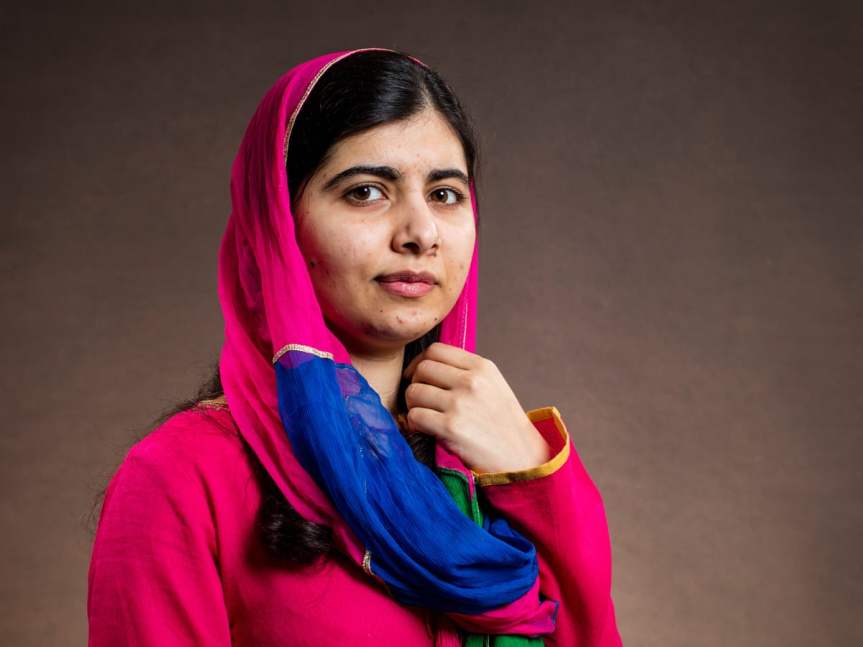
“We realize the importance of our voices only when we are silenced.” Malala Yousafzai, a teenager known throughout Pakistan for her advocacy on women’s education and women’s rights. Standing up for women’s progress can be a risky business in countries like Afghanistan and Pakistan where vicious Islamic extremists have a strong foothold. She has publicly spoken for women education was shot in the head by the Taliban, in an attempt to silence her. She survived.
This near to death experience gave her a voice which could not be supressed and that progressed to her earning the Noble Prize when she was just 17, she has been continuing to fight for female education and her global scale has been increasing ever since. In Malala’s gripping book she tells a story of faith, hope and bravery.
Circumstances which brought her to the front of an international scene on female education are heart-wrenching and tragic, that involved Taliban taking over Pakistan, being forbidden to attend school because of her being a girl and was asked to stay at home and being shot in the head by the deadliest terrorist group in the world back in 2012. These are the situations which many would not be able to sail through, most would abandon and drown will fighting for what is right. But she did not budge. She kept a fierce front and continued to advocate for education for girl’s and women. After going through hell, her voice is stronger than ever and is also supported globally.
Overview–
In the first half of the book, she describes the history of Pakistan, her family’s ancestors and Swat, which is the northern region of Pakistan where she used to live as a kid. She shares anecdotes about her childhood, her family. She gives the reader a glimpse of Pakistan through a women’s approach. Malala’s father founded the local school which she attended growing up, from a young age, she demonstrated strong character and soon began to ask her father why were women being treated so poorly in Pakistan. In response, he told Malala about Afghanistan, where the Taliban burned schools for young girls and forced them to wear full burkas. Her father’s goal was to make her understand that the poor treatment of women in Pakistan was actually not that bad, when he compared to the way women were treated in Afghanistan. This book is almost about her father, Ziauddin, who is a teacher, headmaster and a local activist. He is the dominant influence in Malala’s life and has been consecutively criticized for encouraging his intelligent child to be outspoken in a dangerous environment. According to Malala’s perspective, her father feels guilt and felt responsible for what had happened to her, but also is proud of her bravery and accomplishments. Ziauddin is a very progressive man in Western terms and considering where he belongs from. Her father is the leader of the local environmental movement, champion of girls’ education, woman’s rights advocate He has challenged the Taliban repeatedly at many public events. In one of the most memorable scenes from the book, Taliban mullah who was a local who was accompanied by village leaders, pay an evening call on the Yousafzai home to demand that Ziauddin needs to stop educating girls. Her dad not only pushes them back, but he also he kicks them out of the house. Malala carefully sees that her father speaks out in support of his ideals. she is heavily influenced by the conduct of her parents. She learns her father’s ideals and develops with her own impressive smartness, talent, bravery and determination. Malala’s fierce advocacy on behalf of girls’ education and women’s right is clear and forthright as her father’s. When the Taliban threats finally had shut down her school, she tells the journalists that: “They cannot stop me. I will get my education if it’s at home, school or some other place.” She has a mind of her own. She has her own voice as well. She conveys with humour, that her father is a romantic and idealistic man and her mother, is an illiterate Pashtun woman, who keeps the family grounded. It will be very interesting to see how, as she grows older, Malala will inculcate the strong and different models presented by her parents. This book has raised many questions, In the year 2012, one of her impactful speeches led to a group of Taliban militants stopping her school bus on the way back home and shooting her in the head. Thankfully, Malala survived although she had to flee from her country her home and now lives in the United Kingdom continuing her fight for women’s right to education and their rights.
Final Thoughts:
this book should be used around the world to teach the importance of education and what impact it can make. It is an extremely powerful book. Malala is someone we can all get inspired from. When you are reading this book, you will easily forget that she was just a child when most of these unfortunate events happened. This book is a fast read. It is suitable for people who are specialists in the region and ordinary people who are seeking to improve their knowledge of Pakistan, but will be especially engaging for those who are interested in the story of this inspiring young woman, whose life goals and contributions to the global community are just beginning. She used her misery and her tragic past to build a cause that matters and helps to solve the problems she sees as pressing. The fight is still going on and its needs our undivided attention.










 Eduindex
You must be logged in to post a comment.