Initiatives for affordability of education

 The Government continuously endeavours to make education more affordable and prevent commercialization of it. In this regard, All India Council for Technical Education (AICTE) has accepted the recommendations of National Fee Committee for the maximum Tuition and Development Fee for the Programme(s) and requested all the State/ UT Governments to adhere to these recommendations. These recommendations have also been included in the Approval Process Handbook of AICTE.

To provide financial assistance to the students, Ministry of Education is implementing schemes namely Central Sector Scheme of Scholarship for Colleges and University Students (CSSS), Special Scholarship Scheme for Jammu & Kashmir (SSS for J & K) and Central Sector Interest Subsidy Scheme (CSIS). The AICTE is also implementing a number of scholarship schemes namely Post Graduate (PG) Scholarship, Saksham Scholarship Scheme for specially abled students, Pragati Scholarship Scheme for Girl Students, AICTE Doctoral Fellowship (ADF), etc.  In addition to it, University Grants Commission (UGC) also provides scholarship under different schemes namely “IshanUday” Special Scholarship Scheme for North Eastern Region, P.G. Scholarship for University Rank Holders, Junior Research Fellowship in Science, Humanities and Social Sciences, BSR Fellowship and Emeritus Fellowship etc.

Studies through Online and Multimedia

 To facilitate the online learning by all students a comprehensive initiative called PM eVIDYA has been initiated as part of AtmaNirbhar Bharat Abhiyaan on 17th May, 2020, which unifies all efforts related to digital/online/on-air education to enable multi-mode access to education. The initiative includes:

  • DIKSHA the nation’s digital infrastructure for providing quality e-content for school education in states/UTs and QR coded Energized Textbooks for all grades (one nation, one digital platform). Till date (25.11.2021) DIKSHA has more than 402 crores learning sessions, more than 4,844 crore learning minutes and more than 2,730 crores page hits with more than 5 crore average daily page hits. A total of 2,27,704pieces of e-contents are live on DIKSHA as on date.
  • One earmarked SwayamPrabha TV channel per class from 1 to 12 (one class, one channel): The same content is simulcast through YouTube and Jio channels, where the viewership as per latest data is 7,48,06,128.
  • Extensive use of Radio, Community radio and CBSE Podcast- ShikshaVani: 3,211 pieces of curriculum-based radio programmes (Classes 1 -12) for its dissemination/ broadcast on 230 Radio Stations (18 GyanVani FM Radio Stations, 80 Community Radio Stations), 132 All India Radio stations, Podcasts on iRadio and JioSaavn Mobile apps.
  • Special e-content for visually and hearing impaired developed on Digitally Accessible Information System (DAISY) and in sign language on NIOS website/ YouTube:  In all 767 textbook based ISL videos recorded. Out of these 510 textbook based on ISL videos are uploaded on DIKSHA. Out of 10,000 word ISL dictionary words, all 10,000 ISL dictionary words have been uploaded on DIKSHA. 3,142 audio books chapters are also uploaded on DIKSHA. The data given w.r.t. DIKSHA usage, includes this e-content.

67th Convocation of IIT Kharagpur

 The determination of our new generation, spirit of enterprise & innovation and strength of educational institutions has resulted in India achieving many remarkable feats in the 21st century, including administering more than 130 crore COVID jabs, said Union Education and Skill Development Minister Shri Dharmendra Pradhan at the 67th Convocation of IIT Kharagpur.

Shri Pradhan said as we celebrate Amrit Mahotsav, he feel privileged to be at the temple of learning, a place where many of our freedom fighters, including the great Jayee Rajguru fought for freedom. IIT Kharagpur has shaped the national discourse and contributed to India’s growth since inception, he added.

The Minister stated that there are more than 50 crore children between the age of 3 and 23 and there is an enormous opportunity in equipping this population with the right education & skills. Critical mindset, qualitative workforce will help India to drive the global economy in the 21st century,he added.

Shri Pradhan expressed that low-cost innovative alternative energy models, innovation in specialised areas of semiconductor chip manufacturing will not only lead to economic empowerment and job creation, it will also lead to Purvodaya and a self-reliant India. He further said that life is unimaginable without ‘Energy & Internet’, a fact further accentuated in the present times. By 2035 India will be the number one energy consumer. India’s climate leadership has resulted in our country having the most conducive alternate energy business climate, he added.

Reiterating Prime Minister Shri Narendra Modi’s call for innovation during the inauguration of Kashi Vishwanath Dham, the Minister encouraged the students to ‘Innovate to empower the marginalised’ and to ensure developmental strides in every sphere.

The Minister expressed his confidence that IIT Kharagpur will be the epicentre in adding momentum to the spirit of Aatmanirbhar Bharat and in placing India at the top of the emerging new world order. The intellectual prowess and excellence of students here will make them pioneers of new thought leadership.He extended his best wishes to the students who have graduated today and all the students & distinguished alumni who have received medals and awards.

Providing education to all children

 The Right of Children to Free and Compulsory Education (RTE) Act, 2009, mandates the appropriate Government to provide free and compulsory elementary education to every child of the age 6 to 14 years in a neighbourhood school.

In pursuance of Section 6 of the Act, the States which are the appropriate Government for schools falling under their jurisdiction, have notified area or limits of their neighbourhood norms in their state RTE Rules, factoring in their State specific condition, for opening of schools.

As reported by States/UTs in their respective Annual Work Plan and Budget, 2021-22, 97.49% and 97.01% of habitations in the country are covered by primary schools and upper primary schools respectively. The habitations that remain uncovered are mostly small or sparsely populated in difficult areas where opening of school is not feasible for which there is a provision of giving transport and escort facility and opening of residential schools and hostels.

Under the centrally sponsored scheme- Samagra Shiksha, financial assistance is provided to States and UTs for undertaking various activities to reduce number of Out of School Children (OoSC) including opening/strengthening of new schools upto senior secondary level, construction of school buildings & additional classrooms, setting up, up-gradation and running of Kasturba Gandhi Balika Vidyalayas, setting up and running of Netaji Subhash Chandra Bose Avasiya Vidyalayas, provision of free uniforms, free text books to the eligible students at elementary level, transport allowance and undertaking enrolment & retention drives. Further, special training for age appropriate admission of out of school children and residential as well as non-residential training for older children, seasonal hostels / residential camps, special training centres at worksites, are also supported to bring out of school children to the formal schooling system. Further, under the student oriented component for the children with special needs, financial assistance is provided for identification and assessment of children with special needs, aids and appliances, braille kits and books, appropriate teaching learning material and stipend to girl students with disability etc.

Also, under ‘Pradhan Mantri Poshan Shakti Nirman’ (PM POSHAN) one hot cooked meal in Government and Government aided schools is provided to students at the elementary level of education. Also, Section 10 of the RTE Act states that it shall be the duty of every parent or guardian to admit or cause to be admitted his or her child or ward, as the case may be, for elementary education in the neighbourhood school.

Under Samagra Shiksha, for the first time in 2021-22, financial assistance upto Rs. 2000 per annum per child has been provided for supporting Out of School Children of age group of 16-19 years, belonging to socio economically disadvantaged groups, for completing their education through NIOS/SIOS, for accessing course materials and certification. Also, under National Means-cum-Merit Scholarship Scheme, scholarship is awarded to meritorious students of economically weaker sections to arrest their drop out at class VIII and encourage them to continue the study at secondary stage.

The information was given by the Minister of State for Education, Smt. Annpurna Devi in a written reply in the Rajya Sabha today.

What is SWAYAM

SWAYAM is a programme initiated by Government of India and designed to achieve the three cardinal principles of Education Policy viz., access, equity and quality. The objective of this effort is to take the best teaching learning resources to all, including the most disadvantaged. SWAYAM seeks to bridge the digital divide for students who have hitherto remained untouched by the digital revolution and have not been able to join the mainstream of the knowledge economy.

This is done through a platform that facilitates hosting of all the courses, taught in classrooms from Class 9 till post-graduation to be accessed by anyone, anywhere at any time. All the courses are interactive, prepared by the best teachers in the country and are available, free of cost to any learner. More than 1,000 specially chosen faculty and teachers from across the country have participated in preparing these courses.
The courses hosted on SWAYAM are in 4 quadrants – (1) video lecture, (2) specially prepared reading material that can be downloaded/printed (3) self-assessment tests through tests and quizzes and (4) an online discussion forum for clearing the doubts. Steps have been taken to enrich the learning experience by using audio-video and multi-media and state of the art pedagogy / technology.
In order to ensure that best quality content is produced and delivered, nine National Coordinators have been appointed. They are:
AICTE (All India Council for Technical Education) for self-paced and international courses
NPTEL (National Programme on Technology Enhanced Learning) for Engineering
UGC (University Grants Commission) for non technical post-graduation education
CEC (Consortium for Educational Communication) for under-graduate education
NCERT (National Council of Educational Research and Training) for school education
NIOS (National Institute of Open Schooling) for school education
IGNOU (Indira Gandhi National Open University) for out-of-school students
IIMB (Indian Institute of Management, Bangalore) for management studies
NITTTR (National Institute of Technical Teachers Training and Research) for Teacher Training programme
Courses delivered through SWAYAM are available free of cost to the learners, however learners wanting a SWAYAM certificate should register for the final proctored exams that come at a fee and attend in-person at designated centres on specified dates. Eligibility for the certificate will be announced on the course page and learners will get certificates only if this criteria is matched. Universities/colleges approving credit transfer for these courses can use the marks/certificate obtained in these courses for the same.
School
Education
NIOS
NCERT
Out-of-School
Education
IGNOU
NITTTR
Under-Graduate
Education
NPTEL
AICTE
CEC
IIMB
Post-Graduate
Education
NPTEL
AICTE
IIMB
UGC
Credit Transfer
UGC has already issued the UGC (Credit Framework for online learning courses through SWAYAM) Regulation 2016 advising the Universities to identify courses where credits can be transferred on to the academic record of the students for courses done on SWAYAM. AICTE has also put out gazette notification in 2016 and subsequently for adoption of these courses for credit transfer.
The current SWAYAM platform is developed by Ministry of Education and NPTEL, IIT Madras with the help of Google Inc. and Persistent Systems Ltd.
Guideline for Developing Online
Courses for SWAYAM
University Grants Commission Gazette: Credit Framework
for Online Learning Courses
through SWAYAM
All India Council for
Technical Education Gazette:
Credit Framework for Online Learning Courses
through SWAYAM

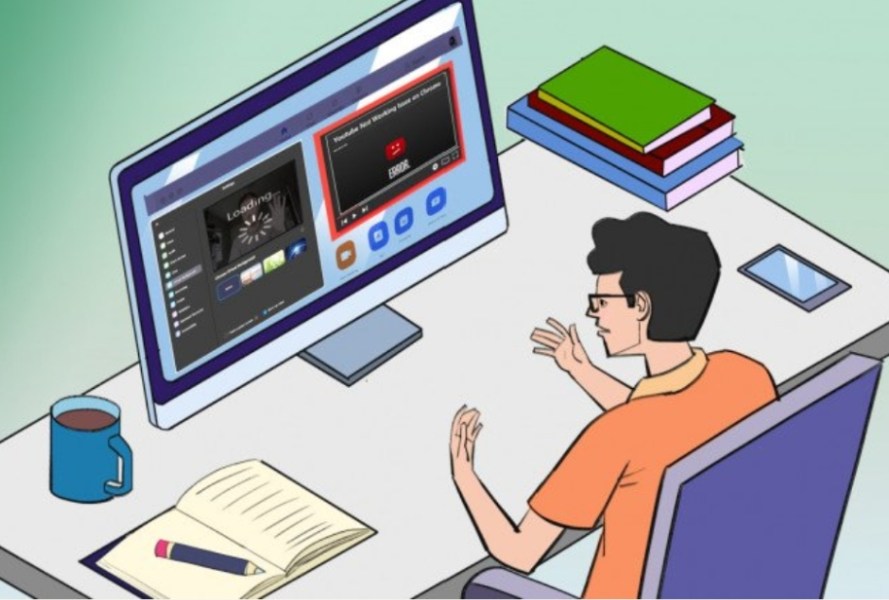
ONLINE EDUCATION

WHAT IS ONLINE EDUCATION:-

A classroom is method of using cell phones and computers to make teacher and student in connection.This method of education is popularized during the corona.

ONLINE EDUCATION IS EFFECTIVE:-

In my perception online education is not that much effective when compare to the offline classes.Because we started schooling in offline class,Immediate change in method is not acceptable.In offline class we can ask doubts.But in online classes some not get good network.

ADVANTAGES OF ONLINE EDUCATION:-

* It reduce financial costs for students in transportation,meals.

* we can feel more comfortable than offline class.

* Another advantage of online education is that it allows students to attend classes from any location of their choice.

* online lectures can be recorded, archived, and shared for future reference.


DISADVANTAGES OF ONLINE EDUCATION:-

* Little or no face-to-face interaction.

* In online education we have to see screen more time cause headache,damage eyes.

* Another disadvantage is some have network issues unable to ask questions.

* Online courses require more time than on-campus classes.

* Online courses may create a sense of isolation.


HOW WE CAN MAKE ONLINE EDUCATION EFFECTIVE:-

* By Creating shorter content.

* Assign group and pair work.

* Take care in setting up your home environment.

* By giving break or reducing time of class.

* By creating individual learning plans.

Selection of our career after school

There are some major factors which influence the selection of our career

Selecting the right course and college is a very significant decision after 12th because the right selection will lead to a gratifying career as the wrong one is equal to ending up in studying a subject or a sphere that doesn’t really interest you. Moreover, the choice made after class 12 will be the one that will decide your future.

The contemporary and highly competitive world is giving the students a tough time to choose their career. Today, students are facing with plentiful options as there are several courses all of which look almost equally lucrative and interesting.

  1. Cultural background: The cultural background of an individual plays a massive role in influencing the career.
    • Example: if the parents are doctors the child may be very much inspired by their way of life or the respect that is being paid in the society. So the child may opt to become a doctor.
  2. Bad work experience:  A bad work experience of any family member in a particular field may also influence the teenage in a negative way. It may lead to loss of interest in that particular kind of job.
  3. Economic condition: It’s hard to believe that many dreams are killed every day as the economic condition of the family is one of the main reasons.
    • Example: A hefty amount is required to get admission in an architectural designing college.
  4. Potential: Different profession demand different kind of requirements.
    • Example: If you want to join the film industry and you don’t have the requirements such as height and various physical requirements than perusing a course on acting and dreaming to be actor may be a waste of time and money. Pursuing a career depending on the potential may lead to success.
  5. Parent’s dreams: Every parent has dreams and expectation for their child regarding their future. Sometimes children’s are being forced to fulfil their parent’s dream by killing their own dream.
  6. Social value of the job:  Some people get fascinated towards some jobs because of the respect and social value they carry.
    • Example: Being an IAS officer carries a lot of admiration in the society.
  7. Peer pressure: Peer also plays a very important role while choosing a career. Some people choose the same career as their friend to maintain the same level of status forgetting their own field of interest.
  8. Income: The future income of the job also plays a very important role while choosing a particular career. Some time running behind money kills the field that we are really interested in.
  9. Our tastes and interests: Career should be selected depending on our tastes and interest which will help to give 100% to the job.
Reference

https://www.thehighereducationreview.com/news/tips-to-choose-the-right-course-after-12th-nid-797.html

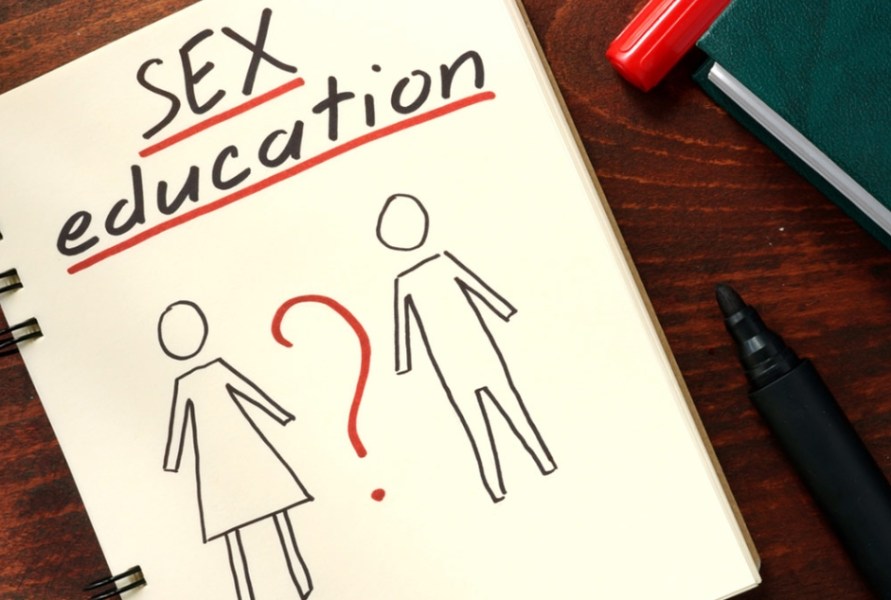
IMPORTANCE OF SEX EDUCATION

Sex education is the most important factor which lacks in every individual, especially in India. In India, sex education was considered as some taboo and people were shameful to speak openly about it. But nowadays there is a shift from this norm and now people are free to discuss about sex, sexuality and other related things. Many schools have started teaching students and they give an orientation to children even from a very young age, which include some topics like good touch, bad touch etc.

Sex education involves topics related to human development, relationships, orientation about reproduction sexuality, puberty, gender identity, sexual behavior, sexual health which include knowledge of sexually transmitted diseases, contraception and pregnancy. Sex education also includes the discussion on sexuality in society and culture which include gender roles, diversity etc. WHO defines sex education as “broad program that aims to build a strong foundation for lifelong sexual health by acquiring information and attitude, beliefs and values about one’s identity, relationships and intimacy”.

The importance of sex education increases in this scenario, as the teachers are not willing to take up topics related to sexuality, even though these topics are present in the curriculum and adolescents gather information about sexuality from other ways. This is harmful for them. To tackle this misinformation and ignorance, young students need to get an awareness about sexuality and sexual orientation. They should also be aware about different gender minorities, LGBTQIA, like trans- sexual people, homosexual communities like gay, lesbians etc. They should also respect every gender. Sex education also provides the knowledge to differentiate between ‘sex’ and ‘gender’, as one is the biological aspect and another one is socio cultural to oneself. Gender is the identity one perceives apart from the biological aspect. Sex education is important to know diverse communities and also it enables one to understand about one’s own body. In this way sex education also helps to decrease crimes related to sex.

So sex education is a very important factor in the development of a society. It helps citizens to understand about themselves and others and provides knowledge which helps to decrease many crimes related to sex. As sex is the vital factor in the development of a society, sex education is also vital.

The Habit of Reading

We have heard people telling us to read books for improving ourselves. There are a number of different books that people read so as to be in the habit of reading. Sometimes people read to entertain themselves and other time they read to pass their time and further some might read to improve their knowledge of certain language. There can be a lot of reasons of reading books and all of them are certainly justifiable. But very often it has been observed that people don’t actually read but they just put it in their resumes to look more apt for the jobs they apply for. But why do people insist on including the reading habit in their resumes even when they don’t really read? The answer is that people know the importance of reading but they hardly care to actually read. Some people believe it to be highly boring when they have to read and thereby completely ignoring the benefits of reading.

With reading our knowledge of a certain language improves. There are examples where people who are indulged in reading are better off in communicating their thoughts in a particular language as they read in that language. When people read in one language they usually start thinking and then conversing in that language. They get a hold of a certain language just by reading in that language. Reading not only improves their vocabulary but also help them enhance their overall knowledge. Reading just not mean reading novels, or books but it might also mean reading blogs, news etc, which enhances their knowledge and makes them smarter than they were before they started reading. Reading gives a person a sought of confidence that they get because of the knowledge which they achieve as they feel more comfortable in participating in intelligent conversation for they have their own say now.

The habit of reading as some might believe or some might not but teaches the art of patience. For to complete a thriller novel you cannot skip to the end or reach to the climax as some might do in movies and web series, for you need to follow the story word by word, sentence by sentence and page by page, so as to feel the euphoria of finally getting to the end. This euphoria can be achieved only by the art of patience as taught by reading. Reading improves our level of concentration for it is important to focus only on the story while reading it for we would be lost if we lose if slightest of our attention away from it. Reading improves our attention span and gives us some major focus goals. We see people reading while travelling in metro, while waiting for someone, just before going to sleep, all of this and more proves how entertaining reading could be. The best possible thrill, excitement, emotions of happiness, sadness, love, hate and others that reading make us feel are surely something we cannot even experience through some movie or other digital works.

Amendments Of Law

Introduction

Let me introduce you all to the definition of law, in other words, what is law?

It is, by definition, the system of rules that a particular country or a community recognizes as regulating the actions of its members which it may enforce by the imposition of penalties.

Or, in the words of eminent Jurist Salmond, law is the body of principles recognised and applied by the state in the administration of justice.

Now why am I stating the facts you may think. Well, I am not giving weight to my part of the writings here, I am giving weight to the situation of the country. How conveniently we twist and turn mere facts in the grab of amendments. Some sure are in our favour but what about the others that are not?

I shall begin with the necessity of amending provisions in the constitution. Provision for amendment in the constitution is made with a view to overcome the difficulties which may encounter in the future in working of the constitution. No generation has the monopoly of wisdom nor has it any right to place fetters on future generations to mould the machinery of government according to their requirements. If no provisions were made for the amendment of the constitution, the people would have recourse to extra constitutional method like revolution to change the constitution, as held in Keshavananda v/s the state of Kerala All India Report 1973 Supreme Court page number 1461. The power of amending the law is exercised by the parliament under Article 368 of the Indian Constitution.

The framers of the Indian Constitution were keen to avoid excessive rigidity. They were anxious to have a document which could grow with a growing nation, adapt itself to the changing need and circumstances of growing people. the nature of the ‘amending process’ envisaged by the framers of the constitution can be best understood by referring the following observation of the late Prime Minister Pandit Nehru – “When we want this constitution to be solid and permanent as we can make it, there is no permanence in the constitution. There should be a certain flexibility. If you make anything rigid and permanent, you stop the nation’s growth.”

In any event, we could not make this constitution so rigid that it cannot be adopted to changing conditions. When the world is in a period of transition, what we may do today may not be wholly applicable tomorrow.

International Day Of Yoga

2021 Theme: Yoga for well-being
The Day will be marked at a time when COVID-19 pandemic continues to upend lives and livelihoods of people globally.

Beyond its immediate impact on physical health, the COVID-19 pandemic has also exacerbated psychological suffering and mental health problems, including depression and anxiety, as pandemic-related restrictions continue in various forms in many countries. This has highlighted the urgent need to address the mental health dimension of the pandemic, in addition to the physical health aspects.

The message of Yoga in promoting both the physical and mental well-being of humanity has never been more relevant. A growing trend of people around the world embracing Yoga to stay healthy and rejuvenated and to fight social isolation and depression has been witnessed during the pandemic. Yoga is also playing a significant role in the psycho-social care and rehabilitation of COVID-19 patients in quarantine and isolation. It is particularly helpful in allaying their fears and anxiety.

Recognizing this important role of Yoga, this year’s commemoration of the International Day of Yoga focuses on “Yoga for well-being” – how the practice of Yoga can promote the holistic health of every individual.

The United Nations offers yoga resources to its personnel and others on the COVID-19 portal’s section on Wellness.

The World Health Organization mentions yoga as a means to improve health in its Global action plan on physical activity 2018–2030: more active people for a healthier world.

UNICEF says kids can practice many yoga poses without any risk and get the same benefits that adults do. These benefits include increased flexibility and fitness, mindfulness and relaxation.

2021 virtual event
The Permanent Mission of India to the United Nations invites you to an online celebration of the 7th annual International Yoga Day on 21 June 2021, from 8:30 to 10:00 am EST, broadcast live on UN WebTV.

The event opened with messages from the President of the United Nations General Assembly and the Deputy Secretary-General of the United Nations, which was followed by demonstrations of Yoga exercises (asanas) to improve physical, mental, emotional and spiritual health and an interactive panel discussion on “Yoga for well-being.”

What is Yoga and why do we celebrate it?
Yoga is an ancient physical, mental and spiritual practice that originated in India. The word ‘yoga’ derives from Sanskrit and means to join or to unite, symbolizing the union of body and consciousness.

Today it is practiced in various forms around the world and continues to grow in popularity.

Recognizing its universal appeal, on 11 December 2014, the United Nations proclaimed 21 June as the International Day of Yoga by resolution 69/131.

The International Day of Yoga aims to raise awareness worldwide of the many benefits of practicing yoga.

The draft resolution establishing the International Day of Yoga was proposed by India and endorsed by a record 175 member states. The proposal was first introduced by Prime Minister Narendra Modi in his address during the opening of the 69th session of the General Assembly, in which he said: “Yoga is an invaluable gift from our ancient tradition. Yoga embodies unity of mind and body, thought and action … a holistic approach [that] is valuable to our health and our well-being. Yoga is not just about exercise; it is a way to discover the sense of oneness with yourself, the world and the nature.”

The resolution notes “the importance of individuals and populations making healthier choices and following lifestyle patterns that foster good health.” In this regard, the World Health Organization has also urged its member states to help their citizens reduce physical inactivity, which is among the top ten leading causes of death worldwide, and a key risk factor for non-communicable diseases, such as cardiovascular diseases, cancer and diabetes.

But yoga is more than a physical activity. In the words of one of its most famous practitioners, the late B. K. S. Iyengar, “Yoga cultivates the ways of maintaining a balanced attitude in day-to-day life and endows skill in the performance of one’s actions.”

REFERENCE : UNITED NATONS

The United Nations

Origin Of The United Nations

The United Nations is the symbol of hope for mankind. This hope, as former UN Secretary-General Dag Hammerskjold said, is the hope that peace is possible. The United Nations is an organization of 193 sovereign states. It was set up in 1945 to replace the ill-fated League of Nations. The Allies, who were fighting the Axis Powers in the Second World War to destroy dictatorship and secure the ‘world for democracy, resolved to establish a new world organization rather than revive the League of Nations. It was in the London Declaration of 12 June 1941 that all nations then fighting against Hitler’s Germany announced their intention of working together, with other free peoples, to establish ‘a world in which, relieved of the menace of aggression, all may enjoy economic and social security.’ Earlier, President Roosevelt of the United States in a message to the Congress in January 1941, had spelt out four freedoms as being of universal importance.

These were: (a) Freedom of speech and expression; (b) Freedom to worship God in one’s own way; (c) Freedom from want; and (d) Freedom from fear.

At that time the United States was not at war. She was observing neutrality. As explained earlier, the United states joined the Second World War only in December 1941 when Japan bombarded Pearl Harbour. The Soviet Union had joined the Allies in June 1941 after Germany’s attack. Thus the Four Freedoms and the London Declaration were expressions of the desire of mankind to be free from ‘war’ and free from ‘want’. On 14 August 1941, Roosevelt and Churchill issued the famous Atlantic Charter which spoke of the establishment of a ‘peace which will afford to all nations the means of dwelling in safety within their own boundaries,’ of freedom from ear and want, and the creation of ‘a wider and permanent system of general security.’

The principles spelt out in the Atlantic Charter, and the London Declaration, were endorsed by the 26 countries who were then Allies, on 1 January 1942 in what came to be known as the United Nations Declaration. This declaration signed in Washington was mainly concerned with war, not peace. It was to emphasize cooperation in an all-out struggle against Axis and to give an assurance to each other not to make peace individually.

Objectives And Principles

Objectives:

(i) to maintain international peace and security based on respect for the principle of equal human rights and self-determination of peoples.

(ii) to develop friendly relations among nations.

(iii) to cooperate in solving international problems of an economic, social, cultural or humanitarian character.

(iv) to be a centre for harmonizing the actions of nations in achieving these ends.

(v) to protect environment & to justify use of natural resource.

The United Nations act in accordance with the following Principals.

  1. All member states are sovereign and equal.
  2. All are pledged to fulfil their obligations under the Charter in good faith.
  3. All are pledged to settle their international disputes by peaceful means and without endangering international peace, security and justice.
  4. They are to refrain in their international relations from the threat or use of force against any other state.
  5. They are to give the UN every assistance in any action it takes in accordance with the Charter.
  6. The United Nations shall not intervene in matters which are essentially domestic ones of any state except when it is acting to enforce international peace.

REFERENCES : V.N. KHANNA, English for students

Shri Jawaharlal Nehru : The First Prime Minister Of India

Pt. Jawaharlal Nehru was born in Allahabad on November 14, 1889. He received his early education at home under private tutors. At the age of fifteen, he went to England and after two years at Harrow, joined Cambridge University where he took his tripos in Natural Sciences. He was later called to the Bar from Inner Temple. He returned to India in 1912 and plunged straight into politics. Even as a student, he had been interested in the struggle of all nations who suffered under foreign domination. He took keen interest in the Sinn Fein Movement in Ireland. In India, he was inevitably drawn into the struggle for independence.

In 1912, he attended the Bankipore Congress as a delegate, and became Secretary of the Home Rule League, Allahabad in 1919. In 1916 he had his first meeting with Mahatma Gandhi and felt immensely inspired by him. He organised the first Kisan March in Pratapgarh District of Uttar Pradesh in 1920. He was twice imprisoned in connection with the Non-Cooperation Movement of 1920-22.

Pt. Nehru became the General Secretary of the All India Congress Committee in September 1923. He toured Italy, Switzerland, England, Belgium, Germany and Russia in 1926. In Belgium, he attended the Congress of Oppressed Nationalities in Brussels as an official delegate of the Indian National Congress. He also attended the tenth anniversary celebrations of the October Socialist Revolution in Moscow in 1927. Earlier, in 1926, at the Madras Congress, Nehru had been instrumental in committing the Congress to the goal of Independence. While leading a procession against the Simon commission, he was lathi-charged in Lucknow in 1928. On August 29, 1928 he attended the All-Party Congress and was one of the signatories to the Nehru Report on Indian Constitutional Reform, named after his father Shri Motilal Nehru. The same year, he also founded the ‘Independence for India League’, which advocated complete severance of the British connection with India, and became its General Secretary.

In 1929, Pt. Nehru was elected President of the Lahore Session of the Indian National Congress, where complete independence for the country was adopted as the goal. He was imprisoned several times during 1930-35 in connection with the Salt Satyagraha and other movements launched by the Congress. He completed his ‘Autobiography’ in Almora Jail on February 14, 1935. After release, he flew to Switzerland to see his ailing wife and visited London in February-March, 1936. He also visited Spain in July 1938, when the country was in the throws of Civil War. Just before the court-break of the Second World War, he visited China too.

On October 31, 1940 Pt. Nehru was arrested for offering individual Satyagraha to protest against India’s forced participation in war. He was released along with the other leaders in December 1941. On August 7, 1942 Pt. Nehru moved the historic ‘Quit India’ resolution at the A.I.C.C. session in Bombay. On August 8,1942 he was arrested along with other leaders and taken to Ahmednagar Fort. This was his longest and also his last detention. In all, he suffered imprisonment nine times. After his release in January 1945, he organized legal defence for those officers and men of the INA charged with treason. In March 1946, Pt. Nehru toured South East Asia. He was elected President of the Congress for the fourth time on July 6, 1946 and again for three more terms from 1951 to 1954.

History And Early Life

Nehru was born on Nov. 14, 1889, at Allahabad, India. His name Jawaharlal mea»s “red jewel,” a name he once said he found “odious.” His father, Motilal Nehru, was a wealthy lawyer from the state of Kashmir. Both he and Nehru’s mother, Swarup Bani Nehru, were Brahmans, the highest caste in India. Jawaharlal had two younger sisters: Swarup, born in 1900, and Krishna, born in 1907. They grew up in a palatial home called Anand Bhawan, meaning Abode of Happiness.

India was a part of the British Empire, and many of Motilal’s friends were English. Until Nehru was 15, he was educated at home by British tutors. He also studied the Hindi and Sanskrit languages with a Brahman teacher who, according to Nehru, managed to impart “extraordinarily little.” The only one of his tutors who impressed the boy was a French-Irish philosopher named Ferdinand T. Brooks. Brooks imbued Jawaharlal with an enthusiasm for reading and for science.

He introduced the youth to theosophy, a mystical system of thought that claims to explain the universe on the basis of direct revelations. The doctrine fascinated Nehru, and at the age of 13 he joined the theosophical society. But his interest in theosophy soon waned.

Student in England. In 1905, Nehru’s father took him to England to enroll at Harrow, a leading English public school. Nehru’s housemaster, the Bev. Edgar Stogdon, remembered him later as “a very nice boy, quiet and very refined. He was not demonstrative but one felt there was great strength of character. I should doubt if he told many boys what his opinions were. . . .”

Jawaharlal entered Trinity College at Cambridge University in 1907. There he studied chemistry, geology, and botany. He displayed little intellectual interest or ambition. He attended meetings of a debating society, but seldom found courage to speak himself. Nonetheless, the society’s political discussions stirred his interest in the growing Indian nationalist movement. He also became sensitive to discrimination against Indians. After completing his studies at Cambridge University, Nehru studied law in London, where he passed his bar examination in 1912.

REFERENCES : 8sa.net, pmindia.gov.in

Nazi Dictatorship In Action

Introduction

In the previous chapter a reference was made to pretensions of peace and friendship on part of Hitler in the early years of the Third Reich. We have seen that realignment of powers had taken place during 1934-35. Meanwhile, Germany had pulled itself out of the Disarmament Conference and withdrawn from the League of Nations in October 1933 on the ground that other powers had failed to reduce their armaments although they had promised to do so, when they had signed the Covenant of the League of Nations in 1919. Hitler was vigorously but secretly carrying on rearmament of Germany, but did not want to disclose it before Saar was returned to Germany. As provided for in the Versailles Treaty, a plebiscite was held in Saar in January 1935 and about 90 per cent of the people voted for reunion with Germany.

Hitler personally went to Saar to see the reunification of Saar with the Reich on 1 March 1935. As analysis of Hitler’s approach to foreign policy shows that he was always pragmatic. According to Paul Johnson, ‘Like Lenin, he was a superb opportunist, always ready to seize openings and modify his theory accordingly.’ While some historians conclude that he had no master programme, others like Johnson feel that he was always adjusting his tactics to suit the moment. He was never tempted to relax by a surfeit of autocratic power.

Actually he was ‘always raising the stakes on the table and seeking to hasten the force of history.’ Hitler was now free to unfold his true foreign policy based on Mein Kampf, i.e. anti-Communism, anti-Semitism, and promotion of German imperialism. During 1935-37 Hitler evolved and acted upon the strategy of befriending not only fellow dictator Mussolini, but also a militant Japan and even Britain who wanted ‘peace almost at any price.’ During this period, Hitler unilaterally repudiated not only the dictated Treaty of Versailles but also freely negotiated Treaty of Locarno. This period also witnessed another repudiation of international commitment-Italian aggression on Abyssinia and eventual annexation of that country into Italian Empire. These developments led to the formations of Rome-Berlin-Tokyo-Axis.

Repudiation Of Treaties

In February 1935 (after the Saar plebiscite, but before its reunion with Germany) England and France made certain proposals to Germany. These included signing of Central Pact and Eastern Pact. The former, to ensure non-interference in each other’s internal affairs and to be signed by Austria and her neighbours and the latter to be signed by France, Germany and the Soviet Union, each assuring the other against aggression by the third country. It was also proposed that the seven Locarno powers, including Germany, should promise that in case of air attack upon any of them, the others would provide assistance to the victim of attack. These proposals came to be known as ‘Air Locarno’. Germany showed willingness only for Air Locarno as that would permit her to establish an Air Force. The other two pacts were to be discussed by Hitler with British representatives, but before British ministers could go to Germany, the British government announced a programme of strengthening its armed might, a move that annoyed Hitler.

Hitler suggested that he was willing to sign a fresh treaty with France and Belgium, whereby there could be demilitarization of equal distance on both sides of the border. This was, as expected, rejected by France. Now, therefore, Rhineland was once again remilitarized and German troops firmly based themselves in the region. Hitler ha achieved one more success.

REFERENCES : International relations by V.N. KHANNA

Reparation, Debts and Economic Crisis

Reparation

Most of the peace treaties signed before the First World War imposed ‘war indemnity’ on the defeated states. It was a fine imposed by the victor on the vanquished by way of penalty. The theory was that the victor must recover practically the entire cost of a war from the defeated enemy. The defeated powers used to indemnify the losses suffered by the victors during the wars. During the First World War, it was argued in many countries that in view of heavy losses involved in the war, it would be impossible for the victors to recover the entire cost. Purely from an economic viewpoint, as Gathorne-Hardy says, ‘…the immense scale of the war of 1914-18 rendered it obvious at the outset that a claim of this description would be beyond the power of any nation to satisfy…’ Besides, there was a moral aspect also. President Woodrow Wilson was against the imposition of war indemnity on the ground of such a fine being undemocratic. As Carr also admits, ‘…democratic opinion in many countries had expressed itself against the practice…’ of imposing war indemnity. Wilson personally was not in favour of any prize for the victors and any punishment for the vanquished. However, the US President had to yield to the pressure put upon him by his European allies, and he had to agree to the imposition of a limited amount of fine to be called reparation.

The Treaty of Versailles provided for payment of an unspecified amount of reparation by Germany to the victors of the Fist World War. The demands made on Germany were to be limited to the ‘compensation for all damage done to the civilian population for the Allied and Associated Powers and to their property.’ This was supposed to be a concession, as Germany was not required to pay to recover the ‘entire cost’ of the war. Unlike in previous wars, the civilian population and their properties were not spread. Heavy damages were caused to the civilians and their properties as a result of indiscriminate attacks by the German army, navy and army force. The Allies decided not to claim military losses. Nevertheless, their greed was reflected in the fact that reparation was to cover, besides civilian losses, the separation allowances and pensions to be paid to the widows and dependents of the officers and men killed in action. The concession, therefor, was not of much practical consequence.

Germany, as we have seen, was made to admit her sole responsibility for the war and and the consequent liability for payment of reparation. Article 231 of the Treaty said: ‘The Allied and Associated Powers affirm and Germany accepts the responsibility for causing all the loss and damage to which the Allied and Associated Governments and their nationals have been subjected to as a consequence of the war imposed on them by the aggression of Germany and her allies.’ Germany was called upon by the Allies to pay to them such amount of money as would be determined by a Commission to be appointed for this purpose. This money was required to enable the Allies to ‘repair’ the losses suffered by them as a result of the war ‘imposed’ upon them by Germany.

Spa Conference (1920)

Contrary to German expectations the conference did not focus on the issue of war reparations but was initially dominated by the topic of disarmament, also part of the Treaty of Versailles. Due to current events the coal negotiations then moved to centre stage.

The issue of coal pertained to shipments from Germany to France, Belgium and Italy according to Art. 236 of Part VIII of the Versailles Treaty. In a protocol signed on 19 August 1919 Germany had agreed on these deliveries, but due to the uprisings of spring 1920 (Kapp Putsch, Red Ruhr Army) and associated strikes in the coal industry had been unable to comply.

Discussion of the coal issue, which began on 9 July, soon showed that the Allied side was unwilling to compromise. At the very beginning threats about sanctions were issued, with Millerand acting as the spokesman on the Allied side. After days of tough negotiations, the talks almost broke down on 14 July. On 16 July, Fehrenbach and foreign minister Walter Simons signed the Spa coal protocol as drawn up by the Allies. Germany promised to deliver 2 million tons of coal per month for six months. In exchange for the Allied right to insist on the delivery of specifics types or quality of coal, Germany was granted 5 Goldmark per ton to purchase food for the miners. In addition, the Allies agreed to monthly advance payments for the coal. The German side did not sign up to the Allied threat that missed deliveries would be answered by military occupation of the Ruhr or other German territories.

Despite Allied financial concessions the coal agreement dealt a heavy blow to the German economy. Supply of coal had been adequate before the conference, but now domestic bottlenecks emerged that damaged output of the iron and steel industry, the railways and coal conversion industry.

REFERENCES : V.N. Khanna, wiki