National Workshop on Higher and Technical Education with Secretaries of States/UTs

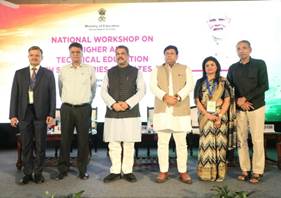
Union Minister for Education, Shri Dharmendra Pradhan, inaugurated a two-day National Workshop on Higher and Technical Education with Secretaries of States/UTs in New Delhi today. Minister of State for Education and the Development of North Eastern Region, Dr. Sukanta Majumdar, was also present at the event. Secretary, Department of Higher Education, Shri K. Sanjay Murthy; Additional Secretary, Department of Higher Education, Shri Sunil Kumar Barnwal; Chairman, UGC, Prof. M. Jagadesh Kumar; Joint Secretary, Department of Higher Education, Smt. Manmohan Kaur; Secretaries of States/UTs, academicians, Head of the Institutes, and officials of the Ministry were also present.
Image

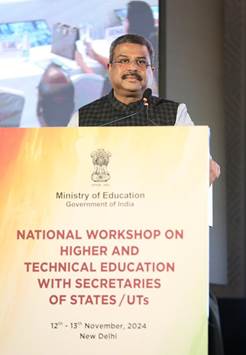
While addressing the event Shri Pradhan said that the workshop will serve as a platform for rigorous academic brainstorming, particularly how education can bring substantive improvements in furthering ease of living, enhancing per capita income and achieving national priorities set by Prime Minister Shri Narendra Modi. He also said that the country has to become a producing economy by utilising the opportunities presented by Industry 4.0 and leapfrog and develop the education infrastructure that surpasses global standards. Education infrastructure is a multi-dimensional concept and beyond just developing brick-and-mortar structures, he added.
Image

The Minister suggested five key areas for the academic leaders and administrators to focus on. These were strengthening public universities through innovative modes of funding; setting up think tanks for aligning and tailoring curriculum as per the demand of industry and also as per the needs and aspirations of states/UTs; adopting a multidisciplinary approach to research and innovation for assuming leadership in solving global problems; promoting Academic Leadership Development Programmes in each state/UT through collaborations with eminent central/state institutions; and reviving vibrancy of campus life through sports, debate, poetry, drama, performing arts (already creditized through NEP) and giving primacy to these non-scholastic areas.

Shri Pradhan also emphasised the importance of teaching in Indian languages. Stressing the accountability towards the students of the country, he said everyone will have to work together to establish India’s global leadership in education.

Dr. Sukanta Majumdar, in his address, expressed his gratitude to Prime Minister Shri Narendra Modi for his vision to reshape India’s educational landscape through the National Education Policy (NEP) 2020. NEP is not just a policy; it is a roadmap to make India a global knowledge superpower, he added. Highlighting the five pillars of NEP 2020, which are access, equity, quality, affordability, and accountability, Dr. Majumdar said that these are the foundation for a modern, inclusive, and globally competitive education system. He urged the states and UTs to adopt NEP 2020 in both its letter and spirit. By implementing the policy, states can foster economic growth, build a skilled workforce, and enhance innovation and technological advancement, he said.

Shri K. Sanjay Murthy, in his address, set the context for the workshop. He briefly described the 14 technical sessions that would be held during the event. He also highlighted the key factors that emerged from serious deliberations over the past three years and mentioned that twenty guidelines have been developed, providing a framework for the universities. Additionally, he expressed his gratitude to Shri Dharmendra Pradhan for spearheading the implementation of NEP 2020 and for offering valuable guidance through his insights.

The objective of this workshop is to disseminate various approaches and methodologies to implement NEP 2020; effectively articulate the roadmap and implementation strategies, fostering knowledge exchange; provide a common platform for all stakeholders to come together and network for effective and smooth implementation of the NEP 2020 and encourage its adoption in state institutions, paving the way for a more robust, inclusive, and globally competitive education system across India.

Adopting NEP 2020 offers numerous benefits for states’ higher education systems. It can drive economic growth by creating a more skilled workforce, attracting investments, and boosting development. By aligning higher education with international standards, it enhances the global competitiveness of states’ education systems, potentially attracting more international students and collaborations. The policy’s emphasis on research and a multidisciplinary approach fosters innovation ecosystems within states, leading to technological advancements and economic benefits.

Successful implementation of NEP 2020 in higher education requires active participation and commitment from state governments. By leveraging central government schemes and aligning state policies with NEP 2020, states have the opportunity to transform their education systems to meet the challenges of the 21st century while preserving their unique cultural identities.

During this two-day workshop, 14 technical sessions on the themes of NEP 2020 Implementation – Challenges and Roadmap; Technology in Education; Collaboration in Education; Digital Governance; Capacity Building & Leadership; and Financing of Higher Education are going to be held by eminent panellists.

*****
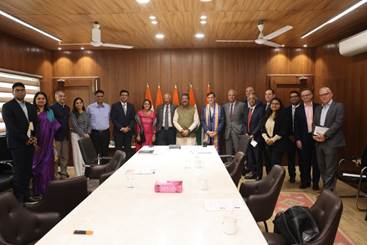
Johns Hopkins University and Gupta-Klinsky India Institute

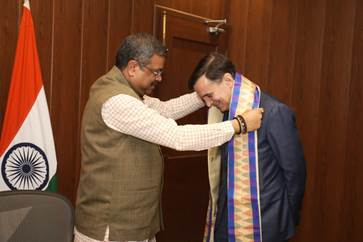
Union Minister for Education Shri Dharmendra Pradhan today met with a high-level delegation led by Mr. Ronald J. Daniels, President, Johns Hopkins University (JHU), Baltimore, Maryland, USA. The delegation also included officials from Gupta Klinsky India Institute (GKII), an internal unit of JHU with a mandate to bring the JHU community with Indian partners through research, education, policy and practice.

Secretary, Higher Education, Shri K. Sanjay Murthy; senior officials of the Department of Higher Education, Ministry of Education and Ministry of External Affairs attended the meeting.

Image

Shri Pradhan highlighted the transformative opportunities enabled by the National Education Policy 2020 (NEP 2020), which has paved the way for academic collaborations and advancing India’s education sector. Shri Pradhan appreciated the university’s commitment towards building robust partnerships with Indian HEIs, contributing to the global exchange of knowledge, particularly in the areas of dual and joint degree programmes, two-way mobility of students and faculty, and research partnerships in emerging fields like data science, artificial intelligence, and futuristic technologies. He emphasised the potential for these collaborations to foster innovation and entrepreneurship among students in both nations.

The discussion centred on strengthening academic and research collaborations between JHU and premier Indian Higher Education Institutions (HEIs). The delegation actively discussed establishing an offshore JHU campus in India.

Image

The visit by Mr. Daniels and the delegation highlights the growing significance of India-US educational cooperation. As part of their multi-city tour of India, the delegation will visit various Indian university campuses and engage with key government officials, academic leaders, and embassy representatives to strengthen JHU’s operations in India and advance the internationalisation efforts.

The 12-member delegation included distinguished academicians and administrators such as Fritz W. Schroeder, Senior Vice President for Development and Alumni Relations; Alexander Triantis, Dean of the Carey Business School; Judd Walson, Chair of the Department of International Health at the Bloomberg School; Sridevi Sarma, Vice Dean of Graduate Education at the Whiting School of Engineering; Jon Goldstein, Senior Associate Director of Development for International Programs; and Amita Gupta, Director of the Division of Infectious Diseases at Johns Hopkins University and Co-Founder of the Gupta-Klinsky India Institute (GKII).

Prominent Indian-origin faculty from JHU, such as Mathuram Santosham, Professor of Paediatrics and International Health, and Chirag Parikh, Professor of Medicine and Director of the Division of Nephrology, also participated. The delegation further included GKII officials and members of its advisory board, including Raj and Kamla Gupta, Deepak Raj, Kunal Pal, and Neetisha Besra.

*****

Over 1.76 crore school students from all 36 States and UTs participate in Project Veer Gatha 4.0

More than 1.76 crore school students from all 36 States and UTs have participated enthusiastically in Project Veer Gatha 4.0. The students have sent poems, paintings, essays, videos, etc. in honour of the acts of bravery and sacrifice of the officers/personnel of the Armed Forces.

Project Veer Gatha was instituted in 2021 with the aim of disseminating the inspiring tales of valour, selfless sacrifice and courage of the Gallantry Awardees and the life stories of these bravehearts among the students to inculcate the spirit of patriotism amongst them. Project Veer Gatha enhanced this noble aim by providing a platform for the school students to do creative projects/activities based on heroic deeds and sacrifice of gallantry award winners.

Three editions of the Veer Gatha Project have been conducted in 2021, 2022 and 2023, respectively. Under the Veer Gatha Project 4.0, the following activities have been conducted till date:

Activities at the School Level: Schools have conducted various projects/activities (from 16.09.2024 to 31.10.2024) and have uploaded a total of 4 best entries from each school, on the MyGov portal.

Simultaneously, to enrich the knowledge about the gallant heroes and unsung stories among school students, the Ministry of Defence, through its field organisations or Army/Navy/Air Force, has organized virtual meets/face-to-face awareness programmes/sessions for schools across the country.

Since its inception, the project has witnessed increasing participation of students across the country. It may be noted that 8 lakh students had participated in the Veer Gatha Project (Edition-I); 19.5 lakh students participated in the second edition and the third edition saw a participation of 1.36 crore students.

During the Veer Gatha Project Editions I and II, 25 winners (Super 25) were selected and their felicitation was done by the Ministry of Education and Ministry of Defence in New Delhi. In Veer Gatha Project 3.0, 100 winners (Super 100) were selected at the National Level. This year too, under Project Veer Gatha 4.0, 100 winners will be selected and their felicitation will be done jointly by the Ministry of Education and Ministry of Defence in New Delhi. Each winner will be awarded a cash prize of Rs. 10,000. Also, there will be 4 winners each at the District level and 8 winners each at the State/UT level and all such winners will be felicitated by the respective District & State/UT.

*****

Young athletes from Kendriya Vidyalayas and Navodaya Vidyalayas

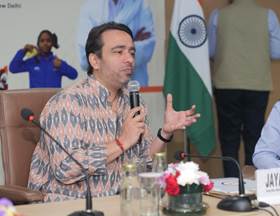
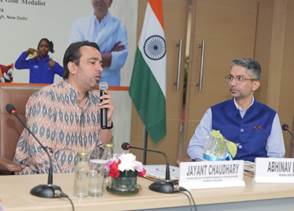
Union Minister of State for Skill Development and Entrepreneurship (Independent Charge) and Minister of State for Education, Shri Jayant Chaudhary, interacted with young athletes and para-athletes from Kendriya Vidyalayas and Navodaya Vidyalayas, who have excelled in various national and international sports events today. The first Indian to win an individual Olympic Gold and the first Indian to win a World Championship Gold in Air Rifle shooting, Shri Abhinav Bindra was also present at the event. Secretary, Department of School Education & Literacy, Shri Sanjay Kumar; Commissioner, KVS, Smt. Nidhi Pandey, and other officials of the Ministry of Education, KV and NV were also present at the event. Fourteen award-winning student-athletes interacted with the Minister and Shri Bindra, and hundreds of students and teachers from KV and JNV connected virtually in the event.

Shri Jayant Chaudhary, during his address, highlighted that the day was dedicated to celebrating the achievements of the student-athletes and expressed gratitude to Shri Bindra for sharing his insights. He stressed that sporting champions are not necessarily made on the field alone; a specific mindset, structured approach, and discipline are essential for achieving success on the field. He mentioned that both the Ministry of Education and the Ministry of Skill Development and Entrepreneurship are keen on providing exposure to various streams at a young age. Using Shri Bindra as an example, he underscored the importance of reinventing oneself and embracing lifelong learning, as emphasized in the NEP 2020.

Shri Abhinav Bindra, while interacting with the students emphasised how sports play an important role in education and expressed his gratitude to the Minister for conceiving this programme that will motivate the students. He briefly described his 22-year-long journey and the learning that he received during it. Sports taught him not about wins and losses, the importance of hard work, integrity and honesty, listening intently, respecting rules, competitors, outcomes, and self-respect, he stressed. He also mentioned three Olympic values: Excellence, Respect, and Friendship.

Shri Sanjay Kumar expressed his gratitude to Shri Jayant Chaudhary for envisioning the programme and noted that the presence of Shri Bindra among the children would serve as a source of motivation. He also highlighted how the key components and vision of the National Education Policy 2020 are being implemented in Kendriya Vidyalayas and Navodaya Vidyalayas to ensure a bright future for the students of the country.

Fourteen student-athletes—six from KV and eight from NV—shared their achievements and experiences with the dignitaries, who commended and appreciated their efforts. Additionally, several students who participated virtually had the opportunity to ask their questions to Shri Bindra, who thoughtfully addressed each of their queries.

*****

Hamara Shauchalay: Hamara Samman (HSHS) Campaign

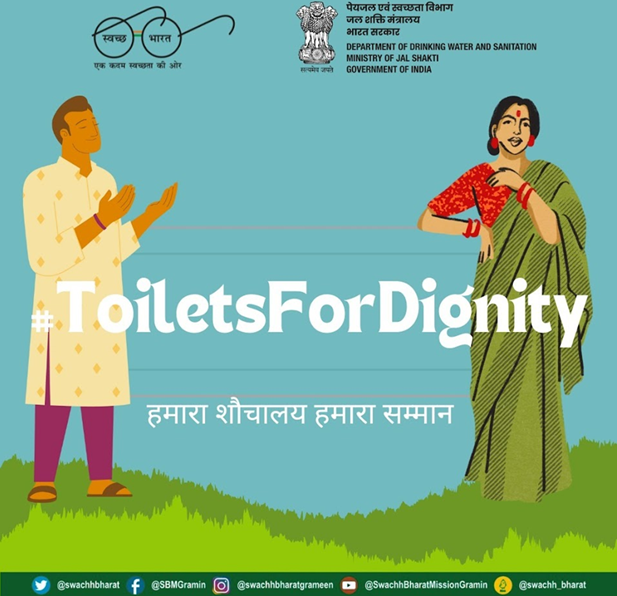
The Department of Drinking Water and Sanitation launched the nationwide campaign “Hamara Shauchalay: Hamara Samman” (HSHS) (हमारा शौचालय: हमारा सम्मान). November 19, World Toilet Day and the campaign will culminate on Human Rights Day, December 10, 2024, emphasizing the critical link between sanitation, human rights and dignity.

The campaign reaffirms India’s commitment to maintaining its Open Defecation Free (ODF) status while promoting behavioral change for cleaner, healthier communities. While India achieved ODF status in 2019, the Phase II of the Swachh Bharat Mission (Grameen) was launched to focus on the creation of ODF Plus Model villages, where the first criterion is sustaining ODF achievements. This aligns with the spirit of World Toilet Day, reminding and ensuring continued toilet usage and maintenance is as important as achieving initial milestones. The HSHS campaign serves as a timely call to action to sustain and build on these efforts.

With a strong focus on vulnerable groups, particularly women and girls, this initiative underlines that toilets are more than infrastructure, they are foundational to dignity, equality, and public health aligned with the campaign tagline “शौचालय संवारें, जीवन निखारें”  Speaking of this campaign, Secretary, DDWS, Ashok KK Meena, emphasized the importance of a bottom-up approach in ensuring sustained behavioral change. “Sanitation is a cornerstone of dignity and development. The ‘Hamara Shauchalay: Hamara Samman’ campaign is designed to empower communities, with responsibilities allocated across every level, Gram Panchayats, blocks, districts, and states. This ensures that every stakeholder contributes to sustaining sanitation practices, building pride, and driving long-term impact.” He further added, “On World Toilet Day, as we align with global efforts to achieve SDG 6, India renews its commitment to creating equitable access to sanitation and ensuring no one is left behind.”

Key Campaign Activities

The campaign involves a variety of activities aimed at reinforcing sanitation practices and fostering pride in clean and functional toilets.

  • Competitions will be held to identify and reward the best-maintained household toilets (IHHLs) and community sanitary complexes (CSCs) at every administrative level. These events will recognize efforts in both functionality and aesthetics, encouraging others to follow suit.
  • Community outreach will play a vital role, with initiatives like “Ratri Chaupals”and WASH clubs that will bring together people and inspire change.
  • Sanitation workers will be celebrated through special dignity camps, ensuring their inclusion in welfare programs, and honoring their role in maintaining cleanliness.
  • Citizens will be encouraged to share their sanitation success stories through social media platforms including MyGov using hashtags and .
  • Participation from all levels of governance, with Chief Ministers and State Ministers leading state-level events, while District Magistrates and elected representatives overseeing district-level programs.

The campaign aims to improve sanitation infrastructure, foster behavior change, and strengthen community pride by enhancing the functionality and aesthetics of toilets across the country. By promoting ODF sustainability, it emphasizes that sanitation is not a one-time achievement but a continuous journey toward a healthier and more dignified India.

Department of  Drinking Water & Sanitation (DDWS) under the Ministry of Jal Shakti, appealed everyone to make HSHS a success. DDWS requested the citizen to work together for building sustainable sanitation solutions whilst the nation take forward the legacy of Swachh Bharat Mission.

***

Atal Innovation Mission unveils fourth cohort of Community Innovator Fellows supported by Capgemini, India

Daily writing prompt
Who are your current most favorite people?

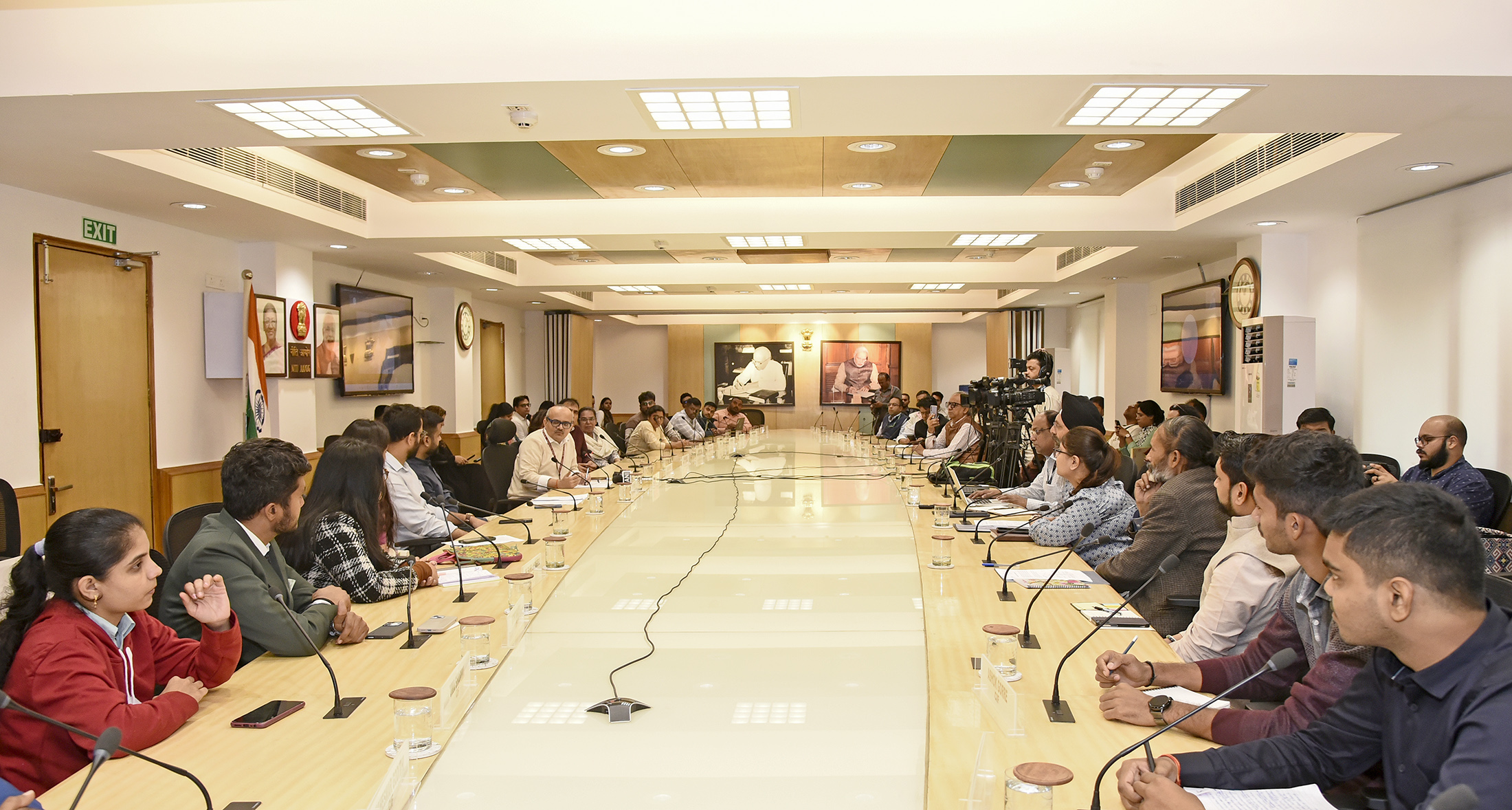
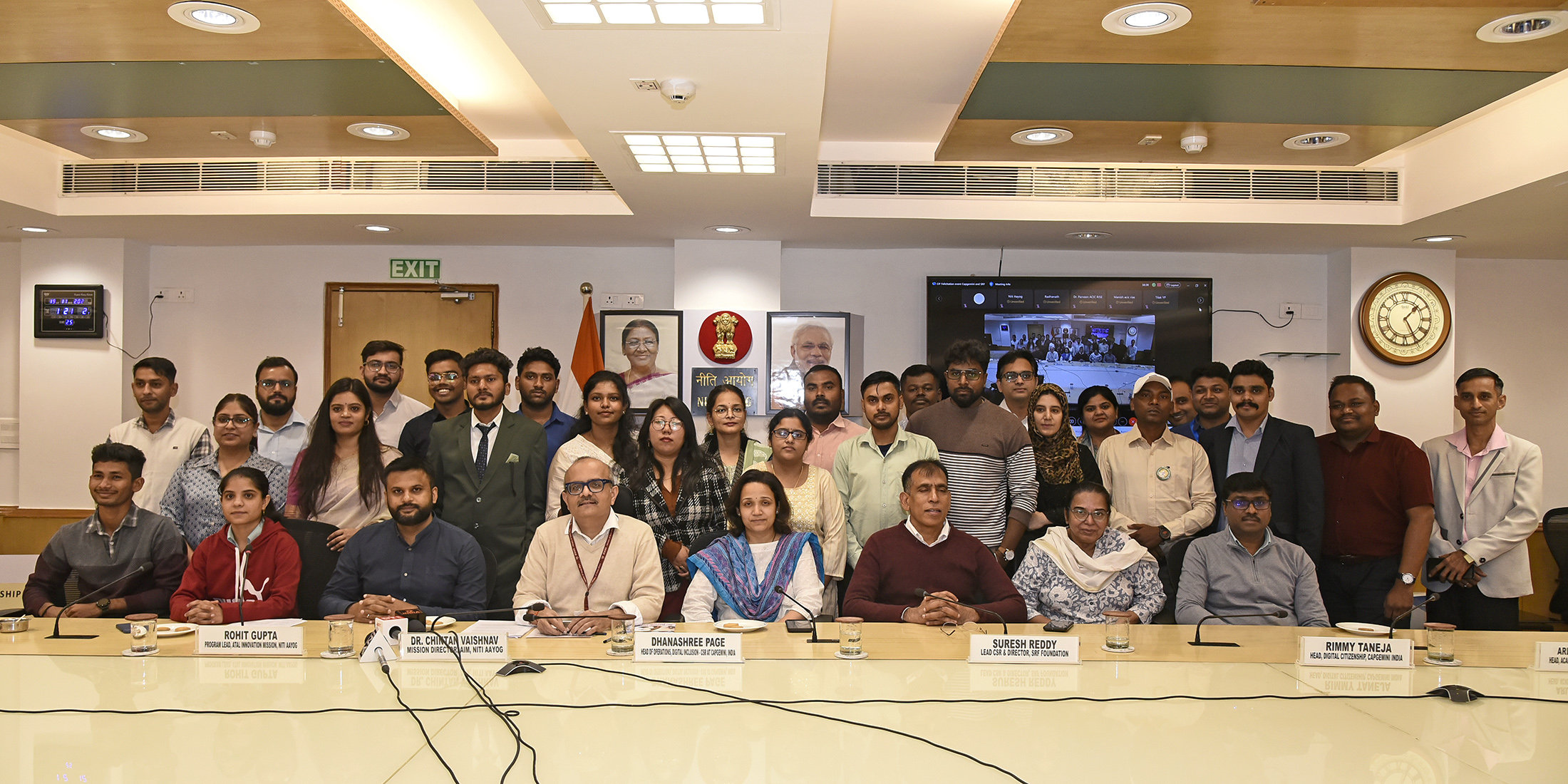
The Atal Innovation Mission (AIM), NITI Aayog marked a significant milestone today with the formal recognition of its fourth cohort of Community Innovator Fellows (CIFs). This year, the program has been further strengthened with the support of Capgemini India, marking a key partnership in fostering grassroots innovation across the country. The CIF initiative continues to empower local innovators, enabling them to address community-specific challenges through creative and sustainable solutions.

In conjunction with the cohort recognition, AIM commenced a two-day intensive bootcamp aimed at equipping these CIFs with the necessary skills and knowledge to scale their innovative solutions as part of AIM’s continued commitment to fostering grassroots innovation and promoting an entrepreneurial ecosystem across India, particularly in underserved regions. AIM, through its Atal Community Innovation Centers (ACIC) program has envisaged to serve the unserved/underserved areas of the country and provide support to every grassroots innovator and work towards accelerating the pathway to reach SDGs 2030.

The CIF Program is a one-year intensive initiative designed to provide aspiring innovators from all socio-economic backgrounds with the infrastructure, training, and mentorship necessary to scale their ideas and build sustainable businesses. Each Fellow is hosted at an Atal Community Innovation Center, where they receive entrepreneurial, SDG-focused, and life skills training while working on solutions tailored to their community’s unique challenges.

Speaking during the keynote address, Mission Director AIM, Dr.Chintan Vaishnav while applauding the program’s role in empowering innovators from Tier 2 and Tier 3 cities said, “The Community Innovator Fellows are uniquely positioned to address community-level problems with solutions that are both relevant and sustainable. This program is aspiring to create a model of excellence, where innovation meets purpose and where community-centric ideas drive national progress.”

He further highlighted the importance of initiatives like the CIF Program in advancing solutions to community level challenges in critical sectors.

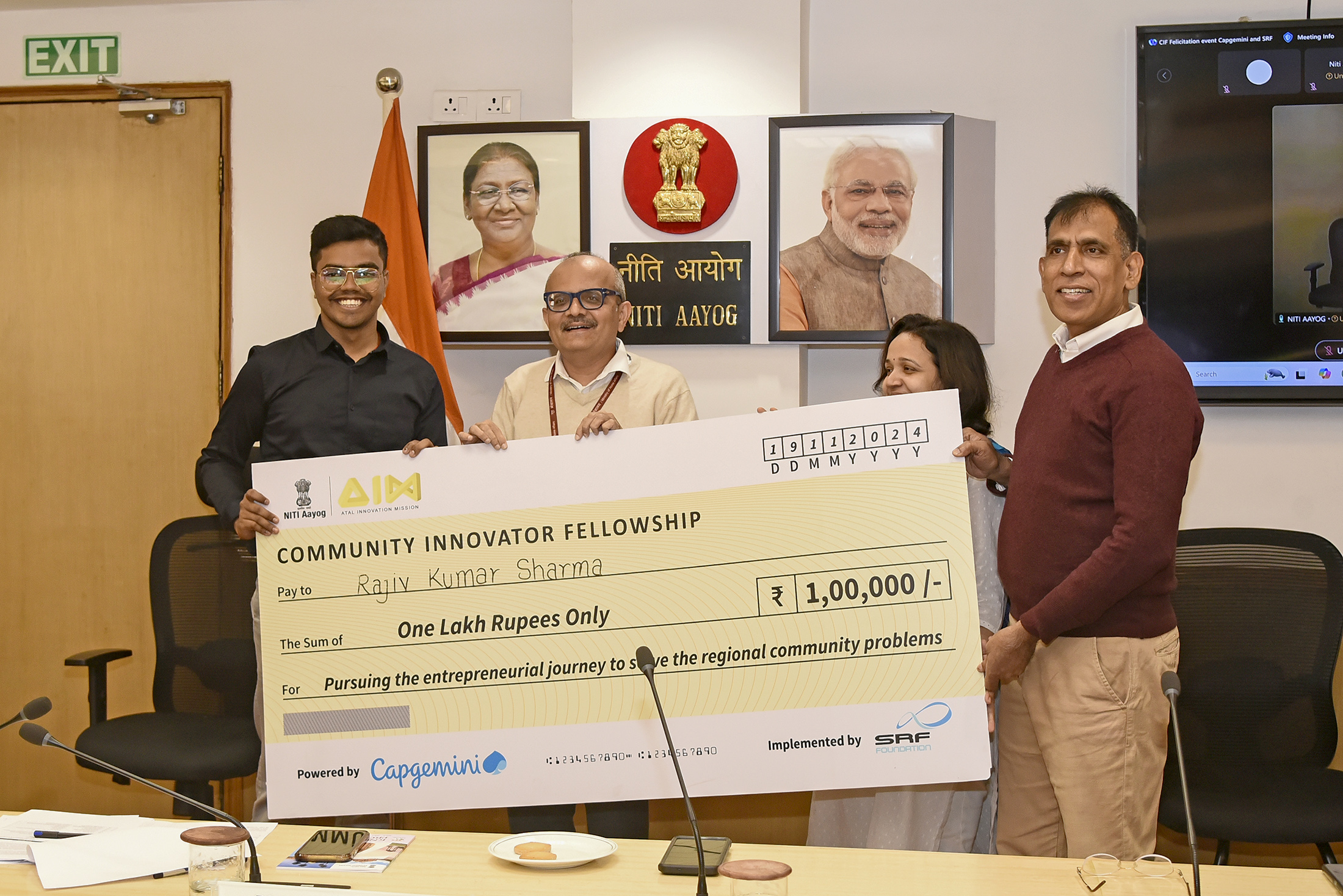
Capgemini India, a global leader in consulting, technology services, and digital transformation, is supporting this cohort by providing grants of INR 1 lakh each to 15 CIFs, helping them scale their innovative solutions. SRF Foundation is leading the program’s implementation in collaboration with AIM and Capgemini.

The event witnessed profound insights from distinguished speaker Dhanashree Page, Head of Operations, Digital Inclusion – CSR at Capgemini India. In her address, she emphasized the power of collaborative partnerships in fostering local innovation and driving societal progress. She remarked, “The CIFs represent the hope and creativity of India’s grassroots innovators. By empowering these individuals, we are enabling real, scalable solutions that can transform communities and drive sustainable change,” She said.

Dr. Suresh Reddy, Lead CSR & Director at SRF Foundation, spoke about the significant impact of social entrepreneurship in solving community challenges. “Today’s event showcases the commitment and ingenuity of the CIFs. They are truly the brightest minds in India, using their innovation to address critical local issues,” he said. “We, at SRF Foundation, remain committed to supporting such transformative initiatives and ensuring that their impact reaches every corner of the country.”

The event culminated with the presentation of grants to the CIFs, marking the beginning of their entrepreneurial journey as they work to scale their ideas and make a tangible impact in their communities.

 *****

All India Institute of Ayurveda (AIIA) organises orientation Program ‘Samskara 2024’ for freshly inducted Post Graduates

Daily writing prompt
Who are your current most favorite people?

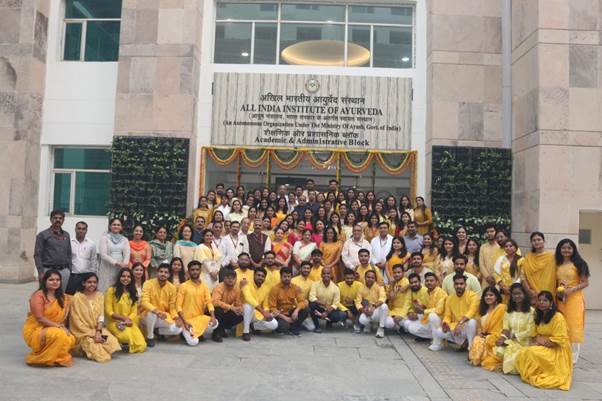
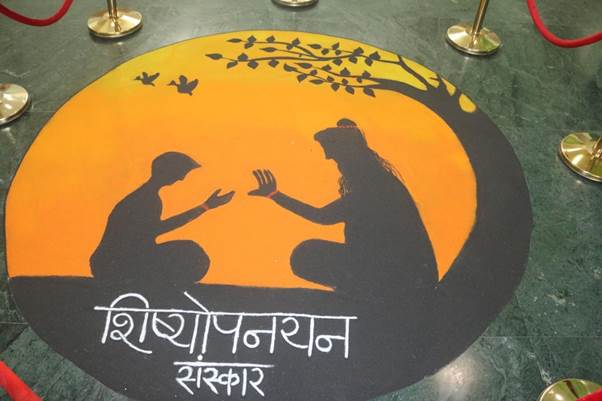
All India Institute of Ayurveda (AIIA) welcomed its 9th batch of postgraduate scholars with a traditional orientation program, ‘Samskara 2024’. The 15-day program commenced with a swearing-in ceremony, where 85 newly admitted students took the Shishyopanayan Pledge.

Prof. (Dr.) Tanuja Manoj Nesari, former Director of AIIA, was the chief guest, while Prof. (Dr.) Sujata Kadam, Director (I/C), AIIA, presided over the event. Other dignitaries who graced the occasion  included Dean PhD Prof. (Dr.) Mahesh Vyas, Dean PG Prof. (Dr.) Yogesh Badwe, Advisor Academic Activities Prof. (Dr.) Anand More, and other faculty members.

Addressing the gathering, Chief Guest Prof. (Dr.) Tanuja Manoj Nesari extended her best wishes to the new students, saying, “I expect this batch to create history in the future.” She emphasised AIIA’s unique selling proposition (USP)—valuing exceptional education and transformative journeys.

AIIA Director (I/C) Prof. (Dr.) Sujata Kadam encouraged students, saying, “Just as gold is refined through numerous tests, these three years will transform you into refined gold, making your journey extraordinary. I expect you to emerge as the best students from this institution.”

The 9th batch consists of 85 students selected from across India who cleared the All India AYUSH Postgraduate Entrance Test (AIAPGET) conducted by the National Commission for Indian System of Medicine (NCISM) under the Ministry of Ayush, Government of India.

Established in 2017, AIIA has treated over 27 lakh patients and attends to more than 2000 patients daily.

****
India-Australia Cooperation in field of Public Administration and Governance Reforms

Daily writing prompt
Name your top three pet peeves.

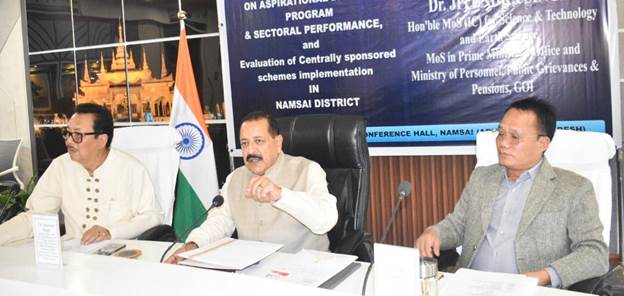
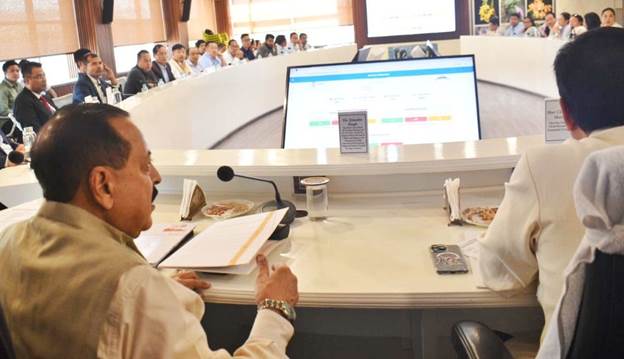
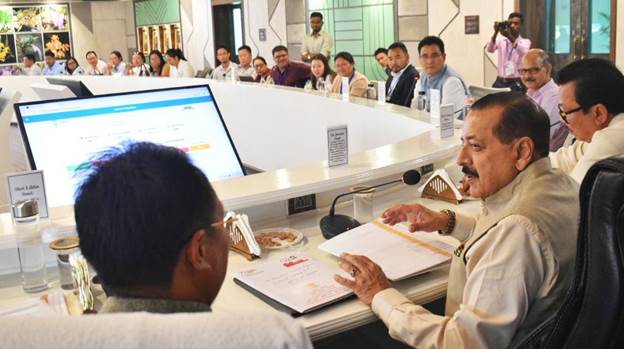
On the second day of his visit to Namsai district, Union Minister Dr. Jitendra Singh reviewed the district’s performance under the Aspirational District Programme (ADP). Emphasizing collaboration, convergence, and competition, he underscored the transformative impact of Prime Minister Narendra Modi’s vision and said, PM Modi has made Northeast an essential part of India’s mainstream growth story.

The Minister noted that before 2014, the region often felt alienated from the rest of the country. Today, it stands as an integral part of India’s cultural and developmental landscape. Citing examples such as youth from the North East excelling in the tourism and aviation industries, Dr. Jitendra Singh stressed the strides made in fostering a sense of belonging and national integration.

Highlighting good practices in Namsai, he pointed out initiatives such as integrating Anganwadi Centres with schools to improve early childhood education and health outcomes and the innovative “Pehli Sawari” ambulance service for newborns. Such ideas, he said, are worth replicating across other aspirational districts.

Dr Jitendra Singh appreciated the fact that the Namsai district has emerged as a beacon of progress under the Aspirational District Program (ADP), showcasing remarkable improvements across various sectors, including health, education, and infrastructure. The district’s composite score has surged from 35.8 in April 2018 to 54.0 in March 2024, reflecting a 37.64% improvement. This leap has propelled Namsai from the 97th position to the 12th among 112 districts, earning it accolades and substantial rewards under the Sustainable Development Goals – Empowered Action Group (SDG-EAP).

WhatsApp Image 2024-11-18 at 4.03.18 PM.jpeg

The health sector in Namsai has witnessed transformative changes. The district has achieved a 100% conversion of sub-centres and Primary Health Centres (PHCs) into Health and Wellness Centres (HWCs). Additionally75% of PHCs now comply with Indian Public Health Standards (IPHS), and 70% of specialist services are available in district hospitals. However, challenges remain, such as the acute shortage of General Duty Medical Officers (GDMOs) and nurses, and the absence of radiologists in the district hospital.

Maternal and child health indicators have also shown significant progress. The percentage of pregnant women receiving four or more antenatal care check-ups has increased from 35.46% in April 2018 to 81.3% in March 2024, and institutional deliveries have surged from 46.7% to 117%. The district has also achieved a remarkable 119% immunization rate for children aged 9-11 months.

Namsai’s education sector has made strides in improving literacy and school infrastructure. The district, which has a predominantly rural population with 76% dependent on agriculture, has focused on enhancing government schools, which cater to 67% of the student population. The literacy rate has improved, but it still lags behind state and national averages.

Key initiatives include the renovation of 27 old school buildings, construction of additional classrooms, and provision of computer labs in five government higher secondary schools. The district has also addressed basic amenities, ensuring functional toilets in 81% of schools and drinking water facilities in 98% of schools. The innovative e-fencing software has been implemented to monitor attendance and reduce absenteeism.

The district’s progress is a result of collaborative efforts involving various stakeholders. Significant projects include the construction of a laboratory building and an OPD building under Corporate Social Responsibility (CSR) initiatives, the establishment of model Anganwadi Centres, and the provision of modern diagnostic equipment for district hospitals and Community Health Centres (CHCs). The “Pehli Sawari” initiative, funded by Indian Oil Corporation Limited (IOCL), provides free ambulance services for institutional deliveries, further enhancing maternal health outcomes.

Agriculture and Infrastructure: Addressing Challenges and Leveraging Potential

Agriculture remains a critical sector for Namsai, with 74% of the population engaged in farming. The district faces challenges such as inadequate irrigation facilities, exploitation by middlemen, and low productivity of local livestock. However, the fertile plains and excellent road connectivity offer significant potential for agricultural diversification and agro-based industries.

WhatsApp Image 2024-11-18 at 4.03.19 PM.jpeg

Infrastructure development has also been a priority, with 100% household electrification, improved road connectivity under the Pradhan Mantri Gram Sadak Yojana (PMGSY), and enhanced access to potable water and sanitation facilities.

Namsai’s journey under the ADP serves as a model for other aspirational districts. The district’s comprehensive approach, focusing on health, education, and infrastructure, coupled with collaborative efforts, has yielded significant improvements. As Namsai continues to address its challenges and leverage its potential, it stands as a testament to the transformative power of targeted development programs.

WhatsApp Image 2024-11-18 at 4.03.17 PM.jpeg

Dr. Jitendra Singh’s visit not only showcased the achievements of Namsai but also highlighted its potential as a model for other districts. The Minister emphasized that such targeted developmental efforts demonstrate how collaboration and innovative practices can overcome challenges and drive inclusive growth.

As Namsai continues its journey of progress, its story serves as an inspiration for aspirational districts across India. The Minister’s visit has reignited focus on leveraging local potential and ensuring equitable development, aligning with the government’s vision of a self-reliant and inclusive India.

***

IIT Ropar’s Role in Shaping a Self-Reliant Bharat Highlighted at VIVIBHA 2024

Daily writing prompt
Do you or your family make any special dishes for the holidays?

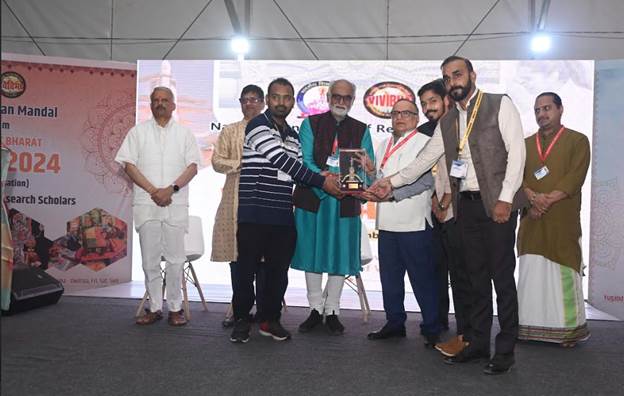
IIT Ropar proudly participated in VIVIBHA 2024, a distinguished three-day national conference organized by Bharatiya Shikshan Mandal (BSM) at SGT University, Gurugram. Themed “Vision for Viksit Bharat,” the event celebrated India’s rich cultural legacy while highlighting pioneering research and innovations that are shaping a self-sustaining nation.

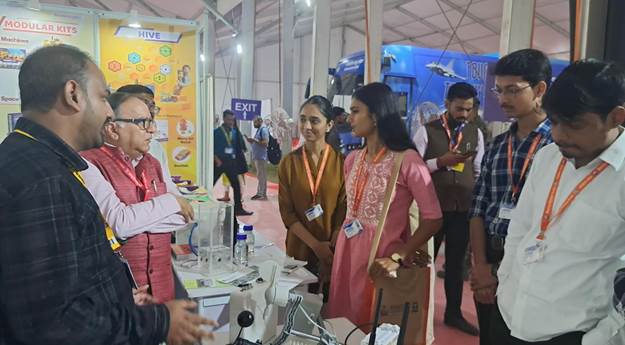
The IIT Ropar TIF – AWaDH stall garnered considerable attention, particularly from Shri Dharmendra Pradhan, Union Minister of Education, who interacted with the team to explore the showcased innovations. Prof. Rajeev Ahuja, Director of IIT Ropar, also extended his support. In a significant achievement, AWaDH was awarded the Best Stall in the Academia category, recognizing the excellence and societal impact of its presented research.

As part of the “Research to Realisation” exhibition, the IIT Ropar Technology and Innovation Foundation – AWaDH Agriculture and Water Technology Development Hub showcased its transformative technologies that promote sustainable solutions in agriculture, water management, and environmental conservation. Key innovations on display included Moohsense: An AI-driven livestock management system; Digital Entomologist: A biodiversity monitoring tool; Nanobubble Technology for Water Purification; Air Sense: Advanced air quality sensors, and Soil Health Monitoring System: Precision farming tools for improved productivity.

VIVIBHA 2024’s focus on integrating Bharat-centric research with India’s vibrant cultural heritage closely aligns with AWaDH’s mission. The event reaffirmed the commitment to bridging tradition with cutting-edge technologies for a sustainable and prosperous future.

***

Grievance Redressal Assessment And Index (GRAI) 2023 Launched On 18 November 2024

Daily writing prompt
Who are your current most favorite people?

Union Minister of State (Independent Charge) Science & Technology; Minister of State (Independent Charge) Earth Sciences; MoS PMO, Personnel, Public Grievances, Pensions, Atomic Energy and Space, Dr Jitendra Singh has launched Grievance Redressal Assessment and Index (GRAI) 2023 in the presence of Shri V. Srinivas, Secretary, Department of Administrative Reforms and Public Grievances (DARPG), Govt. of India.

Grievance Redressal Assessment and Index (GRAI) was conceptualized and designed by the DARPG, Govt. of India based on the recommendation of Parliamentary Standing Committee of Ministry of Personnel, Public Grievances and Pensions with an objective to present organigation-wise comparative picture and provide valuable insights about strengths and areas of improvement regarding grievance redressal mechanism. The first edition of GRAI 2022 was released on 21 June 2023.

Eighty-nine Central Ministries and Departments were assessed and ranked based on a comprehensive index in the dimensions of (1) Efficiency, (2) Feedback, (3) Domain and (4) Organisational Commitment and corresponding 11 indicators. To compute the index, data between January and December 2023was used from the Centralised Public Grievance Redressal and Management System (CPGRAMS).

As part of GRAI, Ministries and Departments are grouped in three groups based on the number of grievances registered in calendar year 2023 at CPGRAMS viz.

GroupsRegistered Grievance RangeNo. of Ministries/Departments
Aregistered grievances > 10,00028
Bregistered grievances 2,000 to 9,99933
Cregistered grievances < 2,00028

Department of Agriculture and Farmers Welfare, O/o the Comptroller & Auditor General of India and Department of Investment & Public Asset Management have topped the rankings in Group A, B and C respectively. A detailed list with top three Ministries and Departments in composite and dimension-wise ranking is as follows:

#Rank 1Rank 2Rank 3
Group A:Grievances > 10,000CompositeDepartment of Agriculture and Farmers WelfareDepartment of PostsMinistry of Cooperation
EfficiencyMinistry of CooperationDepartment of TelecommunicationsMinistry of Labour and Employment
FeedbackDepartment of Agriculture and Farmers WelfareCentral Board of Direct Taxes (Income Tax)Department of Defence
DomainUnique Identification Authority of IndiaMinistry of Home AffairsMinistry of Cooperation
Organisational CommitmentDepartment of PostsDepartment of TelecommunicationsMinistry of Corporate Affairs
Group B:Grievances 2,000 – 9,999CompositeO/o the Comptroller & Auditor General of IndiaDepartment of Land ResourcesNITI Aayog
EfficiencyDepartment of Legal AffairsDepartment of Land ResourcesNITI Aayog
FeedbackO/o the Comptroller & Auditor General of IndiaDepartment of ExpenditureDepartment of Financial Services (Pension Reforms)
DomainDepartment of Land ResourcesMinistry of Parliamentary AffairsMinistry of Drinking Water and Sanitation
Organisational CommitmentDepartment of Empowerment of Persons with DisabilitiesDepartment of Land ResourcesMinistry of Ayush
Group C:Grievances < 2,000CompositeDepartment of Investment & Public Asset ManagementMinistry of Development of North Eastern RegionDepartment of Pharmaceuticals
EfficiencyDepartment of Investment & Public Asset ManagementMinistry of Development of North Eastern RegionMinistry of Mines
FeedbackDepartment of PharmaceuticalsDepartment of Public EnterprisesDepartment of Investment & Public Asset Management
DomainMinistry of Development of North Eastern RegionDepartment of Youth AffairsDepartment of Bio Technology
Organisational CommitmentDepartment of Official LanguageDepartment of Chemicals and PetrochemicalsLegislative Department

In the GRAI 2023report released by DARPG, detailed Root-Cause Analysis has been included with specific inputs on areas of further improvement. This report presents a two-dimensional (vertical and horizontal) analysis of the root causes of effective redressal of grievances of each Ministries and Departments in an easily discernible colour coded analysis. The report also presents brief description of technical partners DARPG has engaged to facilitate the Ministries and Departments to optimally utilize CPGRAMS as a means of effective grievance redressal media.

Over the years, CPGRAMS has become a key tool for enhancing government accountability and transparency by enabling citizens to file and track grievances online. The Commonwealth Secretariat has recognised CPGRAMSas a best practice in Commonwealth Secretaries of Public Service / Secretaries to Cabinet meeting in April 2024.

The GRAI 2023 report presents a clear roadmap with an advisory for the Ministries and Departments to leverage CPGRAMS and its features like IGMS 2.0, TreeDashboard, etc., to enhance grievance redressal. The roadmap for improvement emphasizes integrating advanced technologies like AI and ML for data analysis, predictive analytics and preventive measures while revising ATR formats for better reporting. Capacity building for GROs, enhancing accountability through audits and extending CPGRAMS integration to the third-tier of government are key recommendations.

***

ESCI Journals of Clarivate: An In-Depth Overview

Daily writing prompt
Do you or your family make any special dishes for the holidays?

ESCI stands for the Emerging Sources Citation Index, a research database managed by Clarivate, which is a global leader in research analytics. The ESCI was launched in 2015 as part of Web of Science, a platform that includes several well-known citation indices, such as the Science Citation Index (SCI), Social Sciences Citation Index (SSCI), and Arts & Humanities Citation Index (AHCI).

ESCI journals represent a category of scholarly journals that are in the process of being evaluated for inclusion in the more prestigious citation indices, such as SCI or SSCI. These journals are typically emerging or have demonstrated an increasing impact in their respective fields but have not yet achieved the citation levels or broad recognition necessary for inclusion in the more established indices.

In this article, we will dive into the following aspects of ESCI journals within Clarivate’s Web of Science:

  1. What is ESCI?
  2. Criteria for ESCI Journal Inclusion
  3. Differences Between ESCI and Other Citation Indices
  4. Importance of ESCI Journals
  5. How ESCI Affects Researchers and Authors
  6. How Journals Get Indexed in ESCI
  7. List of ESCI Journals and their Scope
  8. ESCI Journals and Academic Career Progression

1. What is ESCI?

The Emerging Sources Citation Index (ESCI) is an index introduced by Clarivate Analytics (formerly Thomson Reuters) to serve as a middle ground between unindexed journals and those included in well-established citation indices like the Science Citation Index (SCI) or the Social Sciences Citation Index (SSCI).

ESCI includes journals that may not yet meet the rigorous standards for the established indices but are still recognized as valuable sources of scholarly content. These journals often focus on emerging fields, new interdisciplinary research, or regional content that may not yet have global visibility but is still highly relevant to specific academic or scientific communities.

Inclusion in ESCI signals that a journal is considered to have academic merit and is on track to potentially gain recognition in broader academic circles. However, it does not yet have the citation impact that journals in SCI or SSCI indices typically do.

2. Criteria for ESCI Journal Inclusion

Clarivate has a set of standards for selecting journals for inclusion in the ESCI. While the specific criteria are not fully disclosed, the following factors are generally considered:

  • Academic Quality: Journals must demonstrate scholarly rigor in their editorial process, peer-review practices, and the quality of articles they publish. This includes having professional editorial boards, following international standards for peer review, and ensuring transparency in publishing practices.
  • Relevance: ESCI journals should have a subject focus that is emerging or growing, offering high relevance to a specific academic community or niche research area. These could include rapidly developing disciplines, innovative interdisciplinary research, or underrepresented geographical or linguistic regions.
  • Citation Potential: Journals are evaluated for their citation potential. Although ESCI journals may not have extensive citation data initially, they are expected to grow in influence and impact. This is a key distinction between ESCI journals and those indexed in more established indices, which typically have higher citation numbers and long-term academic impact.
  • Publication Frequency and Editorial Content: ESCI journals are expected to maintain a regular publication schedule, typically with a certain minimum number of issues published per year. The editorial content must align with scholarly communication practices, including original research articles, reviews, and other accepted types of scholarly work.
  • International Coverage: Clarivate typically prefers journals that have an international scope or appeal, but regional journals that demonstrate a strong impact within a particular academic or geographic community may also be included.

3. Differences Between ESCI and Other Citation Indices

Clarivate’s citation indices, like SCI, SSCI, and AHCI, are highly selective and include journals that have achieved a certain level of citation impact, which is typically a sign of broad recognition and influence within their respective disciplines. ESCI, on the other hand, includes journals that may not yet have reached these citation thresholds but show promise and potential for future growth. Here’s a comparison:

AspectESCISCI/SSCI/AHCI
Citation ImpactEmerging, but lower citation impact compared to SCI/SSCIEstablished journals with high citation counts
Journal SelectionBased on quality and potential for growthBased on long-term citation performance and prestige
ScopeNew or emerging fields, interdisciplinary, or regional journalsEstablished fields with broad global reach and historical significance
Indexing RequirementsJournals must show academic merit but have limited citation historyJournals must demonstrate sustained academic impact and citation frequency
AudienceNiche, emerging scholarly communitiesGlobal, well-established academic communities

4. Importance of ESCI Journals

While ESCI journals may not have the same level of global recognition as those indexed in SCI or SSCI, they play a vital role in the academic publishing ecosystem. Here are several reasons why ESCI journals are important:

  • Supporting Emerging Research: ESCI serves as a platform for emerging or niche research areas that may not yet have significant visibility but are rapidly growing or developing. These journals can contribute to advancing knowledge in areas such as new technologies, interdisciplinary fields, or research that is regionally important.
  • Increasing Journal Diversity: By including journals from different regions and less mainstream disciplines, ESCI helps diversify the global academic publishing landscape. It provides a voice for scholars working in underrepresented fields or regions.
  • Providing Access to Scholarly Work: ESCI journals offer access to high-quality research in emerging fields. This is particularly useful for researchers looking for cutting-edge topics or early-stage developments that haven’t yet been widely covered by established journals.
  • Facilitating Journal Growth: For journals indexed in ESCI, the index serves as a stepping stone to recognition in SCI or SSCI. ESCI inclusion increases a journal’s visibility, helping it attract higher-quality submissions and more citations over time.

5. How ESCI Affects Researchers and Authors

For researchers and authors, publishing in ESCI journals offers both opportunities and challenges:

Opportunities:

  • Early Career Exposure: Researchers, especially those working in emerging or niche fields, can gain early exposure by publishing in ESCI journals. These journals may provide a platform to showcase new and innovative ideas that may not yet fit into larger, more established journals.
  • Increased Visibility: Inclusion in ESCI provides visibility in Web of Science, a globally recognized academic database. Articles published in ESCI journals are discoverable and citable, providing researchers with the opportunity to gain recognition for their work.
  • Potential for Future Recognition: ESCI journals are often viewed as stepping stones to inclusion in more prestigious citation indices like SCI or SSCI. Authors can contribute to the growth and development of these journals, helping them eventually achieve broader recognition.

Challenges:

  • Limited Citation Impact: Due to the emerging nature of ESCI journals, articles published in these journals may not initially receive the same level of citation as those in more established journals. This could affect researchers looking to build their citation profiles early in their careers.
  • Recognition and Prestige: While ESCI inclusion is a positive step, some academic institutions or funding bodies may prioritize journals indexed in more prestigious indices. For authors aiming for high recognition, publishing in ESCI journals may not have the same weight as publishing in SCI or SSCI journals.

6. How Journals Get Indexed in ESCI

Journals that wish to be indexed in ESCI must undergo a thorough evaluation process conducted by Clarivate’s editorial team. This process includes:

  1. Submission of Application: Journals must submit a formal application to Clarivate for inclusion in the ESCI, providing detailed information about their editorial policies, peer-review process, citation practices, and impact potential.
  2. Evaluation: Clarivate evaluates the journal’s editorial content, citation metrics, publishing frequency, and overall quality. This involves an assessment of factors like editorial board composition, adherence to best publishing practices, and the journal’s relevance within its academic field.
  3. Decision and Inclusion: If the journal meets the necessary criteria, it is included in ESCI. Inclusion is based on the overall potential for the journal to grow in citation impact and academic influence.
  4. Ongoing Monitoring: Once a journal is included in ESCI, it is continuously monitored for performance. Clarivate reviews journals on an ongoing basis to ensure they continue to meet the necessary standards for inclusion.

7. List of ESCI Journals and Their Scope

The ESCI includes thousands of journals from various disciplines, including:

  • Sciences: Emerging areas in fields such as biotechnology, environmental science, materials science, and engineering.
  • Social Sciences: New research areas in sociology, anthropology, psychology, education, and business.
  • Arts and Humanities: Journals that focus on niche topics in literature, cultural studies, philosophy, and history.

A detailed list of ESCI journals can be found on the Web of Science platform, where journals are categorized by subject and scope.

8. ESCI Journals and Academic Career Progression

For academic researchers, publishing in ESCI journals can be an important step in their career progression, especially for early-career scholars. ESCI inclusion demonstrates that a journal has academic merit and is being taken seriously within the scholarly community.

Top Schools in Singapore – World Class Education

Top Schools in Singapore: A Comprehensive Guide

Singapore is renowned for its world-class education system, which is often regarded as one of the best in the world. The city-state’s schools are recognized for their rigorous academic standards, comprehensive curriculum, and holistic development of students. Whether you are a local parent or an expatriate family considering relocation, finding the right school is crucial. Here’s a detailed guide to some of the top schools in Singapore, categorized by local public schools, international schools, and specialized institutions.

1. Local Public Schools

Singapore’s local public schools are known for their high academic standards, disciplined environment, and holistic approach to education. These schools are highly competitive, with a focus on core subjects like Mathematics, Science, English, and Mother Tongue languages.

a) Raffles Institution (RI)

Overview: Established in 1823, Raffles Institution is one of the oldest and most prestigious schools in Singapore. It offers a six-year Integrated Programme (IP) that allows students to skip the O-Level examinations and proceed directly to the A-Level exams.

Key Features:

Strong emphasis on academic excellence, leadership, and character development.

Extensive co-curricular activities (CCAs) such as robotics, debate, and sports.

Alumni network that includes prominent leaders, professionals, and public figures.

Location: Bishan, Singapore.

b) Hwa Chong Institution (HCI)

Overview: Known for its rigorous academic curriculum and vibrant school culture, Hwa Chong Institution is another top-tier school offering the Integrated Programme. It focuses on nurturing leaders with a strong sense of social responsibility.

Key Features:

Bilingual education in English and Chinese.

Renowned for its Science and Mathematics programs, including research opportunities.

State-of-the-art facilities, such as a science research center and sports complex.

Location: Bukit Timah, Singapore.

c) Nanyang Girls’ High School (NYGH)

Overview: As one of the top all-girls schools in Singapore, Nanyang Girls’ High School provides an IP that emphasizes both academic excellence and character development.

Key Features:

Bilingual curriculum, with a focus on Chinese culture and language.

Strong emphasis on STEM (Science, Technology, Engineering, Mathematics) subjects.

Comprehensive CCAs, including performing arts and community service.

Location: Bukit Timah, Singapore.

d) Anglo-Chinese School (Independent)

Overview: A Methodist school with a rich history, ACS (Independent) offers both the Integrated Programme and the International Baccalaureate (IB) Diploma Programme, making it a popular choice for both local and international students.

Key Features:

Holistic education approach, focusing on academic excellence, sports, and leadership.

Vibrant co-curricular life with a wide range of clubs, sports, and arts programs.

IB program known for producing high achievers.

Location: Dover Road, Singapore.

2. International Schools

For expatriate families, Singapore offers a range of high-quality international schools that follow various global curricula, including the International Baccalaureate (IB), American, and British systems.

a) Singapore American School (SAS)

Overview: SAS is one of the largest and most established international schools in Singapore, offering a comprehensive American-based curriculum from pre-kindergarten to Grade 12.

Key Features:

Emphasis on a broad-based education with a wide range of Advanced Placement (AP) courses.

State-of-the-art facilities, including a new high school building with modern learning spaces.

Strong focus on arts, sports, and extracurricular activities.

Location: Woodlands, Singapore.

b) United World College of South East Asia (UWCSEA)

Overview: Part of the global United World College network, UWCSEA is known for its diverse student body and rigorous IB curriculum. It offers the IB Primary Years Programme (PYP), Middle Years Programme (MYP), and Diploma Programme (DP).

Key Features:

Focus on holistic education, sustainability, and service learning.

Extensive co-curricular activities, including sports, arts, and outdoor education.

Two campuses with world-class facilities, including theaters, swimming pools, and sports fields.

Locations: Dover and East Coast, Singapore.

c) Tanglin Trust School

Overview: A British-based international school, Tanglin Trust offers a blend of the British National Curriculum and the IB Diploma Programme. It caters to students from nursery to pre-university levels.

Key Features:

Strong academic results in IGCSE and IB exams.

Emphasis on pastoral care and student well-being.

Wide range of extracurricular activities, including music, drama, and sports.

Location: Bukit Timah, Singapore.

d) Canadian International School (CIS)

Overview: CIS offers the IB curriculum with a focus on inquiry-based learning, catering to students from early years to high school.

Key Features:

Multilingual program with a strong emphasis on language acquisition.

Diverse and inclusive community with students from over 80 nationalities.

Two campuses with modern facilities, including makerspaces and design technology labs.

Locations: Lakeside and Tanjong Katong, Singapore.

3. Specialized Schools

For students with unique talents or specific learning needs, Singapore offers specialized schools that focus on arts, sports, or academic excellence.

a) School of the Arts (SOTA)

Overview: SOTA is Singapore’s first pre-tertiary specialized arts school, offering a six-year integrated arts and academic curriculum leading to the IB Diploma.

Key Features:

Focus on visual arts, music, theatre, dance, and literary arts.

Holistic education that balances academic rigor with artistic training.

Strong support for students’ creative and artistic pursuits.

Location: Dhoby Ghaut, Singapore.

b) Singapore Sports School

Overview: Established to nurture student-athletes, the Singapore Sports School offers a customized curriculum that balances academics with high-performance sports training.

Key Features:

Training in a wide range of sports, including swimming, badminton, and track & field.

Academic pathways include the O-Level, IB Diploma, and customized sports programs.

Access to specialized sports facilities and coaching.

Location: Woodlands, Singapore.

c) NUS High School of Math and Science

Overview: NUS High School is a specialized independent school that focuses on mathematics, science, and engineering education for gifted students.

Key Features:

Accelerated curriculum with advanced courses in math and science.

Research opportunities and collaborations with universities.

Strong emphasis on STEM education.

Location: Clementi, Singapore.

4. Admission Process & Tips

Singapore’s top schools are highly competitive, especially for expatriates seeking admission to international schools. Here are some tips to navigate the admission process:

Early Application: Apply as early as possible, as spaces are limited, especially in popular schools.

Entrance Exams & Interviews: Be prepared for entrance exams and interviews, particularly for prestigious schools like RI, HCI, and ACS.

Holistic Assessment: Schools often look for students with a strong academic record, as well as achievements in sports, arts, or community service.

Understand the Curriculum: Choose a school based on the curriculum that aligns with your child’s future education plans, whether it’s the IB, British, American, or local system.

Conclusion

Singapore offers a diverse range of schooling options, each with its unique strengths. Whether you’re looking for a school that excels in academics, arts, sports, or holistic development, there’s something for every family. The key is to understand your child’s needs and strengths and match them with the right school to ensure a rewarding educational journey.

FAQs

1. What is the best school in Singapore for academic excellence?

Schools like Raffles Institution, Hwa Chong Institution, and Nanyang Girls’ High are known for their rigorous academic programs.

2. Are international schools in Singapore expensive?

Yes, international schools like UWCSEA, SAS, and Tanglin Trust can be quite costly, with annual fees ranging from SGD 25,000 to over SGD 40,000.

3. Can expatriates enroll their children in local public schools?

Yes, but the admission process is competitive, and priority is often given to Singapore citizens and permanent residents.

By understanding the offerings of each school, you can make an informed decision that best fits your child’s educational aspirations and needs.

2nd Webinar on Public Policy and Good Governance in Collaboration with IIT Kanpur

Daily writing prompt
What are your favorite websites?

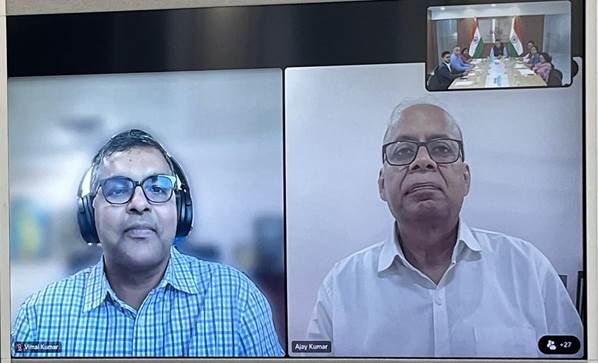
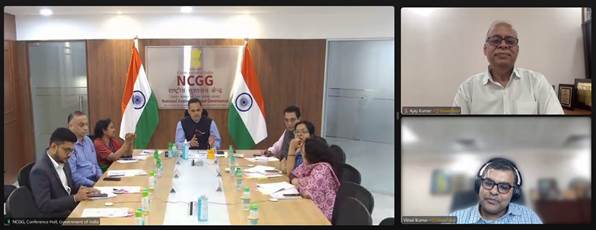
NCGG concluded its 2nd Webinar of webinar series on Public Policy and Good Governance in collaboration with IIT Kanpur on 24th October 2024. The webinar was chaired by Shri V. Srinivas, Secretary, Department of Administrative Reforms and Public Grievances (DARPG) & Director General, National Centre for Good Governance (NCGG).

There were two esteemed speakers for the webinars. The first speaker for  the  webinar  was Dr. Ajay Kumar, former Defence Secretary, Government of India & Distinguished Visiting Professor at IIT Kanpur and the second speaker for the webinar was Prof. Vimal Kumar, Head, Dept of Economic Sciences, IIT Kanpur.

Dr. Ajay Kumar delivered lecture on Challenges in Public Policy highlighting the role of Government of India in Policy making and how over the time it has changed its approach in policy making. His lecture further highlighted that changes in public policies should be calibrated in phases, the impact of digitization in mitigating the challenges faced while making new policies by highlighting the digitization of land records. He also highlighted on using data in decision making. He elaborated on the  different  approaches to policy making and  emphasized that the process of policy making should involve diverse stakeholders. While discussing the challenges in public policy he also suggested the solutions such as incentivizing the progressive policies.

The second speaker for the webinar was Prof. Vimal Kumar, Head of Economic Sciences, IIT Kanpur who delivered his lecture on Platform Business Model & their regulation in Digital Economy. He started his lecture by discussing a quick history of Business in India from artisans producing single product to mass production.  His lecture also suggested the importance of network and platform creation for any successful business model. He emphasized on diverse usage of various business platforms including payment networks, social media, traditional media such as newspaper, e-commerce platforms like Amazon & Flipkart, Apple’s App store and others. He also highlighted network on a platform within the group and cross-group wherein he explained attraction loop and attraction spill over. He concluded his lecture with the importance of digital platform using the comparison between BMW and Uber as case studies.

The webinar was concluded by the vote of thanks given by Dr. Himanshi Rastogi, Associate Professor, NCGG. Dr. Rastogi, expressed her heartfelt thanks to all participants, from Institutes of National Importance and Central Universities. She also thanked Shri V. Srinivas, Secretary, DARPG & Director General, NCGG for chairing the webinar.

***

Workshop on Building Quality Infrastructure and Enhancing Academic Aspects for Tribal Education Held by NESTS

Daily writing prompt
What historical event fascinates you the most?

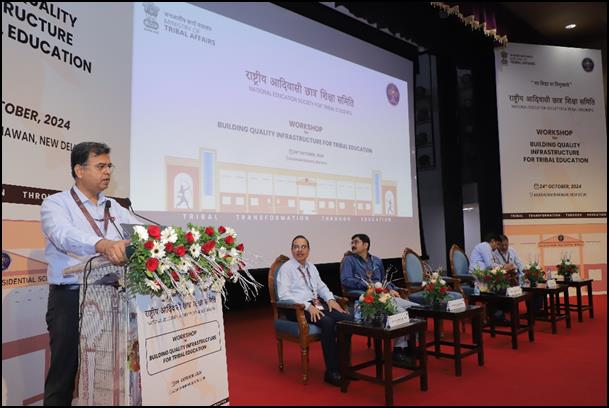
National Education Society for Tribal Students (NESTS) successfully organized a workshop on “Building Quality Infrastructure for Tribal Education” on 24th October 2024 at Akashvani Bhawan, New Delhi. This event is part of the government’s ongoing efforts to provide quality educational infrastructure for tribal communities through Eklavya Model Residential Schools (EMRSs), ensuring sustainable and effective learning environments.

Shri Ajeet K. Srivastava, Commissioner of NESTS, inaugurated the workshop, emphasizing the critical need for completing EMRS construction on time with emphasis on quality of construction. He stated, “Non completion of good quality EMRS on time means tribal children not going to school which is unacceptable.” He exhorted the participants to take pledge that they would construct EMRS before time by ensuring best quality of construction. Commitment to multifaceted development is evident in NESTS’ initiatives, including modern educational programs like the Amazon Future Engineering program and the organization of a Principal’s Conclave focused on academic and administrative excellence. This holistic approach underscores the importance of providing both high-quality infrastructure and advanced educational opportunities for tribal students.

Shri Ajeet K. Srivastava, Commissioner, NESTS addressing the gathering.

The workshop covered essential technical aspects such as geotechnical investigations, material testing, earthwork, and the reinforcement of construction practices in tribal areas. Participants included civil engineers, project managers, and architects, all eager to share best practices and insights from the newly launched handbook titled “Building Quality Infrastructure for Tribal Education.”

Interactive sessions focused on project planning, architectural layouts, and specific reinforcement issues related to tribal education infrastructure. Participants emphasized the importance of aligning construction practices with the unique geographical and cultural contexts of tribal regions for sustainable development.

Throughout the day, expert speakers provided valuable insights, fostering collaboration and innovative solutions to infrastructure challenges.

Topics included quality assurance during the construction process, effective material testing methodologies, and strategies for successful project planning. Interactive Q&A sessions allowed participants to address specific issues related to EMRS development, facilitating knowledge exchange and practical problem-solving.

This pioneering workshop represents a significant step forward in NESTS’ mission to enhance educational access and quality for tribal communities, reaffirming its vision of providing equal opportunities for all tribal students.

****

PM Young Achievers’ Scholarship Award Scheme for Vibrant India (PM YASASVI)

Daily writing prompt
What food would you say is your specialty?

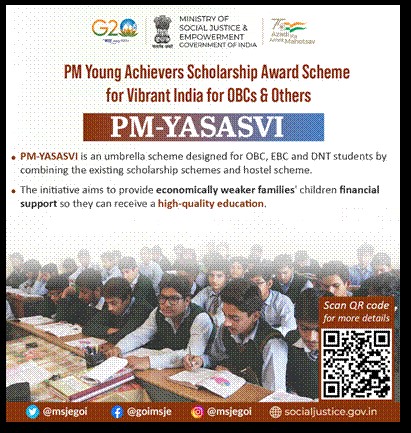
With a vision of “Sabka Sath, Sabka Vikas”, the Ministry of Social Justice and Empowerment has implemented the PM Young Achievers Scholarship Award Scheme for Vibrant India (PM-YASASVI). This comprehensive umbrella scheme is aimed at uplifting students from Other Backward Classes (OBC), Economically Backward Classes (EBC), and Denotified Tribes (DNT) by providing them with access to quality education during their formative years.

The PM YASASVI scheme consolidates and enhances several earlier initiatives, including the Dr. Ambedkar Post-Matric Scholarship Scheme for EBCs and the Dr. Ambedkar Pre-Matric and Post-Matric Scholarship Scheme for DNTs, which were subsumed under this program starting from 2021-22. By integrating these schemes, PM YASASVI aims to ensure a more streamlined and impactful approach to supporting the educational needs of socially and economically disadvantaged students.

Objective

The overarching goal of the scheme is to promote educational empowerment among these vulnerable groups, helping them overcome financial barriers and complete their education. This initiative not only fosters individual academic growth but also contributes to the broader vision of creating a more inclusive and equitable society.

Under this Scheme students can avail Pre-Matric Scholarship from Class 9 to 10 and Post Matric Scholarship for their higher studies at post-matriculation or post-secondary stage. Students who excel in their studies also get an opportunity of Scholarship to study in Top Class Schools and Colleges under the Scheme of ‘Top Class School Education’ and ‘Top Class College Education’. Hostel facilities are also provided to OBC students under the ‘Scheme of Construction of Hostels for OBC boys and girls.’

PM –YASASVI for OBC, EBC and DNT students has been formulated having following five sub-schemes:

  • Pre-Matric Scholarship for OBC, EBC and DNT Students
  • Post-Matric Scholarship for OBC, EBC and DNT Students
  • Top Class School Education for OBC, EBC and DNT Students
  • Top Class College Education for OBC, EBC and DNT Students
  • Construction of Hostel for OBC Boys and Girls

Scope

The Pre-Matric Scholarship is designed for students in classes IX and X attending government schools, offering an annual academic allowance of Rs. 4,000 to families with an income below Rs. 2.5 lakh. For the 2023-24 academic year, Rs. 32.44 crore has been allocated to states and Union Territories for its implementation. The Post-Matric Scholarship supports students pursuing post-secondary education, providing academic allowances ranging from Rs. 5,000 to Rs. 20,000 based on the category of the course. For this scheme, Rs. 387.27 crore has been released for the current year.

Additionally, the Top Class School and College Education schemes are designed to support meritorious students from OBC, EBC, and DNT categories. These programs cover tuition fees, hostel expenses, and other academic costs, with school students (Class 9-12) eligible for funding up to Rs. 1.25 lakh annually. College students at top institutions receive full financial support, including tuition, living expenses, and educational materials. To further enhance access to education, Rs. 12.75 crore has been allocated in 2023-24 under the ‘Construction of Hostels for OBC Boys and Girls’ scheme, which aims to provide accommodation for socially and educationally backward students near government schools and institutions, ensuring they have better access to quality education.

Benefits

The PM YASASVI aligns with the government’s broader vision of fostering inclusivity, equity, and societal upliftment. By offering comprehensive support to students from OBC, EBC, and DNT categories, it directly addresses the systemic barriers that prevent many from accessing quality education. This initiative not only ensures financial assistance but also promotes educational empowerment for some of the most vulnerable sections of society, thereby creating opportunities for upward mobility and self-reliance.

The scheme’s focus on supporting students at both school and college levels helps to nurture talent from an early age and carry it through to higher education, laying a strong foundation for personal and professional growth. Moreover, by integrating earlier scholarship initiatives into a single, streamlined program, PM YASASVI enhances the impact of these efforts, contributing to the creation of a more inclusive and equitable education system. PM-YASASVI is ensuring that no student is left behind in the pursuit of academic and social progress. This scheme is playing a crucial role in the welfare and upliftment of marginalized communities, enabling them to contribute meaningfully to the vision of Viksit Bharat @ 2047.

Impact

The PM YASASVI (Young Achievers Scholarship Award Scheme for Vibrant India) scheme has made significant strides in providing financial assistance to students from Other Backward Classes (OBC), Economically Backward Classes (EBC), and De-Notified Tribes (DNT). In Financial Year 2023-24, a substantial sum of ₹ 193.83 cr. was allocated for the Pre-Matric Scholarship, benefiting 19.86 lakh students during 2023-24, with further beneficiaries for 2023-24 expected. Similarly, under the Post-Matric Scholarship scheme, ₹988.05 cr. was released, benefiting 27.97 lakh students in 2023-24. These scholarships aim to empower underprivileged students by alleviating financial burdens, thereby promoting education across marginalized communities.

Additionally, the government has invested in other educational support initiatives. ₹14.30 cr. has been released for the construction of hostels, accommodating 1146 students in 2023-24. Top-class education programs and overseas study interest subsidies have also seen significant funding, reaching thousands of students. For example, ₹ 111.18 cr. was allocated to support 4762 students in top Class education in college scheme and Rs. 6.55 Cr. Was allocated to support 2602 students in Top Class education in Schools for OBC, EBC & DNT Students and ₹ 56.24 Cr. was granted as interest subsidies to 2789 students pursuing overseas education. These efforts reflect the growing impact of the PM YASASVI scheme, which is transforming the educational landscape for disadvantaged students, enabling them to achieve their academic potential and contributing to overall societal upliftment.

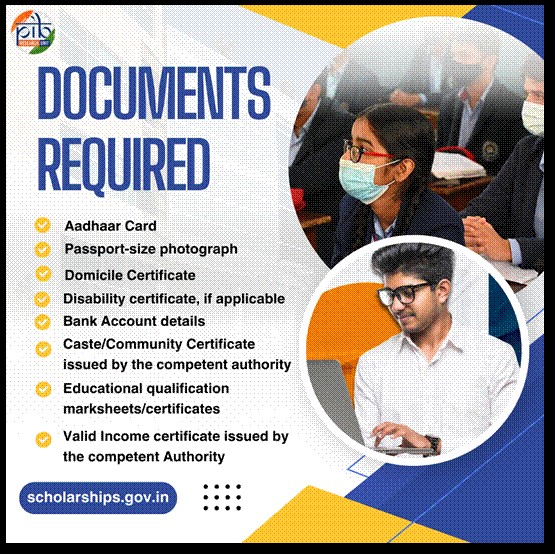
*Any additional documents specified in the application form

Key Points

  • Selection Process: The YASASVI Entrance Test (YET) 2023 is the basis for candidate selection, conducted by the National Testing Agency (NTA) under the direction of the Ministry of Social Justice and Empowerment (MSJ&E), Government of India.
  • Eligibility: Open to OBC, EBC, and DNT students with a total annual family income of up to ₹2.50 lakhs. Additional eligibility criteria may apply, depending on the specific scholarship scheme.
  • Where to Apply: Eligible students can apply online at the National Scholarship Portal: scholarships.gov.in.

Conclusion

By offering a comprehensive array of scholarships and support programs, PM-YASASVI is addressing the financial constraints that often hinder access to education for marginalized communities. The integration of various earlier schemes into one streamlined initiative ensures that students are supported from their school years through to higher education, creating pathways for personal and professional growth. With the government’s ongoing commitment to expanding access to quality education, the PM YASASVI Scheme is making a tangible impact on the lives of thousands of students, helping to create a more inclusive and prosperous India.

References:

Click here to see in PDF: