Share Your University’s Educational News with a Wider Audience


📰

Publish on Eduindex (eduindex.org)

Eduindex (www.eduindex.org) invites universities, colleges, institutes, and academic organizations to share their latest educational news, achievements, and campus events for publication on its widely read education news portal. Eduindex serves as a trusted digital platform dedicated to showcasing developments in higher education, research, innovation, and academic excellence from India and across the globe.

If your institution is actively engaged in academic, research, or community-oriented initiatives, this is an excellent opportunity to highlight your work, enhance institutional visibility, and reach students, scholars, policymakers, and education professionals.


🎓 What Kind of Educational News Can You Submit?

Eduindex welcomes authentic, informative, and institutionally verified news, including but not limited to:

  • Conferences, seminars, workshops, and webinars
  • Faculty Development Programs (FDPs) and training initiatives
  • Academic collaborations and MoUs
  • Research achievements, funded projects, and patents
  • Student achievements, competitions, and innovations
  • Convocation ceremonies and academic milestones
  • Social outreach, extension activities, and community engagement
  • New academic programs, departments, or infrastructure launches
  • Rankings, accreditations, and awards received


📝 Submission Guidelines (Important)

To ensure credibility and quality, contributors are requested to follow these guidelines carefully:

1. Official Email Requirement

  • The news must be sent from the official email ID of your university/college/institution
    (e.g., @university.ac.in, @college.edu, @institute.org)
  • Submissions from personal email IDs may not be considered.

2. Detailed News Content

Your post should include:

  • Clear title of the event/news
  • Name of the institution and organizing department
  • Date and venue of the event
  • Objectives and background
  • Key speakers/resource persons (if any)
  • Highlights, outcomes, and impact
  • Participation details (students, faculty, external experts, etc.)

Well-structured, detailed write-ups (300–800 words) are strongly encouraged to improve publication chances.

3. Mandatory Event Photograph

  • Attach at least one clear photograph of the event
  • Images should be original, relevant, and of good resolution
  • Group photos, speaker sessions, or audience interaction images are preferred

📧 Where to Send Your News

All educational news submissions should be emailed to:

📩 News@eduindex.org

Subject Line (Suggested):
👉 Educational News Submission – [Name of Institution]


🌟 Why Publish Your News on Eduindex?

  • 📢 National and international visibility
  • 🏫 Strengthens your institution’s digital presence
  • 📚 Documents academic and research activities
  • 🤝 Builds credibility among students, scholars, and collaborators
  • 🌐 Permanent online record of institutional achievements

Eduindex acts as a bridge between institutions and the academic community, ensuring that meaningful educational initiatives receive the recognition they deserve.


📌 Call to Action

Universities and colleges are encouraged to regularly share their educational updates and become active contributors to Eduindex. By publishing your news, you contribute to a collective archive of academic progress and innovation.

📨 Send your educational news today from your official email along with at least one event photograph to:
News@eduindex.org

Let your institution’s academic journey inspire the wider education community. 🎓✨
Prime Minister reiterates his commitment for qualitative changes in the education sector

 The Prime Minister, Shri Narendra Modi has reiterated his commitment for qualitative changes in the education sector. He has also expressed his happiness over improvement in performance of Indian universities in QS World University Rankings.

Responding to the CEO and Managing Director of QS Quacquarelli Symonds Ltd, Mr. Nunzio Quacquarelli about continued improvement in performance of Indian universities in QS World University Rankings, the Prime Minister posted on X;

“Over the last decade, we have focused on qualitative changes in the education sector. This is reflected in the QS World University Rankings. Compliments to the students, faculty and institutions for their hard work and dedication. In this term, we want to do even more to boost research and innovation.”


***

DS/ST


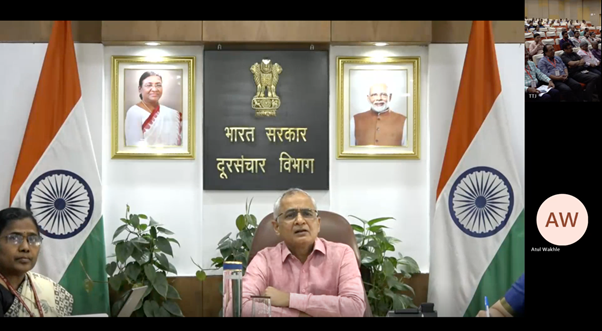
Experimental Licence Module for 100 5G Labs" at IIT Madras

 In a move to smoothen the processes for 100 5G Labs across academic institutions in India, Secretary (Telecom), Dr Neeraj Mittal, virtually launched one of the “Experimental Licence module for 100 5G Labs” during a 5G workshop at IIT Madras. This initiative aims to simplify the experimental licence requirements for these institutions, facilitating smoother operations and fostering innovation in the 5G domain.

Department of Telecommunications (DoT) has awarded ‘100 5G Use Case Labs’ to educational institutions across the country. The primary objective behind this initiative is to cultivate competencies and engagement in 5G technologies among students and start-up communities.

These labs will be using 5G frequency bands for carrying out various experiments and testing use cases. Hence, they need to obtain Experimental (Non-Radiating) category of license from the Department of Telecommunication to ensure interference-free operations to licensed TSPs.


This license is currently being issued on “Self-declaration Mode” from the Saralsanchar portal of DoT through National Single Window System (NSWS). Till date around 1500 licenses have been granted since the launch of this module on Saralsanchar portal in July 2021.


As per the current process, applicant has to fill necessary details regarding the experiment to be carried out, schematic of the setup, details of the equipment, frequency band of operation etc. to obtain the experimental license.


The DoT has now introduced a simplified mechanism for issuance of this license through a specific Approval Type, ‘Experimental License for 100 5G Labs’ on the NSWS Portal (https://www.nsws.gov.in/). The key features of the new process are:

  • Efficiency: This automates the application process by pre-filling technical specifications and schematic details, reducing manual effort and time.
  • Instantaneous Licensing: Applicants can now obtain the experimental license through a “Self-declaration Mode” and download it instantaneously with a single click, ensuring prompt commencement of operations.
  • Simplified Application:  With only basic information required such as institute address, authorized personnel, and a nominal fee of Rs. 5000, the application process is streamlined, making it more accessible to a wider range of institutions.
  • Support for Innovation: This initiative is poised to significantly support innovation, cultivate competencies and represents a step forward in democratizing access to 5G technology and empowering educational institutions and startups to explore its potential for transformative applications.


For further details, the user manual is available at https://saralsanchar.gov.in and the official memorandum can be accessed at https://dot.gov.in/.

*****

Breaking Boundaries in Education: The Latest from Eduindex News

 In an era defined by rapid technological advancements and evolving educational paradigms, staying updated with the latest news and trends in the field of education is imperative. Enter Eduindex News, your go-to portal for insightful analysis, groundbreaking research, and thought-provoking articles covering all aspects of the educational landscape.

Eduindex News is not just another news platform; it’s a dynamic hub that bridges the gap between educators, students, policymakers, and stakeholders worldwide. With a commitment to fostering dialogue and innovation, Eduindex News provides a platform for voices from diverse backgrounds to share their expertise and perspectives on the most pressing issues facing education today.

From cutting-edge research breakthroughs to innovative teaching methodologies, Eduindex News covers a wide array of topics designed to inform, inspire, and empower its readers. Whether you’re interested in the latest trends in online learning, the impact of artificial intelligence on education, or strategies for promoting inclusivity in the classroom, you’ll find it all on Eduindex News.

One of the hallmarks of Eduindex News is its dedication to promoting global collaboration and knowledge exchange. Through partnerships with leading educational institutions, think tanks, and organizations, Eduindex News facilitates the dissemination of best practices and emerging trends across borders. By fostering an interconnected community of educators and learners, Eduindex News seeks to drive positive change and innovation in education on a global scale.

But Eduindex News isn’t just about reporting the news; it’s about sparking meaningful conversations and driving action. Through its opinion pieces, interviews, and editorials, Eduindex News challenges conventional wisdom, encourages critical thinking, and advocates for policies that promote equity, accessibility, and excellence in education. Whether it’s advocating for increased investment in STEM education or calling for reforms to address systemic inequalities, Eduindex News isn’t afraid to tackle the tough issues head-on.

In addition to its regular news coverage, Eduindex News also offers a range of resources and tools for educators, students, and lifelong learners. From curated reading lists to educational webinars and workshops, Eduindex News is committed to supporting the professional development and growth of all those involved in the field of education.

As we navigate an ever-changing educational landscape, staying informed and engaged is more important than ever. Whether you’re a seasoned educator, a curious student, or simply passionate about the future of education, Eduindex News has something for you. Join us as we explore the latest developments, share best practices, and work together to shape the future of learning. Together, we can break boundaries and create a brighter future for education, one headline at a time.

Get paid for the survey

What Are Paid Surveys?

A paid survey is simply a regular survey that pay you a reward for completing it. There are companies that spends a lot of money every year to get to know what consumers think about their products and services and what they can do better.

How much do I earn?

The value of each survey can differ depending of many factors such as the time it takes to complete it. Usually you get around $1 for every 10 minute survey but can be higher. It also depends on how fast you are to answer the questions.

Academia

Academia.edu is a platform for academics to share research papers. The company’s mission is to accelerate the world’s research.

Academics use Academia.edu to share their research, monitor deep analytics around the impact of their research, and track the research of academics they follow. Over 129 million academics have signed up to Academia.edu, adding 25 million papers. Academia.edu attracts over 63 million unique visitors a month.

Guided by a mission to accelerate the world’s research, Academia.edu aims to make every academic paper ever published available for free online and accessible by anyone in the world.  Academia.edu was founded in 2008 in San Francisco by Richard Price who recognized the need for open access of scholarly work while he was a doctoral candidate in philosophy at Oxford University.

Visit academia.edu at https://www.academia.edu/

Follow Academia.edu on Facebook, LinkedIn, and Twitter

Academia’s new mobile app represents a significant breakthrough in ensuring that scholarly research reaches beyond the Ivory Tower and into the real world where its true impact can be harnessed, all through the convenience and accessibility of a simple smartphone.

Mobile app users will be able to read millions of academic papers on over two million research interests, all for free. An Android version of the mobile app will be released in the coming months.

Academia.edu announced its acquisition of peer review platform Plasmyd, with the intention of proving that the two academic startups do indeed intend to generate an industry-wide shakeup.

Plasmyd is itself a peer-review platform, that has handled thousands of scientific papers and provided a space for scientists to discuss and critique each other’s work. Plasmyd sees itself as binding its scientific search engine platform with Academia.edu’s user base (which just hit 5 million yesterday). The two companies view this as a way to begin promoting new online academic platforms. “[Academia.edu has] built the largest online community of scientists while we’ve been working on building the next generation tools of peer review,” said Plasmyd’s co-founder Adnan Akil.

Research sharing platform Academia.edu is adding an analytics dashboard in order to allow measurement of the reach of academic papers shared on the site.

The new dashboard enables researchers to see who is accessing their research and how it is being referenced, both by academics and by non-academics. This information becomes invaluable when academics need to defend the merit of new research by noting, for example, that an individual’s research is being cited in Congressional hearings, public interest press releases, journal articles and news briefs.

The dashboard is now fully available for members after previously being available in a beta form.

Metrics available for members to browse include:

  • Total profile and research views for each member’s material;
  • Information on which search engines have driven traffic to a profile page;
  • Details on specific keywords that drive traffic; and
  • Breakdowns on which countries’ citizens are viewing specific research.

One of the things that might help such profile sites as Academia.edu grow is the presence of other researchers with whom you can network and whose work you can follow, as they maintain their profiles. Communities based around particular disciplines or research groups might well form around different sites like this one. I have chosen to “follow” a couple of my colleagues on Academia.edu and it works a bit like Facebook or LinkedIn or lots of other “Web 2.0” or social networking sites in the sense that my home page tells me about the activity of the people I have chosen to follow.

Apart from networking opportunities which are reliant upon community use, researchers could use this site as a place to promote their publications and their research expertise/interests. I uploaded my papers when I set up the profile and it was interesting to see recently that someone had viewed my profile after searching for keywords that are key to the topic of one of my papers. My own papers are of niche interest to librarians, so I won’t have a lot of activity to keep track of(!), but for researchers who are keen to monitor and to be able to demonstrate impact of their research, they could do worse than to see how often people are finding out about their work and which keywords are bringing people to their profile.

I do recommend that researchers put listings of their publications on lots of sites, but rather than uploading the full text of papers to external sites like this one, I think it best to put reference details up here and link back to the WRAP repository for the full text. I recommend this because it will boost the search engine ranking of a page if there are lots of links to it from an external domain, so you can use profile sites like this one to help the ranking of your paper at the web location you prefer most. Also, it makes sense if you want to collate statistics about those who read the full text of your work if you are always referring people to one source.