President of India Graces 12th Convocation of Maharaja Sriram Chandra Bhanja Deo University

 The President of India, Smt Droupadi Murmu graced and addressed the 12th convocation of Maharaja Sriram Chandra Bhanja Deo University at Baripada, Odisha today (May 6, 2023). 

Speaking on the occasion, the President said that Maharaja Sriram Chandra Bhanja Deo University has made a unique identity in the field of higher education and research in a short span of its history.

The President appreciated the University for establishing the ‘Sacred Grove’ in its campus with the aim to preserve the bedrock of tribal practices and cultural traditions. She said that the ‘Sacred Grove’ is important for the conservation of environment and local biodiversity. It is also one of the best examples of community-based management of natural resources.

The President said that the world is facing huge challenges of global warming and climate change. India has set an example for the world to adopt a nature-friendly lifestyle, which is called Lifestyle for the Environment or LiFE. In our tradition, it is believed that trees, plants, mountains, rivers all have life and not only humans but also all living beings are children of nature. Therefore, it is the duty of all human beings to live in harmony with nature. She said that the Similipal National Park located in this region holds a globally important place in terms of biodiversity. She expressed confidence that the students and teachers of the university would find a way to protect biodiversity through their research and innovation.

Addressing the graduating students, the President said that receiving degree does not mean that education process has been completed. Education is a continuous process. She said that after getting higher education some of them would do a job, some would do business and some would also do research but thinking of giving a job is better than thinking of doing a job. She was happy to note that this University has set up an Incubation Centre and provides assistance to the students, alumni and common people in setting up start-ups.

The President said that competition is an inevitable side of life. One has to face competition in every walk of life. She said that students should always keep trying to succeed in the competition and for that they should keep acquiring higher skills and move towards greater efficiency. They can turn the impossible into possible with their will-power. 

The President said that competition is a natural side of life, but cooperation is the beautiful side of life. She told students that while moving forward in life, when they would look back, they would find that some people of the society are not very capable of competing with them. She advised students to hold the hands of deprived ones and bring them forward. She said that a healthy society can be built through generosity and cooperation. She urged students to think not only of their own happiness and interest but also about the welfare of the society and country.

***

Top Educational News

Here are some of the top educational news in India:
New Education Policy 2020: In July 2020, the Indian government launched the New Education Policy (NEP), which aims to revamp the education system in the country and provide a holistic and multidisciplinary education to students. The NEP has been widely discussed and debated in educational circles since its launch.

Online education during pandemic: With the outbreak of the COVID-19 pandemic, schools and colleges across India were closed, and the education sector had to shift to online modes of learning. The pandemic has highlighted the importance of technology in education and the need to develop new models of online learning.
Entrance exams: The year 2021 has seen several changes in the entrance exams for admission to colleges and universities. The National Testing Agency (NTA) has announced changes in the format of several entrance exams, including the Joint Entrance Examination (JEE) and the National Eligibility cum Entrance Test (NEET).
Skill-based education: The Indian government has been focusing on promoting skill-based education and vocational training in recent years. Several initiatives have been launched to provide training and support to students in areas such as agriculture, healthcare, and tourism.
School reopening: With the decline in COVID-19 cases, several states in India have started reopening schools in a phased manner. However, concerns about the safety of students and teachers continue to be raised, and many schools are adopting hybrid models of learning to ensure social distancing and safety.
Research and innovation: The Indian government has been promoting research and innovation in the education sector through various initiatives, including the establishment of the National Research Foundation and the Atal Innovation Mission. These initiatives aim to foster a culture of research and innovation in educational institutions and promote the development of new technologies and solutions.
Overall, the education sector in India is undergoing significant changes and developments, with a focus on providing quality education and developing new models of learning.

If your YouTube content is watched by Americans, Get ready to pay taxes to Google

The world’s giant tech company Google has now tightened its grip on those who earn from YouTube content. Lately, there’s been an increase in the no. of Indian YouTube content creators, be it beauty channels, educational channels, or entertainment channels. These channels receive large no. of views and subscribers not only from Indian but or also foreign viewers.

Becoming a YouTube influencer with large no. of subscribers has become an alternate career for many people and a good source of income too. Up until now there was no rule to pay any taxes for youtubers.

Now, Google has announced that it will collect 24 to 30 per cent tax every month from the makers of YouTube in other countries of the world, including India. The tax will be on the income generated by the American people viewing YouTube content.

Google warned in an e-mail, “As of May 31, 2021, if you tube creators do not provide their tax information, then 24 percent of the total income from the content will be deducted as tax. According to the new rule, tax will be deducted from people earning from YouTube every month.
The deduction of tax from the income of YouTube content creators will depend on certain factors. External creators apart from the US will have to give their information related to tax, then the content viewed by the American people can be taxed at the rate of 0 to 30 percent.
In such a situation, where you create such content which most of the people who see it are in America, then you will have to get ready for tax deduction. If there is a tax relief treaty between the US government and the government of the country of the relevant YouTuber, then it will also be applicable and will have to pay less tax.
Google’s tax arithmetic on YouTube can be understood as follows-
-If you did not share tax related information: 24% tax on worldwide income for the month
-If you hand over tax-related papers and are eligible for tax treaty benefits: 15% tax every month from income from American visitors
-Tax reported but not eligible for tax treaty benefits: A tax of 30 per cent will have to be paid every month from the total income from American visitors.
Google has started informing the youtubers about these changes through E-mails. Apparently, in America google already collected taxes from the Youtube content creators.

Changes in the rights given to Overseas Citizens of India (OCI), will be considered foreign nationals

India has changed the rights given to Overseas Citizens of India (O.C.I.) and placed them in the category of foreign national in various cases. Through the new notification issued under the Citizenship Act 1955, many restrictions have also been imposed on them.

The new notification will replace the three notifications issued in April 2005, January 2007 and January 2009. The government has taken this step after the defeat in recent cases related to it.
In a case the Home Ministry had revoked the O.C.I. status of an American-Indian doctor. He was preaching religion in Bihar giving treatment to the poor.
Although the practice of preaching the religion was exempted by the Delhi High Court for the doctors, as there was no law to stop the O.C.I. from doing so. Doctor was also asked to issue O.C.I. card back. 
In another case, the Karnataka High Court had asked O.C.I. students to be treated as Indian citizens during their admission in various courses.
By 2020, a total of 60 lakh people in the world have O.C.I. cards. These cards are given to such people and their matrimonial companions who are of Indian origin, people of Indian origin whose next generations became citizens of Pakistan and Bangladesh. 
O.C.I. card holders get an opportunity to live and work in India indefinitely. Like Indian citizens, many rights are also available.
Although they do not get Indian citizenship, neither can they vote and nor can get government post. The government can withdraw the OCI card whenever it wants.
Now O.C.I. will have to get special permission from research work to missionary or tablighi events in the country. The Ministry of Home Affairs will also have to take permission for journalism and its related activities and to go to various prohibited, restricted and protected areas. An important impact of the notification will be on O.C.I. journalists serving foreign institutions. They have to get permission from the Ministry of Home Affairs to work in India.
The O.C.I. category of people who are empowered in FEMA have also been considered as foreign nationals for activities under FEMA in the economic, financial and education sectors in the country. In this law enacted in 2003, till now they had rights like NRI.

No Unauthorized And Uncontrolled Slaughtering Of Cattle Including Cows

It is really a matter of grave concern that the dangerous, deplorable and despicable incidents of unauthorized and uncontrolled slaughtering of cattle including cows is taking a very heavy toll. It cannot be just glossed over that none other than the Calcutta High Court has also just recently taken a serious note of it. We had seen how just a short time back the Calcutta High Court had directed the Kolkata Municipal Corporation authorities to take action against people found slaughtering cattle including cows and/or exhibiting for sale flesh of slaughtered cattle and/or selling cattle meat. This itself is enough to speak for itself as to what is the ground situation.

No wonder, the Bench of Chief Justice Thottathil B Radhakrishnan and Justice Arijit Banerjee of Calcutta High Court in a latest, learned, laudable and landmark judgment titled Rajyashree Chaudhuri vs The State Of West Bengal & Ors. in WPO/372/2019 in exercise of its original side of Constitutional writ jurisdiction further very rightly directed the Corporation to strictly enforce the measures mentioned by the Commissioner in his affidavit (filed before the Court) “so that there is no unauthorized or uncontrolled slaughtering of cattle including the cows”. Those who still dare to indulge in it must be booked and strictly punished according to the law. There can be no denying or disputing it!
No doubt, the Bench to start with very rightly mentions the purpose of the PIL that, “The grievance ventilated through this public interest litigation is that there is indiscriminate, uncontroll, unauthorised and large scale slaughtering of cattle including cows during the festival of Bakri-Id without adhering to the laws laid down by the legislature and the Courts including the Hon’ble Supreme Court of India.”
In retrospect, the Bench recalls that, “By an order dated January 6, 2021, we had directed the Commissioner of Kolkata Municipal Corporation to file an affidavit delineating as to how the Corporation proposes to manage the situation and ensure that the provisions of the relevant laws including the West Bengal Animal Slaughter Control Act, 1950 and the Kolkata Municipal Corporation Act, 1980 are implemented and the orders passed and guidelines laid down by this Court as also the Hon’ble Supreme Court are enforced.”
More significantly, the Bench then goes forth to state in the new para that, “Pursuant to such order, an affidavit has been filed today affirmed by the Commissioner on February 4, 2021. After adverting to the various provisions of law, at paragraph 12 of the affidavit, the deponent has stated as to what actions the Corporation is taking or will take to manage the situation. Paragraph 12 of the affidavit is set out hereunder: 
“12. It is stated that in view of the aforementioned provisions of the West Bengal Animal Slaughter Control Act, 1950 and the KMC Act, 1980 as well as the aforementioned orders both of the Hon’ble Supreme Court and also of this Hon’ble Court, the Corporation proposes to manage the situation and to ensure the compliance of the provisions of the Act in the manner as follows :- 
(a) The KMC has already identified places/locations for slaughtering of animals on the occasion of Id-ul-Zoha and the such locations/places identified for slaughtering of animals in the KMC area shall be notified to all concerned through newspaper publication and official website of Kolkata Municipal Corporation in each year at least one month before the date of holding Id-ul-Zoha (vide section 482(2)(a) of the Kolkata Municipal Corporation Act, 1980.
(b) Since the KMC has 5 slaughter houses namely:
(i) Chitpur Slaughter House (for sheep and goat). 
(ii) Landsdowne Slaughter House (for sheep and goat).
(iii) Pig Slaughter House (for pig). 
(iv) Tangra Slaughter House (for sheep, goat, cow and bullock).
(v) Tangra Modern Abattoir (for buffalo).
No place other than the said Municipal Slaughter Houses shall be permitted to be used a slaughter house. This does not however restrict the slaughter of any animal on the occasion of any religious festival or ceremony, in any place to be specified by the Municipal Commissioner by Public or Special Notice, as may be imposed.
(c) No person is permitted and shall be permitted, without or otherwise than with conformity, with a license from the Municipal Commissioner to carry on the trade of a butcher, fishmonger, poulterer or importer of flesh.
(d) No person is permitted and shall be permitted to sell or expose for sale any flesh obtained from an animal unless the skinned carcass of the animal is stamped in a particular manner as a token of the fact that the animal has been slaughtered in a municipal or licensed slaughter house.
(e) The officers/employees concerned of the KMC exercise powers to inspect or examine any food or drug or any utensil or vessel used for preparing or storing any such food or drug. If on inspection or examined of any such food or drug any contravention of the provisions of the Act is detected, the persons found to have contravened the provision is prosecuted in accordance with law apart from seizure of the food/drugs etc.
(f) The KMC and its officials exercise the powers to inspect the places where unlawful slaughter of animals is suspected and the animal or carcass of such animal or such flesh are seized if contravention of the provisions is found.
(g) Slaughtering of animal is permitted and shall be permitted in Municipal slaughter houses only after the grant of certificate to the effect that the animal is fit slaughter.”
As a corollary, the Bench then very rightly goes on to state most crucially that, “We think that if the steps mentioned in the aforesaid paragraph are strictly enforced by the Corporation, the situation will be well under control and there will be no unauthorised slaughtering of cattle including cows, which is the grievance of the petitioner.” There can be no denying it!
Going ahead, the Bench then also makes it a point to state unequivocally in the next para that, “Accordingly, we direct the Kolkata Municipal Corporation to strictly enforce the measures mentioned by the Commissioner in the aforesaid affidavit so that there is no unauthorised or uncontrolled slaughtering of cattle including the cows. We make it clear that if it is brought to our notice that the measures are not being implemented in their true intent and spirit and there is unauthorised slaughtering of cattle including cows, the responsible officers of the Corporation may be exposed to due legal action including action under the provisions of the Indian Penal Code for dereliction of official duties.”
Finally, the Bench on a closing note then adds in the new and final para that, “Before parting, we reiterate that if the Corporation authorities find any person violating the laws of the land with regard to slaughtering cattle including cows and/or exhibiting for sale flesh of slaughtered cattle and/or selling cattle meat or acting in breach of any restriction imposed by the Corporation, then the Corporation authorities shall take immediate steps to bring such violators to book in accordance with law including, if necessary, by taking assistance of the police. WPO 372 of 2019 is disposed of.”
To sum it up, what the two Judge Division Bench of Chief Justice Thottathil B Radhakrishnan and Justice Arijit Banerjee of Calcutta High Court have clearly, cogently, categorically and convincingly asserted on the steps to be taken for ensuring that measures are implemented in their true intent and spirit and to ensure that there is effective check of unauthorized slaughtering of cattle including cows must be implemented in totality. What the petitioner has stated in his PIL that indiscriminate, uncontrolled, unauthorized and large-scale slaughtering of cattle including cows during the festival of Bakri-Id without adhering to the laws laid down by the Legislature and the Courts including the Hon’ble Supreme Court of India must be checked promptly and effectively. It is the bounden duty of the responsible officers of the Kolkata Municipal Corporation to ensure strict compliance of the rules including the cows because if they fail to ensure this then they would be held liable to due legal action including action under the provisions of the Indian Penal Code for dereliction of official duties. Very rightly so!
Sanjeev Sirohi


High demand of Indian vaccines, lower than expected no. of Indian people getting vaccinated

The Delhi High Court on Thursday said that Corona vaccines are being donated to other countries, vaccines are being imported abroad, but vaccines are being given to Indians people at lower capacity. The court directed the central government to submit an affidavit by March, to argue the rationale for the classification of vaccinations. Also, the vaccine companies Serum Institute and Bharat Biotech have been asked to explain their manufacturing capacity. The court hearing is due for
the matter on 10 March.

A bench of Justices Vipin Sandhi and Justice Rekha Pali said during the hearing on the PIL of the Bar Council, “Serum Institute and Bharat Biotech can make more vaccines, but it does not seem to be happening.” In fact, in the second phase, the government has approved to give free vaccine to all the elderly above 60 years and those suffering from certain diseases above 45 years of age.
The bench said, Corona cases in the country have started to increase again, so what is the reason for controlling vaccination. It is important to have a sense of responsibility and immediate need. On this, the Additional Solicitor General Chetan Sharma and Advocate Anil Soni told the court that this is a policy decision after consultation with experts. The petition has demanded that all people associated with the justice system, including judges, be declared front-line employees, so that they get priority in getting vaccinated.
India has a huge population and a large part of total population is still to be vaccinated, therefore vaccinating Indians should be prioritized. Due to negligence of the rules of social distancing and other precautions by the people has caused a resurge in the number of corona cases.
On Thursday, for the first time in the last 34 days, the maximum number of new corona cases has been found in a single day. 34 days later 17 thousand new patients were reported. Of these, 860 patients are in only six states.
On Wednesday, 89 patients died of corona. 14,031 patients were also discharged. Earlier – on January 28, 18 thousand patients were found in one day. Since then, their number was continuously reduced.

Rising cases of sexual abuse- who is at fault?

Incidents of murder of a man who had accused a youth of molesting his daughter in Uttar Pradesh’s Hathras by a pre-emptive team, along with some colleagues, and the murder of a Scheduled Caste teenager in Aligarh in an attempted rape has shocked the people once again. It is said that the recklessness of criminals in the state has increased a lot.

The man who was murdered in Hathras had filed a report against a youth about two and a half years ago for molesting his daughter, forcing the accused to stay in jail for some time and was currently out on bail. On a sudden dispute between the two families, the accused along with their colleagues went to the farm and shot the girl’s father and killed him. However one accused has been caught and the Chief Minister has imposed NSA (National Security Act) against all the accused.

Along with giving orders, the officials have also been asked to take strict action. The strictness of the police after the crime is understandable, but the irony is that despite this there are incidents of crime in the state every now and then, which seems that the criminals have no fear of law and order.
The whole truth about the murder of a Scheduled Caste teenager in Aligarh will be revealed only by the police investigation, but the constant targeting of the weaker sections of the society does not present a good image of the state. Earlier, the death of a Scheduled Caste teenager after gang rape in Hathras has been in the news. The details are that the villagers, angered by the killing of the teenager in Aligarh, prevented the body from being taken for postmortem and also threw stones at the police. Ironically, despite changing times, society and its thinking does not change, due to which such incidents keep happening continuously and no voice is raised anywhere.
There is no doubt that such crimes can be curbed only by the strictness of law and order, but until such time till the thinking of the society towards women changes, then such incidents can’t
probably be stopped completely. Despite this, the government of Uttar Pradesh will have to take these incidents seriously.

Lok Sabha passed the abortion amendment bill, a big step for women's right

All major religions across the world believe that life is a creation, so a person does not have the right to end someone’s life. Voluntary abortion is a punishable offense in India. The right to life is a fundamental right in the Constitution of India. 

Some people believe that reproduction and abortion are a woman’s personal choices and rights. On the other hand many people believe that the ultimate duty of the state is to protect life, not to take life. 
They consider full protection as an integral part of life and abortion as immoral. 
After a great long debate in England, the abortion law was first enacted in 1967 after protests and amendments were made from time to time. There, abortion is allowed only on specific and prescribed basis. In 1973, abortion was legalized by the Supreme Court of America on special grounds and circumstances.
Under the Medical Abortion Act, 1971 in India, abortions can be done up to 12 weeks on the basis of a doctor’s opinion and up to 20 weeks based on the opinion of two doctors, if the life of a pregnant woman and her mental or physical health are in deep danger . Rape can lead to miscarriage within 20 weeks of conception, including failure of pregnancy and birth control measures, or even in the case of a fetus abnormality. There has been a demand for this law amendment in India for a long time. 
The Medical Termination of Pregnancy Amendment Bill, 2020 was introduced in the Lok Sabha on March 2, 2020 by Dr. Harsh Vardhan, Union Health Minister, was passed by the Lok Sabha after discussion on 17 March. There is a proposal for some amendment to increase the upper limit of abortion from 20 weeks to 24 weeks. The bill is in the interest of rape victims, family sexual harassment, sexual protection of minors and personal dignity and female self-respect. It is proposed in the Bill to decide whether a pregnancy can be terminated after 24 weeks in cases of fetal abnormality.
In some cases abnormal fetus or unwillingness are life-threatening situations to the fetus and woman, due to which the abortion will now be done on the prescribed procedure and on a certain basis. Hopefully, the Rajya Sabha will also pass it in the current session. This amendment bill is progressive, fulfills a long expectation and conforms to and empowers the dignity and autonomy of women.

Lok Sabha passed the abortion amendment bill, a big step for women's right

All major religions across the world believe that life is a creation, so a person does not have the right to end someone’s life. Voluntary abortion is a punishable offense in India. The right to life is a fundamental right in the Constitution of India. 

Some people believe that reproduction and abortion are a woman’s personal choices and rights. On the other hand many people believe that the ultimate duty of the state is to protect life, not to take life. 
They consider full protection as an integral part of life and abortion as immoral. 
After a great long debate in England, the abortion law was first enacted in 1967 after protests and amendments were made from time to time. There, abortion is allowed only on specific and prescribed basis. In 1973, abortion was legalized by the Supreme Court of America on special grounds and circumstances.
Under the Medical Abortion Act, 1971 in India, abortions can be done up to 12 weeks on the basis of a doctor’s opinion and up to 20 weeks based on the opinion of two doctors, if the life of a pregnant woman and her mental or physical health are in deep danger . Rape can lead to miscarriage within 20 weeks of conception, including failure of pregnancy and birth control measures, or even in the case of a fetus abnormality. There has been a demand for this law amendment in India for a long time. 
The Medical Termination of Pregnancy Amendment Bill, 2020 was introduced in the Lok Sabha on March 2, 2020 by Dr. Harsh Vardhan, Union Health Minister, was passed by the Lok Sabha after discussion on 17 March. There is a proposal for some amendment to increase the upper limit of abortion from 20 weeks to 24 weeks. The bill is in the interest of rape victims, family sexual harassment, sexual protection of minors and personal dignity and female self-respect. It is proposed in the Bill to decide whether a pregnancy can be terminated after 24 weeks in cases of fetal abnormality.
In some cases abnormal fetus or unwillingness are life-threatening situations to the fetus and woman, due to which the abortion will now be done on the prescribed procedure and on a certain basis. Hopefully, the Rajya Sabha will also pass it in the current session. This amendment bill is progressive, fulfills a long expectation and conforms to and empowers the dignity and autonomy of women.

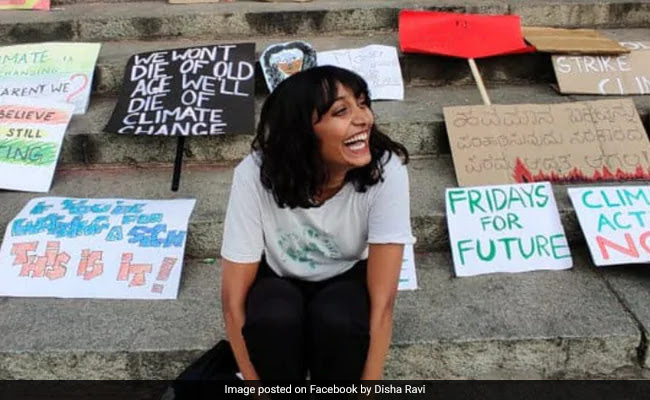
Disha Ravi granted bail, Court says no real evidence to prove the accusations

Yesterday, while granting bail to environmental activist Disha Ravi in ​​the toolkit case related to the farmers’ movement, the court said that creating a WhatsApp group and editing a toolkit is not a crime. Delhi’s Patiala House Court said on Tuesday, “You cannot put anyone in bars only for disagreeing with the government’s policies.” Late night, Disha was released from Tihar jail.

Additional Sessions Judge Dharmendra Rana strictly said that there is no evidence against Disha that she campaigned with the intention of bringing a bad name to India. There is no evidence that she hatched any conspiracy to spread violence. Many people have been arrested in cases of violence, but not a single one has been proved to have any connection with Disha. The court also said that just to maintain the pride government no one can be charged for treason. 
The court granted direction to bail on the condition of personal bond of one lakh and cooperation in investigation. They will also be prohibited from going out of the country during this period. 
The judge said that the police has no evidence to prove the connection between Disha and the Khalistan supporters of the Poetic Justice Foundation.
Similarly, no such evidence has been produced to prove that Disha is a supporter of separatist ideology and there is some kind of connection between her and the banned organization Sikh for Justice.
Disha Ravi, is an Indian youth climate change activist and a founder of Fridays For Future India. Her arrest on 13 February 2021 for an alleged involvement with an online toolkit related to Greta Thunberg and the 2020–2021 Indian farmers’ protests gained international attention.

Medical seat business in Karnataka for 'medical colleges'

The Income Tax Department has busted the medical seat business in Karnataka carried out by ‘medical colleges’ in which they offered seats to NEET unqualified or NEET qualified candidates with low score for higher package/fees. Evidence has been found  that these institutions have made more than Rs 400 crore in the name of capitation fees.

According to the Central Board of Direct Taxes (CBDT), the raid was reported after investigation was conducted at 56 locations in Karnataka and Kerala of nine major trusts running educational institutions in Bangalore and Mangaluru, including the Medical College. Documents found in the raids have yielded evidence of Rs 402.78 crore being illegally collected in the name of capitation fees. 
This fee was raised through recruiting the students as per the problems involved in the online admission process. The details of this capitation fee were not given to the Income Tax Department. During investigation documents of 2.39 crore undisclosed foreign assets of the trustees have also been found in Ghana.
There was a politics of qualifying the examination after admission. Apart from admissions to these management quota students in medical colleges, a ‘package’ was also being given to pass the examination, for which one lakh to two lakh rupees were being taken.
High ranked students in NEET also joined the racket-
Trustees and directors of medical colleges  found a loophole in the National Eligibility and Entrance Test (NEET). Some students who got high rank in NEET were added through agents. These students used to get admission in these institutions through counseling, however they had already taken admission in any other college. Later, they would withdraw their names from these institutions and this seat would become vacant for the college management.
The National Eligibility Entrance Test (NEET), formerly the All India Pre-Medical Test (AIPMT), is the qualifying test for MBBS and BDS programmes in Indian medical and dental colleges. It is conducted by the National Testing Agency (NTA). NEET qualified students are offered admission for 90,000 seats in MBBS and BDS Colleges of India, the examination is conducted in the month of May every year.

Medical seat business in Karnataka for 'medical colleges'

The Income Tax Department has busted the medical seat business in Karnataka carried out by ‘medical colleges’ in which they offered seats to NEET unqualified or NEET qualified candidates with low score for higher package/fees. Evidence has been found  that these institutions have made more than Rs 400 crore in the name of capitation fees.

According to the Central Board of Direct Taxes (CBDT), the raid was reported after investigation was conducted at 56 locations in Karnataka and Kerala of nine major trusts running educational institutions in Bangalore and Mangaluru, including the Medical College. Documents found in the raids have yielded evidence of Rs 402.78 crore being illegally collected in the name of capitation fees. 
This fee was raised through recruiting the students as per the problems involved in the online admission process. The details of this capitation fee were not given to the Income Tax Department. During investigation documents of 2.39 crore undisclosed foreign assets of the trustees have also been found in Ghana.
There was a politics of qualifying the examination after admission. Apart from admissions to these management quota students in medical colleges, a ‘package’ was also being given to pass the examination, for which one lakh to two lakh rupees were being taken.
High ranked students in NEET also joined the racket-
Trustees and directors of medical colleges  found a loophole in the National Eligibility and Entrance Test (NEET). Some students who got high rank in NEET were added through agents. These students used to get admission in these institutions through counseling, however they had already taken admission in any other college. Later, they would withdraw their names from these institutions and this seat would become vacant for the college management.
The National Eligibility Entrance Test (NEET), formerly the All India Pre-Medical Test (AIPMT), is the qualifying test for MBBS and BDS programmes in Indian medical and dental colleges. It is conducted by the National Testing Agency (NTA). NEET qualified students are offered admission for 90,000 seats in MBBS and BDS Colleges of India, the examination is conducted in the month of May every year.

World' fastest vaccination campaign is underway in India

The country’s largest corona vaccination campaign is underway. The Union Health Ministry said that a total of 75 lakh people have been vaccinated in the country till Friday, the 27th day of the vaccination campaign. Out of this, 58.14,976 health workers and 16,90,034 Front line workers are included.

Why vaccination is important?

Vaccines can help limit the spread of antibiotic resistance.

The global increase in disease caused by drug-resistant bacteria, due to overuse and misuse of antibiotics, is a major public health concern. Vaccinating humans and animals is a very effective way to stop them from getting infected and thereby preventing the need for antibiotics.

Making better use of existing vaccines and developing new vaccines are important ways to tackle antibiotic resistance and reduce preventable illness and deaths.

According to the ministry, a total of 1,54,370 sessions of immunization have been completed across the country so far. Immunization campaign is fastest in India. On 11th February, a total of 4.5 lakh people were vaccinated. This includes 1,09,748 health workers and 3,78,148 front line workers.The corona virus is seen to be dying with speed in the corona vaccination campaign, according to the report released by the Union Health Ministry on Friday, 9309 cases were reported in the last 24 hours across the country, this is the third time in February when less than ten thousand cases were reported.

According to the Health Ministry, there were seven days in February when the daily death rate from Corona has been less than 100. There was no death reported from corona in 18 states and union territories of the country in the last 24 hours.

World' fastest vaccination campaign is underway in India

The country’s largest corona vaccination campaign is underway. The Union Health Ministry said that a total of 75 lakh people have been vaccinated in the country till Friday, the 27th day of the vaccination campaign. Out of this, 58.14,976 health workers and 16,90,034 Front line workers are included.

Why vaccination is important?

Vaccines can help limit the spread of antibiotic resistance.

The global increase in disease caused by drug-resistant bacteria, due to overuse and misuse of antibiotics, is a major public health concern. Vaccinating humans and animals is a very effective way to stop them from getting infected and thereby preventing the need for antibiotics.

Making better use of existing vaccines and developing new vaccines are important ways to tackle antibiotic resistance and reduce preventable illness and deaths.

According to the ministry, a total of 1,54,370 sessions of immunization have been completed across the country so far. Immunization campaign is fastest in India. On 11th February, a total of 4.5 lakh people were vaccinated. This includes 1,09,748 health workers and 3,78,148 front line workers.The corona virus is seen to be dying with speed in the corona vaccination campaign, according to the report released by the Union Health Ministry on Friday, 9309 cases were reported in the last 24 hours across the country, this is the third time in February when less than ten thousand cases were reported.

According to the Health Ministry, there were seven days in February when the daily death rate from Corona has been less than 100. There was no death reported from corona in 18 states and union territories of the country in the last 24 hours.

Twitter will have to obey the Indian government's law, Government encourages people to switch to Koo

Clash between Twitter and the central government is increasing due to the order to close 1178 accounts related to Khalistan-Pakistan . The central government has clearly told the American company that it has to follow Indian law. Also, many politicians and others are switching to Koo app against Twitter.

In a virtual meeting with Twitter Vice President Monique Meshe and Jim Baker, the secretary of Ministry of Electronics and Information Technology said,”despite government instructions, fake accounts related to the peasant movement were not closed. This is very unfortunate”. Earlier, Twitter replied it cannot fully oblige to the center’s order citing violation of the right to freedom of expression and said the Indian government’s demand was not in line with the country’s laws. Twitter believes in protecting the Freedom of Expression of its users and hence it did not take an action against the accounts of media companies, journalists, social workers and politicians.

25+ lakhs downloads of the KOO app in last 48 hours-

Amidst the trending #ban_twitter and #Koo_app on twitter in India, many politicians and spokespersons are switching to Koo to express their anger and requesting their followers to do the same. Koo app
was launched only last year under self-sufficient India. About 3 million people downloaded it in 48 hours.