From Manager to Visionary: How to Lead Business Transformation in Uncertain Times

Daily writing prompt
Share one of the best gifts you’ve ever received.

Picture this – you’re steering a ship in the middle of a storm. The winds are howling, the waves are unpredictable, and your crew looks to you for direction. In today’s volatile business environment, managers are facing a similar challenge. Economic fluctuations, rapid technological advancements, and evolving customer expectations have made traditional management styles obsolete. To survive and thrive, leaders must move beyond managing tasks – they must become visionaries who anticipate change, inspire innovation, and drive transformation.

Photo by Eva Bronzini on Pexels.com

So, how does one make this leap from manager to visionary? What skills and mindset shifts are required to navigate uncertain times successfully? This article explores the key strategies that can help leaders transform businesses while ensuring stability and long-term growth.

1.     Shift From Being Reactive to Being Proactive

Traditional managers are often reactive – responding to challenges as they arise. Visionary leaders, on the other hand, anticipate change before it happens. They don’t just solve problems; they look ahead, identify opportunities, and shape the future. Here’s how you can be a visionary leader:

  • Embrace Scenario Planning: The most successful leaders don’t wait for crises; they prepare for them. Companies like Amazon and Tesla thrive because their leaders think five to ten years ahead. Regularly conducting “what-if” analyses can help businesses stay ahead of disruptions.
  • Encourage a Culture of Innovation: Visionary leaders foster environments where employees feel empowered to experiment and challenge the status quo.
  • Stay Ahead of Industry Trends: Subscribe to reports, attend conferences, and network with thought leaders to predict industry shifts before they happen.

2.     Adapt to Digital Transformation

Technology is the biggest disruptor in today’s business landscape. AI, automation, and big data are not just buzzwords; they are fundamentally reshaping industries. Managers who resist digital transformation risk becoming obsolete, while visionary leaders harness these tools to drive efficiency, enhance decision-making, and create new revenue streams. Steps to lead this digital transformation:

  • Invest in Digital Literacy: Even if you’re not in a tech-heavy industry, understanding AI, blockchain, and data analytics is crucial. Many executives enroll in a general management course to strengthen their ability to integrate technology into business strategy. You can consider enrolling in a general management programme to learn these skills.
  • Leverage AI for Smarter Decision-Making: Companies like Netflix use AI-driven analytics to predict customer preferences and enhance user experience. Could your business use AI to forecast market trends or optimize supply chain management?
  • Adopt Agile Practices: Traditional business models follow rigid hierarchies. Visionary leaders embrace agility, enabling their teams to pivot quickly in response to change.

3.     Lead with Purpose

A manager manages teams; a visionary inspires movements. To lead transformation in uncertain times, leaders must establish a clear purpose that resonates with employees, customers, and stakeholders. You need to build a compelling vision.

  • Define Your ‘Why’: What impact does your company want to create? Visionary leaders, like Steve Jobs and Elon Musk, built companies with missions that were larger than profits.
  • Communicate with Clarity: A vision is useless if your team doesn’t understand it. Every decision, project, and strategy should align with the company’s broader purpose.
  • Lead by Example: Employees look to leadership for cues. If you want your organization to embrace transformation, demonstrate adaptability and forward-thinking in your own actions.

4.     Build Resilience

In uncertain times, resilience is the most important trait a leader can cultivate. Visionary leaders don’t fear failure; they see it as a learning opportunity. How to build organizational resilience:

  • Encourage a Growth Mindset: Visionary leaders foster a culture where employees feel safe to take risks and innovate.
  • Develop Strong Crisis Management Skills: Leaders must be prepared to respond to market downturns, supply chain disruptions, or workforce challenges without losing momentum.
  • Strengthen Financial Agility: Businesses that survived the COVID-19 crisis were those that quickly adapted their financial strategies. Maintaining healthy cash reserves and diversifying revenue streams can be game-changers.

5.     Embrace People-Centric Leadership

At the heart of every transformation is people. The best strategies and technologies mean nothing if employees are disengaged or resistant to change. Visionary leaders prioritize people over processes, ensuring that teams remain motivated, aligned, and prepared for the future.

  • Empower Teams with Autonomy: Employees perform better when they have ownership over their work. Autonomy fosters creativity and innovation.
  • Prioritize Employee Well-Being: Burnout is a major challenge for organizations undergoing transformation. Companies with strong well-being programs see higher productivity and retention rates.
  • Develop Future-Ready Skills: A general management course can help leaders refine their skills in change management, strategic thinking, and employee engagement.

6.     Make Bold, Data-Driven Decisions

In uncertain times, relying on intuition alone can be risky. Visionary leaders combine data-driven insights with bold decision-making to navigate uncertainty with confidence.

  • Leverage Predictive Analytics: AI-driven analytics can help forecast customer behavior, market trends, and operational risks.
  • Test and Iterate: The best leaders experiment with new strategies, analyze results, and pivot quickly if needed.
  • Balance Logic with Instinct: While data is powerful, gut feeling and experience also play a role in high-stakes decisions.

Final Thoughts

The leap from manager to visionary isn’t about a title change – it’s about adopting a mindset that embraces change, inspires innovation, and leads with clarity and purpose. As the business world grows increasingly complex, the most successful leaders will be those who:

  • Anticipate and adapt to change
  • Leverage technology for transformation
  • Lead with vision and inspire their teams
  • Prioritize resilience and agility
  • Make bold, data-driven decisions

For managers looking to step into visionary leadership roles, investing in executive education, like IIM General Management Program, which can provide the strategic insights, leadership skills, and digital expertise needed to lead successfully in an era of uncertainty.

Cabinet approves continuation of the Atal Innovation Mission

The Union Cabinet, chaired by the Prime Minister Shri Narendra Modi, has approved the continuation of its flagship initiative, the Atal Innovation Mission (AIM), under the aegis of NITI Aayog, with an enhanced scope of work and an allocated budget of Rs.2,750 crore for the period till March 31, 2028.

AIM 2.0 is a step towards Viksit Bharat that aims to expand, strengthen, and deepen India’s already vibrant innovation and entrepreneurship ecosystem.

The approval underscores the government’s commitment to fostering a robust innovation and entrepreneurship ecosystem in India. With India at rank 39 on the Global Innovation Index and home to world’s third-largest start-up ecosystem, the next phase of Atal Innovation Mission (AIM 2.0) is expected to further enhance India’s global competitiveness. The continuation of AIM will directly contribute to creating better jobs, innovative products, and high-impact services across sectors.

While building on the accomplishments of AIM 1.0, such as Atal Tinkering Labs (ATL) and Atal Incubation Centers (AIC), AIM 2.0 marks a qualitative shift in the mission’s approach. Whereas AIM 1.0 involved implementing programs that built new innovation infrastructure to strengthen India’s then nascent ecosystem, AIM 2.0 involves piloting new initiatives designed to fill gaps in the ecosystem and scaling successes through central and state governments, industry, academia and community. 

AIM 2.0 is designed to strengthen India’s innovation and entrepreneurship ecosystem in three ways: (a) by increasing input (i.e., ushering more innovators and entrepreneurs),  (b) by improving the success rate or ‘throughput’ (i.e., helping more startups succeed) and (c) by improving the quality of ‘output’ (i.e., producing better jobs, products and services).

Two programs target increasing input to the ecosystem:

  • The Language Inclusive Program of Innovation (LIPI) to build innovation and entrepreneurship ecosystems in India’s 22 scheduled languages for lowering entry barrier confronting innovators, entrepreneurs and investors who don’t speak English. 30 Vernacular Innovation Centers will be established in existing incubators.
  • The Frontier Program to create customized templates for the innovation and entrepreneurship ecosystems of Jammu and Kashmir (J&K), Ladakh, the North Eastern states (NE), Aspirational Districts and Blocks where 15% of India’s citizens live. 2500 new ATLs will be created for template development.

Four programs target improving the throughput of the ecosystem:

  • The Human Capital Development Program to create a system for producing professionals (managers, teachers, trainers) to build, operate, and maintain India’s innovation and entrepreneurship ecosystem. The pilot will produce 5500 such professionals.
  • The Deeptech Reactor to create a research sandbox for testing ways of commercializing research-based deep tech startups that require significantly longer time and deeper investment to get to market. Minimum 1 Deeptech Reactor will be piloted.
  • The State Innovation Mission (SIM) to assist states/UTs with building a strong innovation and entrepreneurship ecosystem that focuses on their areas of strength. SIM will be a component of the NITI Aayog’s State Support Mission.
  • The International Innovation Collaborations program to take India’s innovation and entrepreneurship ecosystem international. Four areas of intervention are identified: (a) an Annual Global Tinkering Olympiad (b) creation of 10 Bi-lateral, multilateral engagements with advanced nations (c) as a knowledge partner, helping the United Nation’s World Intellectual Property Organization (WIPO) spread the models of AIM and its programs (ATL, AIC) to the countries of the global south, and (d) anchoring the Startup20 Engagement Group of the G20 for India.

Two programs target improving the quality of output (jobs, products, and services):

  • The Industrial Accelerator program to increase industry involvement in scaling-up advanced startups. Minimum 10 Industry Accelerators in critical sectors will be created in Public Private Partnership (PPP) mode.
  • The Atal Sectoral Innovation Launchpads (ASIL) program to build iDEX-like platforms in central ministries for integrating and procuring from startups in key industry sectors. Minimum 10 launchpads will be built across key ministries.

*****

Workshop on Institutional Development Plan for Higher Education Institutes and releases UGC Compendium of Regulations (1957-2023)

Daily writing prompt
What details of your life could you pay more attention to?

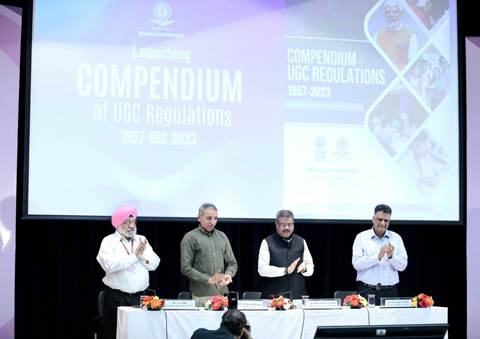
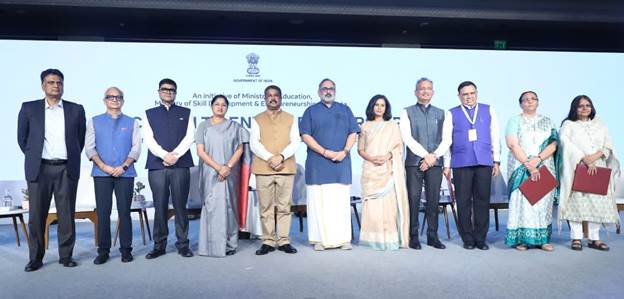
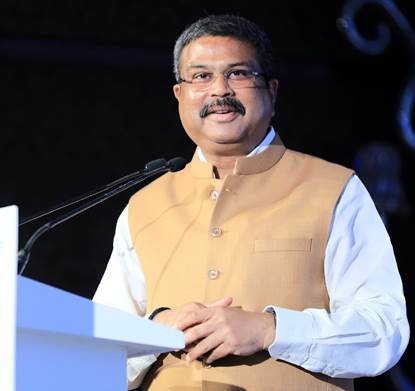
Union Minister for Education, Shri Dharmendra Pradhan, inaugurated a one-day workshop on the Institutional Development Plan for Higher Education Institutes. He also released the UGC Compendium of Regulations (1957-2023) as a single, accessible & reliable source of all UGC rules. Shri Sanjay Murthy, Secretary, Department of Higher Education, Ministry of Education; Dr. N.S. Kalsi, Former Chairman, NCVET and Chairman of the Committee working on formulating the IDP Guidelines; Shri M. Jagadesh Kumar, Chairman, UGC; Vice-Chancellors, Nodal Officers, and other dignitaries were also present at the event.

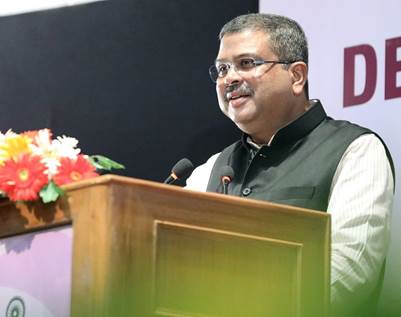
Shri Dharmendra Pradhan, while addressing the audience said the Higher education Institutes of the country will play a crucial role in realising the vision of Prime Minister Shri Narendra Modi of Viksit Bharat by embracing the core values and spirit of NEP 2020.

Image

He also talked about the role of the HEIs in redefining the purpose and structure of education, empowering youth and making them future-ready, doubling the gross enrolment ratio, bringing a vast majority of the population under the higher education net, effectively utilising demographic advantage, achieving academic, research & innovation excellence and also the way forward for transforming 5000 HEIs into centres-of-excellence through holistic and inclusive approaches.

Shri Pradhan also said that education will propel India from being a consuming economy to becoming a producing economy. The institutional development plan should focus on enhancing the competencies of our vast demography, facilitating learner-centric and multidisciplinary education, integrating Bharatiya Bhasha in higher learning, prioritising innovation, entrepreneurship and job-creation as an outcome, capacity building of teachers and achieving the global standard of research & development, he added.

He also said that education must address 21st-century aspirations and create solutions for local and global challenges. The world looks at India’s talent pool for new models and solutions to challenges of our age, he stated He exhorted the academic fraternity to work in a focused and time-bound manner to reinvent their institutions, transforming the higher educational landscape and achieving national priorities.

Speaking on the relevance and importance of the workshop Shri K. Sanjay Murthy elaborated on the ambitious plan the Ministry of Education had presented to the Prime Minister as part of the social group with the vision for the next twenty-five years. Talent and competency would be needed to back up the tremendous work that would take place and the institutions must rise to the demand to meet the talent requirements, he added. He also emphasized the Future of Work and that the IDP must focus on enhancing the quality of the institutes. Introduction of the IDP will also help the institutes to be at par with the universities of the world, he said.

About the Workshop:

The workshop on Institutional Development Plan (IDP) brings together higher education institutions to discuss strategies for institutional growth and development. The compendium will serve as a valuable resource for institutions as they develop and implement their IDP. Over 170 representatives from HEIs across India are participating in this workshop. Aligning with the National Education Policy (NEP) 2020, the IDP provides institutions with a clear roadmap to develop their vision, mission and goals for a future-ready education system.

Through the two thematic sessions, the participants will have the opportunity to learn about governance enablers, financial planning and management, human resources and supportive-facilitative enablers, networking and collaboration enablers, physical enablers, digital enablers, and research and intellectual property enablers, innovative funding models, and curriculum development. Renowned experts from industry, academia, and government will share their insights and experiences on these critical areas.

In each session, different universities will share their best practices for creating their IDP. In a separate Q&A session, Chairman UGC, Former Chairman, NCVET and the speakers from the Panels will address the queries of the participants.

About UGC Compendium:

To provide a single source of reference to all the stakeholders, UGC has prepared a Compendium of all UGC Regulations, Rules and Notifications from 1957-2023. The compendium includes 15 Rules, 87 Regulations, and 28 Notifications covering a wide range of topics, including inspection, the fitness of institutions for grants, return of information, budget and accounts, establishments, affiliation, autonomy, accreditation, admission & fees, specification of degrees, and other miscellaneous matters. The compendium provides a one-stop reference for all regulatory requirements, ensuring that institutions can easily access and comply with UGC guidelines. This is expected to streamline operations and support informed decision-making, creating an environment of compliance and best practices. This compendium having more than 1100 pages, is available in the form of a PDF and e-book on the UGC website.

About IDP:

Institutional Development Plan (IDP) Guidelines were launched by UGC on 6th February 2024. The IDP Guidelines will help institutions make a strategic Institutional Development Plan with the joint participation of Board members, institutional leaders, faculty, students and staff based on which institutions will develop initiatives, assess their progress, and reach the goals set therein.

Visit: https://www.ugc.gov.in/pdfnews/1713699_IDP-Guidelines.pdf

*****

Government has taken various initiatives to promote entrepreneurship across various sections of the society including Scheduled Castes and Scheduled Tribes across the Country

 The Government has taken various initiatives to promote entrepreneurship across various sections of the society including Scheduled Castes (SCs) and Scheduled Tribes (STs) across the Country including the State of Tamil Nadu. The details of the various initiatives taken by Ministries/Departments of the Government to promote entrepreneurship are as under:

1.    Department of Financial Services – Pradhan Mantri Mudra Yojana (PMMY) was launched on 08.04.2015 to extend collateral free credit up to Rs.10 lakh by Member Lending Institutions (MLIs), i.e., Scheduled Commercial Banks (SCBs), Non-Banking Financial Companies (NBFCs) and Micro Finance Institutions (MFIs). Any individual, who is otherwise eligible to take a loan and has a business plan for small business enterprise can avail loan under the Scheme for income generating activities in the manufacturing, trading, service sectors including activities allied to agriculture across three loan categories, viz. Shishu (loans up to Rs. 50,000/-), Kishor (loans above Rs. 50,000/- and up to Rs. 5 lakh) and Tarun (loans above Rs. 5 lakh and up to Rs. 10 lakh). As on June 2024, a total of 48.78 crore loans have been extended under PMMY, since inception of the Scheme, out of which 5.55 crore loans have been sanctioned in the State of Tamil Nadu.

           Stand-Up India (SUI) Scheme launched on 05.04.2016 has been extended up to the year 2025. The objective of the Scheme is to facilitate loans from Scheduled Commercial Banks (SCBs) of value between Rs. 10 lakh and Rs. 1 crore to at least one Scheduled Caste (SC) or Scheduled Tribe (ST) borrower and one Women borrower per bank branch for setting up greenfield enterprise in manufacturing, services or trading sector including activities allied to agriculture. The Stand Up India scheme has facilitated over 2.35 lakh loans to SC/ST and Women entrepreneurs across the country, out of which a total of 0.22 lakh loans have been sanctioned in the State of Tamil Nadu as on June 2024.

         The District-wise number of loans sanctioned to SC/ST entrepreneurs during last five years in the State of Tamil Nadu under PMMY and SUPI is at Annexure-I.

2.         Ministry of Electronics and Information Technology (MEITY) – Start-ups, Innovation & IPR Division under the Ministry of Electronics and Information Technology has initiated various startup centric programmes/scheme to encourage the innovation led startup ecosystem to develop indigenous products in ICT domain pan India basis including startups led by Scheduled Castes and Scheduled Tribes in Tamil Nadu State. These initiatives are for the promotion of startups and entrepreneurs irrespective of caste and applicable for SC and ST also. Some of the major initiatives have been elucidated here:

(i) TIDE 2.0 Scheme: Technology Incubation and Development of Entrepreneurs (TIDE 2.0) Scheme was initiated in the year 2019 to promote tech entrepreneurship through financial and technical support to incubators engaged in supporting ICT startups using emerging technologies such as IoT, AI, Block-chain, Robotics etc.  The scheme aims to provide comprehensive support to tech-startups in seven thematic areas of National concern by leveraging emerging technologies. The supported thematic areas are Healthcare, Education, Agriculture, Financial inclusion (including digital payments), Infrastructure and Transportation and Environment  and Clean Tech. The Scheme is being implemented through 51 incubators through a three tiered structure with an overarching objective to promote incubation activities at institutes of higher learning and premier R&D organisations. The scheme is envisaged to provide incubation support to approximately 2000 tech start-ups over a period of five years. Under TIDE 2.0 Scheme, following 6 incubation centre are functioning as TIDE 2.0 centre in the State of Tamil Nadu:

Sl. No.

Name of TIDE 2.0 Centre

Centre belongs to District

Start-ups supported

  1.  

FORGE Accelerator (Coimbatore Innovation Business Incubator), Coimbatore

Coimbatore

32

  1.  

PSG Science and Technology Entrepreneurial Park (PSG-STEP), PSG College of Technology, Coimbatore

Coimbatore

26

  1.  

IITM Incubation Cell (IIT Madras Incubation Cell), Chennai

Chennai

38

  1.  

Vellore Institute of Technology-Technology Business Incubator (VITTBI), Tiruchirapalli

Tiruchirapalli

38

  1.  

OASYS Institute of Technology, Anna University, Tiruchirapalli

Tiruchirapalli

11

  1.  

Vel Tech Technology Business Incubator, Vel Tech Institute of Science and Technology, Tiruvallur

Tiruvallur

18


(ii)    FinBlue – FinTechCoE – FinTech Centre of Excellence set-up at Software Technology Parks of India (STPI) Chennai for supporting the FinTech Start-ups with a target beneficiary of 58 startups over a period of 5 years with budget outlay of Rs. 11.13 Crore. The CoE is supported by MeitY, Government of India, Government of Tamil Nadu and STPI.

3.  Ministry of Micro Small and Medium Enterprises (MSME), through Khadi and Village Industries Commission (KVIC), is implementing Prime Minister’s Employment Generation Programme (PMEGP) for assisting entrepreneurs in setting up of new enterprises in the non-farm sector. It aims to provide employment opportunities to traditional artisans/ rural and urban unemployed youth at their doorstep. PMEGP being a Central Sector Scheme assists General Category beneficiaries with Margin Money (MM) subsidy of 25% of the project cost in rural areas and 15% in urban areas.  For beneficiaries belonging to Special Categories such as Scheduled Castes, Scheduled Tribes, OBCs, MinoritiesWomen, Ex-servicemen, Physically Handicapped, Transgenders, beneficiaries belonging to Northeastern Region, Hill and Border areas, and Aspirational Districts, the Margin Money subsidy is 35% in rural areas and 25% in urban areas. The maximum cost of project is Rs. 50 lakhs in the manufacturing sector and Rs. 20 lakhs in the service sector. Also, own contribution of beneficiaries under Special Category including women is 05% and 10% for General Category beneficiaries. Since 2018-19, existing PMEGP/REGP/MUDRA enterprises are also supported based on past good performances with 2nd loan for upgradation and expansion. Under 2nd Loan, maximum project cost admissible for Margin Money (MM) subsidy under Manufacturing sector is Rs. 1.00 crore and for Service sector is Rs. 25 Lakhs. Eligible subsidy on 2nd loan for all categories is 15% of project cost (20% for NER & Hill States). Since inception i.e., FY 2008-09, more than 9.69 lakh micro enterprises have been assisted with Margin Money subsidy of more than Rs 25,500 Crore providing employment to an estimated ~79 lakh persons. Approximately, 50% of the units are set up by SC/ST/Women and 80% of the units are set up in rural area. During the next 2 years FY (2024-25 to 2025-26), Ministry has a target to set-up 1.6 lakh new enterprises with employment generation potential for 12.8 lakh persons.

The total number of PMEGP Units Assisted and estimated employment generated under SC and ST category throughout the country for the last 5 years is at Annexure-II.

The total number of PMEGP Units Assisted and estimated employment generated under SC and ST category in Tamil Nadu District-wise for the last 5 years is at Annexure-III.

4.         Ministry of Agriculture and Farmers Welfare (MoA&FW) – Agri-Clinics and Agri-Business Centres (AC&ABC) Scheme: Under the scheme, Agriculture Extension of umbrella scheme  Krishonnati Yojana of Department of Agriculture & Farmers Welfare, Ministry of Agriculture & Farmers Welfare, Government of India, Extension Division is implementing a Central Sector component, “Establishment of Agri-Clinics and Agri-Business Centres (AC&ABC)” since April, 2002 to supplement the efforts of public extension, support agricultural development and create gainful self-employment opportunities to unemployed youths with qualification in agriculture and allied sectors. The National Institute of Agricultural Extension Management (MANAGE), Hyderabad is the implementing agency for Training Component and National Bank for Agriculture and Rural Development (NABARD) is the implementing agency for Subsidy Component of AC&ABC programme. MANAGE implement, through selected Nodal Training Institutes (NTIs) under MoU with MANAGE, in various parts of the country

There is a provision of credit linked back-ended upfront composite subsidy on the bank loan availed by trained candidates under the programme. The subsidy is 44% in respect of women, SC/ST and all categories of candidates from North-Eastern and Hill States and 36% in respect of other categories. The subsidy is admissible for loans up to Rs.20 lakhs in case of individual and Rs.100 lakhs in case of Group Projects (for ventures set up by a group of 5 trained candidates).

5.         Department of Science and Technology (DST) – In order to support young innovators and entrepreneurs through NIDHI-Technology Business Incubator (TBI), NIDHI-inclusive Technology Business Incubator (iTBI) program, Department of Science and Technology (DST) has established startup incubation centres in metropolitan cities, Tier-II and Tier-III cities in various parts of the country including Tamil Nadu. Through these centres, mentoring and financial support is provided to startups for development of prototype/products in order to promote youth from Tier-II and Tier-III cities, irrespective of their social status.

6.         Ministry of Rural Development – Start-up Village Entrepreneurship Programme (SVEP), the sub-scheme under the DAY-NRLM programme supports the Self-Help Group (SHG) or their family members to set-up small enterprises in the non-farm sector. SVEP is Implemented across 31 states and UTs, with 358 project proposals approved, 235 DPRs sanctioned, and support extended to 2.98 lakh enterprises. However, the scheme does not specifically focus on the SC/ST population. The SVEP is approved in 10 Blocks in the State of Tamil Nadu. The details are as under:

Sl No.

State

District

Block

1

Tamil Nadu

Kanchipuram

Thiruporur

2

Tamil Nadu

Madurai

Thirumangalam

3

Tamil Nadu

Namakkal

Rasipuram & Vennandur (2)

4

Tamil Nadu

Villupuram

Ulundurpet

5

Tamil Nadu

Kallakurichi

Chinnasalem

6

Tamil Nadu

Thoothukudi

Kovilpatti

7

Tamil Nadu

Madurai

Sedapatti

8

Tamil Nadu

Chengalpet

Acharapakkam

9

Tamil Nadu

Trichy

Pullampadi

10

Tamil Nadu

Virudhunagar

Vembakottai


The District/Block wise SC/ST entrepreneurs supported in the state of Tamil Nadu under SVEP are as under:

Sl No.

District

Block

Total SC entrepreneurs

Total ST entrepreneurs

1

Chengalpattu

Thiruporur

1112

24

2

Kallakurichi

Ulundurpet

443

0

3

Madurai

Tirumanagalam

30

0

4

Namakkal

Rasipuram and Vennadur

55

0


1,640

24


7.         Department for Promotion of Industry and Internal Trade (DPIIT) – The Government with an intent to build a strong ecosystem for nurturing innovation and encouraging investments launched the Startup India initiative on 16th January 2016. For attaining specific objectives, various programs are implemented by the Government under the Startup India initiative. All the steps undertaken by the Government under the initiative are inclusive and are implemented across States/Union Territories (UTs), cities, towns, and rural areas, including the State of Tamil Nadu. The details of such Government initiatives are placed as Annexure-IV.

8.    Ministry of Food Processing Industries (MoFPI) is implementing a Centrally Sponsored Scheme namely Pradhan Mantri Formalization of Micro Food Processing Enterprises (PMFME) that is designed to address the challenges faced by the micro enterprises and to tap the potential of groups and cooperatives in supporting the upgradation and formalization of these enterprises. The Scheme has a Capacity Building component, which envisages providing 24 Hours/ 3 Days, Food Processing EDP (Entrepreneurship Development Programme) Training for, all applicants viz individuals and Groups(SHGs/ FPOs/ Cooperatives) recommended for availing credit linked grant by District Level Committee (DLC) and 8 hours/1 day training to SHG beneficiaries of Seed Capital under PMFME scheme engaged in micro food processing. The details of SC/ST beneficiaries of Tamil Nadu State trained under this capacity building component are as under:
(i) The total number of SC and ST entrepreneurs who have got the loan sanctioned
under PMFME Scheme for setting up of processing units during the last 4 years for the state of Tamil Nadu are as under:

Sl No.

Category

SC

ST

1

DLC Beneficiaries

1583

110

2

Seed Capital Beneficiaries (SHG Members)

1760 (Individual), 362 (Group)

1 (Activity Group)

62 (Individual)

13 (Group)

  1. Seed Capital benefits received by SC/ST beneficiaries in Mayiladuthurai and Thanjavur Districts of Tamil Nadu under the above component of the Scheme are as under:

Sl. No.

Districts

Seed Capital Category (SHG Members)

SC

ST

1

Mayiladuthurai

Individual

13

1

2

Thanjavur

Individual

45

0


9.         Ministry of Skill Development and Entrepreneurship (MSDE) through National Institute for Entrepreneurship and Small Business Development (NIESBUD) has been working for the empowerment, upliftment and development of entrepreneurs including Scheduled Castes (SCs) and Scheduled Tribes (STs) across the country including the State of Tamil Nadu. The details of the initiatives taken are as under:

(i)      NIESBUD has implemented Skill Acquisition and Knowledge Awareness of Livelihood Promotion (SANKALP) Programme of MSDE for strengthening the entrepreneurship ecosystem across different sections of the society including marginalized population. A total number of 90 SC/ST participants have been trained through the project in Tamil Nadu. The District wise details as is under:

State

District

SC

ST

Tamil Nadu

Madurai

6

2

Chennai

10

0

Madurai

38

1

Villupuram

19

1

Sivaganga

2

0

Thrivallur

11

0

Total

86

4

Grand Total

90


(ii)   NIESBUD implemented a project for creating entrepreneurial climate through Training of Trainers and Entrepreneurship Development Programme in Jan Shikshan Sansthan (JSS). The District wise details of SC/ST beneficiaries in Tamil Nadu under the project are as under:

State

District

SC

ST

Tamil Nadu

Chennai

8

1

Madurai

31

1

Salem

68

11

Total

107

13

Grand Total

120


(iii) STRIVE Project – Under the Skill Strengthening for Industrial Value Enhancement (STRIVE) project of MSDE, NIESBUD is conducting Entrepreneurship Awareness, Entrepreneurship Development Programme, Mentoring, and Handholding of trainees (and future trainers) in Industrial Training Institute (ITIs) and National Skill Training Institute (NSTIs). A total number of 456 participants have been trained under the Strive Project in Tamil Nadu. The District wise details are as under

State

District

SC

ST

Tamil Nadu

Chennai

18

79

Gadag

199

121

Tumakaru

14

25

Total

231

225

Grand Total

456


(iv) PMJANMAN – The Hon’ble Prime Minister launched the Pradhan Mantri Janjati Adivasi Nyaya Maha Abhiyan (PM-JANMAN), a Scheme of Ministry of Tribal Affairs (MoTA) on Janjatiya Gaurav Divas on 15th November, 2023 at Khunti District of Jharkhand. The Mission is aimed at targeted development of 75 Particularly Vulnerable Tribal Groups (PVTGs) residing in 18 States including 1 Union Territory. These communities had been by and large left out of the schemes/interventions of Ministries/Departments, and therefore require multi-sectoral handholding through this Mission. The scheme focuses on 11 critical interventions related to 9 key Ministries including Ministry of Skill Development and Entrepreneurship, in about 22,000 villages in 200 districts. One of the key interventions in the mission is facilitating skill and vocational training in PVTG habitations, multipurpose centres, tribal hostels, training skilling, entrepreneurship developments of Van Dhan Vikas Kendra as per the suitable skills of these communities. A total number of 627 participants have been trained under the PMJANMAN Project in Tamil Nadu. The District-wise details are as under:

State

District

PVTG

Tamil Nadu

Ariyalur

305

Chengalpattu

170

Coimbatore

46

Namakkal

2

The Nilgiris

104

Total

627


Annexure-I

The District-wise number of loans sanctioned to SC/ST entrepreneurs during last five years in the State of Tamil Nadu under PMMY and SUPI is

as under:


Sl.  No.

District Name

Pradhan Mantri Mudra Yojana (PMMY)

 Stand Up India Scheme (SUPI)

SC

ST

SC

ST

1

Ariyalur

23,055

3,259

0

0

2

Chengalpattu

40,888

3,907

9

0

3

Chennai

202,755

15,654

489

13

4

Coimbatore

53,630

9,473

178

10

5

Cuddalore

177,717

27,622

51

7

6

Dharmapuri

53,923

6,558

33

4

7

Dindigul

38,988

3,868

66

35

8

Erode

64,625

8,440

88

3

9

Kallakurichi

22,189

1,492

2

0

10

Kanchipuram

152,231

49,981

121

4

11

Kanniyakumari

30,216

6,521

109

10

12

Karur

11,451

1,002

16

5

13

Krishnagiri

36,986

9,600

25

2

14

Madurai

40,125

5,194

207

17

15

Mayiladuthurai

14,018

259

12

0

16

Nagapattinam

93,179

4,478

18

0

17

Namakkal

68,657

9,934

35

8

18

Nilgiris

72,909

4,964

38

7

19

Perambalur

13,038

357

32

0

20

Pudukkottai

28,500

2,474

24

2

21

Ramanathapuram

30,522

4,721

21

2

22

Ranipet

14,346

655

0

0

23

Salem

78,152

13,670

114

8

24

Sivaganga

20,204

7,432

49

5

25

Tenkasi

6,127

789

1

0

26

Thanjavur

86,976

4,958

30

5

27

Theni

25,680

2,273

36

0

28

Thiruvallur

166,075

25,028

154

10

29

Thiruvarur

116,642

12,685

24

1

30

Tiruchirappalli

30,436

7,539

69

4

31

Tirunelveli

99,729

41,474

128

3

32

Tirupathur

50,888

9,624

10

0

33

Tiruppur

38,050

2,309

23

2

34

Tiruvannamalai

39,930

6,075

129

10

35

Tuticorin

101,860

33,488

48

8

36

Vellore

146,971

51,426

106

3

37

Villupuram

119,763

29,601

89

26

38

Virudhunagar

32,981

7,876

46

5

39

Other #

237,831

7,403

0

0

Total


2,682,243

444,063

2,630

219

# District-wise data for some of the NBFCs/ MFIs is not available.


Annexure-II

The total number of PMEGP Units Assisted and estimated employment generated under SC category throughout the country for the last 5 years is as under:

Sl. No.

State

2019-20

2020-21

2021-22

2022-23

2023-24

Units Assisted

Employment Generated

Units Assisted

Employment Generated

Units Assisted

Employment Generated

Units Assisted

Employment Generated

Units Assisted

Employment Generated

1

Andaman Nicobar

2

Andhra Pradesh

329

2,632

303

2,424

414

3,312

526

4,208

1,216

9,728

3

Arunachal Pradesh

1

8

1

8

4

Assam

207

1,656

191

1,528

207

1,656

115

920

109

872

5

Bihar

206

1,648

198

1,584

194

1,552

398

3,184

701

5,608

6

Chandigarh-Ut

2

16

1

8

7

56

2

16

1

8

7

Chhattisgarh

302

2,416

286

2,288

294

2,352

259

2,072

299

2,392

8

Dadra Nagar Haveli

9

Daman And  Diu

1

8

10

Delhi

15

120

7

56

7

56

6

48

6

48

11

Goa

5

40

3

24

1

8

12

Gujarat

263

2,104

189

1,512

313

2,504

243

1,944

274

2,192

13

Haryana

409

3,272

296

2,368

307

2,456

298

2,384

250

2,000

14

Himachal Pradesh

387

3,096

416

3,328

427

3,416

304

2,432

343

2,744

15

Jammu Kashmir

254

2,032

229

1,832

537

4,296

374

2,992

658

5,264

16

Jharkhand

107

856

99

792

92

736

115

920

130

1,040

17

Karnataka

629

5,032

808

6,464

1,146

9,168

1,063

8,504

877

7,016

18

Kerala

164

1,312

152

1,216

169

1,352

245

1,960

292

2,336

19

Ladakh

1

8

1

8

2

16

20

Lakshadweep

21

Madhya Pradesh

132

1,056

447

3,576

921

7,368

725

5,800

653

5,224

22

Maharashtra

843

6,744

502

4,016

627

5,016

510

4,080

374

2,992

23

Manipur

20

160

27

216

16

128

9

72

4

32

24

Meghalaya

3

24

3

24

9

72

1

8

2

16

25

Mizoram

3

24

3

24

4

32

1

8

26

Nagaland

7

56

1

8

11

88

3

24

27

Odisha

277

2,216

313

2,504

393

3,144

320

2,560

248

1,984

28

Puducherry

13

104

8

64

16

128

5

40

6

48

29

Punjab

569

4,552

417

3,336

502

4,016

423

3,384

370

2,960

30

Rajasthan

340

2,720

266

2,128

238

1,904

140

1,120

92

736

31

Sikkim

7

56

5

40

7

56

1

8

6

48

32

Tamil Nadu

508

4,064

534

4,272

691

5,528

765

6,120

823

6,584

33

Telangana

301

2,408

328

2,624

449

3,592

354

2,832

347

2,776

34

Tripura

100

800

117

936

143

1,144

99

792

93

744

35

Uttar Pradesh

785

6,280

1,109

8,872

1,405

11,240

1,279

10,232

1,685

13,480

36

Uttarakhand

307

2,456

399

3,192

290

2,320

279

2,232

223

1,784

37

West Bengal

260

2,080

253

2,024

320

2,560

282

2,256

278

2,224


The total number of PMEGP Units Assisted and estimated employment generated under ST category throughout the country for the last 5 years is as under:

Sl. No.

State

2019-20

2020-21

2021-22

2022-23

2023-24

Units Assisted

Employment Generated

Units Assisted

Employment Generated

Units Assisted

Employment Generated

Units Assisted

Employment Generated

Units Assisted

Employment Generated

1

Andaman Nicobar

2

16

5

40

8

64

2

Andhra Pradesh

108

864

87

696

82

656

115

920

203

1,624

3

Arunachal Pradesh

158

1,264

89

712

196

1,568

155

1,240

166

1,328

4

Assam

421

3,368

353

2,824

474

3,792

310

2,480

271

2,168

5

Bihar

51

408

61

488

61

488

81

648

88

704

6

Chandigarh-Ut

7

Chhattisgarh

323

2,584

273

2,184

320

2,560

267

2,136

212

1,696

8

Dadra Nagar Haveli

6

48

2

16

1

8

1

8

9

Daman And  Diu

2

16

10

Delhi

1

8

11

Goa

2

16

4

32

2

16

1

8

3

24

12

Gujarat

120

960

142

1,136

171

1,368

127

1,016

94

752

13

Haryana

3

24

1

8

2

16

2

16

14

Himachal Pradesh

117

936

107

856

171

1,368

128

1,024

107

856

15

Jammu Kashmir

83

664

73

584

226

1,808

175

1,400

235

1,880

16

Jharkhand

149

1,192

130

1,040

162

1,296

167

1,336

206

1,648

17

Karnataka

169

1,352

188

1,504

307

2,456

305

2,440

286

2,288

18

Kerala

12

96

6

48

19

152

16

128

13

104

19

Ladakh

303

2,424

271

2,168

292

2,336

90

720

117

936

20

Lakshadweep

2

16

7

56

2

16

21

Madhya Pradesh

78

624

256

2,048

567

4,536

466

3,728

368

2,944

22

Maharashtra

112

896

92

736

113

904

91

728

79

632

23

Manipur

610

4,880

548

4,384

403

3,224

211

1,688

140

1,120

24

Meghalaya

348

2,784

315

2,520

581

4,648

272

2,176

259

2,072

25

Mizoram

756

6,048

805

6,440

645

5,160

410

3,280

401

3,208

26

Nagaland

1,102

8,816

739

5,912

1,228

9,824

469

3,752

513

4,104

27

Odisha

122

976

115

920

214

1,712

169

1,352

94

752

28

Puducherry

29

Punjab

3

24

1

8

1

8

30

Rajasthan

266

2,128

227

1,816

236

1,888

170

1,360

121

968

31

Sikkim

27

216

25

200

38

304

34

272

68

544

32

Tamil Nadu

20

160

42

336

63

504

31

248

48

384

33

Telangana

267

2,136

235

1,880

319

2,552

352

2,816

387

3,096

34

Tripura

197

1,576

192

1,536

215

1,720

147

1,176

116

928

35

Uttar Pradesh

18

144

27

216

28

224

27

216

31

248

36

Uttarakhand

52

416

56

448

62

496

40

320

38

304

37

West Bengal

22

176

21

168

12

96

19

152

13

104


Annexure-III

The total number of PMEGP Units Assisted and estimated employment generated under SC category in Tamil Nadu District-wise for the last 5 years is as under:

Sl. No.

District

2019-20

2020-21

2021-22

2022-23

2023-24

Units Assisted

Employment Generated

Units Assisted

Employment Generated

Units Assisted

Employment Generated

Units Assisted

Employment Generated

Units Assisted

Employment Generated

1

Ariyalur

11

88

11

88

8

64

7

56

5

40

2

Chengalpet

0

0

13

104

21

168

22

176

24

192

3

Chennai

16

128

17

136

42

336

25

200

27

216

4

Coimbatore

14

112

12

96

5

40

21

168

15

120

5

Cuddalore

14

112

14

112

34

272

30

240

18

144

6

Dharmapuri

9

72

17

136

7

56

6

48

10

80

7

Dindigul

17

136

18

144

20

160

21

168

17

136

8

Erode

8

64

17

136

8

64

9

72

18

144

9

Kallakurichi

0

0

4

32

10

80

19

152

34

272

10

Kanchipuram

15

120

20

160

23

184

28

224

20

160

11

Kanniyakumari

2

16

1

8

5

40

3

24

3

24

12

Karur

7

56

8

64

14

112

33

264

16

128

13

Krishnagiri

9

72

7

56

11

88

13

104

6

48

14

Madurai

15

120

25

200

24

192

31

248

34

272

15

Mayiladuthurai

0

0

0

0

3

24

49

392

29

232

16

Nagapattinam

24

192

37

296

31

248

25

200

14

112

17

Namakkal

8

64

17

136

24

192

23

184

39

312

18

Nilgiris

7

56

12

96

12

96

18

144

13

104

19

Perambalur

8

64

15

120

16

128

19

152

14

112

20

Pudukottai

15

120

26

208

28

224

32

256

18

144

21

Ramanathapuam

7

56

6

48

8

64

7

56

10

80

22

Ranipet

0

0

0

0

8

64

20

160

20

160

23

Salem

7

56

19

152

18

144

25

200

13

104

24

Sivagangai

13

104

14

112

10

80

13

104

3

24

25

Tenkasi

0

0

4

32

4

32

11

88

19

152

26

Thanjavur

44

352

34

272

61

488

51

408

85

680

27

Theni

15

120

9

72

6

48

10

80

15

120

28

Thiruchirappalli

19

152

17

136

12

96

12

96

21

168

29

Thiruvallore

57

456

29

232

47

376

41

328

46

368

30

Thiruvarur

35

280

28

224

44

352

29

232

31

248

31

Thoothukudi(Tuticorin)

17

136

12

96

22

176

21

168

22

176

32

Tirunelveli

18

144

13

104

19

152

12

96

16

128

33

Tirupattur

0

0

2

16

22

176

3

24

16

128

34

Tirupur

5

40

4

32

8

64

9

72

16

128

35

Tiruvannamalai

17

136

18

144

12

96

20

160

17

136

36

Vellore

24

192

13

104

9

72

11

88

37

296

37

Villupuram

19

152

18

144

21

168

19

152

27

216

38

Virudhunagar

12

96

3

24

14

112

17

136

35

280


The total number of PMEGP Units Assisted and estimated employment generated under ST category in Tamil Nadu District-wise for the last 5 years is as under:

Sl. No.

District

2019-20

2020-21

2021-22

2022-23

2023-24

Units Assisted

Employment Generated

Units Assisted

Employment Generated

Units Assisted

Employment Generated

Units Assisted

Employment Generated

Units Assisted

Employment Generated

1

Ariyalur

0

0

0

0

0

0

0

0

0

0

2

Chengalpet

0

0

1

8

0

0

0

0

1

8

3

Chennai

0

0

0

0

1

8

0

0

0

0

4

Coimbatore

0

0

0

0

0

0

0

0

0

0

5

Cuddalore

0

0

0

0

1

8

1

8

1

8

6

Dharmapuri

0

0

1

8

1

8

3

24

0

0

7

Dindigul

0

0

0

0

0

0

1

8

0

0

8

Erode

0

0

0

0

1

8

0

0

0

0

9

Kallakurichi

0

0

1

8

0

0

0

0

0

0

10

Kanchipuram

0

0

2

16

17

136

2

16

22

176

11

Kanniyakumari

0

0

0

0

1

8

1

8

1

8

12

Karur

0

0

0

0

0

0

0

0

0

0

13

Krishnagiri

0

0

0

0

0

0

0

0

1

8

14

Madurai

1

8

0

0

0

0

0

0

0

0

15

Mayiladuthurai

0

0

0

0

0

0

1

8

1

8

16

Nagapattinam

2

16

0

0

1

8

1

8

0

0

17

Namakkal

0

0

0

0

0

0

0

0

3

24

18

Nilgiris

0

0

5

40

4

32

2

16

7

56

19

Perambalur

0

0

0

0

0

0

0

0

0

0

20

Pudukottai

1

8

1

8

0

0

0

0

0

0

21

Ramanathapuam

0

0

0

0

0

0

0

0

0

0

22

Ranipet

0

0

2

16

2

16

1

8

1

8

23

Salem

2

16

3

24

10

80

0

0

2

16

24

Sivagangai

0

0

0

0

0

0

0

0

0

0

25

Tenkasi

0

0

0

0

0

0

0

0

0

0

26

Thanjavur

0

0

0

0

0

0

0

0

0

0

27

Theni

0

0

0

0

0

0

0

0

1

8

28

Thiruchirappalli

0

0

0

0

0

0

3

24

0

0

29

Thiruvallore

0

0

0

0

1

8

1

8

0

0

30

Thiruvarur

3

24

0

0

0

0

1

8

0

0

31

Thoothukudi(Tuticorin)

0

0

0

0

0

0

0

0

0

0

32

Tirunelveli

0

0

0

0

0

0

5

40

0

0

33

Tirupattur

0

0

1

8

0

0

0

0

1

8

34

Tirupur

0

0

0

0

1

8

0

0

0

0

35

Tiruvannamalai

7

56

6

48

4

32

0

0

2

16

36

Vellore

3

24

12

96

13

104

6

48

4

32

37

Villupuram

1

8

7

56

5

40

2

16

0

0

38

Virudhunagar

0

0

0

0

0

0

0

0

0

0


Annexure-IV

The details of various programs undertaken by the Government to promote startups across the country are as under:

  1. Startup India Action Plan: An Action Plan for Startup India was unveiled on 16th January 2016. The Action Plan comprises of 19 action items spanning across areas such as “Simplification and handholding”, “Funding support and incentives” and “Industry-academia partnership and incubation”. The Action Plan laid the foundation of Government support, schemes and incentives envisaged to create a vibrant startup ecosystem in the country.
  2. Startup India: The Way Ahead: Startup India: The Way Ahead at 5 years celebration of Startup India was unveiled on 16th January 2021 which includes actionable plans for promotion of ease of doing business for startups, greater role of technology in executing various reforms, building capacities of stakeholders and enabling a digital Aatmanirbhar Bharat.
  3. Startup India Seed Fund Scheme (SISFS): Easy availability of capital is essential for entrepreneurs at the early stages of growth of an enterprise. The capital required at this stage often presents a make-or-break situation for startups with good business ideas. The Scheme aims to provide financial assistance to startups for proof of concept, prototype development, product trials, market entry and commercialization. Rs. 945 crore has been sanctioned under the SISFS Scheme for period of 4 years starting from 2021-22.
  4. Fund of Funds for Startups (FFS) Scheme: The Government has established FFS with corpus of Rs. 10,000 crore, to meet the funding needs of startups. DPIIT is the monitoring agency and Small Industries Development Bank of India (SIDBI) is the operating agency for FFS. The total corpus of Rs. 10,000 crore is envisaged to be provided over the 14th and 15th Finance Commission cycles based on progress of the scheme and availability of funds. It has not only made capital available for startups at early stage, seed stage and growth stage but also played a catalytic role in terms of facilitating raising of domestic capital, reducing dependence on foreign capital and encouraging home grown and new venture capital funds.
  5. Credit Guarantee Scheme for Startups (CGSS): The Government has established the Credit Guarantee Scheme for Startups for providing credit guarantees to loans extended to DPIIT recognized startups by Scheduled Commercial Banks, Non-Banking Financial Companies (NBFCs) and Venture Debt Funds (VDFs) under SEBI registered Alternative Investment Funds. CGSS is aimed at providing credit guarantee up to a specified limit against loans extended by Member Institutions (MIs) to finance eligible borrowers viz. DPIIT recognised startups.
  6. Regulatory Reforms: Over 55 regulatory reforms have been undertaken by the Government since 2016 to enhance ease of doing business, ease of raising capital and reduce compliance burden for the startup ecosystem.
  7. Ease of Procurement: To enable ease of procurement, Central Ministries/ Departments are directed to relax conditions of prior turnover and prior experience in public procurement for all DPIIT recognised startups subject to meeting quality and technical specifications. Further, Government e-Marketplace (GeM) also facilitates and promotes procurement of products and services by the Government from startups.
  8. Self-Certification under Labour and Environmental laws: Startups are allowed to self-certify their compliance under 9 Labour and 3 Environment laws for a period of 3 to 5 years from the date of incorporation.
  9. Income Tax Exemption for 3 years: Startups incorporated on or after 1st April 2016 can apply for income tax exemption. The recognized startups that are granted an Inter-Ministerial Board Certificate are exempted from income-tax for a period of 3 consecutive years out of 10 years since incorporation.
  10. Faster Exit for Startups: The Government has notified Startups as ‘fast track firms’ enabling them to wind up operations within 90 days vis-a-vis 180 days for other companies.
  11. Exemption for the Purpose Of Clause (VII)(b) of Sub-section (2) of Section 56 of the Act (2019): A DPIIT recognized startup is eligible for exemption from the provisions of section 56(2)(viib) of the Income Tax Act.
  12. Support for Intellectual Property Protection: Startups are eligible for fast-tracked patent application examination and disposal. The Government launched Start-ups Intellectual Property Protection (SIPP) which facilitates the startups to file applications for patents, designs and trademarks through registered facilitators in appropriate IP offices by paying only the statutory fees. Facilitators under this Scheme are responsible for providing general advisory on different IPRs, and information on protecting and promoting IPRs in other countries. The Government bears the entire fees of the facilitators for any number of patents, trademark or designs, and startups only bear the cost of the statutory fees payable. Startups are provided with an 80% rebate in filing of patents and 50% rebate in filling of trademark vis-a-vis other companies.
  13. Startup India Hub: The Government launched a Startup India Online Hub on 19th June 2017 which is one of its kind online platform for all stakeholders of the entrepreneurial ecosystem in India to discover, connect and engage with each other. The Online Hub hosts Startups, Investors, Funds, Mentors, Academic Institutions, Incubators, Accelerators, Corporates, Government Bodies and more.
  14. International Market Access to Indian Startups: One of the key objectives under the Startup India initiative is to help connect Indian startup ecosystem to global startup ecosystems through various engagement models. This has been done though international Government to Government partnerships, participation in international forums and hosting of global events. Startup India has launched bridges with around 20 countries that provides a soft-landing platform for startups from the partner nations and aid in promoting cross collaboration.
  15. Startup India Showcase: Startup India Showcase is an online discovery platform for the most promising startups of the country chosen through various programs for startups exhibited in a form of virtual profiles. The startups showcased on the platform have distinctly emerged as the best in their fields. These innovations span across various cutting-edge sectors such as Fintech, EnterpriseTech, Social Impact, HealthTech, EdTech, among others. These startups are solving critical problems and have shown exceptional innovation in their respective sectors. Ecosystem stakeholders have nurtured and supported these startups, thereby validating their presence on this platform.
  16. National Startup Advisory Council: The Government in January 2020 notified constitution of the National Startup Advisory Council to advise the Government on measures needed to build a strong ecosystem for nurturing innovation and startups in the country to drive sustainable economic growth and generate large scale employment opportunities. Besides the ex-officio members, the council has a number of non-official members, representing various stakeholders from the startup ecosystem.
  17. National Startup Awards (NSA): National Startup Awards is an initiative to recognize and reward outstanding startups and ecosystem enablers that are building innovative products or solutions and scalable enterprises, with high potential of employment generation or wealth creation, demonstrating measurable social impact. Handholding support is provided to all the finalists across various tracks viz. Investor Connect, Mentorship, Corporate Connect, Government Connect, International Market Access, Regulatory Support, Startup Champions on Doordarshan and Startup India Showcase, etc.
  18. States’ Startup Ranking Framework (SRF): States’ Startup Ranking Framework is a unique initiative to harness strength of competitive federalism and create a flourishing startup ecosystem in the country. The major objectives of the ranking exercise are facilitating states to identify, learn and replace good practices, highlighting the policy intervention by states for promoting startup ecosystem and fostering competitiveness among states.
  19. Startup Champions on Doordarshan: Startup Champions program on Doordarshan is a one-hour weekly program covering stories of award winning/ nationally recognised startups. It is telecasted in both Hindi and English across Doordarshan network channels.
  20. Startup India Innovation Week: The Government organises Startup India Innovation week around the National Startup Day i.e., 16th January, with the primary goal was to bring together the country’s key startups, entrepreneurs, investors, incubators, funding entities, banks, policymakers, and other national/international stakeholders to celebrate entrepreneurship and promote innovation.
  21. ASCEND: Under ASCEND (Accelerating Startup Caliber & Entrepreneurial Drive), sensitization workshops on startups and entrepreneurship were conducted for all eight North Eastern States with the objective to capacitate and augment knowledge on key aspects of entrepreneurship and continue efforts towards creating a robust startup ecosystem in these States.
  22. The Startup India Investor Connect Portal has been co-developed under the Startup India Initiative with SIDBI, serving as an intermediary platform that links startups and investors in order to help entrepreneurs from various industries, functions, stages, regions, and backgrounds in mobilizing capital. The portal has been built with the aim to enable in particular; early-stage startups located anywhere in the country to showcase themselves to leading investors/ venture capital funds.
  23. National Mentorship Portal (MAARG): In order to facilitate accessibility to mentorship for startups in every part of the country, the Mentorship, Advisory, Assistance, Resilience, and Growth (MAARG) program has been developed and launched under the Startup India Initiative.

Shri Jayant Chaudhary assumes charge as Minister of State (IC) for Ministry of Skill Development & Entrepreneurship

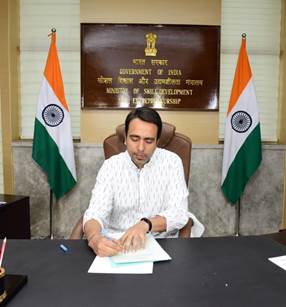
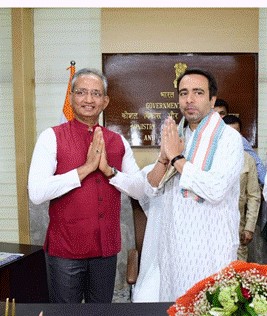
 Shri Jayant Chaudhary assumed charge as Minister of State (Independent Charge) for Ministry of Skill Development & Entrepreneurship (MSDE) at Kaushal Bhawan, New Delhi, today. On his arrival , Shri Chaudhary was received by the Secretary, MSDE, Shri Atul Kumar Tiwari, and other senior officials of the Ministry.


Image 


He expressed his gratitude to Prime Minister Shri Narendra Modi for the trust placed in him and said that he would play his part in the Ministry, which is vital for the nation as it charts its course as a leader of the global economy.

Speaking on the occasion, Shri Chaudhary said that India with its vast and youthful population needs to be empowered with skilling, reskilling, and upskilling opportunities to fulfil their aspirations. This aligns perfectly with the vision of Prime Minister Shri Narendra Modi of a Viksit Bharat, a developed India, where every citizen has the opportunity to thrive and contribute to our nation’s prosperity, he added. He also emphasized that there is a constant need for new and industry-aligned skills in all walks of life, and the Ministry’s perpetual efforts will make a tangible impact on the skilling and employment landscape.

The Ministry is committed to implementing strategic initiatives that bridge the skills gap including flagship schemes such as Pradhan Mantri Kaushal Vikas Yojana (PMKVY), National Apprenticeship Promotion Scheme (NAPS); with a continued focus on enhancing employability and fostering entrepreneurship. By embracing digital technologies, enhancing infrastructure, and promoting inclusive education, MSDE aims to empower individuals with the skills and knowledge needed to thrive in a rapidly evolving job market. It focuses on swiftly enforcing high-impact initiatives that demonstrate our dedication to immediate and tangible progress.

Shri Jayant Chaudhary is an advocate for implementing programs and launches that integrate the deprived into the mainstream of development to ensure continued growth and development across sectors and the country at large.

He also brings with him a wealth of experience and a deep commitment to the welfare of the people. He was a member of the Standing Committee on Commerce, the Consultative Committee on Finance, the Indian Council of Agricultural Research (ICAR), and the Committee on Government Assurances. He has served previously on the Standing Committees on Agriculture and Finance as well as the Committee on Ethics.

Shri Jayant Chaudhary did his undergraduate studies at Shri Venkateswara College, Delhi University, and an M.Sc in Accounting and Finance from the London School of Economics and Political Science in 2002.

***

2024 Entrepreneurs for Resilience Award

The 2024 Entrepreneurs for Resilience Award aims to support social entrepreneurs enhancing access to quality primary healthcare for low-income individuals in low- and middle-income countries (LMICs) through innovative hybrid delivery models. The initiative collaborates with the Digital Connected Care Coalition and the UBS Optimus Foundation to combine expertise, networks, solutions, and funding for social entrepreneurs in the healthcare sector. Applications are invited from those proposing hybrid models that integrate physical point of care with digital tools.

Scope
Addressing challenges in providing quality primary healthcare, especially for low-income and rural populations, the award focuses on hybrid care models combining “brick” (in-person care) and “click” (digital tools) elements. The goal is to scale existing models that facilitate healthcare delivery, potentially offering financing solutions to make healthcare more affordable. These models should have linkages or the potential to integrate into government efforts and existing public health systems.
Award Benefits
– Total grant of USD 700,000 divided among the winning initiative (up to USD 350,000) and two runners-up, paid in instalments over two years.
– People’s Choice Award winner, determined by public online vote, gets the opportunity to connect with potential investors at an event hosted by Sankalp Forum.
– Tailored non-financial support for finalists, including technical advice, training, advisory services, data-gathering, and potential follow-up funding from the UBS Optimus Foundation.
– Access to a network of like-minded peers and opportunities to share knowledge.
Eligibility Criteria
– Social enterprises must align with the award’s scope, demonstrating high social impact with measurable outcomes.
– At least 30% of the customer base should be low-income populations, and enterprises should prioritize gender inclusivity.
– Operations must be in countries defined as low-income or lower middle-income by the World Bank.
– Ventures must operate on a market basis, showing potential for growth and scalability through earned revenue.
– Established by 2021, serving at least 20,000 people, and with the potential to reach at least 100,000 people in the next two years.
– Solid management team, well-defined responsibilities, and a diverse, well-structured workforce. Preference for ventures with at least one female founder or at least 30% women in the management team.
– Legal compliance with the operational country’s legal framework, allowing for grant funding from Swiss non-governmental organizations such as the Swiss Re Foundation.

Application Deadline: 23 January 2024

Click Here to Apply

Authorpreneurs: Navigating the Intersection of Artistry and Entrepreneurship

 In the ever-evolving landscape of the literary world, a new breed of creators has emerged – the authorpreneurs. These individuals are not just writers; they are entrepreneurs who understand the artistry of words and the business of publishing. Embracing the fusion of creativity and commerce, authorpreneurs navigate the intricate web of book creation, marketing, and sales with a unique mindset that combines passion for storytelling with the strategic acumen of an entrepreneur.

The Rise of Authorpreneurship:

Traditionally, authors relied on traditional publishing houses to bring their work to the masses. However, the rise of self-publishing and digital platforms has given birth to a generation of authorpreneurs who take charge of every aspect of their literary careers. These individuals are not content with merely creating compelling narratives – they actively engage in the business side of publishing to ensure their work reaches a global audience.

Crafting a Brand:

Authorpreneurs recognize the importance of personal branding in a saturated market. They understand that building a brand extends beyond the book cover; it involves cultivating a distinct authorial identity. From social media presence to public appearances, authorpreneurs strategically position themselves to connect with their target audience and foster a loyal readership.

Entrepreneurial Mindset in Writing:

An authorpreneur approaches writing not just as an artistic endeavor but as a scalable business. They conduct market research, identify trends, and tailor their content to meet reader demands. This strategic approach is evident in the diverse genres and formats authorpreneurs explore, from traditional novels to serialized content, podcasts, and even multimedia adaptations.

Embracing Technology and Innovation:

Technology has become a powerful ally for authorpreneurs. From leveraging social media platforms for marketing to utilizing data analytics to understand reader preferences, these entrepreneurs embrace innovation to stay ahead of the curve. Additionally, the advent of self-publishing platforms and user-friendly design tools enables authorpreneurs to independently create and distribute their work globally.

Diversifying Revenue Streams:

Beyond book sales, authorpreneurs recognize the importance of diversifying their revenue streams. They explore opportunities such as speaking engagements, merchandise, courses, and licensing deals. By monetizing their expertise and expanding beyond traditional book sales, authorpreneurs build sustainable and resilient literary careers.

Collaboration and Networking:

Authorpreneurship thrives on collaboration and networking. Successful authorpreneurs engage with other writers, industry professionals, and readers to forge connections that transcend traditional boundaries. Collaborative projects, cross-promotions, and joint ventures become essential components of their entrepreneurial journey.

Challenges and Triumphs:

Authorpreneurs face unique challenges, from the intricacies of self-publishing to the constant evolution of digital marketing strategies. However, these challenges are met with resilience, adaptability, and a willingness to embrace the learning curve. The triumphs of reaching a global audience, earning a living from their craft, and maintaining creative control fuel the authorpreneur’s journey.

Conclusion:

Authorpreneurs embody the fusion of creativity and entrepreneurship, carving a path that transcends traditional publishing norms. With a strategic mindset, a commitment to personal branding, and a willingness to embrace innovation, these individuals redefine what it means to be a successful author in the 21st century. As the literary landscape continues to evolve, authorpreneurs stand as pioneers, proving that mastering the art of writing is only the beginning of a fulfilling and entrepreneurial journey.

Leveraging Kashmir's untapped potential through skill development and Innovation driven Entrepreneurship

 National Innovation Foundation (NIF) – India, an autonomous body of the Department of Science and Technology (DST), Government of India in association with University of Kashmir and NIF Incubation and Entrepreneurship Council – NIFientreC, organised a workshop in Srinagar on 8th November 2023 at Kashmir University with an objective to on-board all stakeholders, primarily the enablers for Innovation and Entrepreneurship ecosystem in the valley.

Stakeholders from multiple organisations deliberated on a roadmap to improve the prospects for growth and development, through innovation and entrepreneurship by harnessing Jammu and Kashmir’s untapped potential as well as the major challenges and lessons from key milestones achieved, at a day long roundtable titled “Inclusive Development through Entrepreneurial Advancement (IDEA)”.

“The time has come when entrepreneurs with the support of eco-system builders can push their boundaries to grow exponentially and, in this process, could harness their own potential in superior ways,” said Dr. Vipin Kumar, Chief Scientist, NIF.

Dr Praveen Roy, Head – NEB Division, Department of Science and Technology (DST), Government of India stressed that modern day start-ups believe in pivoting their businesses as opposed to labelling them as failures.

Chetan Krishnaswamy, Vice President, Public Policy, Amazon India, pointed out that vibrant J&K is home to entrepreneurs who have the talent to create leading global brands by being part of our flagship programs like Karigar, Saheli, and Global Selling.

Dr. Nisar Ahmad Mir, Registrar, University of Kashmir familiarized participants on the significant recent initiatives that the University has undertaken so as to strengthen innovation in the valley.

Grassroots innovators spoke about some of their accomplishments and also about the challenges related to achieving scale in their respective businesses. GR8 SPORTS India, an entrepreneur representing the formal sector and also other entrepreneurs shared the growing expectations that enterprises particularly those driven by the first generation entrepreneurs have from the Government specially from the perspective of ease of doing business and also what steps are to be taken so as to create a bridge so as to address the gaps and build resilience.

The roundtable which facilitated a listening mind kind of environment wherein the beneficiaries could share their experiences with respect to access and leveraging of various schemes, facilities, incentives and so on was attended by representatives of multiple organizations, both within and outside the valley, representing a wide array of work areas like Ministries and Government organizations (Central/State/Local), Financial Institutions, Marketplaces, Investor services organizations, Technology Business Incubators, Media, Entrepreneurs, and Innovators (particularly those at the grassroots).

Key takeaways from the roundtable included an enhanced focus on awareness which is often the starting point of leveraging and making the most out of any incubation activity, financial literacy and capacity building, leveraging data driven insights, organizing B-Plan and other youth sensitization activities, arriving at newer equity based financing models, strengthening case study based models for dissemination of information, mapping expertise of stakeholders, facilitating mentoring on important areas like pivoting a stat-up etc.

The participants included representatives from Department of Science and Technology (DST), Government of India; Small Industries Development Bank of India (SIDBI); Amazon India; University of Kashmir; SKUAST, Kashmir; Press Information Bureau – PIB, Government of India; Jammu & Kashmir Entrepreneurship Development Institute (JKEDI); J&K Trade Promotion Organisation (JKTPO), Entrepreneurs in niche areas like sports namely GR8 Sports Pvt Ltd amongst others who shared their experiences and subsequently their recommendations on ways to grow the profile of innovation and entrepreneurship in the valley.


Ministry of Skill Development & Entrepreneurship

 Inspired by the visionary leadership of the Prime Minister Shri Narendra Modi, the Ministry of Skill Development & Entrepreneurship initiated Special Campaign 3.0 from October 2nd to October 31st, 2023. The primary objectives of this campaign were centered around expeditious disposal of pending matters, efficient space management, and the promotion of a clean and green environment.

The successful culmination of Special Campaign 3.0 on Swachhata is a testament to the Ministry’s commitment. This comprehensive initiative spanned across the Ministry itself, as well as its attached/subordinate offices and Autonomous Bodies dispersed across various regions of the country. The preparatory phase, commencing on September 15th, 2023, played a pivotal role in identifying specific targets for cleaning during the campaign period.

The campaign emphasized not only the disposal of pending matters but also gave special attention to optimizing space utilization and enhancing the overall workplace experience in offices. Throughout the preparatory phase and the campaign itself, 8354 cleanliness sites were meticulously identified across the nation. The anticipated outcome was the clearing of approximately 660 square feet of space, with over 4579 physical files earmarked for thorough review. Also, total revenue generated from disposal of scrap was Rs. 20,94,013/- . Daily progress was diligently monitored by a dedicated team and consistently updated on the SCPDM portal hosted by the Department of Administrative Reforms and Public Grievances.

Furthermore, Shri Atul Kumar Tiwari, Secretary, Ministry of Skill Development and Entrepreneurship, took proactive measures by conducting visits to different divisions and hosting regular review meetings to assess the progress made during Special Campaign 3.0. With his insightful guidance, specialized teams were strategically organized to visit regional institutions as part of the campaign, ensuring its effective implementation and impact. “In the spirit of Prime Minister Modi’s vision for a cleaner and more efficient governance, Special Campaign 3.0 reflects our commitment to excellence. Through strategic planning, surprise visits, and dedicated teamwork, we have not only cleared space but also advanced the cause of cleanliness and efficiency. This initiative is a testament to our resolve for transformative change, fostering a workplace that aligns with the ideals of Swachhata and operational excellence,” said Shri Atul Kumar Tiwari, Secretary, Ministry of Skill Development and Entrepreneurship.

Highlighted among the commendable practices acknowledged by MSDE is the initiation of constructing artificial recharge pits in 25 varied locations across the campus of the Government Model Industrial Training Institute on Hosur Road in Bangalore. These pits exhibit an impressively combined capacity of around 12 million litres of rainwater, equivalent to approximately 10% of the annual rainfall. This endeavor will result in the establishment of 25 percolation wells within the ITI, capable of conserving approximately 3.2 million litres of rainwater, thus making a significant contribution to sustainable water management initiatives.

On October 1, Government ITI Behrampur, Odisha also marked the Swachhta Abhiyaan with an innovative and sustainable idea. The celebration took a creative and environmentally conscious turn with the unveiling of a 23-foot-tall scrap elephant structure. This unique installation was crafted using 30,000 used plastic water bottles, a collection effort spearheaded by 3000 Behrampur trainees who diligently gathered these bottles from various locations in the city. The initiative not only showcased a commitment to cleanliness but also demonstrated an innovative approach to recycling and repurposing materials for a visually impactful and eco-friendly celebration.

Some more initiatives listed here:

Tweet 1: Construction of artificial recharge pits

Tweet 2: Crafted a 12ft movable ladder from waste materials

Tweet 3: Innovative Model Electric Control Panel Demo Training Kit repurposing waste wood from doors

Tweet 4: Refurbished an old petrol engine motorcycle, transforming it into an electrically charged vehicle

3-year partnership with Meta, Education to Entrepreneurship


Union Minister for Education and Skill Development & Entrepreneurship Shri Dharmendra Pradhan launched a 3-year partnership “Education to Entrepreneurship: Empowering a generation of students, educators and entrepreneurs” between Ministry of Education, Ministry Skill Development & Entrepreneurship and Meta in New Delhi today. 3 Letters of Intent (LoI) were exchanged between Meta and NIESBUD, AICTE and CBSE. Minister of State for Education Smt. Annpurna Devi and Minister of State for Electronics & Information Technology and Skill Development and Entrepreneurship Shri Rajeev Chandrasekhar also graced the occasion.


Speaking at the event, Shri Dharmendra Pradhan said that the initiative launched today is in furtherance to Prime Minister Shri Narendra Modi’s vision of making India a skill capital of the world and empowering our Amrit Peedhi.

He further said that ‘Education to Entrepreneurship’ partnership is a game-changer, which will take Digital Skilling to the grassroots. This will build capacities of our talent pool, seamlessly connect students, youth, workforce & micro-entrepreneurs, with futuristic technologies and transform our Amrit Peedhi into new-age problem solvers and entrepreneurs.


He stated that India’s democracy, demography, and diversity are to be connected with technology conversion so that technology becomes the equalizer for the entire society. Guided by the tenets of NEP, META’s partnerships with NIESBUD, CBSE & AICTE will catalyse infinite possibilities for equipping our population with critical digital skills and empowering micro entrepreneurs and small businesses, he added.

Shri Rajeev Chandrasekhar, in his address, highlighted the Government’s focus on preparing our youth and workforce in these rapidly transforming times, to be equipped with the skills to succeed and play important roles in the evolving landscape of technology and the global economy. Digital skills, while representing skilling and entrepreneurship in the innovation ecosystem, more importantly represents a bridge between lakhs of small rural, micro and self-employed entrepreneurs, enabling them to expand, grow and succeed, he added.

In a video message Meta President, Global Affairs, Sir Nick Clegg, thanked Shri Dharmendra Pradhan for his support in bringing the partnership together between the two most important sectors of the workforce, education and skilling. India’s talent base and rapid digital adoption make it the perfect place for us to invest in emerging technologies, he added. He looked forward to Meta’s contribution in empowering India’s students, young people and entrepreneurs, with significant focus on skill development for Indian startups and businesses, having worked closely with India during its G20 Presidency in areas such as education, job creation, skill development and user safety.

Under the partnership with NIESBUD, 5 lakh entrepreneurs will get access to digital marketing skills by Meta over the next 3 years. Budding and existing entrepreneurs will be trained in digital marketing skills using Meta platforms in 7 regional languages to begin with. Three short films were also showcased highlighting the details about the partnerships.


Secretary, Higher Education, Shri K. Sanjay Murthy; Secretary, Department of School Education & Literacy, Shri Sanjay Kumar; Secretary, MSDE Shri Atul Kumar Tiwari; Chairman, AICTE, Prof. T.G. Sitharam; Chairman, National Educational Technology Forum NBA NAAC, Prof. Anil Sahasrabudhe; President, Federation of Indian Chambers of Commerce and Industry (FICCI), Shri Subhrakant Panda and senior officials of the Ministries, AICTE, CBSE, National Institute for Entrepreneurship and Small Business Development (NIESBUD); Shri Shivnath Thukral, Director, Public Policy, India and South Asia, Meta and Sandhya Devanathan as the Vice President of Meta India were also present.

*****

Global IndiaAI 2023

 Ministry of Electronics and Information Technology will be organizing the Global IndiaAI 2023, scheduled for October this year. There will be participation from leading AI players, researchers, startups, and investors in India and worldwide.

The conference is poised to cover a wide spectrum of topics, including Next Generation Learning and Foundational AI models, AI’s applications in healthcare, governance, and next-gen electric vehicles, future AI research trends, AI computing systems, investment opportunities, and nurturing AI talent.

Union Minister of State for Skill Development & Entrepreneurship and Electronics & IT, Shri Rajeev Chandrasekhar chairs the conference’s steering committee which is entrusted with the task of shaping the contours of the Global IndiaAI 2023. It draws members from MeitY’s Digital Economy Advisory group and other prominent leaders in the field of AI.

Speaking about the conference, MoS Shri Rajeev Chandrasekhar emphasized that the Government’s vision is to gather the world’s best and brightest minds under one roof to deliberate the future of AI and its impact in several sectors.

“The Global IndiaAI 2023 conference is tentatively planned for October 14/15 and it will bring together the best and brightest in AI from India and around the world. This summit is expected to evolve and become a must attend event on the annual calendar of the Global AI industry, startups, practitioners, researchers and students. The huge success of the past two editions of the SemiconIndia conference by Prime Minister Shri Narendra Modi ji firmly put India on the global semicon map. This enabled India to become a catalyst for investments and growth within the sector. The Global IndiaAI summit will also catalyze India’s AI landscape and innovation ecosystem,” the Minister said.

The conference will also serve as a showcase for the vibrant IndiaAI ecosystem that comprises key initiatives such as DI Bhashini, India Datasets Program, IndiaAI Futuredesign program for startups, and IndiaAI FutureSkills program dedicated to nurturing world-class AI talent.

Highlighting the comprehensive groundwork behind IndiaAI, MoS Shri Rajeev Chandrasekhar pointed out the pivotal role of the working groups that collaborated closely with industry, Startups & academia partners. These groups have presented a holistic framework for the IndiaAI initiative, which revolves around  pillars: AI in Governance, AI Computing & Systems, Data for AI, AI IP & Innovation and Skilling in AI. These pillars will form an integral part of the upcoming conference’s agenda.

“What makes India so attractive for AI is the diversity of it. Our diversity will be an addition to the quality of data sets for any large language model or any AI learning model. What we want is that AI should be responsible so that user harm is curbed and innovation is encouraged. Our primary aim is to ensure a collaborative and participatory approach, steering AI to enhance governance and transforming lives while building global partnerships and actively shaping the world’s technology landscape,” the Minister added.

***

DK/DK

Ms. Ninna Lego, founder of House of Macnok from Upper Siang District of Arunachal Pradesh.

 Ms. Ninna Lego, founder of House of Macnok, is passionate about promoting sustainable living and empowering local artisans. Having grown up in the tranquil town of Mariyang, nestled in the Upper Siang District of Arunachal Pradesh, she developed a deep appreciation for handloom and handicraft products, along with organic farming. After earning a Bachelor’s degree in civil engineering from Dr. MGR University in Chennai, Ninna pursued an MBA with dual specialisation in HR and Marketing from RGU to enhance her professional skills.

With her passion for arts and crafts, Ninna started making beaded earrings and necklaces for friends. Realising the demand for handmade jewellery and organic foods, she founded House of Macnok, offering an eclectic range of lifestyle products ranging from clothing, jewellery, to preservative-free food items such as smoked tea, wild honey, pickles, and medicinal herbs and spices, grown sustainably and packaged responsibly.

Ninna’s goal is to bring global attention to the artistic talents of the tribes of Arunachal Pradesh.Sustainability is central to her brand, and they take pride in reducing their carbon footprint and minimising waste.

House of Macnok directly employs ten people and supports over a hundred local artisans with regular work, fair wages, and access to a comprehensive training program that covers traditional and modern skills. The program includes training in sustainable practices, such as organic farming and natural dyeing techniques, and focuses on skill-building, product development and quality control.

It is a self-funded business with an initial investment of around Rs. 5 Lakh. In addition to the local market, they have clients pan India and Southeast Asia as well. Their best-selling products include fashion jewellery, organic foods and non-alcoholic wines.

Recognitions:

  • ‘The Best Handmade Brand’ at RGU on Women’s Day, 2018 and 2019
  • ‘Best Business Model Canvas’ on National Startup Day, 2023, by the Department of Planning and Investment, GoAP
  • Won the ‘Entrepreneurship Challenge’, 2022-23 under incubation category by IIMCIP, APIIP under the Department of Investment and Planning
  • Won the ‘North East Entrepreneurship Challenge’ (NEEDP) for the year 2023 under Incubation Category, sponsored by MDoNER, NEC, incubated by IIM Kolkata, and was ranked the top entrepreneur from the state
  • Selected as one of the top 9 women entrepreneurs under Pernod Ricard’s WE challenge, 2022

 ****

Bhaderwah has emerged as the Lavender capital of India and Agri StartUp destination

 It is a moment of pride for all of us…Bhaderwah has emerged as the Lavender capital of India and Agri StartUp destination.

This was stated today by Union Minister Dr Jitendra Singh while inaugurating the 2 -day Lavender festival at Bhaderwah in Jammu region.

CSIR- Indian Institute of Integrative Medicine, Jammu has organised the event as part of its One Week One Lab Campaign.

Dr Jitendra Singh described Bhaderwah as the birthplace of India’s Purple Revolution and the destination of Agri-StartUps.

The Minister said that the valley of Bhaderwah is the best example of development of the present progressive government at the centre which should have been celebrated much earlier, Bhaderwah being the best place for lavender cultivation in terms of land and climate.

Dr. Jitendra Singh while referring to the lavender cultivation in the region, said that Lavender is an avenue of employment generation and research opening many paradigms of development.

The lavender cultivation has changed the lives of many farmers and it is heartening to note that Prime Minister of India, Shri Narendra Modi, in the 99th Edition of Mann ki Baat, appreciated the efforts of the Council of Scientific & Industrial Research- Indian Institute of Integrative Medicine (CSIR-IIIM) in supporting farmers in the cultivation of Lavender in the Bhaderwah, Doda district, J&K under CSIR-Aroma Mission. He said, “Farmers had been engaged in traditional maize cultivation for decades, but some farmers thought of doing something different. They turned to floriculture, that is, the cultivation of flowers. Today, around two and a half thousand farmers are cultivating Lavender here. They have also been handheld through the Aroma Mission of the Central Government. This new cultivation has greatly increased the income of the farmers.”

The CSIR-Aroma Mission is a flagship project of CSIR under which Lavender cultivation is being promoted in the temperate regions of J&K. The aim of the project is to increase the income of small and marginal farmers and develop agriculture-based Startups. The project is being directly monitored by Dr. Jitendra Singh, Hon’ble Union Minister of State (IC) of the Ministry of Science & Technology. Under his directions, CSIR-IIIM is implementing Lavender cultivation in Bhaderwah and other parts of J&K.

It is important to mention that over many decades of scientific interventions, the CSIR-IIIM has developed its elite variety (RRL-12) and agrotechnology of Lavender. The variety of Lavender is highly suitable for cultivation in the rainfed temperate regions of India. Under CSIR-Aroma Mission, CSIR-IIIM introduced Lavender and provided more than 30 Lakh free Lavender plants to the farmers of different districts of J&K. The end-to-end technology package for cultivation, processing, value addition, and marketing of the Lavender crop were also provided to the farmers. CSIR-IIIM installed fifty distillation units (45 fixed and five mobile) at different locations across J&K to support farmers in processing their produce.

Many small and marginal maize farmers in the temperate regions of the Jammu division have successfully adopted Lavender. Lavender cultivation has employed large numbers of farmers and young entrepreneurs in the geographically remote regions of J&K. Due to the intervention of CSIR-IIIM, a new industry around Lavender cultivation has developed in the region. More than 2500 farmers are cultivating Lavender in different parts of J&K. Women are primarily employed in the Lavender fields for harvesting and processing the flower, which has increased women’s income in the region. Many young entrepreneurs have started small-scale businesses through the value addition of Lavender oil, hydrosol, and flowers. CSIR-IIIM conducted many skills development programs and trained more than 2500 farmers and young entrepreneurs from J&K on Lavender cultivation, processing, value addition, and marketing.

The net annual income of farmers who switched from maize to Lavender cultivation has increased many folds from around Rs. 40,000/- to Rs. 60,000/- per hectare to Rs. 3,50,000/- to Rs. 6,00,000/- per hectare. Farmers of the Bhaderwah, Doda district, produced 300, 500, 800, and 1500 Litres of Lavender oil in 2019, 2020, 2021, and 2022, respectively. They earned > Rs. 5.0 Crore between 2018-2022 by selling dry flowers, Lavender plants, and Lavender oil. The successful end-to-end technology transfer on the cultivation of Lavender to the farmers of J&K by CSIR-IIIM, Jammu, under Aroma Mission has been widely covered nationally and internationally by print and electronic media. The media has recognized this initiative of CSIR-IIIM as the “Purple Revolution.” CSIR-IIIM received the CSIR award for S&T innovations for rural development (CAIRD- 2020) for Purple Revolution in Jammu & Kashmir: Rural Development Through Lavender Cultivation in J&K.

Prominent among many others present were Dr. D Srinivasa Reddy, Director, CSIR-IICT, Dr. Zabeer Ahmed, Director, CSIR-IIIM, Jammu, Dhanetar Singh, DDC Chairman, Doda, Sangeeta Rani Bhagat, DDC Vice Chairman, Doda, Vishesh Paul Mahajan, Deputy Commissioner Doda.

PM SVANidhi fostering entrepreneurship and stability among Street Vendors

 Shri Hardeep S. Puri, Minister for Housing and Urban Affairs and Petroleum and Natural Gas complimented the Prime Minster Street Vendor’s AtmaNirbhar Nidhi (PM SVANidhi) Scheme on its successful completion of 3 momentous years. The Minister stated that PM SVANidhi yojana is witnessing one of the fastest roll-outs of government schemes. He further stated that PM SVANidhi has led an unparalleled wave of financial inclusion and digital literacy in India’s cities and towns that has provided dignity and stability to Street Vendors.

PM SVANidhi Scheme launched on 01 June, 2020, aiming to restore Swarozgar, Svavlamban, Swabhimaan (Self Employment, Self-Sustenance, and Self-Confidence) within street vendors has become one of the fastest growing micro-credit schemes of the Government of India and has provided its citizens access to credit and linkages to social security schemes.

The Ministry of Housing and Urban Affairs (MoHUA) organised an event at Vigyan Bhawan to celebrate 3 years journey of PM Street Vendor’s AtmaNirbhar Nidhi (PM SVANidhi) Yojana, here today. The scheme has empowered COVID-19 affected street vendors to resume their livelihood. Not just that, it has achieved various milestones in financial inclusion and mainstreaming of street vendors. were highlighted. This scheme, launched amidst the pandemic, has made significant contributions to the lives of street vendors across the country.

During the event, a booklet highlighting the noteworthy achievements and initiatives implemented under the PM SVANidhi scheme was released. The booklet provides insights into the various initiatives and reforms undertaken by the scheme to transform the lives of street vendors and their families throughout the country. The event was attended by Shri Manoj Joshi, Secretary, MoHUA; Sh. Rajeev Jain, Addl. DG (Media); Sh. Rahul Kapoor, Jt. Secretary & Mission Director; and senior officials from Central Government, State Governments, Banks, Digital Payment Aggregators, key partners and the PM SVANidhi beneficiary Street Vendors.

In addition, the Minister launched a PM SVANidhi mobile app for street vendors, to ease the loan application process and provide various information to Street Vendors regarding the Scheme. Moreover, a facility for ‘Udyam’ registration and obtaining ‘Udyam Assist’ certificate for Street Vendors on PM SVANidhi portal was also launched with the help of Ministry of Small and Medium enterprises, MSME, to provide easy access to vendors for obtaining Udyam Registration Certificate for promotion of their business.

Further, States and lending Institutions which have shown good performance under the Scheme were also felicitated for their valuable contribution towards empowering the street vendors. Amongst the banks, State Bank of India, Bank of Baroda, and Union Bank of India were felicitated for offering large number of loans to street vendors. Amongst RRBs Andhra Pradesh Grameen Vikas Bank, and from State Cooperative banks Stree Nidhi Credit Cooperative Federation Ltd. were felicitated.

Shri Hardeep S. Puri, Minister, MoHUA also interacted with beneficiary Street Vendors of PM SVANidhi scheme and was apprised with the changes which the scheme has brought in their lives. He expressed his gratitude to all the stakeholders, including Central Ministries and State Governments, Urban Local Bodies, Lending Institutions, and partners for their enormous support and contribution to the success of the scheme.

PM SVANidhi scheme has achieved significant milestones over the past three years. The scheme facilitates working capital loans in three tranches to the Street Vendors. It has been providing microcredits to more than 36 lakh Street Vendors across India. As on June 30, 2023, 48.5 lakh loan applications have been sanctioned, with over 46.4 lakh loans disbursed to street vendors, amounting to a total of Rs. 5,795 crore. Digital on boarding and training have been a key component of the scheme and the Ministry is taking various efforts training all PM SVANidhi beneficiaries in making digital transactions and thus providing them social acceptance and dignity.

*******

"Success rate of Indian startups is higher than rest of the world" said the commerce minister.

The success rate of startups in India is relatively higher than the rest of the world, Union commerce minister Piyush Goyal said while answering a question in the Lok Sabha on 14th december.

The number of recognised startups has increased from 452 in 2016 to 84,012 as on November 30, 2022, the Minister said.
Startups are offered the funding at various stages of their business cycles through the Fund of Funds for Startups (FFS), Startup India Seed Fund Scheme (SISFS), and Credit Guarantee Scheme for Startups (CGSS).

The SISFS has been approved with a corpus of 945 crore and has also been sanctioned for four years beginning in 2021–22. It aims to give entrepreneurs financial support for concept proofing, prototype development, product trials, market-entry, and commercialization.