HOW DDMP: 2041 ADDRESS THE ISSUE OF POLLUTION

Master Plan is a dynamic long term planning document which kays down guidelines for regulating and guiding the future growth and development of cities. Master Plan provides actions and strategies for meeting the social and economic needs of the current and future population. It includes analysis, recommendations, economy, housing, transportation etc. depending on the social, economic and environmental conditions of the are The purpose of a Master Plan is to promote growth and guide and regulate present and future development of towns and cities with a perspective of 20-25 years. It is an instrument to work out land and infrastructure requirements for various urban and rural uses, and allocate land for various uses to result in harmonious and sustainable distribution of activities. The plan guides the physical development of the community with the help of its long-term planning visions. This provides long ranged, comprehensive strategies which consists of all functions and make the community function.

DRAFT DELHI MASTER PLAN (DDMP)

The Master Plan of Delhi is the key instrument that facilitate and regulate Delhi’s development by assessing and analyzing the present condition and will guide how sustainable and balanced development can be achieved. The apex body of the master plan is the Delhi Development Authority and the implementation of this plan is the collective responsibility of all agencies involved in the development of Delhi.

The Draft Delhi Master Plan (DDMP)- 2041. focuses to take measures for reducing the tackling the air, water and noise pollution level in the city with the help of measures, such as ‘refuge points and self-sustained isolated residential areas to deal with the challenges of pandemic. Greener environment, Yamuna cleaning, economy focusing on areas such as IT, service sector and hospitality, enhanced mobility promoting cleaner fuels, addressing housing needs of the poor, and rejuvenation of the heritage fabric of the city are among the key features of the draft Master Plan of Delhi 2041.

DDMP aim to address issues of pollution

  1. Strategies to address Vehicle Pollution: The key strategies for achieving this include:  adoption of mix-use transit-oriented development (TOD), migration to greener fuels for public transport. The main aim of mix-use and transit-oriented development (TOD) is the reduction in average trip length and bringing jobs and homes closer to transit networks. With the help of using clean fuels the plan tries to encourage clean travel and green mobility by “improving pedestrian, cycling and EV infrastructure”.
  2. Strategies for Improvement of Water Quality: The improvement of water quality in the Yamuna and various natural drains, lakes and baolis by assigning different agencies with specific tasks, such as checking the outfall of untreated wastewater from surrounding developments.
  3. Strategies for large housing requirements: The plan tries to meet the future housing requirements through large scale greenfield development using “the land pooling method”.
  4. Strategies for low density housing requirements: The DMP tries to address the development of low density and low floor area ratio (FAR) residential areas within Green Development Area. It will also focus on regeneration of existing areas through “improvement of existing stock and creation of new units”.
  5. The second volume contains “Spatial Development Strategy and Action Plan” which highlighted major strategies and provisions covering both green field and brown field development in the city.
CONSTITUTIONAL PROVISIONS RELATED TO ENVIRONMENT

Environmental legislation are often defined as, a set of laws and regulations which are aimed toward protecting the environment from harmful actions. In both the international commitments and constitutional framework of India, the need for protection and conservation of environment is reflected.

Constitutional Provisions

By the Constitution (Forty-Second Amendment) Act, 1976 , Article 48A was added as a part of Directive Principles of State Policy and Article 51A as a fundamental duty of every citizen of India.

Article 51A under Part IV A of the Indian constituition talks about the 11 fundamental duties that are expected to be performed by the citizens of India. One of these is to protect and improve the natural environment including forests, lakes, rivers and wildlife, and to have compassion for living creatures. Furthermore, Article 48 A, of the Directive Principles of State Policy (DPSP) enumerated in Part IV of the Indian Constitution says that the State shall aspire to protect and improve the environment and to conserve the forests and wildlife of the country.

Some of International Conventions for Environment Protection to which India is a Signatory :

Stockholm Convention

The objective of the convention is to target additional POPs for action, supporting safer alternatives, and make a POPs-free future. It calls to ban nine of the dirty dozen chemicals (key POPs), limit the use of DDT to malaria control. As per Article 25(4), India ratified the Convention in 2006.

Montreal Protocol 1987

The Montreal Protocol was negotiated and signed by 197 parties in 1987 with the aim to control the consumption and production of chlorofluorocarbons (CFCs) which is responsible for Ozone Layer depletion.

The adoption of the 2016 Kigali Amendment to the Montreal Protocol is projected to reduce future global average warming in 2100 due to hydrofluorocarbons (HFCs) from a baseline of 0.3–0.5°C to less than 0.1°C.

United Nations Framework Convention on climate change (UNFCCC)

It was signed in 1992 at the United Nations Conference on Environment and Development ( Earth Summit, the Rio Summit or the Rio Conference). The parties to the convention meet annually at the Conference of the Parties (COP) to review the progress under the convention. It aims to achieve stabilization concentration of greenhouse gases in the atmosphere at a certain level that would prevent the climate.

United Nations Convention to Combat Desertification (UNCCD)

It was established in 1994 with the aim to take care of and restore land and soil productivity, and to minimise impact of drought.

Environment Protection Act -1986

The constitution of India clearly states that it is the duty of the state to “protect & improve the environment and to safeguard the forests & wildlife of the country”. The department of environment was established in India in 1980. this later became the Ministry of environment & forests in 1985. The EPA (Environment Protection Act), 1986 came into force soon after the Bhopal gas tragedy & is considered an umbrella legislation as it fills many gaps in the existing laws. Thereafter a large number of laws came into existence as the problems began arising, or example, handling and management of hazardous waste rule in 1989.

An Act to provide for the protection and improvement of Environment. Whereas the decisions were taken at the United Nations Conference on the Human Environment held at Stockholm in June, 1972, in which India participated, to take appropriate steps for the protection & improvement of human environment.

Objective

  • Providing for the protection & improvement of the environment.
  • Preventing environmental pollution in all its forms.
  • To tackle specific environmental problems that are peculiar to different parts of the country.
  • To co- ordinate the activities of the various regulatory agencies already in existence.
  • To appoint environment officers to check environmental pollution.
  • To improve the quality of life by protection of environment.
  • Establishing environmental laboratories. To protect the forests & wildlife in the country.

SCHEME OF THE ACT

The Environment (Protection) Act, 1986 has 26 Sections & it has been divided into four chapters relating to, 1.Preliminary 2.General Powers of the central Government. 3.Prevention, Control, & Abatement of Environmental Pollution. 4.Miscellaneous.

PRELIMINARY : •Short Title, Extended & Commencement. •Definitions

Short Title, Extended & Commencement

The environmental protection act (1986) enacted under article 253 of the Indian constitution. To protect & improve environmental quality, control & reduce pollution from all sources. 1.This act may be called the Environmental (Protection) Act, 1986. 2.It extends to the whole of India.

IMPORTATNT DEFINATIONS

  1. Environment
  2. Environmental Pollutant
  3. Environmental Pollution
  4. Handling
  5. Hazardous Substance
  6. Occupier

GENERAL POWERS OF THE CENTRAL GOVERNMENT

  • Planning and execution of a nation-wide program for the prevention, control and abatement of environmental pollution.
  • Restriction of areas in which any industries, operations or processes or class of industries, operations or processes shall not be carried out or shall be carried out subject to certain safeguards.
  • Laying down procedures and safeguards for the handling of hazardous substances
  • Examination of such manufacturing processes, materials and substances as are likely to cause environmental pollution.
  • Carrying out and sponsoring investigations and research relating to problems of environmental pollution.
  • Establishment or recognition of environmental laboratories and institutes to carry out the functions entrusted to such environmental laboratories and institutes under this Act.

RULES TO REGULATE ENVIRONMENTAL POLLUTION

  1. The standards of quality of air, water or soil for various areas and purposes
  2. The maximum allowable limits of concentration of various environmental pollutants (including noise) for different areas
  3. The procedures and safeguards for the handling of hazardous substances
  4. The prohibition and restrictions on the handling of hazardous substances in different areas
  5. The prohibition and restriction on the location of industries and the carrying on process and operations in different areas
  6. The procedures and safeguards for the prevention of accidents which may •cause environmental pollution and for providing for remedial measures for •such accidents.

PREVENTION, CONTROL, AND ABATEMENT OF ENVIRONMENTAL POLLUTION

  • Persons carrying on industry operation, etc., not to allow emission or discharge of environmental pollutants in excess of the standards.
  • Persons handling hazardous substances to comply with procedural safeguards
  • Furnishing of information to authorities and agencies in certain cases
  • Powers of entry and inspection
  • Power to take sample and procedure

PUNISHMENTS

One of the objective of EPA is provide for deterrent punishment to those who endanger human environment safety & health. Section 15 of EPA provides that any person who fails to comply or contrivance any provision or rule or act he shall be punishable. With a fine  of 1 lakh. with imprisonment for term for 5 years. or both

Out of sight out of mind

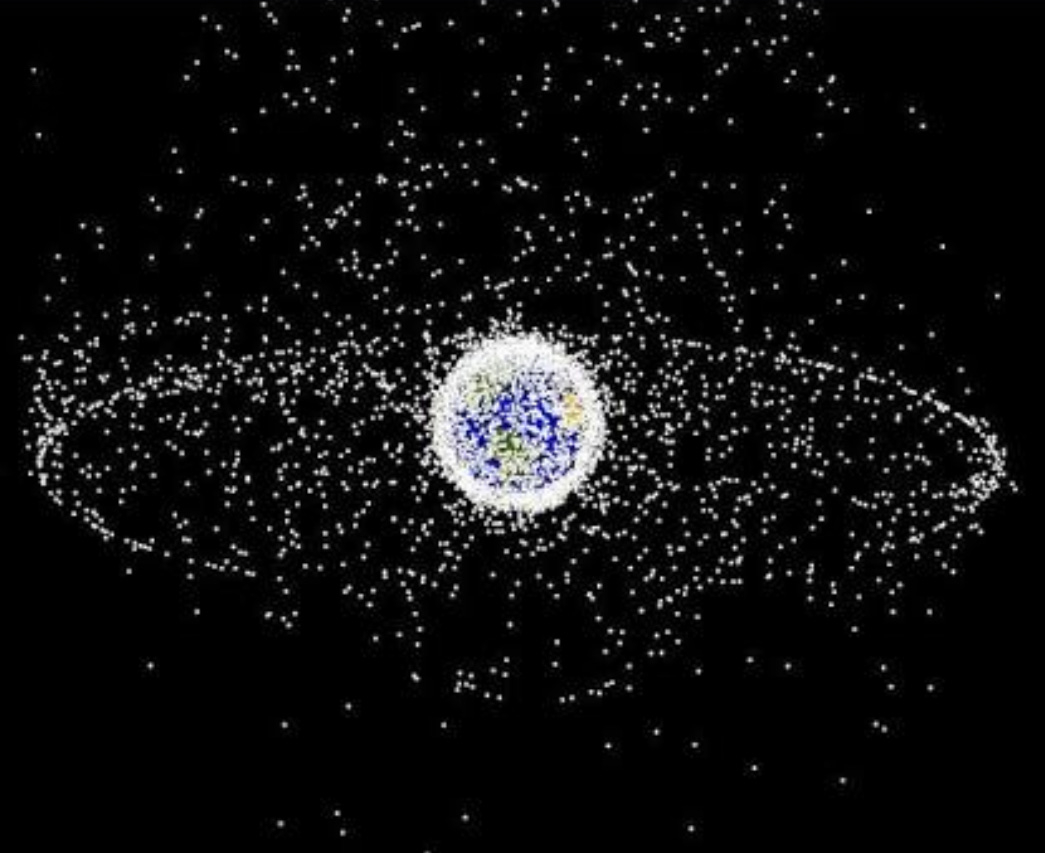
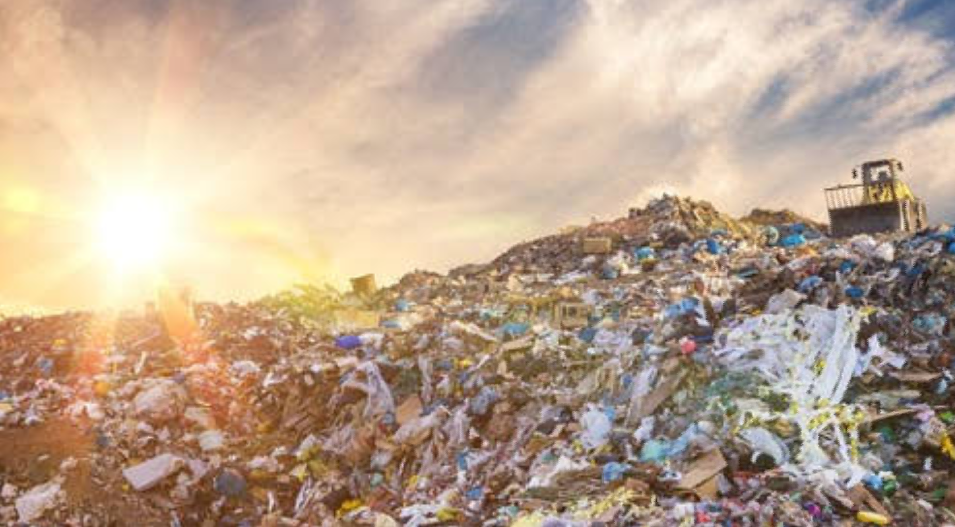
The world has so much problem with the waste production and dumping and landfills. We need more space. Why not send it to outer space? You know take some amount of trash at a time and send it to space and let it go. Sounds easy but turns out it isn’t that easy.

First of all it costs a LOT to send a spaceship into the space. We would need a large number of rocket launches to actually get rid of the insane amount of garbage the world produces(1.2 trillion kg). That way, the rise in air pollution… unimaginable. Also, complex infrastructure requirements! We need a lot more launch pads.

Suppose we do find a way to manage the costs and send a rocket filled with trash to be thrown out in the space. Imagine if some technical issue occurs and it blasts. It would rain burning plastic. Not good for the environment.

Even if we throw it out, the accumulation would make our atmosphere so dense that it would be a toxic world to live in. Also we couldn’t use satellites plus space travel would be tough. What if it comes floating back. Gross sight.

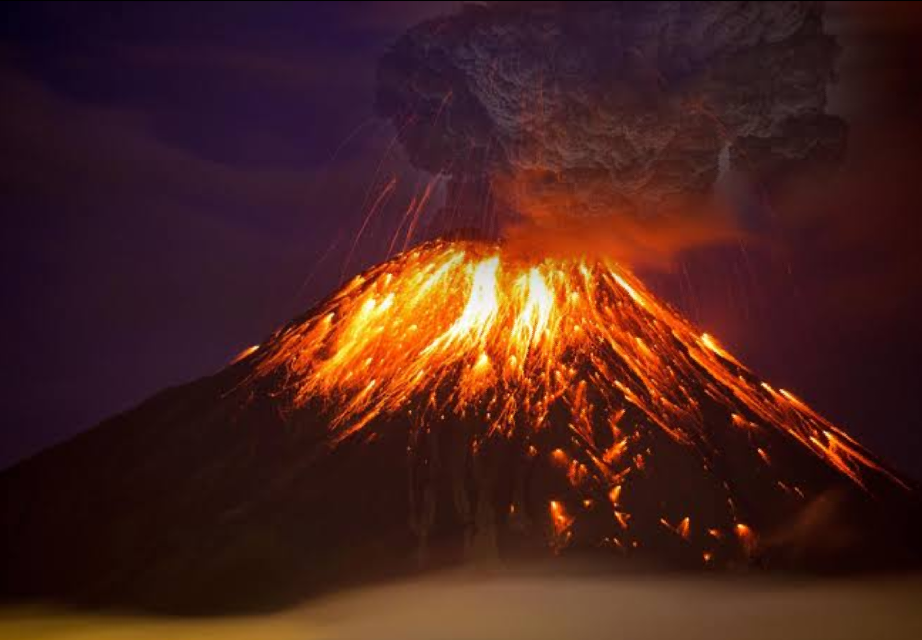
There’s another thing we could do. Burn the trash in the volcanoes. Trash incinerators have filters to filter out poisonous gases. In case of volcanoes filtering is not possible so again toxic world. Besides throwing something in the lava, disturbing the surface, would instantly trigger a chain reaction leading to an explosion. So not an option.

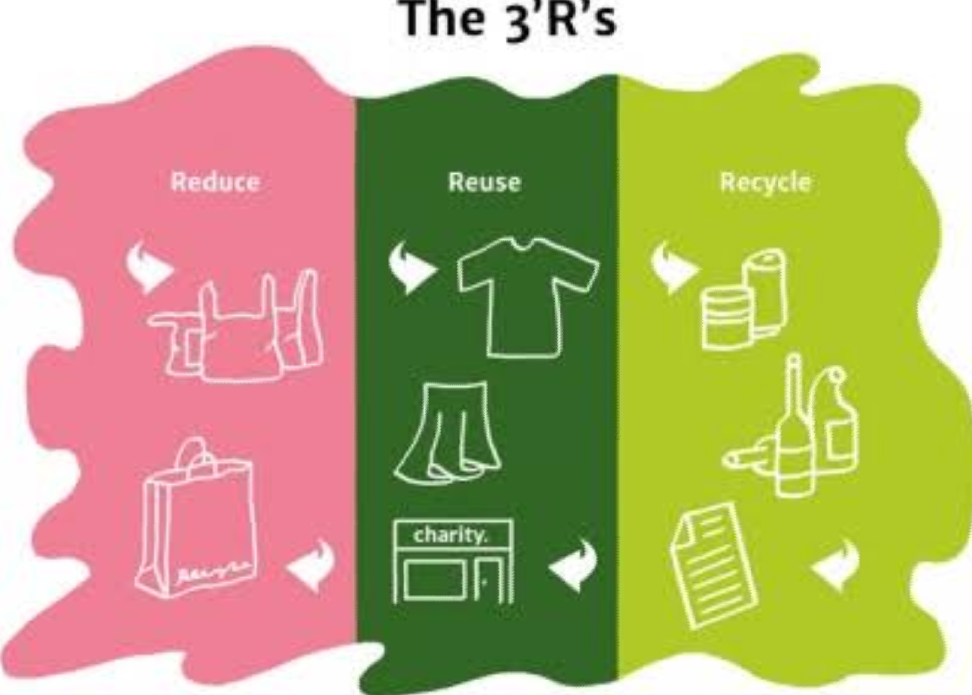
Guess we have to find other sources to convert the trash into some kind of energy. Maybe some day. Till then we need to manage our trash and follow the three R’s. (Reuse, Recycle, Reduce)

Thank you for reading. Have a nice day!

Eco-Friendly Lifestyle 101

Leading an eco-friendly (ecological/environment-friendly) lifestyle is imperative for healthy and sustainable living in the current extreme climatic conditions and environmental degradation and pollution. All this leads to life-threatening atmosphere because of poisonous air, water and soil, global warming, scarcity of resources, man-made disasters and increased intensity and risks of natural disasters.

Apart from industrial and organizational initiatives towards eco-friendly operations, individual and collective household acts and changes in personal lifestyle choices and living practices of common citizens contribute to sustainable and healthy living.

Environmental friendly living is not that difficult. It can even prove to improve mental health along with physical health and environmental health. Let’s learn about some easy eco-friendly practices.

  1. Resource management: The baby steps. The easiest and the ones which we learned when we were kids, but forget to apply.
    • Limit and manage your water, electricity and fuel usage. Do not make unnecessary usage.
    • Eliminate any kind of wastage. Do not forget to switch off lights and fans when not in use.
    • Bath in shower or use bucket and mug instead of bathtubs.
    • Reuse water. For example- Reuse the water used to wash food items for watering the plants, instead of pouring it into the sink.
    • Brush your teeth with a glass of water. Do not use the tap water.
  2. Resource conservation:
    • Practice rainwater harvesting. We can use this water for bathing and washing clothes, utensils, etc. It is easy to install rainwater harvesting system. Look at these multiple ways to do it.
    • Use solar energy and solar panels if affordable for water heating, cooking, electricity supply, etc.
    • Buy a limited amount of food. Do not depend entirely on refrigeration. Switch it off when not needed, mostly in winters, when food items do not stale for many hours even when kept outside.
  3. Buying essentials:
    • Install LED lights instead of incandescent lighting.
    • Practice biogas cooking, use solar cookers, biogas stoves, etc. You can either buy or build a biogas plant at home easily. See the benefits of biogas here.
    • Use a car fueled with CNG or use battery vehicles. Go on foot, or ride a bicycle to reach nearby places.
    • Use desert coolers or eco- friendly air coolers and do not install air conditioners.
    • Use eco-friendly paper/tree-free paper and buy refilling pens instead of single use pens.
    • Eliminate plastic materials and storage boxes. We can easily live without plastic. There are many alternatives to daily-life plastic materials. Use and carry aluminium bottles and refill them instead of buying plastic water bottles. Use glass containers for microwave and storage.
    • Buy products only from those companies which use eco-friendly methods to manufacture. There are many such alternatives out there. You just need to search the net.
  4. Materialism:
    • Decorate your home with indoor plants, beautiful mud or clay lamps, eco-friendly handicrafts, glass decorative, etc.
    • Install indoor plants which purify the air. Use loads of them.
    • Build a terrace garden or porch garden.
    • Stop the air, water and sound pollution in the name of festivities. Instead, go out on festivals to plant trees in wastelands, empty lands, barren lands, schools, boundaries of roads.
    • Donate to and plant trees and saplings with old-age homes, special schools, orphanages, etc. It will bring happiness to you and to those people too. Do not use firecrackers, river dumpings, etc.
    • Do not buy chemical based beauty, body care and healthcare products. Shift to Ayurved or organic and eo-friendly products. They are healthier, more effective, and have no side effects.

Indoor plant decorations

Image source: ipinimg.com

5. Eating habits:

  • Plant-based diet- Industries which process animal-based products, take-up thousands of more gallons of water and KW of energy for processing. It leads to water wastage, ozone depletion, global warming, etc. There are many health risks involved with an animal-based diet. If not eliminate, try reducing and limiting the intake.
  • Separate and store plastic waste and organic waste. Plastic waste includes milk packets, medicine packets, chocolate and biscuit wrappers, etc. Use the organic waste (vegetable peels, animal waste, food leftovers, etc.) as manure for plants and ingredient for biogas.
  • Shift to Ayurvedic medicine and treatment rather than allopathy.

Start small scale organic farming at home. It is very easy and does take much time and effort. It can be installed in small spaces like a balcony, roof, porch, veranda, and even in a well lit room. Know more about organic home farming here.

Vegetable, spices, and fruits grown at home.

Picture source: The Hindu, Nursery live, Gardening know how and Balcony garden web.

All this may take some amount of time and effort, but it is worth it. You will experience a positive difference in your life. You can even inspire the people around you. We can start many of these living practices within a village, colony, township or a society to improve effectiveness with collective efforts. Such as rainwater harvesting, solar energy, biogas energy, farming, etc. Take one step at a time and you will find your motivation.

ENVIRONMENT IMPACT ASSESSMENT (EIA)

Definition of Environment Impact Assessment:

The International Association for Impact Assessment describes an environmental impact assessment as “a mechanism to determine, forecast, evaluate and mitigate the biophysical, cultural and other related effects of development initiatives prior to the adoption of major decisions and commitments”.

“A systematic process of identifying future consequences of a current or proposed action.” The process is- Transparency, Certainty, Participation, Practicability, Electricity, Cost effectiveness, Credibility, Accountability.

The Finnish International Development Agency (FINNIDA)[1], have defined Environment Impact Assessment in the most innovative way in following ways:

1. The Environment Impact Assessment may be defined as a planning tool which is used, together with the project feasibility study to ensure that, the project plan is the optimal economic. Environmental plan, i.e. the plan is environmentally as well as economically sound and thus represents the best approach to planning for development projects in order that continuing economic development will be sustainable. The essential message of the famed UN Brundtland Report of 1987 is that, the only sustainable development is economic-cum-environmental development;

2. The Environment Impact Assessment is not intended to disrupt nor to impede economic development, a project plan which is economic cum-environmental will have a higher benefit/cost ratio than a plan which is not responsive to environmental needs, especially when long term as well as short term effects are considered;

3. The role of Environment Impact Assessment is not just to identify and describe environmental hazards which a proposed project will likely cause if no EPM (Environmental Protection Measures) are included in the project. Rather, the Environment Impact Assessment should specify the necessary EPM and ensure that these EPM are included in the overall project plan as delineated by feasibility study.

Need for Environment Impact Assessment:

Every anthropogenic activity has some impact on the environment, but these activities cannot be stopped, because human beings cannot survive, without taking up these activities for his food, security and other needs. Environment Impact Assessment (EIA) is one such tool available with the planners to achieve the concerned goal.

Principle 17 of Rio Declaration, 1992 also requires the states to follow EIA. It states as follows:

“Environmental Impact Assessment, as a national instruments shall be undertaken for proposed activities that are likely to have a significant adverse impact on the environment, and are subject to a decision of a competent national authority.”[2]

The objective of Environment Impact Assessment (EIA) is to foresee the potential environmental problems that would arise out of a development address them in the projects planning and design stage.

The objectives of EIA described by Council of European Economic Committee are as follows:

“The effects of the project on the environment must be measured in order to take into account issues related to the security of human health, to contribute to the quality of life through an improved environment, to safeguard the diversity of species and to preserve the reproductive potential of the ecosystem as a basic resource of life. According to the EIA, the safest environmental strategy is to avoid negative consequences rather than seek to mitigate them subsequently.”[3]

By using Environment Impact Assessment (EIA) both environmental and economic benefits can be achieved, such as reduced cost and time of project implementation and design, clean-up costs and impacts of laws and regulations.

Origin of Environment Impact Assessment:

The technique of EIA finds its origin from the “precautionary principle” which requires refusal of consent or approval of the developmental activity by the competent authority, if such project poses threat of serious or irreversible environmental damage. To determine the serious or irreversible nature of the environmental effects on the developmental activity, EIA is necessary. The precautionary principle’ mandates that the EIA should be made obligatory for developmental activities which are likely to have significant adverse effect on the environment. In case, EIA reveals that the developmental activity poses threat of serious or irreversible environmental damage, the competent authority must withhold the consent for approval or permission to such activity.

The ‘precautionary principle’ mandates that EIA should be carried not only at the time of commencement of the developmental project development during the operation of the project. EIA involves continuing assessment and evaluation of the environmental effects on the developmental projects as the project is in operation and is not confined to pre-project evaluation of possible environmental effects.

India and Environment Impact Assessment:

EIA, in India started in 1976–77 as the Planning Commission asked the Science and Technology Ministry of the period to examine the projects in the river valley from an environmental point of view. This was subsequently extended to cover those projects which required approval of the Public Investment Board (PIB), but as these were only administrative decisions and lacks statutory backing the Government decided to give it statutory backing under Environment (Protection) Act, 1980. Thereafter, a notification in this regard was issued on 27th January 1994 under the Environment (Protection) Act, 1986 which was subsequently amended on 4th May 1994, 10th April 1997, 27th January 2000 and September 14, 2006 making environment impact assessment (EIA) mandatory for 30 activities. Some practices allowed under the Coastal Regulation Notification Zone 1991 also entail clearance.

Further, Government notifies, from time to time, certain areas in the country as ecologically sensitive and developmental activities to be taken up, these areas are regulated as per the provisions of these notifications. Such as include Coastal Regulation Zone, Doon valley, Murud-Janjira, Dahanud, Namaligarh, Taj trapezium and Aravalli ranges in Gurgaon (Haryana) and Alwar (Rajasthan) districts. Activities to be conducted in forest areas are administered by Forest (Conservation) Act and Wild Life Protection Act.


[1] Guidelines for Impact Association in Development Assistance, Finnish International FINNIDA’s Draft, 1989.

[2] https://www.iaia.org/wiki-details.php?ID=4

[3] “EEC Directive dated 27 June 1985, 85/337/EEC of 27 June 1985 OJL 175/40, 5 July 1985.”