Climate change is influencing each country on each mainland. It is upsetting public economies and influencing lives. Climate designs are changing, ocean levels are rising, and climate occasions are turning out to be more limit.
Albeit ozone depleting substance outflows are projected to drop around 6% in 2020 because of movement forbids and monetary log jams coming about because of the COVID-19 pandemic, this improvement is just brief. Climate change isn’t on stop. When the global economy starts to recuperate from the pandemic, emanations are required to get back to more elevated levels. Saving lives and livelihoods requires pressing activity to address both the pandemic and the climate crisis.
The Paris Agreement, embraced in 2015, expects to reinforce the global reaction to the danger of climate change by keeping a global temperature rise this century well under 2 degrees Celsius above pre-modern levels. The understanding likewise intends to reinforce the capacity of nations to manage the effects of climate change, through proper monetary streams, another innovation system and an upgraded limit building structure.
Climate change incorporates both global warming driven by human-prompted outflows of ozone harming substances and the subsequent enormous scope shifts in climate designs. However there have been past times of climatic change, since the mid-twentieth century people remarkably affect Earth’s climate framework and caused change on a global scale. Prior to the 1980s, when it was muddled whether warming by ozone harming substances would overwhelm airborne instigated cooling, researchers frequently utilized the term coincidental climate adjustment to allude to humanity’s effect on the climate. During the 1980s, the terms global warming and climate change were advocated, the previous alluding just to expanded surface warming, the last portraying the full impact of ozone depleting substances on the climate.[21] Global warming turned into the most famous term after NASA climate researcher James Hansen utilized it in his 1988 declaration in the U.S. Senate. During the 2000s, the term climate change expanded in prominence. Global warming ordinarily alludes to human-instigated warming of the Earth framework, though climate change can allude to normal just as anthropogenic change,The two terms are regularly utilized conversely.
Environmental legislation are often defined as, a set of laws and regulations which are aimed toward protecting the environment from harmful actions. In both the international commitments and constitutional framework of India, the need for protection and conservation of environment is reflected.
Constitutional Provisions
By the Constitution (Forty-Second Amendment) Act, 1976 , Article 48A was added as a part of Directive Principles of State Policy and Article 51A as a fundamental duty of every citizen of India.
Article 51A under Part IV A of the Indian constituition talks about the 11 fundamental duties that are expected to be performed by the citizens of India. One of these is to protect and improve the natural environment including forests, lakes, rivers and wildlife, and to have compassion for living creatures. Furthermore, Article 48 A, of the Directive Principles of State Policy (DPSP) enumerated in Part IV of the Indian Constitution says that the State shall aspire to protect and improve the environment and to conserve the forests and wildlife of the country.
Some of International Conventions for Environment Protection to which India is a Signatory :
Stockholm Convention
The objective of the convention is to target additional POPs for action, supporting safer alternatives, and make a POPs-free future. It calls to ban nine of the dirty dozen chemicals (key POPs), limit the use of DDT to malaria control. As per Article 25(4), India ratified the Convention in 2006.
Montreal Protocol 1987
The Montreal Protocol was negotiated and signed by 197 parties in 1987 with the aim to control the consumption and production of chlorofluorocarbons (CFCs) which is responsible for Ozone Layer depletion.
The adoption of the 2016 Kigali Amendment to the Montreal Protocol is projected to reduce future global average warming in 2100 due to hydrofluorocarbons (HFCs) from a baseline of 0.3–0.5°C to less than 0.1°C.
United Nations Framework Convention on climate change (UNFCCC)
It was signed in 1992 at the United Nations Conference on Environment and Development ( Earth Summit, the Rio Summit or the Rio Conference). The parties to the convention meet annually at the Conference of the Parties (COP) to review the progress under the convention. It aims to achieve stabilization concentration of greenhouse gases in the atmosphere at a certain level that would prevent the climate.
United Nations Convention to Combat Desertification (UNCCD)
It was established in 1994 with the aim to take care of and restore land and soil productivity, and to minimise impact of drought.
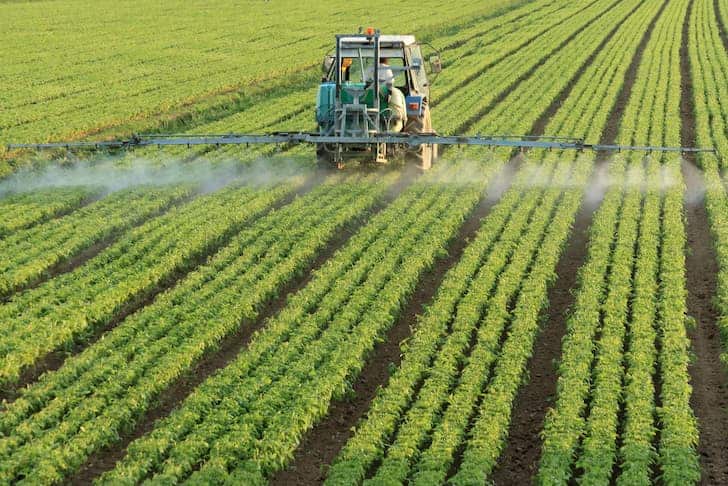
The chemical substances supplied to the crops to increase their productivity and crop yield are called fertilizers. They contain the essential nutrients required by the plants to grow- nitrogen, potassium, and phosphorus. Fertilizers are chemical substances supplied to the crops to increase their productivity. These are used by the farmers daily to increase the crop yield. The fertilizers contain the essential nutrients required by the plants, including . They enhance the water retention capacity of the soil and also increase its fertility.
Pros
increase plants’ tolerance towards pests. This has
reduced reliance on insecticides and herbicides, thereby, producing healthier crops.
Consequently, diseases have reduced, providing aesthetic value to the crops.
improve the water holding capacity of the plants and increase root depth.
The potassium content present in the fertilizers strengthens the straws and stalks of the plants.
The phosphorus present in the fertilizers helps in the faster development of roots and formation of seeds in the plants.
Nitrogen in the fertilizers enhances the growth of the plants
Cons
They are expensive.
The ingredients in the fertilizers are toxic to the skin and respiratory system.
Excessive use of fertilizers damages the plants and reduces soil fertility.
Leaching occurs and the fertilizers reach the rivers causing eutrophication.
Long term use reduces the microbial activity and disturbs the pH of the soil.
Eutrophication
Eutrophication is the gradual increase in the concentration of phosphorus, nitrogen, and other plant nutrients in an aquatic ecosystem. These substances enter the ecosystem primarily by runoff( runoff includes not only the waters that travel over the land surface and through channels to reach a stream but also interflow, the water that infiltrates the soil surface and travels by means of gravity) from land that carries debris and products of the reproduction and death of terrestrial organisms. Rainfall washes off the fertilizers from field into water. The amount of organic material that can be broken down into nutrients increases thereby enriching the ecosystem. This creates suitable living conditions for algae and microbes to grow and proliferate. Algae often develop on the surface, preventing the light penetration and oxygen absorption necessary for underwater life. Eutrophic waters are often murky and may support fewer large animals, such as fish and birds, than non-eutrophic waters.
The phenomenon of lack of oxygen in body which leads to unconsciousness and death is called Asphyxiation. This poses as the main reason of mass killing of fish. According to reports, causes of natural fish kills are:
■ Lack of oxygen in the water (anoxia). The majority of natural kills are caused by this problem. ■ Naturally toxic water. Acidic water containing toxic levels of aluminium leached from acid-sulphate soils has been identified on the floodplains of Magela Creek and Nourlangie Creek. ■ Disease, especially red spot disease, often kills fish but this only rarely results in a large number of deaths at one time.
During the day, aquatic plants and algae produce oxygen as a by-product of photosynthesis, raising the levels of oxygen in the water. At night, the oxygen is used up by respiration of all the aquatic biota, reaching a minimum level at dawn. The decay of dead plant material at the end of the Wet season can aggravate this effect. With high temperatures and declining water levels at the end of the Wet and the Dry season, there may be little or no oxygen left in the predawn period. This causes oxygen stress to the fish and can result in deaths
Since the chemical fertilizers adversely affect soil fertility, biofertilizers were brought into use. These are substances that contain living or latent cells, and even micro-organisms. They provide the soil with the necessary nutrients and microbes for the growth of the plants. They help the soil to retain its fertility. They are environment-friendly and also destroy pathogenic components responsible for causing disease in plants. Acetobacter and Rhizobium are widely used biofertilizers.
The constitution of India clearly states that it is the duty of the state to “protect & improve the environment and to safeguard the forests & wildlife of the country”. The department of environment was established in India in 1980. this later became the Ministry of environment & forests in 1985. The EPA (Environment Protection Act), 1986 came into force soon after the Bhopal gas tragedy & is considered an umbrella legislation as it fills many gaps in the existing laws. Thereafter a large number of laws came into existence as the problems began arising, or example, handling and management of hazardous waste rule in 1989.
An Act to provide for the protection and improvement of Environment. Whereas the decisions were taken at the United Nations Conference on the Human Environment held at Stockholm in June, 1972, in which India participated, to take appropriate steps for the protection & improvement of human environment.
Objective
Providing for the protection & improvement of the environment.
Preventing environmental pollution in all its forms.
To tackle specific environmental problems that are peculiar to different parts of the country.
To co- ordinate the activities of the various regulatory agencies already in existence.
To appoint environment officers to check environmental pollution.
To improve the quality of life by protection of environment.
Establishing environmental laboratories. To protect the forests & wildlife in the country.
SCHEME OF THE ACT
The Environment (Protection) Act, 1986 has 26 Sections & it has been divided into four chapters relating to, 1.Preliminary 2.General Powers of the central Government. 3.Prevention, Control, & Abatement of Environmental Pollution. 4.Miscellaneous.
The environmental protection act (1986) enacted under article 253 of the Indian constitution. To protect & improve environmental quality, control & reduce pollution from all sources. 1.This act may be called the Environmental (Protection) Act, 1986. 2.It extends to the whole of India.
IMPORTATNT DEFINATIONS
Environment
Environmental Pollutant
Environmental Pollution
Handling
Hazardous Substance
Occupier
GENERAL POWERS OF THE CENTRAL GOVERNMENT
Planning and execution of a nation-wide program for the prevention, control and abatement of environmental pollution.
Restriction of areas in which any industries, operations or processes or class of industries, operations or processes shall not be carried out or shall be carried out subject to certain safeguards.
Laying down procedures and safeguards for the handling of hazardous substances
Examination of such manufacturing processes, materials and substances as are likely to cause environmental pollution.
Carrying out and sponsoring investigations and research relating to problems of environmental pollution.
Establishment or recognition of environmental laboratories and institutes to carry out the functions entrusted to such environmental laboratories and institutes under this Act.
RULES TO REGULATE ENVIRONMENTAL POLLUTION
The standards of quality of air, water or soil for various areas and purposes
The maximum allowable limits of concentration of various environmental pollutants (including noise) for different areas
The procedures and safeguards for the handling of hazardous substances
The prohibition and restrictions on the handling of hazardous substances in different areas
The prohibition and restriction on the location of industries and the carrying on process and operations in different areas
The procedures and safeguards for the prevention of accidents which may •cause environmental pollution and for providing for remedial measures for •such accidents.
PREVENTION, CONTROL, AND ABATEMENT OF ENVIRONMENTAL POLLUTION
Persons carrying on industry operation, etc., not to allow emission or discharge of environmental pollutants in excess of the standards.
Persons handling hazardous substances to comply with procedural safeguards
Furnishing of information to authorities and agencies in certain cases
Powers of entry and inspection
Power to take sample and procedure
PUNISHMENTS
One of the objective of EPA is provide for deterrent punishment to those who endanger human environment safety & health. Section 15 of EPA provides that any person who fails to comply or contrivance any provision or rule or act he shall be punishable. With a fine of 1 lakh. with imprisonment for term for 5 years. or both
On 7 February 2021 Uttarakhand’s Chamoli district experienced a disaster in the form of an avalanche when a small portion of the Nanda Devi glacier broke off. The sudden deluge caused considerable damage to NTPC’s Tapovan-Vishnugad hydel project and the Rishi Ganga Hydel Project. At least 72 people were confirmed to have been killed in the disaster. But this is not a new phenomenon and every year there are many reports of sudden deluge all across the Himalayan region.
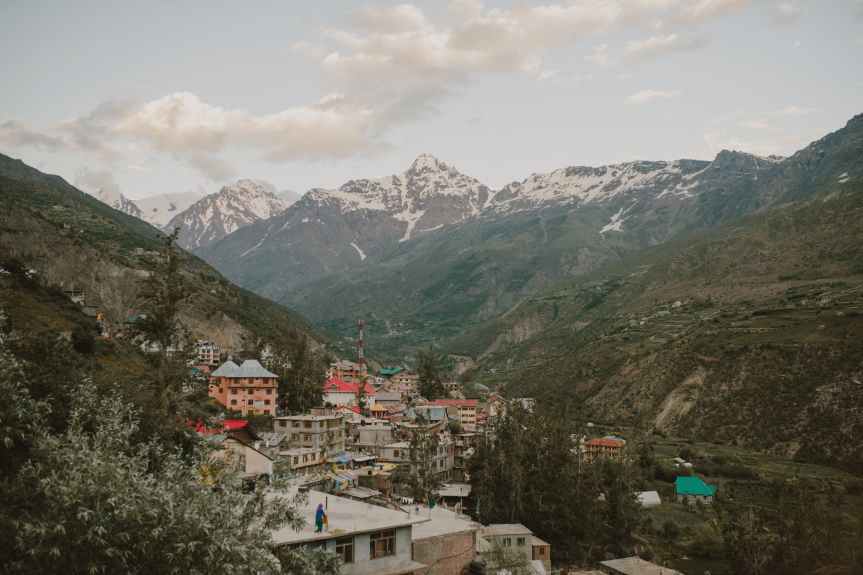
The Himalayas has maintained the climate of the Indian subcontinent. Himalayas act as a barrier by diverting the monsoons to pour the rain in the fertile northern pains rather than to drift away to further north. Similarly, the mountain range also blocks the cold northern winds to reach the Indian subcontinent. The Himalayas all the way from Afghanistan to Myanmar with 110 peaks over 24,000 feet. They are also very rich in biodiversity and are the source of numerous perennial rivers and water bodies. Rivers like Indus, Ganges, and Brahmaputra that originate in the Himalayas are the lifelines of millions of people in the subcontinent.
But in recent years, the Himalayan region has seen a drastic transformation with increasing population and deforestation. The Himalayas are still a very young mountain range and this means the region is not as stable as older mountain ranges. This is also the reason for the high number of earthquakes. There are many exploitative projects and resource extractions initiatives have are going throughout the region. The increasing influx of tourists in the Ladakh region which is increasing the pressure in the already sensitive region or the limestone extraction near Mussoorie which has transformed the surrounding lush mountain region barren and unstable are just some of the instances. The cities located in the periphery of the Himalayas have started are also facing the same degradation problems in the plain region. Due to ever-increasing population growth, the size of cities is also increasing and this means overflowing garbage and drains. Unplanned growth of new settlements and uncontrolled tourism has only exacerbated this issue.
There is a need for safeguards on a national level that would help in preserving the fragile ecology of this region. First, it needs to be ensured that there is sustainable urbanization in the mountain habitats by town planning and adoption of architectural norms. Due to the sensitivity in this region, it is imperative that we have to control the growth of new settlements in the region and the existing settlements should be developed with all the basic urban facilities. Solid waste management is another area that needs to be the focus. Plastic bags use should be banned in all the towns and villages in the Himalayan region. Some states like Himachal Pradesh and Sikkim have enforced this rule but there are still many other states that have not fully implemented this rule. Pilgrimage is an important part of the tourism sector in the Himalayan region. Sustainable pilgrimage needs to be promoted and the inflow of pilgrims has to be determined according to the ecological capacity of that site. Roads are an essential node for the connectivity and development of a region but the construction of the roads and highways needs to take into account the sensitivity and fragility of the region as well. Environmental impact assessment should be compulsory before the construction of roads. Finally, environmental awareness needs to be propagated so that every individual can be empathetic and mindful of the dangers of environmental degradation. A coordinated effort will be essential between local cultures, local people, unions, and state governments to make this happen.
The Aral Sea was an endorheic lake lying between Kazakhstan and Uzbekistan in Central Asia. By definition it is a lake contrary to it’s name, translates to ‘Sea of Islands’ as it had around 1000 islands dotting it’s waters. It’s drainage basin flows through Uzbekistan and parts of Tajikistan, Turkmenistan, Kyrgyzstan, Kazakhstan, Afghanistan and Iran. It was formerly the fourth largest lake in the world with an area of around 70,000 square km. The Lake began shrinking since 1960 and largely dried up by 2010s.
The Aral Sea in 1989 and 2014
History
The lake began shrinking after the rivers that fed it were diverted by Soviet irrigation projects. Kazakhstan was not an independent country then but a state or a ‘ socialist republic’ of then USSR, known as Kazakh SSR. The Soviet Government wanted Cotton to become a major export. They devised many projects diverting the Amu Darya river in the south and the Syr Darya river in the east to irrigate the nearby desert in an attempt to grow cotton, rice and cereals. There were large scale construction of irrigation canals which were poorly built allowing leakage and evaporation. Overtime the lake began to shrink at an alarming rate which didn’t exactly surprise the Soviet engineers as they, in a twisted sense, expected it. The salinity of the lake increased at an alarming pace . By 1987, the lake split into two separate water bodies, the North and South Aral Seas. Uzbekistan gained independence in 1991 after the fall of the Soviet Union but it’s first leader, Islam Karimov’s government continued the previous Soviet policies destroying the already beleaguered lake and causing an unprecedented ecological disaster.
The Post Soviet era
Uzbekistan gained independence in 1991 after the fall of the Soviet Union but it’s first leader, Islam Karimov’s government continued the previous Soviet policies destroying the already beleaguered lake. In 2003, South Aral sea further divided into east and west basins. At the same time a plan was put into motion by the Uzbek Government to recover the North Aral Sea by building Dike Kokaral, a dam, which was completed in 2005 and in the next year substantial recovery of sea level was recorded. By 2009, the southeastern lake had disappeared. By 2014, the entire Eastern basin of Aral Sea had dried up, which is now known as the Aralkum desert.
Environment Effects
Due to it’s shrinking countless unfortunate impacts on environment, economy and public health have been recorded. Worsening of the soil, pollution of the lake due to pesticides, death of the local flora and fauna, fish species, spike in cancer, lung diseases, tuberculosis, anaemia due to the locals drinking water and inhalation of contaminated dust which has caused many fatalities. Bustling fishing towns along the shores have now become grim ship graveyards. The town of Aral’sk, the main fishing port is now many kilometres away from the lake and has seen its population decline, most notably the town of moynak on the southern shores of the Aral Sea which used to be Uzbekistan’s biggest port.
Restoration Plans
There have been many restoration strategies planned out for Aral sea’s recovery. There is the Aral Sea basin programs where all five Central Asian countries help in the stabilization and rehabilitation of the local environment. There is also the North Aral sea restoration plan which has so far succeeded in recovery. Kazakhstan has partially revived and replenished it’s parts of the Aral Sea while Uzbekistan isn’t planning on abandoning the Amu Darya to irrigate their number one export cotton and are even moving towards oil exploration in the South Aral seabed.
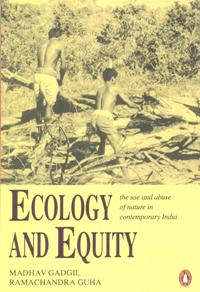
Madhav Gadgil is an Indian ecologist and the founder of the Centre for Ecological Sciences, Indian Institute of Science. He is know for heading the Western Ghats Ecology Experts Panel (WGEEP) of 2010, also known as Gadgil Commission. He was awarded with the Padma Shri in 1981 and the Padma Bhushan in 2006. Ramachandra Guha is an Indian Historian and a columnist. His notable works include India After Gandhi and Gandhi: The Years That Changed the World. He has been awarded with several accolades for his achievements in the field of history.
Ecology and Equity is principally a book about the history of resource use in India after post-independent India. The second part of the book certain schematic solutions based on the findings of the authors. It is a book that caters to both people who are alien to environmental issues and people already informed on this subject. The writing is lucid and precise which makes the reader curious on this subject.
In this book, too, the authors present a original analytic framework to classify the huge population of India. The theoretical framework is based on the idea of a ‘resource catchment’ – the place from which resources are collected for use by people. Using the example of the current Indian society, it divides population into three categories: omnivores, ecological refugees, and ecosystem people. The first category, omnivores(includes businessmen and entrepreneurs), uses most of the resources. They are the section that really benefits from economical development. Displaced peasants and tribal groups comprise ecological refugees. Development plans devoid of ecological consideration have resulted in their displacement. They are victims of overexploitation of resources by omnivores. The last category, the ecosystem people, consists the most of the Indian population. This category relies on resources within their space for fulfilling their requirements. They are dependent on the natural resource base in their living area and have been dependent on these resources traditionally. They grow their own crops to meet their food requirements. Though the classification of more than a billion people into three categories seems too simple and insufficient, it serves the purpose of the authors. The book offers a new development agenda after considering the ecological factors, that could benefit the majority. The authors propose for a development mission on the basis of local communities under a decentralized political system.
The authors describe the disruptive use of natural resources in the current era and shortcomings of the ideologies followed in the current society. Theories that existed before 1970s tell very little of man’s interaction with nature. Growing ecological threats have necessitated the requirement for new framework. The authors have developed this framework for better understanding of ecological problems and history of resource use, and to make the readers conscious of environmental problems from its roots. The book stresses the need for development strategies to be ecologically prudent. It shows the relationship between social conflicts and ecological factors. They hope to build a country based on decentralization of power and increasing the participation of communities in the matters of resources. After reading this book, one begins to look at environmental problems from a different perspective.
Have you ever wondered how you contributed to sabotaging the environment? If not it’s high time to dig deeper into the treasure, which is a greener Earth. You know what I’m speaking about. Yes, it’s about the fashion industry and the need for sustainable fashion. The fashion industry is one of the top industrial sectors in the world, with a value of 3 trillion dollars and produces 2% of the global GDP according to global fashion industry statistics. Accordingly, 1 in 6 people work in fashion or related industry Furthermore moving closer, the Indian fashion and apparel industry produces 1586 dollars in GDP per capita and enabled 45 million recruitments within the country. It is presently the second-largest employer within the country. Hence proving to be one of the top industries carrying out Apparel manufacturing process involving Product Design, Fabric Selection and Inspection, Patternmaking, Grading, Marking, Spreading, Cutting, Bundling, Sewing, Pressing or Folding, Finishing and Detailing, Dyeing and Washing, QC etc. 100 billion items of clothing are produced annually.
Adding onto the positives, there are many drawbacks to the very fortunate industry. It had been and is still on the top list of the contaminating industries in the world. Say, the textile industry is the second largest pollutant in the economy. The facts that had been put into due negligence till now is being brought to the limelight by Brands and fashion enthusiasts.
Blights of the fast fashion
1.Savagery towards animals
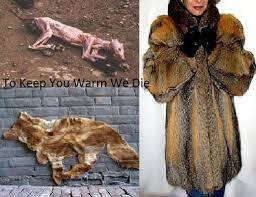
It is not a new fact to us that animals are manipulated to produce clothes or apparel items that seems to be a top trend. Most items produced from fur, leather, wool, feathers are obtained from the mass pestering of innocent animals. Sumanthran tigers and American alligators in the endangered category were still poached for cloth production.
2. Unfair wages and working conditions
As to the latest protests and struggles to achieve a full-fledged fashion revolution, we see the campaigns with people holding placards written ‘who made my clothes’ and ‘i made your clothes’. It wasn’t any happy day speech, they are the behind the scene labour workers under hardships produce all the commodities as to the recent demands. We often tend to forget them blindsided by the white-collar workers.it had been brought to the mainframe that blue-collar workers of Bangladesh, India, China, Indonesia, Vietnam, etc had minimal protection towards worker’s rights. Under prevailing pandemic conditions, these marginal workers were reported losing jobs, being underpaid, cancelled from orders or being not even adequately paid in which they suffered meeting even the food demands of their family. On the other hand, it has become a custom to exploit farmers to the company and middle-men needs.
3. Customer attitude
The next crucial factor towards non-circular fashion is the growing needs of customers for top quality, yet cheap and mind-blowing colourful garments. consumers are well aware of the upcoming trends and glams of the industry, leading to the fast adoption of these newbies. Speaking of which is a necessary evil. It is brought to the view that one in every three young women restricts herself from wearing a cloth multiple times. As to its blitzscaling, fashion companies are compelled to showcase more attire than the actual need.
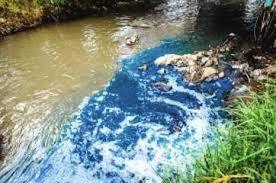
We have come to the major part of the discussion on fast fashion. It is every living being’s responsibility to safeguard the natural resources and pass on the same to the forthcoming generations. Water consumption of the textile industry had met its way beyond the danger zone. It takes 2720 litres of water to manufacture one cotton shirt and 7000 litres to make a pair of jeans. The pollution made to the water bodies doesn’t end there, the chemicals used for the mass production of the garments are disposed of directly or indirectly to the same. It is estimated that one-third of microplastics prolonging in the oceans is the impact of synthetic textiles. These are more deadly as the tiny they are, wouldn’t pass through the filters. The Aral sea, renowned as the world’s fourth-largest lake, has almost dried up as a result of the nearby cotton cultivation. The Kitex industry was recently accused of dumping excessive waste into the nearby waterbody.
5. Excessive carbon emissions
It is said to be true that the fashion industry is responsible for 8-10% of the total greenhouse gas emissions in the atmosphere. The major cause of this is the extensive use of synthetic fabrics like polyester, nylon and acrylic, spandex, faux fur, rayon, etc. Polyester ranks top on the intake of crude oil compared to all others by 70 million barrels annually. Transportation is the other means of carbon ejaculation contributed by the global distribution strategies.
6. Textile waste
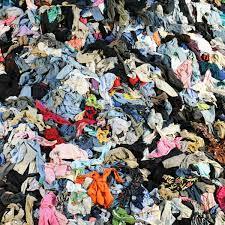
It is said that one garbage truck of textile waste is disposed of every second. This breathtaking fact does prove the intensity of the issue we are dealing with. This directly points out the rising rage for unsustainable fashion culture. For example, polyester is made from the polymerization of petroleum-derived ethylene glycol and purified terephthalic acid, which meltdown to produce polyethylene terephthalate (PET). As such many synthetic fibres are either termed plastic or made out of non-renewable substitutes that concern the ecology.
How can changes be made? How would fashion statements or the industry as a whole regain its fortune? Is the zero-waste fashion possible? Would buyers change their outlook on fashion?
It is time to join hands on the fashion revolutions put forth by fashion creators and promoters on ideas like sustainability, circular economy, zero waste fashion and so on. The idea of the fashion economy sabotaging ecology is given a better view as a result in modern days. Brands now are looking into logical practices to ensure sustainability and restrain themselves from misfortune. Let’s get to know the efforts taken by the industry dignitaries to achieve a stable eco-friendly fashion culture.
Overhaul to fad fashion
1. Sustainable brands
Brands that prove accountable to safeguard bionomics, sacrificing the trend sets should be promoted. Brands those prioritise natural fibres, work with local artisans and so on to gain environmental, economic and social well being. These companies tend to visualise customers as creatives. For example Reff jeans and Girlfriend collective
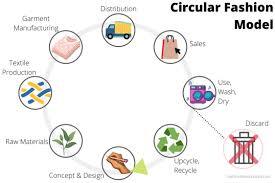
2. Circular fashion
‘Circular fashion’ can be defined as clothes, shoes or accessories that are designed, sourced, produced and provided with the intention to be used and circulate responsibly and effectively in society for as long as possible in their most valuable form, and hereafter return safely to the biosphere when no longer of human use. (Anna Brismar, Green Strategy, 2017). This is the basic idea of the longevity of any garment cycle.
“The circular economy refers to an industrial economy that is restorative by intention; aims to rely on renewable energy; minimize, tracks and eliminates the use of toxic chemicals; and eradicates waste through careful design.” (Ellen MacArthur Foundation)
3. Zero waste fashion
It is the concept of reducing the waste produced with the garment during its life cycle. Furthermore, it is divided into two categories, pre-consumer zero-waste fashion and post-consumer zero-waste fashion. Pre-consumer zero-waste fashion is a holistic approach towards the removal of waste during the manufacture of garments. post-consumer zero waste fashion, on the other hand, is the approach towards post-consumer garments, what more the garment could be used for.
4. Natural dyeing
These are the ancestral dyeing methods using degradable and natural materials like plant sources like roots, fruits, etc. yet the wide-ranging possibilities of this are still in doubt. Whereas a bit of sacrifice towards betterment wouldn’t hurt.
5. Mutating customer attitude
Nowadays customers are more aware of the rising issues on the planet and do agree to take responsive mutation to the outbreaking situations. Social media has had a great influence in making this change possible. When buying an outfit, consumers should ask themselves questions like how is this made, is it a need, how long it would stand, and what to do after. Renting and swapping is too given better focus
6. Personal style
Rather than buying all the so-called latest trends, customers should be aware of their personal style. Personal style does mean the unique way you dress, determining what suits you well, colours favouring, vulgar eliminating, defining yourself and gives you much confidence.
7. Recycling commodities
Brands have come up with the idea of accepting their old products in store. Moreover, specific recycling methods are being conducted and succeeded to a certain level that includes unbinding the fibres to yarns and reforming them to new ones so the focus centralises virgin fibres. As of now, only 13% of clothing and footwear is recycled but in the near future, this is to be a big number. And take care the brands don’t blindside you with mere greenwashing recycling programs.
8. Aquatic treatment
Brands now maintain a ‘water budget’ to not exceed the water demands. It is also noted that natural fibres take in less water for manufacture. There are more ethical ways to dye clothes without the use of water is a plus. Whereas to solve the issue of microplastics, using guppy friend washing bags and installing Girlfriend Collectives microfibre filters in laundry machines is recommended.
9. Ban on poaching
This year London fashion week has been announced prohibiting animal fur due to the rising concerns and brands like Burberry, Gucci and Versace guaranteed to go fur-free. At the same time, Adidas and G-Star RAW introduced apparel produced of ocean plastic. Companies now are developing materials that substitute animal-based leather to the ones made with grape and orange skins which are more laboratory-made.
10. Reducing carbon outrush
The profound carbon emissions are put to a stop by altering synthetic fabrics made of crude oil to natural ones like peach palm fabrics. Transportation caused pollution could be eliminated by procuring and sourcing local resources and employing local artisans.
11. Neat and intact employment
Sustainability couldn’t be possible without fair wages, constant job opportunities with regular and stable working hours. Meanwhile, farmers and blue collars should ensure a safe environment with right protecting laws and policies from the government. So that they could be self honoured with at least meeting the daily living standards which every person of the democracy should enjoy.
12. Minimalism
This isn’t a very pleasing method compared to others on the list. Yet leading a simplistic life could make a big change. Demand is directly proportional to supply. So when demand decreases supply decreases and so will production. Less production leads to the concentration of ones being produced and existing ones, this is where the difference would be visible.
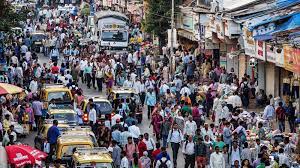
India is a over-populated country. It is the second most populated country in the world, after China. However, researchers say that India is all set to surpass China in population density by 2024. That means India is about to become the country with the highest population density across the world.
The population of India is increasing at an alarming rate. India is not the country with the highest number of people. There are countries which has more number of people than India like Russia. But they are not overpopulated. Those countries have enough space to fit in the number of people. India has more people than the country could fit in. The number of people residing in per unit square of land in India is much higher than that of other countries. This makes India an over-crowded country.
The huge population of India makes a lot of people live in poverty. The country’s economy is not enough to sustain its population. Adding to the problem, the country’s wealth is not equally distributed. The economic gap between the rich and the poor is widening. The major chunk of the country’s wealth is held by the rich and the powerful who are quite few in number compared to the country’s huge population. A large chunk of the population live below poverty line who do not have enough money to afford their meals thrice a day.
Also, the country does not have enough employment opportunities for all its citizens. This leads to unemployment, economic distress, stress and mental health problems. Unemployment increases the amount of crimes, theft and illegal business practices.
Along with wealth and job opportunities, India’s natural resources are also limited and not enough for its huge population. Over-consumption of natural resources would exhaust them and leave none for our future generations. Overpopulation is also a threat to our environment. The air and water bodies are becoming more and more polluted day by day. Too much burning of fossil fuels, congested roads and too many vehicles are releasing toxic gases in the air.
Accommodation is also a problem in India. Thousands of people live in slums which are over-crowded with unhealthy living conditions. More houses and buildings are being constructed which leaves no place for plants and nature. Forests are cut down to make room for construction projects. The cutting down of trees leads to increase in the level of carbon dioxide in the atmosphere.
Population explosion is a serious problem which needs to be addressed at any cost. The Indian population should be controlled to improve the lives of the people. Awareness drives and contraceptive alternatives should be adopted with immediate effect.








 Eduindex
You must be logged in to post a comment.