
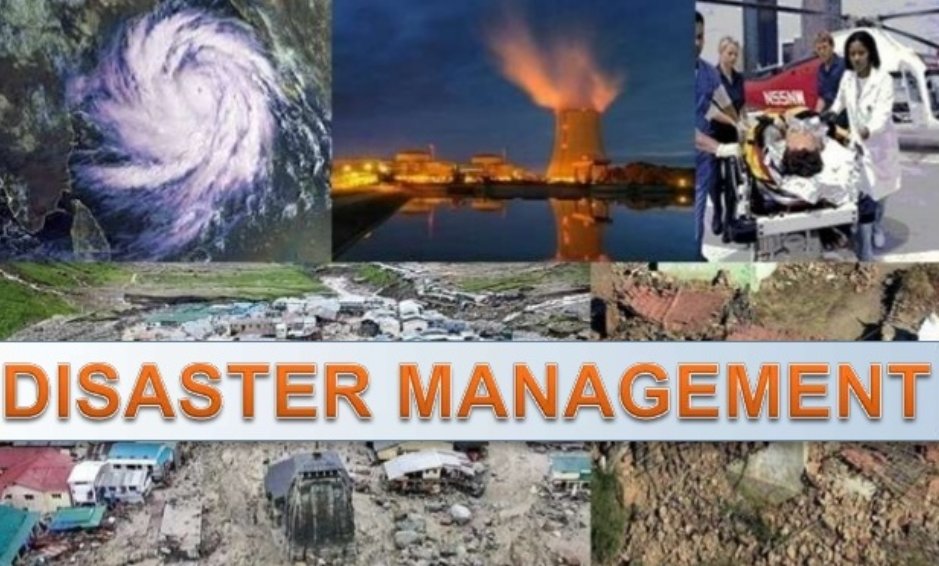
Actions of State and Non State Actors in Disaster Management

Source: lawwn

In contemporary time, Managing disasters is a highly dynamic, complex  and multifaceted affair. It is about to coordinated and contributions by a broad range of actors, including states, international organizations, non – governmental organizations, humanitarian organization, charities, private philanthropists, companies and affected local communities.

State Actors must perform some duties related to provide legitimacy to the operation, ensure coordination of various actors, provide information to needy agencies for Operation purpose, determine sufficient deputation of para military yo ensure smooth rescue and relief operation. Proper post disaster rescue and relief operation.

Contribution of Specialized Agencies in Disaster Management

There are several agencies apart from NDRF that play an significant role in Disaster management and hence they maintained in ‘standard operating procedure’ and prescribed definite role.

Civil Defence performance of some or all of the humanitarian tasks intended to protect the civilian population against the dangers and to help to recover from immediate effects of hostilities or disasters and also provide the conditions necessary for it’s survival.
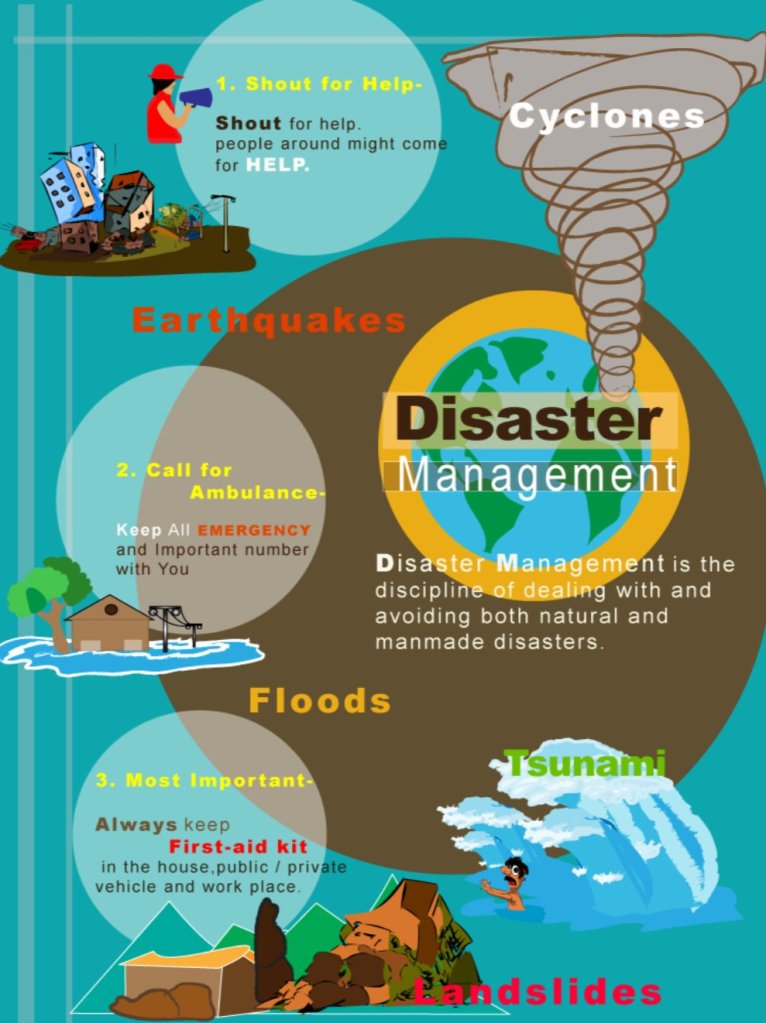
Source: National Health Portal

Management of blackout measures; Rescue, medical services, including first aid and religious assistance, fire fighting are necessary components. Decontamination and take protective measures, emergency accommodation, emergency assistance in the restoration and repair indispensable public utilities. Assistance in preservation of essential objects for survival and complementary activities necessary to carry out any task.

Civil Defence Act 1968, is organized in areas and zones which are tactically and strategically considered vulnerable from the point of aggressive opposite side. Civil Defence activities are restricted to 225 categorized towns spread over 35 States/Union Territories. Civil Defence is primarily organized on voluntary.

The immediate response of any calamity comes straight to Police station. Their immediate help and responsibility is to communicate the information and Provide rescue efforts with whatever resources are available. In disaster management if police is first responder they need to fully equipped with effective resources. Police should involved in the preparation of the local Crisis/Disaster Plan.

The role of home guards is to serve as an auxiliary to the police in the maintenance of internal security, help the community in any kind of emergency such as fire, cyclone, earthquake, epidemic etc help in maintenance if essential services, promote communal harmony and assist the Administration in protecting weaker sections, participation in socio economic and welfare activities and perform Civil Defence duties.

Home guard facility not available in Kerala. Home guards act, rules of the states are the same. They are recruited across the section of the society whoever available for betterment of community. Home guards duties like any other public servant but not in the case of Civil Defence both are like voluntary corps.

Fire services have been set up by the state government with Union government providing technical and financial support. Fire services play prominent role in all types of disaster and fire related crisis. There is an urgent need to train and equip the fire to handle all types of crisis in any multi hazard crisis.

Armed forces have invariably played an important role in rescue and relief operation in all major disasters in the country. The contribution of Specialized NDRF battalions would reduce the pressure on the armed forces. Availability of highly trained dedicated and we’ll equipped human resources and their capability to play a vital role in rescue and relief during all major crises. They should be mobilized for creating a voluntary disaster task force at the local level.

 Contribution of Non State Actors

Non State Actors are those who are first respondents in case of Disaster and considered to perform few tasks like ensuring dissemination of information to the ground level. Promotion of government strategies and policies to counter disaster. Ensure community participation, the corporate or private player must come forward to support the victims financially with the use of corporate social responsibility.

Voluntary services like distributing food, clothes, helping the state in proper rehabilitation work. Full understanding of the disaster and subsequent policies of livelihood of survivors. To aware of human rights to help the survivors without any partisan view.


Environmental laws in india

Either Stable burning in various states accrued the air pollution in Delhi and created a gas chamber around NCR ; SC came upon a committee to observe scenario , Or 4 industries inflicting stream pollution were shut down by Maharashtra pollution board . Everybody has responsive to environmental problems as higher than . The key solution for resilience to environmental issues are provided by government in various legislations , enactments and provisions on environment laws .


In republic of India environmental law is concern with the policy and law for protection of the environment . It aims for achieving carbon free economy through taking measures for reducing climate change. All the acts under this laws are safeguards in ensuring effective management of the environment and its multiple ecosystems . It provides for preventing environmental damage .


Natural resources in the earth were unscathed from millions of years. It were remain pure until the industrialized started . After the industrialization this resources have been exploited in Spain of 100 years only . From 19th century, the environment (air , water and land ) is directly exploited by rapidly growing population at alarming-rates.


environment includes water, air and land and the inter-relationship which exists among and between water, air and land, and human beings, other living creatures, plants, microorganisms and property , as mentioned in section 2 of environmental protection Act of 1986 . Environment is a wide sphere , it consists of social, economically , political , religious dimensions .


Addressed area of environmental laws in India :

1. Quality of water : For the prevention and control of water pollution and to maintain or restore wholesomeness of water in the country the water act of 1974 was enacted. It further provides for the establishment of Boards ( CPCB and SPCB ) for the prevention and control of water pollution with a view to carry out the aforesaid purposes. This act prohibits the discharge of pollutants into water bodies beyond a given standard, it also lays down fine and penalties for non-compliance.

2. Reduction of air pollution and maintaining air quality : The Air (Prevention and Control of Pollution) Act, 1981 (the “Air Act”) is an act to provide for the prevention , protection and abatement of air pollution .It provides for establishment of Boards at the Central and State levels with a view to carrying out the aforesaid purposes.

3. Hazardous Waste management : legislations that directly or indirectly deal with hazardous waste management are the Factories Act, 1948, the Public Liability Insurance Act, 1991, the National Environment Tribunal Act, 1995 and rules and notifications under the Environmental Act.

4. Containment cleanup, damage mitigation : preventing future damage to the environment is undeniably the primary objective of environmental law, mitigating and reducing existing damage is also important. This area most often deals with issues like toxic leaks and oil spills. The central objective of this branch of environmental law is deciding liability, planning an appropriate response, and also determining the best process of investigation and monitoring in the overall clean up process. This area also concerns itself with the study and assessment of risk in the long term, to better mitigate any future accidents and risks.

5. Sustainability of resources : United Nations has put great emphasis on ensuring the sustainability of resources. For this vision , it has advocated the formation of various legal principles and legislation. In this regards concept of environmental impact assessment introduced .

Noble legislations and enactments on environment law in India :


Laws on Forest and wild life protection:
• The Indian Forest Act, 1927 ; The Wildlife Protection Act, 1972; The Forest (Conservation) Act, 1980 ; The Environment (Protection) Act, 1986; The National Green Tribunal Act, 2010.


Laws on Water pollution :
• The Water (Prevention and Control of Pollution) Act, 1974.


Laws on air pollution :
• The Air (Prevention and Control of Pollution) Act, 1981 (the “Air Act”)


Laws on hazardous waste management :
• Biomedical Waste (Management and Handling) Rules, 1998 ; Municipal Solid Wastes (Management and Handling) Rules, 2000 ; Batteries (Management & Handling) Rules, 2001 ; Hazardous Wastes (Management, Handling and Transboundary) Rules, 2008 ; E – Waste (Management and Handling) Rules, 2011 .
Laws on wetlands


Ramsar convention (1971) : This convention was initiated to push for greater conservation and sustainable use of wetlands ; Wetlands (Conservation and Management) Rules, 2017.
Constitutional provisions on environment laws


Part IVA (Art 51A-Fundamental Duties) of the constitution casts a duty on every citizen of India to protect and improve the natural environment including forests, lakes, rivers and wildlife, and to have compassion for living creatures.


• the Constitution of India under Part IV (Art 48A-Directive Principles of State Policies) stipulates that the State shall endeavour to protect and improve the environment and to safeguard the forests and wildlife of the country.

environment makes human life possible, and our cultural environment helps define who we are. It is therefore essential that our population and economic growth are environmentally sustainable.