Tops Exams in India

 India hosts a wide variety of competitive exams, spanning from school-level assessments to high-stakes professional qualifications. Here are some of the top exams in various categories:

1. Engineering and Medical Entrance Exams

  • JEE Main & Advanced (Joint Entrance Examination): A highly competitive exam for admission to undergraduate engineering programs at IITs, NITs, and other top engineering colleges.
  • NEET (National Eligibility cum Entrance Test): The primary exam for admission to MBBS, BDS, and other medical courses in India.

2. Management Entrance Exams

  • CAT (Common Admission Test): An entrance exam for MBA programs, primarily for admission to the prestigious Indian Institutes of Management (IIMs).
  • XAT (Xavier Aptitude Test): Conducted by XLRI, Jamshedpur, for admission to its management programs and other top B-schools in India.

3. Civil Services Exams

  • UPSC Civil Services Examination: One of the most challenging exams, it selects candidates for the Indian Administrative Service (IAS), Indian Police Service (IPS), and other central services.
  • State Public Service Commission (PSC) Exams: Various states conduct these exams for recruitment to state administrative services.

4. Banking and Insurance Exams

  • IBPS PO/Clerk (Institute of Banking Personnel Selection): Common exams for recruitment to public sector banks for the posts of Probationary Officers (PO) and Clerks.
  • SBI PO/Clerk: Conducted by the State Bank of India for the recruitment of Probationary Officers and Clerks.
  • LIC AAO (Life Insurance Corporation Assistant Administrative Officer): For recruitment of officers in the LIC.

5. Teaching Exams

  • CTET (Central Teacher Eligibility Test): Conducted by CBSE for the recruitment of teachers in central government schools.
  • TET (Teacher Eligibility Test): Various states conduct TETs for recruitment to teaching positions in state government schools.

6. Law Entrance Exams

  • CLAT (Common Law Admission Test): The entrance exam for undergraduate and postgraduate law programs at National Law Universities (NLUs).
  • AILET (All India Law Entrance Test): Conducted by the National Law University, Delhi, for admission to its law programs.

7. Defense Exams

  • NDA (National Defence Academy) Exam: Conducted by UPSC for admission to the Army, Navy, and Air Force wings of NDA.
  • CDS (Combined Defence Services) Exam: Also conducted by UPSC for recruitment into the Indian Military Academy, Officers Training Academy, Indian Naval Academy, and Indian Air Force Academy.

8. Railway Exams

  • RRB NTPC (Railway Recruitment Board Non-Technical Popular Categories): For recruitment to various posts in the Indian Railways.
  • RRB Group D Exam: For recruitment to various Group D posts in Indian Railways.

9. Chartered Accountancy and Professional Exams

  • CA Exam (Chartered Accountancy): Conducted by the Institute of Chartered Accountants of India (ICAI) for certification of Chartered Accountants.
  • CS Exam (Company Secretary): Conducted by the Institute of Company Secretaries of India (ICSI) for certification of Company Secretaries.

10. Scholarship Exams

  • NTSE (National Talent Search Examination): A national-level scholarship exam for school students to identify and nurture talent.
  • KVPY (Kishore Vaigyanik Protsahan Yojana): A scholarship program to encourage students to pursue a research career in science.

These exams are among the most prominent and sought-after in India, often requiring rigorous preparation and deep knowledge of the respective fields.

SSC CGL Exam

The SSC CGL (Staff Selection Commission Combined Graduate Level) exam is a national-level competitive examination conducted by the Staff Selection Commission (SSC) to recruit personnel for various Group B and Group C posts in the Indian government ministries, departments, and offices.

*Exam Pattern:*
The SSC CGL exam consists of four tiers:
1. *Tier 1:* Preliminary exam (Objective type, 100 questions, 200 marks)
2. *Tier 2:* Main exam (Objective type, 200 questions, 400 marks)
3. *Tier 3:* Descriptive exam (Essay, Letter, Application, 100 marks)
4. *Tier 4:* Computer Proficiency Test/Skill Test (where applicable)
*Posts and Vacancies:*
The SSC CGL exam fills various posts, including:
1. Assistant Audit Officer
2. Assistant Accounts Officer
3. Assistant Section Officer
4. Inspector of Income Tax
5. Inspector of Central Excise
6. Assistant Enforcement Officer
7. Sub Inspector in CBI
8. Divisional Accountant
9. Junior Statistical Officer
10. Auditor
*Eligibility Criteria:*
1. Age: 18-32 years (varies for different posts)
2. Education: Bachelor’s degree from a recognized university
3. Citizenship: Indian citizen or subject of Nepal/Bhutan/Tibet
*Exam Dates:*
The SSC CGL exam is usually conducted annually, with the notification released in March and the exam held in June/July.
*Preparation Tips:*
1. Understand the exam pattern and syllabus
2. Prepare a study plan and stick to it
3. Focus on quantitative aptitude, reasoning, and English language
4. Practice with mock tests and previous year’s papers
5. Stay updated with current affairs and general knowledge
*Importance:*
The SSC CGL exam offers a chance to join the Indian government’s prestigious organizations and departments, providing a secure and challenging career with opportunities for growth and development.

Admission Open in Courses of IGNOU 2024

 Indira Gandhi National Open University (IGNOU) is a renowned distance education institution located in New Delhi, India. Established in 1985, IGNOU has played a crucial role in providing accessible and flexible education to a diverse range of learners, including those who are unable to pursue traditional on-campus education due to various constraints.

IGNOU offers a wide array of courses at different levels, including undergraduate, postgraduate, diploma, and certificate programs. The university follows an open and distance learning (ODL) system, allowing students to study at their own pace and convenience. Here are some key features of IGNOU and the types of courses it offers:

  1. Diversity of Programs:

    • IGNOU provides a comprehensive range of programs across various disciplines, including arts, science, commerce, social sciences, education, engineering, health sciences, and more.
    • The university covers a diverse set of fields such as humanities, business, management, computer applications, environmental science, and vocational courses.
  2. Flexible Learning Mode:

    • IGNOU’s flexible learning model is designed to cater to the needs of working professionals, homemakers, and individuals who cannot attend regular classes.
    • Students have the option to choose from a variety of study materials, including printed books, multimedia content, and online resources.
  3. Admission Procedure:

    • Admission to IGNOU programs is generally open throughout the year, allowing candidates to enroll in courses at their convenience.
    • The university conducts entrance exams for some specific programs, while others admit students based on merit or eligibility criteria.
  4. Degree Programs:

    • IGNOU offers Bachelor’s, Master’s, and Doctoral degree programs. Some popular courses include Bachelor of Arts (BA), Bachelor of Science (BSc), Bachelor of Commerce (BCom), Master of Arts (MA), Master of Science (MSc), Master of Business Administration (MBA), and more.
  5. Diploma and Certificate Courses:

    • In addition to degree programs, IGNOU provides a variety of diploma and certificate courses in specialized areas. These short-term courses cater to the specific needs of learners seeking skill development and practical knowledge.
  6. Innovative Initiatives:

    • IGNOU has been at the forefront of introducing innovative programs, including online courses, MOOCs (Massive Open Online Courses), and collaborative initiatives with other institutions.
  7. Research and Development:

    • The university actively engages in research and development activities, contributing to the academic and professional growth of its students and the community at large.

IGNOU’s commitment to providing quality education to diverse learners has made it a significant player in the field of distance education. The institution’s emphasis on inclusivity and flexibility has attracted students from various backgrounds, making education more accessible to a broader spectrum of society.

Fresh Admission for all programmes offered in ODL/Online mode for the January 2024 session 

18 December, 2023

 With the approval of the Competent Authority, the last date for “Fresh Admission for all programmes offered in ODL/Online mode for the  January 2024 session is open.


Fresh Admission for January 2024 Session (ODL/Distance Programmes)


Fresh Admission for January 2024  Session (Online Programmes)


(Fresh Admission for January 2024 Session for PGDMCH, PGDGM, PGDHHM, DNA, PGDHIVM, PGCMDM) 

SECL to provide free residential coaching for national medical entrance exam – NEET

 Chhattisgarh-based Coal India Subsidiary, SECL will provide free residential medical coaching to students of Class 12th Under its CSR initiative, “SECL ke Sushrut”, the company will mentor and provide coaching to students to help them prepare for the national medical entrance exam – NEET.

The move will greatly benefit students from poor economic background, especially in villages in coal belt areas of Madhya Pradesh and Chhattisgarh, aspiring to become doctors but are unable to afford medical coaching.

The selection of students for the coaching will be through a competitive exam based on the same pattern as NEET. Under the programme coaching will be provided to a total batch of 35 students in partnership with a Bilaspur-based private coaching institute. The program will be residential with regular national-level test series and mentoring and will include lodging and boarding facilities.

For detailed terms and conditions and to register for the programme students will need to visit SECL website – https://secl-cil.in/index.php. The last date for online registration is September 6th, 2023. The selection test will be held on September 10th.

To be eligible to apply for the coaching the student must have passed Class 12th  in 2023 with minimum 60% marks.

The applicant must be domiciled in MP or Chhattisgarh, and they must reside in or their school must be located within 25 km radius of SECL Establishment in the Operating Districts of Korba, Raigarh, Koriya, Surguja, Surajpur, Balrampur & Manendragarh-Chirmiri-Bharatpur Districts of Chhattisgarh & Umaria, Annuppur & Shahdol Districts of Madhya Pradesh only.

In addition to above Gross Income of the Parents/Guardians of the applicant should not be more than ₹ 8,00,000/- (Rupees Eight lakhs per Annum). Income Certificate from appropriate Government authority/Income Tax Return of Parents or Ward’s Name registered in Below Poverty Line (BPL) Card/ Antyodaya Anna Yojana Card will have to be submitted before admission to coaching programme.

In the total seats offered for coaching reservation will also be implemented as per Ministry of Coal’s policy whereby 14% seats for SC, 23% for ST, and 13% seats for OBC will be reserved.

****

UPSC Exam

 The UPSC (Union Public Service Commission) exam is one of the most prestigious and challenging competitive exams conducted in India. It serves as the gateway for recruiting individuals into various prestigious government services and positions, including the Indian Administrative Service (IAS), Indian Police Service (IPS), Indian Foreign Service (IFS), and several other Group A and Group B central services.

The UPSC exam process consists of three stages:

  1. Preliminary Examination (Prelims): This stage comprises two objective-type papers – General Studies Paper I and General Studies Paper II (CSAT – Civil Services Aptitude Test). Paper I covers subjects such as history, geography, economics, science & technology, environment, and current affairs, while Paper II tests comprehension, analytical abilities, and decision-making skills.

  2. Main Examination (Mains): Candidates who qualify the Prelims move on to the Main examination, which consists of nine descriptive papers. These include Essay writing, General Studies (four papers), Optional Subject (two papers), and a qualifying language paper. The Main exam assesses candidates’ in-depth knowledge, critical thinking, and analytical skills.

  3. Personality Test (Interview): Candidates who clear the Main examination are called for the Personality Test, commonly known as the Interview. This stage evaluates candidates’ personality traits, communication skills, knowledge depth, and overall suitability for the civil services.

Key Features of the UPSC Exam:

  • Tough Competition: The UPSC exam witnesses fierce competition, with thousands of aspirants appearing for a limited number of vacancies. The selection process is known for its high standards and rigorous evaluation.

  • Comprehensive Syllabus: The syllabus covers a wide range of topics, including current affairs, history, geography, polity, economy, science & technology, environment, and more. Aspirants need a comprehensive understanding of these subjects to excel.

  • Long Preparation Duration: Aspirants often start preparing months or even years in advance due to the vastness of the syllabus and the depth of understanding required.

  • Optional Subject Choice: Candidates can choose an optional subject for the Main examination, allowing them to specialize in a field of their interest, such as literature, science, history, etc.

  • Merit-Based Selection: The final selection is based on a candidate’s performance in all three stages – Prelims, Mains, and the Interview. Merit and individual performance play a crucial role in the final selection.

The UPSC exam demands dedication, perseverance, and a well-rounded understanding of various subjects and current events. Success in this examination opens doors to a challenging yet rewarding career in public service, allowing individuals to contribute significantly to the nation’s governance and development.

Written Result of Combined Defence Services Examination (I)-2023

 On the basis of the results of the COMBINED DEFENCE SERVICES EXAMINATION (I), 2023 held by the Union Public Service Commission on 16th April, 2023, 6518 candidates with the following Roll Numbers have qualified for being interviewed by the Service Selection Board of the Ministry of Defence, for admission to (i) Indian Military Academy, Dehradun 156th  (DE) Course commencing in January, 2024 (ii) Indian Naval Academy, Ezhimala, Kerala, Course commencing in January, 2024 (iii) Air Force Academy, Hyderabad (Pre-Flying) Training Course (215 F(P)) commencing in January, 2024 (iv) Officers Training Academy, Chennai  119th SSC (Men) (NT) (UPSC) Course commencing in April, 2024 and (v) Officers Training Academy, Chennai, 33rd SSC Women (Non-Technical) (UPSC) Course commencing in April, 2024.

The candidature of all the candidates, whose Roll Numbers are shown in the lists below, is provisional.  In accordance with the conditions of the admission to the examination, they are required to submit the original certificates in support of age (Date of Birth), educational qualifications, NCC (C) (Army Wing/Senior Division Air Wing/Naval Wing) etc. claimed by them to IHQ of MoD (Army) / Dte Gen of Rtg (Rtg A) CDSE Entry for SSC male candidates and SSC women entry for female candidates West Block III, R. K. Puram, New Delhi-110066 in case of IMA/SSC first choice candidates and IHQ of MoD(Navy DMPR (OI & R Section), Room No. 204,‘C’ Wing, Sena Bhawan, New Delhi-110011 in case of Navy first choice candidates and PO3 (A)/Air Headquarters ‘J’ Block, Room No. 17, Opp. Vayu Bhawan, Motilal Nehru Marg, New Delhi-110 106 in case of Air Force first choice candidates by the following dates failing which their candidature will stand cancelled.  The original Certificates are to be submitted not later than 01st January, 2024 for IMA & INA,not later than 13th November, 2023 for AFA and not later than 1st April, 2024 in case of SSC course only.  The candidates must not send the original Certificates to the Union Public Service Commission.

Candidates who qualified in the written exam and given their first choice as Army (IMA/OTA) are required to register themselves on the recruiting directorate website www.joinindianarmy.nic.in in order to enable them to receive call up information for SSB interview. Those candidates who have already registered on the recruiting directorate website are advised not to register again.

In case, there is any change of address, the candidates are advised to promptly intimate directly to the Army Headquarters/Naval Headquarters/Air Headquarters as the case may be.

For any further information, the candidates may contact Facilitation Counter near Gate “C” of the Commission, either in person or on telephone numbers 011-23385271, 011-23381125 and 011-23098543 between 10:00 hrs to 17:00 hrs on any working day. In addition for SSB/interview related matter the candidates may contact over telephone no. 011-26175473 or joinindianarmy.nic.in for Army as first choice011-23010097 / Email: officer-navy[at]nic[dot]in or joinindiannavy.gov.in for Navy/Naval Academy as first choice and 011-23010231 Extn. 7645 / 7646 / 7610 or www.careerindianairforce.cdac.in for Air Force as first choice. Candidates can also obtain information regarding their result by accessing UPSC website http://www.upsc.gov.in

The marks-sheet of candidates who have not qualified, will be available on the Commission’s website within 15 days from the date of publication of the final result of OTA (after conducting SSB Interview) and will remain available on the website for a period of 30 days. 

Click here for results:

SSC Exams

 The SSC (Staff Selection Commission) exam is a prominent recruitment examination in India that aims to fill various non-gazetted and non-technical positions in government departments, ministries, and organizations. The SSC conducts multiple exams throughout the year to recruit candidates for different job profiles.

Here are some key aspects of the SSC exams:

  1. Exams Conducted by SSC:

    • SSC Combined Graduate Level Examination (SSC CGL): This exam is for graduates and recruits for various Group B and Group C posts in ministries, departments, and organizations of the Government of India.
    • SSC Combined Higher Secondary Level Examination (SSC CHSL): It is for candidates who have completed their 10+2 education and recruits for positions like Lower Division Clerk (LDC), Data Entry Operator (DEO), Postal Assistants, and Court Clerks.
    • SSC Junior Engineer Examination (SSC JE): This exam is for recruiting Junior Engineers in various government departments.
    • SSC Multitasking Staff Examination (SSC MTS): It is for recruiting non-technical staff in various ministries, departments, and offices of the Government of India.
  2. Examination Structure:

    • Tier I (Preliminary Exam): Objective-type multiple-choice questions covering subjects such as General Intelligence & Reasoning, General Awareness, Quantitative Aptitude, and English Language.
    • Tier II (Mains Exam): Descriptive paper, comprising questions related to English Language and Comprehension or Quantitative Abilities for certain exams.
    • Tier III (Skill Test/Typing Test): For certain exams like CHSL, a skill test (typing test or skill-based test) is conducted.
  3. Eligibility Criteria: The eligibility criteria for different SSC exams vary based on the educational qualifications, age limit, and specific requirements for each position.

  4. Competition and Preparation:

    • The competition for SSC exams is high due to the number of applicants competing for a limited number of vacancies.
    • Aspirants prepare for these exams by studying subjects such as mathematics, English language, general knowledge, and reasoning. They often utilize study materials, practice papers, and coaching institutes for preparation.
  5. Job Opportunities: Successful candidates in the SSC exams secure employment in various government departments and ministries at different levels, offering job security, perks, and career advancement opportunities.

The SSC exams serve as a significant pathway for individuals seeking government jobs in various administrative and technical roles. Successful candidates contribute to the functioning of government institutions and contribute to the country’s administrative machinery.

Banking Exams

 Banking exams in India are crucial for those aspiring to build a career in the banking sector, offering opportunities to work in esteemed public sector banks, private banks, and regional rural banks. Here are some key points about banking exams in India:

  1. Popular Banking Exams:

    • IBPS Exams (Institute of Banking Personnel Selection): IBPS conducts various exams such as:
      • IBPS PO (Probationary Officer): For recruiting Probationary Officers in public sector banks.
      • IBPS Clerk: For recruitment of Clerical Cadre in public sector banks.
      • IBPS Specialist Officer: To hire candidates for specialized roles like IT Officer, Marketing Officer, HR Officer, etc.
    • State Bank of India (SBI) Exams: SBI conducts its exams for positions like SBI PO, SBI Clerk, and Specialist Officers.
    • RBI Exams: Reserve Bank of India conducts exams for recruitment in various roles including Grade B Officers, Assistants, etc.
  2. Exam Structure:

    • Preliminary Examination: Usually a multiple-choice format assessing candidates’ proficiency in English, Quantitative Aptitude, Reasoning Ability, and General Awareness.
    • Mains Examination: A more in-depth test covering similar subjects but with higher difficulty levels. This phase might also include sections on Descriptive English, Data Analysis & Interpretation, Financial Awareness, etc.
    • Interview/Group Discussion: Candidates who qualify in the Mains are usually called for a final round of interviews or group discussions, depending on the exam.
  3. Preparation and Competition:

    • Intensive Preparation: Aspirants often prepare through rigorous study plans, solving mock tests, and practicing previous years’ question papers to improve speed and accuracy.
    • High Competition: Banking exams witness high competition due to the large number of aspirants vying for a limited number of vacancies.
  4. Eligibility Criteria:

    • Educational qualifications, age limits, and other specific requirements vary for different banking exams.
  5. Career Opportunities:

    • Successful candidates secure positions as Probationary Officers, Clerks, Specialist Officers, etc., in various banks, providing opportunities for career growth, stability, and skill development.
  6. Job Benefits:

    • Banking jobs offer several perks such as job security, attractive salary packages, allowances, healthcare benefits, and opportunities for career advancement through promotions and transfers.
  7. Role in Economic Development:

    • Employees in the banking sector play a vital role in the nation’s economic development by facilitating financial transactions, providing banking services, and supporting financial inclusion initiatives.

Banking exams provide a gateway to a promising career in the financial sector, offering candidates a chance to contribute to the country’s banking and economic landscape.

The journey of college life

Hello & welcome all the dear readers . I am hoping this article will be mostly viewed by the students who are in college or going to join college very soon .

As a 12th passout student after getting out from that hectic board exams pressure many students imagines that they do not need to study in colleges but that isn’t correct . College life is something where you can learn a lot of new things you can acquire lot of new skills that will going to help you in future times . Till class 12th you are not aware about many things but during college life you are going to face lot of new challenges . Till class 12th as a student your first priority is to score goods marks in your boards examination but that is not similar in the college life. Because going ahead in your life your skills will matter more than your professional degrees . And in colleges the syllabus are also not that much broad (except few courses like medical )you can easily learn new skills if you have dedication towards that .

Now lets talk about that 1st day of college . After getting marks in boards examination if a student gets admission in top universities like delhi university then they thinks that 1st day when he/she will go college they will have a great welcome as they are toppers of their respective colleges/state/district and many students will come and they are going to feel like a celebrity as they have scored that much amount of marks but beleive me nothing happens like that . No one going to ask you about your marks & percentages specially in top universities like du & bhu .your first day is going to be very normal .so never be in that imaginary situation like you are going to have a celebrity like feeling or something like that .

You can explore your college life by meeting new peoples in your college from different states by knowing about them , their cultures their traditions & lot more . In colleges like Du there are societies to enhance your skills so join societies according to your interest. Next way is to do internships so that you can gain practical knowledge & also can earn something so that you can manage your expenses . It is also an important part of college life that you must have to earn by your own so that you can learn new new things & get prepared/awarded about challenges that you might face in future.

Now moving ahead I would must say that you must have to explore your college life. Learn as many skills as you can . Be the best version of yourself . This 3 or 4 years of college life cannot Destroy your whole life but if you want than you can do something very very extraordinary by utilising these 3 or 4 years whatever you have . Simply you don’t have something to lose but you have many many things to win . & At last best of luck for your college life.

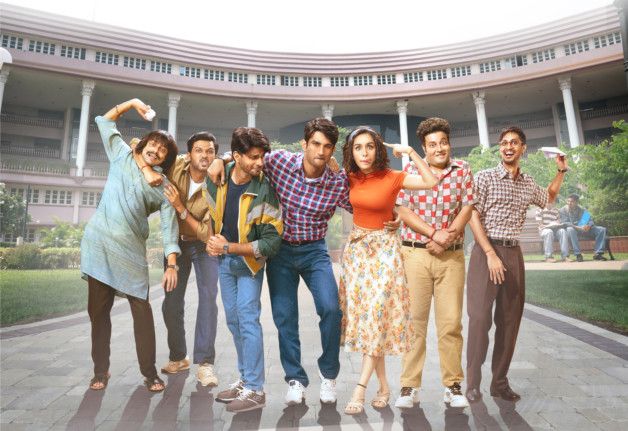
CHHICHHORE

THE MOVIE WITH BEST MESSAGE : NEVER QUIT

Chhichhore, the movie which taught us that, suicide is not right option, movies which taught us “ NEVER GIVE UP”, we just have to keep going, doing our best just keep going and enjoy your life cause these moments are never gonna come back.

In life things we love the most always disappears quickly and its life.

The film tells the story of Aniruddha “Anni” Pathak, a middle-aged divorcee whose son Raghav tries to commit suicide but survives, though he is in a critical condition for his unwillingness to live out of fear he would be called a “loser”. Desperate, he goes against the wishes of his former girlfriend turned ex-wife Maya’s wishes to recount his own journey in 1992 as a “loser” in a gang of six; as he continues along to convince Raghav, the other five receive news of the tragedy and decide to join their friend in his pain to complete a story they never fail to cherish as a lesson in their life.

Since childhood we are listening this, from our parents, family members and relatives, if you win this competition, I’ll buy you your fav dress or I’ll buy you motorcycle, if you get first rank in your school or college test, I’ll buy you smartphone, if you got selected or if you pass the test I’ll give you this or that or whatever you want I’ll give you, blab blah. But no one told us that if you didn’t won or if you got second rank or if you failed the test, it’s okay, it’s completely okay, atleast you have tried and worked very hard for this. What’s big deal if you didn’t got selected, the most important thing is, you tried and didn’t give up easily. Life is all about second change for them who don’t give up easily and try until they give their best. Let’s say that, it wasn’t your best and promise yourself that you will try very hard to give your best and trust yourself, if you think you can do it then you definitely can and one day you will definitely became successful and will achieve your dream.

Its human nature that we got disappointed very soon, we think like we did so much hard work for this and after all this what we got is failure.

Its life and in life things always don’t go as we planned, just trust yourself and try harder, you may struggle but it won’t matter anymore. If you feel like quitting, think about the reason why you started.

NEVER QUIT. NEVER GIVE UP. FLY IT TO THE END.

Here are some memorable dialogues from Chhichore we will always remember

1. “Tumhara result decide nahi karta hai ki tum loser ho ki nahi… Tumhari koshish decide karti hai!”

2. “Success ke baad ka plan sabke paas hai… lekin agar, galti se fail ho gaye… toh failure se kaise deal karna hai… Koi baat hi nahi karna chahta.”

3. “Hum haar jeet, success failure mein itna ulajh gaye hai… ki, zindagi jeena bhool gaye hai… Zindagi mein agar kuch sabse zyada important hai… toh woh hai khud ZINDAGI.”

4. “Doosron se haarke loser kehlane se kahin zyada bura hai…khud se haarke loser kehlana.”

5. “I am a failure, mera kuchh nhi ho sakta… But we forgot success doesn’t come at once.”

6. “Dost jinke sath hum haste hai, rote hai Par zindagi jeena sikhte hai.”

Examination Should Be Abolished

“Change of focus distress the mind”.

“An excess of everything is bad”.

In India, it is increasingly felt that education system is highly examination oriented. Exams and tests are held at regular intervals. Success in the exams is at index of once intelligence. Exams do cause a lot of stress rather it can be said that a student’s academic future simply depends on the marks scored by him. His admission in reputed college depends solely upon his performance in examination.

As a result, students finds studies stressful, monotonous and exasperating. Unachievable targets set by the parents and perceptors, unbearable peer pressure, cut throat competitions makes one question the usefulness of the examination system. In my sense, it is all futile. We cannot deny the fact that it is resulting into spate of suicides, absenteeism and even the percentage of dropouts has increased.

Exams should be cancelled and replaced by less stressful and more fruitful forms of assessments for several reasons including:

1)     They do not define one’s skills and capabilities: Thomas Edison once said: “Tomorrow is my exam but I don’t care, a single paper can’t decide my future” and we all know what Edison achieved is his life, other successful people followed such a path and if they cared much about exams, they surely would not have achieved what they did.

2)     They do not differentiate between students: Exams do not depend on someone’s preparation only, they are also dependent on their physical and mental health, and their social situation; you most luckily would not get a second chance if you developed a diarrhea during exam, such a factor would decide whether you’re among best or worst students no matter how intelligent you are, and how much you prepared for the exam. So you see how unfair the whole system is!

3)     Cheating: The broken educational system values more grades than learning and that what obliged students to try any means –sometimes illegal ones- to pass to the next level, history is full of people who try every trick to cheat at exam time, modern technology also has made it much easier for students to pass their tests with less efforts and students’ last issue nowadays is knowledge.

4)     Stress: Exams take a toll on a student’s body and mind through the forms of stress and anxiety and you might end up in a mental institution. Because of exams, a medical student was caught eating pages from one of their recommended texts since he failed to absorb information from taking his lectures too literally.

It is also felt that examinations don’t prepare students for life. They simply enable the students to become reasonably well informed, fact churning individuals. There should be a system of consistent evaluation throughout the year and, the examinee should not be tested only for facts and information acquired by him but should be tested for life skills. So, the examination system should be abolished instead of examinations being conducted at the end of the academic session.

Studies and Exams during Pandemic

Being a student is never easy. Living up to the parents expectations, constantly being compared to others with better grades and competing with fellow students and friends may sound easy but is really very difficult. Competition has been increasing day by day along with our population. Fees of schools and colleges have been increasing, seats for prestigious universities are decreasing and the number of people fighting for those seats are growing drastically.

Adding to that, this pandemic situation has taken a toll on students and teachers equally. But students being on the receiving end from each and every side. Teachers and parents used to scold children for spending time in front of TV’s, computers and mobile phones. They used to tell us that it is not good for our eyes and we may get headache, weak eyesight, etc. But now, the very same teachers and parents are asking us to spend hours in front of those small screens daily.

Photo by Ksenia Chernaya on Pexels.com

An average student has to spend a minimum of 6 hours a day in front of his mobile or computer screens to attend his online lectures. He then has to finish boatload of assignments and homework which have to be submitted the following day. Keeping all those aside, he even has to attend to exams physically, all the way to his examination hall. Now, a student has to risk his life to write an exam.

Being prepared mentally and physically for all those exams is not a cake walk for any student. He has to bear his headaches caused due to online classes, manage his workload of assignments and studies simultaneously. Preparing the notes on his own or studying again from his mobile will one day weaken his eyes and damage his nerves. Leading such a stressful lives and yet being scolded for bad results can only be possible by a student.

Take regular breaks from classes and try to lighten your workload. Ask anyone for help if you are feeling stressed or depressed. It is okay to take a temporary break from your life and enjoy everything. Update everything about yourself to any close friend to make him know if you are facing any difficulties. This is your life and no one will scold you for being you.

CIVIL SERVICES EXAMINATION

Nowadays, exams become the thing that brings us fear, anxiety, etc., Especially during this pandemic all our academic and studies has been changed from live classes to online classes. For some online classes can be a flex but not for all. Speaking of exams, we all know about competitive exams which has been conducted all over the world to students to get into some point and also it is set as an start for their higher studies and career. Exams like Civil services examination, Indian Economic Services examination, GATE etc.

WHAT IS CIVIL SERVICES EXAMINATION? :

Civil services examination is one among the top most competitive examinations conducted by Union Public Service Commission for recruitment to various civil services for the Government of India. There are around 24 services which come under civil service categories such as IAS, IPS, IFS, IRS etc.

NAME OF THE RECRUITING BODY:

Union Public Service Commission (UPSC)

TYPES OF SERVICES:

IAS, IPS, IFS and more than 20 services with 712 vacancies which also include 22 vacancies for benchmark disablility persons

CANDIDATES ELIGIBLITY:

The person who is taking up the exam should be 21 to 32 years old.

EDUCATION:

A degree holder (recognized by UGC/AICTE) of any major is a eligible person to take up the exam.

AGE LIMIT AND NO. OF ATTEMPTS:

The total no of attempts and age limit of exam are based on community which differ from one to one.

PROCESS OF EXAMINATION:

The eligible persons first level exam will be Preliminary exam with two papers total of 400 marks. The qualified person can move on to next level which is main exams with 9 papers total of 1750 marks. The last level will be the interview (oral) for 275 marks.

HOW TO PURSUE:

To pursue civil service and Defence service as a carrer the individual should deserve some reputation or achievement because civil service and defence service does not merely offer them another job for earning livelihood, it provides a great opportunity to realize their potentials. The person should enjoy every assignment, activity to really purse his/her job. They should have the satisfaction of serving the country, and eventually lead the country.

HOW A EXAM CAN FULFILL THE DREAMS OF SEVERAL GENERATIONS? :

In the recent years Civl services and other services have fulfilled dreams among several generations in India. Civil services have attracted a wider pool of talents. A large number of professionals led by Engineers, IT and Management professionals, doctors, lawyers and other meritorious students who could have got lucrative jobs with the corporate sector have started appearing in the civil service exams. The main reason of their attraction is the balanced combination of class, status and power. It is well known that all the civil services Examination through its various stages, tests a canfldidate’s suitability to top rank position of Indian bureaucracy.

REAL AIM OF AN CIVIL SERVICES EXAMINATION:

The exams aim is not only to provide them job by testing his/her subject knowledge but also his understanding and interpretation. The preparation of the exam entails much more than the academic grasp of the subject. An ideal candidate beside acquiring depth knowledge of the subject but also have to work upon building his logical reasoning. They should alsna work upon problem solving and writing skills along with developing cheerful and optimistic outlook towards life.

All these are secondary, first the person should be confident about themselve. They have to face more struggles than they could think about. The fear of rejection can make you to not to try. So first face that fear then face the problems.

Top 2 entrance exams other than JEE MAIN and JEE ADVANCE

Every students want to go IIT(Indian Institute of Technology) because IIT are the top prestigious engineering colleges in India. There are overall 23 IITs in India. The only way to get into IIT is JEE Advance, to write JEE advance you have to first qualify in JEE main then only you can write JEE advance. Around 15 lakhs of students every year write JEE main, in which 2,50,000 students qualify to write JEE advance. In that 2,50,000 lakhs students your rank has to come under 2,000 then only you can get admission in IIT. This blog is for those who doesn’t qualify in IIT. In this blog, I am going to tell you some other entrance exams other than JEE.

TOP ENTRANCE EXAMS OTHER THAN JEE MAIN AND ADVANCE

  1. BITSAT

Birla Institute of Technology and Science(Bits) is a private university in India that conducts BITSAT( Birla Institute of Technology and Science Aptitude test) entrance exam every year. It is a computer based test conduced every year to get admission in first year degree programs like BE(Bachelor of Engineering), MSc(Master of Science), and Pharma in Bits. It has three campuses in India(Hyderabad, Goa and Pilani) and one in Dubai(UAE).

Eligibility criteria

 1. Student should have passed class 12 from a recognized board with physics, chemistry and mathematics with 75 percent marks in each subject.

 2. Candidate should be proficient in English.

3. Candidates already studying in Bits are not eligible to write Bitsat.

About the Examination

  1. The duration of the exam is 3 hours.
  2. All questions are multiple choice question only.
  3. The exam has 4 section physics, chemistry, biology, and English proficiency and logical thinking.
  4. Medium of paper is English.

Marking scheme

  1. For every correct answer 3 marks are awarded.
  2. For every wrong answer 1 mark is deducted.
  3. For untried question no marks are awarded.

2. KVPY

KVPY stands for Kishore Vaigyanik Protsahan Yojana is a national level scholarship program is conducted to encourage students in basic sciences courses. It is funded of department of science and technology of India. Students who qualify in Kvpy will receive scholarship. Also if you qualify in Kvpy you can get admission in top institutions like IISc Bangalore, IISER, IIITs, and other Research institutes. Class 11th, 12th and those who in 1st year of there under graduation are eligible for the exam.

Eligibility criteria

  1. There are 3 streams in KVPY. They are SA, SX, and SB. Students in class 11 comes under SA stream, class 12 students come under SX stream and undergraduate 1st year students comes under SB stream.
  2. Students must be enrolled in science stream.

About the Exam

  1. The duration of the exam is 3 hours.
  2. The exam has 4 sections physics, chemistry, mathematics and biology.
  3. The paper consists of two parts, part 1 and part 2.
  4. Part 1 consist of 60 questions.
  5. Part 2 consist of 20 questions.
  6. The mode of the exam is Online.
  7. Medium of the exam is English and Hindi.

Marking Scheme

  1. The paper consists of 100 marks.
  2. In part 1, for every correct answer 1 mark is awarded.
  3. In part 1, for every wrong answer 0.25 mark is deducted.
  4. In part 2, for every correct answer 2 marks are awarded.
  5. In part 2, for every wrong answer 0.5 mark are deducted.

I hope you like this blog, if you like please like and rate it.

Jee mains 2021 exam date announced; Registration process begins for April/may session.

The most crucial engineering and medical entrance exams JEE Main and NEET UG have also been postponed due to the coronavirus outbreak.The February and March sessions of engineering entrance exam JEE Main 2021 were held while the April and May exams were postponed.

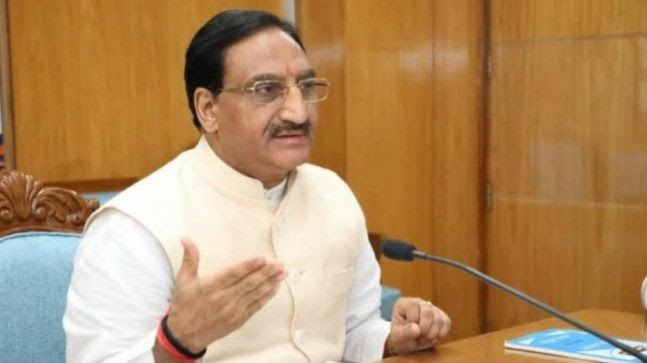
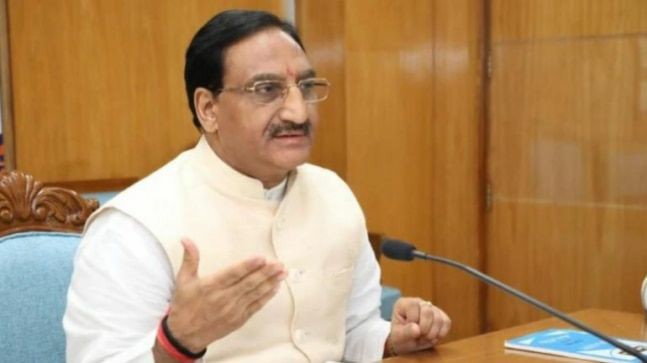
Education Minister Ramesh Pokhriyal has announced the exam schedule for JEE Main (April / May) sessions 2021 today. The minister made the announcement through a live session. The third session of JEE Main 2021 (April session) will be conducted from July 20-25. The fourth and last session of JEE Main 2021 (May session) will be conducted from July 27-August 2.Candidates can apply at jeemain.nta.nic.in. Those who wish to apply for the April session will be able to apply from tonight to July 8. JEE Main (May) session registrations will be open from July 9-12. Candidates will also be able to change their exam centres. Even to ensure social distancing amid the pandemic, the NTA has also increased the number of test centres for JEE Main (April and May) sessions. Earlier, the total number of test centres was 660. The test centres have now been increased to 828.

Social media reaction

Just within two hours of date announcement , the news started Trending over various social media plateform. On twitter the #jeemains2021reached in top ten trend within two hours only. Most of the people are making memes on the surprising announcement of exam date , while some are demanding for postponement of the exam .

What about jee advanced date announcement?

In this context, one thing has to be noted that the JEE Advanced 2021 Exam which was scheduled to take place July 3, 2021, also had to be postponed due to the COVID-19 situation in the country. However, recently, on June 25, 2021, IIT Kharagpur, the organising institute for JEE Advanced 2021 Exam has released the information brochure and list of documents that will be required for JEE Advanced 2021 Exam on the official website of JEE Advanced at jeeadv.ac.in. On the website, it is also mentioned that a new date for JEE Advanced 2021 Exam will be announced soon.

for more detail vist the link 👇

https://youtu.be/6x4aP17GXoE

https://www.dnaindia.com/education/report-nta-jee-main-2021-neet-2021-entrance-exam-dates-application-form-ntanicin-cbse-class-12-board-exam-2021-result-date-latest-updates-2898900