The Reserve Bank of India (RBI) on December 1, 2022, began the much-awaited trial run of India’s first retail central bank digital currency (CBDC) or ‘e-rupee’ in four cities—Mumbai, Delhi, Bengaluru, and Bhubaneswar—through eight participating banks.
CBDC is not expected to replace India’s premier instant payment solution, Unified Payment Interface (UPI), instead, it is touted to replace physical cash.
Experts pointed out that to carry out payments through UPI, individuals need to have a bank account and often a functioning debit card, but for accessing the e-Rupi wallet, there will be no need to have such a bank account.
UPI transactions are backed by physical currency. This means the payment will not go through if the user’s bank account does not have enough funds. The e-rupee, however, can be used for digital payments in lieu of currency/cash. “The e-rupi is issued by RBI and is a legal tender in itself. It need not necessarily be backed by physical currency.
Equity Research major Morgan Stanley (MS) on Monday said the Sensex could hit 80,000 by the end of 2023. This comes even as the Sensex closed at a record high of 62,504 after gaining 0.34 per cent, or 211 points. The Nifty rose 0.27 per cent, or 50 points, to close at 18,562. Nifty is just 53 points away from making a new lifetime high.
The bull-run in Indian equity markets is intact, said analysts at Morgan Stanley in a recent note, and expect the S&P BSE Sensex to hit 80,000 levels by December 2023 in their bull-case scenario, to which they have assigned a 30 per cent probability. From the current levels, this translates into an upside of nearly 29 per cent.
For this, while the corporate earnings are projected to compound 25 per cent annually over FY22-25, Morgan Stanley expects India to be included in the global bond indices, which could result in nearly $20 billion of inflows over the subsequent 12 months. That apart, commodity prices including oil and fertiliser are expected to correct sharply.
As their base-case, however, Morgan Stanley sees the S&P BSE Sensex to scale up to 68,500 levels – up 10 per cent from the current levels.
The United States Department of Treasury has taken off India’s name from the from its Currency Monitoring List of major trading partners. In its biannual report to Congress, the US’ Treasury Department conveyed that along with India, it had also removed Mexico, Thailand, Italy and Vietnam from the list. With this, seven economies that are now on the current monitoring list include Japan, China, Korea, Singapore, Germany, Malaysia and Taiwan.
The Currency Monitoring List closely follows the currency policies of some of the US’ major trade partners. If a country appears on the list, it is regarded as a “currency manipulator”. A ‘currency manipulator’ is a designation that the US government authorities give to countries that according to the US, engage in “unfair currency practices” for trade benefits. Thus, inclusion in the list simply means that the country is artificially lowering the value of its currency to get an advantage over others. This is because a lower currency value leads to reduced export costs from that country.
Removal of India from the list by the US’ Treasury Department can be seen as a positive news both in terms of market aspect and India’s monetary policy-making. If Indian market experts are to be believed, the development means that the Reserve Bank of India (RBI) can now take robust measures to manage the exchange rates effectively, without being tagged as a currency manipulator. This may also be a big win from a markets standpoint and also signifies the growing role of India in global growth.
The Indian rupee has been hitting new lows, week after week. From holding on to 74 against the US dollar in January to dropping to 83 last week — a double-digit fall in percentage terms in just 10 months — the rupee’s depreciation has not augured well for the economy. Economists caution that the currency could plunge further in the coming months before settling down. Some forecasters argue that the rupee could rebound and gain strength in the next fiscal year.
The fall of the rupee has been precipitated by global factors and an unusual strengthening of the dollar against almost all major currencies of the world. While the rupee has performed way better against the greenback than biggies such as the pound and the euro, the runaway dollar can’t be taken lightly since it has a massive fallout on India’s import bills and inflation.
The rupee will fall further against the US dollar over the rest of the year, a Reuters poll last week showed, setting up the currency for its steepest annual decline in at least nine years due to a widening domestic trade balance and surging US interest rates.
It is likely to fall further to 84.50 by December, according to the mean and median forecasts of a poll of 14 bankers and foreign exchange advisors. The estimates in the poll ranged between 83.25 and 86, showing a broad consensus that the Rupee would not recover this year.
Until the beginning of this year, the country had saved enough for the rainy day, because of strong capital flows in the past. However, those reserves are depleting fast. India lost nearly $85 billion of its forex reserves in the first half of the fiscal year, the second biggest depletion among major emerging market (EM) peers during the period.
India’s forex reserves were $528.4 billion as of 14 October, the lowest since July 2020, and sharply down from the record $642.4 billion last year. The rupee has crashed more than 10% against the US dollar this year and slipped below 83 for the first time in past few weeks.
To help arrest rupee’s record fall, the Reserve Bank of India has also burned $114 billion from its forex coffer, triggering concerns on this front as well. The central bank has however attributed about two-thirds of the decline to valuation effects. The decline of the forex reserves cannot be solely attributed to a central bank’s intervention to defend the currency against the dollar.
There has been a sharp depletion of forex reserves in the last few months, but what is comforting is India’s high level of reserves that has enabled it to withstand the sharp depletion without any major panic so far. Another comforting factor is the country’s low external debt (20% of gross domestic product) and the short-term debt as a share of total external debt is around 20%.
In twin blows to Indian economic revival, higher food prices drove retail inflation to a five-month high of 7.4 per cent while factory output fell for the first time in 18 months. This relates to data of september month.
The second consecutive month of rise in consumer price index (CPI)-based inflation will add to the pressure on the Reserve Bank of India (RBI) to again raise interest rates to tame high prices.
Inflation has been above the targeted zone for the ninth month in a row and as per statute, the RBI will now have to explain to the government in writing why it failed to keep prices below 6 per cent.
This is the ninth consecutive month where the inflation print has remained above the upper band of 6 per cent and the second successive quarter where the average is higher than 7 per cent.
Irregular rainfall is said to be the primary reason behind higher inflation in vegetable and fruits. While inflation in cereals has also inched up, the steps taken by the government and a reasonably healthy Kharif output are expected to address the concerns behind the further hike in prices.
E-rupee or digital rupee is a digital version of the Indian rupee that the RBI is exploring. The RBI has proposed to issue two versions – wholesale for interbank settlement and retail for the public. According to the indirect model proposed by the RBI, you will hold the digital rupee in a wallet with a bank or service provider.
The Reserve Bank of India on 7th october said it will soon commence the pilot launch of digital Rupee or e-Rupee for specific use cases as it tests digital currency in India.
“As the extent and scope of such pilot launches expand, RBI will continue to communicate about the specific features and benefits of e-rupee, from time to time,” the central bank said in a concept note on Central Bank Digital Currency (CBDC).
The concept note also discusses key considerations such as technology and design choices, possible uses of the digital rupee, and issuance mechanisms, among others.
The Indian rupee on 22 September fell to all-time low of 81.20 against US dollar in early trade on the back of US Treasury yields climbing to fresh multi-year highs and dollar demand from importers. Currently the rupee had suffered its biggest single session percentage decline since February, due to lack of aggressive intervention by the Reserve Bank of India (RBI) and a very U.S. hawkish Federal Reserve rate outlook, traders said.
One of the reasons that RBI couldn’t rescue the fall in the currency was inadequate liquidity in the banking system which is currently in deficit. RBI’s intervention in the spot market could make the case worst for the banking system liquidity amid short-term interest rates going higher.
The Central bank in a an attempt to handle the depreciating rate of rupee, frequently burnout forex. In just eight months between mid-January and mid-September this year, forex reserves have depleted by almost $90 billion, or approximately an average of $11 billion a month. For the week-ended September 16, India’s forex reserves stood at $545.65 billion compared with $634.97 billion in the week-ended January 14.
However, faced with dwindling forex reserves, the Reserve Bank of India (RBI) may not be aggressive in defending the Indian currency and allow it to catch up with other emerging market (EM) currencies that have dropped more.
United Payment Interface (UPI), a term unheard or unbelieved until April 2016, but in Modern India, UPI is the flag-bearer of the ongoing Financial Revolution.
From a tea vendor selling a Rs 10 Cutting Chai to a showroom with a pricey product range, a large section of our society has adapted to UPI. It actively utilises the mechanism for seamless payments. In the early stages, a year after the launch of UPI, the total number of payments was 6% compared to 36% of Card payments. However, in FY 2021, UPI’s share expanded to 63%, while the percentage of Card payments shrunk to 9%. The progressive advancement of UPI has not just constructed an efficient payment instrument, but it has connected millions on an inclusive and well-structured Digital platform.
It must be noted that the underlying infrastructure of Immediate Payment Service (IMPS) has been paramount for UPI’s grand success. Adopting a UPI ID rather than entering bank account numbers and IFSC codes has made transactions effortless. Integration with Bharat Bill Payment System (BBPS) for recurring Bill Payments has been crucial in creating an innovative platform.
The Indian real-time payments market is well developed when directly compared with other markets like the US, the UK, Canada and Australia, according to a report published by ACI Worldwide. The report also forecast that the share of all transactions occurring via real time instrument was expected to increase to 70.7 per cent in 2026 from the present 31.3 per cent. The report predicted that in 2026, business and consumer level benefits due to India’s real time instant payment was expected to reach $92.4 billion, adding, that it will have an impact of $54.9 billion or 1.12 per cent in India’s GDP.
Inflation is a general progressive elevation in the prices of services and goods within the economy. It denotes the rate of prices’ elevation within a specific duration. Inflation reduces the purchasing power of money since every unit of currency buys lesser services and goods. Generally, when inflation occurs, the income usually stays the same; however, the level of spending increases. The definition of inflation is the reduction of the purchasing power of a particular currency over a specific timeframe. Inflation is quantitatively estimated by reflecting the elevated average level of prices of selected services and goods within an economy over a given duration. Inflation in economics refers to the collective elevation in money supply, in prices or money incomes. Thus, inflation is an excessive increase in the general level of prices. The inflation concept in common parlance outlines inflation as a quantifier of the elevating rates of services and goods within the economy. In this light, inflation is deemed to occur due to an increase in prices when there is an elevation in the cost of production. However, inflation can occur when there is a demand for particular services and products because the buyers are willing to purchase the product at higher prices. Inflation also declines the value of money.
Types of Inflation.
Demand-Pull Inflation
Demand-pull Inflation emerges when the total demand for goods and supply is higher than the capacity of production in the market. An increase in demand with constant rate production creates a demand-supply gap. In this type of Inflation, demand is much higher than the production, which in turn increases the prices of goods and services.
Cost-Push Inflation
Sudden shortfall of supply leads to a surge in the cost of production, which increases the rate of Inflation. For example, soap and shampoo prices may rise if the chemicals used in making these become costlier. This is known as cost – pull Inflation.
Built-in Inflation
When the cost of wages of the workers increases, to keep up with their demand, the firm increases the cost of production, which leads to the rise in the cost of goods.
Inflation in India:
In India, the ministry of statistics and program implementation measures Inflation. India’s central bank i.e., The Reserve Bank of India (RBI), limits the inflation rate through its monetary policy by using tools such as repo rate, the reverse repo rate, CRR, etc. Inflation is measured by two indices in India, which is the Consumer Price Index (CPI) and Wholesale Price index (WPI). CPI and WPI measure retail and wholesale level price changes, respectively. CPI measures the rise in prices of commodities and services such as medical care, food, education, etc. WPI captures goods or services sold by a business to smaller businesses for selling further.
India’s forex reserves are at an alarmingly low stage and have dropped with the aid of 23 months of use. For the week ending September , India’s overseas foreign exchange (forex) reserves fell to $553. The lowest level in over a year, consistent with figures from the Reserve Bank of India (RBI).
The Reserve Bank of India saved its currency and intervened to save the rupee from falling beyond eighty to the greenback at some point every week whilst the greenback surged to over-decade highs, inflicting India’s forex reserves to plummet to their lowest stage in more than a decade and staining the third consecutive week of decline.
The rupee has fallen from around seventy-four to close to eighty against the greenback, a trend that experts say the RBI has maintained vehemently, echoing a drop in FX reserves of slightly more than sixty-seven billion since the Ukraine disaster and more than eighty billion from all-time highs last year. The effect of the appreciation or depreciation of non-greenback currencies like the Euro, British Pound Sterling, and Japanese Yen held in forex reserves is blanketed within the overseas forex belongings expressed in US dollars.
Experts say that the forex reserves have witnessed a fall as a result of the Reserve Bank of India’s (RBI) intervention to rein the currency volatility. In 2022, the rupee has declined by about 7 per cent, which has also made imports costlier. Even though India’s forex reserves have seen a decline in the past few months, experts say the situation is not at all alarming. Experts say the country has a significant amount of forex reserves.
The RBI discussion paper issued earlier this month said, UPI as a fund transfer system is like IMPS and therefore, it could be argued that the charges in UPI need to be similar to charges in IMPS for fund transfer transactions.
To clarify, Ministry of Finance quoted “UPI is a digital public good with immense convenience for the public and productivity gains for the economy. There is no consideration in government to levy any charges for UPI services,” the Ministry of Finance said in a statement.
The clarification came amid speculations that UPI transactions could be charged, as a discussion paper released by the Reserve Bank of India (RBI) on August 17 sought feedback related to the subject. “Charges for payment services should be reasonable and competitively determined for users while also providing optimal revenue stream for the intermediaries,” the central bank said in a release. The feedback received would be used to guide policies and intervention strategies.
In the context of UPI, the RBI, in the discussion paper, has questioned if UPI transactions are charged, they should be administered by the regulator, or whether they should be market determined. While clarifying it was not considering any service charge on UPI transactions, the finance ministry reiterated its support for the further adoption of the digital payments system.
When we hear the term ‘goal’, the very first thing that comes to our mind is a certain objective that a person desires to achieve at some point of time of his life owing to his determination, capability and will power. We all have certain goals in our life. One of the most common goals that everyone shares is ‘to achieve financial stability’. Speaking about financial stability, here, we put forward the idea of being monetarily sufficient to lead a stable life without facing any issues related to money. Financial goals do vary from person to person. Although each one’s goals vary, it is not a compulsion or a possibility at everyone’s part to fulfill those goals. This is due to the difference between the determination and capability of different people. There are certain cases where a person sets much high of a goal than what he is capable of achieving, resulting in nothing but failure and discouragement. One has to keep certain things in the mind while setting the financial goals.
Given below are few basic points that a person should keep in mind while setting any financial goal:
1. When should a person start setting a financial goal? There is no particular age as to when a person should set a financial goal. The age can be as low as 16 to as high as 25-30. The most preliminary thing to be kept in mind is how much the person is aware of his/ her capabilities and validness of his/ her goals. Of course, this can be a bit confusing. This leads to our next point.
2. Know your capabilities: This is the very thing a person should be aware of while setting his/ her financial goal. There is no point of setting a very big goal irrespective of one’s capabilities, as it will result in nothing but inability to fulfill the goal followed by sheer disappointment. It is good to step out of the comfort zone but that does not mean setting higher goals and falling short in completing them.
3. Evaluate the validity of your goal and the deadline set to achieve the same: This is the second most important thing one should keep in mind. A person should set a valid goal that ensures success owing to his/ her capabilities and determination to complete them. It is also important to keep the deadline practical. There is no use of setting a high goal to be completed within a year or two but falling short in completing so due to lack of time and skills. Knowing one’s capabilities and evaluating the validity of his/ her goals go hand in hand.
4. Have appropriate knowledge regarding financial benefits of your goals: Having appropriate idea about how much benefit one is supposed to gain from his/ her goals is another important point one should keep in mind. Thoughts such as “Whether the goal will only provide short term benefit?” or “whether it will provide a long-term benefit?” must be taken into consideration.
5. Take help of a person who has already succeeded in achieving his/ her financial goals: Having some advice from experienced person can help a lot in setting the financial goal. With proper guidance it becomes easier to achieve one’s goal. For example, a student while facing a problem in mathematics asks the respective subject teacher his doubt and not to someone who specializes in any another subject. Similarly taking help of someone who has already achieved financial stability will give a person a true picture of his/ her goal validity and fulfillment.
6. Start investing during an early age and start from a small amount: Investment in various share markets, stock markets and mutual funds is the new age shortcut way of achieving financial goals. No doubt these markets have innumerable number of risk factors. Thus, first try investing in small amounts in different firms and thereafter go for any big amount. Also, investing at an early age is more beneficial than investing at the later age.
7. Do not make any hasty decisions while doing an investment: Do not make quick investments in the mentioned areas such as, mutual funds or share markets, without having proper and adequate knowledge about the entire thing. Do not fall prey to any fraudulent calls or messages and make quick decisions.
8. Consult a financial advisor, if necessary: While facing any difficulties, one can always take help of a verified financial advisor while setting his/ her financial goals. As stated previously, these are a few basic points to be kept in mind while setting a financial goal and actually being able to achieve them. One can always delve deeper into the ocean of knowledge before setting his/ her goal and making the achievement possible. Setting of goals on a long-term basis is very helpful in the modern world which is full of uncertainty and risk.
Wherever you go, you hear the terms of budget, loans, bonds, stocks, crypto, and many more. Finance has become one of the highest searched topics that people want to learn. People want to get control, build different streams of income, build passive income, buy real estate, buy bonds and increase their wealth. Compared to 1980s to the present day, finance has developed and spread its branches across the world. With technology, finance has become easier to access.
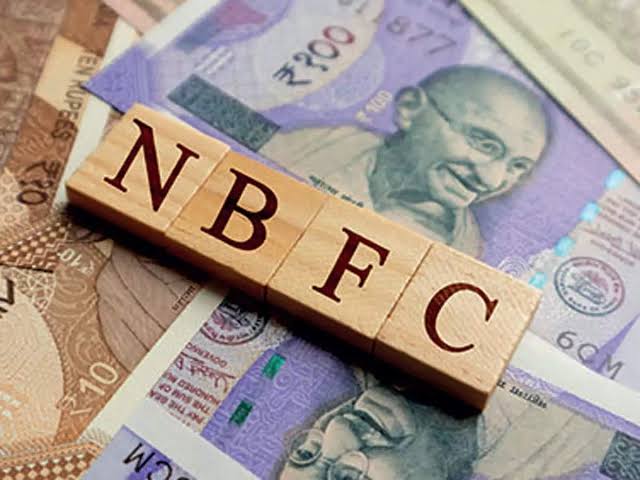
Small NBFCs( Non-Banking Financial Corporations) have created apps that people can get for small amounts of loan. From 100₹ to 1,00,000₹, these corporations have found an untouched market in loan requirements, small loans. The term may be quite little, but it has huge potential. A lot of people take loans or borrow money from loan sharks at high interest rates, but do they always have money to give?
This question itself has created this part of market. With technology, payments have become quicker and able to move in a matter of minutes. NBFCs found this to be their best advantage of all time. People sign up on these apps with all their details and take the loan at exorbitant rates. They charge interest for each passing day ( 3% or more) and disburse the amount with the click of a button.
As many people are, no one wants to go through the terms & conditions because it is long and boring. Here lies the secret to the destruction of your reputation between you and the world. Many think that these apps are to be taken simply and not to be minded when the payment date comes. These NBFCs aren’t banks so they don’t give repeated notices for the payment, instead, they send your contacts all your details, with the amount of money you have taken and ask them to pay. They use godawful ways to get the payment.
Few messages are so disgusting and low that it breaks your reputation into pieces. You cannot rebuild your reputation and it keeps going on till the payment has been done. It’s a small yet such powerful blow that you cannot recover from. After the payment has been made, they don’t send a message stating that you have made the payment which doesn’t help you in any way but makes you droop down more. These interest rates on meager amounts is how they make the most money on.
Every time you borrow money, you are robbing time from your future self.
Nathan W. Morris
Loans are not a joke. You learn from the mistakes you make. Scars are lessons for what we have gone through. Learn from your experiences, teach them to your kith and kin, no matter what they are aged. If an 18 year old with a bank account, comes across the app and doesn’t know the effect of not paying on time, it’s not a wound that they can recover from easily.
Teach your younger ones about finance, how to maintain, when and where to use them but not teaching them leads to a higher damage. Be careful and do not go down this path unless you know how to come back from it.
Wherever you go, you hear the terms of budget, loans, bonds, stocks, crypto, and many more. Finance has become one of the highest searched topics that people want to learn. People want to get control, build different streams of income, build passive income, buy real estate, buy bonds and increase their wealth. Compared to 1980s to the present day, finance has developed and spread its branches across the world. With technology, finance has become easier to access.
Small NBFCs( Non-Banking Financial Corporations) have created apps that people can get for small amounts of loan. From 100₹ to 1,00,000₹, these corporations have found an untouched market in loan requirements, small loans. The term may be quite little, but it has huge potential. A lot of people take loans or borrow money from loan sharks at high interest rates, but do they always have money to give?
This question itself has created this part of market. With technology, payments have become quicker and able to move in a matter of minutes. NBFCs found this to be their best advantage of all time. People sign up on these apps with all their details and take the loan at exorbitant rates. They charge interest for each passing day ( 3% or more) and disburse the amount with the click of a button.
As many people are, no one wants to go through the terms & conditions because it is long and boring. Here lies the secret to the destruction of your reputation between you and the world. Many think that these apps are to be taken simply and not to be minded when the payment date comes. These NBFCs aren’t banks so they don’t give repeated notices for the payment, instead, they send your contacts all your details, with the amount of money you have taken and ask them to pay. They use godawful ways to get the payment.
Few messages are so disgusting and low that it breaks your reputation into pieces. You cannot rebuild your reputation and it keeps going on till the payment has been done. It’s a small yet such powerful blow that you cannot recover from. After the payment has been made, they don’t send a message stating that you have made the payment which doesn’t help you in any way but makes you droop down more. These interest rates on meager amounts is how they make the most money on.
Every time you borrow money, you are robbing time from your future self.
Nathan W. Morris
Loans are not a joke. You learn from the mistakes you make. Scars are lessons for what we have gone through. Learn from your experiences, teach them to your kith and kin, no matter what they are aged. If an 18 year old with a bank account, comes across the app and doesn’t know the effect of not paying on time, it’s not a wound that they can recover from easily.
Teach your younger ones about finance, how to maintain, when and where to use them but not teaching them leads to a higher damage. Be careful and do not go down this path unless you know how to come back from it.














 Eduindex News
You must be logged in to post a comment.