Bandwagon Effect

What Is the Bandwagon Effect?

The bandwagon effect is a psychological phenomenon in which people do something primarily because other people are doing it, regardless of their own beliefs, which they may ignore or override. This tendency of people to align their beliefs and behaviors with those of a group is also called a herd mentality. The term “bandwagon effect” originates from politics but has wide implications commonly seen in consumer behavior and investment activities. This phenomenon can be seen during bull markets and the growth of asset bubbles.

Understanding the Bandwagon Effect

The bandwagon effect arises from psychological, sociological, and, to some extent, economic factors. People like to be on the winning team and they like to signal their social identity. Economically, some amount of bandwagon effect can make sense, in that it allows people to economize on the costs of gathering information by relying on the knowledge and opinions of others. The bandwagon effect permeates many aspects of life, from stock markets to clothing trends to sports fandom.

Politics

In politics, the bandwagon effect might cause citizens to vote for the person who appears to have more popular support because they want to belong to the majority. The term “bandwagon” refers to a wagon that carries a band through a parade. During the 19th century, an entertainer named Dan Rice traveled the country campaigning for President Zachary Taylor. Rice’s bandwagon was the centerpiece of his campaign events, and he encouraged those in the crowd to “jump on the bandwagon” and support Taylor. By the early 20th century, bandwagons were commonplace in political campaigns, and “jump on the bandwagon” had become a derogatory term used to describe the social phenomenon of wanting to be part of the majority, even when it means going against one’s principles or beliefs.

Consumer Behavior

Consumers often economize on the cost of gathering information and evaluating the quality of consumer goods by relying on the opinions and purchasing behavior of other consumers. To some extent, this is a beneficial and useful tendency; if other people’s preferences are similar, their consumption decisions are rational, and they have accurate information about the relative quality of available consumer goods, then it makes perfect sense to follow their lead and effectively outsource the cost of gathering information to someone else.

However, this kind of bandwagon effect can create a problem in that it gives every consumer an incentive to free ride on the information and preferences of other consumers. To the extent that it leads to a situation where information regarding consumer products might be underproduced, or produced solely or mostly by marketers, it can be criticized. For example, people might buy a new electronic item because of its popularity, regardless of whether they need it, can afford it, or even really want it.

Bandwagon effects in consumption can also be related to conspicuous consumption, where consumers buy expensive products as a signal of economic status. 

Investment and Finance

Investing and financial markets can be especially vulnerable to bandwagon effects because not only will the same kind of social, psychological, and information-economizing factors occur, but additionally the prices of assets tend to rise as more people jump on the bandwagon. This can create a positive feedback loop of rising prices and increased demand for an asset, related to George Soros’ concept of reflexivity.

For example, during the dotcom bubble of the late 1990s, dozens of tech startups emerged that had no viable business plans, no products or services ready to bring to market, and in many cases, nothing more than a name (usually something tech-sounding with “.com” or “.net” as a suffix). Despite lacking in vision and scope, these companies attracted millions of investment dollars in large part due to the bandwagon effect.

Financing Decisions

Financing decisions are concerned with the amount of finance to be raised from various long-term sources of funds like, equity shares, preference shares, debentures, bank loans etc and its impact on the capital structure of the organisation.

It is one of the three main decisions of Financial Management – Investment decisions, Financing decisions and Dividend decisions.

Factors affecting financing decisions

While making financing decisions, one must focus on the composition of funds from various long-term sources. These decisions involve:

  1. Decision whether or not to use a combination of ownership and borrowed funds.
  2. Determining the ratio in which ownership and borrowed funds should be kept.

A firm should have an appropriate mix of debt as well as equity.

  • The disadvantage of having Debt is that it involves Financial Risk which is the risk of default on payment or interest on borrowed funds and the repayment of principle amount
  • However, tax benefit on interest payments of the debt reduces its cost, making it cheaper than equity.
  • In order to avail the benefits of debt wisely, the cost of debt should be less than the rate of return on the capital.
  • Shareholders’ funds have no fixed commitment in the aspects of repayment of capital or payment of returns.

Factors to be considered to make financing and capital structure decisions are listed below-

  1. Interest/dividend pay-out: Debt involves compulsory interest payments whereas there is no compulsion to pay dividend to equity shareholders. However, the company should also keep its dividend policy in mind, in case they prefer paying dividends in order to retain their shareholders.
  2. Tax deductibility– Interest payments are tax deductible which reduces its overall cost.
  3. Dilution of control– In case the existing shareholders want to retain the complete control of business then finance can be raised through borrowed funds or preference shares but when they are ready for dilution of control over business, equity shares can be used for raising finance.
  4. Risk and floatation costs: More risk is associated with borrowed funds as compared to owner’s fund as interest is paid on it and it is also repaid after a fixed period of time or on expiry of its tenure. The cost involved in issuing securities such as broker’s commission, underwriter’s fees, expenses on prospectus etc. Is called flotation cost. Higher the flotation cost, less attractive is the source of finance.
  5. Feasibility & Cash Flow position: In case the cash flow position of a company is good enough then it can easily use borrowed funds.
  6. Payment schedule: In case the company wants to go for debt, then the payment schedule, tenure and total costs (principal+interest) should be analysed and compared with other options. Longer the schedule, greater the interest so in case the schedule is too long, the terms should be modified or other financing options can be considered.

Different options and compositions of debt and shareholder’s fund can be analysed to find the one with the lowest weighted average cost (WACC). This way the company enjoys the tax benefit advantage of debt and non-compulsion of dividend payments advantage of equity.

However, it is important to analyse costs after factoring in the time value of money so the decision-maker gets a realistic picture of the cost of capital, on the basis of which, informed decisions can be made.

Women’s Financial Security Post COVID-19

The daunting number of jobs lost by women during the coronavirus pandemic is only the beginning of the story.Yes, it’s widely recognized that women have taken the brunt of the nation’s total job losses — they’re still down 5.3 million vs. 4.6 million for men even with the economy having rebounded somewhat off its COVID-19 lows — largely because working remotely isn’t possible in the hard-hit businesses like restaurants, hotels and retail stores where females dominate. And, yes, it’s also recognized that many moms were forced to drop out to look after their kids after schools went remote — with nearly four out of 10 currently working women still actively considering doing likewise, according to a recent survey by Fidelity Investments.But what’s not talked about as much is this: the potential long-term consequences of having had their financial security and career prospects upended by the pandemic.”Being in a position to take a career break by choice can be considered a privilege,” said Lorna Kapusta, head of women investors at Fidelity. “But we know for many in times of crisis like this one that stepping back from work is more like a necessity. Either way, it’s critically important to understand the decision’s impact on your savings today and into the future, so you can take steps to address it.”Fidelity conducted an analysis of the estimated effect even a one-year career break could have on retirement savings, and the results are staggering.Exhibit No. 1: Say you took your “break” at age 35 when you’d been earning $50,000 a year and had to subsequently accept a slightly lower salary just to get back into the workforce. Assuming a conservative 4.5 percent annual growth rate and factoring in lost retirement contributions — including a 3 percent match from your ex-employer on top of what would have been your own 9 percent contribution — your 401(k) would be $106,469 lighter ($733,325 vs. $839,594) by the time you turned 67.Exhibit No. 2: Substitute a $75,000 salary and the difference is even bigger ($159,702, or $1,099,679 vs. $1,259,381).Exhibit No. 3: And bigger still at $100,000 ($212,936, or $1,466,233 vs. $1,679,169).Plus, don’t forget there’s also the matter of lost Social Security contributions. “Your benefit is calculated based on your top 35 years of earnings,” said Kapusta. “So if you work fewer years, have a lower salary, or don’t reach the minimum eligibility, you may have a smaller check when it comes time to collect in retirement.” All of which helps explain the impetus for launching Fidelity’s weekly Q&A discussion series called “Women Talk Money.” Airing live on Zoom every Wednesday at noon ET and available later on demand, each 30-minute interactive episode uses viewer-submitted questions to address a different topic each week, ranging from job loss to health care to the hidden costs of caregiving.”It’s real talk to help answer women’s most pressing money questions right now — no jargon or judgment,” said Kapusta, noting that the program’s six-part, archived video series is also must-see viewing for those who want to learn the key factors that can significantly impact women’s financial futures.Finally, some historical perspective. When the Labor Department first started tracking such data back in 1948, only one third of women held jobs. That number had nearly doubled by the late 1990s.And today? The ratio of women working has fallen below 57 percent for the first time since 1988.

INTEREST RATES issues

News:

Quarterly reset of interest rates on small savings schemes is due on June 30.

Small savings schemes

• A set of saving instruments launched by the Government of India.

Examples: Public Provident Fund (PPF), National Savings Certificates (NSCs), the Senior Citizens Savings Scheme (SCSS), and the Sukanya Samriddhi Scheme etc.

• Popular with fixed income investors- offer much higher
interest rates than bank fixed deposits.

Lowering of interest rates .

• Will help the government reduce costs- will hurt senior
citizens and the middle-class. • Common people already suffer from inflation.
• Retail inflation was 6.2% through 2020- 21.
 Inflation is expected to stay around 5.5%-6% through 2021-22.

• Rising inflation, declining savings rates and loss of income- disastrous.

• Fall in small savings rate- discourage small investors.
 Small savings- a key source of financing the government deficit.
 In 2021-22, borrowings through small savings- pegged at Rs 3.91 lakh crore.
Public Provident Fund (PPF).

• Introduced in 1968- to mobilize small saving in the form of investment, coupled with a return on it

• Interest earned on the

Public Provident Fund
is tax-free.

• Tenure: for 15 years and can be extended for 5 years.

• Subscriber can make one withdrawal during a FY after five years excluding the year of account opening.

• Amount of withdrawal- up to 50% of balance at the credit at the end of 4th preceding year/at the end of preceding year, whichever
is lower.

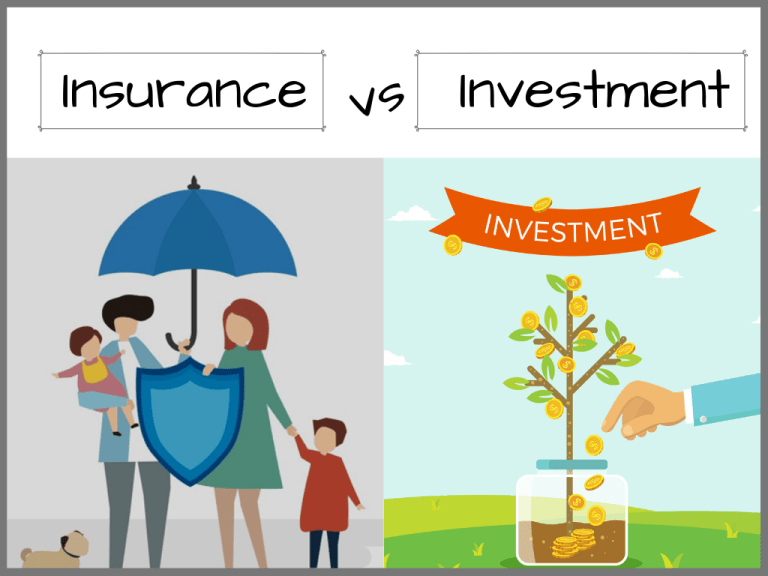
INSURANCE VS INVESTMENT

In today’s world, it is very easy to confuse Insurance with Investment. One might feel that he/she is investing in their future and decreasing their future financial burden because he/she purchased an insurance policy. Let’s take a look at the definition of insurance and investment.

Insurance refers to a contract or policy in which an individual or entity receives financial protection or reimbursement against losses. It protects the insured against risk of losses or damage.

Investment, on the other hand, refers to an asset or item acquired with the goal of generating income or appreciation. For example, real estate, mutual funds, shares etc.

With the increase in types of insurance policies and persuasive insurance sales representatives, people tend to think of insurance as investments. However, Insurance merely provides protection in the event of loss, which may or may not arise. In case of no loss or damage, sum total of all the insurance premium paid is profit for the insurance company.

On the other hand, the main purpose of an investment is to generate income by providing returns (dividends and interest) and/or capital gains (value appreciation; increase in price). Insurance does not provide any substantial returns. It merely provides reimbursement in the event of loss/damage and therefore, it is not an investment.

Do you need Insurance? If yes, what kind?

Insurance planning is essential to protect against different kinds of risks and to be financially prepared in case of loss or damage to life or property. However, it should not be used a means to invest.

There are different types of insurance which can be broadly classified into Personal, Property and Liability. There are three types of insurance that you must have to protect against risk, not as an investment: Health insurance, Term life insurance and Automobile insurance.

Health insurance is a must to ensure that in case of an accident or injury, hospital and medical bills don’t eat away your savings.

Term life insurance ensures that in case of death of the earning member of the family, the family has enough to survive for a substantial period of time. Term life insurance has a fixed period and hence, has a very low monthly premium with a decent coverage. However, if the policy expires and the insured is still alive, the insured does not get any amount back. So, this policy should only be taken by the earning member at the right life stage in case he/she does not own enough assets to leave behind for his/her family.

Automobile Insurance (third party) is mandated by the Government of India on the purchase of a vehicle and hence, every vehicle owner should have one.

Other types of insurances sold and bought in the name of ‘investment’ like Endowment plans, Money back policy and the new policy called Unit-linked insurance plans (ULIP) which allows you to invest in the stock market should be avoided at all costs.

It is much more profitable to invest in the market through mutual funds or investor’s Demat account than to do the same through insurance companies. The rate of return in the market is much higher and it doesn’t cost as much as Insurance.

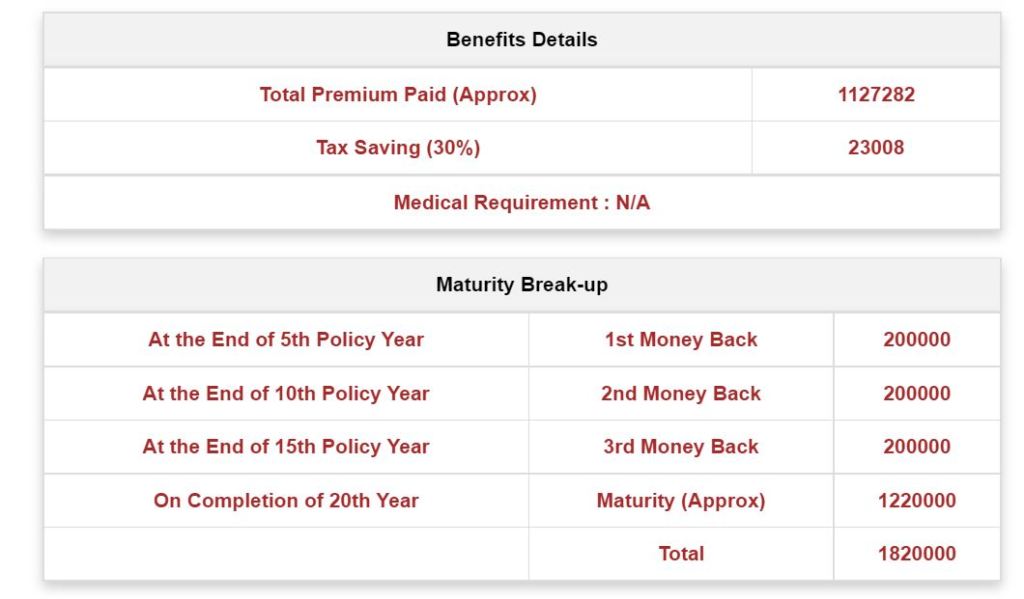
For example, if you buy Money Back insurance plan with a policy term of 20 years with ₹10,00,000 assured cover, the monthly premium calculated on LIC premium calculator comes out to be around ₹6300-6500 per month.

As calculated above, the total premium paid is ₹11,27,282 and the total amount received is ₹18,20,000. The total profit/return (approx.) is only ₹6,90,000 in 20 years. The return on investment (Return/Total Amount paid x 100) is only 61%.

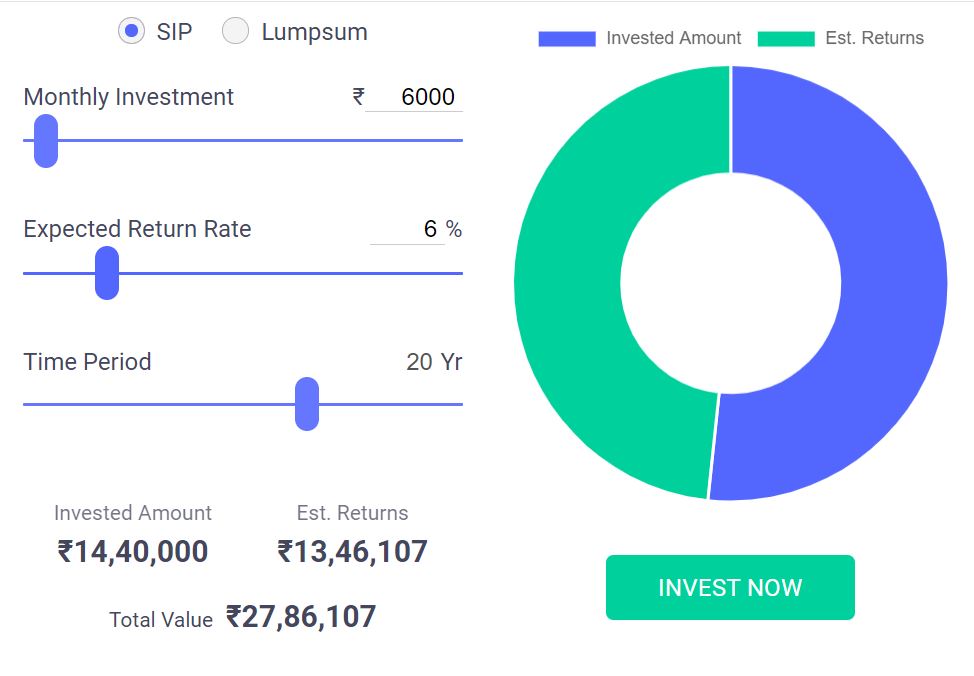
However, if the same amount is invested in SIP of any instrument with a return rate of just 6% for the same time period (20 years), the returns (calculated on Groww SIP calculator) are much higher.

₹6000 rupees invested monthly in any instrument with a return rate of only 6% for 20 years gives a return of ₹13,46,000 making the total value of the investment ₹27,86,000. The ROI (Return/Total Amount paid x 100) in this scenario is 93%.

Conclusion

Although Insurance is an essential part of Financial Planning to protect against different kinds of risks which varies from person to person, it should not be mixed with Investment. For greater returns and growth, investors should directly invest in the market or in any other instrument which suits their risk appetite and capacity.

Mutual Funds 1O1- Advantages

Mutual Funds collect small sums of money from a large number of investors. This becomes a large pool of money which is invested into the market and the returns generated are distributed among the investors proportionately.

There are many advantages of investing in Mutual Funds:  

  • Professional Management: Investing directly in Equity is very risky for those who are not experts and lack the ability to track the market regularly.  Mutual Funds are managed by professionals with adequate  qualifications and experience.
  • In house research is undertaken to aid the fund manager. 
  • Top management involvement to guide the investment policy and the fund house philosophy.
  • Competitive performance resulting in constant improvement of portfolio and NAVs are disclosed at record timings.  
  • Diversification: Diversification is nothing but investing your money across different types of investments. An investor with a limited amount of funds might be able to invest in only one or two stocks/bonds. However, Mutual Funds invest in a no. of companies across a broad cross-section of industries and sectors. This diversification reduces the risk because it is unlikely that all the stocks decline at the same time. So Unit holders of a mutual fund achieve this diversification with very less money that an investor cannot do on its own.  
  • Low Cost: Mutual Funds invest huge amounts of money on a regular basis. Therefore they pay very less % of the amount such as brokerage, depository and other types of charges as compared to the individual investors. So mutual funds provide a cost efficient way to invest in the financial market. 
  • Transparency: Mutual Funds have to publish their NAV on a daily basis and they have to periodically share the portfolio investments with the investors. They offer transparency to investors and have to publish their results semi-annually. Any important change in the scheme has to be duly informed to investors. 
  • Attractive Returns: Mutual Funds give very attractive returns in the long or medium term because fund managers invest in stocks after considering the fundamentals, future plans of companies with the help of trained research teams. They use every possible technique to save the investors’ money such as Hedging. So it’s a very good investment avenue used in the financial planning process. 
  • Well Regulated: All the mutual funds have to be mandatorily registered with SEBI. SEBI Mutual Fund Regulations 1996, as amended till date, governs the mutual fund operations and investments. The regulatory system aims to ensure the protection of interest of investors. The fund investments have to be as per the scheme’s objectives and there has to be complete transparency about funds investment and performance. NAV of the fund has to be published daily and scheme’s performance periodically. SID (Society for Information Display) & SAI contains all relevant and important information pertaining to scheme and fund and serves as an important investment document for the investor. Thus mutual funds are a well regulated investment vehicle in India. 
  • Choice of Options: In India, Mutual Funds offer different types of schemes to suit the varying needs of investors. Investors have different goals and objectives, which may range from retirement planning to investing for a vacation. Investor’s needs may include capital appreciation, liquidity, regular income etc. Because of several types of schemes launched by mutual funds catering to different investment requirements, investors have numerous options to choose from the wide range of schemes such as growth plan, regular income plans or Equity oriented plan, Gilt Funds. They also have the choice available in their method of investment. They can invest lump sum money or they can opt for periodic investment in the form of monthly installments through Systematic Investment Plan (SIP). Similarly they can opt for single withdrawal of entire funds when needed or monthly Systematic Withdrawal Plan (SWP). 
  • Liquidity: Open ended mutual funds are very liquid investment avenues because investors. Open-ended schemes are all the time open for subscription and redemption with the fund house itself. Investors can enter and exit from the scheme at any time at the prevailing NAV. Closed ended schemes offer limited liquidity to investors. Investors can buy the units only during NFO (new fund offer) and can exit at the maturity of the scheme when the mutual fund redeems the units at the prevailing NAV. However, all the closed ended schemes have to be necessarily listed on the stock exchanges in India. This provides a secondary market exit route to the investors of closed ended schemes. Though the schemes are listed but practically trading volumes in mutual fund units are negligible and therefore closed ended schemes don’t offer liquidity to investors. 
  • Convenience: Mutual funds provide a very easy and convenient way of investment as well as withdrawal of funds as compared to other investment avenues like Real estate, Debt instruments etc. Investors can invest in any manner either through distributors in the physical form or can buy units online whatever is convenient to them. Units can be held in physical or demat form. 

Mutual Fund is an investment avenue which gives the small investors an option to participate in the capital market with their small funds and limited knowledge of the volatile market.  

Mutual Funds 1O1- Types (Part II)

In this article, we will take forward the conversation we started in “Mutual Funds 1O1- Types (Part I)”. If you haven’t given the previous article a read at- https://eduindexnews.com/2021/06/22/mutual-funds-1o1-types-part-i/ ,I would recommend doing that for better understanding.

Now, that we are all caught up let’s start from where we left:

3. Debt Funds Debt funds aim to provide safety and regular income to investors through investing in the fixed income instruments like Government bonds, corporate debentures etc. The periodic interest received on these bonds is used to provide regular income to unit holders in the form of dividend. These funds are considered less risky in comparison to equity funds. However the NAV of these funds is influenced by the market interest rate movements. If the interest rates in the market moves up, NAV of these funds declines and vice-versa. If an investor plans to exit at the maturity of the scheme then he is not affected by such movements. There are several types of debt funds like: 

3.1 Diversified Debt Funds: Diversified debt funds invest the corpus of the scheme in the debt securities of various sectors and in the government as well as corporate debt instruments. Because of inherent safety of debt and added diversification, these schemes are considered to offer moderate to low risk and return to its investors. 

3.2 High Yield Debt Funds: High yield debt funds are the mutual fund schemes which invest in the below investment grade bonds with a rating of BB or lower than that. Because these bonds are quite risky therefore in order to attract the investors they offer high yield. Thus in spite of debt investments these schemes offer high risk-high return to its investors. The NAV of these schemes is quite volatile and the scheme’s portfolio has high default risk and in turn high return. 

3.3 Fixed Maturity Plan (FMP): FMPs are Close ended schemes, issued by Mutual funds, and mature at fixed maturity date. It could be 15 days, 30, 90, 141, 180 or even 365 days. Some even have a three or five-year time frame. At the end of this period, the scheme matures, just like a fixed deposit. FMPs invest in fixed income instruments, like bonds, government securities, money market instruments (very short-term fixed return investments) etc. The objectives of FMPs are to generate steady returns over a fixed maturity period and protect the investors against market fluctuations. FMPs are typically passively managed fixed income schemes with the fund manager locking in to investments with maturities corresponding with the maturity of the plan. 

3.4 Floating Rate Debt Funds: These funds invest in floating rate debt securities. Example: rate of 10 year G-Sec +1%. Their NAV fluctuates less than debt funds investing in fixed rate instruments because their coupon rate moves in line with the market interest rate. 

3.5 Gilt Funds: Gilt funds as the name implies are the schemes which invest in the safest debt instruments. These schemes invest in the long term government bonds which do not have any risk of default. However these long-term bond prices are affected by the general interest rate movements and follow an inverse relationship. Thus NAV of the gilt fund goes down when interest rates in the market go up and vice-versa. A short term investor has to be careful about these movements 

3.6 Money Market or Liquid Fund: Money market mutual funds are often used by short term retail investors or corporates to park their short-term surplus funds. These funds offer the highest safety of principal and liquidity of funds to its investors. These funds invest the investor’s money in safe and liquid debt instruments like certificate of deposits, commercial papers, call and notice money market etc. These instruments are quite safe and have negligible default risk. At the same time they have very short maturities and therefore are not much influenced by interest rate movement because in such a short span of time there is very low probability of adverse interest rate movements. Thus money market mutual funds are considered as least risky among all the mutual funds 

4. Hybrid Funds: Hybrid funds are the funds which allocate the funds in the equity as well as debt securities. There are various types of such funds like: 

4.1 Balanced Fund: Balance funds also known as hybrid funds aim to provide the investor the capital appreciation of equity as well as regular income and safety of debt investment. They invest the pool of funds received from the investors under the scheme in the judicious mix of equity and debt instruments. The perfectly balanced fund will invest 50% of corpus in debt and 50% in equity. An equity oriented balanced fund will invest more than 65% of corpus in equity while a debt oriented balanced fund will allocate less than 65% of its corpus in equity. Thus they offer moderate risk and return to investors. 

4.2 Monthly Income Plan (MIP): The investment objective of the Monthly Income Plan is to distribute dividends among its unit holders, every month. It therefore invests largely in debt securities (75 to 80% of their corpus) so that periodic interest received from such debt investments can be used to declare regular dividends. However, a small percentage is invested in equity instruments to improve the scheme’s yield. 

4.3 Capital Protection Funds: Capital protection fund is a fund whereby the AMC (asset management company) safeguards the capital invested, irrespective of the fund’s performance. These schemes ensure the capital protection for the investors by investing in the government securities with no risk of default. A calculated portion of corpus is invested in fixed income instruments to ensure the capital protection and balance in equity for some capital appreciation in the portfolio. This calculated portion is decided by applying the time value of money concepts to the returns received in the fixed income instruments. For example, Let us assume in a capital guaranteed scheme, a person invests Rs.10000 and the scheme is a close ended scheme for 3 years. After 3 years, he has to be given back at least Rs.10000.Fund will invest Rs.7938 in Debt fund generating a return of 8% which will provide Rs.10000 after 3 years. Rs.2062 will be invested in the derivative market and will generate returns or at the most it may remain Rs.2062. If it remains Rs.2062, the investor will get back Rs.10000+2062= Rs.12062 a return of 6.45%. 

5. Fund of Funds: A mutual fund which invests the pool of funds collected from the investors under the schemes, in the other mutual fund schemes is called Fund of Funds. Just as a mutual fund invests the funds in different securities like equity, debt etc., a fund of funds holds units of many different mutual fund schemes and cash/ Money market securities / Short term deposits. A fund of funds permits investors to achieve the appropriate diversification and suitable asset allocation with investments in various fund categories that are all packaged in the form of one fund. However, if the fund of funds carries an operating expense, investors are essentially paying double for an expense that is already included in the expense figures of the underlying funds. 

While the liquid funds are perceived as least risky and therefore offering lowest returns, the sector funds give highest returns though at the cost of huge risk. Other schemes have varying risk-return profiles which may be categorized as high, moderate & low risk-return combinations etc. as shown in the figure. 

Financial Literacy – Its components and significance

Financial literacy is the possession of the set of skills and knowledge that allows an individual to make informed and effective decisions with all of their financial resources. Raising interest in personal finance is now a focus of state-run programs in countries including Australia, Canada, Japan, the United States and the United Kingdom. Understanding basic financial concepts allows people to know how to navigate in the financial system. People with appropriate financial literacy training make better financial decisions and manage money better than those without such training.

The Organization for Economic Co-operation and Development (OECD) started an inter-governmental project in 2003 with the objective of providing ways to improve financial education and literacy standards through the development of common financial literacy principles. In March 2008, the OECD launched the International Gateway for Financial Education, which aims to serve as a clearinghouse for financial education programs, information and research worldwide. In the UK, the alternative term “financial capability” is used by the state and its agencies: the Financial Services Authority (FSA) in the UK started a national strategy on financial capability in 2003. The US Government established its Financial Literacy and Education Commission in 2003.

Components of Financial Literacy :

There are five core competencies of financial literacy: Earning, Saving and Investing, Spending, Borrowing, and Protecting.

Earning –

“Earning” refers to bringing money home from a job, self-employment, or return on various investments. Most individuals earn money via employment in the form of a paycheck. The average employee pays between 28-30% of their gross income in taxes and other deductions before receiving their net income or take-home income. It is extremely important to understand gross versus net in a paycheck, in addition to understanding the federal, state and local individual income tax imposed on citizens and residents of the country.

Saving and Investing –

“Saving” and “Investing” deals with the understanding of financial institutions and services available to you. First of all, you should have a saving and a checking account to manage your own financial transactions. Start SAVING EARLY and PAY YOURSELF FIRST to help you understand the concept that saved money grows over time which also leads you to explore long-term investments for retirement planning.

Spending –

“Spending” is probably the most important concept because it is a personal reflection of your values, lifestyle, and your financial behavior. Differentiating between NEEDS and WANTS is the basic concept of controlling spending.  Budgeting is the most powerful and impact-full tool you can adopt to control spending to allow for saving and investing.

Borrowing –

“Borrowing”is acquiring debt to create assets. Most students have to borrow student loans to finance their educational goals, and with a financial plan for repayment, they can turn this investment in their education to their advantage. Mortgages or loans to buy homes are another form of borrowing or acquiring debt to create assets.  Business loans to create self-employment opportunity or build a business, and real estate investments, are also good examples of how borrowed money can be turned into assets and wealth accumulation.

Protecting –

“Protecting” deals with insurance, ID theft, and retirement planning. The idea is to stay protected at all levels in your life; on personal, health, and social levels. You will need to understand risk management, insurance coverage, identity theft protection, fraud, and scams, in order to master self and family financial protection in life.

Significance of Financial Literacy :

Financial Literacy helps in improving the financial knowledge of individuals. It brings clarity on basic financial concepts and principles such as compound interest, debt management, financial planning etc. It enables you to manage your personal finances efficiently. It helps in making appropriate financial decisions about investing, saving, insurance, managing debts, buying a house, child education, retirement planning etc. It helps individuals to achieve financial stability and financial freedom. It helps in understanding the difference between assets and liabilities. It helps in developing the skill sets required for better financial planning and managing your money. It provides in-depth knowledge on financial education and strategies which are indispensable for achieving financial growth and success. It helps you in generating, managing, saving, spending and investing money. It enables you to be debt free by inculcating financial knowledge and debt strategies.

In India, Financial Literacy has still not become a priority like other developed nations. Lack of basic financial knowledge results in poor investments and financial decisions. That’s why most people invest in short-term plans and physical assets to accomplish their personal goals which give lesser benefits and does not help in the economic development of the country. According to a global survey, about a staggering 76% of Indian adults do not understand basic financial concepts and are unfortunately financially illiterate even today. The survey confirms the financial literacy rate in India has been consistently poor as compared to the rest of the world. It is indeed high time for a developing country like India to realise the importance of financial literacy as such poor financial literacy rate can prove to be a major setback to India’s ambition of becoming an economic superpower in the coming years.

Financial Literacy has become one of the topmost priorities for most nations today as understanding basic financial concepts allows people to manage their wealth in a more organized way which in turn helps in the economic growth of the nation. It is proved that people with appropriate financial education and knowledge make better financial planning and makes the most of the available financial resources for maximum benefit. In the United States of America, financial literacy was initiated way back in 1908 by the American Credit Union Movement. In 1957, financial education was made mandatory by the state of Nevada and then other states followed. Australia also provides financial literacy education through customised programs. Singapore and Indonesia are among few of the Asian countries who have started this initiative and have taken the first step towards Financial Literacy.

Stock Market

Shares

A share is the division of the total capital of the company in certain number of units. The owners of these shares are the owners of the company. The person having shares in a particular company are termed as the shareholders of that company. The amount required by the company to start the business is acquired by these shareholders. The denominated value of a share is called its face value. The total of the face value of issued shares represent the capital of a company, which may not reflect the market value of those shares. The income received from the ownership of shares is a dividend.  The shares are collectively known as “stock”.

Stocks –

Stock is all of the shares into which ownership of the corporation is divided. A single share of the stock represents fractional ownership of the corporation in proportion to the total number of shares. This typically entitles the stockholder to that fraction of the company’s earnings, proceeds from liquidation of assets, or voting power, often dividing these up in proportion to the amount of money each stockholder has invested. Not all stock is necessarily equal, as certain classes of stock may be issued for example without voting rights, with enhanced voting rights, or with a certain priority to receive profits or liquidation proceeds before or after other classes of shareholders.

Stock Market –

A stock market is the aggregation of buyers and sellers of stocks, which represent ownership claims on businesses. These may include securities listed on a public stock exchange, as well as stock that is only traded privately by stock holder, such as shares of private companies which are sold to investors through equity crowd-funding platforms. Investment in the stock market is most often done via stockbrokerages and electronic trading platforms. Investment is usually made with an investment strategy in mind. Stocks can be categorized by the country where the company is domiciled.

A stock exchange is an exchange where stockbrokers and traders can buy and sell shares (equity stock), bonds, and other securities. Many large companies have their stocks listed on a stock exchange. This makes the stock more liquid and thus more attractive to many investors. The exchange may also act as a guarantor of settlement. These and other stocks may also be traded “over the counter” (OTC), that is, through a dealer. Some large companies will have their stock listed on more than one exchange in different countries, so as to attract international investors.

Stock exchanges may also cover other types of securities, such as fixed-interest securities (bonds) or (less frequently) derivatives, which are more likely to be traded OTC. Trade in stock markets means the transfer (in exchange for money) of a stock or security from a seller to a buyer. This requires these two parties to agree on a price.  Equities (stocks or shares) confer an ownership interest in a particular company.

Participants in the stock market range from small individual stock investors to larger investors, who can be based anywhere in the world, and may include banks, insurance companies, pension funds and hedge funds. Their buy or sell orders may be executed on their behalf by a stock exchange trader.

Some exchanges are physical locations where transactions are carried out on a trading floor, by a method known as open outcry. This method is used in some stock exchanges and commodities exchanges, and involves traders shouting bid and offer prices. The other type of stock exchange has a network of computers where trades are made electronically. A potential buyer bids a specific price for a stock, and a potential seller asks a specific price for the same stock. Buying or selling at the market means you will accept any ask price or bid price for the stock. When the bid and ask prices match, a sale takes place, on a first-come, first-served basis if there are multiple bidders at a given price.

The purpose of a stock exchange is to facilitate the exchange of securities between buyers and sellers, thus providing a marketplace. The exchanges provide real-time trading information on the listed securities, facilitating price discovery.

NSE –

National Stock Exchange of India Limited (NSE) is the leading stock exchange of India, located in Mumbai, Maharashtra. NSE was established in 1992 as the first dematerialized electronic exchange in the country. NSE was the first exchange in the country to provide a modern, fully automated screen-based electronic trading system which offered easy trading facilities to investors spread across the length and breadth of the country. Vikram Limaye is Managing Director and Chief Executive Officer of NSE.

National Stock Exchange has a total market capitalization of more than US$2.27 trillion, making it the world’s 11th-largest stock exchange as of April 2018.  NSE’s flagship index, the NIFTY 50, a 50 stock index is used extensively by investors in India and around the world as a barometer of the Indian capital market. The NIFTY 50 index was launched in 1996 by NSE.  However, Vaidyanathan (2016) estimates that only about 4% of the Indian economy / GDP is actually derived from the stock exchanges in India.

The National Stock Exchange of India Limited (NSE) commenced trading in derivatives with the launch of index futures on 12 June 2000. The futures and options segment of NSE has made a global mark. In the Futures and Options segment, trading in NIFTY 50 Index, NIFTY IT index, NIFTY Bank Index, NIFTY Next 50 index and single stock futures are available. Trading in Mini Nifty Futures & Options and Long term Options on NIFTY 50 are also available.  The average daily turnover in the F&O Segment of the Exchange during the financial year April 2013 to March 2014 stood at ₹1.52236 trillion (US$21 billion).

On 29 August 2011, National Stock Exchange launched derivative contracts on the world’s most-followed equity indices, the S&P 500 and the Dow Jones Industrial Average. NSE is the first Indian exchange to launch global indices. This is also the first time in the world that futures contracts on the S&P 500 index were introduced and listed on an exchange outside of their home country, USA. The new contracts include futures on both the DJIA and the S&P 500 and options on the S&P 500.

On 3 May 2012, the National Stock exchange launched derivative contracts (futures and options) on FTSE 100, the widely tracked index of the UK equity stock market. This was the first of its kind of an index of the UK equity stock market launched in India. FTSE 100 includes 100 largest UK listed blue chip companies and has given returns of 17.8 per cent on investment over three years. The index constitutes 85.6 per cent of UK’s equity market cap.

On 10 January 2013, the National Stock Exchange signed a letter of intent with the Japan Exchange Group, Inc. (JPX) on preparing for the launch of NIFTY 50 Index futures, a representative stock price index of India, on the Osaka Securities Exchange Co., Ltd. (OSE), a subsidiary of JPX.

Moving forward, both parties will make preparations for the listing of yen-denominated NIFTY 50 Index futures by March 2014, the integration date of the derivatives markets of OSE and Tokyo Stock Exchange, Inc. (TSE), a subsidiary of JPX. This is the first time that retail and institutional investors in Japan will be able to take a view on the Indian markets, in addition to current ETFs, in their own currency and in their own time zone. Investors will therefore not face any currency risk, because they will not have to invest in dollar denominated or rupee denominated contracts.

In August 2008, currency derivatives were introduced in India with the launch of Currency Futures in USD–INR by NSE. It also added currency futures in Euros, Pounds, and Yen. The average daily turnover in the F&O Segment of the Exchange on 20 June 2013 stood at ₹419.2616 billion (US$5.9 billion) in futures and ₹273.977 billion (US$3.8 billion) in options, respectively.

Financial Modeling – An upcoming career in Finance!

Financial Modeling deals with the analysis of a company’s performance on applicable financial factors. The certification course of Financial Modeling mostly comes along with MS Excel training. It helps professionals to handle finance models applying Microsoft Excel. MBA students, Risk Analysts, Credit Analysts, professionals of project finance, business analysts, investment bankers and IT professionals are the ones who are eligible for this course.

Top 5 Short term courses in Finance in India

Financial Modeling is widely used in investment banking, corporate banking, risk departments, etc. There is a wide range of opportunities and roles available after the completion of this course.

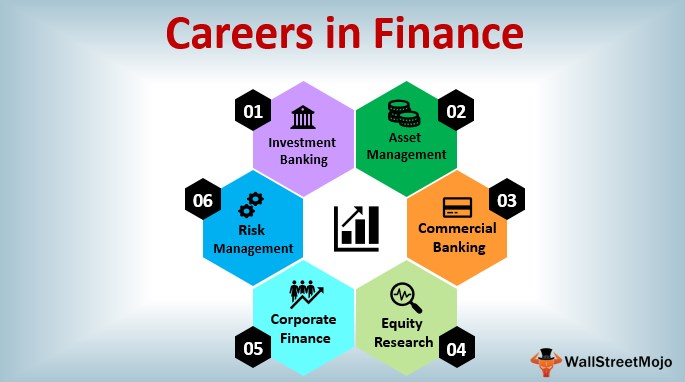
Careers in Finance | Top 6 Options You Must Consider - WallStreetMojo

– Financial Analyst
– Financial Manager
– Business Analyst
– Market Research Analyst

MBA in Finance: A guide for the right choice | College

Why is excel modeling so important?

As a manager, a substantial portion of any MBA graduate’s role is decision – making. Managers are expected to understand complex business processes and provide inputs to the senior management to aid in the process of decision making. While studying these business aspects, managers face numerous challenges on how the different aspects of business are interacting with each other. If these interactions are organized in a structured manner, process understanding is simplified, leading to faster decisions.

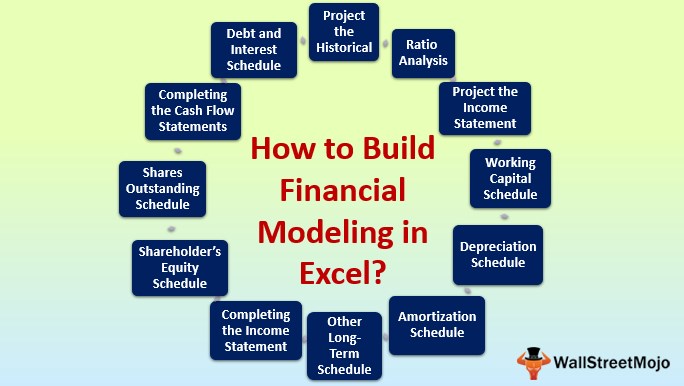
Financial Modeling in Excel (Step by Step Free Guide + Template)

Spreadsheet modeling helps in transforming the business decision making process into an organized structure. There are multiple variables that impact any business. Each variable can be individually introduced into the model and the impact of the variable in the overall decision making can be studied.

A financial model is simply a tool (generally built in Excel) to forecast a business’s financial future. It serves as one of the critical inputs for financial analysis and valuation. Knowing how to build an integrated 3-statement financial model and Discounted Cash Flow (DCF) model is a must-have skill for professions like equity research, investment banking and private equity.

World Bank and India

The World Bank is a lending institution that funds essential infrastructural requirement, globally. Headquartered in Washington D.C., this fiscal institution is banked upon heavily by the governments of the world for timely dispensing of funds to support the development of major facilities and services. World Bank comprises the International Bank for Reconstruction and Development (IBRD) and the International Development Association (IDA). It is also responsible for the working of the International Finance Corporation, Multilateral Investment Guarantee Agency and the International Center for Settlement of Investment Disputes. The primary role is the unbiased distribution of funds for economic upliftment of the international community. It bears the responsibility of ensuring aid to settle investment disputes and facilitate fiscal and infrastructural reconstruction.   

India has been borrowing from World Bank through IBRD and IDA for various development projects in the country particularly related to infrastructure development, poverty alleviation, rural development etc. In 1958, World Bank played an important role in establishing India Aid Club for providing economic assistance to India.   Later in was renamed as India Development Forum. So far India has borrowed around $68billion from the World Bank. IDA funds are one of the most concessional loans given by the Bank and in India, they largely used for social sector projects that contribute towards attaining the Millennium Development Goals (MDG).  

The World Bank’s Country Strategy (CAS) for India for 2009-2012 focuses on helping the country to fast-track the development of much-needed infrastructure and to support the seven poorest states achieve higher standards of living for their people. The strategy envisages a total proposed lending program of US$14 billion, in three years, of which US$9.6 billion is from the International Bank for Reconstruction and Development (IBRD) and US$4.4 billion (SDR 2.982 billion equivalent at the current exchange rate) from the International Development Association (IDA).   

The cooperation between the World Bank and India goes back to the foundation of the International Bank of Reconstruction and Development in 1944. As one of 44 countries, India prepared the agenda for the Bretton Woods Conference in June 1944. The Indian delegation was led by Jeremy Raisman, who was a finance member of the Indian government and proposed the name “International Bank for Reconstruction and Development”. India received its first bank loan of US$34million from the International Bank of Reconstruction and Development in November 1948 for railway rehabilitation. Since then, India has become the country with the largest country program and its lending portfolio of the World Bank group inheres of 104 operations with a total volume of $27.1 billion.

The strategy is closely aligned with the Government of India’s own development priorities expressed in the Eleventh Five Year Plan. It was arrived at after a series of consultations with a broad range of stakeholders including the government and civil society. Under the strategy, the Bank used lending, dialogue, analytical work, engagement with the private sector, and capacity building to help India achieve its goals.  

In March 2012, World Bank announced $ 4.3 billion financial aid to India through a new innovative and flexible financing arrangement to help the country fight poverty. This arrangement, while facilitating a $ 4.3 billion increase in support to India, is designed to maintain International Bank for Reconstruction and Development’s (IBRD) – which is its lending arm – net exposure within the limit of $ 17.5 billion established by it. Bank statement said that this will enable India to continue accessing long-term, low-interest IBRD finance for development projects aimed at improving the lives of its people, one third of whom are yet to make their way out of poverty.   

On 5 November 2012, World Bank signed an agreement with the central and Assam governments to provide $320 million, around Rs 1,760 crore, for improving secondary road network in the north-eastern state. The project will support improvement of priority sections of secondary roads, implementation of Assam’s ‘Road Sector Modernization Programme’ and development of a multi-sector road safety strategy, a statement said. As per the agreement, the project will be implemented over a period of six years.  

This is the second big financial allocation, though from an external agency, for Assam after the road transport and highways ministry gave around Rs 6,000 crore to improve the national highways across the state. Assam has the maximum share of a special road development programme designed for the north-eastern states. The objective of the World Bank project is to enhance road connectivity in Assam by assisting the public works department to improve and effectively manage its road network.   

The World Bank will continue to assist the central government by providing comprehensive analytical work to underpin policy and institutional reform and to improve the implementation of central government projects on the ground. Under the Sarva Siksha Abhiyan (SSA) for example, while schools are now more accessible and gender parity has been reached, the focus will now be on improving the quality of education provided. In the power sector, the Bank will continue to support Powergrid, India’s national electricity transmission agency, which it has helped to grow into a world-class institution.  

Though World Bank had dedicated ample funds for the economic development of the developing countries, still it is criticized for its organizational structure where developed countries had maximum say while the developing countries has little or no say. There is no doubt about its contribution in making the lives in developing countries better, now there is a need for it to make its organisation more democratic, and representative. 

Key to being Financially Independent in India

We all work right from graduating till retirement for five days a week -sometimes six days – only to spend what we have earned. In the midst of this daily hustle, how much time do we actually devote to plan for financial independence? Hardly any! Is financial independence a plan only for retirement? The answer is NO.

Photo by RODNAE Productions on Pexels.com

The first step towards financial independence is to not procrastinate it. A single drop of penny today will contribute to an ocean of financial resource. Then comes the below mentioned road map to a start of a great solo journey of life.

  • Financial planning – First, define clear and realistic financial goals like child’s education or a comfortable retired life. It is critical to factor in inflation while drawing up your financial plan. If you are planning your child’s education, you should be aware that a professional degree that costs Rs.4 lakhs today, is likely to cost around Rs.20 lakhs, 10 years from now.
  • Personal research – While a qualified financial planner can give you investment advice, the importance of doing your own research cannot be undermined. You can rely on credible websites to understand the pros and cons of each financial instrument.
  • Personalized financial plan – A common mistake is to opt for a particular plan simply because others are doing so. An investment plan must be customized according to personal factors such as your risk appetite, financial goals and life-stage needs.
  • Adequate time horizon – It is necessary to align the investment plan and the expected time frame for getting returns out of it. It is irrational to expect immediate returns from long term products like insurance, PPF etc.
  • Risk diversification – A smart investor would always ensure that the risk is distributed over a variety of instruments. A high risk instrument such as, an equity should ideally be balanced with a stable one such as bonds. Your investment portfolio should be a judicious mix of equity, debt, life insurance, real estate etc.
  • Planning for unforeseen events – Along with the current assessment of your future needs, risk of unexpected events must also be factored in. As a woman, it is crucial to be financially prepared to deal with unfortunate events like death, divorce etc.
  • Regularly track your investment – It is common to become complacent and expect the returns to flow in, once the investments are done. However, it is every investor`s responsibility to keep a tab on the performance of their portfolio.
  • Proper paperwork – There have been several instances where an investor is unable to claim returns from a bona fide investment simply because of misplaced or wrongly-filled documents. Proper documentation is a must to safeguard your investments. Also, ensure that someone other than yourself is fully aware of all your investments.
  • Securing your future: As a working member of the family, it is crucial for you to have adequate insurance to ensure that in your absence, your family does not go through any financial stress. Investing in a simple term insurance plan will ensure financial continuity.
  • Plan and execute – Last, but most important is to begin planning for all your financial needs from an early stage. The cost of postponement will weigh heavily on you in the later years when investing will become a compulsion rather than a choice.

In this world of instant gratification, have patience and watch as your pot fills with money one sweat and hard work at a time. Kudos to being financially independent!

Dematerialisation

Dematerialisation offers flexibility along with security and convenience. Holding share certificates in physical format carried risks like certificate forgeries, loss of important share certificates, and consequent delays in certificate transfers. Dematerialisation eliminates these hassles by allowing customers to convert their physical certificates into electronic format. Dematerialisation is a process through which physical securities such as share certificates and other documents are converted into electronic format and held in a Demat Account.

An investor intending to dematerialise its securities needs to open a Demat Account with a Depository Participant (DP). A depository is responsible for holding the securities of a shareholder in electronic form, these securities could be in the form of Share Certificates, bonds, government securities, and mutual fund units, which are held by a registered Depository Participant (DP).

As a share or debenture holder it is important to be aware of the procedures to manage the investment in securities collective name for equity shares, debenture, bonds, mutual fund units etc. Managing investment in securities is simple and easy in electronic form (dematerialised form) and it has many advantages over managing is in physical form like in past there is certificate issued in favour of shareholder if he/she buy stocks or any debenture bonds.

Section 5 of the Depositories act 1996 beneficial owner enter into an agreement with the depository for availing it’s service.

Investment in shares and debentures can be held in electronic or dematerialised can be held in electronic or dematerialised form in a depository. Depository is an entity which holds securities i.e Shares, bond’s, debentures, mutual fund units etc. of investors in electronic form at the request of the investor.

National securities depository Ltd (NSDL) and Central depository services Ltd (CDSL) are the depositories that are licensed to operate in India and are registered with SEBI.

Dematerialisation is comparable to keeping your money in a bank account. In demat form the physical share certificates are replaced by e-form buying of shares are reflected as credits in your demat account and sale are reflected as debits.

It is advisable to hold the securities in demat form as it offers many advantages like in Primary market as many public issue are taking place in demat mode. To apply in publice issue you need to have a demat account. Allotment of shares in IPO(Initial Public offer) is credited to the demat account.

In secondary market if you buy any shares thn after T+2 share credit on your demat account and you don’t have any need to visit anywhere to collect your certificate. Same in selling you can sell your shares anytime in working market. Unlike in physical shares you’ve to visit exchange office and in Ring you’ve to buy or sell your stocks. (Ring is a place where in past the buyer seller bid or ask for their shares).

BUSINESS FINANCES

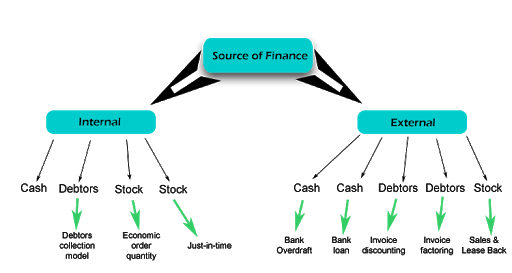
Finance is a must for the smooth conduct of business operations. A business firm can raise funds from two main sources: Owned funds or owned capital and Borrowed funds or loaned capital. Insole proprietorship and partnership the funds contributed as capital are called owned funds. In a joint-stock company fundraised through the issue of shares and reinvestment of earnings (retained earnings) are the owned funds, borrowed funds refer to the borrowings of a business firm. In a company borrowed funds consist of finance raised from debenture holders, financial institutions, public deposits, and commercial banks. Finance can be classified in to:

1. LONG-TERM FINANCE

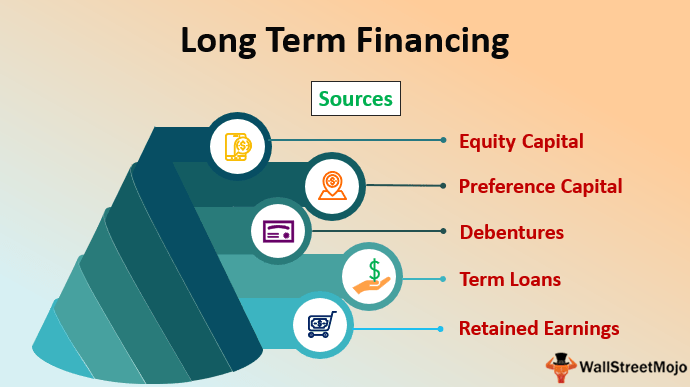
  Long-term finance can be defined as any financial instrument with a maturity exceeding one year (such as bank loans, bonds, leasing, and other forms of debt finance), and public and private equity instruments. Long-term finances are required for permanent investment in the business. It may be raised for more than five years. Long-term finance is required for investment in fixed assets like land and buildings, plant and machinery, furniture and fixtures, etc.

In a business house following are the main sources of long-term finance:

  1. Issue of shares
  2. Issue of debentures
  3. Ploughing back of profits/retained earnings
  4. Loans from specialized financial institutions

The amount of long-term funds required depends on the type of business and the investment required for fixed assets. For example, the manufacturing of steel, cement, chemicals involves heavy investments in buildings, machinery, and equipment. A small factory producing garments or a small workshop for repairing electrical goods will require a small investment in fixed assets. Traders generally require lesser amounts for long-term investment as compared with the requirements of manufactures.

-FROM WALLSTREETMOJO

2. MEDIUM-TERM FINANCE

Medium-term finance is required for a period ranging from 3 to 5 years. It is used for the modernization of plant and machinery, investment in permanent working capital, and for repayment of debts. The main sources of medium-term sources of finance are:

  1. Issue of debentures
  2. Issue of preference shares
  3. Bank loans
  4. Public deposits/fixed deposits
  5. Loans from financial institutions

Manufacturing and trading concerns require more working capital to pay wages and to finance the purchase of raw materials and goods.

3. SHORT-TERM FINANCE

The amount of such capital is required for a short period, say up to one year and as soon as goods are sold and funds are recovered, the amount is again used for current operations. Generally, production processes are completed within a year and goods are ready for sale. Hence short-term funds can be used over and over again from year- to year. Short-term funds are required for meeting day-to-day working capital needs. They raised for twelve months or so. The main sources of short-term finance are as follows:

  1. Bank credit
  2. Customer advances
  3. Trade credit
  4. Deferred incomes
  5. Installments credit

                 The requirements of short-term finance depend on:

  1. The nature of business undertaken
  2. The time gap between the commencement of production or purchase of goods and their sales
  3. The volume of business.

Trading firms normally require proportionately more of short-term capital than a long-term capital. Manufacturing concerns, on the other hand, need relatively smaller amounts of short-term capital as compared to long-term capital.

INDUSTRIAL FINANCIAL CORPORATION OF INDIA (IFCI)

IFCI was the first industrial financing institution to be set up in India soon after independence. It was set up as a statutory corporation in July 1948 under the Industrial finance corporation of India Act 1948. It has now been converted into a joint-stock company with effect from July 1, 1993, under the Companies Act, 1956 because there was a high NPA increase and it was causing a huge loss to the government and now IFCI is a Non-banking finance company in the finance sector. IFCI is a company currently listed in NSE and BSE and currently has seven subsidiaries and one associate. Currently, it is allowed to access the capital markets only. IFCI has financed various projects such as airports, roads, telecom, power, real estate, manufacturing, services sector, and such other allied industries. During its financing term, it has financed mega-projects like Adani Mundra Ports, GMR Goa International Airport, Salasar Highways, NRSS Transmission, Raichur Power Corporation, and many more projects. The Government of India has placed a fund of Rs 200 crore with IFCI to promote entrepreneurship among the Scheduled Castes and to provide finance to these entrepreneurs at concessional rates.

OBJECTIVES OF IFCI

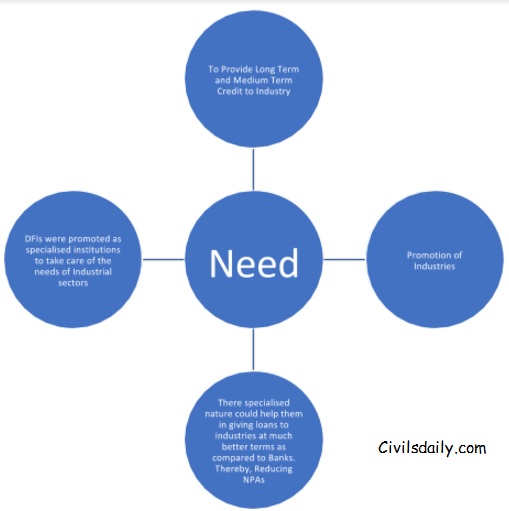
The main purpose or objective of IFCI is  “to make medium and long-term credits more readily available to industrial concerns in India, particularly in circumstances where normal banking accommodations are inappropriate or recourse to capital methods is impracticable”. IFCI provides financial assistance for the setting up of new ventures as well as for the modernization and expansion of existing enterprises. It gives priority to the dispersal of money to the industry, development of backward areas, etc. It pays special attention to the following types of projects:

  1. Projects located in backward areas.
  2. Projects based on indigenous technology.
  3. Projects likely to meet the growing demand for essential commodities.
  4. Projects promoted by new entrepreneurs and technocrats.
  5. Projects having potential for export and import substitution.
  6. Projects that provide plant and machinery, fertilizers, pesticides, and other inputs for agriculture.
-FROM CIVILDAILY.COM

FUNCTIONS OF IFCI

IFCI grants loans and advances to or subscribing to debentures of industrial concerns repayable within 25 years and these loans are guaranteed with the central government, loans raised from, or credit arrangements made by industrial concerns with any bank or financial institution outside India. The loans are raised by industrial concerns from the capital market, scheduled banks, or co-operatives, which are repayable within 25 years.IFCI underwrites the issue of shares sad debentures by industrial concerns that be disposed of within 7 years. IFCI provides guarantees for deferred payments for imports of capital goods manufactured in India.

IFCI acts as an agent of the central government and the world bank when loans are sanctioned by them to industrial concerns in India and subscribing directly to the shares of industrial concerns. IFCI also provides a guarantee in the foreign market for the purchase of capital goods. So, IFCI may act as a consultancy, in issue house, an underwriting agency, and a credit agency. IFCI is not merely a lending agency but has assumed the role of a development bank.