Garhwali Language it’s time to save it from getting fade.

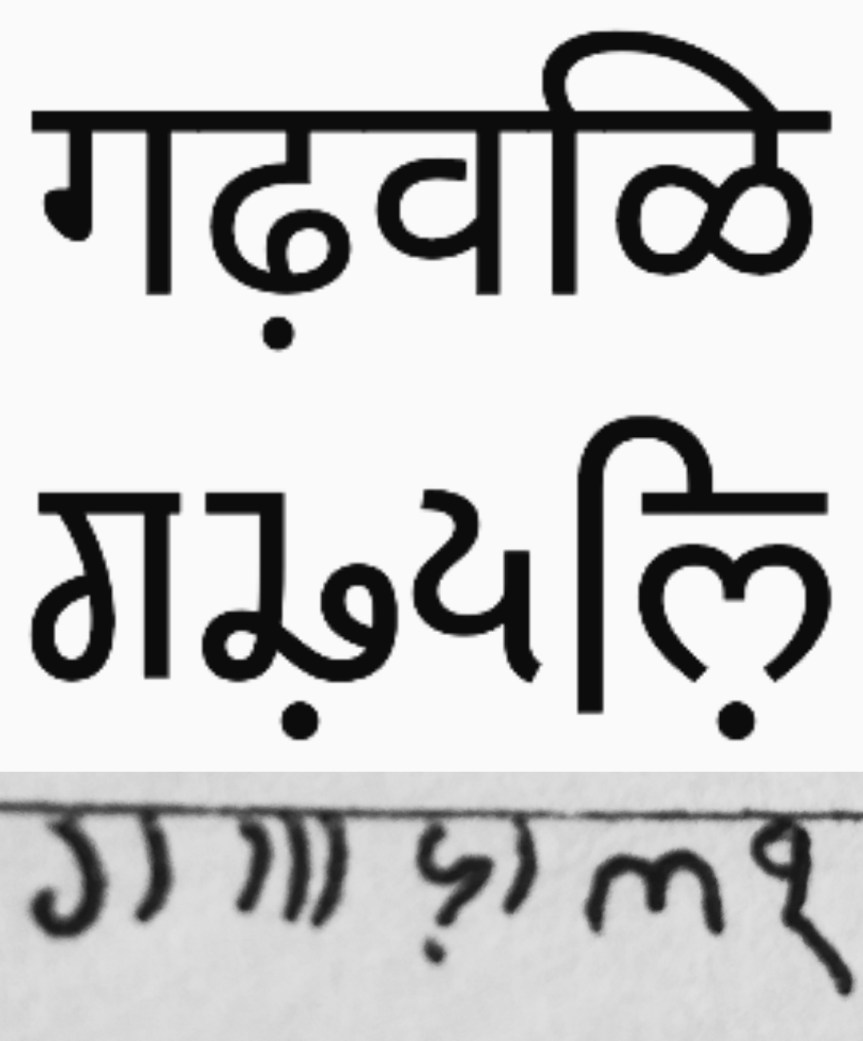
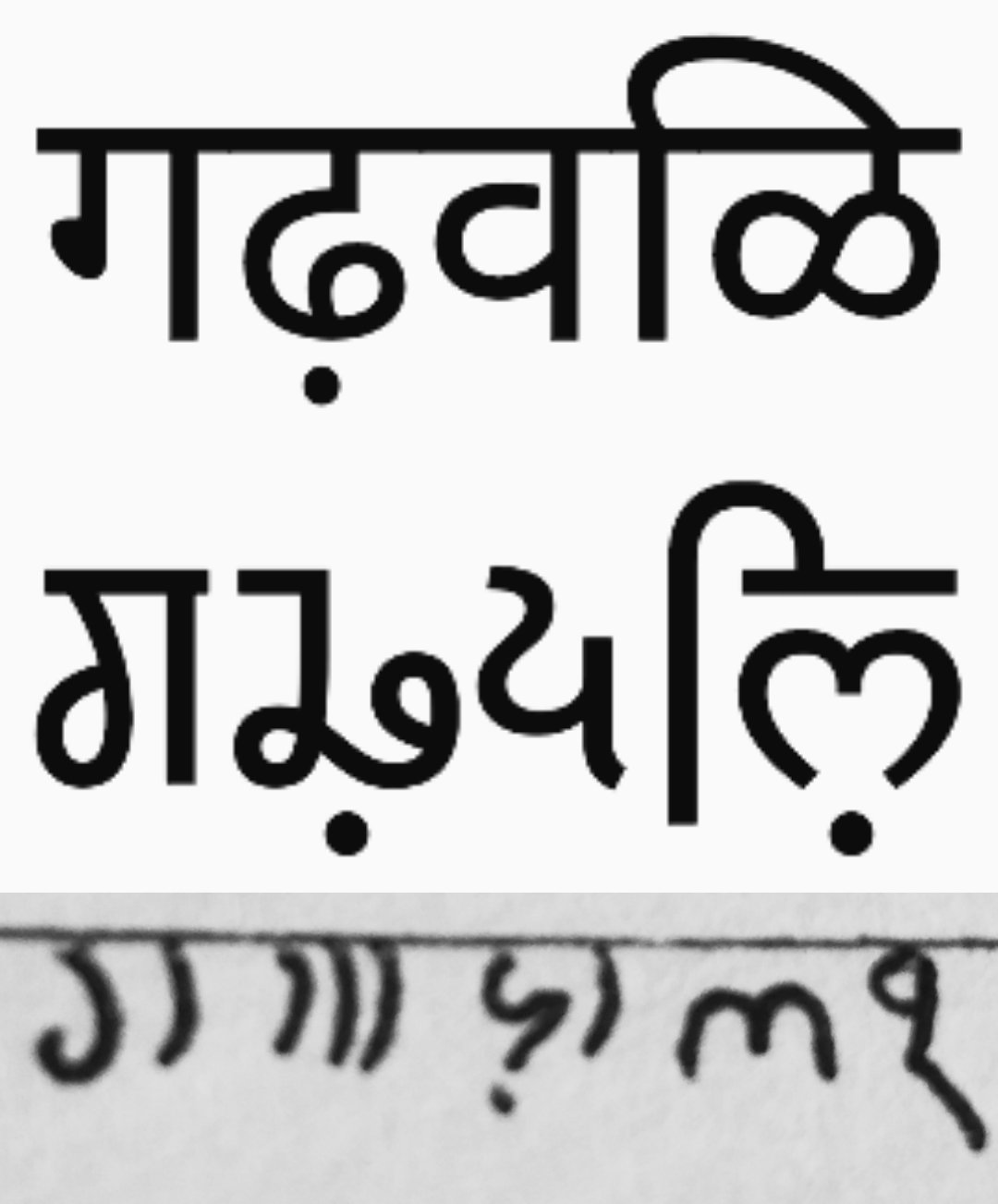
Garhwali is the Indo-Aryan language of the Central Pahari Region which is mainly spoken by more than 2.5 million people in the Garhwal region of Uttarakhand, northern India, in the Himalayas of India, Uttarakhand. Garhwali is also spoken by Garhwali people living in other parts of India, such as Himachal Pradesh, Delhi, Hariyana, Punjab and Uttar Pradesh. According to various estimates, at least 3.5 million Garhwali migrants live in Delhi and other cities.


HISTORY
During the Middle Indo-Aryan era, there were various languages called Prakrit. Of which, Khas Prakrit language is believed to be the source of Garhwali language.The earliest forms of Garhwali can be traced back to the 10th century and can be found in temple stones, including numismatics, royal seals, copper plate inscriptions, royal orders and grants. An example is the inscription of King Jagatpal’s Temple Grant in Dev Prayag in 1335 AD. Most Garhwali literature survives in vernacular form and is transmitted verbally. But since the 18th century, Garhwali has developed a literary tradition.


LITERETURE & WRITERS
Among the famous Garhwali writers in hiastory of literature are Sudarsan Shah, Kumdanand Bahguna, Hari Dutt Sharma (Nautiyal), Hari Krishna Daurga Dutti Rudra, Urvi Dutt Shastri ,Mahidhar Dangwal, etc. , Satyasaran Raturi, Atma Ram Gairola, Devendra Dutt Raturi, Suradutt Saklani and more. Among historians are Mola Ram, Miya Prem Singh, Hari Dutt Shastri, Hari Krishna Raturi and Vijaya Ram Raturi.
Garhwali literature is thriving despite the ignorance of the government. Today, newspapers like Uttarakhand Khabarsar and Rant Raibaar are published entirely in Garhwali. Magazines such as Baduli, Hilaans, Chitti-patri and Dhaad have contributed to the development of GarhwaliGarhwali language.

Some Notable works of Gharwali writers:
•)Abodh Bandhu Bahuguna – (1927–2004) Garhwali writer. Some nitable writings include Gaad, Myateki Ganga, and Bhumyal.
•)Bachan Singh Negi – “Garhwali translation of Mahabharata and Ramayana”.
•)Lalit Mohan Thapalyal – “Achhryun ku taal”
•)Leeladhar Jagudi – (1944) Writer and novelist. PadmaShri
•)Lokesh Nawani – “Phanchi”
•)Madan Mohan Duklaan – “Aandi-jaandi saans”
•)Chandramohan Raturi – “Phyunli”
•)Chinmay Sayar – “Aunar”
•)Dr. Narendra Gauniyal – “Dheet”
•)Durga Prasad Ghildiyal – “Bwari”, “Mwari” and “Gaari”
•)Gireesh Juyal ‘Kutaj’ – “Khigtaat”.
Struggle of Official RecogItion:
Since the establishment of Uttarakhand in 2000, the state governments have made slow progress in promoting and developing the regional language of Uttarakhand. Like other languages in Uttarakhand, Garhwali, the most widely spoken language, is not officially recognized. In 2010, Hindi became the official language and Sanskrit became the second official language of Uttarakhand. In 2014, after making Garhwali the official language of Uttarakhand and demanding that it be taught at schools and universities for many years, the Uttarakhand State Government established Kumaoni and Garhwali departments at Kumaoni and Garhwali universities, respectively, to study the regional languages. At the national level, Garhwali is always required to be included in the 8th schedule of the Indian Constitution in order to be one of India’s schedule languages. In July 2010, Parliamentary member Satpal Maharaj of Pauli Garhwal submitted a legislative bill to Lok Sabha to include the languages of Garhwali and Kumaoni in the eighth schedule of the Constitution. Like most private citizen bills, the bill has not been discussed in Parliament and has since expired.
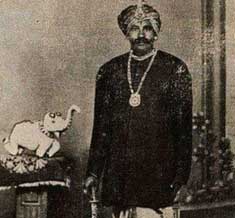
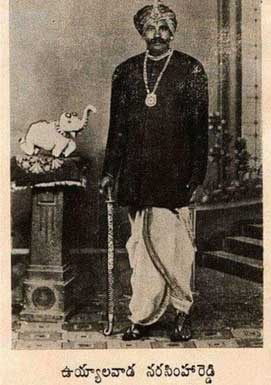
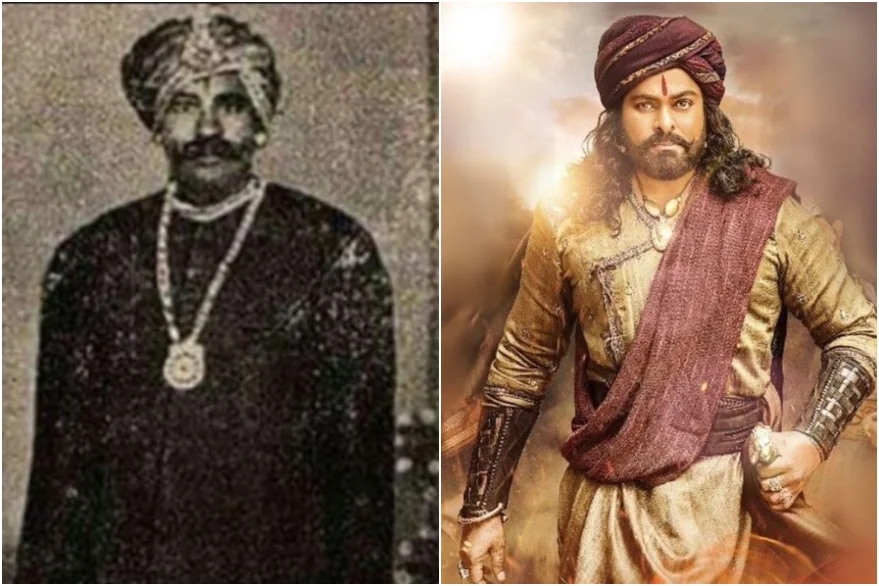
India’s first freedom fighter Narasimha Reddy.

Uyyalawada Narasimha Reddy was an Indian freedom fighter and he was born in Rupanagudi village, on 24 November 1806.

The father of Narasimha Reddy was related to the Palegar family of Uyyalawada in Koilakuntla taluk who had married two daughters of the Palegar of Nossam. He had three sons, of whom Narasimha was the youngest son of the Palegar of Nossam, Seethamma. He married a woman named Siddhamma at the age of 6 .
The British East India Company’s preface to the Chennai Presidency of the 1803 endless agreement, which had first been legislated in Bengal Presidency ten times preliminarily, replaced the agricultural socio- profitable status quo with a further egalitarian arrangement where anyone could cultivate handed that they paid a fixed sum to the East India Company for the honor of doing so.
The Palegars and other advanced- status people who preferred the old agricultural system” represented the decadent social order”, were in numerous cases” arrivistes” and” were also the heirs at law of a social system in which colorful orders of Hindu society were integrated through periods”. These people were ousted of their lands, which were also redistributed, but the primary purpose of the changes was to increase product rather than to restructure the social order. In some cases, it coincided with a discipline because among the dispossessed were those who had lately been involved in fighting the East India Company in the Palegar Wars. Some entered pensions in lieu of the lost lands but at inconsistent rates.


The changes, which included the preface of the ryotwari system and other attempts to maximize profit, deprived vill helmsmen and other advanced- status people of their part as profit collectors and position as lodgers, while also impacting on lower- status tillers by depleting their crops and leaving them impoverished. The East India Company were economically exploiting the people and that those who were dependent on the traditional work were no longer had a means of making a living. As the old order collapsed into disarray, the formerly-authoritative Palegars, including Narasimha Reddy, came the focus of attention from victims, whose pleas fell on deaf cognizance. The Palegars saw a chance to rally peasant opposition both for genuine social reasons.
Narasimha Reddy’s own expostulations too was grounded on their issues. Compared to the Palegar of Nossam, the pension awarded to his family upon their acquisition was paltry and the authorities refused to increase it by redistributing some of the Nossam moneybags when that ultimate family came defunct in 1821. At the same time, some of his cousins were facing proffers for farther reductions in their land rights, including by a reform of the vill policing system.


WAR AGAINT BRITISH EMPIRE
Effects came to a head in 1846 when the Company authorities assumed land rights preliminarily held by colorful people who had failed in the townlets of Goodladurty, Koilakuntla and Nossum. Encouraged by the disgruntlement of others, Reddy came the statuette for an insurrection.
An fortified group, originally comprising those ousted of inam lands around Koilakuntla, was led by Reddy’s Right- hand man Vadde Obanna in July 1846. The Amusement Collector for the area Lord Cochrane, believed that Reddy had material support from fellow pensioners in Bhagyanagar and Kurnool, whose land rights had also been appropriated. The group soon attracted support from the peasantry and was reported by Company authorities to have rampaged in Koilkuntla, taking back the pillaged storeroom there and escaping the police before killing several officers at Mittapally. They also despoiled Rudravaram before moving to an area near to Almore, pursued by the East India Company forces who also girdled them.
A battle between Obanna’s 5000-strong band of revolutionists and a much lower British contingent also took place, with around 200 of the revolutionary being killed and others captured before they were suitable to break out in the direction of Kothakota, Giddalur where Reddy’s family were positioned. He with his family moved to Nallamala Hills . The British offered impulses for information regarding the whereabouts of the revolutionists, who were again girdled amidst reports that uneasiness was now growing in other townlets of the area. In a farther skirmish between the revolutionists and the British, who had transferred for mounts, 40 – 50 revolutionists were killed and 90 were captured, including Reddy. Although there was no substantiation of Obanna’s prisoner, he most conceivably was also a interned along with his leader.
clearances were issued for the arrest of nearly,000 of the revolutionists, of which 412 were released without charge. A farther 273 were bailed and 112 were condemned. Reddy, too, was condemned and in his case entered the death penalty. On 22 February 1847, he was executed in Koilkuntla in front of a crowd of over 2000 people. Reddy’s head on the stronghold wall in public view until 1877.


LEGACY
On 2 October 2019 , a film based on the life of Narsimha Reddy’s life named Sye Raa Narasimha Reddy was released . On 25 March 2021 Kurnool Airport at Orvakal was named as Uyyalawada Reddy Airport .

Self-love

I’m not being sexist but this concept of self love must have been introduced by women, because when I see men, I don’t find these type of words really exist for them. And see now it’s like in the air. Actually, men get inspired by women but they don’t accept because of male ego or whatever. But,  action speaks more then words, na!

Hello there, how was your day? Don’t get me wrong but I’m asking you to ask yourself this question everyday before the day gets over. It is also a kind of self love, and when you will be able to answer this question to yourself in a very elaborating manner then you will start getting yourself better. In starting it can be little fussy but as the time passes you will learn it’s importance and will also able to see it’s impact on you.

Now a days, people thinks that everything a particular person do, should also be able to defend there own doing in the world. Like, if I’m doing something which is even though not good for me or the society, but, to save me from everyone else i should be able to defend my doing. And this is bullshit. Soon you will start doing whatever you want no matter it’s good or bad when you are ready to defend it. This is not self loving, it is self manipulation. And there’s a huge difference between them.

Self love is like accepting yourself, your own habits with its flaws. It is never to defend your flaws. If you keep defending you flaws you will be heading towards wrong way. You can never be someone who can be admired in the same society where you are trying to be cool and loveable just by putting yourself as priority.

Knowing yourself means accepting and evolving yourself. The better you know your flaws is the better you get with it. I Don’t say that defending yourself from the outer world is not good but everytime is not good. It’s always you who knows the real intention behind doing any work. So, if you keep your good intentions it will be you get benefits of it and if you are not then it will also be you who will face the conciquences.

So, try to improvise yourself by facing the real you in personal because that’s what self love means.

See yaa..