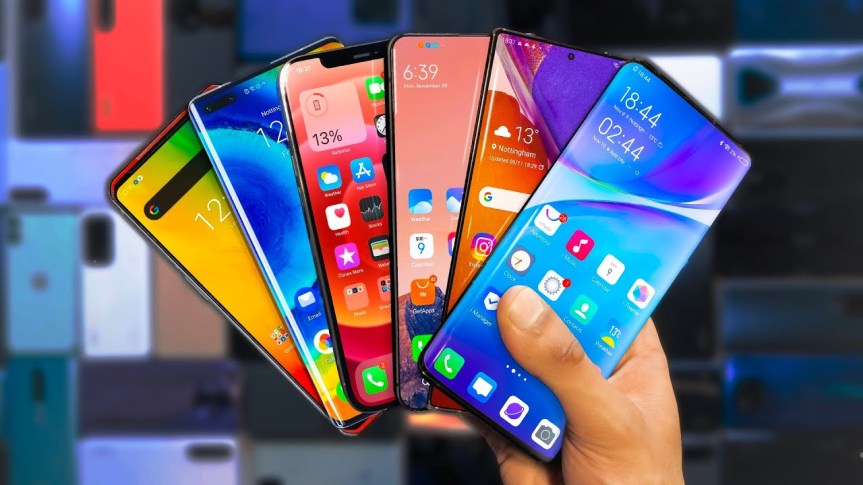
IMPACT OF SMARTPHONES

Today I decided to write on the smartphone and literally I am writing on it.
In the last few decades, technology has spread its roots worldwide. It has evolved and is evolving day by day. In ancient times the survival of humans was not hard. People lived without any gadgets and enjoyed their lives, but that didn’t help them to develop, to raise their living standard, to utilize their time smartly.
Why has technology and machineries developed? For efficiency. One can do large amounts of work in a short time now that the technology has evolved.
Earlier, in order to travel 10km people had to walk for a minimum of 3 hours. Then people started using horses and bullock carts to travel for far distances. This took a period of 2-3 days to reach the destination. Time runs with the jet speed and hence transportation facilities improved. From bullock carts people switched to bicycles.
When Britishers were ruling the Indian Subcontinent, in order to export goods and material to Britain, and also within India, they established Railway routes. Today India has one of the biggest railway networks in the world. Railways are convenient and cheap means of transportation. Later road routes were also well established in India.

In earlier times, any message or information was sent with the help of pigeons and messengers. It would take days and months for the message to reach. Later the postal system was developed. And then telephones.

When telephones came into existence only a few could afford it. Sometimes in the entire village there was only one phone line. Later public PCOs opened where anyone could use it by putting a rupee coin and could talk for 2 minutes and that used to be enough.

Later many people bought telephones as the purchasing levels of people increased. The telephone became a source of happiness as communication with one another was now easier.

As the time passed, technology further evolved. Small cell phones were introduced in the first decade of the 2000s in India. In the beginning, cell phones had antennas on them. Antennas helped to get a good signal. Later antennaless phones were introduced which could be easily kept in pocket. Those phones consisted of an SMS system and one or two games, and that's what made everyone happy.

The first phone I saw had a keypad on it. Later, keypad phones too evolved and had more features like cameras and extended memory.
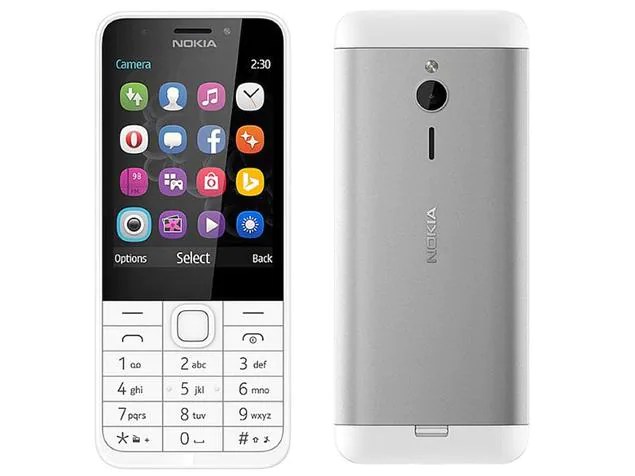
After the decade of 2010, the technology and evolution of smartphones have made rapid progress. Touch screen phones were introduced, along with recording of audio, video and many more features.

Later Google and other social networking sites entered the Indian digital market and from there the interface of smartphones changed. Android phones were introduced with internet facilities and vouchers.
People can now use phones to easily communicate via WhatsApp, Facebook and other social networking sites. After 2015 the Reliance Digital company introduced a Jio mobile network and provided sims to the people for free along with plenty of internet for a day.

Earlier those who were having smartphones could hardly afford internet packs, as the mobile companies like Idea and Airtel provided data packs at higher price.
After the introduction of Jio, it became easy for people to afford data packs. Reliance company has applied good business strategy, first they provided it for free so that it can be well established and later people could purchase their data packs.

No doubt that smartphones have made everyone's life easy, comfortable and convenient. They save time, and make communication easy. One can do a lot of work by sitting in any corner of the world. With the help of Google one can find out any information related to anything. One can book a train seat. One can see where it has arrived and when it will depart. One can track its locations. With the help of YouTube videos, one can learn any skill so easily. One can do business on smartphones. One can learn and teach online. One can explore his talent and can show it to the world with the help of smartphones. How easy and convenient things have become.

It has advantages as well as disadvantages at the same time. One can walk and talk on the phone. One can travel and can spend time in order to avoid boredom, but at the same time one is not enjoying the surrounding natural beauty while walking. One is not enjoying the journey while travelling. Not observing the environment around him does not help expand one’s horizon.

Smartphones have become an indivisible part of our lives. Just like we eat, we drink, we sleep, we breathe, in the same manner we use smartphones and other social networking sites. It's hard for a person to survive without a phone. You will very rarely find anyone without a phone. On one hand after this pandemic of covid-19 we did not face the loss of study, business, money and many more things due to technology, Internet and smartphones. The cycle of work did not stop but on the other hand it has become an addiction for adults, teenagers and kids. Small kids have started using phones so rapidly that they cannot get over it.
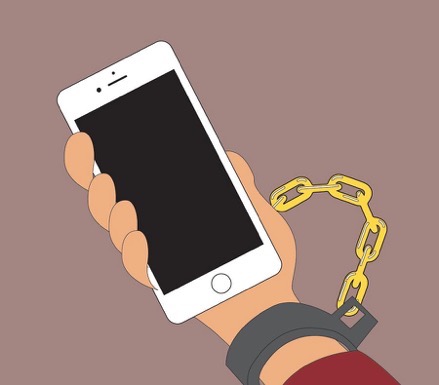
A kid of 2-3 year doesn't eat food until and unless he is not given a smartphone in his hand. Kids have forgotten to play outside since smartphones have been given to them.
Every information is available on Google and Wikipedia and hence people don’t think from their own minds. They don't want to take any trouble figuring out the answer. The process of exploring and evolving has slowed down. People have just become a puppet of technology.
On one hand technology is helping to save time and increase efficiency but on the other hand, people are becoming so inefficient, lazy and unproductive. Everything in this world should be balanced and hence the use of technology and smartphones should also. One must be aware of the fact that we invented technology. Technology did not invent us. We should not limit ourselves to being dependent on it. We must know how we can maximize its use for the development of mankind.

We should not allow technology to dominate our senses and self control.

Addiction to Gadgets

Technology and gadgets are now indispensable in our daily lives. In the past few years carrying a miniature computer (a smart phone) in a pocket has become commonplace. Technology helps advance the human race forward and makes doing mundane things more efficient and repeatable. Technology has helped create the information revolution.
With technological advances, devices have evolved to be so powerful and smart that it feels like having a super-computer on one’s hands. Humans now have an insatiable appetite for information at their fingertips. When technology makes this happen, the natural tendency is for this to become an expectation. 
Life Without Gadgets:
■People born before the 1980’s would very well relate to life before the information age, when people had no access to internet or personal gadgets.  Let’s briefly walk down the memory lane to relive those moments — a life without gadgets.
■Children played together outdoor — they had a lot of physical activity.
■People talked to each other more often, and verbal communication face-face was at its peak.
■Chat jargon did not exist and people knew their spellings well, as they read more books.
■People enjoyed spending more time outdoors with family and friends.
■It was commonplace to get the news from newspaper or radio.
■Entertainment came from playing board games, playing sports, going to the movies, watching VHS tapes, etc.
■Writers often used either a type-writer or a word processor on their computer.
■Computers were expensive and bulky.
■Doing research was hard; frequent visits to the library or scouring through plethora of papers, books, etc. were necessary.
■Communication was slow.
Life With Gadgets:
Gadgets equipped with internet have transformed our lives in several ways and brought about a paradigm shift in our dependence on technology to perform key tasks in our everyday routine. To highlight a few:
■Enormous amount of information at our fingertips
■Use Google Maps to get directions, watch YouTube videos to learn to cook, sing, draw, learn science, etc.
■Health monitoring apps on the cell phone that would remind people to walk, run, bike, check BP periodically, etc.
■Capability to share daily life or special events instantly with thousands of people and see reaction in a matter of minutes, if not seconds
■Expedited research with access to information galore
■Ability to watch videos on demand from anywhere (Netflix, Amazon, etc.)
■Ability to read e-books online on demand — no more visits to library needed
■Use of mobile phones, tablets as pacifiers for kids
■Improved speed of communication by orders of magnitude leading to faster decision-making
■Existence of mobile apps for entertainment, social interaction through digital media, paying bills, accessing bank accounts, etc.
Effects of Gadget Addiction:
While the business model of the top few app companies hinges on people spending more time with their gadgets every day, we need to recognize that the most important fallout of this induced behavior would be the rising epidemic of gadget addiction. A sense of urge to use the phone or any other gadget when bored or idle equates to addiction. Gadget addiction doesn’t discriminate who is affected, it affects all age groups and people of all races. The effects range from mental, physical, emotional to even threatening our democracy.
Mental and Emotional Health:
Dopamine is a neurochemical that largely controls the pleasure and reward centers of the brain. High levels of dopamine are usually associated with motivation and excitement to fulfil goals that would lead to recognized rewards and thus reinforcement of a sense of pleasure while achieving those goals. Procrastination, lack of enthusiasm and self-confidence, and boredom are linked to low levels of dopamine.
Research has shown that the brain gets “rewired” as excessive amounts of dopamine get released in the body on frequent interaction with a rewarding stimulus, i.e., using a smartphone app like Facebook. Boredom triggers an interaction with the rewarding stimulus (Facebook app), which in turn results in wide variety of rewards in the form of likes, messages, photos, etc. causing high releases of dopamine in the body. Frequent cycles such as these cause the brain’s receptors to become more insensitive to dopamine, causing the body to experience less pleasure than before for the same natural reward. This leads the person down a spiral, where one has increased craving for the same reward to achieve normal levels of pleasure. If the increased craving cannot be satisfied, it would lead to anxiety, lack of motivation and depression. Gadget addiction is likened to addiction to alcohol or drugs since it results in similar negative consequences.
Studieshave shown that children’s cognitive and emotional development can be adversely impacted by internet/gadget addiction. More screen time means more virtual interactions and rewards through social media (shares, likes) and less face time. Less face-to-face interaction with other people results in lack of empathy for fellow human beings.
Physical Health:
Today’s children are immersed in technology right from a very young age. With more than half the schools in the US using smart devices as teaching tools in class, coupled with at-home smart device usage, the total screen exposure time of students in the age group 8-18 has exceeded ten hours a day. There are obvious benefits to being exposed to technology right from a very young age, i.e., development of skills needed to be successful in technology-related areas in a future career. However, on the downside, there could be lack of development of social behavioral skills and high risk of obesity due to limited physical activity.
As one would also expect, one of the biggest health risks of excessive smart device usage is vision-related. The National Eye Institute has found that the frequency of myopia (near-sightedness) has increased exponentially in Americans over the last few decades. The other effect on eyes was reduced blink rate leading to higher incidence of dry eye symptoms.  Based on these findings, the American Academy of Pediatricshas revised recommendations for limiting screen time for kids at different ages.
Listening to loud music through earbuds has detrimental effects on hearing ability  The National Institute of Deafness and Other Communication Disordersreports that about 15% of Americans between the ages of 20-69 have a reduced capability to hear high frequency sounds due to exposure to loud sounds. Other negative effects on physical health from excessive gadget usage include lack of sleep and increased weight on the spine as the head tilt increases to view the screen.
As we see the rise of ill effects of long term gadget use, rising health concerns amidst this drive to seek mindshare, finite attention of the same consumers there are groups of individuals who are now speaking up and taking a stand. These groups are investors, ex-employees of these companies and consumer groups. Starting 2018 these voices have amplified and there is a call for action and change is imminent.