Gandhi Jayanti

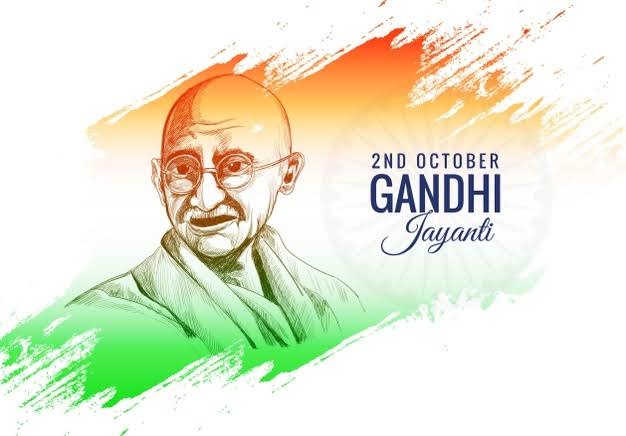
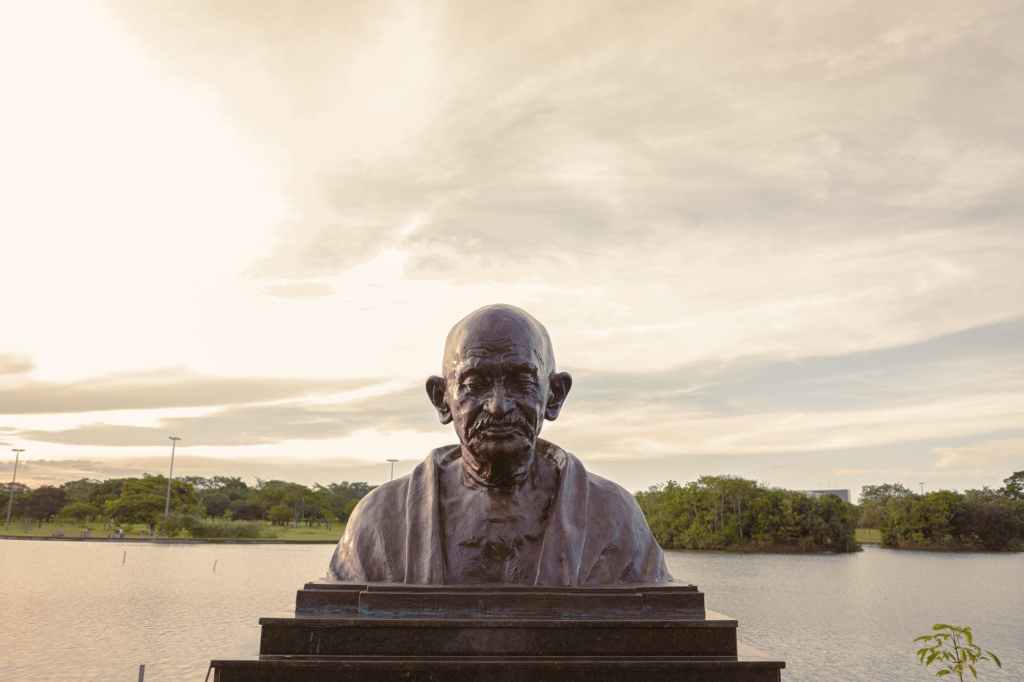
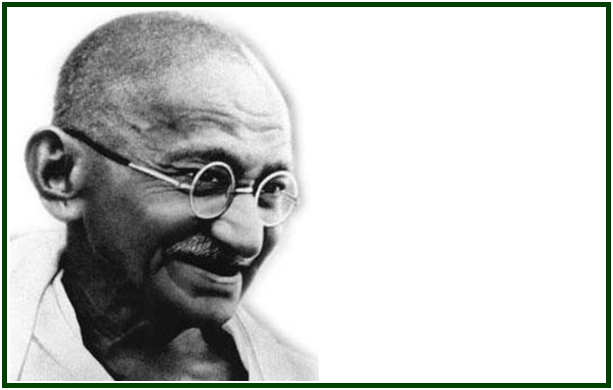
2nd October, Gandhi Jayanti ,a date which needs no introduction. Father of our nation Mohandas Karamchand Gandhi was born on this day. He was one of the strongest pillar for India during in struggle for freedom from British era.

He was very different from other freedom fighters. He believed in the concept of nonviolence and self sufficiency. His personality has impressed many leaders around the world like Martin Luther King Jr, Nelson Mandela, Einstein and even the Britishers one of those.

He was a gentleman who gained law degree in London and came back to the India and I was so touched by the living conditions of the people here that he decided to be one of them. He wore a dhoti and thin cloth on upper body.

He was a man of principle, in his aashram he did all of his work on his own and teach the same lesson to his followers. He was a tiny man but having a great speed. He walked miles on his foot that too with great speed, matching his speed was not easy.

He always live for his countrymen and tried to solve their problems and dedicated whole of his life for the country. He fought the fight of freedom with never compromising his principles. That’s the reason he was given the title of ‘Father of India’.

Was Gandhi wrong

Ok, so let me make it clear, I’m writing it because I know his autobiography and some other literature of that time.

Many say Gandhi was Racist about Africans and didn’t fight for black people.
When he reached Africa Indian merchants had a far better life there(compared to native Africans) and in that colonial time it was nearly impossible to make govt give some good rights, so he had to play small first. He fought for little rights of Indians couse there they have education and money to make pressure and start changes many others were fighting like him so it was a good start and solving in pieces is how he gave freedom to India(it’s not like India got freedom from one movement it was succession of events, movements, rights that made Britishers slowly give rights to Indian).
And for all the documentation and stuff of that time sorry but all wise guy knows about propaganda, narratives that time every resource of information was controlled by whites even if they try acting well you know deep down they are just harshly judging(I know this point will be hard to clear for some.).

Treated women and low cast badly.
He had done lots of good things to remove discrimination(this is more hard topic then second one) when you are between people who have lots of discrimination in mind and you want to correct them you have to start small not like give education and abuse your wife but he respected his wife from whole heart but for others, he made like educate them later treat with respect too.
Also even if he seems great like Budha or written characters like Optimus, superman(where I believe his morals are far stronger than our most moral fictional characters even now. He has given all his life rechecking his ideas improving himself morally so it’s really hard our fictional characters can reach that height.)

I’m not saying to worship him or idealize him just be as hard critique as you can but remember that all info was recorded by those who were deep inside biased or willing to spread propaganda.

Nelson Mandela International Day

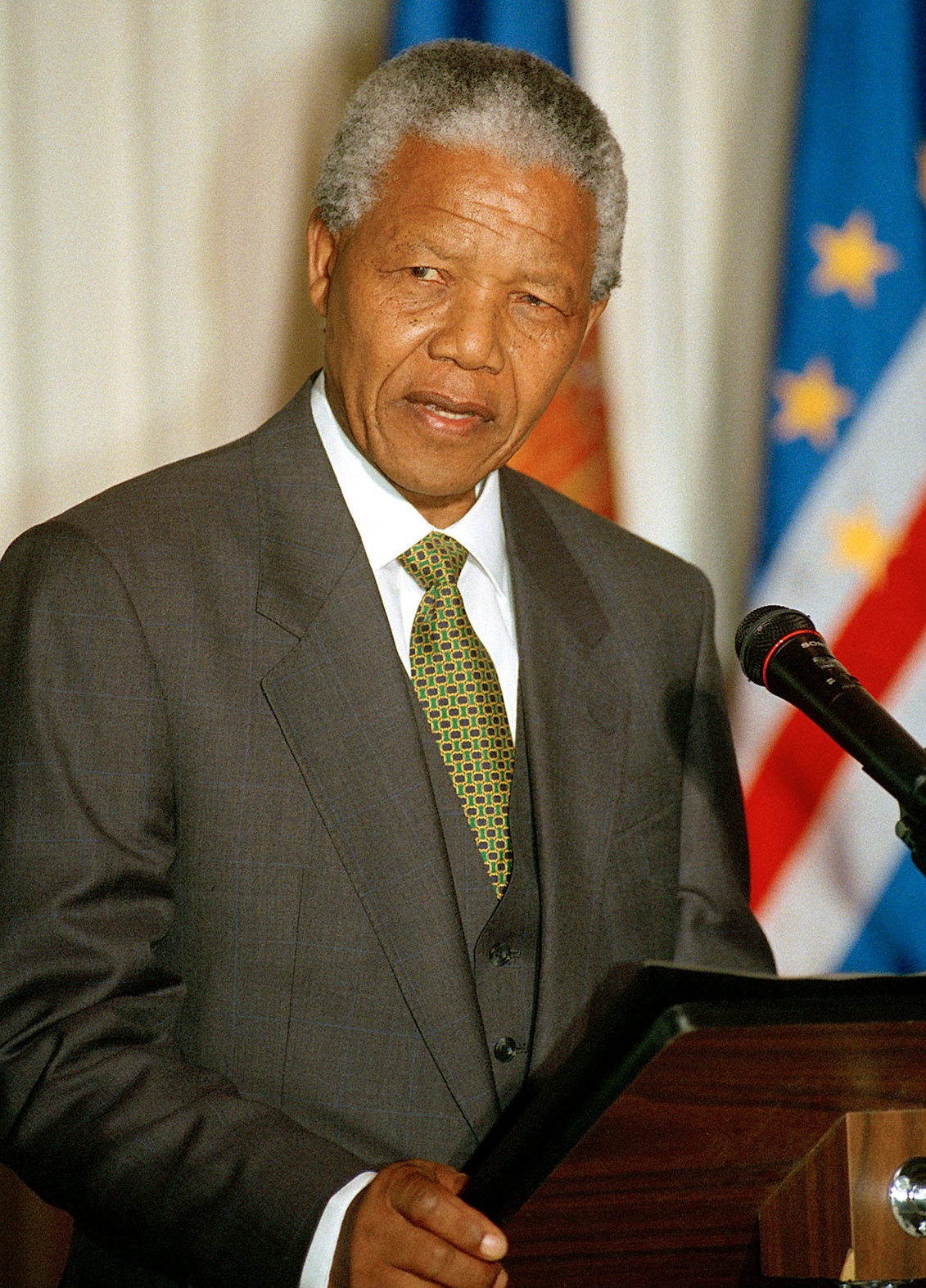
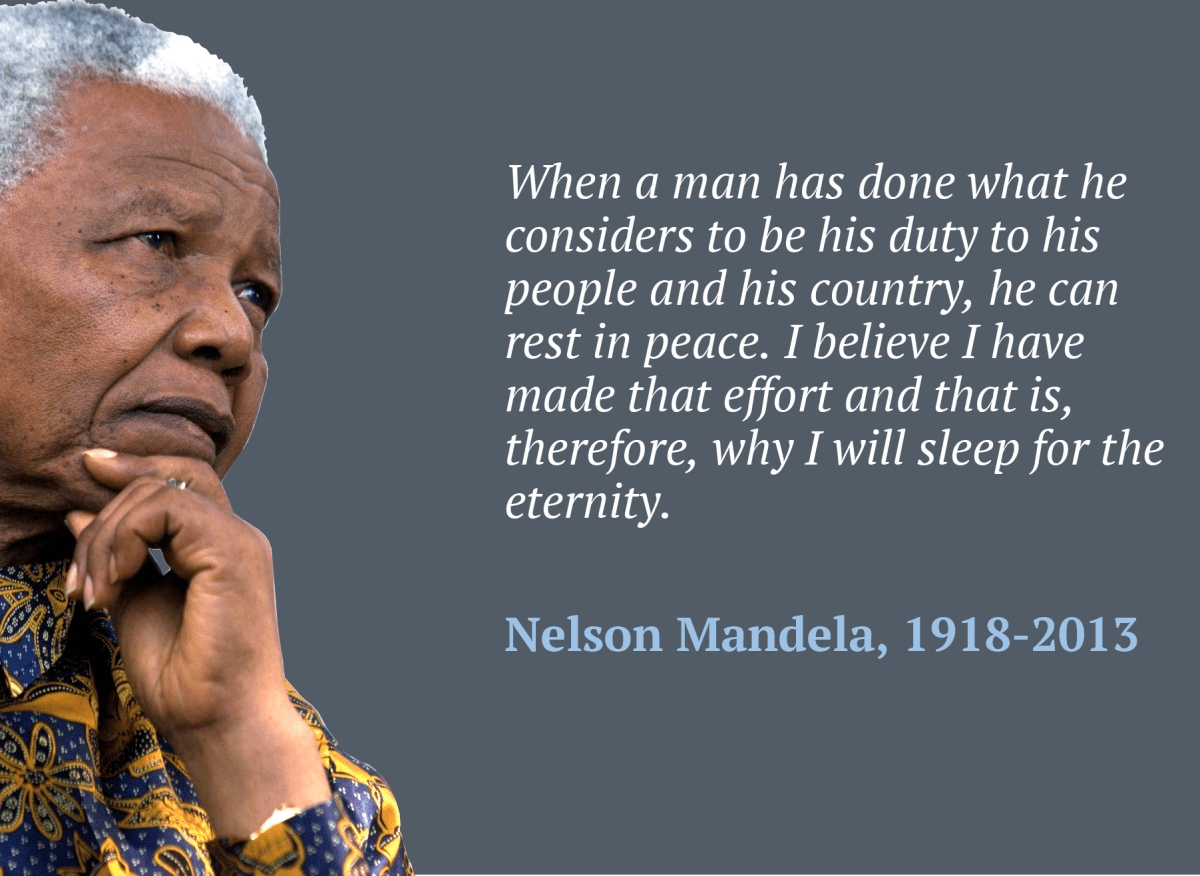
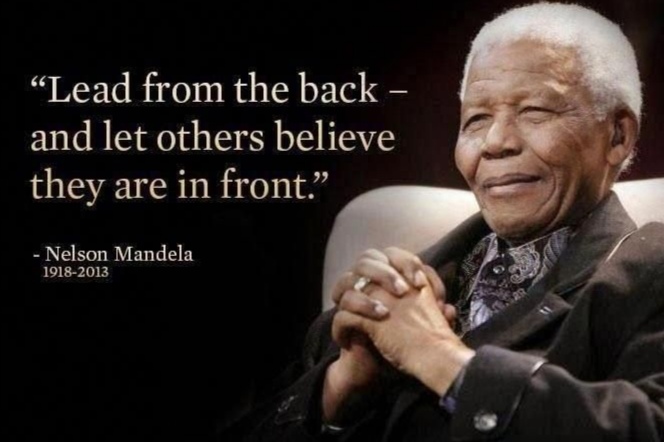
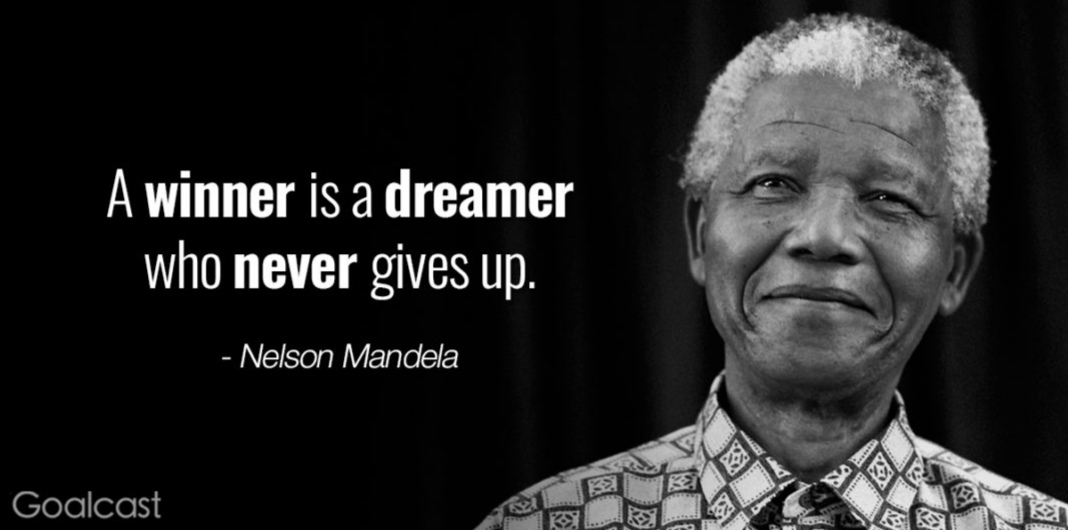
Nelson Mandela was a South African anti apartheid Revolutionary Statesman.

He served as president of South Africa from 1994 to 1999.

Nelson Mandela was first black head of state and the first elected in a fully representative democratic election.

Nelson Mandela is known as Gandhi of South Africa.

Nelson Mandela was born on 18 July 1918.

We died on 5th December 2013.

Nelson Mandela International Day is celebrated on 18 July every year.

Today is 103rd birth anniversary of Nelson Mandela.

Nelson Mandela opposes the racist system of Apartheid in South Africa and dedicated his life to establishing social equality for all.

Nelson Mandela was awarded the prestigious Nobel Peace Prize in 1993.

He involved in anti colonial and African Nationalist politics, joining the AMC in 1943 and co-founding its youth league in 1944.

In 1962, He was arrested, imprisoned and subsequently sentenced to life imprisonment for conspiring to overthrow the state following the Rivonia trial.

He served 27 years in prison.

  • Nelson Mandela was also known as Madiba.
  • Nelson Mandela was birth name Rolihlahla Mandela.
  • Nelson name was given by his Primary school teacher.
  • In 1931, he begin his College degree at University College of Fort hare.
    • Nelson Mandela was expelled for participating in a protest against the universities policies.
  • Nelson Mandela received his law degree from University of South Africa in 1989.
  • The king of his village threatened him and his cousin with arrange marriages but they both ran away.
  • Nelson Mandela along with his fellow AMC member established South Africa’s first black law practice in 1952.
  • Nelson Mandela was banned from leaving the country
    • In order to leave the country he used the name David Motsamayi to get out of country in secret.
  • In prison, he was mentor to to other prisoner and taught them about nonviolent resistance.
  • Nelson Mandela believed that sports has the power to change the world, it has the power to inspire,. It has the power to unite people in a way that letter else does. It speaks to youth in a language they understand. Sport can create hope where one there was only dispair. It is more powerful than government in Breaking Down racial barriers.
  • He was released from prison in 1990 by president Frederick William De klerk.
  • Nelson Mandela was 76 year old when he was elected as president of South Africa.

Theme of national Mandela International Day 2021

  • The theme of this year is One Hand Can Feed Another.
  • Last year’s theme was Take Action, Inspire change.
  • The theme highlighted the importance of Government and citizen working together to build a peaceful equitable and sustainable world for all.

GANDHI JAYANTI

The birthday of Mohandas Karamchand Gandhi is celebrated as ‘Gandhi Jayanti.’ On October 2nd, 1869, India’s “Father of the Nation,” Gandhiji, was born. Thus, every year on October 2nd, Gandhi Jayanti is commemorated. In India, Gandhi Jayanti is observed as a public holiday. The International Day of Non-Violence is observed on this date around the world. Mahatma Gandhi’s contribution to Indian politics is incomparable. Gandhi suffered and was imprisoned multiple times throughout the tumultuous days of the campaign for Indian independence, but freedom for his motherland remained his cherished objective. He was a key figure in several freedom fights and was the founder of the “Quit India Movement.”

ABOUT MAHATMA GANDHI:

On October 2, 1869, in Porbandar, Gujarat, India, Mohandas Karamchand Gandhi was born. His father was the dewan (chief minister) of Porbandar, and his deeply religious mother was a staunch follower of Vaishnavism (the worship of the Hindu god Vishnu), influenced by Jainism, an ascetic faith built on self-discipline and nonviolence. Mohandas Gandhi left home at the age of 19 to study law at the Inner Temple, one of London’s four legal schools. In mid-1891, he returned to India and opened a law office in Bombay, but it was a flop. He quickly took a job with an Indian company, which dispatched him to its South African branch. Gandhi stayed in South Africa for approximately 20 years with his wife Kasturbai and their children. Mohandas Karamchand Gandhi, also known as Mahatma Gandhi, was a well-known freedom activist and a significant political figure in India’s fight for independence from British control. He was also known as the country’s founding father. He had, without a doubt, made a difference in the lives of India’s impoverished. Every year on Gandhi Jayanti, his birthday, is commemorated. Many people were impacted by his idea of truth and nonviolence, which was embraced by Martin Luther and Nelson Mandela for their respective battle movements.

SIGNIFICANCE OF MAHATMA GANDHI AND GANDHISM:

Mahatma Gandhi was a pivotal figure in both the Indian Independence Movement and the Indian National Congress, and is considered one of the most influential figures in Indian history. Gandhi was born in the city of Porbandar, in western British India, on October 2nd, 1869. Mohandas Karamchand Gandhi was his birth name. He was given the epithet ‘Mahatma’ later in life, which means ‘Great Soul,’ and refers to his role in assisting India in gaining independence from Britain.

“I have nothing new to teach the world. Truth and non-violence are as old as the hills. All I have done is to try experiments in both on as vast a scale as I could.” – M K Gandhi

Gandhism is an amalgamation of Mahatma Gandhi’s ideals and practices, as well as his activities, in plain and simple terms. It comprises of Mahatma Gandhi’s thoughts, which he gave to the world, and his acts, which he termed as “truth experiments.” We know that he lived his life to the fullest extent feasible in accordance with his principles; therefore, people who believe that Gandhism is defined solely by his ideas are mistaken. Mahatma Gandhi cannot be compared to Karl Marx, whose ideas are referred to as Marxism. It would be incorrect to label the Mahatma’s views as Gandhism because he was also a man of action.


Gandhism – An Ideology

Gandhism derives its name from most prominent leader of India’s freedom movement Mohandas Karamchand Gandhi, commonly referred to as Mahatma Gandhi. He was a lawyer by profession. He was also a social and moral philosopher. His social and political thoughts are collectively known as Gandhism. His thoughts are not in a single book it is scattered in many notes, his autobiography “My Experiments with Truth”. He himself rejected the existence of anything such as Gandhism but with due course of time it is seen that Gandhian thoughts have worldwide application. The features of Gandhian ideology are as follows: –

Politics and Ethics

Gandhi thinks that ethics and morality should be the guiding principles of politics. He emphasizes the use of spiritualization in politics. He believed in purity of means to achieve pure ends. He lifelong criticise the use of unfair means even if gives the best possible result. His morals were based on all religions, but he paid special attention to Sanatana Dharma. In his views the essence of all religion is same. No religion is superior or inferior to any other religion. He thinks that politics without religion is nothing short of a death trap, which kills the soul. He sat for hunger strike to force Indian Government to pay ₹ 55 crore to newly formed to Pakistan.

Truth and Non-violence

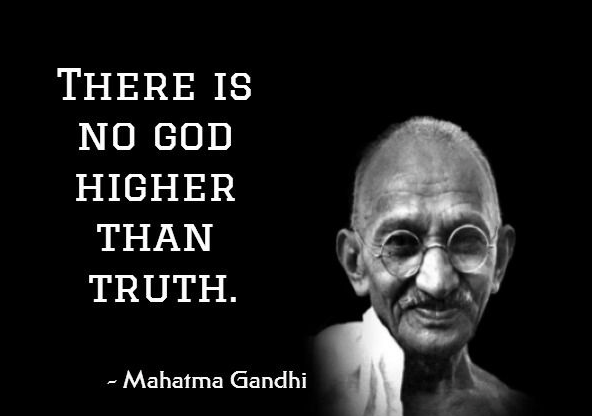
One of the major philosophies of Gandhism is the search for truth. Finding truth is as tough as to find God itself. He believed that truth can be found through devotion to its creations specially the oppressed. Non-violence is also a part to pursue truth. It means preventing the use of violence in one’s behaviour towards other living beings which include both physically and mentally. He says, “It is non-violence only when we love someone those that hates us.” He holds that harming nature is also a form of violence. His firm belief in non-violence can be seen in his ways of struggle against the British. He uses non-violence ways such as Satyagraha, Dandi March etc. It is not the way of weak but the power of strong. Non-violence has the power to defeat physical force by the use of spiritual force.

Vision of Classless Society

Gandhi was the flag bearer of a classless society. People have a mindset that physical labour is inferior to another type of labour such as mental labour. He made ‘bread labour’ compulsory for all.  The concept of ‘bread labour’ expected everyone to do physical labour to compensate or produce his/her consumption. Here bread is symbolical for various items of one’s consumption. This will create a sense of dignity of labour among societies. He rejected discrimination on the basis of race, caste, religion etc. He strived to create a classless society by transforming the attitude of peoples towards discrimination.


Mahatma Gandhi and Martin Luther King Jr

The starkest commonality between Gandhi and King is undoubtedly their pursuit of a non-violent culture of peace. Non-violence for them, wasn’t a strategy of inaction but rather one of action. Their nonviolent methodology and idea of freedom brought about change not just in external laws and systems of governance, but also affected the minds of fellow humankind at large. So much so that their death wasn’t the end of the legacy but rather their ideas drew strength from it.

In a war-torn century, they stood as firm preachers of the non-violent ideology. This ideology served for their goals as a means to an end, which in the case of the two leaders was varying but the ideology also served as a means itself. While for Gandhi it was for the cause primarily India’s independence from colonial rule. He also focused on the structural violence within the community such as caste system. On the other hand, as for King Jr was concerned with the cause of civil rights movements and used non-violent measures as a form of mobilization for legal purposes. The two leaders developed theories that linked to a system that surpassed governmental laws. Logical reasoning attempted to help justify their approaches towards unjust laws. Gandhi focused a lot of his analysis on defining the true meaning of ‘civilization’ whereas King concerned himself with ceasing injustice. Both Gandhi and King discussed reasons regarding the use of non-violent actions to fight for their rights.

But even as their aims, so to say, were a bit different their legacy often tends to meet at a point. The credit for this goes not just to their non-violent strategy but at the same time, to how they chose to approach this. Gandhi attempted to include egalitarian traditions in Hindu religious thought in his fight against the caste system. Similarly, King summoned traditions of resistance in the African-American Protestant Church, with the idea of freedom at the core of it. Both these iconic leaders had come to recognize that the inner and outer divide, the religious realm, the political, are also related which proved crucial in their understanding of the existence of a fundamental link between personal and social transformations.

Mahatma Gandhi and Martin Luther King Jr, have been criticised by many for their lackluster understanding of the society as a whole, more specifically for having near blind faith in their ideologies. However, credit is indeed given where it’s due. There is a moderate consensus that the relevance of the two has carried forward the ages. A reason we can attribute to this is their basic thinking and vision were universal in nature. Perhaps that is the reason why in parts of the world we are able to still witness non-violence amidst of violence, attempt to seek equality amidst ever rising inequalities.

Born 59 years apart, yet united by ideology. The two great leaders, born, brought up, into different local contexts, may have meant different ways to seek problems, it may have meant difference in the analysis of their successes or failures but it did not mean disassociation between the two. The belief that nonviolent resistance is one of the most formidable weapons available to the oppressed sections were commonly shared by the two. The very fact that their ideologies managed to become synonymous with the idea of ‘people’s movements’ seen in many countries is testimony to the fact that their relevance is by no means over yet. It has stood its ground in the face of adversities. Its success or failure is always open to scrutiny and interpretation. Whether or not it survives the passages of time remains to be seen but it can be said that the bond that holds the legacies of the two stalwarts, lives on amongst us even today.