Gender inequality: a hindrance to a better future

Gender is a widely used term in the society. No matter where we go, the term gender is mentioned in some way or the other, the very first place being the hospital where we are born. From there on gender becomes a persistent part of our life. However, with gender comes certain disparities which are faced by the people who are categorized under it.

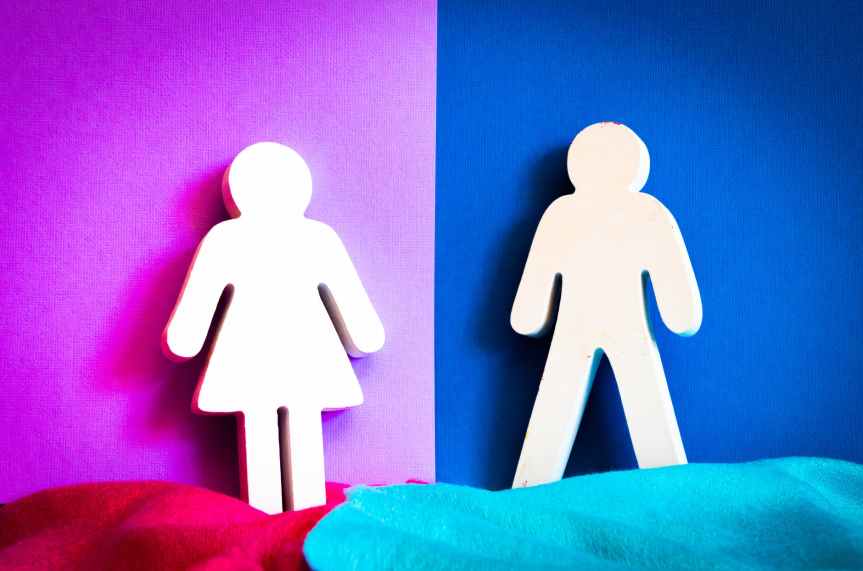
Male and female, the two categories of gender, are assumed to do specific roles from which if they waver in some ways, then are heavily criticized. Male is visualized as the breadwinner in the society whereas the female is visualized as the one taking care of the household. Although in the modern world these assumptions do not hold a strong stance, there are still certain areas where gender inequality strongly prevails.

Whenever there is a talk about gender inequality the category that is affected the most by it is the female part. There are certain restrictions for the females which they are forced to abide by. In many parts of the society, a female child is seen as a burden to the family. She is not given proper educational, social as well as political opportunities in comparison to men. Although we say that our generation has rose above those stereotypes, we all know it is a big lie. People still do not see women to be skilled enough to hold higher positions than men or do any kind of skilled labor. Women are still seen as some fragile and weak section of the society who need to stay at home rather than go out and break the stereotypes and toxic social barriers. In many parts of the world, cases of female infanticide are still prevalent. The women in the certain areas are still denied access to education and most importantly proper health and sanitation. In the universal picture, no matter what field it is, the gender participation graph is not very promising for the case of women. Women also do not get equal pay as per men for the same work that they do. In many so-called developed as well as developing countries, the women are still criticized and are bashed publicly for being confident and breaking the socio political barriers. Although men also face certain discriminations, the struggles faced by women is an important global issue that needs to be solved as soon as possible.

In the world where the death does not discriminate between men and women, then why do we human still be bound by those stereotypes? Men and women both are the two faces of the same coin and are equally important for the smooth functioning of the society. Through the participation of women there can be a lot more opinions and solutions to many problems that are prevalent in the world. Gender equality today can prove to be beneficial in many ways and pave the way to a better and sustainable tomorrow.

Gender Roles In The Indian Society .

The family is a significant foundation that assumes a focal part in the existences of most Indians. As a collectivistic culture, Indians frequently accentuate unwaveringness and association. The interests of the family normally take need over those of the individual, and choices influencing one’s very own life –, for example, marriage and profession ways – are by and large made in discussion with one’s family. Individuals will in general demonstration to the greatest advantage of their family’s standing, as the demonstration of an individual might affect the impression of the whole family by their local area.

Albeit most relatives are inside topographical nearness or part of the equivalent word related gatherings, the development of urbanization and relocation has seen more youthful ages testing these impression of family. Today, numerous individuals have broad family networks that are spread across a wide range of locales and hold various occupations. The connections an Indian individual keeps up with their more distant family abroad are regularly a lot nearer than those of a great many people in English-speaking Western social orders. Indians living abroad likewise keep up with close associations with their family staying in India through standard calls, sending settlements or visiting if conditions permit.

Family Structure

The idea of family stretches out past the normal atomic unit to include the more extensive family circle. These huge multigenerational families can likewise be fundamental to giving financial security to a person. They regularly give a wellspring of work in a family agrarian business or lead to promising circumstances in urban areas where connection ties and outsider presentations are critical for employment.

Individuals might be urged to have associations with their aunties and uncles that are similarly just about as solid as parental connections. In numerous pieces of India, it is entirely expected to discover three or four ages living respectively. The dad (or oldest child, if the dad is absent) is normally the patriarch while his better half might manage any girls or girls in-law that have moved into the family. More distant families will in general concede to the older and notice a reasonable pecking order among relatives. In more metropolitan regions, individuals will generally live in more modest family units yet keep up with solid connections to their more distant family.

Sexual orientation Roles

The disparity between the situation with men and women is very articulated in India. There are fluctuating traditions encompassing a training known as ‘pardah’ that requires the disengagement of women in specific circumstances. It is rehearsed generally in northern India and among traditionalist Hindu or Muslim families. As per pardah, females are by and large expected to leave the homegrown domain just when hidden and joined by a man. Subtleties in the custom fluctuate between identities, religions and social foundations. For instance, hitched Hindu women specifically parts of northern India might wear a ‘ghoonghat’ (a particular sort of shroud or headscarf) within the sight of more seasoned male family members on their significant other’s side.

How much sexual orientation imbalances endure is going through persistent change. For instance, a sibling and sister in India are presently liable to get equivalent tutoring and treatment in the instructive framework. Albeit still limited by many obliging cultural assumptions, instructed women in the public arena are turning out to be more engaged through employment openings and political portrayal. There are likewise governmental policy regarding minorities in society programs for women to assist with tending to underlying disparities.

Connections and Marriage

Organized relationships are normal all through India, however assumptions and practices of conjugal arrangements fluctuate contingent upon the district and religion. Relationships are commonly organized through a go between, two or three’s folks or some other confided in outsider. Dissimilar to in the past where people would not be educated about their future accomplice, it is presently more normal for the family to counsel the couple for assent before the wedding.

Organized relationships are almost consistently impacted by station contemplations. Along these lines, endogamous relationships stay a typical practice (restricted to individuals from a similar standing or, sometimes, religion). This is to some degree since organizing relationships is a family action that is helped out through prior organizations of a more extensive local area. Despite the fact that individuals will wed inside a similar rank, families keep away from marriage inside the equivalent subcaste. The establishments of masterminded marriage and position endogamy empower guardians to impact the fates of their children just as support the neighborhood and social design. Intercaste relationships are rarely orchestrated. Such relationships are known as ‘affection relationships’ and are turning out to be more normal. Notwithstanding how one discovers a companion, the family is almost consistently counseled in the marriage cycle.

Generally, weddings are directed in the towns of the families, whether or not the family dwells in their town or in a significant city. To be sure, it isn’t unexpected for families to keep their town home with the end goal of weddings or other significant family occasions. Weddings might length over various days and explicit practices change contingent upon the locale and the religion of the families.


Gender Inequality in Education.

In the current presence, there have been plan of measures and projects that equivalent rights and openings ought to be made accessible to the young ladies. Previously, people had this perspective that male individuals from the family ought to be instructed. When the guys would gain schooling, they would deliver a huge commitment in advancing generosity and prosperity of their families through attainment of employment openings. However, in the current presence, in metropolitan just as in provincial networks, people and networks have achieved changes in their perspectives and viewpoints and are empowering young ladies also towards securing of training. Young ladies and women too can deliver a viable commitment in advancing government assistance of their families and networks. At the point when they acquire support from their folks, then, at that point they can achieve great quality training. Variables Causing Gender Inequality in EducationThere are presence of numerous and different associations between sexual orientation correspondence and fulfillment of the fundamental right to schooling. The women and young ladies are encountering refusal of common freedom to instruction in India, yet in different nations of the world also (Gender Discrimination in Education, 2012). The elements causing sex disparity in instruction have been expressed as follows: Conditions of Poverty When people are dwelling in the states of neediness, then, at that point they experience number of issues and difficulties in making a decent living. Now and again, they even experience issues in gathering their every day healthful requirements. The people and families, who are dwelling in the states of destitution have the essential goal of creating adequate pay to support their everyday environments agreeably. They generally don’t have monetary assets to meet the costs, engaged with the compatibility of training. In any event, when schooling is given liberated from cost, they actually need to meet different costs, involvedin instruction. These are, fixed things, books, sacks, outfits, transportation costs, etc. The destitution stricken people experience issues in gathering these costs. The destitution stricken people have this perspective that procurement of training is of most extreme importance in supporting one’s day to day environments. Consequently, they seek to get their

children joined up with schools. They have this perspective that instruction ought to be given to the children, so they can get occupied with great employment openings in future. Though, young ladies are prepared as far as execution of family duties and minor tasks to procure some pay to help their families. For example, when guardians are occupied with creation of things, then, at that point they empower their children, both young men and young ladies to help them underway and deals. The young men are needed to land occupied with this position after school hours. The young ladies are normally deterred from securing of instruction, because of restricted monetary resources.Their male kin show them, what they have realized in schools, principally to improve their essential proficiency abilities of perusing, composing and numeracy. Commonness of Traditional Viewpoints The people and networks generally had customary perspectives with respect to the schooling of young ladies. Especially, when they had restricted monetary assets, then, at that point theybelieved that these assets ought to be put something aside for marriage of their young ladies and ought not be spent on training. Another perspective was that in conjugal homes, young ladies would not have the option to use their instructive abilities and would fundamentally need to implement the family obligations. Thinking about this angle, from the underlying stage, they train their young ladies in regards to the implementation of family obligations. In the past period, young ladies and women were only kept to their homes and not permitted to take an interest in any friendly capacities or occasions. They were not permitted to communicate their perspectives and viewpoints in the dynamic issue. They basically supported their day to day environments on the pay procured by men and were intended to comply with the choices and rules detailed by them. Henceforth, because of the predominance of customary perspectives, they were oppressed and were denied of specific rights and openings. The procurement of training of young ladies, is generally influenced by conventional practices related with youthfulness. In some rustic networks, pervasiveness of certain customary practices end up being obstacles inside the course of obtaining of training with respect to the young ladies (Linda, 2014). Because of the pervasiveness of customary perspectives and viewpoints, girlsare denied from obtaining of instruction, yet in addition in accomplishing self-freedom. All in all, these are boundaries inside the course of attainment of empowerment openings. Accordingly, for achieving empowerment openings among women and young ladies, it is important to achieve changes in customary perspectives and offer equivalent rights and chances to women and young ladies.

Inequality

            We all are living in 2021, do you think the society treats men and women in a equal manner? No, many of us answer would be no. Don’t you think why? Take your house as an example, does everyone in house do the household chores? No, only the girls especially the mothers.

            It is totally not fair at all to make the women to getup in the middle of the meal to serve you. How cruel it is? She is also a human, she to have her own choices and she have all rights to enjoy her life.

            We all are hearing different stories each day about how the society treats the girl in the worst manner, the dowry cases, inter caste marriage, acid attack, rape, harassment, abuse these are all the evidence that how the women are struggling to live the common life in this world. As the world is modern the problems are modern, I’m saying about the social media platforms, where most of the women feels insecure,

            She is not your servant to fulfill your needs but a living human to fulfill her own needs. As the years passed there stood many peoples raising the voice for the equality of women but still we are fighting for the equality. A good point about that is the situation is not bad as that time but it is not ok to accept that.

            Fighting all these things we can see women in the higher points, think about the road she travelled to reach the goal it is not at all the easier one. It says how determine the women should be reach it.

            We should teach everyone in the society that men and women are equal, this should be done in the childhood itself so that it would create the better society in the future. This is not only with the men and women but with every human in this world should be treated equally, we all are a fellow human being who are responsible for the society, so it’s our responsibility to make the awareness, and make people understand about the equality.

            “Equality is the soul of liberty; there is, in fact, no liberty without it.” – Frances Wright

            “The word ‘equality’ shows up too much in our founding documents for anyone to pretend it’s not the American way.” – Martha Plimpton

“There’s nothing complicated about equality.” – Alice Paul

 “I would like to be known as a person who is concerned about freedom and justice and prosperity for all people.” – Rosa Parks

Gender inequality

Gender inequality is the social process by which Mens, LGBTQ community and womens are not treated equally.

Gender equality is a human fight not a female fight.

Due to patriarchy many girls are hold back from striving for their dreams, receiving a quality education, medical facilities and overall awareness for their well being.

Everyday girls and boys see gender inequality in their homes, community, in textbooks, in media and among the adult.

Society assume an unequal responsibility for household work with mothers bearing the brunt of caregiving.

In schools, many girls receive less support than boys to pursue the studies they choose.

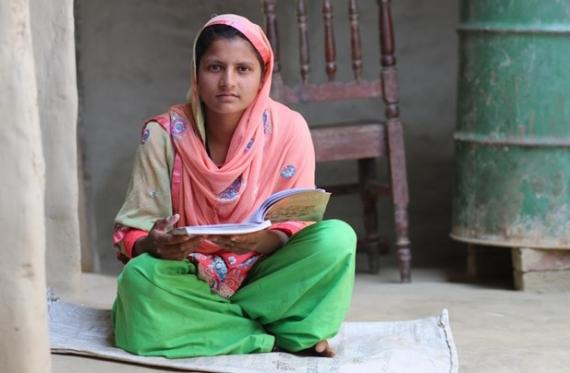
Rashida khatun says I realised the harm I would be causing myself if I agreed to get married. She in is enrolled in UNICEF supported program that provides out of school girls with basic numeracy, literacy and life skills.

Whenever we talk about gender inequality we always seems to focus on women but have anyone ever thought that what it’s like for men or LGBTQ community.

Gender equality, historically has been predominantly a women’s movement for women but I think the impact of gender inequality and how its affecting man hasn’t really been addressed.

Emma Watson

  • Generally we see in our families that boys told to pursue maths in higher studies and girls were told to pursue Biology so that the male became engineer for female can be a doctor.
  • Whenever a boy wants to be a cook, singer, dancer he is being discouraged by society or his parent by saying that these are for girls.
  • It’s a perception in our patriarchal society that boys do not cry that the crime is only for girls.
    • Mens are stronger than women and they will never bow in front of anyone
    • That’s why mens will never admit their faults because they are meant to be dominant in this patriarchal society.
  • When a girl wanted to be an officer then she is being discouraged by the family by saying that this is the job for Boys.
  • The perception of our societies that the household works are made for womens .
  • If people see a girl with short hair, the peoples in society tends to point at her and think of her as a freak.
  • If a girl is not interested in cooking but she still has to do it and she is pressurized by the family and Society by saying that you have to go to someone’s home and you have to do it because it is made for you.

Let’s talk about LGBTQ community. It is is the second of three issues focused on social inequalities.

  • LGBTQ community faces gender inequality in their everyday life.
  • They face inequalities in employment, education, health, survival and political empowerment.
  • It is not the only way by which they faces social inequalities.
  • Lgbtq people faces housing discrimination and workplace discrimination.
  • They faces basic human right such as – marriage and family adoption.
  • They have been discarded from their homes at their birth. The only reason of this is that they are not a male or female.
  • Peoples doesn’t behave properly with them.

Is this what we called Gender Equality??

We blame society for gender inequalities and for everything but why we forget that society is because of us. we are the part of society and to change this society we have to change our own mentality.

Gender inequality and discrimination

Discrimination and inequality are deep rooted in the society. It can be traced back since ancient time, and this is not only on the bases of gender but, even with the skin a person is born, a person who had dark skin tone was declared a disgrace for the society they have to suffer in terms of the occupation, facilities and even to have the basic necessities fulfilled. This was a common behaviour of the society back then where a person who was born with certain skin is titled unacceptable and suffered of cruelty from his own people.


In many countries, even after so many years of independence people do suffer and the concept of discrimination and inequality is very normal for some. Specifically talking about gender-based inequality it is very common in the backward communities and in the modern society it still prevails in the thinking of people who have always accepted this as normal and not trying to change the orthodox mindset. In many cases the mindset which accepts inequality and discrimination is kind of hereditary and they can not accept change which is totally wrong. There are many households where a girl and a boy are treated differently no matter what, it is like rules are fixed but, who fix those rule ‘the society – as per the preference, likes, dislikes and most importantly what they feel is appropriate as per the narrow mindset which has not changed since infinity. It is actually painful and saddening to see a human treating another human this way, it is targeting our own people to support some ancient concepts which are hampering the growth of a society.

If we can not stop this or at least reduce the number of such incidences that are happening worldwide, how can we expect development of a nation. Afterall, we live on the same land, we breath same air, drink same water and when every one will be a part of the development process then only a nation prospers, its people prosper.


The worst part is the person who has to face all this like even from a small age for instance- if in a family there are two kids and both are treated differently then isn’t it harmful for their growth, a child can feel the difference he or she might grow introverted and disturbed mentally. If not this way, then in future, if the system remains the same the same child can experience discrimination and inequality at any other stage of life may be in terms of the opportunity they will get or even salary they will receive for the same work.


This should be learned that a person is not harmful for the society it’s the difference that we create is harmful. It is not solving any purpose but, creating unnecessary hurdles in the path of change and development. Strict laws and rules can control it up to some extend but, not fully. Today, we are still accepting changes and supporting open minded thinking so this discrimination and inequality should also end soon to have a clearer view of bright future.

Causes of gender inequality

Over the years, the world has gotten closer to achieving gender equality. There is better representation of women in politics, more economic opportunities, and better healthcare in many places of the world. However, the World Economic Forum estimates it will take another century before true gender equality becomes a reality. What drives the gap between genders? Here are 10 causes of gender inequality:

. Uneven access to education
Around the world, women still have less access to education than men. ¼ of young women between 15-24 will not finish primary school. That group makes up 58% of the people not completing that basic education. Of all the illiterate people in the world, ⅔ are women. When girls are not educated on the same level as boys, it has a huge effect on their future and the kinds of opportunities they’ll get.

. Lack of employment equality
Only 6 countries in the world give women the same legal work rights as men. In fact, most economies give women only ¾ the rights of men. Studies show that if employment became a more even playing field, it has a positive domino effect on other areas prone to gender inequality.


. Job segregation
One of the causes for gender inequality within employment is the division of jobs. In most societies, there’s an inherent belief that men are simply better equipped to handle certain jobs. Most of the time, those are the jobs that pay the best. This discrimination results in lower income for women. Women also take on the primary responsibility for unpaid labor, so even as they participate in the paid workforce, they have extra work that never gets recognized financially.

. Lack of legal protections
According to research from the World Bank, over one billion women don’t have legal protection against domestic sexual violence or domestic economic violence. Both have a significant impact on women’s ability to thrive and live in freedom. In many countries, there’s also a lack of legal protections against harassment in the workplace, at school, and in public. These places become unsafe and without protection, women frequently have to make decisions that compromise and limit their goals.

#5. Lack of bodily autonomy
Many women around the world do not have authority over their own bodies or when they become parents. Accessing birth control is frequently very difficult. According to the World Health Organization, over 200 million women who don’t want to get pregnant are not using contraception. There are various reasons for this such as a lack of options, limited access, and cultural/religious opposition. On a global scale, about 40% of pregnancies are not planned and while 50% of them do end in abortion, 38% result in births. These mothers often become financially dependent on another person or the state, losing their freedom.

Women Empowerment

“Women don’t have to choose between career and motherhood. We can have it all. Its very important to understand and believe that you’re equal. Equality is about equal opportunities, mutual and equal respect. Empowerment comes from within.” – Indian professional tennis player, Sania Mirza

Women empowerment is empowering women to take their own decisions for their personal development and making them capable of deciding for themselves. It also acquires a point of view that women are as equal as men. Empowered women can exert power to shape their families ,communities and society ,hence women empowerment is very important to elevate women.

According to estimates from the World Health Organisation, approximately 35% of all women around the world have experienced physical and/or sexual violence in their lifetime . That is 1 in every 3. Millions of girls are subjected to abuse, child labor, sex trafficking, child marriage and other offenses. Several women and girls continue to shoulder the burden of poverty. Also there are numerous reports about women being subjecting to domestic violence and gender inequality. Sexual assault, abuse, rape is far more common than people like to believe. This has to end . Women empowerment is need of the hour. Hence, we have to find ways ,we as citizens of the world, can empower women.

1.Women economic empowerment is very important. Everyone should teach their girl child with good moral values and higher education. There is a need to give priority to a girl’s education and the their economic empowerment is the key to achieving their full potential and giving voices to women who have been repressed for ages.

2.Celebrate other women.We should learn to celebrate other people’s success and accomplishments and and hence, I feel it is encouraging to celebrate women who support each other especially as a women community. Lets appreciate women who inspires others, lift women up and celebrate each other’s victories.

3.Its important to Listen to women and hear their stories. Listen to them when they open up. It takes a lot of support and healing to brave enough to share their horrific and life changing experiences . Support each other and make sure that you are here for them .

4.”No one is born ugly, we’re just born in a judgmental society.”-South Korean songwriter and rapper, Kim Namjoon There is so much pressure by society for to fit into the unrealistic beauty expectations of women. We must strongly advocate for the eradication of the unrealistic beauty standards and other societal expectations that are leading our people into deep mental health issues. May we truly become the women we aspire to be .

Women have a right to play an equal part in our society- planning and decision-making. It is important to know ourselves and our self-worth.But there can be no equality or empowerment when there’s fear, violence and control. We must commit to keep raising awareness on women and girls rights and issues through peer education, empowerment and community engagement. It’s to start making and leaving a mark on our generation and for our future generations.