Annual Conference on All India Services Personnel Reforms

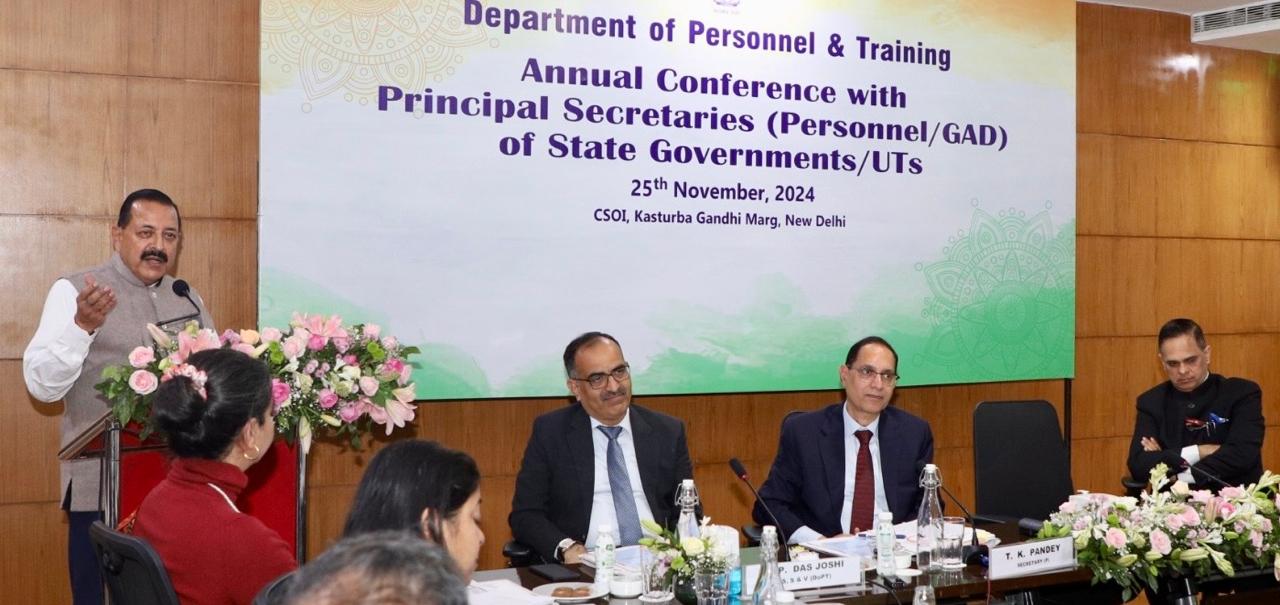
Union Minister of State (Independent Charge) for Science and Technology; Earth Sciences and Minister of State for PMO, Department of Atomic Energy, Department of Space, Personnel, Public Grievances and Pensions, Dr. Jitendra Singh convened a meeting of State GAD/ Personnel Secretaries to receive an update about the status of General Administration Department working in individual States and UTs as well as to familiarise them with new initiatives undertaken by the Central Government headed by Prime Minister Sh Narendra Modi.

The Union MoS DoPT shared a futuristic vision in governance  driven by latest technology and motivated by the goal of Viksit Bharat 2047.

 The meeting served as a platform for fostering knowledge exchange and collaboration among administrative leaders, with a focus on capacity building, technological integration, and reforms to enhance governance. The conference saw participation from almost all the States and Union Territories.

Addressing the participants, Dr. Jitendra Singh underscored the critical need for regular interactions to empower civil servants in meeting the evolving challenges of governance. He reaffirmed the government’s commitment to transparency, integrity, accountability, and efficiency, as reflected in initiatives like Mission Karmayogi, which has institutionalized capacity building for civil servants at all levels.
Highlighting the importance of grievance redressal mechanisms, the Minister noted that the centralized system has witnessed an unprecedented increase in public trust, with complaints handled annually growing from 2 lakh in 2014 to over 25 lakh in 2024. This surge demonstrates the government’s ability to address citizens’ concerns more effectively and in a timely manner.

During the meeting, Union Minister Dr. Jitendra Singh addressed several concerns raised by Principal Secretaries regarding administrative challenges and the development of civil servants. One key suggestion was the creation of a mentoring framework where senior officers could guide younger batches, helping them benefit from the knowledge and experience of their seniors. The Minister acknowledged this proposal and highlighted the importance of mentorship in shaping future leaders within the civil service.

Dr Jitendra Singh shared that the Department of Personnel and Training (DoPT) had already initiated a mentorship program in 2016, where officers undergo a three-month exposure to central government priorities, gaining a better understanding of national-level governance. This initiative has proven effective in boosting the confidence and initiative of younger officers, enabling them to interact with senior mentors and learn key aspects of governance practices.

In response to concerns about the lack of exposure for officers at the Deputy Secretary and Joint Secretary levels, Dr. Jitendra Singh emphasized ongoing efforts to address this gap. He highlighted initiatives like the National Learning Week and Mission Karmayogi, which now cater to various levels of civil servants, including those in state administrations. These programs are designed to equip officers with the necessary skills to navigate dynamic governance challenges.

Dr. Jitendra Singh also appreciated the development of online knowledge series aimed at providing essential information to officers and assured that the DoPT would collaborate with states to share best practices and resources, further enhancing the learning environment for civil servants nationwide.

The conference explored several key topics vital to governance and administrative reforms, with a focus on the increasing role of technology in administration. A major highlight was the implementation of centralized grievance mechanisms, which have greatly enhanced public trust in the system’s responsiveness. The discussions showcased success stories, such as the integration of face recognition technology and year-long capacity-building initiatives, both of which are helping civil servants adapt quickly to evolving governance needs. These reforms, along with Mission Karmayogi’s institutionalized framework, are equipping officers with the necessary skills to tackle modern administrative challenges effectively.

Sessions at the conference aimed to provide civil servants with the tools needed for contemporary governance. The Department of Personnel and Training (DoPT) presented key personnel reforms, and a discussion on Mission Karmayogi illustrated its transformative impact on civil services. The event also highlighted the use of electronic Human Resource Management Systems (eHRMS) to streamline personnel management, alongside discussions on the successful implementation of the Right to Public Grievance Redressal Act, which has boosted public service accountability.

Additionally, the Department of Administrative Reforms and Public Grievances (DARPG) conducted a session on digitalization, centralized grievance redressal, and special campaigns, aiming to modernize administrative processes.

Dr. Jitendra Singh emphasized the need for states to adopt technologies like face recognition systems to improve administrative efficiency. He also stressed that the capacity-building measures under Mission Karmayogi would help civil servants navigate the complexities of modern governance.

The Minister also highlighted the 2018 amendments to the Prevention of Corruption Act, which introduced accountability for both bribe-givers and bribe-takers, fostering a more balanced and just approach to corruption. He further emphasized the need for regular exchanges of best practices among states to replicate successful governance models nationwide.

The conference, organized by DoPT, saw the participation of DoPT Secretary Shri Tuhin Kanta Pandey, DARPG Secretary Shri V. Srinivas, and senior officials from both departments, enriching discussions on governance reforms.

Dr. Jitendra Singh concluded by expressing confidence that these collaborative efforts would drive progress and empower civil servants for more effective public service delivery.

*****

ESG INVESTING

ESG investing also called socially responsible investing and impact investing is a type of investment made by large corporates which prioritizes environmental, social, and governance outcomes. This type of investment is the need of the hour, which highlights sustainable investment. The investment is based on the universal fact that organizational growth and financial performance is due to environmental and social factors. 


ESG investing has started to gain popularity in India. This is a way of investing in companies based on their commitment to the ESG factors. 

ESG (Environmental, Social, and Governance) investing is an approach that considers not only financial returns but also the impact of investments on society, the environment, and corporate behavior. Here’s a breakdown of each component:

  1. Environmental Factors (E): This includes considerations related to a company’s impact on the environment. ESG investors look at how a company manages its carbon footprint, energy efficiency, waste management, water usage, and its overall environmental sustainability practices.

  2. Social Factors (S): Social considerations involve how a company manages relationships with its employees, communities, customers, and suppliers. It includes aspects like labor standards, diversity and inclusion, human rights, employee relations, and the company’s impact on local communities.

  3. Governance Factors (G): Governance focuses on the leadership, structure, and policies that guide a company. It includes issues such as board diversity, executive compensation, transparency, ethical business practices, and the presence of anti-corruption measures.

ESG investing aims to align investments with ethical and sustainability goals while seeking competitive financial returns. Investors choose companies or funds based on their ESG performance, seeking those with strong sustainability practices, ethical business conduct, and positive societal impacts.

The growth of ESG investing reflects a shift in investor preferences, with more individuals and institutions seeking to support companies that align with their values and contribute positively to society and the environment.

However, challenges exist, including the lack of standardized ESG metrics, varying definitions and interpretations of ESG factors, and the need for more comprehensive and transparent reporting by companies regarding their ESG practices.

Overall, ESG investing represents a growing trend where financial decisions are influenced not just by potential returns, but also by a company’s impact on the world around it.


Mantra of "reform, perform and transform"

 Union Minister of State (Independent Charge) Science & Technology; Minister of State (Independent Charge) Earth Sciences; MoS PMO, Personnel, Public Grievances, Pensions, Atomic Energy and Space, Dr Jitendra Singh today said that besides making governance technology driven, Prime Minister Narendra Modi has also introduced innovation in governance reforms. This is the essence of the success story of Modi’s Mantra of “reform, perform and transform”, he said.


Speaking after the launch of 16th edition of Central Secretariat Manual of Office Procedure (CSMOP) 2022, the Minister said, there is continuous innovation in reforms under Modi, who takes personal interest in all governance related issues. He also informed that some of the success stories in governance reforms implemented by Modi as Chief Minister of Gujarat are being replicated at the Centre like the abolition of interviews, prompt redressal of grievances and weeding out of obsolete laws.

Dr Jitendra Singh said, since 2014, when Modi took charge at the centre, there is a visible change in the work culture and all the Ministries are strictly adhering to timelines in execution of projects. Referring to CSMOP 2022, the Minister said, after 2019, this is the 2nd Manual prepared by DARPG within such a short time under Modi Government and this is a clear-cut reflection of continuity, consistency and innovation in reforms.

Referring to productive and result-oriented reforms in grievance redressal, Dr Jitendra Singh said, Department of Administrative Reforms & Public Grievances (DARPG) in the union Ministry of Personnel has emerged as a role model, which many of the States and UTs are trying to emulate. He also pointed out that requests are pouring in from several States and UTs for linking their grievance portal with Central CPGRAMS. He said, after Jammu and Kashmir, Uttar Pradesh and Madhya Pradesh, several such requests are being received.

Apart from the launch of 16th edition of Central Secretariat Manual of Office Procedure (CSMOP) 2022, Dr Jitendra Singh also launched Impact Evaluation Report of the Initiative for Increasing Efficiency in Decision Making in the Central Secretariat 2022, Swachhta Assessment Report 2022 and CPGRAMS Monthly Report July 2022.

Dr Jitendra Singh said, the Central Secretariat Manual of Office Procedure 2022 is the 16th Edition of the CSMOP first published in 1955 to enable the march to a digital central secretariat. He said, the 16th Edition has focused on the 4-pronged approach of Delayering, Delegation, Operationalization of Desk Officer System, Digitization of Central Registration Units and Implementation of e-Office ver 7.0 as part of the silent transformation under way in the context of “Maximum Governance – Minimum Government”.

The Swachhta Assessment Report 2022 highlights that the Swachhta Campaign has resulted in holistic process improvement in disposal of pending matters by Central Ministries/ Departments with focus on cleanliness process adoption. The Swachhta Campaign activities are implemented on a regular basis in all Ministries/ Departments for 3 hours/ week. The success of the Campaign is highlighted by the efficient management of the space and bringing pendency down by significant margin. 12 lac sq. feet of space was freed and scrap worth Rs. 62 crore was disposed.

V. Srinivas, Secretary DARPG said that the CPGRAMS Monthly Report, is a unique initiative to present a comprehensive analysis on types and categories of public grievances in Government of India and nature of disposal along with relative performance of Ministries/ Departments. The CPGRAMS Monthly Report says that 68576 PG cases were redressed in July 2022 along with 8539 appeals. The CPGRAMS Monthly Report contains the Grievance Redressal Index which ranks Ministries/ Departments on the overall quality and timely disposal of grievances. For the month of July 2022, Department of Land Resources, Department of Public Enterprises and Department of Expenditure are the top performers in the Grievance Redressal Index for July 2022.

All the 4 reports will be available at www.darpg.gov.in.

The launch function was attended by all Senior Officers of DARPG, all Nodal Appellate Authorities, all Nodal Grievance Officers as also all Nodal Officers of the Special Swachhta Campaign in Government of India.

Ultimate aim of governance should be to empower the people

 The Vice President, Shri M. Venkaiah Naidu today emphasized that the ultimate aim of governance should be to empower the people and to move towards minimum government, which according to him, will happen only when the last mile has been traversed and the people at the bottom of the pyramid have been reached. He also said that the success of good governance lies in including and making the toiling masses equal stakeholders in the process of development.

Addressing the participants of 48th Advanced Professional Programme in Public Administration (APPPA) conducted by Indian Institute of Public Administration in New Delhi today, the Vice President said that the key to good governance lies in inclusivity, use of technology and maintaining high moral standards. “Technology fosters transparency and hence accountability, which is the basic feature of good governance, while moral standards impart legitimacy,” he added. He hoped that these two together will usher in a new political culture preparing the ground for bringing in transformational reforms.

Underlining that people’s participation is very important for inclusive and responsive governance, Shri Naidu said that reforms are only initiated by the Government but actually bear fruit only when people proactively work for the future of their country. Referring to the ongoing celebrations of Azadi ka Amrit Mahotsav, the Vice President urged every Indian to work with an aim of building a happy, healthy, prosperous and developed nation when we enter the 100th year of our Independence.

Observing that the focus today is shifting from government to governance, the Vice President said that India is on the move, shedding the baggage of its past and embarking on a journey towards hope and the fulfilment of its ultimate destiny which is to lead the world.

On this occasion, Shri Naidu also stressed the need to get out of the colonial mindset and asked the administrators to use people’s language while discharging their official duties. “You should interact with the people in their own language,” he told them. Referring to the adage — ‘service to man is service to God’, the Vice President wanted all officials to make ‘people’s service’ their main motto.

Lauding IIPA’s contribution to national development, Shri Naidu said that he is happy to see IIPA today is adapting itself to the needs of a dynamic and fast changing era, and to the rapidly changing socio-economic milieu. Calling for arresting the trend of falling standards in public life, he wanted the administrators and leaders to set examples in integrity and ethics.

Referring to the concept of Ram-Rajya, so often espoused by Mahatma Gandhi, he said that in Indian tradition, it is a metaphor to define how a well governed welfare state should look like and exhorted the administrators to follow these lofty ideals to build a society free from poverty, discrimination and inequality.

Emotional intelligence-concepts, and their utilities and application in administration and governance

One of the most fundamental and important aspects of the human experience is our ability to sense emotions. Without it, our existence would be one-dimensional and nowhere as rich and dynamic as it is. We feel joy and euphoria when we achieve something, sadness when we lose it, and disappointment when things don’t go our way. All of these are manifestations of the different emotions we experience.

NATURE OF EMOTIONAL INTELLIGENCE

The essence of emotional intelligence as envisioned by Goleman can be summarized as follows;
It is the ability to control the emotions of others, including groups, individuals and closed people. It is a process of knowing what is good or bad and how to go from bad to good. It is susceptible to development or damage as a result of one’s life experiences. It is not genetically fixed, rather it is widely learned and continues to develop throughout life. It develops with age and experience as a person moves from childhood to adulthood. Both men and women have a personal profile of strengths and weaknesses in emotional intelligence abilities. Women tend to be stronger in skills based on empathy and social skills, while men do better in skills based on self-regulation.

BENEFITS OF EMOTIONAL INTELLIGENCE

EI has implications for many types of our lives, from personal relationships to professional settings. Some of the benefits are as follows;
Allows individuals to harness not only thinking skills but also the information and power that emotions bring. Take a realistic and realistic view of emotions as opposed to traditional notions that encourage unhealthy emotional suppression. Facilitate understanding of self and others beyond superficial information. Encourage and enable empathy to the quality of interpersonal interactions
It adds a competitive advantage over mere cognitive intelligence and technical skill so that individuals can pursue excellence and success using a wide range of intelligences. Allows individuals to control their emotions. This means that a person can intensely feel desired emotions (e.g. joy, love, etc.) and avoid unwanted emotions like anger, jealousy, etc.

Application of emotional intelligence in administration and governance

Many administrative staff are extremely talented, exceptionally intelligent and have very high IQs. They excel in computer science, science, and math. But they have difficulty establishing social relationships. Many of them are rebellious and ruthless in their reactions to the outside world. They have little or no feelings for the people around them. They feel physiologically uncooperative in their relationships and lack social kindness or even a personal social life.

People with high emotional intelligence know how to listen to their feelings and control their intensity so that they are not influenced by others. Emotionally intelligent people know how to manage troublesome emotions. Emotionally intelligent people feel the effects of their emotions on others. People with emotional intelligence know how to use their strengths and compensate for their weaknesses. Emotionally intelligent people listen to other people’s feelings and can relate to them. Emotionally intelligent people act ethically and build trust through honesty and consistency. In the field of management and operations, emotional intelligence includes 5 main elements of emotional intelligence: Self awareness. Self-regulating. Motivation. Empathy. Social ability. These emotional intelligence skills are essential for successful leadership. Self-awareness and agency skills for accurate and confident self-assessment help emotionally intelligent decision-makers determine their appropriate role in the decision-making process (Goleman, 2001). Self-management and its behavioral components such as self-control, reliability, conscientiousness, adaptability, willingness to succeed, and initiative are important emotional intelligence skills for decision makers. decisions (Goleman, 2001). As an administrator and leader, you must manage these factors. 1. Self-Awareness: If people are self-aware, they always know how their feelings and emotions affect those around them. Perceiving themselves in an administrative or leadership position also means having a clear picture of their strengths and weaknesses.

2. Self-regulation: Managers and leaders who succeed in self-regulation do nothing to verbally attack others, make hasty or emotional decisions, stereotype people, or hurt others. harm their value. Self-regulation is about maintaining control. This element of emotional intelligence also implies the flexibility and commitment of directors and leaders to personal accountability. To improve his or her self-regulation, the person must Know the values. Take responsibility yourself. Practice calm.

3. Motivation: Directors and leaders are motivated to work consistently to achieve their goals. And they have extremely high standards for the quality of their work. Administrators can improve motivation by following the method: Double-check why they perform certain behaviors. Make sure their goal statements stay fresh and energized (goal setting). Know where they are. Let’s hope and find something good: Motivated leaders are optimistic no matter what they’re up against. Adopting this mindset can take some practice, but it’s well worth it.

4. Empathy: Empathy is essential to running a successful team or organization. Empathetic directors and leaders have the ability to put themselves in the shoes of others. They support and develop their team members, challenge those who act unfairly, provide constructive feedback, and listen to those in need

. 5. Social skills: Directors and employees should develop social skills. People who do well in this element of emotional intelligence are excellent communicators. They are equally open to bad news as well as good, and they are adept at getting their team to support them and get excited about a new task or project. Managers with good social skills are also good at managing change and skillfully resolving conflicts.

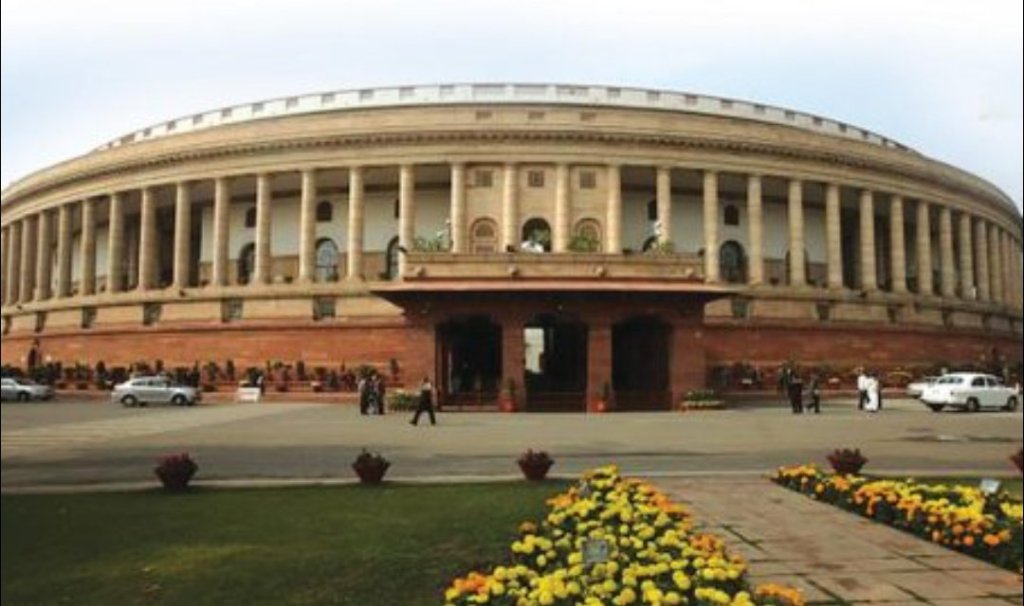
Effective Control of Parliamentary Committees on the Government

Source: Deccanherald

Parliamentary Committees are established to effectively control the governmental regular and constant activities. Parliamentary Committee is appointed by the house or nominated by the speaker or Chairman, shows its report to the house, work has been completed under the direction of speaker or Chairman. The Parliamentary system grants various ministries that are allotted without the elected Representatives of ministries.

The Constitution of India has mentioned these committees at different places but without making any specific provision regarding structure, tenure and functions. 

Types of Parliamentary Committee 

Parliamentary Committees are of two types : 

Standing Committee

The Standing Committee considers annual reports of ministries/departments. Examine bills pertaining to the concerned ministries. Overlook national basic long term policy documents presented to the houses. It considers the demands for grants of the concerned ministries departments before they are discussed and voted in the Lok Sabha. Report should not suggest anything of the nature of cut motions. It ensure economy and efficiency in Public expenditure for ministries and would be more careful in formulating their demands.

These committees are permanent and work on a continuous basis. These committees are classified into the six categories:

1) Financial committees

• Public accounts committee

• Estimates committee

• Committee on public undertaking

2) Departmental standing committees

3) Committees to inquire

4) Committees to scrutinize and control

5) Committees relating to the day to day business of the house

6) Housekeeping Committees or service committees

Financial Committees

Public Account Committee 

This Committee was set up first in 1921 under the provisions of the government of India Act 1919, which consists of 22 members (15 from Lok Sabha and 7 from Rajya Sabha). The members are elected by the parliament every year. The chairman of PAC is appointed by the speaker from its members.

The Committee examines Public expenditure not only from a legal and formal perspective of economy, prudence, wisdom and brings out the cases of corruption, inefficiency and expenses.

Some important functions of PAC are as under:

• To examine the appropriation accounts and the finance account of the Union Government and any other account laid before the Lok Sabha.

• To examine the accounts of stale corporation, trading concerns and manufacturing projects and audit report of CAG.

• To identify the money spent on any service during a financial  year in excess of the amount granted by the Lok Sabha.

• To formulate the account of autonomous and semi autonomous bodies, the audit which was conducted by the CAG.

Estimate Committee

To suggest alternative policies in order to bring alternative policies in order to bring about efficiency and economy in administration. To report what economies need to improve in organization, efficiency and administrative reforms consistent with the Policy underlying the estimates can be affected. To look how much money is spending out limits of the policy implied in the estimates.

The committee does not exercise its functions in relation to Public undertakings as are allotted to the committee on Public undertakings. It shall not be incumbent on the committee to examine the entire estimates for the year. 

Committee on Public undertakings

This Committee report of the CAG on Public undertakings. To exercise such other functions vested in the public accounts Committee and the estimates Committee in relation to the public undertaking . To examine the reports and accounts of PU and identify the affairs of the PU that are being managed in sound manner.

Departmental Standing Committee

The standing Committee is to secure more accountability of the executive to the parliament in the sphere of financial accountability. The term of office of each standing Committee, 8 work under the Rajya Sabha  and 16 under the Lok Sabha.

Committees to Inquire 

The main objective of this Committee is to identify petitions on bills and on general public importance. Matters associated with Union subjects. It is a semi-judicial system; examine the cases of breach of privileges of the house and its members and recommend action. The committee imposes the code of conduct of members of parliament. Also, look over the cases of misconduct and recommend action.

Committee to scrutinize and Control  

It is a committee that assures, promises and undertakings given by ministers from time to time on the time of house. It was established in 1953. It has the powers to make regulations or conferred by the Constitution. Its functions are to consider the reports of the National Commission for the STs to examine all the matters relating to welfare of SCs and STs like Implementation of constitutional and statutory safeguard. 

Committee Related to the day to day Business of the house

Committee regulates the programme and time table of the house. It allocated transactions of legislative and other business that came into the house or were introduced by the Government. The committee considers the matters of procedure and management in house and recommends necessary amendments. Classifies bills and allocates time for the discussion on bills and resolutions introduced by private members. 

Housekeeping Committees

The committee considers and advises on matters of the house that do not fall within the jurisdiction of any other parliamentary Committee. It deals with residential accommodation of members and other amenities like food, medical aid etc,. Conduct meetings related to the library of parliament and assist members in utilizing the library services. Committee also structure the salary, allowances and pension of members of Parliament Act 1954.

Webinar on Ensuring Inclusive Governance: Making Every Person Matter’

Ministry of Education and University Grants Commission (UGC) today organised a webinar on ‘Ensuring Inclusive Governance: Making Every Person Matter’, as part of the vision to provide quality education to all. Union Minister for Tribal Affairs Shri Arjun Munda addressed the webinar as a Chief guest. Secretary, Higher Education Shri Amit KhareChairman, UGC, Shri D.P. Singh; Joint Secretary, Higher Education, Smt. Neeta Prasad and senior officials of the Ministry were present on the occasion.

Speaking on the occasion, Shri Arjun Munda said that Eklavya Model Residential School (EMRS) Scheme is reflective of Prime Minister’s visionary approach towards inclusive education. EMRS provides access to education to the marginalized population in tribal regions, he added. Shri Munda highlighted that the National Education Policy 2020 which aims to ensure equity and inclusion has given a national perspective to education of tribals, and is a true manifest  of good governance. He also said that programmes like Digital India, SamagraShiksha, etc are facilitating students from tribal and rural areas to compete at the national level.

Shri Arjun Munda stressed on the importance of Self Governance with the spirit of SabkaSaath, SabkaVikaas, SabkaVishwas and SabkaPrayaas and said that the Prime Minister has given us this mantra with focus on people’s participation in achieving these ideals which is the basis of a true democracy.

The Minister reiterated that as we celebrate Azadi Ka Amrit Mahotsav, it should be our resolve to empower everyone to take advantage of opportunities  with our long -standing constitutional commitment to provide equal opportunities to all.

Shri Munda emphasised upon good governance, self-governance and inclusive governance leading to inclusive growth. Shri Munda also reminded the academia about their responsibility of giving wings to the aspirations of new generation, particularly the deprived one.

Shri Amit Khare shed light on the problems faced by students from deprived section of the society including, students from rural and tribal areas. Shri Khare stressed upon language problems being faced by the students. He emphasised on the need for promoting Hindi and regional languages so that no student should be left behind.

Prof. D.P. Singh, Chairman, UGC in his opening address reiterated the constitutional ideals of equality of status and opportunity as pivots of our democracy. He called upon the leaders of higher education institutions to make concerted effort towards good governance with specific focus on inclusiveness and strive to provide opportunity to all their constituents equally.

The Webinar on Ensuring Inclusive Governance: Making Every Person Matters provided an opportunity to bring academic leaders, educationist and administrators on one platform and was supported by Babasaheb Bhimrao Ambedkar University, Lucknow. The Vice Chancellor of the University, Prof. Sanjay Singh delivered the welcome address.Prof. Alok Rai, Vice Chancellor, University of Lucknow in his Keynote address reiterated students as fundamental to our education system. He underlined the issues being faced by students from all section of society and elaborated different issues of Women students, Divyang Students, Tribal Students, etc. Prof. Rai emphasised upon value creation and value addition for students from different background.

The Technical Session was chaired by Prof. Sushma Yadav, Former Vice-Chancellor, BhagatPhool Singh MahilaVishwavidyalaya, Sonepat and Member-UGC. Prof. M.M. Salunkhe, Vice-Chancellor, BharatiVidyapeeth, Pune, Prof. H.C.S. Rathore, Former Vice-Chancellor, Central University of South Bihar and Prof. BhimrayaMetri, Director, IIM Nagpur addressed the technical session.

*****


UNDERSTANDING GOOD GOVERNANCE

GOOD GOVERNANCE SHOULD BE LIKE AIR. IT’S EXISTENCE NEED NOT BE DISCUSSED BUT IT’S ABSENCE WOULD MAKE A HUGE DIFFERENCE”

Nowadays the terms “Governance” and “Good Governance” are being used widely. Major reforms, actions, changes and even donations and institutional activities are basing all their rules and regulations which will help achieve “good governance”.

WHAT IS GOVERNANCE ?

Governance is the process or system by which entities are administered or directed and controlled. It is the process of decision making and the process of deciding the actors who will be involved in the decision making process and implementation of decisions.

The concept of “governance” has been used from past many years and can be used in several contexts such as international or national governance, corporate governance, local governance etc. One of the major actor of governance is “government” and other actors involved in the process of governance are NGOs, private bodies, landlords, research institutes, religious leaders, political parties, military etc.

GOOD GOVERNANCE

The term “Good Governance” originated from the report entitled ” Governance and Development” which was published by World Bank in year 1992. The World Bank defined Good Governance as “the manner in which power is exercised in the management of a country’s economic and social resources for development”.

Thus, good governance is an approach which aims in creating a system which finds justice and peace and ensures the protection of individual’s human rights and liberties. Good Governance is measured by 8 characteristics : Participation, Rule of Law, Transparency, Responsiveness, Consensus Oriented, Equity and Inclusiveness, Effectiveness and Efficiency, and Accountability.

Good Governance is a process of governance that considers the views of minorities and vulnerable groups of society and minimizes corruption while taking decisions thereby boosting the economy.

REFERENCES OF GOOD GOVERNANCE

  1. The importance of Governance is clearly highlighted and explained in Indian Constitution which is based on – Sovereign, Socialist, Secular and Democratic Republic for attaining democracy, rule of law and welfare of people.
  2. The Sustainable Development Goal q6 also describes the linkage between improvement of governance, inclusivity, participation, rights and security.
  3. The Bhagavad Gita also provides numerous indications of good governance, leadership, dutifulness and self realization.
  4. According to former United Nations Secretary-General Kofi Annan, “Good governance is ensuring respect for human rights and the rule of law; strengthening democracy; promoting transparency and capacity in public administration.” He also said that “Good Governance is perhaps the single most important factor in eradicating poverty and promoting development”.

PRINCIPLES OF GOOD GOVERNANCE

Principles of Good Governance
  1. Participation: Participation by each section of the society irrespective of their gender, social class, caste, income etc. The participation of the individuals can be through direct or indirect (through other institutions or representatives) mediums. Participation is an crucial part of governance because it brings forward the major concerns of the society, the issues as well as in identification of potentials of the area.
  2. Rule of Law: It ensures fair and legal frameworks and methods being used in the governance and enforces impartially. This requires full protection of human rights, especially of the weaker sections and vulnerable groups of the society. For this the law needs to be impartial, uncorrupted and judicial.
  3. Transparency : Transparency in a process or system or governance ensures that all the decisions, actions and enforcements are taken only after considering the governing rules or laws or regulations. It signifies the availability of information’s to all the stakeholders and the people who will be affected by the actions or enforcements.
  4. Responsiveness: Good Governance requires timely actions and processes and tries to serve all the stakeholders within a reasonable time frame or specified time frame.
  5. Consensus Oriented: Good Governance requires different interests to sum up into a broad consensus to show the best interest for the community and society. It is necessary for developing sustainable human development and the only way by which cultural, social and historical diversity can be preserved.
  6. Equity and Inclusiveness: Equity and Inclusivity ensures that all the members of the community or society are feeling free to put forward their concern and idea. Nobody should feel excluded. Equity and Inclusivity is highly important for minor or vulnerable groups because it is very important to give them the opportunities to express their issues and ideas for improving and maintaining their well being.
  7. Effectiveness and Efficiency: The results or outcomes of the processes should satisfy the needs of the society and should make the best use of available resources, without exploiting them. It is necessary to identify the potentials and weaknesses of the society or community or area before coming up or implementing any solution. All the outcomes and results should within desirable time frame and should be the best decisions for the welfare of the society.
  8. Accountability: It is one of the most vital requirements of good governance as it ensures that all the stakeholders (government bodies or private institutions or civil organizations or NGOs etc) are accountable to the public. Who is accountable to whom depends on the actions or decisions which are taken in the organization.
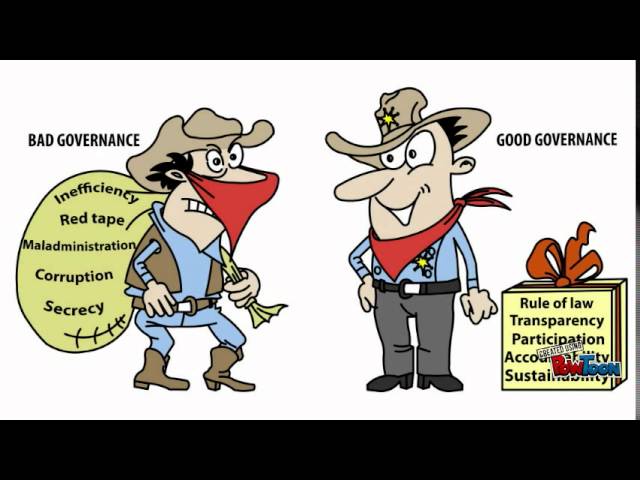
What makes Good Governance different from Bad Governance

CONCLUSION

From the above discussion it is clear that “Good Governance” is the most ideal form of governance but it requires transperancy, accountability and intelligent form of governance which makes it more difficult to achieve. For achieving good governance, a system much be uncorrupted, bias free and free from prejudices.

Thus, there is a need to reform and reformulate strategies for restoring good governance. The government should focus on the principle of : “Sabka Saath, Sabka Vikas and Sabka Vishwas” which will guide the way to achieve inclusive and sustainable development.