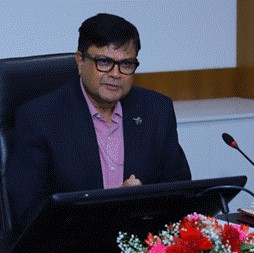
Shri Sanjay Kumar reviews PSSCIVE's Bagless Days Guidelines

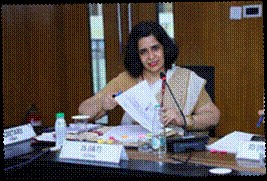
 On June 28, 2024, the Secretary (SE&L), Shri Sanjay Kumar reviewed the guidelines developed by PSSCIVE, a unit of NCERT under MoE, for Bagless Days in schools. Participants from NCERT, CBSE, NVS, and KVS attended the meeting. Various suggestions were discussed, including sensitizing students about the local ecology, teaching them to test water purity, recognizing local flora and fauna, and visiting local monuments. Based on this review, PSSCIVE will further fine-tune and finalize its guidelines.

As per paragraph 4.26 of the National Education Policy (NEP) 2020, it is recommended that all students in grades 6-8 participate in a 10-day bagless period. During this time, students will intern with local skill experts and engage in activities outside of traditional school settings. This initiative aims to help students develop an appreciation for the larger ecosystem in which their school is embedded.

Based on these recommendations, PSSCIVE, has developed comprehensive guidelines for implementing Bagless Days. These guidelines are designed to make learning in schools more joyful, experiential, and stress-free for students.


Bagless Days will be encouraged throughout the year, encompassing a variety of activities such as arts, quizzes, sports, and skill-based learning. Students will gain periodic exposure to activities outside the classroom, including visits to historical, cultural, and tourist sites, interactions with local artists and craftsmen, and visits to various educational institutions within their village, tehsil, district, or state, as mapped by local skilling needs.

******

Guidelines for identification, admission and continued education of migrant children

 In order to mitigate the impact of challenges thrown by the COVID-19 pandemic for out of school children, it was felt necessary for every State/UT to devise a proper strategy for preventing increased drop outs, lower enrolments, loss of learning and deterioration in the gains made in providing universal access, quality and equity in the recent years.

Thus the Ministry of Education had issued guidelines for identification, admission and continued education of migrant children.

In order to ensure that school going children have access to education with quality and equity and to minimize the impact of the pandemic on school education across the country, the Ministry of Education has prepared and issued detailed guidelines on steps to be taken by the States and UTs during school closure and when the school re-open.

The main features of the Guidelines are :      

A.        Continued Education for Out of School Children (OoSC) and Children with Special Needs (CWSN)


  • Continuation of non-residential training for identified Out of School children through volunteers, local teachers and community participation.  
  • Continuation of home based education for CWSN children through Volunteers/ Special Educators.


B.        Identifying Out of School Children


  • States and UTs to carry out proper identification of OoSC for 6 to 18 years age group through a comprehensive door to door survey and prepare action plan for their enrolment


C.        Enrolment Drives and Awareness Generation


  • Enrolment drives may be undertaken at the beginning of academic year such as Praveshotsav, School Chalo Abhiyan etc.
  • Undertake awareness generation among parents and community for enrolling and attendance of children
  • Create awareness on practicing 3 Corona appropriate behaviors – wear mask, six-feet distance and washing hands with soap for which IEC material shared on 06.11.2020 with the States & UTs.


D.        Student Support while Schools are closed


  • Students to be provided support including counseling, large scale awareness & targeted home visits
  • Using Manodarpan web portal and tele-counseling number for counseling services and psycho-social support.
  • Distribution of educational material and resources, supplementary graded material, workshops, worksheets etc to support home-based education
  • Exploring option of classroom on wheels and classes in small groups at village level
  • Increasing the access of children to online/digital resources, TV Radio etc. to reduce learning loss
  • Ensuring easy and timely access to the provisions of uniforms, textbooks and MDM
  • Timely disbursement  of stipend to enrolled CWSN girls through DBT
  • Strengthening of Child protection mechanism at local level


E.        Student Support on School Reopening


  • Preparation and running of School readiness modules/Bridge course for initial period when the schools re-open so that they can adjust to the school environment and do not feel stressed or left-out.
  • Identification of students across different grades based on their learning levels
  • Relaxing detention norms to prevent drop out this year.
  • Ensuring reading with comprehension and numeracy skills by encouraging children to  read books beyond syllabus and creative writing & problem solving.
  • Large-scale remedial programmes/Learning Enhancement programmes to mitigate learning loss and inequality.


F.         Teacher Capacity Building


  • Effective utilization of the online NISHTHA training modules and online training module for Corona responsive behavior to be launched on DIKSHA portal soon.
  • Use of alternative Academic Calendar prepared by NCERT for joyful engagement of children in learning.

*****


guidelines for the development of e-Content for Children with Disabilities

 Union Education Minister Shri Ramesh Pokhriyal ‘Nishank’ today approved the release of the guidelines for the Development of e-Content for Children with Disabilities today.

A comprehensive initiative, PM e-VIDYA was launched on 17th May 2020, with an aim to unify all efforts related to digital/online/on-air education. The programme interaliaenvisages development of special e-content for the Divyang (Children with Disabilities-CwDs).  In pursuance of this vision, the Department of School Education and Literacy, Ministry of Education had constituted a Committee of experts, for recommending guidelines for developing e-content for these children.

For the first time, an attempt was made to prepare guidelines for CwD also referred to as Children with Special Needs (CWSN) children so that the goal of inclusive education is fulfilled. The Committee submitted a report titled “Guidelines for the Development of e-Content for Children with Disabilities” comprising of eleven Sections and two Appendices. This report was shared, presented, discussed and accepted by the MoE.

The salient highlights of the e- content guidelines in the report are: 

  • e-Content for CwDs should be developed based on the four principles namely: perceivable, operable, understandable and robust.
  • e-Content including text, tables, diagrams, visuals, audios, videos etc. should comply with accessibility standards: national standards (GIGW 2.0) and international standards (WCAG 2.1, E-Pub, DAISY  etc).
  • Distribution platforms on which content is uploaded (e.g. DIKSHA) and Reading platforms/devices on which content is accessed and interacted (e.g. e-pathshala) must comply with technical standards
  • Reasonable pedagogical accommodations have been recommended to meet specific needs of CwDs
  • The technical standards and guidelines have been detailed out in Section 4 of the report.

The Committee has also recommended that in a phased manner textbooks may be adapted into Accessible Digital Textbooks (ADTs). The content of ADTs should be provided in multiple formats (text, audio, video, sign language etc) with turn-on and turn-off features. Further ADTs should provide flexibility to CwDs to respond to its content/exercises in multiple ways. The detailed guidelines for developing ADTs along with existing international and national experience, in the development of prototypes including the recent NCERT’s experience: Barkha:A Reading Series for All (in print and digital forms),  Accessible Textbooks for All and UNICEF’s “Accessible Digital Textbooks using Universal Design for Learning ( for Learners with and without  Disabilities ) have been presented in Section 5 of the report.

  • In addition to ADTs, in Sections 6 to 9 the Committee has recommended specific guidelines for development of supplementary e-Content as per 21 disabilities specified in the RPWD Act 2016 for students having Intellectual and Developmental Disabilities, Multiple Disabilities, Autism Spectrum Disorders, Specific Learning Disabilities, Blindness, low vision, Deafness and Hard of Hearing and others.
  • A summary of the recommendations has been presented in Section 10 of the report for sharing widely with content creators, content designers, developers, publishers.
  • The implementation roadmap along with the suggestions to strengthen compliance to the accessibility guidelines have been presented in Section 11 of the report.
  • Comprehensive guidelines and technical standards for the production of Sign Language videos have been provided at Appendix-1 of the Report.
  • Universal Design for Learning( UDL)guidelines for content development and pedagogical accommodations are given in Appendix 2 of the report. 

These guidelines will initiate the creation of high quality content for digital education toChildrenwith Special needs. They are dynamic by nature, to be improved based on experience and advent of better technology.

click here for accessing the guidelines


*****

KP/AK

MEDITATION – A GUIDE TO START


MEDITATION – GUIDE TO START

WHAT IS MEDITATION? THE REAL ACTION:

We are all reactors to nature i.e. Whenever we hear a sound or noise, we tend to hear it, see what it is, at first case we feel it. You may think what is the relation between the above and meditation. The intense ability to control us by imitating ourselves. When you see a gorgeous beautiful thing, our eyes seek attention to it and makes us to go glare at it, but it is dangerous behind; which eyes doesn’t realize. Mind instructs not to see, eyes obey, that is when control occurs.


ATTAINING WAYS:

There are a ‘n’ number of ways to do meditation based on one’s nature. But the common attribute is to hold the heart. The Heart is like a lake, each stone thrown on it raises waves and these waves doesn’t allow us realize the true nature of us. The Moon’s light falls on the river, as the river is with waves, we couldn’t see the reflection clearly. Likewise, many things affect us externally for a stationary time; escaping from the trap make us find who we are and understand what we are.

WHERE TO DO MEDITATION?

“Arrange a separate, isolated room if possible. Sleeping, eating and entering the room without bathing should be totally avoided; keep it orthodox” says Swami Vivekananda. But in an era as such, it goes hardly possible. As there is a will, there is a path; take any place which is distraction free especially from the digital world. Make sure that while starting meditation, anger, worry or any other emotion should be avoided. Mind and heart should be neutral.

THE FIRST THING TO DO:

First, leave heart to wander around in its own direction. Slowly monitor them, keenly observe as its the prior idea to start it. Without knowing what your soul is doing, controlling it is impossible. There may be vivid, evil thoughts too, which to encounter may be shocked in the beginning. As you continue with the process, you can feel its reducing potency. Things get into your control and you become only yours.The Mind gets unaffected by extrinsic factors. First believe that your body is rigid and with it you can realize all that is possible in the world.

GATE..IS IT REALLY WORTH?

                             GATE


A dream and goal of many is to clear GATE before completing their B. Tech or B.E. Degrees. But the unfortunate is that only some rare blossoms get through it as the average pass percentage of the exam is approximately 17-20% of all branches. And now some science and humanities branches are also included in the exam. Most of the aspirants who clear GATE with maximum ranks is the third or above attempters. 

The fun is that even some lecturers or professors of tier 2 and 3 colleges attend GATE coaching classes in the training institutes for getting a PSU job while some leave PSU’s and come to coaching institutes and teach for the upcoming batches as they say, it is stressful working there.  Some ultra legends are starting their own coaching institutes as they can earn double the amount of what PSU’s pay if they take efforts to reach out to the aspirants.

STRATEGIES ON YOUTUBE:

   When talking about strategy, the first screen of the mind is YT. there are ‘n’ number of videos in YT on topics like 50 days strategy and full syllabus crash course within 2 months and so on.. there are still some searchers looking for strategies like “HOW TO CLEAR GATE WITHOUT STUDYING!!!?”.. Hey guys where do you all exist? Some aspirants put vlog of their full day studies and earn income which is mostly viewed by the new bloomers of GATE.

WHY SHOULD YOU ATTEMPT GATE?

      It shapes your consistency and boosts your confidence in case you go for placements in core companies. If you are of an average type of college, then go for it and never miss it at any chance. You get a great confidence and believe in yourself for attempting more exams related to the field. 

  REAL PROVED STRATEGIES:

1. Go for syllabus coverage at the first level or get an idea of subjects.

2. List out the major, minor and easy subjects.

3. Categorize your importance and view the weightage of questions on the subjects.

4. Starting increasing your pace for solving the questions.

5. Always pre-plan yourself for the day.

6. Getting alteast two test series is must before appearing for the exam.

7. Dedicate some time for hobbies, too, as they drive more concentration.

8. Avoid getting frustrated in the first attempt.

9. In any case, don’t panic.

10. Focus on one thing, that is your exams for Gate alone, make it your strength you will be able to do it.

MARKETING MANAGEMENT

 MARKETING MANAGEMENT


Marketing is the process which is never ending as it meets the needs and gives profit.

Companies profit purely depends upon marketing strategy and that needs to clearly done by the markets to move forward.

Understanding management is  based on production, selling and product concept. 

Innovation is critical, but we cannot leave it as optional because we all know its worth. Such kind of innovative ideas play an important role in marketing.

A dynamic relationship connects the stakeholders groups. A smart company creates a high level of satisfaction, which leads to high quality products and services.

FROM PLAN TO ACTION

Forecasting marketing demand with market expenditure which actually occurs at one level determines the functions of the organization.

Planning helps to design the objectives, the alternative decisions, and the long term good will. It also helps to analyze the future demand and What kind of product is the organization going to launch and forecasting the customers perception.

MARKETING COMMUNICATION

Marketing communication is which the firms attempt to inform the customers about their products. In this technological environment, advertising is the main element.
Advertising can be done by various modes by print media such as magazines, using broadcast media, network media such as wireless, cable and through electronic media and displaying it.
Now-a-days, the widely used communication mix in marketing is online and social media marketing, Mobile marketing and database marketing.

Digital marketing, is the technique of utilizing internet and technology to achieve the marketing objectives. Customers can reach you at any time by adverting online.

The campaign in advertisement involves the communication as it is digitally involved. Promoting our brands to the next level, Getting needs of the customer, making them feel delight towards the product are also easily achieved in digital marketing.

Widely used digital marketing includes SEO which is the search engine optimization, social medias like Instagram, face book where a lot of people see in terms of posts.

Performing set of actions to get revenue with the web applications really becomes easy when you learn certain skills in marketing.

Tools for digital marketing includes Google analytics, Dropbox, Mail Chimp

MARKETING – how to excel?

In order to excel in the system we need to have certain set of data  which are regularly collected  on information basis about the marketing environment to enrich our field.

Marketing deals with segmentation, targeting and positioning. Segmentation is used for identifying the geographic, demographic, psychographic aspects. Targeting deals with concentrating. Positioning is having strategic advantage which helps to maintain brand image.

SKILLS 

social media management
creativity 
communication
Video making
MANAGE – ONLINE, SOCIAL MEDIA AND MOBILE MARKETING


Online marketing will be cos effective in achieving the objective. Websites, display and electronic mail are the options.
Company must design the website and upload their products and need to commercialize it in the competitive industrial world.
Displaying ads are the important components in the online marketing as they are short which contain the companies information and their websites.
Next comes the Email which allows the marketers to communicate. They must be timely targeted towards the audience.
Social media platforms plays an important role in communication. The widely use platforms are online forums, blog networks and social networks.
Online forums come in all shapes as either they are created by the group of consumers who are under affiliations or with the sponsors.
Blog networks such as Gawker media offers a variety of choices. However, the company now creates an individual blog for their usage and track consumers to endorse about their product.
Social networks such as face book, linked in, twitter also helps to generate posts and videos and helps to maintain the brand identity towards the consumers. They are very effective and new users are also added for the marketers.
Mobile marketing  by the smart phones and tablets makes to customize according to the demographic and consumer behavioral characteristic basis. 
 Mobile marketing is unique because it is a one tied user and virtual is on always which can be carried out anywhere.
The ads preferred must be bright and colorful but not with many colors. Brand make have a logo either in the bottom or at the center. It must only have 50% of the occupancy and avoid complex viewing experience and be comfortable for the viewers.
MARKETING IS AN ART – PRACTISE IT AND YOU WILL BE ABLE TO CRACK IT!

Truth is beauty And Beauty Truth.

The poetic saying  emphasises the identity of beauty and truth. According to it , only truth represents beauty – a fact which all humans should take note of all their day to day thoughts , proclivities , human and socal dealings , and works of art and science. There are such things as acted truths and acted lies , and these have their impact on human life  as important as those which arise from the spoken or the written word. Truth and falsehood are qualities that belong to the work of our hands , as well as words of our lips and are often more eloquent to the eye than the words can be to ears. They are expressed by our whole personalities , by our characters , by our conduct , by our general conversion with our kith and kin or , friends in the world , and foes . Great truths are often communicated by works of art , literature , sculpture, painting , cartoons , films or other  effective media that permeates the  human mind.

Every portrait painted is either a truth or a lie , or a mixture  of the two. Its beauty depends on the degree of truth , and honesty depicted in it. It also represents the character of the painter . An artist who puts his heart and souls in his work , and applies tones of colour , themes and dedicated motifs , is able to produce a beautiful piece . If his objective is merely mercenary , simply to flatter the onlooker and paint for the sake of getting outward application , in terms of more , his work cannot be called a piece of lasting beauty.
Truth is a beautiful operation , a dynamic thing which does its beneficient work in a personal and social context. On the other hand , a lie is an offensive operation , performed by one man upon other. It resembles robbery and theft. Just as robbery cannot be committed without a victim , so lies cannot be told  without a victim  to be deceived or beguiled . A lie is an offence against logic. It is an offence against the persons to whom it is addressed.
Whatever else truth may be , there is no doubt as to its being valuable , not merely in the sense that it is good to look at , but also it does good to those who see it , know it , and act upon it . Truth is , in other words , a value not residing inertly in the personality that utters it ,  or the work of art that express it . It operates rhythmically , making a difference for the better , to every mind which accepts it . On the opposite end is the lite that makes the personality of the teller as well as of the listener , blurred.
Like Truth , Beauty is dynamic and vital ; no wonder they look to be identical.
It spreads in the whole personality of each individual , his heart , brain , the hormones , the eyes and the ears.  It is not only inspires and also sentimentalises.

Guidelines to be followed by Police while making an Arrest


Arrest involves the restriction of liberty of a person arrested and therefore, infringes the basic human rights of liberty. Nevertheless the Constitution of India as well as International human rights law recognize the power of the State to arrest any person as a part of its primary role of maintaining law and order. The Constitution requires a just, fair and reasonable procedure established by the law under which alone such deprivation of liberty is permissible. Although Article 22(1) of the Constitution provides that every person placed under arrest shall be informed as soon as may be the ground of arrest and shall not be denied the right to consult and be defended by a lawyer of his choice and S.50 of the Code of Criminal Procedure, 1973 (Cr. PC) requires a police officer arresting any person to “ forthwith communicate to him full particulars of the offence for which he is arrested or other grounds for such arrest”. in actual practice these requirements are observed more in the breach. Likewise, the requirement of production of the arrested person before the court promptly which is mandated both under the Constitution [Article22(2)] and the Cr. PC (Section 57] is also not adhered to strictly.

A large number of complaints pertaining to Human Rights violations are in the area of abuse of police powers, particularly those of arrest and detention. It has, therefore, become necessary, with a view to narrowing the gap between law and practice, to prescribe guidelines regarding arrest even while at the same time not unduly curtailing the power of the police to effectively maintain and enforce law and order and proper investigation.

GUIDELINES LAID DOWN BY THE HON’BLE SUPREME COURT IN D.K. BASU CASE:

The Hon’ble Supreme Court, in D.K. Basu Vs State of West Bengal , has laid down specific guidelines required to be followed while making arrests.

THE HON’BLE SUPREME COURT GUIDELINES on arrest:

The principles laid down by the Hon’ble Supreme Court are given here under:

(i) The police personnel carrying out the arrest and handling the interrogation of the arrestee should bear accurate, visible and clear identification and name tags with their designations. The particulars of all such police personnel who handle interrogation of the arrestee should bear accurate, visible and clear identification and name tags with their designation. The particular of all such personnel who handle interrogation of the arrestee must be recorded in a register.

(ii) That the police officer carrying out the arrest shall prepare a memo of arrest at the time of arrest and such memo shall be attested by at least one witness, who may be either a member of the family of the arrestee or a respectable person of the locality from where the arrest is made. It shall also be counter signed by the arrestee and shall contain the time and date of arrest.

(iii) A person who has been arrested or detained and is being held in custody in a police station or interrogation centre or other lock up, shall be entitled to have one friend or relative or other person known to him or having interest in his welfare being informed, as soon as practicable, that he has been arrested and is being detained at the particular place, unless the attesting witness of the memo of arrest is himself such a friend or a relative of the arrestee.

(iv) The time, place of arrest and venue of custody of an arrestee must be notified by the police where the next friend or relative of the arrestee lives outside the district or town through the Legal Aids Organization in the District and the police station of the area concerned telegraphically within a period of 8 to 12 hours after the arrest.

(v) The person arrested must be made aware of his right to have someone informed of his arrest or detention as soon as he is put under arrest or is detained.

(vi) An entry must be made in the diary at the place of detention regarding the arrest of the person which shall also disclosed the name of the next friend of the person who has been informed of the arrest and the names land particulars of the police officials in whose custody the arrestee is.

(vii) The arrestee should, where he so request, be also examines at the time of his arrest and major and minor injuries, if any present on his /her body, must be recorded at that time. The Inspector Memo’ must be signed both by the arrestee and the police officer effecting the arrest and its copy provided to the arrestee.

(viii) The arrestee should be subjected to medical examination by the trained doctor every 48 hours during his detention In custody by a doctor on the panel of approved doctor appointed by Director, Health Services of the concerned State or Union Territory, Director, Health Services should prepare such a panel for all Tehsils and Districts as well.

(ix) Copies of all the documents including the memo of arrest, referred to above, should be sent to the Magistrate for his record.

(x) The arrestee may be permitted to meet his lawyer during interrogation, though not throughout the interrogation.

(xi) A police control room should be provided at all district and State headquarters where information regarding the arrest and the place of custody of the arrestee shall be communicated by the officer causing the arrest, within 12 hours of effecting the arrest and at the police control room it should be displayed on a conspicuous notice board.

What are Human Rights?


In order to live with dignity certain basic rights and freedoms are necessary, which all Human beings are entitled to, these basic rights are called Human Rights

Human rights demand recognition and respect for the inherent dignity to ensure that everyone is protected against abuses which undermine their dignity, and give the opportunities they need to realize their full potential, free from discrimination.

Human rights are the rights a person has simply because he or she is a human being. Human rights are held by all persons equally, universally, and forever. “All human beings are born free and equal in dignity and rights. They are endowed with reason and conscience and should act towards one another in a spirit of brotherhood.” Kant said that human beings have an intrinsic value absent in inanimate objects. To violate a human right would therefore be a failure to recognize the worth of human life.

Human right is a concept that has been constantly evolving throughout human history. They have been intricately tied to the laws, customs and religions throughout the ages. Most societies have had traditions similar to the “golden rule” of “Do unto others as you would have them do unto you.” The Hindu Vedas, the Babylonian Code of Hammurabi, the Bible, the Quran (Koran), and the Analects of Confucius are five of the oldest written sources which address questions of people’s duties, rights, and responsibilities.

Different counties ensure these rights in different way. In India they are contained in the Constitution as fundamental rights, i.e. they are guaranteed statutorily. In the UK they are available through precedence, various elements having been laid down by the courts through case law. In addition, international law and conventions also provide certain safeguards.

Human rights refer to the “basic rights and freedoms to which all humans are entitled.” Examples of rights and freedoms which have come to be commonly thought of as human rights include civil and political rights, such as the right to life and liberty, freedom of expression, and equality before the law; and social, cultural and economic rights, including the right to participate in culture, the right to food, the right to work, and the right to education. “A human right is a universal moral right, something which all men, everywhere, at all times ought to have, something of which no one may be deprived without a grave affront to justice, something which is owing to every human simply because he is human.”

Human rights are inalienable: you cannot lose these rights any more than you can cease being a human being.

Human rights are indivisible: you cannot be denied a right because it is “less important” or “non-essential.”

Human rights are interdependent: all human rights are part of a complementary framework. For example, your ability to participate in your government is directly affected by your right to express yourself, to get an education, and even to obtain the necessities of life.

Another definition for human rights is those basic standards without which people cannot live in dignity. To violate someone’s human rights is to treat that person as though he or she was not a human being. To advocate human rights is to demand that the human dignity of all people be respected.

In claiming these human rights, everyone also accepts the responsibility not to infringe on the rights of others and to support those whose rights are abused or denied.

Basic Requirements for Human Rights – Any society that is to protect human rights must have the following characteristics –
1. A de-jure or free state in which the right to self-determination and rule of law exist.
2. A legal system for the protection of human rights.
3. Effective organized (existing within the framework of the state) or unorganized guarantees.

Classification – Human rights have been divided into three categories:
1. First generation rights which include civil and political rights.
2. Second generation rights such as economic, social and cultural rights.
3. Third generation rights such as the right of self-determination and the right to participate in the benefits from mankind’s common heritage.

Human rights may be either positive or negative. An example of the former is the right to a fair trial and an example of the latter is the right not to be tortured.

Human rights are fundamental to the stability and development of countries all around the world. Great emphasis has been placed on international conventions and their implementation in order to ensure adherence to a universal standard of acceptability. With the advent of globalization and the introduction of new technology, these principles gain importance not only in protecting human beings from the ill-effects of change but also in ensuring that all are allowed a share of the benefits. The impact of several changes in the world today on human rights has been both negative and positive.

The Impact of 'Racism' on the society

Racism is the prejudice, discrimination, or antagonism directed against someone of a different race based on the belief that one’s own race is superior. It is the belief that all members of each race possess characteristics, abilities, or qualities specific to that race, especially to distinguish it as inferior or superior to another race or races. Racism may be defined as the hatred of one person by another — or the belief that another person is less than human — because of skin color, language, customs, place of birth or any factor that supposedly reveals the basic nature of that person. Anything that might be used to discriminate against a group or an individual that is not under one’s own control falls in the domain of racism. Ethnicity, race, religion, region and language are some of the few factors that people use to discriminate against other people. It has influenced wars, slavery, the formation of nations, and legal codes.

A person that believes in the idea of racism, that humans are somehow divided into exclusive biological entities and can be termed inferior or superior to each other on the basis of certain biological traits, are leaches that are depriving our societies of countless extraordinary and brilliant individuals. People are termed incapable or unqualified for something just because of their race despite after decades and decades of research, science has been unable to provide a single concrete proof that supports these claims. Racism has existed throughout human history. From the abuse of Native Indians, “The Redskins”, to the horrifying atrocities suffered by the African Americans, “The Blacks” or “The Negroes”, at the hands of the self-proclaimed superior race, are all part of the history of this vile and abusive belief. All of these victimized groups had no other fault than to not share a skin color with other people. Racism has been employed as powerful weapons repeatedly, for encouraging fear and hatred in others in times of conflict and war, and even during economic downturns. 

Racism causes harm to those who are on the receiving end. It hurts individuals, communities and our society. People are not born with racist ideas or attitudes; rather racism is something that is learned. People often associate racism with acts of abuse or harassment. However, it does not need to involve violent or intimidating behavior.

Racism can be revealed through people’s actions as well as their attitudes. It includes all the barriers that prevent people from enjoying dignity and equality because of their race. Racism has existed in all areas and at all times where different races or cultures of humans have encountered each other. Research indicates that the places where racism is exercised often include the local neighborhoods, shops, and in the workplaces. It can emerge in other spaces such as on public transport, sporting events or at schools. Expressions of racism can also be found in media. This happens when, for example, racial groups are represented in an unfair or negative light in news reports or commentary. Many regard the lack of cultural diversity represented in media as another form of racism.

In recent years, racism has even translated to a problem online. Whether it is offensive comments on social media, inflammatory memes or hateful videos, cyber-racism has had a significant impact on the growth of racist attitudes in different ethnic groups. Those spreading such racist impulses often do so under the comfortable veil of anonymity. It is an unfortunate legacy of ancient days that humans are still inclined to judge groups by surface appearances. Therefore, it must be abated and minimized at all costs, as soon as possible, lest it halt our development even further.

The Influence of Advertisement: Changing people's way of life

“Taste the Thunder!” A popular beverage slogan of ‘Thumbs Up’ promotes what they call “Fearlessness”.  Advertisement like this is often a persuasion for action, an action to get alongside with what the advertisement display. The advertising industry revolves around creating commercial messages urging the purchase of new or improved products or services in a variety of media i.e. print, online, digital, television, radio, and outdoor. 

Advertisement is impacting the society in many ways especially inducing a factor of not required materialism. The world is now moving fast, and the people don’t have enough time to think on their own, and is where these advertisements are more strongly playing its role in bringing the materialism to society. Now people cannot live without smartphones or cars etc., they are more attracted to new models or new styles. Advertisement display how these products bring life to them and happiness is only possible with the possession of a product fading out the image of real happiness and satisfaction which comes from inner self and not by involving in this material world and its contents.

What is also important is the way in which these advertisements are operating to the mindset of people to be attracted towards these advertisements. The answers to these questions lie in the fact that these advertisements are suggesting material possession will add to the social life of an individual and they will be more accepted in society. There are some of the most talented people, in the advertising industry, who are experts in reading the mind of common people, and thus what they do is simply providing the people what they want to see by understanding the intricacies of their life and thus manage to sell the things which are nothing but a part of a materialistic world. We now don’t go for things that are cheap and can satisfy our needs, rather we go for things better advertised. We now go for the brand over quality and other parameters. We should not be amazed that what we call as brands are those who claim them to be one is advertisements. Living in a society filled with these advertisements those people made, our thinking power has been totally debarred.

Although advertisements have always created a false image of the world in front of us, to reverse the condition we must make the utmost of the advertisements to make good impacts on the society since we have understands completely how they work on us. By advertising, we must be repeatedly reminded how the world is on brotherhood rather than excelling over brothers. By advertising, we must be constantly put in mind the importance of thinking of the environment rather than having fasting moving cars, expensive watches, and the latest fashion. By advertising, we must be continually alerted that satisfaction and happiness come from the inner heart not from the material world.

In a word, we are living in an age of advertisement perpetually disillusioning us and spreading perfect life before us every day, but what we can do is keeping in mind what really matters to us, and take advantage of the advertisements.

Principles of Management

A principle refers to a fundamental truth, it establishes a cause and effect relationship between two or more sets of events. Principles can predict the results of certain causes in the given circumstances. According to George R. Terry “ Principle is a fundamental statement of truth providing a guide to thought or action”.  Thus on a basic principle, we may say that this is to be done and this is not to be done. A managerial principle is a broad and general guideline for decision-making and behavior, for example, while deciding about the promotion of an employee on my consider seniority, whereas the other may consider the principles of merit. Principles of management are different from that of principles of pure sciences. Management principles are not as rigid as principles of pure sciences they deal with human behavior and thus are to be applied creatively given the demand of the situation.

Management principles have not been developed overnight but a complete procedure to develop these principles is undertaken and these principles are developed by the management experts, first, the problems were born, then efforts were made to solve them and these efforts resulted in a lot of research work and finally the solutions were found out and these solutions are in the form of principles of management. The principles of management are derived in the following ways:

1. Based on deep observation/ study of the problem

  Researchers observe the problem in different situations and from different angles. They have to study deeply the problem, its cause, magnitude, consequences, and solutions.

2. Based on experimental studies

A decision or statement which is observed is tested in different organizations with different employees and if they get a favorable result, then the statement is given the name of a principle and a principle is derived. After understanding the meaning of principles and principles of management, it is very necessary to learn the nature and the need for the principles of management.

Based on the above guidelines the principles of the management were developed. Several principles of management have been developed to assist managers in performing their functions well, a large number of principles have been contributed by the management authors belonging to the traditional school of management thought and today there is a very lengthy list of management principles and these principles can be used by changing them according to the requirement and situation. The principles of management are not like the principles of physical sciences. The Principles of management cannot be rigid or absolute as they are not rules or laws and “No Principle operates automatically”. According to Henry Fayol “Principles of management are flexible and nor absolute, but must be utilized in the light of changing and special conditions”. Management principles are universal and these can be applied in different organizations like government, business, military, etc.. Principles of management are the fundamental statements of the truth of universal validity and these principles help the managers in solving managerial problems systematically and scientifically and methodologically.

Guide to live a Happy Life !

–You’re going to realise it one day-
That happiness was never about your job, or you degree, or being in a relationship. Happiness was never about following  the footsteps of all of those who came before you, it was never about being like others.
One day you are going to see  it – that happiness was all about the discovery, the hope, the listening to your heart and following or wherever it chose to go. Happiness was always about being kinder to yourself, it was always about embracing the person you are becoming. One day you will understand that happiness was all about learning how to live with yourself, that it was never in the hands of other people. It was about you , It is about you and It will always be about you–

Since long time, I’ve been exploring the best ways that people can live happily. And over the last year.
Outsmart Your Smartphone,Conscious Tech Habits for Finding Happiness, Balance, and Connection IRL. Even though there are tons of things you can do to live a happier life, I’ve narrowed our focus down to the 10 skills you can build that I believe are the most important to increase happiness. By building these skills, you can start to live a happy life.

1. Live a happy life by creating a plan for your happiness.

You wouldn’t bake a cake without a recipe. You wouldn’t go to a place you’ve never been without a map. And you shouldn’t try to build happiness without a plan either. Creating a good happiness plan is what takes you from where you are now to the happy life you envision.

2. Develop yourself to live a happy life.

Remember when something you wanted to do seemed impossible? Maybe it was that first time you rode a bike, or drove a car, or asked someone out on a date. Then you did it and realized you had it in you all along. Creating a happy life is the same way — the first step is believing in yourself and your ability to live happily. Then you’ll see that you had it in you all along. This is why engaging in personal development is key to living a happy life.

3. Think positive to create a happy life. 

We all know someone who will find the one bad thing in every situation. Maybe this person is us. If we learn to think positive instead, we can make even the most obnoxious situations more enjoyable, creating a happier life from the one we have now. Every moment of every day is a little better, because we can find the silver linings. This is why positive thinking is key to a happier life.

4. Boost your self-confidence to create a happy life.

If we don’t have self-confidence, it’s easy to think that there’s something fundamentally wrong with us — that there’s nothing we can do to change ourselves and create the happy life we desire. But self-confidence is actually a skill. When we learn how to think, feel, and act in ways that make us a person we really love, we can be more self-confident and, as a result, live happily more easily.

5. Create work-life balance for a happy life. 

Are you exhausted, demotivated, and in desperate need of a break? By learning how to create better work-life balance, you can make better use of the limited time you do have in your life. As a result, you end up enjoying all parts of your life a bit more.

6. Build resilience for a happier life. 

Sometimes life knocks you down — there is no getting around that. What really matters for creating a happy life is how easy it is for you to get back up. Developing emotional resilience keeps those challenges and hardships from overwhelming you. You recover more quickly from difficulties, and as a result, you’ll live happily more days each month and year.

7. Be more mindful to create a happy life. 

Now that we live in a high-tech world, we go through much of our lives on autopilot. As a result, we miss out on the best parts of being alive — positive experiences, connections with others, and even having fun. So maybe we already have a happy life . . . and we just don’t see it. When you become more mindful and self-aware, you stop feeling so numb and are able to better enjoy everything your life has to offer.

8. Find your life purpose for a happy life. 

We all want our lives to feel like they matter. It can be tricky, though, to figure out what matters to us. Each person’s life purpose is different, and learning to notice when you’ve found your purpose is a skill. By building this skill, your life becomes more meaningful and more satisfying, so you can live happily more easily.

9. Practice kindness to live a happier life.

We’re often so focused on boosting our own happiness that we ignore how we affect others. This is a huge mistake, because kindness is, counterintuitively, one of the best ways to create a happy life. Acts of kindness fuel a longer-lasting, more enduring type of happiness. So when you build this skill, you live more of your days happily.

10. Build healthy relationships for a happy life.

So often we think that a happy life is something we must build on our own. But long-term happiness actually comes from the relationships that we build with others. In fact, healthy relationships are the most important factor in both our health and our happiness. This is why learning how to develop better relationships helps you live happily for life.

Here are some steps which will help to boost the above skills :

~ Clarify why you want a happy life.
~ Clarify when you’ll build the skills that lead to a happy life.
~ Decide which happiness skills to build.
~ Decide in what order you will build the skills that lead to a happy life.
~ Commit to your goal to create a happier life.
~ Develop a growth mindset that focuses on           your belief in your ability to create a happy life.
~ Identify your values.
~ Define a happy life in your own words.
~ Record your progress towards personal development.
~ Get some help developing yourself to build a happy life.
~ Help your brain get used to thinking positive.
~ Start your day by imagining the way it looks in your happy life.
~ Savor positive moments.
~ Capitalize on positive moments.
~ Pay attention to the positive things.
~ Create a collection of positive images or positive quotes.
~ Think positive, but think negative when you need to​.
~ Practice gratitude​.
~ Stop minimizing your successes​.
~ Practice self-compassion.
~  Imagine your best self.
~ Know your strengths.
~ Celebrate your successes.
~ Practice mindful acceptance.
~ Observe your situation to increase your awareness​.
~ Find the positives in negative situations​.
~ Create a collection of images or quotes that inspire you to live happily.
~ Understand the benefits of negative emotions.
~ Beef up your coping skills.
~ Stop your negative thought cycles.
~ Be more present in the moment.
~ Take breaks from technology.
~ Pay more attention to find the meaning in your life.
~ Spend more time uninterrupted
~ Identify your values.
~ Find out what drives you.

Of course, building all of these skills takes time. If you need help, get support to walk you through the steps and guide you on your journey to living a happier life


Easing out the lockdown

The World Health Organization (WHO) has declared that the rate of infection of coronavirus has increased in those countries that relaxed the lockdown at once. They have indicated that underestimating the challenges that may arise in the future needs to be taken into consideration by the stakeholders.

WHO Director-General Tedros Adhanom Ghebreyesus has said that China and Germany have reported an increase in cases after a lockdown was relaxed. Any lifting of restrictions imposed for safeguarding the people be done with proper planning and catering for the contingencies, which includes testing on priority and vigilance of the government on every development.

The country lifting the lockdown should possess enough medical potential to deal with the development of new clusters of the coronavirus. Easing out the pressure on medical fraternity is the need for time as they are under stress for the last couple of months. A gradual and firm approach in lifting the restrictions is required. Indian public health system has been doing well when we think of coping up with the coronavirus pandemic.

India needs to facilitate investment in the health system to cope with any development of the second wave. The limitations of testing can be addressed by the government on top priority to avoid any resurgence going unnoticed for a longer period. A steep rise in the infected coronavirus cases can be seen for the last three days, India is about to touch the figure of the daily rise of coronavirus infected cases to ten thousand which is a matter of concern.

Rolling out of effective plans to revive the economy amidst the spread of coronavirus after keeping a lockdown for a considerable period is understood. However, hurried opening or relaxing the restrictions may boomerang on society and can cause a huge spread of coronavirus. Social distancing measures can be converted to the law for a certain period and people breaking the same can be imposed a penalty to stay in quarantine etc. this will reduce the unnecessary burden of movement of people.

Health and survival of the people be given the topmost priority over giving impetus to economics. A steep rise in the coronavirus cases during the past week in India is a sign to the government to monitor the cases more closely. The government needs to plan an effective exit strategy for a smooth transition from a complete halt.

Workplaces that require less manpower and contribute more to the development of the economy can be opened by the government on priority rather than the opening of malls and educational institutes that may become a hub of the spread of the infection. India has succeeded in keeping the mortality rate low due to coronavirus at a bare minimum in comparison with the developed countries of the world who delayed the lockdown and suffered the loss of lives.

Migrant workers moved to their native place causing economic loss to the place from where they moved and adding to the burden of accommodating them to their native place. Unemployment is increasing in urban areas and the migration of people has carried the infection to rural areas too. Unambiguous guidelines of the government are required and center-state face-off must be avoided on political grounds by both, rather the states should support the central government in dealing with the entire scenario diligently.