Handloom sarees are an integral part of India’s rich cultural heritage. These sarees are woven by hand using traditional techniques, making them unique and distinctive. They are available in a wide range of materials, designs, colors, and textures. Handloom sarees are also considered to be eco-friendly and sustainable as they do not require the use of electricity or heavy machinery for their production.
Handloom sarees are woven using a variety of techniques such as Jamdani, Banarasi, Patola, Kanjivaram, Chanderi, and many more. Each technique has its own unique style and texture, making handloom sarees a popular choice among women across India.
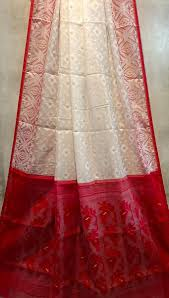
Jamdani sarees –
Jamdani sarees are woven using the traditional Jamdani technique, which involves weaving fine muslin cloth with intricate floral and geometric patterns. These sarees are lightweight and comfortable to wear, making them perfect for summer.
Banarasi sarees –
Banarasi sarees are woven in Varanasi, a city in Uttar Pradesh. These sarees are made from silk and have intricate designs woven with gold and silver threads. Banarasi sarees are considered to be one of the most expensive and luxurious sarees in India.
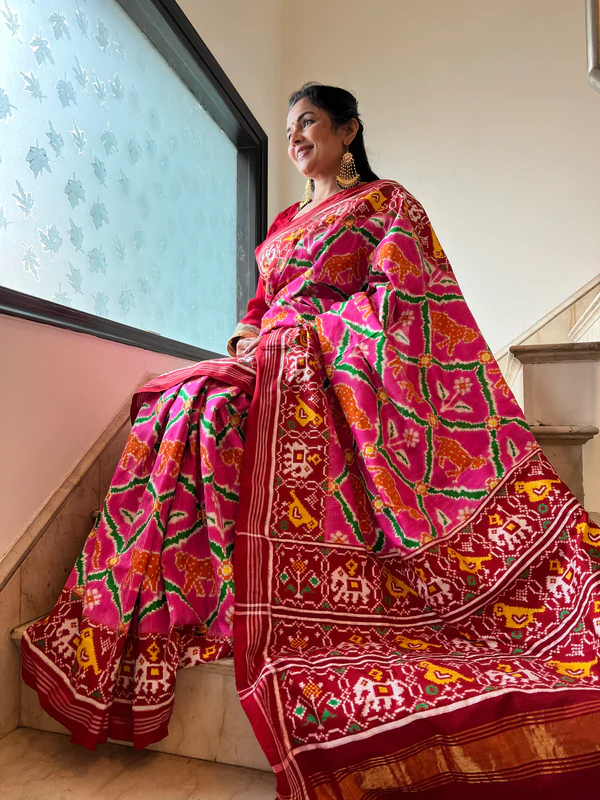
Patola sarees –
Patola sarees are woven in Patan, a city in Gujarat. These sarees are made from silk and have vibrant colors and geometric patterns. Patola sarees are considered to be a symbol of wealth and status in Gujarat.
Kanjivaram sarees –
Kanjivaram sarees are woven in Kanchipuram, a city in Tamil Nadu. These sarees are made from silk and have bold colors and intricate designs. Kanjivaram sarees are known for their durability and are considered to be a prized possession for every South Indian bride.
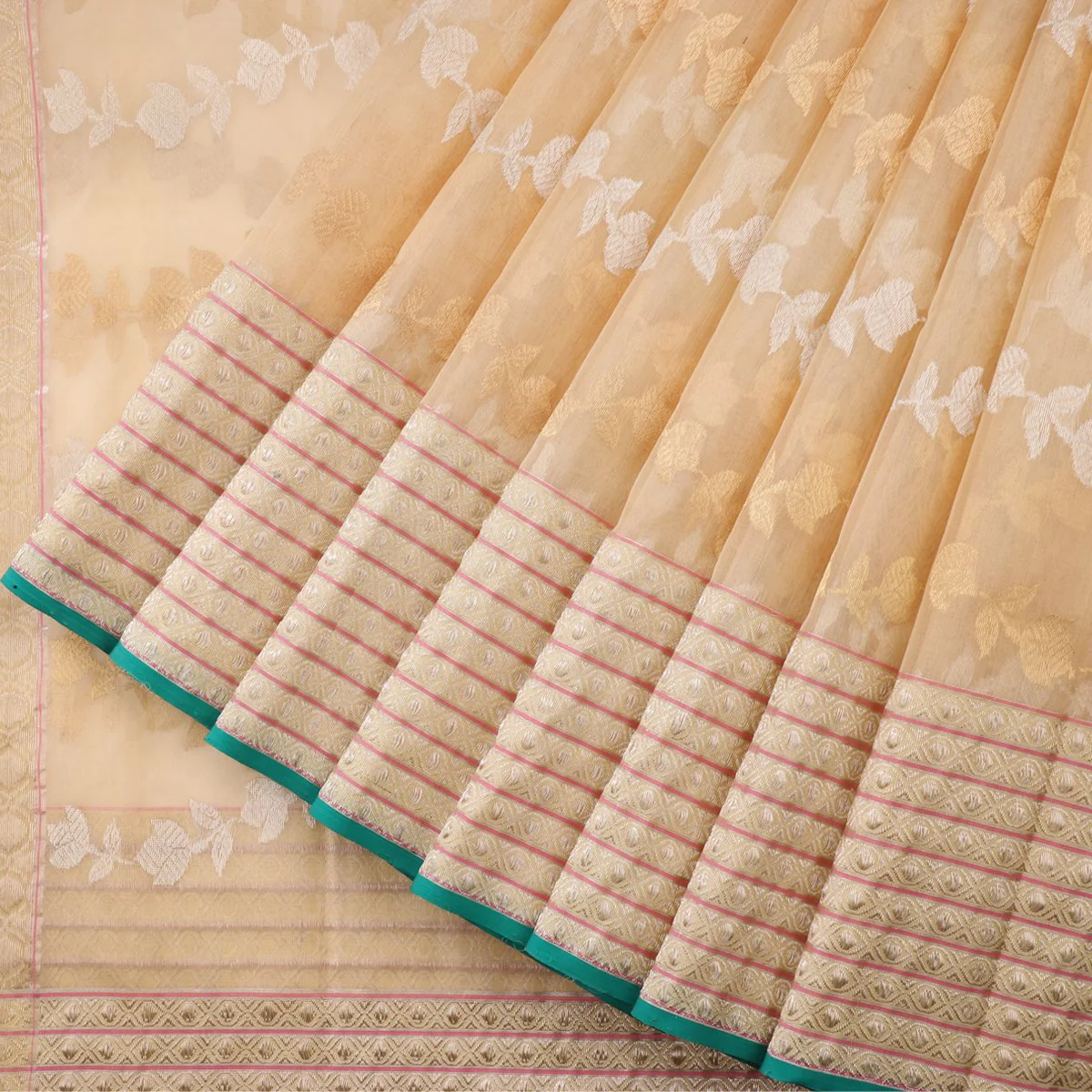
Chanderi sarees –
Chanderi sarees are woven in Chanderi, a town in Madhya Pradesh. These sarees are made from cotton and silk and have delicate designs woven with zari threads. Chanderi sarees are known for their lightweight and comfortable feel, making them a popular choice among women across India.
Handloom sarees are not just a piece of clothing but a piece of art that represents India’s rich cultural heritage. They are a symbol of tradition, elegance, and sophistication. With their unique designs and exquisite craftsmanship, handloom sarees are here to stay and continue to be an important part of India’s fashion industry.
Khadi, India‘s own versatile clothing material for ages
Introduction
Khadi, also known as Khaddar ,which started as a symbol of the Swadeshi Movement led by Mahatma Gandhi 100 years ago, is now a fashion statement in India and is gradually getting popular across the globe. Not only as an affordable and comfortable fabric for daily-wears, but also Khadi is now being considered as a Style Statement for its sustainability and eco-friendliness.
Khadi production
Nature of The Khadi Material
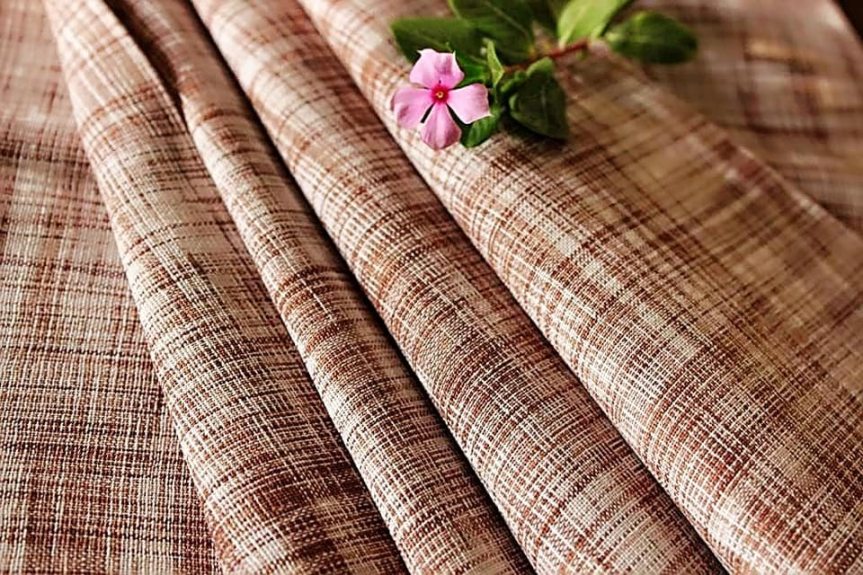
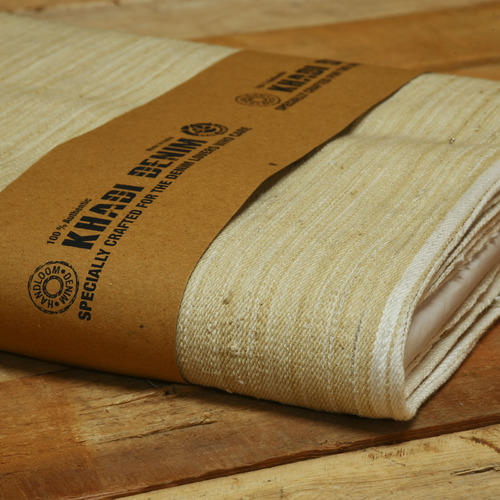
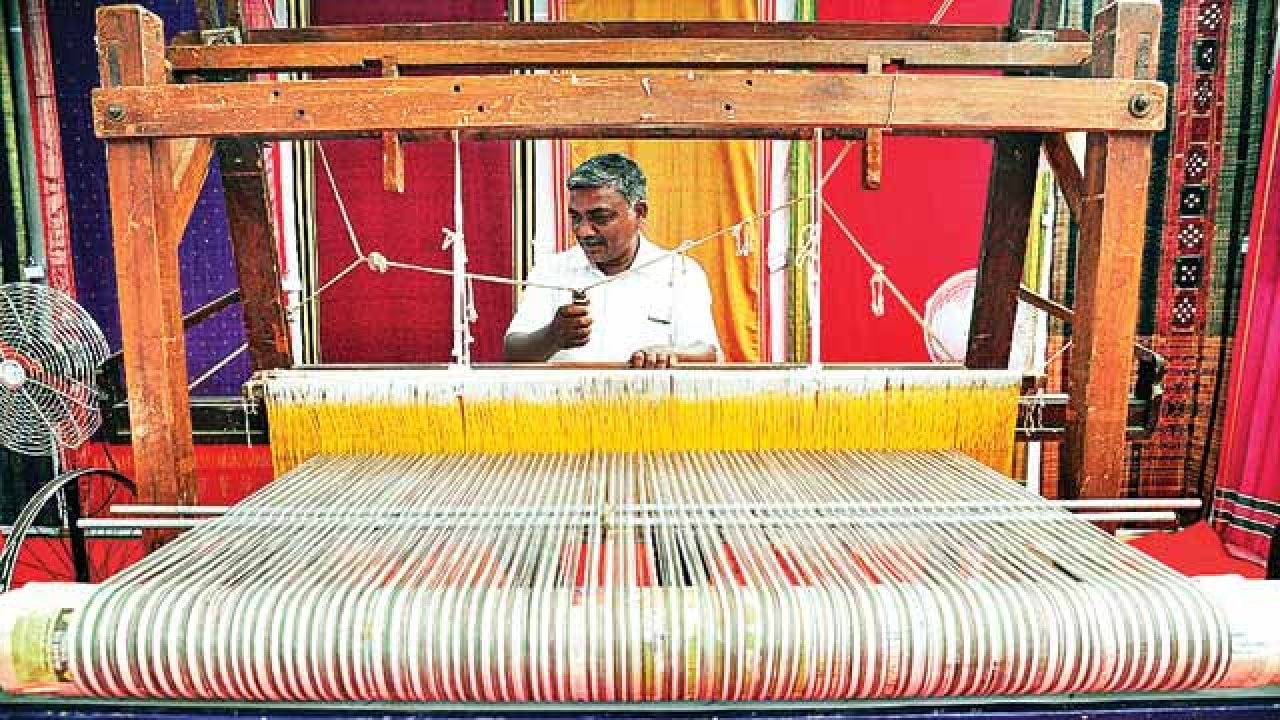
Khadi is a textile fabric made by hand-spun and hand-woven cotton, silk, wool or a mixture of these fibres. It is a traditional way of textile manufacturing and is generally produced by rural artisans. The method of manual spinning and weaving makes the fabric structure somewhat rugged and imparts a unique appearance and makes it soft and comfortable to wear. The spinning is carried out on a traditional wooden frame called charkha, while the weaving is done on a handloom. The specific fabric construction helps in circulation of air within the threads and imparts unique property of keeping the wearer warm in winter as well as cool in summer.
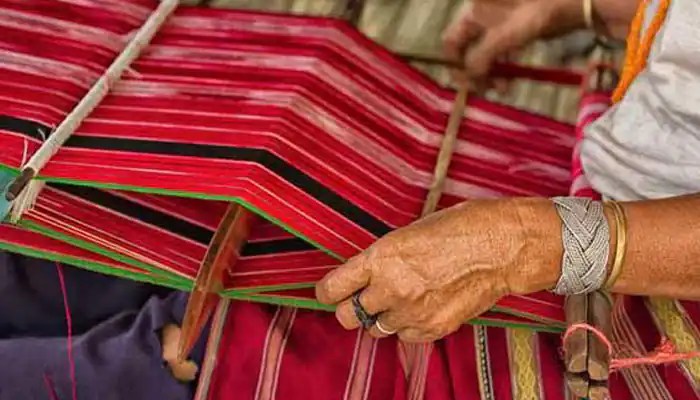
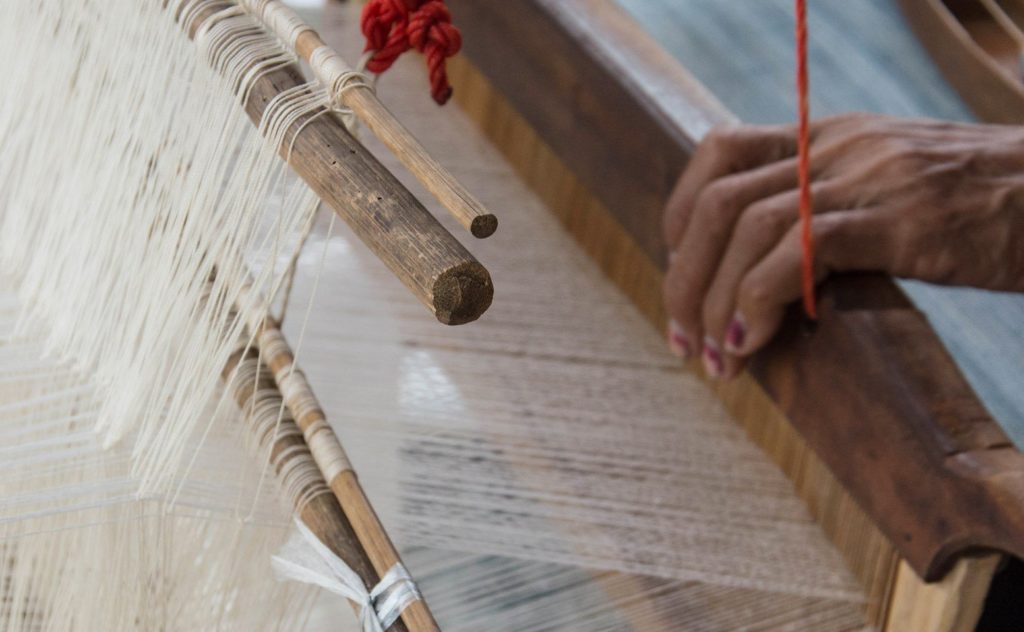
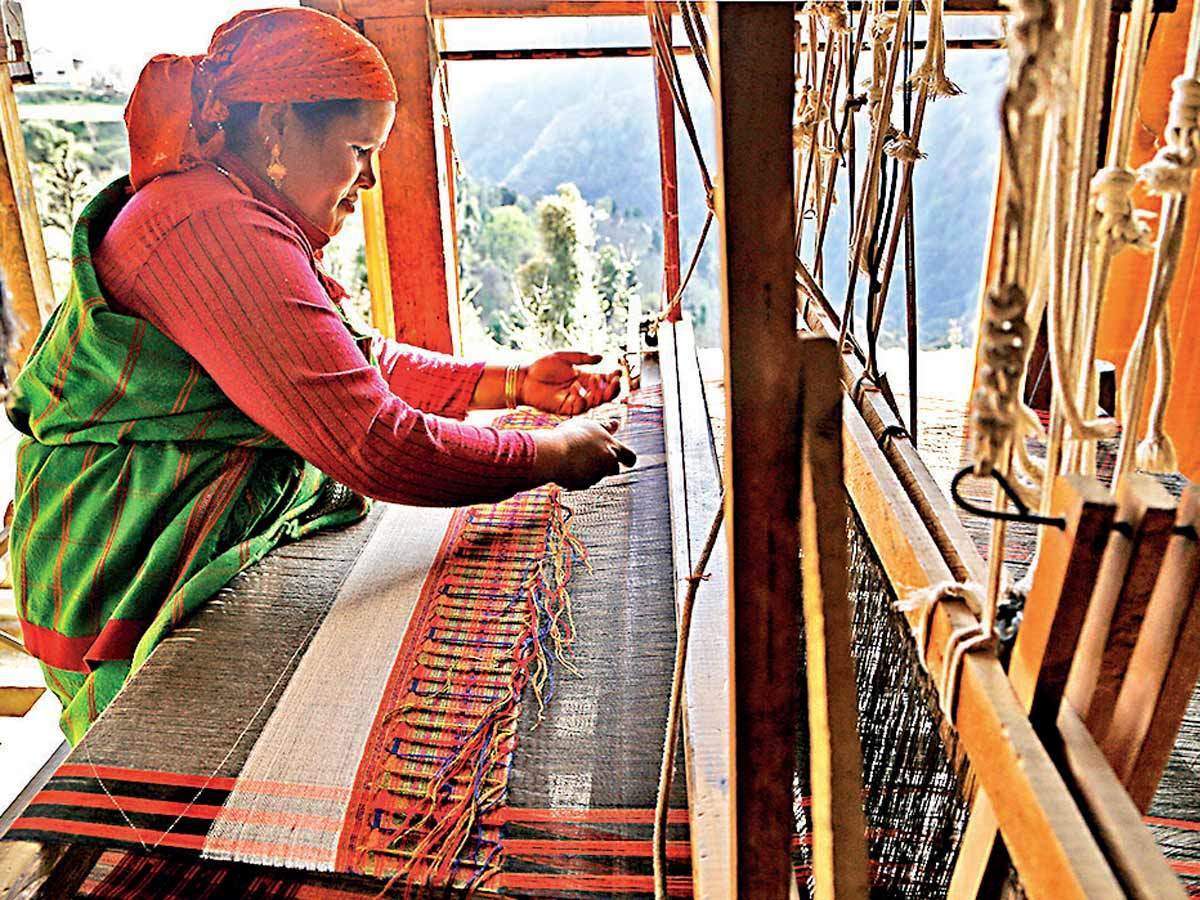
Weaving of Khadi
History of Khadi : Role in India’s Freedom Movement
India has an ancient heritage of cloth making based on the availability of natural fibrous raw material such as -agricultural cotton owing to the clement climatic conditions and fertile land, varieties of silk from different sericulture and wool from domestically reared sheep. The textile coloration was carried out using abundantly available natural dyes, derived from various plant and animal extracts. Such flourishing textile base was one of the major attractions for the Western world. After mechanised industrialisation, the situation changed and the basic raw material was exported from India, converted into mill-processed finished cloth and the imported fabric was brought back. This led to the demolition of traditional textile manufacturing in India and eventually the art and craft of fabric making diminished.
During the initial phase of the freedom movement, national leaders like Dadabhai Naoroji and Lokmanya Tilak initiated the Swadeshi Movement to promote Indian-made products. However, it was Mahatma Gandhi who in 1918 brought the focus of India’s freedom struggle to khadi by promoting that as a Swadeshi symbol.
Under the leadership of Mahatma Gandhi, khadi-making regained momentum and became a symbol of revolution and resistance. It also provided employment to the vast rural population of India and achieved distinct identity as a common man’s cloth. As everybody could wear the same form of clothing without any distinctions of class, creed or religion, they could demonstrate solidarity in freedom struggle. Wearing khadi became a matter of national pride and united the population of India by surpassing the divisive system of the region, language, religion, caste, age and gender. It reflected our country’s legacy of sustainable living and self-reliance. The Indian national flag is also made from khadi material.
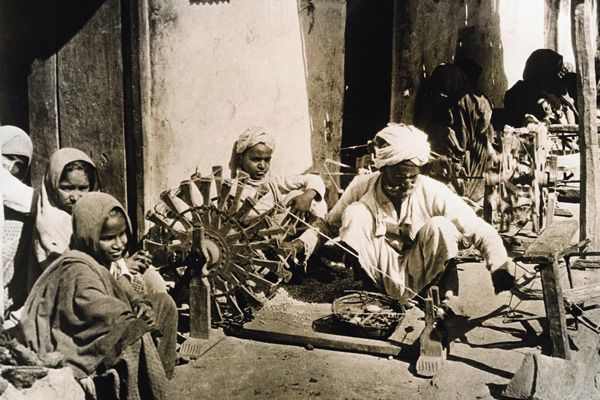
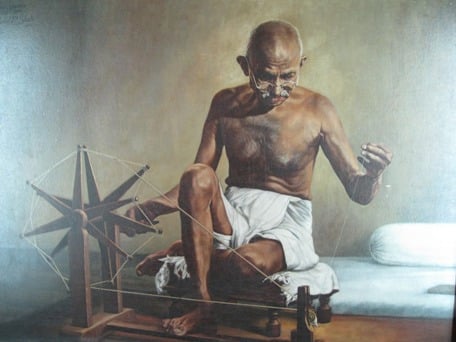
Khadi making with Charkha, during India‘s Freedom Movement
Government Initiatives After India’s Independence
The Khadi and Village Industries Commission (KVIC) is the Indian government body that promotes khadi, whose production and sale comes under the small scale industry sector. KVIC was created by a parliament act after which many KVIC outlets were opened across the country. These shops sell khadi fabrics and apparel. Every year between October to January, all Khadi Gramodyog Bhavans offer discounts on their products. KVIC also organises exhibitions and trade fairs in the country and abroad to promote khadi.
An estimated 15 lakh people are now engaged in producing over 12 crore metres of khadi. KVIC is taking further steps to enhance its production as the market demand for such products is much more than the supply. A new programme is expected to establish the ‘Khadi Mark’ and a logo to indicate the genuineness of the product. The financial support provided and the political will exerted by the present government and the special emphasis from Prime Minister Narendra Modi has helped boost employment in the manufacturing and promotion of khadi products. Leading film artists, sports personalities and fashion designers have come forward to promote this unique ‘Made in India’ fabric in the global arena.
Khadi used in sustainable fashion
Contribution of Khadi in World Fashion
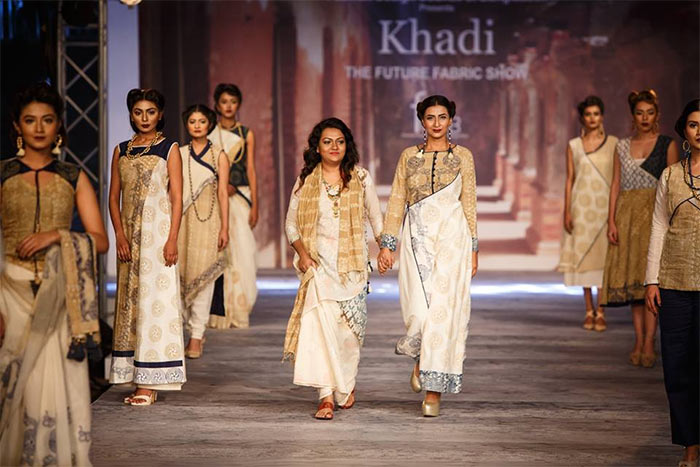
Considering khadi‘s eco-friendly and natural origin, it has become a focal point of global fashion owing to growing consumer awareness and the consistent demand for sustainability. Fashion designers have acknowledged the aesthetic appeal and comfort attributes of khadi and experimented it in blending with many other stuff to synergistically enhance the fashion appeal and outlook of products. Khadi is now used in denims, jackets, shirts, dress material, stoles, home furnishings and apparel accessories like handbags. Khadi, once considered as the fabric for political leaders and the rural folk, has entered the wardrobe of the fashion-conscious urban population. Wearing khadi now symbolises affluence as it offers a distinguished look. The ecological aspect and ethnic looks of khadi have caught the fancy of global brands and leading fashion designers have started including khadi material in their collections.
Global acceptance of the Khadi in fashion
Conclusion
Incorporating Khadi in our daily life may also pave the way for a simple spiritual living exuded by our clothing and home décor items. Khadi being such a versatile fabric can be easily incorporated, by changing the warp and weft, in a home decor and clothing lines. This will make us come closer to nature and add a touch of earthiness in our lifestyle.
It is observed on 7 August every year to honour the handloom weavers in the country. The National Handloom Day is celebrated to mark the 100th anniversary of the Swadeshi Movement, which started in 1905.The first National Handloom Day was organised by Prime Minister Narendra Modi in Chennai.This year 6th National Handloom Day is celebrated.Handloom sector is a symbol of the country’s glorious cultural heritage and an important source of livelihood in the country. The sector is key to women empowerment as over 70% of handloom weavers and allied workers are women. Lets respect, celebrate and encourage handloom sector thereby empowering our handloom weavers and workers financially and instilling pride in their exquisite craftsmanship in our Country.
7th August is celebrated as the National Handloom Day to mark the significance of the Handlooms in Indian history. This day, in 1905, the Swadeshi movement was launched. The foreign clothes were discarded as a mark of protest against the colonial rule and revival of Swadeshi goods, especially the Indian textiles were promoted.
History of Indian Handloom
The origin of Indian Handloom can be traced back to ancient times. One of the earliest hand woven fabrics had a design of a swan (hansa). Some finely woven clothes were also found in Mohenjodaro which was from the era of Indus Valley civilization. The beautiful Indian Floral prints date back to the 18th century.
Many renowned personalities such as Bernier, Voltaire, and Daniel Defoe had expressed their love for the fine beauty of Indian Handlooms. The colonial era played a major role in the decline of Indian handloom industry. The machine made British clothes were promoted and Indian textiles were suppressed using heavy duty tax levied on it. This period saw a boom in the machine made clothes which were made available at a very affordable price.
The Indian Handloom has played a significant role in our fight for independence. Mahatma Gandhi reintroduced Khadi and popularized hand spinning and weaving. The spinning wheel, famously known as the “Charkha” became a symbol of self-reliance(Swadeshi) and boycott of British goods.
Because of the tough competition with the British clothes, many artisans in India lost their livelihood. Several families of weavers struggled to revive their livelihood in the post-independence period. A number of institutions were established to promote the handlooms. The All India Handloom Board was established in 1945. To popularize the Handloom industry, the All India Handloom Fabrics Marketing Co-operative Society was formed in 1953. Later, in 1982, two institutions were merged to form the All India Handlooms and Handicrafts Board.
There are different types of textiles made in different parts of India. Some popular works include, Chanderi work from Madhya Pradesh, Muga silk from Assam, Kanjeevaram silk from Tamil Nadu, Pashmina from Kashmir, Phulkari from Punjab, Daccai from West Bengal, Brocades from Banaras, Tie and Dye print from Gujarat and Rajasthan and many more.
The tourism sector has helped in increasing the foreign demand of Indian Handloom. Today, with the growth of international clothing brands, the Indian Handloom industry faces a tough competition. A large number of artisans from the rural and semi-urban areas are involved in the Handloom industry. It is a source of livelihood for many women in the rural areas.
These beautiful textiles are made manually, using skilled and detailed work by the artisans. Indian Handloom should be encouraged because it is an integral part of our history and the pride of our culture.
Indian handloom industry saw a reduction in 30% of its trade in the year 2020. This means that the already struggling industry will see further cut in costs. There is an urgent need to innovate new ways to market the goods it produces. The modern state of India still has one of the largest employed workforce in the textile sector, and a large part of it is the handloom industry – which is mostly worked in by the artisans who are either poor or are working hard to preserve their traditional way of manufacturing clothes and designs. For India presents a rainbow in manufacturing methods – right from the famous Benarasi Saree to the now almost extinct methods of making silk and woolen garments in the remote hills of Ladakh and Kashmir.
Cotton has been cultivated in the Indian subcontinent for over 3000 years. And that is probably also the age of a rich tradition of fabric making. With the advent of the bronze age through the influx of Greco-Roman, Mongol, Iranian, Vedic and Afghan cultures into the modern age of Mughals, Marathas, British and later the republic of India and her neighbours – the Indian textile industry has seen a plethora of changes and demand.
From dhotis and sarees to kurtas and Salwars – India has seen a plethora of changes in its clothing culture.
Handloom has a great symbolic importance to India. For it was the first Industry that stood as a symbol of self-reliance during the British Raj resistance period, a rhetoric the current Indian Prime Minister used in his Atmanirbhar Bharat campaign. After all, if it were not for Indian fabric – the famed Muslins and Pashminas and Indian spices – the British would have had to search for other reasons to come and settle in a land so very far away from their motherland.
Gandhi used handloom as a symbol of self reliance
7th August marks the National Handloom day – a day dedicated to an industry that is rapidly finding itself in a stage where only the ones who are super-nationalist and the rich opting for it. Handloom products are often costly than the cheap produce of the machines that invaded the textile industry 200 years ago, effectively ushering in the Industrial Revolution in the 17th century England.
Back to India, here is a list of some famous Indian handloom industries and the cities in which they are concentrated.
Varanasi – The famed Banaras Silk sari is the prized possession of many north Indian women as that is the standard sari of the bride in marriages in households that can afford them. And yet, the Benarasi artists are increasingly been replaced by machines that are producing cheaper saris though with reduced finesse. To add to it is the Zamdani works on cotton fabric, quite endemic to the city.
Jaipur – Jaipur and its handloom industry have the royal family of Jaipur as its patrons. There are establishments and shops that were opened by the last Rajmata of the city, Gayatri Deviji to promote local industries. To add to that is the already existing tradition of Bandhni, Zari and Patti works.
Surat – One of the oldest textile industries that were spotted and used by the local rulers and the British alike. The silk industry in Surat is one of the largest of its kind in the country.
Kota – The tuition capital of the country is also home to the Kota Doria, Gotta Patti and the Kota weave artisans.
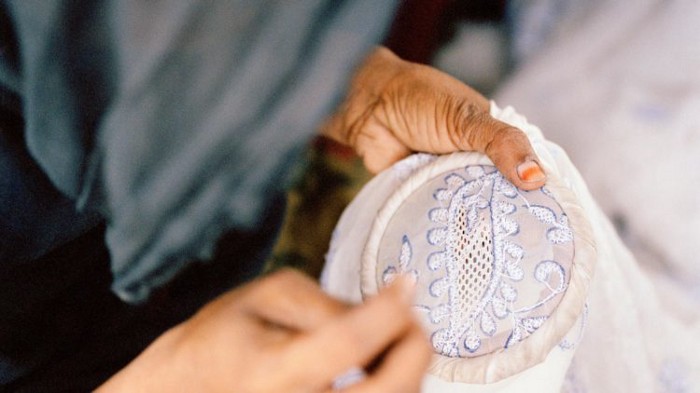
Lucknow – The city has an industry that keeps alive the times when nawabs ruled over the city of Lucknow, the then capital of the Awadh state. Most famous of its local weaves is the Chikankari work.
Bhadohi – The small town is only 40km from Varanasi and has been the centre of Indo-Persian carpet work since the era of the Mughal Emperor Akbar and has the largest carpet making industry in the country.
Well, there are many more of such cities and villages when one researches about them. Many of the ingenious art forms that are involved in making clothes are dying with less than 50 families left that carry forward the tradition. The sad part – machines cannot replicate that finesse. Such is the case of the wool and silk industry in the Gharwal and Kashmir valleys.
After the pandemic or even during it, let us and our government support this remnant of our history, our art, our tradition and a symbol of first instance of our modern industrial self reliance.







 Eduindex
You must be logged in to post a comment.