Roman Architecture

Roman architecture has always been admired for its strong and colossal structure. Throne’s power and the ordinary lives of its citizens have greatly inspired the majestic architecture. The grand temples and buildings demonstrate the perpetual influence of gods over the people. Architecture has widely contributed to the European art and culture. It has been observed that the architecture Romans were influenced was from Greek’s art. The designs on Roman buildings were relatively similar to Greeks architectural designs. Though, the architecture was identical, Romans preferred Corinthian Order. Another characteristic feature that set its architecture apart was its continuous urge of perfecting concrete buildings in all of its monumental creations with modern arches and domes as a modern touch.
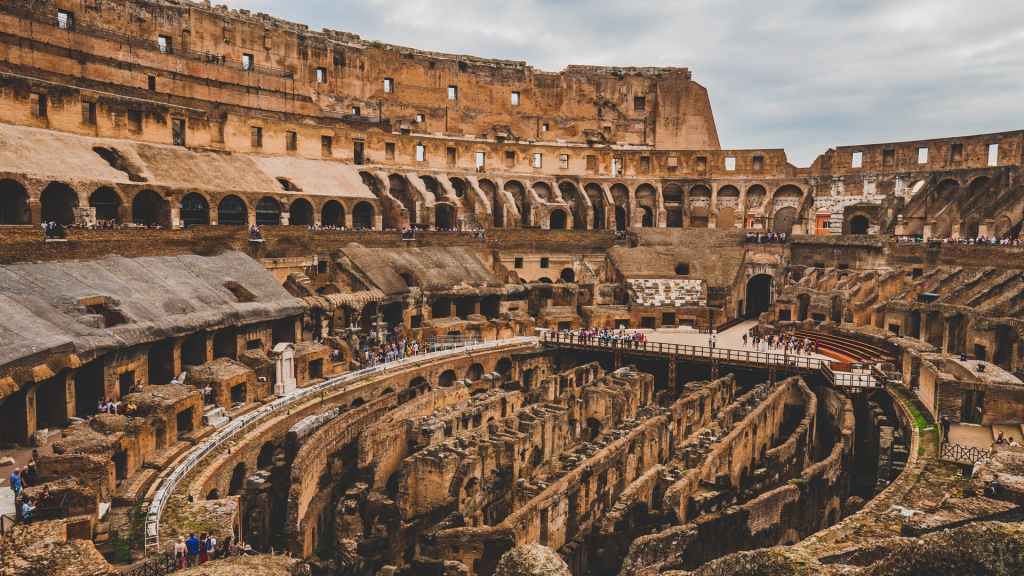
Roman Colosseum is the largest and most famous amphitheater of Rome. Its construction began in 72 AD under Emperor Vespasian and finished in 80 AD under his son Titus. It was built with materials like travertine limestone, tuff, wood, concrete. This colosseum has a seating capacity of 50,000 and more. Gladiatorial competitions, battles, executions, roman mythology dramas were conducted for entertainment purposes. Compared to other amphitheaters, Colosseum was built in the heart of the city. However, the interior of Colosseum was profoundly destroyed by fires and earthquakes. Even though, the structural standing of the monument is still sound, the pollution and general destruction has deteriorated the inner part of the structure.
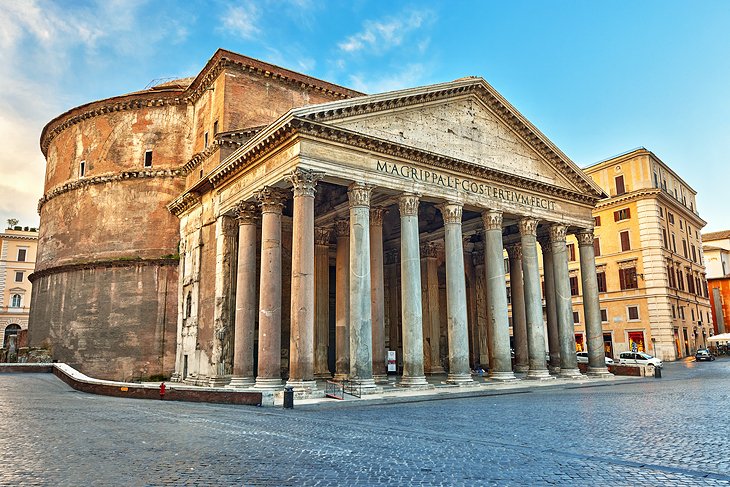
Pantheon is a Roman temple built during 113 to 125 AD. It has dome structure with traditional porch. It served as a Roman Catholic Church. This monument stands on brick arches and hidden wall niches. The temple’s structure has survived because of its well-engineered walls and domes. The interior is refined with polished marble that shines when sunlight penetrates through the ceiling, which is called the Oculus, also known as ‘great eye. Being unique in all of Romans architectural creations, its interior and exterior classical designs have been adapted by architects.
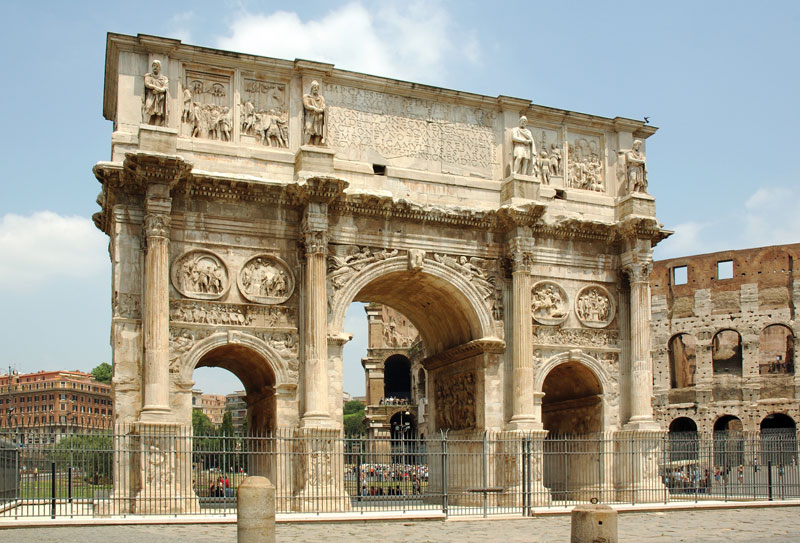
Arch of Constantine was built in honor of Constantine’s triumph over Maxentius at the Battle of Milivian Bridge in 312 AD. Arch of Constantine is a glorious celebration of political power and leadership. It is well-known for geometric details and massive stone work. Lower part is covered with marble blocks and extraordinary marble brickwork. It is 20 meters high, 25 meters wide and 7 meters deep. In the main archway, victory figure occupy spandrels and river gods are depicted over the arches.  Emperor Marcus Aurelius’s life was carved on the arches which was remodeled to resemble Constantine I. It signifies Constantine’s changing religious affirmations.
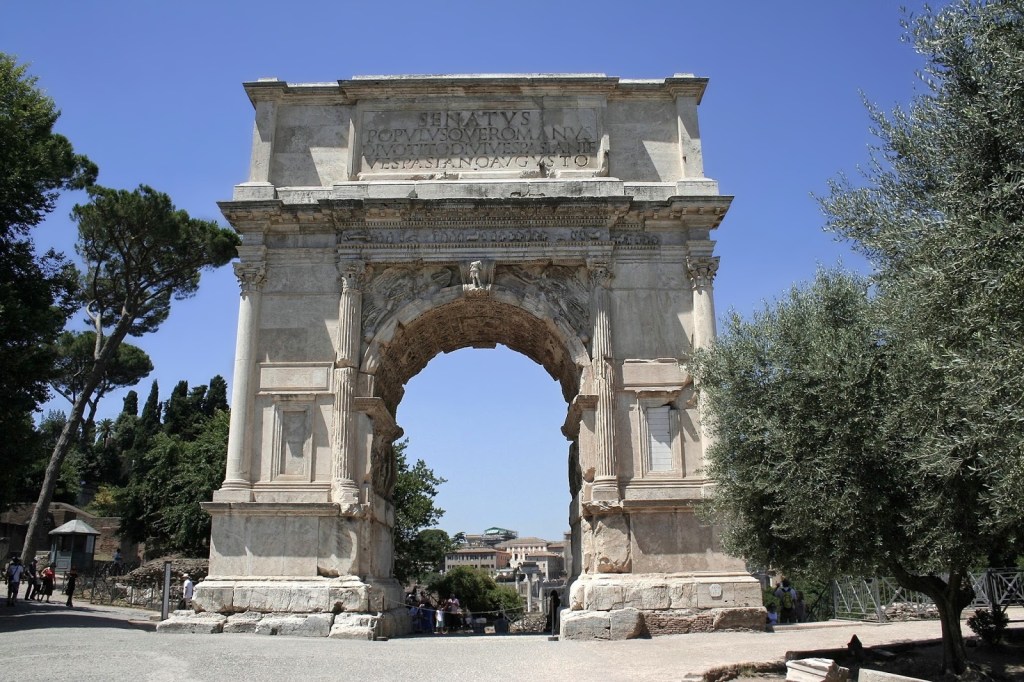
Arch of Titus was built in 81 AD by Emperor Domitian that commemorates Titus’s and his father’s victor over Jewish rebellion in Judea. It measures 15.4 meters in height. The upper left and right of arches contains a winged woman that personifies victory. Temple of Jerusalem is partially depicted on south inner panels. North inner pane portrays Titus as the Triumphator, where there is an Amazonian wearing a helmet leading four horses carries Titus. The inscriptions on the horse were mainly written in gold or silver.

Roman architecture signifies beauty of triumph and rich culture. Roman culture has splendidly attracted people to experience the foundation of Roman history with astounding work of art that continues to inspire today’s architects.

The Tiananmen Square Protests

What was it?

Tiananmen square is a city square in Beijing, China. In 1989, there were student-led protests and demonstrations calling for democracy, free speech and free press in China that culminated in this square. The pro-democracy student protestors had marched through Beijing to Tiananmen Square following the death of Hu Yao bang, a former communist party leader who had worked to introduce democratic reform in China. In mourning Hu, the students called for a more open, democratic government and also demanded the resignations of Chinese Communist Party leaders who were deemed repressive and inadequate. For nearly three weeks, the protesters kept up daily vigils, marched and chanted. The event drew around one million participants and was being captured and reported on by news channels all over the world. It had become a global event, but one which would have a terrifying ending.

The Tiananmen Square Massacre

The government had considered negotiating with the demonstrators and offering concessions. However, many in power were opposed to this and decided that to avoid anarchy, the protests needed to be suppressed forcibly. To this end, martial law was declared in Beijing, and army troops were stationed around the city. Initially, attempts by the troops to reach Tiananmen Square were thwarted by the citizens of Beijing who flooded the streets and blocked their way. Eventually however, the Chinese government decided to crack down on the protestors in Tiananmen square with all their might. They sent soldiers and security police that stormed through Tiananmen Square, firing indiscriminately into the crowds of protesters. Tanks and heavily armed troops advanced toward Tiananmen Square, opening fire on or crushing those who tried to block their way.

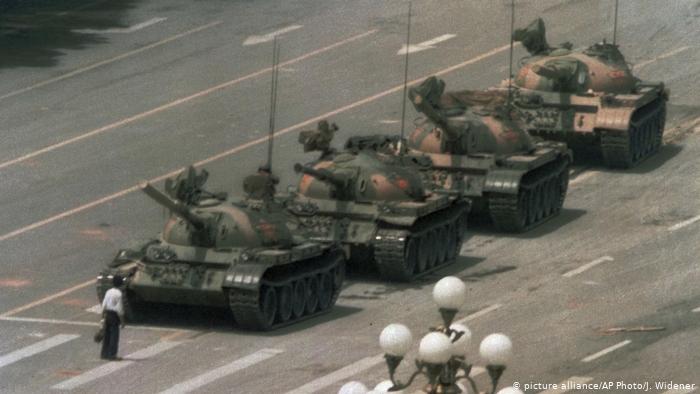
Hence, carnage ensued as tens of thousands of the young students tried to escape the terrorizing Chinese forces. Other protesters fought back, stoning the attacking troops and overturning and setting fire to military vehicles. Once the soldiers reached the square, a number of the few thousand remaining demonstrators chose to leave rather than face a continuation of the confrontation. By morning the area had been cleared of protesters, though sporadic shootings occurred throughout the day. By June 5, the military had secured complete control, though during the day there was a notable, widely reported incident involving a lone protester momentarily facing down a column of tanks as it advanced on him near the square. This incident is now a famous picture that serves as a representation of what happened at Tiananmen (featured image of the article).

The Aftermath

In the aftermath of the massacre and crackdown, the United States instituted economic and diplomatic sanctions on China for a time, and many other foreign governments criticized China’s handling of the protesters. Leaders and governments worldwide condemned the Chinese government’s military actions. Still, the Chinese government arrested thousands of individuals who were suspected to have been involved in the protests, and many of them received prison.

From the outset of the incident, the Chinese government’s official stance was to rationalize their actions, calling the protesters ‘counterrevolutionaries’ and minimizing the extent of the military actions. The government’s count of those killed was 241 (including soldiers), with some 7,000 wounded. However, most other estimates have put the death toll much higher. In the years since the incident, the government has attempted to suppress all references to it, and public commemoration of the incident is officially banned. However, the residents of Hong Kong have held an annual vigil on the anniversary of the crackdown, even after Hong Kong reverted to Chinese administration. It remains a sensitive topic to date in China, and there is little to no discussion or debate about in Chinese public forums. Regardless, everyone in China and in the world knows and remembers the tragic events that occurred in Tiananmen square and the protestors that died while wishing for a better China.

Video Game crash of 1983

In 1983 the video games industry was hit with a recession that almost ended the existence of video games of that time period. This period lasted for almost two years from 1983 to 1985. Many people and journalists who were critical were calling video gaming a fad. Numerous companies went bankrupt or stopped making video games entirely. This recession is known as the Great North American Video Game Crash or Atari Shock (Primarily in Japan).

Video games in the 1970s were dominated by arcade machines and by the end of the decade home game consoles were also getting popular. With the start of the 1980s, the video gaming industry witnessed a boom with numerous companies like Mattel, Atari, and Coleco dominating the market. The early 80s was a time of innovation and growth in the video game industry but there was instability in the industry as well. This was a time period when video games were becoming more mainstream and popular. Many new players entered the market ranging from industries to small developers that had no association or prior experience in game development in general.

Pacman was a big hit in the early 80s and it was not of the most popular video games in the arcades. Its successor Miss. Pacman improved on the formula and was a success as well. After the success of Pacman in the arcades, Atari wanted to replicate the success in the home game consoles. But with the limited constraints with the memory and short development period, the game was not well received by the consumers and critics alike. In 1982 Atari also brought the license to release the video game of the movie for 21 million. The game was developed in a time period of only 5 weeks. The game was negatively received and only 1 million copies of the game were sold off the 5 million manufactured. Many of the sales were also returned to the retailers furthering the damage. During this period video games were being published by small developers with very poor quality and many big developers were producing games that were more of a marketing token than the game. There were many clones of the same games with little to no redeeming quality and replayability. There were also numerous consoles unlike today with too many options that were no different from one another. With the abundance of supply and low sales of games, retailers started to remove stocks of video games and this led to the shrinking of the industry. Atari had lost $500 Million in 1983 and had to cut its workforce from 10,000 employees to just 400 employees.

During the 1980s there was a boom in the Personal Computers market as well. The PCs were much more powerful than consoles and they could play games and do many tasks like word processing and spreadsheets. The PC industry was unaffected by this low point of video game consoles.

In 1985 Nintendo Corporation launched the Nintendo Entertainment systems in North America and Nintendo ensured that only a limited number of games to be released under their license agreement. This ensured a certain threshold of quality for the games that were released for the system and Nintendo emerged out of the survivor from the video game crash. The Nintendo Corporation started to dominate the video game industry with an assurance of quality that was unmatched by any other corporation at that time. Many other entrants like SEGA also emerged after the crash. Nintendo with its approach and license and quality assurance of video games has left a big impact on the industry to this date. Video games industry has only grown since then and also overtaken other source of entertainment. Nintendo can be credited to provide the industry a trajectory that was severely needed after the crash of 83.

References:

East Timor: Brief analysis of its history & independence.

East Timor or Timor-Leste is a tiny island country in Southeast Asia nestled between Australia and Indonesia.

For more than 300 years the territory of East Timor was ruled by Colonial Portugal (Portuguese Timor). They set up both commercial outposts and catholic missions. On 28 November 1975, Portugal withdrew from the island territory when the Revolutionary Front for an Independent East Timor had declared the territory’s independence. But this exit from East Timor was not at all smooth and this enraged bitter rivalry between various local groups. Just nine days later in December 1975 East Timor was invaded and occupied by the Indonesian military. Suharto, the Indonesian president at that time didn’t receive much resistance from the western countries due to the left-leaning stance of East Timor at that time (Cold war).  The Indonesian occupation was a brutal and violent period in East Timor’s history with various suppression tactics many people lost their lives during that period.

The following decades were highly violent with many conflicts between the separatist groups known as Fretilin and the Indonesian military. The military fought a continuous guerilla war with the rebels in the island’s interior mountains. There were numerous rights violations and over 100,000 people died under the occupations of Indonesia.

One of the most defining instances happened on November 12, 1991, when the Indonesian military shot and killed over 250 people who had come for the memorial procession in honor of Sebastio Gomez, a pro-independence supporter killed by the Indonesian military. The events occurred in the Santa Cruz Cemetery in Dili, East Timor’s capital. This tragedy is known as the Santa Cruz Massacre. The event gained international media attention. Although the Indonesian occupation did not cede until eight years later in 1999, the Santa Cruz massacre was a defining moment in the island nation’s quest for independence.

In 1998 president Suharto resigned from his position after more than 30 years in power due to growing pressure and protests against him from within the country. His replacement was open towards more open towards the autonomy of East Timor. International pressure for East Timor grew in 1998. During the downfall of the New Order government, as part of Reformasi, a referendum was held in East Timor to ask whether they wished to remain in Indonesia with increased autonomy or become independent. On August 30, 1999, about 78% of the population of East Timorese chose to remain independent.

Following the referendum, violence again erupted in East Timor as Indonesian-backed militias increased their activities across the country. In September UN peacekeeping let by Australia force took control of the situation but a lot of damage was already done. In 2002 Xanana Gusmão was elected as the first president after three years of transitional governance by the UN.

As of today, the country has been relatively stable but the economic conditions have not been improved. Indonesia’s Timor has fared comparatively better than East Timor. It was also discovered that Australia, a country that East Timor considered as their ally had spied on East Timor to gain leverage over negotiations on the exploitation of natural resources in the Timor Sea. On a positive note, the country has comparatively good relations with Indonesia now.

References:

The Origin Of Vedic Civilization

Early Vedic Age

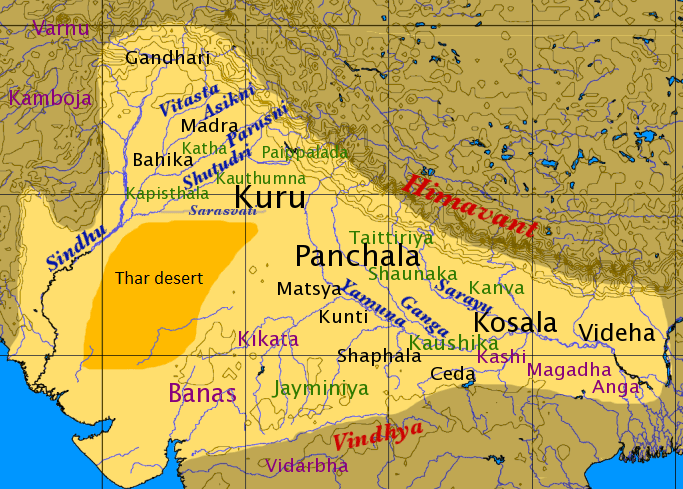
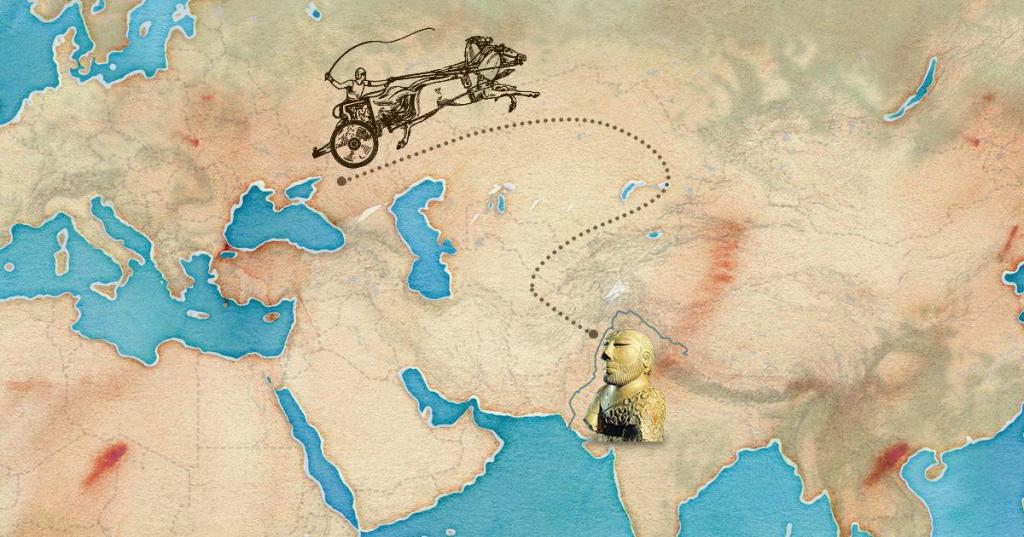
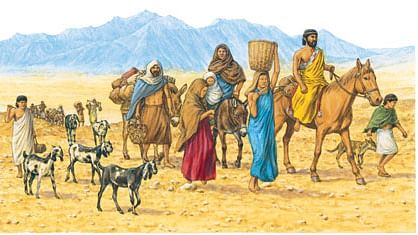
The early Vedic age is historically dated to the second half of the second millennium BCE. Historically, after the collapse of the Indus Valley Civilisation, which occurred around 1900 BCE, groups of Indo-Aryan peoplesmigrated into north-western India and started to inhabit the northern Indus Valley. The Indo-Aryans represented a sub-group that diverged from other Indo-Iranian tribes at the Andronovo horizon before the middle of the 2nd millennium BCE, The Indo-Iranians originated in the Sintashta culture, from which arose the subsequent Andronovo horizon. The Indo-Aryans migrated through the adjacent Bactria-Margiana area (present-day northern Afghanistan) to northwest India, , followed by the rise of the Iranian Yaz culture at c. 1500 BCE, and the Iranian migrations into Iran at c. 800 BCE.

The Indian Civilization an Unbroken Tradition

Indian writers and archaeologists have opposed the notion of a migration of Indo-Aryans into India, and argued for an indigenous origin of the Indo-Aryans. In this view, “the Indian civilization must be viewed as an unbroken tradition that goes back to the earliest period of the Sindhu-Sarasvati (or Indus) tradition (7000 or 8000 BCE).” Though popular in India, and reflecting Indian views on Indian history and religion,the idea of a purely indigenous origin of the Indo-Aryans is outside the academic mainstream.

The Aryans

The knowledge about the Aryans comes mostly from the Rigveda-samhita,i.e. the oldest layer of the Vedas, which was composed c. 1200–1000 BCE. They brought with them their distinctive religious traditions and practices. The Vedic beliefs and practices of the pre-classical era were closely related to the hypothesised Proto-Indo-European religion,and the Indo-Iranian religion. Funeral sacrifices from the Sintashta-culture show close parallels to the sacrificial funeral rites of the Rigveda, while, according to Anthony, the Old Indic religion probably emerged among Indo-European immigrants in the contact zone between the Zeravshan River (present-day Uzbekistan) and (present-day) Tajikistan.It was “a syncretic mixture of old Central Asian and new Indo-European elements”, which borrowed “distinctive religious beliefs and practices” from the Bactria–Margiana culture, including the god Indra and the ritual drink Soma.

The Story of the Best Selling Video Game of all time: Tetris

Tetris has its origin in the Dorodnitsyn Computing Centre (Research Lab). It was one of the foremost research institutes of the Russian Academy of Sciences, located in St Petersburg, Soviet Union (Now Russia). Created by software researcher Alexey Pajitnov in 1984, Tetris is a simple tile-matching game that took the world by storm upon it’s release.

It was developed for Electronika 60, which was a computer, made in the Soviet Union. This period was the final stage of the Cold war Era and computers were becoming more popular as well.

The game wasn’t intended as a commercial product just like the creation of the music record. But it was to be distributed freely among academic institutions around the Soviet Union and the economic bloc of countries aligned with the USSR in Eurasia, Africa, and the Americas that demonstrated use cases for the software.

As USSR was a communist state, so Pajitnov did not technically own the program as the game was under the ownership of the state. Pajitnov along with the help of a colleague, Dmitry Pavlovsky, and a teen computer programmer, Vadim Gerasimov continued to work on the game project even though commercializing it would have been a risky move under the Soviet government. Gerasimov further ported the game from the old and bulky Elektronika 60 to the more widely used (IBM) compatible PCs.

As Elektronika 60 had no graphics output, the individual blocks in the game were made of different text, but with the port in PC, they were able to support color graphics. This brought the game to life.

Pajitnov and Gerasimov had started distributing Tetris for (PC) in 1985 among their friends and colleagues in various math or computer conventions. Soon the sharing spread and the game was smuggled outside USSR to Hungary. During mid-80s U.S and Japan had a more prevalent console market whereas, in Europe, gaming was primarily done on computers. There was a non-existent software market in Russia and most software was usually copied in floppy disks.

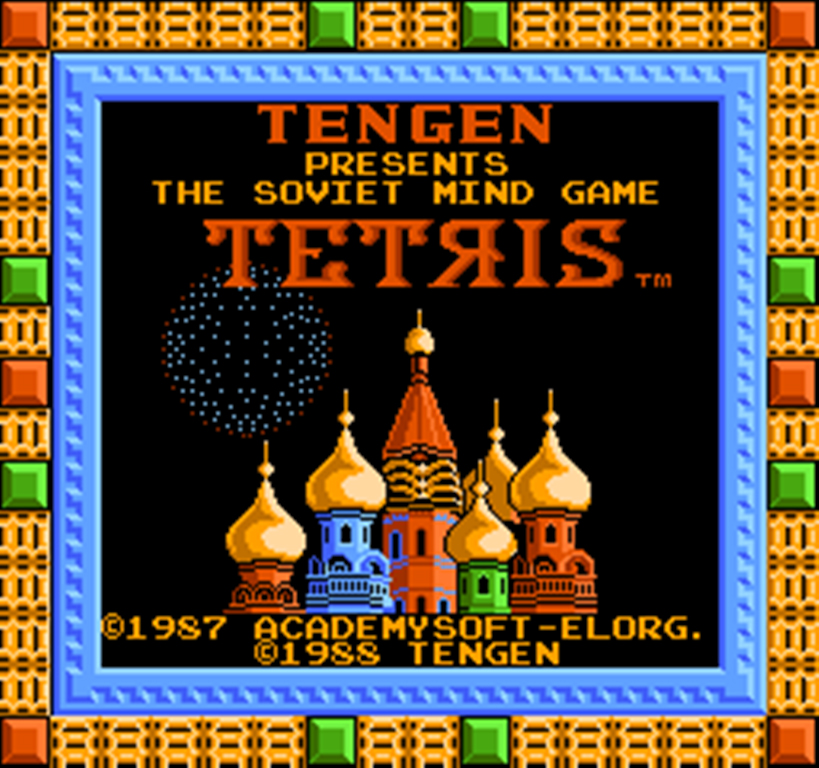
Welcome screen of 1987 version of Tetris

In 1986 Robert Stein, a salesman from the UK-based software company Andromeda spotted Tetris at Hungary’s Institute of Computer Science. He was convinced by the potential of the software and he struck an agreement with Pajitnov to sell the games internationally. But legally Tetris was still under the ownership of the Soviet government.  There was one problem, the agreement was only for the PC and not for any other platform and Stein has struck a deal with Sega to launch the game on their platform. Later Henk Rogers, another salesman from the Netherlands wanted to find a good launch game for the Nintendo’s new Game Boy handheld. The Soviet government was not happy with the Stein deal. But Rogers convinced the Soviet government and they agreed and he also formed a good relationship with Pajitnov. Later Andromeda’s license of Tetris was deemed illegal. Nintendo was given the right to launch the game on its console. The GameBoy was a platform to showcase one of the first video games exported from Russia. The game was a commercial hit and it has been ported to the most number platforms to date. The game also holds the record as the best-selling game of all time. In 1996, Pajitnov was able to reclaim the ownership of the rights and formed the Tetris Company, along with Henk Rogers. Even though he missed collecting the potential royalties for Tetris which were over hundreds of millions, he was still able to secure the future royalties.

References:

History of Java Programming Language

What is Java?

Java is a programming language and computing platform first released by Sun Micro systems in 1995. There are lots of applications and websites that will not work unless you have Java installed, and more are created every day. Java is fast, secure, and reliable. From laptops to data centers, game consoles to scientific supercomputers, cell phones to the Internet, Java is everywhere!

History of Java

The history of Java is very interesting. Java was originally designed for interactive television, but it was too advanced technology for the digital cable television industry at the time. The history of Java starts with the Green Team. Java team members (also known as Green Team), initiated this project to develop a language for digital devices such as set-top boxes, televisions, etc. However, it was best suited for internet programming. Later, Java technology was incorporated by Netscape.

1) James Gosling, Mike Sheridan, and Patrick Naughton initiated the Java language project in June 1991. The small team of sun engineers called Green Team.

2) Initially it was designed for small, embedded systems in electronic appliances like set-top boxes.

3) Firstly, it was called “Greentalk” by James Gosling, and the file extension was .gt.

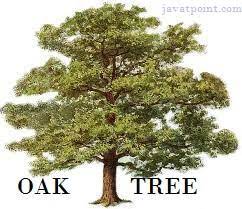
4) After that, it was called Oak and was developed as a part of the Green project.

5) Why Oak? Oak is a symbol of strength and chosen as a national tree of many countries like the U.S.A., France, Germany, Romania, etc.

6) In 1995, Oak was renamed as “Java” because it was already a trademark by Oak Technologies.

7) In 1995, Time Magazine called Java One of the Best Product of year 1995.

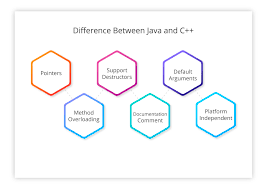
Difference between Java and C++

Global Variables are not present

Use of goto is not observed

Pointers are not included

Memory Allocation functions are not present

Unsafe Type Casting is not supported

Preprocessor Directives are not present

Separate Header Files are not included

Java Features

Compiled and Interpreted

Platform Independent and Portable

Object Oriented

Robust and Secure

Dynamic

Distributed

Small, Simple and Familiar

Multithreaded

Conclusion

Java offers the real possibility that most programs can be written in a type-safe language. However, for Java to be broadly useful, it needs to have more expressive power than it does at present. This paper addresses one of the areas where more power is needed.

The Spanish Inquisition: A Turbulent Time

What was the Spanish Inquisition?

The Spanish inquisition was a judicial institution that prevailed in Spain from 1478 to 1834. It was set up through the Catholic church to root out and punish any heresy (religious beliefs that differed from those prevailing at the time, in this instance Catholicism) being practiced in the country. In each region of Spain, tribunals comprising of Catholic officials were set up to perform the functions of the inquisition. This system was aimed at consolidating power and establishing control in the country, but today the reputation of the inquisition is that it was an extremely brutal and turbulent time in Spanish society.

What happened during this time?

The Spanish inquisition is a well-known historical event but for reasons that should not be praised. It marked a period of violence and intolerance. The people working for inquisitions were called inquisitors. They would arrive in a town, and announce their presence to all the townspeople. Any heretics present in the town would be given a chance to confess, and thereby receive punishment which ranged from whipping to pilgrimage and repentance. Any person who was accused of being a heretic was forced to admit to it, and in case they did not voluntarily confess, they would be subject to violent torture and even execution. More often than not, people were victims of false allegations of being a heretic, but there was no formal court procedure or trial and the mere suspicion of being a heretic was enough to enforce severe punishment. Once a person was accused, even if falsely, there was no escaping either torture, imprisonment, or death. So, many people would end up confessing early on, even if they weren’t actual heretics, to say themselves from any severe consequences later on. This shows how much fear and tyranny was present in society at that time.

This period also represented one of xenophobia and parochialism. When the inquisition began, Spain was a very diverse country, both ethically and religiously. Many different communities like the Jews, Muslims and Christians all lived in harmony in the same regions. The objective of the inquisition was to eradicate such people from Spain who did not identify with the Catholic church and its beliefs. For more than 350 years, people who were not Catholics were subject to torture and exile from Spain.

We can clearly draw a comparison here to Nazi Germany under Hitler’s dictatorship, where only white people of the Aryan race were allowed to live in the country while others were deported or killed in cold blood. In both cases the victims were subject to inhumane torture and suffering. Also, the Jewish people were the major victims in both situations. Under the inquisition, Spanish Jews were forced to either convert to Catholicism or leave Spain entirely. Even those who converted, called the ‘Conversos’ were not safe as they were constantly under suspicion of secretly practicing Judaism while using Catholicism as a disguise. Eventually focus shifted to Muslims converting to Christianity to save themselves, called the ‘Moriscos’. In 1609 they were all ordered to leave Spain entirely.

Any punishments to be given were done so in public for everyone to see, and they were called ‘acts of faith’. It was meant to show the public what it means to defy the Catholic church and their beliefs, and why they should not follow any other ideology. In the worst of cases, where there were unrepentant heretics, they would even burn them alive at the stake for all of the public to witness.

Conclusion

Eventually in 1834, the inquisition was put to an end and the Catholic church’s power diminished in Spain. However, we cannot disregard the damage that had been caused in the 350 odd years. Thousands of people were tortured, killed or exiled from their homes in Spain. They were stripped of their land and wealth, and left homeless and poor. Many religious minorities had to flee from Spain, leaving behind their home land and all that they knew, while those that remained faced discrimination and suffering at the hands of the inquisitors. Not only mainland Spain, but even the Spanish territories like those in America had their own smaller inquisitions that took their own tolls (Mexico, Peru). However, as time progressed, so did political thinking, and Spain realized its mistake in introducing such a violent system and removed it. Today, Spain is a tolerant and accepting country with diverse groups of people all living in harmony.

COLORISM IN INDIA

See the source image

Colorism

Colorism is the practice of favoring lighter skin over darker skin. The preference for lighter skin can be seen within any racial or ethnic background. Race can be defined as the attributes, traits and features which differentiates one group from the other existing social groups. In simple words, races are the physical qualities that one inherits biologically and serves as a way of self-identification from the other groups. Racism is a theory that one race is superior that the other based on the physical attributes, caste, creed, ethnicity or origin. A person is being racist when he displays the emotions of hatred, prejudice, biasness and intolerance against another person solely due to his skin color, structure of his lips, language, place of origin or any other attribute which he might have gained biologically.

Colorism in India

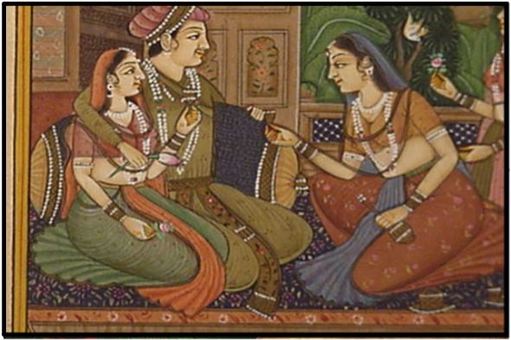
India is known as one of the most mega diverse nations in the world. It is indeed a diverse country and a home for people belonging to different caste, religion, color, creed, culture and traditions. Indians are known for their varied degrees of skin complexion termed as fair skinned and dark skinned. The skin color has always remained an important factor in determining a person’s value and worth. Fair skin people are considered to be of a superior status than to the people with a dark sin. Racism has been prevailing in India since the Rig Veda Period, followed by the Mughal era and the British ruleWe live in a society where the people are highly obsessed with one’s skin tone. Indians have varied degrees of skin complexion and they are categorized as fair, dusky, dark etc. Indians believe that fair-skinned people are of a much more worth and value than those who are dark skinned. The fair is considered the intellectual and gets the respect, dignity and the social status while the dark are left behind struggling for their rights and status. We face color hatred and prejudice and somehow still choose to remain silent about it.

The people need to understand that a person’s worth or status is not determined by his or her color. There are numerous cosmetic brands promoting skin lightening creams and lotions. There are advertisements promoting the desperate need of looking fair. The question is why? No one has the right to question or judge one’s complexion. Racial discrimination brings down the morale and the enthusiasm of the dark, they do not get a chance to stand up and speak up or fight for themselves. The mindset of the Indian society should realize the fact that no matter what the skin tone is, what caste or origin a person belongs to, irrespective of all the other physical traits, a person is entitled to equality before the law and has every right to deserve the same respect and honor a fair person gets. Racism is a refuge for the ignorant. It seeks to divide and to destroy. It is the enemy of freedom, and deserves to be met head-on and stamped out.