History Of Olympics

Olympics has been one of the most renowned sporting competitions in the world. Olympics originated around 3,000 years ago in ancient Greece. Games were held in Olympia every four years in honor of Zues god. Modern Olympics arised in Athens in 1896 for the fist time. Olympics was a success with 280 participants from 12 countries. However, last year was an exception due to Covid-19 Pandemic, Olympics could not be conducted in 2020. Olympics are are now currently being held in Tokyo, Japan.

Olympics had been going on for a long time but there were no written records of it. According to the written records, Olympics held in 776 B.C. had its first Olympic champion , who was a cook named Coreobus. He had won the game of meter footrace also called ‘Stade’ during that time. Olympics is known to be founded by son of Zues, Hercales and Alcene. This competition has been a prestigious platform to showcase incredible talent from around the world. In honor of Zues, Olympics were held during 6th August and 19th September. Olympia was a scared location in southern Greece where games were held. Olympics had such an intense influence on people that time of 4 years was being calculated as people were desperately waiting for it. 25-mile marathon was introduced for the first time in Olympics. The route of the marathon was followed by soldiers, who would later inform the news of victory. Spyridon Louis won the first gold medal in this game.

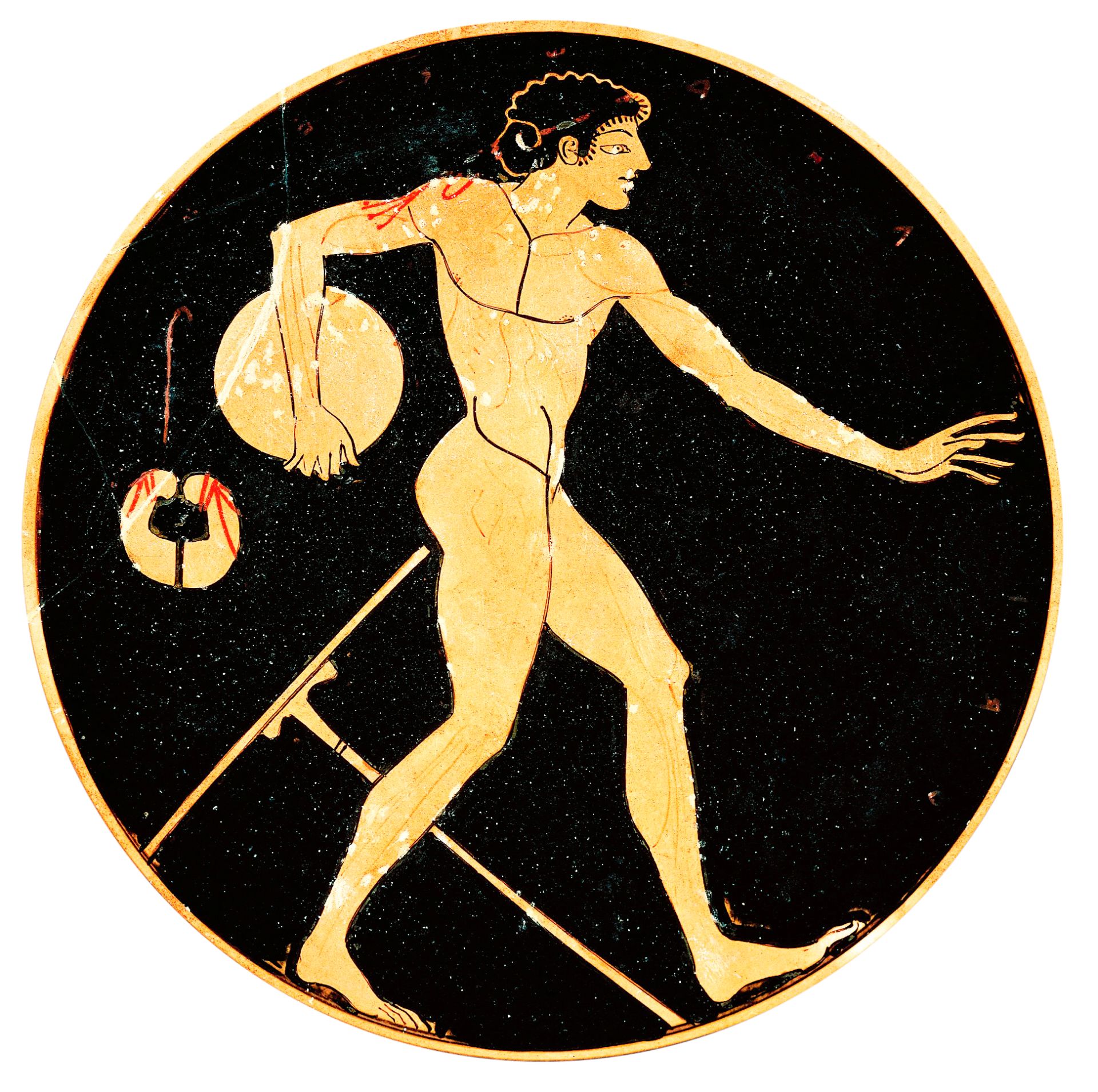
After a few games in Olympics, new games were featured. 400 meter race called ‘Diaulos’ and ‘Dolicho’ that was a longer distance race of 1,500 meters or more races were featured. Long jump, disc throw, javelin throw games were introduced in 708 B.C.. These games were ‘called Pentathlon’ in ancient Greece. Boxing and wrestling with no specific rules was played. Chariot racing in 608 B.C. and in 688 B.C. Boxing had attracted participants to show-off their skills.

Olympics were originally confined to male participation. Unlike now, woman events were not included in the games. Women who were married were prohibited from attending the games.

Though, Olympics were consecutively held every 4 years but could not be held during World War I and World War II. Olympiads have still been numbered according to those years despite the wars.

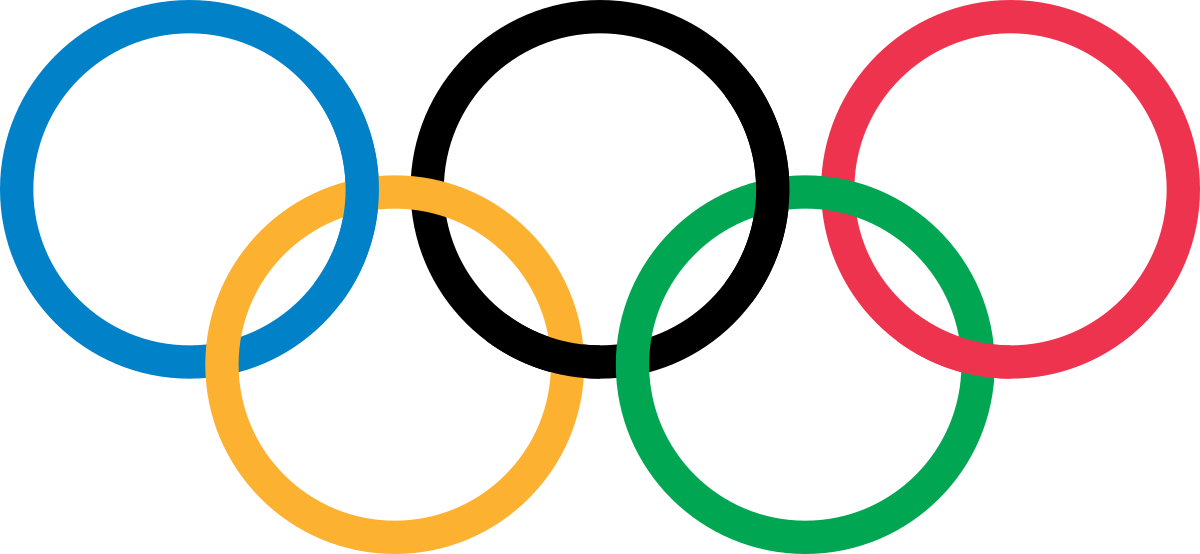
Olympics were not really played on an international level, but it became a global competition after it was conducted in Paris in 1924. There was a participation from 44 nations including a closing ceremony. Winter Olympics had made its fist appearance in that very year. Games like ice hockey, ice skating were featured. Modern Olympics has an official symbol representing North and South America, Australia, Europe, Africa and Australia continents being a global sporting competition.

When Olympics returned after eight years to Greece in Athens, largest participation seen in the history of Olympics with participation of 11,000 athletes from more than 200 countries. Ancient and modern traditions had merged during Olympics. Shotput games were held in Olympia where initially Olympic games were held.
THE REAL STORY OF THE ANCIENT OLYMPIC GAMES

A short history of the winter olympic games | Sutori

The Olympic Games, which originated in ancient Greece as many as 3,000 years ago, were revived in the late 19th century and have become the world’s preeminent sporting competition. From the 8th century B.C. to the 4th century A.D., the Games were held every four years in Olympia, located in the western Peloponnese peninsula, in honor of the god Zeus. The first modern Olympics took place in 1896 in Athens, and featured 280 participants from 12 nations, competing in 43 events. Since 1994, the Summer and Winter Olympic Games have been held separately and have alternated every two years. The 2020 Summer Olympics, delayed one year because of the COVID-19 pandemic, will be held from July 23 to August 8, 2021 in Tokyo, Japan.

The Olympics Begin in Ancient Greece

The first written records of the ancient Olympic Games date to 776 B.C., when a cook named Coroebus won the only event—a 192-meter footrace called the stade (the origin of the modern “stadium”)—to become the first Olympic champion. However, it is generally believed that the Games had been going on for many years by that time. Legend has it that Heracles (the Roman Hercules), son of Zeus and the mortal woman Alcmene, founded the Games, which by the end of the 6th century B.C had become the most famous of all Greek sporting festivals. 

The ancient Olympics were held every four years between August 6 and September 19 during a religious festival honoring Zeus. The Games were named for their location at Olympia, a sacred site located near the western coast of the Peloponnese peninsula in southern Greece. Their influence was so great that ancient historians began to measure time by the four-year increments in between Olympic Games, which were known as Olympiads.

After 13 Olympiads, two more races joined the stade as Olympic events: the diaulos (roughly equal to today’s 400-meter race), and the dolichos (a longer-distance race, possibly comparable to the 1,500-meter or 5,000-meter event). The pentathlon (consisting of five events: a foot race, a long jump, discus and javelin throws and a wrestling match) was introduced in 708 B.C., boxing in 688 B.C. and chariot racing in 680 B.C. In 648 B.C., pankration, a combination of boxing and wrestling with virtually no rules, debuted as an Olympic event. Participation in the ancient Olympic Games was initially limited to freeborn male citizens of Greece; there were no women’s events, and married women were prohibited from attending the competition.

Tokyo Olympic Torch to be powered by hydrogen

Decline and Revival of the Olympic Tradition

After the Roman Empire conquered Greece in the mid-2nd century B.C., the Games continued, but their standards and quality declined. In one notorious example from A.D. 67, the decadent Emperor Nero entered an Olympic chariot race, only to disgrace himself by declaring himself the winner even after he fell off his chariot during the event. In A.D. 393, Emperor Theodosius I, a Christian, called for a ban on all “pagan” festivals, ending the ancient Olympic tradition after nearly 12 centuries.

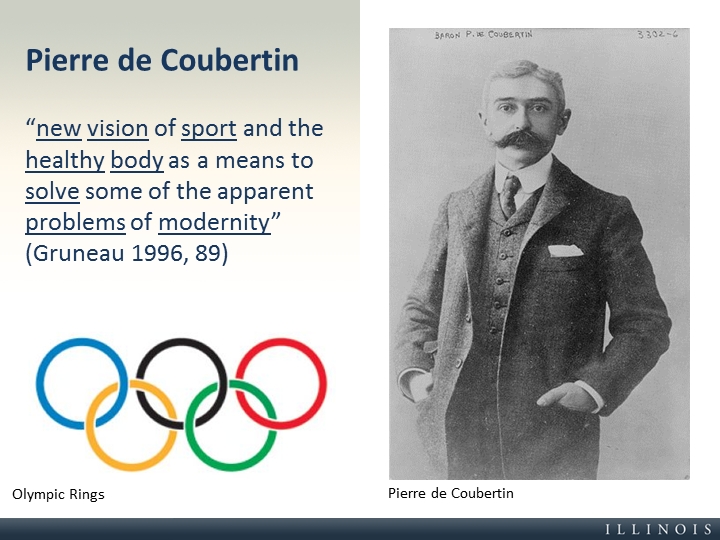
It would be another 1,500 years before the Games would rise again, largely thanks to the efforts of Baron Pierre de Coubertin (1863-1937) of France. Dedicated to the promotion of physical education, the young baron became inspired by the idea of creating a modern Olympic Games after visiting the ancient Olympic site. In November 1892, at a meeting of the Union des Sports Athlétiques in Paris, Coubertin proposed the idea of reviving the Olympics as an international athletic competition held every four years. Two years later, he got the approval he needed to found the International Olympic Committee (IOC), which would become the governing body of the modern Olympic Games.

The Olympics Through the Years

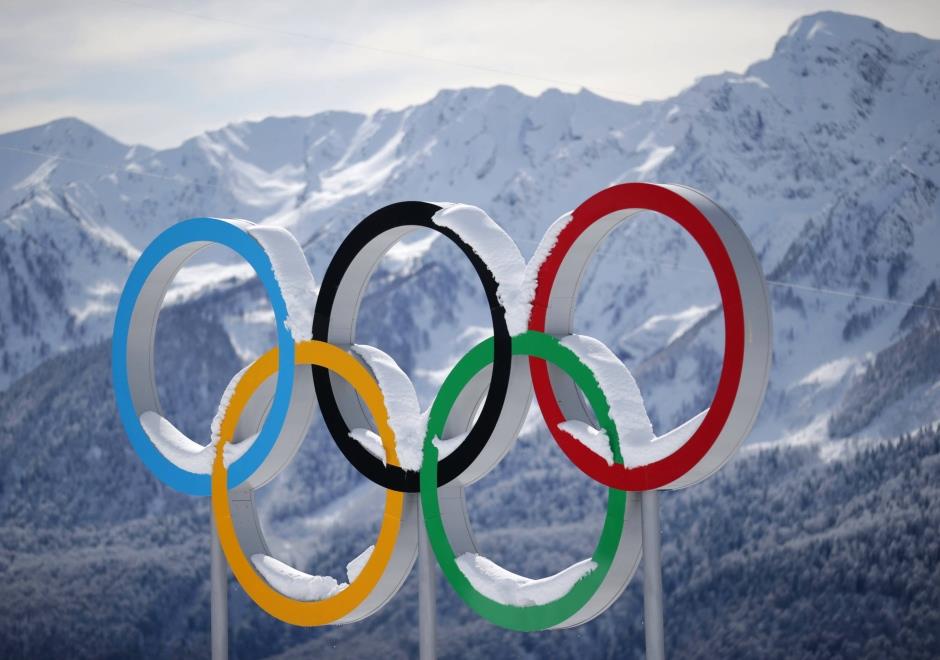
The first modern Olympics were held in Athens, Greece, in 1896. In the opening ceremony, King Georgios I and a crowd of 60,000 spectators welcomed 280 participants from 12 nations (all male), who would compete in 43 events, including track and field, gymnastics, swimming, wrestling, cycling, tennis, weightlifting, shooting and fencing. All subsequent Olympiads have been numbered even when no Games take place (as in 1916, during World War I, and in 1940 and 1944, during World War II). The official symbol of the modern Games is five interlocking colored rings, representing the continents of North and South America, Asia, Africa, Europe and Australia. The Olympic flag, featuring this symbol on a white background, flew for the first time at the Antwerp Games in 1920.

The Olympics truly took off as an international sporting event after 1924, when the VIII Games were held in Paris. Some 3,000 athletes (with more than 100 women among them) from 44 nations competed that year, and for the first time the Games featured a closing ceremony. The Winter Olympics debuted that year, including such events as figure skating, ice hockey, bobsledding and the biathlon. Eighty years later, when the 2004 Summer Olympics returned to Athens for the first time in more than a century, nearly 11,000 athletes from a record 201 countries competed. In a gesture that joined both ancient and modern Olympic traditions, the shotput competition that year was held at the site of the classical Games in Olympia.

History of the Olympic Games

Introduction

The Olympic Games are an international sports festival which is held every four years. The goal of these games is to cultivate human beings through sports and contribute to world peace. The Summer and Winter Games are held separately. The last Olympics was held in Brazil. After that, it was supposed to be held in 2020 but because of the pandemic, it got postponed to 2021 and is being held in Japan from 23rd July to 8th August 2021.

History

The Olympic games originated in ancient Greece which would make it as old as 3,000 years. From then it was revived in the late 19th century. The Games were held every four years in Olympia from the 8th century B.C. to the 4th century A.D. Olympia was located in the western Peloponnese peninsula, honouring the god Zeus. They used to be held from August 6 to September 19. It became such an important part of the culture that people start measuring time by the interval between the Olympics, this measurement of time is called the “Olympiad”. These games were an intrinsic part of a religious festival in honour of Zeus and the first recorded champion is known to be Coroebus of Elis, who was a cook. He won the sprint race in 776 BCE.

In 776 BCE, there was just one event, that of a footrace which was known as “stade”. This very word is the origin of the modern English word “stadium”. Other competitions were added over the decades. Wrestling and pentathlon were introduced in 708 BCE, boxing was introduced in 688 BCE.

In ancient Olympics, all events were held on one day, from that they later shifted to covering all events in four days. It is also said that the participants followed the practice of participating in the nude. This practice has been tried to explain and the top explanations are that nudity bespoke a rite of passage, nudity was a holdover from the days of hunting and gathering, the Greeks believed that nudity had a special power to ward off any harm, public nudity used to be a costume of the upper class and to be nude in public without erection showed a high level of self-control.

Women in Olympic Games

There were no women participants in the ancient Olympics, although some names of women can be seen on the official list of Olympics victors as the owners of the stables for the chariot entries.

Demise of Olympics

In the middle of the 2nd century BCE, Greece had lost its independence to Rome. The Romans did not think kindly of athletics. They thought that stripping naked and competing in public was a degrading act.

Modern Olympic Movement

The architect of the modern Games was Pierre, baron de Coubertin who was born in Paris. In 1890, he traveled to England where he met Dr. William Penny Brookes who had been trying to revive the ancient Olympic Games for decades. He got the idea from a series of modern Greek Olympiads held in Athens since 1859. Brookes first attempt at British Olympiad in 1866 was successful but the subsequent attempts were unsuccessful. In the 1880s Brookes started arguing to begin an international Olympics in Athens. But Coubertin stole Brookes’ idea and proposed the same in 1892 at a meeting of the Union des Sports Athletiques in Paris. Coubertin faced a lot of problems in the establishment of this, like refusal by the Greek Prime Minister but when a new Prime Minister took place, Coubertin and his colleague were able to convince him and the Games were held in the first week of April 1896.

Conclusion

Coubertin said the spirit of the Olympic Games is “The elevation of the mind and soul, overcoming differences between nationalities and cultures, embracing friendship, a sense of solidarity, and fair play; ultimately leading to the contribution towards world peace and betterment of the world.”

References

How Much Does India Invest In Olympic Athletes?

Postponed by a year due to the pandemic, the Tokyo Olympics is now less than a month away. Last week, the Union Sports Minister Kiren Rijiju urged the people to extend their support to India’s Olympic-bound athletes, the same way they back India’s cricketers. However, India’s abysmal performances at the Olympics is in striking contrast to India’s immense success at cricket. The model of sports governance and financial irregularities are often blamed for the lack of competitive edge in sports other than cricket. So, the most obvious question that comes to our mind is, how much does India invest in the Olympics?

Money allocated for Sports

In the 2020-21 annual budget, the Government of India allocated Rs 2826.92 crore for sports, which meant an increase of mere ₹ 50 crore from the revised estimates of the financial year 2019-20. The Modi government’s flagship sports programme ‘Khelo India’ received a substantial hike of ₹ 312.42 crore and was allocated ₹ 890.42 crore compared to ₹578 crore in 2019-20. On the other hand, the National Sports Development Fund saw a reduction of ₹ 27.15 crore from ₹77.15 crore in 2019-20 to ₹ 50 crore in 2020-21. National Sports Federations saw the highest decrease after Finance Minister allocated ₹ 245 crore, ₹ 55 crore less than the previous financial year, according to The Wire. Even the budget for meritorious sportspersons saw a 40% reduction from the last financial year. It is important to note that the 2020-21 annual budget was presented in January 2020, when the government had no idea of the coming pandemic. It was also supposed to be the year of the Tokyo Olympics.

Target Olympic Podium Scheme

While these are the broad schemes under which Indian sportspersons are funded, the Target Olympic Podium Scheme (TOPS) provides financial assistance to potential Olympic medal winners. Launched in 2014, TOPS is the flagship programme of the Sports Ministry of India. The top-up funding scheme considers the performance of Indian athletes in the past three years. They are provided with personal coaches and other staff fees, cost of travel during competitions, purchase of equipment, and pocket allowance.

Looking Back At The Last Olympics

In the 2016 Rio Olympic, India spent ₹ 36.85 crore under TOPS, as per Financial Express. Nearly half of that amount was spent on shooting, which was India’s most successful Olympic sport in the previous three games. Shooting is also very expensive, which requires importing equipment from other countries. But shooting failed to bring any medal. Athletics received the second-highest funding of ₹ 7.80 crore in 2016, but India failed to make a mark in the sport. Unfortunately, out of the ₹ 36.85 crore, ₹30.49 crore had gone to disciplines that fell short of goals. Only 1.66 per cent of the total TOPS fund went to the fields that brought India two medals – PV Sindhu in Badminton and Sakshi Malik in wrestling.

Comparison With Other Countries

The United Kingdom allocated close to Rs 9000 crore on sports infrastructure and training in the annual sports budget, whereas India spent only one-third of the UK, Rs 3,200 crore, on youth affairs and sports, before 2016. The UK won 67 medals against India’s two at the Rio Games 2016. Abhinav Bindra had also tweeted back in 2016 that a medal cost UK 5.5 million pounds, and that is the kind of investment India needs to make. Otherwise, we cannot expect much. In the USA, a large number of athletes are privately funded. Individual athletes had started their own funding portal for donations from the general public. Therefore, only 10% of the US Olympic Committee’s finance was spent on athletes in Rio 2016, and the USA finished first. China, on the other hand, is known for its aggressive state-sponsored promotion of sports.

Private Investment In India

Before the 2016 Olympics, Indian Olympic Association (IOA) received donations from Reliance Jio, Amul, Tata Salt, Edelweiss Financial Services, Herbalife, Li Ning, and SBJ. Sakshi Malik had also thanked JSW Sport, a foundation funded by the OP Jindal group, after becoming India’s first medal winner in Rio Games, as reported by Hindustan Times.

However, unlike NSDF, where the contributions and sponsorships are open and documented, private funding to individual athletes is not. And most recently, the JSW Group has come on board to be the official sponsor of Team India in the Tokyo Olympics and has agreed to pledge sponsorship support of ₹ 1 crore to IOA. In 2018, the Sports Ministry earmarked ₹ 100 crore for funding of the athletes for the preparation of Tokyo Olympics 2020, which will take place this year. While the number of medals won cannot be equated to the investments made, since medals are not the only measure of success, India nonetheless needs to invest more and put in a new model of sports governance in action. A

Ludwig Guttmann

Sir Ludwig Guttmann born on 3rd July 1899 was a German- British neurologist . he was the one who established stokes Mandeville games , the sporting event for disabled which later evolved into Paralympics in England .he was a  Jewish doctor, who had fled Nazi Germany just before the start of the Second World War, he is considered to be one of the founding fathers of organized physical activities for people with disabilities. By 1952, more than 130 international competitors had entered the Stoke Mandeville Games. As the annual event continued to grow, the ethos and efforts by all those involved started to impress the organisers of the Olympic Games and members of the international community. In September 1943, the British government asked Guttmann to establish the National Spinal Injuries Centre at Stoke Mandeville Hospital in Buckinghamshire Guttmann became a naturalized British citizen in 1945.[18] He organized the first Stoke Mandeville Games for disabled war veterans, which was held at the hospital on 29 July 1948, the same day as the opening of the London Olympics. All participants had spinal cord injuries and competed in wheelchairs.[17] In an effort to encourage his patients to take part in national events, Guttmann used the term Paraplegic Games. At the 1956 Stoke Mandeville Games, Guttmann was awarded the Sir Thomas Fernley Cup by the International Olympic Committee (IOC) for his meritorious achievement in service to the Olympic movement through the social and human value derived from wheelchair sports. He was also awarded with Fellow of the Royal society award.

In 1961, Guttmann founded the International Medical Society of Paraplegia, now the International Spinal Cord Society He was the inaugural president of the society, a position that he held until 1970.[20] He became the first editor of the journal, Paraplegia (now named Spinal Cord).[21] He retired from clinical work in 1966 but continued his involvement with sport.

Guttmann suffered a heart attack in October 1979, and died on 18 March 1980 at the age of 80.

Today on 3rd of July 2021 we are celebrating 122nd birthday of sir Ludwig Guttmann