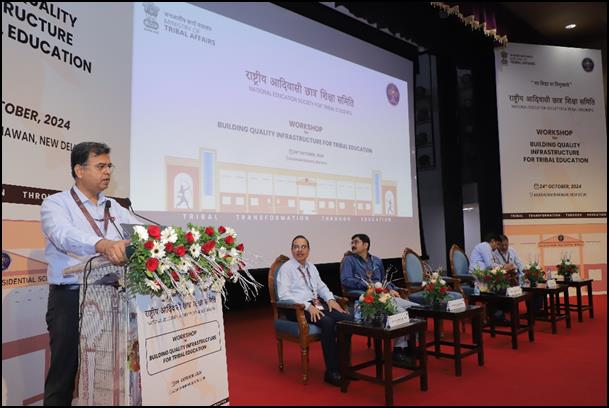
National Education Society for Tribal Students (NESTS) successfully organized a workshop on “Building Quality Infrastructure for Tribal Education” on 24th October 2024 at Akashvani Bhawan, New Delhi. This event is part of the government’s ongoing efforts to provide quality educational infrastructure for tribal communities through Eklavya Model Residential Schools (EMRSs), ensuring sustainable and effective learning environments.
Shri Ajeet K. Srivastava, Commissioner of NESTS, inaugurated the workshop, emphasizing the critical need for completing EMRS construction on time with emphasis on quality of construction. He stated, “Non completion of good quality EMRS on time means tribal children not going to school which is unacceptable.” He exhorted the participants to take pledge that they would construct EMRS before time by ensuring best quality of construction. Commitment to multifaceted development is evident in NESTS’ initiatives, including modern educational programs like the Amazon Future Engineering program and the organization of a Principal’s Conclave focused on academic and administrative excellence. This holistic approach underscores the importance of providing both high-quality infrastructure and advanced educational opportunities for tribal students.
Shri Ajeet K. Srivastava, Commissioner, NESTS addressing the gathering.
The workshop covered essential technical aspects such as geotechnical investigations, material testing, earthwork, and the reinforcement of construction practices in tribal areas. Participants included civil engineers, project managers, and architects, all eager to share best practices and insights from the newly launched handbook titled “Building Quality Infrastructure for Tribal Education.”
Interactive sessions focused on project planning, architectural layouts, and specific reinforcement issues related to tribal education infrastructure. Participants emphasized the importance of aligning construction practices with the unique geographical and cultural contexts of tribal regions for sustainable development.
Throughout the day, expert speakers provided valuable insights, fostering collaboration and innovative solutions to infrastructure challenges.
Topics included quality assurance during the construction process, effective material testing methodologies, and strategies for successful project planning. Interactive Q&A sessions allowed participants to address specific issues related to EMRS development, facilitating knowledge exchange and practical problem-solving.
This pioneering workshop represents a significant step forward in NESTS’ mission to enhance educational access and quality for tribal communities, reaffirming its vision of providing equal opportunities for all tribal students.
India is hosting the World Heritage Committee Meeting for the first time. It takes place from 21 to 31 July 2024, at Bharat Mandapam in New Delhi. The World Heritage Committee meets annually and is responsible for managing all matters on World Heritage and deciding on sites to be inscribed on the World Heritage list.
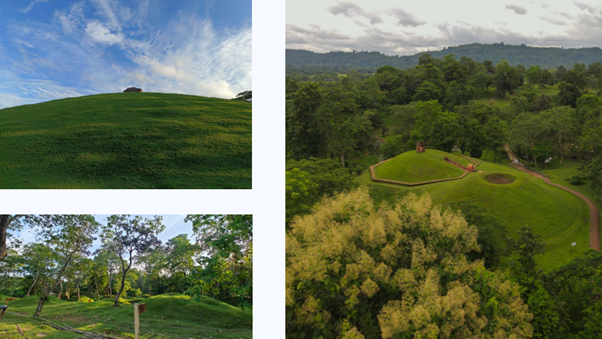
The 46th session of the World Heritage Committee in 2024 will examine 27 nominations from around the world, including 19 Cultural, 4 Natural, 2 Mixed sites and 2 Significant modifications to the boundaries. Out of which, India’s Moidams – The Mound – Burial System of the Ahom Dynasty is set to be examined under the category of Cultural Property.
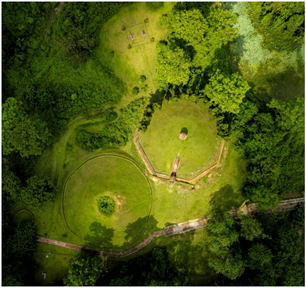
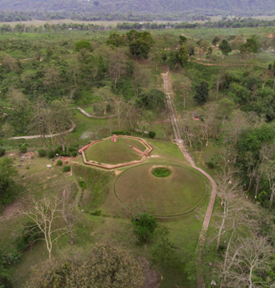
Moidams – the Mound-Burial system of the Ahom Dynasty
The Tai-Ahom clan, migrating from China, established their capital in various parts of the Brahmaputra River Valley from the 12th to the 18th century CE. One of the most revered sites among them was Choraideo, where the Tai-Ahoms established their first capital under Chau-lung Siu-ka-pha at the foothills of the Patkai hills. This sacred site, known as Che-rai-doi or Che-tam-doi, was consecrated with rituals that reflected the deep spiritual beliefs of the Tai-Ahoms. Over centuries, Choraideo retained its significance as a burial ground where the departed souls of the Tai-Ahom royals transcended into the afterlife.
Historical Context
The Tai-Ahom people believed their kings were divine, leading to the establishment of a unique funerary tradition: the construction of Moidams, or vaulted mounds, for royal burials. This tradition spanned 600 years, marked by the use of various materials and architectural techniques evolving over time. Initially using wood, and later stone and burnt bricks, the construction of Moidams was a meticulous process detailed in the Changrung Phukan, a canonical text of the Ahoms. Rituals accompanying royal cremations were conducted with great grandeur, reflecting the hierarchical structure of Tai-Ahom society.
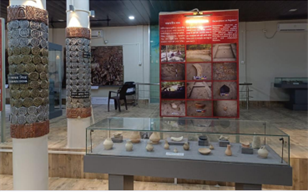
Excavation shows that each vaulted chamber has a centrally raised platform where the body was laid. Several objects used by the deceased during his life, like royal insignia, objects made in wood or ivory or iron, gold pendants, ceramic ware, weapons, clothes to the extent of human beings (only from the Luk-kha-khun clan) were buried with their king.
Architectural Features
Moidams are characterized by vaulted chambers, often double-storied, accessed through arched passages. The chambers housed centrally raised platforms where the deceased were laid to rest along with their royal insignia, weapons, and personal belongings. The construction of these mounds involved layers of bricks, earth, and vegetation, transforming the landscape into undulating hillocks reminiscent of celestial mountains.
Cultural Significance
The continuity of the Moidam tradition at Choraideo underscores its Outstanding Universal Value under UNESCO criteria. This funerary landscape not only reflects Tai-Ahom beliefs about life, death, and the afterlife but also served as a testament to their cultural identity amidst shifts towards Buddhism and Hinduism among the population. The concentration of Moidams at Choraideo distinguishes it as the largest and most significant cluster, preserving the grand royal burial practices unique to the Tai-Ahoms.
Conservation Efforts
Despite challenges such as vandalism by treasure seekers in the early 20th century, concerted efforts by the Archaeological Survey of India and the Assam State Department of Archaeology have restored and preserved the integrity of Choraideo. Protected under national and state laws, the site continues to be managed to safeguard its structural and cultural authenticity.
Comparisons with Similar Properties
The Moidams of Choraideo can be compared to royal tombs in ancient China and the pyramids of Egyptian pharaohs, illustrating universal themes of honoring and preserving royal lineage through monumental architecture. Within the broader Tai-Ahom cultural region spanning parts of Southeast Asia and Northeast India, Choraideo stands out for its scale, concentration, and spiritual significance.
Choraideo at the foothills of the Patkai range remains a profound symbol of Tai-Ahom heritage, encapsulating their beliefs, rituals, and architectural prowess. As a landscape shaped by centuries of royal burials, it continues to inspire awe and reverence, offering insights into the cultural evolution and spiritual worldview of the Tai-Ahoms. Preserved through careful conservation efforts, Choraideo stands as a testament to the enduring legacy of the Tai-Ahom civilization in the Brahmaputra River Valley. In conclusion, the Moidams of Choraideo not only embody architectural and cultural significance but also serve as a poignant reminder of the Tai-Ahom people’s deep spiritual connection to their land and their departed kings.
Caste and creed are two intricately intertwined concepts that have deeply influenced societies across the globe for centuries. Both terms carry significant weight in shaping social structures, cultural identities, and individual experiences. While often discussed separately, understanding their interplay is crucial for comprehending the complexities of societal dynamics.
Caste refers to a hereditary social class system prevalent in many societies, notably in South Asia. Originating from ancient Hindu scriptures, caste delineates societal stratification based on birth, occupation, and social status. Traditionally, society was divided into four main castes, namely Brahmins (priests and scholars), Kshatriyas (warriors and rulers), Vaishyas (merchants and traders), and Shudras (laborers and artisans), with Dalits (formerly known as “untouchables”) marginalized outside this system.
Caste dictates various aspects of life, including occupation, marriage, and social interactions, often determining an individual’s opportunities and privileges. Despite legal abolishment and efforts towards social reform, caste-based discrimination and prejudice persist, perpetuating inequalities and hindering social mobility.
Creed: The Essence of Belief
Creed encompasses a set of beliefs or principles that guide an individual’s religious, spiritual, or philosophical convictions. It transcends mere religious affiliation, encompassing ideologies, values, and worldviews that shape one’s identity and interactions with the world. Creed influences moral conduct, societal norms, and cultural practices, providing a framework for individual and collective behavior.
Religious creed, in particular, holds immense significance in shaping communities and societies worldwide. It fosters solidarity among adherents, serving as a source of comfort, guidance, and communal identity. However, creed can also be a source of division, leading to sectarianism, intolerance, and conflict when differences are perceived as threats to established norms or power structures.
Interplay of Caste and Creed
The intersection of caste and creed profoundly influences social dynamics, particularly in regions where both concepts are deeply ingrained in the fabric of society. Religious communities often align with specific caste groups, intertwining religious identity with social status and cultural practices. This intersectionality manifests in various ways:
Caste-Based Exclusivity within Religious Communities: In some societies, caste serves as a determinant of access and participation within religious institutions and rituals. Certain castes may be marginalized or excluded from full participation in religious activities, reinforcing social hierarchies within religious frameworks.
Inter-Caste Marriage and Social Stigma: Inter-caste marriages challenge traditional social norms and face resistance from families and communities adhering to strict caste boundaries. Religious creed may exacerbate these tensions, as marriage is not only a union of individuals but also a merging of social identities and cultural practices.
Political Mobilization and Identity Politics: Caste and religious identities often intersect in the political arena, with leaders mobilizing support based on shared caste or religious affiliations. This exploitation of identity politics can deepen divisions and perpetuate social inequalities, hindering efforts towards inclusive governance and social cohesion.
Resistance and Reform Movements: Despite the entrenched nature of caste-based discrimination, religious creed has also been a catalyst for social reform movements advocating for equality and justice. Leaders from marginalized caste groups have drawn inspiration from religious teachings to challenge oppressive systems and promote social change.
Challenges and Pathways Forward
Addressing the complexities of caste and creed requires a multifaceted approach that acknowledges historical injustices, respects cultural diversity, and promotes inclusive social policies. Key considerations include:
Legal Protections and Enforcement: Robust legal frameworks are essential for combating caste-based discrimination and ensuring the rights of marginalized communities. Efforts to enforce anti-discrimination laws must be accompanied by awareness campaigns and capacity-building initiatives to foster social inclusion.
Education and Awareness: Education plays a vital role in challenging entrenched beliefs and fostering empathy and understanding across caste and religious divides. Incorporating diverse perspectives into curricula and promoting interfaith dialogue can contribute to building more tolerant and cohesive societies.
Community Empowerment and Dialogue: Grassroots initiatives that empower marginalized communities and facilitate dialogue between different caste and religious groups are crucial for fostering social cohesion. By promoting mutual understanding and cooperation, communities can work towards dismantling barriers and building inclusive societies.
Promotion of Intersectional Approaches: Recognizing the intersectionality of caste, creed, gender, and other forms of identity is essential for developing holistic solutions to social inequalities. Policies and programs should address multiple dimensions of discrimination to ensure that no individual or community is left behind.
In conclusion, the interplay of caste and creed shapes the social, cultural, and political landscapes of many societies, presenting both challenges and opportunities for social cohesion and justice. By addressing entrenched prejudices, promoting inclusive policies, and fostering dialogue and solidarity, societies can strive towards a more equitable and harmonious future.
India has experienced many foreign footsteps on its land , some were explorers , some came from the invading purpose. Ancient and mediveal India experienced a lot of such explorers , one of them was Abd Al Razzaq ( 1413 AD ) . Razzaq was from Persia ad was a scholar in the court of king of Persia , Mirza Shah rukh of Timrud Dynasty between 1405 AD – 1482 AD . Mirza wanted to send a messenger to India and so he appointed Razzaq , nbut Razzaq refused to go as he was afraid of travelling , but after many requests by Mirza , Razzaq agreed to comme to India .
Razzaq by road travelled from Herat to Hormuz and from Port of Hormuz he landed on the land of kozhikode , where he wanted to learn about the government and functioning of the area , but Razzaq was not allowed to meet the king for atleast 3 months and thus he thought of his mission as messenger was a failure. Just then the king of Vijaynagar empire Dev Raya II invited Razzaq to visit vijaynagar , Razzaq was welcomed at Hampi ( the capital of vijaynagar) and was surprised to see the architectural glory of the buildings of the city . The city had 7 concentric circular walls and at the centre was the huge miraculous palace of the king . The walls were made such that there were houses and farms between the first and second walls , market and coin making factories between the third and fourth walls . Razzaq was greatky welcomed by the king Dev Raya II . As Dev raya wanted to learn more about their government and functioning . As time passed Razzaq was one of the most favourite courtiers of Dev Raya , Dev Raya also gifted Razzaq mansion to live , soon this favouritism towards Razzaq was not excepted by other courtiers and resulting in spread of fake rumours claiming that Razzaq is a spy and not a messenger from Persia . These news spread like wildfire and finllay reached through the ears of king in which the king said that ” It had been asserted that you were not really sent here by Shah Rukh or else we would have shown you greater attention , if you come back on a future occasion into my territoies you shall meet with a worthy reception” ; by Dev Raya II ( from the book of Abd Al Razzaq . After which Razzaq was forced to flee vijaynagar and was sent back to Persia in 1445 . Razzaq the told all these happenings to Mirza Shah rukh and then he himself sent an official letter to Dev Raya II regarding the visit of Razzaq .
Razzaq ‘s experience as a traveller was great this experience made Razzaq a travel enthusiast from a reluctant traveller .
References
Hill, E. (1987). al-Sanhuri and Islamic law: the place and significance of Islamic law in the life and work of’Abd al-Razzaq Ahmad al-Sanhuri, Egyptian jurist and scholar 1895-1971.
Evolution was in the air and developmental thinking can be found in a variety of different fields.
The word evolution was borrowed from Latin ēvolūtiō, ēvolūtiōnis, which means , “the act of unrolling, unfolding or opening .
Evolution is a process full of complexity . Evolution is a principle of internal growth . It shows not merely what happens to a thing but also what happens within it .
Their term evolution is borrowed from the biological science of sociology ,Frome the term ” organic evolution ” . Whereas organic evolution is used to denote the evolution of organisms ,social evolution is used to denote the evolution of human society .
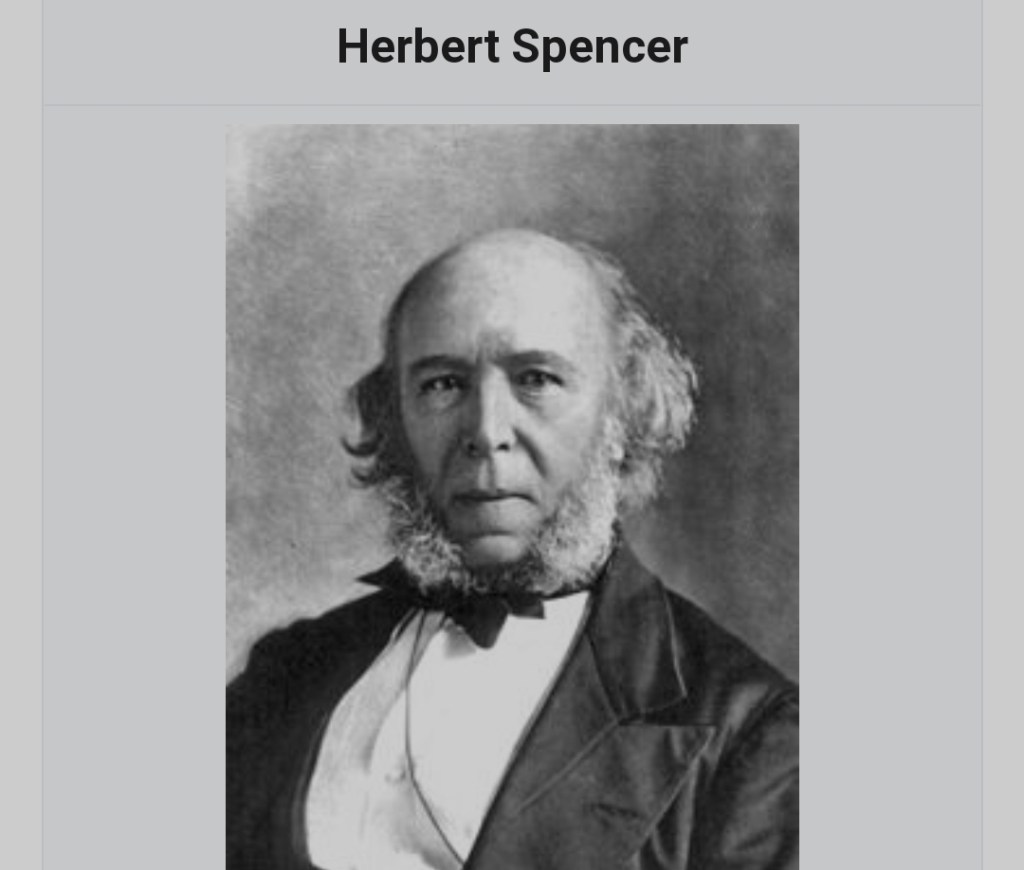
Herbert Spencer (27 April 1820 – 8 December 1903) was an English philosopher, biologist, anthropologist, and sociologist famous for his hypothesis of social Darwinism.
Spencer in his essay “The Social Organism”, stated that the social organism itself is subject to evolutionary developments as a separate entity and much of the idea that societies, like individual organisms, “spontaneously evolved” .
On passing from Humanity under its individual form, to Humanity as socially embodied, social evolution can be exemplified .
Spencer said , “Evolution is an integration of matter and concomitant dissipation of motion, during which the matter passes from an indefinite, incoherent homogeneity to a definite, coherent heterogeneity and during which the retained motion undergoes a parallel transformation.”
One of the most important contribution of Herbert Spencer to Sociology is the theory of evolution
His principles included physical and biological evolution in order to elaborate and explain his theory of Social evolution. He sketches a comprehensive account of evolution of the inorganic, organic, and human and social realms.
He stated , “In respect to that progress which individual organisms display in the course of their evolution,”
He explained this course of evolution through , the development of a seed into a tree, or an ovum into an animal, constitute an advance from homogeneity of structure to heterogeneity of structure .
He continue with, the change from the homogeneous to the heterogeneous is displayed in the progress of civilization as a whole, as well as in the progress of every nation; and is still going on with increasing rapidity.
Spencer adopted his principle of evolution from naturalistCharles Darwin, who developed the concept of evolution in his “Origin of Species” in 1859.
Herbert Spencer, used Darwin’s theory and applied it to how societies change and evolve .According to Spencer societies were bound to change automatically .
Spencer in his theory applied a comparison of societies with organisms that progress through changes similar to that of a living species.
He included three types of systems where societies can be compared to organisms .
The first system is the regulative system. In animals, that would be the central nervous system and in societies, it would be a government that regulates everything.
The second system is the sustaining system. For animals, that’s the giving and receiving of nourishment. For societies, that would be industry – jobs, money, economy and those sorts of things.
The third system would be the distribution system. In animals, that would be the veins and arteries. In societies, it would be roads, transportation, internet – anything in which information and goods and services are exchanged.
“Survival of the fittest” expounded by Darwin was highly believed by him . According to Spencer only strong creatures survive and evolve; only strong makes progress. And that animal has to struggle to preserve its existence.
All universal phenomena-inorganic, organic, super organic—are subject to the natural law of evolution.
A definite pattern of change is followed by all the phenomena of nature—the stars and planetary systems, the earth and all terrestrial phenomena, biological organisms and the development of species, all the psychological and sociological processes of human experience.
Herbert Spencer includes physical evolution in the form of indefinite incoherent situations to definite and coherent situations. The underlying principles of physical evolution are a movement from simple to complex and homogeneity to heterogeneity.
According to him , following the Darwin theory of ” Survival of fittest ” the biological evolution only those creatures survive in the struggle for existence who are able to make effective adjustment with changing circumstances.
Herbert Spencer utilized these two principles, physical and biological evolution in order to explain social evolution.
Spencer’s theory of social evolution points out to two stages:
1. The movement from simple to compound societies.
This movement from simple to compound societies can be seen in four types of societies in terms of evolutionary levels
2. Change from militant society to industrial society.
According to Spencer, the law of evolution is the supreme law of every becoming. From the analysis of biological evolution Spencer established the theory of evolution. He argued that the evolution of human societies, far from being different from other evolutionary phenomena. It is a special case of a universally applicable natural law.
According to some social thinkers Herbert Spencer’s has several criticism , They said that theory lacks practicability and is realistic. It also lacks uniformity. Qualities like sympathy, sacrifice, kindness, love etc. are of much Importance in human survival . These are quite different from the struggle for existence.
Despite of several criticism Spencer Theory of Evolution is the fundamental base for understanding evolution of man and society .
India has unfortunately witnessed several major train accidents since gaining independence in 1947. These accidents have caused significant loss of life and infrastructure damage. While the list provided here highlights some notable incidents, it may not include all accidents, and it’s important to refer to reliable sources and official reports for comprehensive and up-to-date information. Here are some major train accidents that occurred in India after independence:
Peruman Train Accident (1956): On November 5, 1956, near Peruman, Kerala, the Bangalore Mail derailed, resulting in a tragic collision with an oncoming passenger train. This accident claimed the lives of 144 people and injured many others.
Ariyalur Train Accident (1956): On December 15, 1956, near Ariyalur, Tamil Nadu, two trains, the Sabari Express and the Bangalore Express, collided head-on due to a signal failure. The accident resulted in the deaths of over 140 passengers.
Midnapore Train Accident (2010): On May 28, 2010, the Howrah-Kurla Lokmanya Tilak Gyaneshwari Express derailed near Midnapore, West Bengal. Sabotage was identified as the cause of the derailment, leading to the deaths of 148 passengers and injuries to numerous others.
Kanpur Train Derailment (2016): On November 20, 2016, the Indore-Patna Express derailed near Kanpur, Uttar Pradesh. The accident caused the deaths of 150 passengers and injured many others. The exact cause of the derailment was under investigation.
Pukhrayan Train Derailment (2016): On the same day as the Kanpur derailment, near Pukhrayan, Uttar Pradesh, the Indore-Patna Express derailed, resulting in one of the deadliest train accidents in recent times. This accident claimed the lives of 152 passengers and caused injuries to numerous individuals.
Amritsar Train Accident (2018): On October 19, 2018, during a Dussehra festival celebration near Amritsar, Punjab, a speeding train struck a crowd that was standing on railway tracks, leading to a tragic incident. The accident resulted in the deaths of around 60 people and injured many others.
Raebareli Train Accident (2010): On October 10, 2010, near Raebareli, Uttar Pradesh, the Goa Express collided with a stationary Mewar Express due to signal failure. The accident caused the deaths of 22 people and injured several others.
Jagdalpur-Bhubaneswar Hirakhand Express Derailment (2017): On January 21, 2017, the Jagdalpur-Bhubaneswar Hirakhand Express derailed near Kuneru, Andhra Pradesh. The accident led to the deaths of 41 passengers and caused injuries to numerous individuals.
Guwahati-Puri Express Derailment (1999): On September 13, 1999, the Guwahati-Puri Express derailed near Gaisal, Assam, resulting in a collision with an incoming freight train. This accident claimed the lives of 285 people and injured more than 300.
Khanna Rail Accident (1998): On November 26, 1998, near Khanna, Punjab, the Jammu Tawi-Sealdah Express collided with two derailed wagons, causing a massive fire. The accident resulted in the loss of 212 lives and injuries to several others.
These accidents underscore the importance of continuous efforts to improve railway safety, infrastructure maintenance, and the implementation of advanced technologies to prevent such incidents
Archaeological Survey of India (ASI) is planning to establish gift shops in its monuments creating an opportunity for the Cultural and Creative Industries to work closely with the monuments. ASI intends to leverage souvenirs for generating interest and promotion of heritage monuments.
In order to enhance interest and recognition of Indian cultural crafts and heritage leading to their conservation, development and sustaining livelihood of the associated artisans and their communities the ASI has released an Expression of Interest on www.eprocure.gov.in and www.asi.nic.in. An entire list of 84 monuments is available on the EOI.
For the past two years the ASI has been deliberating the policy for running high quality souvenir shops at monuments of national importance. The souvenir shops intend to provide a visitor experience that the people of India can engage with in order to connect with their heritage. Souvenir varieties will range from replicas of highlighted features of the site, such as architectural fragments, important sculptures, inclusion of One District One Product (ODOP) and artifacts of antiquarian value. Besides replicas, this souvenir shop can serve as a playground for creative ideas where craftspeople, artisans, corporate conglomerates, boutique manufacturers and startups can participate in manufacturing items that speak directly to the culture of India.
This public amenity was formerly provided by the ASI in the form of a publications counter. This humble publication counter now will evolve into a more multidimensional offering for the general public where the scope of the souvenirs will be defined by the ASI with academic support in better understanding a monument.
The intent of the ASI in this EOI is beyond a simple gift shop which only sells magnets and souvenir mugs. Instead interested parties are encouraged to imagine far more exciting offerings using technology and historic techniques that are regionally important and globally relevant. From the use of 3D printing for creating replicas, inclusion of One District One Product (ODOP) products, to redeveloping and packaging old games of Ancient and Medieval India, could expand the relevance of souvenirs that are well thought out.
The Indian saree is a traditional garment that has evolved over thousands of years. It is a long piece of cloth that is draped around the body in different styles, and it is worn by women of all ages and social classes in India. The saree is a symbol of cultural heritage and feminine grace in Indian society.
The history of the saree can be traced back to the Indus Valley Civilization, which existed in present-day India and Pakistan around 2800-1800 BCE. Archaeological evidence suggests that women in the Indus Valley Civilization wore garments similar to the saree, which consisted of a long piece of cloth draped around the body.
The saree as we know it today began to take shape during the Maurya Empire (321-185 BCE). The Mauryan period saw the development of weaving techniques, and cotton and silk became popular fabrics for sarees. The saree also became a symbol of social status, with wealthy women wearing more elaborate and expensive sarees.
During the Mughal Empire (1526-1857), the saree became even more elaborate and luxurious. Mughal empresses like Nur Jahan and Mumtaz Mahal wore sarees made of fine silk, adorned with gold and silver thread, pearls, and precious stones. The Mughal period also saw the development of new saree styles, like the lehenga saree and the dupatta.
In the 19th and 20th centuries, the British colonial period had a significant impact on the saree. British textile mills began to produce inexpensive cotton fabrics, which became popular among Indian women. The introduction of the sewing machine also made it easier and faster to produce sarees. However, British colonialism also led to the decline of traditional weaving techniques and the loss of local textile industries.
After India gained independence in 1947, there was a renewed interest in traditional Indian textiles and fashion. The Indian government encouraged the revival of local textile industries and promoted handloom sarees made by skilled artisans. Designers like Ritu Kumar and Sabyasachi Mukherjee also played a significant role in promoting the saree as a fashionable and modern garment.
Today, the saree is worn by women all over the world, and it has become a symbol of Indian culture and fashion. The saree has evolved to include new styles and fabrics, like the chiffon saree and the georgette saree. Designers continue to experiment with the saree, incorporating new elements like embroidery, prints, and sequins. Despite these changes, the saree remains a timeless and elegant garment that embodies the beauty and grace of Indian women.
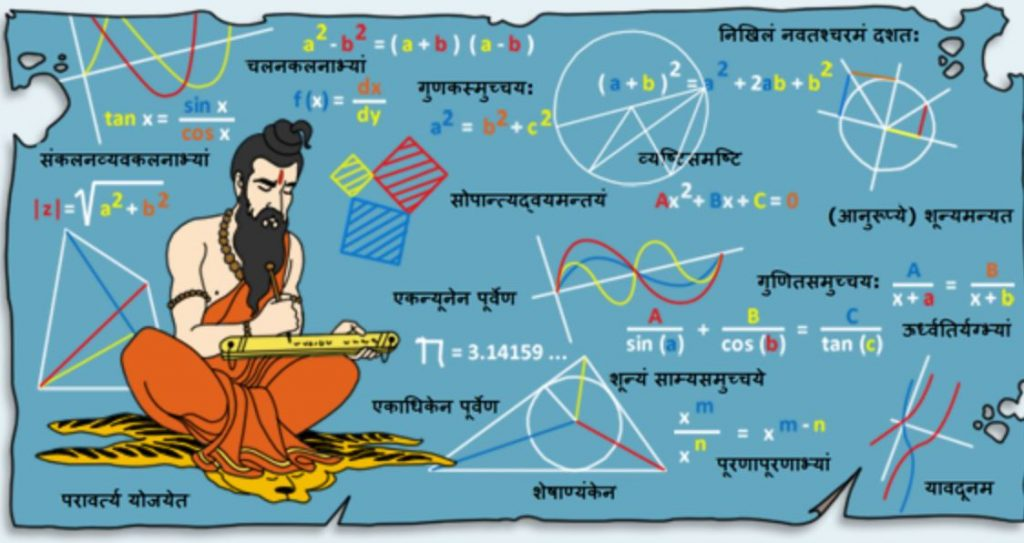
India has a rich history of mathematics, with contributions spanning thousands of years. Ancient Indian mathematicians made significant discoveries in the fields of arithmetic, algebra, geometry, and trigonometry, laying the foundations for modern mathematics.
One of the earliest known texts on mathematics in India is the Sulba Sutras, which date back to the 8th century BCE. These texts describe geometric principles used in the construction of altars for Vedic rituals, and contain formulas for calculating the area and circumference of circles and the square roots of numbers.
In the 5th century BCE, the mathematician Pingala wrote the Chhandahshastra, which is considered to be the first known work on binary numbers. Pingala’s system of binary numbers is similar to the modern binary system used in computing, and was used to represent Vedic hymns as sequences of long and short syllables.
In the 3rd century BCE, the mathematician Aryabhata wrote the Aryabhatiya, a treatise on mathematics and astronomy that made significant contributions to the fields of algebra, trigonometry, and spherical geometry. Aryabhata developed the concept of zero as a number, and also introduced the sine, cosine, and inverse sine functions.
Another influential mathematician from ancient India was Brahmagupta, who lived in the 7th century CE. Brahmagupta wrote the Brahmasphutasiddhanta, a treatise on astronomy and mathematics that included formulas for solving quadratic equations, as well as the first known use of negative numbers in mathematical calculations.
In the 12th century, the mathematician Bhaskara wrote the Siddhanta Shiromani, which contained essential contributions to the fields of algebra and trigonometry. Bhaskara developed a method for solving indeterminate equations, and also gave a formula for calculating the sine of an angle using the cosine.
The Kerala School of Mathematics, which flourished in southern India between the 14th and 16th centuries, made significant contributions to the field of calculus. The mathematician Madhava is credited with the discovery of the power series, which was used to calculate the value of pi to an accuracy of 11 decimal places.
In addition to these specific contributions, ancient Indian mathematicians also developed several mathematical concepts and notation systems that are still used today. For example, the decimal system, which uses the digits 0-9 and place value to represent numbers, was developed in India and later spread to other parts of the world.
The evolution of clocks is a fascinating story that spans thousands of years, from the earliest timekeeping devices to the most accurate atomic clocks of today. In this article, we will explore the major milestones in the history of clocks and how they have shaped our understanding of time.
Creator – Jorge Villa
The earliest known timekeeping devices were sundials, which were used by ancient civilizations such as the Egyptians, Greeks, and Romans. Sundials work by casting a shadow on a marked surface, indicating the time of day based on the position of the sun in the sky. Although sundials were effective in providing a rough estimate of time, they were not very accurate and could only be used during daylight hours.
The invention of the mechanical clock in the 14th century marked a major leap forward in timekeeping technology. These early clocks used gears and springs to power the movement of the hands and were able to keep time more accurately than any previous device. The first mechanical clocks were large and expensive and were primarily used in churches and other public buildings.
The development of the pendulum clock in the 17th century was another major breakthrough in timekeeping technology. The pendulum clock uses a swinging weight to regulate the movement of the gears, making it much more accurate than earlier mechanical clocks. The invention of the pendulum clock made it possible for individuals to own their own timekeeping devices, and clocks soon became a common household item.
In the 19th century, the invention of the electric clock paved the way for even greater accuracy and precision. Electric clocks use a quartz crystal to regulate the movement of the hands, making them much more reliable than mechanical clocks. Electric clocks also allowed for the development of synchronized timekeeping systems, which made it possible for people all over the world to keep the same time.
The invention of the atomic clock in the mid-20th century was another major milestone in the history of timekeeping. Atomic clocks use the vibrations of atoms to keep time, making them the most accurate clocks ever created. Atomic clocks are now used in a wide range of applications, from satellite navigation systems to scientific research.
Today, clocks come in all shapes and sizes, from traditional mechanical timepieces to digital clocks and smartwatches. Although the basic technology behind clocks has remained largely unchanged over the centuries, advances in materials, electronics, and software have allowed for ever-greater accuracy and precision.
In conclusion, the evolution of clocks has been a long and fascinating journey, marked by major milestones in technology and innovation. From the simple sundials of ancient times to the sophisticated atomic clocks of today, clocks have played a vital role in shaping our understanding of time and the world around us.
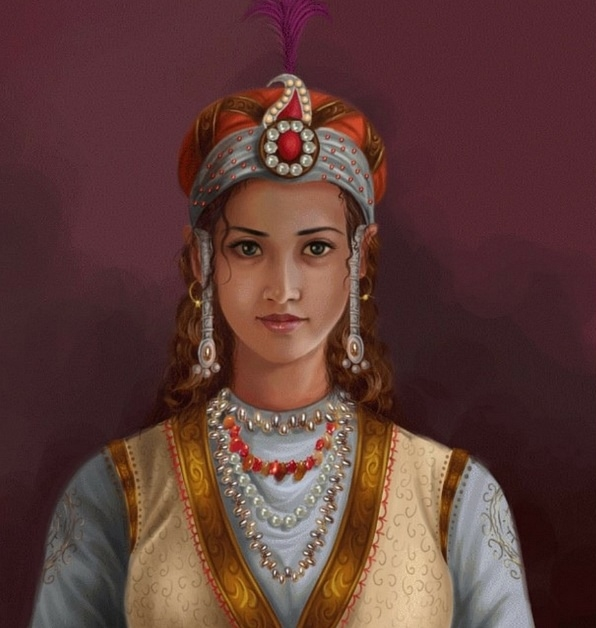
Razia Sultan was the first and only female ruler of the Delhi Sultanate in India. She ruled from 1236 to 1240 CE and was known for her bravery, intelligence, and administrative skills.
Razia was the daughter of Sultan Iltutmish, who had established the Delhi Sultanate after the decline of the Ghaznavid Empire. Iltutmish had several sons, but he chose Razia as his successor, as he believed her to be the most capable of ruling the empire.
Razia’s reign was marked by several accomplishments. She introduced several reforms to the administration, such as improving the tax collection system and establishing a network of spies to gather information about the state of affairs in the empire. She also established a postal system, which improved communication and helped her maintain control over the vast empire. Razia was also a skilled warrior and led several military campaigns against neighboring kingdoms. She defeated the rebellious governor of Bhatinda, Malik Altunia, who had refused to recognize her as the Sultan. She also successfully repelled a Mongol invasion led by Genghis Khan’s grandson, Batu Khan.
Despite her many achievements, Razia faced significant opposition from the nobility, who were unhappy with being ruled by a woman. Her half-brother Ruknuddin Firuz, who had been appointed as her successor by the nobility, led a rebellion against her. Razia was defeated and imprisoned, and Ruknuddin became the Sultan. However, Razia managed to escape from prison and launched a counter-attack against her half-brother. She defeated Ruknuddin and regained the throne, but her reign was short-lived. She was betrayed by one of her advisors, Altunia, whom she had married for political reasons. Altunia, who had harbored resentment towards Razia for defeating him earlier, turned against her and had her killed in 1240 CE.
Razia Sultan’s legacy has endured through the centuries. She was a trailblazer for women in positions of power and challenged the traditional norms of her time. Her reign demonstrated that a woman could rule a vast empire effectively and competently. She is still celebrated as a symbol of female empowerment and has inspired several books, films, and television series in India.
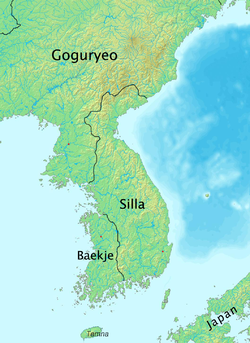
Silla was one of the three kingdoms that emerged in the Korean peninsula during the Three Kingdoms period, which lasted from the 1st century BCE to the 7th century CE. Silla was founded in 57 BCE by Bak Hyeokgeose, who established his capital in the city of Gyeongju, in what is now the southeastern region of South Korea.
Source – Wikipedia
Silla began as a small state in the southeastern part of the Korean peninsula, but gradually expanded its territory through military conquest and political alliances. In the 4th century CE, Silla formed an alliance with the neighboring kingdom of Baekje, which allowed it to take control of much of the Han River basin in central Korea. Silla also fought against the kingdom of Goguryeo to the north, but was unable to conquer it.
Silla’s rise to prominence came in the 7th century CE, when it formed an alliance with the Tang dynasty of China to defeat the neighboring kingdom of Baekje and Goguryeo. This alliance enabled Silla to control the entire Korean peninsula, ushering in a period of political stability and cultural flourishing known as the Unified Silla period.
During the Unified Silla period, Silla became a major center of Buddhism in East Asia. The ruling elite adopted Buddhism as their official religion and built many temples and pagodas throughout the kingdom. Silla also had a sophisticated system of government, with a centralized bureaucracy and a powerful aristocracy that dominated political and economic life.
Silla’s achievements in art and culture were also noteworthy. Silla artisans produced exquisite pottery, bronze sculptures, and gold ornaments that reflected the influence of Chinese and Central Asian styles. Silla literature, including poetry and historical records, also flourished during this period.
However, Silla’s dominance was not to last. In the late 8th century CE, Silla faced a series of rebellions by regional warlords and the rise of a new power in the north, the kingdom of Balhae. In 918 CE, Silla was overthrown by the kingdom of Goryeo, which established a new dynasty that would last for nearly 500 years.
Despite its relatively short lifespan, Silla played an important role in the history of Korea. Its military conquests and political alliances laid the foundation for the unification of the Korean peninsula, while its cultural achievements helped to shape the artistic and literary traditions of Korea for centuries to come. Today, the legacy of Silla can be seen in the many historical sites and artifacts that have been preserved in Gyeongju, including the Seokguram Grotto and the Bulguksa Temple, which have been designated as UNESCO World Heritage Sites.
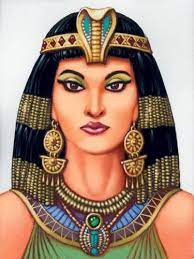
Cleopatra VII was the last pharaoh of Egypt and is famously known for her death by suicide. Her death is a significant event in history and has been the subject of numerous artistic depictions, including plays, novels, and movies. In this essay, I will discuss the circumstances surrounding her death and the possible reasons behind it.
Source – Pinterest
Cleopatra was born in 69 BC and became the queen of Egypt in 51 BC, at the age of 18, after her father’s death. She ruled jointly with her younger brother, Ptolemy XIII, but soon became embroiled in a power struggle with him. Cleopatra fled to Syria and gathered an army to fight her brother, and with the help of Julius Caesar, she regained her throne in 47 BC.
Cleopatra had a romantic relationship with Julius Caesar and bore him a son, Caesarian. However, Caesar was assassinated in 44 BC, and Cleopatra formed a new alliance with Mark Antony, one of Caesar’s generals. Cleopatra and Mark Antony had a passionate love affair and had three children together.
However, their relationship became strained after Mark Antony’s military campaign against Parthia was a failure, and he returned to Alexandria, Egypt. Mark Antony was forced to marry Octavia, the sister of his fellow triumvir, Octavian, who later became the emperor Augustus. Cleopatra, feeling betrayed, fled to her mausoleum and pretended to commit suicide.
Mark Antony, upon hearing the news of Cleopatra’s death, was devastated and decided to follow suit. He fell on his sword and died shortly afterward. However, Cleopatra was not dead but was only in a deep sleep induced by a poisonous snake, most likely an asp. When Cleopatra woke up, she learned of Mark Antony’s death and realized that she had no choice but to take her own life. She instructed her servants to bring her a basket of figs, which she had secretly poisoned with deadly toxins. She then took her own life by ingesting the poison.
Cleopatra died on August 30, 30 BC, at the age of 39. Her death marked the end of the Ptolemaic dynasty and the beginning of Roman rule in Egypt. Her life and death have been the subject of many myths and legends, and her image has been immortalized in countless works of art and literature.
There are many possible reasons why Cleopatra chose to end her life. Some historians suggest that she was afraid of being paraded through Rome as a captive, as many other defeated monarchs had been. Others argue that she was devastated by the loss of her lover and decided to follow him into death. Some believe that Cleopatra was trying to protect her children and prevent them from being used as political pawns by the new Roman rulers.
In conclusion, the death of Cleopatra remains a fascinating and mysterious event in history. Despite the numerous depictions of her death, we may never know the true circumstances that led to her tragic end. However, her legacy as a powerful and intelligent leader, a romantic figure, and a symbol of ancient Egypt will continue to inspire and captivate people for generations to come.
The French Revolution was a period of radical social and political upheaval that lasted from 1789 to 1799. It was a time of great change and transformation in France, as the old regime of absolute monarchy and aristocratic privilege was overthrown and replaced with a new system of democratic government and social equality.
Source – Pinterest.com
The causes of the French Revolution were many and varied, but they can be traced back to the economic, social, and political problems that France was facing in the late 18th century. The country was burdened with a heavy debt, which had been incurred from years of costly wars and lavish spending by the monarchy. This debt was exacerbated by a poor harvest in 1788, which led to widespread famine and starvation.
At the same time, there was growing discontent among the French people, who were unhappy with the way that the country was being run. The monarchy was seen as corrupt and ineffective, and the aristocracy was viewed as parasitic and out of touch with the needs of ordinary people.
The Revolution began in 1789, when a group of deputies from the Third Estate (the common people) gathered in Versailles to demand political representation and reform. When the king refused to listen to their demands, the people of Paris rose up in revolt, storming the Bastille prison on July 14, 1789.
The fall of the Bastille was a turning point in the Revolution, and it marked the beginning of a period of radical change and experimentation. Over the next few years, France was governed by a series of different regimes, as the country struggled to find a new system of government that would be fair and effective.
The early years of the Revolution were marked by a series of important reforms, including the abolition of feudalism and the establishment of a system of universal education. However, the Revolution was also marked by violence and bloodshed, as rival factions fought for control of the government and executed their opponents.
The most violent period of the Revolution was the Reign of Terror, which lasted from 1793 to 1794. During this time, thousands of people were arrested and executed on suspicion of being counter-revolutionaries. The leader of this period, Maximilien Robespierre, was eventually overthrown and executed himself in 1794, bringing an end to the Reign of Terror.
The Revolution came to an end in 1799, when Napoleon Bonaparte seized power in a coup d’etat and established the First French Empire. Although Napoleon was a product of the Revolution, he represented a return to authoritarian rule, and his reign was marked by military conquest and imperial expansion.
Overall, the French Revolution was a period of profound change and transformation in France. It marked the end of the old regime and the beginning of a new era of democratic government and social equality. However, the Revolution was also marked by violence and bloodshed, and its legacy continues to be debated and contested to this day.
World War II was a global conflict that lasted from 1939 to 1945. It was the deadliest conflict in human history, with an estimated 50-85 million fatalities worldwide, including civilians and military personnel. The war was fought between two main alliances: the Axis powers, consisting of Germany, Italy, and Japan; and the Allied powers, consisting of the United States, Great Britain, France, and the Soviet Union, among others.
The war began on September 1, 1939, when Germany invaded Poland. Britain and France, who had guaranteed Poland’s security, declared war on Germany on September 3. The early years of the war were marked by German victories in Europe and the rapid expansion of the Axis powers, including the invasion of the Soviet Union in 1941.
The tide of the war began to turn in favor of the Allies in 1942, with significant victories in North Africa and the Soviet Union. In 1944, Allied forces landed in Normandy and began the liberation of Western Europe. The war in Europe ended on May 8, 1945, when Germany surrendered.
The war in the Pacific continued until August 15, 1945, when Japan announced its surrender after atomic bombs were dropped on the cities of Hiroshima and Nagasaki by the United States.
The aftermath of the war led to significant changes in the political and social landscape of the world, including the formation of the United Nations and the beginning of the Cold War between the Western powers and the Soviet Union.
Source – Wikipedia
Causes of World War II:
1. The Treaty of Versailles (1919): The treaty of Versailles had in itself the germs of the Second World War. The Germany was very badly treated. She was forced to sign the treaty at the point of a bayonet, in a spirit of revenge. To tear away the treaty of Versailles, Hitler joined hands with Mussolini of Italy.
2. Nationalist Movements of Germany & Italy: The rise of the national movement in Germany & Italy added fuel to the fire. Although Hitler tried to assure the world that he meant peace, he could not conceal his ambition for long. He embarked on a career of aggression which ultimately lead to war. The same was the case with Mussolini who had established his dictatorship in Italy in 1922.
3. Conflict of Ideology between Dictatorship & Democracy: Countries like Germany, Italy & Japan represented the ideology of dictatorship while Great Britain, France & USA represented the ideology of democracy. Mussolini described the conflict between the two ideology thus: ‘The struggle between the two worlds can permit no compromise. Either we or they’
4. Inefficiency of League of Nations: Unfortunately, when hostility was growing between the two camps there was no effective international organization which could bring the leaders of the two camps on a common platform and bring about a reconciliation between them. The League of Nations was practically dead.
5. Colonial & Commercial Rivalry: The colonial and commercial rivalry between England and France on one side, and Germany and Italy on the other brought them in conflict with each other.
6. Aggressiveness of Berlin-Rome-Tokyo Axis : Hitler had became very aggressive. He annexed the Saar Valley, occupied Rhineland and Austria captured Czechoslovakia etc. Mussolini attacked Abyssinia (Ethiopia) Japan attached China. This aggressive mood of the Fascist Power got its fullest expression when they formed an Axis providing for mutual aid in the international sphere.
7. Immediate Cause: The immediate cause of the war was the refuse of Poland to Surrender. Germany gave an ultimatum to Poland regarding : (i) surrender the port of Dazing, (ii) the right of establishing a rail link between Germany and East Prussia through the Polish corridor. These two demands were rejected by Poland. So Germany invaded Poland on Sept. 1, 1939. Britain and France as they were under treaty obligations to aid Poland, declared war against Germany on Sept. 3, 1393.














 Eduindex News
You must be logged in to post a comment.