POVERTY & HUNGER


What is Poverty?
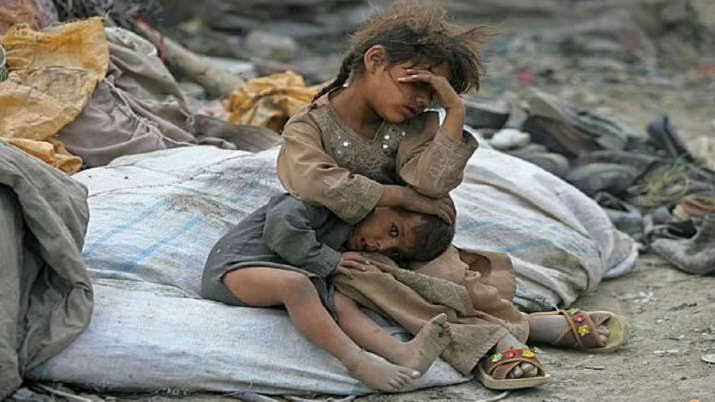
Poverty is the state of one who lacks a usual or socially acceptable amount of money or material possessions. Poverty is said to exist when people lack the means to satisfy their basic needs.
When a person is unable to get minimum basic necessities of life this situation is known as poverty. When parents are not in a condition to send their children to school or a situation where sick people cannot afford treatment and families do not have proper clean water, sanitation facilities, and regular jobs.
Poverty, according to the World Bank, is a severe lack of well-being that has various aspects. Low earnings and the inability to obtain the essential commodities and services required for a dignified existence are examples.
Poverty also includes poor health and education, a lack of access to safe drinking water and sanitation, a lack of physical security, a lack of voice, and a lack of capacity and chance to improve one’s life.
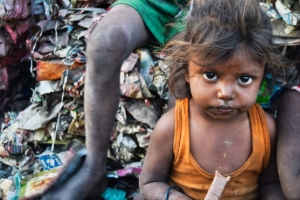
Causes of Poverty:
Poverty is a consequence of the uneven distribution of material resources and wealth on a global scale and within nations. Sociologists see it as a social condition of societies with an unequal and inequitable distribution of income and wealth, of the de-industrialization of Western societies, and the exploitative effects of global capitalism
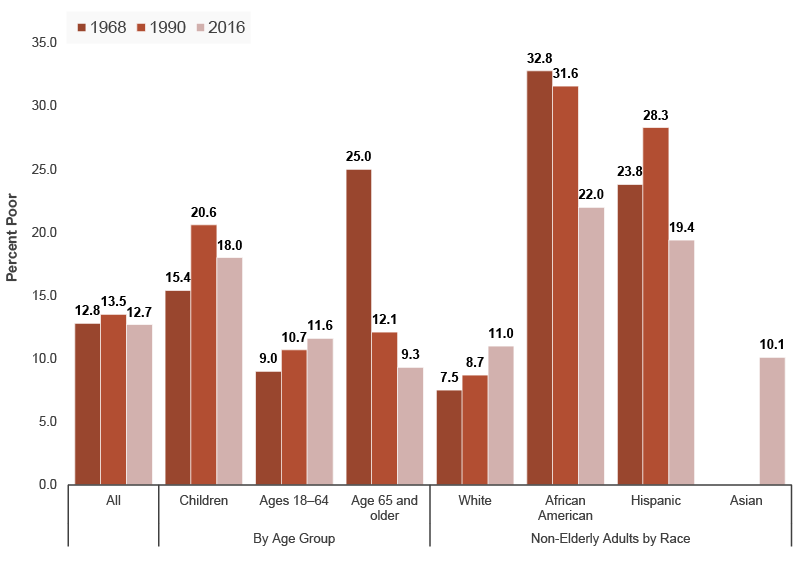
Poverty is not an equal opportunity social condition. Around the world and within the U.S., women, children, and people of color are far more likely to experience poverty than are white men.

Sociologists recognize Poverty into few different types:
• Absolute poverty is what most people probably think of when they think of poverty, especially if they think about it at the global level. It is defined as the total lack of resources and means required to meet the most basic standards of living. It is characterized by a lack of access to food, clothing, and shelter. The characteristics of this type of poverty are the same from place to place.
• Relative poverty is defined differently from place to place because it depends on the social and economic contexts in which one lives. Relative poverty exists when one lacks the means and resources required to meet a minimum level of living standards that are considered normal in the society or community where one lives.
• Income poverty is the type of poverty measured by the federal government in the U.S. and documented by the U.S. Census.
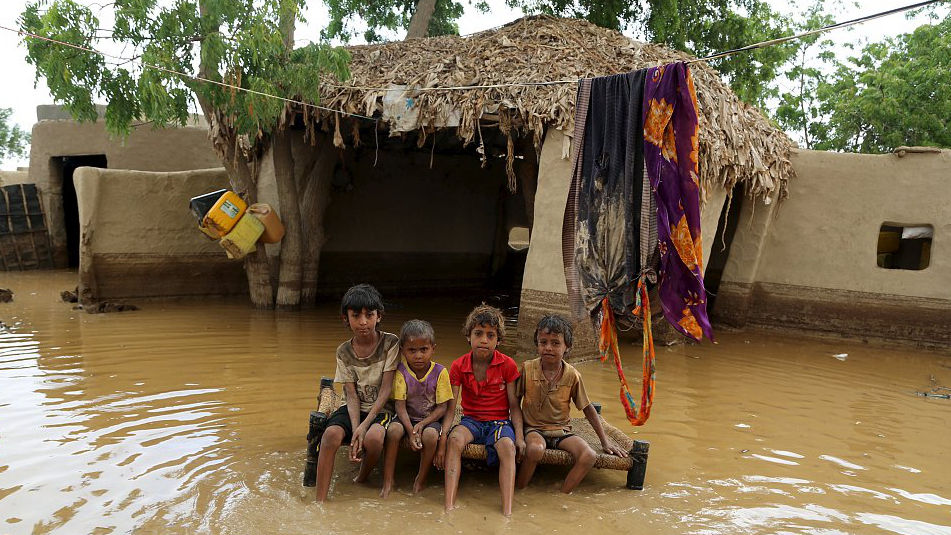
• Cyclical poverty is a condition in which poverty is widespread but limited in its duration. This type of poverty is typically linked to specific events that disrupt a society, like war, an economic crash or recession, or natural phenomena or disasters that disrupt the distribution of food and other resources.
• Collective poverty is a lack of basic resources that are so widespread that it afflicts an entire society or subgroup of people within that society. This form of poverty persists over periods of time stretching across generations.
• Concentrated collective poverty occurs when the kind of collective poverty described above is suffered by specific subgroups within a society, or localized in particular communities or regions that are devoid of industry, good-paying jobs, and that lack access to fresh and healthy food.
• Case poverty occurs when a person or family is unable to secure resources required to meet their basic needs despite the fact that resources are not scarce and those around them are generally living well.
• Asset poverty is more common and widespread that income poverty and other forms. It exists when a person or household does not have enough wealth assets (in the form of property, investments, or money saved) to survive for three months if necessary.
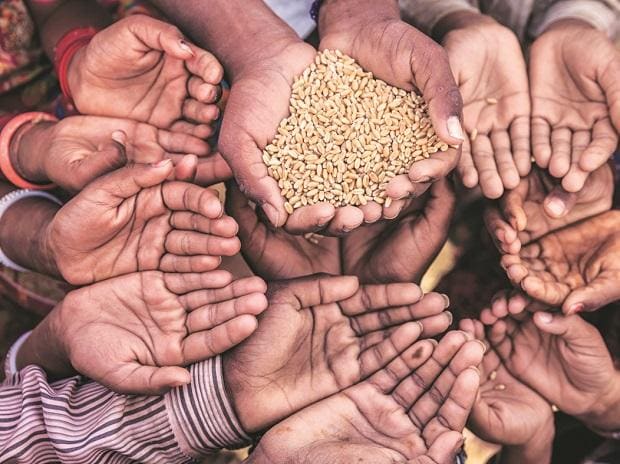
HUNGER:
Rises in the costs of living make poor people less able to afford items. Poor people spend a greater portion of their budgets on food than wealthy people. As a result, poor households and those near the poverty threshold can be particularly vulnerable to increases in food prices. For example, in late 2007 increases in the price of grains led to food riots in some countries. The World Bank warned that 100 million people were at risk of sinking deeper into poverty. Threats to the supply of food may also be caused by drought and the water crisis. Intensive farming often leads to a vicious cycle of exhaustion of soil fertility and decline of agricultural yields. Approximately 40% of the world’s agricultural land is seriously degraded. In Africa, if current trends of soil degradation continue, the continent might be able to feed just 25% of its population by 2025, according to United Nations University’s Ghana-based Institute for Natural Resources in Africa. Every year nearly 11 million children living in poverty die before their fifth birthday. 1.02 billion people go to bed hungry every night. According to the Global Hunger Index, Sub-Saharan Africa had the highest child malnutrition rate of the world’s regions over the 2001–2006 period.
ISSUES RELATING TO POVERTY AND HUNGER

India is a country which suffers a lot due to hunger and poverty. Hunger is very closely related to poverty as poverty is one of the main reasons for hunger. 

Indian economist and philosopher Amartya Sen said that lack of ability to pay for food is obviously caused by poverty.

POVERTY

Poverty is a condition caused due to lack of basic needs of life such as water, health care, food, unemployment etc. It is described as the low income level of people which leads them to poor standard of living. Poverty means that the income level from employment is so low that even the basic human needs are not fulfilled. The impact of poverty on children is substantial. Children who grow up in poverty typically suffer from severe and frequent health problems; infants born into poverty have an increased chance of low birth weight, which can lead to physical and mental disabilities. Poverty is a difficult cycle to break and often passes from one generation to the next. Typical consequences of poverty include alcohol and substance abuse, limited access to education, poor housing and living conditions, and increased levels of disease. 

Hunger and food insecurity are the most serious forms of extreme poverty. To eradicate these issues from society is the prime concern of international organizations.

HUNGER

Hunger is a global problem and a lot of countries are facing this problem. Hunger is a condition where both the adults as well as children do not have access to food and there is a constant decrease in food intake, nutrients, no proper diet is there and some days are even gone without food which eventually leads to their death.

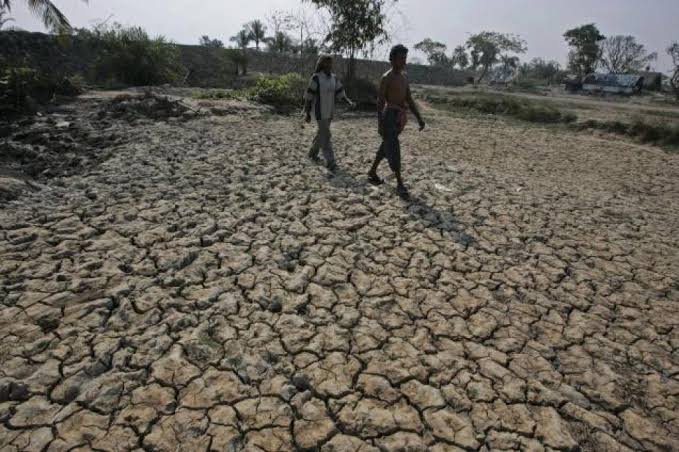
Climate change is also one of the reasons for world hunger. The amount of rain determines the production of crops. Droughts also affects agricultural production and extreme rain also causes flooding that leads to destruction of crops . Use of outdated products, not using better quality seeds also leads to shortage of food and those who are capable and have money buys food even at higher prices, the ones who have to suffer are poor people. They do not have money to buy food and hence they remain hungry. Hunger has a lot of serious problems such as insufficient economic systems, climate changes, misinformation but the most serious problem of all is poverty. Many poor nations such as Kenya, Uganda etc. are in desperate need of food. The growing population is one of the major causes of rising hunger and poverty. In Indian scenario Hunger and malnutrition are closely related. The main outcome of poverty is hunger. India is a home to the largest undernourished population in the world, 14℅ of our population is undernourished, 20℅ of children under 5 are underweight, 34.7℅ of children are stunned, 51.4℅ of women in the in the reproductive age i.e. 15-49 are anemic.

DIFFERENT ISSUES RELATING TO HUNGER AND POVERTY

Overpopulation is a major issue of rising poverty. There are not enough resources to satisfy your need. Demand is more and resources are limited and this leads to no proper distribution of resources and a large amount of people are left with no food. India is a country with a large population, and hence everyone’s demand is not full and people remain hungry.

Poor health service– the health sector of India is not as efficient as compared to other developed Nations, which leads to less access to good health and sanitization and hence causes ill health and maintains poverty.

Malnutrition- It is a phenomena that occurs in a human body when it receives little or no nutrition as a result of it people easily get sick and it causes death. it is responsible for the death of people, especially young children.

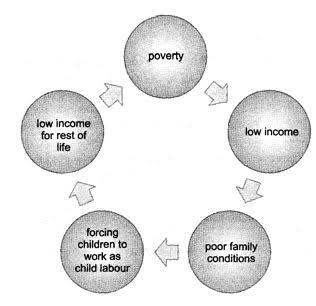
Insufficient education and lack of training- due to Rising poverty children are not able to get basic education and again since they are not educated, they don’t get employed and this vicious cycle of poverty is continued. Lack of money is reason for them not attending proper School and they have to indulge in labour to provide for a minimal living also causes rise for child labour. Parents send their children to work at a very young age.

Inequality– different gender, ethnic, group and social classes face inequality due to poverty. Low rate of economic development, If a country is poor then its development is also very slow.

Rise in crime – Often due to poverty and hunger, people indulge in criminal activities. To fill their empty stomach many young children opt for wrong ways and indulge in theft and loot and its disturbance in the society.

Way Forward

To eradicate poverty and hunger from the society, there is a need for the government to implement schemes and methods. The government should spend more in health, nutrition, and education. The government should invest more in agriculture and provide the farmers with better quality seeds and advanced machineries and modern techniques for more agricultural production, Also it is necessary to decrease rural poverty. Subsidies address only short-term issues. There is a need to develop technologies, with the help of which farmers can practice all-weather agriculture. Government should focus on increasing employment opportunities creating jobs in modern sectors and promote labor-intensive industries. Reduction in corruption will lead to an overall development of the economy. A country with low poverty level will only develop in a better manner.

Sources: civilservicesindia.com

“Poverty is the worst form of violence”. – Mahatma Gandhi.

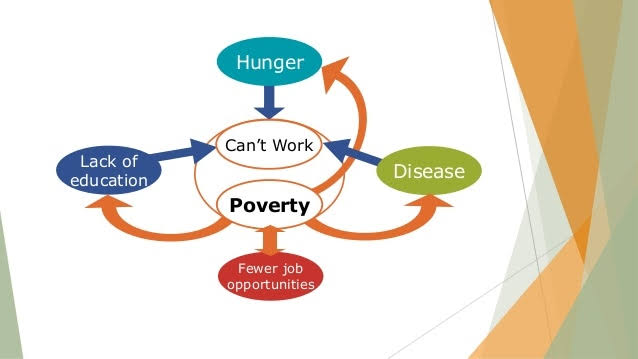
We can define poverty as the condition where the basic needs of a family, like food, shelter, clothing, and education are not fulfilled. It can lead to other problems like poor literacy, unemployment, malnutrition, etc. A poor person is not able to get education due to lack of money and therefore remains unemployed. An unemployed person is not able to buy enough & nutritious food for his family and their health decline. A weak person lacks the energy required for the job. A jobless person remains poor only. Thus we can say that poverty is the root cause of other problems.

How Poverty is Measured?

For measuring poverty United nations have devised two measures of poverty – Absolute & relative poverty. Absolute poverty is used to measure poverty in developing countries like India. Relative poverty is used to measure poverty in developed countries like the USA. In absolute poverty, a line based on the minimum level of income has been created & is called a poverty line. If per day income of a family is below this level, then it is poor or below the poverty line. If per day income of a family is above this level, then it is non-poor or above the poverty line. In India, the new poverty line is Rs 32 in rural areas and Rs 47 in urban areas.

Causes of Poverty

According to the Noble prize winner South African leader, Nelson Mandela – “Poverty is not natural, it is manmade”. The above statement is true as the causes of poverty are generally man-made. There are various causes of poverty but the most important is population. Rising population is putting the burden on the resources & budget of countries. Governments are finding difficult to provide food, shelter & employment to the rising population.

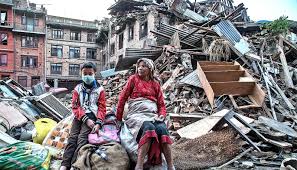
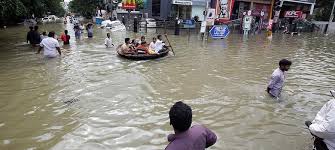
The other causes are- lack of education, war, natural disaster, lack of employment, lack of infrastructure, political instability, etc. For instance- lack of employment opportunities makes a person jobless & he is not able to earn enough to fulfill the basic necessities of his family & becomes poor. Lack of education compels a person for less paying jobs & it makes him poorer. Lack of infrastructure means there are no industries, banks, etc. in a country resulting in lack of employment opportunities. Natural disasters like flood, earthquake also contribute to poverty.

In some countries, especially African countries like Somalia, a long period of civil war has made poverty widespread. This is because all the resources & money is being spent in war instead of public welfare. Countries like India, Pakistan, Bangladesh, etc. are prone to natural disasters like cyclone, etc. These disasters occur every year causing poverty to rise.

Ill Effects of Poverty

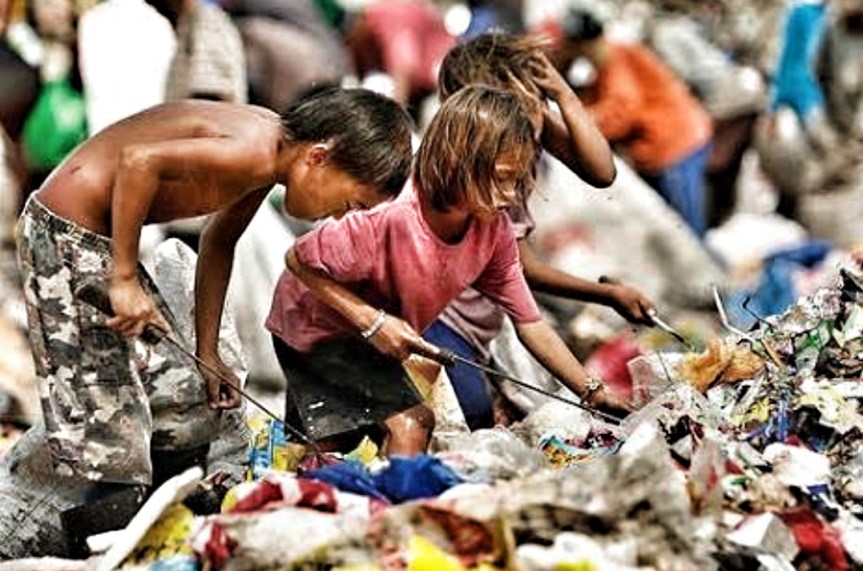
Poverty affects the life of a poor family. A poor person is not able to take proper food & nutrition &his capacity to work reduces. Reduced capacity to work further reduces his income, making him poorer. Children from poor family never get proper schooling & proper nutrition. They have to work to support their family & this destroys their childhood. Some of them may also involve in crimes like theft, murder, robbery, etc. A poor person remains uneducated & is forced to live under unhygienic conditions in slums. There are no proper sanitation & drinking water facility in slums & he falls ill often & his health deteriorates. A poor person generally dies an early death. So, all social evils are related to poverty.

Government Schemes to Remove Poverty

The government of India also took several measures to eradicate poverty from India. Some of them are – creating employment opportunities, controlling population, etc. In India, about 60% of the population is still dependent on agriculture for its livelihood. Government has taken certain measures to promote agriculture in India. The government constructed certain dams & canals in our country to provide easy availability of water for irrigation. Government has also taken steps for the cheap availability of seeds & farming equipment to promote agriculture. Government is also promoting farming of cash crops like cotton, instead of food crops. In cities, the government is promoting industrialization to create more jobs. Government has also opened ‘Ration shops’. Other measures include providing free & compulsory education for children up to 14 years of age, scholarship to deserving students from a poor background, providing subsidized houses to poor people, etc.

Poverty is a social evil, we can also contribute to control it. For example- we can simply donate old clothes to poor people, we can also sponsor the education of a poor child or we can utilize our free time by teaching poor students. Remember before wasting food, somebody is still sleeping hungry.

Overcoming poverty is not a gesture of charity. It is an act of justice.

—nelsen mandela

Poverty – The massive trap

  • Almost half the world- over 3 billion people live on less than $2.5 a day
  • More than 80 % of humanity lives on less than $10 a day.
  • Around 27-28 percent of all children in developing countries are estimated to be underweight.
  • According to UNICEF 22000 children die each day due to poverty.
  • Infectious diseases continue to blight the lives of the poor across the world.

and we can pile up many such pathetic situations faced by the folks all over the world by getting trapped in poverty. Poverty is a state in which a person or a community  lacks the financial resources( like the income level of people will be very low to meet the daily human needs) and essentials to lead a minimum standard of living. What could be more disadvantaging of a factor than ruining people’s life ? This also contributes as a loophole in the Indian economy. Development of a country has a lot to deal with the effect of poverty. It is interrelated to many problems of underdevelopment. Both the rural and the urban communities tend to face this issue but they can be different. In rural areas people may not have much access to education, health and many such factors but people are exposed to a healthier and natural environment whereas in urban places people are provided with adequate education and health but many of the problems caused by poverty are made worse by things like overcrowding, rising expenses, pollution, unhygienic conditions etc. There may be some serious economic decline due to poverty. Reduces productivity and economic output by about 1.3 % of GDP. Raises the costs of crime by 1.3% of GDP. Raises health expenditures and reduces the value of health by 1.2 %. This can also make the developing countries to hang back from emerging into a developed country.

Impact of poverty in the environment

In addition to the effects on economic development of a country, Poverty also has an adverse impact on the environment leading to pollution, such a lifestyle leads to unnecessary depletion of resources. It encompasses a combination of factors. The first reason is people hit by poverty create an unhealthy lifestyle around them because most of the houses of such people are located in the slum areas. The houses would be devoid of a proper drainage system and sewage disposal, lack of sanitation and would let all the effluents and filthy water on the road. Such waters would be flowing rapidly in between houses, which to a drastic level will pollute the environment.

Every house may not hold the service of individual toilets and there would be a common one among them, and that would increase the risks of infectious diseases because there would be lack of proper maintenance. People over there use flex banners for house roofing and have them as a sleeping mat but the fact is flex banners are made of poly vinyl chloride( they are made of plastics which do not degrade biologically and it causes a serious threat to the environment as it is not bio degradable. It may have serious effects on the health and can even cause cancer and infertility problems. There are high chances of polluting the water resources due to lack of knowledge and poor water management. Humans who are lesser educated live shorter lives than who are educated more, such intangible gaps are a huge loss for people and the country.

What could be the promising measures to alleviate poverty?

  • Many people are pushed into such a state due to the lack of employment and education opportunities so it would be an important measure to generate such opportunities for the poor and to raise their productivity is the speedy development of infrastructure.
  • Further for the mitigation of poverty growth of non farm employment in the rural areas holds a special importance. Non farm employment is created in marketing, transportation, handicrafts, dairying and forestry, food processing and other agricultural products.
  • Educating a girl child is very prominent for the society. Educated girls can grow into skilled workers and get well paying jobs. Working women can earn and support the families and lead to sustainable development.
  • The public distribution system should be strengthened to remove poverty. Poor section should get food grains at subsidized rates and in adequate quantity.
  • Even a common man are not able to afford things these days due to the constant escalation of prices and just imagine the plight of the impoverished. Stability in prices helps to remove poverty. If the prices increases constantly the poor becomes poorer. So the Government should render the best to keep the prices under control.
  • Development in agriculture can aid the eradication of poverty. Rapid rate of growth of agriculture production will help to remove urban as well as rural poverty. Agriculture should be mechanized and modernized.

Food : The Life Preserver

Article by – Shishir Tripathi
Intern at Hariyali Foundation
In collaboration with
Educational News

When an individual studies economics during the higher studies, they are told about different types of goods including the normal goods, inferior goods, luxurious goods and the essential goods. Energy is required by every organism to survive on the planet earth. Energy is gained in various forms like heat energy from consuming food. Whether a person is rich or poor, tall or short, fat or skinny, or just any other person and all other organisms need food and making it as an essential commodity required by all.


After a tiring day at the office, after an exhausting day with scorching sun on the farm, after a day with extra classes in the school, after a day with endless house chores, every other person of different age groups performing different roles in the economy need food at the end of the day. A Thali with 2 Chapattis and veggie, some pulse and rice will make the day of such an individual after a tiring day.


Fine, but the question arises that whether the availability of food is there for every person in the country? Is there any family or a person who sleeps without food? Does every family which is affording food is using it for filling their tummies or a part of food is wasted too in a country like India? Let’s move ahead to get answers to these questions.


India has been placed at 103 out of 119 countries surveyed for the World Global Hunger Index (GHI) by two credible international NGOs based on the indicators of undernourishment and under-5 child wasting, child stunting and child mortality. Its score is 31.1 in the GHI, among the worst in the world, and below close neighbourers Bangladesh and Nepal in the SAARC region.


At least 20 crore Indians go to bed hungry daily.


Yes, a country with a lot of resources, vegetation, a country which is amongst the biggest exporters of food grains faces the problem of hunger for its 20 – 25 million population. A person who didn’t had food for days from him; one can understand that what pain is. When one takes a fast, they know that how body agonizes without water and food for the whole day. So staying hungry for days is so bad and tremendous.


According to a Report, India wastes INR 244 Crore worth of Food per Day. At the same time, one should notice that approximately 20 million people go hungry in nation where food is wasted in such a high quantity every day. In every Indian wedding, food is the most important part and the most wasted too! In India, statistics related to food wastage at weddings have been quite shocking, given the fact that it is the same country where countless number of people have to survive without the basic necessity of two meals a day. Around 100,000 weddings and social events are held in India every day. Food wasted each day at weddings and family functions in the metro cities alone would be enough to feed the vast slum population sleeping hungry at night without food. About one-fifth of the food served at weddings and social gatherings is discarded. The prodigious waste that follows has horrified many in a country where food prices are skyrocketing and tens of millions of young children are malnourished.


About 58 per cent of people in the country are food insecure, says the findings of the National Nutritional Survey (NNS) 2011. The country has enough food to feed its people but that poor cannot afford even two-square meals a day.


No government scheme will work unless and until the people who have food on their table will realize the actual demand of food from their stomach and their tongue. Those who fill their bellies till esophagus at the table or the silly ones who just don’t know that what food they like and waste a whole plate at the function, they must try to know the importance of food and stop wasting it.

Stop food wastage, give it to a hungry person and the be the reason for someone’s filled tummy.

face.