
Know about TRAI’s proposal of displaying name with phone number.

In November last year, TRAI floated a consultation paper seeking comments about the potential introduction of Caller Name Presentation (CNAP).

The feature will allow users to know the identity of the person calling them. The basic idea is that if people are aware of the person who is calling them, they can make an informed choice about those calls. At the same time, such a feature could potentially help in curbing harassment and other spam calls.

The proposal CNAP will also be difficult to execute from a technical perspective given that a number of phones in the Indian market may not be able to support it, telcos have said.

Meanwhile, Truecaller, which already offers a similar service albeit through a crowdsourcing model has said since several people purchase SIM cards using forged identity cards, TRAI’s proposal to use SIM registration data to display callers’ names might be fraught with inaccuracies since “the identity of the actual user of a mobile number may not be the same as the subscriber”.
Adani Enterprises files India’s largest FPO.

Adani Enterprises, the flagship company of ports-to-energy conglomerate Adani Group, said it would raise ₹20,000 crore in follow-on public offering of new shares, which is being touted as the country’s biggest FPO.

The Adani Group’s flagship company has filed papers with capital market regulator Securities and Exchange Board of India (Sebi) for the FPO.

An FPO is the issuance of shares to investors by a publicly listed entity. Its name comes from the fact that it follows an initial public offering (IPO). 

Over the past five years, Adani’s fortune has skyrocketed. In the past year, the share prices of his many publicly traded firms have soared by more than fivefold. Four of the six companies have increased investor worth by more than ₹1 lakh-crore. In five years, shares of his flagship company, Adani Enterprises, have increased by almost 2,500 per cent.

By 2027, India could assemble 1 in 2 Iphone according to a report.

India is projected to assemble up to 50 per cent of Apple’s iPhones by 2027, which will be a significant increase from the current rate of less than five per cent. According to a report by the South China Morning Post, it will bring India’s level of production in line with that of mainland China.

India could produce one in two of the world’s iPhones by 2027 as compared to the current percentage which stands at less than 5 percent, as per a latest  forecast by Luke Lin.

Here Luke Lin is an analyst at the research unit of Taiwan’s DigiTimes newspaper, in the South China Morning Post.

It appears that this  forecast is more aggressive than JPMorgan’s earlier prediction that India would assemble 25 percent of total Apple iPhones worldwide by 2025.

India’s trade deficit with China crosses $100 billion for the first time.

The trade between India and China has touched an all-time high of USD 135.98 billion in 2022 while New Delhi’s trade deficit with Beijing crossed for the first time a USD 100 billion mark despite frosty bilateral relations, according to data released by the Chinese customs on Friday.

The total India-China trade for 2022 has climbed to 135.98 billion, overtaking the USD 125 billion mark a year earlier by registering an 8.4 per cent increase, according to the annual Chinese customs data.

Health experts says the next 40 days will be crucial for India amid covid surge in China.

.

There is still no clarity on what is happening in China, with experts raising alarm that the country is witnessing a steep increase in the number of COVID-19 cases due to coronavirus variant BF.7.

The Union Health Ministry has, however, said that the next 40 days will be crucial in India – with the country likely to witness a surge in January.

“In the past, whenever a NBCOVID-19 wave was reported in India, it used to hit us in 30-35 days, starting from East Asia, it used to hit Europe in 10 days, moving towards America and the Pacific region, and then finally hitting India which would normally take 30 days,” a senior health ministry official told media, requesting anonymity.

The official added that the number of deaths and hospitalisations is likely to be low this time, even if India is hit by a COVID wave by the end of January.

Meanwhile, the Ministry is likely to make mandatory, from next week, negative RT-PCR reports for passengers arriving from China, Hong Kong, Singapore, Japan, South Korea and Thailand.

Filling up of ‘air-suvidha’ forms and 72-hour prior RT-PCR testing could be mandatory for arrivals from these countries.

The government has made random coronavirus testing mandatory for two per cent of passengers arriving in each international flight from December 24. Union Health Minister Mansukh Mandaviya is likely to visit the Delhi airport to take stock of testing and screening facilities there.

Amid covid concerns, chinese are turning to black market India made meds.

Residents in China have been scouring the market for generic COVID-19 drugs and India seems to be the answer to their problem. In the recent past, the Chinese authorities have approved two Covid antivirals – Pfizer’s Paxlovid and Azvudine – for the treatment. While China has ran out of the medicine, the Indian market is filled with it and is slowly becoming the next favourite destination.

In the past few months, topics like “anti-Covid Indian generic drugs sold at 1,000 yuan (US$144) per box” has been making the rounds of the Chinese social media. Platforms like Weibo and WeChat are filled with such queries and experts believe that black market deals are being conducted on them.

While the distribution of drugs which are not approved in China is not illegal, there can be penalties imposed on the illegal imports. Even the doctors in China have warned the public against buying drugs on the black market with several patients displaying massive side effects to the medicines.

How the climate adversities hit India in 2022.

The year 2022 saw several extreme weather events all over the world due to climate emergency. These events are expected to increase if the effects of climate change are not mitigated.

Vulnerable countries also geared up this year for a renewed battle over compensation for the growing hazards of global warming from richer countries, also known as loss and damage, at the 27th Conference of Parties (COP27) to the United Nations Framework Convention on Climate Change (UNFCC).

There is more evidence of the worsening impact of global warming on the Indo-Gangetic Plain (IGP) that straddles eastern Pakistan, northern India, southern Nepal and the whole of Bangladesh. 

A loss and damage fund was created at the COP27, focusing on particularly vulnerable countries. But questions remain about who is eligible to receive money and who has to pay it.

Every state and Union territory (UT) reported dengue cases till November 2022. The increasing burden of dengue has often been linked with climate change, among other factors. India recorded 63,280 dengue cases as of September 30, 2022. 

The average global surface temperature January-December 2021 was the sixth highest since global records began in 1880.

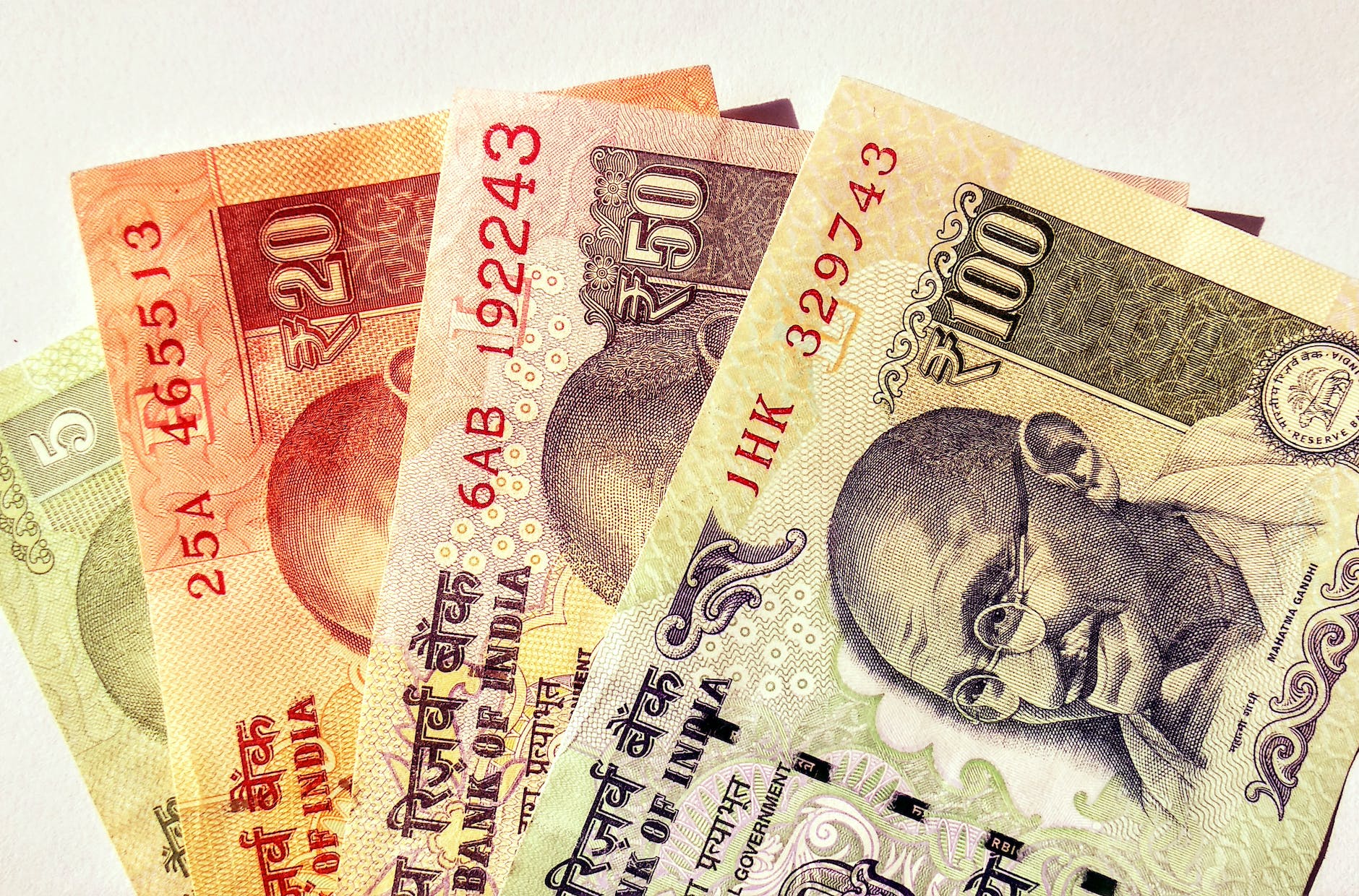
After Russia, Sri Lanka to use Indian rupee(INR) for internation trade.

India’s rupee trade settlement mechanism, which was set up by the Reserve Bank of India in July 2022, is attracting interest from more countries apart from Russia.

The mechanism is a means of using rupees instead of dollars and other big currencies for international transactions in order to promote growth of global trade with emphasis on exports from India and to support the increasing interest of global trading community in the rupee.

Dollar-strapped Sri Lanka and sanctions-hit Russia will be the first countries to use the Indian rupee trade settlement mechanism.

Sri Lanka has agreed to use Indian rupee (INR) for international trade. It comes days after the Government of India said it is looking at ways to bring countries that are particularly short of dollars into the ambit of Indian rupee trade settlement mechanism. Central Bank of Sri Lanka (CBSL) said it is waiting for RBI’s (Reserve Bank of India) approval to designate Indian rupee as foreign currency of Sri Lanka.

Tajikistan, Cuba, Luxembourg and Sudan have begun talking to India about using the mechanism, reported Reuters, quoting two sources and an official document. It has already been used by Russia following the imposition of sanctions on Moscow over the Ukraine war.

Russia remains India’s top oil supplier for the month of november too.

Russia has for the first time emerged as top oil supplier to India replacing Iraq as refiners last month snapped up oil from Moscow fearing a price cap from Dec. 5 could hit supplies and choke payment avenues, data obtained from trade sources showed.

India’s oil imports from Russia rose for the fifth straight month, totaling 908,000 barrels per day (bpd) in November, up 4% from October, the data showed.

The Group of Seven nations, Australia, and the 27 European Union countries have imposed a price cap of $60 a barrel on Russian seaborne oil from Dec. 5 as the West tries to limit Moscow’s ability to finance its war in Ukraine.

India, which rarely used to buy Russian oil because of costly logistics, has emerged as Russia’s second biggest oil client after China as refiners snap up discounted crude shunned by Western nations since the February invasion of Ukraine.

Higher purchases of Russian oil dragged down Indian imports from the Middle East and member nations of Organization of Petroleum Exporting Countries (OPEC) declined to the lowest ever in November, the data showed.

What is hooch tragedy, which is happening in Bihar recently.

The toll of dead in Bihar’s Chhapra Hooch tragedy has soared to 50, succumbing after consuming spurious liquor in the Saran district. People have died and several others hospitalised in India’s Bihar state after drinking toxic alcohol, authorities and local media said.

The deaths happened mainly in two villages in the impoverished eastern state, where the sale and consumption of liquor were banned in 2016 after women’s groups campaigned against poor workers splurging their meagre incomes on drinking.

Such bans are in force in several Indian states, driving a thriving black market for cheap alcohol made in unregulated backstreet distilleries that kills hundreds of people every year.

Hooch is a commonly used term for poor quality alcohol, derived from Hoochinoo, a native Alaskan tribe that was known to produce very strong liquor. Unlike branded liquor which is produced in factories with sophisticated equipment and rigorous quality control, hooch is made in more crude settings without any quality checks.

All that matters is to produce alcohol that will intoxicate, and hooch surely does that. The only problem is that if prepared incorrectly, it can kill. Importantly, it is near impossible to tell whether hooch is safe to consume before actual consumption.

Amid border tension with China, India tested Agni-V missile.

The test-firing of the missile from the APJ Abdul Kalam Island off Odisha coast came amid India’s lingering border row with China.

The Agni-V project is aimed at boosting India’s nuclear deterrence against China which is known to have missiles like Dongfeng-41 having ranges between 12,000-15,000 km.

Agni-V can bring almost the entire Asia including the northernmost part of China as well as some regions in Europe under its striking range.

While the test was carried out days after the clashes, it had been planned earlier. India had announced its intention to test a long-range missile and issued a NOTAM or Notice to Airmen well before the incident in Arunachal’s Tawang.

Notably, Agni-5 is the most advanced missile in the Agni series with a strike range of over 5000 kms. Apart from Intercontinental Ballistic Missiles (ICBMs) Agni-5, the Indian armoury of the Agni series includes Agni-1 with a 700 km range, Agni-2 with a 2,000 km range, Agni-3 and Agni-4 with a 2500 km to more than 3500km range.

India and Chinese troops clashes on border.

Soldiers from India and China clashed last week along the two countries’ disputed Himalayan border. In 1962, when the countries fought a bloody, high-altitude war over the contested territories, China seized Arunachal Pradesh, which it claims as part of South Tibet, before returning it to Indian control, but the disputed area belongs to and will remain in the integral control of India.

It was the first reported standoff between troops from the two Asian giants since deadly clashes in 2020 strained their already tense relations. 

Both sides were involved with a few soldiers suffering minor injuries. China is yet to comment on the stand off. But Reuters reported an Indian army source saying at least six Indian troops were injured.

“Both sides immediately disengaged from the area,” the Indian army said.

It added that commanders from both sides had held a meeting immediately after “to restore peace and tranquility”.

India’s Defence Minister Rajnath Singh told the parliament on Tuesday that no Indian soldiers had been “hurt or seriously injured” in the clash and that the incident has been “taken up at diplomatic levels”. He added that because of “timely intervention of Indian military commanders, PLA soldiers went back to their positions”.

China and India share a disputed 3,440km (2,100 mile) long de facto border – called the Line of Actual Control, or LAC – which is poorly demarcated. The presence of rivers, lakes and snowcaps means the line can shift. The soldiers on either side – representing two of the world’s largest armies – come face to face at many points.

Russia offers India large ship on lease.

Russia has offered India to lease and build very large crude carriers (VLCC) as insurance on Russian oil. “Traditionally India couldn’t get large quantities of crude from Russia as there weren’t any VLCC’s. However, now with India’s imports from Russia reaching nearly 30 per cent of total requirement, VLCC is the need of the hour.

This can also remove insurance liability on India as after price cap most insurers have backed out from insuring Russian crude,” say sources. This offer was given  when Russian Russian Deputy Prime Minister Alexander Novak met India’s Ambassador to Russia, Pavan Kapoor on December 9th.

In 2021, bilateral trade between Russia, India increased by 46.5 per cent, exceeding $13.5 billion. From January to September 2022 trade reached $20.4 billion.

India climbs to 5th spot in top global 500 list released by Hurun.

India, with 20 of the most valuable companies in the world, has moved into the fifth position among countries that are home to the world’s top 500 firms. Last year, it ranked ninth with eight companies. The US continued to top the charts, according to the 2022 Hurun Global 500 list.

Of the 20 Indian companies featuring on the list this year, 11 are based in Mumbai, four in Ahmedabad and one each in Noida, New Delhi, Bengaluru and Kolkata. The list, released by the Hurun Research Institute, is a compilation of the 500 most valuable non-state-controlled companies in the world. Companies were ranked according to their market capitalisation (for listed companies) and valuations for non-listed companies.

Led by energy giant Reliance Industries with market capitalisation of $202 billion, the list includes Tata Consultancy ($139 billion) and HDFC Bank ($97 billion).

Billionaire Gautam Adani controlled Adani Group has debuted in the global top 500 companies list with four companies — Adani Enterprises ($63 billion), Adani Transmission ($44 billion), Adani Total Gas ($43 billion) and Adani Green Energy ($40 billion). The other new entrants in the list from India include ITC ($52 billion), Avenue Supermarts ($33 billion), Axis Bank ($33 billion), Bajaj Finserv ($32 billion) and Larson & Toubro ($32 billion)

India won’t be a US ally rather a great power : WH official.

Washington: India, which has a unique strategic character, will not be an ally of the US, but another great power, a top White House official has said, asserting there is no other bilateral relationship that is being “deepened and strengthened” more rapidly than between the two countries over the last 20 years.

Responding to a question on India during his appearance at the Aspen Security Forum meeting here on Thursday, Kurt Campbell, the White House Asia Coordinator, said that in his view India is the most important bilateral relationship for the United States in the 21st century.

“The fact is, I don’t know of any bilateral relationship that is being deepened and strengthened more rapidly than the United States and India over the last 20 years,” he told a Washington audience.

The United States needs to invest even more of its capacity, and build in people-to-people ties, working together on technology and other issues, he said.

“India has a unique strategic character. It will not be an ally of the United States. It has the desire to be an independent, powerful state and it will be another great power. But I think there are reasons to believe that our strategic alignment is growing across the board in almost every arena,” Campbell said.