Final Year Exams: Supreme Court to Announce Verdict Tomorrow

University Grants Commission’s (UGC) had passed on a circular on July 6, regarding the conduction of the final term university examinations during the novel covid 19 pandemic. The Supreme Court will pronounce its verdict on the pleas challenging the UGC circular.

UGC had earlier approached universities to view and get the status about the exams. It received responses from about 818 universities (121 deemed universities, 291 private universities, 51 central universities, and 355 state universities). Out of the 818 universities, 603 have either conducted the examination or are planning to conduct it in some time. While 209 others have already conducted examination on either on-line or off-line mode and 394 are planning to conduct examination in on-line or off-line or in a blended hybrid mode towards August or September.

A bench headed by Justice Ashok Bhushan, R Subshash Reddy and MR Shah, had reserved its judgment for the matter on August 18. They will be pronouncing their judgement after a detailed hearing continuing for 2 days.

Last week, four states and Union territories – Maharashtra, Delhi, West Bengal and Odisha – had urged the apex court to give directions to the UGC to not impose examinations on lakhs of final year university students during the present condition. The court had concluded the hearing but deferred a judgement on the issue. Many states said they were not consulted before taking the decision regarding examinations and selecting the UGC guidelines. They have also said that the state governments have the power to take health related decisions in the interest of the people. The UGC Guidelines did not make sure of this and the opinion of the states were not taken into consideration while the guidelines were constructed.

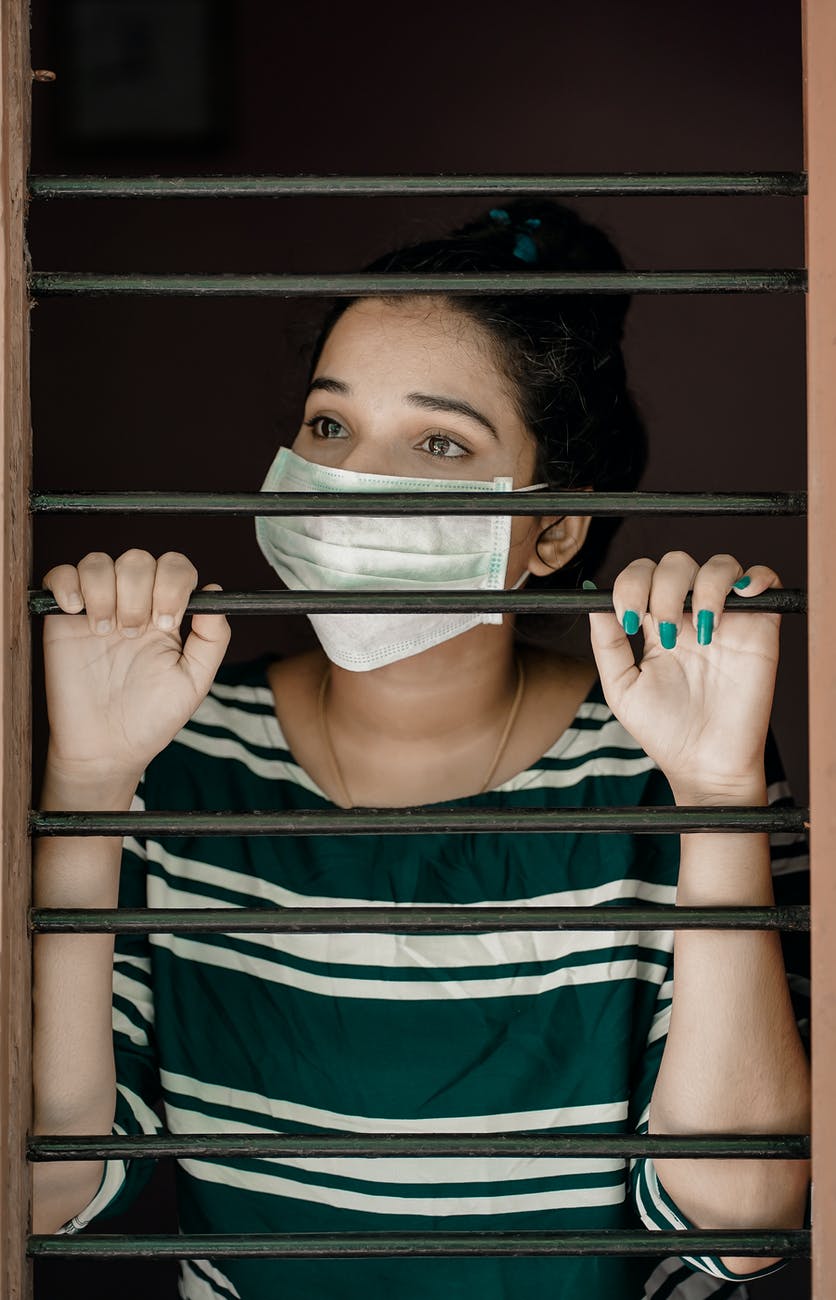
Photo by Andrea Piacquadio on Pexels.com

A group of as many as 31 students from different universities across the country had approached the Supreme court and opposed the UGC circular dated 6 July. In that plea, the students have opposed the direction given to all universities in the country to finish taking the final year examinations before 30 September. The students have made a petition and requested for the examinations to be cancelled. They have suggested that the results of students could be calculated on the basis of their internal assessment or mid-term exams and past performance in previous years/semesters. In the petition it was requested that mark sheets of students should be issued before July 31. The petition was filed by students from across 13 states and one union territory. One of the students, among the 31 petitioners, who had tested positive for Coronavirus have asked for directions from the UGC about the examinations. He has asked the UGC to adopt the CBSE model and conduct an examination at a later date. This is specially for the students who are not satisfied with their marks and the assessment of the papers. The plea suggested that previously planned examinations should be cancelled, keeping in mind the interests and health of the students in such a situation of the country, when the number of cases were rising every day. All educational educations across India were closed for the past few months due to the pandemic situation and the lockdown. Most institutions have however started taking classes for intermediate students in the form of online classes/ lectures.

The Supreme Court will give its judgement and provide a verdict for the students, in a batch of petitions submitted for challenging the revised guidelines of the University Grants Commission (UGC) to conduct final year exams by September 30 of this year.

RBI Had Not Printed Rs 2000 Notes In 2019-20, Currency is Still Valid

Rs. 2000 notes were introduced by the Government of India after the announcement of the demonetisation of 500 and 1000 rupees notes in November, 2016. Currently, it is the highest denomination currency note of the country. According to the annual report of the RBI, the Rs 2000 denomination note was not printed at all during 2019-2020. These notes were introduced after the government announced demonetisation of old Rs 500 and Rs 1,000 notes 4 years back. At that time, those two denominations had accounted for 86% of the then total currency in circulation.

The number of Rs 2,000 denomination notes had peaked at 3.36 billion units in 2017-18. This number had dropped to 3.29 billion in the years 2018-19. It has again fallen to 2.73 billion in 2019-20. The currency note presses of the Reserve Bank of India (RBI) did not print even one Rs 2,000 note in the last year. This happened because the presses did not receive any order for printing those. This seems to indicate a conscious decision for starting the trend of decreasing the number of notes which are circulated. The 2000 notes under circulation was 50% in 2016-17 and it has come down to almost 22% in 2019-20. These figures are based on RBI’s Annual Report for 2019-20, which was released on August 25 2020.

It is also known that RBI has also disposed a disproportionate share of Rs 2,000 notes in the soiled category. This has raised many questions on the government’s plan about the 2000 denomination note. In January, 2019 the was an indication that the Rs. 2000 notes were not being printed any further because there was adequate supply.

A total of 176.8 million pieces, which is quite a high number, of Rs 2,000 notes under the category of soiled notes were disposed of in 2019-20 by the RBI. While in 2018-19, just 1 million Rs 2,000 notes were disposed of and in 2016-17 or 2017-18, no Rs 2,000 notes were disposed of. Both the 2000 and 500 denomination notes were introduced after demonetization. In 2019-20, the share of Rs 2000 notes which were disposed of was 6.5% while that of Rs.500 notes was 0.6%. Out of the 22 billion currency notes printed in 2019-20, more than 50% of those were of the Rs 500 denomination. Due to these changes in currency composition, the Rs 500 notes has reached a very high share in the total currency under circulation.

The Minister of State for Finance Anurag Singh Thakur had told the Lok Sabha on March 16 2020 that, “Printing of bank notes of particular denomination is decided by the government in consultation with RBI to maintain the desired denomination mix for facilitating transactional demand of public. No indent was placed with the presses for printing of Rs 2,000 denomination notes for 2019-20. However, there is no decision to discontinue the printing of Rs 2,000 bank notes.”

A government official said that, “The Rs 2,000 notes were introduced in 2016 to quickly fill the gap created by demonetization of Rs 500 and Rs 1,000 notes. It was the need of the hour. Gradually, with increased supply of smaller notes, including new notes of Rs 100 and Rs 200, and with growing popularity of digital transactions, the urgency to issue new Rs 2,000 notes is no longer there. But this does not mean that there is any move to discontinue Rs 2,000 notes. Increasingly, commercial banks are also using more and more smaller notes because their customers often find difficulties in getting change for Rs 2,000 notes.”

Books on Indian History which You Must Read

Indian History has been the theme for many books. Whether its fiction or non-fiction, there are plenty of books which deserve to be on the list of must-read books written on the topic of history. These books give one a detailed understanding of India’s history.

Be it comprehensive historical books or fictional accounts of a historical incident, there are many options for you to choose from. If you are a person who loves both reading and history then the following 5 books are just the right choice for you.

The Argumentative Indian by Amartya Sen

Amartya Sen is an Indian Economist and writer who had won the Nobel Prize in 1998. This book is a collection of essays and it will help one understand the Indian polity. It focusses on the importance of public debate, argument and intellectual diversity in the Indian civilization of the past. Sen writes about his view on how and what will lead to the success of democracy in India.

India After Gandhi by Ramachandra Guha

Ramachandra Guha is an Indian writer and researcher whose areas of interest include society, politics and history. India After Gandhi is a book describing the journey of modern India, from post-independence from the British in 1947 until the 1990s. The book will provide one with a thorough understanding of India’s social and economic spheres. It covers the country’s political history over the later part of the 20th century.

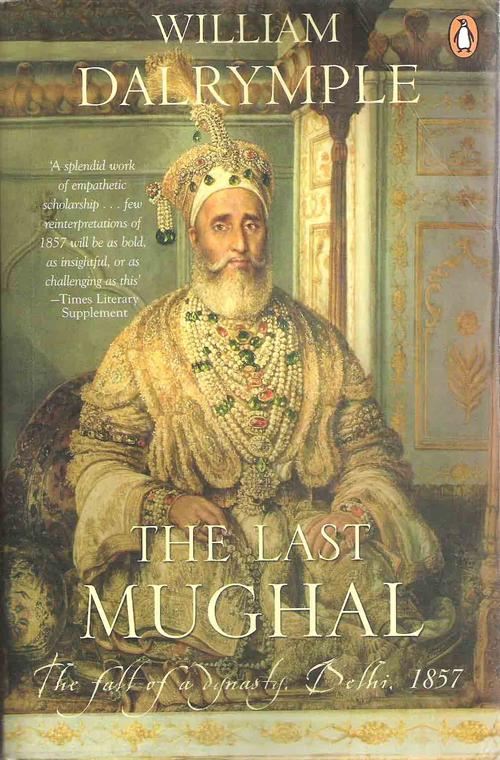
The Last Mughal by William Dalrymple

William Dalrymple is a Scottish historian, writer, critic, art historian and curator. He has won several awards and prizes for his writings. The book is a comprehensive description of the time period when the Mughal empire started declining in India. It will be a treat for people who love reading history. It is about the last Mughal ruler, Bahadur Shah Zafar II, and it provides an account of 19th century India with the tale of the emergence of the British Raj. Another famous book by him is White Mughals which is his fifth major book, it tells the story of the love affair between James Achilles Kirkpatrick and Khair-un-Nissa Begum at the backdrop of nineteenth century Hyderabad.

The Discovery of India by Jawaharlal Nehru

Jawaharlal Nehru was India’s first prime minister and he wrote this from 1942 – 1946. This book was written by Nehru when he was imprisoned by the British. It is a tribute to the rich cultural heritage and legacy of the country. It provides an account of all major developments in the subcontinent from the period of Indus Valley Civilization to the last years of the British rule.

The Palace of Illusions by Chitra Banerjee Divakaruni

Chitra Banerjee Divakaruni is an award-winning writer, novelist and poet. The book is about the tale of the epic Mahabharata, written from the perspective of Draupadi (Panchaali). It tells the story of the woman who fights, endures a lot living in a patriarchal world. It is a historical fiction which traces the historical tale and the life of Panchaali.

Kabbadi in India


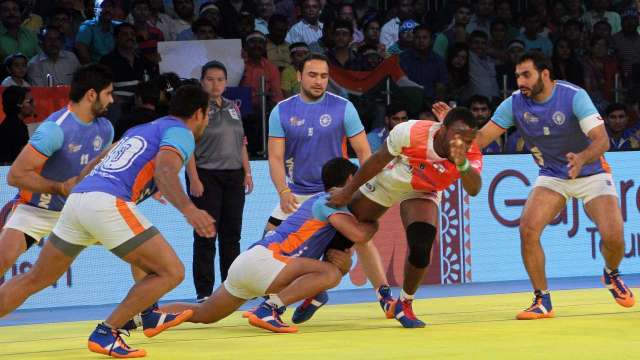
Kabbadi is team sport which is played between two teams consisting seven players each. Kabbadi originated in India and hence it is a game that is predominantly played in India and some parts of Asia. It is a sport that does not involve any sports equipment like a bat or a ball but rather involves full physical contact between the players. Though it is the national sport of Bangladesh, kabbadi is a sport which is widely played in many parts of India as their primary sport after it gained it’s popularity in the 20th century. It is the state game of the Indian states of Andhra Pradesh, Bihar, Haryana, Karnataka, Kerala, Maharashtra, Odisha, Punjab, Tamil Nadu, Telangana, and Uttar Pradesh.India takes the credit of popularising kabbadi to the world when it first organized the kabbadi competiton during the 1920’s and thereby adding it to the list of sports in the year 1938 which were a part of the Indian Olympic Games. After which the all India kabbai federation was set up in the year 1950 with kabbadi entering the Asian games in the year 1990 when kabbadi was demonstrated in the 1982 Asian games which was held in Delhi, India. The first Kabaddi World Cup was held in Mumbai in the year 2004 where national teams from Asia, Europe, and North America took part. India is the reigning champions of the Kabbadi world cup titles which was last held in the year 2016. India remains unbeaten throughout all the tournaments. The Indian kabbadi team has also won the Gold medal at the Asian Games in 1990, 1994, 1998, 2002, 2006, 2010 and 2014. The first Women’s kabbadi world cup was held in the year 2012 and the women’s kabbadi team of India have also been the reigning champions of the kabbadi world cup since then. Anupam Goswami, the league commissioner of the Pro Kabbadi league said that “Given our cultural diversity and sensibility, there was clearly room for an indigenous sport. We wanted to grow one and make it not just comparable to others, but to turn it into a world class model sport” but now kabbadi is not just a sport which has garnered the attention of the world but has also become a big time sport like football and cricket with hundreds of sponsors and celebrity attention.

College and University Admissions 2020

Students are very worried about their careers as all admission procedures have been delayed due to the Coronavirus pandemic. Many have expressed concerns over the delay and cancellation of exams for they might lose an academic year. Final year students are suffering the worst. Many students of intermediate years in have started their classes in online mode for now.  

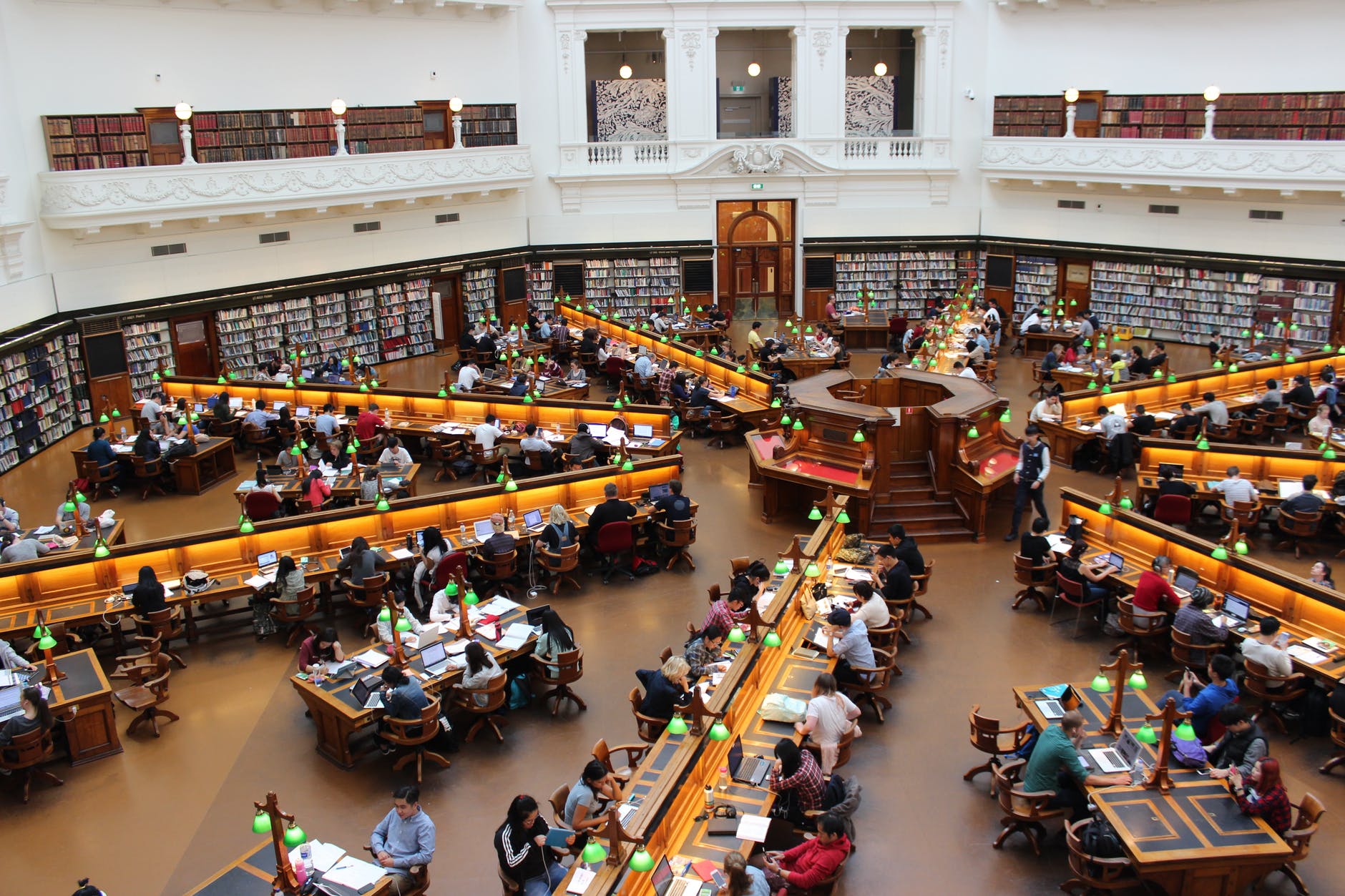
Photo by Pixabay on Pexels.com

Delhi University has scheduled its entrance tests for admission to 10 undergraduate and 86 masters and MPhil/PhD programmes from the 6th of September. The exams will be computer based and will be conducted by the National Testing Agency. They will take place from September 6th to 11th in three slots from 8 am. There will be 24 centers across the country. 1.47 lakh students have applied to the masters courses, and 21,699 students have applied for MPhil and PhD programmes. The undergraduate course entrance tests will be held for 3 management courses, journalism, education and a few specialised disciplines. 

Students are also worried about sitting for exams in this condition. There is the issue of social distancing and also wearing a mask, gloves and shield the entire time while appearing for an exam is quite taxing. The centres are located in specific cities so there is also an issue about travel restrictions and hotel accomodation. Some exam dates have also coincided with others as DU’s joint admission test for management courses and Common Law Admission Test (CLAT) is supposed to take place on the same day that is September 7. There is another problem about the masters aspirants as most of them have still not finished with their final year exams and yet to receive the degree. Students are waiting for the University to make an announcement and provide some clarification regarding the issue. JNUSU president Aishee Ghosh has expressed concern over the issue of students who are badly affected by floods and the pandemic. Many of them might not be in a position to appear for these exams in a specific centre.  

Jamia Milia Islamia has extended the dates of application for admission. The last date to fill the online application form has been extended to September 14. Students seeking admissions in any undergraduate course at the university can apply at the official website of the university. The applications for admissions under the sports category will end on September 16. This is applicable for students who play sports at the national, state, regional or university levels. Under the sports quota, students will be enrolled in both undergraduate and postgraduate courses. Sports including boxing, badminton, athletics, cricket, hockey, shooting, football, tennis, table tennis, volleyball, and wrestling will be accepted for the courses. 

The Jamia Milia Islamia University has been ranked first among the top central universities across India. Over 21,000 students are enrolled across 270 programmes in Jamia. This year, it has introduced several new courses including two MTech programmes, two MSc, and one MLib course. Among the undergraduate courses there are – BSc aeronautics, four BVov courses, diploma in hospitality management, and three postgraduate diploma courses including entrepreneurship, innovation and design thinking.  

New sessions across colleges and universities have all been postponed due to the Covid 19 pandemic. The application deadline has been extended for almost all courses including free UPSC tutoring classes that are conducted to support candidates belonging to minorities, SC, ST community, and women as well as NRI admissions.  

The history of Handicrafts

A handicraft, sometimes more precisely expressed as artisanal handicraft or handmade, is any of a wide variety of types of work where useful and decorative objects are made completely by hand or by using only simple tools.

It is a traditional main sector of craft and applies to a wide range of creative and design activities that are related to making things with one’s hands and skill, including work with textiles, moldable and rigid materials, paper, plant fibers, etc. One of the world’s oldest handicraft is Dhokhra; this is a sort of metal casting that has been used in India for over 4,000 years and is still used. In Iranian Baluchistan, women still make red ware hand made pottery with dotted ornaments much similar to the 5000 year old pottery tradition of Kalpugran, an archaeological site near the village . Usually, the term is applied to traditional techniques of creating items (whether for personal use or as products) that are both practical and aesthetic. Handicraft industries are those that produce things with hands to meet the needs of the people in their locality. Machines are not used.


Simple “arts and crafts” projects are a common elementary and middle school activity in both mainstream and alternative education systems around the world.

Handicraft is about processing materials by hand with hand tools. The results can be helpful things or decorative things. The materials utilized in the product are natural, industrially processed or maybe recycled. The models of the product are ancient, revised traditional or fashionable. Handicraft is deeply frozen in society and contributes to preserving and sending traditions. In their product, crafters transfer an area of their cultural heritage in ideas, forms, materials and work ways, similarly as their own values, philosophy of life, fashion and self-image. Craftspeople, conjointly known as artisans, possess technical data of materials and work ways. They’re skilled employees whose profession relies on manual skills. Their main tools are the power of work strategies and their manual skills. Handicraft contains plenty of implicit data which grows every year, aboard with skills. The order and apprentice system has been widely used to transfer skills and implicit data.

Theme-based craft is a comprehensive, well-organized backline master of fascinating, supported the following in style five choose themes – Needle Work, tribal Crafts, fiber And Eco friendly Crafts, Fashion Accessories and festal Decorations providing in-depth info regarding the craft, products, sellers and awarded master craft persons in these particular crafts.


Among the many handicrafts around the world, Indian Handicrafts Items goes back to one of the oldest civilisations in the world, the Indus Valley Civilization. The handicrafts industry in India flourished, during the mediaeval period, and continued to grow until the beginning of British came India.


As the handicrafts industry was entirely based on the skills of one’s hands, it took time and hard work to complete a creation. As a result, the price of which it was to be sold was also high. But the machine made British goods, were cheaper, and soon people began to drift towards the British market.

Another reason for the British taking over the handicrafts Industry is the fact that the raw materials that were needed for making various items were derived from nature, and so they were not meant to last for long. So the process by which the finished products were made to last longer be time-consuming, and also costly.

Start-up India to Kick Start Entrepreneurship

Why Startup India ?

In a very innovative move, the government has acknowledged the shift in economies by the startups and has launched ‘Startup India, Standup India’ to promote and motivate not only the entrepreneurs to venture out, but also the venture capitalists who have been the primary funding source for these ventures. With Startup India, there is an effort to make the legal, funding, taxation processes simpler for the entrepreneurs.

Are you eligible to avail benefits under the initiative ?

Government has been keen to promote the right talent for a better future, and thus carefully framed the rules under Startup India schemes, which states that the startups that are eligible under the initiative are as follows:

  • The operational years should be less than 5 years
  • Turnover should be less than 25 crore
  • Potential and Commercial business plan
  • Innovative Idea or development plan

And the same would be approved and certified by the DIPP via the inter-ministerial board before they can avail the benefits of startup India, which are

  • Tax exemption for the first 3 years
  • 80% reduction in patent registration for your business idea
  • 2500crores of initial funds with the overall FoF being 10,000 crores
  • Dedicated website and mobile app
  • Self-Certification

In order to inculcate the spirit on entrepreneurship in India, the Government of India launched ‘Start-up India’ initiative on January 16, 2016. If successful, this initiative indeed would be a watershed in ushering the era of economic prosperity in India. The objective of this initiative is not just to create jobs for the youth but create an army of job creators through entrepreneurship. The major elements in this initiative are as under –

  • Government will set up a corpus fund of INR100 billion that will fund the private venture capitals registered with Security and Exchange Board of India (SEBI) which in turn would fund the start-ups in sectors such as manufacturing, agriculture, education and health.
  • In order to enable the start-ups to register within a day, government will launch a mobile app and portal on April 1, 2016. This app and portal will serve as a single point of contact for clearances, approvals and registrations, and for companies to apply for schemes under the Start-up India Action Plan.
  • Start-ups will self-certify themselves on for compliance on nine labour and environmental laws. For three years, there would be no labour inspection. This would reduce the regulatory burden.
  • Central Government shall bear the cost of patents, trademarks and designs for a start-up, with an 80% rebate to encourage the creation and protection of its intellectual property.
  • If the start-up doesn’t distribute the dividend, it will be exempted from income tax for the first three years. Capital gains invested in venture capitals would also be exempted from capital gains tax.
  • A start-up India hub will be set up which will assist start-ups in obtaining financing, and organise mentorship programs to encourage knowledge exchange. It will function as a single point of contact on hub and spoke model with participation of  central and state governments, Indian and foreign venture capital funds, angel networks, banks, incubators, legal partners, consultants, universities and research and development institutions.
  • For government procurement programmes, central and state government and PSUs will exempt start-ups in the manufacturing sector from the criteria of “prior experience/ turnover” as long as they have their own manufacturing facility in India, and have the requisite capabilities and are able to fulfil the project requirements.
  • Start-ups would be able to wind up their business on a fast track within 90 days of making the application.
  • A credit guarantee mechanism will help start-ups raise debt funding through the formal banking system through National Credit Guarantee Trust Company (NCGTC)/SIDBI, which has an annual corpus of INR 5.0 billion for the next four years.

The start-up India programme is different from erstwhile programmes in its very basic approach and objective. While the objective erstwhile programmes was to create employment opportunities for the youth of the country in different sectors, start-up India aspires to channel the energy of the youth in entrepreneurship which will create jobs. Thus the start-up initiative aspires to make the Indian youth not a job seeker but a job creator. If start-up India succeeds in what is expected from it, it would be a game changer for Indian economy.

However, the road for change is not very easy and there are many challenges. First of all, the basic objective of the start-up India initiative is to inculcate the spirit of entrepreneurship in common man. Like any other plan, this scheme also requires large scale people participation along with the supportive business policies. Historically, India was good at announcing the plans but poor at implementation level. If start-up India initiative fails at implementation level, it will have same fate as the erstwhile programmes.

Secondly, experts have criticised the income tax rebate for three years as it is very hard for a start-up to become profitable in three years. Thirdly, in order to get funding, unit had to avail a certificate from the Department of Industrial Policy and Promotion (DIPP) for innovation which is just an additional hurdle in receiving fund. Setting up of the corpus find of INR100 billion is also criticised as it will fund the private venture capitalists with tax payers’ money.

Nevertheless, Start-Up India is indeed new in its approach and its failure would be a severe loss to the country. Still a lot of work is required on the front of ease of doing business. If a person is made to run from pillar to post to get a government approval, it is unconceivable for a common man to engage in manufacturing activity. A suitable business environment, disappearance of red tape, proper infrastructure is crucial to involve the common man in start-up business.  Authorities should make sure that spirit of entrepreneurship generate by this programme is not faded with time.