NHRC, India organizes a three-day capacity building programme on human rights for the State Human Rights Commission, Arunachal Pradesh

Daily writing prompt
Who are your current most favorite people?

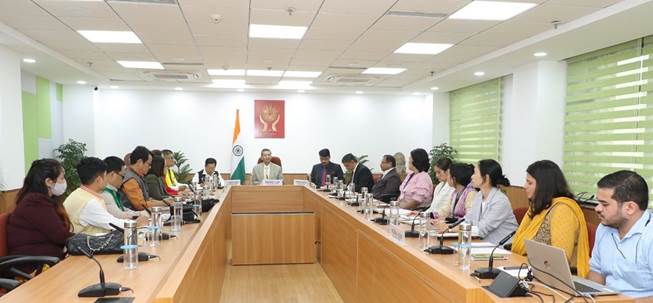
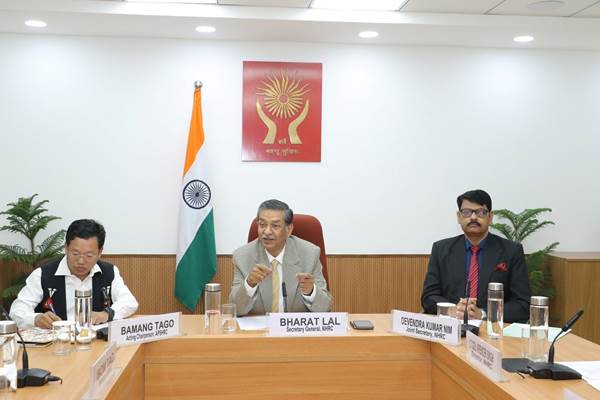
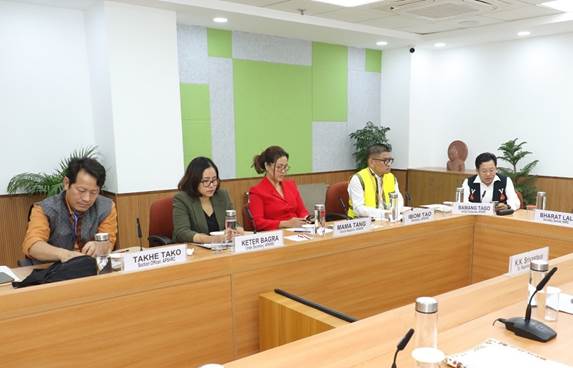
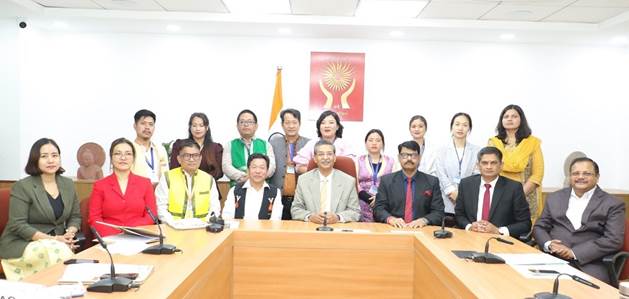
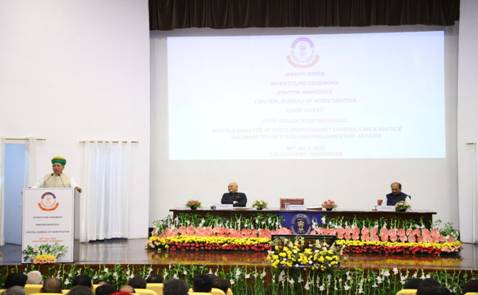
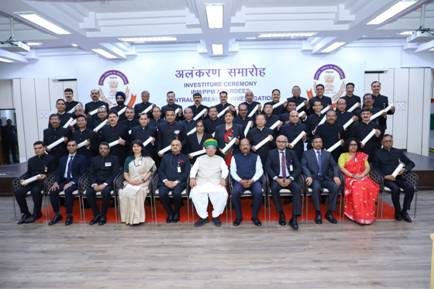
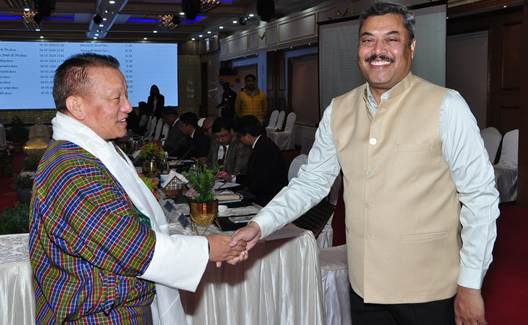
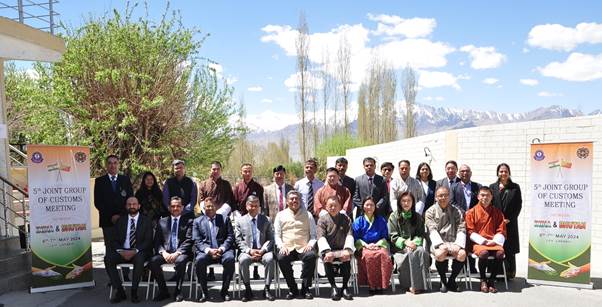
The National Human Rights Commission (NHRC), India is organizing a three-day Capacity Building Programme on human rights for the officials of State Human Rights Commission, Arunachal Pradesh, at New Delhi. The programme is a part of the ongoing initiative of the Commission to reach out and help in the capacity building of the State Human Rights Commissions (SHRCs) for protection and promotion of human rights of all. The NHRC works in tandem with SHRCs and other such bodies to protect and promote human rights in the country.

alt

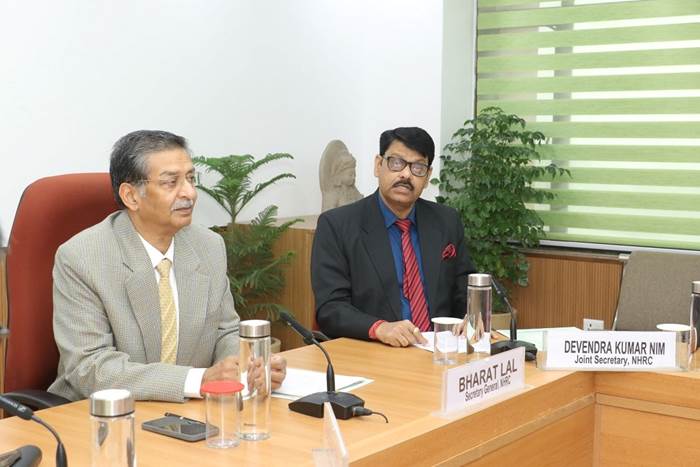
In his opening remarks, Mr Bharat Lal, Secretary General, NHRC emphasized that sensitivity, promptness and responsiveness are important traits to dealing with human rights issues and violations. The NHRC and SHRCs are part of a framework in the country to ameliorate the cause of human rights. The programme has been designed for having interactive sessions.

alt

Mr Lal underscored the importance of proactive and speedy redressal of complaints to provide relief to the victims of human rights violations. This would help people to develop faith in the system. The three-day programme would enable the officers to understand how the system should be functioning. He expressed the hope that the exposure to the structured functioning of the NHRC, within the ambit of the Protection of Human Rights Act, 1993 would be useful for the officers of the APSHRC.

alt

Earlier, the APSHRC Acting Chairperson, Mr Bamang Tago thanked the NHRC, India for organizing this programme. He said that the APSHRC is relatively a new SHRC, therefore, this capacity building programme is crucial for its officers, particularly in terms of learning the handling, registration and disposal of cases from the NHRC given its experience over the past three decades. He expressed the hope that the training would help not only the SHRC as an organization but also each participant individually in deepening their understanding of human values and the rights in the country.

alt

At the start of the 3-day programme, Shri Devendra Kumar Nim, Joint Secretary, NHRC said that it would equip the officers towards promoting and protecting the rights of the people. Their exposure to the functioning of the NHRC which inter alia includes registration and processing of complaints, enquiries, training, research, international mechanism, outreach activities, media and communication, publications, etc. may support them in carrying out their work more efficiently and effectively, to build a shared vision of protecting and promoting human rights in the country.

alt

*****

Grievance Redressal Assessment And Index (GRAI) 2023 Launched On 18 November 2024

Daily writing prompt
Who are your current most favorite people?

Union Minister of State (Independent Charge) Science & Technology; Minister of State (Independent Charge) Earth Sciences; MoS PMO, Personnel, Public Grievances, Pensions, Atomic Energy and Space, Dr Jitendra Singh has launched Grievance Redressal Assessment and Index (GRAI) 2023 in the presence of Shri V. Srinivas, Secretary, Department of Administrative Reforms and Public Grievances (DARPG), Govt. of India.

Grievance Redressal Assessment and Index (GRAI) was conceptualized and designed by the DARPG, Govt. of India based on the recommendation of Parliamentary Standing Committee of Ministry of Personnel, Public Grievances and Pensions with an objective to present organigation-wise comparative picture and provide valuable insights about strengths and areas of improvement regarding grievance redressal mechanism. The first edition of GRAI 2022 was released on 21 June 2023.

Eighty-nine Central Ministries and Departments were assessed and ranked based on a comprehensive index in the dimensions of (1) Efficiency, (2) Feedback, (3) Domain and (4) Organisational Commitment and corresponding 11 indicators. To compute the index, data between January and December 2023was used from the Centralised Public Grievance Redressal and Management System (CPGRAMS).

As part of GRAI, Ministries and Departments are grouped in three groups based on the number of grievances registered in calendar year 2023 at CPGRAMS viz.

GroupsRegistered Grievance RangeNo. of Ministries/Departments
Aregistered grievances > 10,00028
Bregistered grievances 2,000 to 9,99933
Cregistered grievances < 2,00028

Department of Agriculture and Farmers Welfare, O/o the Comptroller & Auditor General of India and Department of Investment & Public Asset Management have topped the rankings in Group A, B and C respectively. A detailed list with top three Ministries and Departments in composite and dimension-wise ranking is as follows:

#Rank 1Rank 2Rank 3
Group A:Grievances > 10,000CompositeDepartment of Agriculture and Farmers WelfareDepartment of PostsMinistry of Cooperation
EfficiencyMinistry of CooperationDepartment of TelecommunicationsMinistry of Labour and Employment
FeedbackDepartment of Agriculture and Farmers WelfareCentral Board of Direct Taxes (Income Tax)Department of Defence
DomainUnique Identification Authority of IndiaMinistry of Home AffairsMinistry of Cooperation
Organisational CommitmentDepartment of PostsDepartment of TelecommunicationsMinistry of Corporate Affairs
Group B:Grievances 2,000 – 9,999CompositeO/o the Comptroller & Auditor General of IndiaDepartment of Land ResourcesNITI Aayog
EfficiencyDepartment of Legal AffairsDepartment of Land ResourcesNITI Aayog
FeedbackO/o the Comptroller & Auditor General of IndiaDepartment of ExpenditureDepartment of Financial Services (Pension Reforms)
DomainDepartment of Land ResourcesMinistry of Parliamentary AffairsMinistry of Drinking Water and Sanitation
Organisational CommitmentDepartment of Empowerment of Persons with DisabilitiesDepartment of Land ResourcesMinistry of Ayush
Group C:Grievances < 2,000CompositeDepartment of Investment & Public Asset ManagementMinistry of Development of North Eastern RegionDepartment of Pharmaceuticals
EfficiencyDepartment of Investment & Public Asset ManagementMinistry of Development of North Eastern RegionMinistry of Mines
FeedbackDepartment of PharmaceuticalsDepartment of Public EnterprisesDepartment of Investment & Public Asset Management
DomainMinistry of Development of North Eastern RegionDepartment of Youth AffairsDepartment of Bio Technology
Organisational CommitmentDepartment of Official LanguageDepartment of Chemicals and PetrochemicalsLegislative Department

In the GRAI 2023report released by DARPG, detailed Root-Cause Analysis has been included with specific inputs on areas of further improvement. This report presents a two-dimensional (vertical and horizontal) analysis of the root causes of effective redressal of grievances of each Ministries and Departments in an easily discernible colour coded analysis. The report also presents brief description of technical partners DARPG has engaged to facilitate the Ministries and Departments to optimally utilize CPGRAMS as a means of effective grievance redressal media.

Over the years, CPGRAMS has become a key tool for enhancing government accountability and transparency by enabling citizens to file and track grievances online. The Commonwealth Secretariat has recognised CPGRAMSas a best practice in Commonwealth Secretaries of Public Service / Secretaries to Cabinet meeting in April 2024.

The GRAI 2023 report presents a clear roadmap with an advisory for the Ministries and Departments to leverage CPGRAMS and its features like IGMS 2.0, TreeDashboard, etc., to enhance grievance redressal. The roadmap for improvement emphasizes integrating advanced technologies like AI and ML for data analysis, predictive analytics and preventive measures while revising ATR formats for better reporting. Capacity building for GROs, enhancing accountability through audits and extending CPGRAMS integration to the third-tier of government are key recommendations.

***

Ghost Villages in Uttarakhand

Daily writing prompt
Do you trust your instincts?

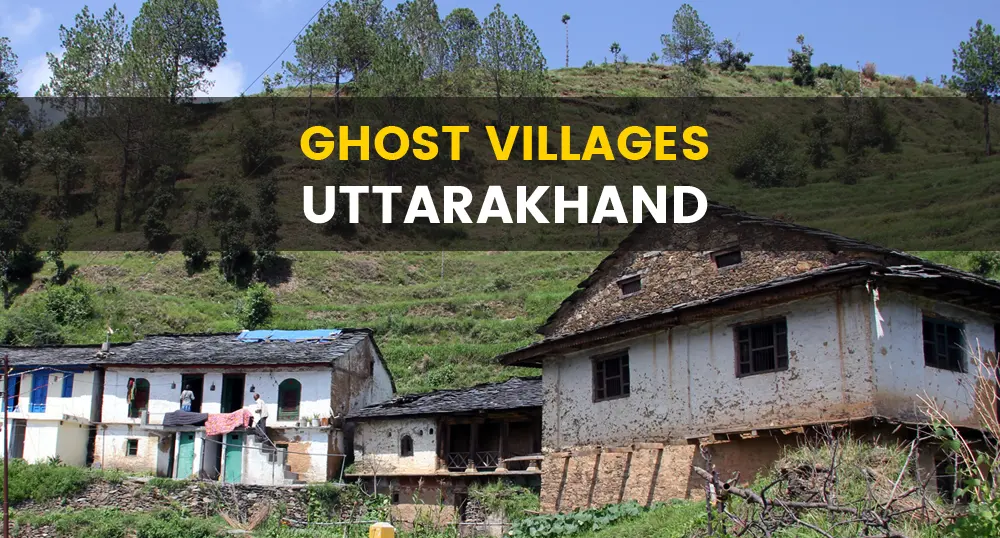
Migration from the hill areas of Uttarakhand is a concerned issue. Many people especially from far-flung rural areas migrate to nearest towns or cities within or outside the state in search of employment and better educational and health facilities. The continuous migration from some villages have resulted in the absolute desertion of those villages with no inhabiting population left behind. These un-inhabited villages are being termed as Ghost Villages.

As per 2011 Census, there are 1048 villages with zero population and another 44 villages have population less than 10 persons.

Browse the list of ghost villages in Uttarakhand by each districts. Pauri district in Garhwal region and Almora district in Kumaon region contain the most number of ghost villages in Uttarakhand.

DistrictGhost Villages
Almora105
Bageshwar73
Chamoli76
Champawat55
Dehradun17
Hardwar94
Nainital44
Pauri Garhwal331
Pithoragarh103
Rudraprayag35
Tehri Garhwal88
Udham Singh Nagar14
Uttarkashi13

Hira Devi


The film, inspired by Devi’s own life, tells the story of an elderly couple’s love. PITHORAGARH: Hira Devi, 80, is an unlikely film heroine from one of Uttarakhand’s ghost villages, Gadtir, which has several empty houses because of migration. Hira Devi, 80, is an unlikely film heroine from one of Uttarakhand’s ghost villages, Gadtir, which has several empty houses because of migration. The octogenarian, who is illiterate and has lived in the mountain village most of her life, recently got a chance to star in ‘Pyre’, a film inspired by a story similar to her own, which will have its world premiere on Tuesday (Nov 19) at the 28th Tallinn Black Nights International Film Festival in Estonia.

Pandit Deendayal Upadhyaya (1916–1968)

Daily writing prompt
What details of your life could you pay more attention to?

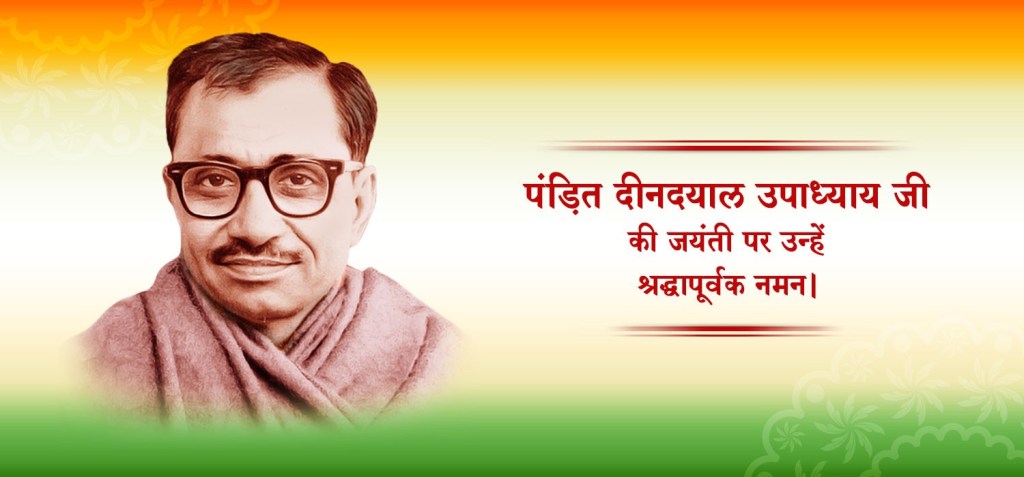
Pandit Deendayal Upadhyaya (1916–1968) was an Indian politician, philosopher, economist, and thinker, who played a significant role in shaping the political and ideological framework of modern India. He was a key leader in the Bharatiya Jana Sangh (the precursor to the Bharatiya Janata Party, or BJP) and is best known for his formulation of the concept of “Integral Humanism”—a philosophy that sought to define India’s political and socio-economic direction post-independence.

Early Life and Education

Deendayal Upadhyaya was born on September 25, 1916, in the small town of Chandrabhan (now renamed Deendayal Dham) in Mathura district, Uttar Pradesh. His early life was marked by tragedy, as he lost his parents at a young age, and he was raised by his maternal uncle. Despite financial hardships, Upadhyaya was an excellent student, excelling academically. He attended high school in Sikar, Rajasthan, where he earned a scholarship, and later completed his graduation from Sanatan Dharma College, Kanpur. He pursued further studies at St. John’s College, Agra.

However, despite excelling academically, Upadhyaya was drawn towards nationalist politics and social work, influenced by the ideas of Rashtriya Swayamsevak Sangh (RSS), a Hindu nationalist volunteer organization that focused on nation-building and social welfare.

Political Career

Pandit Deendayal Upadhyaya’s formal political journey began when he joined the RSS in the late 1930s. Deeply committed to the cause of Hindutva (Hindu nationalism), he worked as a full-time “pracharak” (propagator) for the RSS. His dedication to nationalist ideals was evident as he worked tirelessly to expand the influence of the organization in different parts of India.

In 1951, when Syama Prasad Mookerjee founded the Bharatiya Jana Sangh (BJS), Deendayal Upadhyaya was one of its key founding members. He became the party’s General Secretary, a post he held for nearly two decades, contributing to the growth of the party. He was instrumental in defining the ideological framework of the Jana Sangh, emphasizing a vision of India rooted in its indigenous culture, values, and self-reliance.

Integral Humanism

The most important contribution of Pandit Deendayal Upadhyaya to Indian political thought is his doctrine of “Integral Humanism” (Ekatma Manav Darshan). Delivered as a series of lectures in 1965, Integral Humanism was proposed as an alternative to both Western capitalism and socialism. According to Upadhyaya, both these systems were incompatible with Indian culture and failed to meet the holistic needs of human beings.

Core principles of Integral Humanism:

  1. Holistic Development of Human Beings: Upadhyaya believed that human development must address both material and spiritual needs. Western ideologies focused too much on material prosperity, neglecting the spiritual and cultural aspects of human life.
  2. Socio-Economic Model Based on Indian Traditions: Upadhyaya advocated for an economic model rooted in Indian values, emphasizing decentralized governance and self-reliance (Swadeshi). He was against the blind adoption of Western economic policies and called for a system that balanced economic growth with ethical living.
  3. Harmony between Individual and Society: He stressed that individual aspirations should align with the well-being of society as a whole. He argued for a balance between individual rights and societal duties, avoiding both excessive state control and extreme individualism.
  4. Focus on Indigenous Solutions: Upadhyaya’s vision was fundamentally based on the cultural and spiritual ethos of India. He believed that India must evolve a political and economic system that is not an imitation of the West but instead arises from its own traditions, culture, and spiritual heritage.

Integral Humanism continues to serve as the ideological foundation of the BJP today, which sees it as a guiding principle for national development and governance.

Political Leadership and Influence

Deendayal Upadhyaya’s leadership in the Bharatiya Jana Sangh was marked by his focus on organizational discipline and ideological clarity. Although he was not a mass leader like some of his contemporaries, his influence lay in his intellectual contributions and behind-the-scenes work in strengthening the party structure. He became the President of the Bharatiya Jana Sangh in 1967, but his tenure was tragically short-lived due to his untimely death.

Despite the challenges faced by the Jana Sangh in competing with larger political entities like the Congress, Upadhyaya’s vision helped solidify the party’s role as the voice of Hindu nationalism and cultural conservatism in Indian politics. His emphasis on a politics of ethics, discipline, and indigenous values resonated with many, laying the groundwork for the later rise of the BJP.

Mysterious Death

Pandit Deendayal Upadhyaya’s life was cut short under mysterious circumstances. On February 11, 1968, his body was found near the railway tracks in Mughal Sarai (now Deendayal Upadhyaya Junction) under suspicious circumstances. The circumstances of his death remain unclear to this day, leading to various theories and speculations. His untimely death was a great loss to Indian politics, as many believe he had much more to offer in terms of thought leadership and political guidance.

Legacy

Pandit Deendayal Upadhyaya’s legacy lives on through the political ideology he helped shape. The Bharatiya Janata Party (BJP), which emerged from the Bharatiya Jana Sangh, regards him as a key figure in its ideological foundation. His thoughts on Integral Humanism continue to influence Indian politics, particularly in the realm of governance, self-reliance, and national identity.

Several institutions, programs, and initiatives have been named in his honor, reflecting the continued relevance of his ideas. The government of India, especially under the leadership of BJP, has launched numerous schemes bearing his name, including Deen Dayal Antyodaya Yojana (for poverty alleviation) and Deen Dayal Upadhyaya Grameen Kaushalya Yojana (for rural employment).

Conclusion

Pandit Deendayal Upadhyaya was a thinker and politician who left an indelible mark on Indian political thought through his advocacy of a distinctive Indian philosophy, Integral Humanism. His ideas continue to inspire contemporary political discourse in India, especially within the Hindutva movement and the broader framework of Indian governance. His focus on the integration of material and spiritual development, as well as the promotion of an indigenous economic and political system, makes him a key figure in the intellectual history of modern India.

Workshop on Institutional Development Plan for Higher Education Institutes and releases UGC Compendium of Regulations (1957-2023)

Daily writing prompt
What details of your life could you pay more attention to?

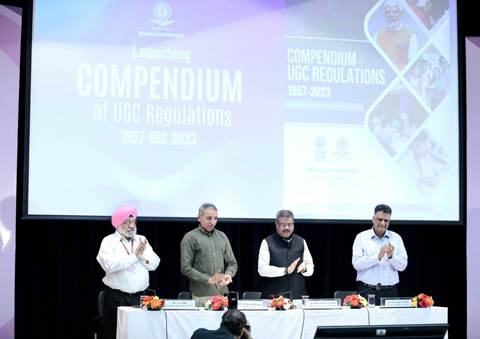
Union Minister for Education, Shri Dharmendra Pradhan, inaugurated a one-day workshop on the Institutional Development Plan for Higher Education Institutes. He also released the UGC Compendium of Regulations (1957-2023) as a single, accessible & reliable source of all UGC rules. Shri Sanjay Murthy, Secretary, Department of Higher Education, Ministry of Education; Dr. N.S. Kalsi, Former Chairman, NCVET and Chairman of the Committee working on formulating the IDP Guidelines; Shri M. Jagadesh Kumar, Chairman, UGC; Vice-Chancellors, Nodal Officers, and other dignitaries were also present at the event.

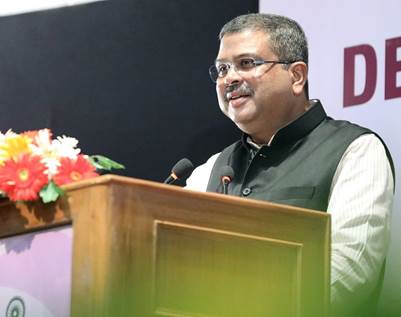
Shri Dharmendra Pradhan, while addressing the audience said the Higher education Institutes of the country will play a crucial role in realising the vision of Prime Minister Shri Narendra Modi of Viksit Bharat by embracing the core values and spirit of NEP 2020.

Image

He also talked about the role of the HEIs in redefining the purpose and structure of education, empowering youth and making them future-ready, doubling the gross enrolment ratio, bringing a vast majority of the population under the higher education net, effectively utilising demographic advantage, achieving academic, research & innovation excellence and also the way forward for transforming 5000 HEIs into centres-of-excellence through holistic and inclusive approaches.

Shri Pradhan also said that education will propel India from being a consuming economy to becoming a producing economy. The institutional development plan should focus on enhancing the competencies of our vast demography, facilitating learner-centric and multidisciplinary education, integrating Bharatiya Bhasha in higher learning, prioritising innovation, entrepreneurship and job-creation as an outcome, capacity building of teachers and achieving the global standard of research & development, he added.

He also said that education must address 21st-century aspirations and create solutions for local and global challenges. The world looks at India’s talent pool for new models and solutions to challenges of our age, he stated He exhorted the academic fraternity to work in a focused and time-bound manner to reinvent their institutions, transforming the higher educational landscape and achieving national priorities.

Speaking on the relevance and importance of the workshop Shri K. Sanjay Murthy elaborated on the ambitious plan the Ministry of Education had presented to the Prime Minister as part of the social group with the vision for the next twenty-five years. Talent and competency would be needed to back up the tremendous work that would take place and the institutions must rise to the demand to meet the talent requirements, he added. He also emphasized the Future of Work and that the IDP must focus on enhancing the quality of the institutes. Introduction of the IDP will also help the institutes to be at par with the universities of the world, he said.

About the Workshop:

The workshop on Institutional Development Plan (IDP) brings together higher education institutions to discuss strategies for institutional growth and development. The compendium will serve as a valuable resource for institutions as they develop and implement their IDP. Over 170 representatives from HEIs across India are participating in this workshop. Aligning with the National Education Policy (NEP) 2020, the IDP provides institutions with a clear roadmap to develop their vision, mission and goals for a future-ready education system.

Through the two thematic sessions, the participants will have the opportunity to learn about governance enablers, financial planning and management, human resources and supportive-facilitative enablers, networking and collaboration enablers, physical enablers, digital enablers, and research and intellectual property enablers, innovative funding models, and curriculum development. Renowned experts from industry, academia, and government will share their insights and experiences on these critical areas.

In each session, different universities will share their best practices for creating their IDP. In a separate Q&A session, Chairman UGC, Former Chairman, NCVET and the speakers from the Panels will address the queries of the participants.

About UGC Compendium:

To provide a single source of reference to all the stakeholders, UGC has prepared a Compendium of all UGC Regulations, Rules and Notifications from 1957-2023. The compendium includes 15 Rules, 87 Regulations, and 28 Notifications covering a wide range of topics, including inspection, the fitness of institutions for grants, return of information, budget and accounts, establishments, affiliation, autonomy, accreditation, admission & fees, specification of degrees, and other miscellaneous matters. The compendium provides a one-stop reference for all regulatory requirements, ensuring that institutions can easily access and comply with UGC guidelines. This is expected to streamline operations and support informed decision-making, creating an environment of compliance and best practices. This compendium having more than 1100 pages, is available in the form of a PDF and e-book on the UGC website.

About IDP:

Institutional Development Plan (IDP) Guidelines were launched by UGC on 6th February 2024. The IDP Guidelines will help institutions make a strategic Institutional Development Plan with the joint participation of Board members, institutional leaders, faculty, students and staff based on which institutions will develop initiatives, assess their progress, and reach the goals set therein.

Visit: https://www.ugc.gov.in/pdfnews/1713699_IDP-Guidelines.pdf

*****

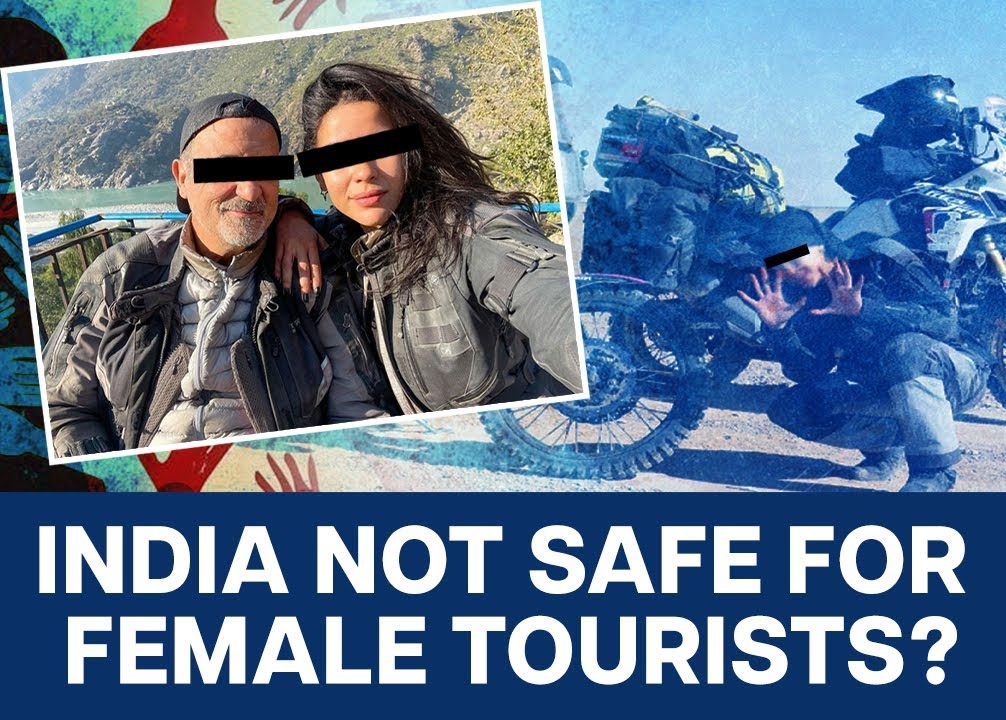
Raping the Tourism – Tarnishing the image of Incredible India

Daily writing prompt
What could you do differently?

By Shashikant Nishant Sharma

The occurrence of rape incidents involving tourists in India is a deeply concerning issue that has significant repercussions, not only for the victims and their families but also for the reputation and image of the country as a tourist destination. These incidents tarnish the perception of “Incredible India,” which is known for its rich cultural heritage, diverse landscapes, and warm hospitality. However, the prevalence of such crimes casts a shadow over these positive attributes and raises serious questions about safety and security for visitors.

Firstly, each incident of rape involving tourists erodes trust and confidence in India as a safe destination. Travelers, especially women, may become apprehensive about visiting the country due to fear for their personal safety. This fear can deter potential tourists from choosing India as their travel destination, resulting in a significant loss for the tourism industry. Moreover, repeated incidents contribute to negative media coverage, amplifying the perception of India as an unsafe place for tourists.

Secondly, the failure to effectively address and prevent these crimes reflects poorly on the authorities’ ability to ensure the safety of visitors. It highlights systemic issues such as gaps in law enforcement, inadequate infrastructure, and cultural attitudes towards gender-based violence. The lack of swift and decisive action to address these underlying issues undermines the credibility of India’s commitment to ensuring the well-being of tourists.

Additionally, the impact of rape incidents on the victims cannot be overstated. Beyond the physical and emotional trauma they endure, these incidents often result in long-lasting psychological effects, shattered confidence, and a reluctance to seek justice in a foreign legal system. The failure to provide adequate support and justice for victims further damages the perception of India as a compassionate and just society.

To mitigate the tarnishing of India’s image and restore trust in its tourism sector, comprehensive measures are required. This includes improving safety infrastructure, increasing police presence in tourist areas, enhancing awareness and sensitivity training for law enforcement officials, and implementing stringent legal measures to ensure swift and effective prosecution of perpetrators. Additionally, promoting a culture of respect and gender equality is essential to address the root causes of violence against women.

In conclusion, the occurrence of rape incidents with tourists in India not only inflicts harm on the victims but also undermines the country’s reputation as a welcoming and safe destination. Addressing these issues requires concerted efforts from the government, law enforcement agencies, tourism stakeholders, and society as a whole to ensure that India remains truly incredible in every aspect.

References

Dubey, P. (2018). No Nation for Women: Reportage on Rape from India, the World’s Largest Democracy. Simon and Schuster.

Kennedy, K. M., & Flaherty, G. T. (2015). The risk of sexual assault and rape during international travel: implications for the practice of travel medicine. Journal of travel medicine22(4), 282-284.

Thomas, T. K., & Mura, P. (2019). The ‘normality of unsafety’-foreign solo female travellers in India. Tourism Recreation Research44(1), 33-40.

Rao, N. (2012). The dark side of tourism and sexuality: trafficking of Nepali girls for Indian brothels. In Sex and tourism (pp. 155-165). Routledge.

Self-Reliant India, Eco-Friendly Future

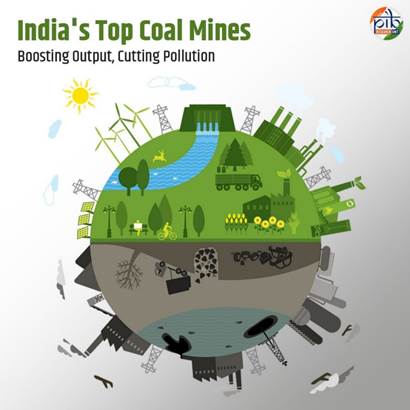
 India is effectively managing the delicate balance between increasing its coal mining output and strategically phasing down the polluting processes associated with coal mining. This approach aims to boost energy production while mitigating environmental impacts.

Chhattisgarh-based Coal India subsidiary Southeastern Coalfields Limited’s (SECL) Gevra and Kusmunda coal mines have secured the 2nd and 4th spot in the list of the worlds 10 largest coal mines released by WorldAtlas.com.

These two mines, each producing over 100 million tons of coal annually and accounting for around 10% of India’s total coal production, utilize some of the world’s largest and most advanced mining machines. Notably, they employ the “Surface Miner,” a cutting-edge technology that extracts and processes coal without blasting, promoting eco-friendly mining operations.

Coal Mining a Big Booster for Economic Growth

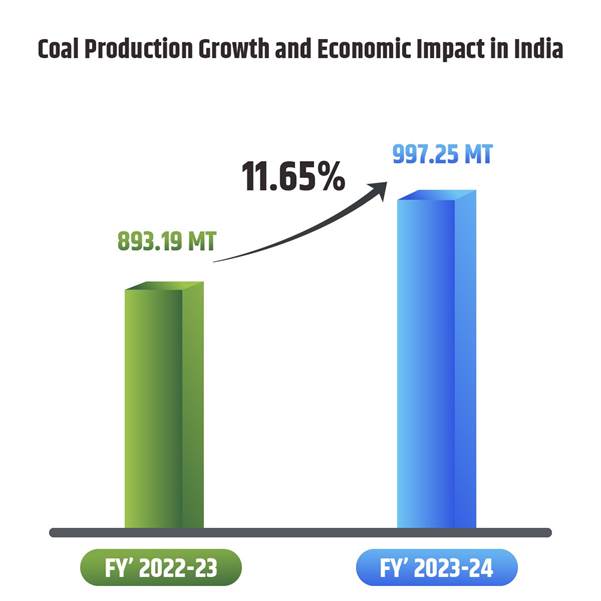
Through ongoing investment and a strong focus on modern technologies, India’s coal production reached 893.19 million tonnes in 2022-23. For 2023-24, production increased to 997.25 million tonnes, achieving an 11.65% growth. It is anticipated through comprehensive studies that coal demand in 2030 will likely reach 1462 MT and 1755 MT by 2047.

Coal mining sector has proved to be a big booster for economic growth of the coal producing States in the Country. State Governments are entitled to receive 14% of Royalty on sale price of coal. In case of captive/ commercial mines State Government are also entitled to receive the revenue share offered by the auction holder in transparent bidding process.

Apart from this, State Governments also benefit from increased employment, land compensation, increased investment in allied infrastructure like railways, roads and several other economic benefits.

The focus of the Central Government for enhancing coal production to meet the growing economy has directly helped the State Govts in realisation of additional revenue, which in turn has infused capital expenditure in the coal producing regions thereby bringing in development, both in infrastructure and social sector.

SUSTAINABILITY IN COAL MINES

The mining industry has long been associated with significant environmental degradation and resource depletion. However, in recent years, the concept of green mining has emerged as a beacon of hope for a sustainable future

Green Mining Led to a Sustainable Future

Green mining refers to the implementation of eco-friendly practices and technologies in the mining industry to reduce its environmental impact. It involves using renewable energy sources, recycling mine waste, minimizing water consumption, and employing sustainable extraction techniques.

The goal of adopting green mining is to mitigate the industry’s carbon footprint and promote responsible mining. To achieve environmental sustainability, the following is a brief explanation of the environmental protection measures being adopted by coal/lignite PSUs in coal mining areas

1. Air Quality Management

Effective air quality management in coal mines is essential for safeguarding the health of workers, protecting the environment, and ensuring sustainable mining operations. Coal mining activities often generate dust and emissions that can impact air quality both within the mine and in surrounding areas.

Implementing robust air quality management practices helps mitigate these impacts by controlling dust levels, monitoring emissions, and employing technologies to minimize pollution.

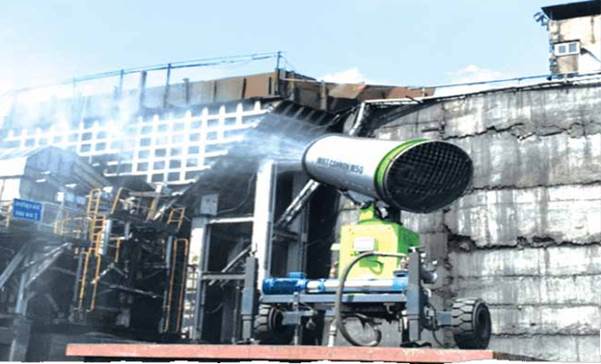
Wet drilling is used to reduce dust generation. Dust suppression systems are also included with drill machines. Surface miners and BWEs are being used more frequently, which reduces the need for drilling and blasting and, thus, the pollution load. Vehicles get routine maintenance in accordance with the manufacturer’s specifications.

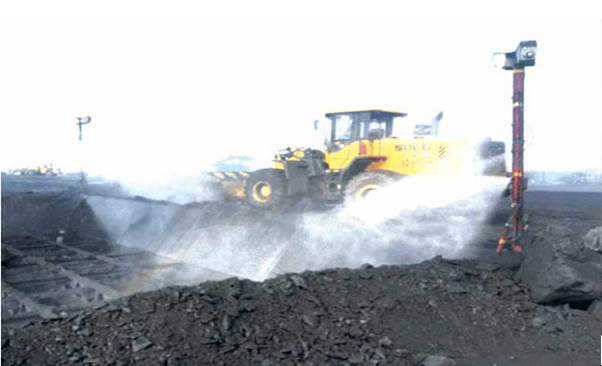
Fig. Mist Gun operation to control dust

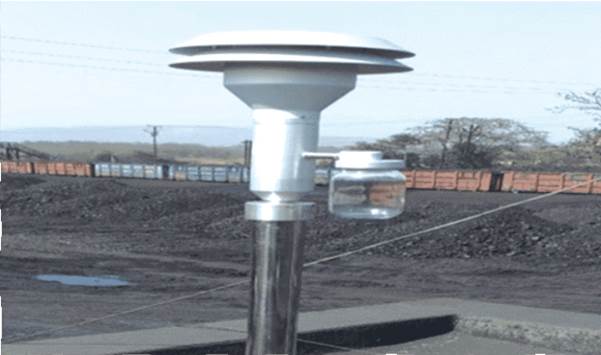
Fig. PM 10 Analyser in CCL

Fig. Surface Miner with water jets, Gevra OCP, SECL

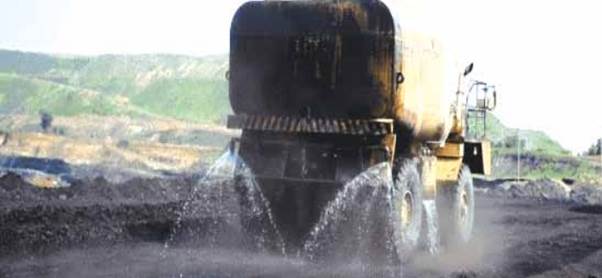
Fig. Mobile sprinklers in operation for suppression of dust


         2. Mine Closure, Bio-reclamation & Land Use Management

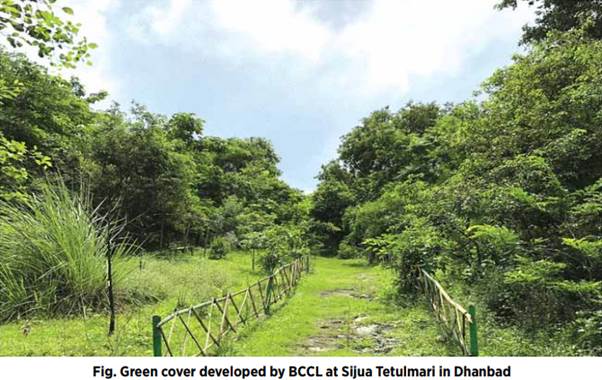
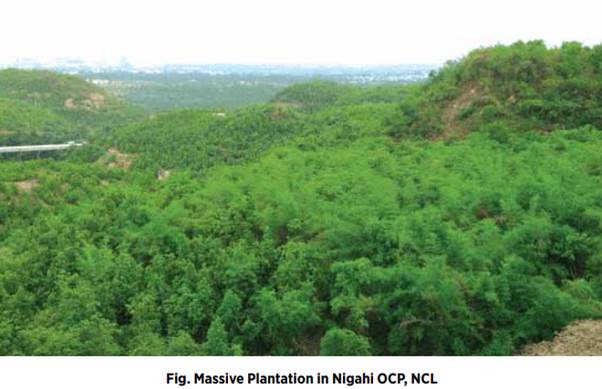
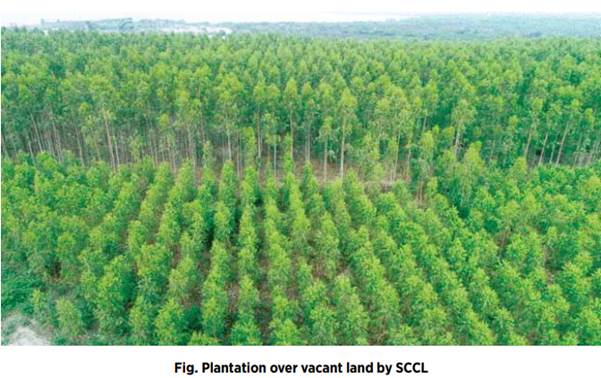
Mine closure, bio-reclamation, and land use management are critical components of responsible coal mining practices aimed at minimizing environmental impacts and promoting sustainable land use. When a coal mine reaches the end of its operational life, a systematic approach to closure ensures that the site is safely and effectively rehabilitated.

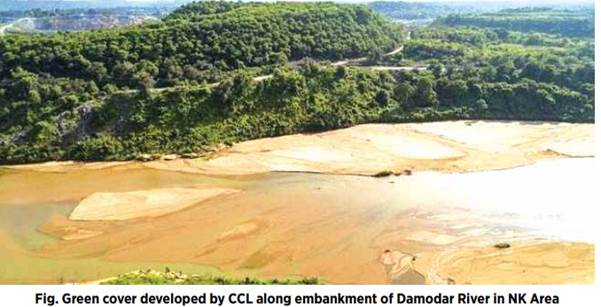
Bio-reclamation involves restoring the ecological balance by reintroducing native flora and fauna, while land use management focuses on repurposing the land for beneficial uses, such as agriculture or recreational areas. Together, these practices help mitigate the environmental footprint of mining activities, support ecosystem recovery, and enhance the long-term usability of former mining sites.


Economic Significance of the Coal Sector Extends Beyond Energy Production

Single largest contributor to Railway Freight: Coal stands as the single largest contributor to railway freight, with an average share of nearly 49% of total freight income amounting to Rs. 82,275 Crore in the fiscal year 2022-23 alone. This revenue contribution has surpassed 33% of total railway earnings, showcasing the sector’s substantial influence on India’s transportation network.

Government Revenue: The coal sector contributes over Rs. 70,000 Crore annually to the central and state governments through royalties, GST, and other levies. These funds play a crucial role in fostering socio-economic development and infrastructure enhancement in coal-producing regions. Coal production generates substantial revenue for both Central and State Governments, with royalty collections reaching Rs. 23,184.86 Crore in the fiscal year 2022-23.

Employment: The coal sector provides enormous employment opportunities, particularly in coal-producing districts of Eastern States. With over 239,210 employees in Coal India Ltd and its subsidiaries, supplemented by contractual workers and outsourcing engagements, the sector sustains livelihoods for thousands of families. Additionally, over 65,000 contractual workers are engaged in mining operations with CIL and 37,000 workers are engaged through outsourcing for security, driver and housekeeping.  With an average 24,000 trucks are engaged in coal transportation supporting 50,000 people and 30000, workers are engaged in captive/commercial coal mining companies contributing to job creation.

Dividend Payments: Coal India Ltd consistently contributes substantial dividends to the Central Government and has paid an average of Rs. 6,487 Crore annually over the past five years. The FY 2022-23 has seen a significant dividend payment of Rs. 9,475.85 Crore, highlighting the sector’s financial stability and contribution to government revenues.

Corporate Social Responsibility (CSR): Coal sector PSUs prioritize CSR initiatives, with an average annual expenditure of Rs. 608 Crore over the past five years. Notably, Coal India Ltd alone has allocated an average of Rs. 517 Crore annually for CSR activities. Over 90% of the expenditure has been incurred on, socio- economic development focusing on healthcare, education, water supply and skill development in coal-producing regions.

Capital Expenditure: Substantial investments in capital expenditure, averaging Rs. 18,255 Crore annually over the past five years, have facilitated infrastructure development and resource optimization within coal sector PSUs. This capital infusion stimulates economic growth and fosters a conducive environment for sustainable development.

As India continues its trajectory of growth and development, the coal sector remains a cornerstone of the nation’s progress, driving economic prosperity, employment generation, and social well-being.

Conclusion

India’s approach to balancing increased coal mining output with a strategic phase-down of pollution reflects a commitment to both economic growth and environmental stewardship. By enhancing coal production to meet rising energy demands while simultaneously implementing measures to reduce pollution, India is working towards a more sustainable and responsible mining industry. This dual focus on maximizing output and minimizing environmental impact demonstrates a forward-thinking strategy that aims to support economic development, improve air quality, and contribute to long-term sustainability in the coal sector.

References:

pib.gov.in/PressReleaseIframePage.aspx?PRID=1941340

chap7AnnualReport2023en.pdf (coal.nic.in)

Sustainable Development for Coal Sector (pib.gov.in)

pib.gov.in/PressReleaseIframePage.aspx?PRID=2009196

chap7AnnualReport2023en.pdf (coal.nic.in)

Press Information Bureau (pib.gov.in)

Click here to see in PDF

*****

1stCentury would be of Asia with India leading

 The Central Bureau of Investigation today organised an Investiture Ceremony at CBI Academy, Ghaziabad (Uttar Pradesh). On this occasion, Shri Arjun Ram Meghwal, Union Minister of State (Independent Charge), Ministry of Law & Justice and Minister of State for Parliamentary Affairspresented the President’s Police Medal (PPM) for Distinguished Service and Indian Police Medal (IPM) for Meritorious Service to 39 CBI officers/officials. Congratulating the medal winners and their familiesShri Meghwal said that it is a proud moment for all of us to have recognized their service rendered to the nation. He added that this also acts as a source of inspiration for all service officials to excel in their job. Appreciating CBI in its role, he observed that not only CBI’s importance is being recognized in the society but also its investigation is the best, which is reflected in high conviction rate in cases investigated by CBI. Shri Meghwal emphasised CBI is rightly regarded as the best investigating agency which is reflected in demand for CBI probe every now and then in complex and sensitive cases by various stakeholders.

WhatsApp Image 2024-07-04 at 3.16.12 PM (1).jpeg

Delving on the new Criminal Laws which has been implemented with effect from 1st July, 2024, Shri Meghwal asserted that these laws will bring in ease of living in a big way for citizenry. These laws will expedite delivery of justice and save crucial time of all the stakeholders spent during litigation. The Minister stressed that this will prove highly productive for the nation as the energies would be channelised towards the process of development of the society and eventually lead to higher progress. Referring to India recently galloping to fifth largest economy in the world from the 11th position few years ago, he underlined that reforms/ improvements in judicial process will also contribute to the endeavour and goal of taking India to 3rd position in the coming few years.

Shri Meghwal underscored the significance of India’s progress as envisioned by Prime Minister Shri Narendra Modi that India would play pivotal role in the 21stcentury on a global scale.Tracing the 19th century with regards to progress as that of Europe, led by England; 20th century that of America led by United States of America (USA), he expressed confidence that 21st century would be of Asia led by India. Reminiscing Swami Vivekananda’s forecast, he said that India is set for the landmark by its varied parameters inter alia democratic setup of the society, progressive growth in the sphere of economy and technology, family value system and family setup, India’s helpful gestures in world arena and roles taken up on international platforms,  growing role of citizenry, environmental initiatives, strategic lead in the sphere of Yoga, Ayurveda, Space etc. have placed India in a leadership position world over.

98ffe62f-a865-4753-9c69-ff43f24174ae.jpg

In his welcome address, Shri Praveen Sood, Director, CBI complimented the medal recipients and stated that they have achieved the laurels due to their professional hard work, resilience and fortitude which have earned CBI great esteem. He further congratulated the recipient’s family members. On this occasion, Shri Sood emphasised that CBI and Law Ministry are working in synergetic and collaborative environment to prioritise more efficient prosecution along with investigation. Director CBI stressed that CBI’s role has been evolving with the passage of time, from handling primarily anti-corruption cases in the beginning to special/ economic crimes, cybercrimes, bank frauds, etc. Shri Praveen Sood also said that CBI is working with Ministry of Law & Justice with regards to successful implementation of three new Criminal Laws informing that CBI has started implementing these laws. He offered that CBI is geared to handhold States and other stakeholders in helping them in implementation of these laws.

5th Joint Group of Customs (JGC) meeting between India and Bhutan

 The 5th Joint Group of Customs (JGC) meeting between India and Bhutan was held on 6th-7th May, 2024 in Leh, Ladakh. The meeting was co-chaired by Mr. Surjit Bhujabal, Special Secretary and Member (Customs), Central Board of Indirect Taxes and Customs, Government of India, and Mr. Sonam Jamtsho, Director General, Department of Revenue and Customs, Ministry of Finance, Royal Government of Bhutan.

The 5th JGC meeting discussed a host of bilateral issues such as opening of new Land Customs Stations and notifying new trade routes, development of infrastructure, automation and digitisation of transit processes, prevention of smuggling, coordinated cross-border management, pre-arrival exchange of Customs data, bilateral agreement on Customs cooperation and movement of transit cargo under electronic cargo system among others.

Bhutan thanked the Government of India and particularly the Central Board of Indirect Taxes and Customs for the continued support in providing capacity building, training and skill development through workshops, seminars and various training programmes, including the IRS programme to the Bhutan customs administration. Also, Bhutan expressed sincere appreciation to the Indian Government for initiating and promoting the cross-border trade and economic activities with Bhutan through the various bilateral agreements.


The India-Bhutan Joint Group of Customs meetings are held annually to discuss issues relating to re-defining and re-engineering of Customs procedures, promote Customs cooperation and cross-border trade facilitation with alignment to global best practices. These meetings play a vital role in enhancing connectivity and developing trade infrastructure for smooth customs clearance at land borders. There are 10 Land Customs Stations along the India-Bhuan Border in the States of West Bengal (6) and Assam (4).

India is Bhutan’s top trade partner both as an import source and as an export destination. Since 2014, India’s trade with Bhutan has more than tripled from $484 million in 2014-15 to $1,615 million in 2022-23, accounting for about 80% of Bhutan’s overall trade. Trade with Bhutan through the land Customs Stations is significant as Bhutan is a land-locked country.  Enhancing connectivity with Bhutan is pivotal to India’s ‘Neighbourhood First’ and the ‘Act East’ Policy.

The meeting concluded on an optimistic note. Both the countries agreed on discovering new strands of complementarities between India and Bhutan that can be maximised for mutual benefit, respond to the expectations and aspirations of the youth and adapt to the rapid changes related to new technologies and social innovations. Both sides also agreed to consider new developments for facilitating customs and trade cooperation for mutual prosperity. 

****
Understanding the Dynamics of Caste and Creed: A Societal Examination

Daily writing prompt
What is one question you hate to be asked? Explain.

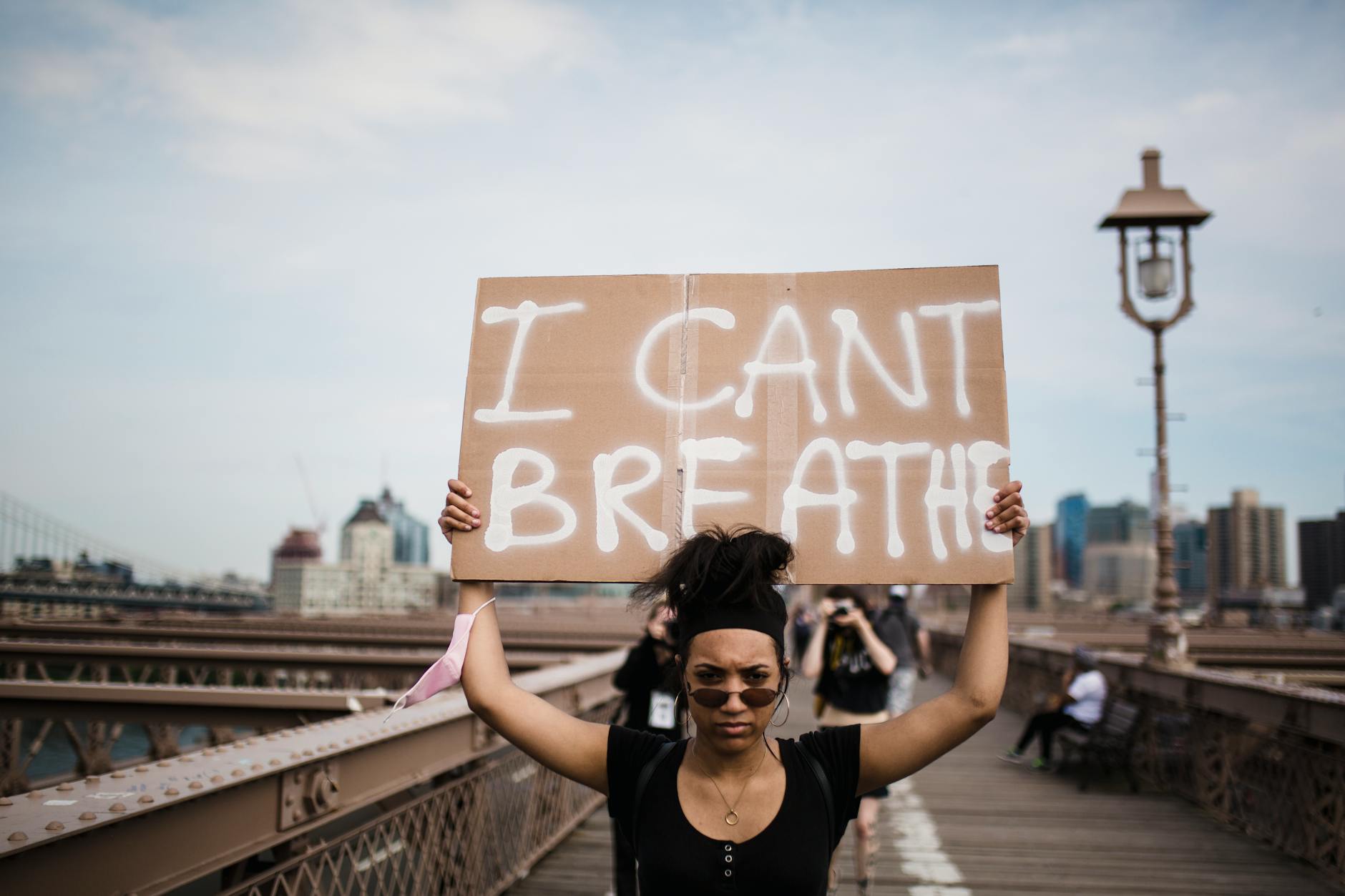
Caste and creed are two intricately intertwined concepts that have deeply influenced societies across the globe for centuries. Both terms carry significant weight in shaping social structures, cultural identities, and individual experiences. While often discussed separately, understanding their interplay is crucial for comprehending the complexities of societal dynamics.

Photo by Life Matters on Pexels.com

Caste: An Ancient Social Hierarchy

Caste refers to a hereditary social class system prevalent in many societies, notably in South Asia. Originating from ancient Hindu scriptures, caste delineates societal stratification based on birth, occupation, and social status. Traditionally, society was divided into four main castes, namely Brahmins (priests and scholars), Kshatriyas (warriors and rulers), Vaishyas (merchants and traders), and Shudras (laborers and artisans), with Dalits (formerly known as “untouchables”) marginalized outside this system.

Caste dictates various aspects of life, including occupation, marriage, and social interactions, often determining an individual’s opportunities and privileges. Despite legal abolishment and efforts towards social reform, caste-based discrimination and prejudice persist, perpetuating inequalities and hindering social mobility.

Creed: The Essence of Belief

Creed encompasses a set of beliefs or principles that guide an individual’s religious, spiritual, or philosophical convictions. It transcends mere religious affiliation, encompassing ideologies, values, and worldviews that shape one’s identity and interactions with the world. Creed influences moral conduct, societal norms, and cultural practices, providing a framework for individual and collective behavior.

Religious creed, in particular, holds immense significance in shaping communities and societies worldwide. It fosters solidarity among adherents, serving as a source of comfort, guidance, and communal identity. However, creed can also be a source of division, leading to sectarianism, intolerance, and conflict when differences are perceived as threats to established norms or power structures.

Interplay of Caste and Creed

The intersection of caste and creed profoundly influences social dynamics, particularly in regions where both concepts are deeply ingrained in the fabric of society. Religious communities often align with specific caste groups, intertwining religious identity with social status and cultural practices. This intersectionality manifests in various ways:

  1. Caste-Based Exclusivity within Religious Communities: In some societies, caste serves as a determinant of access and participation within religious institutions and rituals. Certain castes may be marginalized or excluded from full participation in religious activities, reinforcing social hierarchies within religious frameworks.
  2. Inter-Caste Marriage and Social Stigma: Inter-caste marriages challenge traditional social norms and face resistance from families and communities adhering to strict caste boundaries. Religious creed may exacerbate these tensions, as marriage is not only a union of individuals but also a merging of social identities and cultural practices.
  3. Political Mobilization and Identity Politics: Caste and religious identities often intersect in the political arena, with leaders mobilizing support based on shared caste or religious affiliations. This exploitation of identity politics can deepen divisions and perpetuate social inequalities, hindering efforts towards inclusive governance and social cohesion.
  4. Resistance and Reform Movements: Despite the entrenched nature of caste-based discrimination, religious creed has also been a catalyst for social reform movements advocating for equality and justice. Leaders from marginalized caste groups have drawn inspiration from religious teachings to challenge oppressive systems and promote social change.

Challenges and Pathways Forward

Addressing the complexities of caste and creed requires a multifaceted approach that acknowledges historical injustices, respects cultural diversity, and promotes inclusive social policies. Key considerations include:

  1. Legal Protections and Enforcement: Robust legal frameworks are essential for combating caste-based discrimination and ensuring the rights of marginalized communities. Efforts to enforce anti-discrimination laws must be accompanied by awareness campaigns and capacity-building initiatives to foster social inclusion.
  2. Education and Awareness: Education plays a vital role in challenging entrenched beliefs and fostering empathy and understanding across caste and religious divides. Incorporating diverse perspectives into curricula and promoting interfaith dialogue can contribute to building more tolerant and cohesive societies.
  3. Community Empowerment and Dialogue: Grassroots initiatives that empower marginalized communities and facilitate dialogue between different caste and religious groups are crucial for fostering social cohesion. By promoting mutual understanding and cooperation, communities can work towards dismantling barriers and building inclusive societies.
  4. Promotion of Intersectional Approaches: Recognizing the intersectionality of caste, creed, gender, and other forms of identity is essential for developing holistic solutions to social inequalities. Policies and programs should address multiple dimensions of discrimination to ensure that no individual or community is left behind.

In conclusion, the interplay of caste and creed shapes the social, cultural, and political landscapes of many societies, presenting both challenges and opportunities for social cohesion and justice. By addressing entrenched prejudices, promoting inclusive policies, and fostering dialogue and solidarity, societies can strive towards a more equitable and harmonious future.

A Brief Note on India

 India is a vast and diverse country in South Asia, with a history that spans more than five millennia. It is the world’s largest democracy and the second most populous country, with over 1.4 billion people. India is also home to many religions, languages, cultures, and traditions, making it a rich and vibrant mosaic of human civilization. Some of the facts about India are:

India has the longest written constitution in the world, with 448 articles, 12 schedules, and 103 amendments.

India is the only country where the tectonic plate on which it lies is named after it. The Indian Plate is moving northward at a rate of about 5 cm per year, and is responsible for the formation of the Himalayas, the highest mountain range in the world.

India has a space program that has launched several satellites, probes, and missions, including the Chandrayaan-1, which was the first lunar orbiter from Asia, and the Mars Orbiter Mission, which was the first interplanetary mission from Asia.

India has a diverse and rich flora and fauna, with about 8% of the world’s biodiversity. It is one of the 17 megadiverse countries, and hosts four biodiversity hotspots. It is also home to the Bengal tiger, the Asiatic lion, the Indian elephant, the one-horned rhinoceros, and many other endangered species.

India has a vibrant and influential culture, with contributions in various fields such as literature, art, music, dance, architecture, mathematics, astronomy, medicine, and philosophy. It is the birthplace of four major religions: Hinduism, Buddhism, Jainism, and Sikhism, and has a large and diverse population of followers of other faiths, such as Islam, Christianity, Sikhism, and Zoroastrianism.

India has a strong and growing economy, with the fifth largest nominal GDP and the third largest PPP GDP in the world. It is also one of the fastest growing major economies, with an average annual growth rate of about 7% in the last decade. It is a leading producer and exporter of various goods and services, such as textiles, software, pharmaceuticals, engineering, agriculture, and tourism.

If you want to learn more about India, you can visit the National Portal of India, which is a single-window access to information and services from all government departments, institutions, and organizations. You can also read the Wikipedia article on India, which provides a comprehensive overview of the country’s history, geography, politics, culture, and society. You can also browse the Britannica article on India, which gives a concise and factual summary of the country’s features and facts.

India Energy Week 2024

 Prime Minister Shri Narendra Modi will visit Goa on 6th February, 2024. At around 10:30 AM, Prime Minister will inaugurate ONGC Sea Survival Centre. At around 10:45 AM, he will inaugurate India Energy Week 2024. Thereafter, at around 2:45 PM, he will participate in the Viksit Bharat, Viksit Goa 2047 programme.

India Energy Week 2024

Achieving Aatmanirbharta in energy requirements has been a key focus area of the Prime Minister. In yet another step in this direction, India Energy Week 2024 will be held from 6 – 9 February in Goa. It will be India’s largest and only all-encompassing energy exhibition and conference, bringing together the entire energy value chain, and will serve as a catalyst for India’s energy transition goals. Prime Minister will hold a roundtable with Global oil & gas CEOs and experts.

Encouraging and fostering startups and integrating them into the energy value chain will be an important focus for India Energy Week 2024. It is expected to witness participation of around 17 Energy ministers from different countries, 35,000+ attendees and more than 900 exhibitors. It will have six dedicated country pavilions – Canada, Germany, Netherlands, Russia, UK and USA. A special Make in India Pavilion is also being organised to showcase innovative solutions which Indian MSMEs are spearheading in the energy sector.

Viksit Bharat, Viksit Goa 2047

Prime Minister will inaugurate and lay the foundation stone of projects worth over Rs. 1330 crores in the public programme in Goa.

Prime Minister will inaugurate the permanent campus of National Institute of Technology Goa to the nation. The newly built-up campus has various facilities such as tutorial complex, departmental complex, seminar complex, administrative complex, hostels, health centre, staff quarters, amenity centre, sports ground and other utilities to cater to the needs of students, faculty and staff of the Institute.

Prime Minister will dedicate the new campus of the National Institute of Watersports. The institute will introduce 28 tailor-made courses aimed at fostering the development of watersports and water rescue activities catering to both the public and the Armed Forces. Prime Minister will also inaugurate a 100 TPD Integrated Waste Management Facility in South Goa. It has been designed for the scientific treatment of 60 TPD wet waste and 40 TPD dry waste, while also featuring a 500 KW solar power plant that generates surplus electricity.

Prime Minister will lay the foundation stone for Passenger Ropeway, along with associated tourism activities, connecting Panaji and Reis Magos. Foundation stone for the construction of a 100 MLD Water Treatment Plant in South Goa will be laid by him.

Further, he will also distribute appointment orders to 1930 new Government recruits across various departments under Rozgar Mela and also hand over sanction letters to beneficiaries of various welfare schemes.

ONGC Sea Survival Centre

ONGC Sea Survival Centre has been developed as a one-of-a-kind Integrated Sea Survival Training Centre to advance the Indian sea survival training ecosystem to global standards. It is expected to train 10,000-15,000 personnel annually. Exercises in simulated and controlled harsh weather conditions shall enhance Sea Survival skills of trainees and thus potentially increase the chances of safe escape from real life disasters.


***
Thirty Minerals Listed as Critical Minerals for India

 The Ministry of Mines had constituted a Committee on 01.11.2022 to identify the critical and strategic minerals. The Committee had, inter-alia, recommended to establish a National Institute or “Centre of Excellence on Critical Minerals” (CECM). The purpose of CECM is to periodically update the list of critical minerals for India, preferably every three years, and to notify the critical mineral strategy from time to time. The committee has recommended 30 minerals are critical for the country, out of which 24 minerals are included in the list of critical and strategic mineral in Part D of Schedule 1 of MMDR Act.

A joint venture company namely Khanij Bidesh India Ltd. (KABIL) has been incorporated with the equity contribution from three Central Public Sector Enterprises namely, National Aluminium Company Ltd, Hindustan Copper Ltd and Mineral Exploration and Consultancy Ltd with the objective to ensure consistent supply of critical and strategic minerals to Indian domestic market. On basis of commissioned study and selection criteria, KABIL has initiated engagement with several state owned organizations of the shortlisted source countries through Ministry of External Affairs and the Indian Embassies in countries like Argentina and Australia to acquire mineral assets overseas primarily the critical & strategic minerals.

The Central Government has further amended the Mines and Minerals Development and Regulation Act, 1957 (MMDR Act, 1957) through the MMDR Amendment Act, 2023, whereby 24 critical and strategic minerals have been inserted in part D to the Schedule-I of the MMDR Act, 1957 which have been identified as critical and strategic minerals for the country. Further, the amended Act has also empowered Central Government to auction critical and strategic minerals blocks. Government of India has launched first tranche of auction of these minerals on 29th November, 2023 for 20 blocks. The details of the blocks are at Annexure.

In addition, the Ministry of Mines under its ‘Science and Technology Programme’ provides grants for Promotion of Research and Innovation in Start-ups and MSMEs in Mining, Mineral Processing, Metallurgy and Recycling Sector (S&T-PRISM). One of the thrust areas under S&T-PRISM includes focus on extraction of strategic and critical

minerals at elemental level. 

Furthermore, the Ministry is also actively involved in Mineral Security Partnership (MSP) and other multilateral/ bilateral partnerships with various countries to secure the critical mineral demand of India. Under India’s G20 presidency, recognizing the significance of the role of critical minerals in global energy transition the Ministry of Mines got it included in the G20 New Delhi Leaders’ Declaration.

Annexure


The details of Critical Mineral Blocks which have been notified for auction are as detailed below:


Sl No

Block Name

State

Mineral

ML/

CL

1

Chutia-Nauhatta Glauconite Block

Bihar

Glauconite

CL

2

Pipradih-Bhurwa Glauconite Block

Bihar

Glauconite

CL

3

Genjana Nickel, Chromium and PGE Block

Bihar

Nickel, Chromium and  PGE  

CL

4

Kundol Nickel and Chromium Block

Gujarat

Nickel & Chromium  

CL

5

Muskaniya-Gareriatola-Barwari Potash Block

Jharkhand

Potash

CL

6

Dudhiasol East Nickel and Copper Block

Odisha

Nickel and Copper 


ML


7

Babja Graphite and Manganese Block

Odisha

Graphite and Manganese 

ML

8

Biarapalli Graphite and Manganese Block

Odisha

Graphite  and Manganese 

ML

9

Akharkata Graphite Block

Odisha

Graphite

CL

10

Vellakal Central (Segment-A) Molybdenum Block

Tamil Nadu

Molybdenum Ore

CL

11

Nochchipatti Molybednum Block

Tamil Nadu

Molybdenum Ore

CL

12

Velampatti North A & B  Molybdenum Block

Tamil Nadu

Molybdenum Ore

CL

13

Kurunjakulam Graphite Block

Tamil Nadu

Graphite

CL

14

Iluppakudi Graphite Block

Tamil Nadu

Graphite

CL

15

Mannadipatti Central Molybdenum Block

Tamil Nadu

Molybdenum

CL

16

Marudipatti (Central) Molybdenum Block

Tamil Nadu

Molybdenum

ML

17

Kurchha Glauconite Block

Uttar Pradesh

Glauconite

CL

18

PahadiKalan – Gora Kalan Phosphorite Block

Uttar Pradesh

Phosphorite

CL

19

Salal-Haimna Lithium, Titanium and Bauxite (Aluminous Laterite) Block

UT: Jammu and Kashmir

Lithium, Titanium and Bauxite(Aluminous Laterite) 

CL

20

Katghora Lithium and REE Block

Chhattisgarh

Lithium and REE

CL


This information was given by Union Minister of Coal, Mines and Parliamentary Affairs Shri Pralhad Joshi in a written reply in Rajya Sabha today.

****

Vibrant Gujarat Pre-Summit on ‘Biotechnology: The Path of Innovation & Wellness for Viksit Bharat’

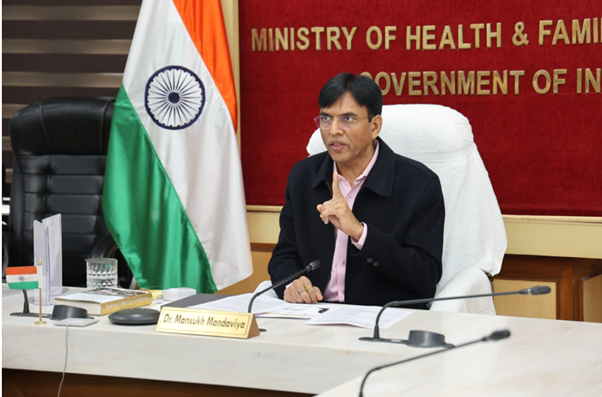
 “India’s ‘Bio Economy’ has grown eight times in the last eight years from $10 billion to $80 billion. In the coming times, biotechnology will become the biggest foundation for health treatment.” This was stated by Dr. Mansukh Mandaviya, Union Minister for Health & Family Welfare as he virtually addressed the pre-event summit “Biotechnology: The Path of Innovation & Wellness for Viksit Bharat” in the presence of Shri. Bhupendra Patel, Chief Minister, Gujarat at Vigyan Bhavan, Science City, Ahmedabad, Gujarat today. The summit is a preliminary event leading up to the 10th Vibrant Gujarat Global Summit that will take place on January 2024 at the Mahatma Gandhi Mandir, Gandhinagar under the theme of ‘Gateway to the Future’

Dr. Mandaviya noted that Indian Biotech Industry aiming to grow to $150 Billion by 2025 and $300 Billion by 2030, and India is currently among the top 12 destinations for Biotechnology in the world with approximately 3% share in the Global Biotechnology Industry. He stated “This industry will become a medium for finding solutions for complex problems in various spheres such as agriculture, environment, industrial production and many more. In light of this, in the future, the economy will become biotechnology based.” Quoting the Prime Minister, Shri Narendra Modi, Dr. Mandaviya stated “in the global biotechnology ecosystem, India will soon feature as one of the top ten nations.” Reiterating the Prime Minister’s vision of India achieving the status of a developed nation by 2047, Dr. Mandaviya cited that “this sector’s contribution will be instrumental in making India a developed nation.” 

Highlighting the growth and prowess of the industry, Dr. Mandaviya stated that the vaccination produced by India during the pandemic showcased India’s power in the field of biotechnology to the world. Underscoring the importance of this sector, the Union Minister stated “the National Biotechnology Development Strategy 2020-25 provides the government a platform to strengthen skill development, resource and innovation converging into one strong ecosystem for knowledge sharing.” He stated it further facilitates commercialization and market linkages by encouraging private-public partnership models in these sectors. 

Commending the progress of the nation and industry in this sphere, the Dr. Mandaviya praised the participation of startups, industries and industry associations, researchers and academicians across the nation for contributing to the development of this sector. The Union Health Minister lauded the efforts and contribution of Gujarat in their dedicated focus on biotechnology over two decades and its strong contribution in making India a healthcare and innovation ready country. The Union Health Minister reflected that Gujarat was the first state in the country to establish Biotech Mission 15-20 years ago. Dr. Mandaviya recalled that when Prime Minister Narendra Modi was the Chief Minister of Gujarat, he had established Biotech Mission and Biotech Park in the state. 

Acknowledging the crucial contribution of the Biotechnology sector will provide to the nation and economy Shri. Bhupendra Patel stated “aligning with the theme of ‘Gateway to the Future’ we will provide additional focus to futuristic sectors of which Biotechnology features as most important.” He further cited that “Biotechnology sector is known as the sector of hope. With its rapid growth, it will provide significant contributions to the world.” The Gujarat Chief Minister also inaugurated the ‘Start-Up Product Launch’.


The event was attended by Shri Raj Kumar, Chief Secretary, Gujarat, Ms. Mona Khandhar, Principal Secretary, Department of Science & Technology, Government of Gujarat, Dr. Rajesh Gokhale, Secretary, Department of Science & Technology, Ministry of Science and Technology, senior government officials, mission directors, as well as eminent dignitaries. 

****

INDIAN ARMED FORCES CONTINGENT REACHES HANOI FOR JOINT MILITARY EXERCISE “VINBAX-2023”

 The Indian Armed Forces contingent comprising 45 personnel reached Hanoi, Vietnam to take part in the fourth edition of Joint Military Exercise VINBAX-2023. The exercise will be conducted at Hanoi, Vietnam from 11th to 21st December 2023. The Indian contingent comprises 39 personnel from an Engineer Regiment of Bengal Engineer Group and six personnel of Army Medical Corps. The Vietnam People’s Army contingent will also be represented by 45 personnel. 

Exercise VINBAX was instituted in 2018 and the first edition was conducted at Jabalpur, Madhya Pradesh. It is an annual training event conducted alternatively in India and Vietnam. Last edition was conducted at Chandimandir Military Station in August 2022.

Aim of the exercise is to foster collaborative partnership, promote inter- operability and share best practices between the two sides under Chapter VII of United Nations Charter on Peace Keeping Operations. The exercise will be conducted as a Command Post Exercise cum Field Training Exercise with focus on deployment and employment of an Engineer Company and a Medical Team.

The joint exercise will encourage exchange of ideas and both contingents will jointly rehearse tactics, technique and procedures. Ideas will be exchanged on modern methods to construct roads, culverts, helipads, ammunition shelter and observation posts in operational areas. In addition, rehearsals will be carried out for drills related to combat engineering and combat medical tasks.

The Exercise will culminate with a Validation Exercise, wherein standards attained by both contingents will be showcased. Both sides will conduct technical military operations in accordance with scenarios akin to worldwide deployment of United Nations’ contingents.

The joint exercise will help in promoting understanding and interoperability between the two contingents and further strengthen the defence cooperation between the friendly armies.

________________________________________________________________

SC/RKS/GKA