STEPS TO STRENGTHEN COUNTRY’S POSITION IN GLOBAL STEEL MARKET

 Steel is a de-regulated sector and the Government acts as a facilitator, by creating conducive policy environment for development of the steel sector. The measures taken by the Government to improve production and consumption of steel in the country are as under:-

  1. Implementation of Domestically Manufactured Iron & Steel Products (DMI&SP) Policy for promoting Made in India steel for Government procurement.
  2. The Government has launched the Production Linked Incentive (PLI) Scheme for specialty steel to promote the manufacturing of ‘Specialty Steel’ within the country and reduce import by attracting capital investments. The anticipated additional investment under PLI Scheme for specialty steel is Rs. 29,500 crores and an additional capacity creation of around 25 million tonnes (MT) for specialty steel.
  3. Ministry of Steel has launched 16 process based safety guidelines on 25.07.2024, which in result help the steel industry to improve the productivity by standardising the safe practice in operations.
  4. Steel Import Monitoring System (SIMS) has been revamped and SIMS 2.0 was launched on 25.07.2024 for more effective monitoring of imports and to address the related concerns of domestic steel industry.
  5. Make in India initiative and the PM Gati-shakti National Master Plan with further engagement with potential users, including from Railways, Defence, Petroleum and Natural Gas, Housing, Civil Aviation, Road Transport and Highways, Agriculture and Rural Development sectors to enhance the steel usage, overall demand for steel and investment in the steel sector in the country.
  6. Coordination with Ministries and States, besides other countries for facilitating the availability of raw material for steel making on more favourable terms.
  7. Notification of Steel Scrap Recycling Policy to enhance the availability of domestically generated scrap.
  8. Notification of 145 numbers Steel Quality Control Orders to prevent manufacturing and import of non-standardized steel and to make available quality steel products to the public at large.


India became the world’s second-largest steel producer in 2018 surpassing Japan and remained so since then.

The steps taken by Government to reduce carbon footprint of the steel industry are as under:-

  1. 14 Task Forces had been constituted with engagement of industry, academia, think tanks, S&T bodies, different Ministries and other stakeholders to discuss deliberate and recommend upon different levers of decarbonisation of steel sector. 
  2. Steel Scrap Recycling Policy, 2019 enhances the availability of domestically generated scrap to reduce the consumption of coal in steel making.
  3. Ministry of New and Renewable Energy (MNRE) has notified National Green Hydrogen Mission for green hydrogen production and usage. The steel sector has also been made a stakeholder in the Mission.
  4. Motor Vehicles (Registration and Functions of Vehicles Scrapping Facility) Rules September 2021, envisages to increase availability of scrap in the steel sector.
  5. National Solar Mission launched by Ministry of New and Renewable Energy in January 2010 promotes the use of solar energy and also helps to reduce the emission of steel industry.
  6. Perform, Achieve and Trade (PAT) scheme, under National Mission for Enhanced Energy Efficiency, incentivizes steel industry to reduce energy consumption.
  7. The steel sector has adopted the Best Available Technologies (BAT) available globally, in the modernization & expansions projects.
  8. Japan’s New Energy and Industrial Technology Development Organization (NEDO) Model Projects for Energy Efficiency Improvement have been implemented in steel plants.
Industrial Sector in India

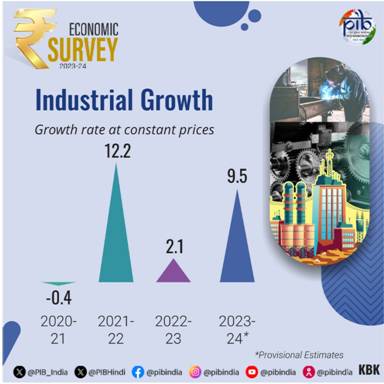
 Robust industrial growth of 9.5 percent was a key highlight of the Economic Survey 2023-24, presented by the Union Minister of Finance and Corporate Affairs, Smt. Nirmala Sitharaman, in Parliament today.

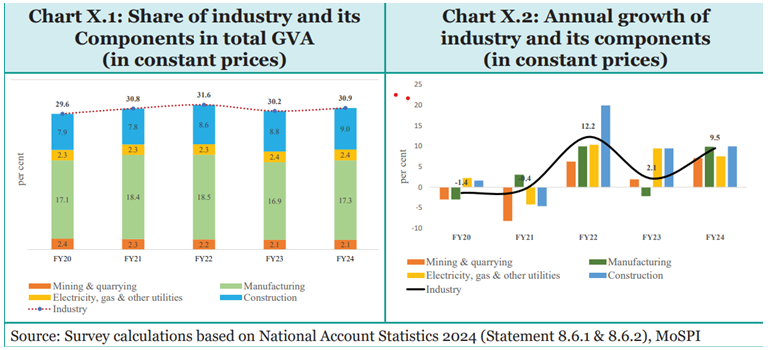
According to the Economic Survey, manufacturing remained at the forefront of the Indian industrial sector achieving an average annual growth rate of 5.2 per cent in the last decade. The sector had a gross value added at 14.3 per cent in FY23 and an output share of 35.2 per cent during the same period, indicating that the sector has significant backward and forward linkages. The HSBC India Purchasing Managers’ Index (PMI) for manufacturing also consistently remained well above the threshold value of 50 in all months of FY24, which is proof of a sustained expansion and stability in India’s manufacturing sector.

The Survey notes that about 47.5 per cent of the total value of output in the country is used as inputs in productive activities (inter-industry consumption). Manufacturing activities account for about 50 per cent of the inter-industry consumption and, at the same time, supply almost 50 per cent of inputs used in all productive activities (agriculture, industry and services).

Annotation 2024-07-21 140347.png

Physical infrastructure, logistics and compliance bottlenecks slowed capacity creation and expansion in the past. The Survey optimistically notes that majority of these restrictions have been now been lifted. The Survey states that physical infrastructure and connectivity is improving at a rapid pace. It further comments that the Goods and Services Tax has created a single market for several commodities, enabling manufacturing at scale. The Survey underlines the importance of deregulation along with the role of private sector in long-term investment. Boosting competitiveness and expanding the Indian manufacturing sector remains key to generation of semi-skilled employment thus bringing development closer to the people.

*****

set up manufacturing units in India & develop technology collaborations to create a global supply chain free from vulnerabilities

 Raksha Mantri Shri Rajnath Singh has invited US companies to set up manufacturing units in India and develop technology collaborations with Indian industries to create a global supply chain free from vulnerabilities and uncertainties. He was addressing a seminar jointly organised by US-India Business Council (UIBC) and Society of Indian Defence Manufacturers (SIDM) as part of the 12th DefExpo in Gandhinagar, Gujarat on October 20, 2022. The seminar was organised on the theme ‘New Frontiers in US-India Defence Cooperation: Next Generation Technology, Innovation & Make in India’.

Shri Rajnath Singh stated that the Indian defence industry has been witnessing transformative changes for the last eight years through progressive reforms. He stressed that these reforms have created a conducive environment for the growth of the Indian Industry through transparency, predictability and institutionalisation of several measures for Ease of Doing Business.

The Raksha Mantri emphasised that the path to ‘Aatmanirbhar Bharat’ is a comprehensive set of policy frameworks that seeks to build indigenous technological and production capacity & capability with cooperation, participation and collaborations with reputed institutions and Original Equipment Manufacturers (OEMs) from friendly nations. He said, the idea is to manufacture in India for the Indian market as well as export to the friendly countries, i.e., ‘Make in India, Make for the World’.

“The main objective is to fulfil the requirements of Indian Armed Forces; and at the same time, create long-term linkages to the global supply chains of the foreign OEMs to meet global demands. Through these linkages, India looks forward to collaborating for a secure and resilient global supply chain for the free world to ensure uninterrupted and reliable access to defence equipment and other strategic materials for our nation and our partners, including the US. As India’s defence base grows, private sector companies from the US can explore the vast potential for ‘Creating in India’ and ‘Exporting from India’,” Shri Rajnath Singh said.

The Raksha Mantri highlighted a number of steps taken by the Government to achieve the objective, including increase in the number of procurement categories to encourage greater participation of the Indian Industry and attract foreign companies to manufacture in India. “We are delighted to work with US, our valued partner, to strengthen our commercial and strategic relationship and to attract US investment for creating a high-technology defence production ecosystem in India. For India, collaboration with US companies would be an important strategic force multiplier, apart from being wealth and job creator,” he added.

Shri Rajnath Singh termed the easing of FDI regulations and introduction of Buy (Global–Manufacturer in India) in Defence Acquisition Procedure 2020 as an invitation for the US businesses to participate in the opportunities offered by the Indian defence industry. He asserted that US companies can now set up manufacturing facilities, individually or in partnership with Indian companies, through a Joint Venture or technology agreement etc., to capitalise on the ‘Make in India’ opportunity. He exuded confidence that the firms will find India to be an attractive investment destination for defence manufacturing.

The Raksha Mantri described the Positive Indigenisation Lists, in which a wide spectrum of equipment/systems are included, as another major step towards creating a mature defence industrial base in the country. The list has also given impetus to domestic Research & Development by attracting fresh investment into technology and manufacturing capabilities by providing a measure of demand assurance to the manufacturers in India, he said.

Shri Rajnath Singh shed light on the importance of defence exports, terming it as a key pillar for the long-term sustainability of the domestic defence industrial base. Domestic demand alone may not always provide economies of scale to make profitable investments and sustain them, he said. The Raksha Mantri added that $5 billion dollar export target set for 2025 reflects the intent of the Government for export-oriented manufacturing.

The Raksha Mantri described the project agreement to co-develop Air-Launched UAVs, under the auspices of the India-US Defence Technology and Trade Initiative, as a welcome development. He stated that industries from both sides can explore additional DTTI projects, such as a counter unmanned aerial systems and an Intelligence, Surveillance, Target Acquisition and Reconnaissance platform.

Shri Rajnath Singh pointed out that Indians have played a stellar role in technological development of US, be it IT sector, bio-technology, space or cyber technology, besides contributing in the fields of business and finance. Stating that the US provides a conducive environment for talent to perform and has reaped the benefits thereof, he urged US business and technology leaders to collaborate with Indian industries to create a similar growth miracle in India. He stressed that developing new avenues to work together at the industrial, scientific and academic levels will be key to ensuring that India-US defence ties remain dynamic.

 *******

developing the linkage between educational institutions, Industries and R&D Institutions

 Steps taken by the Government for developing the linkage between educational institutions, Industries and R&D Institutions are as follows:

I.          Impacting Research Innovation & Technology (IMPRINT): This initiative aims at providing solutions to the most relevant engineering challenges and translating knowledge into viable technology in 10 selected technology domains, viz. Health care, energy, sustainable habitat, nano technology hardware, water resources and river systems, advanced materials, Information and communication technology, manufacturing, security and defense, and environmental science and climate change. It is a pan IITs and IISc Joint Initiative seeking to develop a roadmap for research. During 2018-2019 Rs. 46.30 crore and during 2019-2020 Rs. 47.20 crore has been released.

I.          Research Park: Research park at IIT Delhi, IIT Guwahati, IIT Kharagpur, IIT Kanpur, IIT Chennai, have been established which provide an interface between entrepreneurship and Industry to establish their R&D units in collaboration with students & faculty members of the IITs. In the year 2020-21 Rs. 144.50 crore has been released.

II.        UchhatarAvishkarYojana (UAY): This initiative promotes innovation of a higher order that directly impacts the needs of the Industry and thereby improves the competitive edge of Indian manufacturing. The project envisages collaboration between the academia and industry – within or outside India.

In order to provide impetus to vocational education the allocation in 2021-22 for National Apprenticeship Training Scheme has been kept at Rs. 500 crore. Further, UGC has already issued guidelines for Apprenticeship/Internship Embedded Degree Program.

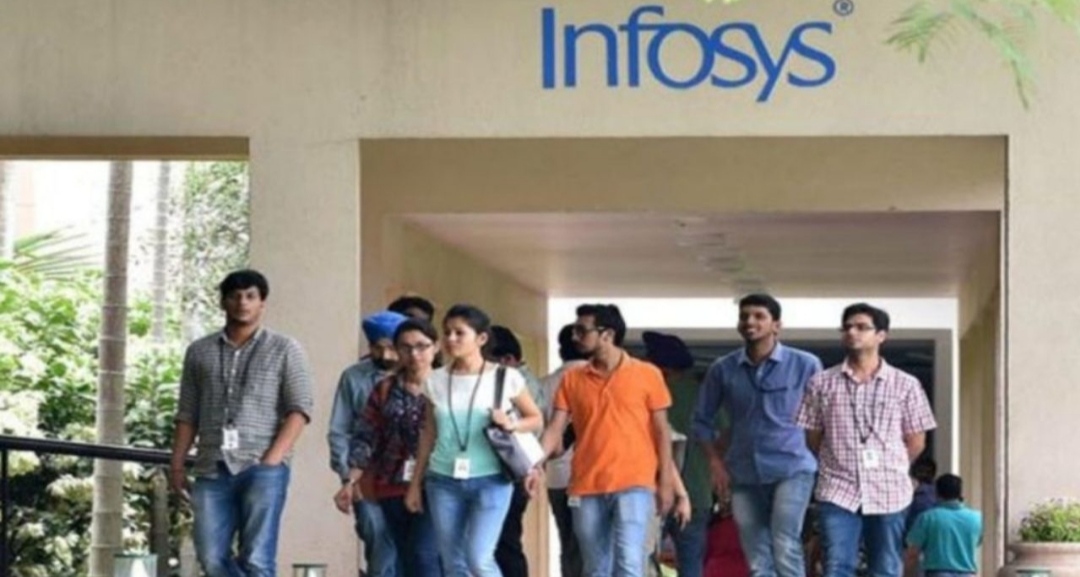
Work From Home Ends For 2.6 Lakh Infosys Employees

Infosys Ltd told employees last week they could resume work from offices, according to a memo seen by Reuters that offers an early sign of the country’s $190 billion technology services sector moving to get back on track.

Many IT businesses are mass-vaccinating their personnel to ensure that they are protected from Covid, while also preparing them to return to work once the situation gets back to normal, or the pandemic’s impact is reduced.

Most MNC employees have already received their first round of vaccination, and some have also completed their second dosage.

Infosys Ltd Will Resume Work From Offices….!!

Large corporations have allowed their staff to work from home but small businesses and startups are finding it difficult to adapt the work from home due to a lack of resources and technology.

Many corporations planned to reopen offices in full force at the moment, but with the second wave striking and more lockdowns being announced, these plans had to be postponed for a long period.

Infosys said the country’s safety situation seems to be improving, with growing vaccination coverage. Infosys did not respond to Reuters’ request for comment on the memo.

“We have been getting requests from certain accounts to allow their team members to work from Infosys campuses. In addition, some of our employees have also been asking to come back and start working from the office, as a personal preference.”

Infosys had a total employees of 2.67 lakh at the end of the June quarter, as compared to 2.59 lakh in the March quarter.

After reporting results last week, Infosys executives told analysts that roughly 99% of its staff was working from home, and the company would make efforts to get “more and more people to come to office” over the next couple of weeks.

Ecommerce in India!

So let’s have a look that what does ecommerce mean~ E-commerce is the activity of electronically buying or selling of products on online services or over the Internet.

And if we talk about “Ecommerce in India” then, India has an Internet user base of about 696.77million as of May 2020, about 40% of the population. In 2017, the largest e-commerce companies in India were Flipkart, Snapdeal and Amazon. In 2018, Amazon beat Flipkart and was recorded the biggest ecommerce in India in terms of revenue. And it’s rapidly growing up day by day.

In India, cash on delivery is the most preferred payment method, accumulating 75% of the e-retail activities. Demand for international consumer products (including long-tail items) is growing faster than in-country supply from authorised distributors and e-commerce offerings. Long tail business strategy allows companies to realize significant profits by selling low volumes of hard-to-find items to many customers, instead of only selling large volumes of a reduced number of popular items. The term was first coined in 2004 by Chris Anderson.

In 2017, the largest e-commerce companies in India were Flipkart, Snapdeal and Amazon. In 2018, Amazon beat Flipkart and was recorded the biggest ecommerce in India in terms of revenue.

And some of the ecommerce sites are:

1. Amazon.in

2. Flipkart

3. Snapdeal

4. ebay India

5. IndiaMART

6. Shopclue

And so on…

But one should properly check the product and should take a clear look in the mind that this product is the only one which I want to purchase and they’ve can go on but inspection of the product must be the first priority of the customer.

INDUSTRIAL SICKNESS

Industrial sickness refers to the situation wherein an industrial firm performs poorly, incurs losses for several years and often defaults in its debt repayment obligations. The problem of industrial sickness has grown significantly over the years in India and a large number of industrial units were affected by it.

There are various causes of industrial sickness. Firstly, an internal cause can be faults at the planning and construction stage. Faulty decisions like setting up the firm in the wrong location i.e. a location which lacks infrastructure facilities or lacks market availability cause problems in the long run. Unplanned production, unbalanced capital structure etc. are all faulty decision which makes a firm sick.

Defective plant and machinery is another reason for industrial sickness. It has been observed that small scale sector do not seek professional technical guidance in choosing machinery. At times technology adopted is outdated and inappropriate. Production with this sort of technology is bound to be inferior and likely to suffer cost and price disadvantage.
An external cause of industrial sickness is demand and credit restrain. During the times of recession, there is a steep decline of demand in the market. This causes losses to individual units especially the products with high prices like automobiles. If such situation persists for long durations, then industrial units are prone to turn sick.
The most important internal cause of industrial sickness is management problems. Management can make or break a firm. Incorrect managerial decisions pertaining to the fields of finance, production, marketing etc. can ruin a business. Absence of quality control systems, lack of inventory, inadequate maintenance are some examples of mismanagement.
Entrepreneurial incompetence is yet another reason for industrial sickness. Many entrepreneurs in the small scale sector do not have basic knowledge of business, manufacturing, costing, accounts etc. Units set up by them often turn sick.
Industrial sickness can have serious consequences. It is a set back for employment opportunities. When a firm turns sick, it can actually go out of business. Closure of an industrial firm renders its workers unemployment. This situation can be more serious if a big firm with a large number of employees gets shut down. Unemployment brings a lot of complications with itself. This can cause industrial unrest. Closure of a big firm also causes labour unrest which can result in industrial strikes which threatens the peace of industrial environment.
Industrial sickness also leads to wastage of resources. When a sick firm is shut down, resources invested in that unit are wasted. In case of large firms this problem is more serious as a lot of investment is made in its plants and machinery. In fact other industries which are linked to a sick firm through backward or forward linkages, also incur some losses.
Closure of large sick units also effects investors and entrepreneurs and creates a psychology of despair. The prices of share fall down and affect the entire stock market. Even banks and financial institutions which have granted loans to these units suffer losses. Locking up funds in the sick units negatively affects the future lending programmes of banks and financial institutions. Industrial sickness also results in loss of revenue of government. Since industrial sickness has such a wide range of impact, it is considered as a social problem in India.