Beyond the Gauge How Pressure Sensors are Transforming Industrial Automation

Pressure sensors are vital components in industrial automation, measuring the pressure of gases or liquids and converting it into electrical signals for systems and operators. They play a crucial role across various industries, ensuring safety, efficiency, and productivity by helping machines adapt to changing conditions. Understanding these sensors is essential for engineers and technologists in creating reliable systems.

Photo by Julien Goettelmann on Pexels.com

Evolution of Pressure Sensor Technology

Pressure sensors have come a long way since their inception. Historically, they relied on simple mechanical components that would deform under pressure. Over time, advances in technology brought about electronic pressure sensors, which offer greater precision and reliability.

Major breakthroughs have marked the evolution of pressure sensors. The integration of microelectromechanical systems (MEMS) technology allowed sensors to become smaller, yet more powerful. Such advancements have been pivotal in automation, enabling smarter systems that adjust in real-time based on sensor feedback.

These technological strides have not only improved the accuracy of pressure sensors but have also broadened their applications. In industries where minute pressure differences can have significant implications, these advancements have been game-changers, paving the way for more sophisticated automation processes.

Innovative Applications of Pressure Sensors

Manufacturing Marvels

In the manufacturing sector, pressure sensors are integral to process control and quality assurance. Take, for example, a factory producing delicate electronic components. Here, pressure sensors ensure that the machinery operates within safe limits, maintaining the precise conditions needed to produce high-quality products consistently.

Oil and Gas Explorations

The oil and gas industry presents a challenging environment where pressure sensors play a crucial role. On offshore drilling rigs, these sensors monitor the pressure of drilling fluids, preventing blowouts and ensuring the safety of operations. This application not only enhances safety but also optimizes extraction processes, making them more efficient and cost-effective.

Aerospace Advancements

In aerospace, pressure sensors contribute significantly to flight safety and performance. They are used to monitor cabin pressure, fuel systems, and hydraulic circuits, ensuring that everything functions smoothly. The data collected helps airlines maintain their aircraft better, reducing downtime and enhancing passenger safety.

Automotive Innovations

The automotive industry also benefits significantly from pressure sensors and float switches. Modern vehicles use them in tire pressure monitoring systems, ensuring optimal tire performance and fuel efficiency.

Across these sectors, pressure sensors facilitate enhanced safety, efficiency, and productivity. By providing real-time data, they allow for immediate adjustments, reducing the risk of failures and optimizing processes.

Future Trends in Pressure Sensor Technology

The future of pressure sensor technology looks promising, with emerging technologies set to redefine industrial automation. Innovative materials and designs are making sensors more robust and versatile, allowing them to operate under extreme conditions.

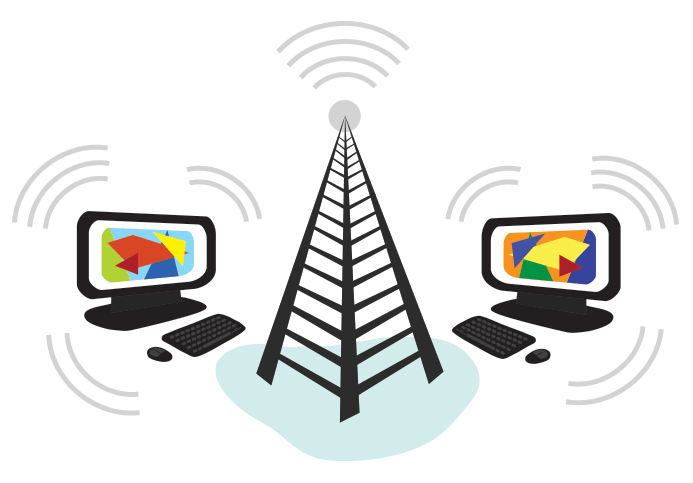
One exciting development is the integration of IoT capabilities, enabling pressure sensors to communicate data wirelessly. This advancement opens up new possibilities for remote monitoring and predictive maintenance, helping industries reduce downtime and enhance operational efficiency.

Predictions for the global market suggest that pressure sensors will continue to grow in demand as industries push for smarter, more autonomous systems. The ongoing advancements in AI and machine learning will likely further integrate pressure sensors into complex decision-making processes, driving innovation in industrial automation.

Benefits and Challenges of Pressure Sensor Integration

The advantages of using pressure sensors in industrial automation are manifold. They provide critical data that helps improve process control, enhance safety, and boost efficiency. By facilitating real-time monitoring, they enable quick responses to system changes, reducing the risk of costly downtimes.

However, integrating pressure sensors into existing systems is not without challenges. Compatibility with legacy systems, sensor durability in harsh environments, and data management are common issues. To overcome these, engineers must carefully design and implement solutions that address these challenges while leveraging the benefits of modern pressure sensor technologies.

Conclusion

Now that you have a deeper understanding of pressure sensors and their applications, you can appreciate their significance in industrial automation. These small but powerful devices are driving advancements in various industries, ensuring safety, efficiency, and productivity.

Quant and Internet of Things: Next Generation of Connected Devices

 The world of technology is constantly evolving, and one of the most exciting advancements in recent years has been the integration of quantitative finance (Quant) with the Internet of Things (IoT). This powerful combination has paved the way for the next generation of connected devices that are revolutionizing industries across the globe. In this article, we will delve into the synergies between Quant, and IoT, exploring how they work together to drive innovation, enhance decision-making, and unlock new possibilities in various sectors. Discover Bitcoin trading through Bitcoin Sprint and use its trading features. Explore further!

Photo by Jakub Zerdzicki on Pexels.com

The Convergence of Quant and IoT

Understanding Quantitative Finance

Quantitative finance, commonly referred to as Quant, is a field that applies mathematical and statistical models to financial markets and investments. It involves the use of complex algorithms and data analysis techniques to predict market trends, evaluate risks, and optimize investment strategies. Quants employ advanced mathematical models to gain insights into financial markets and make data-driven decisions.

Unleashing the Potential of the Internet of Things

On the other hand, the Internet of Things (IoT) refers to the vast network of interconnected devices that collect and exchange data through the internet. These devices, embedded with sensors and actuators, can communicate with each other and perform specific tasks autonomously. IoT has found applications in various domains, including healthcare, manufacturing, transportation, and agriculture, to name a few.

The Intersection: Quant Meets IoT

Enhancing Decision-Making with Real-Time Data

The integration of Quant and IoT offers unprecedented opportunities to enhance decision-making processes. By leveraging IoT devices, real-time data can be collected from diverse sources, including financial markets, supply chains, and consumer behavior. Quants can then utilize this data to develop more accurate models and algorithms, enabling them to make informed investment decisions and predict market trends with greater precision.

Risk Management and Predictive Analytics

Another significant advantage of combining Quant with IoT lies in the realm of risk management and predictive analytics. With IoT devices monitoring various environmental factors and market indicators, financial institutions can obtain a comprehensive view of the risk landscape. This comprehensive data allows quants to identify potential risks and mitigate them proactively, thereby minimizing the impact of market volatility and unforeseen events.

Smart Devices and Automated Trading

IoT-powered smart devices can play a pivotal role in automating trading processes and executing trades based on predefined algorithms. By connecting financial data streams directly to trading platforms, quants can develop sophisticated algorithms that leverage real-time market insights. This automation reduces the need for manual intervention and enhances the efficiency and speed of trading operations.

Industry-Specific Applications

The marriage of Quant and IoT is transforming industries across the board. Let’s explore some of the industry-specific applications that are benefiting from this powerful synergy:

  • Healthcare

In the healthcare sector, Quant and IoT are revolutionizing patient care, remote monitoring, and personalized medicine. IoT-enabled wearable devices can collect vital signs, monitor patients’ health conditions, and transmit data to healthcare providers in real-time. Quants can then analyze this data to identify patterns, predict health risks, and develop personalized treatment plans, ultimately improving patient outcomes.

  • Manufacturing

In manufacturing, IoT devices embedded in machinery and production lines gather data on performance, maintenance needs, and supply chain logistics. By integrating Quant techniques, manufacturers can optimize production processes, minimize downtime, and reduce costs. Quants can identify bottlenecks, optimize inventory management, and predict equipment failures, enabling proactive maintenance and streamlined operations.

  • Transportation and Logistics

Quant and IoT are reshaping the transportation and logistics industry by enhancing supply chain visibility, optimizing routes, and improving fleet management. IoT sensors placed on vehicles and containers can capture real-time data on location, temperature, humidity, and other relevant parameters. Quants can leverage this data to optimize logistics operations, reduce delivery times, and identify cost-saving opportunities.

  • Agriculture

In agriculture, the combination of Quant and IoT is enabling precision farming, smart irrigation, and crop monitoring. IoT devices equipped with sensors can measure soil moisture, temperature, and nutrient levels, providing valuable data for farmers. Quants can analyze this data to optimize irrigation schedules, predict crop yields, and identify the best time for planting and harvesting, leading to increased productivity and resource efficiency.

Conclusion

As we have explored in this article, the integration of Quant and IoT is unlocking a new era of connected devices that are poised to transform industries worldwide. The ability to leverage real-time data, automate processes, and make data-driven decisions has immense implications for businesses and individuals alike. By embracing the power of Quant and IoT, organizations can stay ahead of the curve, drive innovation, and gain a competitive edge in an increasingly interconnected world.

Internet- Boon or Bane

Photo by Teona Swift on Pexels.com

INTERNET stands for Interconnected Network that is a network system that connects millions of web servers. . Let us simply know its definition first. Internet is a hug network that connects computers all over the world. It has become the most significant medium for sharing information and communication from anywhere in the world.

Internet got introduced in India in 1986 but it took a decade to make it available for the public. VSNL first launched the internet in India on August 15, 1995. Today it has taken such a place in our life that a person can manage anything but they can’t survive without internet.

Recently, a study reported that the number of IP addresses has crossed the total limit, with the increase in the number of internet users across the world. With this huge development in this field one question also remains whether Internet is a boon or bane? For this we can have different opinions because some people consider it as a boon as they are just seeing the advantages and entertainment they are being provided by the internet while the rest will have some other arguments.

Everything has some pros and cons so as the internet. We can get alot of opportunities through the internet we can carry our business at a global level ,we can entertain ourself and also education can be provided by the internet and many more else . But on the other hand we are aware of various incidents that take place regularly of cyber crimes which is a big threat amd virus can also enter in our system which will also disturb our information and harm our privacy.

Internet is one the biggest tool that is making our life very easy. Just think if in this COVID-19 there will be no internet how will you get yourself updated? And attend your online classes? So its basically important that the reason and the time period for which internet is used must be the priority concern and it must be used with all the necessary precautions to keep it as a problem solver instead of a problem creator.

I sometimes wonder how we spent leisure time before satellite television and Internet came along…and then I realise that I have spent more than half of my life in the ‘dark ages’!
— Arthur C. Clarke

Photo by Katerina Holmes on Pexels.com

Internet of Behaviors (IoB)

Definition

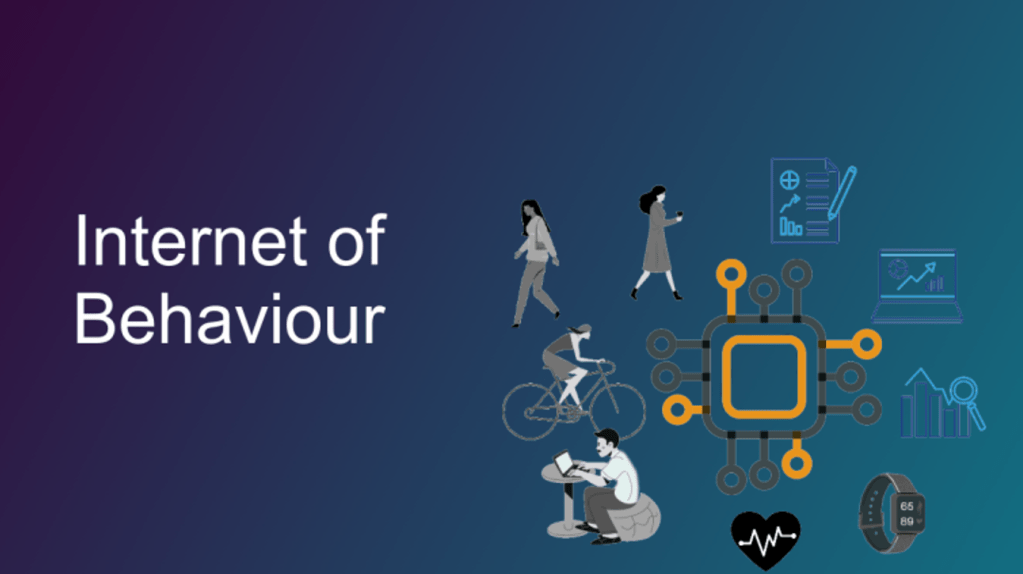
The collection and use of data to drive behaviors is called the Internet of Behaviors (IoB)

An example of it is industrial sites having employed computer vision to determine if employees were complying with mask protocol and then collecting this behavioral data to be analyzed by the organizations to influence people to follow government protocols at work.

What does the IoB mean ?

The purpose of the IoB is to capture, analyze, understand and respond to all types of human behaviors. In a way that allows tracking and interpreting those behaviors of people using emerging technological innovations and developments in machine learning algorithms. People’s behaviors are monitored and incentives or disincentives are applied to influence them to perform towards a desired set of operational parameters. Data collection (BI, Big Data, CDPs, etc.) provides valuable information about customer behaviors, interests and preferences, and this has been referred to as the Internet of Behavior (IoB). The IoB attempts to understand the data collected from users’ online activity from a behavioral psychology perspective. It seeks to address the question of how to understand the data, and how to apply that understanding to create and market new products, all from a human psychology perspective.

The IoB influences consumer choice, but it also redesigns the value chain. For companies, this means being able to change their image, market products more effectively to their customers or improve the Customer Experience (CX) of a product or service. Hypothetically, information can be collected on all facets of a user’s life, with the ultimate goal of improving efficiency and quality.

What does the IoB contribute?

Firstly, before the creation of the application, it is important to imagine the user’s interaction patterns and touch points. Involve them in the creation process, understand their needs, keep the app experience unified and cohesive, make navigation simple and meaningful so that the app is relevant and useful. Once the app is up and running, convey its purpose, create a user guide and reward by gamifying the CX in the app. Strong user engagement is required.

Secondly, solid tools are required such as multi-format support platforms (XML, JSON, PHP, CVS, HTML, etc.) That can connect to any API, that can upload data to the cloud, i.e. the fundamental features of platforms such as Google or Facebook. Platforms should allow for multi-channel personalization, centralized updates that are replicated, sending unique notifications that turn users into contributors to the personalization of the app, allow for social media integration and maintain an interactive interface.

Finally, it is the data captured through the app that serves to model user behavior. And in turn, this is the actionable data that can be sent in the form of pop-ups and notifications to the customer to encourage and incentivise them to adhere to a desired behavior. Analytics are necessary so that essential information can be extracted from all the data.

Benefits of IoB

uAnalyse customer buying habits across all platforms. uStudy previously unattainable data on how users interact with devices and products. uObtain more detailed information about where a customer is in the buying process. uProvide real-time POS notifications and targeting. uResolve problems quickly to close sales and keep customers happy. uCitizen data processed by public-sector uCommercial customer data uGovernment agencies uSocial media uPublic domain uLocation tracking.

Problem with IoB

The problem that can occur with this technology is not of a technical nature. The IoB is confronted with the adversity of how data is collected, stored and used. Its level of access is difficult to control and therefore all companies need to be aware of the liability of IoB use. Google, Facebook or Amazon continue to acquire software that potentially brings the user from a single app to their entire online ecosystem, without their permission. This presents significant legal and security risks to privacy rights, which also vary between jurisdictions around the world

Behavioral data can allow cybercriminals to access sensitive data that reveals customer patterns, collect and sell property access codes, delivery routes and even banking codes. These cybercriminals could take phishing to another level by generating more advanced scams, tailored to the habits of individual users, and thus maximizing the likelihood that users will be scammed. uIt is therefore important to have a secure platform, storage and execution of data with the use of tools such as Confidential Computing, E2E encryption or SDP tools.