National Centre of Good Governance (NCGG) successfully concludes 3rd Internship program 2024 for post-graduate scholars

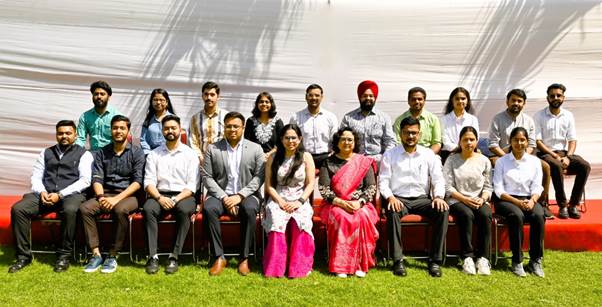
 The National Centre for Good Governance (NCGG) has successfully concluded the 3rd batch of Internship Programme 2024 on 30th July at the New Delhi campus.

The internship programme aims to provide young and post-graduate scholars to undertake research, critical study, documentation and dissemination of best practices to develop a national repository, and establishing a platform for wider dissemination. In three internship programmes, 37 interns have submitted their research papers on diverse subjects of public policy.  

The 3rd batch of the NCGG Internship Programme received more than 3,550 applications from across the country. After a rigorous selection process involving seven rounds of interviews, 17 interns were chosen based on their academic achievements and dedication to their respective fields. These interns represented diverse disciplines, including public policy, development, law, governance, and climate change, and from esteemed institutions such as the University of Delhi, IIM Shillong, IIT Kanpur, and the Tata Institute of Social Sciences. The interns worked with Senior Professors from eminent institutions like IIPA, JNU and Jamia Millia Islamia who guided their research work in a mentorship role.

 In the concluding session 17 research papers were present on contemporary areas of good governance like financial literacy initiatives, forecasting electric vehicles demand, digital currency transition in India, Reforming Public Services, e-Governance in Tertiary Health Care, Analysis of Health Insurance Schemes under the Ayushman Bharat PM-JAY, etc.

The overall programme was coordinated by Dr. Gazala Hasan, Course Coordinator and Assistant Professor, NCGG, with assistance from Shri Akash Sikdar and NCGG team.  The impactful research papers produced during the internship will be compiled into a comprehensive compendium, which will be accessible to the public via publication on the NCGG’s official website. This initiative underscores the Government of India’s commitment to nurturing young talent and advancing public policy research for a better governance framework.

***

Nancy Tirthani


1.     https://eduindex.org/2022/07/28/upcoming-car-in-august-2022-which-5-luxurious-cars/

2.     https://eduindex.org/2022/07/21/commonwealth-games-2022-pm-modi-will-hold-talks-with-the-indian-team-going-to-participate-in-commonwealth-games-today-will-give-victory-mantra/

3.     https://eduindex.org/2022/07/18/two-smartphones-of-oppo-will-be-launched-today-will-get-80w-super-fast-charging-50-will-be-charged-in-15-minutes-know-details/

4.     https://eduindex.org/2022/07/16/shabaash-mithu-vs-hit-box-office-rajkummar-rao-is-a-hit-ahead-of-taapsee-pannus-balle-know-the-first-day-earnings-of-both-the-films/

5.     https://eduindex.org/2022/07/15/netflixs-cheapest-plan-is-coming-soon-join-hands-with-microsoft/

6.     https://eduindex.org/2022/07/14/12u2-summit-2022-i2u2-meeting-today-modi-biden-attends-virtually-the-eyes-of-the-world-on-the-meeting/

7.     https://eduindex.org/2022/07/13/icc-odi-rankings-india-rewarded-after-spectacular-win-over-england-leaves-pakistan-behind/

8.     https://eduindex.org/2022/07/12/ind-vs-eng-shikhar-dhawan-return-india-playing-eleven-could-be-against-england-in-first-odi/

9.     https://eduindex.org/2022/07/11/thor-box-office-collection-khuda-hafiz-2-was-blown-away-in-the-storm-of-this-hollywood-movie-thor-earned-so-many-crores-in-4-days/

10.  https://eduindex.org/2022/07/08/ind-vs-eng-rohit-sharma-made-history-becoming-the-first-captain-in-the-world-to-win-as-many-matches-in-t20i-cricket/

11.  https://eduindex.org/2022/07/07/free-youtube-premium-subscription-free-for-12-months/

12.  https://eduindex.org/2022/07/06/world-test-championship-pakistan-had-a-huge-advantage-by-losing-the-indian-team-do-you-know-why-that-happened/

13.  https://eduindex.org/2022/07/05/rishabh-pant-breaks-72-year-old-record-to-become-top-foreign-wicketkeeper-in-a-test-on-english-soil-2/

14.  https://eduindex.org/2022/07/04/the-former-england-captains-prediction-about-virat-kohli-came-true-it-happened-as-he-said/

15.  https://eduindex.org/2022/07/02/neeraj-has-confident-of-throwing-90-meters/

16.  https://eduindex.org/2022/07/02/head-and-lyon-lead-australia-to-10-wicket-win/

17.  https://eduindex.org/2022/07/01/cryptocurrency-a-clear-threat/

18.  https://eduindex.org/2022/07/01/sindhu-pranay-in-quarterfinals/

19.  https://eduindex.org/2022/06/30/neeraj-is-the-medal-contender-in-diamond-league/

20.  https://eduindex.org/2022/06/30/no-one-in-the-title-character-is-dunki-taapsee/

21.  https://eduindex.org/2022/06/29/team-india-will-travel-to-new-zealand-after-the-t20-world-championship/

22.  https://eduindex.org/2022/06/29/the-beginning-of-the-era-of-akash-at-reliance-geo/

23.  https://eduindex.org/2022/06/28/ranbir-alia-are-going-to-be-parents/

24.  https://eduindex.org/2022/06/28/jugjug-jio-earned-36-93-crores-in-the-first-weekend/

25.  https://eduindex.org/2022/06/27/indian-captain-rohit-sharma-has-tested-positive-for-covid-19/

26.  https://eduindex.org/?p=94184

  1. https://eduindex.org/?p=94166
  2. https://eduindex.org/?p=94151
  3. https://eduindex.org/?p=94149
  4. https://eduindex.org/?p=94139


Section 377

In the past, homosexuality was regarded as an offence of criminal nature. However, few years back in 2018, a remarkable judgement was laid, decriminalizing Section 377 of the Indian Penal Code making private homosexual relations legal. This judgement was assumed to be bring benefitable changes in the life of the homosexuals and was believed to contribute in their fight for their right to be a part of the society. Nonetheless, the increasing cases of suicide of homosexuals recently has turned upside down the above believe and the fact of decriminalizing the Section 377 has not brought fruitful effects that was expected as such.

In 1864 initially, Section 377 was introduced by the ruler of British colonial. Section 377 of the IPC states that any homogenous intercourse or sex activities between individuals of same sex are prohibited and illegal under the law. Our Indian government followed this act for a very long time but it was opposed by a great number of people. Many NGOs and foundations also stood in support of the homosexuals and many rallies and campaigns were started to create awareness about gay sex and normalize it in the society.

Prior to the revilement of the Act, the people were afraid to express their real feelings. They considered the fact that they are gay should remain hidden because they thought that if the people come to know about this fact, the society would avoid them making them feel unmotivated, uncomfortable and unaccepted. Such was the reality back then. However, when the ban was raised, many homosexuals came forward and expressed their true feelings. The upliftment made gay sex legal and such people started living a happy confident life and it also encouraged them to make confident choices.

Taking into account the present scenario, many people still consider homosexual intercourse and sex as a taboo. There is a false belief that performing such actions is excessively repulsive and vicious for the society or human race. Although, it has been proven scientifically that its all about changes in the hormones and it’s utterly normal to have affection and love between individuals belonging to same sex. There should be no sense of uneasiness among the people, rather they should support the homosexuals as they are also humans as them and they also have the same emotions and feelings. Love and support are the mere needs of homosexuals to feel accepted by others in the society.

The ban upliftment was the result of the help and support of a number of foundations and NGOs. One such foundation was Naz foundation that focused on putting this act at public notice and tried to make it a significant topic to be noticeable by the court. Many NGOs and foundations came together and joined hands in implementing campaigns to make people familiar about the concept of same sex relationship.

The ban was uplifted by a five-judge bench of constitution headed by chief justice Dipak Mishra. Prior to the revilement of the act, if an individual was caught in this act then he/she was liable to be in atleast a 10 year imprisonment along with fine. It was the outcome of the support of many people and determination of the NGOs and foundations that the ban was raised by a long 185 years period. This encouraged the people to come out of the shadows and live their life confidently and happily. Today, not only in India but in many other countries, the government is open for gay relationships and one can marry an individual of same sex and can even adopt a baby. These things are now no more regarded as taboo because of their constitutional flexibility which is made only for the betterment of the people.

Sexual Harassment

Sexual harassment include a refers to any sort of sexual behaviour that is unsolicited, overawed, abhorrent, disrespectful and humiliating. It took over decades for people to recognize sexual harassment as a real serious issue. However, it is still overlooked in the rural areas.

It is not just a single form. Any way of unwanted touch, grab or attempt to make physical contract without one’s consent, all are considered as inappropriate behaviour. Even staring and leering, someone asking for sexual favours and display of offensive and rude material by the perpetrator for others to see it also counts in. Another form may include cracking of sexual jokes and comments and making of sexual signs or gestures towards oneself. It is unacceptable for an individual to question oneself about their sexual life or humiliate oneself by absurd sexual remarks. Further, the sexual harassment also counts in indecently exposing of oneself or making salacious phone calls. Any of such form of sexual harassment is against the law.

Such inappropriate behaviour turns out to be much fatal. Sexual harassment leaves a deep impact on oneself. At times, the victims are so much stressed out that they even suffer from depression or anxiety. Apart from these, the victims often suffer by several significant psychological effects such as sleeping disorder, headaches, sexual dysfunction, plunked self esteem and many more. Furthermore, it can also cause them to withdraw from social situations. As a result, the victim starts loosing confidence and pride.

In this world, none deserves to be ill treated or be victim to any form of inappropriate behaviour and this implies to both men and women. Each and every individual has the right to live a life free from bullying, any sort of discrimination or harassment. Therefore, sexual harassment is illegal. As mentioned in Section 354 (A) of the Indian Penal Code-“A man committing any physical contact, advances involving unwelcome and explicit sexual overtures; or demanding or requesting sexual favours; or showing pornography against the will of a woman; or making sexually coloured remarks, shall be guilty of the offence of sexual harassment. It entails a punishment of rigorous imprisonment for a term which may extend to three years.”

It is essential to notice the signs or gestures if oneself feels that someone is harassing them sexually. One of such significant sign is if oneself feels uncomfortable and experience any unwelcomed physical contact. One must keep themselves updated with the policies and procedures against sexual harassment. If anyone unfortunately comes out to be a victim, then that person should try to get external information and acquire advice from people who can help them in filing a lawsuit. Similarily, one must make sure to save any evidence they get which would help them with their complaint. Likewise, one must never deal with it alone, rather try to share it with closed ones to lighten the burden.

To conclude, sexual harassment took a long time to be recognized as a real issue but now ii is no more un acknowledged. Thus, it is necessary to take effective measures against such practice and try to prevent the fatal damage that it causes to the victims. People need to understand that if someone says no it means no. However, if an individual’s no does not have any impact and is continued being subjected to sexual jokes then, its high time to realize that he/she is being sexually harassed. Therefore, it is essential to help out those who are being victim to such harassments and make the perpetrator liable for their repulsive act.

“It’s not consent if you make me afraid to say NO”

-Anonymous

Service Sector in India

The service sector is the quickest and the largest developing sector in India, it also has the highest productivity of labour and is predicted to keep developing at a faster rate. By providing employment, intensifying investment and advancing infrastructure, the service sector can contribute greatly to economic growth. It is significant for a growing country such as India with a huge population to provide standard employment and cope up with the development. Private funding is needed for services of configuration which includes telecommunications, energy and transport.

In India, there are various service sectors that signify and execute robust prospects for the upcoming development in economic field.

Fintech/ IT-BPM: The biggest component of ITs is export. The growth potential is around 10-15% per annum and the gross value addition provided by sections of Fintech and IT/ITs is above $ 155 billion. Till now, low-priced investment of labour was beneficial in countries, where mainly English is spoken. In order to expand the growth, the sections of IT/ITs are required to make subsequent changes by upgrading from a ‘service provider of low-value addition’ to a ‘service partner of high value addition’. IT companies can provide Fintech measures to intercontinental pecuniary clients by upgrading their skills to the maximum extent. The high value addition services provided by India to international clients are all sorts of services related to pecuniary risk, indemnity, refunding and management of circumstances beyond human control.

Tourism and Healthcare: Healthcare industry’s contribution is expected to reach $ 372 billion by 2022. The accessibility of elite proficient doctors, healthcare facilities, medicinal etc has greatly added up in the development of the service sector. By 2022, the Indian government is intended to increase Medicare by contributing 3% to the gross domestic product (GDP). In this Covid pandemic, two vaccines, namely Covaxin and Covidshield have preserved the population of India, including a number of countries as well.

The tourism industry in India is expected to reach $ 488 billion with a contribution of about 9.2% to the Indian economy in total and about 39 million jobs were offered from this sector in FY20. After the pandemic is over, topographical tourism is expected to come in light for the tourists of Asian countries in the south. Free loans by the government are provided to MSMEs in order to deal with the post crisis of the pandemic and resuscitate the tourism industry.

Transportation and Logistics: In India, the extensive meshwork of rivers and coastlines gives rise to extensive back and forth competition to services related to logistic and transportation. These services include warehousing, e-logistics, the port service, abroad trading etc. By 2032, the logistic industry is expected to reach $ 360 billion.

By 2022, the government has targeted the construction of 65,000 km of national highways at a price of about $ 741.51.

Space: Globally, India made a record of launching the highest number of space satellites. This could only be possibly done by the powers sustained from other spaces. Skilled experts in various technological sections of the launch plan have made possible such advancement in the industry of space transportation over its worldwide associates. The launch competence is nearly 100% in the record. Great developments can be seen in this field, but more improvement can be made by further building measurements in non-military and military implementations.

Top sector companies in India:

  • Tata Consultancy Services Ltd (TCS): It is a transnational information technology (IT) services in India. In the world, TCS is the largest IT services in terms of market value of worth $ 200 billion. It has its headquarters located in Mumbai and has large estate in Chennai.It is the most worthy brand of IT service around the globe and second largest company in India by market value. It is a corporation that provides explanation and counseling in context to business via its erratic Global Network Delivery Model (GNDM) which is regarded as the standard of brilliance in the advancement of software.  ICS has proposed a consolidated collection of infrastructure, IT, engineering and guarantee services. It also justifies a degree of reliability which is unattainable by other organizations. TCS is a part of the Tata group and has around 453,540 pre-eminent skilled consultants in about 46 countries.
  • HDFC Bank: HDFC Bank Limited is a company that holds the security interests and shares of other companies. It has about 5,608 branches and 14,897 ATMs, in around 2,902 cities. The different sections of the bank includes consumer or personal banking, exchequer, large scale banking of wholesale and various other services related to banking. On the side of retail banking, it includes transferable banking and on the wholesale banking side, it includes financial and business banking. The section of exchequer comprises of net profit income from the consolidated collection of Bank’s funding, funding profits or losses, lending or borrowing of money in the market and cognate contracts and commercing in overseas exchange. In the consumer banking section, different delivery mediums and branch matrix serves the customers. Earning from para banking services such as mutual fund services, investment services, portfolio management business etc. are also included in different sections of the bank. The conventional and business clients of the bank are provided a gamut of transferable and trading products. In 2021, the integrated earning of the bank is about $ 19.91 billion.
  • Bharti Airtel: Globally, Bharti Airtel Limited is considered as a chief company of telecommunication, connecting over 1000 corporates leading in India. In India, the product of the company proposes 2G, 3G, 4G and now even 5G wireless networking services, high speed wifi at home, wired networks, DTH, and other venturing services such international calling network services. Total income drawn from both wired and wireless network is about $ 3.65 billion with a huge number of mobile service customers.

Electric Vehicles

At present, the technology is advancing day by day and so is pollution, global warming and increased demand for fuel. Thus, in order to tackle such issues and to be at par with the modern era, electric vehicles as a means of eco-friendly transport is a better option in future.

Electric vehicles refers to vehicles or transport means that consume electric energy in place of traditional fuels such as diesel, CNG and petrol. Such vehicles include an electric generator to convert fuel to electricity or maybe inbuilt with a solar panel, battery, fuel cells or electricity may be supplied via collector system from off-vehicle sources. The metros are already running with electricity around the world.

The contemporary age in which we all are living has now become an era of technology and this advancement in technology has greatly enhanced our human life. Thus, the use of electric vehicles is necessary in near future. The electric vehicles run from electricity and as a result no smoke is emitted, reducing the pollution, global warming and import of diesel and petrol. It would conserve natural resources like CNG, petrol and diesel that are non-renewable and promote the use of renewable energy. The over use of such fuels are harmful for the environment. It would also fulfill the requirement of growing demand of more means of transport. Electric vehicles are eco-friendly, thus it is good for both human beings and environment. As it is a new form of technology and with the increasing demand of this sector, more employment generation will take place. Electric vehicles will also reduce the nation dependency on petroleum export countries.

The electric vehicles are environment friendly and seemingly cheaper in the long run. Since past decade, many trains including the metros have been running on electricity. Even almost all the trains in the Indian Railways are running on electricity. As a result, the use of electric vehicles are continuously promoted by the government. Today, electric scooters or bikes, electronic rikshaw, electronic cars , etc. are already in the market. Various campaigns have been started by the government to promote the use of electric vehicles. Recently, a campaign named’ Switch Delhi’ was launched by the Delhi Government to promote the same. The Delhi government took this initiative to cut down the pollution of air which was caused by the smoke emitted by the traditional petrol and diesel vehicles. The smoke emitted is hazardous to human health. Prior in 2020, Delhi EV Policy was also introduced. Under this policy, a waiver on road tax was provided with a benefit up to Rs. 1.5 lakh on four wheelers and more.

Thus, it can be inferred that the people should use more electric vehicles instead of traditional petrol and diesel vehicles. Electric Vehicles are seemingly the future of means of transport. It becomes more essential when the increasing pollution, global warming and diseases borne out of pollution are considered.

“I really do encourage other manufactures to bring electric cars to market. It’s a good thing, and they need to bring it to the market and keep iterating and improving and make better and better electric cars, and that’s what going to result in humanity achieving a sustainable transport future. I wish it was growing faster than it is.”

– Elon Musk

Impact of caste dynamics in contemporary India

The association between various caste groups has now become more flexible and is now at ease. One of the significant impacts in the contemporary age is personal job preference. In the past, men believed in pursuing occupation under its caste like mainly they were engaged in pottery, blacksmithing etc. However, the current scenario is very much different, people have started pursuing jobs of their own choices irrespective of their caste such as in railways, teaching, government jobs, marketing and business. The food habits of the people have been modified, sharing of food is now common between both the sections of society and nowadays people of both upper and lower caste enjoy their food in restaurants in the local together. Power and wealth are almost in least association with the caste. The belief that the lower castes are responsible for pollution and freshness has now somewhat become extinct. However, in petto, rituals of purification with regard to one’s caste ranking, such practice still prevails. The custom of marrying only within the limits of a caste is still in practice, though not as severely as in the past. Lower sections of the society still faces difficulty in pursuing of caste related occupation and access to essential resources in extreme remote rural areas, however in urban areas, caste has almost nil significance in the society. The growth or ranking of women is still based on man’s positioning in the society. But today awareness of equal rights of women, education, employment are eventually advancing the modern society. The Indian Constitution made and implemented various special provisions, due to which competition among the caste groups in order to access the power and necessities like better life enhancement, educational benefits, government oriented jobs, etc. have gained force.

Implementation of such provisions and policies have always been the talk of the town and ground to numerous controversies, although political parties support these policies seemingly for their political benefits, but keeping it aside, it has been of great significant to the people belonging to the lower caste especially the Scheduled Castes (SCs), Scheduled Tribes (STs) and backward classes (OBCs). These groups have grabbed every opportunity provided to them and excelled in it. In the elected offices, these groups have greater representation. They have proved to be an essential part of the Indian political election system. They have also successfully mend their paths in each and every institution, be it political, legal or educational, and also secured high posts in government jobs. In a number of regions, these caste groups have succeeded in forming powerful parties in politics.

However, regrettably, a small portion of people belonging to the lower caste have gained profit from the policies and provisions made by the Indian Constitution. When observed from far, other sections of society seem to have willingly accepted the individuals of the lower castes, but the reality is quite contrary, in numerous parts of India, the upper castes still treat the lower caste’s individuals as outsiders and deny them access to resources. Such an incident came into light in parts of Bihar, India in 1994, the landowners of the upper caste formed a special army known as Ranvir Sena in order to defend themselves from lower caste’s individuals. Though fortunately by 1999, this was disbarred, the Ranvir Sena had already slaughtered 20 Dalits. The upper caste’s individuals who are against the special polices made for the lower castes and also those who are at any sort of economic disadvantage by the implementation of such policies, often are responsible for the mistreatments against lower sections.

The caste system has played a vital role in molding the ethics, principles as well as habitation of the society in India. The rituals  and customs of Hindu philosophy greatly influence the faith and lives of the Indians. Post independence, Indians are still in the clutch of beliefs regarding one’s social rank and their caste status. In the ancient days, people of a common society were divided on the basis of caste, sex and birth. Since birth they had their lifestyles organized according to their specific caste rule and had no choice preference as such. However, with the course of time the linkage between one’s occupation and caste has become almost insignificant. In urban areas, interaction among various castes is without restriction. The current Indian society is progressing eventually from the closed caste system to interactive functioning of the society irrespective of any caste. The various provisions and policies implemented by the government have encouraged the lower sections to come forward and represent themselves in the society. Such provisions have also encouraged the people of other caste groups to be secular towards one another. Therefore, it is essential to look after how caste discrimination has affected the standard of life and mobility of society in contemporary India.


Impact of Feminism and Women Empowerment on Indian Society

Feminism came up into being and became operative after India gained freedom in 1947. The Constitution of India then conceded right to equality, religious freedom and freedom from gender or religious discrimination. To provide health, welfare, education and employment to women, a seven five year plans were brought up by the government. The sixth five year plan even declared women “partners in development”.

Although the Indian government has tried their best to terminate inequality in workforce yet women fail to receive equal treatment. However, AIIMS nurses professed gender inequity in Nursing Officers enrollment, providing 80 percent posts to female candidates and remaining to male. Indian women winning international beauty pageants have also demonstrated in the form of pride of nation, such growth have provided considerable sexually self governed and independent women and more authority over their own bodies but some differ in opinion considering that this only portrays female bodies as mere commodities having purpose only to serve man’s desires. Headway is being made in enrollment of female students and teachers in schools, by now the female literacy rate has increased handsomely and great efforts are still being made so that female may receive education in par with male students.

In order to protect the rights of women and in wake to feminism and women empowerment different bills have been passed and various policies have been made by the government, some of them are as follows:

  • In 1986, the National Policy on Education (NPE) was made in India and a program known as Mahila Samakhya was set afloat, the aim is to promote a sense of knowledge to take control of their own lives, learn to demand information and realize their true potential. In 2019, DRDO has launched scholarship programmes absolutely for girls.In Haryana now girls are provided passport along with graduation degree.
  • The Sexual Harassment of Women at Workplace (Prevention, Prohibition and Redressal) Act 2013, is an act of legislature to protect women from any sort of sexual harassment at workplace.
  • The Protection of Women from Domestic Violence Act 2005 is a parliamentary act of India which seeks to protect women from domestic violence.
  • In 1992, the Parliament passed the 73rd Constitutional Amendment Act in which it was ensured that in all offices of election, one-third of the total seats would be reserved for the women. This was applicable in both urban as well as rural areas.
  • During 1991-2000, a national Plan of Action for the Girl Child was brought up to make sure the development, survival and protection of girl child. The terminal aim of the plan was to enhance the future for the girl child.
  • In 2001, a National Policy for the Empowerment of Women was made by the Department of Women & Child Development in the Ministry of Human Resource Development. The policy aimed at the empowerment, advancement and growth of women in various political, social, cultural and political field, by generating awareness among all.
  • In 1992, a National Commission was brought up by the government in order to monitor and examine various matters with regard to the legal and constitutional defences provided for women and also modify the existing codification whenever needed.

Today women are treated equal to men and offered equal opportunities. They are also excelling in their work and in various fields they are even ahead of men, still in many parts of India regardless whether urban or rural region, women are still battling against numerous brutal crimes.

Child Marriage: A Legal View

In the culture of Indian society, the practice of child marriage still subsists. Child marriage refers to a marriage duly performed by minors mainly between a female below the age of 18 years and a male below 21 years. Child marriage is customarily in rural regions where there is increased rate of poverty and illiteracy. Social customs and rites, ignorance, benight and consideration of women as a burden financially, are few factors that causes solemnization of child marriage. Such marriages have their unintended consequences like problems related to health due to pregnancy at early age, deliberately cruel gender inequality cycle and further worsening of women status also happen.

Considering all these factors, the British government in 1929 enacted the Child Marriage Restraint Act. This was the first secular law towards restraining the child marriage peril. The Act only held punishments to those adult males who married minors and the parents who encouraged such marriages but the marriage was not made void. As the punishment and fine was considerably less, the Act was hence amended now and then to increase the limit of age.

Due to the inadequacy of the Child Marriage Restraint Act 1929, a new legislation was enacted namely, Prohibition of Child Marriage Act, 2006. This new Act anticipate in averting child marriage along with intensified punishments such as fine of Rs. 1 lakh or imprisonment for two years. Provisions for the maintenance of the girl child were also implied. In case if the husband is major, he is liable to pay for the maintenance and if the husband is minor, then his family is liable to pay for the same.

The marriage would be void if the child is used for trafficking or any sort of purpose that is immoral. Under the prohibition of Child Marriage Act 2006, the age of a female is 18 years and for male is 21 years. A girl can obtain a degree of nullity within two years before attaining the age of 18 years if entered into a child marriage under the Hindu Marriage Act 1956. The parties though not did consent to the union in child marriage yet they are punishable As for now there is no such provisions for punishing the people or the parents involved in the solemnization of marriage. A girl can declare a marriage invalid if she’s married off before attaining an age of 15 and can challenge it until she is 18. However till now there is no such provision which states child marriage invalid. In India, Muslim law is not codified, thus the scholars interpret provisions of the Quran. Child marriage is not barred under the Muslim law. A guardian has authority to get a child married. Although, there is an option of puberty available to the couple where they can refuse to accept the marriage after attaining puberty following the condition that they should do it before attaining the age of 18 then only the marriage can be said rejected. According to the Muslim law, the age of puberty is 15 years. Nevertheless, the marriage prior the age of 7 is void ab initio. Under the Indian Christian Marriage Act, if a marriage is to be contracted between the minors, a notice preliminary is set to be issued 14 days before marriage. Post the expiration of the 14 days, the parties have the right to go on with the solemnization of marriage without consent of the guardian or parents. Under the Parsi marriage and divorce Act, a child marriage is considered invalid. In India, Jewish law is uncodified. According to the Jewish law, the age of puberty is the marriageable age which is fixed at 12 years.

Child marriage is jeopardy and it cannot be restrained without the support of the society. Under the prohibition of child Marriage Act, several demands have been made to make the child marriage void ab initio but the society is complex as well as complicated and making child marriage void will only prove to be hazardous for the rights of women who are victims of child marriage.

Feminism and Women Empowerment

Feminism in general terms can be defined as equality among all genders holding equal rights and opportunities. The word feminism is evident whole around the globe and is concerned with activities mainly indulging women’s rights and interests. It is an approach against inequality  between men and women in this huge man domain world, it can be in form of social, economic, political movement aiming to establish social, economic, political and even personal equality among all. It ensures and encourages women to put forward their ideas, beliefs, utilize their knowledge and strengths and empower them to perceive their true rights. Feminist movements have organized course of action and are still continuing to do so for women’s rights including right to vote, receive education, equal wages, equal sibling property ownership and to safeguard women and girls from any sort of sexual harassment be it rape or domestic violence. These movements also make certain legal abortion and other social reforms for women.

Historically, women faced discrimination on the basis of their gender, they had to fight against the orthodox society with the result being constant failure. Now things have bit changed and such a result is feminism, an initiative to fight against gender stereotypes and bringing about a change in this unhealthy dynamics of society.

Feminism means congeries things to congeries of people, it is not expected to define a particular’s feminism in any way. Its all about cutting the difference between men and women and leveling them on the same scale. Thus, making similar opportunities available to both men and women in life.

Women Empowerment refers to steps taken in order to empower women. The following concept may be understood in a number of ways like, taking into consideration the opinions or views of women, encouraging women to pursue higher education and uphold a high rank in society and also to uplift the position of women through literacy, training etc. It also provides them to take their own life decisions, tackle various problems in society. Women empowerment can also be defined as to encouraging women to realize their self worth, their capacity to discover their own way out and most important their right to bring about effective social change for themselves and society.

In true sense, empowerment of women contributes greatly in the development of society. The advancement of status of women also intensifies their decision making ability at all scales in all volume of life, particularly in the field of reproduction and sexuality. This without doubt is necessary for the long term accomplishment of the population programmes. Women empowerment and ensuring women’s rights have now become a worldwide movement.

In this contemporary age, feminism and women empowerment is the talk of the town. Numerous developments have been seen till date in awake of both the elements. It is right to say that women empowerment is contributing greatly in the advancement of the society and will continue to do so. Gender discrimination has nearly diminished in the last few decades. But today also in some parts of the country such distinction still subsists. Thus, to tackle such situations it’s important for females to understand the true meaning of feminism and it is the essential right of the women to be empowered so as to hold an independent role in the society. But apart from these various developments, women and girls still face discrimination on some or the other ground and are victims to numerous harassments each day in every part of the world.

“Language is not only a means of communication but also a tool by which we think”

Language is an essential part of human connection. Although different species have their different ways of communicating, humans are the only ones to have mastered language as a mode communication as it allows us to express share our ideas, feelings, and thoughts with others. So basically humans are made by the language. For most of the people language comes naturally whereas learning a language, say some foreign language means one has mastered the system of complex words, structure, and grammar to communicate efficiently with people of different cultures and societies. Language also plays an important role in the business field as without language one cannot share ideas and grow them into something better. Language also has the power to build or sometimes even destroy the societies.

As language can show our perspective, our understanding, the origin of the nation, our levels of education, and sometimes even our characters. Thus language acts as a mirror of us .Therefore for the communication to well both the parties that involves the sender and the receiver needs to have a proper command over their language.

Language is considered a basic tool of communication but it does not end here as it also acts a tool by which we think. Language indeed influences what we think. One such theory that supports this idea is the linguistic determinism.The concept of linguistic determinism is that language and its structures limit and determine human knowledge or thought, as well as thought processes such as categorization, memory, and perception. This term implies that people’s native languages will affect their thought process and way of thinking therefore people will have different thought processes based on their mother tongues. The differences in the conduction of how the different speakers of different origin such as Mandarin Chinese and English think and talk about time and this was included in one of the illustrations related to this phenomenon. In order to talk about time, the speaker of English origin tends to use terms that explains horizontal changes along the dimension. For example, the phrases used by him were “I’m running behind schedule” or “Don’t get ahead of yourself”. Meanwhile the speaker of Mandarin Chinese explained time in horizontal terms, the vertical arrangement of terms is not unusual to be used. According to the speaker, “up” might be used to describe past and “down” to describe future. It proves that variation in performance is interpreted by the variation language on tests planned with respect to the ordered relation between a mentioned event and an expression of time. The purpose of the test was to evaluate how rapidly one can acknowledge the said relation. Although Language does not completely establishes our thoughts as our thoughts are far too flexible, but habitual use of language can surely influence our habit of thought and action.

Apart from these, the relationship between communication and culture can be noticed from our daily ways of communication or interaction with individuals or a group of people. As the language we use must have been influenced by places we live and the society in which we are born and brought up in which has it own unique culture and identity. Therefore culture in regarded to way of life lived by human beings. Humans learn, think, feel, believe, and even look for whats appropriate according to their culture. Apart from Language, friendships, social and economic activity, politics, and even technologies are based on the various culturals. As for people who speak English, Hindi, Bengali, Gujarati, Telugu etc, this is all because they have been raised in a culture that contains these characteristics. Their actions are a response to their cultural functions. Therefore culture and communication cannot be disassociated as it not only gives an idea about the persons who are having the communication and the topic of communication but also helps to encode the meaning of the messages.

Still there a lot of debate about language being a part of culture and language and culture being different, but they have a very close relationship, so it cannot be separated as most of the things in the culture are reflected in the language as well. If there is diversity in culture, there are also various communication practices. Even the background of a person can also be determined by the language he speaks or the way he speaks. Thus, it can be said that language used is influenced by the culture and vice versa.

IGNORANTIA JURIS NON EXCUSAT

Ignorantia juris non excusat is maxim of law which in Latin term means ignorance of the law is no excuse. In terms of law, ignorance of fact can be excused but ignorance of law can never be excused. The main motive behind the maxim is that if any accusation of offence is made against an individual, then the person cannot avoid the accountability by claiming that he was not familiar with the law.

In accordance to the maxim, if the law is ignored, it cannot be considered as an excuse to not comply it. If there is lack of facts in a case, one can ignore it but in case of ignorance of law. Every individual must be well acquainted by the laws of the particular inhabitant country and if the individual is unknown to the laws then it cannot be regarded as a cause to not follow it. If an individual is living in a different country, not his inhabitant one, then he is also required to be familiar with the country laws in which he is temporarily living and obey them accordingly. In criminal law, this maxim is often in use. As a warning, this maxim states that if the law is violated by any person then that particular person is liable to be punished irrespective of the fact of whether he knew or was unaware of the particular law and this would be considered as a criminal offence.

In order to avoid the consequences of unlawful actions, ignorance of law cannot be put into application as a protection. The basis logic behind the doctrine of ignorance was that if it was to be considered as an excuse, then a person charged under any criminal offence or issue related to civil suit of law would have successfully been able to escape the liability claiming that he was not aware of the law. If ignorance of law would have been used as defence, then the individual though being completely familiar to the law and its consequences yet could use the maxim effortlessly. The machinery of the enforcement of law would have been immobilized. As the maxim lacks many properties, it is thus a negative fact and evidences cannot be appealed by the court. In such case, a rigorous evaluation of the state of mind of the wrongdoer is required, which in itself is a challenging task to perform. If there is relaxation of the maxim, then it would be pleaded on the part of every accused that the law was unknown to him. Thus, taking into consideration the stated reasons, the claims under the ignorance of law is rejected by the legal authorities.

In India, we have a variety of laws such as contract, family, civil, criminal etc. If any individual ignores any of the following laws, he is held responsible under the law. For example, a wild buffalo is shot by a man in India. The man assumed it to be a domestic buffalo and was unaware of the law of wild protection which states that hunting of wild buffalo is considered illegal in India. Thus, the man is said to be portraying in ignorance of law. Thus, the claim under the ignorance of law is rejected by the legal authorities. Ignorance of law simply means lack of understanding of the general laws which are supposed to be known to everyone not taking into account whether the whole fact is known to him or not. Every individual must be well acquainted by the laws of the particular inhabitant country and if the individual is unknown to the laws than it cannot be regarded as a cause to not follow it. The main motive behind the maxim is that if any accusation of offence is made against an individual, then the person cannot avoid the accountability by claiming that he was not familiar with the law.

For example, a rifle is owned by a woman without license. She is caught by the police as possession of any weapon without license is illegal. She claims her defence by stating that she was unaware of the law. However, she was held liable for the same because it is assumed that every individual of a particular country should be acquainted by the rules of its nation.

Therefore, it can be inferred that from the maxim “ignorantia juris non excusat’ that an individual who disobeys the law shall be held liable irrespective of whether they are familiar to the laws or not. The people are also warned by this maxim. The main principle is the effective judicial administration that is enable by the good in common.

SINGLE USE PLASTIC BAN

Apart from water and environmental pollution, single use of plastic is also one of the most common causes of pollution. The use of plastic has been proved to have highly destructive impact on water bodies especially on hydrophytes and sea animals. Thus, ban on single use plastic has become a beneficiary need today. In many countries including India, the government has started a number of campaigns to cease the single use of plastic and initiated the use of carry bags which are environment friendly.

Every year, million of tons of single use plastic are produced, out of which many cannot ne reused or reprocessed. Polythene, plastic bags, plastic glass, straws, water bottles, etc. are included in single use plastics. Single use plastics are meant to be used only once and then thrown away as trash or waste for recycle. Most of such single use plastics that are thrown away as trash are not recycled. These plastics are not capable of decomposing by bacteria or any other organism and are usually buried in the dumping ground or sometimes it gets into the water and at times it also reaches the ocean, polluting the water bodies. They come in contact with water and soil and crumble up into small fragments but remain undecomposed. They remain intact in the soil and water for hundreds of years releasing lethal chemicals and causing damage to the surrounding environment. Thus, it is considered to be non environment friendly. The major cause of the water pollution is the lodging of plastic bags in the water bodies. The ecology and the surrounding environment is greatly affected by these plastics in every possible way.

The use of single plastics has been proved to be hazardous to animals, human beings, hydrophytes and marine organisms. Highly toxic chemicals are released by the the plastic bags as well as plastic items which causes grave diseases to those involved in its production. At times, the aquatic creatures in a mistaken way consume particles of plastic along with food. Plastics are also found sometimes inside the stomach of marine animals like, turtles, fishes etc. These plastics block the digestive system and the organs of the animals are also perforated resulting in serious health issues and death at the end. The use of plastics also affect the environmental imbalance causing pollution. The single use plastics when burnt releases smoke which increases the risk of heart disease and make worse the ailments of respiration such as emphysema and asthma. Nausea, rashes, headaches and damage to nervous system are also caused by it.

Various measures have been taken by the government to prevent the use of plastics. A multi-ministerial plan has been laid out by the government of India to prevent the use of single use of plastics across the nation to make India free of plastics by 2022. In order to eliminate the use of single use plastics in urban as well as rural areas, the ban on plastic bags, water bottles, plates, straws and all plastic items have already began on October 2, 2019.

A great number of serious problems are caused by the single use plastics. Thus, it becomes essential to take effective measures to terminate the use of plastics and look forward towards a healthy and friendly environment. In order to protect the living creature and the environment, it is our duty to come up with advance technologies with time to recycle the plastics more efficiently so that the wastes of plastics are recycled and reused.

ROLE OF STUDENTS IN ERADICATION OF DRUGS

Addiction of drugs is eventually spreading unchecked among school going students especially in teenagers across the world. Today, the crisis of drug abuse has reached to such levels which are unparallel. Thus, drug eradication is the need of hour. The young school students are being targeted by the drug dealers as potential consumers and their life are at a stake of risk.

The youths fall in the trap of drug abuse due to being unable to cope up with excessive stress or anxiety, peer pressure, lack of self confidence etc. A number of parents have renounced their duties as guardians and protectors and expect that around the school campus, it is the teacher’s duty to protect the students in their absence. As a result of parent’s lack of strictness and care, the students on the contrary have become more prone to be regular drug users. The school children are vulnerable and are easily lured in the addiction web by the cunning and clever drug dealers. The peddlers sell drugs disguised in form of sweets or any other confectionery to the unwary students easily.

“Get high on grades- not on drugs.”

-Anonymous

Therefore, the students play a significant role in the eradication of drugs both at school as well as at home. Firstly, they should be made aware of the vicious effects of using drugs. Hence, by being aware of the dangerous effects which could disturb their physical as well as mental health, they could be able to concentrate on the eradication of drugs in order to stay safe. The youth especially the school students must also be taught the method to identify different types of drugs and drug addiction symptoms. Although, all drugs are addictive but cocaine and heroin are hard drugs and are comparatively exceptionally addictive. The students must be responsible enough to make certain that they never attempt to experiment with any sort of drug. As through various surveys, it has been found that addiction initially begins in youth with the drug experiment and gradually unknowingly turns into addiction.

The students must be cautious while buying any eatable items sealed or unsealed. To be on a safer side, they must always purchase any item either from a reliable shop or from the school canteen. They should mainly avoid buying snacks from the streets or on the road side, as consequently it would reduce the chances for the drug dealers to sell disguised drugs to the students. It should be the duty of the students to report to the school administration about any suspected selling or use of drug of any sort or any person found suspicious of selling something doubtful to the students. It would be helpful enough for the school administration to notice early, the use of drugs and consequently take effective measures in this regard before it becomes an escalating problem.

Today, drug addiction among the youths and school going students is a matter of concern. The cases of drug addiction is increasing day by day. Thus, student’s role in the eradication of drugs is very beneficial and effective. It is the need of an hour for the students to pay attention towards drug eradication and avoid coming into contact of any sort of drug in order to preserve their good health and bright future and life ahead.

ADDICTION OF SOCIAL MEDIA

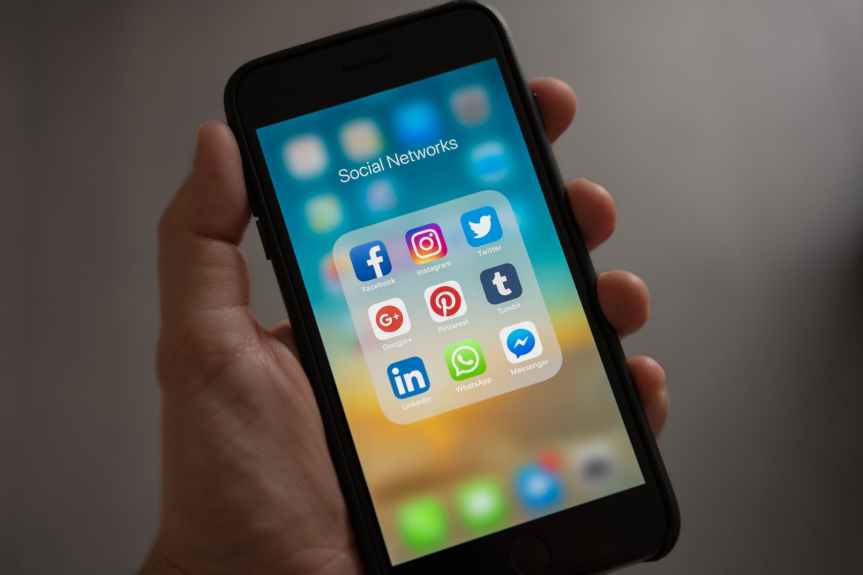
Social media is network based on computer that allows people to communicate, interact or associate with friends and family via an internet connection. One can chat, share videos, pictures, views and many other activities are also accessible through social media. If compared the social media sites are most visited other than any websites. At present, around three billion people globally have a social networking account. Social networking sites such as Facebook, Whatsapp, Snapchat, Instagram, Twitter, Pinterest and LinkedIn enables us to stay connected to our closed ones and also keep us updated by the day to day happenings worldwide.

Social media sites are often visited with about more than one billion users active on daily basis in order to count the number of likes on their post and update their status. As per various surveys conducted, it can be inferred that an individual spends about an hour minimum on these networking sites. The line between addiction and habit is very thin. The situation of addiction arises when an individual desires for something more than their actual need. It becomes addiction when people start to spend more and more time on social networking sites. Therefore, it is observed that in the present generation social media is becoming addicting and it is a matter to contemplate seriously. The increased dependency of an individual over a particular thing be it, food or drink or activity makes the person to feel helpless and eventually the person starts to loose control over themselves. The condition gradually turns worse leading to complex diseases related to brain.

“Social media is a wonderful medium, problem starts with its addiction.”

-Anonymous

The addiction of social media is severe that the person every now and then logs in their account meaninglessly and checks in at every place they go in order to update their status. The purpose behind to do so is sometimes just to kill or pass time. Such individuals begin to consider that posting pictures and informing about the day to day activities or chores on the social media is their moral duty. They begin to obsess over their activities on the networking sites.

The post effects of social media is not worth the while. The mental and emotional health of an individual is greatly disturbed. The often seem frustrated and an ease of escalating peer pressure is seen in them while comparing oneself with the other. They are surrounded by the sense of dissatisfaction and hopelessness. The individuals found suffering from social media addiction are desperate, stressed and fatigued. There is a constant rise in their level of anxiety and consequent fall in productivity. The frequent pop up notifications prevent them from focusing on essentials things in their lives.

Thus, it can be concluded that it is important to recognize the addiction of social media at an early stage prior the situation becomes worse. People must remember that it is not their social duty to be in social media throughout the day rather they must give themselves time to self- reflect and divert their attention to more essential things in life.

” One day you will look back and recall all the time you spent on social media and wonder why you didn’t invest that time someplace else.”

– Germany Kent