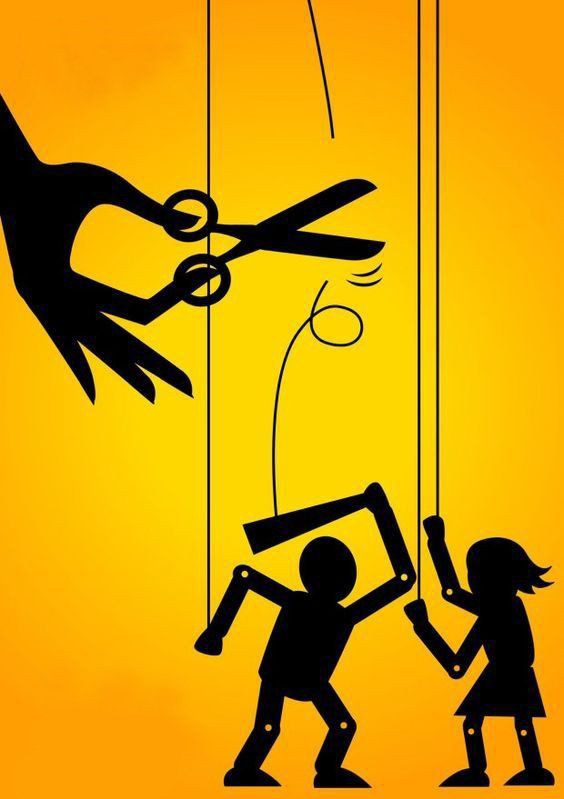
Acid Attacks : The women in danger

Acid Attacks …why??? The person you love if doesn’t love you back you will do the shameless act!!!!! Why People are mute .. why they don’t talk about this ruthless act…… The Perpetrators of these attacks throw corrosive liquids at their victims, usually at their faces, burning them, and damaging skin tissue , often exposing and sometimes dissolving the bones. Acid attacks can often lead to permanent blindness.

IN INDIA

In India, acid attacks are at an all-time high and increasing every year, with 250–300 reported incidents every year, while the “actual number could exceed 1,000, according to Acid Survivors’ Trust International”.

THE MOTIVES OF PERPETRATORS

Some of the most common motivations of perpetrators include:

Personal conflict regarding intimate relationships and sexual rejection
Sexual-related jealousy and lust
Revenge for refusal of sexual advances, proposals of marriage, and demands for dowry
Racial motivations
Social, political, and religious motivations
Gang violence and rivalry
Anti-minority discrimination
Conflicts over land ownership, farm animals, housing, and property
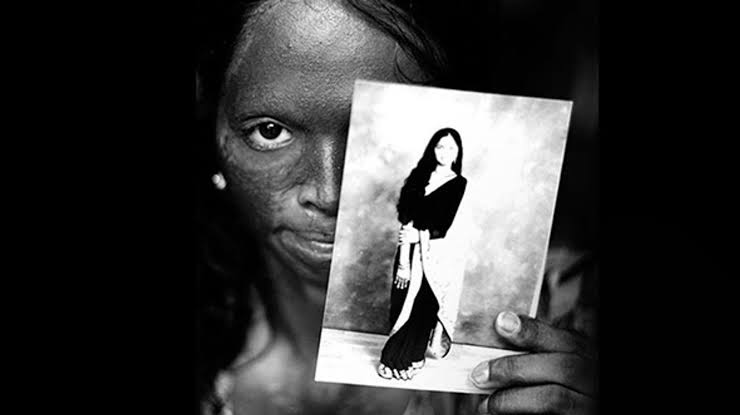
ARE WOMEN SAFE

Are women safe?????? I question again are women safe in our motherland. Every day each and every women wears a shroud of fear , staying alert and trying to fight all the odds of attacks. Maybe it’s molestation,attacks, rape , why!!!men why ?? Why do we forget we all came from the womb of some woman who fought for 9months just to give birth to someone who will make another woman’s life hell.. NO NO NO… We all have to fight against the odds of the men where our mother our sister our lover becomes a part of a ruthless act killing them mentally, Physically, emotionally and most importantly the way in which society see her changes …let’s us all come together to fight the demons and kill the devil’s threating our goddesses…I am taking vow of fighting the Maoists and I request all of you to be together to create a better place to live….

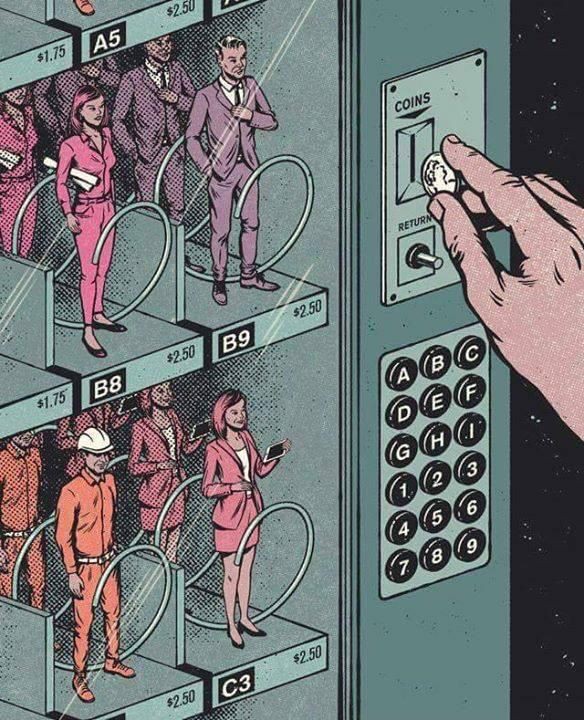
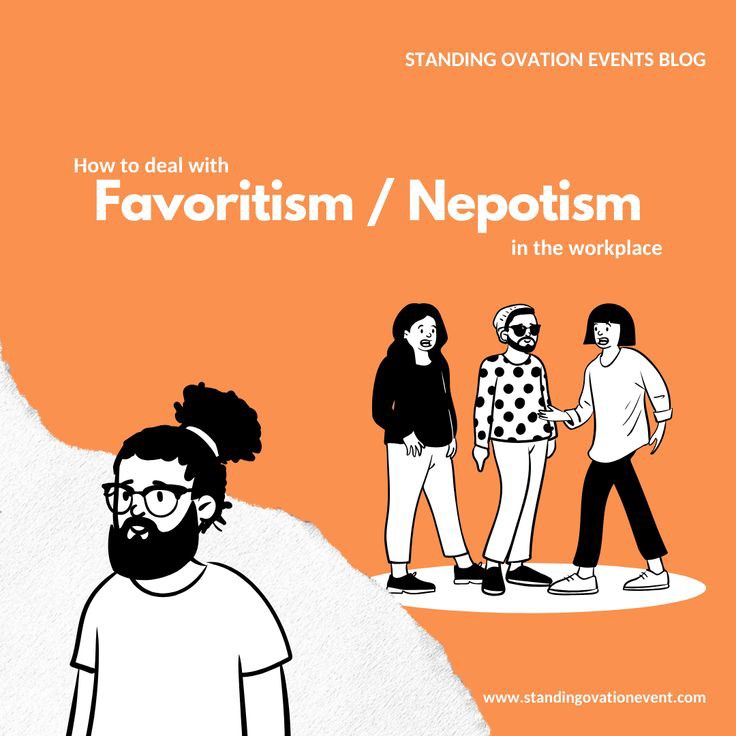
The World of Nepotism

Welcome to the anti-meritocratic world, this world. What are you going to do about it? Will you stand back and watch while cronyism, nepotism, the old school tie, the private club, the right university, the right accent, the right background, the right secret society, the right religion, the right family, destroy merit so that their chosen ones can prosper at your expense. It’s time to smash the conspiracy. Break up all the mechanisms that allow privileged groups within society to rig the system in their favour and penalise anyone who doesn’t belong to their insidious cliques.

Michael Faust, The Meritocracy Party

Well , Its a very complicated questions . In the world, where one’s knowledge didn’t get recognition .

What would you do , when you get acknowledged not on the basis of your knowledge but on the basis of your relation with the owner ?

What would you do , if you don’t get promoted because you are not his /her relative ?

Do you ignore the fact that you are not the one , whom your boss approves?

Well , if you think it’s favouritism than you are absolutely correct . You may also come accross the word NEPOTISM and if you don’t than start reading the passage . (I did as well )

This 8 letter word is destroying everyone in today’s world. And who is responsible for creating such a hypocrite. We the people have to repose this curse and make sure to control it with our coming generations, else it will destroy the whole world. And there’ll be no humanity left in this world” –

Ikramul Hannah.

Introduction

Nepotism is a the practice among those with power or influence of favouring relatives or friends, especially by giving them jobs.

Nepotism is generally defined as “the bestowal of patronage by public officers in appointing others to positions because of blood or marital relationship”.

Nepotism is found in almost all the fields but it is practiced most in business, politics, sports and entertainment sectors. It has been in practice since time immemorial, but some special cases have made it to the limelight in the past few decades.

Nepotism in India :

India has it’s fair share in the field of NEPOTISM . Well , have you ever expected that . I say , YES . Because being one of the largest country , people might become more thirsty for power . “When constantly reaching out for more, you forget what you have” Christine Szymanski.

Nepotism can be characterized as ‘the demonstration of utilizing force or impact to get out of line preferences for individuals from one’s family’.

You must be conflicted , why does nepotism exist even today ? We are living in 21st century , than why we have such orthodox thinking ? Who says no one can define what is going on in one’s mind ( well I say , isn’t is obvious ) .

From the politics to the Entertainment , from the owner to the customer, from the Bollywood to the Judiciary ; Nepotism is everywhere .

Like in OJO -MOJO , After the submission of writing competition , OJO’s class teacher asked him who wrote better . Is it MOJO or OLLY , what do you think whom he would choose . MOJO thinks OJO will choose OLLY because he likes her . But when the result announced MOJO was astounded because OJO choose MOJO’s writing . So , what do you think is it nepotism or not . Think and you will know the answer .

Bias has become the first qualification to join a party, and extreme bias the virtue to become a leader.

Link

MARITAL RAPE

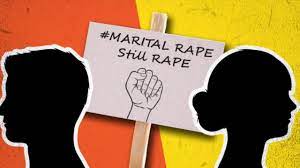
Marital rape is defined as any unwelcome sexual act conducted by a spouse without consent or consent obtained by force or threat of force, intimidation, or any other threat. Intercourse, anal or oral sex, forced sexual behaviour with other individuals, and other sexual practises deemed painful and unwelcome by the victim are examples of these sexual actions. It should be mentioned that in marriage, if a woman consents to sexual intercourse owing to any of the threats, this is still counted as NO.

According to Section 375 of the Indian Penal Code, marital rape is not legally forbidden if the lady is over the age of 15. It is only illegal when the lady is required by law to live apart from her spouse. Marital rape is not illegal in India because it is founded on historical myths that the spouse has full rights even if his wife does not consent. In truth, investigations and research have shown that marital rape has an identical long-term effect on the mentality of women, as well as physical effects.

Short-term mental impacts may include anxiety, shock, acute terror, depression, and post-traumatic stress disorder. Long-term consequences frequently include inappropriate eating, sleep issues, depression, and increasing negative thoughts about oneself. While the bodily symptoms may include private organ injury, discomfort, ripped muscles, and vomiting. Women who have been raped may suffer from fractured bones, black eyes, bloody noses, and knife wounds as a result of the sexual violence.

Marital rape is something that has to be criminalised under the IPC, but it has not yet been criminalised. According to statistics acquired in 2015-16, approximately 5.4 percent of women reported to have suffered marital rape, which is less than the 9 percent in 2005-06, but it must be criminalised. These figures are far from accurate because this is something that not every woman can express. Furthermore, this may occur numerous times with the same lady.

It’s not like people didn’t raise their voices in opposition to the Section 375 exception. It has been observed that for many years, activists, civil society, and people in general have been calling for marital rape to be criminalised, but it doesn’t appear that it will happen soon, because the Indian Government believes that the Indian population is uneducated to understand this law, so it will not be implemented. According to a 2014[1] survey performed by the International Centre for Research on Women (ICRW) and the United Nations Population Fund (UNFPA) in 8 Indian states, one-third of men acknowledged to forcing a sexual act on their wives or partners. In fact, the bulk of sexual abuse reported by women occurs within the confines of the marriage.

Various communities, NGO’s, the RIT FOUNDATION, and others have raised their voices over the years. In 2011, a marital rape case was reported to the Delhi High Court, and the Centre advised the Delhi High Court that criminalising marital rape would destabilise the institution of marriage and make it an easy tool for harassing husbands, resulting in the denial of the appeal in the Delhi High Court. According to the center’s affidavit, criminalising marital rape may lead to its misuse, similar to section 498 A of the IPC, which deals with cruelty to a wife by her husband or his relatives.

In a society where a woman is constantly restricted from going out, staying out, and engaging in other activities, it is not a bad thing to state that not criminalising marital rape is a curse for India. We are attempting to restrict women’s rights in order to protect men’s rights. Women are a part of society, and they play an important role in our economy; therefore, they must have the right to speak out against any such acts (for which her approval is required) conducted by their spouse or anyone else. Women are doing their best in every sector, yet males continue to dominate them, thus there should be a forum where women may talk without fear of being judged.

A society that can breach the stereotype in India .

I never feel confined by gender, by labels, by expectations, by stereotypes. I’m free to be myself.

Princess Nokia

Introduction

During the last two decades it is said that to be a women is the most precious gift a human can have . To be able to give birth to another human being that lives inside precisely 9 months at most .

But their is another dispute that a women can only be a insider . That can fulfill the needs of the dominant society.

Isn’t these two statements are contradictory. In first one a women is a precious gift and in another she can only fullfill one’s needs but only in four walls .

Aren’t they human or a thing that can only live under the roof of men for living ?

Women have always played an important role in the society . Even in the ancient times , they were considered as an equal with the men . So what change , the air , the water , the life style or the mindset . We can also say that the stereotype mindset in society .

Years and years before people grew their ego and think about their individual benefits. Women lead life with virtue , wisdom and respect .

When it start

It was all not same as it was now , their were times when women rule the nation . But due to the foreign invasion , women suffer immensely . At the mediaeval times , women came to be confined within the four walls of the house .

Mediaeval period also known as ‘DARK AGE ‘ as very few women’s were found to be a ruler at that period . It was the period when women brought to the deeds where they made to be inferior to men .

They were raped and brutally killed by the demons who think they can dominate them .

Rani Padmavati, Jodha Bai, Gulbadan Begum, Nurjahan, Jahan Ara , Mumtaj Mahal, Razia Sultan , Jija Bai are some of the women who fought for their right , safety , people , family and love also saved many .

“And one day she discovered that she was fierce, and strong, and full of fire, and that not even she could hold herself back because her passion burned brighter than her fears.”

– Mark Anthony

Modern era

It’s a century of love , reliability , equality and most important individuality .

Then why women are always compared to the men . Why they questioned when they are innocent . ( Well not all are innocent and victim , just for those who are ) .

I do believe that men and women are different . Their differences doesn’t make them weak . It’s just a perspective and view of people that make them vulnerable .

But do women care , it’s their own life not to say that anyone means ANYONE can come and stamp their ‘so called ’ rules on them . Not against the male gender but to those who think they can dominate and lock them in four walls .

Not to say, if women lock men in four wall room . So what will happen to them . Umm. Let’s think , they run like a horse at the time when the room unlocked .

If OJO -MOJO can’t stay in their rooms can’t OLLE do the same . Yes she can , also kick their humpy dumpy bum.

Let’s end the topic and eat some more . It’s a 21st century donot let someone walk on you , you can stand for yourself .

“Don’t let anyone speak for you, and don’t rely on others to fight for you.”

– Michelle Obama

This editorial is written under one’s perspective . Neither against any gender nor in favour .

Marital Rape

“Sexual intercourse or sexual acts by a man with his own wife, the wife not being under fifteen years of age, is not rape.”

Nevertheless, the world’s largest democracy slips far behind terms of legislative development and revisions in response to evolving societal needs. One of the causes for this is the backlog in case resolution. Marital Rape Legislation is the same way.
The law has always been ambiguous when it comes to marital rape. Women all across the world, not only in India, are victims of marital rape. People began to demand justice and adequate regulations on marital rape as society progressed. India is one of the thirty-six countries that have not yet made marital rape a crime. All of these countries have their own legal opinions and justifications for not criminalising.
The perception of marital rape varies greatly from country to country. Deem on this stumbling block has always been out of sync. Some Islamic countries, including as Afghanistan, Algeria, Bangladesh, and Pakistan, discuss the concept of shariyat and the role of their customs in not criminalising marital rape. China is a country where the law protects same-sex couples and victims of violence.

What is the most common form of rape in India?
The definition of rape established in Section 375 of the Indian legal code covers all types of statutory offences including non-consensual intercourse with a woman (IPC).
The non-criminalization of marital status rape is permitted in India under Exception a couple of to Section 375.
On the other hand, unwanted sexual activity between a husband and a woman over the age of fifteen is exempt from Section 375’s definition of “rape,” and hence is not punishable.
Following the establishment of marital status relations, it is possible for a better half to transmit her husband’s eternal consent to have sex with her.

Both legal and constitutional rights may be violated by marital rape.


1. The non-criminalization of marriage rape stretches back to the nation-state era, according to the Coverture Doctrine. The practise of matrimonial rape profoundly affected and developed the idea of combining a woman’s identity with that of her husband.
When the IPC was founded within the decade, a mate was not considered a separate legal entity.
The IPC’s marriage exemption was created in response to Victorian paternal ideals that denied men and women equality, prohibited married women from holding property, and dissolved husband and mate identities under the “Doctrine of Coverture.”
2. Matrimonial rape may constitute a breach of Article 14 of the Indian constitution, which guarantees equality.
The Exception separates women into two groups based on their legal status and prevents men from committing crimes against their wives.
As a result of the Exception, married women might be persecuted purely because of their support, although single women are protected from similar offences.

3. Section 375 of the Indian penal code is designed to protect women while punishing those who commit rape.
Exempting husbands from societal control, on the other hand, goes against the aim, because rape has long-term consequences regardless of whether or not a woman is married.
Married ladies may also find it more difficult to flee abusive situations because they are de jure and financially linked with their spouses
4. Health, privacy, dignity, safe living conditions, and a safe environment are among the rights guaranteed in Article 21, according to the Supreme Court’s innovative interpretation.

Conclusion
In India, husbands and wives today have separate and independent legal identities, and most current jurisprudence is particularly concerned with women’s safety.

As a result, it is past time for the legislature to recognise this legal flaw and repeal Section 375 (Exception 2) of the IPC, bringing marital rape under the jurisdiction of rape legislation.