Structure of banking system in India

Introduction

Banking in India in the mdern sense originated in the last decades of the 18th century . The first banks were Bank of Hindustan (1770-1829) and the General Bank of India established 1786. The largest bank and the oldest still in existence, is tge State bank of India, which originated in the Bank of Calcutta in June 1806 , which almost immediately became the bank of Bengal. This was one of the three presidency banks , the other two being The Bank of Bombay and The bank of Madras , all three of which were established under charters from the British East India Company. The three banks merged in 1921 to form the Imperial Bank of India , which , upon India’s independence became the State Bank of India in 1955. For many years the presidency banks acted as quasi-central banks , as did their successors until the reserve Bank of India was established in 1935 .

Reserve bank of India (RBI)

The Reserve Bank of India is India’s central banking institution, which controls the monetary policy of the Indian rupee. It commenced its operations on 1 April 1935 during the British Rule in accordance with the provisions of the Reserve Bank of India Act,1934 and in 1949 it was nationalized.The central office of the Reserve Bank was initially established in Calcutta but was permanently moved to Mumbai in 1937. The central office is where the Governor sits and where policies are formulated. Sir CD Deshmukh is the first Governor of RBI. The RBI has four zonal offices at Chennai, Delhi, Kolkata, Mumbai and 20 regional offices mostly located in the state capitals and 11 sub-offices. Reserve Bank of India Act,1934 is the legislative act under which the Reserve Bank of India was formed. This act along with the Comapnies Act, which was amended in 1936, were meant to provide a framework for the supervision of banking firms in india.

Scheduled and non-scheduled banks

Scheduled banks in India refer to those banks which have been included in the second schedule of Reserve Bank of India Act, 1934. Banks not under this schedule are called non-scheduled banks. In other words, Banks with a reserve capital of less than 5 lakh rupees qualify as non-scheduled banks. Unlike scheduled Banks , they are not entitled to borrow from the RBI for normal banking purposes, except, in emergency or ‘abnormal circumstances’. Coastal local Area Bank Ltd. (Vijayawasa,AP), Capital Local Area Bank Ltd. (Phagwara, Punjab), Krishna Bhima Samrudhi Local Area Bank Ltd. (Mehbubnagar, Telangana), Subhadra Local Area Bank Ltd. (Kolhapur, Maharashtra) are the only non-scheduled banks in India.

Scheduled banks are further internally classified into commercial banks and cooperative banks.

Public Sector Banks

Public sector banks (PSBs) are banks where a majority state (ie., more than 50%) is held by a government . The shares of these banks are listed on stock exchange. There are a total of 21 PSBs in India and State Bank of India group.

  • In 1969, the Indira-Gandhi headed government nationalised 14 major commercial banks ( Allahabad Bank , Bank of Baroda , Bank of India , Bank of Maharashtra , Canara Bank , Central Bank of India , Dena Bank , Indian Bank , Indian Overseas Bank , Punjab and Sindh Bank , Punjab National Bank, Sindicate Bank , UCO Bank , United Bank of India)
  • In 1980 , a further 6 banks were nationalised (Andhra Bank , Cooperation Bank , New Bank of India , Oriental Bank of Commerce, Punjab and Sindh Bank , Vijay Bank )
  • IDBI Bank is an Indian government-owned financial service company, formarly known as industrial Development Bank of India , headquartered in Mumbai , India .It was established in 1964 and nationalised in year 2005 .

Private Sector Banks

The ‘Private- Sector’ banks are baks where greater parts of share or equity are not held by the government but by private shareholders . There are many Indian and Foreign Banks in India . HDFC Bank , ICICI Bank , Axis Bank , Kotak Mahindra Bank , Yes Bank , IDFC Bank , RBL Bank , Federal Bank , City Union Bank are the major private banks in India.

Regional Rural Banks

Regional Rural Banks were formed on October 2,1975 upon the recommendations of M. Narsimham working group during the tenure of Indira Gandhi’s government. The object behind the formation of RRBs was to serve large unserve population of rural areas and promoting financial inclusions . They have been created with a view to serve primarily the rural areas of India with basic banking and financial services. However, RRBs may have branches set up for urban operations and their area of operation may include urban areas too.

Cooperative Banks

The cooperative banks are furtger classified into:

  • State cooperative banks: These are small financial institutions which are governed by regulations like Banking Regulations Act , 1949 and Banking Laws Cooperative Socities Act ,1965 . At present there are about 33 state cooperative banks of which 19 are scheduled.
  • Urban/ Central cooperative banks: The term urban cooperative banks (UCB) refers to primary cooperative banks located in urban and semi-urban areas . These banks till 1996 , were allowed to lend money only for non-agricultural purposes. This distinction does not hold today . They essentially lent to small borrowers abd business . There are about 2,104 UCBs of which 56 were scheduled Banks. About 79 percent of these are located in 5states- Andhra Pradesh, Gujarat, Karnataka, Maharashtra and Tamil Nadu .
  • Primary credit Socities: Primary Credit Societies or primary agricultural credit society (PACs) is a basic unit and smallest cooperative credit institutions in India. It works on the grassroot level (Gram panchayat and village level ) . It virtually function like banks , but whose net worth is less than Rs. 1 lakh; who are not members of the payment system and to whom deposit insurance is not extended .

Classification of Law in Jurisprudence

International Law and Municipal Law

Law maybbe broadly divided into two classes: international law and municipal law. Whatever the objections raised against the claim of international law to be called international law, it is now recognised that international law is not only law but also a very important branch of law.

International law is divided into two classes: public international law and private international law. public international law is that body of rules which governs the conduct and relations of the States with each other. by private international law we mean those rules and principles according to which cases having foreign element are decided. if a contract is made between an Indian and a Pakistani which is to be performed in Sri Lanka, the rules and principles on which the rights and liabilities of the parties depend are to be determined by private international law. Critics point out that the term private international law is not correct. The adjective “international” is wrongly given to it as it does not possess any characteristics of international law. Private international law applies to individuals and not to States. Moreover, the rules and principles of private international law vary from State to State and there is no uniformity. Private international law is enforced by municipal courts which apply municipal law and not international law. In order to avoid controversy, it is suggested that private international law be called Conflict of Laws and should be treated as a branch of municipal private law.

Municipal Law

Municipal law is the law applied within a State. It can be divide into two classes: public law and private law. Public law determines and regulates the organisation and functioning of the State and determines the relation of the State with its subjects.

Public law is divided ito three classes: constitutional law, administrative law and criminal law. Constitutional law determines the nature of the State and the structure of the government. It is superior to the ordinary law of the land. Constitutional law is written in India and the Unites States but it is unwritten in England. The modern tendency is to have written constitutons.

Administrative law deals with the structure, powers and functions of the organisation of administration, the limits of their powers, the methods and procedures followed by them and the methods by which their powers are controlled including the legal remedies available to persons whose rights have been infringed.

Criminal law defines offences and prescribes punishments for them. It not only orevent crimes but also punishes the offenders. Criminal law is necessary for the maintenance of law and order and peace within State. In criminal cases, it is the State which initiates proceedings against the wrongdoers. The State is always a party in criminal cases.

Private law regulates and governs the relations of citizens with one another. The parties are private individuals and the State decides the disputes among the people. There is great difficulty in classifying private law. A general classifiactionof private law is the law of persons, the law of property, the law of obligations, the conflict of laws, contaracts, quasi-contracts and tort.

Critics point out many defects in the above classification o laws. Many of the classes of laws do not exist in many legal systems of the world. Those branches f law which have recently been developed cannot be put under any classification. The result is that the classification given abone is neither universal nor exhaustive. Many jurists have attempted classifications on different principles. New branches of law are growing and developing rapidly in different parts of the world and provision has to be made for them in any classification of laws. Industrial law and commercial law are such subjects.

Conversion to Islam and Marital Rights

Introduction

Muslim law applies to-
        1)   Mohammedans by birth, as well as to,.                                                               

2) Mohammedans by conversion.

A non-muslim , who has attained majority and is of sound mind may embrace Islam in any of two modes:-

a) He may simply declare that he believes in the oneness of God and the Prophetic character of Mohammad,or

b) He may go to a mosque, to a person who is well versed in Islamic theology (Alim), where he utters Kalma (Lailaha-ill-Allah Muham-mad-ur Rasoolullah) before Imam, whereupon he is given a muslim name by the Imam. It is however, necessary that the conversion must be bona fide; the Court will not permit any one to commit a fraud upon the law by pretending to be a covert Islam in order to elude te personal law by which he is bound .

In Rikhya Bibi v. Anil Kumar , a hindu women accepted Islam in order to get rid of her Hindu husband, who was impotent. It was held that her conversion to Islam was colourable and was effected with the intent to commit a fraud upon the law, and was therefore invalid and ineffective.

Conversion to Islam and Marital Rights

According to Muslim Law, a distinction, is made between conversion to Islam of one of the spouses when such conversion takes place-
1) In a country subject to Muslim Law, and

2) In a country where the Law of Islam is not the law of the land

In the first case, when one of the parties embraces Islam, he should offer Islam to the other spouse , and of the latter refuses, the marriage can be dissolved. In the second case, the marriage is automatically dissolved after the lapse of a period of three months after the adoption of Islam by one of the spouses. The courts in India do not administer the laws of any particular community but they administer such laws as are valid in India. Muslim Laws is administered only in those cases where it happens to be the law of India and where the parties are muslims. In India , the spouse who has become a convert to Islam can sue for divorce or a declaration of dissolution of the marriage on the ground that the other spouse has refused to adopt the Muslim religion. It has been held in Pakistan that a marriage of a Hindu married woman on her conversion in British India to Islam should be regarded as dissolved on the completion of three of her monthly couses without any decree or order of the court.

In Sarla Mudgal v. Union of India, the Supreme Court has held that the second marriage of a Hindu husband after conversion to Islam without having his first marriage dissolved under law would be invalid. The second marriage would be void in terms of the provision of Section 494, IPC and the apostate husband would be guilty of the offence under Section 494 of IPC.

In Lily Thomas v. Union of India, the Supreme Court has observed that if hindu wife files a complaint for the offence of bigamy under Section 494, IPC on the ground that, during subsistence of marriage her husband had married a second wife under the other religion after converting to that religion, the offence of bigamy pleaded by her would have to be investigated and tried in accordance with the provisions of the Hindu Marriage Act. Since under Hindu Marriage Act, a bigamous marriage is prohibited and has been constituted as an offence under Section 17 of the Act, any marriage solemnized by the husband during the subsistence of that marriage in spite of his conversion to another religion, would be an offence under Section 17 of the Hindu Marriage Act read with Section 494 of IPC. Change of religion does not dissolve the marriage performed under the Hindu Marriage Act between two hindus. Apostasy does not bring to an end the civil obligation or matrimonial bond but it is a ground for divorce under Section 13 as well as ground for judicial separation under Section 10 of Hindu Marriage Act.

Conversion to Islam and Rights of Inheritance

In the absence of a custom to the contrary, in case of a Hindu converts to Islam, succession and inheritance are governed by Mohammedan Law and not by Hindu law.

Where a Hindu, who had a Hindu wife and children, embraced Islam and married a Muslim woman and had children by her,his property would pass on his death to his Muslim wife and children and not to his Hindu wife or children because under Muslim Law, a Hindu cannot succeed to the estate of a Muslim.

Effects of conversion to Islam

The legal consequences that follow by conversion, may be summarised as under:

1) The religion of Islam is substituted for the previous religion of the convert to Islam, with so much of the personal law as necessarily follows from that religion;

2) The rights and status of the convert become subject to the Mohammedan law;

3) His apostasy (abandonment of religion) has an immediate and prospective effect, from the moment of the conversion and is not retrospective;

4) Conversion of the both spouse, without any intention to commit fraud upon the law, will have the effect to altering the rights incidental to marriage, but this question was left undecided by the Privy Council in Skinner v. Orde.

5) Succession to the estate of a convert is governed by Muslim Law.

Effect of renunciation of Islam

Under the pure Muslim Law Mohammedan after renouncing Islam loses all rights to succeed as Muslim. But now under the provision of the Caste Disabilities Removal Act XXI of 1850, the apostate will lose such rights. The question here arises as to what amounts to apostasy, i.e., abandonment of one’s religion. The answer is that mere deviation from non-fundamental provisons of Mohammedan religion does not amount to apostasy. So long as a person is prepared to accept the fundamental tenets of Islam, he is not an apostate.

Apostsy of guardian – According to Mohammedan Law an apostate has no right to contract a minor in marriage: Hedaya, 392. It is enacted however, by Act XXI of 1850, that no law or usage shall inflict on any person who renounces his religion any “forfeiture of rights of property”, and it was accordingly held in Muchoo v. Arzoon that a Hindu father is not deprived of his right to the custody of his children and to direct their education by reason of his conversion to Christianity. It is submitted that the decision in Muchoo’s case is correct . But the court may in its discretion deal with each case on its own merits.

Effect of renunciation of Islam on Marriage

Marriage of a Muslim husband with a Muslim wife is dissolved ipso facto on the renunciation of the husband of the Islamic religion, their marriage remains intact and is not dissolved.

The renunciation of Islam by a married Muslim woman on her conversion to a faith other than Islam does not by itself dissolve her marriage. But were a woman converted to Islam from some other faith re-embraces her former faith, her marriage with the Muslim husband stands dissolved .


Comparative Study b/w Parliamentary and Presidential System of Government

Parliamentary system is a democratic form of government in which the party with the greatest representation in parliament (legislature) forms the govt., its leader becoming prime minister or chancellor. Presidential form of govt. is a democratic and republican govt. in which a head of govt. leads an executive branch. The head of govt. is in almost cases also the head of the state, which is called the President. India follows a parliamentary form of govt. modelled on Britain’s.

Features

Features of Presidential system are that the executive can veto acts by the legislature, the President has a fixed tenure and cannot be removed by a vote of no confidence in legislature. The President has the power to pardon or commute judicial sentences awarded to criminals and the President is elected directly by the people or by the people or by an electoral college whereas features of parliamentary system are- close relationship b/w the legislature and the executive, executive is responsible to the legislature, there are two executive i.e. real executive and titular executive, bicameral legislature, no fixed tenure, leadership of Prime Minister.

Merits

Merits of Presidential system are- seperation of powers, expert govt., stability and less influence of the party system.

Merits of Parliamentary system are- better coordination b/w executive and legislature, prevents authoritarianism, responsible govt., represents diverse groups, flexibility in the system.

Demerits

Demerits of Presidential system are- less responsible executive, deadlocks b/w executive and legislature, rigid govt., spoils system as the system gives the President sweeping powers of patronage.

Demerits of Parliamentary system are- no seperation of powers, unqualified legislators, instability, failure to take prompt decision because there is no fixed tenure, party politics is more.

Conclusion

The Presidential system is better for one because of its seperation of powers, the role of judiciary and the govt. accountability to its people. We should ensure a system of govt. whose leaders can focus on governance rather than on staying in power. The present parliamentary system has been tried and tested for nearly 70 years. It can be reformed thoroughly to remove the challenges thrown up by it. Also, there is a need to reform the electoral processes to make democracy more robust.

Why the UP unlawful-conversion law should be struck down.

The Uttar Pradesh Prohibition of Unlawful Conversion of Religion Ordinance, 2020 was promulgated on November 27, 2020.  The Ordinance specifies the procedure for undergoing religious conversion and prohibits unlawful religious conversion. The prison term for unlawfull conversion is 1 to 5 years with a minimun fine of Rs.15,000.

Causes

 The Ordinance prohibits conversion of religion through: (i) force, misrepresentation, undue influence, and allurement, or (ii) fraud, or (iii) marriage.  It also prohibits a person from abetting, convincing, and conspiring to such conversions.

The ordinance prohibits the conversion of religion through marriage by “assuming” that the person is converted forcefully thorugh marriage. It oversees the free will of the individual to change his/her’s religion. The article 25 of the Constitution Of India, guarantees the freedom to practise any religion in accordance with their conscience.

Drawbacks

According to the ordinance, a complaint or an FIR can be filed by the following persons if they feel that the religious conversion is unlawful ;  (i) any aggrieved person, (ii) his/her parents or siblings, or (iii) any other person related to them by blood, marriage, or adoption.

According to the statute is/ her famiily memebers can file an FIR against the persons involved in the conversion, which is quite ironic. In the conservative society of India, most parents or family members are slaves of religiomania, they cant resist the fact that their kins are converting their religion. Because of the religiomania, family memebrs or parents will take any step to stop the conversion; including filing an FIR against the conversion, just because they feel it is wrong. This provision clearly violates article 25 of the constitution, as the person is deprevied of the right to practise and profess their desired religion.

The statute also mentions that, the FIR can be filed by “any aggrieved person” which poses greater threat to the person converting as any person from an extremist group can file an FIR against the conversion and halt the conversion. Religious Extremists groups are often offended when a person of their religion decides to convert to other forgetting the persons right’s to convert according to his free and with full conscience as guaranteed by the constitution.

The ordinance declares a marriage void if it was done for the sole purpose of unlawful conversion or “vice versa”.The term “vice versa” is to be seen with utmost importance as that word declares a marriage void just because unlawful conversion was practised is order to get married. The ordinance also declares a marriage void if the procedure mentioned in the statute is not followed to get married. The procedure involves a waiting period too long for the couple to wait, who might be targeted by their family members, extremist groups and any aggrieved person.

Deemed to be unconstitutional

Numerous experts have described the law as unconstitutional including former Law Commission chairman Justice A.P Shah & former Supreme Court judge Madan Lokur. 104 former bureaucrats have written an open letter to Cheif Minister Yogi Adityanath asking him to repeal the law on the grounds that the law  denying the right to freedom of religion and restricting women’s rights to choose their partner.

The Legal Practitioner’s (Women) Act, 1923.

The Legal Practitioner’s (Women) Act was passed in the year 1923. it was only in 1846 that all duly qualified irrespective of nationality or religion were able to enter into the legal profession. Women were still excluded from the profession at this stage, to be thereafter admitted through the Legal Practitioner’s (Women) Act, III of 1923. The act regarding practising law profession still excluded women from entering the profession as it did not make any reference to women in the act. The Legal Practitioner’s (Women) Act formally allowed women entry into the profession. It abolished the bar on women from practising law. The Indian women were granted the right to choose legal profession and practice as Advocates in the Courts of Law. This fight was pioneered by Cornelia Sorabji. Prior to this, women due to their illiteracy and ignorance were easily duped by the legal people or their touts. Their reserve nature was inculcated and strengthened by customs and culture. They were not able to exercise their right over their own properties. Though initially only a handful of women joined the profession as Advocates this reformative measure ignited the spirit of pleading for the cause of another before the Courts. That the laws could be utilised for obtaining social justice and repressive laws could be overthrown for further development, and that women could do it for themselves and others as well was an eye-opener to the Indian society of pre-independence times. 

The challenge before women to enter into legal profession was significant and made a case for their entry to heal Indian women. They wanted to represent the Indian women. In many cases, judges opined that women were not ‘persons’ for the purpose of entering the legal profession. Regina Guha’s case was the first woman’s case. After obtaining a Bachelor of Law degree, Guha applied for admission to be enrolled as pleader in the Alipore district court. The application was examined by the court. Regina contended that since under the General Clauses Act, “words importing the masculine gender shall be taken to include female”, the rules under the Legal Practitioners Act, although referring in terms to men, would include women.In response, barrister Eardley Norton, a civil rights advocate, the bench responded that at the time the Legal Practitioners Act was passed, “there had never been a case of a lady being allowed to practice in the Indian courts”. The Legal Practitioners Act made no reference to women. In another case, Hazra applied to Calcutta University, seeking permission to appear as a private candidate in the preliminary examination of law.  Calcutta University transferred her application to Patna University. Her application was refused on the ground that she had not attended regular law lectures.Calcutta University finally granted her permission to appear as a private candidate in the preliminary law examination. In 1921, after obtaining a Bachelor of Law degree from Calcutta University, she applied to be enrolled as a pleader in the Patna district court.  The Patna high court judges delivered upholding the position in Regina Guha that in spite of the provisions of the General Clauses Act of 1868 and 1897, a woman, although fully qualified, was not entitled to a certificate under the Legal Practitioners’ Act to act as a pleader because of her sex. She was not a ‘person’.

By this time, the Sex Disqualification (Removal) Act 1919 was passed in England that allowed women to enter the legal profession.  At the same time, the Allahabad high court allowed Cornelia Sorabji to be enrolled as a vakil. With the Patna high court judgment, a concerted campaign to amend the Legal Practitioners’ Act began. In 1922, Narayan Malhar Joshi moved a resolution proposing amendment of the Legislative Assembly Electoral Rules to remove sex disqualification in the matter of registration on the electoral roll, Gour introduced a resolution to remove sex-based disqualification in the legal profession as an amendment to Joshi’s resolution.The Legal Practitioners (Women) Act was finally passed in 1923, removing the disqualification affirming that “no woman shall, by reason only of her sex, be disqualified from being admitted or enrolled as a legal practitioner or from practising as such”. 

Advocate’s Day (3rd December)

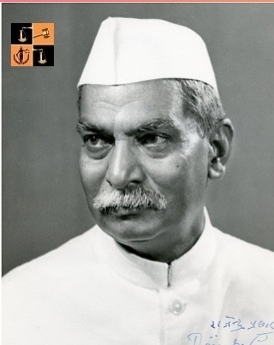
Advocate’s Day  is celebrated in our country by the lawyer community on 3rd december every year to mark the birth anniversary of Dr. Rajendra Prasad, the First President of India and a very eminent lawyer.

Dr. Rajendra Prasad First President of india

Rajendra Prasad was born on December 3, 1884. Having graduated from school, he studied at the Presidency College in Calcutta and the University of Calcutta. Initially Prasad was a science student. In 1907, he completed his M.A. in economics and began teaching.

In 1909, Prasad decided to pursue law studies. He completed his Bachelor in Law in 1910 and passed his Masters in Law in 1915, receiving a gold medal. The following year, Prasad joined the High Court of Bihar and Odisha. He also practiced law in the city of Bhagalpur.

A supporter of Mahatma Gandhi, Prasad was imprisoned by British authorities during the Salt Satyagraha of 1931 and the Quit India movement of 1942. After the 1946 elections, Prasad served as Minister of Food and Agriculture in the central government. Upon independence in 1947, Prasad was elected as President of the Constituent Assembly of India, which prepared the Constitution of India and served as its provisional parliament.

As President of India, he duly acted as required by the Constitution, independent of any political party. He travelled the world extensively as an ambassador of India, building diplomatic rapport with foreign nations. He was re-elected for two consecutive terms in 1952 and 1957, and is the only President of India to achieve this feat. The Mughal Gardens at the Rashtrapati Bhavan were open to public for about a month for the first time during his tenure, and since then it has been a big attraction for people in Delhi and other parts of the country.

He died on 28 February 1963, aged 78. Rajendra Smriti Sangrahalaya in Patna is dedicated to him.

Significant Role Played by Advocates in Society:-

Any person who supports or recommends for the cause of others or for a change is said to be advocating for the cause. However, a person who takes up the noble profession to plead for the cause of others, to fight for the rights of others and to fight for justice is called an “Advocate”

1. Advocates have been instrumental in spearheading movements in the society for a positive change. In modern times lawyers in various countries have given leadership to their nations. In the great American and French Revolutions many of the leading figures were lawyers. 

2. The reason why many great leaders in various countries were lawyers is that the legal profession is objectively in the position of producing statesmen.

This is due to two reasons:-

 1) Lawyers belong to an independent profession, they are not subordinate to the Government or to anyone else.   2) they are directly in contact with society in its entirety as they have to deal with all kinds of problems of people from all sections of society, unlike say, doctors who are confined to medical problems or engineers who are confined to technical problems.

3. The central function of the legal profession is to promote the administration of justice. Every civilised society sustains itself on the “Rule of Law” and the lawyers being the primary supporters of it aid and assist its operation in a meaningful measure. 

4. The legal profession is different from other professions in that what the lawyers do, affects not only an individual but the administration of justice which is the foundation of the civilised society. It is to be noted that when people suffer from medical problems, they have to endure and suffer, whereas when people are meted out with injustice, it is intolerable and they pull down the whole structure.

In modern times, many lawyers have given leadership to India, like Prashant Bhushan, and Ram Vilas Paswan, and this happens because this profession itself holds pure knowledge about the laws of various fields. And it is indeed a fascinating field which is why a lot of people wish to become lawyers in different types. Lawyers of our country have been noteworthy in shaping revolutionary movements in the society for a constant positive change, and they truly deserve a day on their name due to their huge contribution in society.

Celebration

During this special day of celebration, people take time to remember Rajendra Prasad and lawyers also join together to celebrate their profession and honour Rajendra Prasad who was one of the most successful lawyers in the country. Another promising reason to celebrate this day is the respectable lawyers we have got, and these lawyers make justice prosper. They help the wrongly accused get free. They similarly help in fair settlements and many other things. And this is why lawyers deserve to be honoured during this special Advocate’s Day.

“RIGHT TO LIFE AND PERSONAL LIBERTY”

CONCEPT

Every person has the right to life library and security. Among all the fundamental right the right to life is unquestionably. Right to life means that no body can interfere in your freedom including government also. The people have human rights which protect their life and give them right to life. Right to life is concept which explain under the fundamental rights, that the citizen have rights to enjoy there life on there ways no body can stop them or restrictions on there fundamental rights.

The word “personal library” in Article 21[1] means nothing more than the liberty of the physical body, that is, freedom from arrest and detention without the authority of law. Personal liberty is one of the oldest concept which is safeguard by national court. The right to personal liberty as understood means in human rights not to be subjected to arrest any mode that does not admit to legal justification.

Personal liberty was not only merely the liberty of body, it also includes the other, freedom from restraintion and the law shall bind no person. Personal liberty was a widest concept that covers all the various rights. Right to personal liberty also means that free from the unnecessary restriction by the law on the member of the socity.

Every citizen has a right to life, liberty and the security. Among all the fundamental rights, right to life is unquestionably. The right to life and personal liberty is all about the development of human beings life. The right to life is a moral principle based on the right of freedom of peoples. The government should always take a proper measures or action to protect the life of peoples by making laws to protect citizen of their country and also in some conditions, by taking an good step to safeguard there states peoples at any risk.

There are many laws making by the government, which in any circumstance if a person might put in danger and if state was involve on that then the people might have the right to investigate. The main aim of the state to carry out the “justice”. According to the Constitution parliament and the State legislature in India have the power to make law. The meaning of personal liberty is that the citizen of state have there right arrest or detent according to law or if the person is guileless then he have right to protect there legal rights in such conditions. The right to personal liberty was an personal freedom in which no government can abbreviate.

ARTICLE 21

“No person shall be deprived of his life or personal liberty expect according to procedure established by law” [2]

The Article 21 explain about the protection to life and personal liberty, it protects the freedom of citizen. Two teams of Article 21:- First, “Due process of law”(USA).and second,”Procedure established by law”(India). The term “produce established by law” in India it taken from Japan. And in USA if citizen were deprive by law the tha term due process of law used, and in India it’s produce established by law was used. This rights are for both the citizens as well as non-citizen. And for those also how not have the knowledge about this concept.

Due process of the law is a very unique clause of the americanConstitution. It is very broad and formative concept. It is difficultto give the accurate definition which could explain it in very well manner. Due process of law literal meaning of it is ‘guarantee of fair procedure’. The Constitution promises there citizen or individual that government will not deprive him of life, liberty or property without due process of law. After having the brought explanation of life and liberty, now we will deal with the term”procedure established by law”. It does not have the same meaning as express in the due process of law. Procedure established by law express the wider connotation than the expression used in the Indian Constitution.

The Article 21 even thought to frame in negative language, established the person the fundamental right to life and personal liberty and it become the infinite source of many rights. It has the fundamental right for everyone who lives in country shall be live freely in the socity with the right that was enshrined in Article 21.

In Article 21 the right to life is not only with the physical existence of life but it is also for the other elements. Article 21 has proved to be avery fruitful source of right of the peoples.


[1] Protection of life and personal liberty No person shall be deprived of his life or personal liberty except according to procedure established by law.

[2] Article 21

Criminal Conspiracy

According to criminal law, an act of criminal conspiracy is said to to be committed when two or more people come together to form an agreement between them to carry out a criminal activity in foreseeable future. In some countries across the world, the act of criminal conspiracy is completed only when an explicit action is carried out. Only the commission of an explicit or overt action constitutes a crime, according to law prevalent in those countries. However, law does not place a cap on number of participants. Some countries do not even require any commission of overt act. It is counted as an attempt. For the sake of unanimity, the act is a continuing process and complete involvement or partial involvement at any stage makes the participants jointly liable. It can be charged even in the cases of acquittal. Repentance does not affect their liability. It may help in reduction of the sentence. Repentance before the commission of the act may help the participants. 

Criminal Conspiracy

The act of criminal conspiracy was seen as a civil offence in its nascent stages. The act of criminal conspiracy came under two sections of the law. These sections are – Abetment in any offence and conspiracy with criminal intent. Slowly, it came to be recognised as a criminal offence. The Criminal Law Amendment Act (8 of 1913) added Chapter V – A to the Indian Penal Code. 

Conspiracy Definition: The section 120 – A of Chapter V – A (Indian Penal Code, 1860) defines criminal conspiracy. When two or more persons decide to execute or cause an act, which is illegal, or a legal act by illegal means, such act is called as criminal conspiracy. Perpetrators of this act can be convicted for criminal conspiracy. They are culpable of criminal conspiracy. This is given in Section 120 – A. In other words, concurrence of minds for committing an illegal act, or legal act by illegal means is called as criminal conspiracy. Mere agreement is not sufficient to accuse one guilty of criminal conspiracy. Agreement of minds for commission of an illegal act, or legal act by illegal means is called criminal conspiracy.  Meeting of minds is an essential and important aspect of conspiracy. All the concerned persons part of the act should be aware of the nature and consequence of the act. They should understand the objective and motive behind the act and are ready to achieve the act. This constitutes as an important part of criminal conspiracy. The act is deemed as an offence of criminal conspiracy only when any act is committed to execute the agreement. As discussed above, actus reus and mens rea are two essential of a crime. According to the Indian Penal Code, ill motive and conduct are necessary constituents of a crime. There is an exception to this rule. Criminal conspiracy is punishable at the phase of mens rea. The act of criminal conspiracy in planned in secret and executed surreptitiously. This makes proving the act with evidence difficult.The explanation given under section 120 – A says clearly that the nature of the act committed in furtherance of the agreement is immaterial. Even if such act is accidental it is regarded as an offence of criminal conspiracy. In  Rajiv Kumar v. State of U.P, the judiciary interpreted Section 120-A as follows

“The essential ingredients of the offence of criminal conspiracy are: (i) an agreement between two or more persons; (ii) the agreement must relate to doing or causing to be done either (a) an illegal act; or (b) an act which is not illegal in itself but is done by illegal means. It is, therefore, plain that meeting of minds of two or more persons for doing or causing to be done an illegal act or an act by illegal means is sine qua non of criminal conspiracy.”

A bare discussion or awareness or possessing wrong intentions alone is not sufficient enough to constitute the crime or offence of conspiracy. Any act in pursuance of the things listed above is necessary to constitute the offence of conspiracy. Consensus ad idem is a necessary aspect of conspiracy. The explanation to the provision clearly explains that just an agreement between the concerned persons to act shall not require performance of an act as a part of the agreement. A legal act performed through illegal means, however, requires performance of an explicit act in pursuance of the agreement to constitute the crime of criminal conspiracy. The core of criminal conspiracy is an unlawful amalgamation or legal act by illegal means. The offence qualifies as a crime as soon as the combination is complete. This makes criminal conspiracy an incomplete offence. Illegal agreement to perform an illegal act makes it an offence of criminal conspiracy. The core is what the persons involved agree to perform and not the crime itself. Mere awareness or plain discussion to commit an act does not amount to conspiracy. The Supreme Court observed that-

“For a person to conspire with another, he must have knowledge of what the co-conspirators were wanting to achieve and thereafter having the intent to further the illegal act takes recourse to a course of conduct to achieve the illegal end or facilitate its accomplishment.” This explains that knowledge of the nature and consequence of the act is must for that act to be considered as criminal conspiracy.

The Supreme Court clarifies on the part played by each partner in conspiracy. “The agreement is the gist of the offence. In order to constitute a single general conspiracy there must be a common design and a common intention of all to work in furtherance of the common design. Each conspirator plays his separate part in one integrated and united effort to achieve the common purpose. Each one is aware that he has a part to play in a general conspiracy though he may not know all its secrets or the means by which the common purpose is to be accomplished. The evil scheme may be promoted by a few, some may drop put and some may join at a later stage, but conspiracy continues till it is broken up. The conspiracy may develop in successive stages. There may be a general plan to accomplish the common design by such means as may from time to time be found expedient. New technologies may be invented and new means may be devised for advancement of the common plan. A general conspiracy must be distinguished from a number of separate conspiracies having a similar, general purpose. Where different groups of persons cooperate towards their separate ends without any privity with each other, each combination constitutes a separate conspiracy. The common intention of the conspirators is then to work for the furtherance of the common design of his group only.”

References:

https://indiankanoon.org/

Personal Injury in india

India is fast transitioning from a developing to a developed country as a result of growing industrialization and globalization. Wherever there is progress, though, there will be disagreements. Increased competition, industrial growth, modernization, and technological advancements accompany increased growth and development, paving the way for more conflicts and cases to be heard by our country’s already overburdened courts and tribunals. With so many cases built up and waiting in the courts, the costs of litigation, and the unreasonable delays in redressing grievances, countless people are now driven to use Alternative Dispute Resolution (ADR) techniques to resolve their disagreements.

Physical harm or mental agony are the causes of personal injury cases, which are caused by the actions or negligence of another party. Auto accidents, defamation of character, product defects, and medical malpractice are just a few examples of personal injury claims. Contact a legal practitioner in your state to determine whether your personal injury case is valid in the eyes of the law.
If you are injured or incur losses as a result of someone else’s negligence, that person or corporation is legally responsible (liable) and may be obliged to compensate you. The court looks for negligence—carelessness on the part of one of the parties involved—to assess liability.

Whoever is found to have been less cautious is legally liable for at least a portion of the damages.
Compensation is usually determined by the quality of your evidence and the severity of your injuries. In Personal Injury cases, a legal specialist is suggested above all others in order to maximize your compensation in the face of insurance companies, which typically defend such cases. Personal injury situations are extremely serious. They frequently end in serious injury, long-term impairment, and even death.

Victims rely on a personal injury lawyer to get the financial damages they need to pay for medical treatment, replace lost income forever, and recompense them for their pain and suffering.
They have a far lower chance of securing reasonable compensation if they are doing not hire a trained, experienced personal injury lawyer. That’s why, if you’ve been injured in a car accident, it’s critical that you hire the best personal injury lawyer to defend you. Here are some factors to believe when making your decision:
Choose a personal injury lawyer who specializes in this type of case. Your personal injury lawyer should be ready to objectively assess a case’s merits, estimate its price , and identify the simplest approach for pursuing it. In addition, he or she should have a lot of experience in the field. Your personal injury lawyer should also stay up to date on the latest advances in the field.
Choose a private injury attorney who has addressed insurance companies before. The majority of defendants in personal injury cases are represented by insurance company lawyers. Because these corporate lawyers want to disburse as little as possible, a novice personal injury lawyer may find himself at an obstacle in these talks. As a result, finding a private injury lawyer with a diary of successful settlements is critical. Choose a personal injury attorney who has handled cases in court.
Despite the fact that the majority of personal injury claims are handled out of court, personal injury lawyers can sometimes achieve favorable settlements by threatening to go to trial.

To avoid costly trials, unfavorable publicity, and the possibility of a court awarding the plaintiffs more money, defendants are frequently eager to pay more money to the plaintiffs.

Judicial Service Examination

Judicial Service Examination

The Indian government has three branches . Judiciary is one of them. The Judiciary is a judicial system that interpreting and applies Law. Clear Judicial service examination is the first dream of every law aspirants. Many Law aspirants graduate from the different different law school to clear Judicial Service Examination. In Law field many opportunities are there like advocacy, the litigation, the law firm, the legal officer the legal advisor but most of the law student dream to prepare and clear Judicial Service Examination and become a judge. The Judicial Services Examination ensures a safe and comfortable employment environment. Furthermore, it provides selected applicants with an opportunity to serve their country. Every year, between 50,000 and 60,000 people apply for the Judicial Services Examination, but only those are clear exam, who studied with a goal and in accordance with a philosophy, succeed. Judicial Services must be achieved.
India Judiciary exam are not Union exam means it not conducted by union government. It conducted by the State Government. Every state has its own eligibility, process ,qualifications, courses for Judiciary exam.
Mostly every state divide judiciary in 3 phase
• Preliminary Exams
• Mains Exam
• Interview round

1 Preliminary Exam – The preliminary exam is used to screen candidates for the main examination. It includes Inquiries that are objective in nature. The preliminary examination marks are not taken into account in the final selection. States have different percentages of qualifying marks. The preliminary examination requires a minimum score of 60% for general candidates and 55% for restricted candidates.
2 Mains Exam – This is a subjective sort of exam. Three to four papers form the exam. The ultimate selection is based on the candidates’ performance. The number of candidates called for viva-voce is three times the number of slots.
3 Viva-Voce/Personal Interview — This is the final stage of the selection process, during which candidates are evaluated on a variety of variables, including general interest, personality, and IQ.
This examination is conducted in English as well as in Hindi language. State has decided exam marks and pattern according to him.

Benefits to clear Judicial Services Examination:-

• In the Indian system, the position of deicide is the most prestigious.
• Candidates who are selected in the Judicial Services Examination have a safe and comfortable job.
• It also provide Allowances and Facility.

Tiers of Judiciary Exam
There are two tiers to a career in the legal system.
Lower judicial service:– which is allocated for recent graduates through an entrance examination administered by the various State Public Service Commissions (UP, MP, Rajasthan, and Haryana, Bihar, Punjab so on) or the high courts (Delhi). A career path through this ensures on-time promotions and a solid tenure.
Higher Judicial Services:- The chosen candidates get announce as extra District Judges, that and their promotion is quicker.
Civil decides (junior division) have Judicial Jurist (Second Class) powers, while Chief Judicial Jurists have Judicial Jurist (Second Class) powers (First Class).


Conclusion:
For those who want to serve the public in a high-status position, judicial service may be a good option. It provides a secure and safe job with a competitive wage package.

Environmental issues faced in India

Environment refers to the physical elements. It includes the land, water and air. It is the living ecosystem that maintains the existence of human life. The term environment is derived from a French word ‘Environia” which means to surround. In other words environment can be defined as the sum total of all the living and non-living things and their effects that influence human life.

The main environmental issues faced in India are pollutions namely air pollution, water pollution, noise pollution, disposing chemical waste improperly, leakage of harmful gases, etc. are just few among the environmental problems.

Pollutions refer to imbalance caused in the environment through the actions of humans. This imbalance can lead to health-related issues which can affect the future generations. It is caused by man-made activities. It is necessary to protect the environment because the present generations are mere care-takers of the future generations. It is their responsibility to give the earth to the future in a proper and healthy manner. Let us try to understand the different types of pollution and their effects on the environment.

Air Pollution: Air pollution is the release of pollutants such as gases, particles, biological molecules, etc. in to the air that is harmful to human health and the environment. In other words, it refers to the contamination of air by harmful gases, dust and smoke which affect biotic and abiotic things. It is necessary to maintain the correct amount of gases present in the atmosphere such as 78% of nitrogen, 21% of oxygen and the remaining is other gases. When there is an increase of other gases in the atmosphere it can result in global warming, ozone layer depletion, cancer diseases, breathing issues, skin problems, acid rains, asthma, etc. For example: Delhi is the existing example of air pollution. It causes a new weather in Delhi know as smog which is a mixture of smoke (emitted from vehicles, factories and other sources) and fog. It causes serious health issues for the people living there.

Gases released from factories causing air pollution

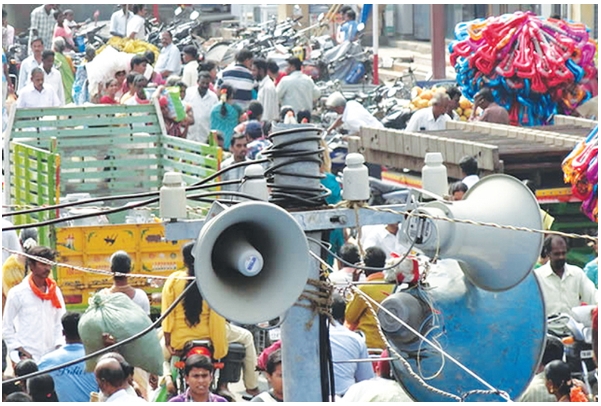
Noise Pollution: Noise pollution or Sound Pollution refers to that unwanted sound that interferes with a person’s peaceful existence. India is a developing country. Movement of people and goods for such economic and urban development is necessary. As a result, there is immense noise produced by the trains, buses, vehicles, trucks, airplanes, huge rallies for various reasons, etc. In residential areas we can see loud music played by residents. High noises levels can lead to cardiovascular and permanent hear impairment. It can even cause change in the behavioural aspect of a person. It can cause stress, lack of sleep, and other harmful effects on the health of an individual. Moreover, this earth not only belongs to humans. Loud noises can frighten animals as well; it can cause sudden heart attacks to such animals.

Noise Pollution caused by the crowd

Water Pollution:. Water pollution is the contamination of water bodies with man-made affluents, chemicals, waste, etc. Such disposal is harmful for humans and the living organisms in such water-bodies. There are instances of where the court has stopped an industry from functioning due to improper disposable of waste in the locality. The effect of water pollution often leads to death, skin rashes, pinkeye, respiratory infections, tuberculosis, etc. Three-fourth of the Earth is covered with water. But less than 1% of the earth’s freshwater is accessible to us.

Water Pollution

Land Pollution: This pollution is on-process and the effects such pollution will be evident at an unexpected situation. The land is abused and deteriorating constantly. This is caused by the solid wastes, untreated chemical affluents, etc. In other words, it is the degradation or destruction of the soil and groundwater.

Land Pollution

Destruction of the environment can lead to various calamities. In order to prevent such disaster or calamities, laws are implemented to protect the environment for the livelihood of present and future generations. Environmental Protection Act, 1986:- Section 2(a) states that environment includes water, air and land and the inter-relationship which exists among and between water, air and land, and human beings, other living creatures, plants and property.

After India got independence from British rule, formed its own constitution by 1950 but The leaders of the country gave more priority to the economic development and elimination of poverty in the country. As a consequence the constitution did not deal much about the environmental aspects. It was only in 1972, during a United Nations Conference on Human Environment held at Stockholm led to adoption of various measures to preserve the environment and prevent pollution. Accordingly, Indian Parliament inserted two Articles, i.e., 48A and 51A in the Constitution of India in 1976.

* Article 48 A states that the State shall endeavour to protect and improve the environment and to safeguard the forests and wild life of the country. *Article 51A: This article mentions the Fundamental Duties that should be followed by the citizens. It also mentions to protect and improve the natural environment including forest, lakes, rivers and wild life, and to have compassion for living creatures. *Apart from these two articles, Article 21 of the constitution includes the right to clean and healthy environment.

Save environment it’s our responsibility

ANALYSIS OF GAMBLING LAWS IN INDIA

Public Gambling Act of 1867:

As once Ambrose Bierce said “The gambling known as business looks with austere disfavor upon the business known as gambling.” Does mean that Gambling is for entertainment, not for profit. But this generation is pulling all the strings to make it popular and make it legal. But gambling ensures that it is one of the best way for earning more and becoming rich in less time because of probability over possibility. India with a billion plus population does seems to enjoy gambling in most of the entertainment fields  like Cricket being the most popular game in India. Betting on Games even though the fact remains that it is prohibited. Even though it does not stop gamblers from betting. Indian laws for gambling are out-dating and lacking the clarity for current generation. You will often find Online Casinos with a wide variety of different games for players to play. The most popular ways for gambling would be blackjack , poker and roulette. Live dealer are also gaining the popularity among this generation for example Online gambling sites for PC games. For example http://www.gg.bet , http://www.lott.bet , http://www.csgoempire.com etc,. These sites attract the teenagers/adults to their websites because people are drowned in online games and want to earn more and show off to their friends.

The Public gambling act is a central law. The Section 3 states that there is a penalty for running or being in charge of a Public Gambling House. The fine for breaking this law is ₹200 or imprisonment of up to 3 months. Although this act prohibits from visiting a gambling house , a fine of ₹100 or imprisonment of up to 1 month. According to Section 4 whoever found in any such house or place playing or gaming with cards, dice, counters etc., or is found there for purpose of gaming playing for any money , stake , property shall be liable for fine according to the Indian Penal Code (45 of 1860).

Information Technology Act, 2000:

In short the act says that the website hosts and the ISP (Internet Service Provider) are instructed to block access to certain types of content or website. For the most of the part it is based on National security. Things that are based on blasphemous , pornographic , illegal etc., Section 2 item B anything to relating or encouraging money laundering or gambling.

Payment and Settlement Act, 2007:

This act was signed on 20th December 2007 by President Patil, although it went into effect on 12th August 2008. This act gives authority to RBI to have access and regulate all forms of electronic payments. The act states that no one is authorized to operate Payment system, No person other than the RBI shall operate except for the accordance with an authorization issued by the RBI under the provisions of this act.

The Types of Gambling :

Betting : Betting can either be legal or illegal , it just depends on what the betting is placed on. For example if the betting is placed on a game of chance then it is illegal. There are exceptions to the rule that make betting legal. And if the betting is placed on game of skill then it is legal. For example – Dream11 , because Dream11 involves game of skill. Game of skills basically means that people use their analytical talent and prediction on who will win so it makes it legal in India.

Although Dream11 is not legal in all states in India, it is legal in the following states:

Assam , Odisha and Telangana.

Casino : Goa and Sikkim are the only states and Dadra and Nagar Haveli and Daman and Diu  are the only Union territories where casinos are legalized. The fact is that Goa is the only place where live gambling is legal and the first casino opened there in 1999.

Bingo : Bingo can either be considered as a lottery or gambling , it depends under which condition it is taken. It is considered as a lottery if it falls under the lottery law and which allows state governments to organize them under special conditions. And it is considered as gambling when it is a game of chance and thus it will be prohibited.

Lotteries are regulated in Sikkim locally and in Punjab it Is only legal while playing it online, while Madhya Pradesh has completely banned it.

Gambling Regulations in India : The Public Gambling Act was introduced in India as whole but India is a vast country with different cultures and religions. So some states and union territories have different rules and regulations on gambling. This also means that different areas have different view on gambling. Some states like Orissa and Assam have banned gambling totally because of high population of Hindu and Muslims in the areas. Whereas states like Goa and union territory like Daman and Diu have legalized land-based gambling operators with license.

Rajasthan: In the state of Rajasthan both offering to gambling and playing inside a gambling place is an offence. Although many underground gambling places are active in Jaipur even though it is illegal.

Tamil Nadu: In the state of Tamil Nadu , it is one of the few states in India where almost all forms of gambling are prohibited with the exception of Horse riding.

Orissa and Assam: In the states of Orissa and Assam gambling in any sort is completely illegal except for the horse riding in assam. Although Any of those states doesn’t permit staking of money for betting and gambling.

Gujarat and Maharashtra: In the states of Gujarat and Maharashtra casino is illegal in both the states while betting on horse riding and lottery is legal.

Conclusion: In this article I have researched the very essence to provide the reader’s with the knowledge of gambling laws in India and the existence of illegal gambling, Online gambling and legalized gambling in India. Overall India has been through a lot when we talk about gambling and it is still under constant discussions. Well let’s face this that people as players want to chase their dream and want to earn a lot in a less period of time and become millionaires. As of the fact that casinos are already available in a lot of places in India.

Child Custody laws in India

Child custody laws in India

The Best Security blanket a child can have is parents who respect each other”


Marriage is a legally and socially sanctioned relationship, usually between a man and a woman, governed by laws, norms, conventions, beliefs, and attitudes that define the spouses’ rights and responsibilities as well as the status of their children.
When a marriage falls apart or ends in divorce, the children born out of the union are the ones who suffer the most, despite the fact that the parents have the legal right to custody of their children.
The Guardian and Wards Act of 1890 in Indian law gives the court complete authority to choose a child’s guardian. In layman’s terms, it’s known as “Legal Custody.”
The custody of a child after a divorce and the end of a marriage in India is classified as follows:
1.Sole Custody: When a child is cared for by only one parent.

2. Joint Custody :-When both parents are liable and responsible for the child, this is known as joint custody.


3.Third-Party Custody :- It occurs when neither the father nor the mother agrees to hand over custody of their kid to the court.
Then there’s the problem of deciding what to do. Who will assume responsibility for the child’s upbringing? The child’s custody may be given to Grandparents or someone other than the parents (child).The Standard State of Affairs in Indian Society, when throughout divorce cases, they battle over the money for maintenance, i.e. money to be paid by the stable and earning partner to the other.
The method of gaining custody of a kid in order to avoid having to pay child support to the other partner. They are caring for the youngster as a result of this. If the child is of legal age (over 18), they have the right to choose their guardian, and even if the child is a juvenile, the court may request that the youngster express their opinions.


What factors does the court consider when deciding who should be the child’s custodian?


1.The Custodial Parents’ Financial Stability.


2.Custodial parents’ physical and mental well-being.


3.Comfort of the child with his or her custodial parents.


4.Custodial parents’ intention (Wrong or false intention that may harm the child).


5.The judge has complete authority and authority to choose what is best for the child’s future. Additionally, the child has the option of selecting.

Custody of child shall be handed over to such a person who fosters him with care, love and affection” – Honorable Justice Vinod Prasad.

The Inherited Right- Human Rights

What are Human Rights?

The society operates on some moral principles and norms, which regulate human behavior. Human rights validate these principles and norms and protect the rights of humans internationally. 

Human rights follow the concept of ‘natural right’. These rights are inherited by birth just because he or she is a human being. Every human being is entitled to these rights irrespective of their place of birth, religion, age, or any other regard.

Human rights are universal i.e., it is applicable everywhere in the world, irrespective of which nation you are in. The rights are also said to be egalitarian, which means these rights are equal for every human being without any discrimination.

Origin of Human Rights

The roots of human rights can be dated back to 1215, when the first king of Persia, Cyrus the Great, conquered Babylon. Unlike other conquerors, he freed all the captive slaves and provided them with the freedom of right to choose, and the abolition of slavery by signing the ‘Magna Carta’, also known as the ‘Great Charter’. The Magna Carta significantly proved to be the start of the evolution of human rights. The Universal Declaration of Human Rights (UDHR) has taken the two rights mentioned in the Magna Carta.

The most important right human right is based on is ‘right to life. The right to life believes that every human being has the right to live, and should not be killed by anyone including the government. It does not merely mean to have a right to live, but have a life of dignity, which helps in laying down the rest of the human rights such as the right to equality and freedom from discrimination, right to equality before the law, freedom of belief and religion, and more such rights that affect the life of a human being.

What is the Universal Declaration of Human Rights (UDHR)?

Every law or right is drafted in a document. One such international document, comprising of 30 articles is the Universal Declaration of Human Rights (UDHR). The UDHR is the drafted document that has all the rights of human beings mentioned in it. The United Nations General Assembly ratified the document on 10th December 1948, in Palais de Chaillot, Paris.

The UDHR along with the International Covenant on Civil and Political Rights (ICCPR), AND International Covenant on Economic, Social, and Cultural Rights is called the International Bill of Human Rights.

Human Rights Governing Bodies

The Human Rights Council works for the protection and promotion of human rights around the world. It is an intergovernmental body made up of 47 United Nation member states. The former governing body, United Nations Commission on Human Rights was replaced by The Human Rights Council in 2006. 

Nationally, in India, the National Human Rights Commission (NHRC) operates as a statutory public body. It works for the protection and promotion of human rights in the state (nation).

Every state in India has a Human Rights Commission that works for the protection of human rights in that particular state. If any person finds his or her human rights are violated can file a complaint with the respective state commission.

Why Discuss Human Rights?

Human rights are not something that should be only known to a lawyer, judge, or any other individual working in the field of law, but by every human being. It is important to know one’s rights and duties. 

Inheriting the rights is not the end of it. It is important to know what is rightful and what is not. Unless we know our rights and duties there is no way to analyze what is right and what is wrong. 

If any violation of these rights takes place, it is important to be brought to the notice of the governing body for seeking justice. We often see in our surroundings discrimination taking place based on caste and colour most commonly, but often ignore it. Victims of such discrimination also don’t raise their voices against it due to a lack of knowledge about their rights. Awareness must be created among people regarding their rights, and they can seek justice not just for themselves but also help others facing such issues. Raising your voice against such issues is important to create and maintain a balance in society and making the world a better place to live