According to the definition of Sir Ivon Jennings” Administrative Law can be defined as a law relating to administration. It determines the organization, powers and duties of administrative authorities.” According to Britanica,
Administrative law, the legal framework within which public administration is carried out. It derives from the need to create and develop a system of public administration under law, a concept that may be compared with the much older notion of justice under law. Since administration involves the exercise of power by the executive arm of government , administrative law is of constitutional and political, as well as juridical in nature.
Austin has defined administrative law as one which determines the ends and modes to which the sovereign power shall be exercised. According to him sovereign power should be either exercised directly by the monarch or entrusted to subordinate political agents holding a position of trust.
Holland regards Administrative law as “one of the six divisions of public law”.
Bernard Schawartz has defined it to be the law applicable to those administrative agencies which possess adjudicatory authority of a delegated legislation.
The three main stages led to the expansion of the meaning of the term Administrative law- 1. Laissez Faire
2. Dogma of Collectivism
3. Social-Welfare State
Indian context:
The moving of a state from the laissez faire to welfare state.
Administration has been in the forefront in indian history.Akbar and Ashoka’s court provide classic examples of the same.Later on the British administration was adapted and embibed in India.After independence, After independence, India adopted to become a welfare state, which henceforth increased the state activities. As the activities and powers of the Government and administrative authorities increased so did the need for ‘Rule of Law’ and ‘Judicial Review of State actions’.
Henceforth, if rules, regulations and orders passed by the administrative authorities were found to be beyond the authorities legislative powers then such orders, rules and regulations.
The Bombay High Court is under negative spotlight recently following a verdict passed on a POCSO case. In the detailed copy of the judgement which has been made available lately, Justice Pushpa Ganediwala of the Nagpur bench of the Bombay High Court has said that ‘skin to skin contact with sexual intent without penetration is necessary for the act to be considered as a sexual assault’. The ruling also said that ‘mere groping’ will not fall under sexual assault.
A complaint regarding the pursuant events was filed by the victim’s mother on 14th December 2016 at Gittikhadan Police Station in Nagpur. The complaint registered at the station is that “on the pretext of giving her [the minor] a guava in his house, Satish Ragde pressed her breast and attempted to remove her salwar.” The girl was found crying while the mother rescued her. She complained that the man attempted to silence her when she started to cry while disrobing.
The accused was charged with Sections 354 (assault or criminal force to woman with intent to outrage her modesty); 363 (punishment for kidnapping); 342 (punishment for wrongful confinement) of the IPC; and Section 8 (punishment for sexual assault) of the Protection of Children from Sexual Offences Act (POCSO) by the police in the FIR. During the hearing, the special court added Section 361 (kidnapping from lawful guardianship) to the aforementioned charges. The accused was found guilty by the special court and was sentenced for 3 years of imprisonment with a fine of Rs.1500 in total.
In pursuit of the appeal filed by Ragde at the High Court of Bombay, challenging the verdict passed by the special court, Justice Pushpa Ganediwala has acquitted him of Section 8 of the POCSO charges. The Court convicted him for minor charges of IPC, thereby cutting down his three years of imprisonment to one year.
According to Section 8 of POSCO, ‘Whoever, with sexual intent touches the vagina, penis, anus or breast of the child or makes the child touch the vagina, penis, anus or breast of such person or any other person, or does any other act with sexual intent which involves physical contact without penetration is said to commit sexual assault.’ The High Court ruled out the POSCO charges by saying, “Considering the stringent nature of punishment provided for the offence, in the opinion of the court, stricter proof and serious allegations are required. The act of pressing of the breast of the child aged 12 years, in the absence of any specific detail as to whether the top was removed or whether he inserted his hand inside the top and pressed her breast, would not fall in the definition of sexual assault.”
This shocking verdict on sexual assault towards women and children has led to outrage across the country. The judicial system is turning a blind eye against its paramount concern of protecting its citizens through this judgement.
Marital rape is the act of indulging in sexual intercourse without proper consent of the partner. People often mistake marital rape as an act of domestic violence or sexual abuse, although a lack of consent is enough in itself. The right for sexual intercourse within the marriage was considered as a naturally consigned right of the spouse, historically. Many countries around the world have rightly classified non-consensual sexual intercourse as “rape”, yet countries including India regard this intimate assault a perfectly legal crime.
Section 375 of the Indian Penal Code propounds rape as all forms of sexual assault involving non-consensual intercourse with a woman. Yet the Exception 2 to Section 375 absolves the unwilling sexual intercourse between a husband and a wife over fifteen years of age from Section 375’s definition of “rape”. Thus the atrocities and abuses within the sacredness and sacrosanctity of marriage are legalized by the government under this section. This is a clear case of discrimination against female victims by the Indian criminal laws, just because they have been raped by their own husbands.
According to the National Family Health Survey (NFHS) reports, an average Indian woman is 17 times more likely to be subjected to sexual violence from her own husband than others. Such heinous acts go unreported due to the ineffectiveness of the existing laws. Though India is striving hard to empower its female population, it fails to ensure their safety even in the very basic social structure like family. The patriarchal social structure of India is the fundamental reason for the mortifying status of women in Indian society and the persisting ineffectiveness of laws protecting them.
NGOs for the empowerment of women and Constitutional experts are of the opinion that the Exception 2 to Section 375 is a clear violation of Article 14 and Article 21 and insists that its high time India criminalize marital rape and frame new laws for protecting women from intramarital violence. The equality and liberty rights assured for all citizens in Article 14 and Article 21 of the constitution are denied in exception 2 to section 375. Even the UN General Committee has recommended the Indian government to criminalize marital rape back in 2013. A large part of the British influenced Indian laws which need timely amendments remains untouched for the past 73 years since independence. No Indian government has, however, so far shown an active interest in remedying this problem. As a result, many of such primitive practices still exist in our society.
Intern at Hariyali Foundation In collaboration with Educational News
In a country with such a huge population and so much of diversity in culture and nature, it is so common that there would surely be diversity among various types of violence too. Domestic violence includes any type of violence or torture basically against women in any form whether it is physical, emotional, sexual, verbal or economic abuse or torture.
India is poorly ranked in a total of 167 countries all across the world according to the data for cases of domestic violence. Domestic violence has always been a shame for the Indian society. A woman contributes a lot in the nurturing of a whole family and sacrifices her dreams (in most of the cases) for taking care of her husband and his parents and the children too.
A woman is the only person in the family who is always ready to sacrifice her health, her dreams and her happiness just for making the family happy. A woman is the one who turns a house into a home. A home built with the bricks of a woman’s dreams and her crushed desires. Everyone wants to go out, see the world and meet the people, enjoy their selves, but for making this happen somebody is always there at home for taking care of food and for arranging everything, it is always and always a Woman.
In spite of making all these sacrifices, it is the woman only who has to become the victim of the anger of her husband, her in-laws and her children too. Basically in India, it is generally assumed that the woman, the bride is a servant (when she’s jobless) and an ATM machine without any password (when she’s working). A woman is the one who is always expected to make sacrifices and take care of her family and home. Why? Because it is her work, this is the stuff why she was born?! If somebody gets angry, then she is the only river to pour down all the anger.
Moving ahead, everyone knows that from the past times and still at present most of the women at their place are going and suffering through a lot. According to a National Family and Health Survey in 2005, total lifetime prevalence of domestic violence was 33.5% and 8.5% for sexual violence among women aged 15–49. A survey carried out by Thomson Reuters Foundation said that India is the most dangerous country in the world for women.
In 2012 National Crime Records Bureau report of India states a reported crime rate of 46 per 100,000, rape rate of 2 per 100,000, dowry homicide rate of 0.7 per 100,000 and the rate of domestic cruelty by husband or his relatives as 5.9 per 100,000.
But every reader knows that these are just figures and data, too away from the reality. Yes, every reader is correct. Because of poverty and lack of awareness and education, at present many women don’t at all know that they can really complain about this suffering of theirs. Many women don’t tell the concerned authorities for saving the respect of their husband and their family and start making compromises; some fear of survival as they never went to school and couldn’t get a job after separation.
There is mental or psychological absue too. Psychological abuse can erode a woman’s sense of self-worth and can be incredibly harmful to overall mental and physical wellbeing. Emotional/psychological abuse can include harassment; threats; verbal abuse such as name-calling, degradation and blaming; stalking; and isolation.
Women who experience domestic violence overwhelmingly tend to have greater overall emotional distress, as well as disturbingly high occurrences of suicidal thoughts and attempts. According to a study by the National Centre for Biotechnology Information, suicide attempts in India are correlated with physical and psychological intimate partner violence. Of the Indian women who participated in the study, 7.5% reported attempting suicide. This correlation is supported by the high rates of domestic violence in India, although the rates differ greatly by region, individual socioeconomic status and other factors.
And it is shocking to listen that this lockdown period that occurred for stopping the rapid spread of Covid-19 was even more painful for women. As all the activities were banned and there was complete lockdown, men were continuously at home along with all other family members. Hence, many women were suffering domestic violence to far greater extent. The number of domestic violence complaints received by the National Commission for Women has doubled from 123 distress calls to 239 domestic violence complaints, from March 23, 2020, to April 16, 2020.
This so pathetic to read that the lockdown, ‘the so called national holiday when most of the people developed new skills, helped their wives at home’, there were some more monsters and demons who physically, emotionally and sexually assaulted their wives at home.
It actually never changed for women. Almost every Indian woman has to make compromises every day. A lot of women who can’t bear the physical and the emotional pain commit suicides. The report by the National Crime Records Bureau says that in 2018, the number of housewives killing themselves –22,937 – increased by 6.9% when compared to 21,453 women in 2017.
Cases of domestic violence occur either due to the demand of dowry or simply the ill mentality of the husband or the family or even both. Women need to stand against this. There are various laws in the constitution including Dowry Prohibition Act of 1961 and the other two new sections, Section 498A and Section 304B were introduced into the Indian Penal Code in 1983 and 1986. On 19 March 2013, the Indian Parliament passed a new law with the goal of more effectively protecting women from sexual violence in India. It came in the form of the Criminal Law (Amendment) Act, 2013, which further amends the Indian Penal Code, the Code of Criminal Procedure of 1973, the Indian Evidence Act of 1872, and the Protection of Children from Sexual Offences Act, 2012. The law makes stalking, voyeurism, acid attacks and forcibly disrobing a woman explicit crime for the first time, provides capital punishment for rapes leading to death, and raises to 20 years from 10 the minimum sentence for gang rape and rapes committed by a police officer. However, talking about the downside of the law, the new law doesn’t address marital rape, rape committed by the armed forces or rape against men.
Therefore, people should realize that domestic violence of any form is not at all acceptable by men and women both. Keeping into mind the mental health of the sufferer it should be realized that awareness should be spread amongst people and they should be told about their rights. Those who are able bodied and well aware, should take this responsibility into their hands. And whenever a woman or even a man (in some cases) is seen suffering from domestic violence, it should not go unreported.
Because those who stay silent after seeing everything are more wrong than those who commit such heinous acts.
Freedom of expression means the right to express one’s own conviction and opinions freely by word of mouth, by writing, through painting or any other mode. In modern times it is widely accepted that the right to freedom of expression is necessary in a democratic society and this right must be safeguarded at all times. Liberty to express opinions and ideas without hindrance and especially without fear of punishment plays a significant role in the development of society. It is one of the most important fundamental liberties guaranteed against state suppression or regulation. However, this freedom needs to be tempered so that it does not hurt the sentiments of others.
• ‘Freedom of expression’ originally guaranteed by the Indian constitution Prior to 1972, Article 19 (1) of the Indian constitution guaranteed this freedom of expression. However, after 1972, Indian politicians felt this should be restricted as they feared that they will be ridiculed or otherwise harmed politically if it remained unrestricted. So, they enacted laws to limit the freedom of expression on various grounds under the garb of law and order, national security and other noble objectives.
• Restriction to freedom of speech causes suffering Many writers, speakers, cartoonists etc. belonging to different castes, creeds and social positions have suffered and are suffering due to the restrictions imposed by law. On most occasions they have been charged and arrested, causing them mental anguish and physical/financial suffering.
• Freedom of expression should be protected Important justifications for freedom of expression and speech are that they assist in the discovery of truth, help an individual to attain self fulfilment etc. ultimately results in the welfare of society and state and strengthen the capacity of an individual in participating in decision making in a democracy.
However, no freedom is absolute and unrestricted. It is necessary to exercise freedoms in order to have a democratic society, but their limitations are also needed for the maintenance of the democratic society. So, the freedom has to have suitable restrictions.
Taking Arts stream always seems like a tough choice and a stressful one too. You constantly doubt yourself asking whether you had made the right choice. Just like science arts also have holistic area of study and expertise all we have to do is search thoroughly and read more about
Arts stream offers a wide variety of opportunities in all kinds of fields. We usually find UPSC aspirants quite common but not just UPSC but we can also be lawyer, psychologist,fashion designers, journalists and lot more
Here are the most commonly chosen options
Union Public Service Commission aspirants
This is the most common choice of a Humanities student. Being a UPSC aspirant is the main attraction of the arts subject. Students all across India opt for political science with the dreams of being a Civil Servant. Delhi University has become a hub for UPSC aspirants and political science its main attraction. online and offline coaching are available for civil services all across India
Lawyers
One of the professional courses under the arts stream is that of lawyers law courses are now integrated with B A, BBA , B.Com and all sorts of new subject in order to enhance the learning. law has a lot of different fields under it ranging from Civil, Environmental, criminal etc
Mass Media
Mass Media itself covers a lot of opportunities like reporters, journalists, news readers, editors, magazine writers and lots more. Mass media is a field of great attention. Being creative can be a quick JumpStart in this sector
Fashion Designing
This field of study is quite accepting one, creativity and one’s skill and talents are to be put into use in this field. Fashion designers are widely recognised and highly paid too
Professors and Lecturers
This is is one of the commonly opted jobs by the students. Teaching in colleges have its own perks and benefits too professors are widely respected around the country, not only they command respect but they have become an icon for teaching a very skillful young Nation
Event Management
One of the recent trends in our economy is the growing tertiary sector. More and more jobs are being created in this very sector. Event management is one such emerging one. Managing events and Ceremonies by a team of well equipped and professional people has become quite common these days
Hotel Management
Food technology and food studies have become a hit among the youth. This course takes life in a different perspective and teaches you that not only classroom learning matters but learning by experience is important too.
Theater and Film Making
Some of us love the idea of stage and performing arts and where most of us fail to follow these passions is because we are afraid to take a risk, due to this we never come across its advantages and courses. We often focus on the big picture that we forget the little things.
Criminologist
This course can also come under a science branch too. It can also be learned as a discipline under arts too. What’s more interesting that looking at a crime from the point of view of a social thinker
There are even more courses like interior designing, international studies, linguistic expert and lots more to study.
What’s more important is to read more, Learn more and explore more.
The Court is the pedestal from where the divine light of justice blankets the whole nation. It is the place of faith. And this is the place where should arise impartiality, independence, and fairness in their crude form. This third pillar of democracy not only supports the democratic structure of the country, but also the faith of each individual, regardless of age, gender, caste, power and so on. While it is believed that justice served must be accepted as it is, people often tend to have varied opinions, disagreeing with the Court or the Judge. This dissent sometimes, intentionally or unintentionally, takes the form of contempt.
In Indian legal system, concept of contempt is older than the India herself, but the earlier recorded roots can be traced back to the Regulating Act of 1773. This Act stated that the Mayor’s Court of Calcutta would enjoy the same power as the court of the English Bench to penalize in case of Contempt of Court.
What is the Contempt of Court? Contempt of court is the act of being defiant or disrespectful to the judiciary institutions. Conducts that amount to contempt of court are: • disobeying or opposing court’s order • scandalizing or prejudicing court and it’s proceedings • interfering with administration of justice
Though the Indian Constitution doesn’t explicitly state the definition of Contempt of Court, it categorises this offence into Civil and Criminal Contempt. • Civil Contempt: Section 2(b) of the Contempt of Court Act defines Civil Contempt as “wilful disobedience to any judgment, decree, direction, order, writ or other process of a court or wilful breach of an undertaking given to a court”; • Criminal Contempt: Section 2(c) defines Criminal Contempt as the publication of any matter or the doing of any other act whosoever which, (i) scandalises or tends to scandalise, or lowers or tends to lower the authority of, any court; or (ii) prejudices, or interferes or tends to interfere with, the due course of any judicial proceeding; or (iii) interferes or tends to interfere with, or obstructs or tends to obstruct, the administration.
A brief history. In 1926, the first Contempt of Court Act was passed, affirming the power of the High Courts to punish or judge contempt offences committed against the subordinate courts. Further, the Contempt of Court Act of 1952 replaced the previous Act and also expanded the power of penalizing from High Courts to the other courts as well. But, there continued to be disagreeing opinions about the law. Hence, in 1961, a committee was adopted to examine the application of contempt laws. The committee recommended that the proceedings of the Contempt should be initiated on the recommendation of government law officer, unlike the previous legislation that the Court itself can initiate the proceedings. These recommendations were carried forward in the Contempt of Court Act of 1971. And this, 1971 Act, is the current legislation which governs contempt of court in India.
What is dissent? Dissent can be regarded as “a strong difference of opinion on a particular subject, especially about an official suggestion or plan or a popular belief”. A person in India, is allowed to differ in opinions with other citizens and also those in power and can propagate his belief as his own. Freedom to dissent is one of the most important rights guaranteed by the Constitution.
There is a very thin line between dissent and contempt which often goes blurred. If there’s no freedom without dissent, then contempt is the exploitation of that freedom. But not to forget, if contempt is a punishable offense under Indian law, then free dissent is the right of every man. A democracy without the tolerance for dissent is actually a totalitarian regime, for there’s no greater idea of democracy than free men. “Freemen, in the exercise of free thoughts, will give vent in free speech”.
We have adopted the concept of preamble by American constitution. Preamble resemble as the preface or introduction to the constitution. NA Palkhivala; an eminent jurist called it as identity card of constitution.
the constitution derives its authority from people of India. Preamble declares Indian state as sovereign, socialist, secular democratic and republican.
Objective of constitution specifies justice, liberty, equality, and fraternity.
Date of adoption of constitution is November 26, 1949.
IMPORTANT TERMS:
1) SOVEREIGN- State is free to conduct its own affairs both externally as well as internally.
2) SOCIALIST– We believe in democratic socialism i.e. concept of mixed economy is persistent.
3) SECULAR– India embodies a positive concept of secularism so all religions have same status and support from the state accordingly articles 25 to 28 have been included as the fundamental rights of constitution.
4) DEMOCRATIC– India provides for a representative parliamentary democracy under which executive is responsible for legislature for all its actions.
5) REPUBLIC- It represents that India has an elected head called the President. It also means that people are vested with power of political sovereignty and there is absence of any privileged class.
6) JUSTICE– This concept is borrowed from Russian Revolution, providing people with social (equal treatment without discrimination on any bases) economic (elimination of glaring inequalities in wealth) and political (equal access to political offices and voice in government) justice.
7) LIBERTY– Absence of restraints on the activities of individuals, at same time providing opportunities for development of individual personalities.
8) EQUALITY– Absence of any privileges to any section of society and provision of adequate opportunities for all.
9) FRATERNITY- Sense of brotherhood involving dignity of individuals and unity and integrity of nation.
SIGNIFICANCE OF PREAMBLE:
It embodies basic philosophy and fundamental values. It is defined as ‘ horoscope of our sovereign democratic republic’ by KM Munshi.
Preamble is an important part of constitution which impacts the life of each individual.
“Law and order are the medicine of the body politic and when the body politic gets sick, medicine must be administered”.- B.R. Ambedkar
A patent is a legal document that is granted by the government of the state or the country, depending on the national rules. It gives an inventor of a particular thing, the exclusive right to make, use and sell his or her creation for a specified period of time.
The basic idea of this system is to encourage the inventors to safeguard their own creations. Books, movies, and some artworks cannot be patented. However, one can protect these assets under the law of copyright. The law of patent is one branch of the larger legal field known as intellectual property, which also includes trademark and copyright law.
Patent is a form of intellectual property rights (IPR) which apart from patents also includes trademarks, copyrights, geographical indicators etc. A patent is an exclusive right granted for an innovation, which is a product or a process that provides, in general, a new way of doing something, or offers a new technical solution to a problem.
Objective of patent is to grant the innovator of the product or process some benefits where invention/innovation cannot be commercially made, used, distributed or sold without the patent owner’s consent. These patent rights are usually enforced in a court, which, in most systems, holds the authority to stop patent infringement. In India, patents are governed by Indian Patents Act 1970 which initially provided for the process patents only and not for product patents for food, chemicals and drugs.
Suppose if product has been developed by an inventor, then he can file patent for the process through which that product has been developed and not for that product itself. In the case of inventions being claimed relating to food, medicine, drugs or chemical substances, only patents relating to the methods or processes of manufacturer of such substances were provided. Thus patent act of 1970 emphasized public interest over monopoly rights. However, under World Trade Organization (WTO), Trade Related Intellectual Property Rights (TRIPS) agreement provides for product patent for 20 years. After the expiry of 20 years, anyone can manufacture that product. All WTO members had to comply with TRIPS agreement before 2005 because of which Indian parliament passed Patent Amendment Act 2005 which brought product patent regime in India. Important features of 2005 Amendment Act and extension of product patent protection to all fields of technology including drugs, foods and chemicals were granted.
Exemptions under 2005 Act are –
• Frivolous claims contrary to natural laws
• Anything contrary to law or morality or injurious to public health
• Mere arrangement or rearrangement of duplication of known devices.
• A method of agriculture or horticulture
• Inventions related to atomic energy
Further, act also empowers the government to import, make or use for its own purpose. It also empowers import of drugs for public health distribution. It also empowers the government to revoke the patent which is found mischievous to state or prejudices to public. State can also acquire a patent to meet national requirements. Patents act is supposed to have most important bearing on the pharmaceutical industry. Drug manufacturing MNCs incur huge cost in the form of R&D for development of new drugs. In order to recover that cost, they sought patent and sell these drugs at exorbitant prices. After the term of patent (20years) is over, every company is free to manufacture those drugs and price of these drugs reduces drastically as new companies don’t engage in the R&D and its cost is reduced. Such drugs whose patent is expired are called as Generic medicines and Indian pharmaceutical companies produce these generic medicines at mush less cost than their western counterparts.
Under the 1997 patent act, Indian companies could produce these drugs even before expiry of 20 years through different process but after 2005 amendment; they have to comply with the product patent. Therefore, it may have an adverse impact on price of medicines in India as they have to comply with TRIPS. Bolar Provision facilitates production and marketing of patented product immediately after the expiry of term of patent by permitting preparatory action by non patent companies during the term of the patent. According to this provision, despite the patent rights, research and tests for regulatory approval does not constitute infringement of patent. There have been few apprehensions in various quarters particularly for health sector regarding its impact on drug prices as it may rule out the availability of low cost drugs. However, it is said that 97 percent drugs manufactured in India are off patents and will remain unaffected.
Further, legislation has strong provision for the outright acquisition of patents to meet national requirements. Besides, there is also Drug Price Control Order administered by National Pharmaceutical Price Authority. There are also adequate safeguards to protect the interest of domestic industry and common man from any increase in the prices of drugs. Although there are adequate safeguards are assured by the government, but some impact on prices cannot be ruled out which will further alienate the poor from the health due to rising cost of medicines. Since it is also nor immoral on part of the companies conducting extensive research on the development of life saving drugs, treatment can be assured to all the persons through universalization of Health Insurance which may be partially public funded. Just like government had imposed cess on petrol and diesel to recover the cost of High development, some cess can also be imposed to recover the cost of universal health programme. In 2009-10, as many as 34287 patents were filed out which only 6168 patents were granted. Moreover, only 17 percent of these patents were granted to Indian while rests were granted to the foreigners. In 2010-11, of the total 7,486 patents granted, Indians could claim only 1,272. On the other hand, foreigners walked away with 6,214 patents. In the world, Japan is credited with maximum number of patents.
COVID-19 has completely revolutionized the workplace by pushing most of the organizations and the businesses to quickly switch from ‘office model’ to ‘work-from-home’ model. While working under the roof of an office, there existed legislations and legal framework to monitor the behaviour, but those existing policies need to be adjusted so as to incorporate the WFH scenario.
Some key areas where the legal framework needs to be adjusted are:
Women working at night. Previously as per the Shops and Establishment Act of each state, women employees were prohibited to work during some specified hours at night or they have to arrange for transport services along with escort to make sure that they reach their home safely. So employers had to face compliance issue with regard to women employees. But now since most female employees have moved to WFH, so the employers are free from such compliance issues and at the same time, the floor is open for the employers to look out for those women population who could not previously access the jobs due to geographical and other constraints.
Change in compensation structure. Previously many allowances such as conveyance allowance, meal allowance or food coupons were given out to employees as a part of hardship allowance. But this might not be attractive now considering the WFH scenario. Instead, employers should provide other allowances such as internet reimbursement, ergonomic allowances, IT expenses etc.
Sexual harassment at the new workplace. POSH Act was passed in the year 2013 for the prevention of sexual misconduct at office. But now as the workplace has changed, new forms of misconduct such as repeated phone calls at inappropriate and ungodly hours, forcing to switch on videos, playfully passing lewd remarks and over-discussion of work are creeping up with time. Considering the face that the boundary between work and home has become blurred, POSH needs to incorporate some new rules to prevent such misconduct.
Overtime work. Just a few months back, employers used to measure productivity by checking the entry and exit times of an employee. They used to do so by either swiping their cards or by biometric screening. So if an associate is doing overtime work, usually it was thought that the person is very hardworking. But now the associates are working from home, so performance should now be measured depending on the outcome of the employees rather than on the time spent on doing the work.
Security and compliance threats. SEZ does not have guidelines for WFH facility but STPI has it. As per them, it is necessary for the employees to work on Virtual Private Network. So employees should spend on securing a robust and private WiFi so that that IT security is not compromised on the local system and confidentiality is maintained.
Modification of labour laws like maternity benefits and compensation laws. Previously associates can claim compensation from the employers if any accident occurs at the workplace, but now with the WFH arrangement, the existing compensation laws need to be modified so as to arrange for any compensation if any accident occurs at home.
Our workplace dynamics have completely changed and to enable smooth transition, employers also need to look into the existing legal structure so that eventually the employees does not feel to be disadvantaged. Our home is the new workplace and so laws have to be adjusted taking our ‘home-office’ into consideration.
The Code was enacted in 2016 following decades of recommendations suggesting improvements to the previous insolvency regime, which was fragmented, fraught with delays and resulted in poor recoveries for creditors. [1]
The insolvency resolution process in India has in the past involved the simultaneous operation of several statutory instruments.
These include the Sick Industrial Companies Act, 1985, the Securitisation and Reconstruction of Financial Assets and Enforcement of Security Interest Act, 2002, the Recovery of Debt Due to Banks and Financial Institutions Act, 1993, and the Companies Act, 2013.[2]
Broadly, these statutes provided for a disparate process of debt restructuring, and asset seizure and realization in order to facilitate the satisfaction of outstanding debts. [3]
As is evident, a plethora of legislation dealing with insolvency and liquidation led to immense confusion in the legal system, and there was a grave necessity to overhaul the insolvency regime.
All of these multiple legal avenues, and a hamstrung court system led to India witnessing a huge piling up of non-performing assets, and creditors waiting for years at end to recover their money. [5]
The Bankruptcy Code is an effort at a comprehensive reform of the fragmented regime of corporate insolvency framework, in order to allow credit to flow more freely in India and instill faith in investors for speedy disposal of their claims. [4]
The Code consolidates existing laws relating to insolvency of corporate entities and individuals into a single legislation.
The Code has unified the law relating to enforcement of statutory rights of creditors and streamlined the manner in which a debtor company can be revived to sustain its debt without extinguishing the rights of creditors[5]:-
1) The scheme of the Code marked a sea change from the previous regime. In respect of corporate entities, the Code introduced a creditor-in-control regime (with a focus on empowering financial creditors), a time-bound resolution process and reduced scope for judicial intervention, and established institutions such as the Insolvency and Bankruptcy Board of India, insolvency professionals and information utilities.[6]
Since the implementation of this new regime, the constitutional validity of various provisions of the Code has been challenged before various High Courts, and the Supreme Court.
Applicability
The Code provides creditors with a mechanism to initiate an insolvency resolution process in the event a debtor is unable to pay its debts. The Code makes a distinction between Operational Creditors and Financial Creditors. [7]
A Financial Creditor is one whose relationship with the debtor is a pure financial contract, where an amount has been provided to the debtor against the consideration of time value of money (“Financial Creditor”).
Recent reforms have sought to address the concerns of homebuyers by treating them as ‘financial creditors’ for the purposes of the Code. [7]
By a recently promulgated ordinance, the Insolvency and Bankruptcy Code (Amendment) Ordinance, 2018 (“the Ordinance”), the amount raised from allottees under a real estate project (a buyer of an under-construction residential or commercial property) is to be treated as a ‘financial debt’ as such amount has the commercial effect of a borrowing.[7]
The Ordinance does not clarify whether allottees are secured or unsecured financial creditors. Such classification will be subject to the agreement entered into between the homebuyers and the corporate debtor.
In the absence of allottees having a clear status, there may be uncertainty about their priority when receiving dues from the insolvency proceedings. [7]
An Operational Creditor is a creditor who has provided goods or services to the debtor, including employees, central or state governments (“Operational Creditor”). A debtor company may also, by itself, take recourse to the Code if it wants to avail of the mechanism of revival or liquidation. [7]
In the event of inability to pay creditors, a company may choose to go for voluntary insolvency resolution process – a measure by which the company can itself approach the NCLT for the purpose of revival or liquidation. [7]
What was the judicial approach to the Insolvency and Bankruptcy Code?
SERIES OF JUDICIAL PRONOUNCEMENT
With almost more than two years since the introduction of the Code, there have been various challenges in the effective implementation of the Code. However, constructive interpretation by the judiciary coupled with effective amendments to the Code has helped in eradicating most of these teething issues. [8]
Some of the key judicial pronouncements are discussed below:
The Insolvency and Bankruptcy Board of India which is the regulatory and supervisory body in charge of the IBC, has done a commendable job in proactively spreading awareness and regulating the space. [9]
Many important judgments were pronounced throughout the year, including certain landmark cases, where in the Supreme Court has tried to ensure that the spirit of the Code is given primacy over procedural requirements. [9]
Suspended Board of Directors of Corporate Debtor Entity are entitled to access the resolution plan and other related documents:-
In a significant judgments delivered on January 31, 2019, the Hon’ble Supreme Court of India decided on an important aspect with respect to the rights of the suspended board of directors of the Corporate Debtor Entity to receive and access the resolution plan and other related documents, whose case has been admitted by the Adjudicating Authority under the relevant provisions of the Code. [10]
Facts of the Case:
In respect of Mr. Vijay Kumar Jain, Director of Corporate Debtor (‘Appellant’) vs. Standard Chartered Bank and Ors. (As ‘Financial Creditors’), the NCLT had approved the appointment of Resolution Professional (‘RP’) to conduct Corporate Insolvency Resolution Process of Corporate Debtor Company i.e. Ruchi Soya Industries Limited (‘RSIL’). [10]
The appellant, being a member of the suspended board of RSIL, was given notice and agenda for the first meeting of Committee of Creditors (‘CoC’) and was permitted to attend the meeting of CoC. The appellant alleged that he was not granted permission to participate in subsequent meetings of CoC. [10]
As a result, the appellant filed a miscellaneous application before the NCLT to allow his participation in the subsequent meetings of CoC. The appellant also executed a Non-Disclosure Agreement (‘NDA’) to keep information received through participation in the CoC meeting strictly confidential and even undertook to indemnify RP. [10]
However, NCLT vide its order dated August 1, 2018 dismissed the said application of appellant with liberty to the appellant to attend the COC meetings, but not to insist upon the CoC or RP to provide information which is considered as confidential by the CoC or RP. [11]
Against the said order of NCLT, the appellant filed an appeal before the Appellate Tribunal, which recognized the right of appellant to attend and participate on the CoC meetings but Appellate Tribunal vide its order dated August 9, 2018 [12] denied the prayer of the appellant to have access to certain documents including sensitive resolution plan.
The appellant aggrieved by the order of the NCLAT, filed an appeal before the Hon’ble Supreme Court of India. [13]
Apex Court Observations and Findings:
On advertising relevant provisions of the Code and arguments of parties to the dispute, the Supreme Court opined that notice of each meeting of the CoC will have to be given to the suspended board of directors of the corporate debtor entity. [14]
The Supreme Court further noted that the statutory scheme of IBC makes it clear that though the suspended board are not members of the CoC, yet, they have a right to participate in each and every meeting held by the CoC and also have a right to discuss along with members of the CoC, resolution plan that are presented at such meeting. [14]
The Supreme Court further observed that Section 31(1) of the Code make it clear once the resolution plan is passed by the Adjudicating Authority, it shall be binding on the corporate debtor together with guarantors and other stakeholders. [14]
This being the case, it is clear that the erstwhile board of directors, which consists of persons who may have given personal guarantees for the debts owed by the corporate debtor, will be bound by the resolution plan, and therefore, have a vital stake in what ultimately gets passed by the CoC’s.[14]
The Supreme Court also made it clear that so far as confidential information is concerned, RP can take an undertaking in the form of NDA from suspended board of directors of the corporate debtor entity with an objective to maintain strict confidentiality in regard to resolution plan and other related documents. [14]
Further, according to Regulation 39(5) of IBBI (Insolvency Resolution Process for Corporate Persons) Regulations, 2016, the RP shall forthwith send a copy of the order of the Adjudicating Authority approving or rejecting a resolution plan to the participants and resolution applicant. The term ‘Participants’ includes members of the erstwhile Board of Directors of Corporate Debtor. [14]
Thus in view of the above, the Supreme Court allowed the appeal and set aside the impugned order of the Appellate Tribunal. [14]
What was the result of Insolvency and Bankruptcy Code in the present scenario? Also cite relevant case laws.
IBC came into being repealing SICA (Sick Industrial Companies Act), SICA was repealed with effect from 1 December 2016. [15]
To know the background of IBC, it is important to know more about SICA and why it failed to prevail as a law. [15]
This is the exact rationale for the existence of The Insolvency and Bankruptcy Code in India which has been into effect since 2016. [15]
To know the background of IBC, it is important to know more about SICA and why it failed to prevail as a law. [15]
The journey from SICA to IBC
The SICA, 1985:-
The name SICA, itself connotes the reason for its actuality. India witnessed an atmosphere of rampant industrial sickness in the 1980s in furtherance of which the Government of India came up with key legislation i.e. the Sick Industrial Companies Act to combat the issue. [15]
Widespread industrial sickness affects the economy in a number of ways, thus The Act came into being to spot the sick or potentially sick companies owning industrial undertakings and take speedy remedial measures for their revival or in a scenario where there is no such measure, close such units. [15]
This was an action to get the locked up investment in such industrial units released and use them in a more productive manner. SICA was repealed and replaced by the Sick Industrial Companies (Special Provisions) Act of 2003, which diluted certain provisions of SICA and filled certain gaps. [15]
One of the main changes to the new law was that, in addition to combating occupational diseases, it also aimed to reduce the growing incidence by ensuring that companies do not use a medical certificate simply to evade legal obligations and access concessions granted to financial institutions to receive. [15]
The comprehensive performance of the Act did not live up to the expected results and thus, IBC was notified as on 28th May 2016 and the repeal of SICA came into full effect from December 1, 2016. [15]
IBC Kicks In
Mistakes of the past were taken in view and The Insolvency and Bankruptcy code came into being with a wider scope and aiming to resolve the issues via more effective provisions and implementation. It is an act to consolidate and amend the laws having reorganization and insolvency resolution issues as the subject-matter. [15]
The provisions of the Act shall apply to the following in case of insolvency, liquidation, voluntary liquidation or bankruptcy; [15]
“An Act to consolidate and amend the laws relating to reorganisation and insolvency resolution of corporate persons, partnership firms and individuals in a time bound manner for maximisation of value of assets of such persons, to promote entrepreneurship, availability of credit and balance the interests of all the stakeholders including alteration in the order of priority of payment of Government dues and to establish an Insolvency and Bankruptcy Board of India, and for matters connected therewith or incidental thereto.
Whether the expression “and” occurring in section 8(2)(a) may be read as “or”?
The Court held that the expression “and” occurring in section 8(2)(a) may be read as “or” in order to further the object of the statute and/ or to avoid an anomalous situation – once the operational creditor has filed an application, which is otherwise complete, the adjudicating authority must reject the application under Section 9(5)(2)(d) if notice of dispute has been received by the operational creditor or there is a record of dispute in the information utility – So long as a dispute truly exists in fact and is not spurious, hypothetical or illusory, the adjudicating authority has to reject the application – A “dispute” is said to exist, so long as there is a real dispute as to payment between the parties that would fall within the inclusive definition contained in Section 5(6). [16]
2) Surendra Trading Company Vs. Juggilal Kamlapat Jute Mills Company Ltd. & Others- Supreme Court:
The time limit prescribed in IBC, 2016 for admitting or rejecting a petition or initiation of CIRP under proviso to sub-sec. (5) of Sec. 9, is directory. [17]
The question before the NCLAT was to whether time of fourteen days under section 9(5) given to the adjudicating authority for ascertaining the existence of default and admitting or rejecting the application is mandatory or directory. [17]
NCLAT hold that the mandate of sub-section (5) of section 7 or sub-section (5) of section 9 or sub-section (4) of section 10 is procedural in nature, a tool of aid in expeditious dispensation of justice and is directory. [17]
Further question (with which supreme Court is concerned) was as to whether the period of seven days for rectifying the defects under proviso to sub-section (5) of Section 9 is mandatory or directory. The aforesaid provision of removing the defects within seven days is directory and not mandatory in nature. [17]
3) Essar Steel India Ltd. Vs. Reserve Bank of India-
RBI is authorized to direct any banking company to initiate insolvency resolution process- Gujarat High Court. [18]
A long-drawn legal battle for Essar Steel ends with this Supreme Court judgment. In one of the most discussed cases under IBC i.e. the case of Essar Steel Limited, the Supreme Court delivered its judgment which would probably be the final judgment of the case. Key highlights of the Essar Steel Supreme Court judgment are as follows: [19]
The requirement of completing the corporate insolvency resolution process within 330 days from the insolvency commencement date as introduced by the 2019 Amendment Act was held as non-mandatory. [19]
CoC can delegate its administrative powers or power of negotiation with the resolution applicants to a smaller committee (sub-committee) since such acts would be ultimately required to be approved and ratified by the CoC. [19]
Prospective resolution applicant has a right to receive complete information as to the CD, debts owed by it, and its activities as a going concern and as such it cannot suddenly be faced with “undecided” claims after the resolution plan submitted by it has been accepted. [19]
To put an end to uncertainty, parameters were laid down for limiting the scope of interference of Adjudicating Authority and Appellate Authority with the commercial decision taken by the requisite majority of CoC. [19]
The Supreme Court has re-emphasized the primacy of the commercial wisdom of the CoC in relation to resolution of the corporate debtor as well as difference in treatment of unequally placed creditors based on its earlier decisions in Swiss Ribbons and K. Sashidhar cases. [19]
Why are the judgments of the Insolvency and Bankruptcy cases pending with court?
The judgments of the cases are pending with the Court due to the Causes for the delays which range from frivolous challenges by operational creditors and promoters to basic issues like shortage of judges. [20]
There is no stipulated time-line for operational creditors to challenge the rejection of their claim, shortage of members at the bench, allowing intervention by promoters at the admission stage and long gaps between conclusion of hearing and passing of written orders are all causing delays,” said Sapan Gupta, national head banking and finance practice at Shardul Amarchand and Mangaldas. [20]
To be fair, delays are not a peculiarly Indian phenomenon. Many advanced countries struggle to provide quick, high-quality justice to citizens. But in India the scale of the problem is unprecedented. Focusing on capacity alone won’t reduce delays. [21]
A pervasive reason for the delays is adjournments. Many advanced countries struggle to provide quick, high-quality justice to citizens. But in India the scale of the problem is unprecedented.[21]
Conclusion
In conclusion, the Insolvency and Bankruptcy Code, 2016, is a progressive legislation that is intended to improve the efficiency of insolvency and bankruptcy proceedings in India. The new legislation provides for the early detection of financial distress and a time bound process for resolution. [22]
However, many details on the IBC’s implementation need to be worked out in the regulations, and its success will depend to a large extent on how quickly a high quality cadre of insolvency resolution professionals will emerge and on whether the time bound process for insolvency resolution will be adhered to in practice. [22]
The IBC has taken its first steps to regularize the insolvency process in India. It has amended over 11 legislations in India, bringing about one of the most significant changes to commercial laws in India in recent times. However, the 22 months of this nascent legislation have been ridden with controversies and speedy resolutions. [23]
It has also become a very important tool for banks to regularize multitudes of non-performing assets plaguing the country’s economy. Within 7 months of the enactment of the IBC, the Reserve Bank of India released a list of 12 companies which held about 25% of the gross non-performing assets of the country.[23]
With more than 11% of all loans in India being terms as bad loans, the IBC has become the need of the hour. The IBC has brought a plethora of changes to insolvency laws in India and aims to reduce the amount of bad loans that has saddled the economy over the last few years. [23]
We are beginning to see this through various companies successfully concluding their insolvency process. The first successful case of a CIRP was that of Bhushan Steel wherein TATA Steel agreed to purchase Bhushan Steel for Rupees Thirty-Two Thousand Five Hundred Crores. [23]
With many more insolvency resolution processes in the pipeline, only time will tell if the IBC will prove to be a successful tool with its objective of streamlining the insolvency process in India. [23]
1) Bankruptcy Law Reforms Committee, The Interim Report of the Bankruptcy Law Reforms Committee (2015).
2) Rule 2.1.1. of RBI Master Circular – Prudential Norms on Income Recognition, Asset Classification and Provisioning – Pertaining to Advances defines an NPA as ‘An asset, including a leased asset, becomes non-performing when it ceases to generate income for the bank. A ‘non-performing asset’ (NPA) was defined as a credit facility in respect of which the interest and/ or installment of principal has remained ‘past due’ for a specified period of time.
3) It must be noted that creditors having outstanding debts continue to have the right to approach an appropriate forum like civil courts or arbitral tribunals for recovery of debts which would be a contractual right of recovery.
4) As cited in the “Abstract” of “Emerging Jurisprudence on Corporate Insolvency” by Shipra Sayal Institute of Law, Nirma University, Ahmedabad, Gujarat, India.
5) As cited in the “Introduction” Para of “A Primer on the Insolvency and Bankruptcy Code, 2016” by Nishith Desai Associates:- The Legal and Tax Counseling Worldwide.
6) As cited in the “Introduction” para of “Understanding the Insolvency and Bankruptcy Code, 2016:- Analysing the developments in jurisprudence” by “Vidhi Bankruptcy Research Programme” at the Vidhi Centre for Legal Policy and the Legal Division of the Insolvency and Bankruptcy Board of India.
7) As cited in the “Applicability” Para of “A Primer on the Insolvency and Bankruptcy Code, 2016” by Nishith Desai Associates:- The Legal and Tax Counseling Worldwide.
8) As cited in the “4th Para ,viz, Series of Judicial Pronouncement” of “Series of Judicial Pronouncement – Insolvency and Bankruptcy Code, 2016” written by Rushabh Ajmera on TaxGuru.
9) As cited in the “Introduction” Para of “Insolvency and Bankruptcy Hotline:- ANALYSING 2018 THROUGH THE LENS OF THE INSOLVENCY CODE” written on January 17, 2019 by Nishith Desai Associates.
10) As cited in the “4th Para” viz, Series of Judicial Pronouncement” of “Series of Judicial Pronouncement – Insolvency and Bankruptcy Code, 2016” written by Rushabh Ajmera on TaxGuru Website India 11 months ago.
11) As cited in “NCLT pronounced order on August1, 2018”.
13) As cited in “Facts of the Case Para” of “Series of Judicial Pronouncement – Insolvency and Bankruptcy Code, 2016” by Rushabh Ajmera 11 Months ago on TaxGuru India Website.
14) As cited in ” Apex Court Observations and Findings Para” in “Series of Judicial Pronouncement – Insolvency and Bankruptcy Code, 2016” by Rushabh Ajmera 11 Months ago on TaxGuru India Website.
15) As cited in “IBC (Insolvency and Bankruptcy Code, 2016) – The Bankruptcy Law of India” written by Vidushi Trehan, LL.M from Symbiosis Law School, Pune , Intern at Khurana & Khurana, Advocates and IP Attorneys.
16) As cited in “Brief about decision para” in ” “and” occurring in section 8(2)(a) may be read as “or”- Mobilox Innovations (P) Ltd. Vs. Kirusa Software (P) Ltd.- Supreme Court” written by IBC LAWSon September 21, 2017.
17) As cited in “Case Name: M/S. Surendra Trading Company Vs. M/S. Juggilal Kamlapat Jute Mills Company Limited and Others” written by IBC LAWS on September 18, 2017
18) As cited in “RBI is authorised to direct any banking company to initiate insolvency resolution process- Essar Steel India Ltd. Vs. RBI- Gujarat High Court” written on July 17, 2017 by IBC LAWS.
19) As cited in “The Insolvency And Bankruptcy Code In 2019 : Recent Amendments And Key Judgments” written by Mayur Shetty and Chintan Gandhi of Rajani Associates on 12th March 2020.
20) As cited in “Delay becomes the norm in insolvency & bankruptcy cases” by Joel Rebello & Saikat Das, ET Bureau on Aug 15, 2019 at 11:25pm.
21) As cited in “Hidden factors that slow our courts and delay justice” written by Arghya Sengupta.
22) As cited in “Insolvency And Bankruptcy Code” written on 12 September 2017 by Samvad Partners.
23) As cited in “2016: Overview Of The Insolvency And Bankruptcy Code, 2016” written by Namrata Bhagwatula , Senior Associate on 20 September, 2018.
As the world battles the COVID-19 pandemic, countries are moving to stringent measures like lockdowns and curfews. With markets crashing, the global economy is staring at a deep distress.
Entire world is fighting against epidemic COVID 19 outbreak and Hon’ble Prime Minister of India Sh. Narendra Damodardas Modi has taken much need precautionary step of complete lockdown from midnight 12’o clock of 24th March, 2020 onwards for next 21 days and again extended to 3rd May, 2020 for another 19 days.
In this difficult environment, each regulatory body is releasing relief measures and guidelines for easing out the impact of COVID 19. On the financial and compliance front, announcements have been flowing from the Government authorities in the form of deferment of statutory due dates or relaxation in payment terms to overcome the financial crisis being faced due to lock-down.
Similar to several countries, the Government of India has begun working on an economic package to deal with the impact of the pandemic. Realising the hardships faced by its citizens, the Union Finance & Corporate Affairs Minister Smt. Niramla Sitharaman has announced several important relief measures on tax and regulatory aspects.
The Finance Minister also announced that necessary legal circulars and legislative amendments for giving effect to these relief measures will be issued by the concerned Authority.
Following is the summarised form of the key announcements made by the Finance Minister here below:
Direct Taxes
1. Extension of tax return filing deadline
The deadline for the following types of tax return have been extended from 31 March 2020 to 30 June 2020
Belated income-tax return for tax year 2018-19
Revised income-tax return for tax year 2018-19
2. The timeline for linking Aadhaar with PAN has been extended to 30 June 2020
3. Relief with regards to delay in payment of taxes
Interest at the reduced rate of 9% (i.e. 0.75% per month instead of 1/1.5 percent per month) will be charged on delay in respect of following payments made between 20 March 2020 and 30 June 2020:
Advanced tax
Self-assessment tax
Regular tax
Taxes withheld or collected at source
Equalization levy
Securities Transaction Tax and
Commodities Transaction Tax
Penalty and late fees in relation to the above mentioned payments are to be waived off
4. Extension of compliance due dates
In respect of the following, where the due dates fall between 20 March 2020 and 29 June 2020, the revised due dates shall be 30 June 2020:
Issue of notice
Intimation
Notification
Approval order
Sanction order
Filing of appeal
Furnishing of return, statements, applications, reports, any other documents
Completion of proceedings by the authority and
Any compliance by the taxpayer including investment in saving instruments or investments for roll over benefit of capital gains
5. The Direct Tax Vivad se Vishwas Act, 2020:
The timeline for payment of disputed arrears without attracting additional 10% amount under the Vivad se Vishwas Scheme extended from 31 March 2020 to 30 June 2020.
Indirect Taxes
1. Extension of GST return filing deadlines:
The last date for filing the forms GSTR-3B due in months of March, April and May 2020 (i.e. returns of February, March and April 2020) will be extended till 30 June 2020 (in staggered manner)
Date for filing GST annual returns of FY 18-19, which is due on 31 March 2020 is extended till the last week of June 2020
2. Relief in respect of payment of taxes
For those having aggregate annual turnover less than INR 50mn, no interest, late fee, and penalty will be charged for the period
However, for those having an aggregate annual turnover of more than INR 50mn, a reduced rate of interest @ 9% per annum will be charged from 15 days after due date (current interest rate is 18 % per annum) for the delayed payment between 20 March 2020 and 30 June 2020, but no late fee and penalty will be charged if complied before 30 June 2020
Last date for making payments by the Composition dealers for the quarter ending 31 March 2020 will be extended till the last week of June 2020
Payment under Sabka Vishwas Scheme shall be made without interest till 30 June 2020
3. Extension of compliances due dates
In respect of the following under GST law, where the due date falls between 20 March 2020 and 29 June 2020, shall be extended to 30 June 2020:
Issue of notice
Notification
Approval order
Sanction order
Filing of appeal and
Furnishing of return, statements, applications, reports, any other documents
4. Date for opting for composition scheme for the F.Y. 2020-2021 is extended till 30 June 2020
5. 24X7 Custom clearance till end of 30 June 2020
Corporate Laws
1. CARO 2020
Applicability of Companies (Auditor’s Report) Order, 2020 will be effective from FY 2020-2021
2. Board meeting
The mandatory requirement of holding Board meetings within prescribed interval provided by the Companies Act, 2013 (120 days) shall be extended by a period of 60 days till next two quarters i.e. till 30 September
3. Meeting of Independence Directors
For FY 2019-20, if mandatory one meeting of independent directors is not held, the same will not be treated as non-compliance
4. Form INC-20A- Declaration of commencement of Business
New Companies being given 6 more months for filing declaration of commencement of business
5. Debenture
Time line to invest 15% of debentures maturing in a particular year has been extended from 30 April 2020 to 30 June 2020
6. Deposit Reserve
Requirement of creating a Deposit Reserve (equal to 20%) of deposits maturing during FY 20-21, extended to 30 June 2020 instead of 30 April 2020
7. Minimum residency
Non-compliances with 182 days residency in India by Director will not treated as non-compliance
8. No Additional Fees
Moratorium period from 1 April 2020 to 30 September 2020, during which no additional fee would be charged in respect of any filing, irrespective of its due date
9. Insolvency and Bankruptcy Code 2016 (IBC)
Minimum amount of default required to initiate insolvency and liquidation on corporate debtors raised from INR 1 lakh to INR 1 crore, effective immediately, in order to prevent admission of MSMEs defaulting due to economic conditions in lieu of COVID-19
Proposed Suspension of new initiations of Corporate Insolvency Resolution Process under Sections 7, 9 and 10 of IBC for 6 months, contingent upon scenario beyond 30 April 2020 as a safeguard companies from defaults attributable to financial downturn pursuant to the COVID-19 pandemic
Among the measures announced late on Tuesday, the government extended the e-way bill validity for the second time since the lockdown was imposed. The e-way bill generated on or before March 24 and expiring during the March 20-April 15 period would now be valid till May 31. This is likely to help trucks stuck en route to reach their destinations.
Further, the notification extended by three months the deadline for furnishing the annual return and GST audit for financial year 2018-19 to September 30. Additionally, a taxpayer can now furnish monthly return GSTR-3B showing nil sales through SMS using the registered mobile number. This return would be verified by a registered mobile number based one-time password (OTP) facility, the notification said.
The Indian economy is one of the most robust economies in the World and one of the key components which constitutes it significantly is known as Job work. So what’s the definition of Job Work?
Definition
As per Section 2(68) of the CGST Act, 2017 Job Work is defined as ‘any treatment or process undertaken by a person on goods belonging to another registered person’.
Meaning
Job-work means it is the processing of goods supplied by principal. The job worker is required to carry out the process specified and it includes outsourced activities that may or may not culminate into manufacture.
The one who does the said job would be termed as ‘job worker’. The ownership of the goods does not transfer to the job worker but it rests with the principal.
About the Concept
The concept of job work is stated and explained in the Central Excise. It is a concept wherein a principal manufacturer can send an input or semi-finished good to a job worker for further processing.
Many facilities and procedural concessions have been given to the job workers as well as the principal supplier who sends goods for job work.
The whole idea behind this is that the principal must be made responsible for meeting the compliances on behalf of the job worker on the goods processed by the worker.
One must also consider the fact that typically the job-workers are small persons who are unable to comply with the discrete provisions of the law.
The most relevant and pertinent point is what are the Procedural aspects that have to be dealt with in regards to the Job Work?
Certain facilities with the specific conditions are offered in relation to job work some of which are as under:
a) A registered person (Principal) can send inputs/capital goods under intimation and subject to the certain conditions without payment of tax to a job worker and from there to another job worker and after completion of job work bring back such goods without payment of tax.
The principal is not required to reverse the ITC availed on inputs or capital goods dispatched to job worker.
b) Principal can send inputs or capital goods directly to the job worker without bringing them to his premises, still the principal can avail the credit of tax paid on such inputs or capital goods.
c) However, inputs and/or capital goods sent to a job worker are required to be returned to the principal within 1 year and 3 years,respectively, from the date of sending such goods to the job worker.
d) After processing of goods, the job worker may clear the goods to-
(i) Another job worker for further processing;
(ii) Dispatch the goods to any of the place of business of the principal without payment of
(iii) Remove the goods on payment of tax within tax;
(iv) India or without payment of tax for export outside India on fulfilment of conditions.
The facility of supply of goods by principal to the third party directly from the premises of the job worker on payment of tax in India likewise with or without payment of tax for export may be availed by the principal on declaring premise of the job worker as his additional place of business in registration. In case the job worker is a registered person under GST, even declaring the premises of the job worker as additional place of business is not required.
Before supply of goods to job worker, principal would be required to intimate the Jurisdictional Officer containing the details of description of inputs intended to be sent by the principal and the nature of processing to be carried out by the job worker.
The said intimation shall also contain the details of another job worker, if any. The inputs or capital goods shall be sent to the job worker under the cover of a challan issued by the principal.
The challan shall be issued even for the inputs or capital goods sent directly to the job worker. The challan shall contain the details specified in Rule 10 of the Invoice Rules.
The responsibility for keeping proper accounts for the inputs or capital goods shall lie with the principal.
Input Tax credit on goods supplied to job worker under Section 19 of the CGST Act, 2017 provides that the principal (a person supplying taxable goods to the job worker) shall be entitled to take the credit of input tax paid on inputs sent to the job- worker for the job work.
Further, the proviso also provides that the principal can take the credit even when the goods have been directly supplied to the job worker without bringing into the premise of the principal.
The principal need not wait till the inputs are first brought to his place of business.
Time Limits for return of processed goods
As per section 19 of the CGST Act, 2017, inputs and capital goods after processing shall be returned back to principal within one year or three years respectively of their being sent out.
Extended meaning of input
As per the explanation provided in section 143 of the CGST Act, 2017, where certain process is carried out on the input before removal of the same to the job worker, such product after carrying out the process to be referred as the intermediate product.
Waste clearing provisions
Pursuant to section 143 (5) of the CGST Act, 2017, waste generated at the premises of the job worker may be supplied directly by the registered job worker from his place of business on payment of tax or s such waste
may be cleared by the principal, in case the job worker is not registered.
Transitional provisions
Inputs or partially processed inputs which are sent to a job worker prior to introduction of GST under the provisions of existing law [Central Excise] and if such goods are returned within 6 months from the appointed day i.e. 1st July, 2017 no tax would be payable.
If such goods are not returned within prescribed time, the input tax credit availed on such goods will be liable to be recovered.
If manufactured goods are removed, prior to the appointed day, without payment of duty for testing or any other process which does not amount to manufacture, and such goods are returned within 6 months from the appointed day, then no tax will be payable.
For the purpose of these provisions during the transitional period, the manufacturer and the job worker are required to declare the details of such goods sent/received for job work in prescribed format GST TRAN-1, within 90 days of the introduction of the GST.
Conclusion
The tax treatment of job work under GST remains largely similar to the current regime. An important point to note is that the period within which inputs should be brought back or supplied from the job worker’s place is now 1 year instead of 180 days earlier.
Similarly, the period within which capital goods should be brought back or supplied is now 3 years instead of 1 year earlier. Also, GST will now be levied on processing charges charged by the job worker.
For the manufacturing industry, these provisions are positive and in line with the Government’s all-out support for the sector.
The Consumers can now cheer as the Consumer Protection Act, 2019 has recently replaced the three decade old Consumer Protection Act, 1986. The Consumer Protection Act, 2019 which came into effect on Monday (July 20) has replaced the earlier Consumer Protection Act, 1986.
The new Act as per the Experts say that “it gives more power to the consumers”. It seeks to revamp the process of administration and settlement of consumer disputes, with strict penalties, including jail term for adulteration and misleading ads by firms.
On July 20, 2020 certain provisions of the Consumer Protection Act, 2019 came into force as notified by the Central Government. Following the the key features of the relevant provisions:-
Key features of the Consumer Protection Act, 2019 which came into effect on July 20, 2020:-
1) Consumers can now institute a complaint from where they reside or work for gain.
2) The original pecuniary jurisdiction of the District Commissions has increased upto ₹1 crore from ₹20 lakh earlier.
3) The Pecuniary jurisdiction of State Commissions has been increased from ₹1 crore to Rs. 10 crore.
4) The National Commission can hear cases above ₹10 crore when compared to above ₹1 crore earlier.
5) While the provisions relating to e-commerce are not yet notified, a section relating to electronic service provider (covering software services, electronic payments) is notified.
6) The opposite party needs to deposit 50% of the amount ordered by the District Commission before filing an appeal before the State Commission. Earlier, the ceiling was a maximum of ₹25,000, which has been removed.
7) The limitation period for filing of appeals to the State Commission has been increased from 30 days to 45 days.
8) The Parties can be allowed to settle the disputes through mediation.
Following are the Sections which came into force:
Above mentioned provisions pertain to the Consumer Protection Councils, Consumer Disputes Redressal Forum, Mediation, Product Liability, punishment for manufacturing, selling, distributing etc spurious good or products which contain adulterant.
As per the rules, the e-commerce players will have to display the total ‘price’ of goods and services offered for sale along with break-up of other charges. Only a few certain miscellaneous provisions with regards and respect to the powers of the Central and State Government to make the rules and regulations have also been enforced.
On misleading advertisements there is provision for jail term and fine for manufacturers. There is no provision for jail for celebrities but they could be banned for endorsing products if it is found to be misleading.
For the first time there will be an exclusive law dealing with Product Liability. A manufacturer or product service provider or product seller will now be responsible to compensate for an injury or damage caused by the defective product or deficiency in services.
The Act has also defined an “e-commerce” as the buying or selling of goods or services including the digital products over digital or electronic networks. The existing definition of e-commerce has been adopted from India’s FDI Guidelines on e-commerce.
The definition of ‘e-commerce Entity’ as provided under the FDI Guidelines includes inventory and market place models.
There is also a provision for class action law suit for ensuring that rights of consumers are not infringed upon. The authority will have power to impose a penalty on a manufacturer or an endorser of up to 10 lakh rupees and imprisonment for up to two years for a false or misleading advertisement.
The Unique Identification Authority of India (UIDAI) is a statutory authority established under the provisions of the Aadhaar (Targeted Delivery of Financial and Other Subsidies, Benefits and Services) Act, 2016 (“Aadhaar Act 2016”) on 12 July 2016 by the Government of India, under the Ministry of Electronics and Information Technology (MeitY). The Aadhaar Act 2016 has been amended by the Aadhaar and Other Laws (Amendment) Act, 2019 (14 of 2019) w.e.f. 25.07.2019.
Prior to its establishment as a statutory authority, UIDAI was functioning as an attached office of the then Planning Commission (now NITI Aayog) vide its Gazette Notification No.-A-43011/02/2009-Admn.I) dated 28th January, 2009. Later, on 12 September 2015, the Government revised the Allocation of Business Rules to attach the UIDAI to the Department of Electronics & Information Technology (DEIT) of the then Ministry of Communications and Information Technology.
UIDAI was created with the objective to issue Unique Identification numbers (UID), named as “Aadhaar”, to all residents of India. The UID had to be (a) robust enough to eliminate duplicate and fake identities, and (b) verifiable and authenticable in an easy, cost-effective way. The first UID number was issued on 29 September 2010 to a resident of Nandurbar, Maharashtra. The Authority has so far issued more than 124 crore Aadhaar numbers to the residents of India.
Under the Aadhaar Act 2016, UIDAI is responsible for Aadhaar enrolment and authentication, including operation and management of all stages of Aadhaar life cycle, developing the policy, procedure and system for issuing Aadhaar numbers to individuals and perform authentication and the security of identity information and authentication records of individuals.
The idea behind the unique identification number was to assign each individual a unique 12 digit number which will help to identify the individual uniquely.
The objective was to attach all the biometric and demographic data of an individual with a 12-digit unique identity number called Aadhaar. The biometric and demographic data of individual will be stored in a centralized database.
The act related to Aadhaar was initially introduced as a money bill in the parliament of India on 3rd March 2016.
The bill was passed in the Lok Sabha on 11th March 2016 and on 26th March 2016, this bill became an Act.
The process of issuing the unique number and collection, maintenance and updating of biometric and demographic data related to each individual is done by the ‘Unique Identification Authority of India (UIDAI)‘, which is a central government agency of India.
With the issuance of Aadhaar card, India has entered the group of countries which has national identity cards for its native residents.
Even though Aadhaar was initially started to eliminate leakages, with time it became a basic identity document.
Reasons for this move:-
This process of attaching all the legal data of an individual with a unique number is an attempt of India to develop a secure system of identification and will have a long term impact.
The first recommendation of any such identity number was after the 1999 Kargil war by the Kargil Review Committee to then Prime Minister of India, for the security and authenticity reasons.
With the centralized database of each individual, it became possible for security agencies to access information of each citizen under a certain emergency situation in the interest of the national cause.
By considering the population of India, it was necessary to have such a secure identification system for controlling illegal migration and anti-national activities.
By connecting the Aadhaar number with the banking system, the Indian government has created a proper and secure channel through which beneficiaries receive all the subsidies directly to their bank account.
It has eliminated the role of middleman and agents thus helping the poor and the Indian Economy. Thereby Aadhaar empowers marginalised sections and ensures dignity.
With the help of UID, it became possible to identify the native Indians and illegal migrants and thus helps to ensure that only the Indian citizens and the legal migrants get benefits of government schemes and also employment.
As all the biometric and demographic data of an individual is linked to Aadhaar, it helps to identify the families that really belongs to BPL (Below Poverty Level) and hence providing them employment under NREGA (National Rural Employment Guarantee Act) and also easy and prompt payment to the actual workers.
Another big issue which can be addressed through UID is the real number of voters. Rural to urban migration is highly prevalent in India. Thus they enrol their names in the voter list of both places and politicians take an ill advantage of such a situation. But by the implementation of UID, it will not be possible for any individual to possess more than one voter identity card.
Government of India could save 15000 crores till 2016 by linking bank accounts with aadhaar for the LPG cylinder subsidies. Aadhaar will eliminate fake accounts.
Aadhaar based biometric attendance will make a good impact in government offices where most people try to escape from their work.
UID will also help indirectly in controlling corruption.
Challenges:-
For a nation like India with such a large population, it becomes a matter of security risk to handle such a large data of individual associated with their UID.
As almost all the details are associated with Aadhaar, it poses a threat to ‘right to privacy’. The data is susceptible to commercial exploitation by private parties and also to surveillance by the government.
No effective implementation of law and punishments in case of any misuse such as the leakage of personal information of citizens.
Assigning UID to such a huge population with authenticity is also a big challenge as no prior documents asked for it.
Conclusion:-
UID for every Indian is a very good system for eliminating agents and commission culture from India. It will help the poor to get their benefits directly to their accounts. It will also help in eliminating the illegal migrants from India and thus controlling the anti-national activities. But the implementation and execution must be done in a proper and prompt manner. And there must some guidelines related to risks associated with the system.









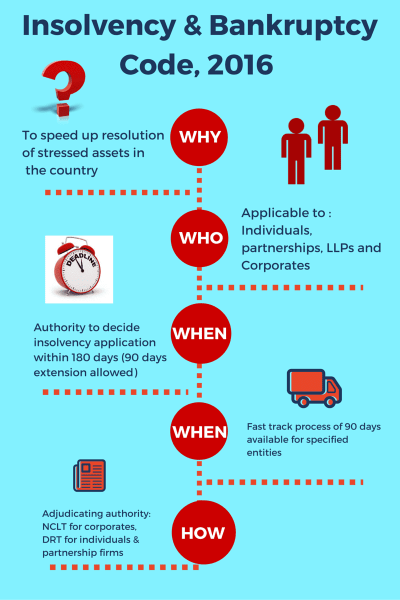




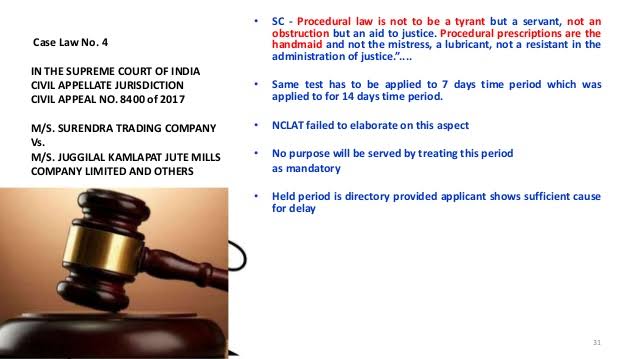
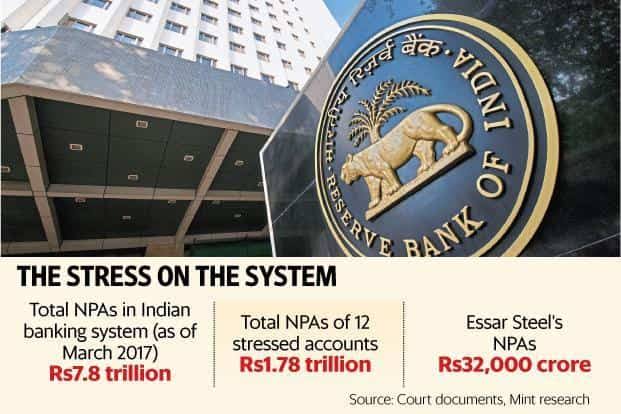









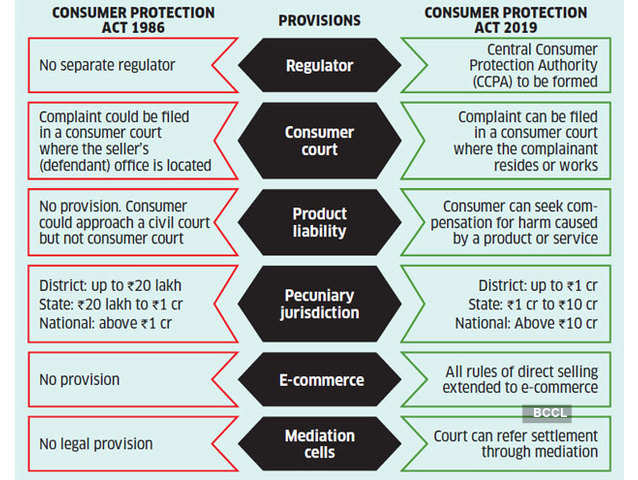
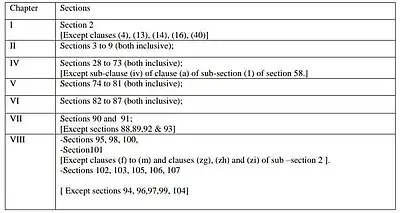
 Eduindex
You must be logged in to post a comment.