Two-Week Advanced Leadership Development Programme on Public Policy and Governance for Senior Civil Servants of the African Region in Delhi in partnership with MEA

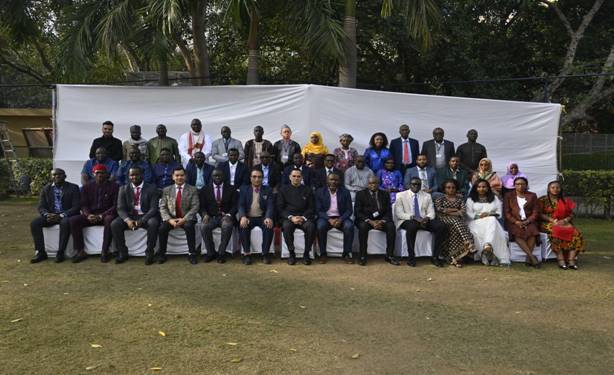
 The National Centre for Good Governance (NCGG), an apex-level autonomous institution of the Government of India, completed the Two-week Advanced Leadership Development Programme on Public Policy and Governance for Civil Servants of the African Region on 2-01-2024 that was organised for the first time by the centre. 34 senior officers from five African countries, Eritrea, Kenya, Ethiopia, Tanzania, and Gambia participated in the program. The participants included Mr. Tamsir Ann Presidential Advisor, Office of President, Government of Gambia, Mr. Mahat Abukar Yussuf Director Garissa County Government of Kenya, Mrs. Tumaini Luanda Mtetemela Principal Examination Officer University of Dododma Government of Tanzania, Mrs. Rahel Beyene Teklu Protocol Officer Ministry of Foreign Affairs Government of Eritrea, Mrs. Etmet Assefa Asamrie, Presiding Judge Federal Supreme Court of Ethiopia.
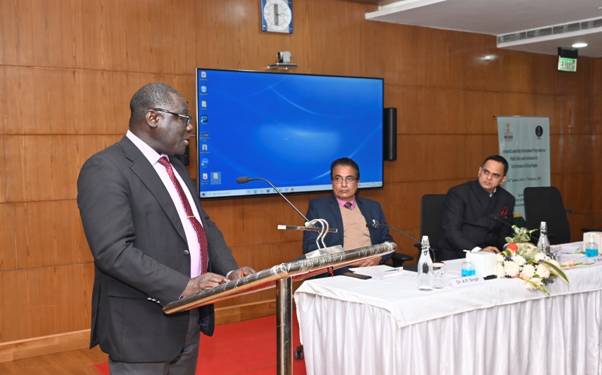
Shri V. Srinivas, Director General, National Centre for Good Governance & Secretary, Department of Administrative Reforms and Public Grievances (DARPG), addressed the valedictory session. The historic relationship between India and Africa and the efforts made under Prime Minister Modi to strengthen relations was presented. The valedictory session also discussed the Digital Public Infrastructure policies of India as a shared global public good for bringing citizens and government closer using technology, improving justice delivery systems in land administration, effective redressal of public grievances and the creation of a MyGov portal in Gambia with Indian collaboration. The delegates expressed the need to collaborate with various institutions of India which will help in providing people-centric governance to improve the quality of life of people in their respective country. They also requested to organize some more training programmes in future to Civil servants of African region having duration of two weeks. 
Dr. A.P Singh, Course Coordinator and Associate Professor NCGG, gave the welcome address and provided a comprehensive overview of the two-week program, detailing the diverse topics covered during the training. The program includes sessions on Changing paradigms of governance, Aadhar : a tool for good governance, Land record modernization, GeM, Swamitva Scheme, Public-private partnerships, Climate change policies, Sustainable development goals among others. He also highlighted that the participants of the programme had the valuable opportunity to partake in exposure visits, which proved to augment their overall learning journey. Among the planned visits were the Ministry of Rural Development, DMRC, AIIMS, PM Sangrahalaya, and Taj Mahal among others. 

The capacity-building program was supervised by Dr A.P Singh, Course Coordinator, Dr. Mukesh Bhandari, Associate Course Coordinator, Shri Sanjay Dutt Pant, Programme Assistant, and the dedicated capacity-building team of NCGG. The successful conduct of the 5-Nation Africa program represents a milestone for National Centre for Good Governance in its efforts as an apex capacity building institution for international civil servants under the ITEC program.

<
LEADERSHIP IN MANAGEMENT

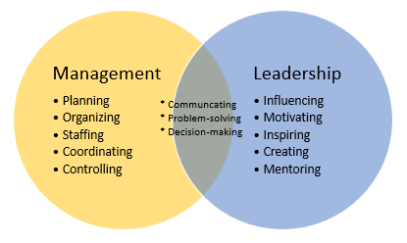
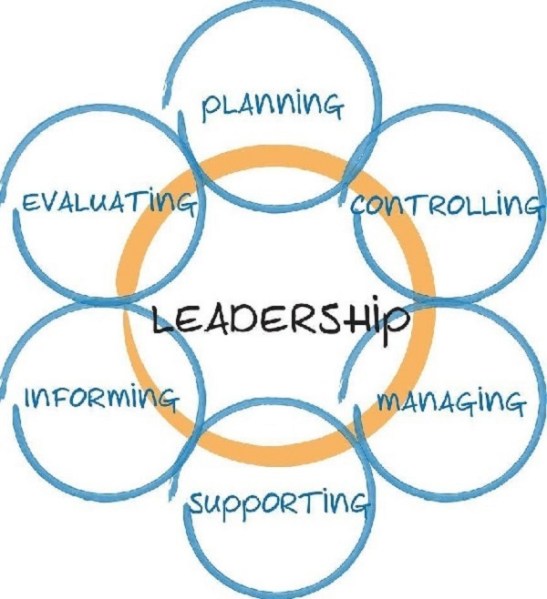
As you know, management involves getting work done through the people and by virtue of their positions, managers can issue orders and instructions to their subordinates to get the work done, but it is also necessary to ensure that subordinates put in their maximum effort in performing their tasks and hence managers have to regulate and influence the subordinates behaviour and conduct at work and it is through the leadership role of managers that employees may be induced to perform their duties properly and maintain harmony in group activities. A manager, having formal authority, can direct and guide his subordinates and command their obedience by virtue of his positional power but as a leader, a manager can influence work behaviour by means of his leadership ability to get the cooperation of all members of the group. Leadership may be defined as a process of influencing group activities towards the achievement of certain goals. Thus, the leader is a person in a group who is capable of influencing the group to work willingly and he guides and directs other people and provides purpose and direction to their efforts and according to eminent writers Hodge and Johnson Leadership is “ Leadership is the ability to shape the attitude and behaviour of others whether in formal or informal situations” and According to Livingston Leadership is “ Leadership is the ability to awaken in others the desires to follow a common objective”.

CHARACTERISTICS OF LEADERSHIP

Managerial leadership mainly possess the following characteristics:

  1. Leadership is needed in all walks of life, such as economical, social, political and industrial spheres.
  2. It is the duty of the leader to maintain proper discipline among his subordinates.
  3. It is a continuous process whereby the manager influences, guides and directs the behaviour of subordinates.
  4. A true leader is responsible for including encouragement and confidence among employees of any organization.
  5. The success of a manager as a leader depends on the acceptance of his leadership by the subordinates.
  6. The manager-leader is able to influence his subordinate’s behaviour at work due to the quality of his own behaviour as a leader.
  7. The leader leads his group with authority and confidence.
  8. The leader establishes the relationship between an individual and a group around some common interest.
  9.  A true creates a bond of friendship between organization and subordinates.
  10. Leadership helps others in choosing and attaining specified goals to the maximum satisfaction of both the leader and the follower.

SOME IMPORTANT QUALITIES OF LEADERSHIP

1. Knowledge and intelligence

 A leader, to be effective, must have knowledge of group behaviour, human nature and activities involving technical and professional competence. He must have an intelligent perception of human psychology and the ability to think clearly and argue cogently on points of dispute.

2. Integrity and Honesty

A leader should possess a high level of integrity and honesty and he should be a role model regarding ethics and values.

3. Motivation Skills

A leader should be an effective motivator and he should understand the needs of the people and motivate them through satisfying their needs.

4. Self-confidence

Confidence about one’s leadership ability makes it possible for a leader to analyse and face different situations and adopt a suitable style and Lack of self-confidence often prevents managers to adopt a participative style and repose trust in their subordinates.

Higher Education Leadership Development programme

UK-India Education and Research Initiative (UKIERI) is a bilateral partnership between UK and India which aims to promote institutional excellence through academic/research linkages and leadership development programme.

University Grants Commission (UGC) and British Council under the auspices of UKIERI is going to deliver a Higher Education Leadership Development programme focusing on training of mid and senior level educational administrators in Universities in India.

In addition to leadership training being provided to top level leaders like Vice-chancellors and academic faculty, higher education sector also needs leadership development for mid and senior levels functionaries so as to bring about a professional transformation of our Universities.

British Council has identified Advanced HE, a UK based not-for-profit institution, specializing in governance and leadership development of higher education for delivering the programme. The programme will be jointly funded under UKIERI.

ugc - University Grants Commission
ugc – University Grants Commission

OBJECTIVES

  • Ø  Train the academic administrators so as to enable them to bring about systemic changes with renewed approaches, capacity, tools and skills in the higher education institutions
  • Ø  Identify and train potential future leadership development programme trainers in order to provide a framework for dissemination and cascading of leadership training to other HEIsØCreate and Strengthen sustainable relationship between UK and Indian Higher Education Institutions and utilize UK’s expertise in the field of Higher Education Administration and leadership

WHO CAN APPLY

  • Central Universities funded by University Grants Commission
  • State Public Universities included under section 2(f) & 12B of the UGC ActTARGET GROUP• Administrative functionaries at the level of Registrar and Joint/Deputy/Assistant Registrar of the eligible Universities

    HOW TO APPLY

    • Eligible Universities shall apply in the prescribed format (Annexure I)
    • Universities shall nominate 3-5 functionaries in order of preference at the level ofRegistrar and Joint/Deputy/Assistant Registrar of the eligible Universities
    • To ensure gender diversity on the programme, at least one of the top three nomineesshould be a female.
    • The application may be duly forwarded and signed by the Vice Chancellor/authorisedsignatory of the university.
    • The filled in application in the form of .pdf file should be sent to heldpa.ugc@gmail.com
    • The last date for receipt of application is 16th March 2020.GUIDELINES FOR FILLING IN THE APPLICATION
  • Section A: Provide basic information like Name, Address, Contact Person, Contact details of your institutions
  • Section B: Provide details of 3-5 programme nominees at the level of Registrar and Joint/Deputy/Assistant Registrar. Please provide information about their designation, department, role, strength etc.
  • Section C: Statement of support from Vice Chancellor duly signed and stamped and the preference of the nominees must be mentioned. Out of the first three nominees, one nominee should preferably be a female.
  • Section D: A brief proposal identifying a real time change project which are strategically improtant to your university. Some of the project theme are mentioned, but are not in any way limited to the same. In case a change project is Not Yet Known please insert “NYK”
  • Section E: Please indicate who according to you, among your nominees can be the potential leadership developer. If this is not yet known, please insert “NYK”

page2image2546770672

PROCEDURE FOR SELECTION

  • The application shall be assessed on the basis of criteria such as Participating Institution’s commitment to the programme; Experience, achievements and potential of the participants; Clarity of programme goals; Potential impact of the programme; and Sustainability and transferability beyond the programme.
  • The names of the selected universities and participants along with the schedule of training shall be announced by the end of March 2020.PROGRAMME DELIVERY
    • Participants will attend two 5-day blocks of development workshops to be held between April and December 2020 in various locations in India. The dates and venues of workshops shall be communicated later on.
    • 30 potential future leadership development programme trainers will be selected amongst the participants.
    • The expenditure related to the travel, boarding and lodging of the Indian participants shall be borne by UGC.