ISSUES RELATING TO POVERTY AND HUNGER

India is a country which suffers a lot due to hunger and poverty. Hunger is very closely related to poverty as poverty is one of the main reasons for hunger. 

Indian economist and philosopher Amartya Sen said that lack of ability to pay for food is obviously caused by poverty.

POVERTY

Poverty is a condition caused due to lack of basic needs of life such as water, health care, food, unemployment etc. It is described as the low income level of people which leads them to poor standard of living. Poverty means that the income level from employment is so low that even the basic human needs are not fulfilled. The impact of poverty on children is substantial. Children who grow up in poverty typically suffer from severe and frequent health problems; infants born into poverty have an increased chance of low birth weight, which can lead to physical and mental disabilities. Poverty is a difficult cycle to break and often passes from one generation to the next. Typical consequences of poverty include alcohol and substance abuse, limited access to education, poor housing and living conditions, and increased levels of disease. 

Hunger and food insecurity are the most serious forms of extreme poverty. To eradicate these issues from society is the prime concern of international organizations.

HUNGER

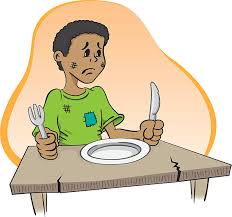
Hunger is a global problem and a lot of countries are facing this problem. Hunger is a condition where both the adults as well as children do not have access to food and there is a constant decrease in food intake, nutrients, no proper diet is there and some days are even gone without food which eventually leads to their death.

Climate change is also one of the reasons for world hunger. The amount of rain determines the production of crops. Droughts also affects agricultural production and extreme rain also causes flooding that leads to destruction of crops . Use of outdated products, not using better quality seeds also leads to shortage of food and those who are capable and have money buys food even at higher prices, the ones who have to suffer are poor people. They do not have money to buy food and hence they remain hungry. Hunger has a lot of serious problems such as insufficient economic systems, climate changes, misinformation but the most serious problem of all is poverty. Many poor nations such as Kenya, Uganda etc. are in desperate need of food. The growing population is one of the major causes of rising hunger and poverty. In Indian scenario Hunger and malnutrition are closely related. The main outcome of poverty is hunger. India is a home to the largest undernourished population in the world, 14℅ of our population is undernourished, 20℅ of children under 5 are underweight, 34.7℅ of children are stunned, 51.4℅ of women in the in the reproductive age i.e. 15-49 are anemic.

DIFFERENT ISSUES RELATING TO HUNGER AND POVERTY

Overpopulation is a major issue of rising poverty. There are not enough resources to satisfy your need. Demand is more and resources are limited and this leads to no proper distribution of resources and a large amount of people are left with no food. India is a country with a large population, and hence everyone’s demand is not full and people remain hungry.

Poor health service– the health sector of India is not as efficient as compared to other developed Nations, which leads to less access to good health and sanitization and hence causes ill health and maintains poverty.

Malnutrition- It is a phenomena that occurs in a human body when it receives little or no nutrition as a result of it people easily get sick and it causes death. it is responsible for the death of people, especially young children.

Insufficient education and lack of training- due to Rising poverty children are not able to get basic education and again since they are not educated, they don’t get employed and this vicious cycle of poverty is continued. Lack of money is reason for them not attending proper School and they have to indulge in labour to provide for a minimal living also causes rise for child labour. Parents send their children to work at a very young age.

Inequality– different gender, ethnic, group and social classes face inequality due to poverty. Low rate of economic development, If a country is poor then its development is also very slow.

Rise in crime – Often due to poverty and hunger, people indulge in criminal activities. To fill their empty stomach many young children opt for wrong ways and indulge in theft and loot and its disturbance in the society.

Way Forward

To eradicate poverty and hunger from the society, there is a need for the government to implement schemes and methods. The government should spend more in health, nutrition, and education. The government should invest more in agriculture and provide the farmers with better quality seeds and advanced machineries and modern techniques for more agricultural production, Also it is necessary to decrease rural poverty. Subsidies address only short-term issues. There is a need to develop technologies, with the help of which farmers can practice all-weather agriculture. Government should focus on increasing employment opportunities creating jobs in modern sectors and promote labor-intensive industries. Reduction in corruption will lead to an overall development of the economy. A country with low poverty level will only develop in a better manner.

Sources: civilservicesindia.com
Fortification of Rice

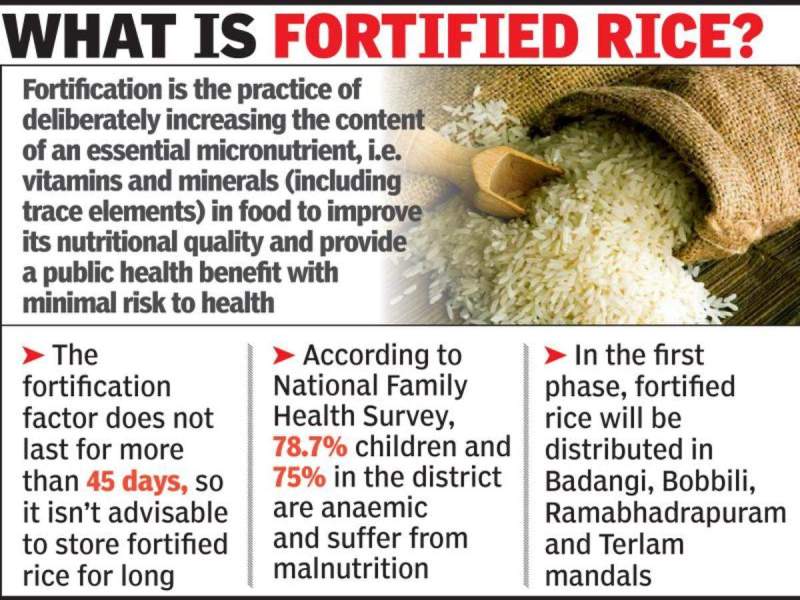
Fortification is the addition of key vitamins and minerals such as iron, iodine, zinc, Vitamin A & D to staple foods such as rice, milk and salt to improve their nutritional content.

Fortification of rice is a cost-effective and complementary strategy to increase vitamin and mineral content in diets.

According to FSSAI norms, 1 kg fortified rice will contain iron (28 mg-42.5 mg), folic acid (75-125 microgram) and Vitamin B-12 (0.75-1.25 microgram). In addition micronutrients can also be added, singly or in combination, with zinc, Vitamin A, Vitamin B1, Vitamin B2, Vitamin B3 and Vitamin B6.

Need of Food Fortification?

There is high level of malnutrition among children and women in India. A/c to Food Ministry, every second woman in the country is anemic and every third child is stunted.

India ranks 101 among 116 countries in the Global Hunger Index (GHI) 2021. In 2020 it was positioned 94th.

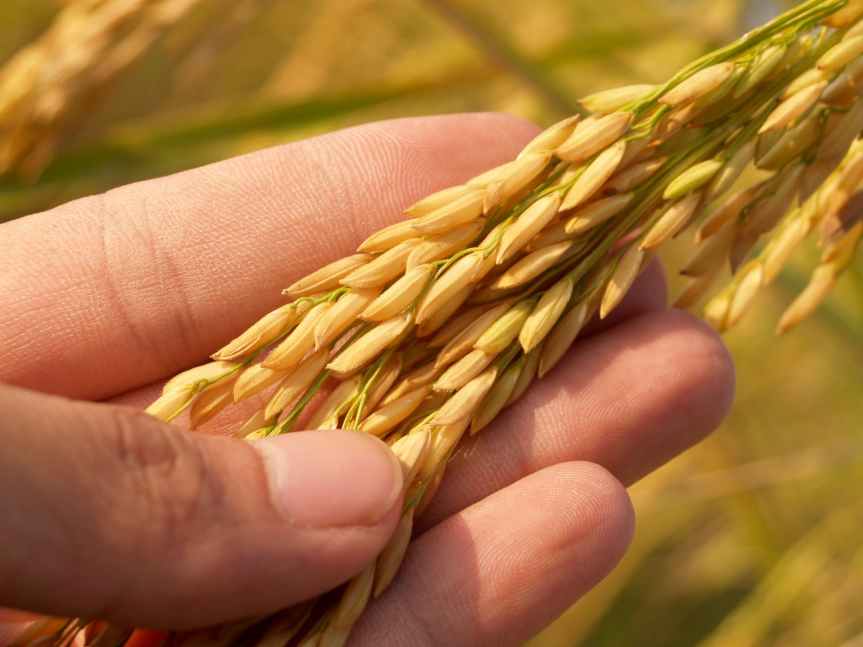
Rice is one of India’s staple foods, consumed by about two-thirds of the population. Therefore, fortifying rice with micronutrients is an option to supplement the diet of the poor.

Issues with the Fortification of Rice

  • Inconclusive Evidence:
    • Evidence supporting fortification is inconclusive and certainly not adequate before major national policies are rolled out.
  • Hypervitaminosis:
    • According to some studies published in the medical journal Lancet and in the American Journal of Clinical Nutrition which show that both anaemia and Vitamin A deficiencies are overdiagnosed, meaning that mandatory fortification could lead to hypervitaminosis ( a condition of abnormally high storage levels of vitamins, which can lead to various symptoms such as over excitement, irritability, or even toxicity ).
  • Toxicity:
    • Adding one or two synthetic chemical vitamins and minerals will not solve the larger problem, and in undernourished populations can lead to toxicity.
    • A 2010 study that showed iron fortification causing gut inflammation and pathogenic gut microbiota profile in undernourished children.
  • Cartelisation:
    • Mandatory fortification would harm the vast informal economy of Indian farmers and food processors including local oil and rice mills, and instead benefit a small group of multinational corporations.
  • Decrease Value of Natural Food:
    • Once iron-fortified rice is sold as the remedy to anaemia, the value and the choice of naturally iron-rich foods like millets, varieties of green leafy vegetables, flesh foods, liver, to name a few, will have been suppressed.

There are different methods to make rice more nutritious post-harvest: Dusting, Coating, Hot or Warm extrusion.

To have a positive health impact, fortified rice needs to have good:

  • Stability during transport and storage
  • Retention during cooking & preparation
  • Consumer acceptability
  • Absorption by the body of the used micronutrients

Benefits of fortification –

  • Ease of use – this is one of the biggest benefits. As a widely used staple food, it is simple to replace standard rice with fortified rice to boost the nutritional profile of a simple diet.
  • Cost – the specific costs of fortified rice depend on several factors, such as the scale of the operation and the blending ratio of fortified to non-fortified kernels.
  • Consistency for consumers – it looks, cooks, and tastes the same as non-fortified rice.
  • Market differentiation for brands – fortified rice can also be customized for specific needs. It presents a solution for health-conscious consumers looking for new ways to reach specific health benefits.
  • Reducing micronutrient deficiencies for governments and schools

Malnutrition a growing problem

Malnutrition is one of the most dangerous growing problem in this modern world. Now when we are talking about malnutrition many people have misconception about what malnutrition actually means.

According to WHO Malnutrition, in all its forms, includes undernutrition (wasting, stunting, underweight), inadequate vitamins or minerals, overweight, obesity, and resulting diet-related noncommunicable diseases.

So in simple sense there are two types of malnutrition when is under-nourished and the other is over-nourished. Today actually there are more obese adults than undernourished one.ie., about 1.9 billion are obese and 462 million are under-nourished. And there are 45% of the death caused children under 5 years of age is due to malnutrition.

So we can actually see that how this situation has been worse for the children and for the adults and even for the senior citizens too. We need to focus on how to atleast give them two times meal a day which, actually will help them to survive at least.

Government should come up with policies and programs which could help them. And from our side we can give whatever surplus is with us or we can work with NGOs to provide these people at least one time of meal if we can.

This article is mainly written to to highlight this problem which is actually now been overshadowed due to the covid-19 situation. But we have to consider the fact that covid has make their condition more worse. From belonging to at least a middle class family we should do something from a site to help the needy. And the people those who are suffering from obesity should try

FOOD AND MALNUTRITION


FOOD AND MALNUTRITION

FOOD SECURITY

Food is defined as a substance that we people eat, drink to live and maintain life and growth. Food security would denote a person’s ability to eat enough, stay active and lead a healthy life.

Food security exists when all people at all times, have physical, social and economic access to sufficient, safe and nutritious food which meets their dietary needs and food preferences for an active life. This concept is now-a-days used in few decades. Initially it referred to as overall supply of for a global, regional or national context.

The basic components of food and nutrition is the availability of food, accessibility and absorption. Availability of food in desired quantities which might change stocks and imports. Capabilities and opportunities in turn are related mainly to one’s access to his/her own assets and education. Absorption of food is the ability of biologically utilization.

NUTRITION AND HEALTH STATUS


India has largest number of malnourished children in the world and half of the stunned children. However, records reveals that the stunning prevalence has been declined since 2020 and nearly 45 million suffered from wasting. The malnutrition measures are used to track the world to move along in its sustainable development goals. However the crises remains same or increased when it comes with percentage. India losing up to nearly 4% of GDP and 9% of productivity is also a combined failure.

MALNUTRITION

The COVID 19 has however caused the biggest increase in the world by hunger and malnutrition. For Indian children older than fiver years of age this is the first time that the national values are published. The National Family Health survey says that nearly 29% of the Indian children suffer from malnutrition. Besides COVID Malnutrition is till running around many. Hunger is most crucial pain in the world. When we let to see children with such pain, we will try to give what we have.

Recent reports show an increase in number of the malnourished in India

According to the Center for Science and Environment (C.S.E.) State of India Environment Report – 2021, the corona epidemic has had a lasting impact on the health and economic conditions of 37.5 million children across the country.

CSE Director General Dr. Sunita Narayan, said that children from new-born to 14 years will have more health-related problems. There is a possibility of low weight of children, lack of physical development according to age and increase in mortality.

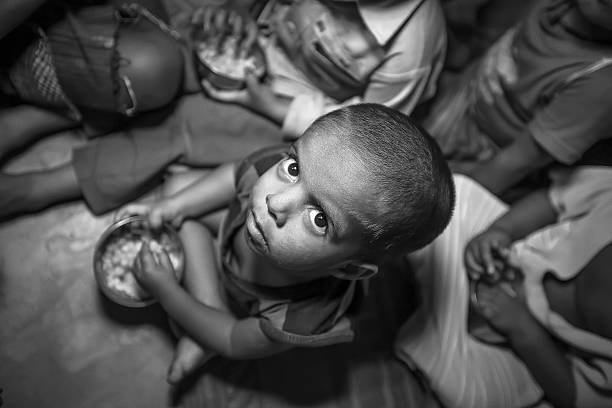
Child from a poverty stricken family gets a free meal at his school.The schools are run by some volunteer organisations or individuals and have inadequate facilities. Yet some people are working relentlessly to help these poor children.

One of the reasons could be India’s struggling with Covid-19 lock down interrupted crucial government schemes that benefit hundreds of millions of women and children. But that still doesn’t explain the rise in malnutrition rates in the years leading up to the outbreak of Covid-19 in 2020.

According to reports, India’s latest National Family Health Survey (NFHS), which shows that children in several states are more undernourished now than they were five years ago, is based on data collected in 2019-20. The survey was conducted in only 22 states before the onset of the pandemic – so experts fear the results will be much worse in the remaining states, where the survey began after the lock down ended.

In rural places the problem seems to have begun earlier. Rural areas have seen a steep rise in the proportion of undernourished children compared with 2015-16, when the last survey was conducted.

Due to malnutrition in infants and young children stunting in growth and even experience wasting away of muscle and anemia. The proportion of severely underweight children has risen. Stunting refers to lower than expected height for age, wasting shows lower than expected weight for height, and anemia is a deficiency of hemoglobin in blood.

Most of the Indian women are anemic and poor women, especially so. According to the experts, the worsening rate of malnutrition could be a result of women struggling to access nutrition benefits because undernourished mothers give birth to undernourished babies.

Migration to cities is also a reason for this. Many families migrate to cities to make a better living. But that also means being left out of massive government schemes that are mostly delivered at local level – so benefits aren’t easily transferred across districts or states.

The National Family Health Survey-5 report, the latest data set on health and nutrition, showed that of the 22 states and Union Territories in the year 2019-20, a majority reported an increase in malnutrition parameters such as stunting and wasting of children, anemia in children and in women between 15-49 years of age.

Due to poor health of children, there may be adverse effects on education and workplace too. This report released online, has been prepared by 60 environmental and other experts from all over the world. The epidemic forced approx. 50 crore children over all the world to leave school. More than 50 percent of these children are in India. Dr. Sunita Narayan said, “An additional 115 million people have come under extreme poverty due to the epidemic.” Most of them live in South Asia.

Given this situation, there is a need to enhance allocations for government schemes to address child malnutrition as well as for schemes promoting nutrition for pregnant and lactating mothers. A group of people should be assigned who provide health and nutrition counseling to pregnant mothers. Better health care and nutritious meals for the pregnant mother, because with proper pre-natal care, adequate food and timely health check-ups, a pregnant woman stays fit and gives birth a healthy child and for that there is a need for huge amount of investments. Different sectors of the government need to coordinate to handle this problem effectively. There are some independent organizations who are working actively to help the unprivileged sections of India and educating others about the problem and with enough funds and support from us maybe they can tackle with the problem more effectively.

Malnutrition In India

Malnutrition is one of the world’s highly overlooked issues. Many still believe that malnutrition is restricted to the African continent, which is the biggest myth this article will bust. If the first image that pops into your mind when you think of malnutrition is a scrawny African kid, this is the article to educate you about our world.

Malnutrition, as the name suggests, is the deficiency of the required nutrients in one’s body. A properly balanced diet should constitute sufficient energy/calorie requirements and also meet our diverse nutritional requirements. Our biology tells us more about our ailments than our body weight and structure.

Another myth associated with malnutrition is that only those without timely meals are malnourished. Malnourishment exists in three main forms: under-nourished, over-nourished, and targeted nourishment.

  • Under-Nourished: A person who is not consuming a timely balanced diet
  • Over-Nourished: A person consuming more nutrients than needed, they are over-nourished, or obese
  • Targeted Under-Nourishment: A person consuming timely food, but lacking a balanced food intake

Malnourishment is less about how much you eat and more about what you eat. To further bust the myth, Africa might be the continent with the highest malnourished population, but the country with the highest malnourished population is, Yemen.

The Double-Burden of Malnourishment is a crisis that almost all countries are facing, trying to end under-nourishment while tackling an increasingly obese population.

Food Security is the availability of food and one’s access to it. Food insecurity is when there’s an infrequent availability and one’s eating habits are disrupted as a result of lack of money and other resources.

9.2% of the world was severely affected by food insecurity, and 1-in-4 are moderately affected by food insecurity in 2018.

As a result of this, many people fail to avail of the basic requirement, food.

Over 1 billion people were undernourished in 1990, 795 million as of 2014. The number soon reaching 821 million by 2017.

Contrary to popular belief, India is one of the highest-ranking countries in the world worst affected by malnutrition amongst children. About 30% of Indian children are underweight, almost twice than in Sub-Saharan Africa.

Over 5% of the Indian population is morbidly obese. Processed, sugar-free, and other un-healthy options have substituted our diets. Organic options have become a thing of luxury. The National capital surpasses every other state and union territory with 45.5% men and 49.8% women obese population (Transgender data not given). While Madhya Pradesh and Rajasthan exceed in the undernourished population.

Fad Diets promising quick weight shedding are part of the problem. While you may shed the “few extra pounds,” they leave you with a malnourished body. Omitting fats from our diets does us more harm than good. Take, for instance, potatoes and sugars, high in starch and carbohydrates, are still vital for our body.

Each year, enough food is produced to feed more than 12 billion people. The world population is 7 billion!

A country as a whole very rarely struggles with food insecurity. It is a group or even a marginalized community that struggles with finding proper access. Haddad in their article, “Lifting the Curse: Overcoming Persistent Undernutrition in India” wrote, “A poor capacity to deliver the right services at the right time to the right populations, an inability to respond to citizens’ needs and weak accountability are all features of weak nutrition governance.” While government officials claim that it is a challenge for every country to provide people with access to healthy food.

While it is debatable as to how much the government does or can do, many factors come into play. To name a few, the socio-economic status, region, religion, and relationships.

One strong link to malnutrition in India is domestic violence. Domestic violence brings with it emotional and physical abuse. The dual-abuse affects one’s oxidative stress, hemoglobin blood levels, and produce anemic malnutrition.

Another link is that of religion, scientific studies prove that in India, Hindus and Muslims tend to be more malnourished than those from Christian, Sikh or Jain backgrounds.

Each type of malnutrition brings with it many diseases and high mortality rates. Visible signs of malnutrition and dehydration are most common include, including moon face, dry eyes, periorbital edema, glossitis, enamel mottling, dull-sparse-brittle hair, alopecia, thin and soft nail plates, muscles wasting, calcium-vitamin D-vitamin C deficiencies, and more.

With the ongoing pandemic and the related lockdown, many families have lost their source of income. People are struggling to choose between food and rent. The malnutrition rates have been higher in the last few months than last year. UNICEF’s plan to achieve Zero Hunger by 2030 seems unlikely.