From Manager to Visionary: How to Lead Business Transformation in Uncertain Times

Daily writing prompt
Share one of the best gifts you’ve ever received.

Picture this – you’re steering a ship in the middle of a storm. The winds are howling, the waves are unpredictable, and your crew looks to you for direction. In today’s volatile business environment, managers are facing a similar challenge. Economic fluctuations, rapid technological advancements, and evolving customer expectations have made traditional management styles obsolete. To survive and thrive, leaders must move beyond managing tasks – they must become visionaries who anticipate change, inspire innovation, and drive transformation.

Photo by Eva Bronzini on Pexels.com

So, how does one make this leap from manager to visionary? What skills and mindset shifts are required to navigate uncertain times successfully? This article explores the key strategies that can help leaders transform businesses while ensuring stability and long-term growth.

1.     Shift From Being Reactive to Being Proactive

Traditional managers are often reactive – responding to challenges as they arise. Visionary leaders, on the other hand, anticipate change before it happens. They don’t just solve problems; they look ahead, identify opportunities, and shape the future. Here’s how you can be a visionary leader:

  • Embrace Scenario Planning: The most successful leaders don’t wait for crises; they prepare for them. Companies like Amazon and Tesla thrive because their leaders think five to ten years ahead. Regularly conducting “what-if” analyses can help businesses stay ahead of disruptions.
  • Encourage a Culture of Innovation: Visionary leaders foster environments where employees feel empowered to experiment and challenge the status quo.
  • Stay Ahead of Industry Trends: Subscribe to reports, attend conferences, and network with thought leaders to predict industry shifts before they happen.

2.     Adapt to Digital Transformation

Technology is the biggest disruptor in today’s business landscape. AI, automation, and big data are not just buzzwords; they are fundamentally reshaping industries. Managers who resist digital transformation risk becoming obsolete, while visionary leaders harness these tools to drive efficiency, enhance decision-making, and create new revenue streams. Steps to lead this digital transformation:

  • Invest in Digital Literacy: Even if you’re not in a tech-heavy industry, understanding AI, blockchain, and data analytics is crucial. Many executives enroll in a general management course to strengthen their ability to integrate technology into business strategy. You can consider enrolling in a general management programme to learn these skills.
  • Leverage AI for Smarter Decision-Making: Companies like Netflix use AI-driven analytics to predict customer preferences and enhance user experience. Could your business use AI to forecast market trends or optimize supply chain management?
  • Adopt Agile Practices: Traditional business models follow rigid hierarchies. Visionary leaders embrace agility, enabling their teams to pivot quickly in response to change.

3.     Lead with Purpose

A manager manages teams; a visionary inspires movements. To lead transformation in uncertain times, leaders must establish a clear purpose that resonates with employees, customers, and stakeholders. You need to build a compelling vision.

  • Define Your ‘Why’: What impact does your company want to create? Visionary leaders, like Steve Jobs and Elon Musk, built companies with missions that were larger than profits.
  • Communicate with Clarity: A vision is useless if your team doesn’t understand it. Every decision, project, and strategy should align with the company’s broader purpose.
  • Lead by Example: Employees look to leadership for cues. If you want your organization to embrace transformation, demonstrate adaptability and forward-thinking in your own actions.

4.     Build Resilience

In uncertain times, resilience is the most important trait a leader can cultivate. Visionary leaders don’t fear failure; they see it as a learning opportunity. How to build organizational resilience:

  • Encourage a Growth Mindset: Visionary leaders foster a culture where employees feel safe to take risks and innovate.
  • Develop Strong Crisis Management Skills: Leaders must be prepared to respond to market downturns, supply chain disruptions, or workforce challenges without losing momentum.
  • Strengthen Financial Agility: Businesses that survived the COVID-19 crisis were those that quickly adapted their financial strategies. Maintaining healthy cash reserves and diversifying revenue streams can be game-changers.

5.     Embrace People-Centric Leadership

At the heart of every transformation is people. The best strategies and technologies mean nothing if employees are disengaged or resistant to change. Visionary leaders prioritize people over processes, ensuring that teams remain motivated, aligned, and prepared for the future.

  • Empower Teams with Autonomy: Employees perform better when they have ownership over their work. Autonomy fosters creativity and innovation.
  • Prioritize Employee Well-Being: Burnout is a major challenge for organizations undergoing transformation. Companies with strong well-being programs see higher productivity and retention rates.
  • Develop Future-Ready Skills: A general management course can help leaders refine their skills in change management, strategic thinking, and employee engagement.

6.     Make Bold, Data-Driven Decisions

In uncertain times, relying on intuition alone can be risky. Visionary leaders combine data-driven insights with bold decision-making to navigate uncertainty with confidence.

  • Leverage Predictive Analytics: AI-driven analytics can help forecast customer behavior, market trends, and operational risks.
  • Test and Iterate: The best leaders experiment with new strategies, analyze results, and pivot quickly if needed.
  • Balance Logic with Instinct: While data is powerful, gut feeling and experience also play a role in high-stakes decisions.

Final Thoughts

The leap from manager to visionary isn’t about a title change – it’s about adopting a mindset that embraces change, inspires innovation, and leads with clarity and purpose. As the business world grows increasingly complex, the most successful leaders will be those who:

  • Anticipate and adapt to change
  • Leverage technology for transformation
  • Lead with vision and inspire their teams
  • Prioritize resilience and agility
  • Make bold, data-driven decisions

For managers looking to step into visionary leadership roles, investing in executive education, like IIM General Management Program, which can provide the strategic insights, leadership skills, and digital expertise needed to lead successfully in an era of uncertainty.

Balancing Act: How to Increase Productivity Without Burning Out

Daily writing prompt
What food would you say is your specialty?

In today’s fast-paced world, the pursuit of productivity is often accompanied by an alarming rise in burnout. Whether you’re a student, a professional, or a stay-at-home parent, the pressure to perform can sometimes feel overwhelming. However, achieving greater productivity doesn’t have to come at the expense of your well-being. Here are several effective strategies to help you enhance your productivity while maintaining a healthy balance to avoid burnout.

Photo by Arina Krasnikova on Pexels.com

1. Understand Your Limits

Recognizing your limits is the first step toward sustainable productivity. Pushing yourself beyond your capacity can lead to exhaustion and decreased performance. It’s essential to assess your workload realistically. Consider keeping a journal for a week, documenting your tasks, energy levels, and feelings. This reflection can help identify patterns and pinpoint when you’re most productive, allowing you to plan your most demanding tasks during those peak times.

2. Prioritize Tasks

Once you’ve gained insight into your limits, it’s time to prioritize tasks. The Eisenhower Matrix is a useful tool for categorizing tasks based on urgency and importance. Divide your tasks into four quadrants:

  • Urgent and Important: Do these tasks immediately.
  • Important but Not Urgent: Schedule these for later.
  • Urgent but Not Important: Delegate if possible.
  • Not Urgent and Not Important: Consider eliminating these tasks.

By focusing on what truly matters, you can allocate your energy more effectively, reducing the feeling of being overwhelmed.

3. Set Realistic Goals

Setting clear, achievable goals is vital for maintaining motivation and productivity. Instead of overwhelming yourself with a long to-do list, break your goals into smaller, manageable tasks. This approach not only makes tasks seem less daunting but also allows you to celebrate small victories along the way, boosting your morale and motivation.

4. Embrace Time Management Techniques

Effective time management is crucial for enhancing productivity without leading to burnout. Techniques like the Pomodoro Technique can help you work efficiently while providing necessary breaks. This method involves working for 25 minutes, followed by a 5-minute break. After four cycles, take a longer break (15-30 minutes). This structure allows you to maintain focus and prevents fatigue, ensuring you stay productive throughout the day.

5. Take Breaks

It may seem counterintuitive, but taking regular breaks can enhance productivity. Research shows that short breaks can improve focus, creativity, and overall performance. Use these breaks to step away from your workspace, stretch, or take a short walk. Engaging in a brief physical activity can rejuvenate your mind and body, helping you return to your tasks with renewed energy and focus.

6. Practice Mindfulness and Stress-Relief Techniques

Incorporating mindfulness practices into your daily routine can significantly enhance your productivity while reducing stress. Techniques such as meditation, deep breathing exercises, or even simple moments of silence can help center your thoughts and calm your mind. Taking a few minutes each day to practice mindfulness can increase your focus, improve decision-making, and foster a positive mindset.

7. Create a Supportive Work Environment

Your environment plays a crucial role in your productivity levels. A cluttered, noisy, or uncomfortable workspace can lead to distractions and decreased focus. Take the time to create a space that promotes productivity. This could involve organizing your desk, using ergonomic furniture, or adding elements that inspire you, such as plants or motivational quotes.

Additionally, to minimize interruptions, consider establishing boundaries with colleagues or family members regarding your work hours. A dedicated workspace, even if it’s just a corner of your home, can signal to yourself and others that it’s time to focus.

8. Prioritize Self-Care

Self-care goes beyond a mere trend; it’s essential for sustaining productivity while avoiding burnout. Prioritizing sleep, nutrition, and exercise is vital. Insufficient sleep can impair cognitive function and elevate stress levels, so aim for 7-9 hours of quality rest each night.

Investing in a comfortable pillowtop queen mattress can significantly enhance your sleep quality. Maintaining a balanced diet and incorporating regular exercise into your routine will boost your overall well-being and resilience.

9. Learn to Say No

One of the most challenging aspects of maintaining productivity is knowing when to say no. It’s easy to become overwhelmed with commitments, whether they’re work-related, social, or personal. Learning to say no allows you to focus on your priorities and prevent overcommitting yourself. Remember, it’s okay to prioritize your well-being and existing responsibilities over additional tasks or obligations.

In Conclusion

Increasing productivity doesn’t have to mean sacrificing your health and well-being. By understanding your limits, prioritizing tasks, and implementing effective time management techniques, you can achieve a more balanced approach to productivity. Embracing mindfulness, creating a supportive work environment, and prioritizing self-care are all essential components of this balancing act.

Remember, it’s not just about working harder but also about working smarter. With these strategies, you can enhance your productivity while safeguarding against burnout, ultimately leading to a more fulfilling and sustainable work-life balance.

Top Management Institute of America

Some of the top management institutes in the United States are known for their world-class education, strong faculty, and extensive alumni networks. Here are a few of the most prestigious ones:

Photo by George Dolgikh on Pexels.com

1. Harvard Business School (HBS) – Harvard University

Location: Cambridge, Massachusetts

Known for its case-study method and extensive research in business leadership.

2. Stanford Graduate School of Business (GSB) – Stanford University

Location: Stanford, California

Emphasizes innovation, entrepreneurship, and leadership.

3. Wharton School – University of Pennsylvania

Location: Philadelphia, Pennsylvania

One of the oldest business schools, known for finance and entrepreneurship.

4. MIT Sloan School of Management – Massachusetts Institute of Technology

Location: Cambridge, Massachusetts

Strong focus on innovation, quantitative analysis, and leadership.

5. Booth School of Business – University of Chicago

Location: Chicago, Illinois

Known for its rigorous analytical and empirical approach to business education.

6. Kellogg School of Management – Northwestern University

Location: Evanston, Illinois

Known for its focus on teamwork, leadership, and global management.

7. Columbia Business School – Columbia University

Location: New York City, New York

Strong ties to the finance industry and leadership development.

8. Haas School of Business – University of California, Berkeley

Location: Berkeley, California

Focuses on innovation, sustainability, and entrepreneurship.

9. Tuck School of Business – Dartmouth College

Location: Hanover, New Hampshire

Known for its tight-knit community and focus on leadership and global business.

10. Yale School of Management – Yale University

Location: New Haven, Connecticut

Strong emphasis on integrating business with society and leadership for social good.

These institutes consistently rank highly in global MBA rankings and are renowned for their cutting-edge research, diverse curricula, and influential alumni.

Top Business Schools in Africa

Here are some of the top business schools in Africa ¹ ² ³:

– *University of Cape Town*: Located in South Africa, this university is a top choice for business education.
– *University of Pretoria*: Also located in South Africa, this university’s Gordon Institute of Business Science is a highly-ranked business school.
– *University of the Witwatersrand*: Located in South Africa, this university’s Wits Business School is a top choice for business education.
– *University of Stellenbosch*: Located in South Africa, this university’s business school is triple-accredited and offers a range of programs.
– *University of Ghana*: Located in Ghana, this university is a top choice for business education in West Africa.
These schools offer a range of programs, including MBAs, postgraduate diplomas, and doctorates, and are recognized for their academic excellence and strong alumni networks.

Top Business Schools in Australia

Here are some of the top business schools in Australia ¹ ² ³:

– *University of Melbourne*: Ranked number one in Australia, the University of Melbourne is a public research university in Melbourne, Australia. Melbourne Business School is the University of Melbourne’s graduate school in business and economics.
– *Monash University*: Ranked number two, Monash University was founded in 1958 and is the largest university in Australia in terms of student numbers. It is a member of the Group of Eight, an organisation of Australia’s leading research universities.
– *Australian National University*: Ranked number three, the Australian National University (ANU) is a national research university located in Australia’s capital city, Canberra. The ANU College of Business and Economics offers research and education across four research schools: accounting, economics, finance, actuarial studies and statistics and management.
– *University of Sydney*: Ranked number four, the University of Sydney Business School was established in 2011 and was formed from the School of Business within the previous Faculty of Economics and Business.
– *UNSW Sydney*: Ranked number five, UNSW Business School has been ranked the number one business school in Australia by AFR BOSS for the second consecutive year.

Top Business Schools in USA

Here are some of the top business schools in the United States ¹ ² ³:

– *Stanford Graduate School of Business*: Ranked number one in the US and globally, Stanford Graduate School of Business offers the best full-time MBA program.
– *The Wharton School*: Regaining its number one position, The Wharton School is one of the top business schools in the US.
– *University of Chicago Booth School of Business*: Ranked eighth in the US, the University of Chicago Booth School of Business offers one of the best MBA programs.
– *Yale University*: The best MBA for consulting, Yale University is one of the top business schools in the US.
– *New York University*: The best MBA for finance, New York University is one of the top business schools in the US.
– *MIT Sloan*: One of the top five best US MBA programs, MIT Sloan is a top business school in the US.
– *Harvard Business School*: One of the top business schools in the world, Harvard Business School is a top choice for business education.
– *Columbia Business School*: One of the top business schools in the world, Columbia Business School is a top choice for business education.
– *University of Michigan Ross*: One of the top business schools in the US, University of Michigan Ross offers a top MBA program.
– *Dartmouth Tuck*: One of the top business schools in the US, Dartmouth Tuck offers a top MBA program.

Top Business Schools in Europe

Here are some of the top business schools in Europe ¹:

– *HEC Paris*: Ranked number one for the fifth consecutive year, HEC Paris is a leading French business school.
– *London Business School*: Ranked number two, London Business School is a top choice for business education.
– *IESE Business School*: Located in Spain, IESE Business School is ranked number three.
– *ESCP Business School*: Ranked number four, ESCP Business School is another top French business school.
– *SDA Bocconi*: Located in Italy, SDA Bocconi rounds out the top five.
These rankings are based on the combined performance of Europe’s leading schools across the Financial Times’ individual program rankings ¹.

Top Educational Management tools for Teachers

 Several educational management tools are invaluable for teachers, enhancing efficiency, organization, and communication within classrooms. Here are some top picks:

  1. Google Classroom: This platform integrates seamlessly with Google Workspace (formerly G Suite) and allows teachers to create, distribute, and grade assignments digitally. It facilitates communication with students, provides a centralized location for resources, and offers collaboration features.

  2. Canvas: Canvas is a learning management system (LMS) that offers a wide range of tools for course management, including assignment creation, grading, discussions, and multimedia content integration. It provides a customizable interface and supports mobile access for both teachers and students.

  3. Schoology: Schoology is another popular LMS that streamlines classroom management tasks such as lesson planning, grading, and communication. It offers features for creating interactive assignments, quizzes, and discussions, as well as tools for tracking student progress and performance.

  4. Edmodo: Edmodo is a user-friendly platform that enables teachers to create a virtual classroom environment for engaging students in discussions, assignments, and collaborative projects. It also offers features for parent communication and professional development.

  5. Microsoft Teams: Teams is a collaboration platform that integrates with Microsoft Office 365, providing tools for communication, file sharing, and project management. It allows teachers to host virtual meetings, share resources, and collaborate with students in real time.

  6. ClassDojo: ClassDojo is a communication platform that strengthens the connection between teachers, students, and parents. It offers features for behavior tracking, messaging, and sharing updates and announcements, fostering a positive classroom culture.

  7. Remind: Remind is a messaging app designed specifically for communication between teachers, students, and parents. It allows teachers to send announcements, reminders, and assignments via text message or email, ensuring that important information reaches everyone efficiently.

  8. Nearpod: Nearpod is an interactive presentation platform that engages students with multimedia content, polls, quizzes, and collaborative activities. It allows teachers to create dynamic lessons and assess student understanding in real time.

  9. Kahoot!: Kahoot! is a game-based learning platform that makes learning fun and interactive. Teachers can create quizzes, surveys, and discussions to assess student knowledge and engagement, fostering a competitive yet supportive learning environment.

  10. Flipgrid: Flipgrid is a video discussion platform that encourages student voice and participation. Teachers can create discussion prompts, and students respond with short video clips, promoting communication and collaboration among classmates.

These educational management tools empower teachers to streamline administrative tasks, enhance communication and collaboration, and create engaging learning experiences for their students. By leveraging these tools effectively, teachers can maximize their impact in the classroom and support student success.

Top Skills and Training for Youths in 2024

  I can provide some general insights into skills that were considered valuable for youth. However, keep in mind that the landscape of skills can evolve rapidly due to technological advancements, economic changes, and other factors. Here are some skills that were deemed important, and they might still be relevant or have evolved by 2024:

  1. Digital Literacy and Coding:
    Understanding digital technologies and being able to code were increasingly seen as essential skills. Programming languages such as Python, JavaScript, and others were in demand across various industries.

  2. Critical Thinking and Problem Solving:
    The ability to analyze information critically, solve complex problems, and make informed decisions remains crucial in many professions.

  3. Communication Skills:
    Effective communication, both written and verbal, was highly valued. This includes the ability to collaborate with diverse teams and present ideas clearly.

  4. Adaptability and Resilience:
    The pace of change in the job market and technology requires individuals to be adaptable and resilient. This includes a willingness to learn new things and adapt to new situations.

  5. Emotional Intelligence:
    Understanding and managing one’s emotions and the ability to navigate social complexities were considered important for personal and professional success.

  6. Creativity and Innovation:
    Creativity is essential for problem-solving and driving innovation. This includes creative thinking, design thinking, and the ability to generate new ideas.

  7. Data Literacy:
    As data continues to play a significant role in decision-making, understanding how to work with and interpret data becomes increasingly important.

  8. Entrepreneurial Mindset:
    Encouraging an entrepreneurial mindset involves fostering traits like initiative, risk-taking, and the ability to identify and pursue opportunities.

  9. Financial Literacy:
    Basic financial literacy, including understanding budgeting, investing, and financial planning, is important for personal and professional life.

  10. Cybersecurity Awareness:
    With the increasing reliance on digital technologies, knowledge of cybersecurity best practices is essential to protect personal and organizational data.

  11. Health and Well-being Skills:
    Focusing on physical and mental well-being, including stress management, mindfulness, and a healthy lifestyle, contributes to overall personal success.

Remember that the specific skills in demand can vary depending on regional and industry-specific factors. It’s advisable to stay updated with the latest trends in education and job markets to ensure that training efforts align with current demands.

Category management in procurement and supply: the basics of the field 

 Category management stands for the distribution of goods into various categories based on an audience segment’s needs, buying power, and psychological characteristics. It enables an increased turnover of goods, revenue, and the ultimate profit of a business. As a result, it is widely used in retail. Category managers are also in high demand in procurement: they improve the efficiency of spending money and minimize the company’s financial losses from buying unwanted goods.

Category management in procurement is not so different from comparable work in supply. For example, delivering a shipment of previously bought goods to a destination. The only control you can apply at this stage is increasing a vehicle’s speed during transportation. And even then, it is not always feasible; how can you increase the speed of an airplane, for example? Therefore, we will mainly be discussing procurement as being one of the key activities in category management.

The fundamentals of category management in procurement and supply

A procurement specialist who knows their chosen product categories combines the company’s needs for buying certain goods into a single long list. When working with categories, they must consider the priority of the direction, the volume of potential consumers, and those goods that the store wants to experiment with demand-wise. It is vital to understand that the greater the volume of procurement, the lower the price per product unit. This means that dropping some categories, strange though it might sound, may result in higher costs.

The procurement manager is either outsourced or “grown” within the company. Their primary task will be to secure different categories of goods under a single contract. They are also responsible for selecting suppliers, discussing the delivery details with their representatives, completing the contract, and sometimes managing the delivery until the company receives the goods. All the requirements for buying goods of any kind pass through a single job role. As a result, the company makes a profit, and the specialist receives a higher wage. Sometimes there are multiple procurement managers in the company; everyone oversees individual markets or categories of goods.

How do you work with categories in procurement?

  • Define your internal tasks. Based on them, you will have to sort out the categories by priority and estimate how much money you can spend on them.
  • Explore the possibilities. Research the supplier market, their prices, their discounts, and consider the possibility of shipping from other countries. Detailed research will enable you to easily make decisions in the future.
  • Develop a procurement strategy. It should combine the company’s needs with a share of the most profitable opportunities in the market. Of course, you can work on this together with your colleagues: not every large company with a representative office in India puts all procurements in the hands of just one person.
  • Select suppliers. At this point, you will have to negotiate with the top suppliers in the list that you have studied. During negotiations, you have to negotiate the price of goods. However, don’t do it by belligerently knocking suppliers down in price to the bottom of the market. Pay close attention to small suppliers within a country: collaborating with them now might be a more profitable solution than cooperating with companies in other regions. The choice of suppliers can be simultaneously internal (we have already described its structure above) and external. “External cooperation” is a tender to supply goods for your company. Nevertheless, suppliers will present their bids for the tender, so the firms you previously found may not be on the list of participants. However, this state of affairs is unconventional for India: competition among buyers is high because there are not as many tenders as one would like.
  • Negotiate the contract. Work together with a lawyer and more experienced colleagues in your company.
  • Monitor the performance of the contract. Be prepared for emergencies: they occur to all category managers at some point. Deliveries can be delayed, go in the wrong direction, or not even arrive, and items may be defective or incomplete. You can deal with any problem if you don’t treat it like an obstacle but as a business issue that can be eventually resolved.

Category management in supply: what do you need to know if you work in procurement?

Suppliers also want to make a profit. They want to make money, have regular large orders, and have confidence in the future. So, they are unlikely to cooperate with firms chasing low prices. Such is the danger of tenders: companies often choose the most advantageous offers, which mean the cheapest goods from priority categories.

Suppliers are willing to take risks. In fact, the cost of solving problems can be incorporated into the product’s price. For example, the chance that the shipment will arrive at the wrong time adds a few dollars. The risk that the freight will be incomplete is a few more dollars. You will not find this in a contract, so it is better to clarify the pricing of goods during negotiations.

Category management in procurement and supply constitutes a promising direction allowing you to make money and hone your business skills. It is extremely important for a business that works with the merchandise. Newcomers that are just starting out on their career path are invited to junior positions, so you definitely have a chance of getting a job in this area.

Things to expect in a counselling session

  A counselling session is meant to help a person with certain problems and giving them advice and suggestions on how to cope with them. Counselling is done primarily for the purpose of solving issues related to mental health . 

In a counseling session, you can expect a safe, confidential, and non-judgmental space where you can openly discuss your concerns. Here’s what typically happens in a counseling session:

  1. Establishing Rapport: At the beginning, the counselor will aim to create a comfortable atmosphere and build rapport. They may introduce themselves, explain the counseling process, and discuss confidentiality.

  2. Discussion of Concerns: The counselor will invite you to talk about the issues or challenges you’re facing. They may ask open-ended questions to understand your situation better.

  3. Active Listening: Expect the counselor to actively listen to you without judgment. They’ll pay attention to your thoughts, feelings, and experiences to gain insight into your concerns.

  4. Goal Setting: Together with the counselor, you’ll identify goals or outcomes you wish to achieve through counseling. These goals will guide the sessions and focus on areas you want to work on.

  5. Exploration and Reflection: The counselor might explore your thoughts, emotions, and behaviors related to your concerns. This exploration can help gain insights and offer different perspectives on the issues.

  6. Skill Building and Strategies: Depending on your needs, the counselor may teach coping skills, relaxation techniques, or offer strategies to manage emotions and situations more effectively.

  7. Feedback and Insights: The counselor might provide feedback or insights based on what you’ve shared. They may offer interpretations, reflections, or observations to help you gain a deeper understanding.

  8. Homework or Follow-Up: You might be given tasks or exercises to practice between sessions. These could be reflective journaling, practicing relaxation techniques, or implementing new coping strategies.

  9. Closure and Future Sessions: Towards the end of the session, there will be a discussion about progress made, any new insights gained, and plans for future sessions if needed.

Remember, counseling sessions vary based on the counselor’s approach, the specific issues being addressed, and your preferences. It’s essential to feel comfortable and safe with your counselor, so don’t hesitate to communicate your needs or concerns during the session.

Leadership in Education

 Leadership in education is pivotal for shaping the direction, effectiveness, and culture of educational institutions. Educational leaders, which can include principals, superintendents, department heads, or educational policymakers, play multifaceted roles:


  1. Vision Setting: Effective leaders establish a clear vision and direction for the school or educational institution. They articulate goals and objectives that guide the community toward a common purpose.

  2. Instructional Leadership: They focus on improving teaching and learning practices. This involves supporting and developing teachers, implementing effective curriculum strategies, and ensuring student engagement and success.

  3. Creating a Positive School Culture: Educational leaders foster a positive and inclusive school environment that encourages collaboration, innovation, respect, and a sense of belonging among students, teachers, and staff.

  4. Strategic Planning and Management: They are responsible for strategic planning, resource allocation, budget management, and decision-making that aligns with the institution’s goals and needs.

  5. Community Engagement: Leaders build partnerships with parents, communities, and stakeholders to create a supportive network for the institution. They understand the importance of involving the community in the educational process.

  6. Adaptability and Innovation: Effective leaders stay updated with educational trends, research, and innovations. They encourage experimentation and innovation to adapt teaching methods and technologies for better outcomes.

  7. Advocacy and Policy Implementation: Educational leaders advocate for policies and practices that benefit students and educational quality. They implement and oversee policies that comply with educational standards and regulations.

  8. Professional Development: They support the continuous growth and development of teachers and staff by providing opportunities for professional learning, mentorship, and skill enhancement.

Leadership in education is not limited to formal administrative roles; it can also involve teachers who take on leadership roles within their classrooms or across departments. Effective leadership is crucial for fostering a conducive environment for learning, supporting students and staff, and achieving educational goals.

Institutionalization of Swachhata and minimizing pendency in the Offices

 Ministry of Culture (MoC), along with its organizations, participated in the Special Campaign 3.0 while focusing mainly on institutionalization of Swachhata and minimizing pendency in Government Offices. 

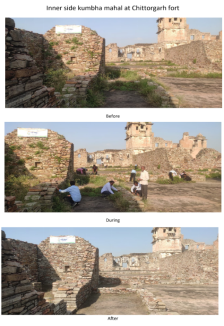
During implementation phase from 2nd to 31st October,2023, the Ministry achieved 100% targets in carrying out cleanliness drives in all designated 449 sites and   in Record Management: all 15,969 Physical files and 2133 E-files have been reviewed, out of which 4975 Physical Files & 1620 E-Files have been weeded out and closed, respectively. In addition, 138 physical files have also been identified for transfer to National Archives of India (NAI). Revenue to the tune of Rs.42,15,715/- has been generated by disposing of scarps.  A total of 22272 Sq.ft. area has been freed. Besides, other achievements include disposing off 83% Public Grievances; 81.8% PMO References; 67.8% State Govt. References; 64.2% MP References and 51% Parliament Assurances. Ministry has released 8 Press Statements. Further, 173 Tweets have also been made by the Ministry and its various organizations.

ImageImage

(Cleanliness drive conducted at sites of Chittorgarh Fort, a UNESCO, World Heritage Site)

 As a part of restorative conservation of records, NAI repaired 21,425 number of sheets, 140 files and binding of 45 volumes of records in its collection. Ministry of Home Affairs, Ministry of Coal and Directorate General CRPF, New Delhi have intimated NAI for appraisal of 452, 572 and 22 files, respectively. NAI has initiated action for joint appraisal of the above files as per provisions of Public Record Act & Rules.


[ Ongoing Conservation of Records at NAI ]

NAI also conducted the following Training Programmes in Record Management during Special Campaign 3.0 :-

  1. An Orientation Course in Record Management for Group ‘B’ & above and equivalent level officers from various Ministries/Departments,  Attached/Subordinate Offices and PSUs etc. from 18th to 20th October,2023;

ImageImage

  1. A Special Training Session on Record Management for Group ‘A’ & ‘B’ and equivalent level Officers of the Ministry and Archaeological Survey of India(ASI) on 23.10.2023.

ImageImage


  1. A Special Training Programme for the Record Officers newly nominated by various Ministries/Departments of Govt. of India at NAI Record Centre, Puducherry on 30th October, 2023 & 1st November, 2023.


Image

ImageImage

Ministry of Culture also organized an Exhibition on the theme “Waste to Art” -“Scrap to Sculpture” from 28th to 31st October,2023 at the Office Premises of Lalit Kala Adademy, 35 Ferozeshah Road, Mandi House, New Delhi to showcase the best  creative works done by its various organizations during Special Campaign 3.0. The exhibition was inaugurated by Hon’ble Minister of State for Culture, Shri Arjun Ram Meghwal ji. Delhi Based Organizations and North East Zonal Cultural Centre (NEZCC) of the Ministry of Culture participated in the Exhibition while, other Organizations located outside Delhi also organized the Exhibition at their respective Offices. The Exhibition was aired on DD News on 1st November, 2023.

Image

ImageImage

[“Waste to Art”-“Scrap to Sculpture” Exhibition organized by Ministry of Culture from 28th to 31st October, 2023]


[Sculpture of Goddess Maa Durga and a Deer crafted from discarded material as best creative art work by North Eastern Zone Cultural Centre (NEZCC)]

Ministry of Culture is committed to continue with the good works done during Special Campaign in order to promote and institutionalize  swachhata, and reduce pendency in all  organizations.

***

India’s quantum leap in India’s Space research

 Union Minister of State (Independent Charge) Science & Technology; MoS PMO, Personnel, Public Grievances, Pensions, Atomic Energy and Space, Dr Jitendra Singh has said, the world today acknowledges India’s quantum leap in the Space sector, following the massive push by Prime Minister Shri Narendra Modi when he took the courageous decision to “unlock” this sector from the shackles of the past.

“Prime Minister Modi has broken the taboos of the past and sometimes I wonder why this couldn’t have happened earlier. At the same time, even at the physical level, it has increased funding, it has enthused the private sector and the industry. Within just 3-4 years we have more than 150 Startups,” he said in an interview to a news channel.

Dr Jitendra Singh said ISRO has launched more than 380 foreign satellites, earning more than 250 Million Euros and more than 170 Million US Dollars by launching American satellites.

“Overall, India’s Space economy today stands at about $ 8 billion, viz 2% of the global (market share) but the entire world is recognizing increased pace and that’s why the conservative projections are $40 billion by 2040, but the other day, about 2-3 days back, we had the ADL (Arthur D Little) Report, which mentions that we could have the potential of $100 Billion by 2040, which is going to be a gigantic jump. And that’s what the world is now expecting, because we’ve started moving very fast, our launchings are also very frequent,” he said.

Dr Jitendra Singh said the ambitious Gaganyaan will have its first trial flight by the first or second week of October following the launch of first Sun Mission “Aditya-L1” on 2nd of September. In the second trial, possibly beginning of next year, a female robot named “Vyommitra” will be onboard the Gaganyaan before the first human mission which may include up to three astronauts, he said.

Denying that India is in competition with any other nation in Space exploration, Dr Jitendra Singh reiterated that India’s Space Research and Atomic Energy programmes are, as envisaged by the founding fathers, entirely peaceful and that the ISRO is collaborating with leading Space agencies and has put into orbit several satellites of private foreign entities and educational institutions.

Referring to applications of Space Technology to different sectors like Railways, Highways, Agriculture, Water Mapping, Smart Cities, Telemedicine and Robotic Surgery, which brought ‘Ease of Living’ for the common man, Dr Jitendra Singh said, Space tech has touched virtually every household in India.

*****

Planning and Management in Companies

 by Shashikant Nishant Sharma 

Planning and management play crucial roles in the growth and success of a company. Here are some ways in which planning and management can help a company in its growth:

Setting Clear Goals: Effective planning and management involve setting clear and achievable goals for the company. These goals provide direction and focus, enabling the company to work towards specific objectives. By defining growth targets and milestones, planning and management help align the efforts of employees and resources towards the company’s expansion.

Strategic Decision-making: Planning and management facilitate strategic decision-making processes. They involve assessing market trends, analyzing competition, and identifying opportunities for growth. Through comprehensive planning and effective management, a company can make informed decisions regarding product development, market entry, expansion strategies, and resource allocation.

Resource Allocation: Planning and management help allocate resources effectively, ensuring they are used efficiently to support growth. This includes managing financial resources, human capital, technology, and other assets. By carefully planning and managing resources, a company can optimize its operations, streamline processes, and minimize waste, ultimately contributing to its growth.

Risk Management: Planning and management involve identifying and managing risks that may impede growth. By conducting thorough risk assessments, developing contingency plans, and implementing risk mitigation strategies, a company can navigate uncertainties and minimize potential setbacks. Effective risk management enables the company to seize opportunities while safeguarding its assets and reputation.

Organizational Structure and Alignment: Planning and management play a critical role in establishing and maintaining an effective organizational structure. They define roles, responsibilities, and reporting lines, ensuring clarity and alignment within the company. A well-structured organization promotes efficient communication, collaboration, and coordination, enabling the company to adapt to growth and scale operations effectively.

Monitoring and Evaluation: Planning and management involve continuous monitoring and evaluation of the company’s performance. By setting key performance indicators (KPIs) and regularly assessing progress, management can identify areas for improvement and take corrective actions. This data-driven approach enables the company to optimize processes, capitalize on growth opportunities, and adapt strategies as needed.

Adaptability and Flexibility: Effective planning and management foster adaptability and flexibility, crucial traits for sustained growth. Companies that can adjust their plans and strategies based on changing market conditions and customer needs are more likely to thrive. By regularly reviewing and updating plans, management can ensure the company remains responsive to evolving trends and remains agile in its operations.

In summary, planning and management provide a structured approach to growth by setting clear goals, making strategic decisions, optimizing resource allocation, managing risks, establishing organizational structures, monitoring performance, and promoting adaptability. By leveraging these practices, companies can position themselves for sustainable growth and long-term success.